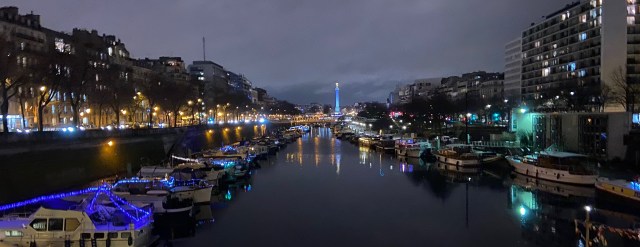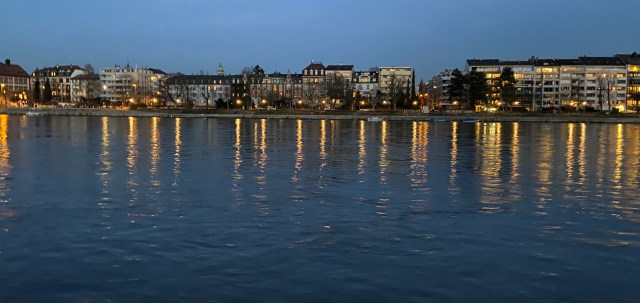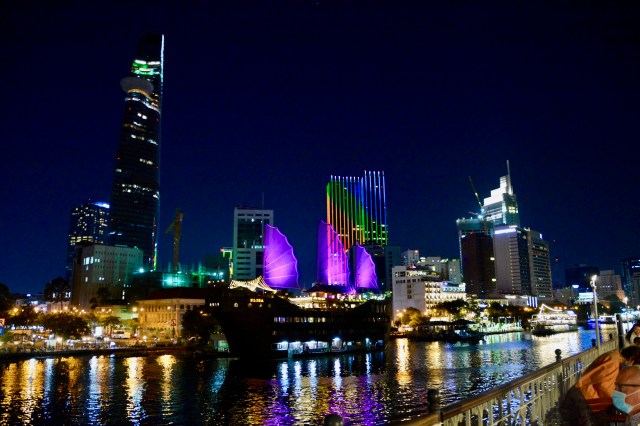
The Saigon River at Night

DSC_7802

Photo ©Jean Janssen. Ho Chi Minh City at night as seen from the Saigon River, Vietnam.

Our last night in Saigon, we are taking a dinner cruise on the new riverboat, the Saigon Princess.  Since Cambodia has closed its borders and river traffic along the Mekong has been shut down, Uniworld was forced to cancel our cruise.  Boris and I had already decided to head home while we were still able to.  I tip my hat to Uniworld; those of us that had made it to Ho Chi Minh City were treated to the planned activities in the city even though we had been told that the cruise line will refund our fare with no deductions.

DSC_7587

Photo ©Jean Janssen. Ho Chi Minh City, Vietnam

There are only four of the cruise participants left in the city.  By the check-in day the count had gone from 61 to 16.  This morning we started with 6 and by midday we were down to 4.  Boris and I will miss the trip to the Cu Chi tunnels tomorrow because we need to leave for the airport before they will arrive back.
DSC_7758

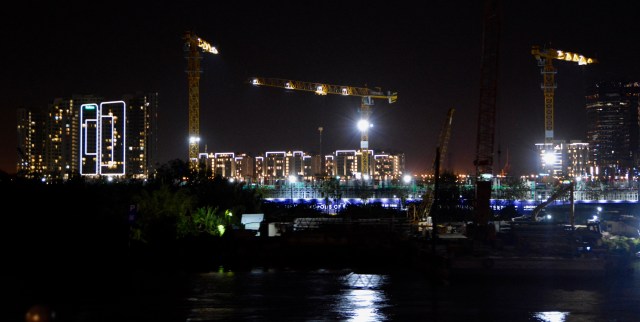
Photo ©Jean Janssen. Ho Chi Minh City’s district two is across the Saigon River from the city’s historical areas. District Two is where the new growth is. Vietnam

The 140-mile (225 kilometer) Saigon River cuts through Ho Chi Minh City.  We had traveled through several districts of the city, primarily one and three and I wondered where two was.  During the cruise I learned that District Two is actually on the other side of the river and is the new trendy place to be-that is where the current growth is.  Lots of cranes and construction sites dot the landscape.
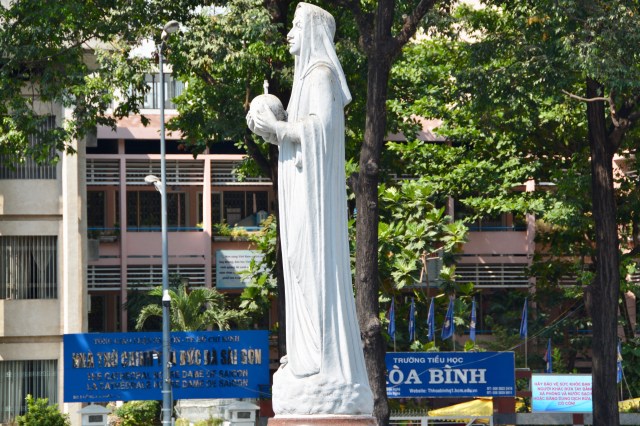
DSC_7570

Photo ©Jean Janssen. At the Saigon Cathedral.

There is also a underwater tunnel, the Thu Thiem Tunnel, more commonly referred to as the Saigon River Tunnel, which connects the existing urban area in District 1 with Thu Thiem, the new urban area in District 2.  It opened in November of 2011.

DSC_7779

Photo ©Jean Janssen. The Nha Rong or Dragon House was established by the French in 1862 as a house of trade at its own harbor. It is now the Ho Chi Minh Museum, Vietnam

The city has always been popular for trade with the Saigon River providing the route.  The river contributed to the city of Saigon becoming known as the Pearl of the Far East.  Our cruise port is just past the Nha Rong Harbor and the beautiful Dragon House (now the Ho Chi Minh Museum).  The Dragon House was established by the French in 1862 as a house of trade.
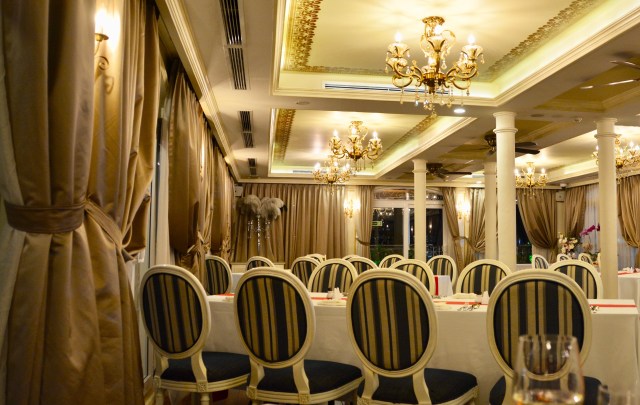
DSC_7712

Photo ©Jean Janssen. One of the dining rooms aboard the Saigon Princess, Ho Chi Minh City, Vietnam

Our guide took us to the boat as the sun set.  We were ushered aboard and into a dining room that could have seated all the participants of our cruise.  We were the only 4 guests in the room.  There were more people than that serving us.  We were offered a welcome beverage, a passionfruit juice.  Wonderful.

DSC_7711

Photo ©Jean Janssen. Boris tried a local beer aboard the Saigon Princess. Ho Chi Minh City, Vietnam.

We have a three course set menu, although we did have our choice of main course-duck or black sea bass.  My favorite was the first course, a heart of palm cream soup with truffle oil.  Two specialty drinks were included with our dinner.  Boris tried a local beer.
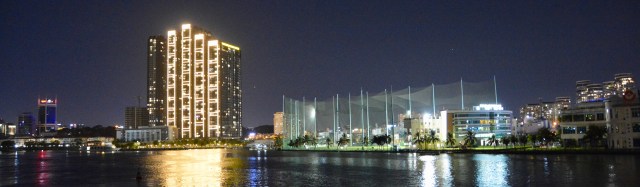
DSC_7729

Photo ©Jean Janssen. I spotted a golf driving range next to the Golden River Apartment Complex on the Saigon River, Ho Chi Minh City, Vietnam.

Our cruise took us from the Saigon Port in District 4 to the Saigon Bridge near the Vinhomes Central Park and back.   As we enjoyed our dinner, we could see the lights and the street level sites along the river through the windows.  Just before they served the dessert course, our guide came back and let us know we had just turned around at the Saigon Bridge and that it was a good time to come up and see the lighted buildings.
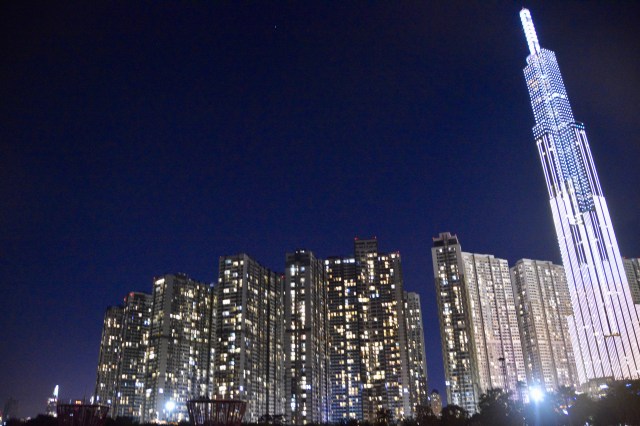
DSC_7717

Photo ©Jean Janssen. Vinhomes Central Park Complex, Ho Chi Minh City, Vietnam.

We were near the Vinhomes Central Park.  The apartments in this area are all owned by the same family.  The company name is Vinhomes which is a Vietnamese corporation and the largest real-estate developer in Vietnam.  Apartments in this complex cost over $400,000 (American dollars) for a one-bedroom and over $700,000 for a two-bedroom.  Our guide told us the rumor is the family made all its money through money laundering.  It is considered a “posh high-rise residential location”.
DSC_7714

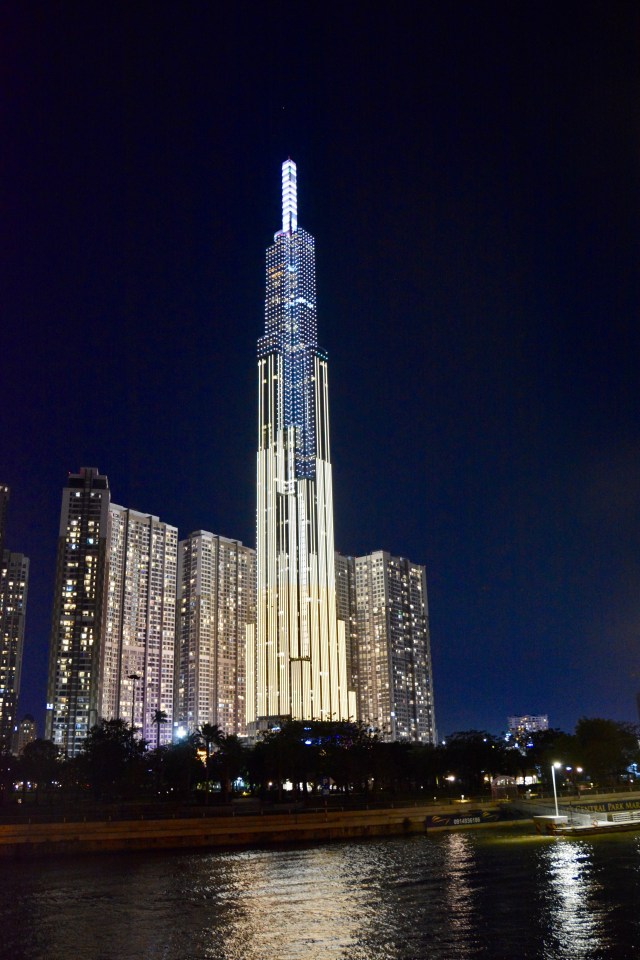
Photo ©Jean Janssen. Vincom Lanmark 81, the tallest building in Vietnam.

Vinhomes Central Park is dominated by the Vincom Landmark 81.  The skyscraper is “the tallest building in Vietnam, the tallest completed building in Southeast Asia since July 2018 and the 17th tallest building in the world.”  It is 81 stories tall.  The tower has an observatory, apartments, hotel rooms, conference facilities, retail spaces, restaurants and bars and parking.  I was drawn to its size and the mix on lighting styles on the exterior.

DSC_7726

Photo ©Jean Janssen. Ho Chi Minh’s District Two.
DSC_7727

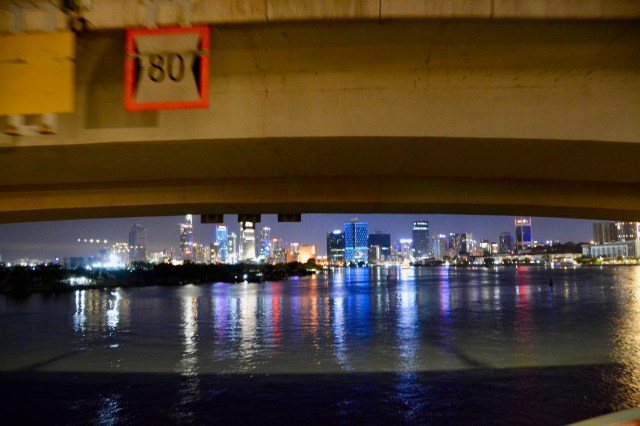
Photo ©Jean Janssen. Passing under the Thu Thiem Bridge on the Saigon River. Ho Chi Minh City, Vietnam.
DSC_7728

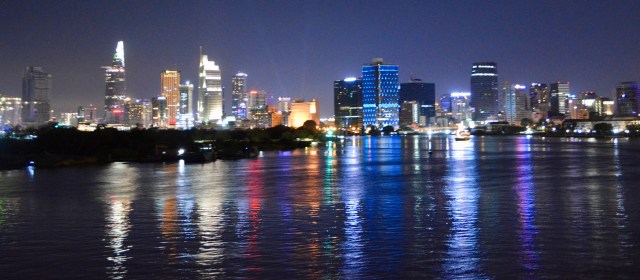
Photo ©Jean Janssen. Heading South on the Saigon River, Ho Chi Minh City, Vietnam.

I stayed on the sky deck until I realized we were going to hang in this area for a while.  I quickly went down and had dessert and then returned to the observation deck before we went under the Thu Thiem Bridge.  Everyone came back up with me.  Our guide commented that usually they had 50-60 people on the deck for this cruise.  We were able to move back and forth easily to take pictures because there were so few of us.  There were also dining tables set up on this deck and a band playing live music and encouraging people to dance.

DSC_7747

Photo ©Jean Janssen. Other riverboats on the Saigon River were decorated to be reminiscent of a Junk, a Chinese sailing vessel. Ho Chi Minh City, Vietnam.
DSC_7751

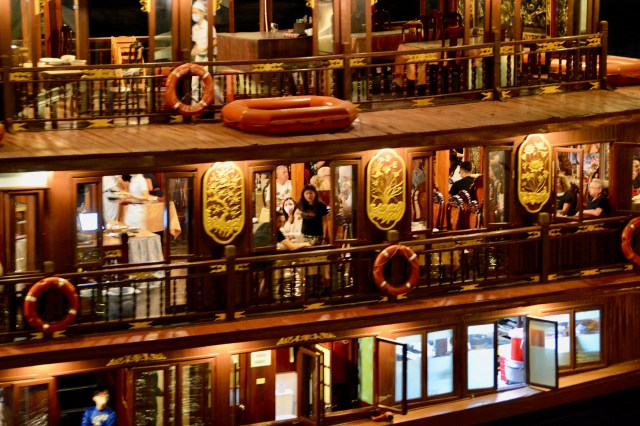
Photo ©Jean Janssen. Other riverboats on the Saigon River were decorated to be reminiscent of a Junk, a Chinese sailing vessel. Ho Chi Minh City, Vietnam.

DSC_7790

Photo ©Jean Janssen. Other riverboats on the Saigon River were decorated to be reminiscent of a Junk, a Chinese sailing vessel. Ho Chi Minh City, Vietnam.

There were other dinner boats on the river.  Many had touches to remind people of the junk, a Chinese sailing vessel.  This style of sailing ship was developed during the Song dynasty that ruled China from 960 to 1279.  The boat are unique for the “junk rig, also known as the Chinese lugsail or sampan rig…[it] is a type of sail rig in which rigid members, called battens, span the full width of the sail and extend the sail forward of the mast.”  Wikipedia.  These batten replicas were lit on the various dinner cruise ships; some of them even changed color as they traveled down the Saigon River.
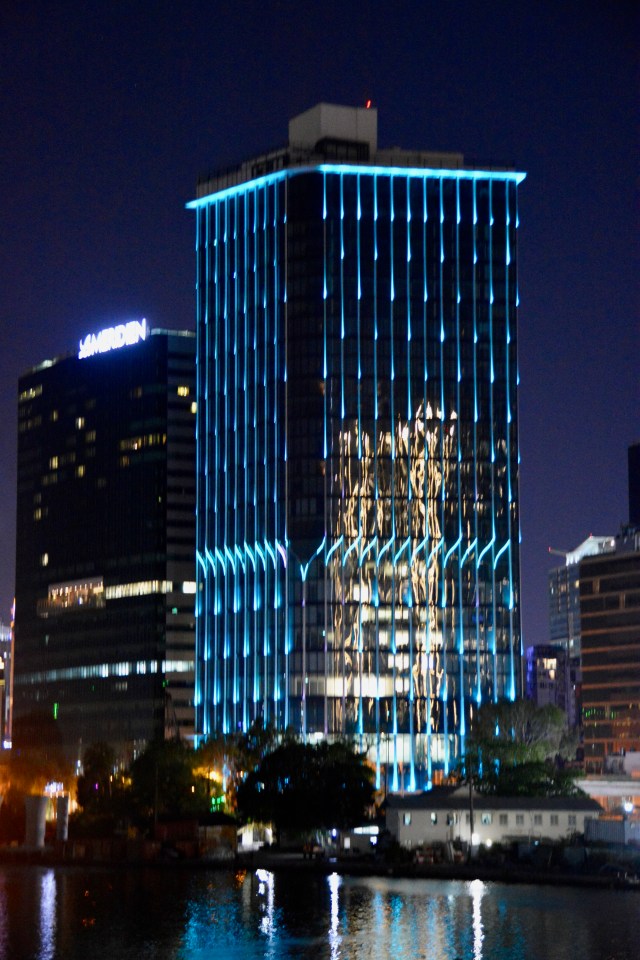
DSC_7754

Photo ©Jean Janssen. Along the Saigon River at night. The lights on this building changed color every few minutes.
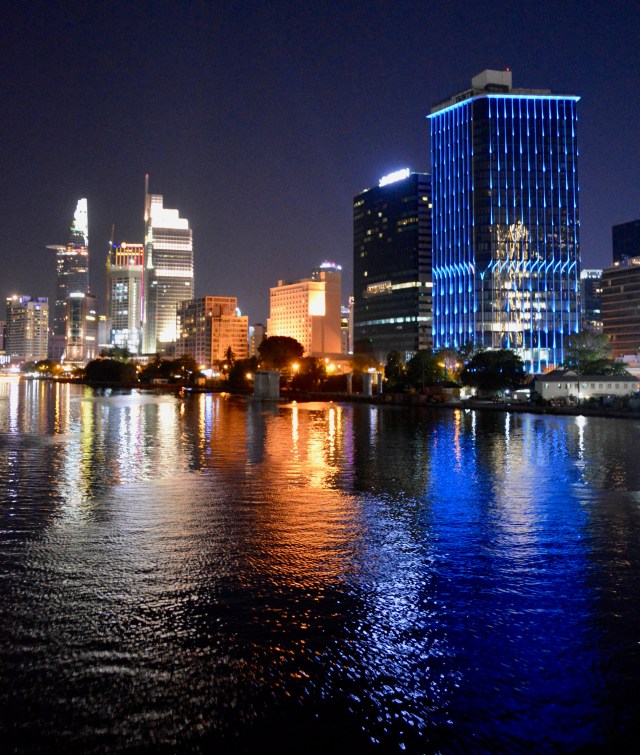
DSC_7755

Photo ©Jean Janssen. Along the Saigon River at night.
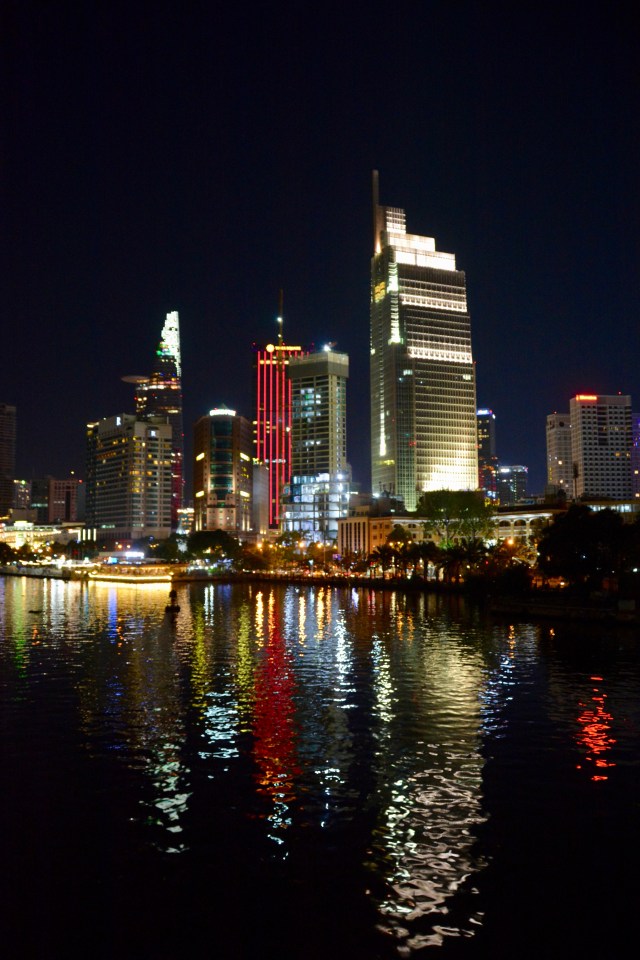
DSC_7767

Photo ©Jean Janssen. Along the Saigon River at night.

DSC_7773

Photo ©Jean Janssen. Along the Saigon River at night. The color change on the Times Square building happens from the bottom up.
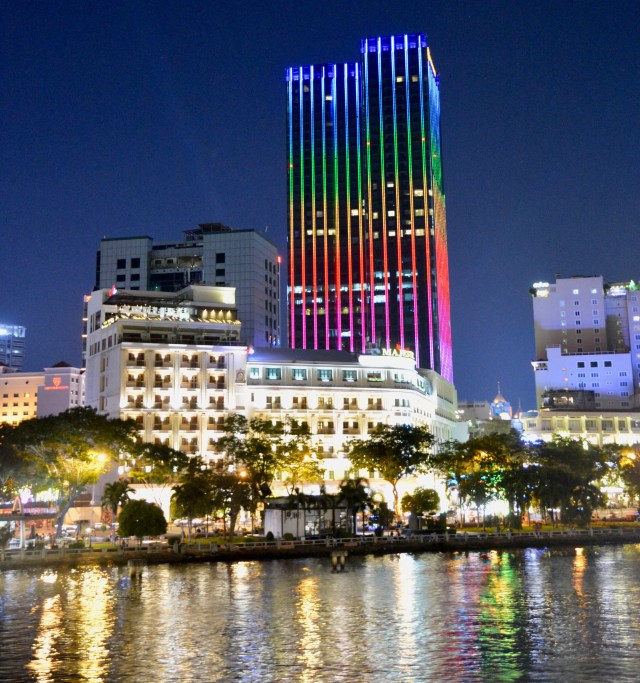
DSC_7785

Photo ©Jean Janssen. Along the Saigon River at night.

Of course, the marvel of this cruise is the opportunity to see the city’s buildings lit up, sometimes in color, sometimes changing color, and sometimes in multiple colors.  It really was a dinner show, even without the music and dancing.  One of my favorite buildings continually changed color-teal, blue, pink, purple, gold, etc.
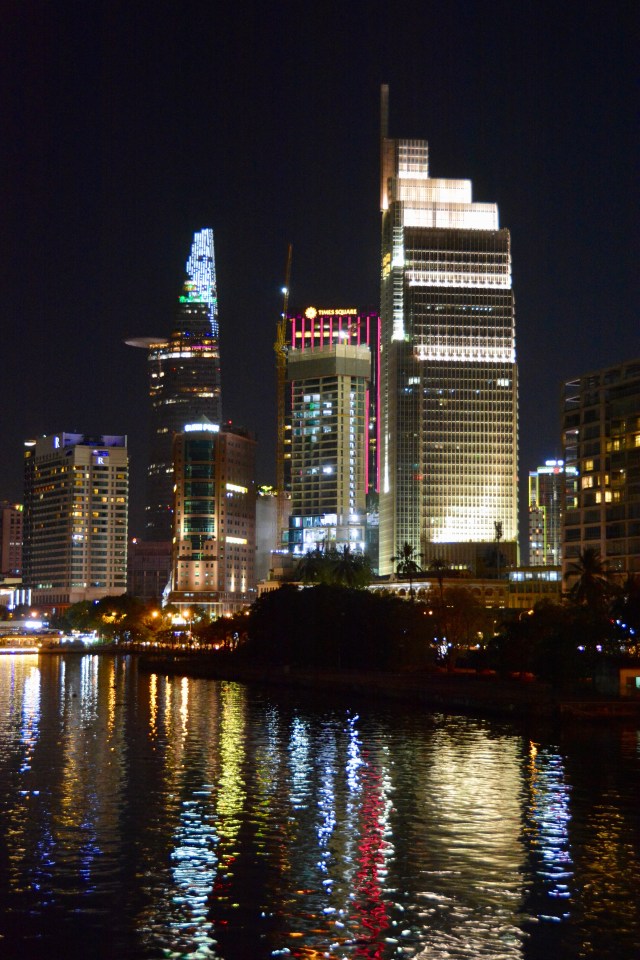
DSC_7763

Photo ©Jean Janssen. Along the Saigon River at night. In the distance you can see the Bitexco Financial Building. Ho Chi Minh City, Vietnam.
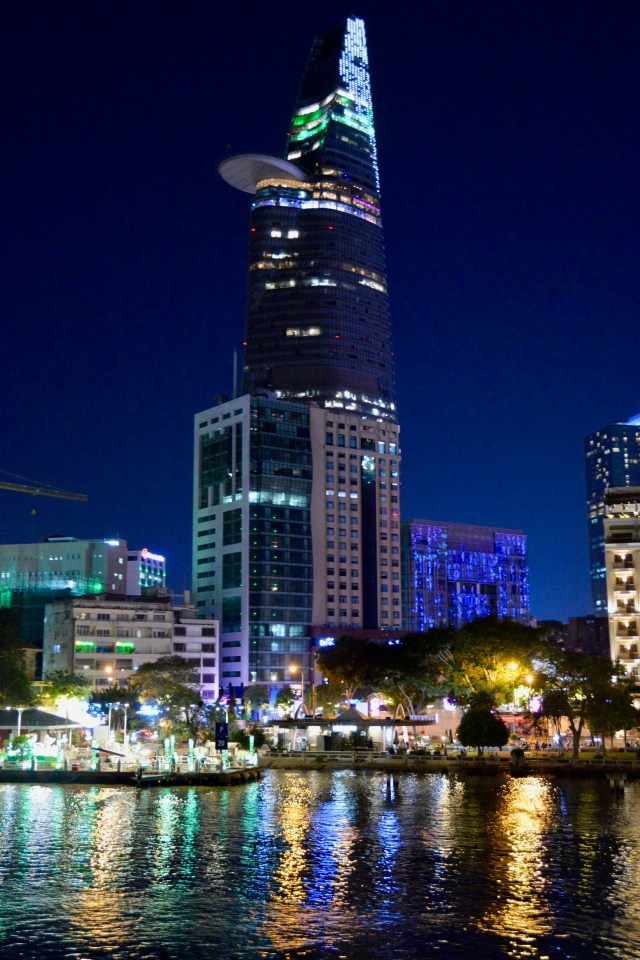
DSC_7782

Photo ©Jean Janssen. The Bitexco Financial Building as seen from the Saigon River at night. Ho Chi Minh City, Vietnam.

DSC_7778

Photo ©Jean Janssen. The Bitexco Financial Building with its 52th floor helipad as seen from the Saigon River at night. Ho Chi Minh City, Vietnam.

We had excellent views of the Bitexco Financial Building with its 52th floor helipad that we had seen on our hop-on/hop-off bus tour yesterday.  For a short period of time it was the tallest building in the city.  It has a popular observation deck.
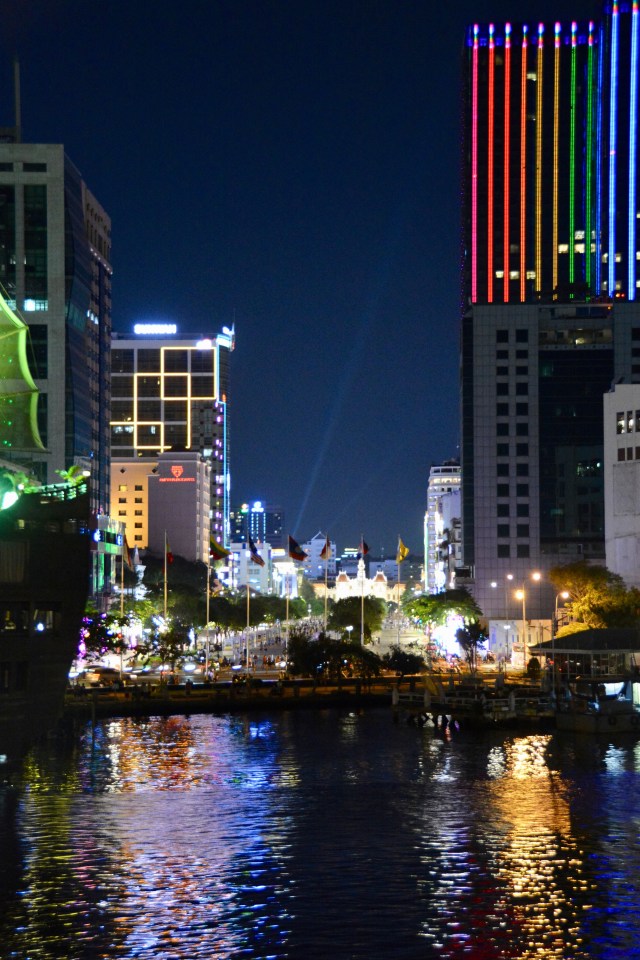
DSC_7797

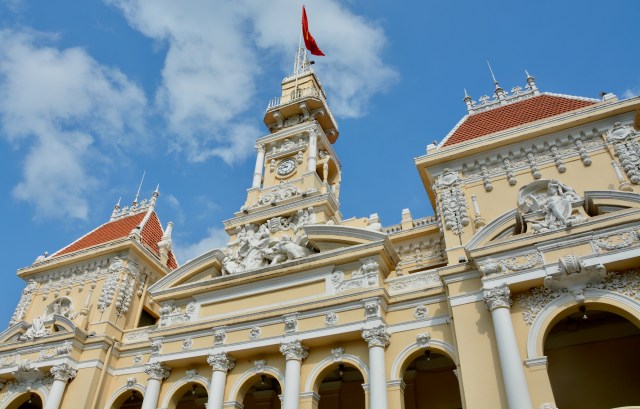
Photo ©Jean Janssen. Along the Saigon River at night. In the distance is the Ho Chi Minh City Hall, Vietnam.
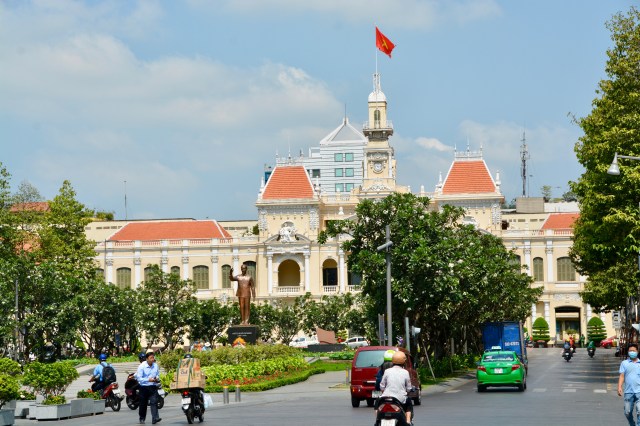
DSC_7617

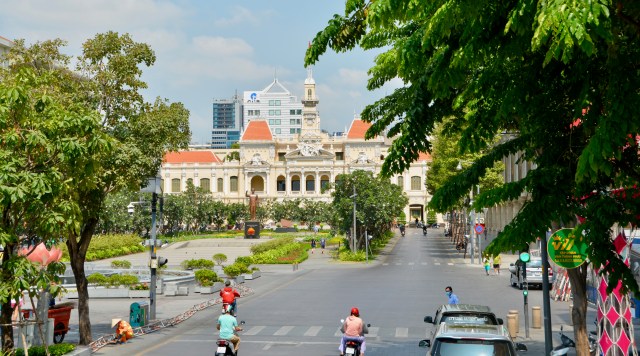
Photo ©Jean Janssen Ho Chi Minh City Hall by day.

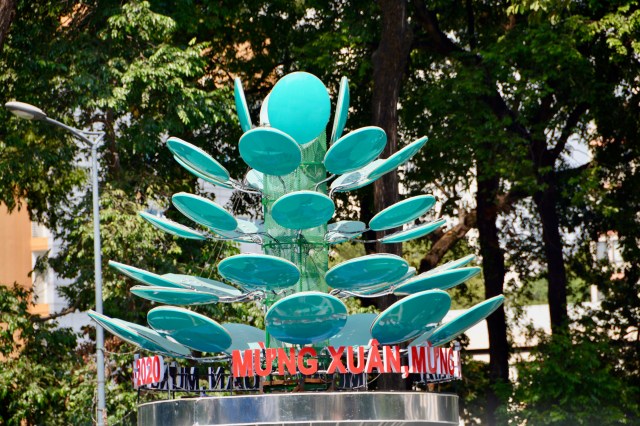
We passed by the main street that leads to the city hall and the statute of Ho Chi Minh.  The new years decorations on this street are modeled after the lotus flower.  The popular lotus flower fountain on the street was recently replaced.
DSC_7822

Photo ©Jean Janssen. At the dock at the Saigon Port.

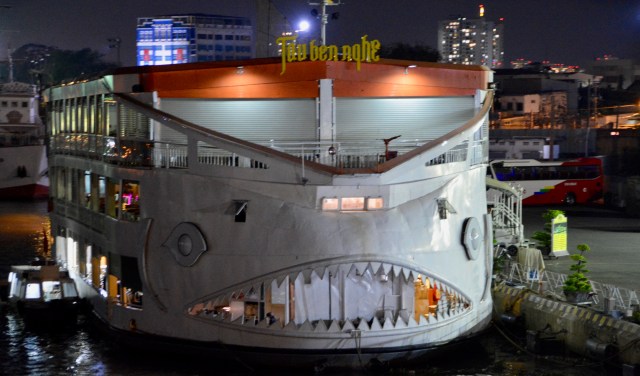
We docked and there was just time to grab a quick picture.  Our berth was next to an interesting ship where the end of the boat looked like a fish’s mouth.  It was back to the hotel after that.  We said goodbye to the guide and the other couple.  They are going to the Cu Chi tunnels tomorrow, but there isn’t time for us to go before we leave for the airport.  We will meet our cruise director midday tomorrow for our transfer to the airport.

DSC_7840

Photo ©Jean Janssen. Our dinner cruise ship, the Saigon Princess, a new vessel. Ho Chi Minh City, Vietnam.

DSC_7838

Boris and Natasha aboard the Saigon Princess. Note the changing lights of the Times Square building on the left and the Vincom Landmark 81 tower on the right.

DSC_7802

Photo ©Jean Janssen. Ho Chi Minh City at night as seen from the Saigon River, Vietnam.


Posted in cruises, international, River Cruise | Tagged , , , , , , , , , , , | 3 Comments

Reality hits us in Saigon

DSC_7656

Photo ©Jean Janssen. Boris on the patio of the Reunification Palace looking out on the fountain and gates where the communist tank rammed through.  Ho Chi Minh City, Vietnam.

No sleep again last night.  We were just too anxious about what was happening with our trip.  We went down to breakfast at 6:30 am when they opened.  We had been up for hours.  Even though our meeting was not until 8:30, at 7:40 Boris went to see if the Cruise Director was there yet.  I stayed in the room.  He was back pretty quick.

DSC_7652

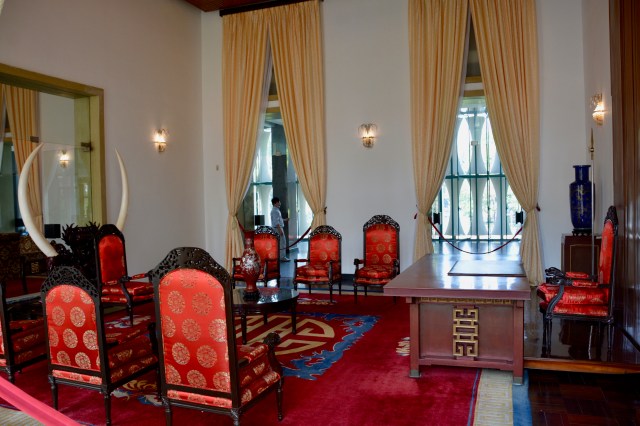
Photo ©Jean Janssen. Upper floor state room in the Reunification Palace Ho Chi Minh City, Vietnam.

The River ports had been closed and the Cambodian government had cancelled all visas. There would be no cruise.  Our city tour was rescheduled to the afternoon so we could use the morning to make travel arrangements.  Our tour group which had started at 61 and was down to 16 yesterday, was now at only 6 people.  We would have the benefits of the city tour and dinner cruise today.  Boris had also talked to the concierge; if the travel agent couldn’t help us they could assist with airline reservations.

DSC_7660

Photo ©Jean Janssen. Looking across to the upper floor patio in the Reunification Palace Ho Chi Minh City, Vietnam.

Boris immediately called the travel agent.  The flights we wanted were still available but we weren’t sure if we needed to just buy new tickets or if we could apply the flights originating in Siem Reap, Cambodia.  Boris was almost hysterical as he talked to her on the phone.  Yep, I’m the calm one.  It looked like we were going to have to pay about $1,000 each on top of the original ticket to get home.  Whatever it takes was our attitude.

DSC_7700

Photo ©Jean Janssen. In the courtyard of the Jade Emperor Pagoda, Ho Chi Minh City, Vietnam.

I started letting a few people know that it looked like we were coming home and how that needed to be handled.  We weren’t sure if they would quarantine us or if the flights might even be cancelled before we left the next day.  Finally we got an email and a call from the travel agent.  We were ticketed to leave at 3:55 pm the next day (Sunday) and the change fee/difference was only going to be $94 each.  Whew.

IMG_0856

Photo ©Jean Janssen. We enjoyed a nice lunch before our afternoon tour. Check out this egg roll selection at Square One in the Park Hyatt Saigon

After lunch in the hotel at the Square One Restaurant, we went down at 1:30 for the tour in better spirits.  Now our tour group was down to only 4 people.  We were given a mask and met the Uniworld employee who would serve as our guide.  The other couple had just arrived the day before from Los Angeles.  They were originally from Cuba.  Our first stop was the Independence Palace commonly referred to as the Reunification Palace.

DSC_7516

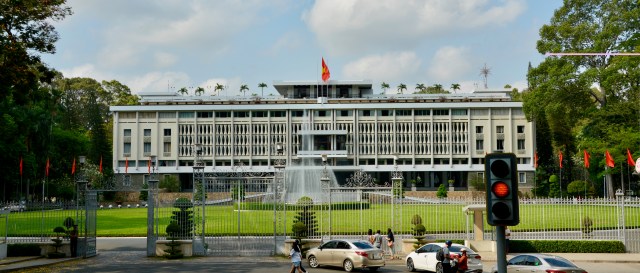
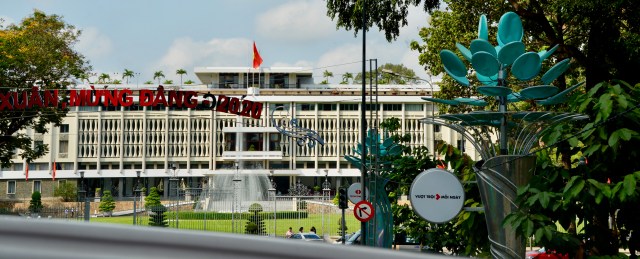
Photo ©Jean Janssen. Reunification Palace, Ho Chi Minh City, Vietnam. This is the former Presidential Palace Saigon. And according to Boris, one of the ugliest buildings he has ever seen.

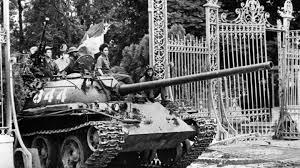
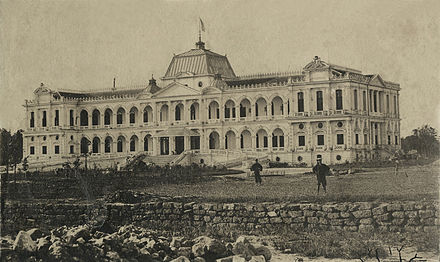
This building was originally the Presidential Palace.  It was “built on the site of the former Norodom Palace…[It] was the home and workplace of the President of South Vietnam during the Vietnam War. It was the site of the end of the Vietnam War during the Fall of Saigon on April 30, 1975, when a North Vietnamese army tank crashed through its gates.”

images 2

Saigon, April 30, 1975

Once inside the gates, our guide gave us the briefing that is usually given on-board the ship.  He told us a bit about the political history of Vietnam.  He spoke of the success of reunification.  The other couple had a difficult time with the discussion having lived through the communist takeover of Cuba.  As they put it, not all experiments with communism are successful.  Our guide was educated under the Communist system, but his father had served in the South Vietnamese army during the war and had endured the re-education camps.  At the camps the soldiers were tortured and often left starving.  They endured disease and were forced to perform hard labor.

440px-Palais_du_Gouverneur_Général_à_Saïgon_(1875)

Norodum Palace or Palais du Gouverneur General a Saigon circa 1975

He went farther back in history to an earlier building on this site that had served as the home to the Governor of French Indochina.  The countries of Vietnam, Cambodia, and Laos were collectively known as French Indochina.   That structure was known as the Norodom Palace or Governor’s Palace.  Construction was complete in 1871.  It was briefly the headquarters of the Japanese colonial officials in 1945 before it was returned to the French that same year.  In 1954, France withdrew from Vietnam.

DSC_7636

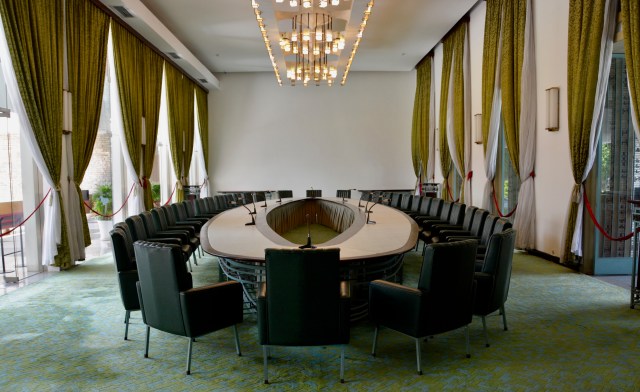
Photo ©Jean Janssen. Cabinet Room in the Presidential Palace (now the Reunification Palace) where the South Vietnamese President met with his ministers.

DSC_7646

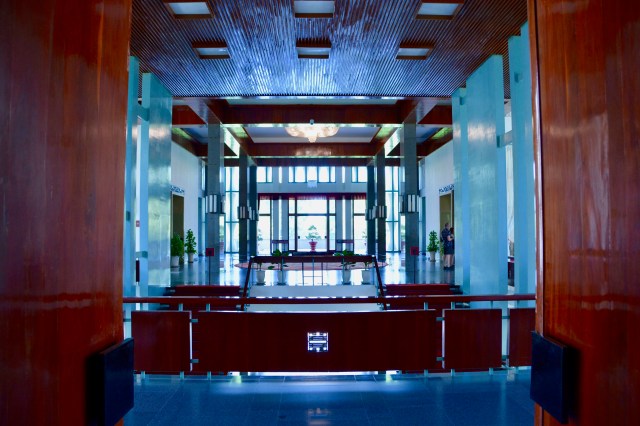
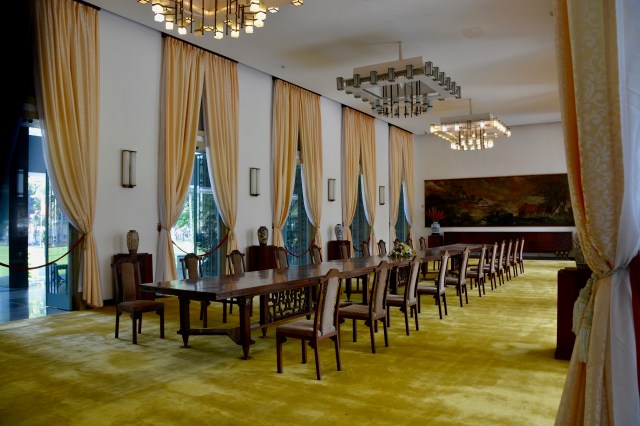
Photo ©Jean Janssen. Ground floor dining room of the Reunification Palace, Ho Chin Minh City, Vietnam.

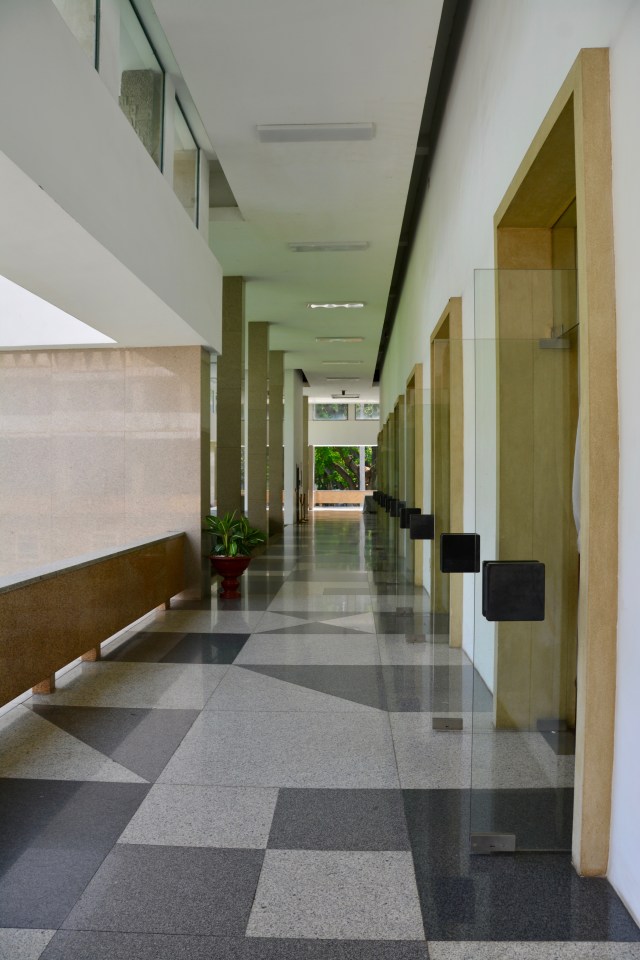
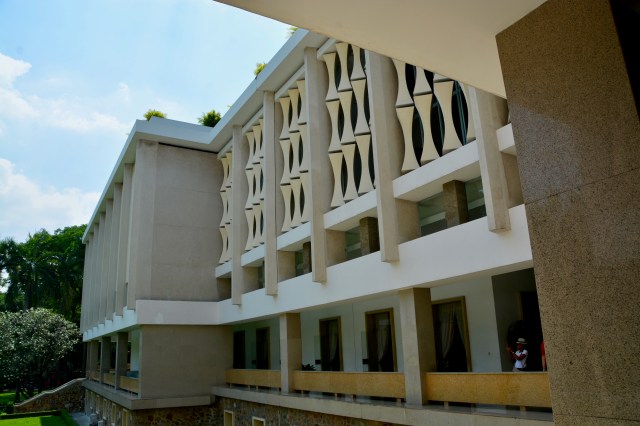
After the guide’s general briefing, we walked up to the Palace and toured the interior.  I agree with Boris that it is not an attractive building.  The building was constructed between 1962-1966.  It definitely looks of that era.  However, you can see that it was built to take advantage of cross ventilation and any breeze.  In the front are the public rooms, including the Cabinet Room, Conference Room, and State Dining Room.  The Conference Room is the only one that is still used.  Funerals for some political leaders take place here.  The rest of the building is preserved for visitors only.

DSC_7644

Photo ©Jean Janssen. Conference Room of the Reunification Palace, Ho Chi Minh City, Vietnam.
DSC_7645

Photo ©Jean Janssen. Hallway of the Reunification Palace, obviously designed to enhance cross ventilation and catch any breeze.

DSC_7650

Photo Jean Janssen. Definitely a product of its time, the Reunification Palace, Ho Chi Minh City, Vietnam.

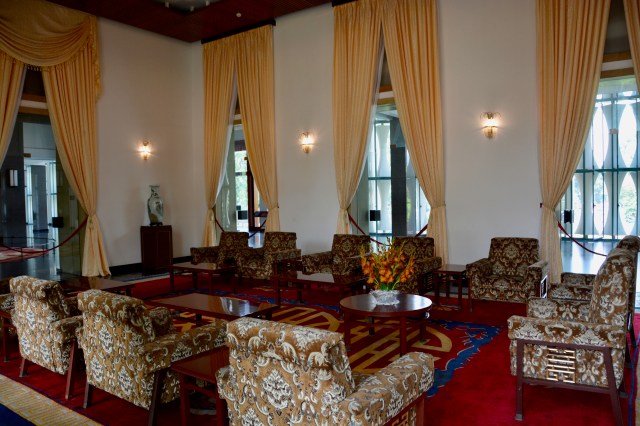
After we toured the lower floor, we went upstairs to view the smaller state rooms in the front of the building.  These rooms were more ornate and attractive and there was a wonderful view of the front fountain from the porch on this floor.  The interior grew on me.

DSC_7651

Photo ©Jean Janssen. Upper floor hallway in the Reunification Palace Ho Chi Minh City, Vietnam.

DSC_7653

Photo ©Jean Janssen. Upper floor state room in the Reunification Palace Ho Chi Minh City, Vietnam.

DSC_7655 2

Photo ©Jean Janssen. Upper floor patio overlooking the palace gates at the Reunification Palace Ho Chi Minh City, Vietnam.
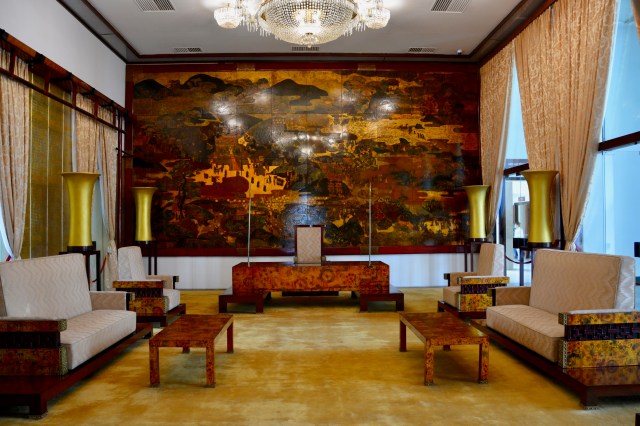
My favorite upper floor room was the Ambassadors Chamber were newly-appointed ambassadors presented their credentials to the President.  The last such event to take place in the Palace was the presentation of the Japanese Ambassador on April 18, 1975.  The room is decorated in Japanese-style lacquer.  The panels behind the desk depict the defeat of the Ming which occurred under King Le Loi.

DSC_7659

Photo ©Jean Janssen. Upper floor Ambassadors Chamber in the Reunification Palace Ho Chi Minh City, Vietnam.

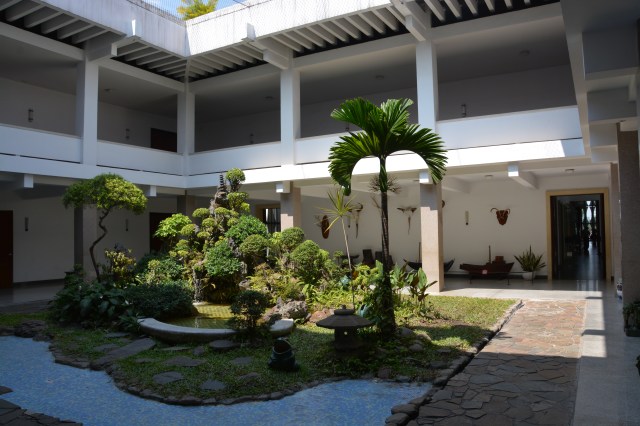
From the upper floor you were able to access the private apartment for the President and his family.  There was a nice courtyard, but the rooms were rather small.  The guide’s father told him that during the war no one knew exactly where the President was.  He might have been at the Palace or he might not have been.

DSC_7663

Photo ©Jean Janssen. Upper floor courtyard in the Presidential apartments in the Reunification Palace Ho Chi Minh City, Vietnam.

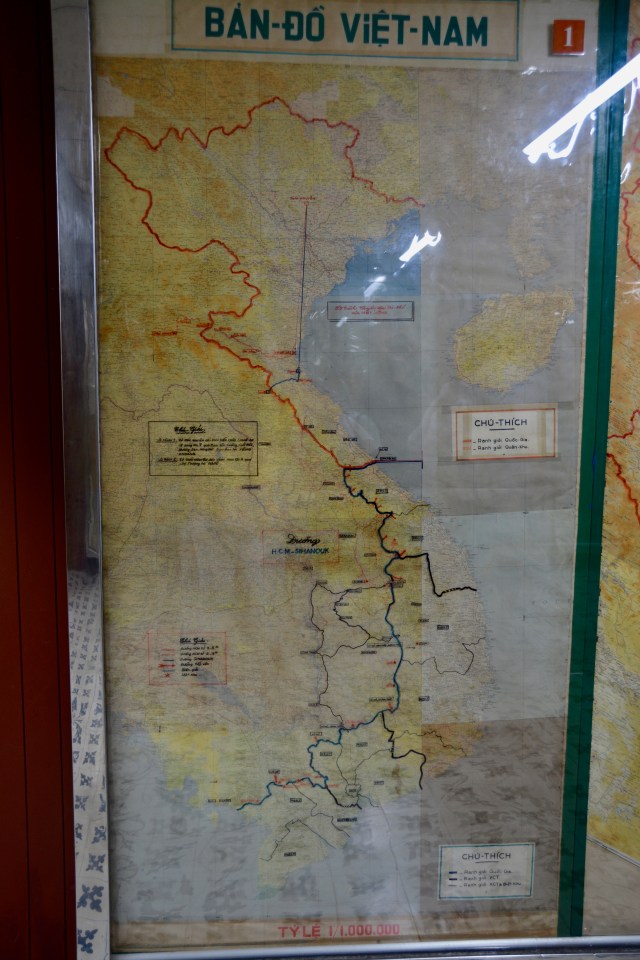
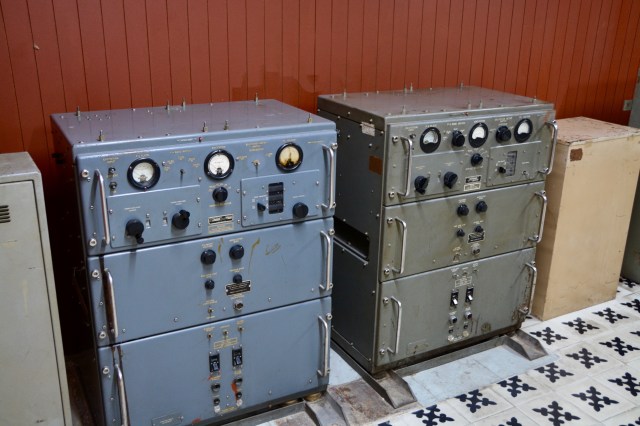
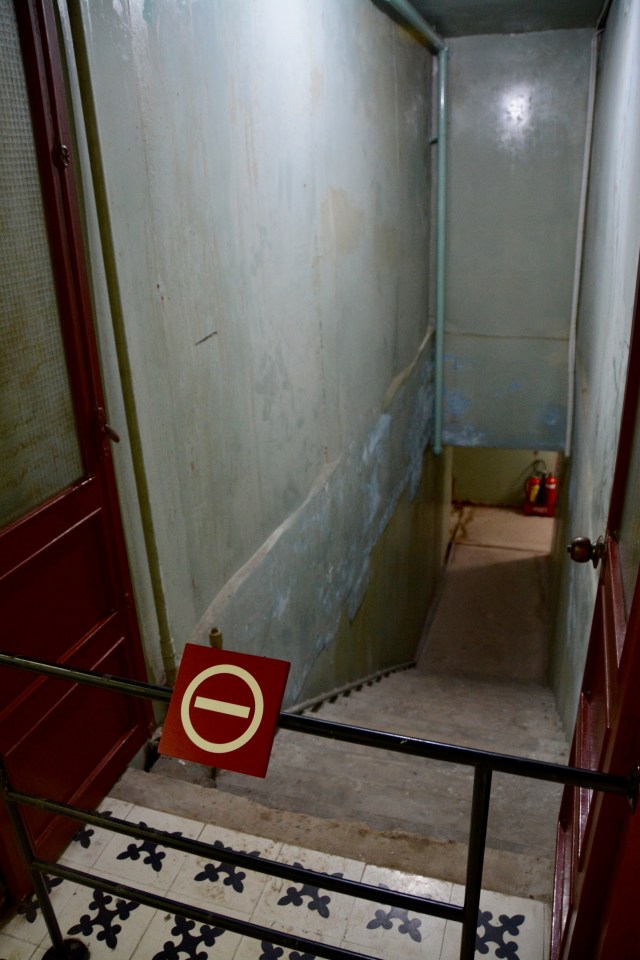
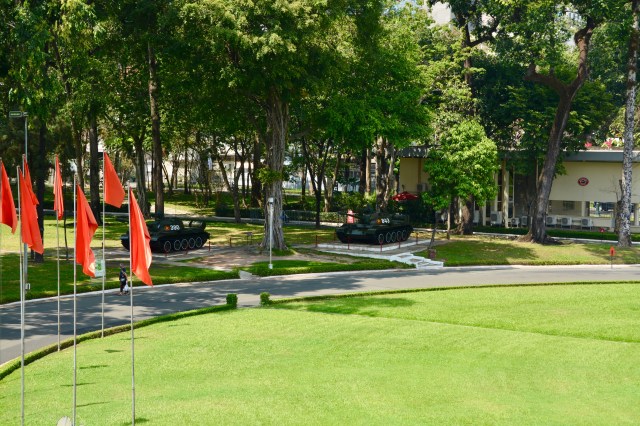
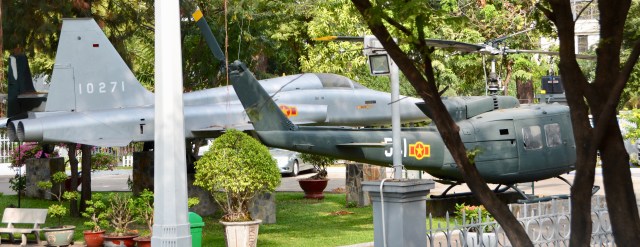
Finally, we went down to the lower level bunkers.  Here there was a narrow hallway that passed through a series of rooms with old radio and office equipment, mostly American-made.  There was also an even lower level for the soldiers.  On that lowest level we accessed the gift shop and the outside lawn.  We passed by the tanks commemorating the ramming of the Palace gates on April 30, 1975, effectively ending the Vietnam War.

DSC_7665

Photo ©Jean Janssen. Map in the bunker of the Reunification Palace Ho Chi Minh City, Vietnam.

DSC_7667

Photo ©Jean Janssen. Equipment in the bunker of the Reunification Palace Ho Chi Minh City, Vietnam.

DSC_7669

Photo ©Jean Janssen. On equipment in the bunker of the Reunification Palace Ho Chi Minh City, Vietnam.
DSC_7671

Photo ©Jean Janssen. Passage down to an even lower level in the bunker of the Reunification Palace Ho Chi Minh City, Vietnam.

DSC_7657

Photo ©Jean Janssen. Tanks on the grounds of the Reunification Palace Ho Chi Minh City, Vietnam.

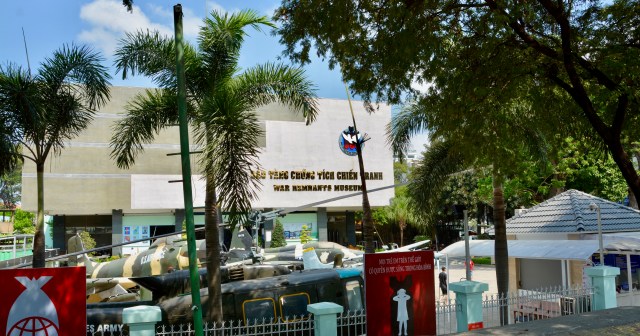
Our next stop was the War Remnants Museum.  I had heard this was the most popular museum in the city for visitors.  Before we arrived, I asked the guide what the purpose of the museum was.  He hesitated and then said, “propaganda aimed at the younger generations”.  Wikipedia’s listing of the history of the museum’s name is enlightening.

DSC_7602

Photo ©Jean Janssen War Remnants Museum, Ho Chi Minh City, Vietnam.

“Operated by the Vietnamese government, an earlier version of this museum opened on September 4, 1975, as the Exhibition House for US and Puppet Crimes… The exhibition was not the first of its kind for the North Vietnamese side, but rather followed a tradition of such exhibitions exposing war crimes, first those of the French and then those of the Americans, who had operated in the country as early as 1954.”

“In 1990, the name was changed to Exhibition House for Crimes of War and Aggression, dropping both “U.S.” and “Puppet.”  In 1995, following the normalization of diplomatic relations with the United States and end of the US embargo a year before, the references to “war crimes” and “aggression” were dropped from the museum’s title as well; it became the War Remnants Museum.”

DSC_7674

Photo ©Jean Janssen. War Remnants Museum, Ho Chi Minh City, Vietnam.

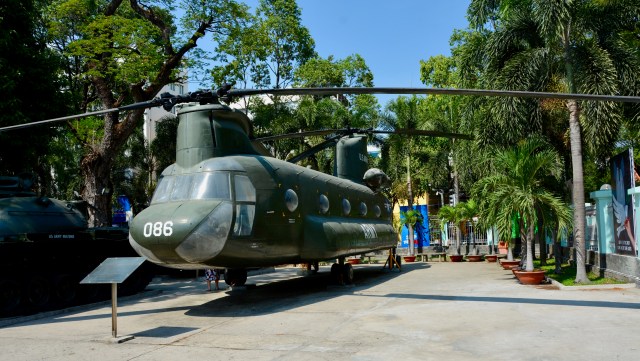
On display is military weaponry and equipment ceased from or abandoned by the Americans.  The 3-story museum is primarily a display of photographs and enlarged quoted language condemning the war.  It is completely one-sided.  There is no information regarding the Viet Cong’s aggression and torture.  “The Việt Cộng, also known as the National Liberation Front, was a mass political organization in South Vietnam and Cambodia with its own army that fought against the United States and South Vietnamese governments during the Vietnam War.”

DSC_7675

Photo ©Jean Janssen. War Remnants Museum, Ho Chi Minh City, Vietnam.

I had seen most of the photographs before.  Perhaps if you are of a younger generation or haven’t studied history, you might be educated by this museum.  However, its one-sided focus diminishes its credibility in my eyes.  I have noted that it is no longer on many of the recommended visit lists it previously appeared on.  I don’t recommend the museum.  Look to a more balanced source for an understanding of the Vietnam War.

DSC_7698

Photo ©Jean Janssen. The Jade Emperor Pagoda, Ho Chi Minh City, Vietnam.

DSC_7693

Photo ©Jean Janssen. The Jade Emperor Pagoda, Ho Chi Minh City, Vietnam.

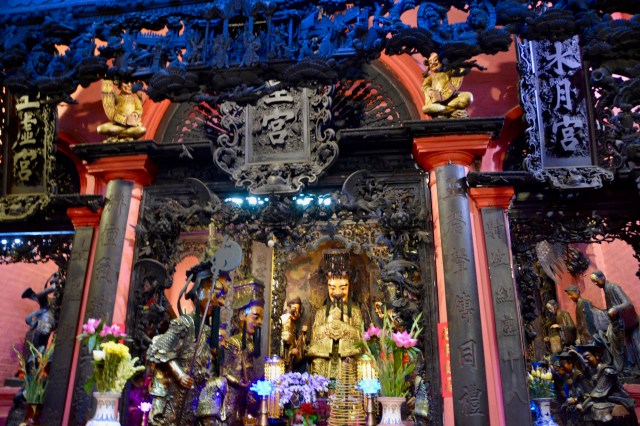
The next stop on our city tour was the Jade Emperor Pagoda.  Our guide told us about the history of the Chinese groups that settled in Vietnam primarily when there was a change in the dynastic ruler in China.  Their gods are generally worshiped at separate temples.  This one is dedicated to the Ruler of the Universe, the supreme Taoist god-the Jade Emperor or King of Heaven, Ngoc Hoang.

DSC_7682

Photo ©Jean Janssen. The King of Heaven in the Jade Emperor Pagoda, Ho Chi Minh City, Vietnam.

After passing through the outer courtyard with the burning incense and the catfish pond, you go inside and walk through a series of rooms.  The main sanctuary is dedicated to the Jade Emperor.  The figures are characters from both Buddhist and Taoist lore and are made from reinforced paper mâché.  The temple was built in 1909.

DSC_7687

Photo ©Jean Janssen. Hall of the Ten Hells in the Jade Emperor Pagoda, Ho Chi Minh City, Vietnam.

The tradition includes the 10 levels of hell.  The Hall of Ten Hells features these regions in carved wood panels, each level getting progressively more torturous.  The faithful believe in reincarnation and that your present behavior dictates what position you will come back in in the next life.

DSC_7692

Photo ©Jean Janssen.  Kim Hoa Thanh Mau in the Jade Emperor Pagoda, Ho Chi Minh City, Vietnam.

DSC_7690

Photo ©Jean Janssen.  The Kim Hoa Thanh Mau Room in the Jade Emperor Pagoda features 12 statutes of women who represent different human characteristics and a year in the 12-year Chinese astrological calendar in Ho Chi Minh City, Vietnam.

Our guide told us that the most popular shrine is actually a small room featuring the God of All Women, Kim Hoa Thanh Mau.  Women come to pray that they will conceive a child.  On the feast day, there are lines around the block to enter the temple.  On the side walls “the ceramic figures of 12 women, overrun with children and wearing colourful clothes, sit in two rows of six. Each of the women exemplifies a human characteristic, either good or bad (as in the case of the woman drinking alcohol from a jug). Each figure represents a year in the 12-year Chinese astrological calendar.” From the Lonely Planet Guide.

DSC_7694

Photo ©Jean Janssen. I found this figure of Minnie Mouse just outside the room featuring the Chief of all Women in the Jade Emperor Pagoda, amusing. Ho Chi Minh City, Vietnam.

The final stop on our city tour was the central post office that Boris and I had visited the previous day.  Boris had asked the guide about the location of the famous photographs showing people trying to leave the country at the fall of Saigon in April of 1975.  The location was identified as the American Embassy or CIA Headquarters in South Vietnam. From the Post Office, we had a view of building.  I was very young at the time, but I remember the image and the coverage.

images

Saigon April 1975

saigon_helicopter200-b11d6fe79bac6b98a8aad6f88ce72c9aa1f0db90-s800-c85

Saigon April 1975

DSC_7702

Photo ©Jean Janssen. The same location, Saigon, now Ho Chi Minh City, Vietnam in 2020.

We took a look back inside the Central Post Office.  Our guide told us more about the carved wooden phone booths.  Back before cell phones, citizens would line up and take a number to make a collect oversees call.  When their number was called they would go to a designated phone booth and hope someone on the other end of the call would answer and accept the charges.  The large space was usually full of hopeful callers.

DSC_7561

Photo ©Jean Janssen. Phone booths in the Central Post Office, Ho Chi Minh City, Vietnam.

IMG_6361

Photo ©Jean Janssen. Selfie I took yesterday in the Central Post Office, numbered phone booths in the background, Ho Chi Minh City, Vietnam

We headed back to the hotel.  Tonight will be our last in the city.  They are picking us up at 6:30 pm to go to the Saigon Princess, a new riverboat, for a dinner cruise on the Saigon River.  Until then…Natasha.

DSC_7560

Photo ©Jean Janssen. Central Post Office, Ho Chi Minh City, Vietnam

DSC_7656

Photo ©Jean Janssen. Boris on the patio of the Reunification Palace looking out on the fountain and gates where the communist tank rammed through.  Ho Chin Minh City, Vietnam

Posted in cruises, international, River Cruise | Tagged , , , , , , , , , , | Leave a comment

Saga in Saigon

DSC_7516

Photo ©Jean Janssen. Reunification Palace, Ho Chi Minh City, Vietnam. This is the former Presidential Palace Saigon. And according to Boris, one of the ugliest buildings he has ever seen.

The real saga of our visit to Saigon (Ho Chi Minh City) Vietnam began early the next morning.  With the time change, it was hard to sleep normal hours and Boris woke up at 1:30 am to find a message from our son that the cruise line had called us at our home in Houston, Texas.  We were asked to call Uniworld.  We were on hold a terribly long time (no surprise) only to have them tell us that everything was fine with our cruise, but that they were cancelling most of their European based River Cruises-which is most of their itineraries.  Our trip was still slated to go forward.

DSC_7513

Photo ©Jean Janssen. In case you forgot, just a reminder that you were in a Communist country. Ho Chi Minh City, Vietnam

Boris also found information that European travelers were not going to be permitted into the United States.  We also found out that Americans were being advised not to travel outside the country.  That message came a day late for us.  Needless to say, we couldn’t get back to sleep.  At 6 am I got up and took a shower and by 7 am we were downstairs for breakfast.

DSC_7519

Photo ©Jean Janssen. New Years decorations near the Reunification Palace, Ho Chi Minh City, Vietnam

Even after breakfast it was so early that things really hadn’t opened up.  We walked around a little and then decided to take the hop-on/hop-off bus.  I can’t say I recommend it.  Everything we went to was really within walking distance.  If you don’t want to walk or its just too hot for you, you might consider the bus, but the information provided on the audio feed was extremely limited and jumbled at times.  I think they might have combined several routes and the GPS wasn’t sure which audio it should connect at times.  It was good for taking pictures and getting a bird’s eye view.

DSC_7615

Photo ©Jean Janssen. City Hall with a statute of Ho Chi Minh in front.

Get good directions to the pick up point.  The concierge at the Park Hyatt Saigon airdropped me a photo.  The signs are small and a set among a hundred other signs.  We got on near the city hall which has a small sign you can only see from inside the covered bus stop.  It was some good people watching as we waited for the 8:47 am pick up.

DSC_7514

Photo ©Jean Janssen. Reunification Palace with New Years decorations in front, Ho Chi Minh City, Vietnam.

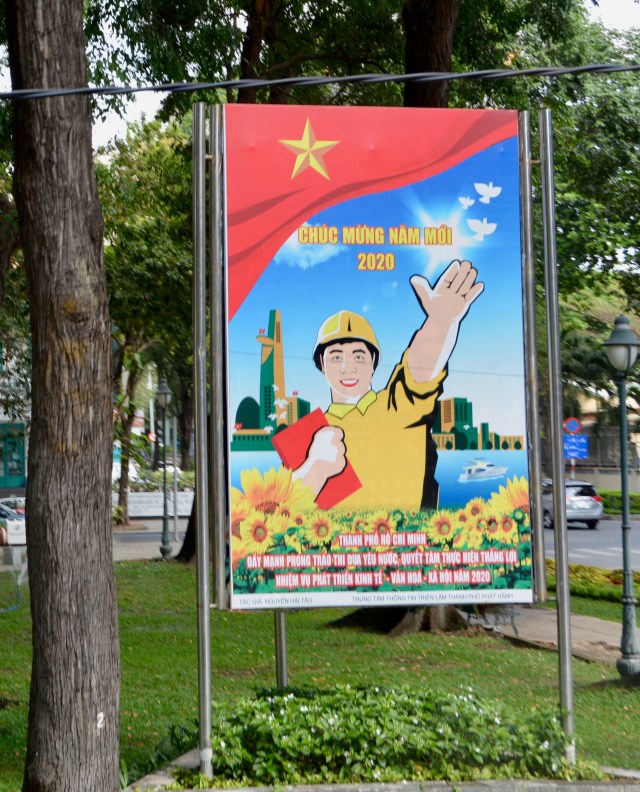
After the City Hall, we passed the Reunification Palace that we had seen from a distance yesterday.  Boris said it was one of the ugliest buildings he had ever seen.  We will be touring the inside tomorrow with the cruise line.  In each section of the city we saw New Years decorations still in place.  I wondered if they were still up since city workers were dealing with other issues with virus.  If you look closely you can see that each are sponsored.  Apparently as long as they pay the sponsor fee, the decorations stay up.

DSC_7510

Photo ©Jean Janssen At the Reunification Palace, Ho Chi Minh City, Vietnam.

After the Vietnam War (called the American War in the northern part of the country), the north and south were united under communism as the one-party political system and a socialist economy.  After 10 years of extreme hardship and isolation, the reformists took control and put in place free-market elements encouraging some private ownership.  Vietnam looked for foreign investment and a place on the world stage.

DSC_7535

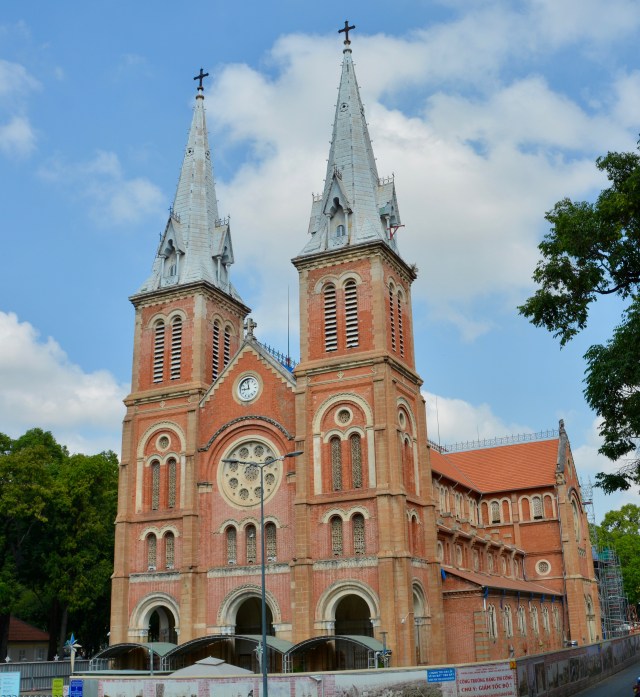
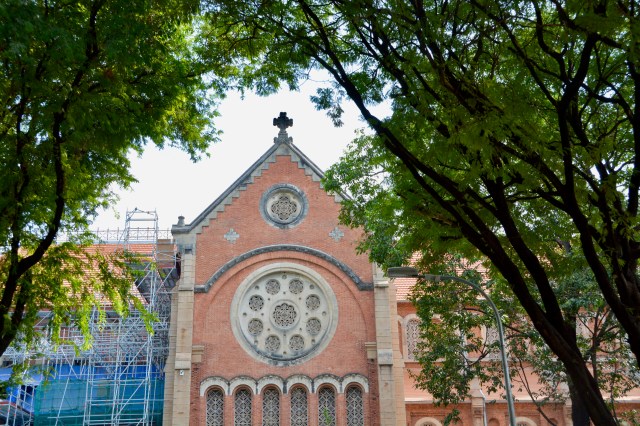
Photo ©Jean Janssen. Cathedral Basilica of Our Lady of The Immaculate Conception, Ho Chi Minh City, Vietnam.  It is commonly referred to as Notre Dame Cathedral of Saigon.

The next stop on the tour was the Post Office and Cathedral.  The Cathedral is under renovation and only open for mass.   The congregation was started by the French colonists and the Cathedral built between 1863 and 1880.   It sits at a major intersection.  Looking down the street from the Cathedral through the parkland, you can see the Reunification Palace.  This is the start and stop point for the hop on/hop off route and we found out the bus would be sitting here for the next 30 minutes.

DSC_7541

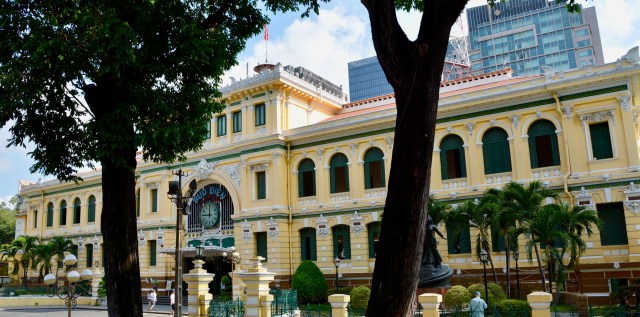
Photo ©Jean Janssen Saigon Post Office of French Construction.

We got off to tour the Post Office.  In contrast to most of the other buildings we visited, you could walk right in with no temperature check.  Like the Cathedral which is right across the street, this building is also of French construction.  “In 1862, the southern third of the country became the French colony of Cochinchina.  By 1884, the entire country had come under French rule…The French administration imposed significant political and cultural changes on Vietnamese society.  A Western-style system of modern education was developed, and Catholicism was propagated widely.”  The French maintained control until WWII.

DSC_7556

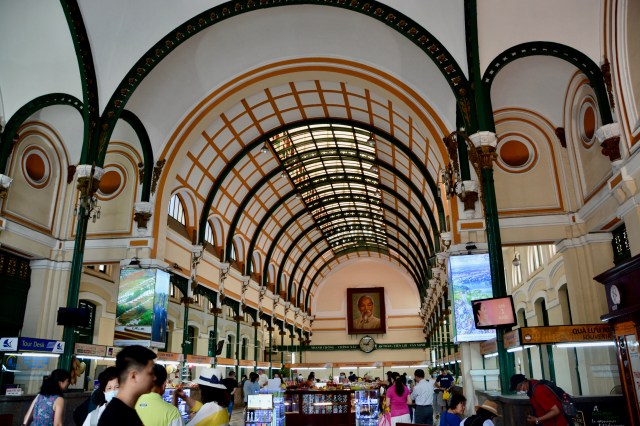
Photo ©Jean Janssen. Saigon Central Post Office of French Construction. Ho Chi Minh City, Vietnam.

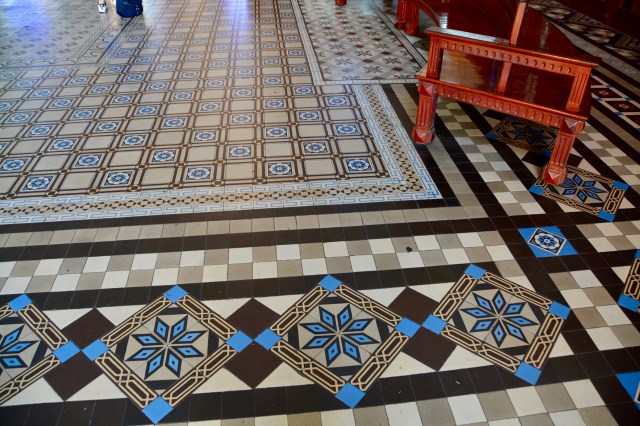
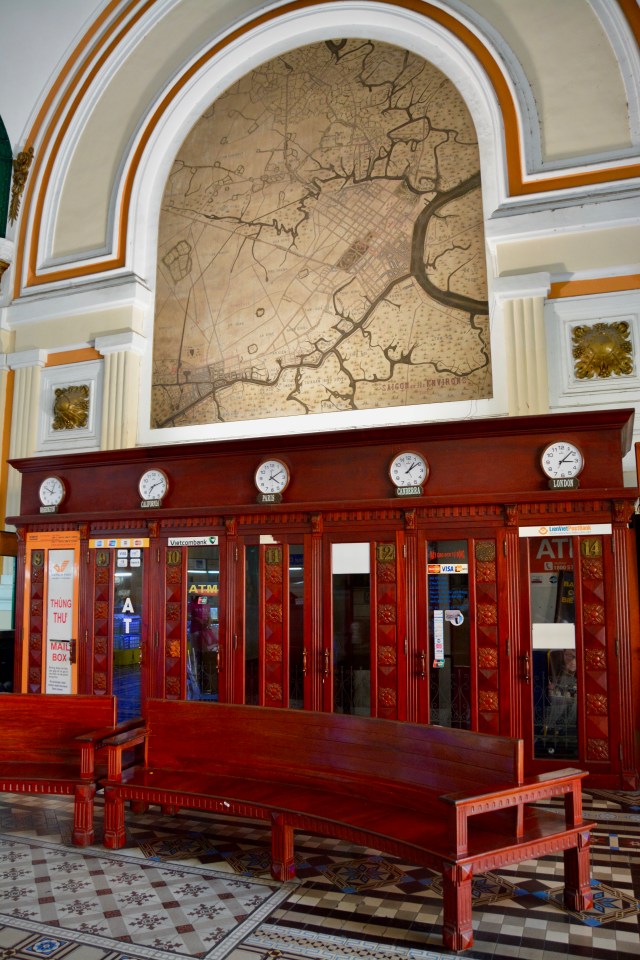
The building looked a lot like a train station, particularly inside.  It still serves the function of a post office, but there are also lots of vendors inside catering to the many tourists who visit.  The original tile floors are still visible and in pristine condition.  There are beautiful carved wood benches and phone booths and wonderful historic maps adorn the walls.

DSC_7565

Photo ©Jean Janssen. The patterned tile floors of the Saigon Central Post Office of French construction. Ho Chi Minh City, Vietnam.

DSC_7564

Photo ©Jean Janssen. A painted map, craved wood phone booths, benches, and beautiful tile floors in the Saigon Central Post Office of French construction. Ho Chi Minh City, Vietnam.

According to Culture Trip, “[t]here are two painted maps inside the office – Lignes télégraphiques du Sud Vietnamet du Cambodge 1892 (Telegraphic lines of southern Vietnam and Cambodia 1892) depicts the postal route from southern Vietnam to Cambodia, and on the right side of the building is Saigon et ses environs, 1892 (Saigon and its surroundings), a local map.”

DSC_7533

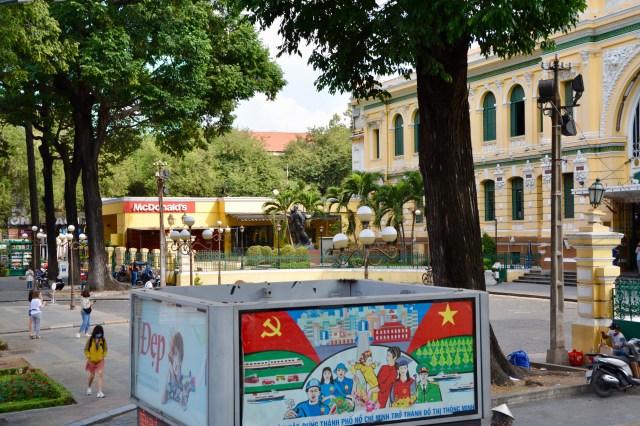
Photo ©Jean Janssen. Communist/socialist symbols next to the “capitalist symbol” of McDonald’s. A bit of irony next to the Saigon Central Post Office, Ho Chi Minh City, Vietnam.

Next door is a McDonald’s with the same paint color as the post office.  They have been referred to as the “American Embassy” in other countries.  Oddly it is next to a statute glorifying a communist soldier and socialist propaganda.  I found the juxtaposition with the communist/socialist symbols ironic.

DSC_7575

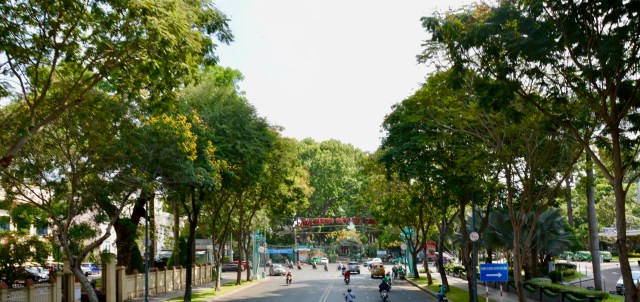
Photo ©Jean Janssen. Headed toward the city zoo, Ho Chi Minh City, Vietnam.

DSC_7577

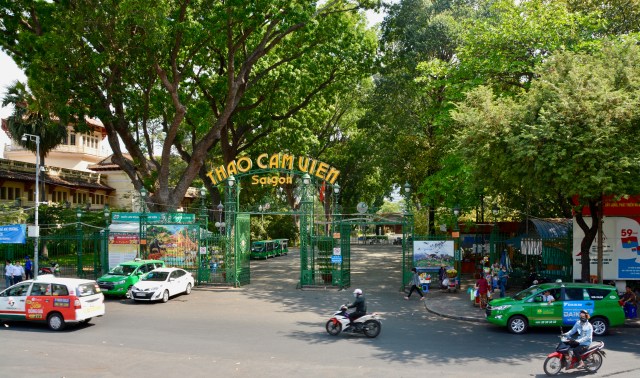
Photo ©Jean Janssen. Entrance to the Saigon Zoo. Ho Chi Minh City, Vietnam

DSC_7592

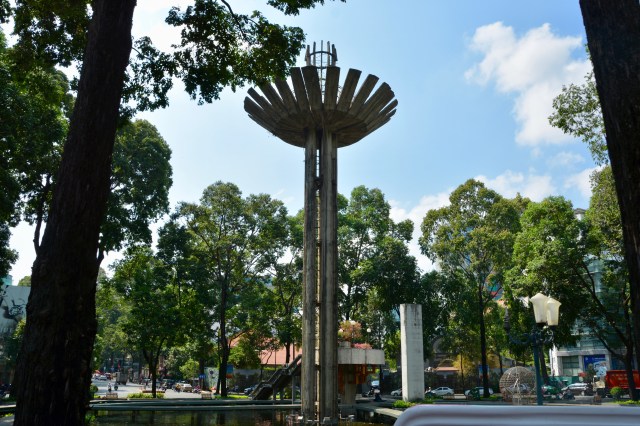
Photo ©Jean Janssen. Ho Chi Minh City, Vietnam.

DSC_7602

Photo ©Jean Janssen War Remnants Museum, Ho Chi Minh City, Vietnam.

DSC_7597 2

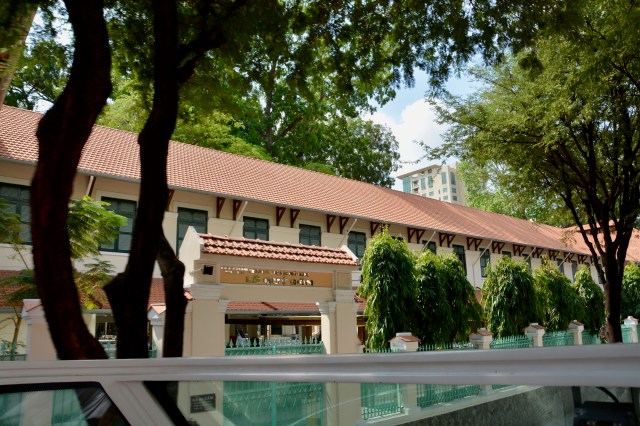
Photo ©Jean Janssen. One of the city’s oldest schools. Ho Chi Minh City, Vietnam.

We headed out again toward the city zoo and further around the city passing some one of the city’s oldest schools, the War Remnants Museum (that we will visit tomorrow) and the Ben Thanh Market with an extensive indoor market and a famous outdoor night market.  The market building is one of the oldest buildings in the city and a major tourist attraction.  We really wanted to get off at the market, but thought that was pushing it health wise with COVID-19.

DSC_7609

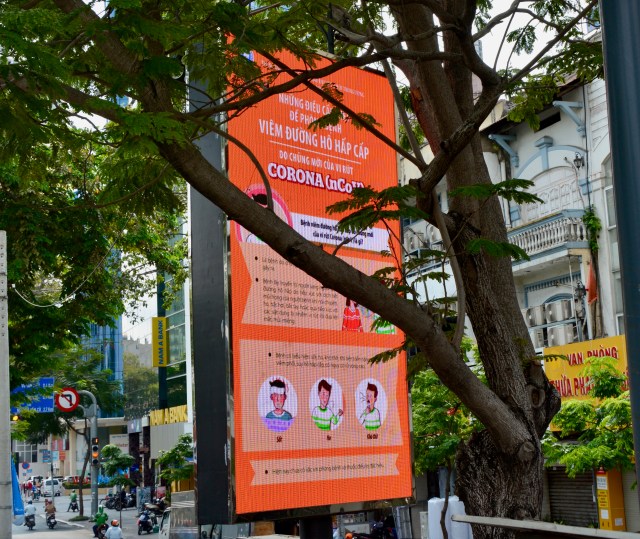
Photo ©Jean Janssen. Vietnam did an exceptional job of public education around COVID-19. Here is a billboard in Ho Chi Minh City.

To give credit where credit is due, one of the reasons we felt safe making this trip was Vietnam’s efforts in dealing with the virus.  The Vietnamese were singled out on American television for their swift action and public education.  It was clear they took protection against the spread of the virus seriously.  In addition to the wearing of masks and temperature taking, there were public advisories seen throughout the city.

DSC_7610

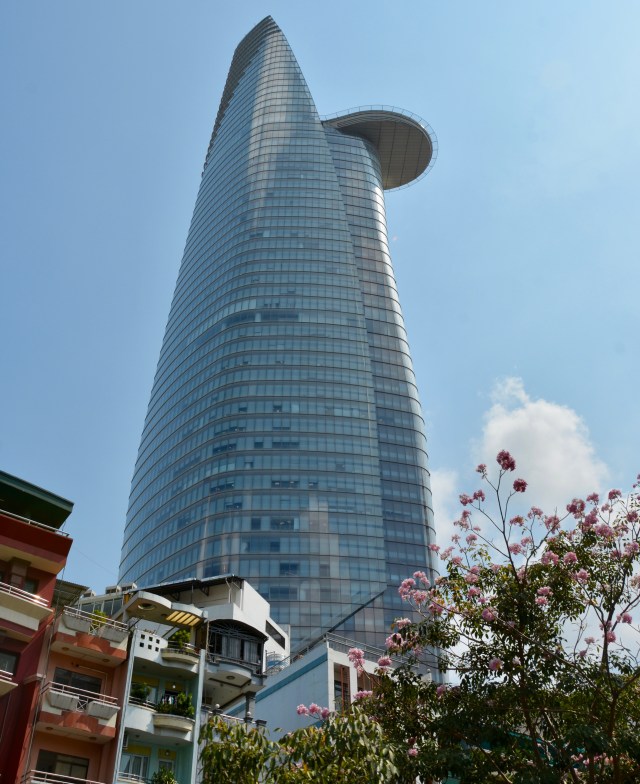
Photo ©Jean Janssen. Bitexco Financial Tower with the 52th floor helipad in Ho Chi Minh City, Vietnam.

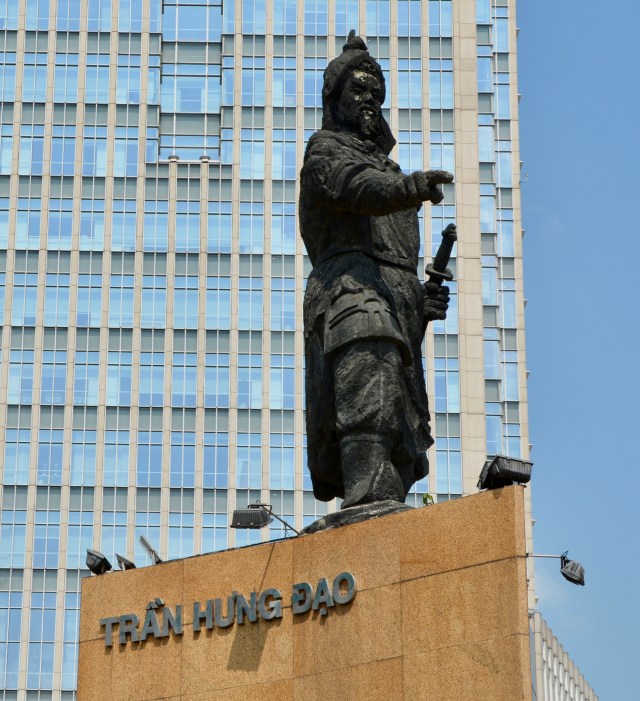
Near the Saigon River, we passed the Bitexco Financial Tower, briefly the tallest building in the country after its construction in 2010.  The tower has a circular helipad on the 52 floor near the top of the building.  The architect took inspiration from the lotus flower in creating the design.  The bus makes a stop if you want to go up to the building’s observation deck.  Further down we passed the statute of a dynastic leader that the audio never identified.  Tran Hung Dao was actually a famous military leader who successfully lead Vietnamese troops against Kublai Khan.  We will be back in this area tomorrow night for a dinner cruise along the Saigon River.

DSC_7613

Photo ©Jean Janssen. Statue of Trần Hưng Đạo aka Grand Prince Hưng Đạo. He “was an imperial prince, statesman and military commander of Đại Việt military forces during the Trần Dynasty. Trần commanded the Đại Việt armies that repelled two out of three major Mongol invasions in the 13th century. His multiple victories over the Yuan Dynasty under Kublai Khan are considered among the greatest military feats in Vietnamese history.”

DSC_7611

Photo ©Jean Janssen. Near the waterfront of the Saigon River, Ho Chi Minh City, Vietnam.

We found ourselves back at the City Hall, having completed the route and got off the bus.  Boris wanted to stop into a nearby store.  Again, I am not sure I would recommend the bus.  The audio didn’t always identify (properly if at all) what we were passing and the commentary was extremely limited.  Pretty good view, but wear a hat.  Even in the morning it is very hot in the direct sun.

DSC_7624

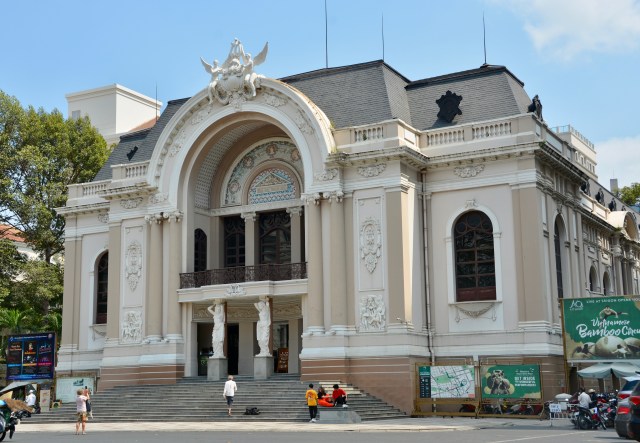
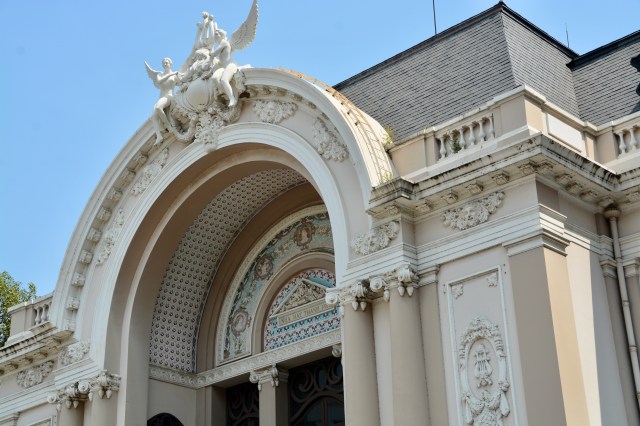
Photo ©Jean Janssen. Saigon Opera House, officially known as the Ho Chi Minh Municipal Theater.

DSC_7626

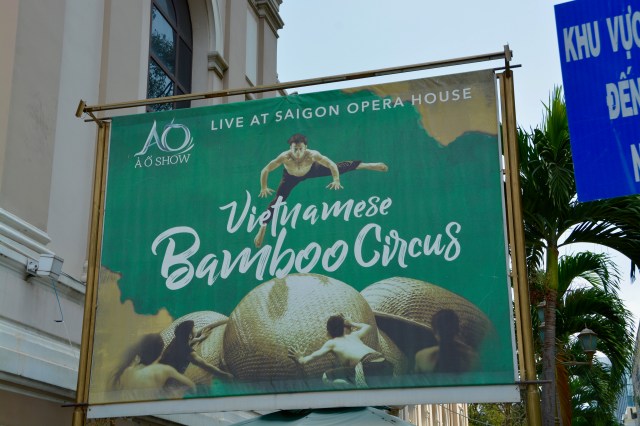
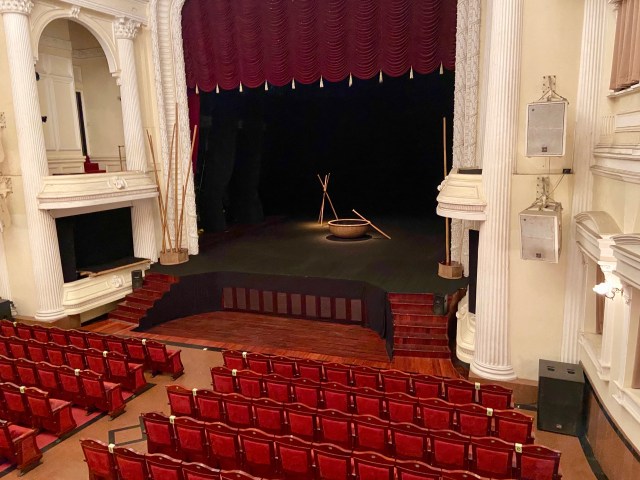
Photo ©Jean Janssen. Tonight we are going to the AO show with an opportunity to see the inside of the Saigon Opera House.

We passed by the front of the Saigon Opera House (aka the Ho Chi Minh Municipal Theater).  We will be back here tonight to see the AO show; the Bamboo Circle has been called a Vietnamese version of Cirque du Soleil.  It was time for a lunch and nap for Boris and I.  We check in for the cruise this afternoon.  No cruise activities today other than meeting with our cruise director.

IMG_4287

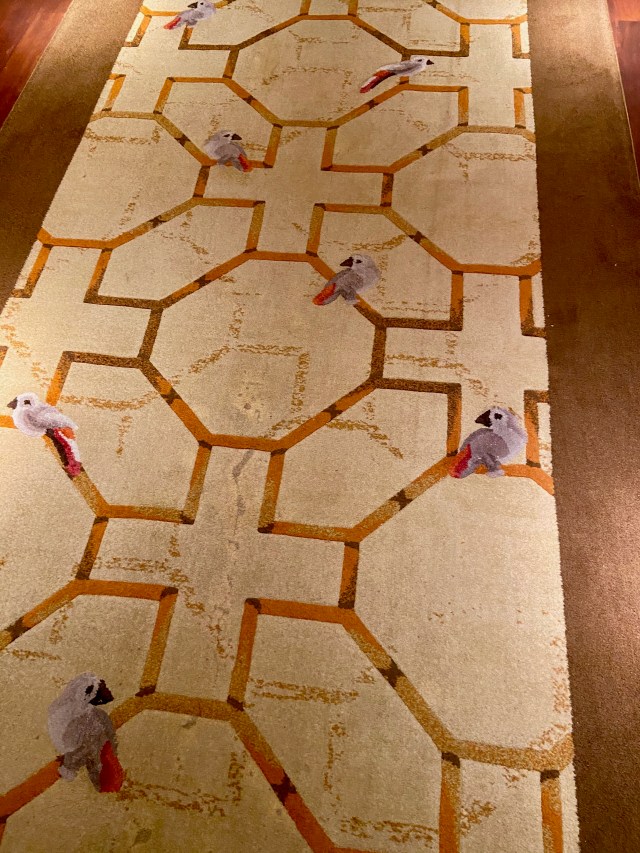
Photo ©Jean Janssen. More of the lovely carpet at the Park Hyatt Saigon. Note the charming birds.

Checking the internet was a bad idea.  More warnings and dire emails from our families.  Then came the phone call from the cruise director letting us know that he was sending written material to our room regarding cruise activities for the next two days.  We had some selections to make, including dinner for our Saigon River cruise.  He said we didn’t have to come down because the number of cruisers had dwindled.  The ship takes a maximum of 68 passengers and there were 61 scheduled to cruise, but as of that day there were only 16 who were going on the cruise.  Many of the European cruisers had visa problems and could not get into the country.

IMG_6305

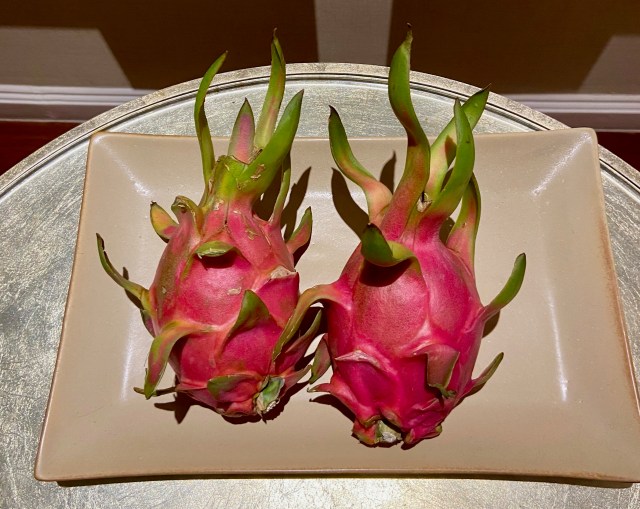
Photo ©Jean Janssen. Your welcome fruit may look a little different depending on where you are in the world. Dragon fruit at the Park Hyatt Saigon.

Then the blow.  There was a chance the cruise would not go forward.  Since it was the afternoon in Saigon, that meant it was the early morning hours in the US.  The cruise director couldn’t reach the “powers that be” to let them know about the problems on the river he was hearing from the ship captain.  There were possible closures.  Boris and I thought it might not be a bad idea to at least get the ball rolling on return travel arrangements so we emailed the travel agent who helped with the EVA Air flights to see what our return options were from Ho Chi Minh City knowing he wouldn’t get the email for several hours.  It was Friday in Saigon.

IMG_4229

Photo ©Jean Janssen. Saigon Opera House.

Late afternoon we went down for the scheduled meeting.  The Cruise Director told us that it was possible that they would close the Mekong River to contain the spread of the virus.  Some European visitors on a Viking ship on the river had tested positive for the COVID-19 virus.  They were worried about the spread of the disease and the crossing between Vietnam and Cambodia.  When pressed, he told us not to change our travel plans yet, but to look into our options for returning home in the next two days.  His prediction-cancellation.  He thought there was an 80% chance the cruise would not go forward.  We were scheduled to meet again at 8:30 the next morning.

IMG_2674

Photo ©Jean Janssen. Saigon Opera House.

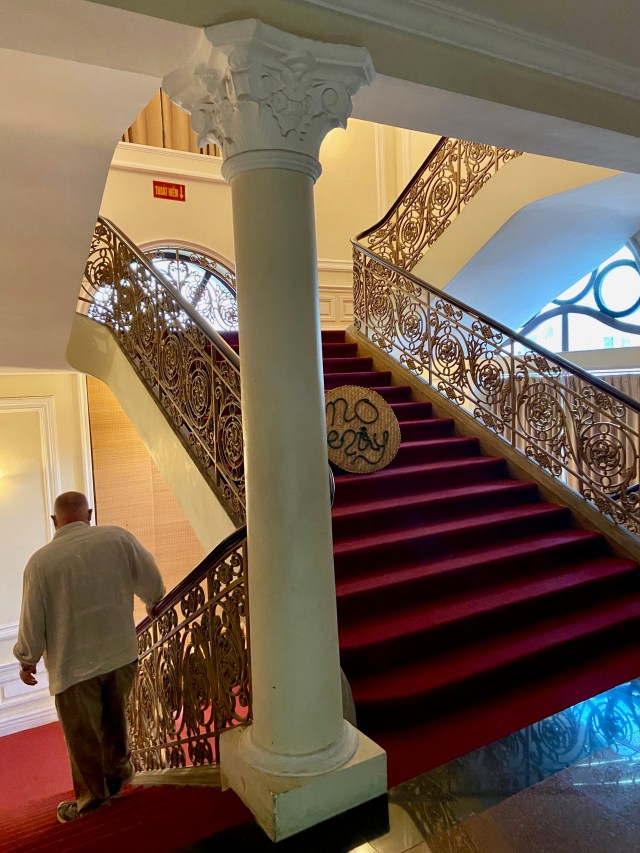
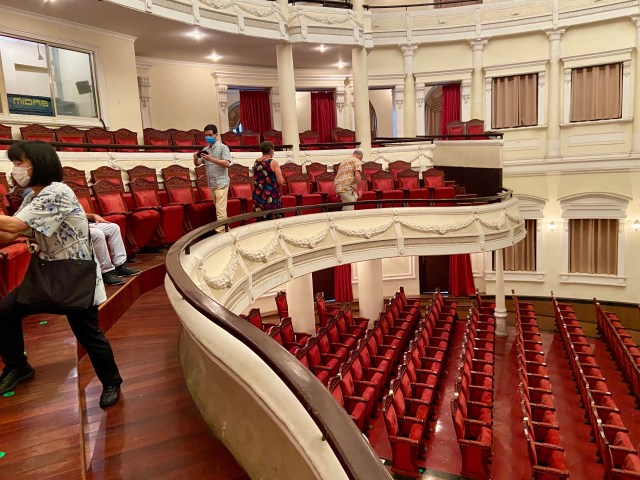
We checked to see if there were still EVA flights leaving Saigon and going to the US.  Beyond that we were in a hold pattern.  We decided we would enjoy our evening at the theater.  There was a more extensive medical screening going into he Opera House and they gave you a mask if you weren’t wearing one.  If you had a ticket you were invited to go in for a briefing.  They took you up to the mezzanine (actually where our seats were; the Park Hyatt concierge had took us these were the best seats for sound and viewing) and told you a little about the theater.

IMG_4683

Photo ©Jean Janssen. Saigon Opera House.

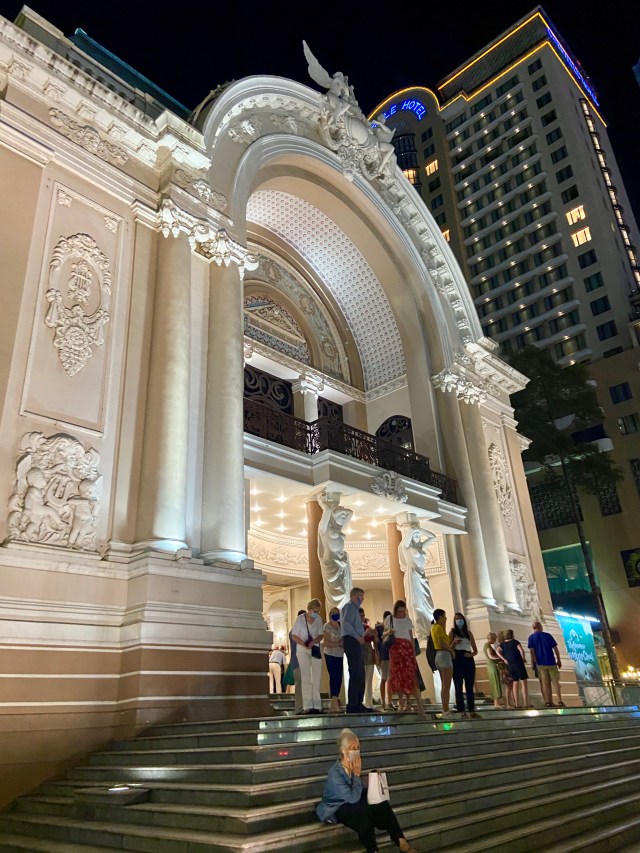
The Opera House was built in 1897 during the French Colonial period.  It is shaped like the Opéra Garnier in Paris. It wasn’t until the early twentieth century that the Vietnamese people were allowed to enter the theater.  After 1956, it was used as the lower house of the South Vietnamese Assembly.   Originally the opera house sat 800, but a renovation in 1995 reduced seating to 468, introducing wider, more comfortable seats.

IMG_4673

Photo ©Jean Janssen. The wider, cushier seats in the Saigon Opera House.

Afterwards  you were invited for a welcome drink before the show started.  There we met some people that had just gotten off a cruise on the Mekong.  They had been denied entry into several ports and had to fly a quarantine flag even though no one on board was sick.  They ended up being taken off the boat early and had felt lucky as there was some talk of parking them in the middle of the river for two weeks.

DSC_7625

Photo ©Jean Janssen. Detail on the facade of the Saigon Opera House. Ho Chi Minh City, Vietnam.

The show itself began early, 6 pm, and lasted an hour and 15 minutes.  Through the creative use of bamboo-baskets, sticks, and fans, the acrobats told the story of the development of the Vietnamese culture past to present.  The show featured live music performed on traditional and modern instruments.  It was unique, entertaining, educational, and at times humorous.  Definitely worth a visit.

Version 3

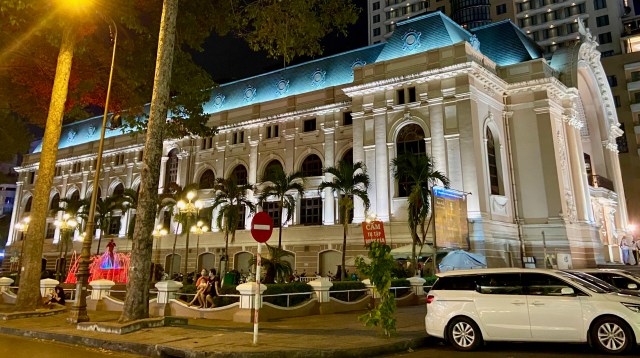
Photo ©Jean Janssen. Saigon Opera House.

We emerged to a darkened city highlighting the Opera House at its best. There was creative lighting on the facade, the fountains were on and colorfully lit, and the surrounding area was lit up and coming to life.

IMG_5043

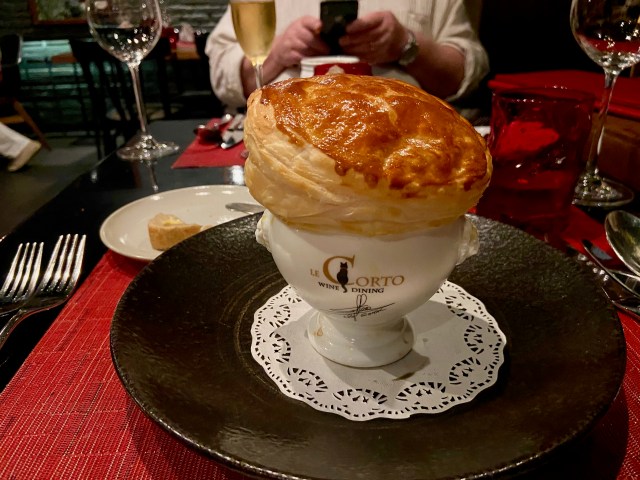
Fabulous Paul Bocuse a la Truffle soup at Le Corto Wine Dining, Saigon

We stayed with a French theme and went to Le Corto Wine Dining for dinner.  From the restaurant’s web site, “[t]he name of the restaurant, Le Corto, derives from the name of a world famous comic named Corto Maltese, published in 1967 by the Italian author Hugo Pratt. Corto, the main character, is an intelligent sailor, a free spirit with heart full of kindness and tolerance who loves travel and making friends during his journey. Our restaurant logo is pet of captain Corto, a mysterious black cat.”  It was the second time this year that Maltese had been referenced in our travels.

IMG_0309

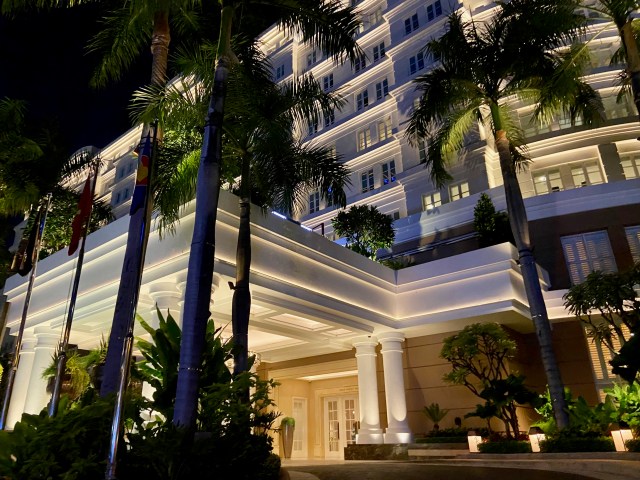
Photo ©Jean Janssen. View of the Park Hyatt Saigon at night.

Boris recognized the graphic of the character as soon as well walked in. He had wonderful conversations with the French sommelier.  We started with some champagne and both had the soup course.  I had the signature truffle soup and Boris the traditional onion soup.  Magnificent!  I followed that with a wonderful main course with beef and Boris had veal.  Equally Fabulous.  They also offer a fixed price menu, but we were not hungry enough for that many courses.

DSC_7631

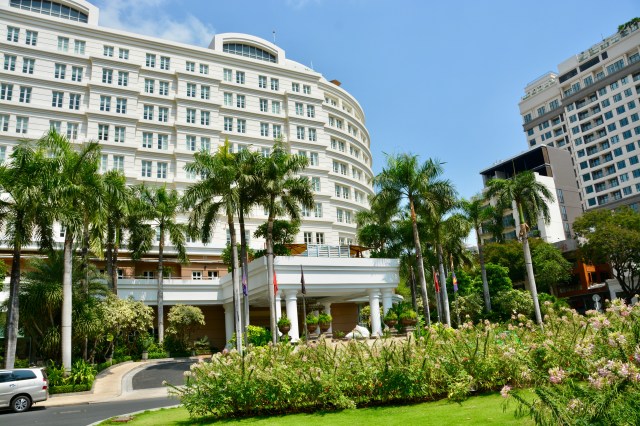
Photo ©Jean Janssen. Park Hyatt Saigon.

Back at the hotel, we had a reply from the travel agent who had found two options to get us home.  We tentatively chose one that got us to Houston with only one stop, basically the reverse of what we did to get here.  If I am quarantined I want that to be at home, or at least my hometown.  Since it will be after hours and the weekend in Houston when we are ready to finalize our plans, the agent gave us the 24-hour telephone number.  He can not help us by email.  We’ll know at 8:30 am.  When Boris got off the phone, we were of the same mind.  We are going home either way.  We are not afraid of contracting the virus, just of not being able to get home.

DSC_7632

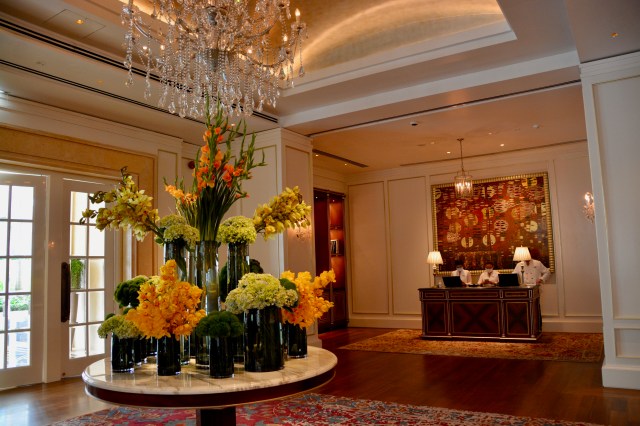
Photo ©Jean Janssen. Lobby Foyer and Concierge desk, Park Hyatt Saigon.

DSC_7606

Photo ©Jean Janssen Ho Chi Minh City (Saigon), Vietnam


Posted in cruises, international, River Cruise | Tagged , , , , , , , , , , , , , , , | Leave a comment

Safely in Saigon

DSC_7554

Photo ©Jean Janssen. Near the Cathedral in Ho Chi Minh City (Saigon), Vietnam.

With the world on high alert with the Coronavirus, most travelers are staying home.  Even local activities-like the World’s Largest Rodeo held annually in Houston-have been cancelled.  With a major financial investment already made and a bucket list trip planned, Boris and I waited to see if our trip to Vietnam and Cambodia with sailing on the Mekong River would be cancelled.

DSC_7527

Photo ©Jean Janssen. Ho Chi Minh City post office of French design.

There were plenty of warnings about cruises and the rampant spread of the virus.  The news came from ocean cruises with only one instance on a river cruise-that was in Egypt.  When we arrived, we heard that there were also reported cases on a Mekong River cruise through Viking.

IMG_2034

Photo ©Jean Janssen. The Ho Chi Minh National Theater, formerly known as the Saigon Opera House. Ho Chi Minh City, Vietnam

With that much risk at stake, we were confident that the cruise line would cancel if there was a problem.  There were plenty of issues with our flights in the weeks leading up to our trip.  Our itinerary changed three times due to flight cancellations.  It wasn’t instances of the virus on board, but rather the airlines’ decision not to make flights with so few passengers.  They were up front about the fact it was a financial decision.  After the second change, United just threw up their hands and said they couldn’t book us an alternative.  They refunded our money and we were on our own.

DSC_7574

Photo ©Jean Janssen. New Years decorations were still up all over Ho Chi Minh City.

Boris found us flights on EVA Air, a Taiwanese airline that is fortunately part of Star Alliance.  We’ll get priority boarding, an extra checked bag, and hopefully miles.  As the panic over Coronavirus raged, the date of our trip grew closer.  The cruise line said we were a go.  Vietnam had been praised for their swift action and public education so we felt safe going there.  We weren’t in a risk group, so we headed to the airport on a Tuesday night for our early Wednesday morning red eye flight.  It was the only time I have had a boarding pass that listed 00:00 as the boarding time.

DSC_7507

Photo ©Jean Janssen. City Hall, Ho Chi Minh City, Vietnam.

The international terminal (for non-United flights) in Houston was very quiet, as was the departure lounge.  The check-in was wonderful and they even let us do a little bit of contents shifting to meet the weight requirements right at the counter.  Not knowing what check-in and security would be like-actually quite easy as it turned out-we had arrived rather early.

DSC_7559

Photo ©Jean Janssen. Phone booths in the Saigon Post Office, Ho Chi Minh City, Vietnam.

Our flight left on time.  There were so few people on the plane that we each had a whole row of three seats across to ourselves for the 16 and a half hour flight to Taipei.  Service and food were good.  The flight attendants were efficient, if not particularly friendly.  They all wore masks.

DSC_7628

Photo ©Jean Janssen. Park Hyatt Saigon

For whatever reason, we arrived in Taipei a half hour late.  We also had a long taxi to the terminal.  We had only an hour and 10 minute layover scheduled so that time was being eaten up quickly.  A young woman who needed to be first off the plane had 25 minutes less than we did.  I asked in Houston and was told there was no passport control.  There wasn’t, but there was a security checkpoint so that ate up time too.  We saw the same young woman, tears running down her face, going through the process.  I felt for her.

IMG_6041

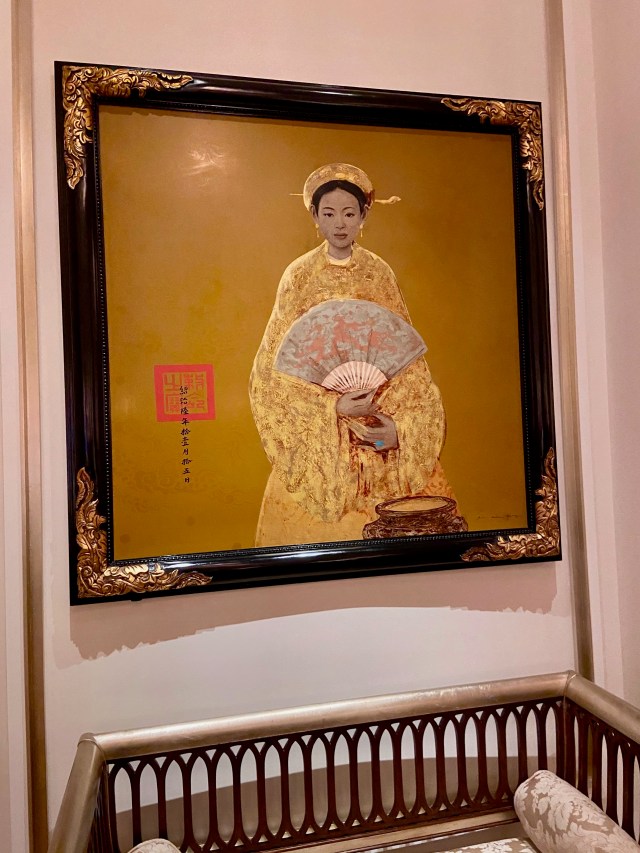
Photo ©Jean Janssen. Beautiful art work in the Park Hyatt Saigon, Ho Chi Minh City, Vietnam.

We went straight to the plane after security where boarding was almost complete.  Fortunately, we made the flight to Ho Chi Minh City (formerly Saigon).  There was a passport check at the gate.  Almost everyone was wearing a mask.  Fortunately, I had gotten one for each of us from a medical care worker before we left.  There were none available for purchase at home.

DSC_7627

Photo ©Jean Janssen. Side view of the Saigon Opera House. Note all the motor bikes. Ho Chi Minh City, Vietnam.

On board the plane, we had to complete a medical form.  When we arrived there was a long, very slow-moving line toward immigration.  Here they were checking the medical forms and conducting a personal interview.   Although there were several lines, the process took a long time.  They did not take our temperature, but asked a lot of questions about countries we might have passed through, specifically asking about Italy.

IMG_2850

Photo ©Jean Janssen. Welcome to Saigon. Outside waiting for our driver at the Tan Son Nhat International Airport in Ho Chi Minh City, Vietnam.  The Tan Son Nhat Airport is the busiest in Vietnam, receiving about 40 million visitors each year.

We got a stamped clearance form and then went on to passport control where they reviewed our e-visa to Vietnam, our passport, our clearance form, and our boarding passes.  The official was very thorough and not at all friendly.  We both made it and then collected our luggage and went outside to find our driver.  We had arranged transport through the hotel.

IMG_4897

Photo ©Jean Janssen. Two-story Music Salon off the main foyer of the Park Hyatt Saigon. Ho Chi Minh City, Vietnam

There was almost no wait and the driver has us on our way to the Park Hyatt Saigon, about 30 minutes from the airport.  He was very nice and when Steve asked him about the war his reply was that he “remembered everything.”  He was actually younger than both of us, but looked older.

DSC_7520

Photo ©Jean Janssen. The city’s Cathedral was under renovation during our visit to Saigon. Our driver told us that over 60 % of the citizens are Buddhists, but that about 25% of the population was Catholic. Ho Chi Minh City, Vietnam

Our driver pointed out how close we were to many of the city’s major attractions and the river.  The roadways were not as crowded as I expected and unlike some major Asian cities I have been to, the drivers followed the traffic signals (well except from some of the motor bikes that liked to drive on the wrong side of the road).  Our driver told us that the roads were clearer than usual due to the virus.  Many people had gone out to the countryside or were staying at home.  The schools’ winter holiday had been extended; the children had already been out for two months.

DSC_7586

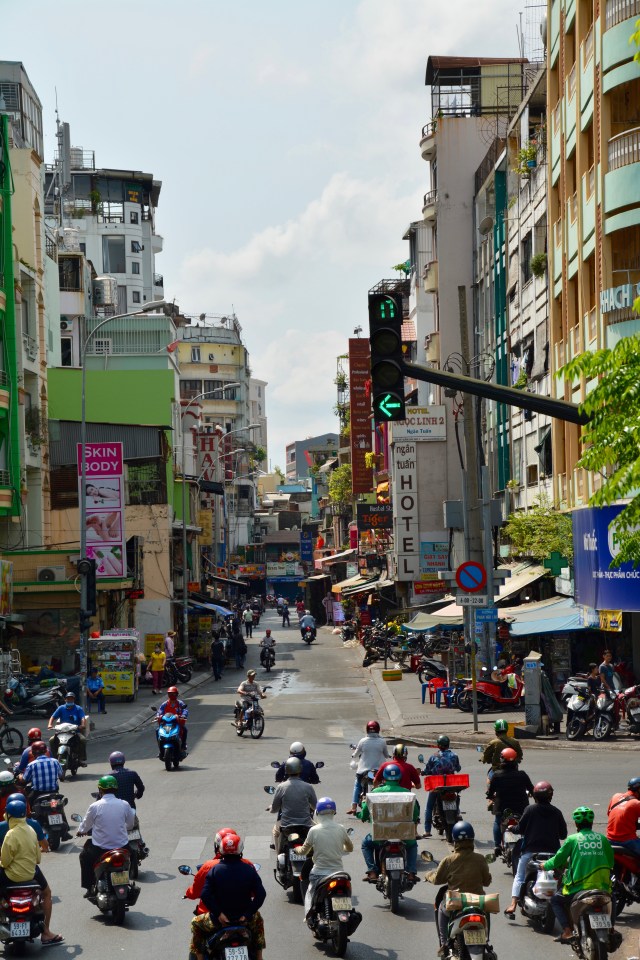
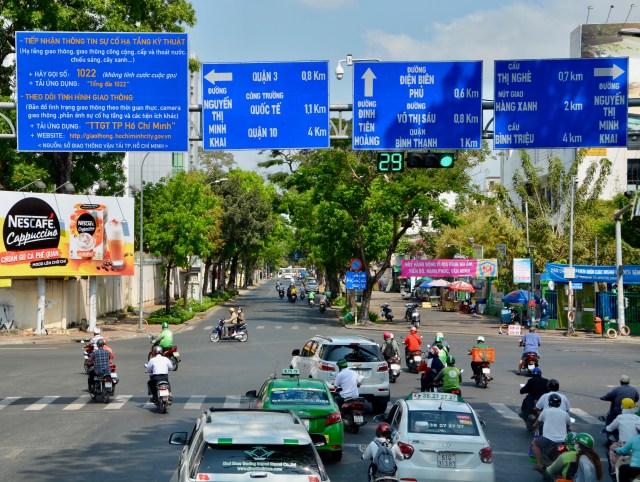
Photo ©Jean Janssen. Travel around Ho Chi Minh City. Notice the second sign by the light letting you know the light will be green for 29 more seconds.

According to our driver, in this city of 12 million people (we heard estimates of anywhere from 10 to just under 14 million), there are one million cars and 8 million motorbikes.  The motorbikes were everywhere.  Our driver had a 15-year old daughter.  When she graduates in two years she can get her license; he said she would get a motorbike then.  We saw a few tour buses, a hop-on/hop-off bus, some city buses and taxis near our hotel.  We were warned against the rickshaw transit (cyclo).  Apparently some of the drivers can be less than honest and it is hard for them to keep up with the faster moving traffic.  I read that there is also a motorcycle taxi (Xe Om), but I didn’t see any.

IMG_2974

Photo ©Jean Janssen. One of my favorite things about the Park Hyatt Saigon was the beautiful carpets, many featuring birds. This lovely example is from the carpet in our room.

The Park Hyatt Saigon is a beautiful hotel.  It has an elegant tropical feel.  The two-story lobby and music salon were striking.  Even with our late morning arrival, a room was available and they took us straight up for an in-room check-in.  We had a lovely room with a view of the pool and out over the city.  There were so many wonderful touches in the hotel.  I particularly liked the carpets, especially the ones on our floor with beautiful birds worked into the weave.

IMG_9611

Photo ©Jean Janssen. View from our table onto the tropical outdoor patio at the Park Hyatt Saigon Opera Restaurant. Ho Chi Minh City, Vietnam.

After our luggage arrived, I took a long-awaited shower and then we went down to the Opera Restaurant on the ground floor for lunch.  This is also where the breakfast is served.  We had a nice table in the patio room.  I surprised with the Italian menu.  The food was good, but not what I expected.

IMG_3908

Photo ©Jean Janssen. Hoa Tuc Restaurant, Ho Chi Minh City, Vietnam.

I wish I could say that we headed straight out to tour, but we were both exhausted after over 24 hours of travel, so the afternoon was spent napping.  We got up later and explored the hotel and surrounding area a bit.  Nearby was a wonderful courtyard next to the city’s old opium refinery.  There were several bars and restaurants and we ate at Hoa Tuc.  Hoa Tuc opened in 2008 as Saigon’s first contemporary Vietnamese restaurant.  They expanded to include a cooking school in 2009.  In spite of temperatures in the 90s during the day, the evening cooled down.  It wasn’t humid either, so we enjoyed dinner on the outdoor patio with a ceiling inspired by the Paris metro.

IMG_1619

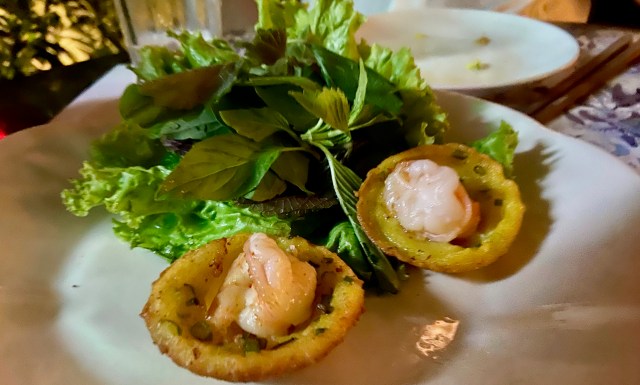
Photo ©Jean Janssen. Vietnamese pancake at Hoa Tuc Restaurant, Saigon. The recommended way to eat the pancake is wrapped in the “salad” and dipped in fish sauce.

IMG_5246

Photo ©Jean Janssen. Patio at the Hoa Tuc Restaurant Saigon. the Roof was inspired by the Paris Metro.

Of course the first step was to have our temperature taken.  At almost every restaurant, theater, tourist attraction, or store we went into, your temperature was taken before you could enter.   We started with some of their special appetizers, a selection of egg rolls and the Vietnamese pancake with prawns.  Fabulous.  The main course was a little harder to eat.  I had traditional caramelized prawns and Boris had a beef stew.  It was worth the effort.  We were full and just too tired for dessert so we walked back to the hotel in hopes of a full night of sleep.  We planned to explore the city in the morning before it gets too hot.  Welcome to Vietnam.

IMG_1421

Photo ©Jean Janssen. Entrance to the Park Hyatt Saigon.

DSC_7554

Photo ©Jean Janssen. Near the Cathedral in Ho Chi Minh City (Saigon), Vietnam.

Posted in cruises, international, River Cruise | Tagged , , , , , , , , | Leave a comment

Rouen, France: a day trip to Normandy from Paris

IMG_1161

Photo ©Jean Janssen. Tour du Gros-Horloge, Rouen, France

Although there is a transportation strike going on in Paris, there are a very limited number of Metro lines and some train routes in operation.  Our concierge at the Maison Astor got us roundtrip tickets to Rouen from Paris Gare Saint-Lazare; the train station is within walking distance of our hotel.  After breakfast, for left for the station a little early since the train schedule is infrequent and we don’t want to miss our departure.

IMG_1270

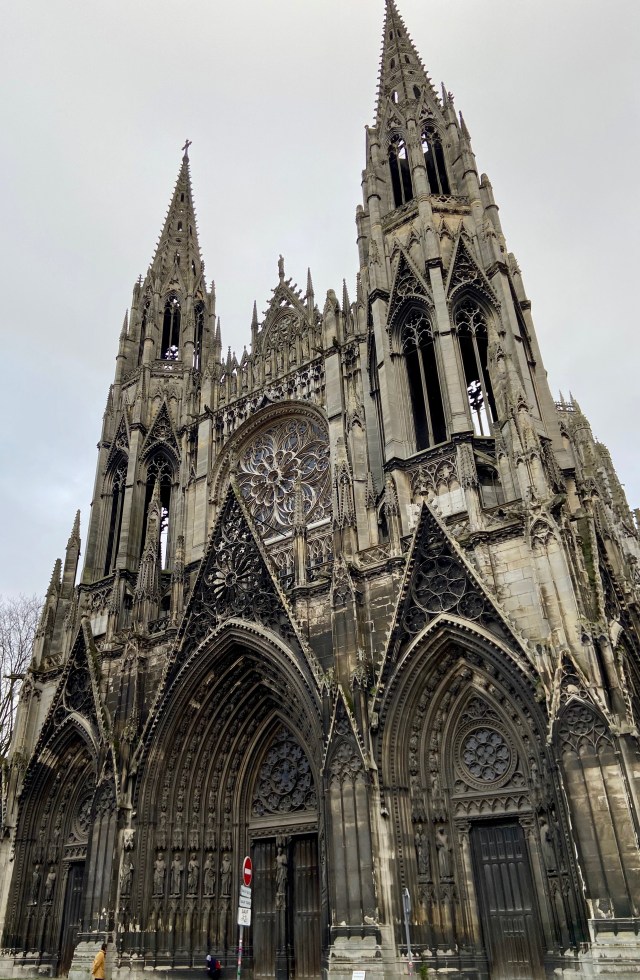
Photo ©Jean Janssen. The Abbatiale Saint-Ouen in Rouen, France.

Gare Saint-Lazare is a big station, but it was relatively empty given the strike.  Actually, there were very few people on the train too.  The concierge put us in first class, so that might be the reason.  It was a scenic ride.

IMG_1253

Photo ©Jean Janssen. Eglise Saint-Maclou, Rouen, France

IMG_1267

Photo ©Jean Janssen. Abbatiale Saint Ouen, Rouen, France.

Rouen is in the Normandy region of France, a region we have visited before.  We have visited Normandy both as a day trip from Paris (like today) and once by cruise ship.  There was very little signage in English when we arrived at the Rouen station.  We thought there was a tourist office right in the train station, but we had misunderstood the concierge and the visitor center is actually in the town center.  The gift shop in the station unfortunately did not have a guide book in English but the shop worker directed us out of the station and straight down the hill into town.  As we got closer, there was plenty of signage.

IMG_1155

Photo ©Jean Janssen. We always try to spot the McDonald’s when we are traveling. They are good for a clean, free toilet. The McDonald’s in Rouen, France has a half-timbered facade.

IMG_1156

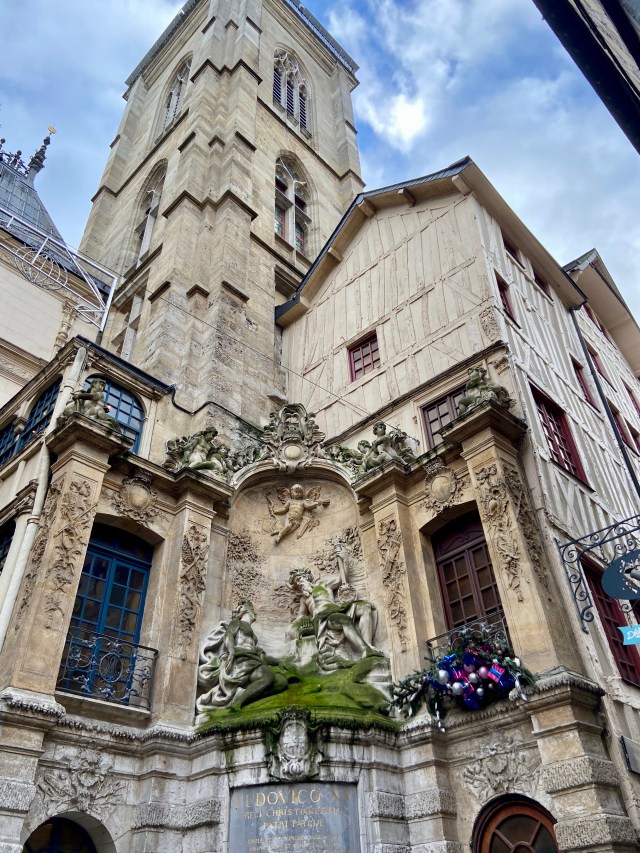
Photo ©Jean Janssen. Rouen’s Big Clock Tower, Tour du Gros-Horloge.

IMG_1159

Photo ©Jean Janssen. Rouen, France.

On the main street, there were half-timbered houses, now shops, mixed in with modern constuction.  Even McDonald’s had a medieval facade.  Mickey D’s may seem a strange landmark choice to mention.  However, McDonald’s are always good for a clean restroom (often on an upper floor) so I keep a look out for them. At the intersection, we turned the opposite direction toward the Cathedral and walked through the fabulous Tour du Gros-Horloge, the big clock Tower.

IMG_1237

Photo ©Jean Janssen. The underside of the arch of the Tour du Gros-Horloge, Rouen, France.

IMG_1163

Photo ©Jean Janssen. Cathedral Notre-Dame de Rouen

Rouen is a city with so many fabulous churches.  There were once also wonderful convents and abbeys as well.  I love history and also read a lot of historical fiction.  I read a wonderful series set in a convent in medieval Rouen.  Since then, I have always wanted to see this city.  Another claim to fame is that it the place where Saint Joan of Arc was tried, convicted, and then burned at the stake for heresy.

IMG_1179

Photo ©Jean Janssen. The Rouen tourist office is in the oldest surviving Renaissance monument in the city.

IMG_1182

Photo ©Jean Janssen. Map in the tourist office courtyard shows the medieval city of Rouen.

Unfortunately, when we got to the city center the Visitor’s Center was closed for a break, as was the Cathedral.  I did do a little searching on my phone.  If I hadn’t been in a food coma yesterday from Vefour I might have done some internet research in anticipation of our day in Rouen.  Since we really need a guidebook or at least a map to tour the city, we just wandered through the medieval streets a bit and then Boris decided he wanted a crepe.  For me, the Cozy Cat will always be the “cat restaurant”.  Cat pictures were everywhere (even bright pink cat wallpaper in the bathroom) and there were numerous live cats lounging around.  I lost my appetite and just watched Boris eat.

59983269252__5B0CA4DD-2327-47BB-A33C-ABB50D5E83E0

Photo ©Jean Janssen. Boris’ crepe lunch at the cat restaurant near the Rouen Cathedral.

IMG_1186

Photo ©Jean Janssen. The Rouen tourist office is in the oldest surviving Renaissance monument in the city.

IMG_1185

Photo ©Jean Janssen. Art created by the elements, tiles in the courtyard of the Rouen tourist office.

When Boris had finished his lunch, the Visitor’s Center was open and we got a guidebook and a map inside.  The building is the oldest surviving Renaissance monument in Rouen.  The building itself is worth a visit.  I spent the time before the Cathedral opened mapping out the visit of Rouen in the limited time we had left and taking pictures of the Cathedral facade.  We can’t miss the train back; not sure when there will be another one.

IMG_1170

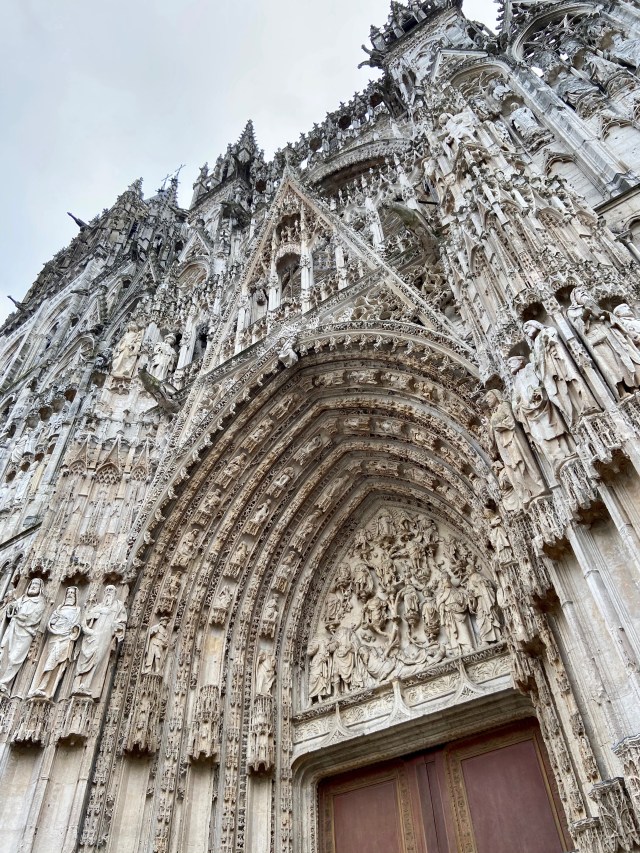
Photo ©Jean Janssen. Facade of the Cathedrale Notre-Dame de Rouen.

IMG_1168

Photo ©Jean Janssen. Facade of the Cathedrale Notre-Dame de Rouen.

IMG_1189

Photo ©Jean Janssen. Side entrance to the Cathedrale Notre-Dame de Rouen.

IMG_1192

Photo ©Jean Janssen. A child getting a ballon to celebrate the day just outside the Cathedrale Notre-Dame de Rouen.

When the Cathedral opened we went right inside.  This is one of four churches where we had the opportunity to tour the interior during our visit to the city.  For me, touring churches just doesn’t get old.  I enjoy spotting the similarities and differences and of course, I love taking pictures.  This day was particularly special; suddenly I was in the stories I had read.

IMG_1199

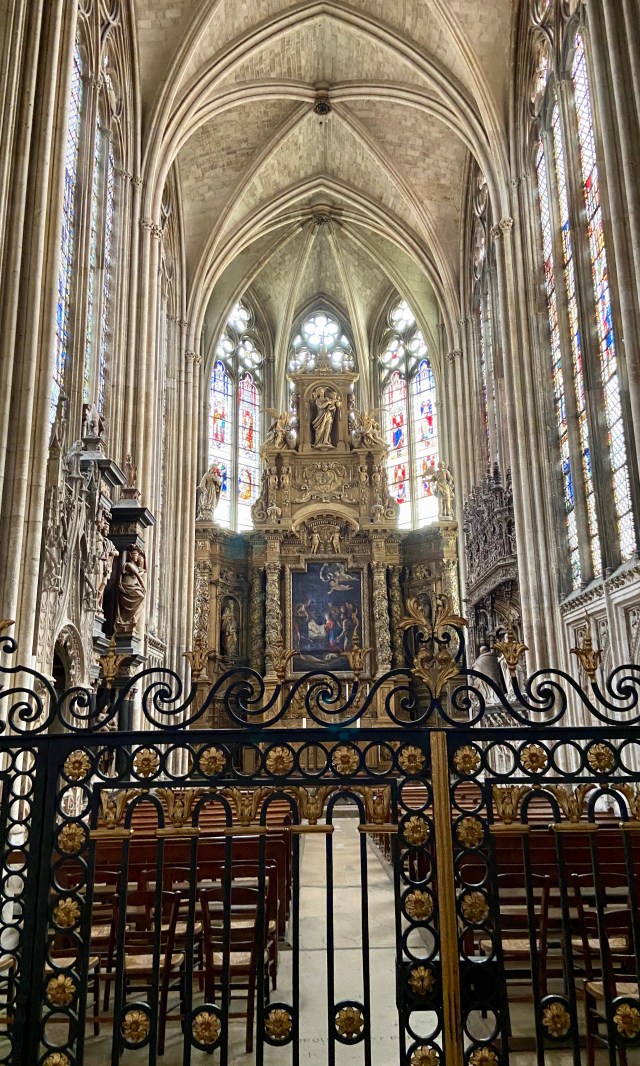
Photo ©Jean Janssen. Interior of Cathedrale Notre-Dame de Rouen.

IMG_1202

Photo ©Jean Janssen. Interior of Cathedrale Notre-Dame de Rouen.

IMG_1207

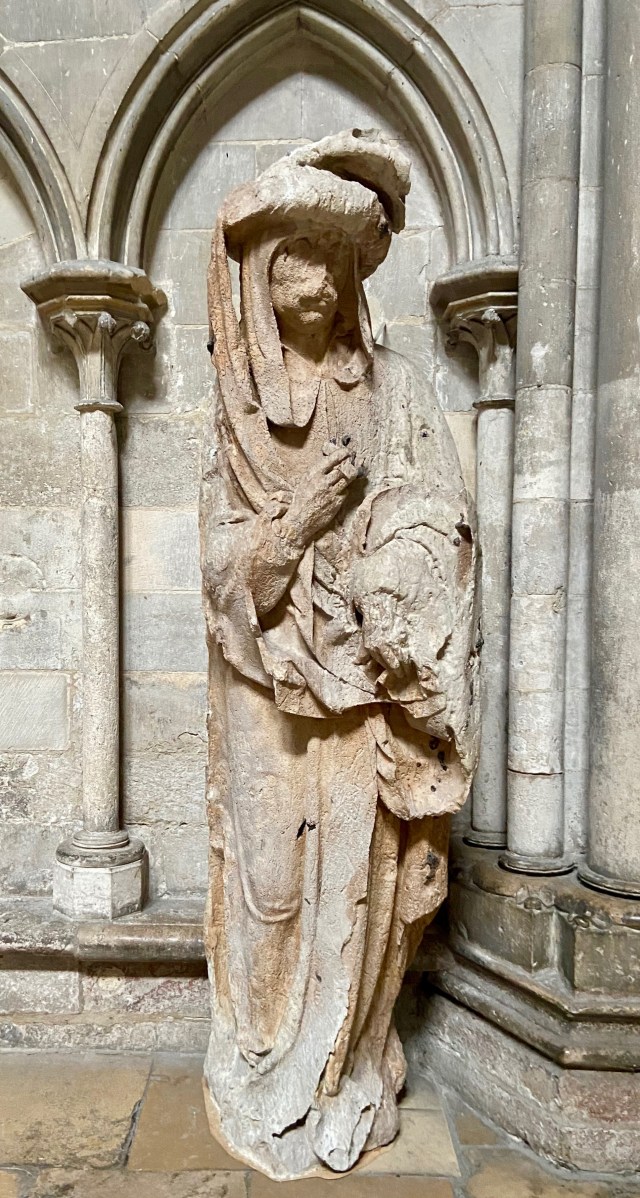
Photo ©Jean Janssen. Statuary in the interior of Cathedrale Notre-Dame de Rouen.

IMG_1209

Photo ©Jean Janssen. Interior of Cathedrale Notre-Dame de Rouen.

Leaving the Cathedral we walked back down the medieval street and under the arch of the Big Clock tower and past McDonald’s.  We are headed to the Place du Vieux-March, the ancient market square where Joan of Arc was burned at the stake.  Like at the Cathedral, there was a Christmas Market set up here.  The stalls were no longer open, but the market buildings were still in place.  Some of the children’s rides were still operating.

IMG_1221

Photo ©Jean Janssen. Decorated store front in the Place du Vieux-March in Rouen, France.

Today the spot where the Saint was burned in 1431 is marked with a tall cross.  Next to it sits a very modern church, Eglise Jeanne d’Arc.  Saint Joan of Arc Church was completed in 1979.  The beauty of the church is in the wonderful stained-glass windows that were saved from the 16th Century Church of Saint Vincent that was destroyed in 1944 during WWII.  The windows had been removed and hidden and therefore survived the war.  You can still see the ruins of St. Vincent’s just outside the entry to the modern church.

IMG_1229

Photo ©Jean Janssen. The cross at the Place du vieux-March marks the spot where Joan of Arc was burned at the stake in 1431. Rouen, France.

IMG_1225

Photo ©Jean Janssen. Eglise Jeanne d’Arc, Saint Joan of Arc church, in Rouen, France. In the foreground are the ruins of Saint Vincent Church destroyed in 1944 during WWII.

IMG_1234

Photo ©Jean Janssen. Beautiful stained glass in the St. Joan of Arc Church in Rouen, France. The stained-glass was saved from the St. Vincent church that was destroyed during WWII.

After our visit to the Place du vieux March, we backtracked toward the Cathedral (making the all important McDonald’s “necessary” stop), with a mind to see some of Rouen’s other beautiful churches.  Along the way, we did a little window shopping in the city’s medieval buildings.

IMG_1218

Photo ©Jean Janssen. Side view of Rouen’s Cathedral surrounded by the charming medieval streets with their wonderful shops.

IMG_1242

Photo ©Jean Janssen. Rouen, France.

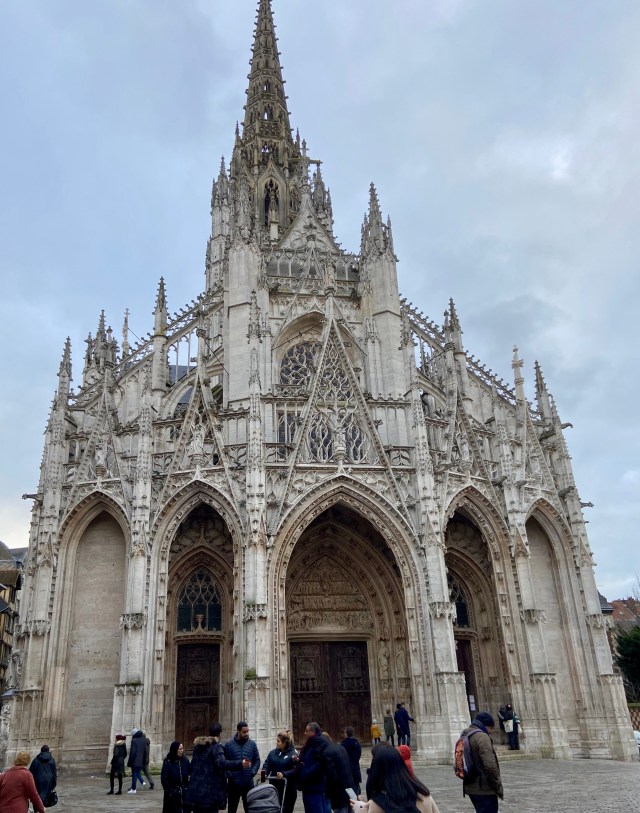
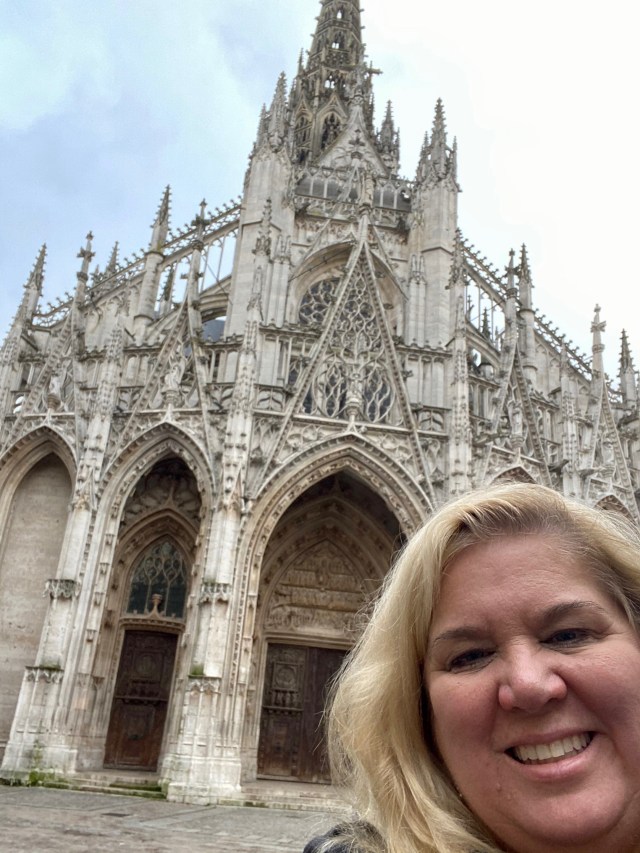
Set among the Norman half-timbered houses is the Flamboyant Gothic Eglise Saint-Maciou.  When originally built by the Dukes of Norman, it was in one of the busiest parts of the city. “When part of the sanctuary collapsed in the 13th century it was decided to rebuild the church. The construction work was led by Pierre Robin between 1436 and 1517.”Copyright © French Moments Ltd.  The church was closed during the French Revolution from 1793-1802 and became a weapons factory.  It was severely damaged during WWII and has been restored numberous times.

IMG_1244

Photo ©Jean Janssen The flamboyant Gothic Eglise Saint-Maclou in Rouen, France. The lantern tower is centered with the church spire.

IMG_1249

Photo ©Jean Janssen. The wooden Renaissance doors and the tympanum depicting the last judgement on Eglise Saint-Maclou, Rouen, France.

IMG_1250

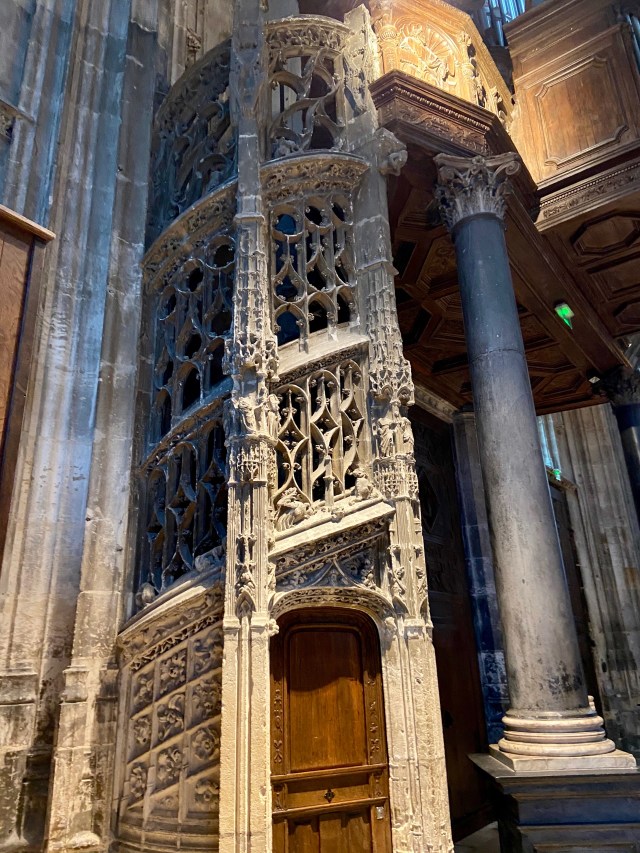
Photo ©Jean Janssen. This spiral staircase going to the organ case was relocated from within the church. Eglise Saint-Maclou, Rouen, France

IMG_1254

Photo ©Jean Janssen. Woven seats on the chairs with matching woven kneelers in Eglise Saint-Maclou in Rouen, France.

IMG_1255

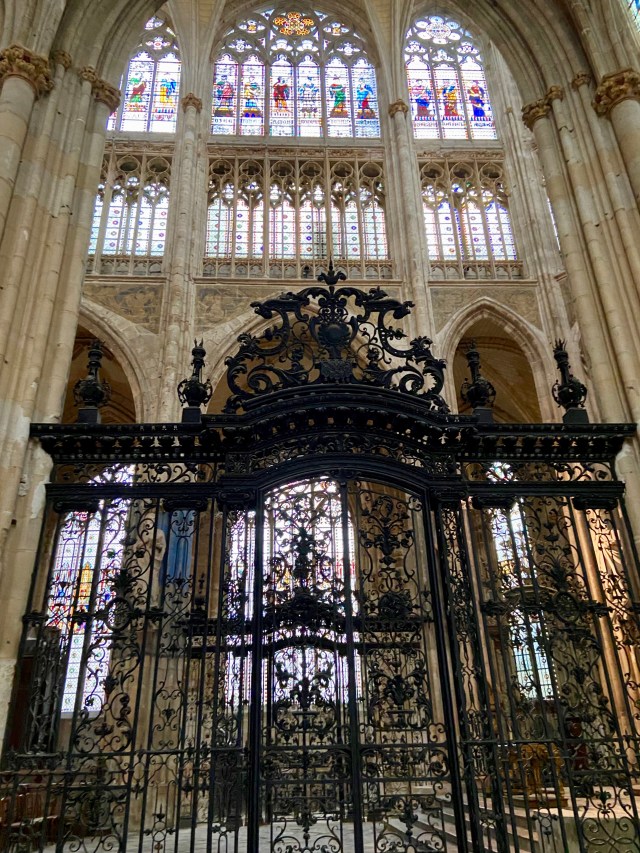
Photo ©Jean Janssen. For me the most striking feature of the interior of Eglise Saint-Maciou was the “arch of glory” over the altar.

As we followed our route back in the direction of the train station, we came to the Abbatiale Saint-Ouen, just next to the Hotel de Ville (city hall).  The Abbey church was built for the Benedictine Order.  Perhaps the most notable feature of the church is its organ built by Aristide Cvaille-Coll, considered the great organ-builder of the 19th century.  It is a “large four-manual pipe organ…notable for its unusually powerful 32′ Contre Bombarde. The organ stands unaltered and thus is one of the few of the master’s works to speak with its original voice.”

IMG_1278

Photo ©Jean Janssen. The famous organ in the Abbey Church of Abbatiale Saint-Ouen, Rouen, France.

IMG_1272

Photo ©Jean Janssen. Abbey Church of Saint Ouen in Rouen, France

As to the church’s exterior, “[t]he real beauty is the chevet (eastern side) with typical High Gothic flying buttresses and pinnacles. Note how the radiating chapels of the ambulatory have their own individual roofs.”  This is the visitor’s entrance to the church after you pass through the iron gates.  The top of the church tower does not have the lantern common in Gothic design, but has instead an octagonal crown called the “Crown of Normandy” or the “Ducal Crown of Normandy”.

IMG_1265

Photo ©Jean Janssen. The eastern side-visitors-entrance to the Abbey Church of St. Owen in Rouen, France.

IMG_1280

Photo ©Jean Janssen. Abbey Church of Abbatiale Saint-Ouen, Rouen, France topped with the Crown of Normandy.

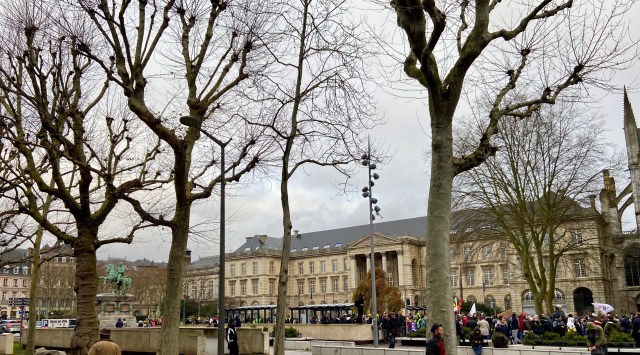
Leaving Abbatiale Saint Ouen, we were stopped for a while due to the protest at the Hotel de Ville and wandered down a side street passing other churches that had been converted to different uses-often museums or concert halls.  We were no longer in the medieval section of the city.  We also passed by the Musee de Beaux-Arts, yet another attraction in the city we didn’t have time to go through.

IMG_1281

Photo ©Jean Janssen. Hotel de Ville, Rouen, France

IMG_1283

Photo ©Jean Janssen. Musee de Beaux-Arts, Rouen, France

We did stop for a drink before our train departure at a bar just outside the station.  The setting was right out of an old movie.  My favorite moment was when an older couple came in and took what was probably “their seat”.  They didn’t even have to say anything to the bartender.  He made their creme brulees and brought them right to the table.  I suspect this is a Saturday (or perhaps daily) ritual for the couple.

IMG_1286

Photo ©Jean Janssen. Traditional bar near the train station in Rouen, France.

IMG_1287

Photo ©Jean Janssen. Boris contemplates his visit to Rouen, France. The pink bottle on the table is for a French sparkling water. I love the bottles. On my last trip they had the Eiffel Tower on them; this visit is the Arc of Triumph. I brought a few home and use them as Valentines Day decorations.

I enjoyed our day trip to Rouen.  The trip back to Paris was quick and uneventful.  I rested a bit.  We stopped at one of the restaurants near St. Augustin’s on the way back to the hotel.  Only one from full day in Paris before we return home.  –Natasha

IMG_1246

Photo ©Jean Janssen. Natasha at Edlise Saint Maclou, Rouen, France

IMG_1161

Photo ©Jean Janssen. Tour du Gros-Horloge, Rouen, France

Posted in international | Tagged , , , , , , , , , , , , | Leave a comment

A little bit more time-most eating-in Paris

IMG_1133

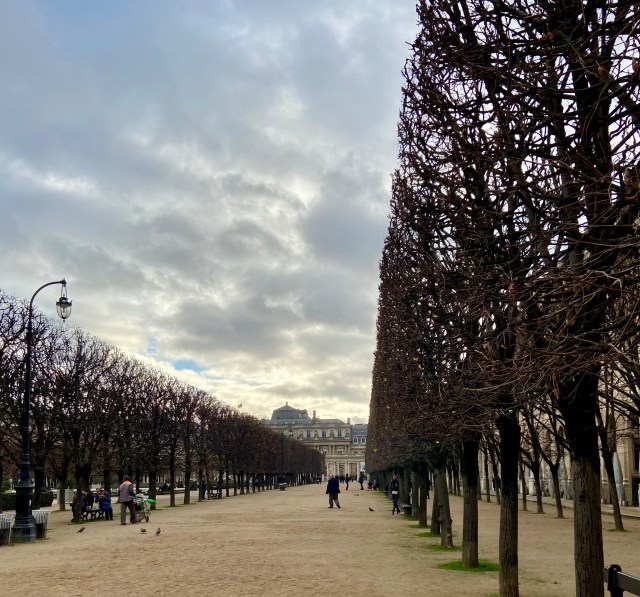
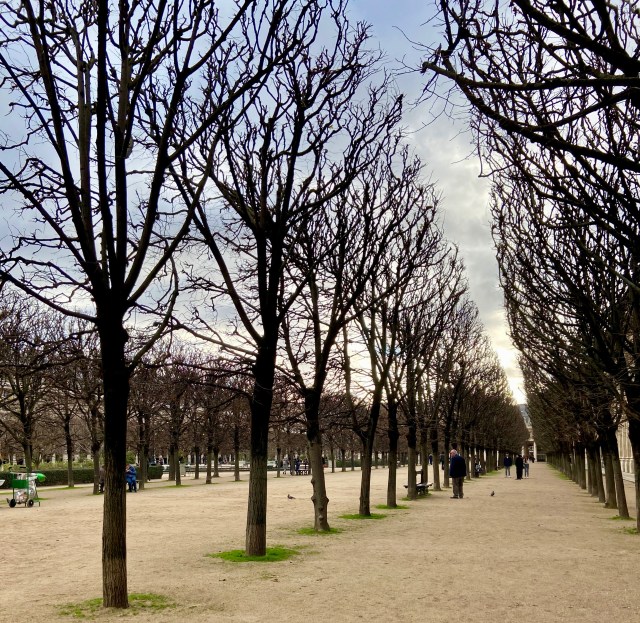
Photo ©Jean Janssen. Gardens of the Palais Royal, Paris.

After our day-long tour of the champagne region yesterday, we are staying in the city for the day.  We did some more walking, but today’s highlight is lunch at La Grande Vefour.  Boris loves to try the historic, famous, and (unfortunately) expensive restaurants of Paris.  So much for an economy trip with a room on points and flights on miles.  Apparently the budget is going to food and champagne.  But I really shouldn’t complain…

IMG_1120

Photo ©Jean Janssen. Grand Vefour, Palais Royal, Paris

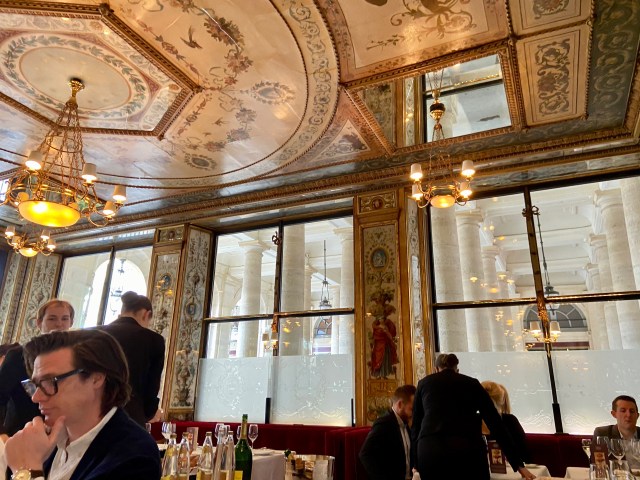
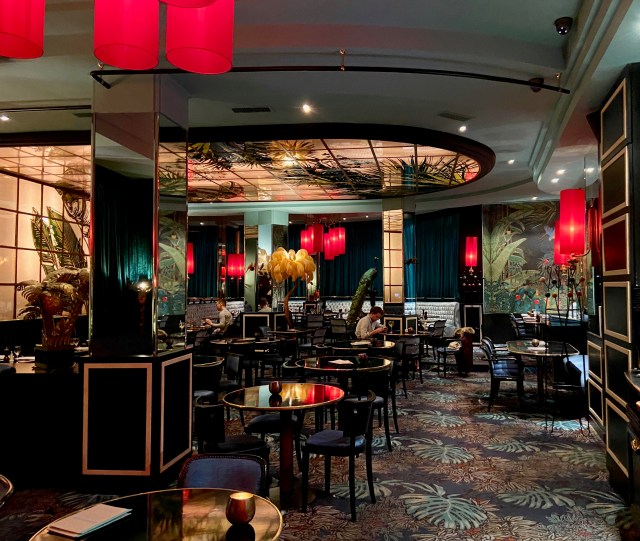
We were the first to arrive at the restaurant with a noon reservation.  We got the power corner seat with a view of the windows out on the gardens of the Palais Royal.  The restaurant, first opened in 1784, sits along the palace colonnade.  It was a cold, cloudy day, but light came in through the unfrosted upper windows.

IMG_1118

Photo ©Jean Janssen. Grand Vefour, Palais Royal, Paris

From the Restaurant’s website:  “[It was] at the end of the 18th century that French cooking reached its peak in the aristocratic households, where luxury and refinement were absolute rules…The Palais Royal, replacing le Marais, became the central attraction of Parisian life and, most importantly, the birthplace of French Cooking…As soon as the building of the pavilions was over, in 1784, Aubertot opened a café with the café de Chartres sign.”

Version 2

Photo ©Jean Janssen. Colonnade sign of Le Grand Vefour. Palais Royal, Paris.  Some of the signage is from the original restaurant opened on this site in 1784.

“Situated the length of the Joinville colonnade, linked with the rue de Beaujolais, the restaurant opens on the gardens of the Palais Royal through three arches. The sign “Café de Chartres”, on the façade opposite the garden, bears the name of the establishment that was there before le Grand Véfour. A name chosen to honour the duke of Chartres, first son of Louis d’Orléans, the one who created the domain of the Palais Royal, and father of the soon-to-be Philippe Egalité, last owner of the Palais before the Revolution.”

IMG_1127

Photo ©Jean Janssen. Grand Vefour, Palais Royal, Paris

When you enter the restaurant, you’re taken two hundred years back in time! Embellished with delicate carved panelling with Louis XVI style garlands, the entrance gives access to two different rooms; on the walls, mirrors share the space with famous glass-protected paintings.”

IMG_1119

Photo ©Jean Janssen. Grand Vefour, Palais Royal, Paris

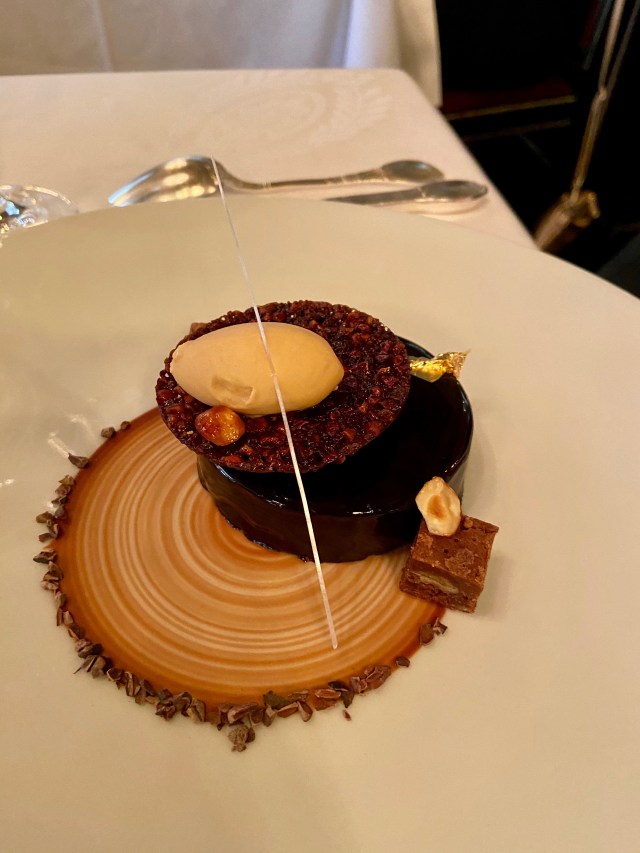
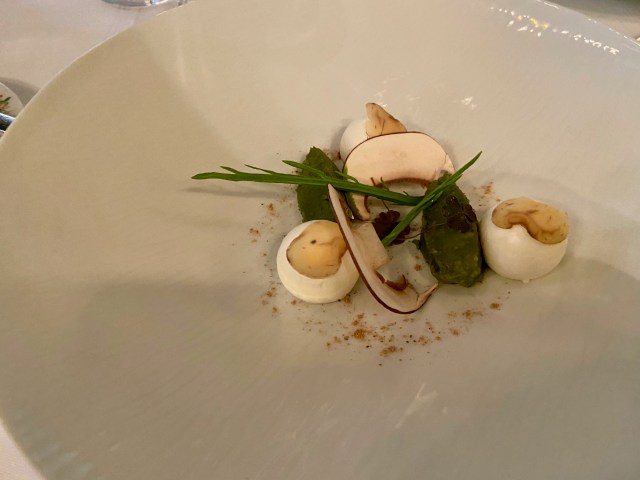
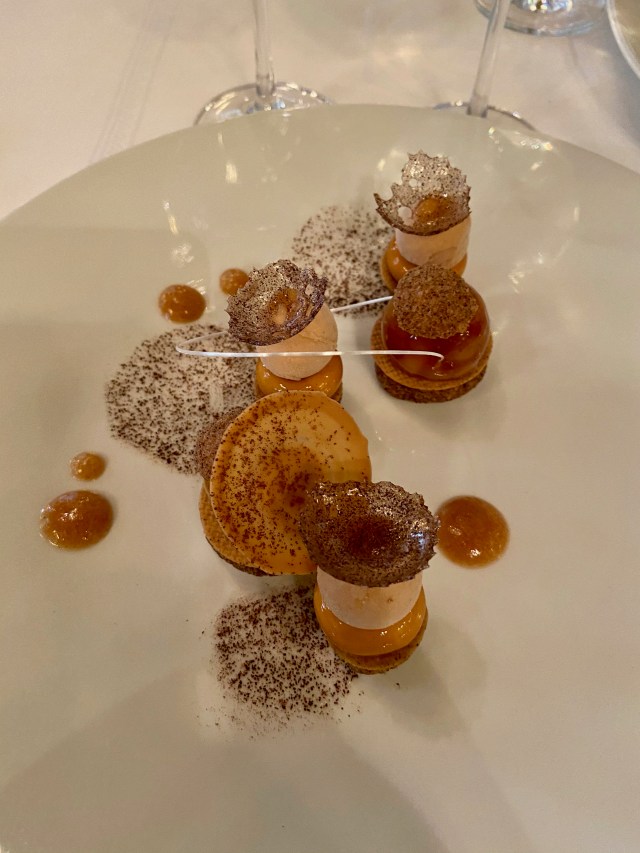
It really is a marvelous restaurant.  Of course we started with a glass of champagne only to follow it with a bottle.  We had at least 18 different servers during the course of our meal with so many courses that I lost count.   You might think I am kidding, but we had five dessert courses alone.  There was also a cheese course with at least 40 selections to choose from.  The food was amazing, artistic, and life-changing.  Who knew eating mushroom soup could be a religious experience?

IMG_1124

Photo ©Jean Janssen. Step one of my mushroom soup, Grand Vefour, Palais Royal, Paris

IMG_1125

Photo ©Jean Janssen. Mushroom Soup step two at Grand Vefour, Palais Royal, Paris

IMG_1126

Photo ©Jean Janssen. Mushroom soup, step three at Grand Vefour, Palais Royal, Paris

Not bad people watching either.  The small restaurant of two rooms was full by the time we finished.  (There is also a banquet room upstairs near the toilets.)  There were French, Russian, American, Australian, and British customers within earshot of our table.  One couple, on a trip just before the birth of their first child, came in honor of his parents who had dined there.

IMG_1122

Photo ©Jean Janssen  Le Grande Vefour, Paris

Yes, it is a “blow the budget” meal, but lunch made the tab more reasonable.  You are also there for hours.  Its about so much more than the food; its the experience.  By the time we left it was late afternoon and we were full, buzzed, and happy.  The more recent history is a little tainted, but I highly recommend the food, service, and the experience.

IMG_1128

Photo ©Jean Janssen. Grand Vefour, Palais Royal, Paris

More from the restaurant’s website:  “A list of regular customers over the last two centuries includes most of the immortal heavyweights of French culture and politics. Closed from 1905 to 1947, a revived Grand Véfour opened with its early nineteenth-century neoclassical décor of large mirrors in gilded frames and painted supraportes.

IMG_1123

Photo ©Jean Janssen. Grand Vefour, Palais Royal, Paris

IMG_1131

Photo ©Jean Janssen. Gardens of the Palais Royal, Paris.

In 1983, the restaurant was destroyed in a bomb attack. It was then bought by Jean Taittinger who restored and reopened Le Grand Vefour. When it lost one of its three Michelin stars in 2008 under the régime of Guy Martin for the Taittinger Group, it was headline news.”

IMG_1134

Photo ©Jean Janssen. Gardens of the Palais Royal, Paris.

IMG_1139

Photo ©Jean Janssen. Gardens of the Palais Royal, Paris.

IMG_1140

Photo ©Jean Janssen. Gardens of the Palais Royal, Paris.

We wandered within the Palais Royal, under the colonnades and out in the gardens by the fountain.  In spite of the chill, we sat down on the chairs and just enjoyed the experience of being in Paris.

IMG_1142

Photo ©Jean Janssen. Just outside the Palais Royal, Paris.

IMG_1143

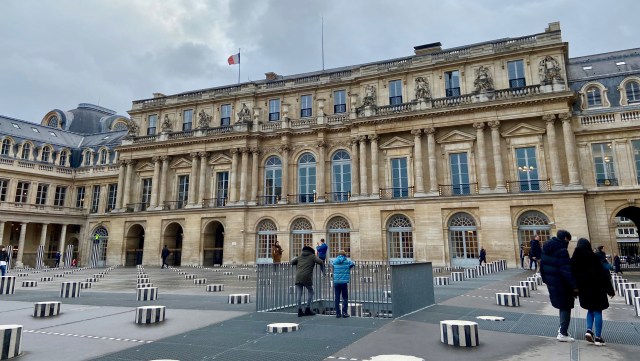
Photo ©Jean Janssen. The Louvre, just outside the Palais Royal, Paris.

Just outside the Palais Royal is the Louvre and the crowds suddenly felt much larger.  We could have walked around a little more, but we had already visited this area and the food and wine had made us sleepy, so we took a cab back to the hotel.  With the transportation strike, there are a very limited number of trains operating, but our concierge was able to get us tickets to Rouen tomorrow so we are taking a lazy day and will hang around the area of our hotel after a nap.

IMG_1294

Photo ©Jean Janssen. At the intersection of several major boulevards in the 8th arrondissement of Paris sits Saint-Augustin Catholic Church.

Our hotel was not far from the intersection of several of the major streets in the 8th arrondissement at Église Saint-Augustin de Paris.  “Saint-Augustin was built to provide a counterpoint to the famous columns of La Madeleine at the other end of the boulevard. It was also designed to be visible from the Arc de Triomphe down the avenue de Friedland. The chosen site, an odd shaped lot at the intersection of four streets, and the need for a dome of 200 feet (61 m) so as to be visible from the Arc de Triomphe, dictated unusual proportions for the building…Saint-Augustin was built between 1860 and 1868 in an eclectic style combining Tuscan Gothic and Romanesque elements.”

IMG_1295

Photo ©Jean Janssen. Near the Saint-Augustin intersection in Paris there are numerous cafes for economical dining and a great option for travelers using Gare Saint-Lazare.

Pedestrians travel in a circle around the various boulevards that intersect at this point in the city.  There are lots of cafes all around the circular path and Boris and I ate in this area often without the need to go to the same place twice.  These were more economical meals.  We are not far from our last Hotel, Hilton Paris Opera, that sits next to the Gare Saint-Lazare (train station).  We often saw people with suitcases dining in the cafes.

IMG_1151

Photo ©Jean Janssen. A cafe near St. Augustin at night.  Natasha’s attempt at a panoramic photograph.

IMG_1149

Photo ©Jean Janssen. View from a cafe at night near St. Augustin, Paris.

By passing through the St. Augustin intersection, there was also easy access to the major shopping district near Galleries Lafayette from our hotel.  Leaving St. Augustin’s, we just walked down Haussemann Boulevard.  The stores were very crowded during my visit.  There was still a fabulous Christmas Tree up in Galleries Lafayette.  Several days into the New Year, many of the smaller boutiques-including the one I had set out for-were still closed for the holidays.

IMG_1300

Photo ©Jean Janssen. Multi-story Christmas tree under the domed ceiling of the Galleries Lafayette,  Paris.  You can only see the upper floors in this photograph,  The full tree is much taller than it appears here.

Our last night, we once again found ourselves at the intersection at Saint Augustin when it was time for dinner.  It wasn’t the best food of our trip or even in the area, but I loved the restaurant’s decor.  Time to go back on the diet when I get home.  Paris has been a delight.  From here, Natasha heads back into the real world.

IMG_1288

Photo ©Jean Janssen. Cafe at the Saint Augustin intersection, Paris

IMG_1291

Photo ©Jean Janssen. Cafe at the Saint Augustin intersection, Paris

Tomorrow, I will share our visit to Rouen.  –Natasha


Posted in international | Tagged , , , | Leave a comment

On the trail in France’s Champagne Wine-Growing Region

IMG_1095

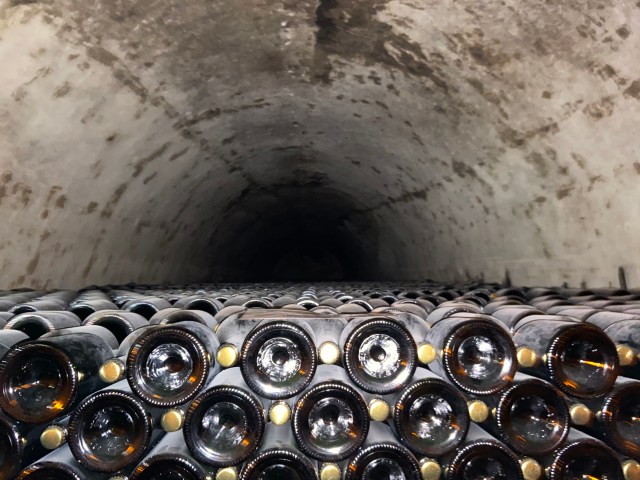
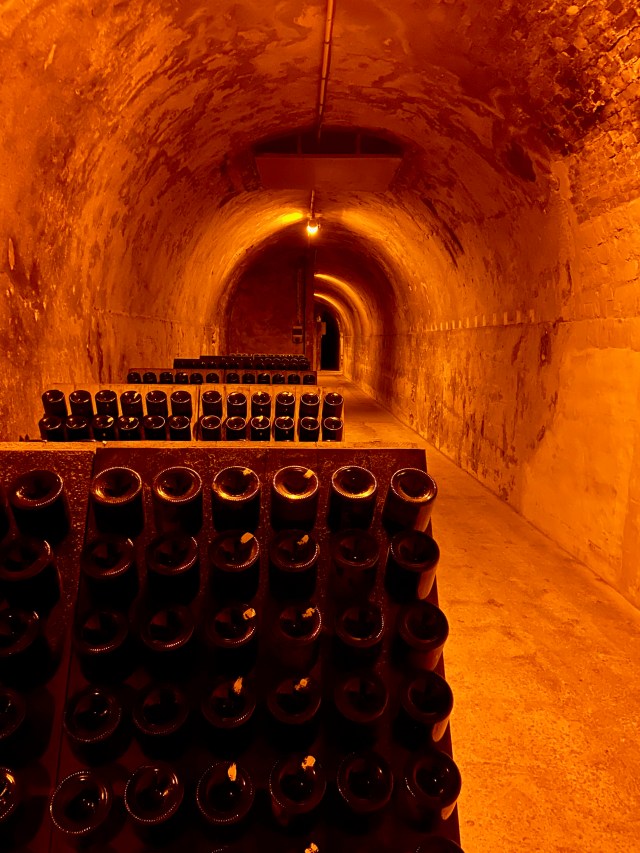
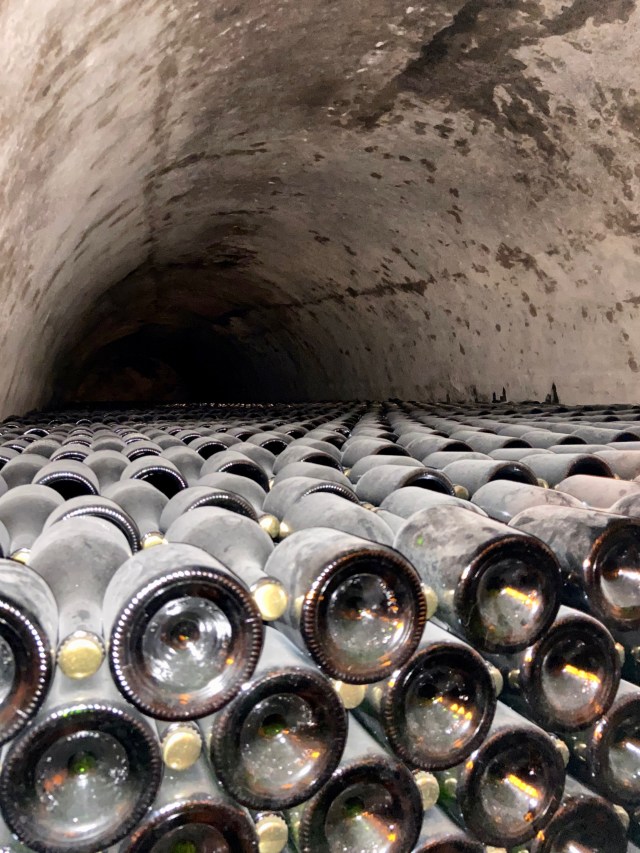
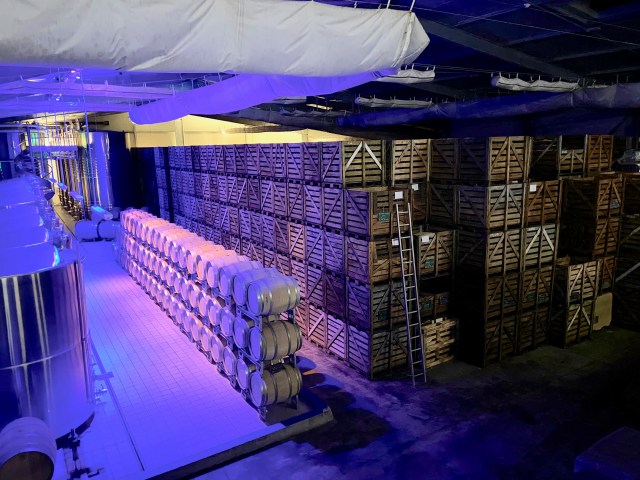
Photo ©Jean Janssen. A long tunnel in Taittinger’s wine cellars with rows and rows of stacked champagne bottles. Reims, France

How do you convince Natasha she is ready for another trip to Paris as opposed to another location?  Promise her a day in France’s Champagne Region.  Anyone that knows me knows my beverage of choice is champagne.  At home, there are always at least four chilled bottles on hand and the wine rack is full of champagne bottles.  Emma has also decided that I need a collection of champagne buckets and gave me two vintage ones for Christmas.

IMG_1014

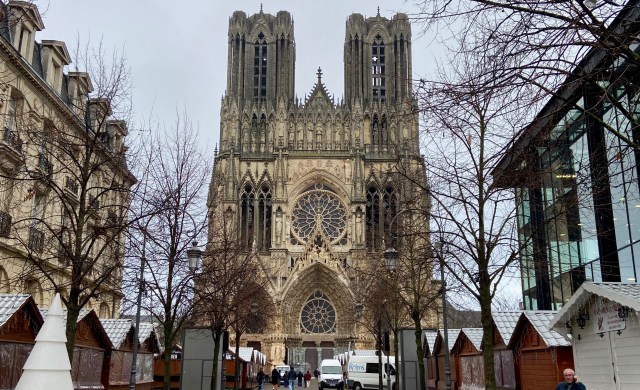
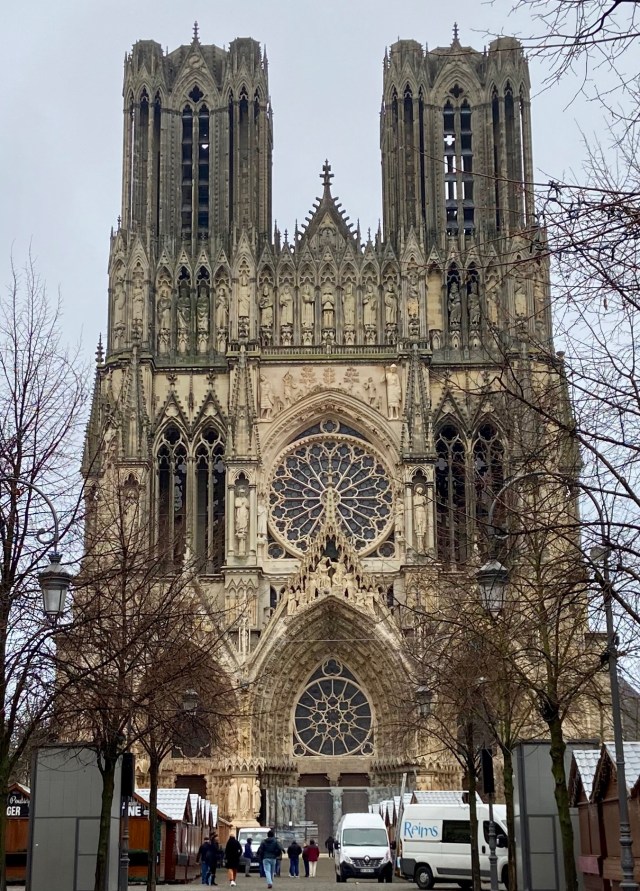
Photo ©Jean Janssen. Notre-Dame de Reims, Reims, France. The traditional coronation venue for the Kings of France.

We are going on a small group day-trip out of the city.  I am sure you can reach at least some the locations by train, but with an on-going transportation strike our choices are more limited.  Boris and I will be joined by 3 other couples and our guide.  Fortunately, Maison Astor begins its fabulous buffet breakfast early, so we had a chance to eat before our 7:15 am pick-up at the hotel.  Boris and the guide instantly hit it off.  The guide was of Italian heritage and he and Boris had several conversations in Italian.  As it turns out, all of the other participants were in one family and from our home state.  We only had one more hotel stop.

IMG_1044

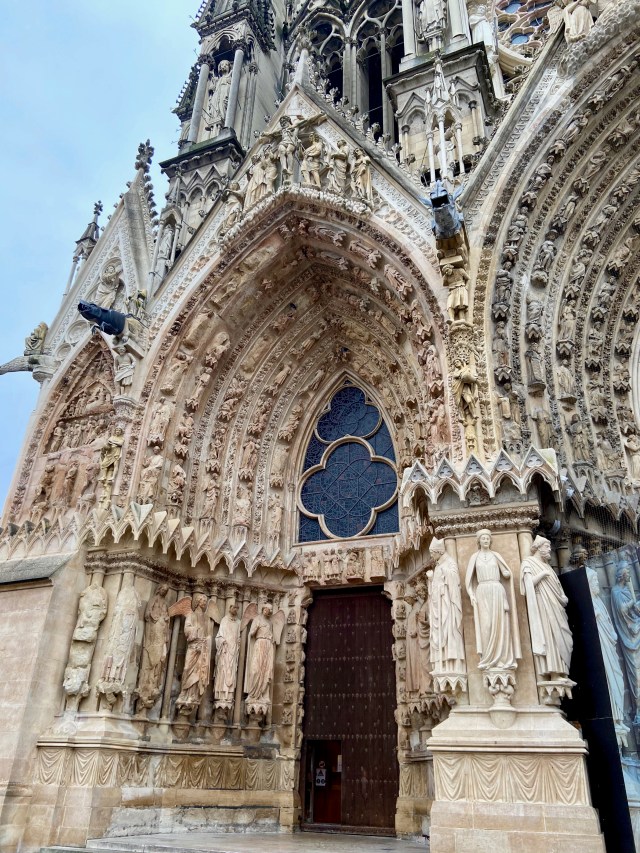
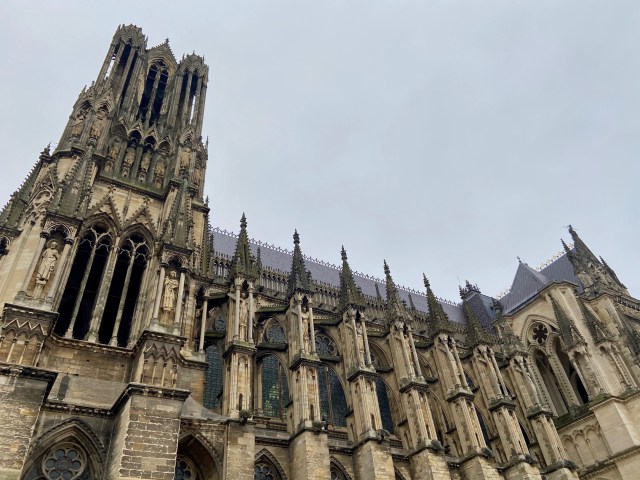
Photo ©Jean Janssen. Reims Cathedral, France.

Unfortunately, part of their group overslept.  We are traveling with a wife and husband, mother and step-father to two adult girls who are on the trip with their boyfriends.  Well actually one of the boyfriends became a fiancé (just days ago while on the trip) to the daughter who has graduated and is out working; the other daughter is celebrating her college graduation.

IMG_1058

Photo ©Jean Janssen. Reims Cathedral, France

We waited quite a while for them to be ready.  I would have enjoyed the extra 45 minutes of sleep.  This is how things go on these tours.  If you have the larger size group you can somewhat control the timeline.  Boris was not happy.  He sat shotgun and didn’t talk to anyone for a while.

IMG_1015

Photo ©Jean Janssen. Notre-Dame de Reims, Reims, France. In the foreground are the Christmas market stalls, still in place but no longer open on January 2.

Our first stop is Reims and its wonderful Cathedral.  This is an add-on to the excursion that I am glad we didn’t miss given the delay.  Our guide drove like a bat out of hell.  I was center in the front seat and saw everything.  Well actually I didn’t see everything.  It was raining and the guide couldn’t really figure out or didn’t try to use the defroster.  Honestly, I don’t know how he saw anything.

IMG_1055

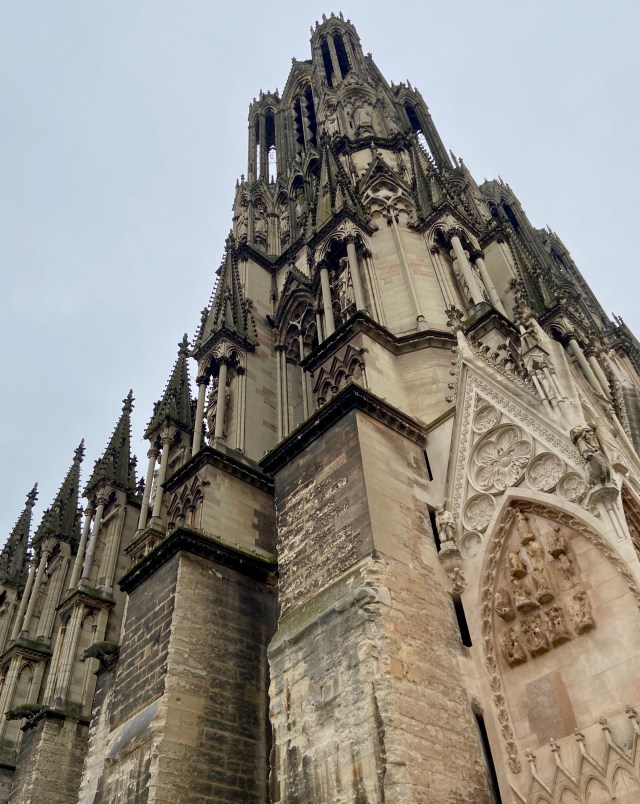
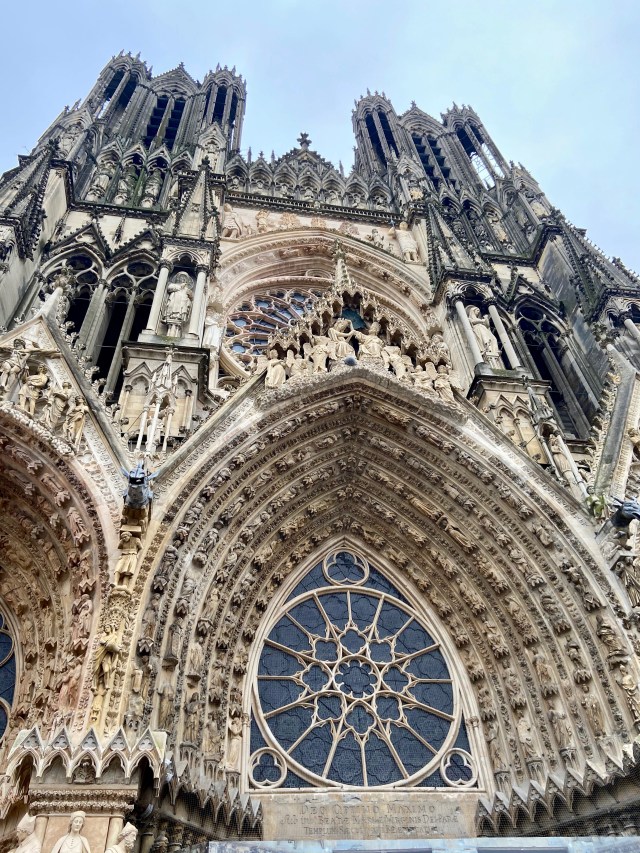
Photo ©Jean Janssen. Notre-Dame de Reims, Reims, France.

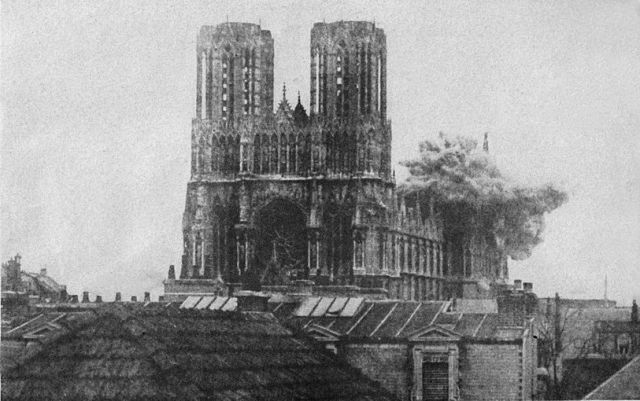
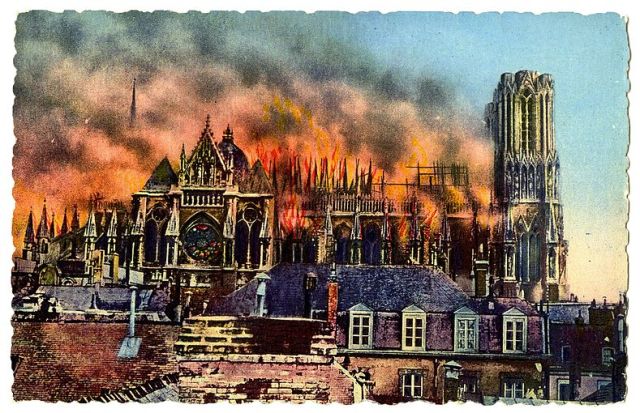
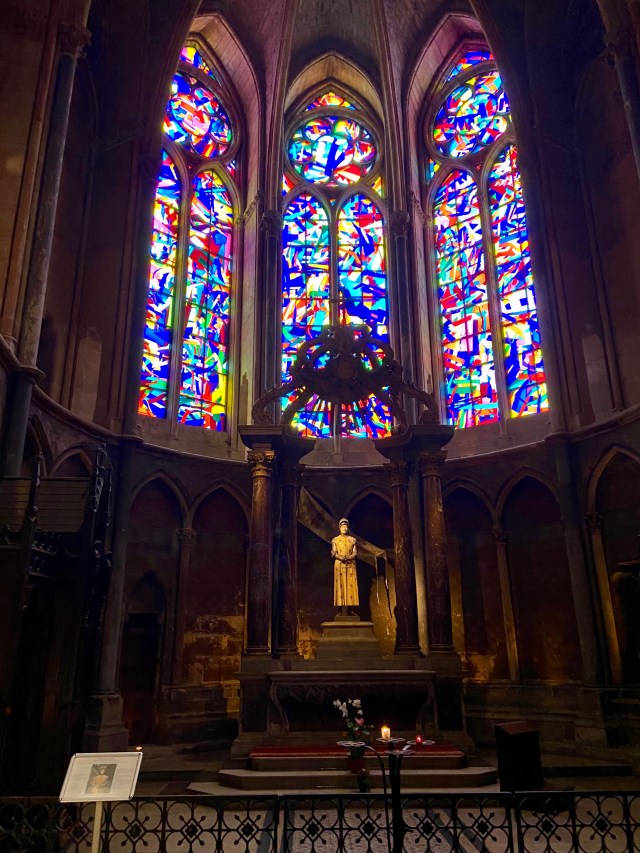
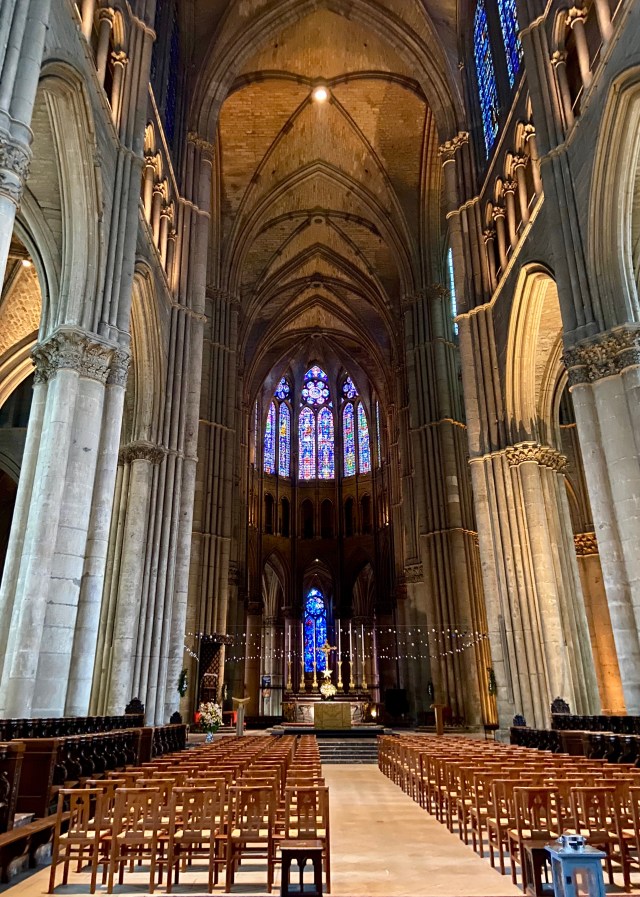
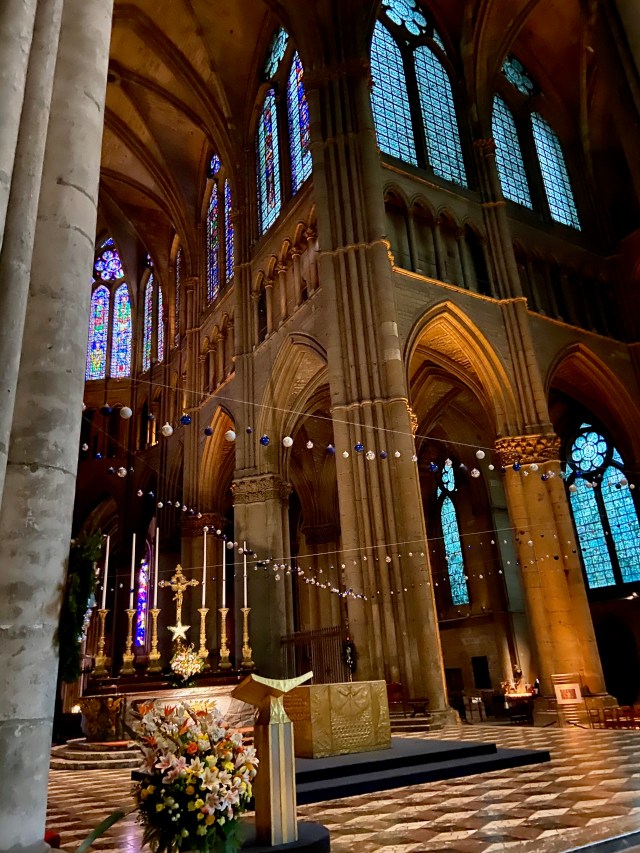
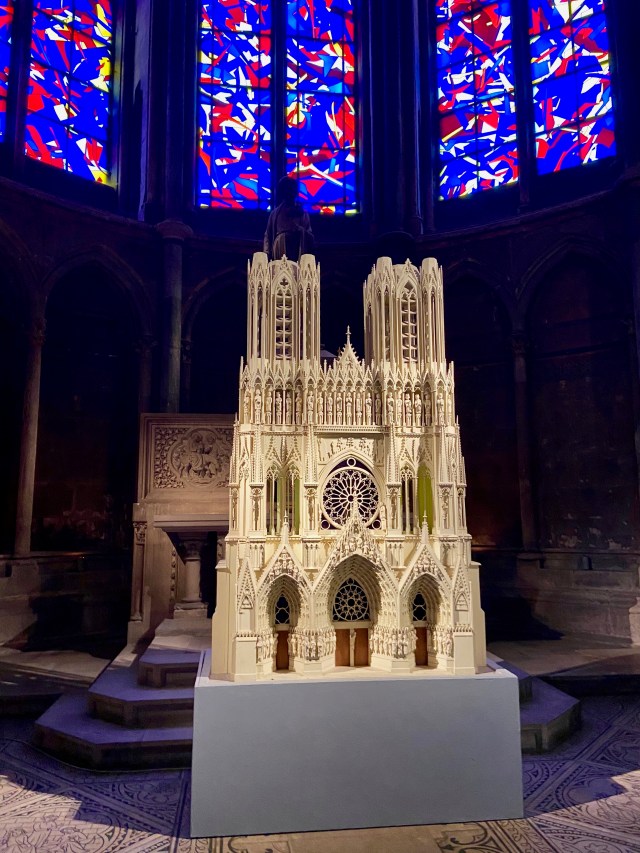
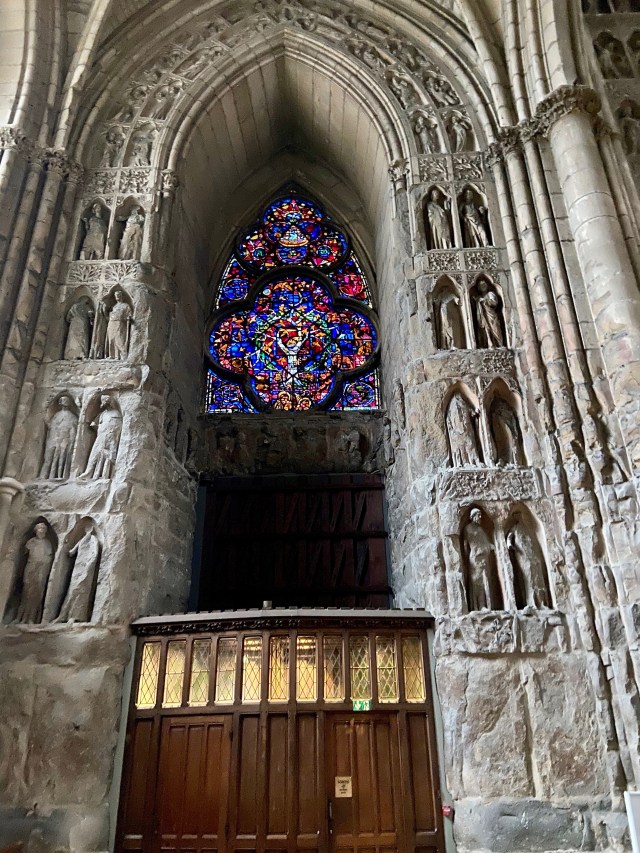
We had a short 45-minute stop to see the Cathedral, Notre Dame de Reims (“Our Lady of Reims”).  The first church at this location dates from the 5th century.  Although not fully completed until the 15th century, the present French Gothic Cathedral was started in 1211 and mostly finished within 60 years.

IMG_1043

Photo ©Jean Janssen. Notre-Dame de Reims, Reims, France. Note all the statutes in the archways. In the summer there are light shows on the Cathedral highlighting all these details.

The Reims Cathedral is the traditional location for the coronation of the Kings of France.  King Henry I of France was crowned here in 1027.  All but seven of France’s future monarchs would be crowned at Reims, including Charles VII, crowned in July of 1429 with Joan of Arc by his side.  A statute of Saint Joan of Arc is found in the Cathedral.  There is also one in the courtyard, but it was surrounded by the Christmas stalls that were closed, but yet to be taken down.  It looked like they were going to start the process of dismantling the Christmas market that day.

813px-Shell_Explosion_Cathedral_at_Rheims_retouched_image

Bombing of the Reims Cathedral during WWI.

789px-Reims_Cathedral_burning_during_World_War_I

Damage by fire to the Reims Cathedral during WWI.

In spite of the fact that the Reims Cathedral was “an important symbol of the French monarchy”, it experienced relatively little damage during the French revolution.  However, it was severely damaged during WWI.  I have figured out that the give-away is the mismatched stained-glass in a church.  Normally that is the result of wartime damage and later replacement, although it might also be damage from a natural disaster.  Today, some of the beautiful glass is the work Marc Chagall and Notre-Dame de Reims is an important stop when touring his creations.

IMG_1032

Photo ©Jean Janssen. Joan of Arc statute with some of the Marc Chagall windows within Notre-Dame de Reims, Reims, France.

IMG_1027

Photo ©Jean Janssen. Notre-Dame de Reims, Reims, France.

IMG_1028

Photo ©Jean Janssen. Notre-Dame de Reims, Reims, France.

Reims Cathedral was made a UNESCO World Heritage Site in 1991.  Pope John Paul II visited here in 1996.  Although I had to shoot around the Christmas Market stalls, I took a lot of time taking pictures of the exterior.  Not to be missed however, was the beautiful interior with the marvelous stained-glass.  When the light came through those beautiful windows, a wonderful glow and ambiance was created inside .  Magical.  I am so glad the rain had stopped and the light came pouring through; we were able to see the interior in all its glory.

IMG_1065

Photo ©Jean Janssen. Taittinger’s champagne cellar in Reims, France.

After the Cathedral, it was time to visit our first champagne producer.  Reims is considered to be the “unofficial capital of the Champagne Wine-Growing Region.”  It has also been called an “essential stop on France’s Champagne trail.”  We will be visiting one of the city’s top champagne houses and a highly recommended tour stop, Taittinger.  It is particularly recommended for its wonderful cellar.

IMG_1085

Photo ©Jean Janssen. Taittinger’s champagne cellar in Reims, France. This alcove was an underground chapel of the Abbey of Saint Nicaise.

Apparently, the matriarch of their tour companions had called ahead and tried to dictate our stops, however we are at the mercy of availability, both in terms of space and what happens to be open that particular day.  The day after the holiday limited the choices.  I was fine not going to Veuve Clicquot, which is apparently “popular with Americans and fills up weeks in advance.”  One of my new vintage champagne buckets from Emma is marked Veuve Chicquot.

IMG_1066

Photo ©Jean Janssen. Touring Taittinger’s champagne cellar in Reims, France.

I like Taittinger Champagne.  It is widely available at home, although not in the extensive varieties available in the winery’s shop.  We began with the tour of the champagne cellars.  Most winery tours tell you a little bit about production.  I have been to sparkling wine producers’ cellars before so I am somewhat familiar with the process.

IMG_1078

Photo ©Jean Janssen. Taittinger’s champagne cellar in Reims, France.

However, I did learn some things that are particular to champagnes rather than sparkling wine in general.  Champagnes come from three grape varieties in varying quantities.  The three main varieties used are Pinot Noir (a red), Pinot Menuier ( a red related to Pinot Noir), and Chardonnay (a white).   A producer does not necessarily use the same percentage mix each year; the goal is consistency in taste from year to year.  They may also mix grapes from different harvests to get that taste consistency.  I did find that I really like the selections that came from all chardonnay grapes-the blanc de blancs (white of whites in English).  I also definitely like the brut rather than the sweet champagne.

IMG_1081

Photo ©Jean Janssen. Taittinger’s champagne cellar in Reims, France.  This staircase, now sealed off, would have lead up to the Saint Nicaise Abbey.

IMG_1083

Photo ©Jean Janssen. Taittinger’s champagne cellar in Reims, France.  This staircase, now sealed off, would have lead up to the Saint Nicaise Abbey.

The Taittinger cellars are part of the former Saint Nicaise Abbey, dating back to the 13th century and the deep cellars (60 feet/18 meters down) have Roman origins.  The caves are listed as a UNESCO’s World Heritage Site.  During the tour you visit the 4th century chalk quarries that were dug out to provide building materials.  These quarries later became the Abbey cellars

IMG_1099

Photo ©Jean Janssen. 4th Century chalk quarries make up Taittinger’s champagne cellar in Reims, France.

From the Champagne House’s website:  “[the chalk quarries] became a network of galleries; linking cellars, crypts and vaults for storing wine first made by the Benedictine monks in Champagne. The Abbey was destroyed during the French Revolution, but the cellars remain intact. They now belong to the Taittinger Champagne House and are notably used for maturing bottles of the Comtes de Champagne, which can be seen all throughout the cellar tour. Over the course of a year, the sight welcomes over 70,000 visitors, who come to admire the remains of one of the best examples of the Gothic style in the Champagne region.”

IMG_1101

Photo ©Jean Janssen. Carving on the chalk quarry wall in Taittinger’s champagne cellar in Reims, France.

It really was an impressive setting.  Long tunnels were stacked high with bottles just waiting to mature and find a home.  (I know a welcoming one in Houston.)  The tunnels, alcoves, quarry markings, and the staircases to nowhere (well originally up to the Abbey, but now just sealed up), made it a great choice for touring.  The dim lighting created a romantic setting.

IMG_1092

Photo ©Jean Janssen. Taittinger’s champagne cellar in Reims, France. Natasha’s heaven-stacks and stacks of full champagne bottles.  Who minds a little dust?

IMG_1102

Photo ©Jean Janssen. Taittinger Champagne House, Reims, France. A tour ticket and the good stuff.

Our cellar visit complete, we made our way to the tasting room and shop to get our sample.  Depending on what ticket you had, you may get a choice of which champagne(s) you get to sample.  Unfortunately, our ticket didn’t give us a choice so I ended up with their best worldwide seller which I like, but have had before.  If you wanted something else, you had to go back to the front where we entered and upgrade your ticket.

IMG_1060

Photo ©Jean Janssen. The start of our tour at Taittinger’s, Reims, France

I knew we had limited time, so I didn’t go upgrade.  That didn’t stop other members of our group.  So after that wait, then it was time to purchase.  Then there were further delays when the matriarch wanted her champagne shipped home.  I didn’t get anything since I could buy what I sampled at home and didn’t want to purchase something unique without trying it.

IMG_1105

Photo ©Jean Janssen. View of the vineyards from the outdoor patio at Voirin-Jumel Champagne House.

By the time we left we were behind schedule again and it was another fast drive to our second champagne house, Voirin-Jumel, in the village of Cramant where we will also be having lunch.  Voirin-Jumel is a small multi-generational family producer.  The original plan was to begin with a tour, but because we are so late part of the group had already started lunch and the owner was giving a demonstration.  We joined the food and champagne pairing.  It was wonderful and presented in multiple courses.  Our guide told us he had been to this winery before, but had never had the lunch.  The wine-makers did an excellent job.

IMG_1108

Boris and Natasha in Cramant in the Champagne region of France. House of Voirin-Jumel Champagne.

There was no time for a tour, but we were offered dessert and coffee in their tasting room.  I liked the champagne and some of their accessories.  I did make some purchases, including some honey that Boris wanted.  Family member Valerie was our hostess.

img-0846_orig

photo courtesy of Voirin Jumel

From importer Charles Neal’s website:  “The Champagne region, like that of Burgundy, has many producers with double-barreled names. These names usually occur when the offspring of one producer marries another, creating a new identity for certain parcels of vines passed on by the parents. Voirin-Jumel, a récoltant manipulant located in the grand cru village Cramant, is one example of this.  Jean Voirin, who owned some vines and sold all his grapes in bulk, decided to begin bottling his own champagne at the end of World War II. The Jumel family started producing champagne around the same time—René Jumel had a transport business and his wife’s family had some vines that they cultivated. As the champagne market grew, René began selling some of his trucks and buying vineyards around the Côte des Blancs, which his wife, Paulette Richomme, worked and oversaw. Between 1950 and 1970, all the grapes were sold in bulkIn the early 1970’s, Francoise Jumel (daughter of Paulette and René) began bottling champagne with her husband Gilles Voirin under the name Voirin-Jumel. That year they sold nearly 10,000 bottles.  In the 1990s, Francoise’s children, Patrick and Alice, along with Patrick’s wife Valerie, began running the domaine. Today it is a true family affair, and they own 11 hectares of vines in 11 different villages.”

IMG_1113

Photo ©Jean Janssen. Abbot Caudron is honored in the museum at the cooperative in Passy-Grigny, France

Our guide did an excellent job of varying of our experiences.  We had gone to a large producer, then a small one, and our third visit was to a co-op arrangement in the village of Passy-Grigny, near the Marne River.  In 1929 the local abbot, Leon Emile Aime Caudron, donated 1000 francs to 23 grape producers to help start a business.  The group were collectively farming 40 acres (16 hectares) of the Pinot Meunier grape, one of three varieties used in the production of champagne.  The wine growers pooled their resources to first buy a press and then produce wine under a single label. The original press is now  in the winery’ museum.

Champagne_Dom_Caudron1

The winemaking museum at the cooperative producing Dom Chaudron. Picture linked from Wikimedia Commons

After starting in the museum, we got a tour of the production and storage facilities of the Dom Caudron Cooperative.  Afterwards there was a tasting of several of their wines produced with 100% of the Pinot Meunier grape.  Traditionally, Meunier grapes have been used as a blending grape in champagne.  “Until recently, producers in Champagne generally did not acknowledge Pinot Meunier, preferring to emphasise the use of the other noble varieties, but now Pinot Meunier is gaining recognition for the body and richness it contributes to Champagne.  Pinot Meunier is approximately one-third of all the grapes planted in Champagne.”

IMG_1112

Photo ©Jean Janssen. Production and storage facilities of the Dom Caudron Cooperative in Passy-Grigny, France, producers of champagne.

Apparently this isn’t the grape for me; I didn’t like anything I tried.  Boris wasn’t wowed either.  We got a nice stopper to preserve the bubbles, but other than that we didn’t make a purchase at the Dom Caudron Cooperative in Passy-Grigny.

IMG_1037

Photo ©Jean Janssen. Model of the cathedral inside Norte-Dame de Reims.

After waiting for everyone to make their purchases, we were running a little behind, surprise, surprise.  I thought the guide had been extremely patient all day.  On the way back the matriarch was at it again trying to find out where she needed to be left off so she would be able to make her designer handbag purchase before the shop closed at the end of the day.  Since she was the one who made us late all day, it was a little hard to be sympathetic.  Unlike the morning when we were picked up at our hotels, the tour ended at a central metro location.  That would have been fine, if the metro had been working.

IMG_1116

Photo ©Jean Janssen. Lighted watercraft with the Bastille Monument in the background, Paris.

Our driver agreed to take us closer to our hotels (very kind, it probably meant an additional hour of driving for him).  In route, one of the daughters had to go to the bathroom and we made a stop.  Fortunately, it was a picturesque spot and I got a great photo of the lighted watercraft on the river with the Bastille monument in the background.

IMG_0924

Photo ©Jean Janssen. Place de Concorde, Paris, on the the first morning of 2020.

We were headed to the Place de la Concorde and were stopped at a light just before crossing the bridge when the matriarch announced she was getting out.  Of course, then there was the discussion about who was going and what was going to happen to all the packages of wine in the back.  Next, the light changed and the drivers in the cars behind us were furious as people piled in and out of our van and we didn’t move.

IMG_1040

Photo ©Jean Janssen. Headed out the main doors of the Reims Cathedral.

Four of us stayed in the van until Place de la Concorde.  I felt sorry for the young couple who ended up with all the packages for the group of six.  Champagne bottles are not light.  We tipped the driver well and reconsidered private tours for the future.  All in all it was a great day.  I always love my bubbles.

IMG_1117

Photo ©Jean Janssen. Paris.

IMG_1095

Photo ©Jean Janssen. A long tunnel in Taittinger’s wine cellars with rows and rows of stacked champagne bottles. Reims, France


Posted in international | Tagged , , , , | Leave a comment

New Year’s in Paris

IMG_0924

Photo ©Jean Janssen. Place de Concorde, Paris, on the the first morning of 2020.

Boris, who has worked hotel and airline points for decades before the rest of us caught on, announced that he had two free nights at a hotel plus additional Hilton points and that we were going to Paris for New Year’s.  I didn’t pass up on that.  Surprisingly, there is not a direct flight from Houston on United, so we connected through Dulles.  We left on the 30th, arriving very early on New Years’ Eve.

IMG_0894

Photo ©Jean Janssen.  We had a connecting flight through Dulles.

IMG_0895

Photo ©Jean Janssen. If you were lucky enough to sit in First Class-I was in economy but I could take a picture and dream-you got these cool Star Wars pouches celebrating the release of the last movie in the saga.

The Europeans don’t start putting out holiday decorations before Halloween like we see in the states.  As a consequence, most of the decorations are still up and will remain so through 12th night or Epiphany or perhaps longer.  This is in contrast to my neighbors who are so sick of their Christmas decorations that they are outside taking things down the day after Christmas or New Years.

IMG_0953

Photo ©Jean Janssen. Near the Tullieries Garden, Paris on New Year’s Day.

We were extremely fortunate that the hotel had a room for us that we could check right into.  So after a really nice buffet breakfast, we headed up to our room to sleep.  I don’t recommend this strategy for your visits across the pond.  If you can stay up it will help you acclimate to the time change.  However, on this visit we want to be able to stay up tonight for New Year’s Eve.  Additionally, our arrival is so early that nothing is really open yet anyway.

IMG_0897

Photo ©Jean Janssen. A little bit of the holiday still appears in the lobby of the Maison Astor, Paris.

We are staying at the beautiful Maison Astor, the Paris home of American tycoon John Astor who perished on the Titanic.  The hotel has only recently been renovated.  In fact, when we came for Boris’ birthday we had reservations to stay here but they had to move us to the Hilton Paris Opera House because renovations were not complete.  Our points won’t get us the biggest room, but our windows open directly onto the lovely interior courtyard.  It was a good size considering the general size of European hotel rooms.  I am so tired that I am not particularly picky at this point anyway.

IMG_0999

Photo ©Jean Janssen. Boris and I are staying at the Maison Astor in Paris

IMG_0899

Photo ©Jean Janssen. Holiday decorations in the bar of the Hotel Astor, Paris

The Maison Astor has a following.  As we came to experience, the hotel’s popularity is most likely due to the wonderful concierge service which is the best I have ever experienced.  Boris had been communicating with them ever before our arrival.  This boutique hotel is particularly charming and is centrally located, although that worked against us on New Year’s Eve when we needed a cab to cross the Seine for our dinner reservations.  Originally we had reservations nearby, but when they set their menu and called to say it would be $750/person paid in advance, we chose an alternative location.

IMG_0930

Natasha in Paris. My father loved flocked trees at Christmas. Maybe because it never snowed in our hometown in South Texas.

We started with cocktails in the bar downstairs before heading out.  There were no cabs to be had and neither Boris nor I had any luck getting an Uber on our phone.  Our amazing concierge got out his own phone and called a local Uber-type service (that we don’t have in the States) and that is how we got our ride.  Yes, above and beyond.  There was even a barricade on our street for traffic control, so the concierge walked us out to the car beyond the barrier.

IMG_0901

Photo ©Jean Janssen. In the bar at Maison Astor, Paris before going to dinner on New Year’s Eve.  Boris is really excited about our evening out, in spite of his expression in this picture.

I should mention that there is a transportation strike going on.  It has been going on for almost a month when we arrived in Paris.  The metro is not operating, nor much of the train service, so transportation options are quite limited anyway.  The biggest drinking holiday of the year means cabs and Ubers were already going to be crowded.  In the next few days, I suspect we can walk this route much faster than the car was able to go.

IMG_0905

Photo ©Jean Janssen  Le Procope, Paris’ oldest cafe and our destination for dinner on New Year’s Eve.

IMG_0908

Photo ©Jean Janssen  Le Procope, Paris.

A special restaurant and fireworks over the Seine with the Eiffel Tower in the background made it all worth it.  We had a wonderful multi-course meal that started with champagne.  Founded in 1686, Le Procope is the oldest cafe in continuous operation in the city of Paris.  In the 18th and 19th centuries, it was “a hub of the artistic and literary community.”  Just to the side of me is a plaque commemorating Thomas Jefferson’s visit there.  On this night only, all the servers are dressed in period costumes.

IMG_0909

Photo ©Jean Janssen. A plaque acknowledging the patronship of Thomas Jefferson at Le Procope, our dinner spot for New Year’s Eve.

IMG_0918

Photo ©Jean Janssen. The servers were dressed in period costumes for the celebration of New Year Eve at Le Procope, Paris

After dinner there was dancing in the lobby, although there weren’t many takers.  The American couple at the table next to us decided to walk back to their hotel which is in the same area of Paris as ours, but Boris found us a cab.  (Actually they never named their hotel, but Boris saw them the next morning at breakfast at Maison Astor.)  We wanted to see the fireworks over the river.  Unfortunately, we didn’t beat the traffic as we had to travel through one of the most congested areas of the city.  We found out why there was a barricade on our street; it was on the pedestrian route away from the fireworks.  The officer on duty let us in when he realized where we were headed.  If you decide to visit the city on New Year’s Eve, I definitely recommend a restaurant within walking distance of your hotel.

IMG_0923

Natasha dined with Napoleon in Paris on New Year’s Eve.

With the strike going on and it being a holiday, we decided just to walk as far as we could on New Year’s Day.  We walked back toward the Seine and passed La Madeleine Church.  The first church on the site dates from 1764.  Two attempts at completion were demolished before “Napoleon I assigned a new architect to build an edifice based on the design of an ancient temple in honour of the French Navy.  With the fall of Napoleón, the building was made into a church in 1842, in honour of St Mary Magdalene.”

IMG_0926

Looking back up the Rue Royale just as we reached the Place de la Concorde, you have an excellent view of La Madeleine.  On the left side is the famous Maxim’s restaurant where we celebrated Boris’ 60th birthday on a previous visit to Paris

I have never been inside of La Madeleine, so that goes on the bucket list.  You are drawn to the dramatic exterior. The neoclassical church “has 52 Corinthian columns standing 65 ft (20 m) tall.”  Looking back up the street from the Place de la Concorde, you have an excellent view of La Madeleine.  To the left you will find Maxim’s, the famous Art Nouveau restaurant on Rue Royale.

IMG_4694 2

Photo ©Jean Janssen. At home, Natasha celebrates her Maxim’s visits.

Boris and I have eaten at Maxim’s twice together, most recently on Boris’ 60th birthday trip. Emma, unknowing of our visits to the restaurant, gave me a vintage Maxim’s champagne bucket for Christmas.  (She just knew that champagne is my beverage of choice.)  On our bar back home, I have displayed the bucket and our resealed champagne bottle from the restaurant.  Our concierge told us the owner is now in his 90s and doesn’t really put an effort into the restaurant. The concierge no longer recommends Maxim’s.

IMG_0955

Photo ©Jean Janssen. Paris’s large ferris wheel has now moved from Place de la Concorde to the edge of the Tuileries Gardens by the Christmas market.

IMG_0964

Photo ©Jean Janssen. Paris’s large ferris wheel has now moved from Place de la Concorde to the edge of the Tuileries Gardens.

We started out at the Place de la Concorde.  The large ferris wheel was here on our last visit together to celebrate Boris’ birthday.  It has now moved down by the Christmas Market on the edge of the Tuileries Gardens.  I was surprised when the concierge told us that there was a Christmas market that was still open.  We walked through.  I am kind of Christmas marketed out after the river cruise, but Boris was interested.  This one was almost all food and rides.  Perhaps there were more craft and gift booths open before Christmas.

IMG_0939

Photo ©Jean Janssen. Boris got into the festivities at the Christmas market at the Tuileries Gardens, Paris.

IMG_0956

Photo ©JeanJanssen. There were lots of food options in the Paris Christmas Market, including a wide variety of German sausages.

IMG_0943

Photo ©Jean Janssen. Boris made some friends in the Christmas Market in Paris.

After the market, we enjoyed walking through the Tuileries Gardens before stopping for coffee across from the Hotel Regina, the first place I ever stayed at in Paris.  This famous hotel dates from 1900 and is celebrating it 120th anniversary this year.  It is currently being run by the 4th generation of the same family.  Hotel Regina is considered to be “the last remaining example of an Art Nouveau hotel in Paris.”  It has been the residence of many famous guests and has appeared in several movies.  Hotel Regina sits in front of the Louvre and overlooks the Tuileries Gardens.

IMG_0968

Photo ©Jean Janssen. View from the Tuileries Gardens, Paris

IMG_0966

Photo ©Jean Janssen.  As of January 1, Boris liked to think of himself as An American in Paris in the 20s. He is a century off, but I’ll give him this one. In the Tuileries Gardens with a Christmas market to the left and the Lourue in the background, Paris

After our short break, we walked to the Place Vendome which sits north of the Tuileries Gardens and east of La Madeleine. “Place Vendôme was laid out in 1702 as a monument…with an over life-size equestrian statue of the king…set up in its centre…[The statute] is supposed to have been the first large modern equestrian statue to be cast in a single piece. It was destroyed in the French Revolution; however, there is a small version in the Louvre.” 

IMG_0987

Photo ©Jean Janssen.  Place Vendome, Paris

IMG_0977

Photo ©Jean Janssen. Place Vendome, Paris

The Vendome column was originated by Napoleon, but with the change in authority and offense taken at this display of imperial power, the column and his statute was pulled down. However, “[i]n 1874, the column was re-erected at the center of Place Vendôme with a copy of the original statue on top.  An inner staircase leading to the top is no longer open to the public.”  Place Vendome is home to chic hotels like the Ritz and famous boutiques.  The rue de la Paix runs through it.

IMG_0997

Photo ©Jean Janssen. Boris takes a look back at the Place Vedome (or maybe he is just checking the traffic). Paris

IMG_0998

Photo ©Jean Janssen. A look back at the Place Vendôme, Paris. Yes, Natasha stopped in the middle of the rue de lax Paix crosswalk to get this shot; if only that van wouldn’t have been there…

We were both tired from minimal sleep and the walking, so we went back to the hotel from Place Vendome, passing once again by La Madeleine and getting another look at Place de la Concorde.  We shared a delicious sandwich in the bar of the hotel before nap time.   We had to rest up for our full-day tour of the Champagne region tomorrow.

IMG_1001

Photo ©Jean Janssen Paris.

We were fortunate that one of Boris’ favorite places was open for dinner so we went out to Brasserie Bofinger for dinner with their Alsatian specialities.  Boris loves the pork and I like their fresh seafood.  I was stuck by the presentation of my chilled after dinner drink and who can pass up crepe suzette prepared table-side.  Just a great way to end our first full day in Paris.  Welcome 2020.

IMG_1009

Photo ©Jean Janssen. Crepes Suzette prepared table side at Brasserie Bofinger in Paris.

IMG_1012

Photo ©Jean Janssen After dinner delights at Brasserie Bofinger in Paris, crepe suzette and a chilled Cointreau.

IMG_0924

Photo ©Jean Janssen. Place de Concorde, Paris, on the the first morning of 2020.

Posted in international | Tagged , , , , , , , , , , , , | 1 Comment

The End to the Christmas Market Cruise in Basel, Switzerland

IMG_0845

Photo ©Jean Janssen. The Basel Town Hall on the Marktplatz.  The Rathaus was built in the 16th century; the tower was added during the 19th century. Basel, Switzerland

Today we are in Basel, Switzerland on the Rhine River where Switzerland, Germany, and France meet.  In fact some of the city’s suburbs are in these other countries.  They speak their own dialect of German here.  It is the country’s second largest economic center after Zurich.  For some reason I thought this was going to be a sleepy little town, not a bustling city.

IMG_0777

Photo ©Jean Janssen Basel Munster, Basel Switzerland

IMG_0780

Photo ©Jean Janssen. Main doorway of the Basel Munster. You will note the rough edge above the door. The art in place here was removed during the reformation.

Keeping with the pattern, we went straight to the red sandstone Basel Munster, the local Cathedral.  It was started in 1019 as a Roman Catholic Cathedral and is now a Protestant Reformed Church.  On the facade, you can see where they have removed the uniquely Catholic symbols-there is an empty column where the Virgin Mary was originally depicted.  Countless pieces of art were destroyed during the Reformation.  The statutes are interesting and depict the benefactors, Henry II and Empress Kunigunde on one side and the seducer and the misguided virgin on the other.  Damage and destruction-including an earthquake- has meant that the church has been remodeled several times and is built in both the Romanesque and Gothic styles.

IMG_0781

Photo ©Jean Janssen. Statutes of the church’s benefactors, Henry II and Empress Kunigunde on the facade of Basel Munster. What appears in their hands has changed over time.

IMG_0782

Photo ©Jean Janssen. On the facade of the Basel Munster, you see the merger of the various styles of architecture and some wonderful statuary.

IMG_0786

Photo ©Jean Janssen. Basel Munster, Basel, Switzerland

Around the back we got a nice view of the Rhine River.  A bronze model of the Basel Munster with braille is located there.  There was a yet unopened Christmas market in the Munsterplatz.  From the backside we had access to further exploration of the Munster grounds where we enjoyed the wonderful cloisters and an alternative view of the church with its large round window with the star of David.

IMG_0784

Photo ©Jean Janssen. A Christmas Market in Munsterplatz, Basel, Switzerland  The Munsterplatz was the site of an old Roman fort.

IMG_0801

Photo ©Jean Janssen. Part of the 15th Century double cloister at Basel Munster, Basel, Switzerland

IMG_0815

Photo ©Jean Janssen.  Part of the 15th Century double cloister at Basel Munster, Basel, Switzerland

IMG_0812

Photo ©Jean Janssen. Basel Munster. Note the colorful roof and round Star of David window

After passing the Munsterplatz, site of an Roman fort, we continued along the Rhine.  We had great views of the Mittlere Brucke, or middle bridge, which used to be the sole crossing bridge over the Rhine in Basel.  It features seven arches and has been closed to vehicular traffic since 2015.  The Mittlere Brucke was orgianlly constructed in 1226 and have been renovated several times.  “A copy of the old bridge chapel, the so-called “Käppelijoch”, where in the Middle Ages convicted criminals were sentenced to death, was erected as a reminder of the original construction.”  I had noticed the small structure, thinking it was a guardhouse.  Its roof looks just like the roof on the Basel Munster.

IMG_0829

Photo ©Jean Janssen. Basel’s Mittlere Brucke with its reconstructed chapel.

IMG_0794

Photo ©Jean Janssen. Mittlere Brücke, Basel, Switzerland

We saw more of the half-timbered houses with upper stories that extended beyond the base story roof line.  Historically, taxes were based on the land covered; a second story that jutted out a bit was untaxed space.

IMG_0831

Photo ©Jean Janssen. Untaxed square footage in a half-timbered house, Basel, Switzerland

IMG_0832

Photo ©Jean Janssen. Basel, Switzerland

IMG_0825

Photo ©Jean Janssen.  Fountain in Basel Switzerland.  At the top is a basilisk and below it is the symbol for the city.  Note the Basel Munster in the distance.

IMG_0822

Photo ©Jean Janssen. They are not easy to walk on, but the cobblestones added to the city’s charm and were certainly colorful. Basel, Switzerland

We arrived at the Marktplatz, the city’s main square where the farmer’s markets are held.  During our visit it was a mix of produce and Christmas items.  The square is dominated by the Rathaus (town hall).  Built in the 16th century, the Rathaus is almost whimsical in nature.  We came back after the tour to step inside the courtyard and see the beauty there.  The colorful walls of the courtyard were originally painted in 1608-1611; they have been expertly restored.

IMG_0848

Photo ©Jean Janssen. The clock is original to the 16th century red Rathaus. The Tower, with its colorfully tiled roof, was added in the 19th century. Basel, Switzerland

IMG_0872

Photo ©Jean Janssen The colorful painted walls of the Basel Rathaus courtyard have been beautifully restored from the 1608-1611 originals.

From here, our guide showed us the locations of additional Christmas Markets, other shopping, museums, and our bus stop to return to the ship.  There is also a tram stop that leaves us off right by the ship should we decide to venture out when the shuttles weren’t running.  (I just didn’t hear about it until we were back at the ship.)

IMG_0868

Photo ©Jean Janssen. Basel Switzerland has a modern and efficient tram system.

I need to get an extra suitcase for the return trip home.  I didn’t buy that much, but was counting on sharing an extra full-size suitcase home with Emma and the small duffle bag I folded and brought with me from home wasn’t going to cut.  Most of the large suitcase I brought with me was filled with things to keep me warm.  Today, my plan was to do my touring, then get the suitcase, and finally take a later shuttle back to the ship.

IMG_0841

Photo ©Jean Janssen. Bretzel-yes that’s a B-sandwiches in Basel, Switzerland

IMG_0854

Photo ©Jean Janssen Spotted in the Basel Christmas Market, Basel, Switzerland

IMG_0862

Photo ©Jean Janssen. Ride in a pumpkin at the Basel Christmas Market, Basel, Switzerland

If I needed something to eat, I knew just what I was going to get.  I saw wonderful Bretzel-yes that is a B and not a P-sandwiches at a booth by the Rathaus on Marktplatz.  The markets had wonderful whimsical decorations, fitting for a town with such a town hall.  I didn’t find a lot to buy but enjoyed the sightseeing.  This is the first city we are visiting that we can’t use euros.  The Swiss have there own currently.  They don’t take credit cards in these markets either-at least at the booths where I asked.

IMG_0864

Photo ©Jean Janssen. Basel, Switzerland this is city known for it’s museums. Unfortunately with the focus on the Christmas markets, there wasn’t time for me to visit a single one.

IMG_0859

Photo ©Jean Janssen. In the Basel Christmas Market, beautiful but difficult to get home.

IMG_0857

Photo ©Jean Janssen. A lot of the history was covered up by the Christmas market stalls, but I spotted these two stones. The one on the right depicts the symbol of the city of Basel

IMG_0856

Natasha decided to get into the act in the Christmas market in Basel Switzerland

IMG_0869

Photo ©Jean Janssen. It was a department store near the Rathaus where Gillian found the much-needed second suitcase.

After I was pretty confident I had seen the markets, I went in search of that suitcase.  It wasn’t as easy as I thought it was going to be.  Switzerland is an expensive place to shop and I wanted something with 360 rotating wheels, a large size, and a good deal.  I give Gillian all the credit.  I told her she didn’t have to go with me, but she did and was actually the one who found the “bargain” of the day.

IMG_0852

Photo ©Jean Janssen. Our pick up point in Basel was by one of the local museums with this interesting fountain.

We split up after that.  Gill had more shopping to do.  I wanted to make the shuttle so I didn’t have to travel back with that suitcase in a more difficult fashion.  I didn’t know about the convenient tram stop at the time or I could have used that.  Our pick up point was just beside one of the city’s favorite museums and its unique fountain.

IMG_0874

Photo ©Jean Janssen A package was there when I got back to the room…

IMG_0875

Photo ©Jean Janssen. Ah, clean laundry. Free service as a return Uniworld guest.

When I got back, I found my clean laundry in the room.  I would have packed less if I had remembered about this perk.  Since I have been on a number of Uniworld cruises, I get a bag of free laundry while on board.  Plus, it comes to the room neatly folded and packaged.  As it was, I am able to go home with about half of my clothes clean instead of dirty.  Since I now have two suitcases, one gets the clean and the other gets the dirty laundry and the shoes.  I spent the rest of the afternoon packing so I could enjoy my evening on board.

IMG_0883

Photo ©Jean Janssen. Evening view of the Rhine from my cabin window while docked in Basel, Switzerland

I so wish Emma could have joined me for the cruise.  I guess this just gives me an excuse to go on another holiday cruise.    I have a very early departure in the morning and have to get up at 2 am, so I didn’t stay up too long after dinner.  I said goodbye to my new friends this evening, as I won’t see anyone in the morning.  My bags have to be out by 2:15 am and I leave the ship at 2:45 am.

IMG_0881

Photo ©Jean Janssen. Evening view of the city and bridges on the Rhine from my cabin window while docked in Basel, Switzerland

I am not a morning person, but I made it.  At that hour, it is probably better to be a night owl.  They even had out rolls, juice, and coffee.  Uniworld likes to get their passengers to the airport 3 hours before their international departure time.  I was afraid the airport wouldn’t be open to check in (it has happened before where I waited to hours for the counter to open to check my luggage).  There were three of us on an early United flight to Munich where we will make connections.  Fortunately, the counter opened shortly after our arrival at the airport.

IMG_0889

Photo ©Jean Janssen. Holiday decorations in the Basel Mulhouse Freiburg Airport, also known as the Euro Airport.

I am at the Basel Mulhouse Freiburg Airport which serves three cities and multiple countries.  It is appropriately also known as the Euro Airport.  The lounge didn’t open until 5 am, so I just tried to stay awake.  I did check out the holiday decorations-more secular and winter decor than Christmas.  But maybe the big chair was for…

IMG_0890

Photo ©Jean Janssen. A hardy breakfast at the Munich airport. Still in my “taking pictures of everything” mode.

In Munich, I had breakfast in the Lounge and made it to my flight.  I am headed home to celebrate Christmas with my family, now truly in the Holiday spirit.  Boris, missing the opportunity to travel with me has scheduled a trip to Paris for the new year.  Until then…

-Natasha

IMG_0783

Photo ©Jean Janssen. Munsterplatz in Basel, Switzerland

IMG_0845

Photo ©Jean Janssen. The Basel Town Hall on the Marktplatz.


Posted in cruises, international, River Cruise | Tagged , , , , , | 1 Comment

The Christmas Season in Strasbourg, France

IMG_0741

Photo ©Jean Janssen. La Petite France, Strasbourg.

Today we will be visiting Strasbourg, France which sits right on the border of France and Germany.  In fact, due to tax benefits many of the people that work in the city live across the bridge in Germany.  They have changed the bus parking and unloading since our last visit and we had a bit of a walk to reach the center of the city and the Cathedral of Our Lady.

IMG_0671

Photo ©Jean Janssen Side view of the Cathedral of Our Lady in Strasbourg, France. The Christmas Market booths were not yet open when we arrived. We found that most of the Christmas markets on our itinerary opened around 11 am.

IMG_0679

Photo ©Jean Janssen. Throughout Europe we have found that many of the churches and other special buildings are reproduced in small scale in detailed bronze for the blind. Here is an example done for the Strasbourg Cathedral.

On our last visit we took a canal tour and had a nice orientation of the city from that perspective.  That wasn’t offered during this winter visit but I look forward to the walking tour.  We also had a snack stop for wine and pastries.  It was a perfect time to walk around before the booths at the market opened up.

IMG_0690

Photo ©Jean Janssen Strasbourg’s Cathedral of Our Lady.

IMG_0684

Photo ©Jean Janssen Spotted on Strasbourg’s Cathedral of Our Lady.

No surprise that we started our visit at the Cathedral.  It has a beautiful interior and very special timepiece that I saw on my last visit.  (Check out that post for pictures of the interior.)  Today we just saw the exterior.

IMG_0700

Photo ©Jean Janssen. Holiday decorations adorn the tops of shop windows and doors all over Strasbourg, France.

IMG_0697

Photo ©Jean Janssen Strasbourg’s Cathedral of Our Lady.

IMG_0696

Photo ©Jean Janssen Strasbourg, France

We headed down the shopping street that ends right at the Cathedral’s doors and I began to notice the wonderful decoration done on the top of store windows and doors.  Looking back we got another great shot of the Cathedral.  It was time for our first snack stop.

IMG_0706

Photo ©Jean Janssen. Strasbourg, France

IMG_0719

Photo ©Jean Janssen On our way to Petite France in Strasbourg France

IMG_0705

Photo ©Jean Janssen In Strasbourg, they know how to do Christmas decorations. This Baccarat crystal chandelier hangs over a street in the city.

IMG_0721

Photo ©Jean Janssen. As the decoration tells us, we are heading into Petite France in Strasbourg.

One of the markets we passed focuses on a different country each year.  Like the other cities we visited, we found holiday markets in most of the city squares.  We are headed to Petite France, an historic quarter of Strasbourg known for its half-timbered houses, bridges, canals, narrow lanes, and charming shops.   While now one of the city’s major tourist areas, this quarter was home to the tanners, millers, and fishermen in the Middle Ages which is why is area is also known as the Quartier des Tanneurs (French), Gerberviertel (German) or Tanner’s Quarter (English).  Most of the houses date from the 16th and 17th centuries.

IMG_0736

Photo ©Jean Janssen. La Petite France, Strasbourg.

IMG_0743

Photo ©Jean Janssen. La Petite France, Strasbourg.

The name Petite France may sound romantic or even patriotic, but it has a more serious origin.  “[Petite France] comes from the ‘hospice of the syphilitic’… which was built in the late fifteenth century on this island to cure persons with syphilis, then called Franzosenkrankheit (‘French disease’) in German.”  Not as charming as the area name might suggest.

IMG_0747

Photo ©Jean Janssen. La Petite France, Strasbourg.

IMG_0738

Photo ©Jean Janssen. A bicycle built for two along the canal in La Petite France, Strasbourg.

Today however, this area is utterly charming.  It is fun to see the quarter by boat drifting along one of the canals or by walking through the narrow lanes (or as I have now done it, by both).  The shopping in this area is amazing too, both in the Christmas markets and in the small shops in the area.  In the market, I selected one of the ceramic houses that mimicked the half-timbered house to add to our Christmas collection.

IMG_0735

Photo ©Jean Janssen. La Petite France, Strasbourg.

The tour ended in La Petite France, so I decided to do some shopping here and slowly make my way back to the bus visiting the various markets in the city.  No lunch today.  With our morning snacks, I am going to push through so I have time to see more before my feet give out.

IMG_0695

Photo ©Jean Janssen Strasbourg, France

IMG_0750

Photo ©Jean Janssen The stork is a symbol of the city and you find it revisited throughout Strasbourg, France

IMG_0752

Photo ©Jean Janssen Spotted in the market by the Cathedral in Strasbourg, France

By far, Strasbourg had the best shopping of any of the places we visited.  I could have done that all day long.  Be careful for shop closures.  Gill and I spotted some slippers we were interested in (window shopping) but the store closed for a break and weren’t open again until after we had to leave for the bus.

IMG_0757

Photo ©Jean Janssen. Shopfront decorations in Strasbourg France

IMG_0766

Photo ©Jean Janssen. Shopfront decorations in Strasbourg France. This is my favorite shop in the city which I found on my first visit.  Periodically, bubbles were blown out of a second story window which made it appear that there was snow coming down on this narrow street.

IMG_0733

Photo ©Jean Janssen. Shopfront decorations in Strasbourg France

IMG_0758

Photo ©Jean Janssen. Shopfront decorations in Strasbourg France

The Christmas delight for me however, was all the shop decorations.  I had already thought it a charming city based on my previous visit, but they went above and beyond in their storefront decorations.  At my favorite store on a narrow street, bubbles were blown from a second story window making it appear that it was snowing on that street alone.

IMG_0770

Photo by Gillian. Natasha in a Strasbourg Christmas Market.

We were drawn in to one of the markets by the large Christmas tree that we just had to take photos by.  All the booths in this market were local charities.  In the main market near the Cathedral, the big find for the day for me was some unique table linens.  The designer was there.  She is from Madagascar and sends her designs back to her home country for the work to be completed by the locals to support their economy.  It was a purchase I could feel good about especially having been a visitor to their country.

IMG_0676

Photo ©Jean Janssen. The calm before the storm…Strasbourg France, when we started the day.

IMG_0678

Photo ©Jean Janssen. Cathedral of our Lady, Strasbourg France

I was exhausted when I finally made it back to the ship.  There is one more stop on the cruise in Basel, Switzerland.  At this point I would have to say that hands down for this itinerary, the best shopping-both in the markets and in the stores-and the best shop Christmas decorations are to be found in Strasbourg, France.  As for the markets, I think I found it the best because there were local artisans and (reasonably priced) unique items.   They say third time is the charm; I guess I should come back.

IMG_0773

Photo ©Jean Janssen. Sailing out to our last stop in Basel, Switzerland

IMG_0741

Photo ©Jean Janssen. La Petite France, Strasbourg.

Posted in cruises, international, River Cruise | Tagged , , , , , | 1 Comment