Mackinac Island, Michigan

Photo ©Jean Janssen Mackinac Island, Michigan

While my mom was most looking forward to the Soo Locks, today’s visit to Mackinac Island was at the top of my list. The island sits in the Straits of Mackinac in Lake Huron and embraces the romantic notions of a by-gone era. While there are some motorized emergency and utility vehicles on the island, transportation is primarily by horse and buggy, cart, or bicycle. 80% of the island is a protected forest and the island boasts some of the most beautiful Victorian architecture in the United States. The fact that my favorite romantic film from 1980-Somewhere in Time-is set on the island adds to its charm. My movie tastes are a little more sophisticated now.

Photo ©Jean Janssen. St. Ignace, Michigan
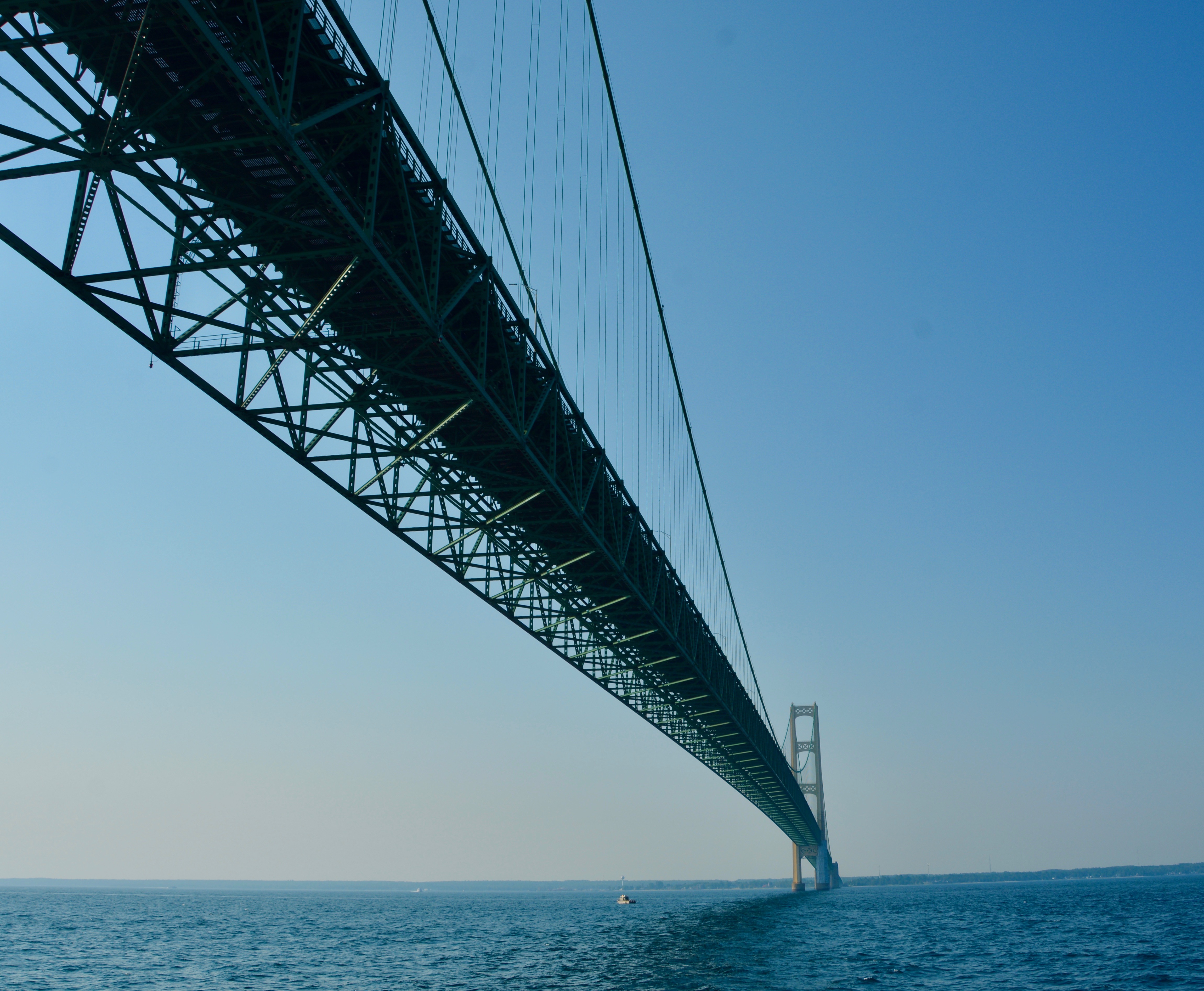
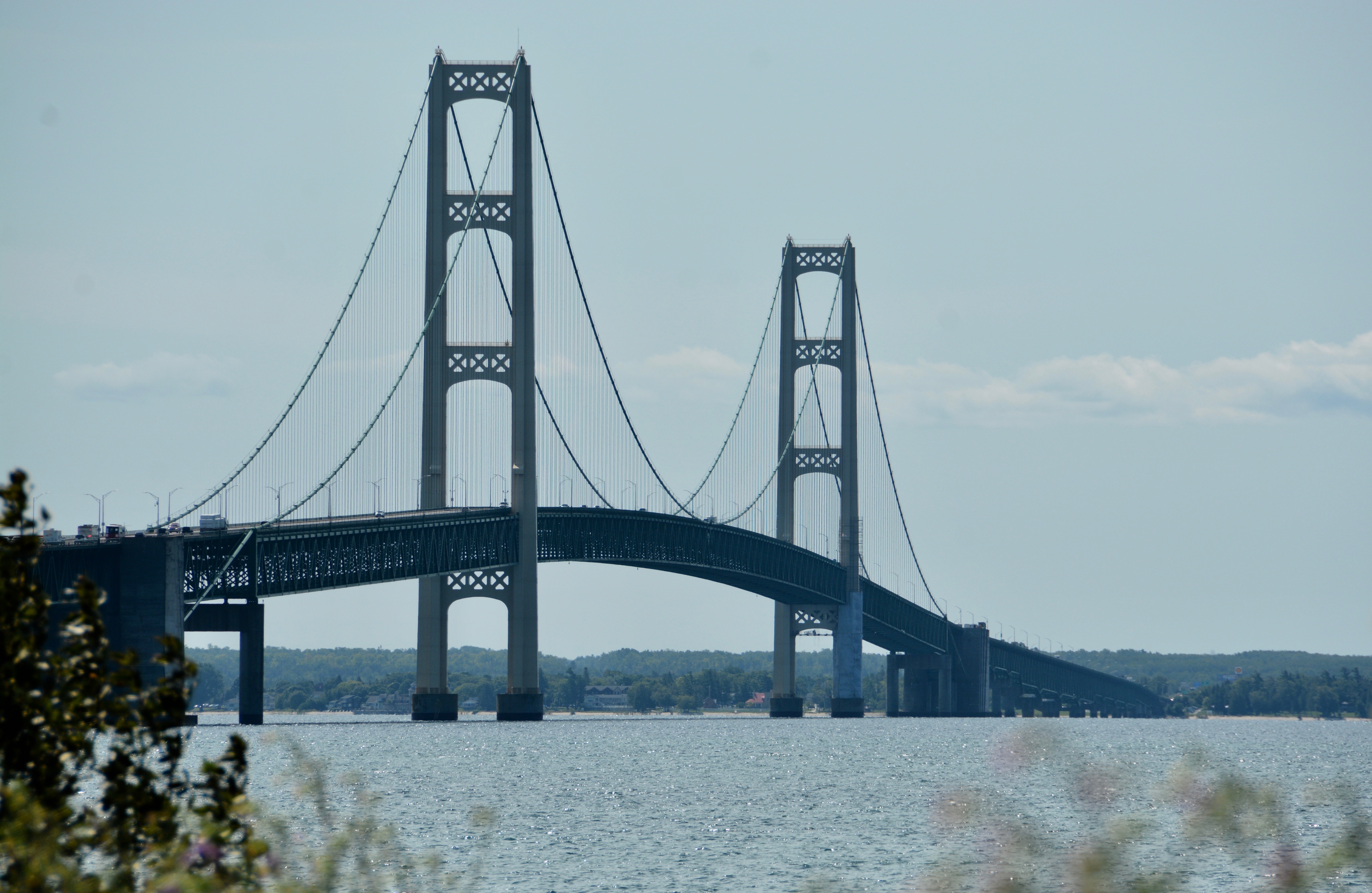
Photo ©Jean Janssen The Mackinac Bridge from the water. The Straits of Mackinac, Michigan

To reach the island you can take a ferry from Mackinac City on Michigan’s lower peninsula or St. Ignace on the state’s upper peninsula. We chose the 9:30 ferry from St. Ignace because it is one of the few that makes a loop under the Mackinac Bridge before heading over to the island. It will make the trip a little longer, 30 minutes instead of 18. Coming from Mackinac City it takes about the same amount of time, but you avoid the time and toll of the bridge if you are already on the lower peninsula.
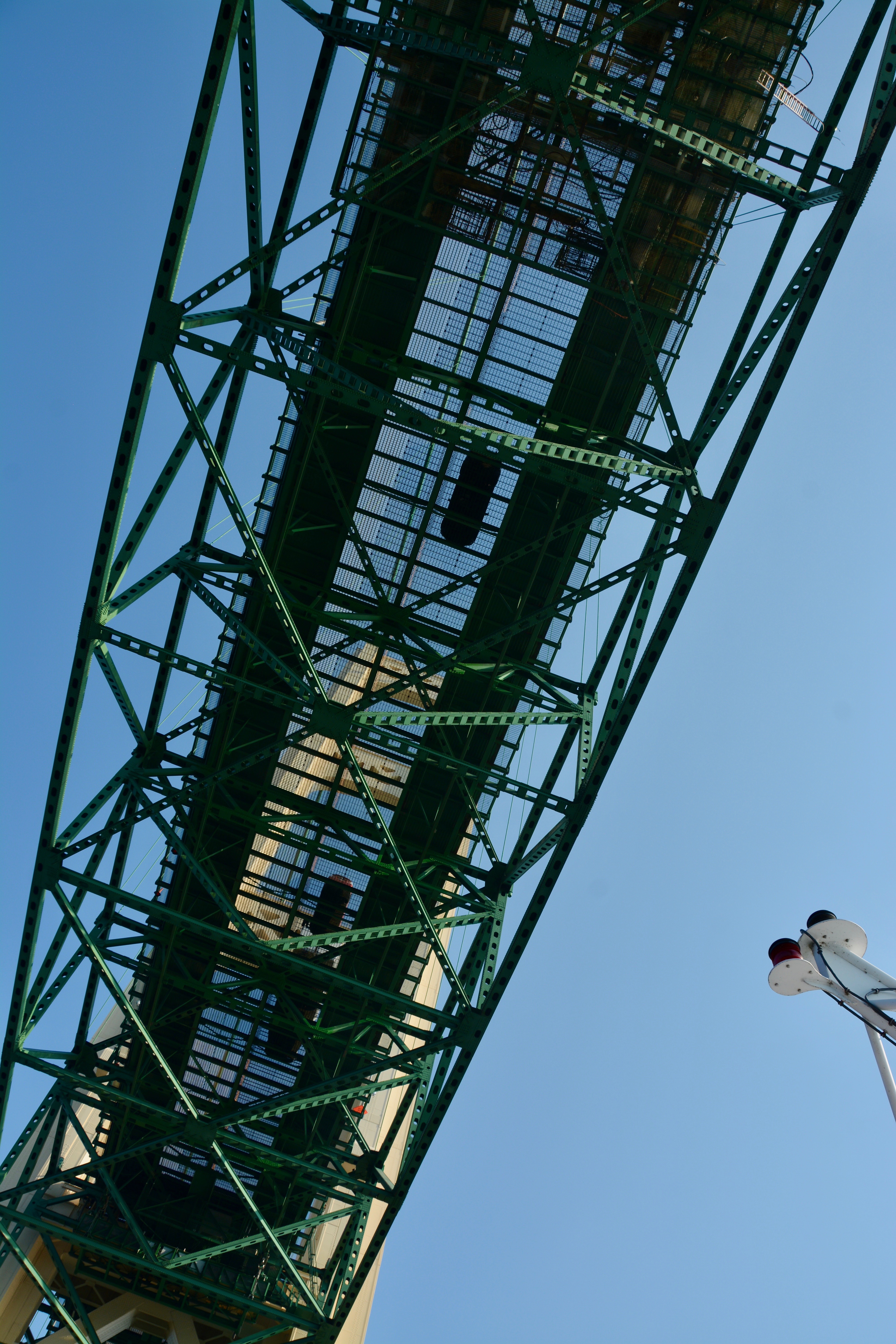
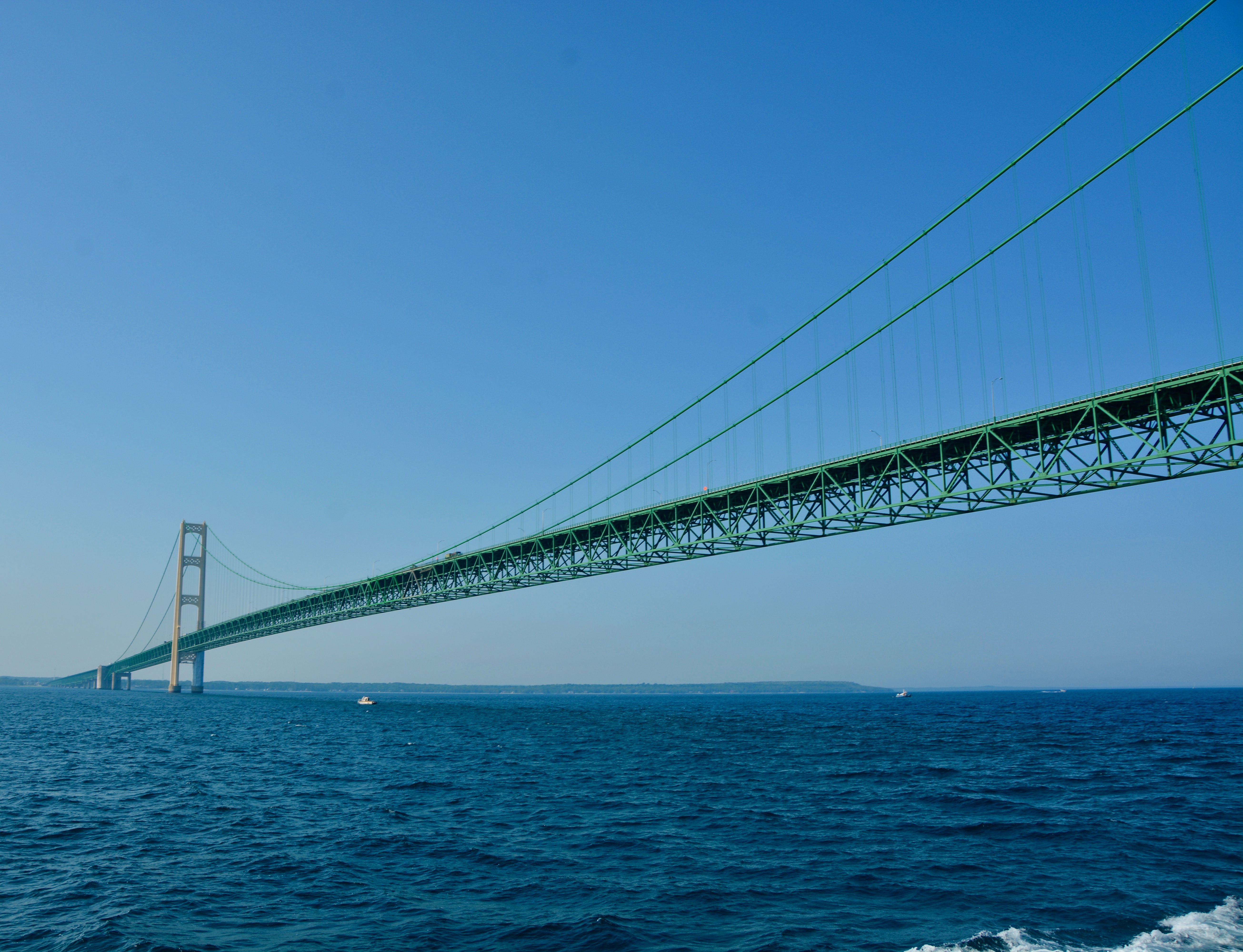
Photo ©Jean Janssen The underside of the Mackinac Bridge from the water. The road looks almost transparent from this vantage point. You can clearly see the cars and trucks passing.
Photo ©Jean Janssen The Mackinac Bridge from the water. The Straits of Mackinac, Michigan

The Shepler’s Line is the larger ferry company; the Star Line is the older one. We are taking the Star Line because of price and schedule. There are no reservations, so we arrived early. After checking in our luggage and parking the car in the overnight lot across the street, we waited for the departure. Bags and bikes were loaded first and then passengers were allowed aboard. They just looked at our tickets but didn’t scan or take them. They also serve for our return trip. There is downstairs enclosed seating and upstairs outside seating. Given I wanted to take pictures and we were passing under the bridge, we all went for the upstairs seats.
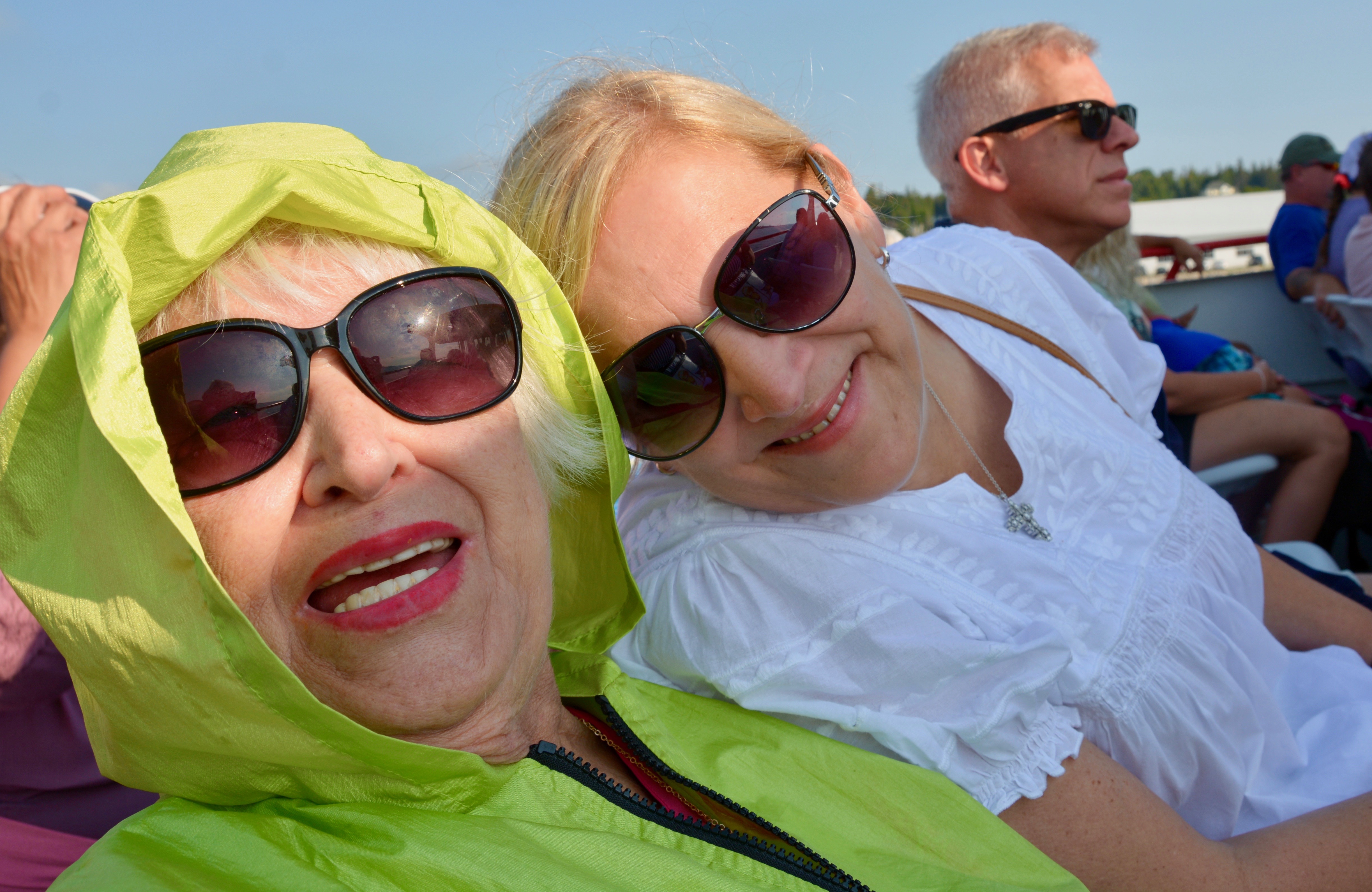
Photo ©Jean Janssen Mom, Emma, and Jack on the ferry boat headed to Mackinac Island
Photo ©Jean Janssen. Our Star Lines Ferry Captain.

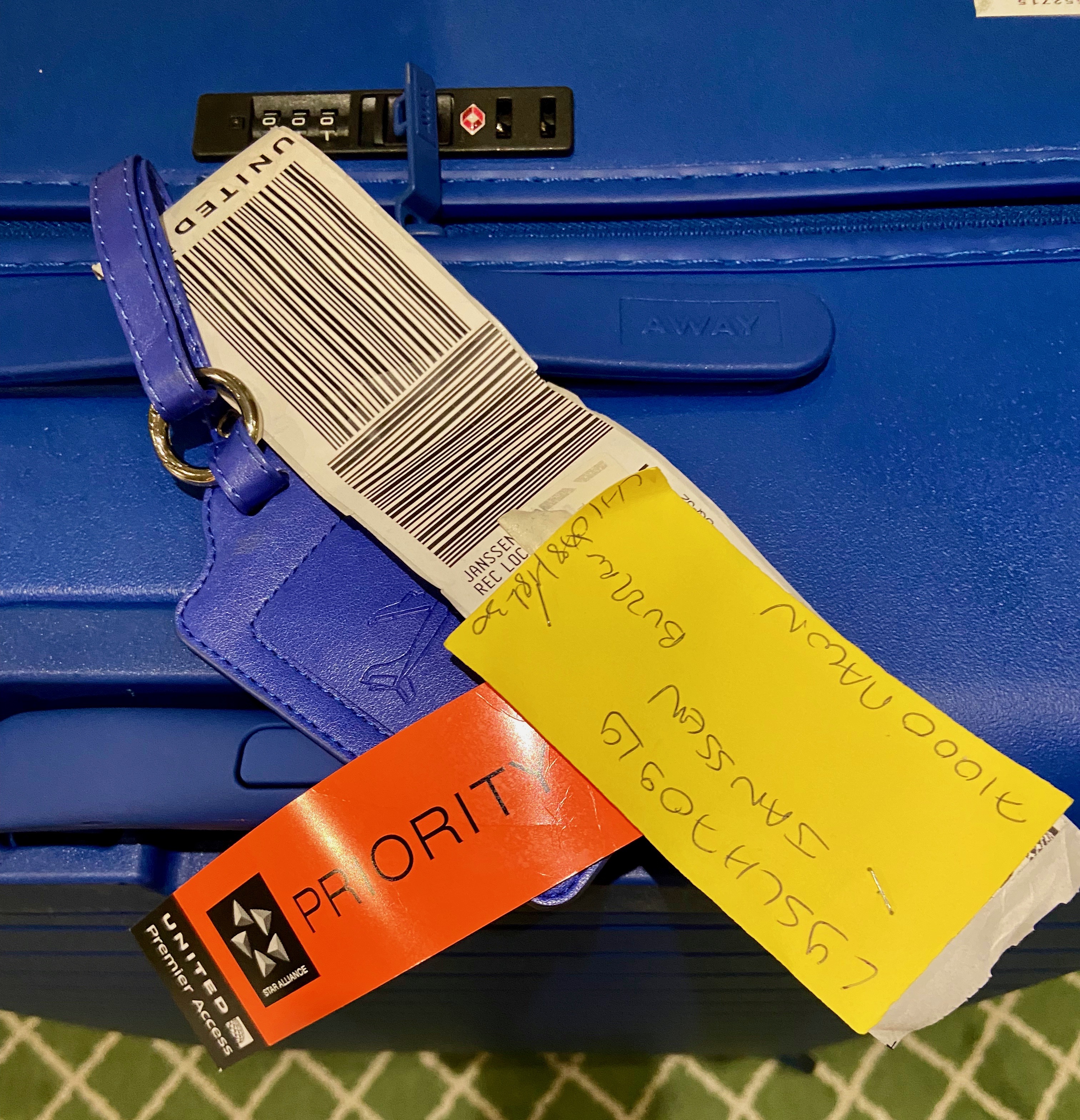
We brought jackets, but it was already so hot that I didn’t even put it on. Mom wears a hearing aid and wore her hood to protect against wind and spray. It was a clear day and we had beautiful views of the Mackinac Bridge. It was a pleasant ride to the island. The ferry company’s porter had tagged our luggage for our specific hotel. When we arrived, all the luggage was taken to the city-side end of the pier. We simply identified it there and a porter from our inn/B&B (his logo shirt identified him) loaded all our bags in the basket of his bicycle and took them to the hotel for a tip. Since we didn’t want to leave anything in the car overnight, each of us had two smaller bags. I couldn’t believe he got all 8 bags at the same time. The ferry company must have alerted the porter; we hadn’t called ahead to let them know about our morning arrival.
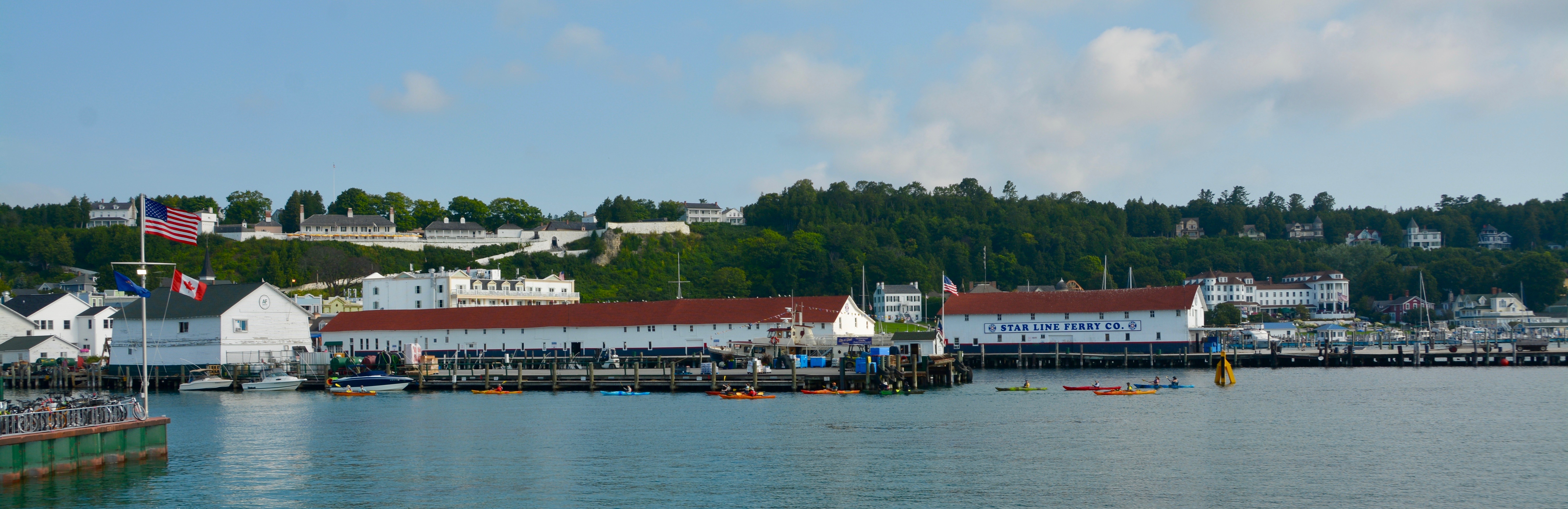
Photo ©Jean Janssen. Approaching the docks on Mackinac Island. Kayakers were enjoying the calm waters.
Photo ©Jean Janssen. Our hotel porter got all our bags in a single bicycle basket headed from the dock to our hotel on Mackinac Island.
Photo ©Jean Janssen. The most common purchase on Mackinac Island? Fudge. There are Fudge shops everywhere. It is the Starbucks of Mackinac

Heading onto the main street, we were surprised at how crowded it was given the boat was not full. We decided the day-trippers all took earlier boats to maximize their time on the island. The bike rental places were flooded with people trying on helmets, deciding if they wanted a single or tandem, adding child or luggage carriers, or negotiating a price. In spite of how many people were there, the bike businesses looked well stocked. Apparently unlike the car rental agencies on the mainland, they didn’t sell off their stock during the pandemic.

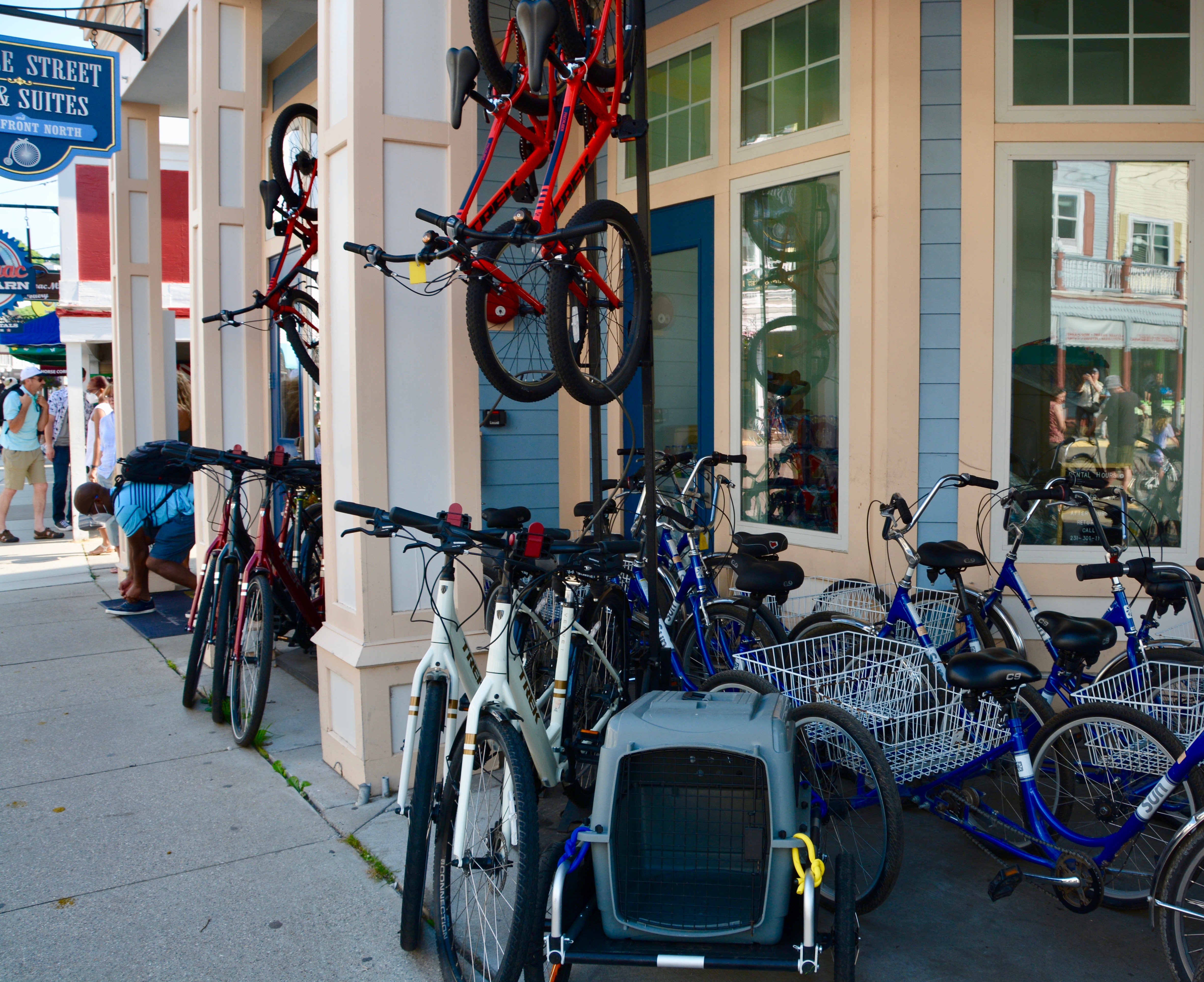
Photo ©Jean Janssen The Grand Hotel taxi on the main street on Mackinac Island.
Photo ©Jean Janssen Bike rental shops with every kind of attachment you can think of are all over the main street on Mackinac Island

The line for the horse-drawn carriage tours was also very long (and out in the sun) and we were glad we had secured a private tour for the four of us. The group tour is considerably cheaper, $42/person for an hour and 45-minute tour plus entrance to The Wings of Mackinac where you make a stop versus $160 an hour for a private tour for up to 4 people. The price of the group tour goes down to $34 for an adult or $14 for children age 5-12 if you eliminate The Wings of Mackinac. A child under 5 who sits on a lap is not charged. Group Touring is available through Mackinac Island Carriage Tours which was established in 1948. If you take the morning tour, they pack them in. They put four adults in a row and on some of the tours we saw people who looked pretty uncomfortable. You cannot make a reservation for a public tour. The one exception is booking for the handicapped tour. However, with Mom’s limited mobility and comfort in mind, the private tour where we could structure the time ourselves made more sense. We could have arranged to have the carriage meet us at our hotel, but we had an hour and a half before it started and decided to walk around in town a bit first.

Photo ©Jean Janssen The Haunted Theater has been open for visitors since the 70s. I remember it from my last visit to Mackinac Island.
Photo ©Jean Janssen Mackinac Island, Michigan

Given the number of tourists there, it was actually rather hard for Mom to maneuver down the sidewalk. If you step into the street, you took your life in your own hands. The danger wasn’t from a horse-drawn vehicle-plenty of warning on those-but from the bicycles. They are everywhere and some of the riders looked like they haven’t ridden in a while or ever. Jack said that even though it didn’t look like there were more people on the island than on our last visit, the bicycles took away from the atmosphere and really ruined the feel for him. We saw a lot of crashes.

Photo ©Jean Janssen. The Grand Hotel as seen on our ferry approach to the Island. The icon is also visible when crossing the Mackinac Bridge.

I had been assigned the task of securing us a place to stay. We had ruled out the Grand Hotel, which is fabulous but considerably more expensive (and the rooms throughout the island are already pretty expensive). To really enjoy the full Grand Hotel experience, you also want to book one of more of their special dining venues and that means dressing up. Jack said early, “no coat and tie”. In fact, after 6 pm, even hotel guests not in evening wear are directed to side entrances when they return to the hotel.
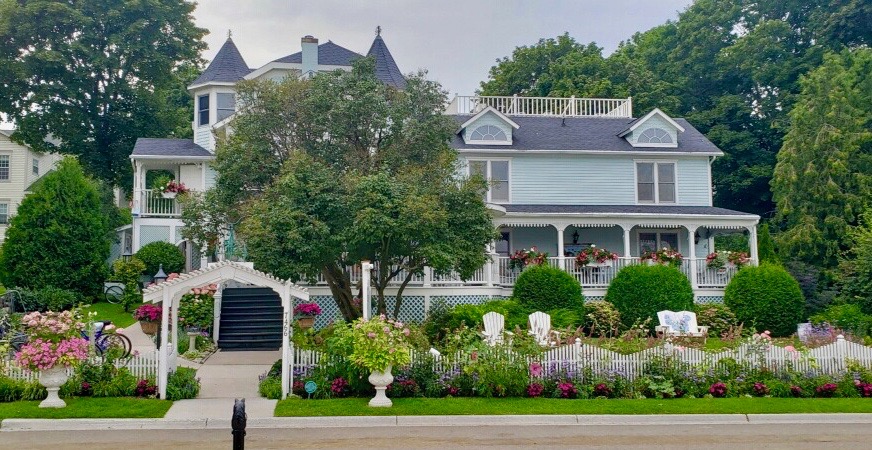
Photo ©James J Janssen Jr. Jack took this wonderful picture of our B & B on Mackinac Island, Michigan, the Metivier Inn.

We decided we were all going to stay in a single room like we did as kids, so that further limited options to places that could provide two queen beds. However, even with our limitations, we still had plenty of choices. Ultimately I selected the Metivier Inn on Market Street, one block behind Main Street, quieter, but still very close to all the main attractions. The Metivier hosts serve a hot breakfast, rather than just a continental one, and the inn is known for its beautiful gardens. It also has wonderful front and side porches that I knew Mom would love.
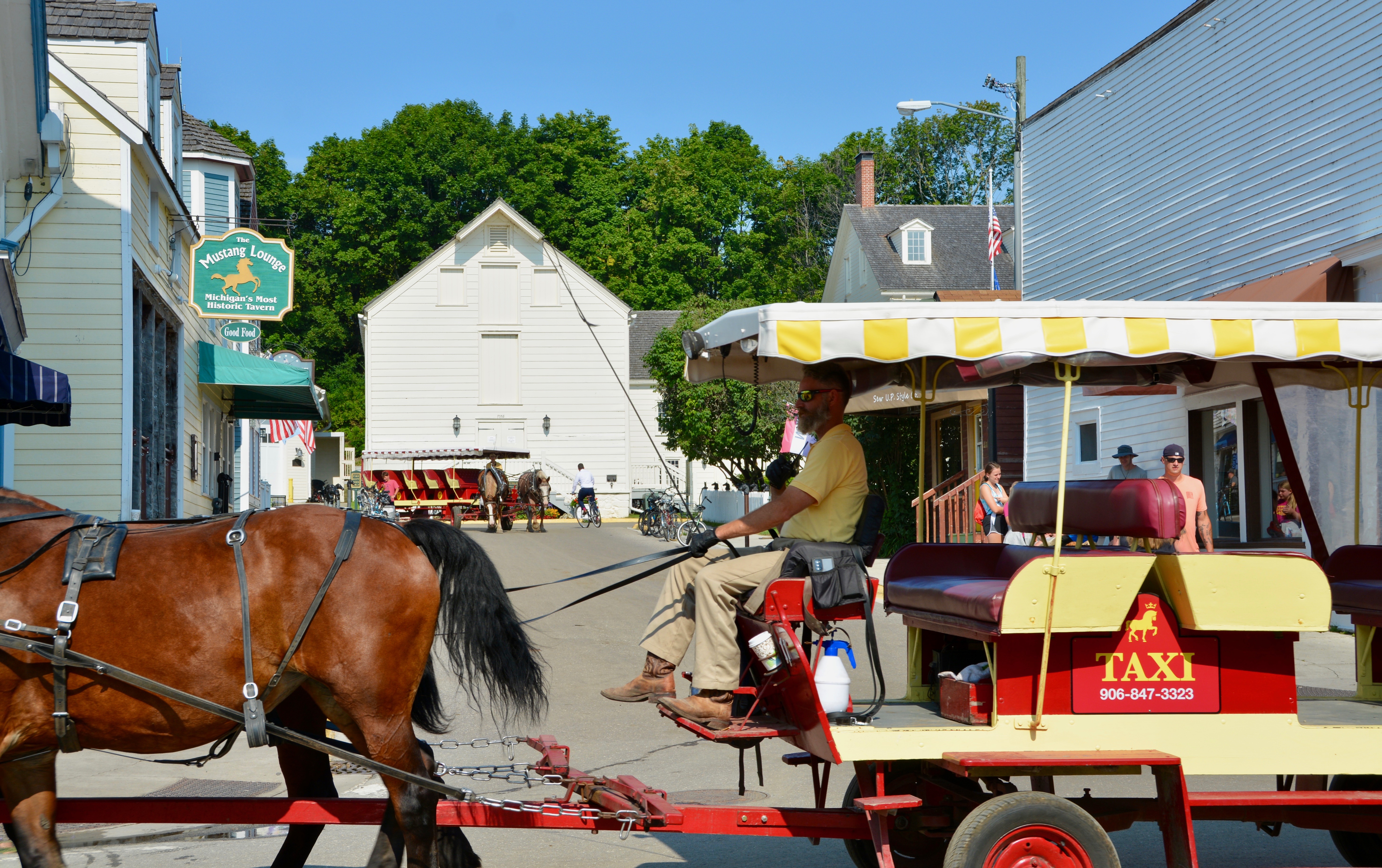
Photo ©Jean Janssen. The City Hall which is on Market Street is in the background. An empty public carriage tour vehicle on its way for more passengers turns in front of it. In the foreground is Main Street and a local taxi.

Walking down Main Street I was really glad I didn’t chose one of the hotels along this street. There was just a little too much chaos and I suspect the noice starts early in the morning. If you like to sit on your balcony and look down at crowds or just love the smell of fudge, you might prefer one of these rooms.
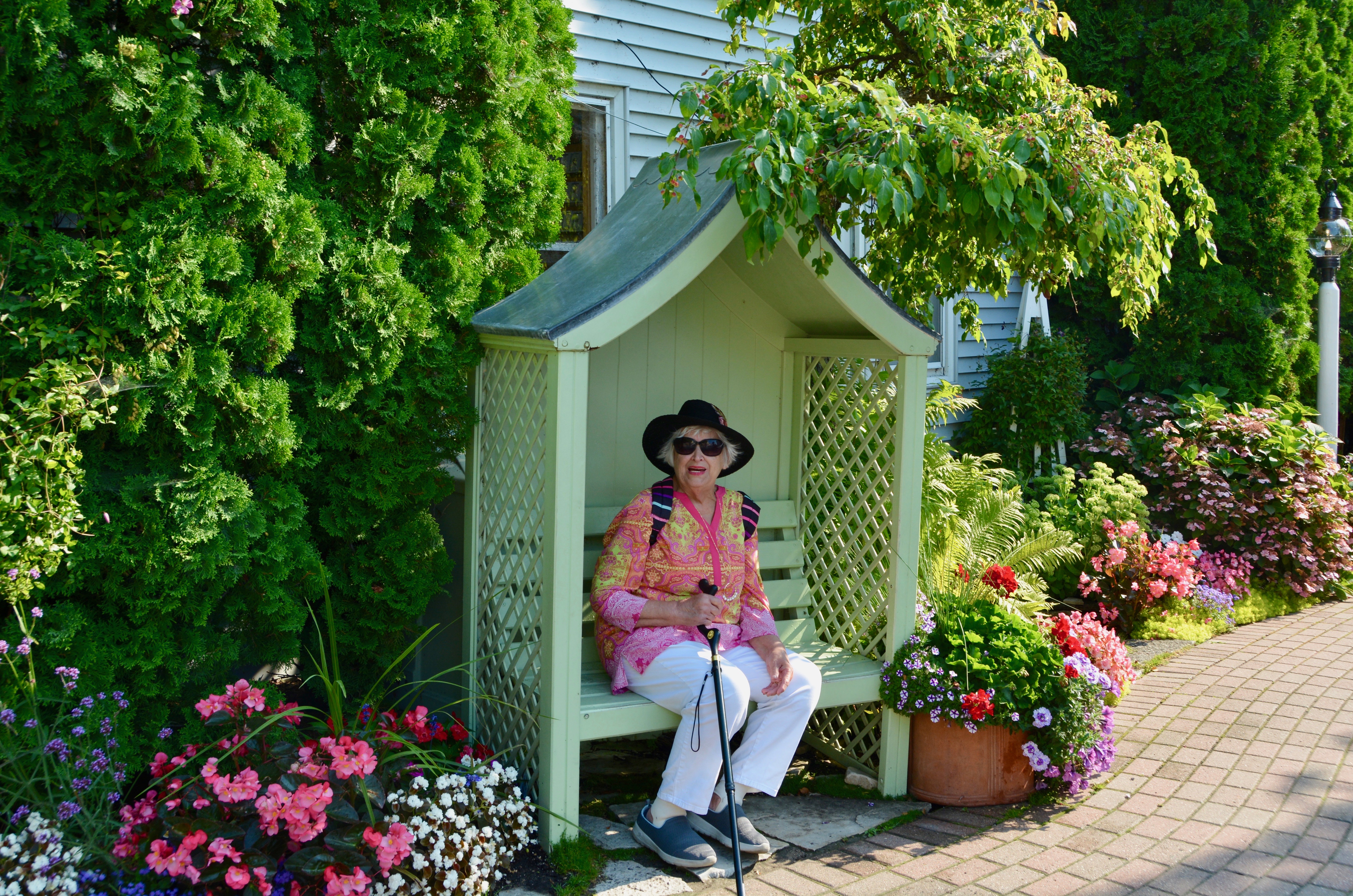
Photo ©Jean Janssen. Mom was always on the hunt for benches so she could take a break while walking around on Mackinac Island. This was one of the prettiest settings she found.

Even with Mom taking breaks on strategically placed benches and her morning ice cream indulgence break, we still made it to the Tourist Office across from Marquette Park, our meeting point, with 45 minutes to spare. It was pretty hot if you were in the sun. Mom found a shaded bench and we took turns sitting with her. Jack and I walked down past the marina toward the Mission District where the crowds thinned out, but the beautiful lake view homes were still plentiful. We also passed St. Ann’s church. Morning mass is at 11 am and was currently ongoing, so we were unable to go inside.
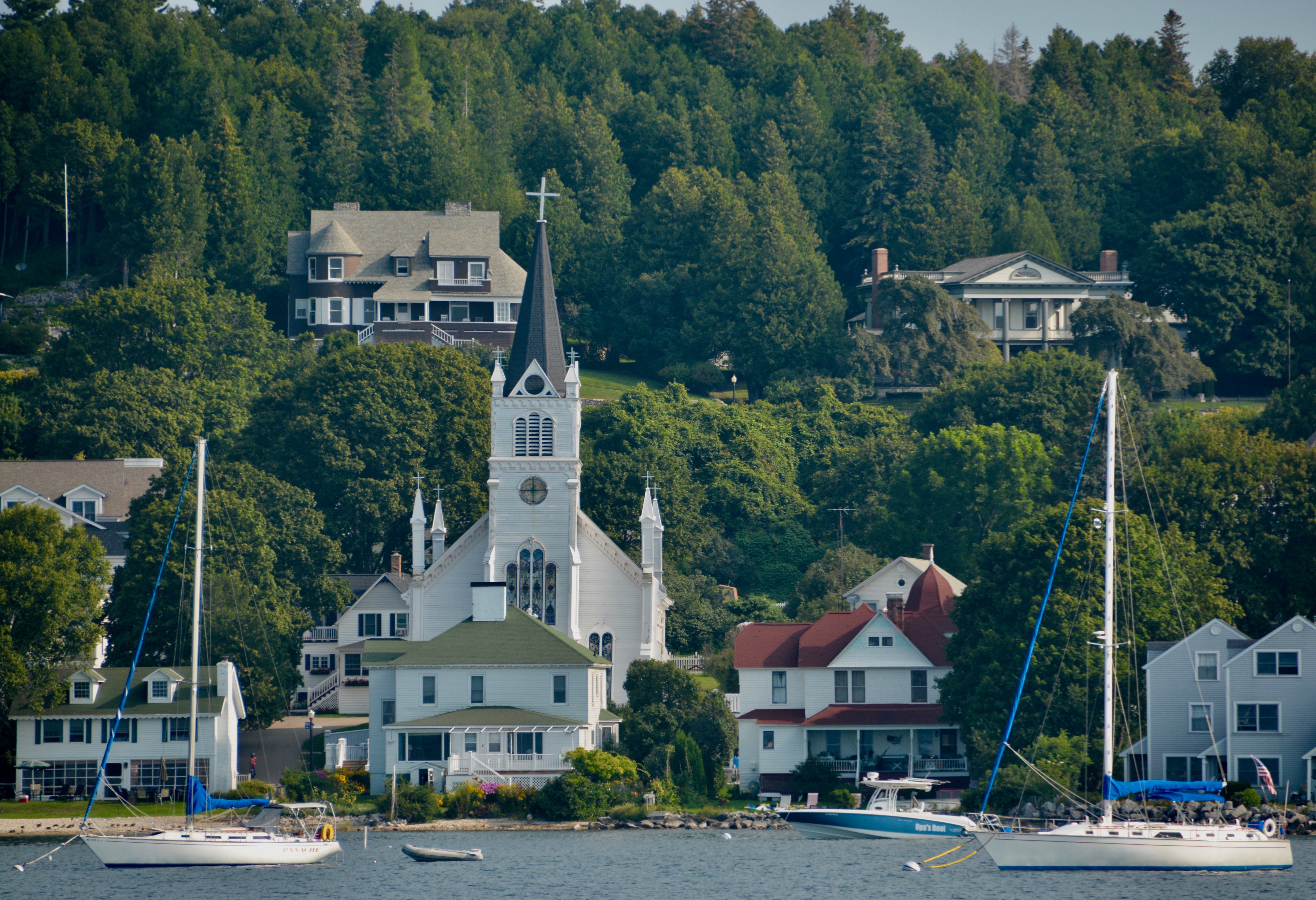
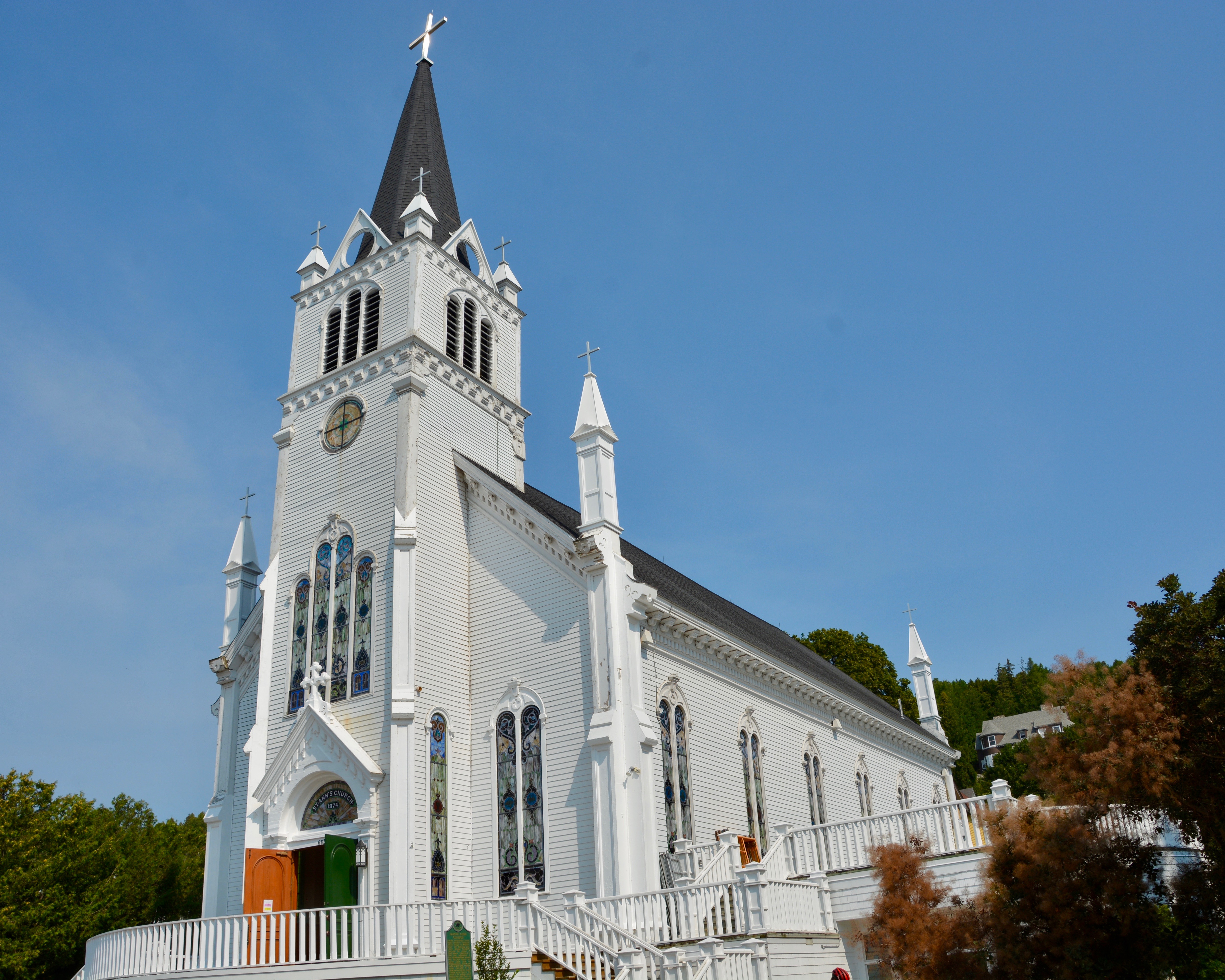
Photo ©Jean Janssen. St. Ann’s Catholic Church as seen on our approach to Mackinac Island
Photo ©Jean Janssen. St. Ann’s Catholic Church, Mackinac Island, Michigan The church has beautiful stained glass.
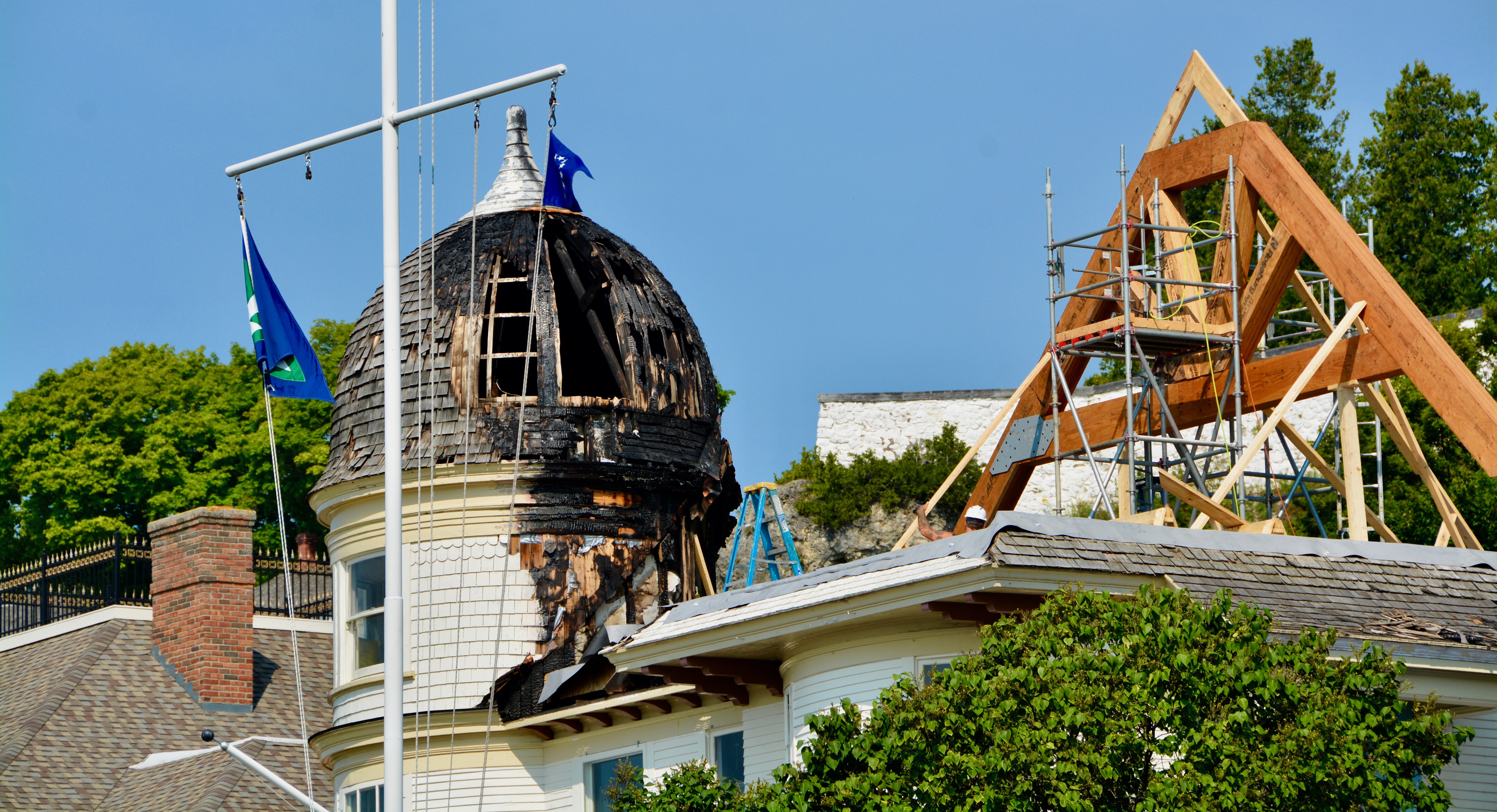
Photo ©Jean Janssen. A burned out copula in one the homes facing the water near the fort on Mackinac Island, Michigan

We passed one home with a burned-out copula and I made a note to ask our tour driver about it. Marquette Park sits between Fort Mackinac and Main Street. Jack and I returned to the park to meet Mom and Emma for our private tour. We booked our private tour through Gough Livery Carriage Inc. which takes early reservations. Mackinac Island Carriage Tours also offers private tours for the same price, but you can only call two hours prior to when you want to start and see if they have availability. Our noon tour set out right on time. We had settled on an hour and a half timeline. Courtney took us down Market Street where many of the historic buildings are situated-the courthouse, the post office, the art museum, the Biddle House (the oldest house on the island), and the city hall. We also passed our hotel so we got our first look at where we would be staying. This was a great orientation to the city and now I know that I can just walk down the street and get some pictures when I am ready.
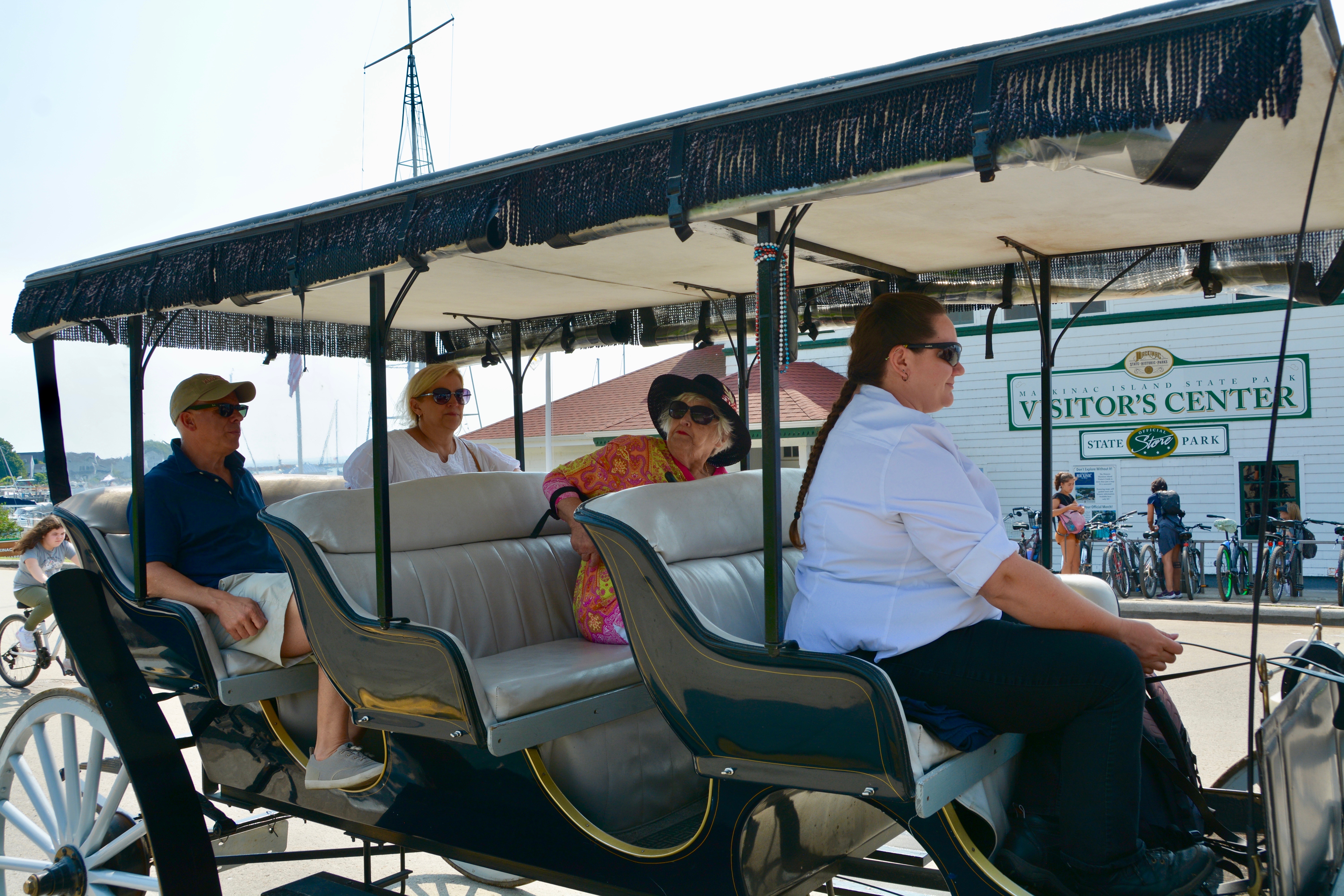
Photo ©Jean Janssen. Courtney and Company about to set out on our private carriage tour of Mackinac Island.
Photo ©Jean Janssen Looking back up Main Street from our carriage. Mackinac Island, Michigan

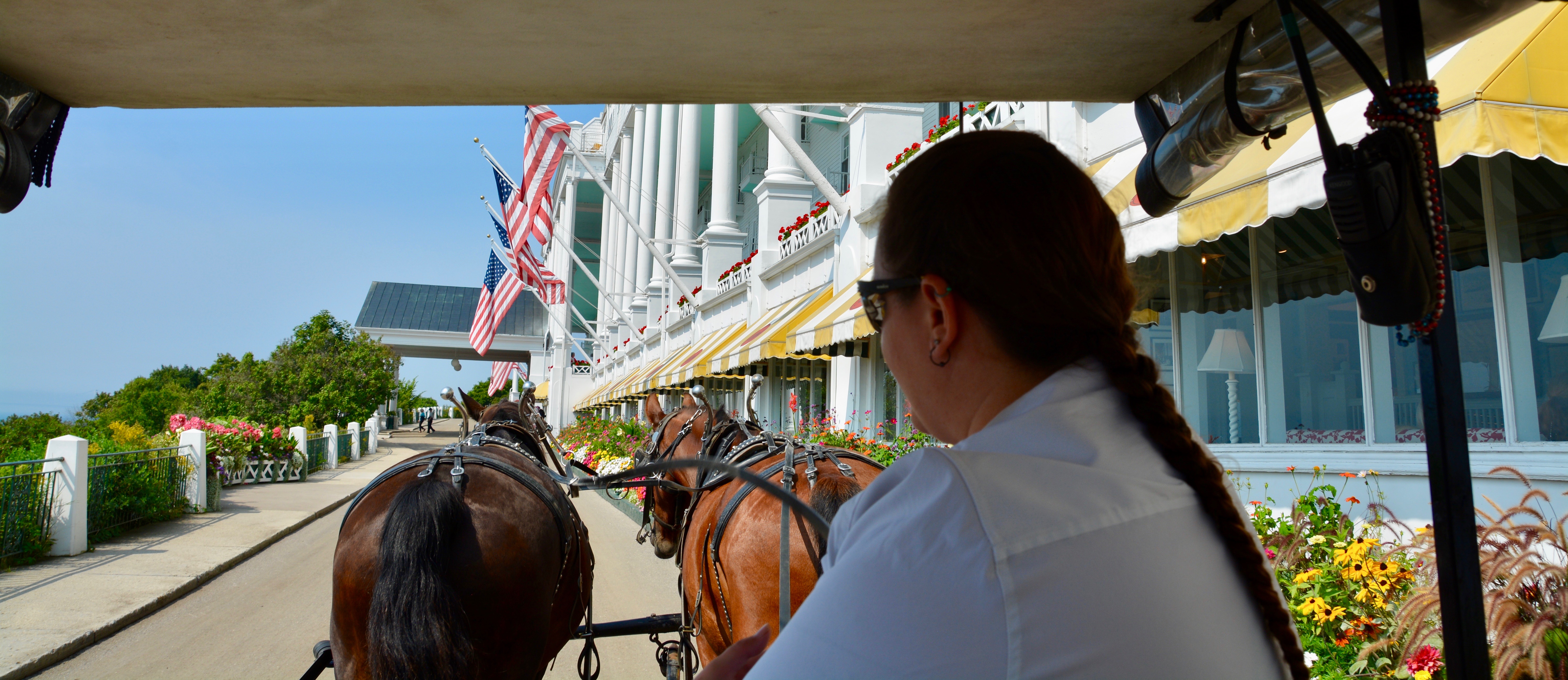
As we rounded the corner and turned onto the street leading up to the Grand Hotel, Courtney pointed out the Mayor’s house. The family has had a home on the island for many generations. We passed the vicarage for the Stone Church and the thought of an on-line clergy license occurred to me as a way to have a summer stay on the island. The Stone Church is itself was on the right further up the road, while the Grand Hotel and its grounds were to the left.
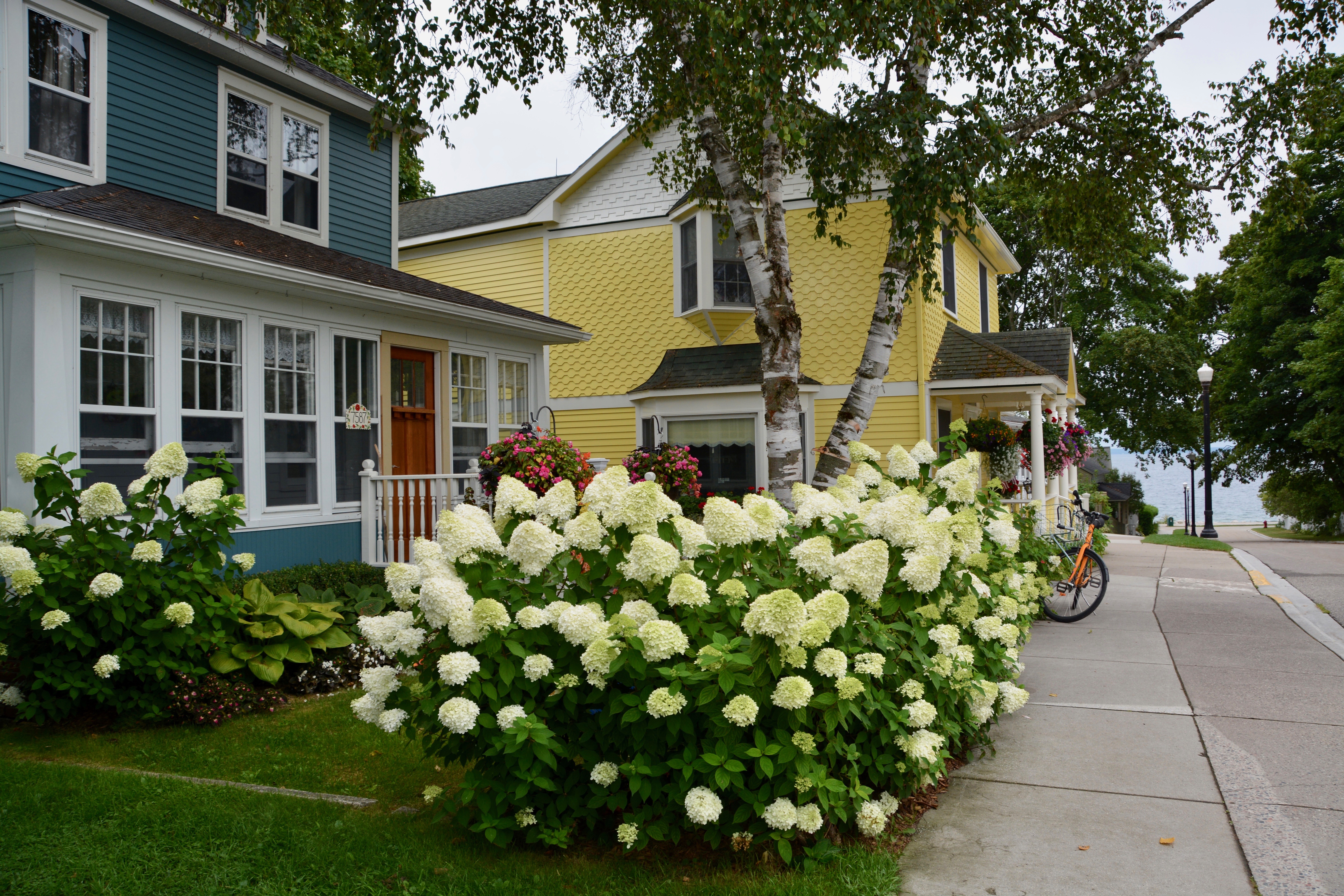
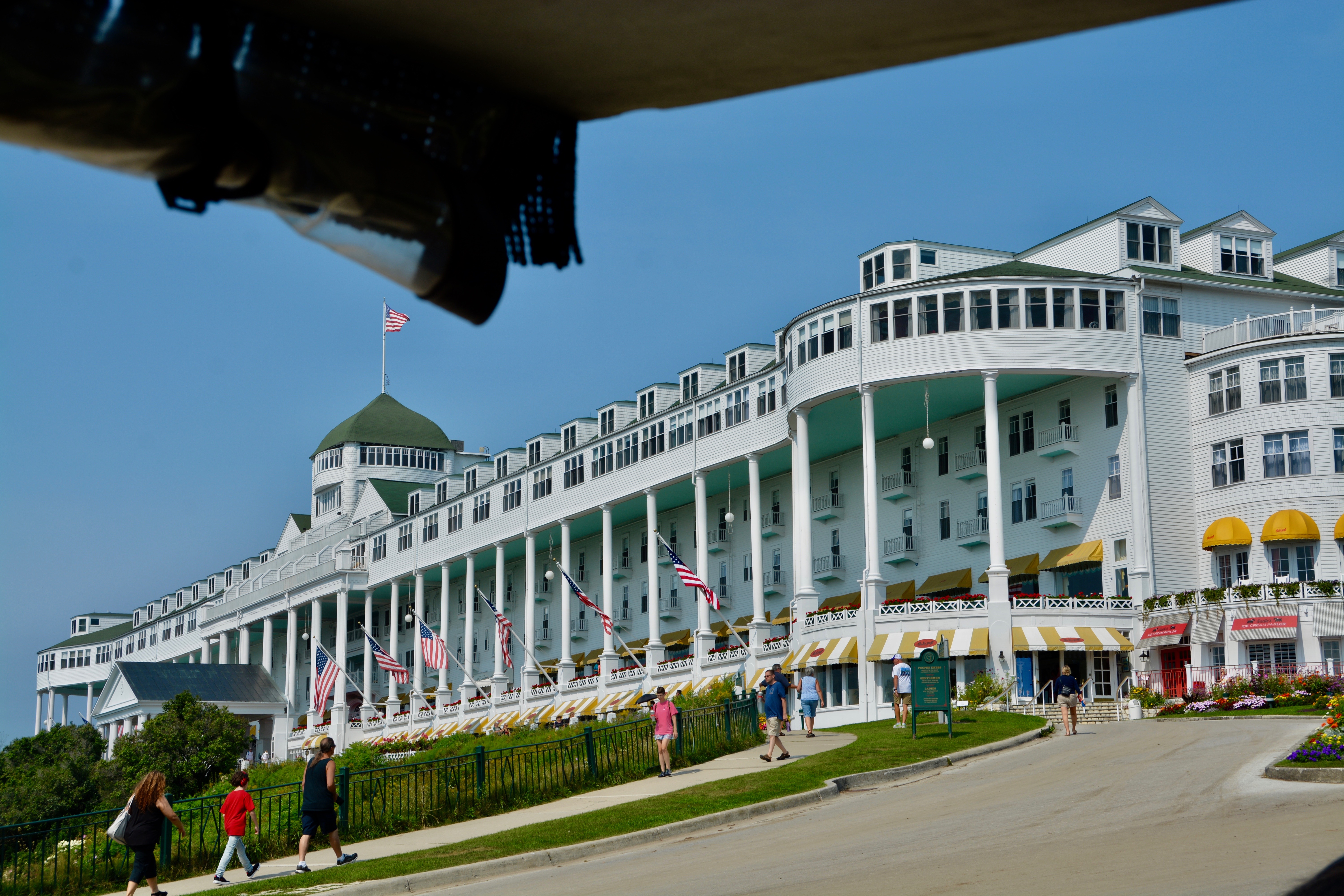
Photo ©Jean Janssen. The mayor’s house in yellow on Mackinac Island, Michigan
Photo ©Jean Janssen. The Grand Hotel as seen from our carriage. Mackinac Island, Michigan

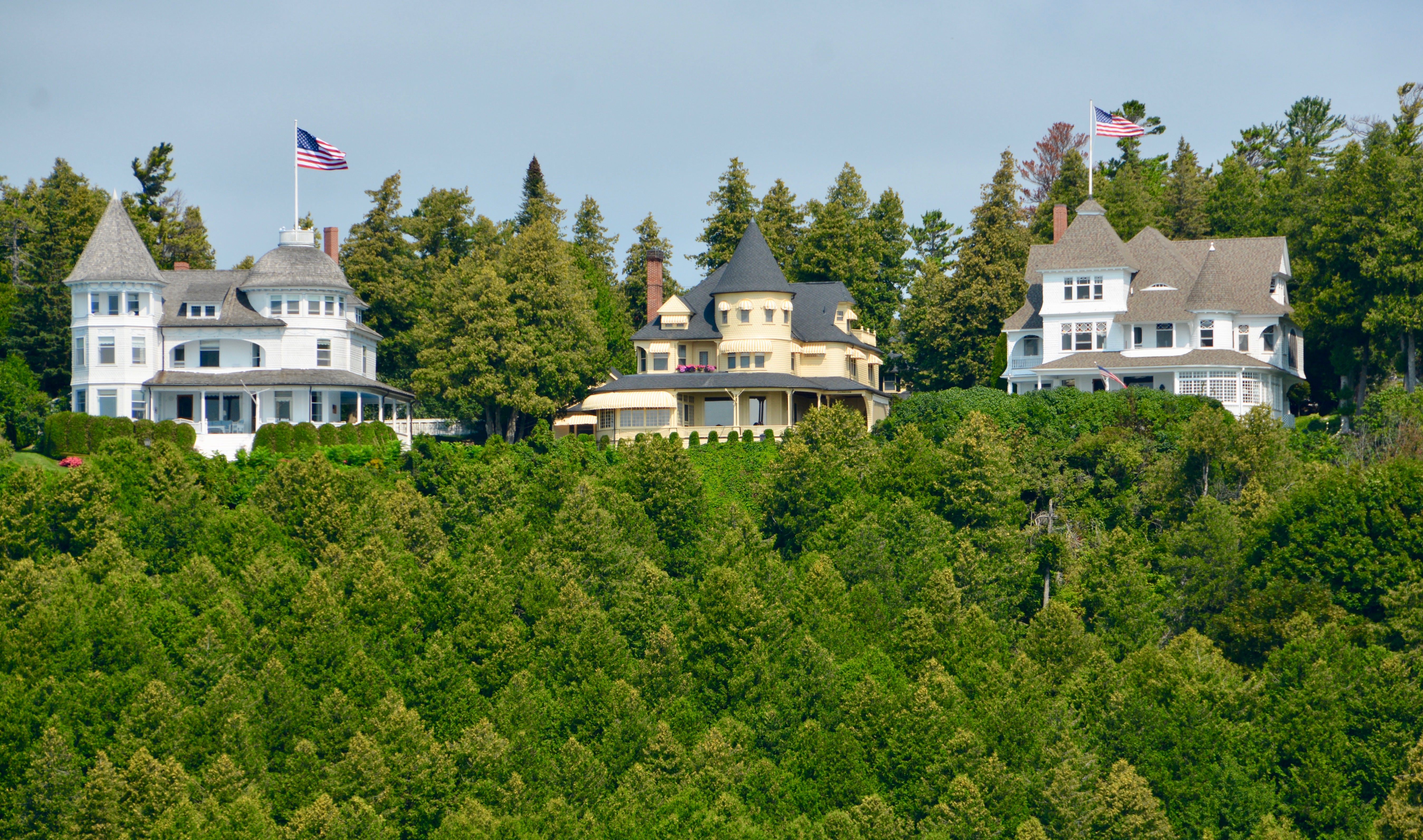
Though hilly, you could walk to most of the main attractions if it weren’t so hot. I think a fall visit might be perfect, although I would miss all the beautiful flowers. We drove right by the front doors to the Grand Hotel and then made our way up a steep street with more beautiful homes in the $2 million+ range. One was for sale and Mom quickly revised her housing choice. Not so sure she would like it much in the winter months though. Regular ferry service stops and becomes more sporadic and many things close at the end of the season in late October.
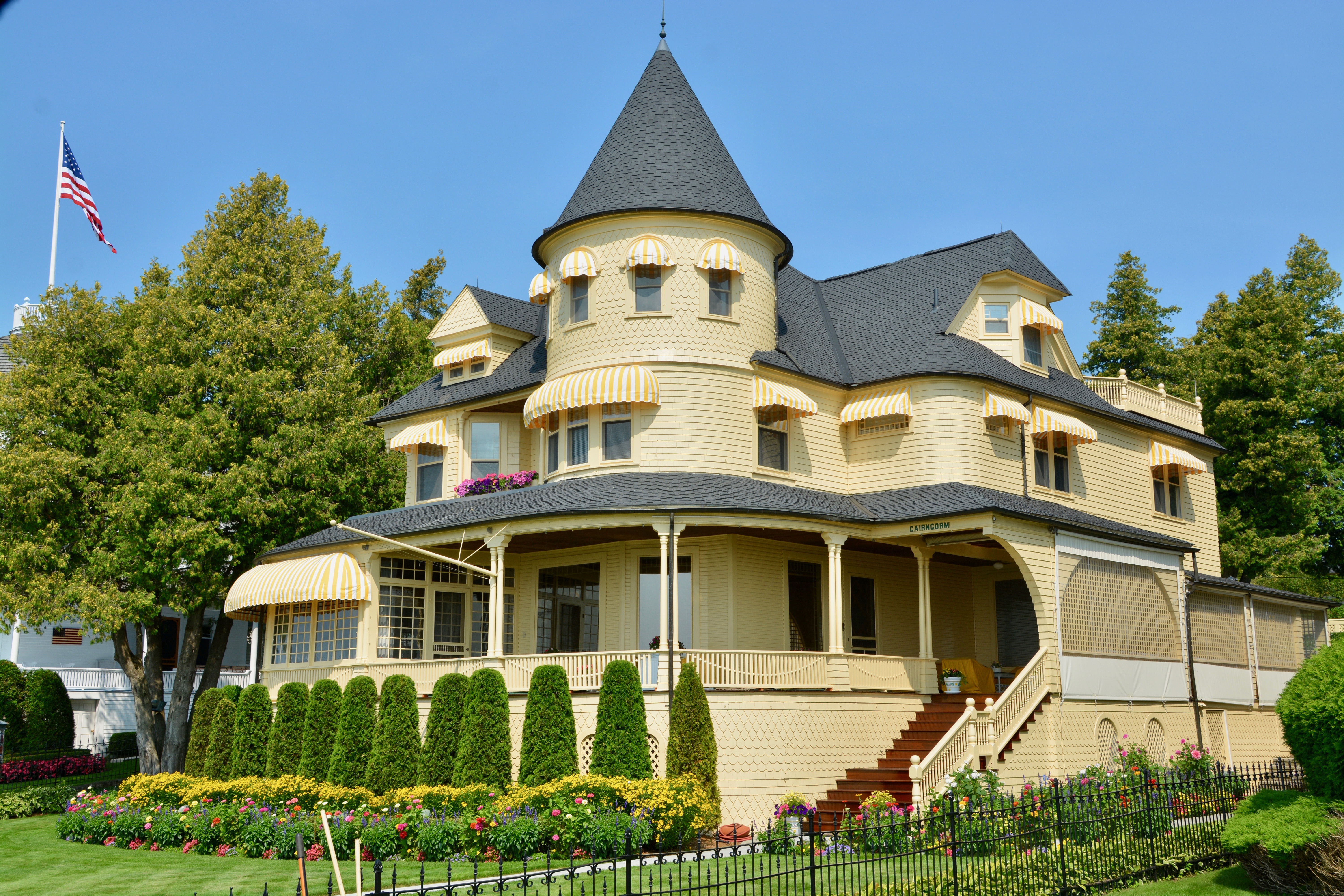
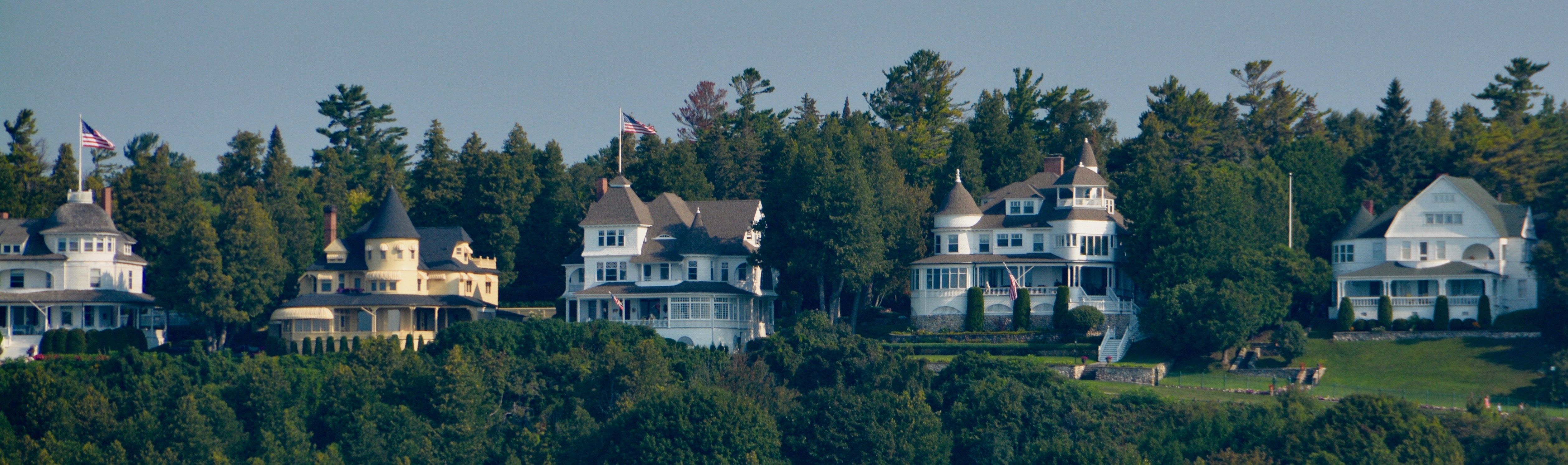
Photo ©Jean Janssen. Up on the ridge near the Grand Hotel, Mom picked out this home that was for sale as the next place she would like to live.
Photo ©Jean Janssen I had seen this ridge of homes from the water on our ferry approach. “Mom’s house” is the second from the left.

With spectacular views, Courtney rested the horses at the top of the ridge after their long climb. When we went forward, we were venturing off into areas where you need a ride of some sort. In fact, it would have been pretty tough to reach with a bicycle. Our next stop was one of the carriage yards so our horses could get a drink.

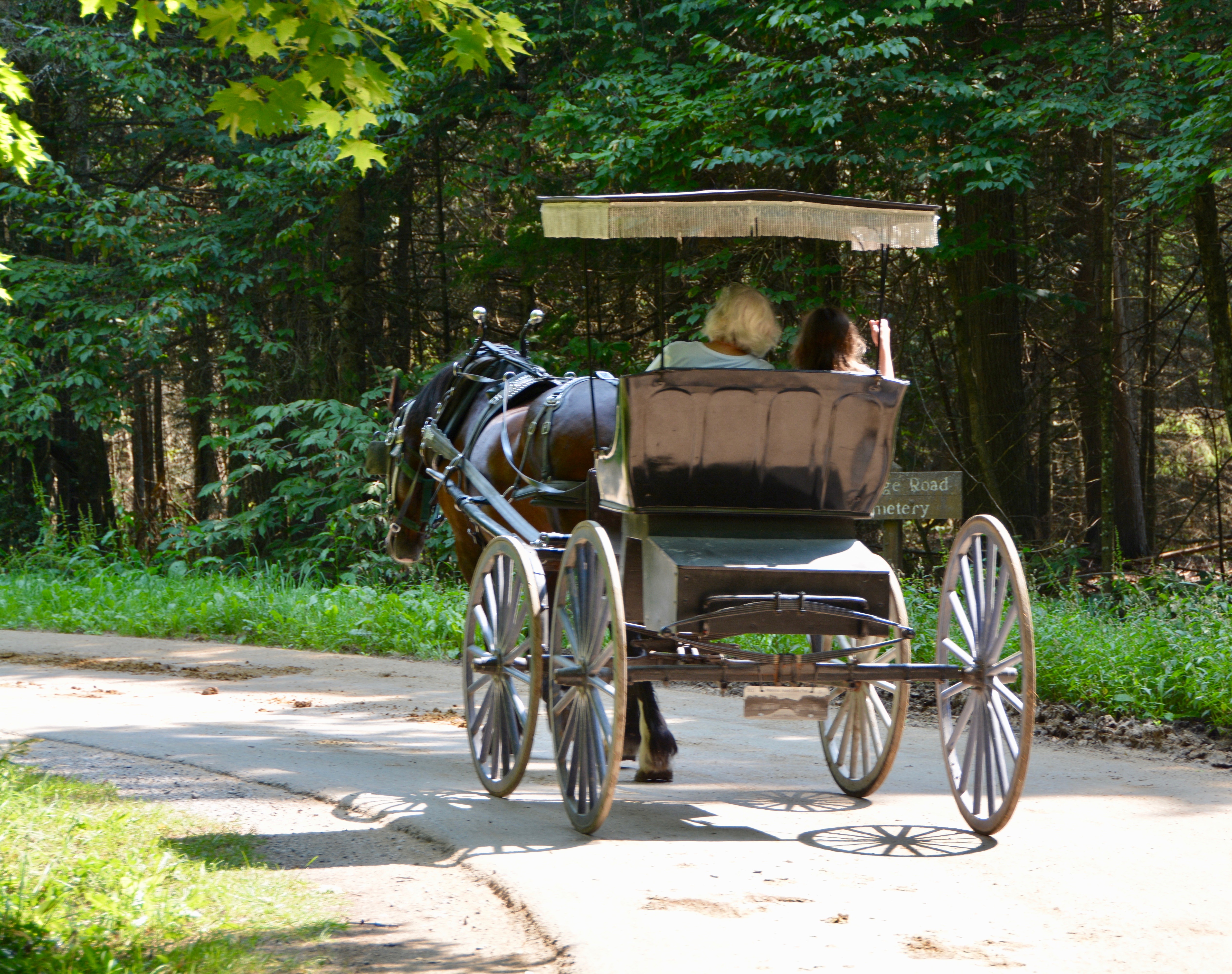
Photo ©Jean Janssen Inland, Mackinac Island, Michigan
Photo ©Jean Janssen Inland, Mackinac Island, Michigan I think I might have enjoyed renting and driving my own carriage.
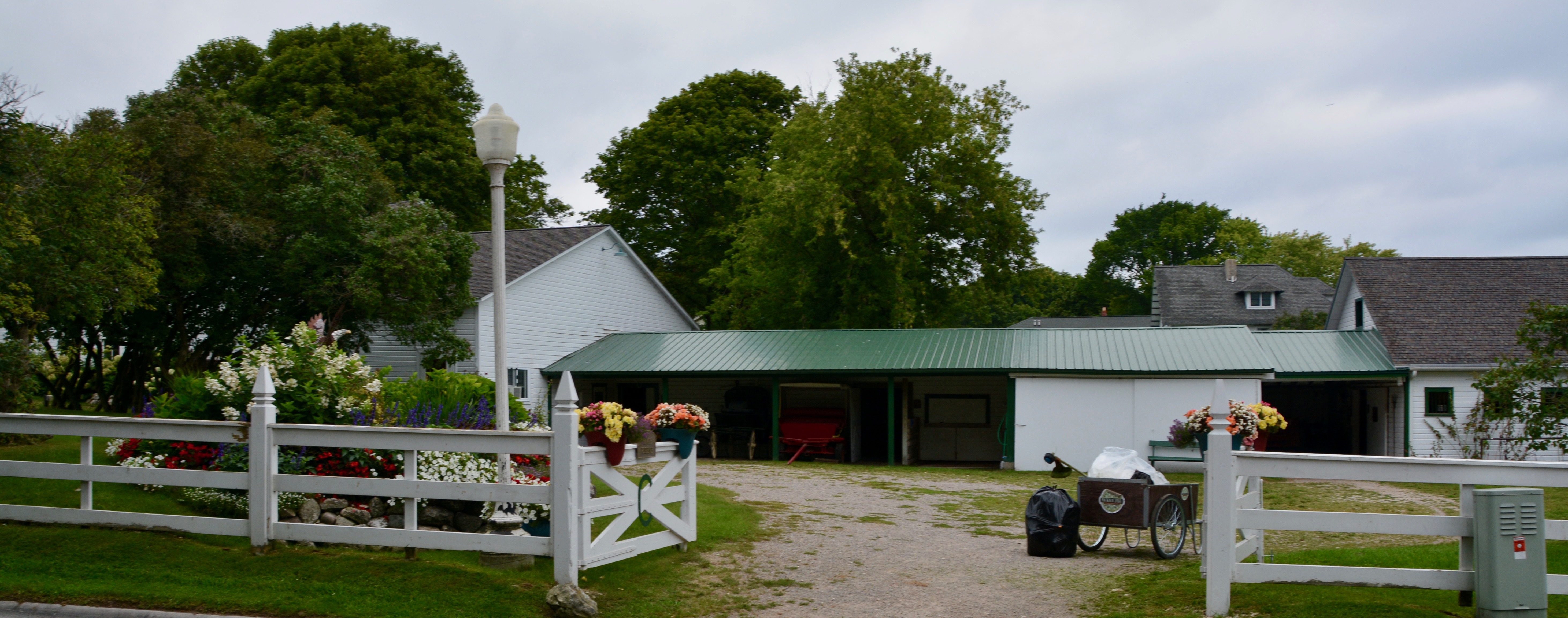
Photo ©Jean Janssen. Stables are part of many of the properties on Mackinac Island.

This is the part of the wooded area of the Island. Forest covers about 80% of Mackinac. The homes here (without a water view) are more modest. Courtney told us that if we saw a house with lots of bicycles it was probably staff housing. Because of the time many of these homes were built, along with the fact that most motorized vehicles are prohibited, most of the homes have a stable and grassy yard for the horses. Many have been renovated for other purposes, but some retain their original function.
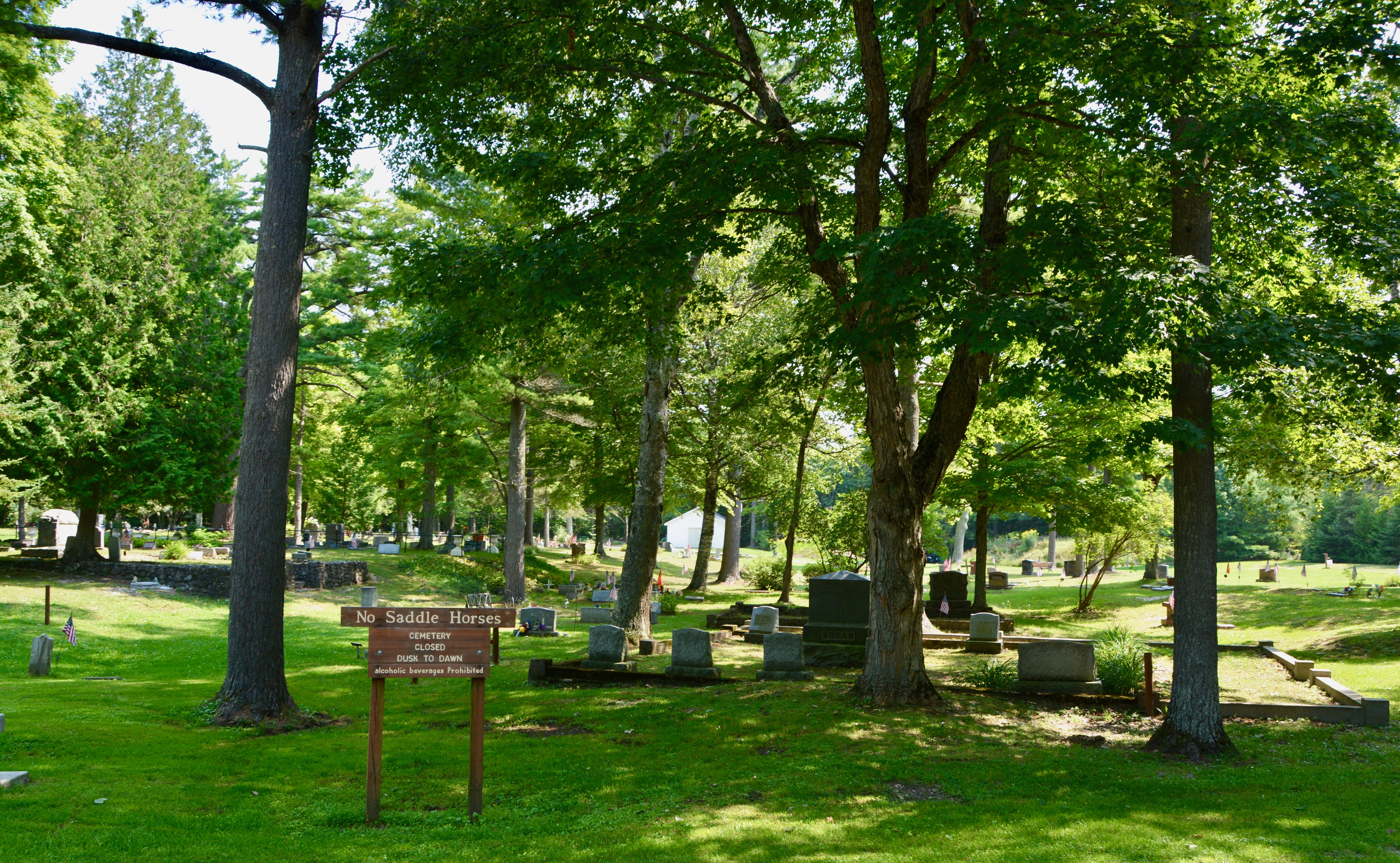
Photo ©Jean Janssen Inland, Mackinac Island, Michigan

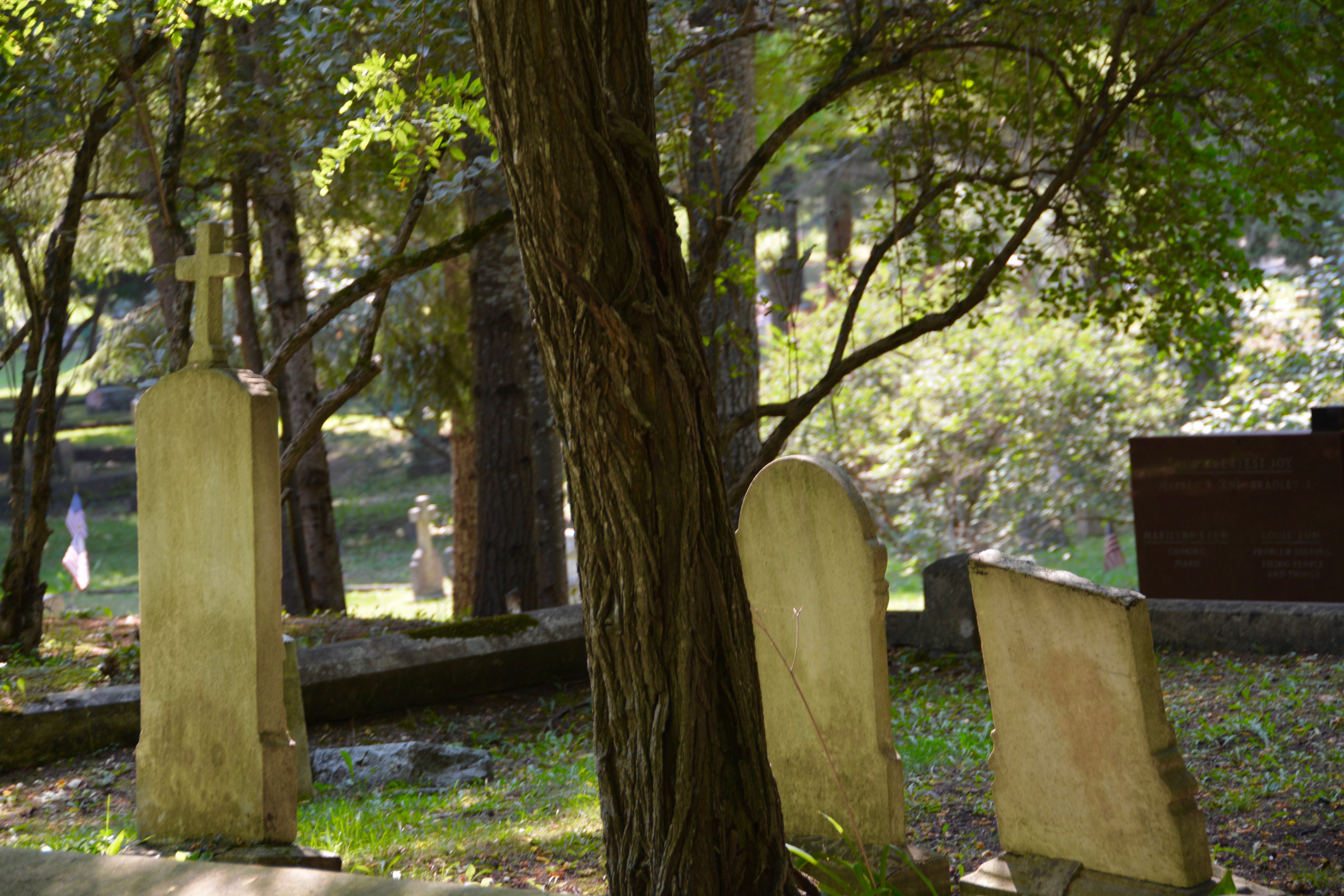
We passed the Skull Cave-nothing much to see now. It has caved in. We also passed an area I don’t remember from our last visit with three beautiful cemeteries. The largest is St. Ann’s; it is the Catholic cemetery and is affiliated with the church I walked by earlier before the carriage tour. We saw a sign that I have never seen at a cemetery before-NO SADDLE HORSES. Apparently it is a problem. St. Ann’s Cemetery has charming metal gates at its various entrances along with beautiful stone arches and stone fencing. Very picturesque.

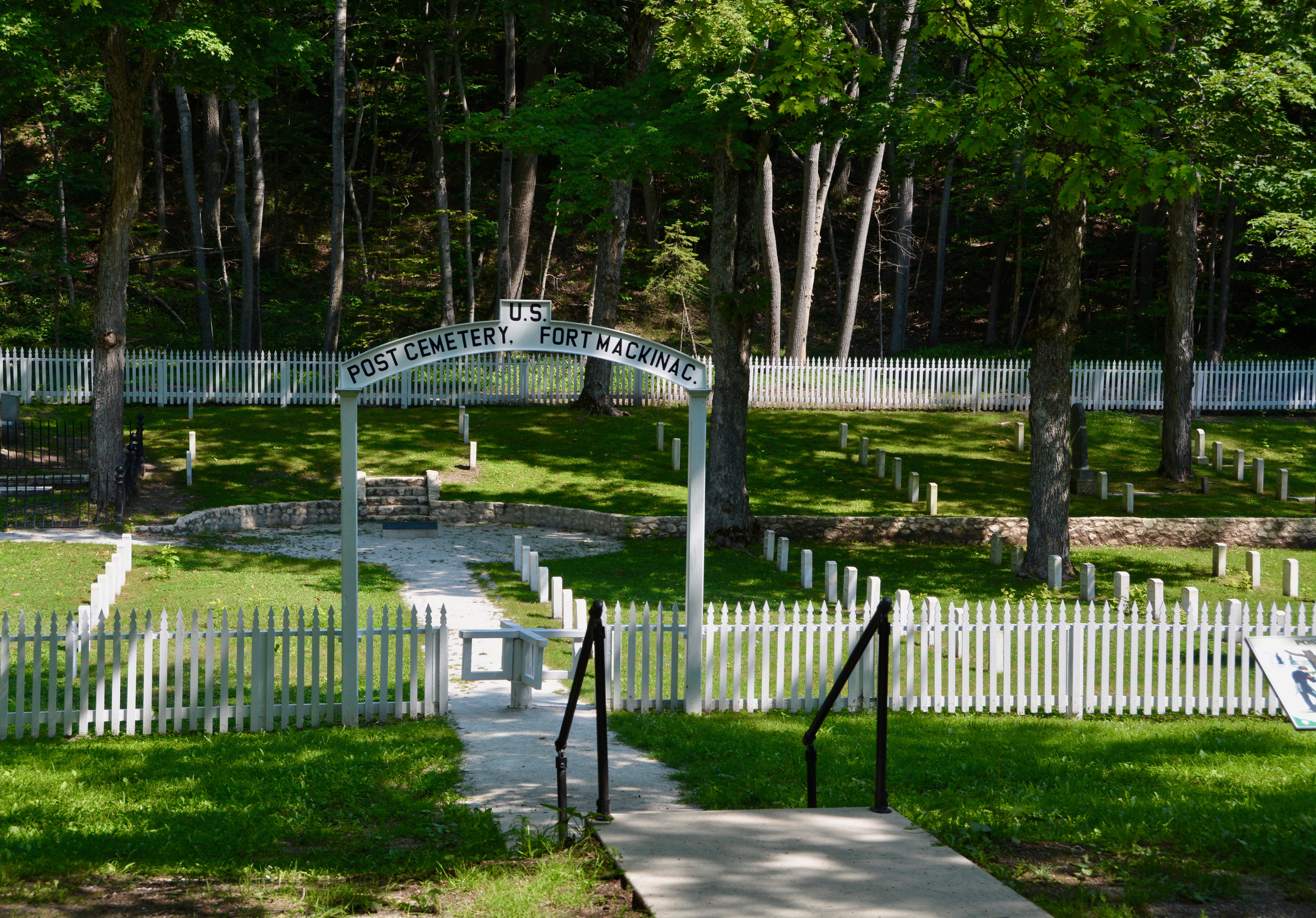
Photo ©Jean Janssen Inland, Mackinac Island, Michigan

There is also an “everyone else” cemetery for the non-Catholics. The third and smallest cemetery is a military one with neat rows and uniform white markers. As a lover of history, I enjoy going to cemeteries and reading the inscriptions; they can also be wonderful places to take pictures. Mom can’t walk easily on the uneven ground and it is hot, so we told Courtney that we wanted our tour to be more riding than stops with walking. Otherwise, I would probably have spent more time in this area.

Photo ©Jean Jansen. In the foreground is Marquette Park. In the background, you see a white ramp that leads up the hill to the entrance to Fort Mackinac. One of the fort’s towers is in the upper left.

There is a small fort in the main part of town to mirror its counterpart in Mackinac City. A steep ramp from Marquette Park takes you to Fort Mackinac. For a great visiting experience, I recommend the one in Mackinac City, Fort Michilimackinac. It is part of the Colonial Michilimackinac Complex They do reenactments there; I still remember the experience from my childhood. We won’t be visiting this time, but I do recommend looking into it.
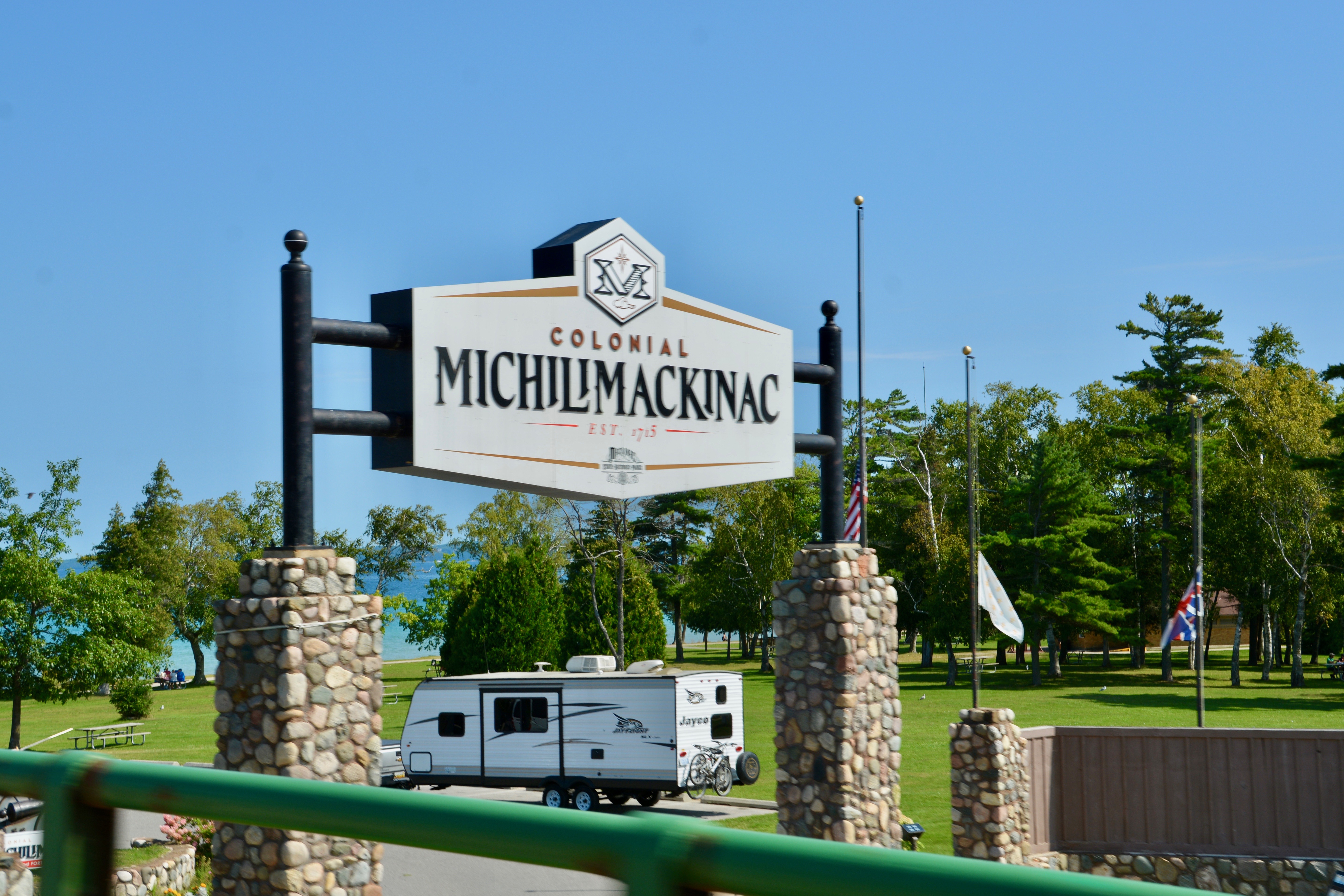
Photo ©Jean Janssen. We passed the sign at the entrance to Colonial Michilimackinac just before we crossed the Mackinac Bridge yesterday.

Established in 1715, this 18th-century fort and fur trading village has been “reconstructed based on historic maps and more than 60 years of archaeological excavations. As you walk through the site, you are stepping back in time to 1778, when rumors of war and peace swirled around Michilimackinac…you will see and hear how soldiers, civilians, and Native people responded to threats real and imagined as they attempted to maintain their livelihood, the fur trade. Historical interpreters representing voyageurs, British soldiers, and French-Canadian merchant families are stationed throughout the fort to answer your questions and perform demonstrations.” State Historic Parks: Mackinac I highly recommend the experience if you are traveling with children or history lovers.
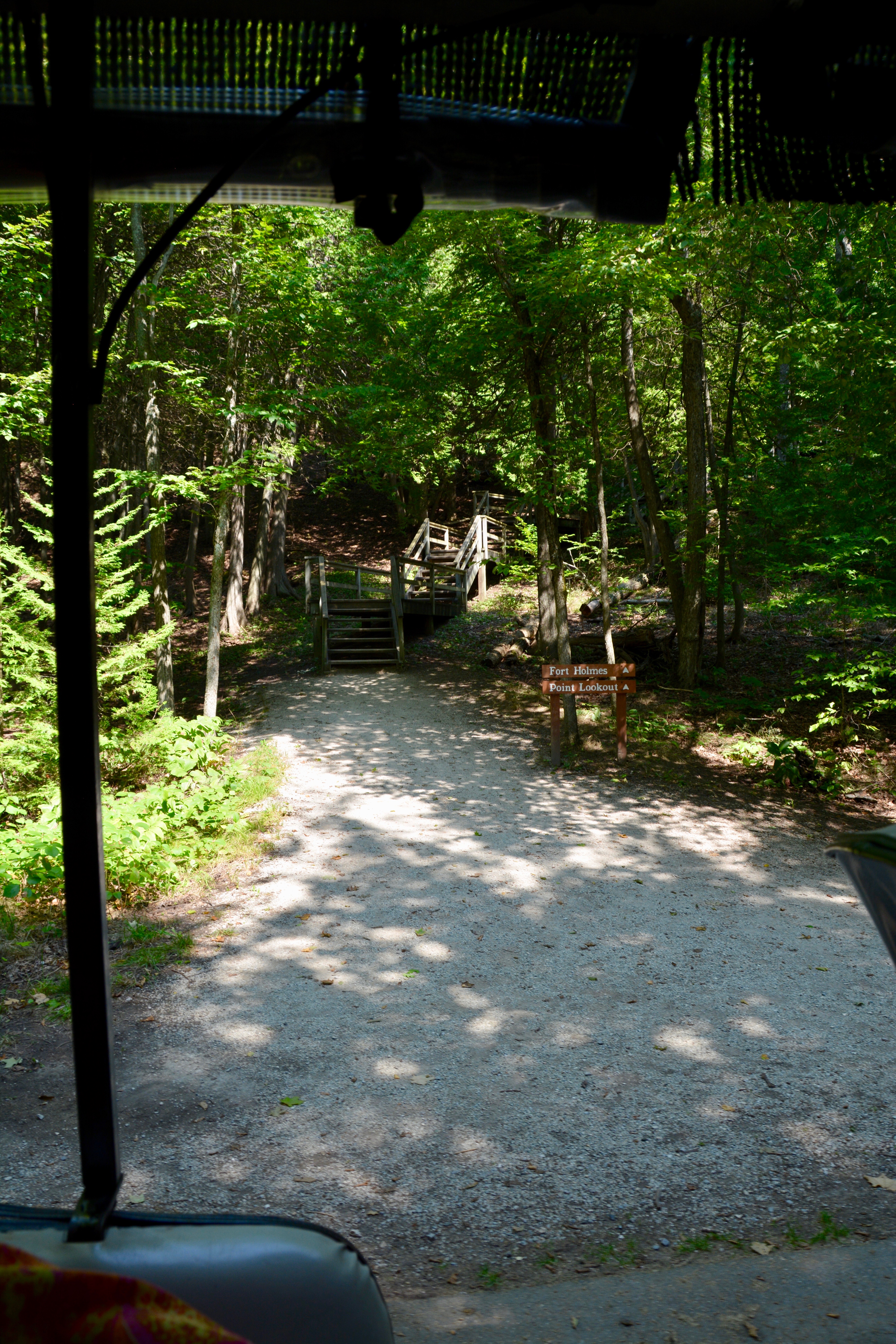
Photo ©Jean Janssen. Staircase leading up to the ruins of Fort Holmes, Mackinac Island, Michigan

When I was looking for things to visit on Mackinac Island, I also noticed that there was a Fort Holmes. On our carriage tour I saw a sign and wooden staircase and asked Courtney about it wondering if it was worth returning to later. She said there was little there now and it is more visited for the views. There is some suggestion that the fort may be rebuilt at a later date. “Fort Holmes is a small, wood and earthen fort on the southern end of the highest ridge on Mackinac Island. The fort was constructed by British soldiers in 1814 during the War of 1812…When United States soldiers peacefully reoccupied the island after the War of 1812 the fort was renamed Fort Holmes in honor of American Major Andrew Hunter Holmes who was killed in the 1814 battle of Mackinac Island.” State Historic Parks: Mackinac
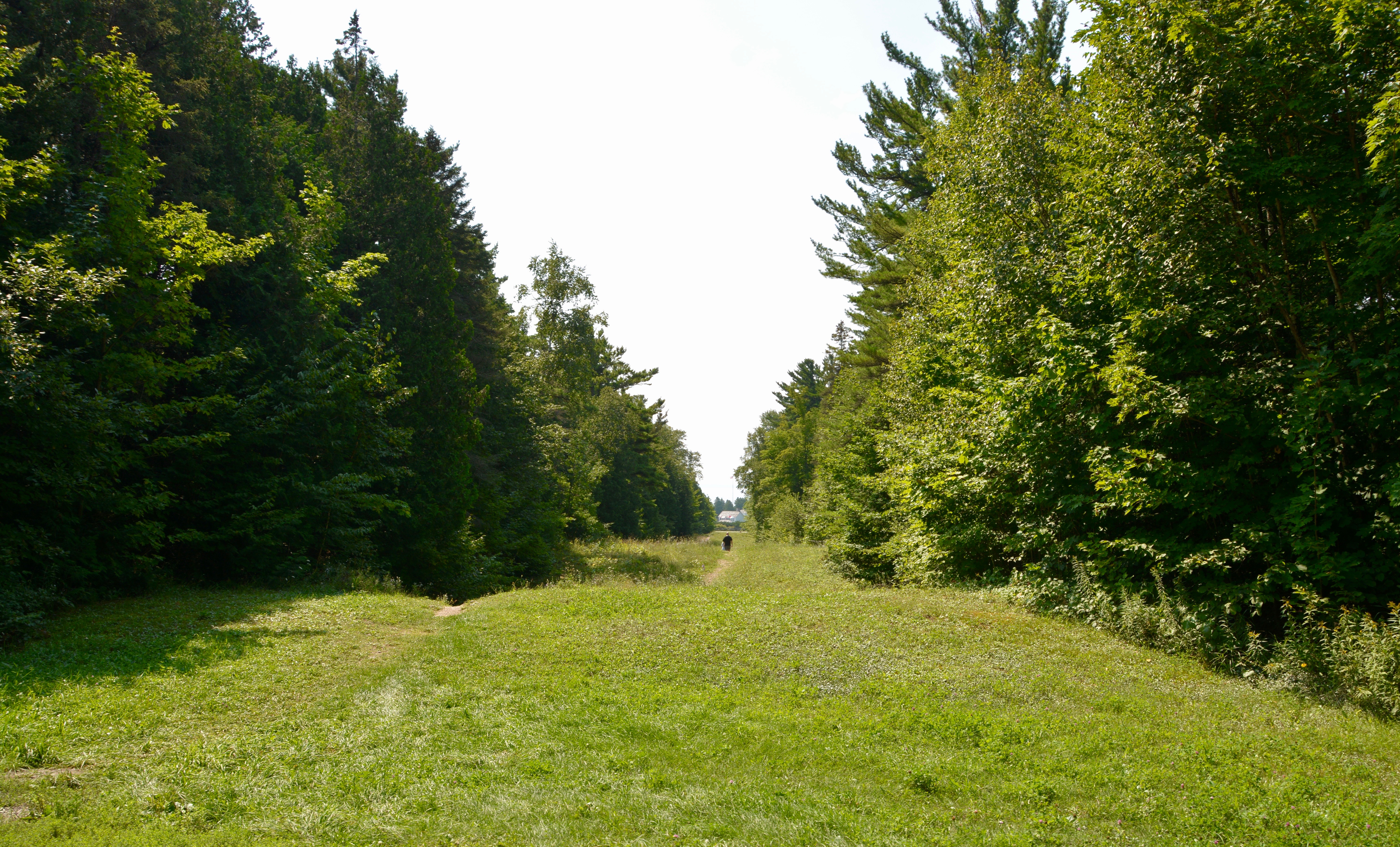
Photo ©Jean Janssen Military practice range, Mackinac Island Michigan
Photo ©Jean Janssen. Arch Rock, Mackinac Island, Michigan

We also passed by the military practice range on the island. You could still see the deep ruts. We were en route to one of the most viewed sites on the island, the Arch Rock. Courtney rested the horses just by the entrance while we went for a look. She warned us to look down at the ground and reminded us that the trails of liquid were probably not water. Fortunately for Mom, you could walk right up to Arch Rock. You just needed to wait your turn for a photo. You can also go up a few stairs and enjoy the view out across the lake.

Photo ©Jean Janssen. Mom at Arch Rock, Mackinac Island, Michigan

The Arch sits 146 feet above the water level and is more than 50 feet wide. The naturally occurring arch is formed of limestone. The Native Americans had many legends regarding the Rock; Courtney shared one about a maiden in love with a mythical creature her father forbid her to wed on the ride back into town.

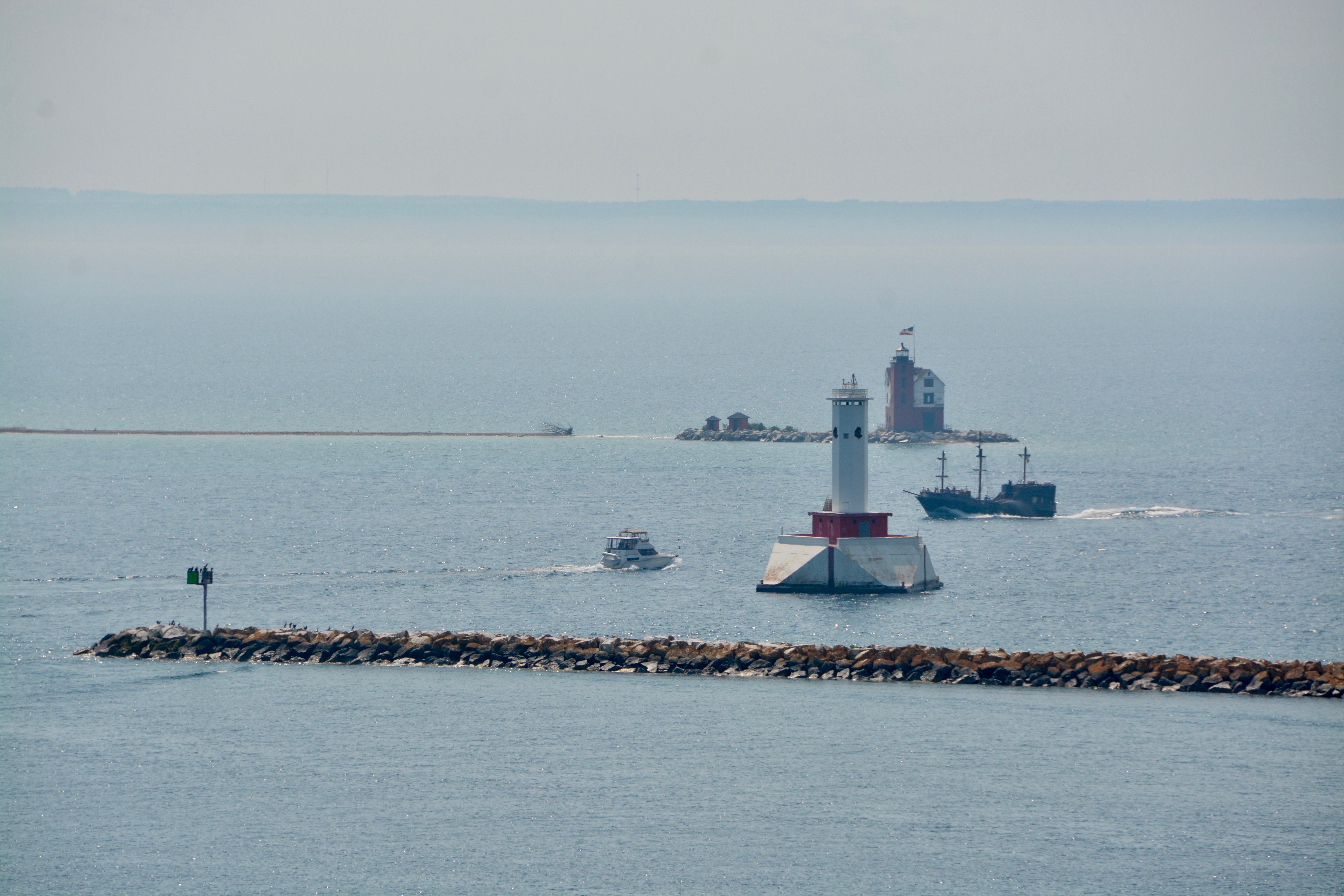
Photo ©Jean Janssen. A lemonade stand on Mackinac, Island, Michigan
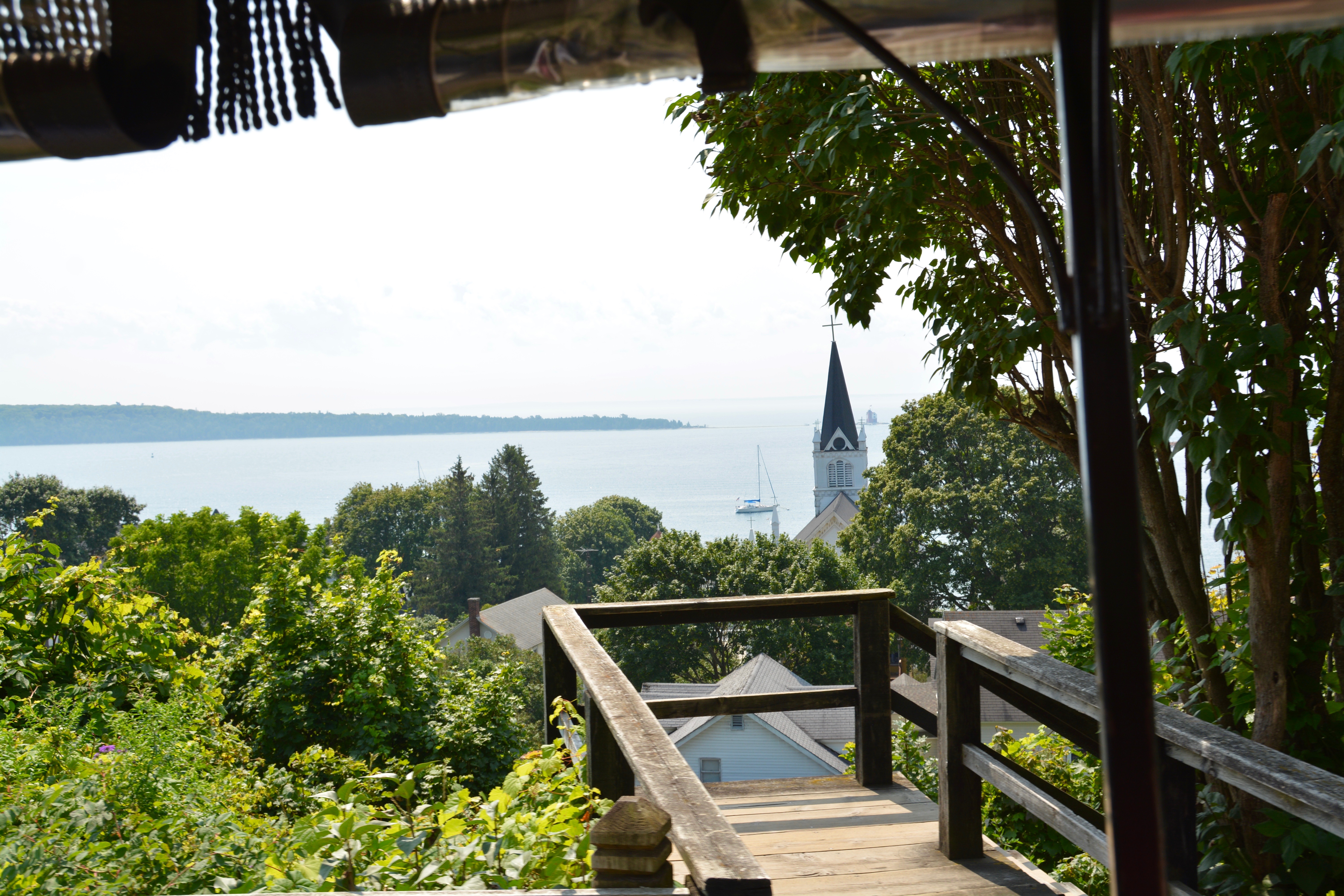
Photo ©Jean Janssen. A hilltop view from Mackinac Island
Photo ©Jean Janssen. Steps leading down to the main street on Mackinac Island, Michigan

Just before we headed back down the hill, Courtney rested the horses at another beautiful spot overlooking the water. A few houses away, the children had set up a lemonade stand to capture the tourists-very smart. As we went down, I saw the staircase the locals use when they don’t want to have to go around the curving road. I imagine you would be in pretty good shape after a summer season here.

Photo ©Jean Janssen. Mackinac Island, Michigan
Photo ©Jean Janssen. Carriage Rentals on Mackinac Island, Michigan
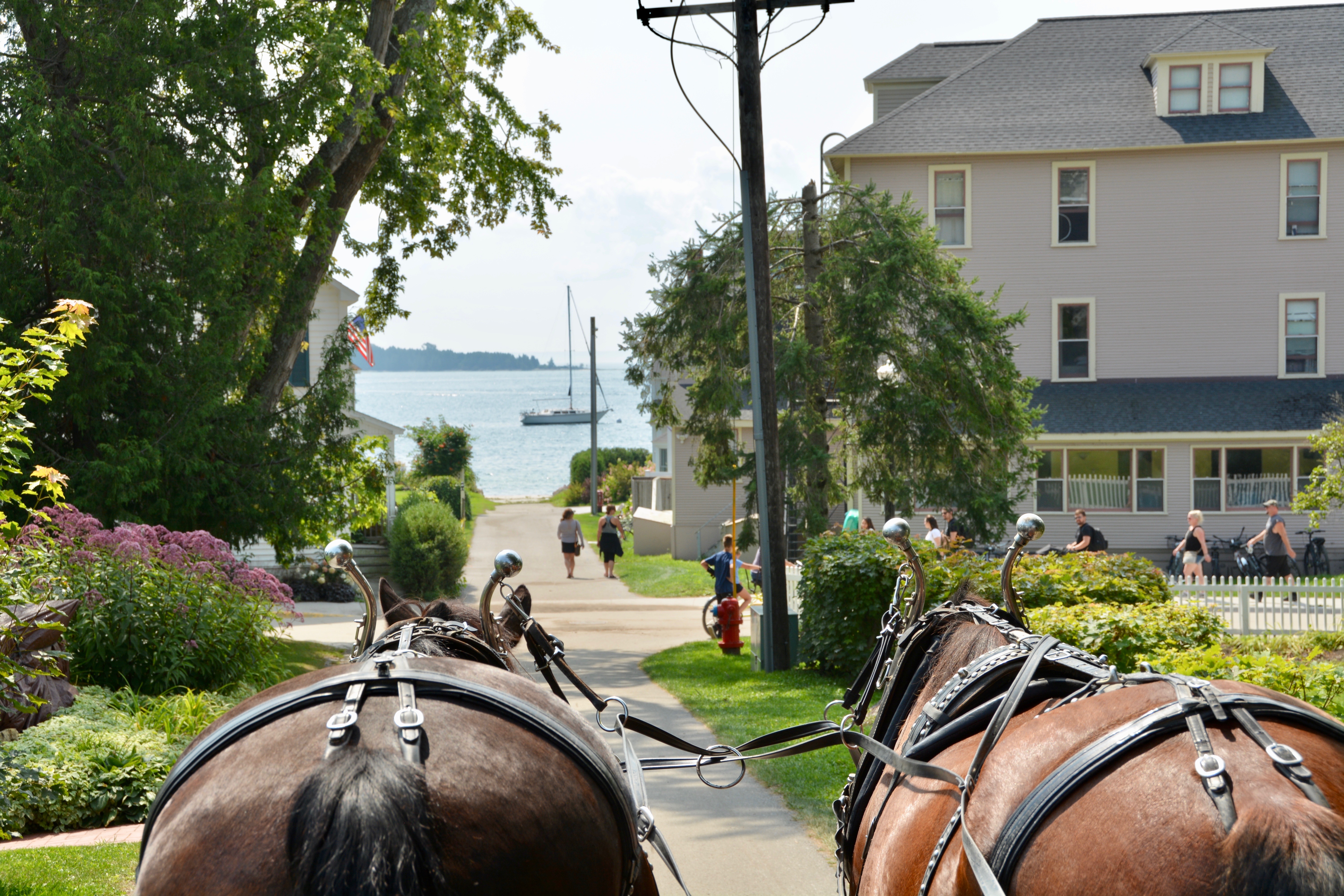
Photo ©Jean Janssen. Headed down the hill on our carriage ride on Mackinac Island.

We had seen groups of horses out and about and one of the stable offices is just across the street from our B & B. On the way down the hill, we passed a children’s riding school. As we came around we were on the straightaway back to Marquette Park. I think the horses could sense it was almost time for a break. We passed the large white Island House Hotel and Courtney shared that it was established in 1852 and is the oldest hotel on the island. It is family-operated and the only hotel located within the boundaries of the Mackinac Island State Park. The simple center section had been added to several times and the hotel is now rather large and has perhaps one of the best flower displays on the island.
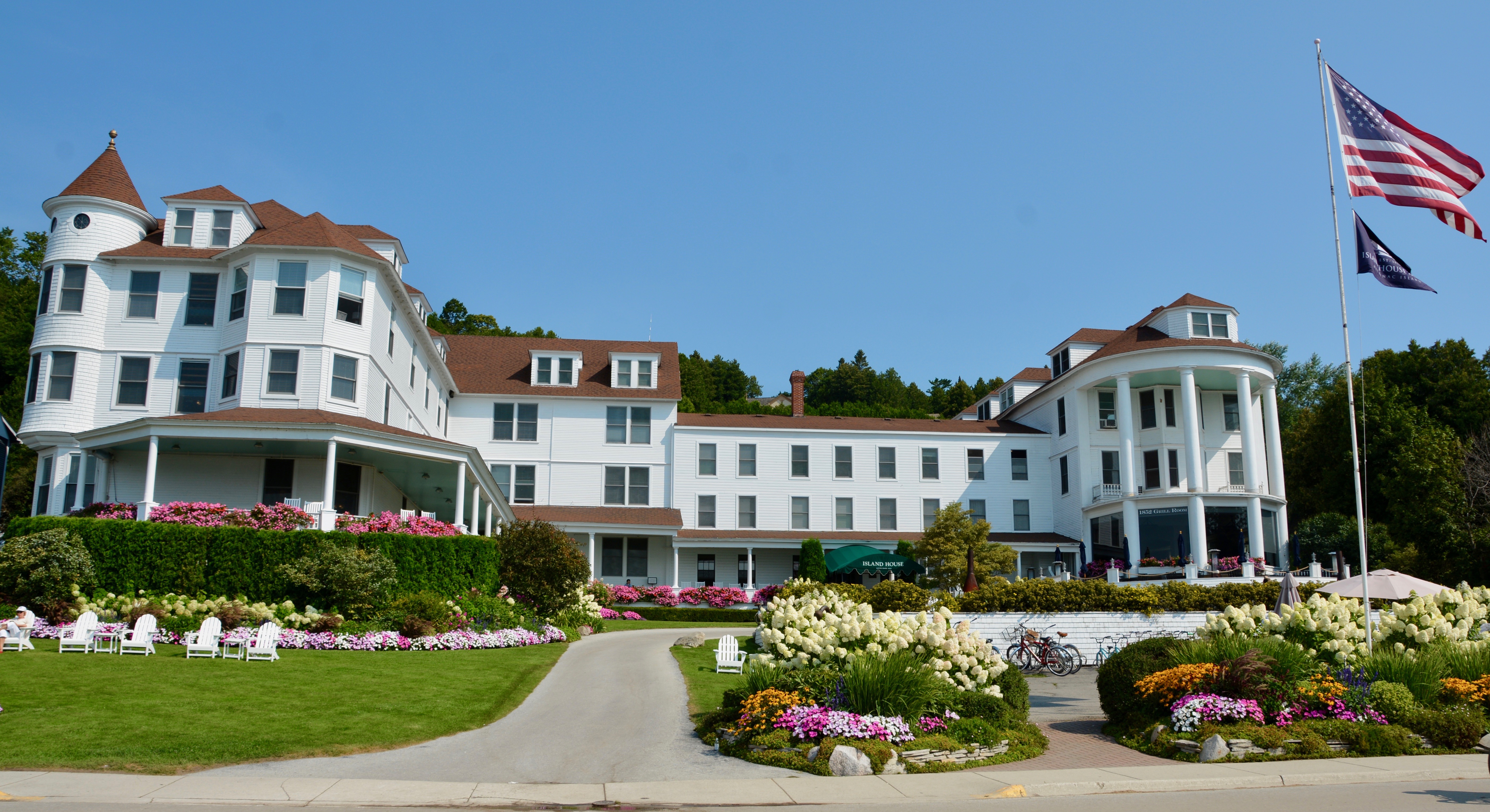
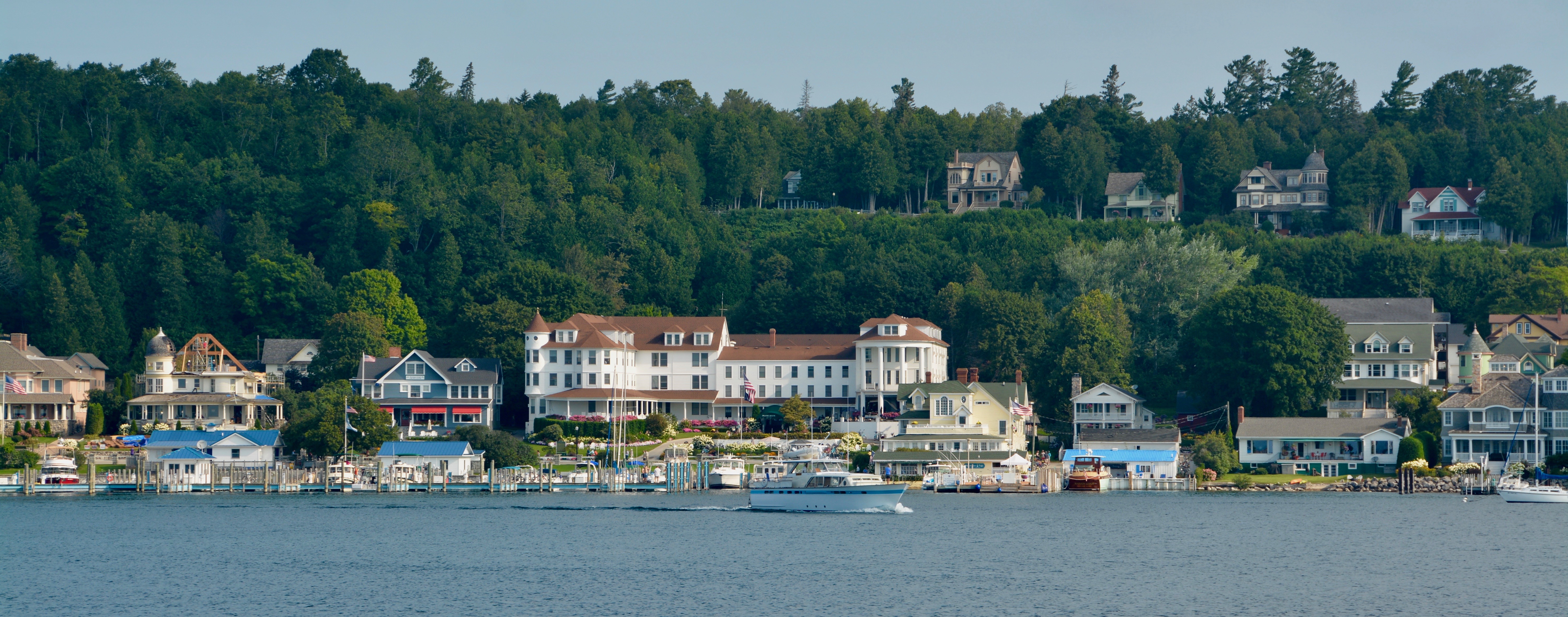
Photo ©Jean Janssen. The oldest hotel on Mackinac Island. The plain center section is the original building. The Island House Hotel, Mackinac Island, Michigan.
Photo ©Jean Janssen. On the ferry ride in this morning, I saw the Island House Hotel (lower center in photo) To the right in the photo is the yacht club and next to that the house with the burned out third floor. At the top center of the photo is our last lookout stop and the lemonade stand.
Photo ©Jean Janssen. Reconstruction is ongoing to this beauty’s third floor. Mackinac Island, Michigan

I also asked her about the burned out copula and she said the fire had happened a few months ago and started in one of the old chimneys. The fire had taken out the entire third floor of the house. The home immediately had to be protected from further damage to the lower floors and they were taking advantage of the warm weather to get as much of the repair work done as possible before the end of the season.
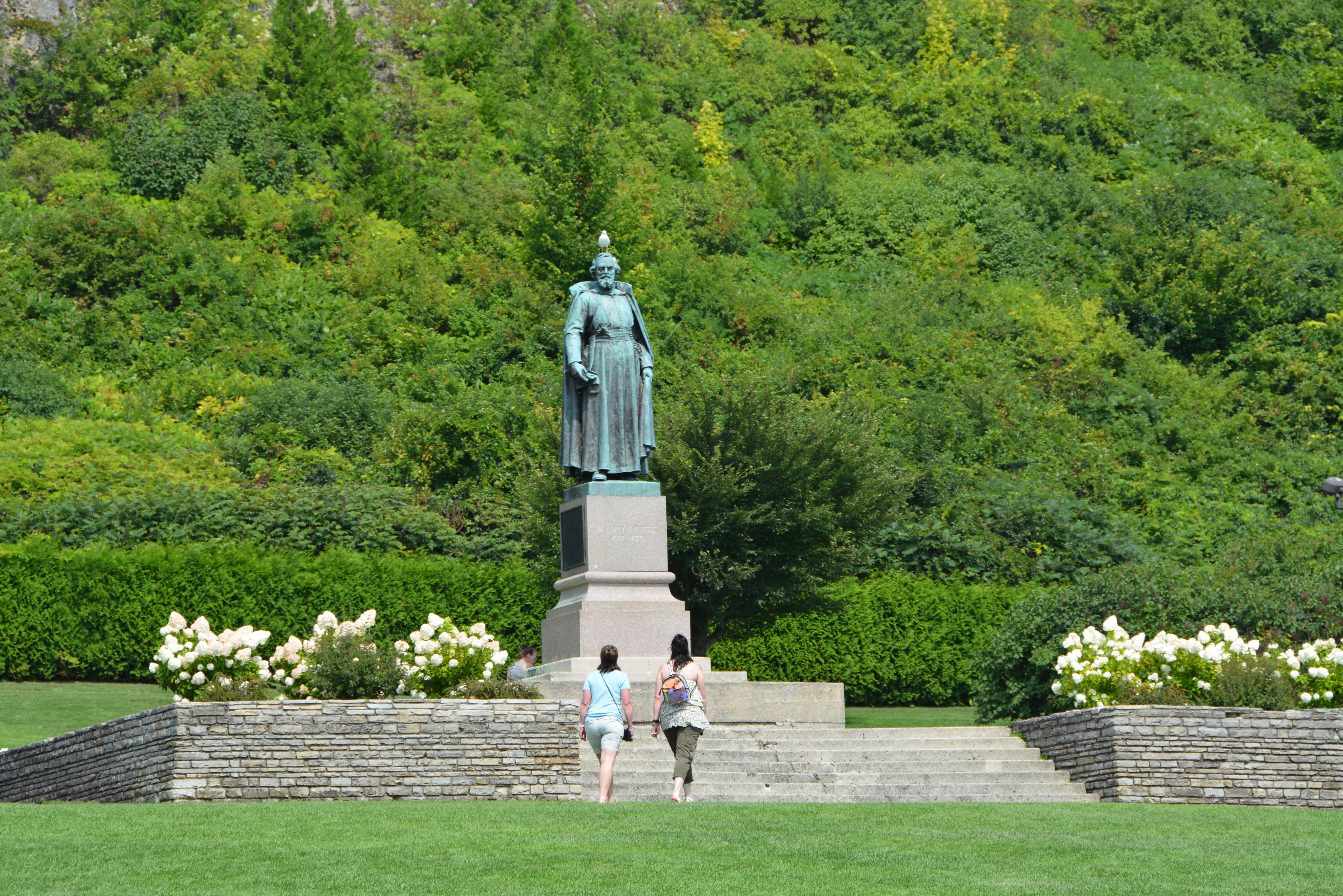
Photo ©Jean Janssen. Statue of Fr. Jacques Marquette, the namesake for the park. His influence on this area is a whole history lesson in and of itself.
Photo ©Jean Janssen. The Yankee Rebel Tavern for lunch on Mackinac Island.

We said goodbye to Courtney at Marquette Park and went in search of lunch; we debated whether we wanted waterside dining or a recommended place near our hotel. The thought of a quick walk to check in after lunch meant the Yankee Rebel Tavern won out. We all enjoyed more comfort food for lunch today. I think I out-ordered everyone with the roast beef sliders.

Photo ©Jean Janssen. The Metivier Inn, Mackinac Island, Michigan.
Photo ©Jean Janssen. We received a warm welcome at the Metivier Inn, Mackinac Island, Michigan.

After lunch, we had a short walk to Market Street and our hotel. We received a warm welcome at the hotel. They have done an excellent job of keeping the original charm of the house while adding on additional spacious accommodations. Our room with two queens was around the corner and looked out over the beautiful sloping backyard. Our bags had been taken directly to our room by the dockside porter. There was also a lovely side porch just outside our room.

Photo ©Jean Janssen. The hardworking horses on Mackinac Island. The horses take vacation off the island out of season.

We arrived just before 3 pm which is cookie time at the inn. It was clear that the regulars or those staying a few days knew the drill and people were there right at 3 to grab the warm delights. They are out until they are gone. I recommend the molasses cookies. They must be the favorite; they were gone first.
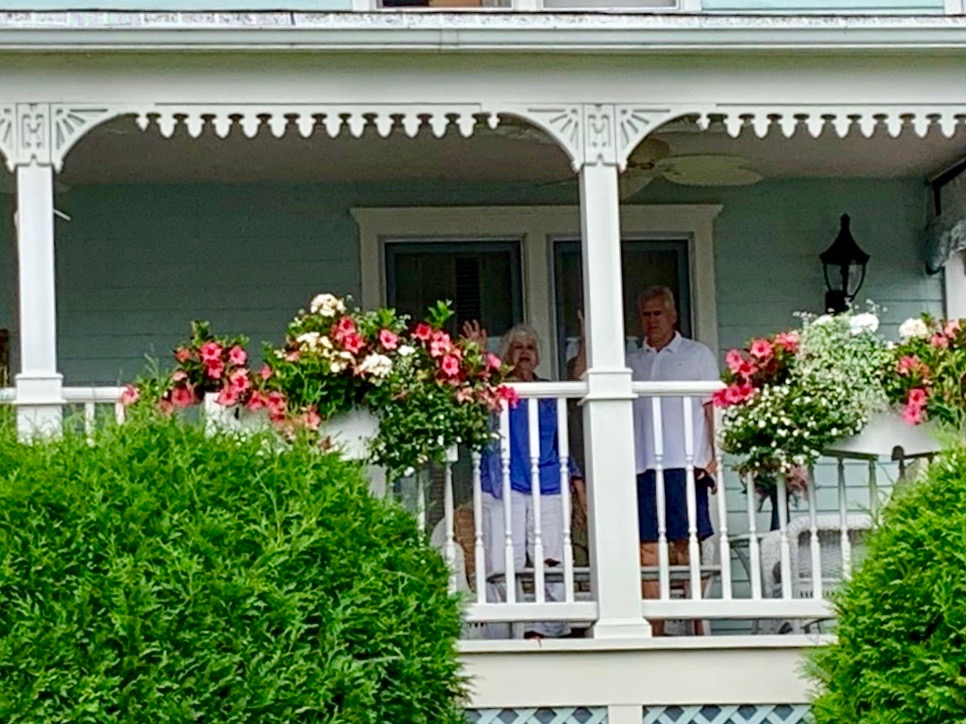
Photo ©Ann Janssen. Emma took this picture of Mom and Jack on the porch at the Metivier Inn.

Jack stayed with mom on the porch and Emma and I went and checked out the dining options for the evening. We wanted a relatively nice dinner. We narrowed it down to two options, The 1852 Grill Room at the Island House Hotel or waterside dining at the Carriage House at the Iroquois Hotel on the beach. We had seen both spots having passed the Grill Room on the carriage tour and having seen the Carriage House from the ferry. The Carriage House is also where mom had sat in the pretty arbor seat.
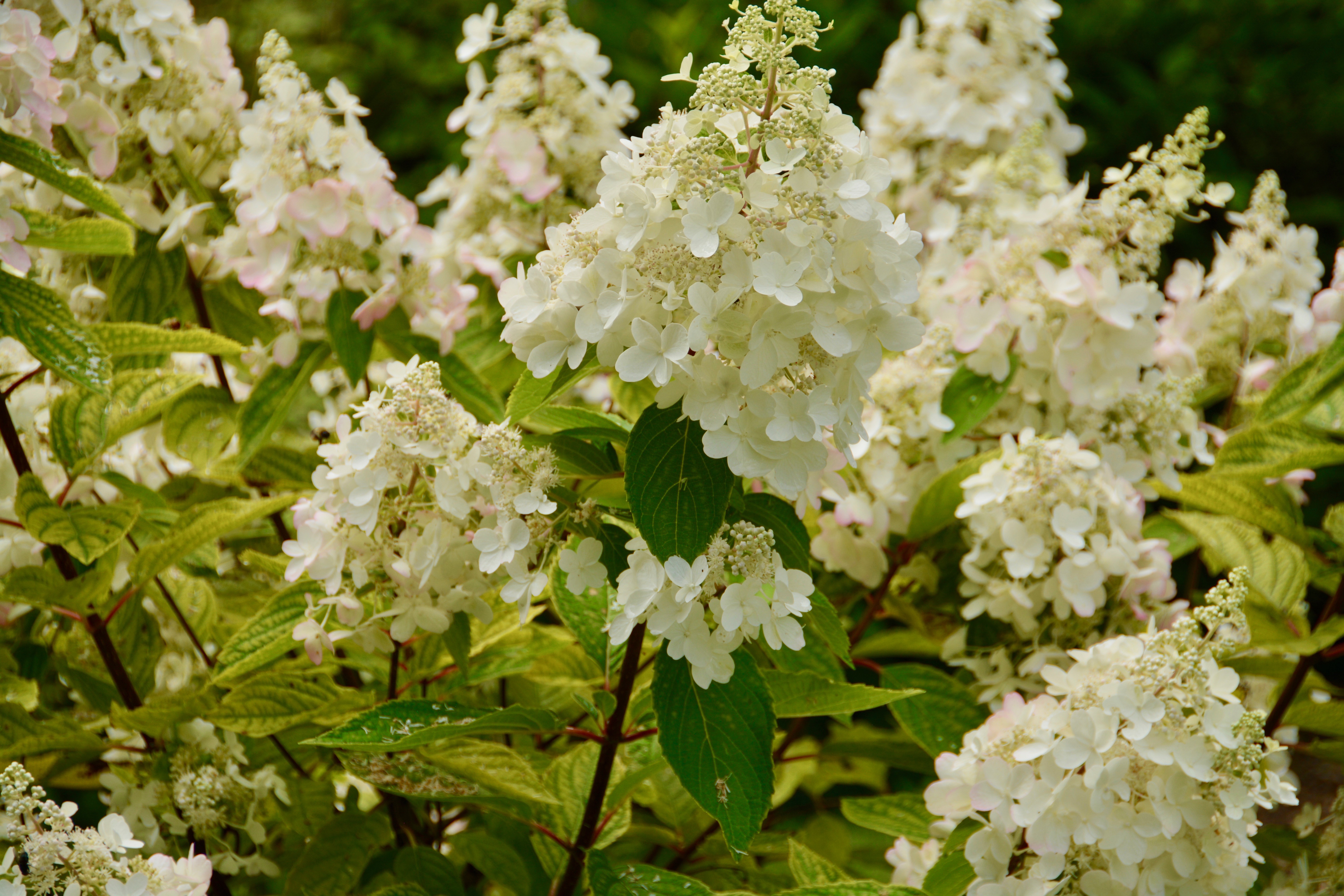
Photo ©Jean Janssen. Some of the most beautiful flowers on the island were found right in our backyard. Our room at the Metivier Inn looked out on a lovely garden.

The available time at the Carriage House was better and we would be right on the water so that ended up being our choice. Both restaurants had wonderful menus. We spoke with an couple staying at the inn after dinner that had gone to the 1852 Grill Room. They said the food and service was excellent but you were removed from the water and there isn’t much of a view after dark anyway. I would still like to try it on another visit.

Photo ©Jean Janssen On the front porch was a beautiful painting of the Metivier Inn, Mackinac Island

Having had the chance to walk around on my own and take pictures before lunch, I stayed in the room with mom and cooled off while Emma went shopping and Jack took a walk and enjoyed the inn’s front porch. That evening we dressed up a bit for dinner and headed down early to give mom plenty of time and to perhaps have a drink before dinner.
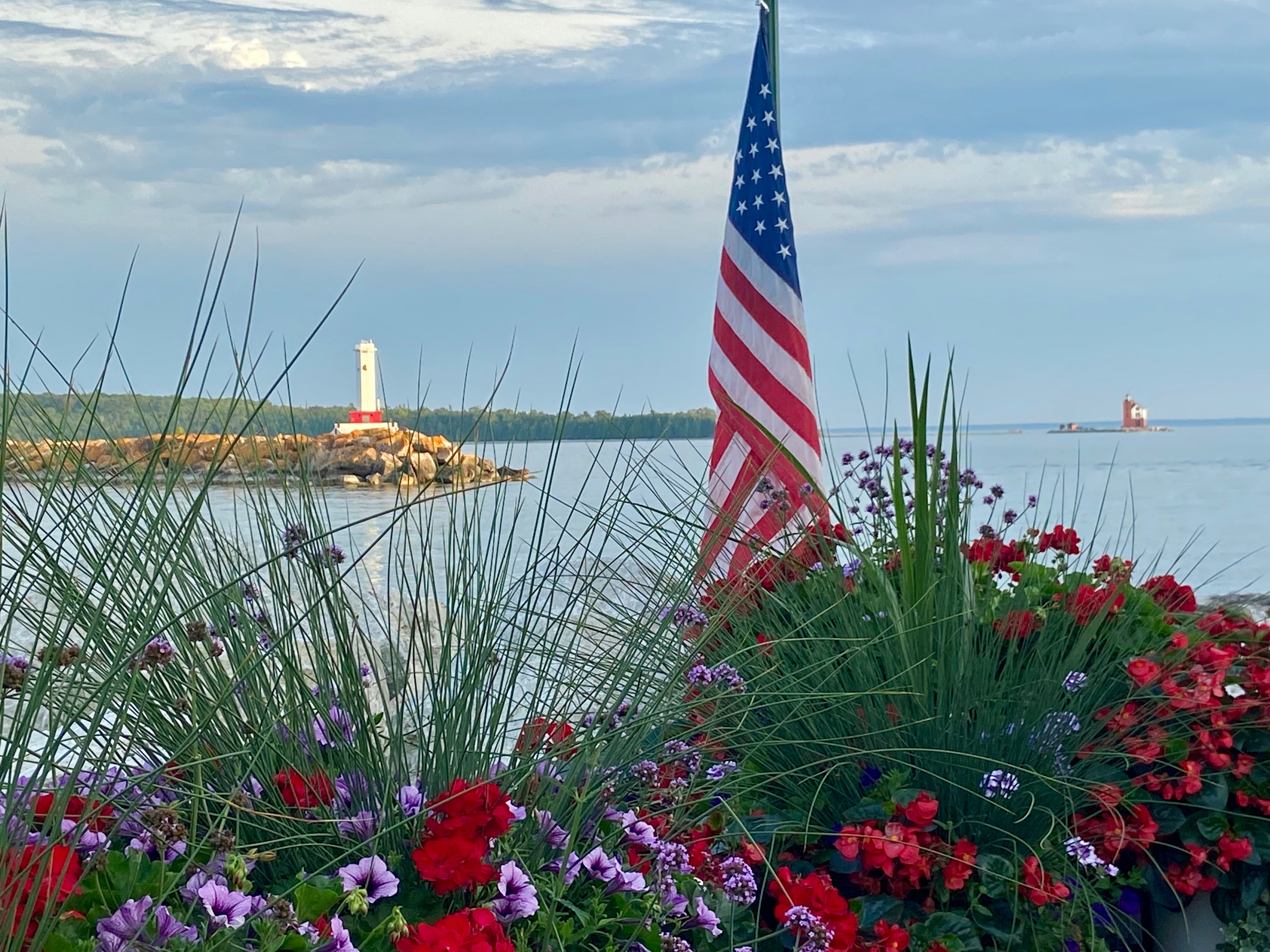
Photo ©Jean Janssen. Cocktails with a view at the Iroquois Hotel, Mackinac Island, Michigan
Photo ©Jean Janssen. Dining on the side patio at the Carriage House at the Iroquois Hotel on the Beach

While we waited for a table, we enjoyed cocktails (I went with the French 75) on the outdoor patio right at the water’s edge. We had a wonderful view of the lighthouse from this vantage point. When our table was ready, we transferred over to a side patio for dinner. The sun had gone down just enough that it was comfortable to be outside. From the side patio, we had a better view of the rock beach and the sunset opposite the water.
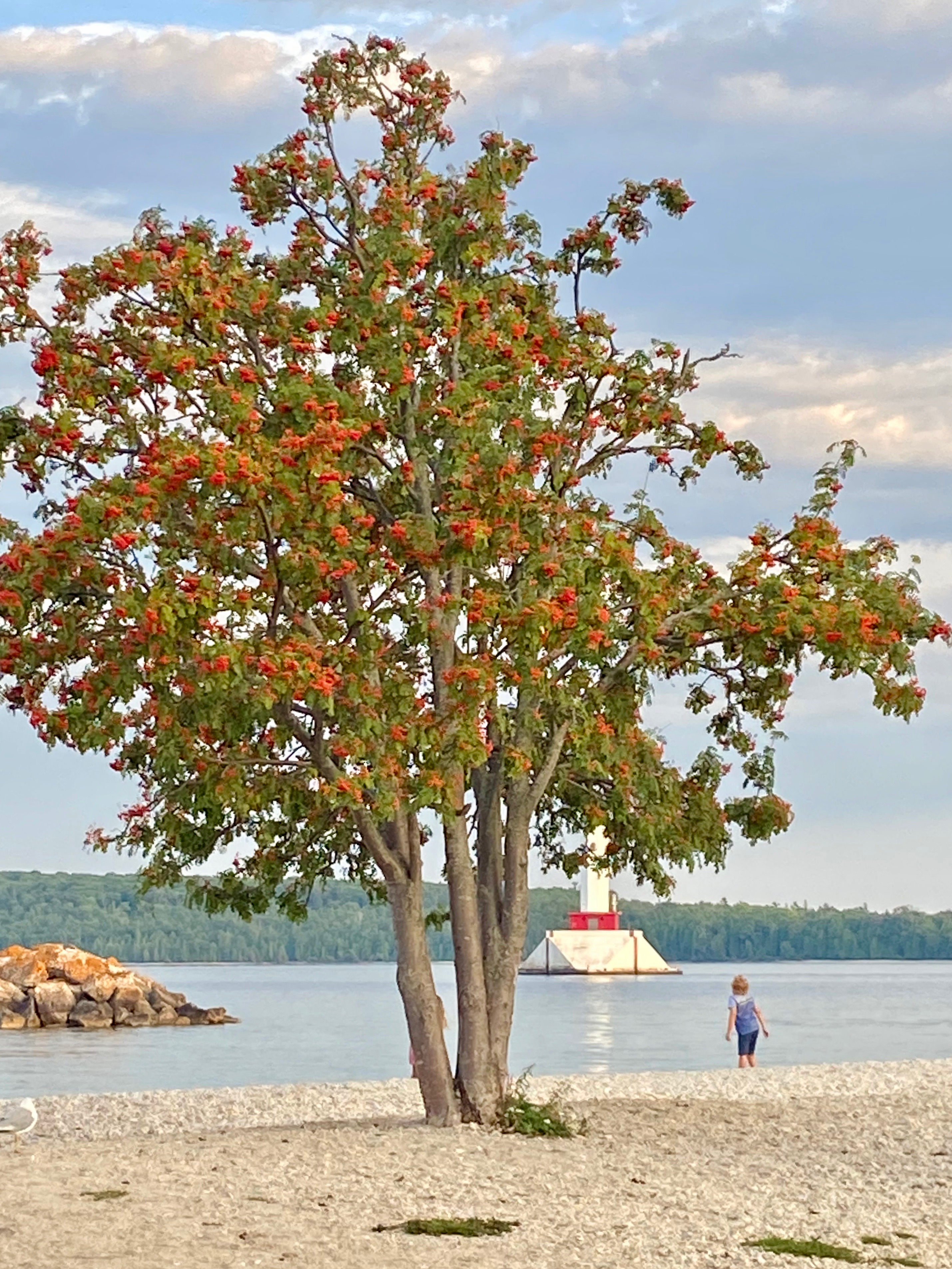
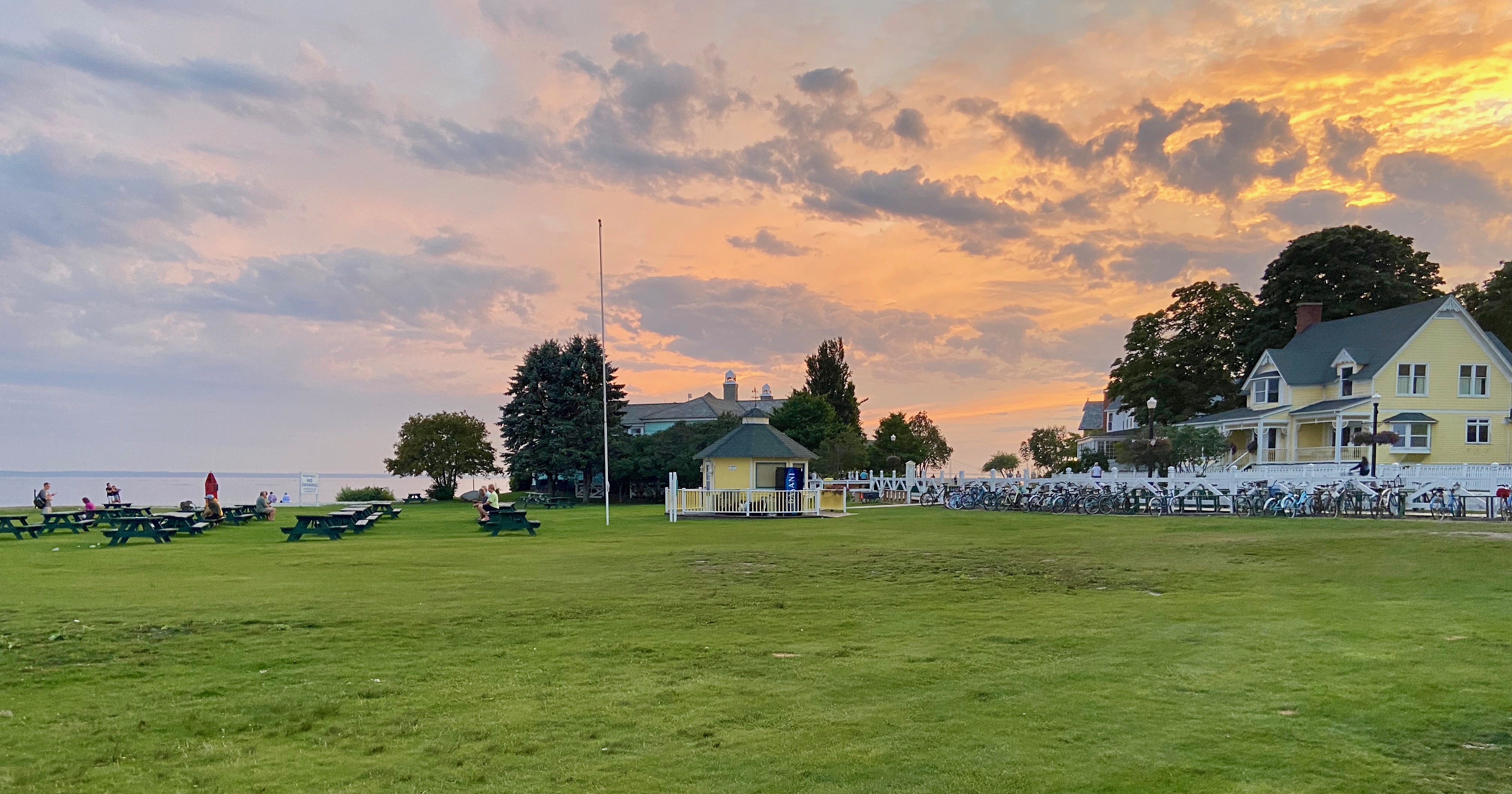
Photo ©Jean Janssen View from our dining table on the side patio at the Carriage House
Photo ©Ann Janssen Sunset on Mackinac Island, Michigan

It was a fabulous menu. I started with the crab meat “tower”, followed by the scallops, rounding out with a daily special-a caramel sundae with caramel made homemade in their kitchen. Given the good fudge makers on the island, I just knew the caramel would not disappoint. It was fabulous. In fact, all the food was excellent and we enjoyed wonderful service.
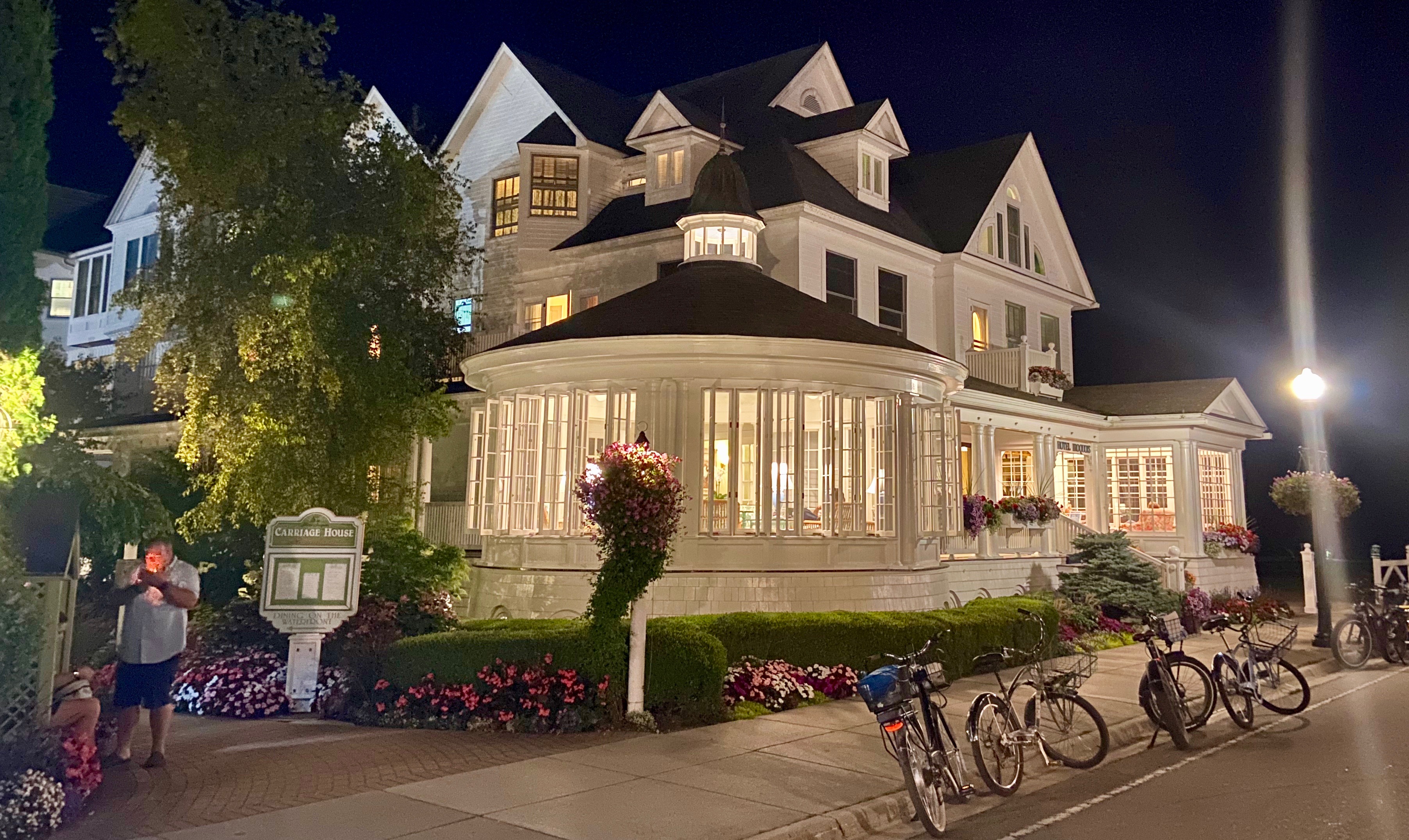
Photo ©Jean Janssen. The Iroquois Hotel. The Carriage House restaurant is in the back by the water. I would have love to sit in that circular parlor just at the front. Mackinac Island, Michigan.

The only down spot was when a engaged couple and their parents who were on the island for the wedding spotted some of their wedding guests on our small patio of just six tables. They were all loud and obnoxious and acted like they were the only ones there. Fortunately, they eventually left and the volume subsided. People can be so thoughtless.
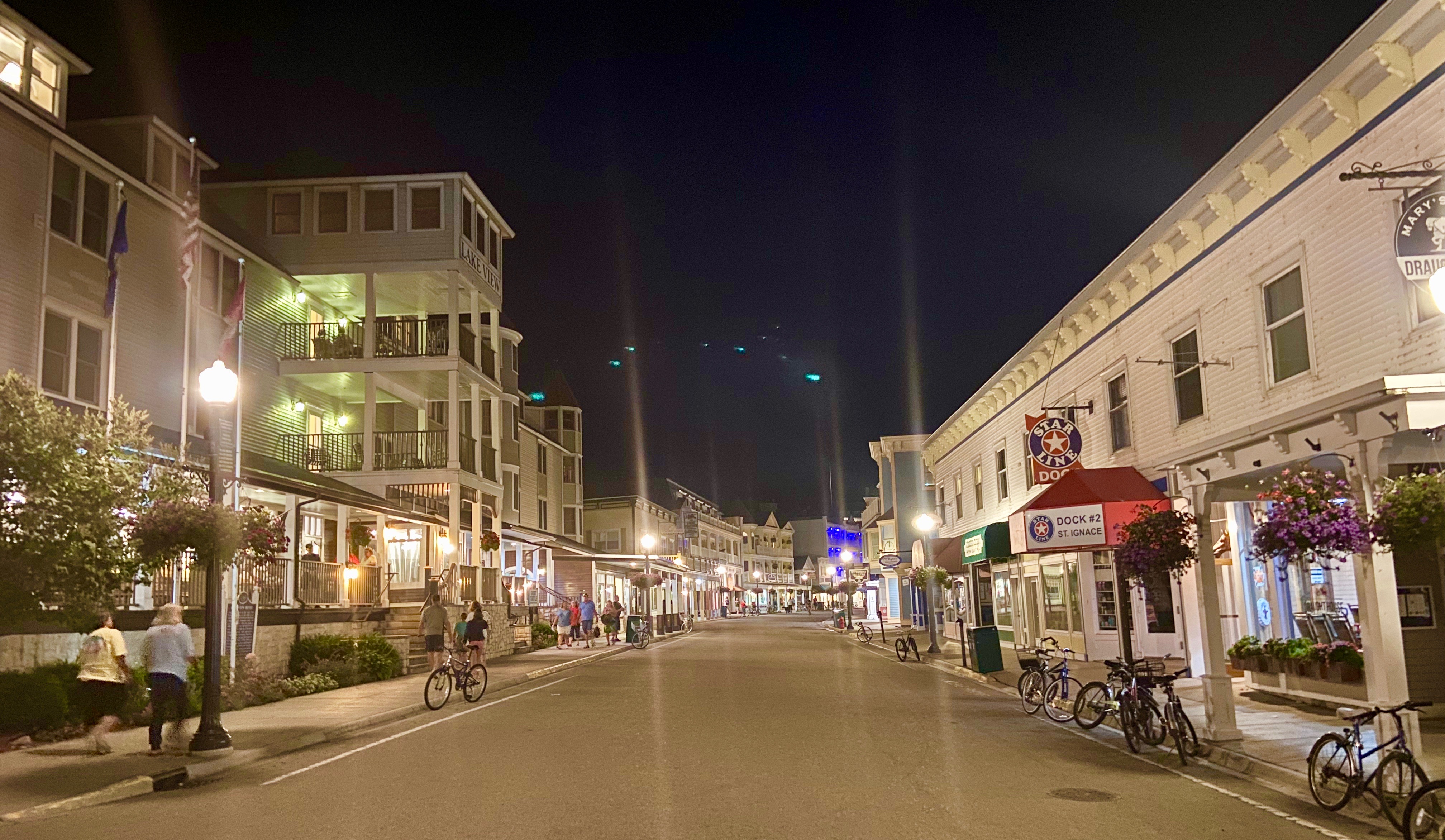
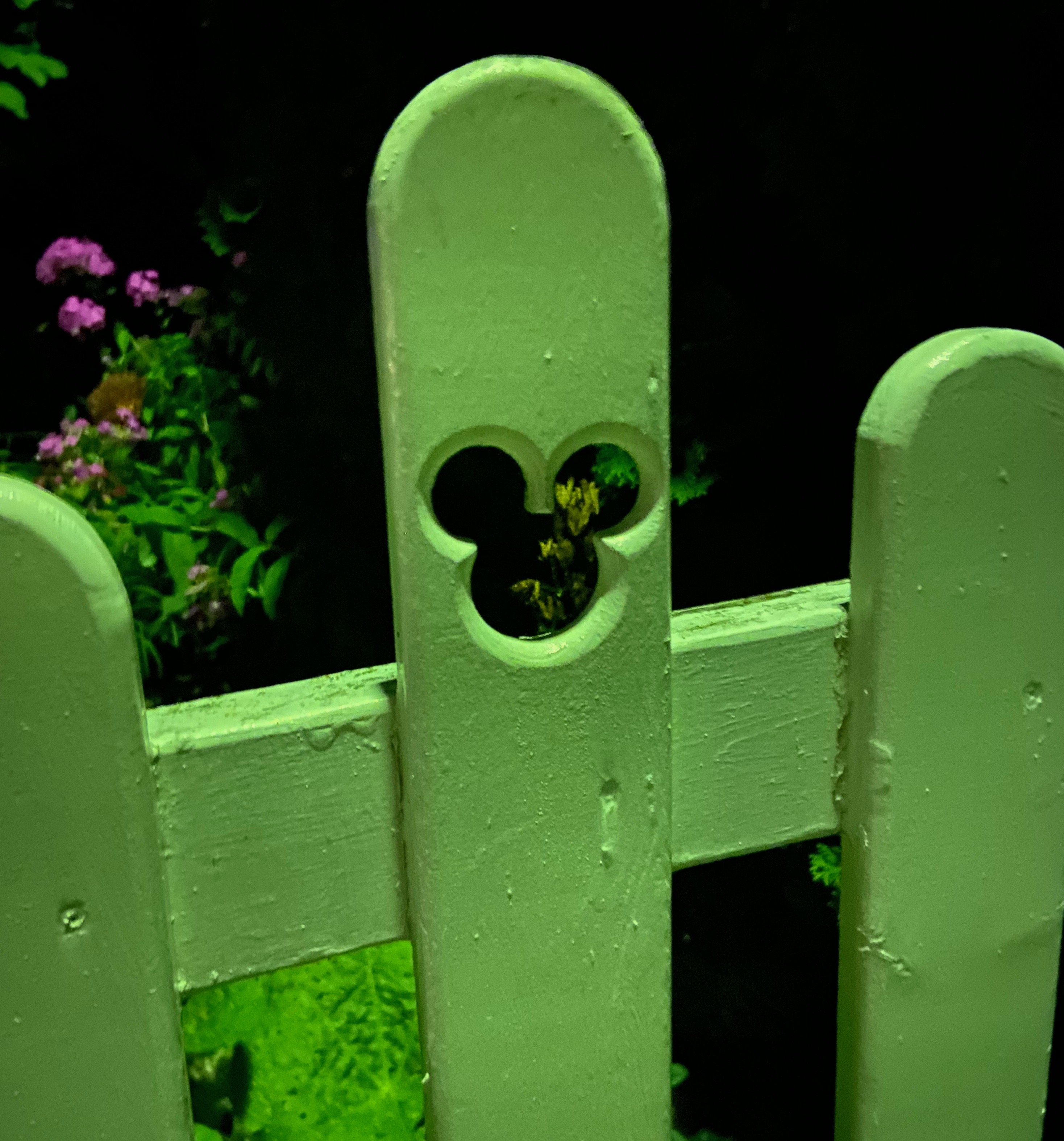
Photo ©Jean Janssen. Main Street on Mackinac Island after dark. The last ferry leaves at 9 pm.
Photo ©Jean Janssen. Spotted by Jack after dark, a not so hidden Mickey on Mackinac Island.

It was dark by the time we left the restaurant, but we had a very short walk back to the Metivier Inn. The main street was almost deserted. We walked down French Lane and Jack spotted a “hidden Mickey” on a fence post. When we arrived back at the inn, we sat on the front porch for a while. A large portion of the porch was roped off. We found out later that that section was closed at 9 pm, respecting the guests whose rooms faced onto the porch.

Photo ©Jean Janssen Across the street from our inn after dark, the stables were quiet. Mackinac Island

What a fabulous day on the island! More to enjoy on Mackinac Island tomorrow before our midday departure. One of the things that happens when you are the photographer is that there are not many pictures of you. Just so you know I was really there, I am sharing a selfie I took at Arch Rock. Until tomorrow…

–Natasha
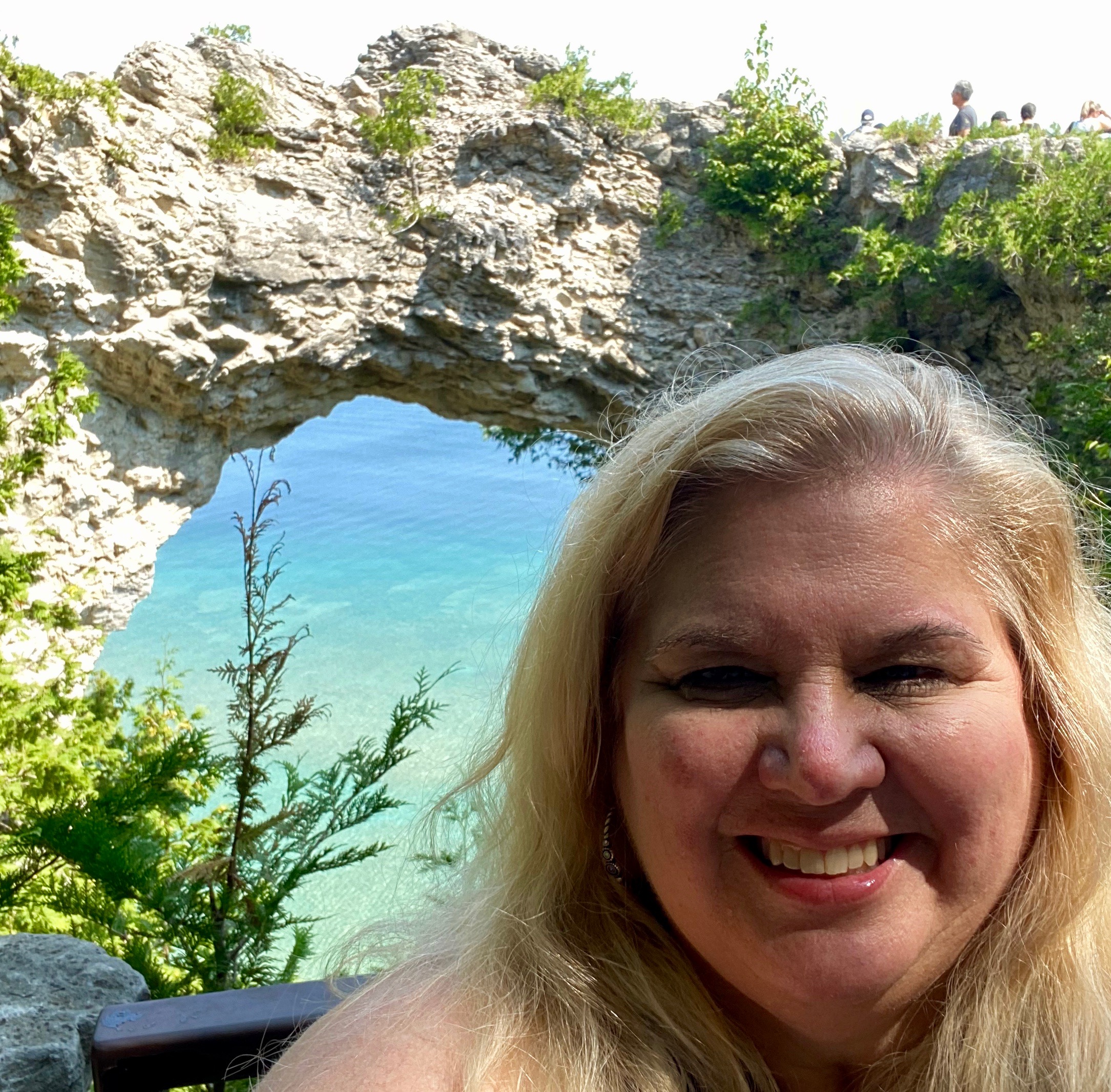
Photo ©Jean Janssen. Arch Rock, Mackinac Island, Michigan

Posted in domestic travel, road trip | Tagged , , | 1 Comment

The Soo Locks: A Visit to Michigan’s Upper Peninsula

Photo ©Jean Janssen. The Mackinac Bridge connects the upper and lower peninsulas of the State of Michigan

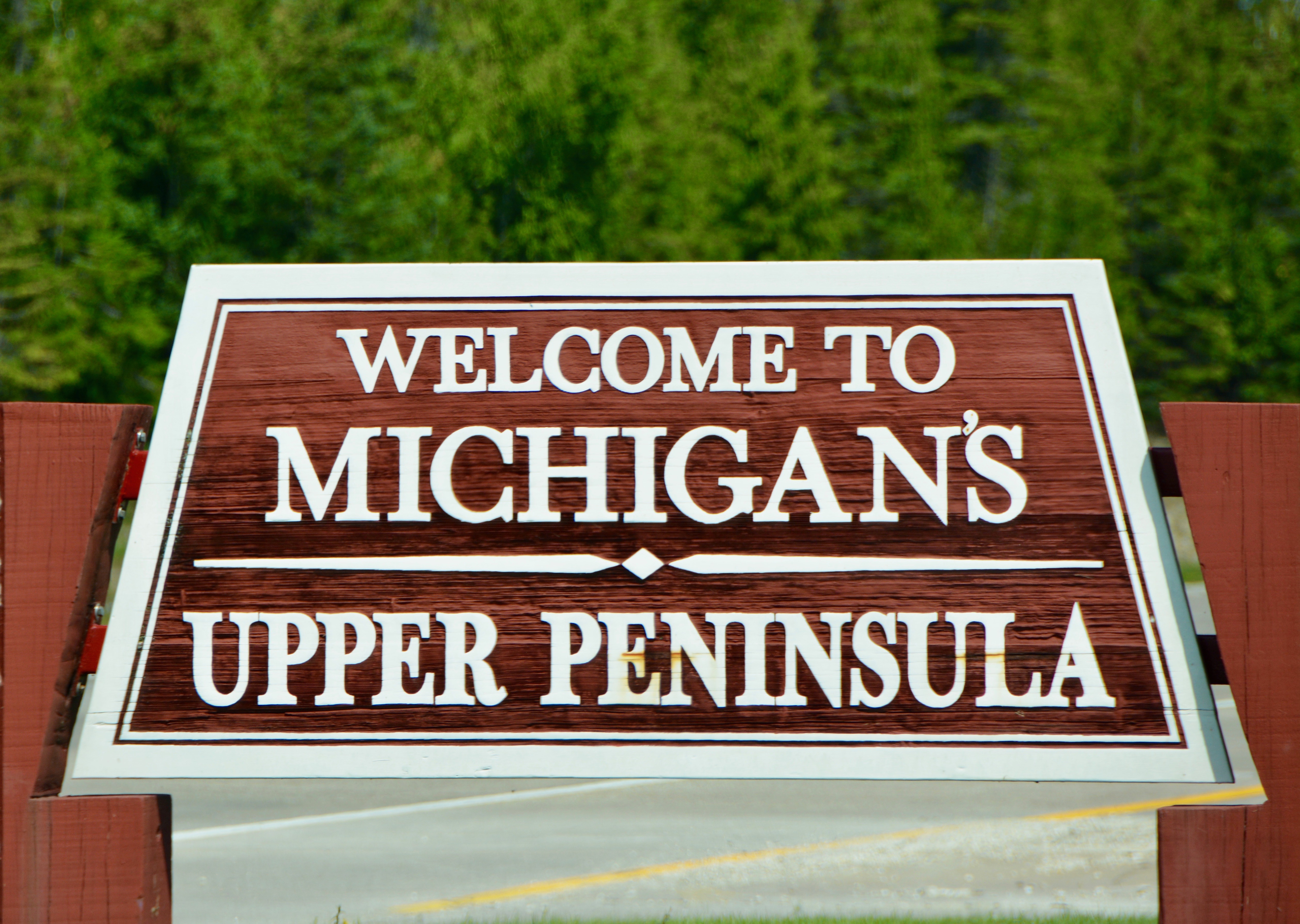
This summer with us all fully vaccinated, my mom suggested that we recreate a trip that we took as children. My brother, sister, and I all met in Grand Rapids, Michigan for a four-day road trip “up north” with Mom. Early Monday morning we set out for the Soo Locks in Michigan’s Upper Peninsula.

Photo ©Jean Janssen The Soo Locks, Sault Ste. Marie, Michigan
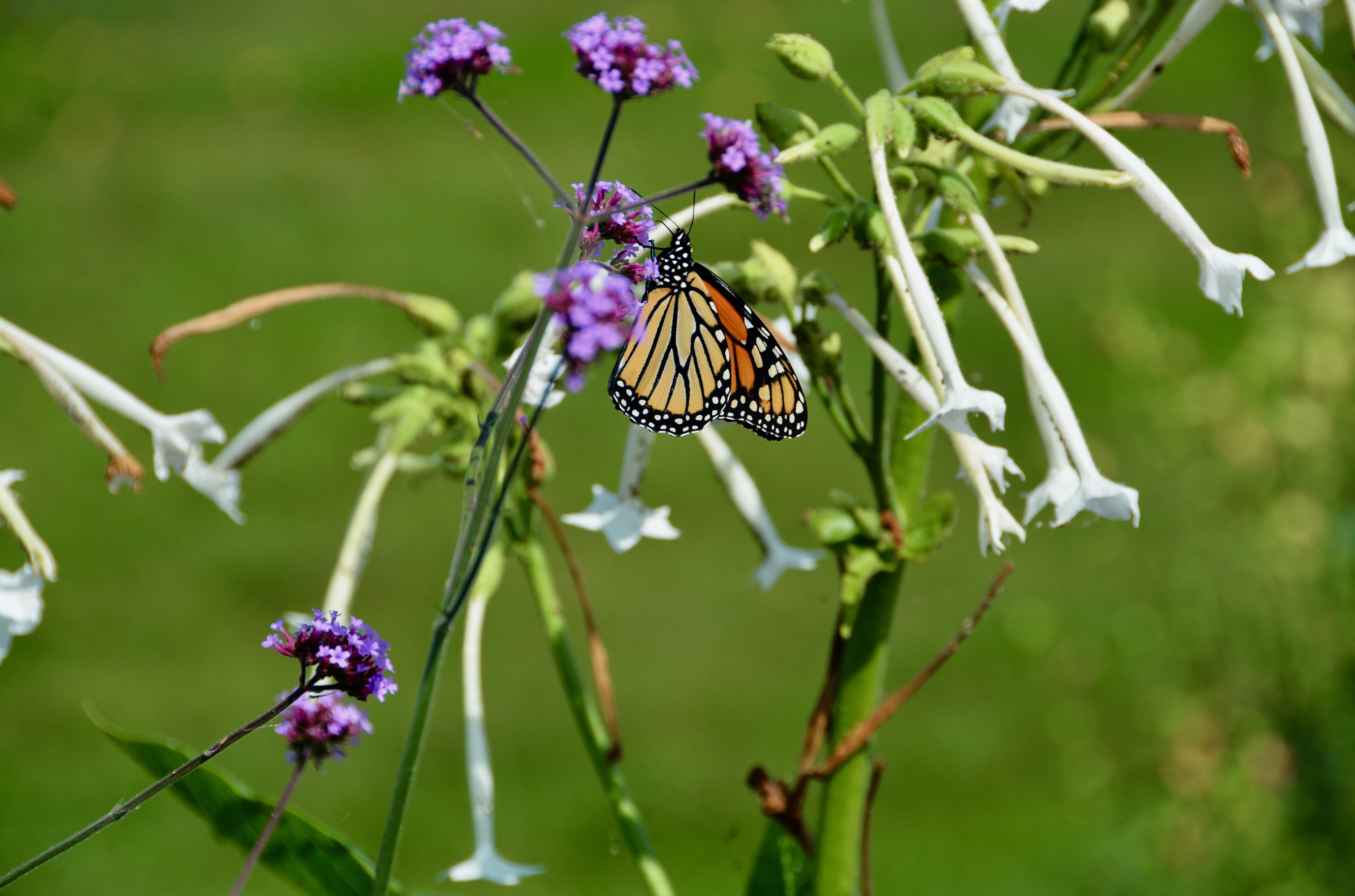
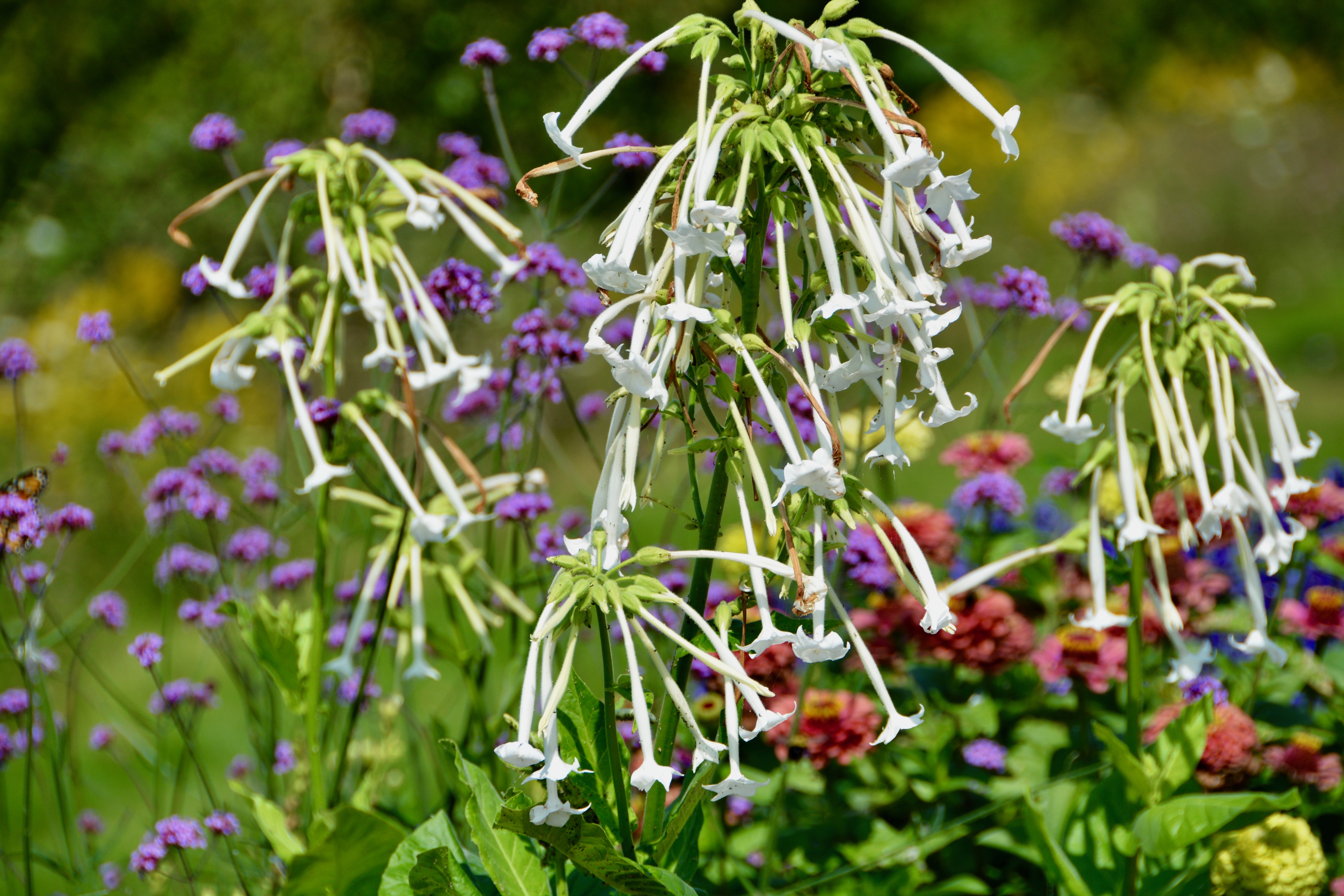
Photo ©Jean Janssen Butterflies and flowers at the lookout park for the Mackinac Bridge, St. Ignace, Michigan

Emma did an early stop at Van’s bakery. My brother Jack had already done the oil change and filled up the car with gas the day before. After loading mom’s three pillows-neck, seat belt cushion, and footrest, the bakery goodies, and the rest of our luggage, we set off. We are going to take a bit of a scenic route, hoping to arrive in Sault Ste. Marie in time for the 3:30 pm tour. On this tour, you actually pass through the locks. After living in Texas, the driving distances just didn’t seem that far to me.

Photo ©Jean Janssen. Reaching St. Ignace on Michigan’s Upper Peninsula after crossing the Mackinac Bridge

Mom had four things on her travel bucket list: A ride on Route 66, another trip to Hawaii, the Panama Canal, and Morocco. Given COVID concerns and her age, we have modified things a bit. She wanted to travel in the continental United State, but thought route 66 might be too tiring. That is when we hit on retracing a trip we took as children in 1978. We’ll drive through her home state instead. It is not the Panama Canal, but today’s visit to the Soo Locks does attempt to stay with the theme.

Photo ©Jean Janssen. Emma and Jack after a successful crossing of the Mackinac Bridge, Michigan

When we were children, my mom would take a large scrapbook and draw lines to create 4 squares on a page for each day of our trip. We then each drew a picture of something we did that day. We hated it at the time and often had to go back and fill in a couple of days in one sitting. However, now those drawings are treasured memories. We won’t be employing our sketching talents on this trip-extremely limited in my case. Rather, with Emma as our scribe, we are writing down our favorite part of each day, the biggest surprise of each day, and one thing we didn’t like.

Photo ©Jean Janssen. Practicing the pole climb at the Wolverine Power Cooperative Training Center, Michigan

Emma’s surprise came early in the day. While passing through farm land, we spotted a training facility. We didn’t know it was a training facility at first. We just saw lots of guys going up and down on poles. I told Emma I would be happy to record pole dancing as her favorite activity of the day.

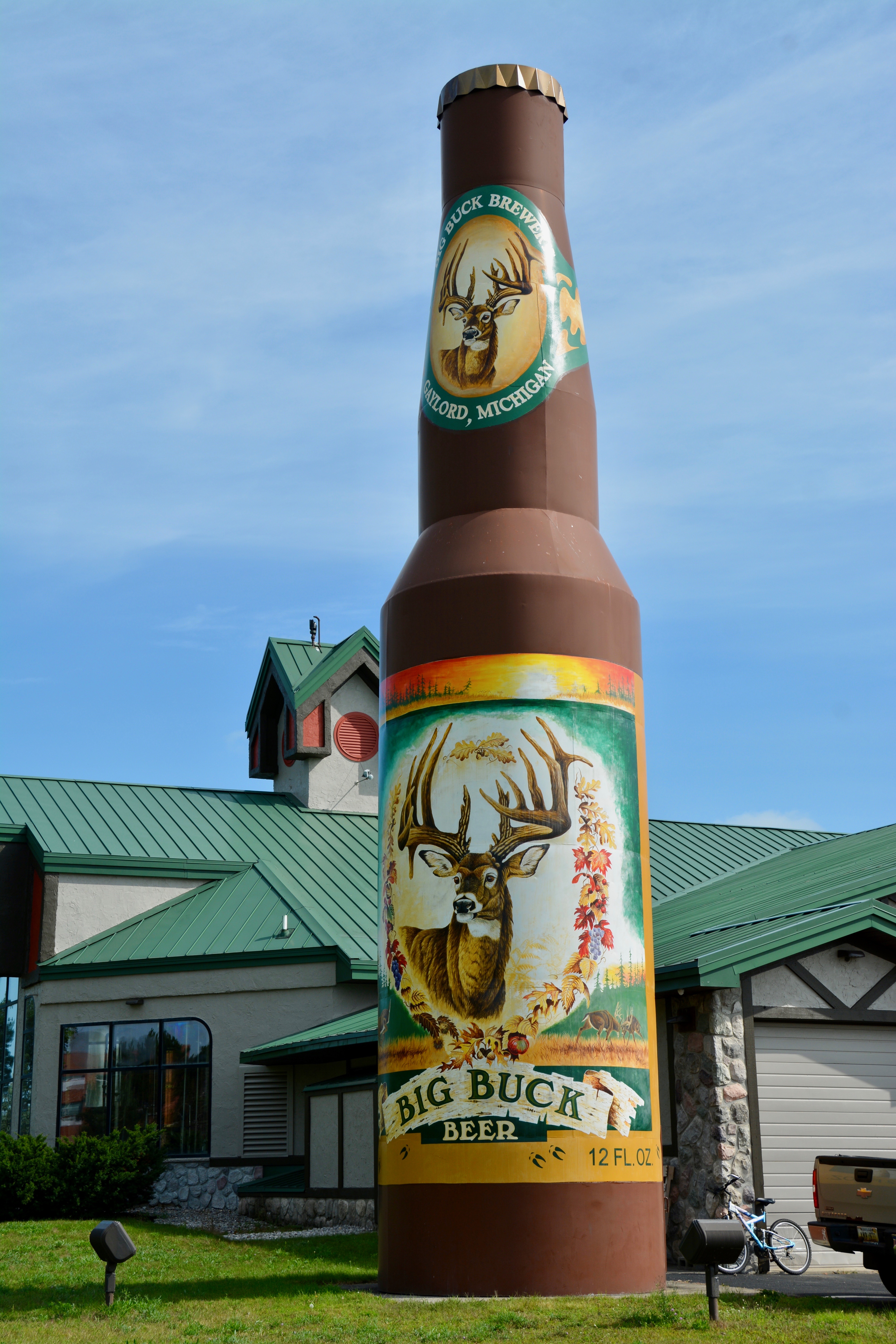
Photo ©Jean Janssen Big Buck Brewery, Gaylord, Michigan
Photo ©Jean Janssen Gaylord, Michigan

We stopped in Gaylord, Michigan for a drink and what the tour guides always refer to as a “necessary stop”. A local brewery offered a highway icon so you can’t miss it while heading north. We all noted the ski lodge look to the town and mom said she had come her once with a friend from school. The friend’s father was the manager of the local resort at the time when the wealthy would fly in for golf and skiing in the area. The locals think of their town as an “Alpine Village”. More recently, the area has acquired a reputation for its many cycling trails. It was a charming city and I asked Jack to drive down a few streets so I could get pictures. I don’t always bring my better camera when I come to visit Mom, but I had on this trip.

Photo ©Jean Janssen. Gaylord, Michigan
Photo ©Jean Janssen Gaylord, Michigan

At one point we drove down a street and passed a beautiful traditional church and my mom announced that that had been her friend’s church and that they had gone there decades ago on her visit. We weren’t looking for it, but somehow for me that was a wonderful start to this trip knowing the connection the city and this church had with my mother’s past.

Photo ©Jean Janssen Approaching the “Mighty Mac” The Mackinac Bridge, Michigan
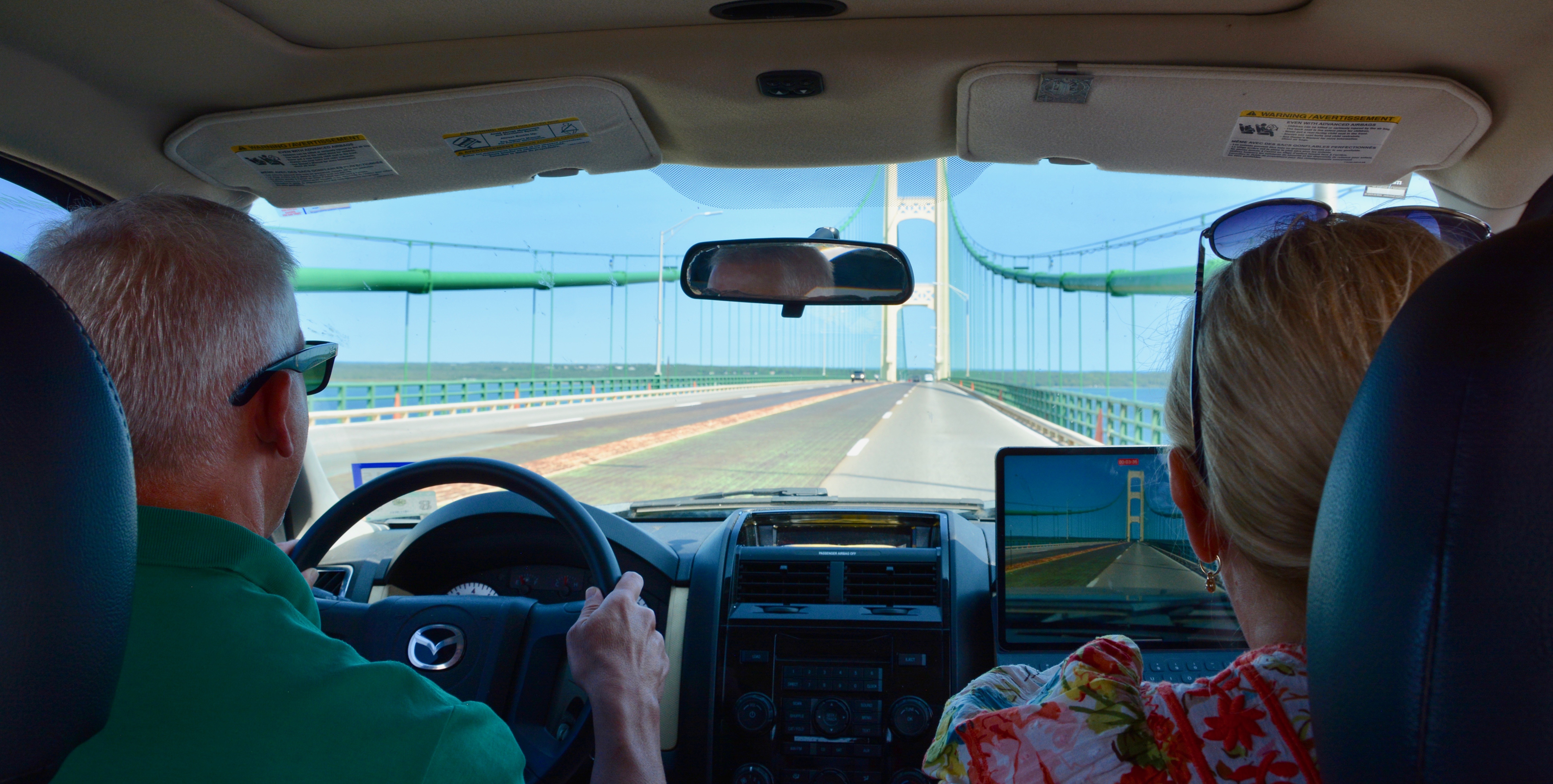
Photo ©Jean Janssen. Emma filmed our crossing of the Mackinac Bridge while Jack did the driving

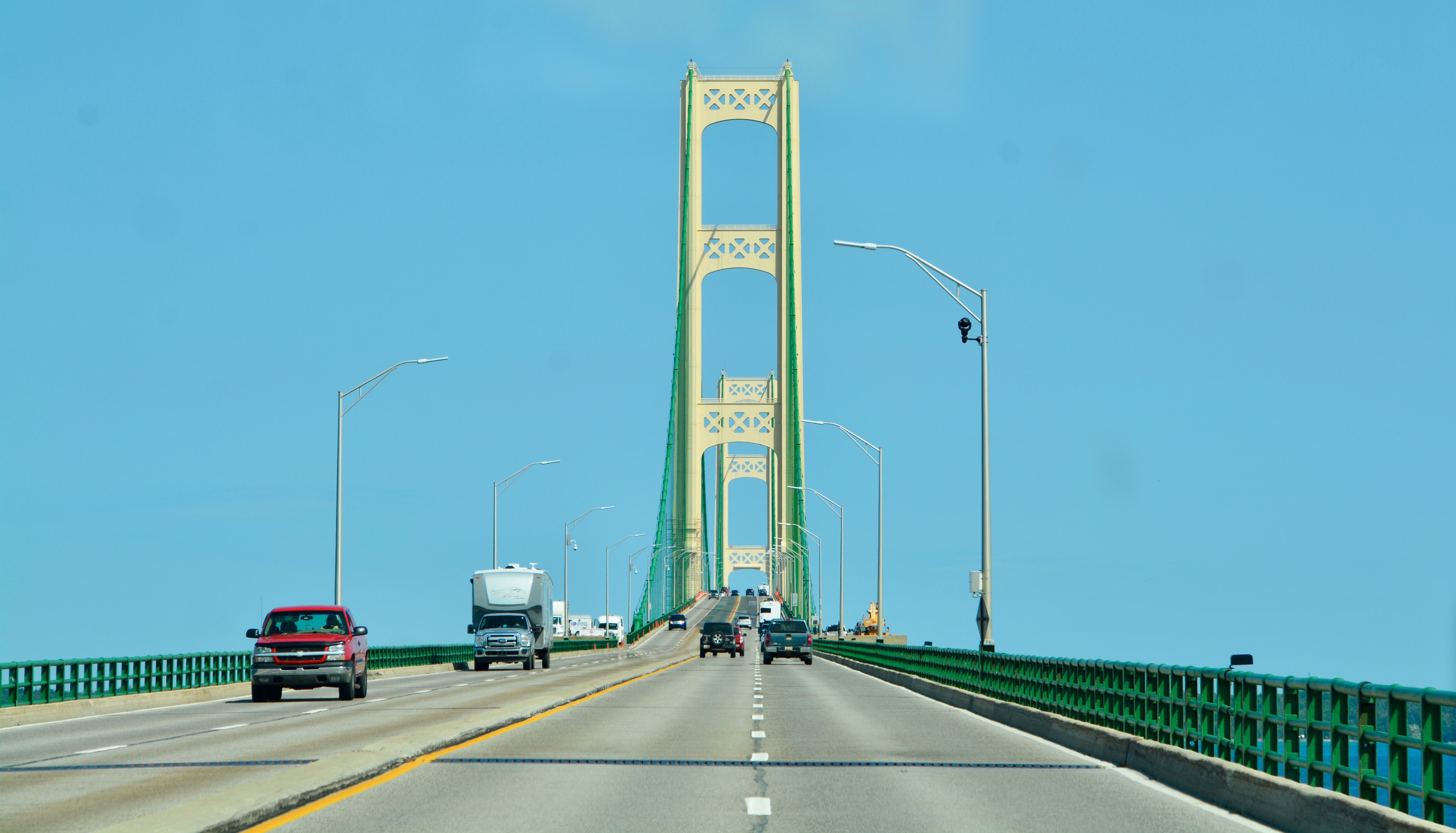
The upper and lower peninsulas of Michigan are joining by the Mackinac Bridge, a long beautiful structure that is sometimes shown as the symbol for the state. My sister Emma hates crossing bridges, especially when driving or sitting on the side facing the open area outside the bridge. Since my mother had decided to “nest” in the seat behind the driver, my brother Jack, Emma was in the outside position sitting next to the driver. She decided to film the bridge crossing as a distraction. There are multiple lanes crossing in each direction but the inner lanes have annoying ridges that can cause you to slide a little. (This is rather ironic given the purpose of the grooves is to assist in poor weather.) We were traveling in the outside lane, with Emma and I closest to the water.

Photo ©Jean Janssen Crossing the Mackinac Bridge, Michigan

My brother kept up a running commentary the entire way across the bridge, pointing out how far we had gotten, the continued possibility of plunging to our death, and the icy temperature of the water. The result is a hilarious video with Jack and Emma’s voices, his as a monotone narrator, and hers fluctuating between fear and laughter. I did not share with Emma that one car, a 1987 Yugo, had been blown off the bridge. “The Life and Death of Ugly: No, You Go”, Los Angeles Magazine.

Photo ©Jean Janssen. The Mackinac Bridge as seen from St. Ignace on the Upper Peninsula of Michigan

The Mackinac Bridge is the 5th longest suspension bridge in the world and the longest in the western hemisphere. Like all suspension bridges, “it is designed to move to accommodate wind, change in temperature, and weight…the deck at center span could move as much as 35 feet (east or west) due to high winds. This would only happen under severe wind conditions. The deck would not swing or ‘sway’ but rather move slowly in one direction based on the force and direction of the wind. After the wind subsides, the weight of the vehicles crossing would slowly move it back into center position.” Mackinac Bridge Authority

Photo ©Jean Janssen Beautiful flowers at the lookout park for the Mackinac Bridge, St. Ignace, Michigan

The Straits of Mackinac (between the upper and lower peninsulas) in Lake Huron historically had been crossed by boat, but that was only a seasonal option. Ideas for a bridge or tunnel were floated for over 75 years. In 1923, the highway department began operating a ferry service, but within 5 years that service was overwhelmed. The bridge opened to traffic on November 1, 1957.

Photo ©Jean Janssen Mom’s favorite flowers at the lookout park for the Mackinac Bridge, St. Ignace,

There is a toll charge (currently $4.00) each way. The bridge is open 24 hours a day and only closes occasionally for falling ice or on Labor Day from 6:30 am to noon for the annual Bridge Walk. The Bridge had been closed just 5 weeks before our visit because of a bomb threat. MLive. For current conditions including weather and traffic, you can log into the Mackinac Bridge Authority’s website or tune into their radio channels. There is also a bridge cam for a visual view.

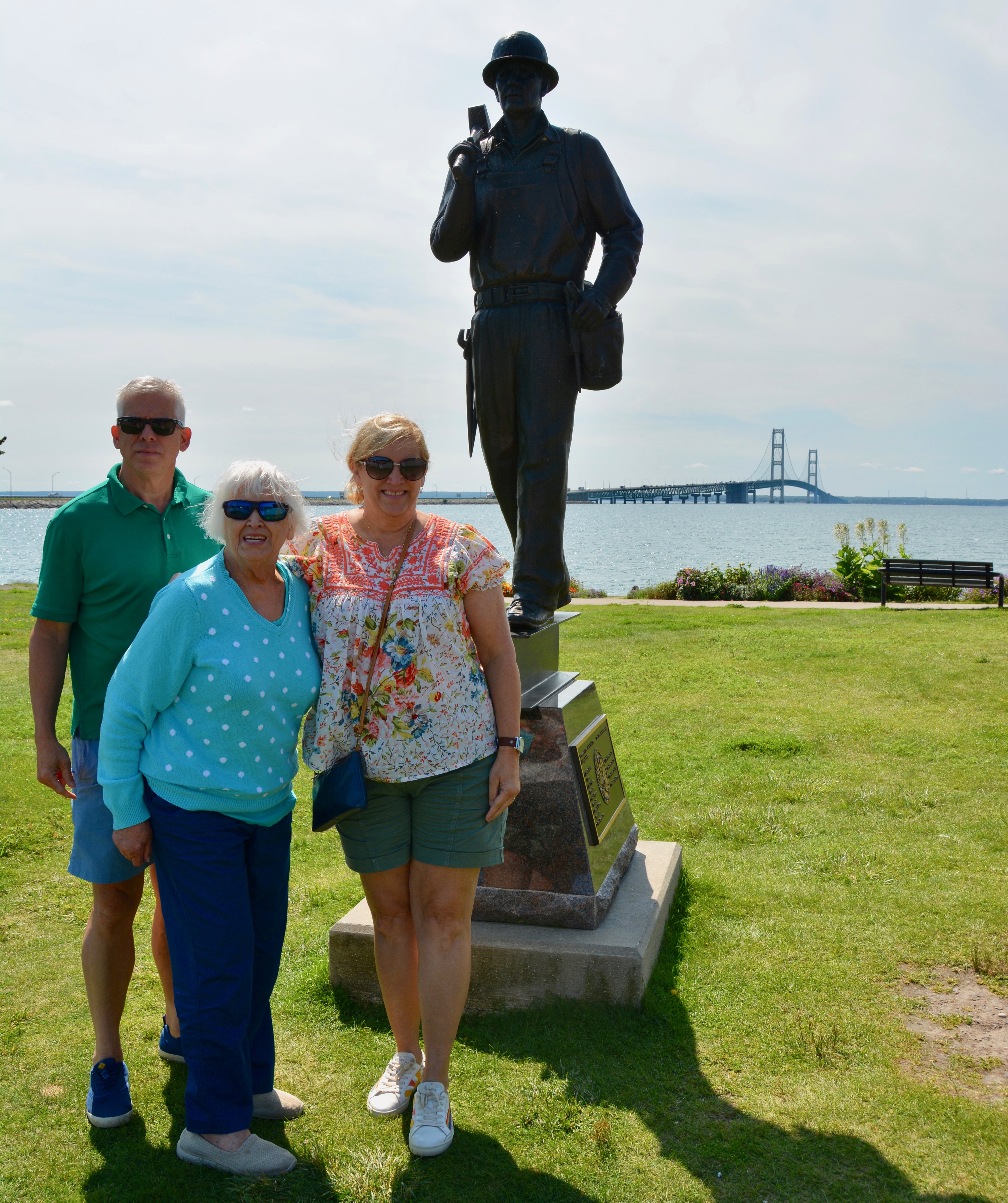
Photo ©Jean Janssen. Emma, Jack, and Mom at the statue dedicated to the five men who lost their lives during the construction of the Mackinac Bridge, Michigan

After we crossed, we went to a lookout point featuring a statue dedicated to the five men who lost their lives while building the bridge. Mom had known a girl who was engaged to one of them. The views from the park were spectacular. We also loved the wonderful flowers that were showcased at the park. It is far too hot at home for this sort of floral display. One of things I love about Michigan in the summer is the beautiful gardens.

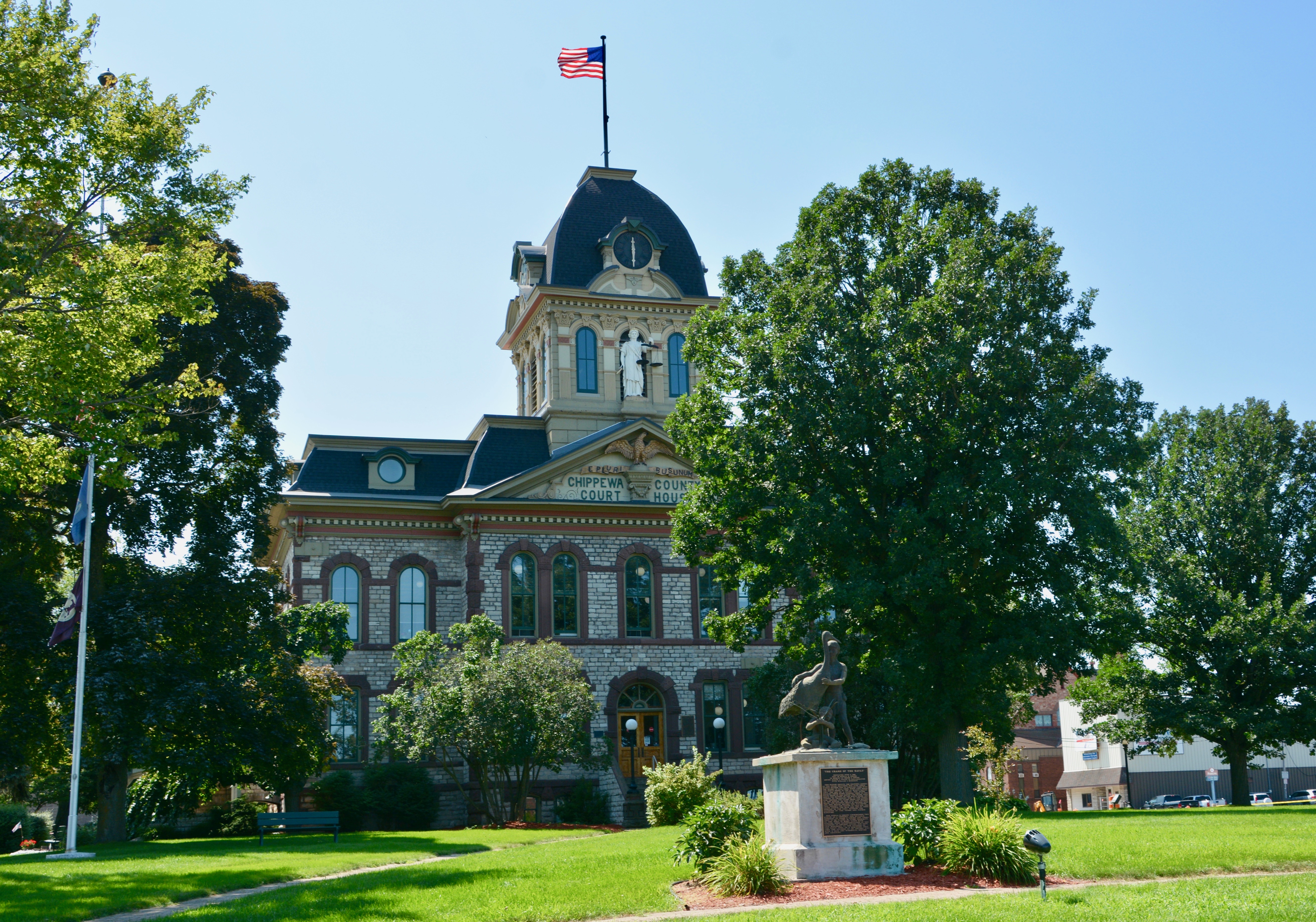
Photo ©Jean Janssen I loved all the decoration on the Chippenwa County Courthouse in Sault Ste. Marie

Back on the road, we realized that we may not have enough gas to make it the additional 50 miles it will take us to get to Sault Ste. Marie where the Soo Locks are located. The three of us distracted Mom so she wouldn’t get nervous while we looked for a gas station on this stretch of the upper peninsula highway that is rather barren. Of course we had just crossed the straits, but I guess I had anticipated a wild and beautiful landscape. Perhaps that lies a little farther north.

Photo ©Jean Janssen City Hall, Sault Ste. Marie, Michigan

We found the gas and made it to Sault Ste. Marie-sometimes called Michigan’s First City-without having to ride in on fumes. The Ojibway people that first lived in this area called it Bahweting, the gathering place. When a French colony was established in 1668, it was called Le Sault de Sainte Marie, the rapids of St. Mary. Today is sometimes referred to as the Twin Saults for the American city of Sault Ste. Marie, Michigan and the Canadian city of Sault Ste. Marie, Ontario, just across the St. Mary’s River. Growing up we just called it “The Soo” as the locals do today. Sault and Soo are pronounced like the girl’s name “Sue” and not like the table spice “salt”.

Photo ©Jean Janssen. Throughout Sault Ste. Marie, Michigan, they had flags honoring different military men and women

When we arrived in Sault Ste. Marie, Michigan, we went to find the boat launch. We did make a few stops so I could get pictures. Afterwards, we went back into town for lunch at the Lock View Restaurant. The Lock View opened in 1945 with only about a quarter of the space it occupies now. We got a table near the window with a narrow view of the locks. A viewing platform had been built since our last visit over 40 years ago and it was right in our line of sight. That said, the viewing platform does offer an nice alternative for anyone wanting to see the locks in action.

Photo ©Jean Janssen. At the Lock View Restaurant, Sault Ste. Marie, Michigan
Photo ©Jean Janssen. From our seats in the Lock View Restaurant, we could see the viewing platform for the locks. A yellow tour boat (from a rival company) was passing through the smaller lock at the time.

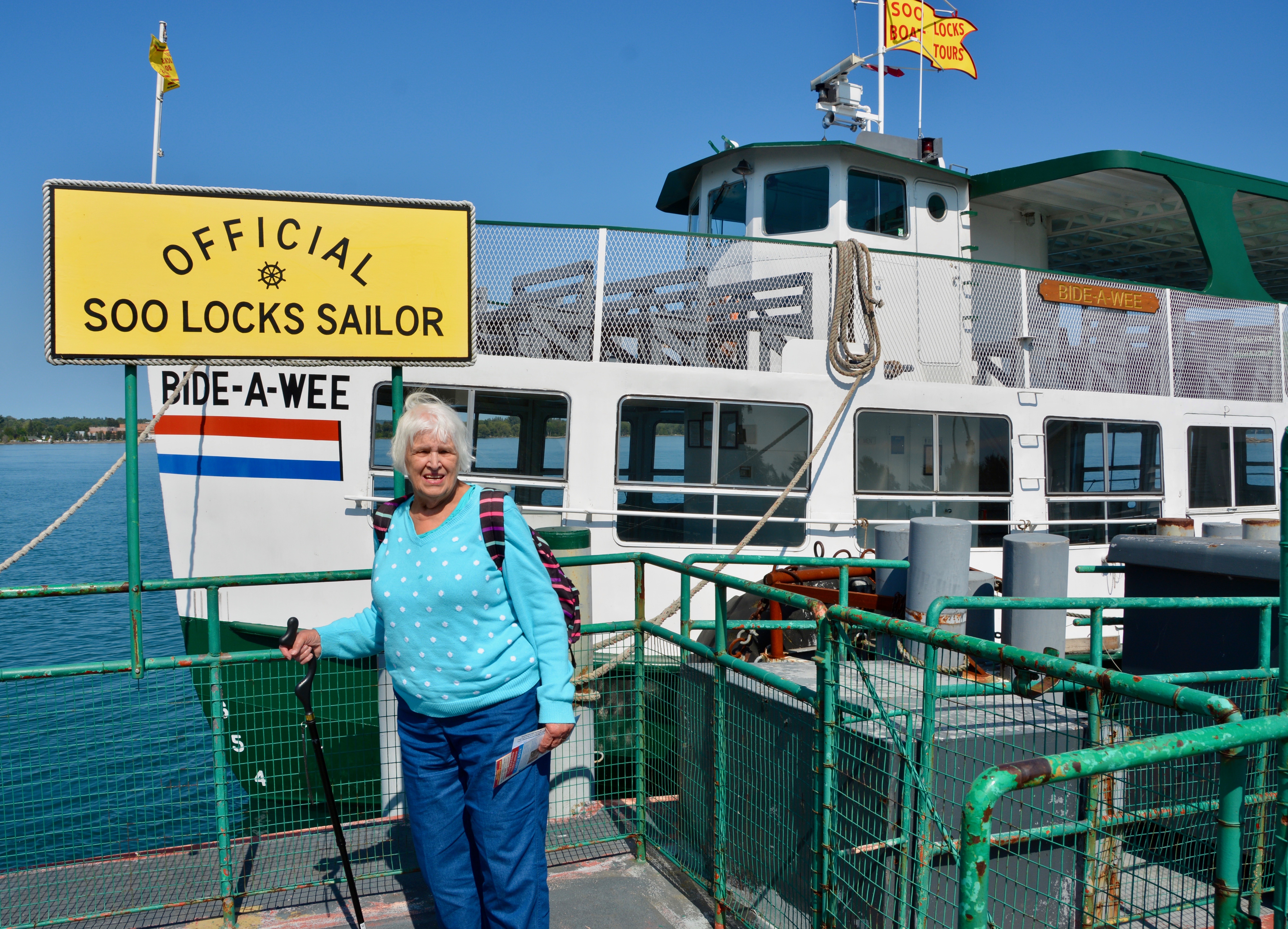
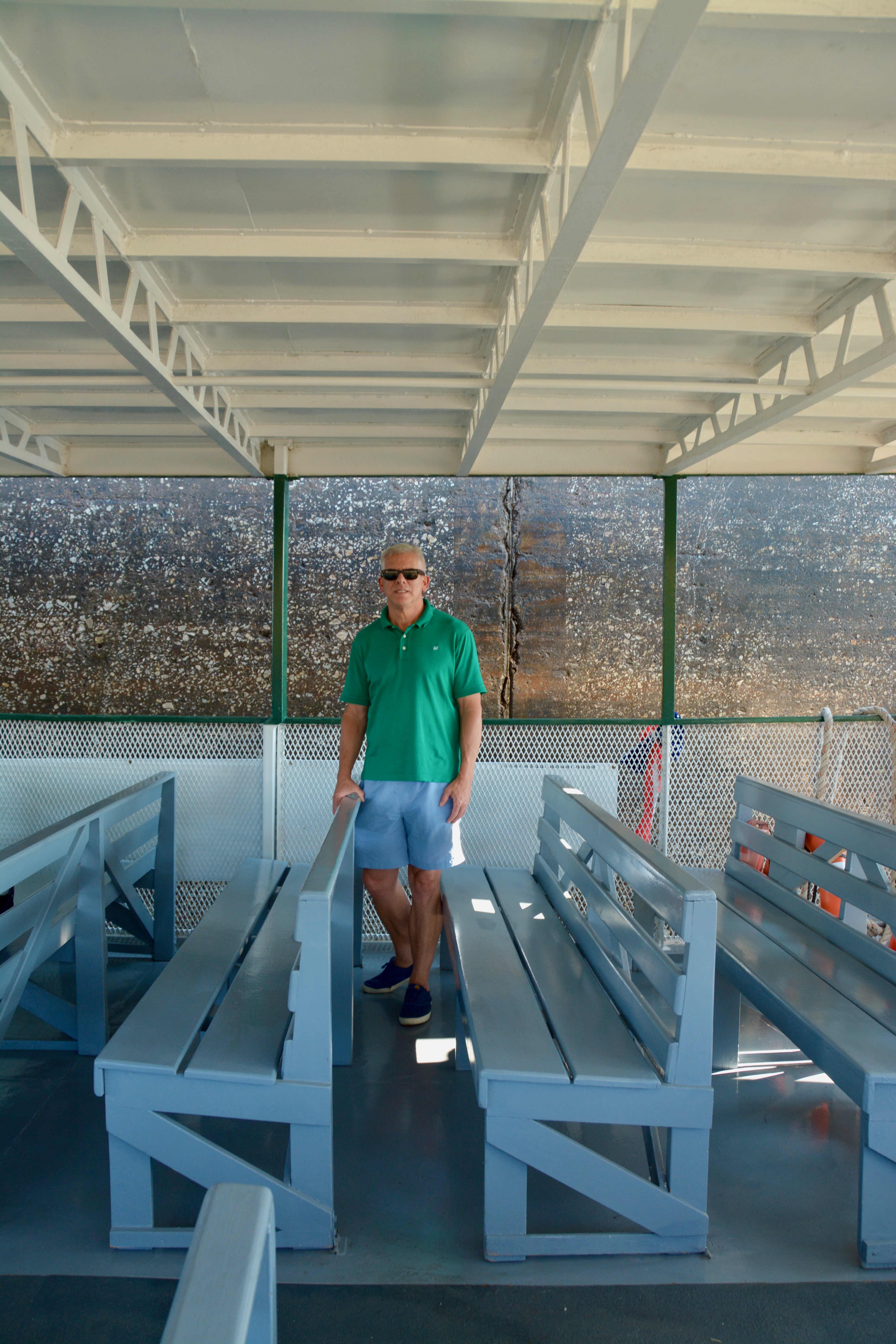
Mom and I got fried lake perch. This is one of her favorites and not something I can get back home in Texas. Emma and Jack got hot turkey sandwiches. After lunch we had just enough time to go back to the docks and board our boat for the 3:30 pm tour. It was a steep climb for mom, but we went to the boat’s upper deck for a better view. Many of the Michigan schools are back in session, so the crowd was lighter. Of course it was a weekday too. Our server at the cafe said that Sunday is the busiest day and Friday is the lightest. For the cafe, on Friday the locals clear out for the weekend before the tourists come in and the tourists have not yet arrived.

Photo ©Jean Janssen. After climbing the steep steps to the upper deck of the tour boat, Mom deserved her designation as an Official Soo Locks Sailor.
Photo ©Jean Janssen. A little evidence remains of the rapids which covered this area of the St. Mary’s River.

We are on the St. Mary’s River between the United States and Canada and the middle of this channel is the international border. The Ojibway Indians used canoes to travel the rapids on the river to reach Lake Superior. The name of city comes from the French word sault meaning rapids. You can still still some evidence of the original rapids which spread the length of the River. Later, it was the Northwest Fur Company that constructed a navigation lock on the Canadian side of the river. This lock, built in 1797, was destroyed during the war of 1812. In 1852, the State of Michigan was granted compensation to built a lock to allow for commerce to flow through the Great Lakes. Construction on this first chamber State Lock was completed in 1855.

Photo ©Jean Janssen. The control office and tower at the Soo Locks, Michigan
The Davis and Sabin Locks

There was originally a toll to pass through the locks. In 1881, control was passed to the Federal Government and assigned to the Army Corps of Engineers. Since that time, no toll has been charged. Sault Ste. Marie, Pure Michigan Today, there are four locks on the American side and one Canadian lock. The Canadian lock is for smaller, recreational boats and is currently closed due to COVID. The mostly commonly used American Lock is #3, the Poe Lock, which was originally built in 1896 and rebuilt in 1968 to accommodate larger and more modern boats. It is 1200 feet long. It uses 22 million gallons of water to lift or lower a boat. Most ships that pass through it have only about 2.5 ft clearance on each side.

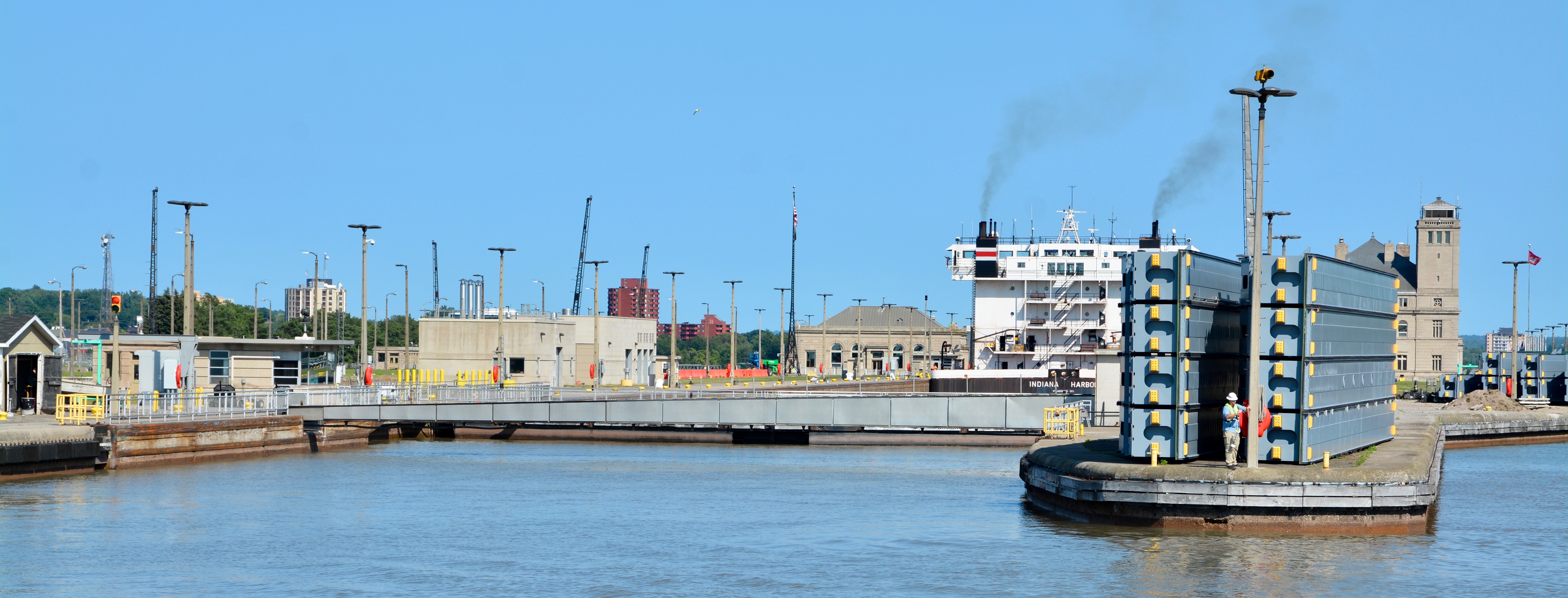
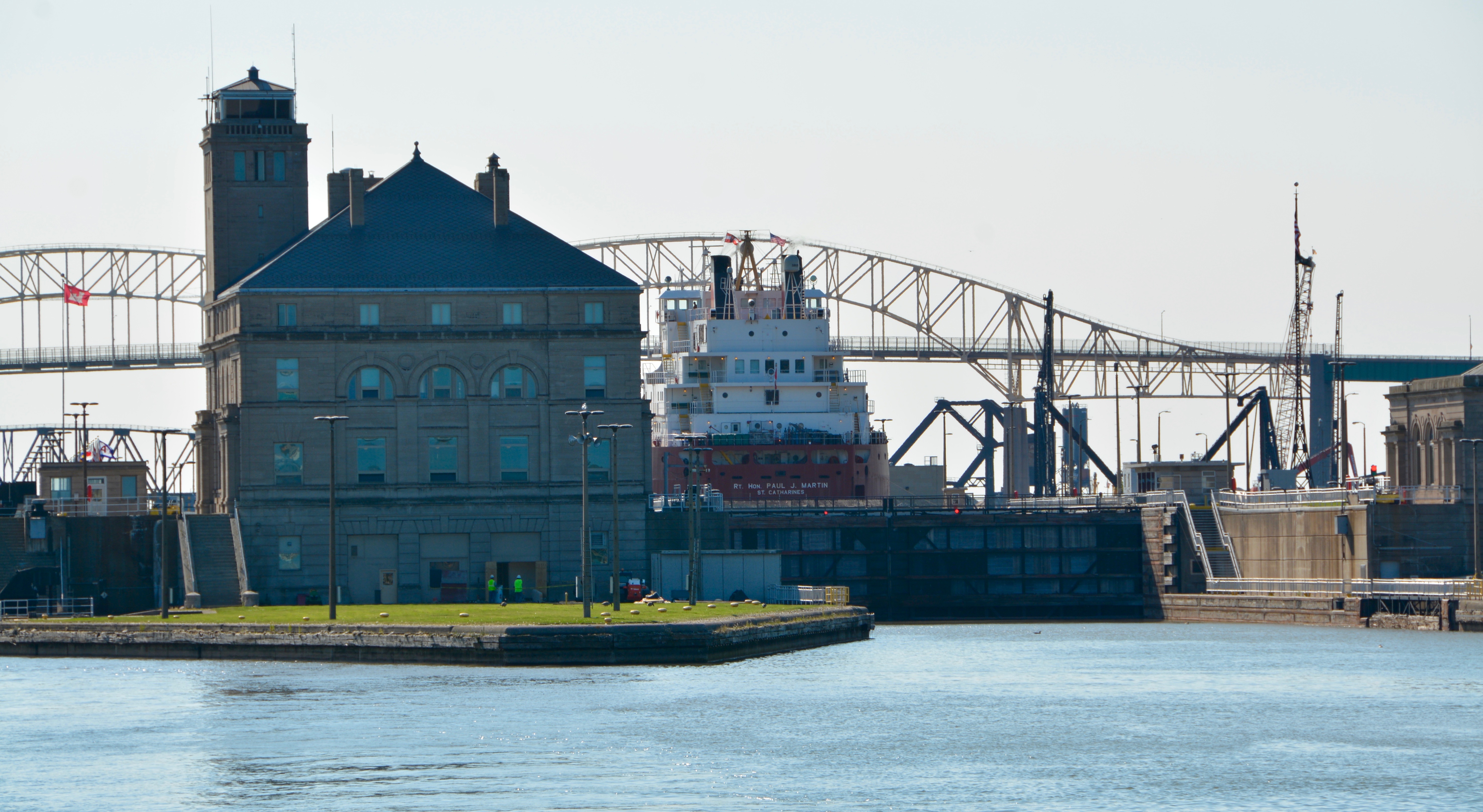
Photo ©Jean Janssen. The American Soo Locks. The older Davis and Sabin locks are to the right. The rebuilt Poe lock is the on the inner left and the MacArthur Lock is on the far left. In the foreground, the Right Honorable Paul J Martin waits it’s turn to pass through the Poe Lock

The smaller MacArthur Lock, lock #4, is 800 feet long and was built in 1943; we will pass through it twice today. The Soo Locks do not use pumps. They are 100% gravity fed. When on the viewing platform of the Visitors Center we saw from the restaurant, you look down into the MacArthur lock. The large ships in the Poe Lock are also visible. Locks #1 and #2, the Davis Lock built in 1914 and the Sabin Lock, built in 1918 were the first locks to utilize concrete walls and electricity to open and close the gate. Both gates are currently out of service. The Sabin Lock has been inactive since 1989 and was officially decommissioned in 2020. The Davis Lock was used by the Soo Area Offical Vessels.

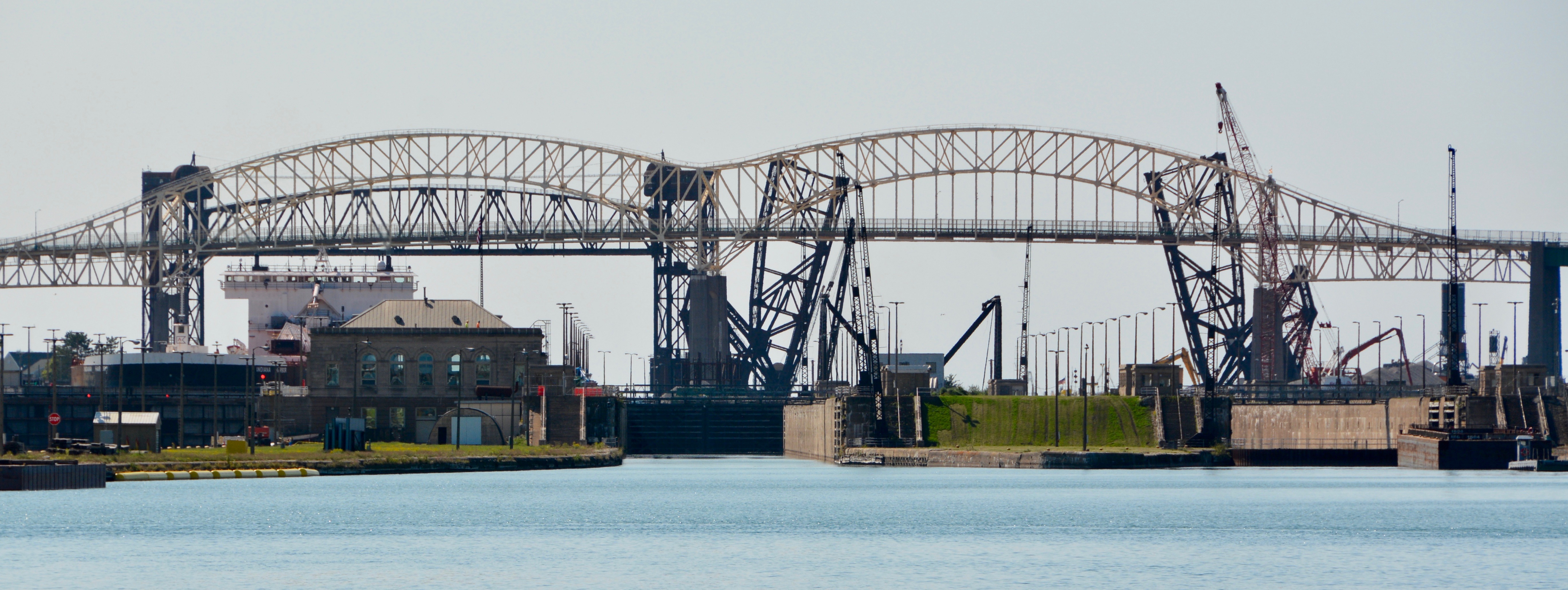
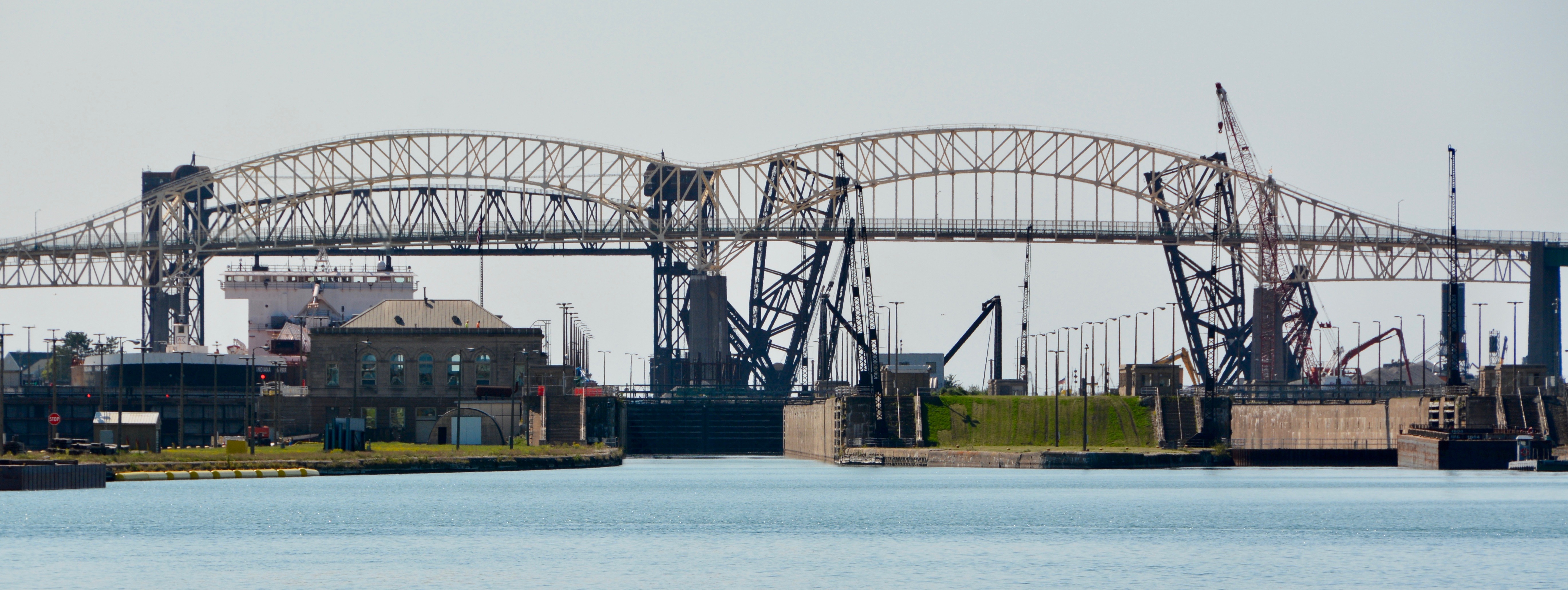
Photo ©Jean Janssen. The older American locks, the Davis and the Sabin, shown on the right are being dismantled to make way for a single larger lock for more modern ships to pass through. On the left, you can see the top of a large freighter (in white) in the Poe Lock. In the background is the Soo Locks International Bridge linking the United States and Canada.
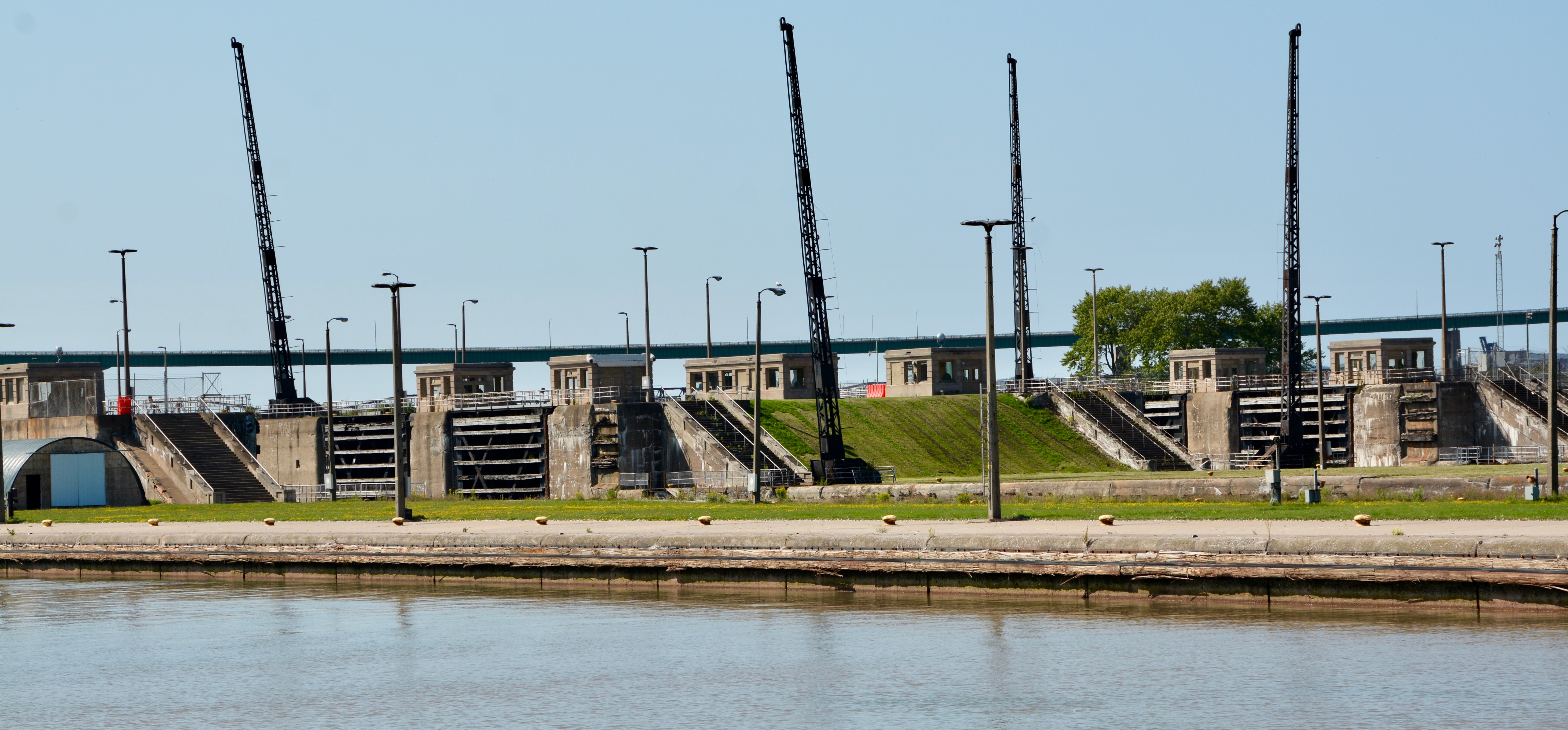
Photo ©Jean Janssen. A closer look at the older American locks, the Davis and the Sabin.

Both of the Davis and Sabin locks are currently being dismantled to make way for a new, larger, single lock that will be able to accommodate ships of a larger size. We saw the dredging for the new lock. Completion is expected in 2023. A rendering of the new look for the Soo Locks is on the webpage for the Army Corps of Engineers. The importance of the locks cannot be overstated. 90% of the country’s iron ore passes through the Soo Locks. The existence of the locks means transport ships can travel from Duluth, Minnesota to the Atlantic Ocean. The trip takes 7 days.

Photo ©Jean Janssen. Sault Ste. Marie, Ontario, Canada

Traveling toward the locks from the tour boat dock, the State of Michigan is to your left; Canada is to your right. Sault Ste. Marie, Michigan is the smaller city with about 15,000 residents to its Canadian sister’s 80,000. Most of the landscape along the water’s edge on the American side is marine support and utility services. The city on the Canadian side bears the same name and is located in the Canadian Provence of Ontario. The two were once a single city until the treaty that ended the War of 1812 divided them. Today they are joined by the Soo Locks International Bridge.

Photo ©Jean Janssen. Sault Ste. Marie, Ontario, Canada
Photo ©Jean Janssen. Bunker for ship repair, Sault Ste. Marie, Michigan

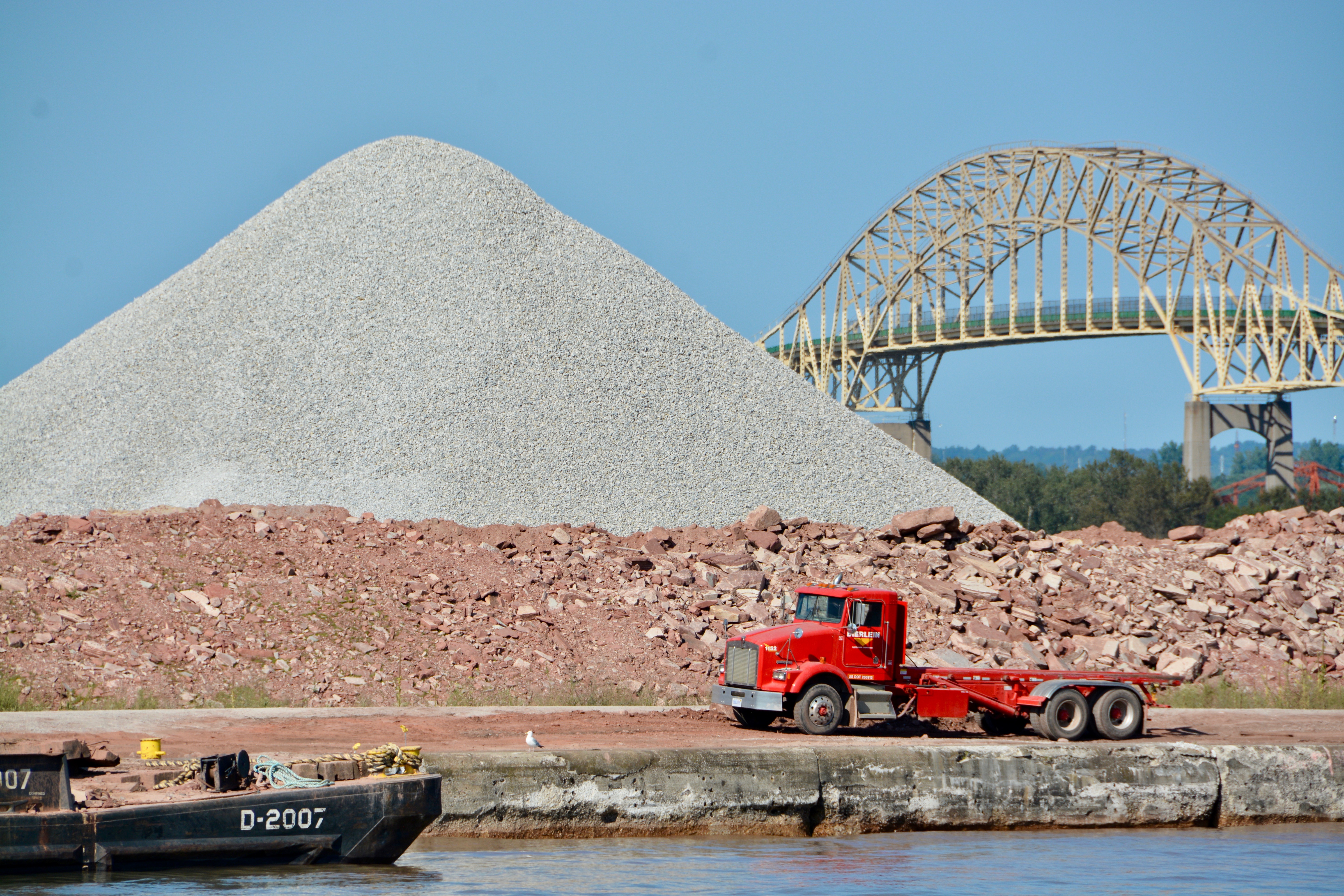
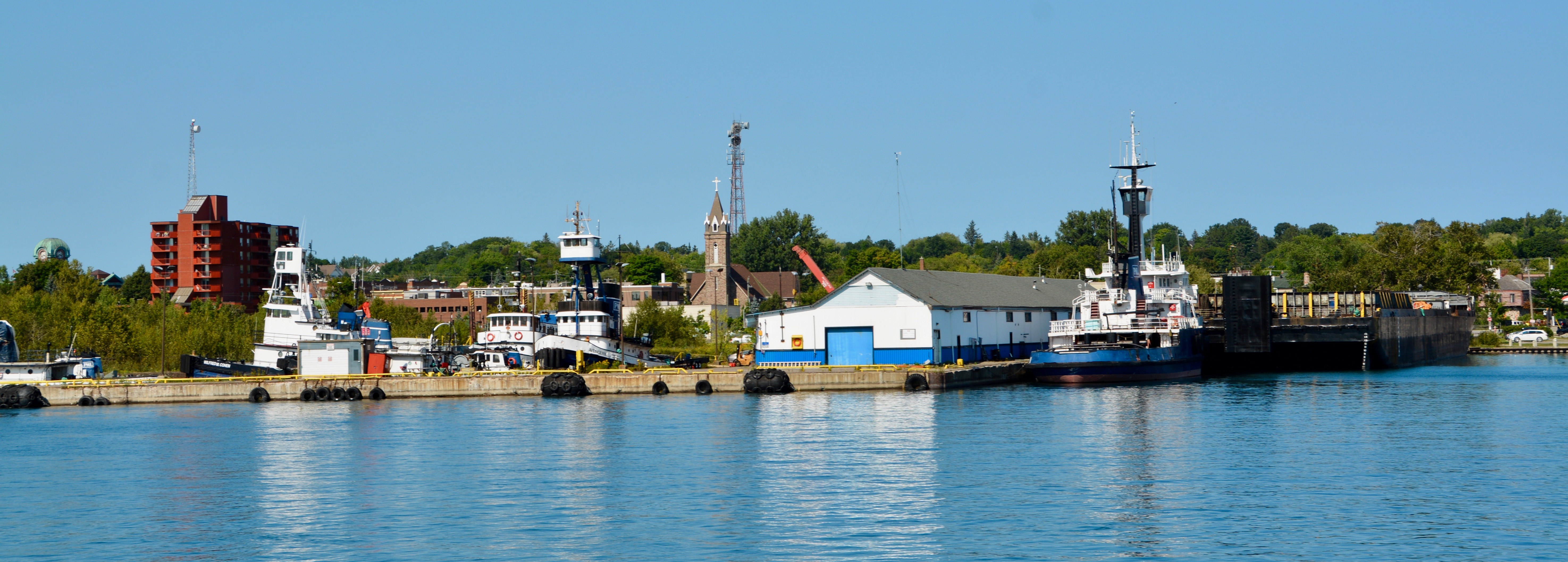
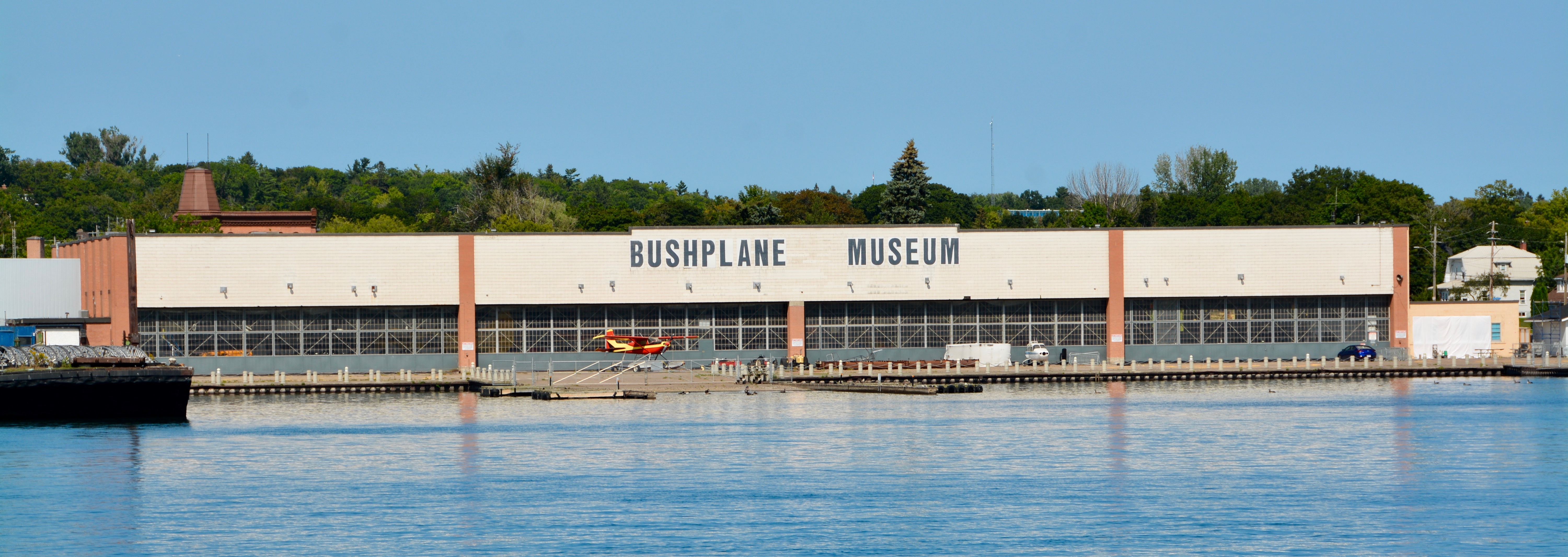
I have to admit that the Canadian side of the river was prettier. There was a manicured shoreline and a welcoming structure that reminded me of a circus tent. We also saw the Bushplane Museum. On the American side near our tour boat dock, we saw a bunker used to lift ships out of the water and facilitate repairs. There are also Coast Guard vessels and ships that assisted with the retrieval of the Edmund Fitzgerald of pop music fame.

Photo ©Jean Janssen. Entering the MacArthur Lock, Soo Locks, Sault St. Marie, Michigan

The “SS Edmund Fitzgerald was an American Great Lakes freighter that sank in Lake Superior during a storm on November 10, 1975, with the loss of the entire crew of 29 men. When launched on June 7, 1958, she was the largest ship on North America’s Great Lakes, and she remains the largest to have sunk there. She was located in deep water on November 14, 1975, by a U.S. Navy aircraft detecting magnetic anomalies, and found soon afterwards to be in two large pieces.” Wikipedia.

Photo ©Jean Janssen. Entering the MacArthur Lock, Soo Locks, Sault St. Marie, Michigan

The Edmund Fitzgerald was sailing under the American flag, but sank in Canadian waters. “The disaster is one of the best-known in the history of Great Lakes shipping. Gordon Lightfoot made it the subject of his 1976 hit song “The Wreck of the Edmund Fitzgerald“. The sinking led to changes in Great Lakes shipping regulations and practices that included mandatory survival suits, depth finders, positioning systems, increased freeboard, and more frequent inspection of vessels.” Wikipedia.

Photo ©Jean Janssen. The grooved concrete side of the MacArthur Lock, Soo Locks, Michigan
Photo ©Jean Janssen. The water level was at 33 and 34 feet when we entered the MacArthur Lock
Photo ©Jean Janssen. Crew members threw up lines to tie us off on shore.
Photo ©Jean Janssen. Once secure, the ship’s horn sounds and the gates to the lock close.
Photo ©Jean Janssen. There are hooks on the side of the lock for the ship to tie off on.

This side of the St. Mary’s River is the lower level so we entered the lock at a depth of 33 feet. The crew threw anchor lines up to the shore to attach us to the side. Hooks to tie off on were also visible on the concrete sides of the lock. I thought the locks were smooth, but you could see the ridges in the concrete as we entered. There was also a large freighter in the Poe Lock next to us. The water rose so smoothly if you weren’t watching the sides you wouldn’t even notice you were going up. The locks do not use pumps, but are activated by gravity.

Photo ©Jean Janssen. As the water level rises, the wall hooks go underwater
Photo ©Jean Janssen. As we went up the shoreline came into view as well as the step leading up to the observation platform at the Visitors Center.

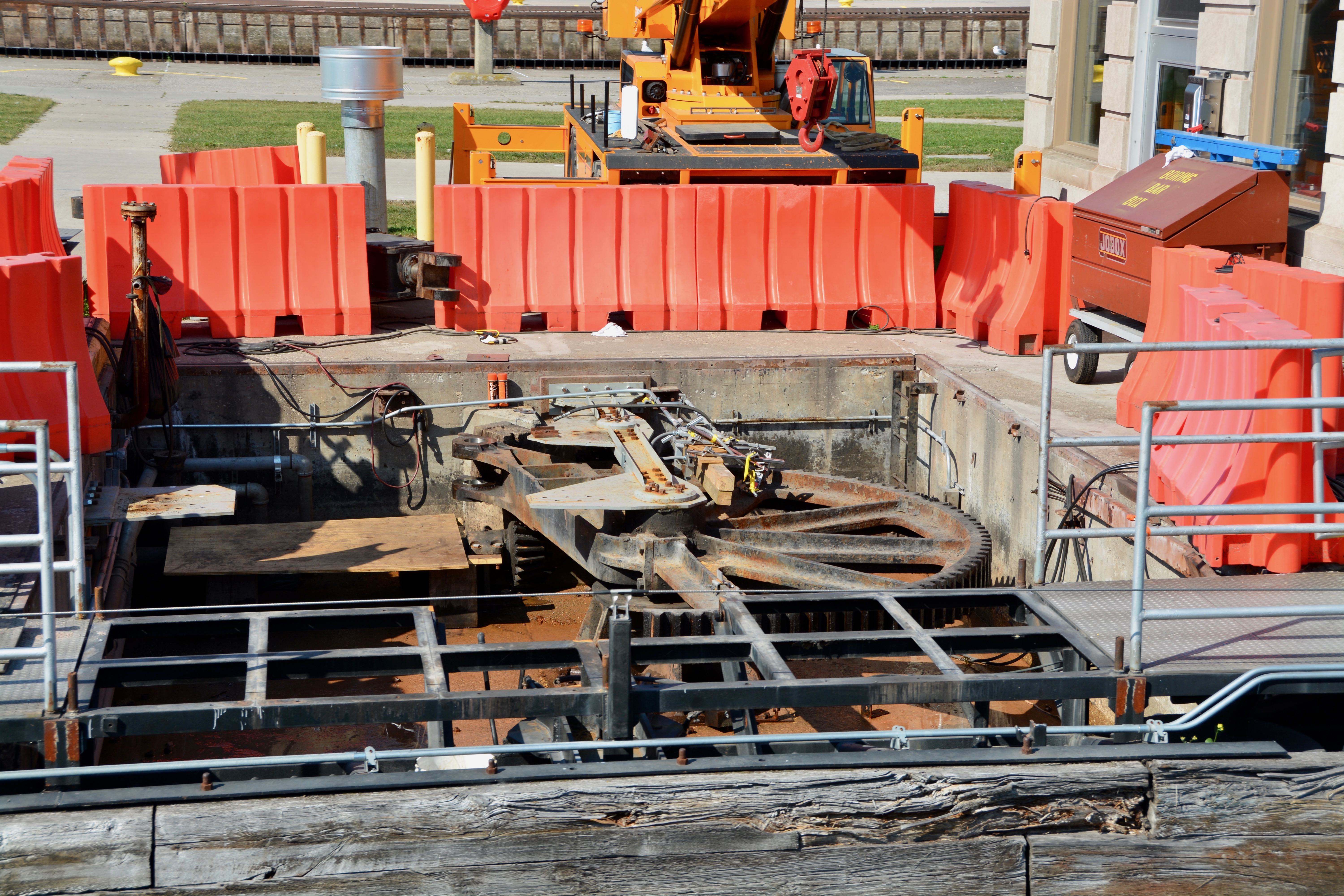
When we were high enough, the gates opened on the opposite end and we headed out to pass underneath the International Bridge. Due to ongoing repairs, a cover had been removed and we were able to get a look at some of the gears that work the locks. We could also see the decay that betrays the age of these long-working structures. As we passed by the opening to the Poe Lock next to us, we could see the freighter inside. On the walkway between the Poe and the MacArthur, supports that will be used to secured the locks during the winter months had already been set out. The Soo Locks are closed from January 15 to March 25 for repairs. 

Photo ©Jean Janssen. The high water mark meant it was safe for us to leave the lock.
Photo ©Jean Janssen. Gear works for the lock.
Photo ©Jean Janssen. The gates to the Poe Lock showing their age.
Photo ©Jean Janssen Looking back into the MacArthur Lock, the Visitor Center viewing platform is on the right and the Control Tower is on the left.
Photo ©Jean Janssen. A large freighter in the Poe Lock. The materials on the concrete walkway between the two locks will be used to secure the structures during the winter closure.
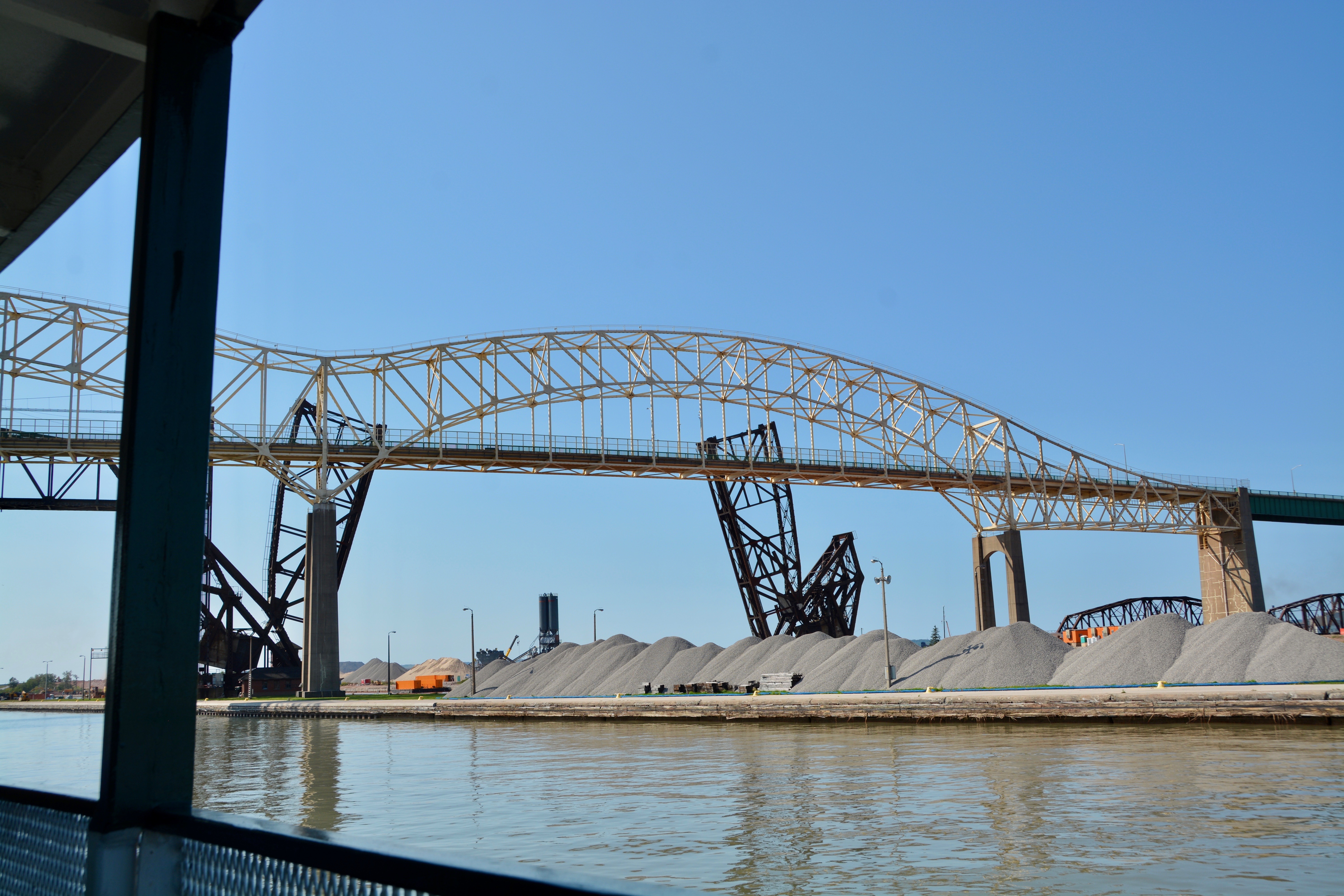
Photo ©Jean Janssen The Soo Locks International Bridge and railway line

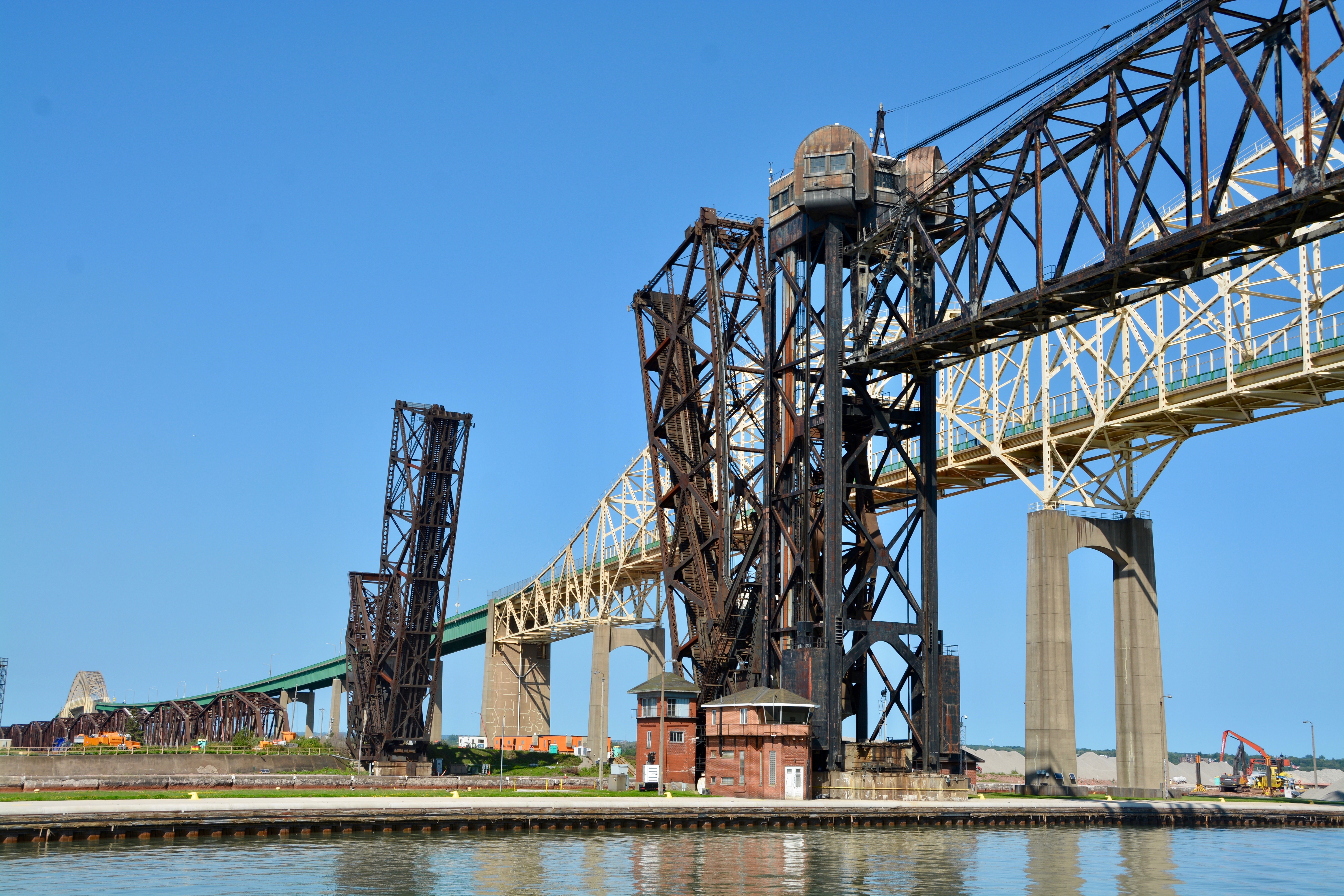
One of the most fascinating things I saw while passing under the Soo Locks International Bridge, was the railway line. Through one channel, the rail line splits and raises up on both sides to let ships pass. For the other channel, the railway line is lifted up instead. Even in inclement weather, an individual must climb up the outdoor ladder to the top to operate the controls to raise or lower the structure.

Photo ©Jean Janssen Underneath the Soo Locks International Bridge and railway line
Photo ©Jean Janssen The Soo Locks International Bridge and railway line

As we sailed out on the upper St. Mary’s River, we saw the dredging operations for the new deeper lock. Construction on the new lock is advancing, although I am not sure if the weather will halt work in the winter months or not.

Photo ©Jean Janssen. Dredging operations for the new lock. St. Mary’s River, Michigan

Traveling a little farther on the river, we were able to see operations at a large iron ore production facility. Our captain’s brother-in-law works there and the captain has had the opportunity to tour the facility. He shared that it is quite impressive. We also could see the Canadian lock used mostly for recreational watercraft which is currently not in operation. The tour operator is looking forward to its reopening and I wondered if perhaps the tours often go through that lock on one leg of the journey.

Photo ©Jean Janssen. Iron Production facility on the St. Mary’s River, Michigan
Photo ©Jean Janssen. Looking into the Canadian lock at the Soo on the St. Mary’s River.

It was late afternoon and a nice time to be on the water. It was not yet cool, in fact it was rather hot for being this far north. I had expected colder temperatures. The light played nicely off the water and we listened to the captain’s stories about animals that got caught in the lock. Given the number of visitors and the places they come from, I was surprised he assumed that everyone had seen a moose. Rounding the last bend for our return trip through the lock, he pointed out rocks that still had the holes where dynamite had be inserted from back when the older locks had been constructed.

Photo ©Jean Janssen. The St. Mary’s River, Michigan
Photo ©Jean Janssen Dynamite holes in the rock from early construction at the Soo Locks, Michigan

We made a return trip through the MacArthur Lock. Beside us in the Poe Lock was the Rt. Honorable Paul J Martin, the large Canadian freighter we saw waiting its turn to pass through the lock when we were on the lower part of the River. There were fewer people on the viewing platform this late in the day.

Photo ©Jean Janssen. After waiting on the lower St. Mary’s, it was the Rt. Honorable Paul J Martin’s turn in the Poe Lock.
Photo ©Jean Janssen. Gates closing in the MacArthur lock as we leave behind the upper St. Mary’s River.
Photo ©Jean Janssen Jack aboard the tour boat in the lock.
Photo ©Jean Janssen The lock gates open to reveal the lower St. Mary’s River. You can see the water line on the wooden gates.

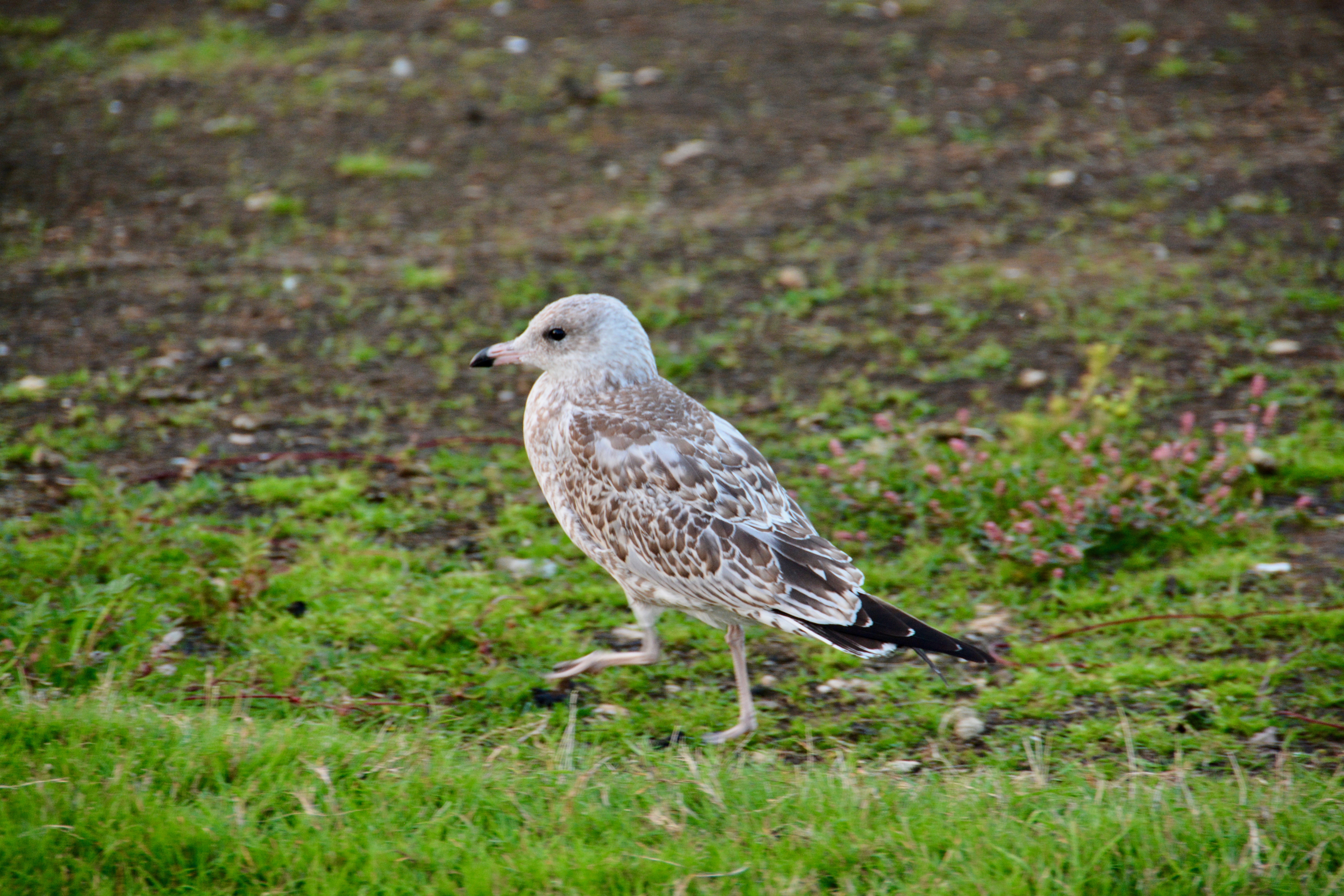
We passed out of the locks and I spotted a few birds making their home on the lock gates. We got another lock at the Rt. Honorable Paul J Martin in the Poe Lock before making our way back down the lower St. Mary’s River toward the boat dock.

Photo ©Jean Janssen. On the gates to the MacArthur Lock, The Soo Locks, Michigan
Photo ©Jean Janssen. Looking back at the locks

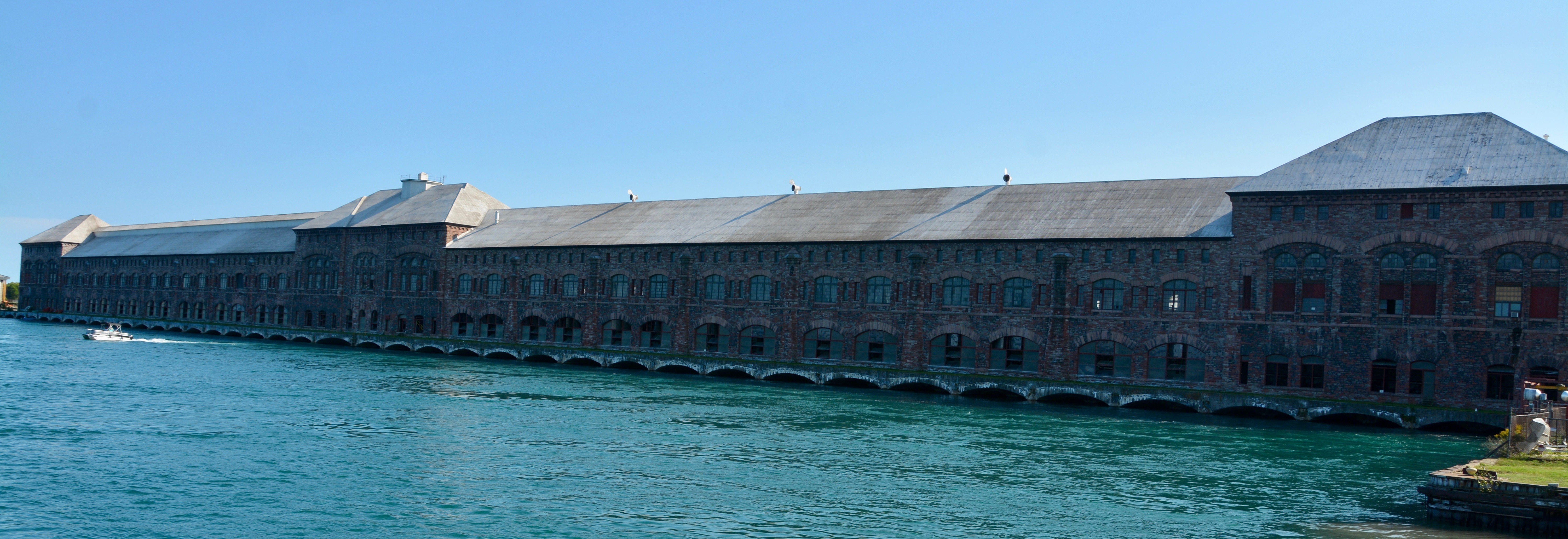
When we passed through Sault Ste. Marie earlier in the day one of the most intriguing things I saw was a long building so large I couldn’t photograph the whole thing except at an angle. I thought it was an old warehouse at first until I saw the sign. The older sign said Edison. The more modern one read the Cloverland Hydro Plant listing an original operation date of 1902. It is an impressive and beautiful brick building with wonderful glass windows from the Sault Ste. Marie side. At the end of the boat tour, I got a chance to see it from the water. It was even more beautiful from this vantage point. The captain pointed out that the arches were formed to resemble lighthouses, but only from the water side.

Photo ©Jean Janssen. My first view of the Cloverland Electric Cooperative Hydrelectric Plant was from the land side. Sault Ste. Marie, Michigan
Photo ©Jean Janssen Later in the day I got the waterside view.

“At the time of completion, the plant was the second largest hydro facility next to Niagara Falls.” Contrary to my original thought, the plant is constructed of steel and red sandstone. The stone was excavated from the power canal which runs 2.25 miles under the city of Sault Ste. Marie. The plant itself is a quarter-mile long. There are actually 74, 3-phase generators in the plant operated by a team of 12 employees. It supplies 20% of the power for Michigan’s Upper Peninsula. Sault Ste. Marie, Pure Michigan

Photo ©Jean Janssen. From the water, you can see the arches made to appear as lighthouses. Cloverland Electric Cooperative Hydroelectric Plant, Sault Ste. Marie, Michigan

After disembarking, we drove back to St. Ignace. We will spend the night here in order to catch a ferry over to Mackinac Island in the morning. The island sits in the Straits of Mackinac and can be reached by ferry from St. Ignace on the upper peninsula and Mackinac City on the lower peninsula. Our plan is to ride the 9:30 ferry which goes under the Mackinac Bridge before going to the island. We have tickets, but the ride is first come, first served and there are no reservations taken.

Photo ©Jean Janssen. View from our hotel room balcony
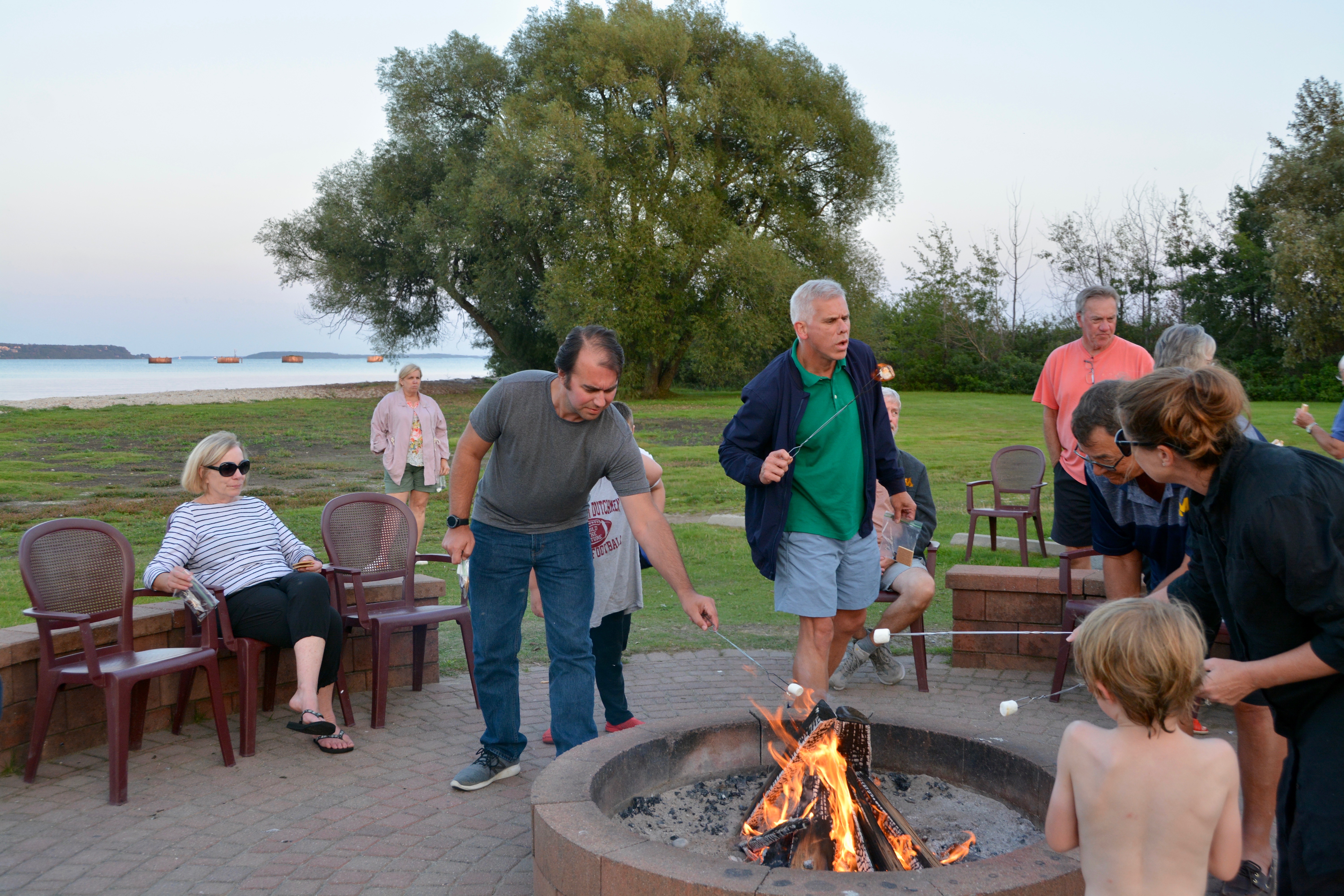
Photo ©Jean Janssen. S’mores on the lawn next to a rock beach in St. Ignace

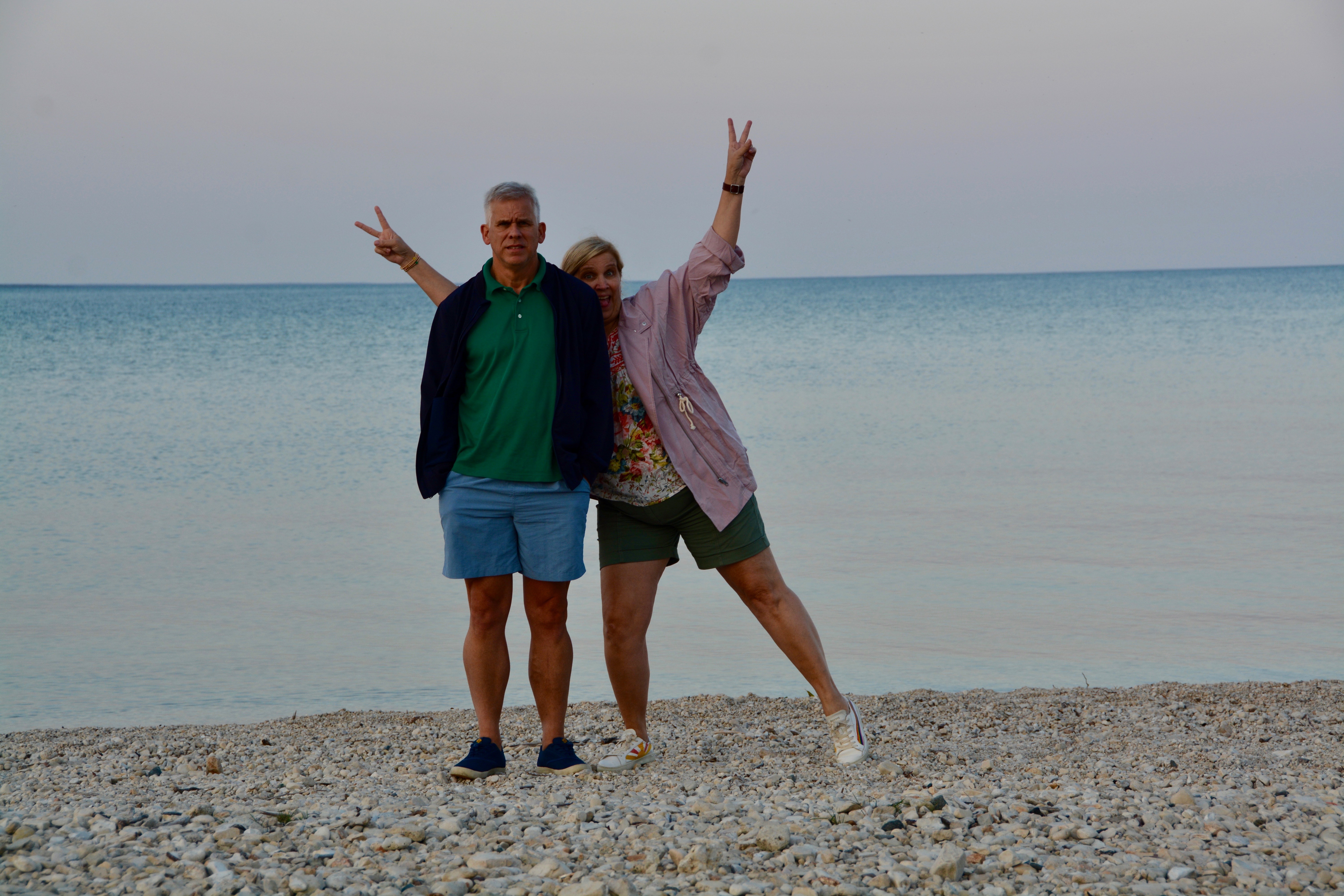
Our hotel in St. Ignace was close to the ferry launch and sat on the water. We had a partial view of the lake from our balcony. At 8 pm, Jack, Emma, and I went down to the rock beach for s’mores and the view. Mom was tired. It was a nice evening and a good end to a full day. Off on another Michigan adventure in the morning…

Photo ©Jean Janssen St. Ignace, Michigan

–Natasha
Posted in Uncategorized | Leave a comment

A Postscript to our French River Cruise

Photo ©Jean Janssen Viviers, France

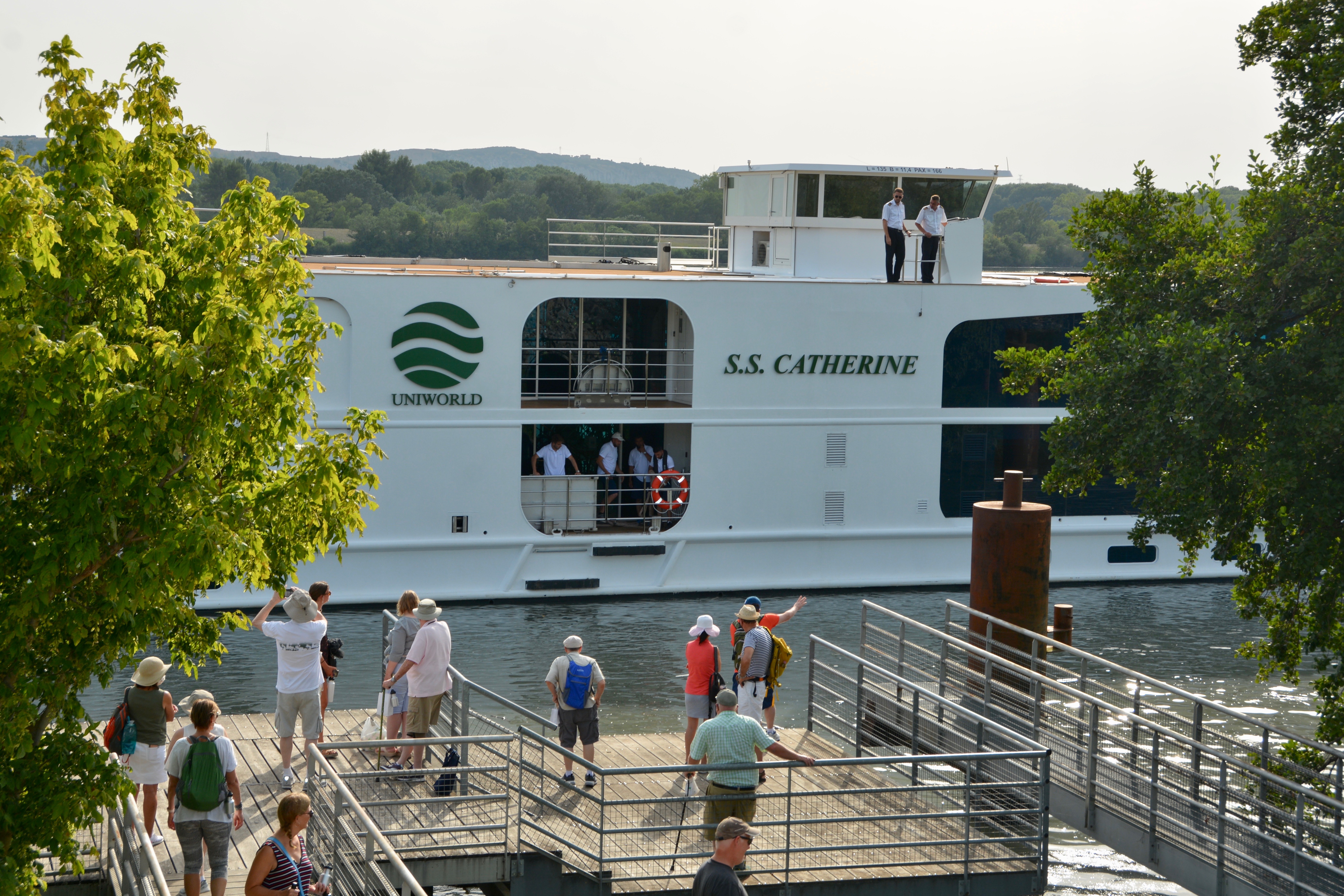
Our last night on board, we had to do our packing.  Luckily breakfast started at 6:15 am, so we were able to enjoy one last scrumptious meal before our 6:45 am disembarkation from the ship.  If you arrive and depart the same day as the cruise, Uniworld provides free transfers to the airport even if you are a city or two away.

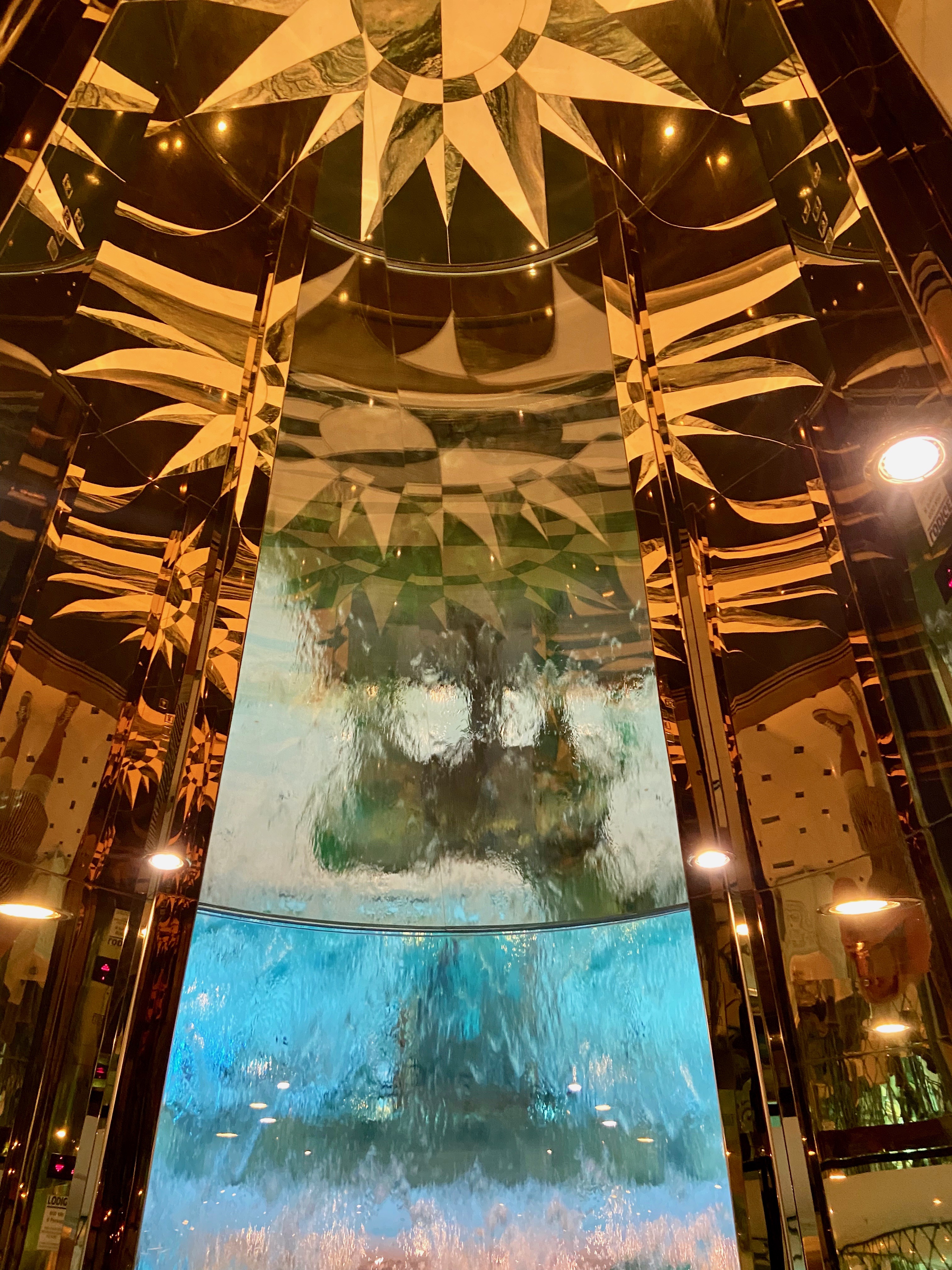
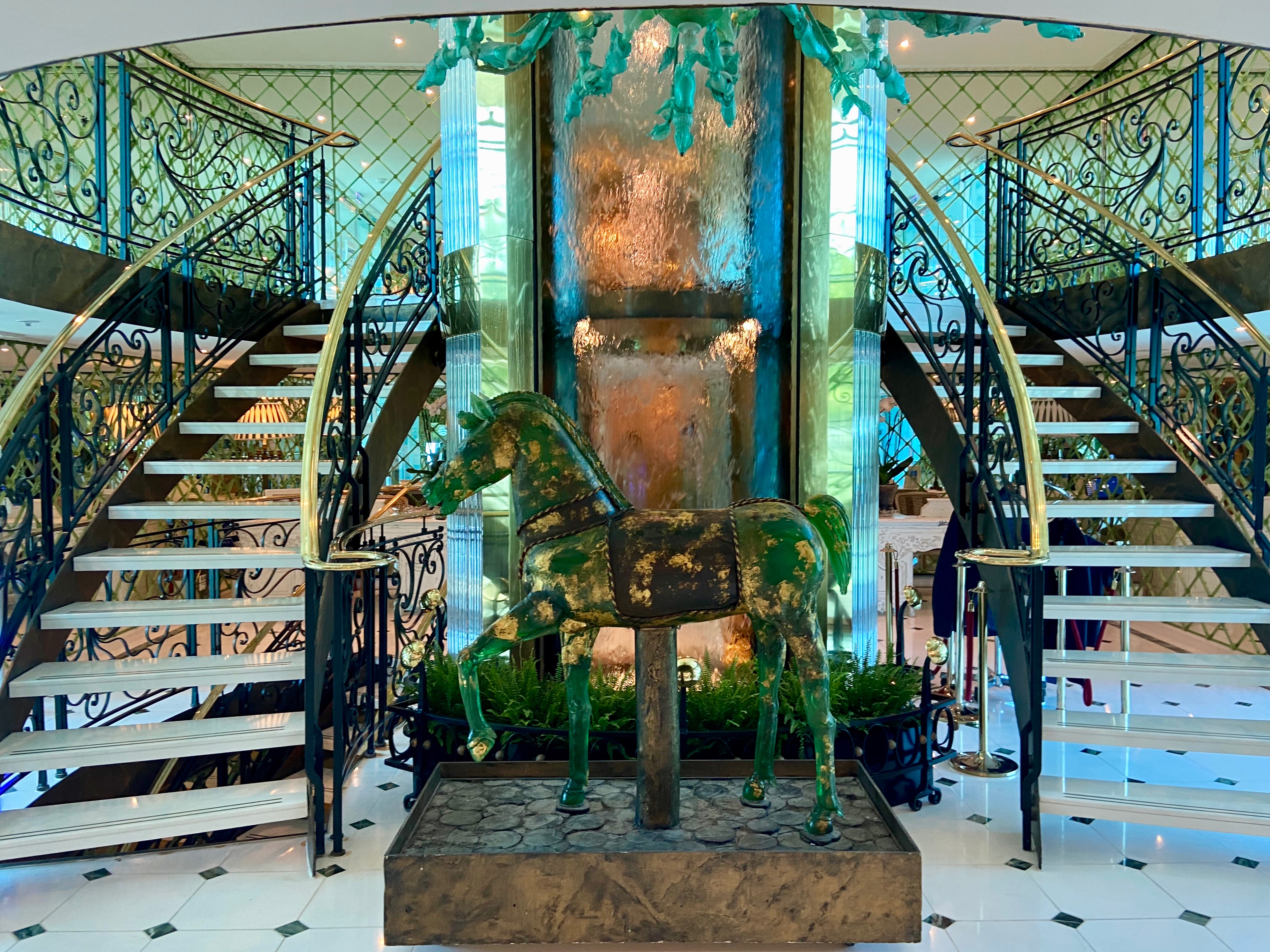
Photo ©Jean Janssen Taken inside the mirrored elevator on Uniworld’s SS Catherine.

We had a really long wait at check-in, but fortunately with Gold status on Star Alliance we had a shorter line and our early arrival meant we were at the front of the line.  Uniworld gave us additional paperwork with a QR code related to our COVID testing and with that document and what I had uploaded, we had no problem checking into our flight at the airport.  The lines were rather ridiculous by the time they finally started checking in luggage for our flight.  There are lots of passengers making connections.  Although boarding started on time, we sat and sat on the plane while people kept coming on long after our departure time.  We left 40 minutes late.  Again, we only had a 1 hour and 10-minute layover in Frankfurt.

Photo ©Jean Janssen Chateau de Rully, France

This time in Frankfurt it was not to be.  We had to cross three terminals to get to our second flight and were near the back of the passport line.  Time was ticking away.  One ridiculous man was trying to cut the line saying “I am going to miss my flight”.  We were all going to miss our flights and we were not going to have it.  All along the line passengers refused to let him cut.  He had to wait like everyone else.  We arrived at the gate 7 minutes before the flight was set to take off, but they had already closed the flight.  Since we came in on Lufthansa and were connecting to a United flight, they didn’t hold the plane for us even though we booked everything through United.

Photo ©Jean Janssen At an olive farm in Provence

Boris was furious and let them know it.  The gate agent booked us for the same flight on the next day.  There were no other connections to the states that day even though it was just after noon.  Because the fault was with Lufthansa, we then had to go stand in a long line at their service center for compensation.  Luckily our negative COVID tests will still be within the appropriate window for entry and we can use those tests on the rebooked flight tomorrow.

Photo ©Jean Janssen Lyon, France

We were given two meal vouchers and a hotel stay at an airport hotel.  There was another long wait for the hotel shuttle-about an hour.  The hotel appears to serve all the Lufthansa passengers who miss connections.  Frankfurt is their hub, but something is wrong if you need a whole hotel to house passengers you displaced.

Photo ©Jean Janssen Viviers, France

We were given a room with a double bed, a duvet cover which wasn’t wide enough to cover the double bed, a single bath towel, and a single hand towel.  We turned the duvet the opposite direction so at least we could cover our complete upper bodies.   There were no toiletries except for a hand soap dispenser attached to the wall.  Our bags had been retained at the airport.

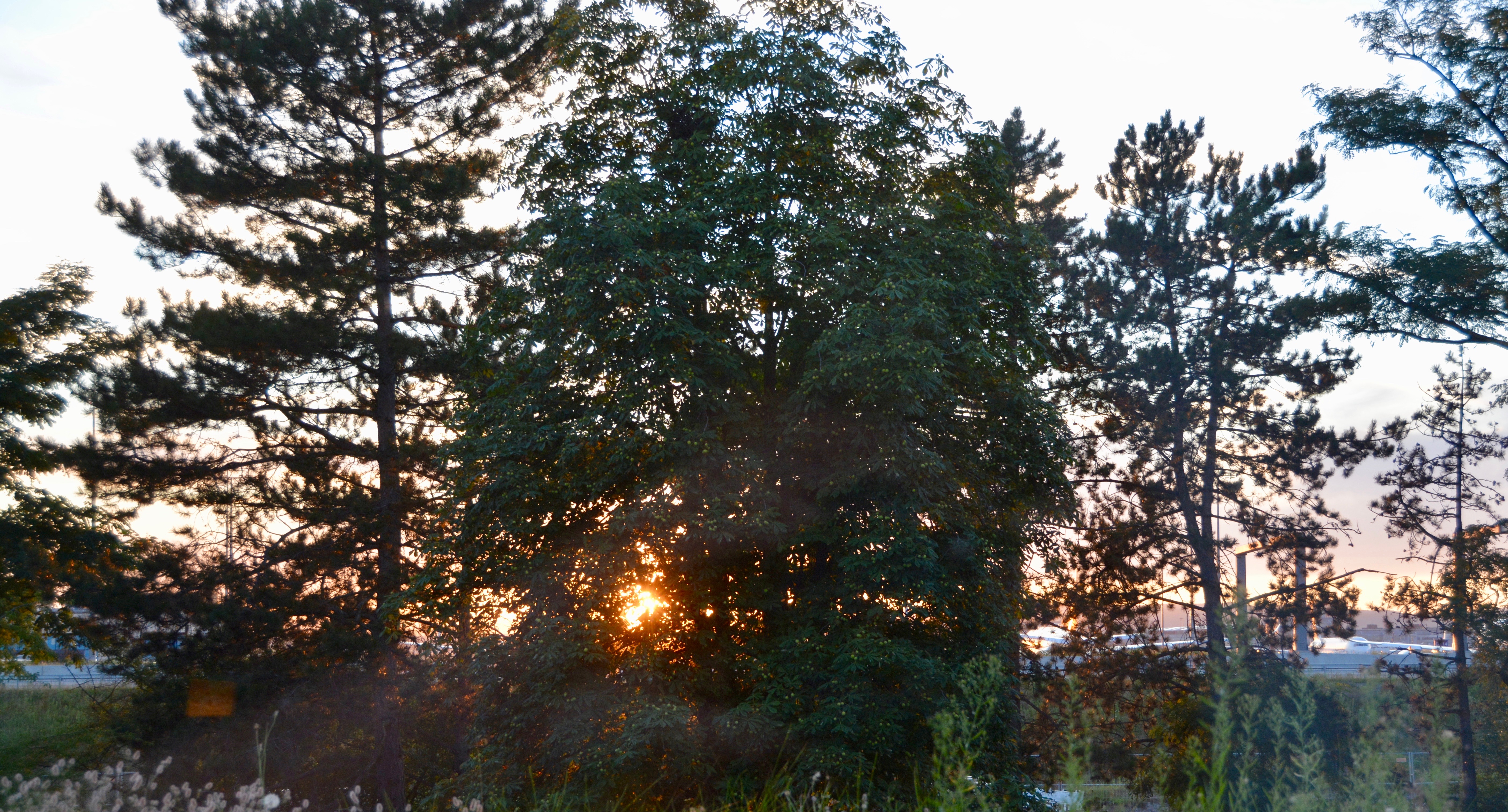
Photo ©Jean Janssen. We did see a nice sunset from our hotel window, but if you look closely you’ll see its a runway and planes beyond the tree line.

Don’t get me started on the food.  It was barely edible.  I broke into the olive oil cookies I bought yesterday as a backup.

Photo ©Jean Janssen Lyon, France

The next morning, I dried off as best I could and put back on my dirty clothes.  I never thought to bring extra for the way home.   With shuttle reservations, we went back to the airport as early as we could.  We hit the lounge there for the wait.  Of course, we both had a lot of rescheduling to do since we missed a day.  Fortunately, the plane took off on time.

Photo ©Jean Janssen Tournon, France

We arrived in Houston late because bad weather in the area meant we had to circle.  There were super long lines at immigration.  Unfortunately, at some point during COVID my global entry had expired, so I ended up standing in two lines.  The customs officer asked a lot of questions, but mostly seemed interested in what the health conditions were in France and what measures they were taking.

Photo ©Jean Janssen Beaune, France

Since so many flights were held in the air due to weather, everyone landed at the same time.  I have never seen the international luggage claim area so crowded.  We waited 45 minutes after clearing immigration (which had already taken a while) for the luggage to start coming down.  Finally, Boris’ bag showed up; the dirty clothes duffle showed up; and of course, my bag did not.  We filed the luggage claim and was told it would come in the next day.  The bag was in Frankfurt.  This was the same bag that spent an extra 36 hours in Frankfurt on the way to France.  I am beginning to think the bag just likes it better there.

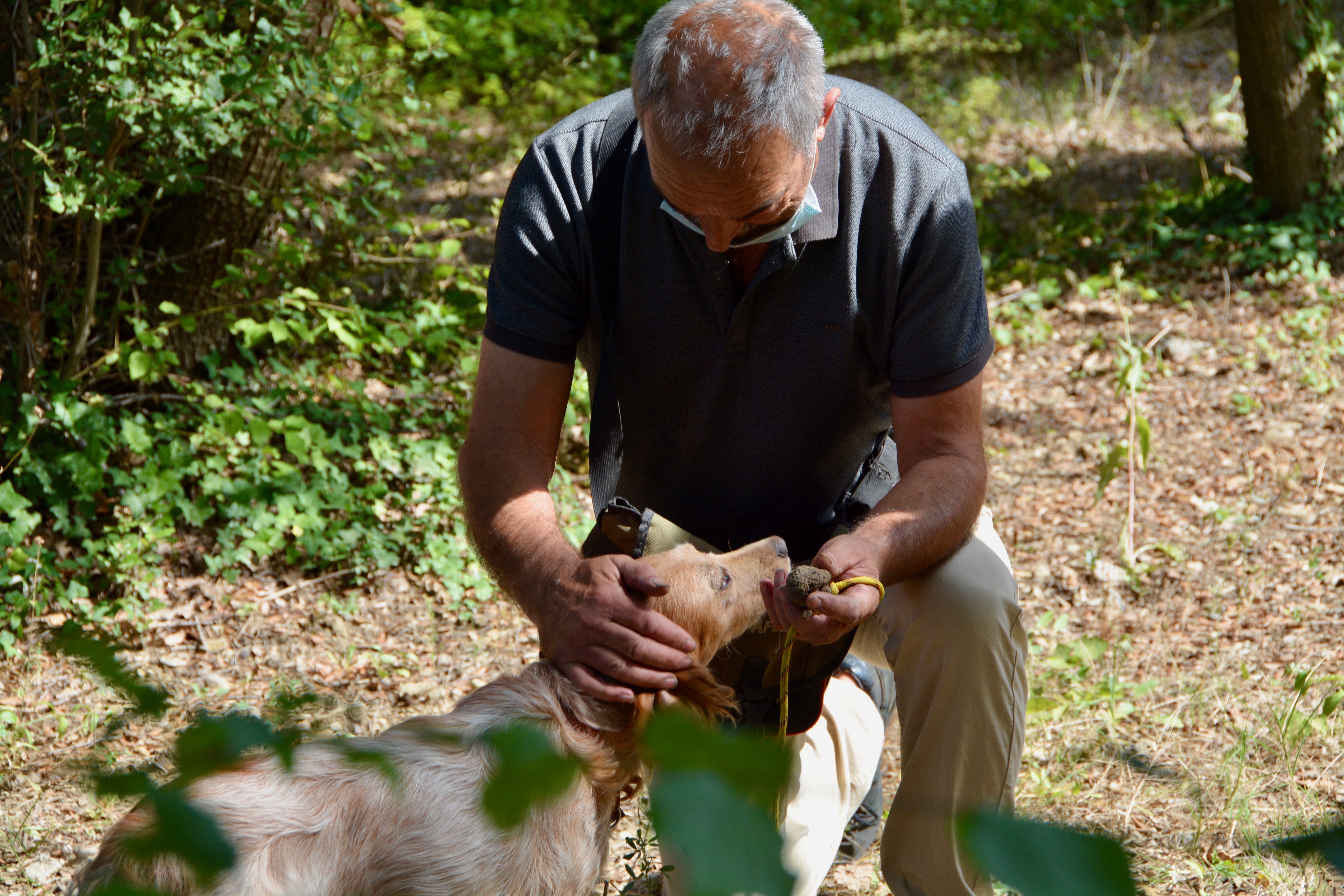
Photo ©Jean Janssen. A French Truffle Dog’s success

Just when we thought we were through the worst, we went outside. The weather had also delayed traffic and airport construction had compounded the problem.  It took Rocky forever to reach us.  In the end, we didn’t leave the airport until 2 hours and 35 minutes after our plane had landed.

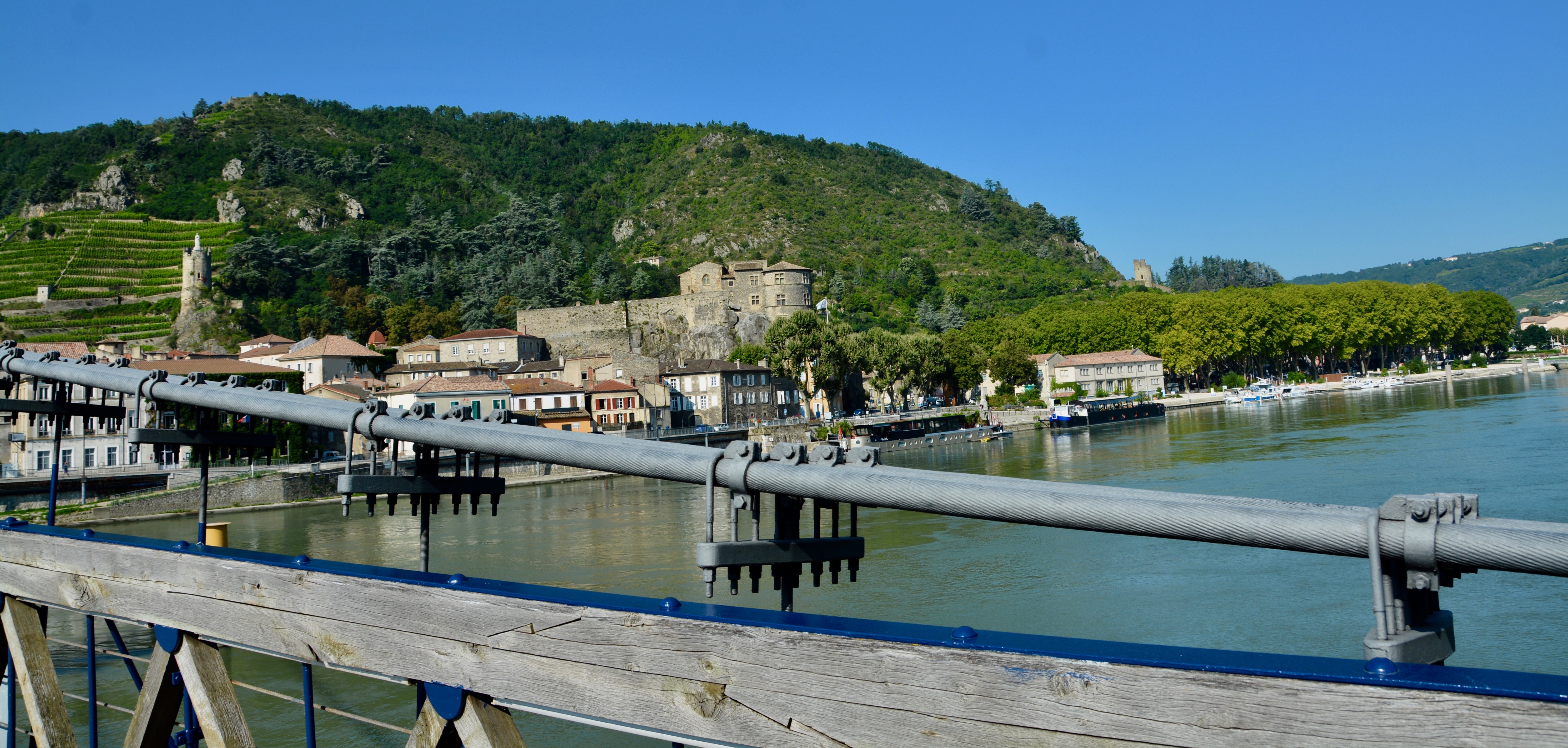
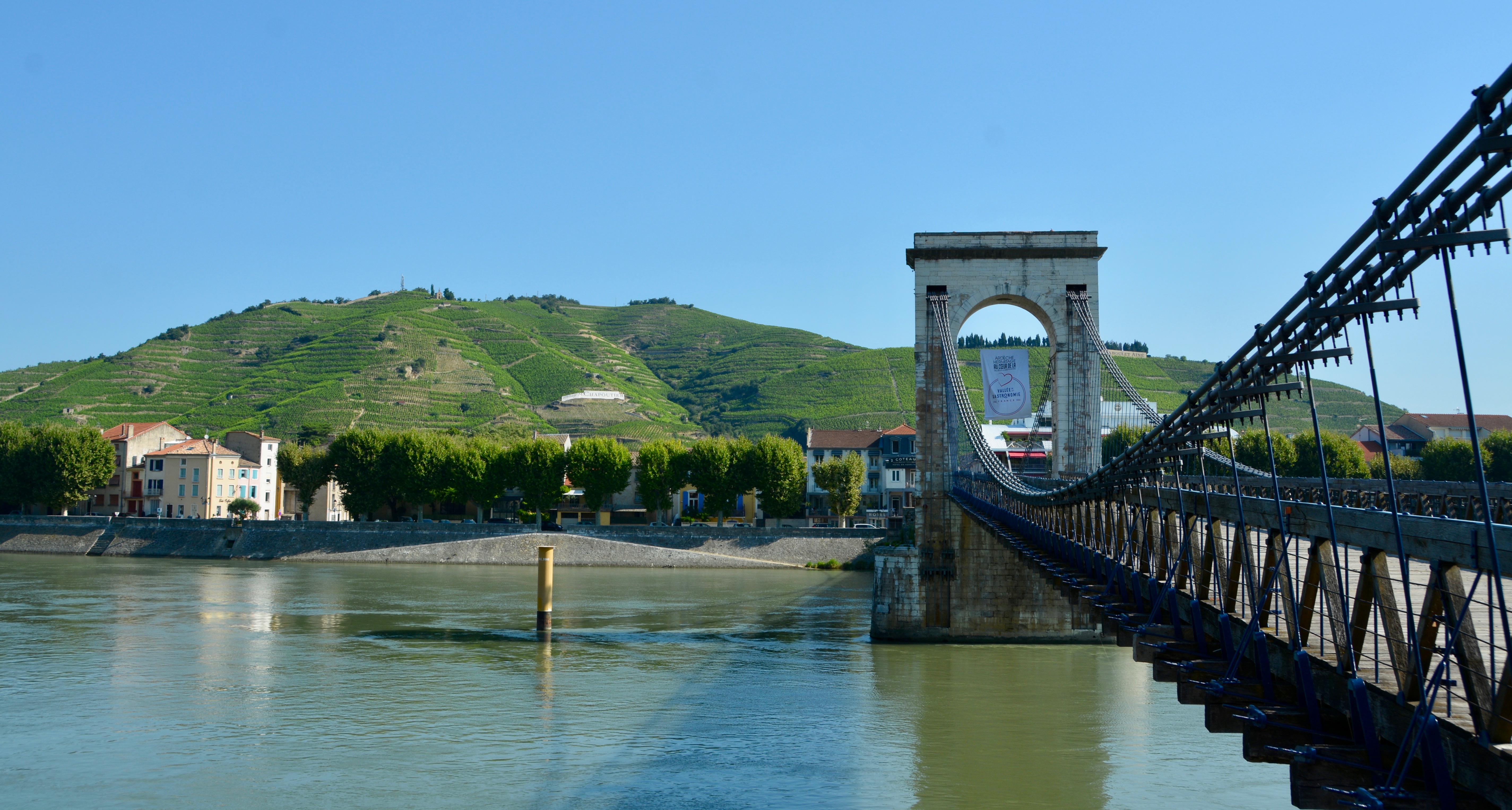
Photo ©Jean Janssen. Tournon, France as seen from the metal and wooden suspension bridge connecting Tain L’ Hermitage with Tournon

My bag did arrive in Houston the next day, but wasn’t delivered until the day after that.  Luckily, there were no dirty clothes inside.  One of our Uniworld perks was free laundry service on board the ship so I had come home with mostly clean clothes.  Our to and from travel on this trip was the pits.  Fortunately, the cruise was fabulous.

Photo ©Jean Janssen Avignon, France

Hope you enjoy these additional pictures from our French river cruise.  I am off on some domestic travel to Michigan in 4 days so stayed tuned for more adventures. 

–Natasha
Posted in cruises, international, River Cruise | Tagged , , , | Leave a comment

Last Touring Day in France: Arles, Olives, and an Artist Light Show

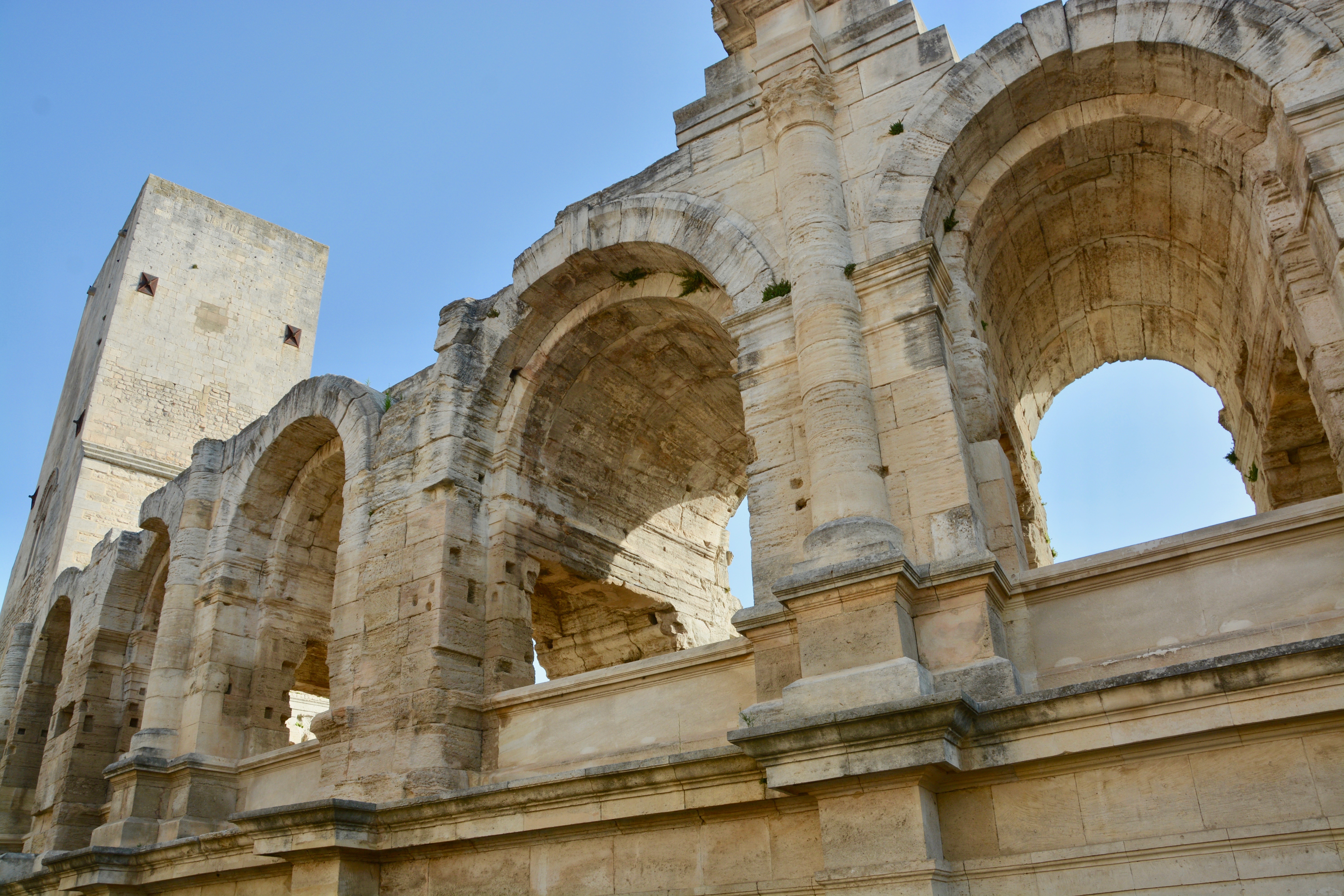
Photo ©Jean Janssen. Roman arena in Arles, France

Today is our last touring day in France.  We will visit Van Gogh’s Arles, an olive farm, and see an artist’s light show that is touring internationally in its birthplace.  Normally we would take the morning tour and pack in the afternoon, but this time I was really intrigued by the optional afternoon tour so we are adding that one.

Photo ©Jean Janssen Arles, France

This is also our last day with Jeanette as a tour guide (after a day off yesterday).  They are offering a “gentle walkers” group and Boris is going to do that, but he is fine with me going with Jeanette instead.  Boris and I rode in the same bus to Arles.  One of the city’s claims to fame is Van Gogh’s tribute to the city in more than 200 paintings.  The city also boasts some wonderful Roman Ruins.  We will tour the ancient, the medieval, and the modern in a city behind gates that date from the 13th century.

Photo ©Jean Janssen
Along the Riverfront outside Arles, France where Van Gogh painted some of his famous works. This spot is the perspective for Starry Night Over the Rhone.

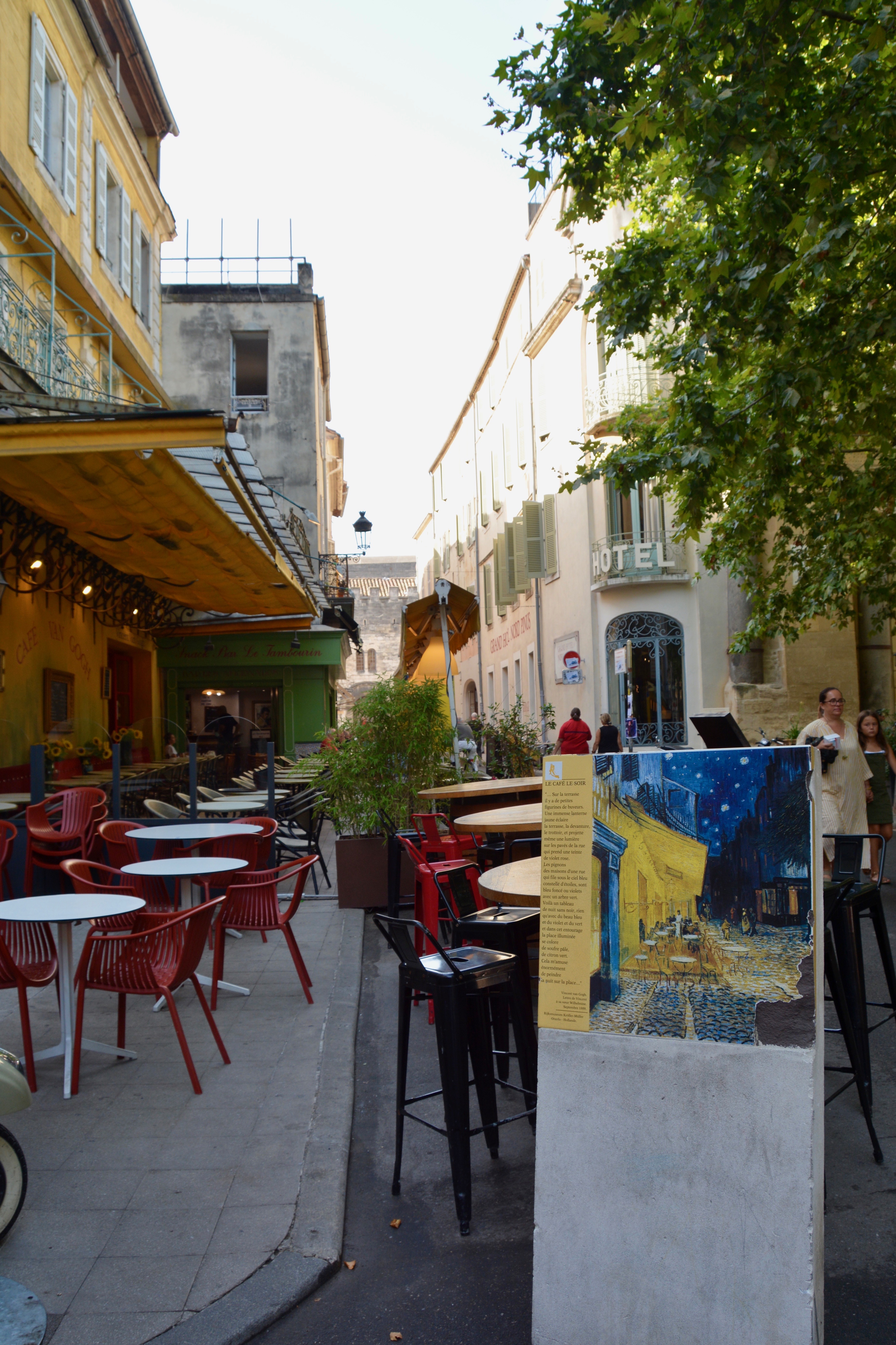
As we left the bus and made our way toward the city, we immediately noticed signs that pinpoint the vantage points Van Gogh used to paint some of this most famous works.  With a marker and a picture of the painting, you can see the current state of these “landmarks”.  Before even passing through the city walls, we stopped at a marker along the river.

Photo ©Jean Janssen A break in the city walls in Arles, France
Photo ©Jean Janssen Arles, France

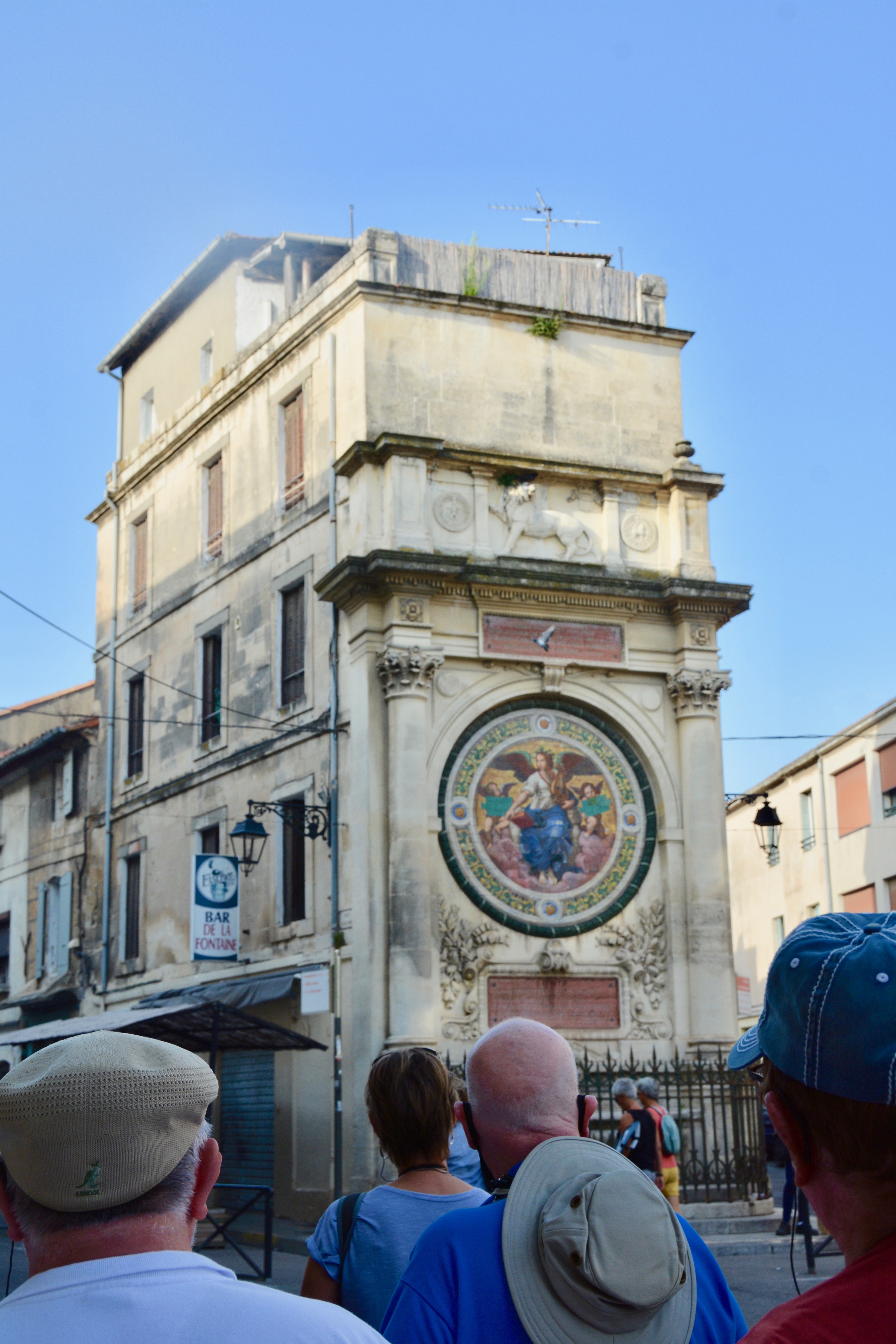
Entering through a break in the city walls, we spotted a mural adorning a building in the middle of the city’s first major intersection.  A local artist had offered the mural to the city, but was refused.  When the strategically positioned building came on the market, the artist’s son purchased the building and installed the mural making sure all that entered saw his father’s work and “thumbing his nose” at the city fathers who had refused the gift.

Photo ©Jean Janssen.
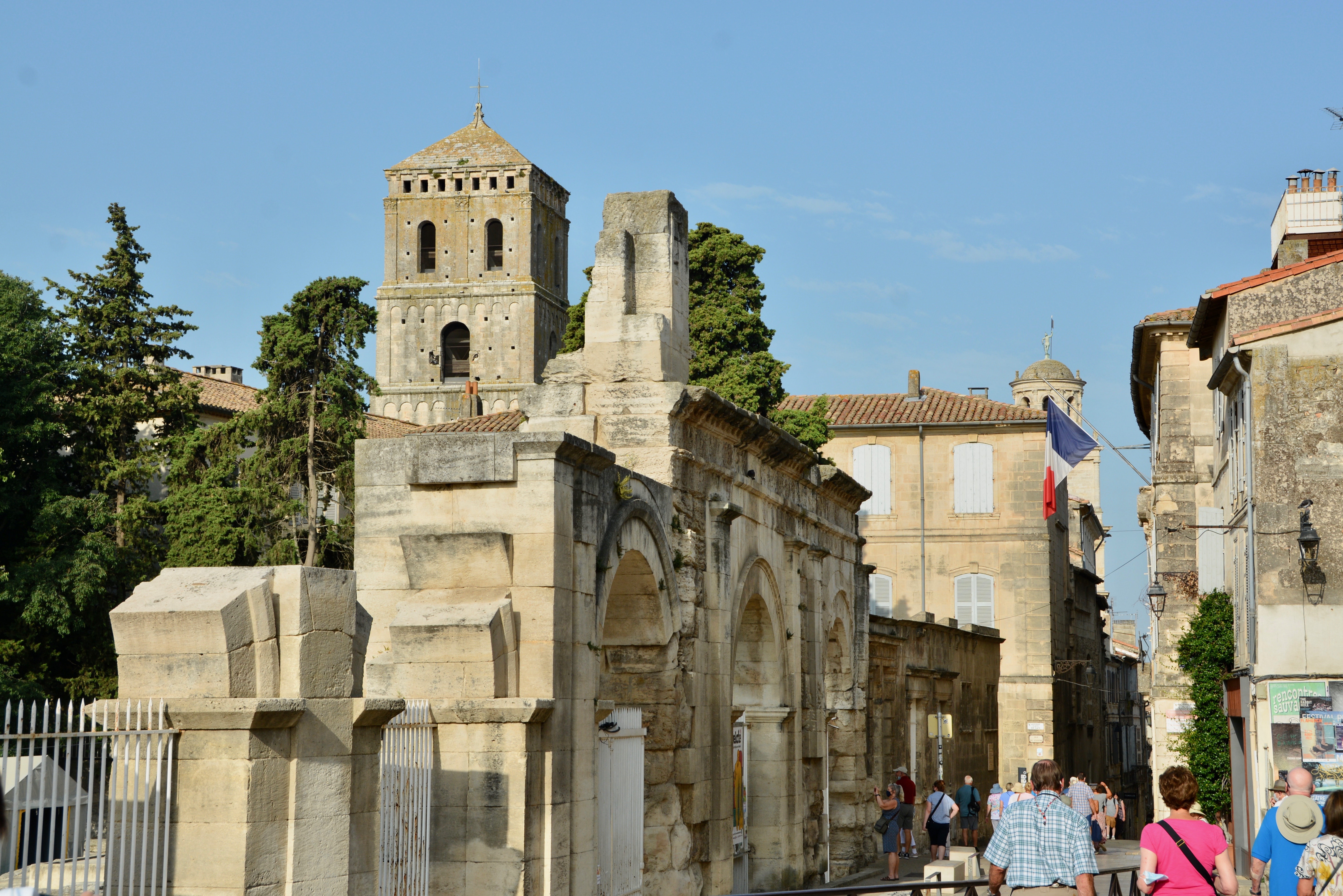
Around the city of Arles, France, you find Roman ruins incorporated into the local structures.

Coming to a popular square, Jeanette pointed out that many of the cities in France are strongly aligned with certain political parties, but that the affiliation varies widely even among nearby towns.  Arles’ Communist Party dominated signage on this square.  The city’s popular and highly progressive mayor was affiliated with the party, although he was currently not in office.

Photo ©Jean Janssen Roman arena in Arles, France
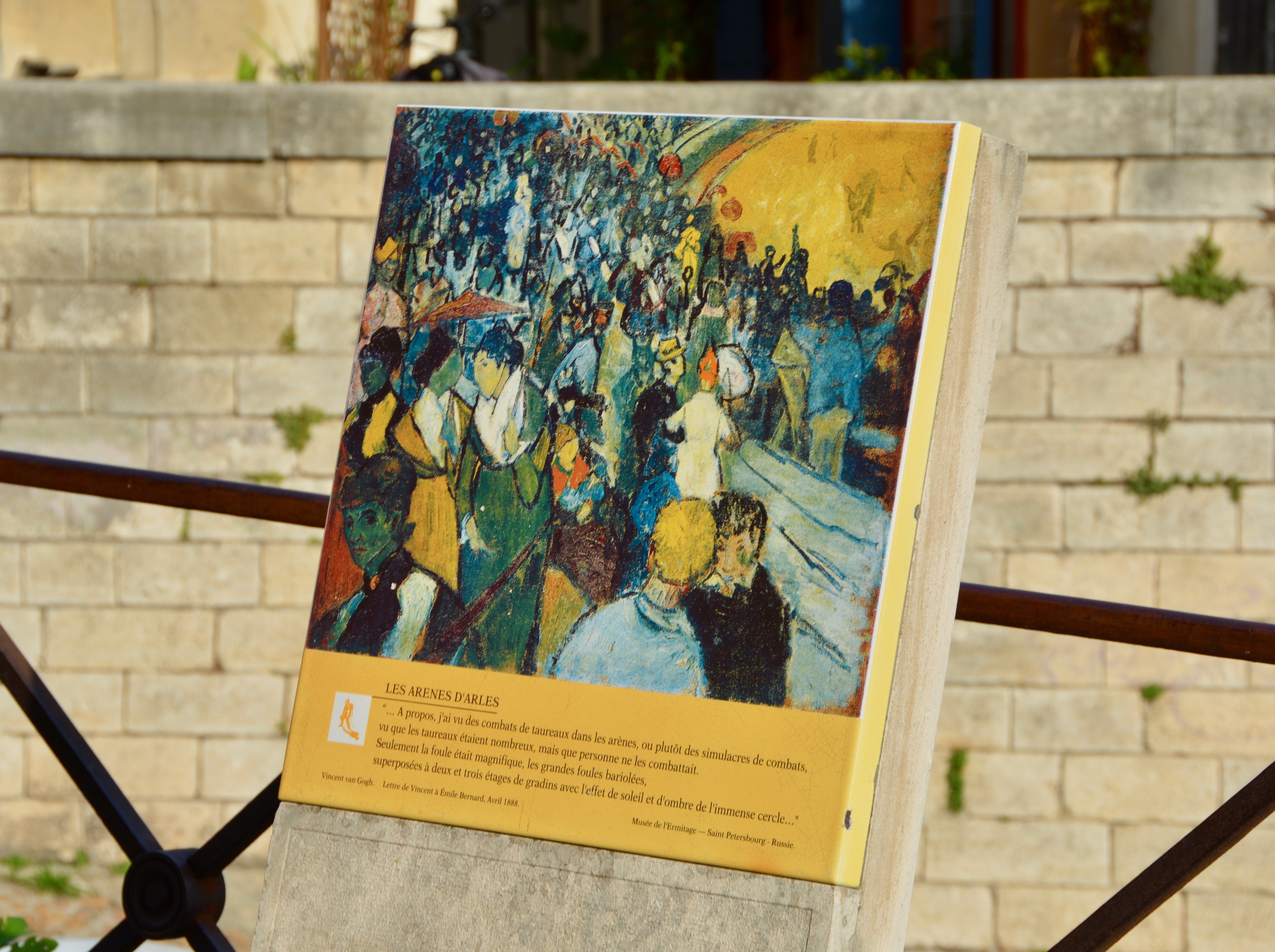
Photo ©Jean Janssen Van Gogh painted the crowds entering the Roman arena in Arles, France

Leaving the square, we walked down an unassuming street that dead-ended at a magnificent arena, reminiscent of the Colosseum in Rome.  The gates were closed, but tours are available.  The structure is still used; during this time of year bull flights are held in the arena.  There are a variety of competitions.  One is a coming-of-age ritual where young men jump over the length of the bull.  Jeanette had witnessed it and said it was very exciting.  There are also “fight to the death” competitions. Interestingly, Van Gogh had painted the arena, but not the picturesque columns or the interior of the structure.  His painting was of the crowds entering the arena through one of the many openings.

Photo ©Jean Janssen Arches on the Roman arena in Arles, France
Photo ©Jean Janssen. Near the Roman arena, Arles, France

Rounding a corner, we found the ruins of a Roman theater that was set up with modern lighting and sound and used for concerts. The seating was intact, as well as some of the columns and stage. There were also pieces of ruins scattered in the surrounding lawn.  We ran into Boris’ tour group.  It was small and he felt like he was getting a lot of personal interaction with an excellent guide.  The cruise director said they were doing fewer and fewer days with the “gentle walking” groups.  I asked if it was because of an increase in the “go active” type touring and she said it was really about the availability of guides to lead the gentle walking groups.

Photo ©Jean Janssen Entrance to the Roman theater, Arles, France
Photo ©Jean Janssen Ruins of the Roman theater still in use in Arles, France
Photo ©Jean Janssen
Throughout the city of Arles, France, you find Roman ruins incorporated into the city structures.

Walking through the city, we saw Roman ruins incorporated into many of the local buildings.  The government buildings and arches were architectural marvels when you consider when they were constructed.  I love the simple preservation of the ancient, medieval, and 17th, 18th, and 19th century construction.  On one square we saw a pair of wonderful, intact Roman columns.  The owners on each side argued that the set belonged to them.  The dispute was settled when the governing body stepped in and awarded one to each owner.  Arles is a beautiful city and rich in history and legend. 

Photo ©Jean Janssen. A ceiling to marvel at in Arles, France
Photo ©Jean Janssen. Arles, France

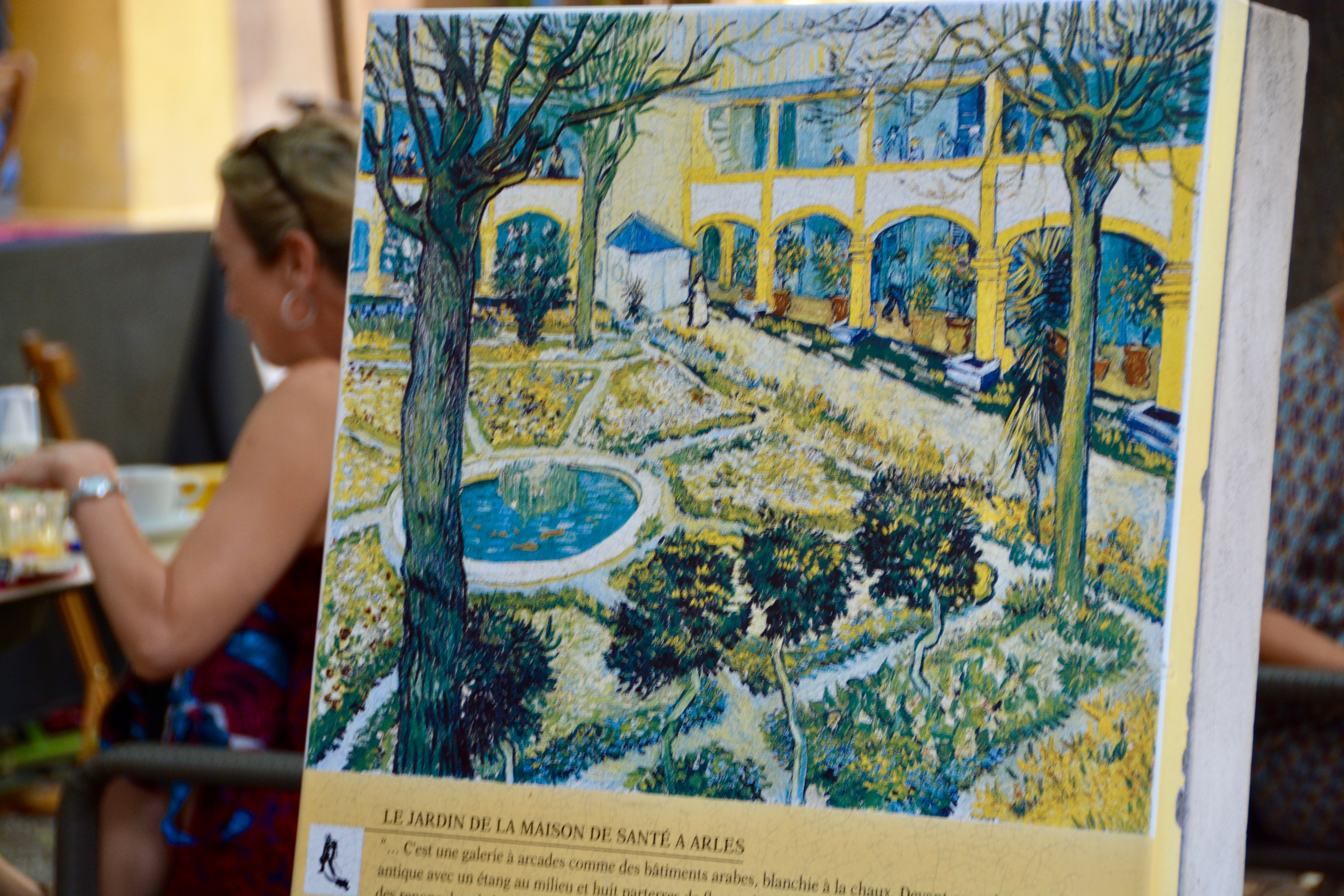
We came upon the Hotel Dieu.  If you have been reading the posts in this series, you already know that these facilities were in most cities in France and were where medical services were provided to the poor.  Arles’ Hotel Dieu is where Van Gogh went after he cut off his ear and he spent many months there recovering and painting.  The hospital’s courtyard was a subject of one of his more famous paintings and they have made an effort to preserve the look as it was in Van Gogh’s time.

Photo ©Jean Janssen At the Hotel Dieu, Arles, France

What a wonderful city to people watch, roam around and look for the perspective of Van Gogh paintings, explore Roman ruins, or just enjoy the architecture.  There was lots of fabulous shopping available in Arles and you could see the group become excited about our free time.  Some of the shops even had those old medal signs used to describe the business in the days before most of the citizens were able to read. From the “picture signs” they knew what kind of business it was.

Photo ©Jean Janssen. Shop sign in Arles, France
Photo ©Jean Janssen Spotting the Van Gogh perspective for Cafe Terrance at Night in Arles, France

It was also market day in Arles, so with a warning to stay on the lookout for pickpockets we were encouraged to take a look there as well.  European town markets are always a treat to visit whether you are on the lookout for quality items, local food specialties, cheap goods, or just people watching.  I once had a bag go missing in Italy and I stocked up on cheap clothing at a local market to fill in until my bag arrived.  Most of those items have long since “moved on” but I have one blouse I rediscovered recently and have worn several times this summer.

Photo ©Jean Janssen Place de la République, Arles, France
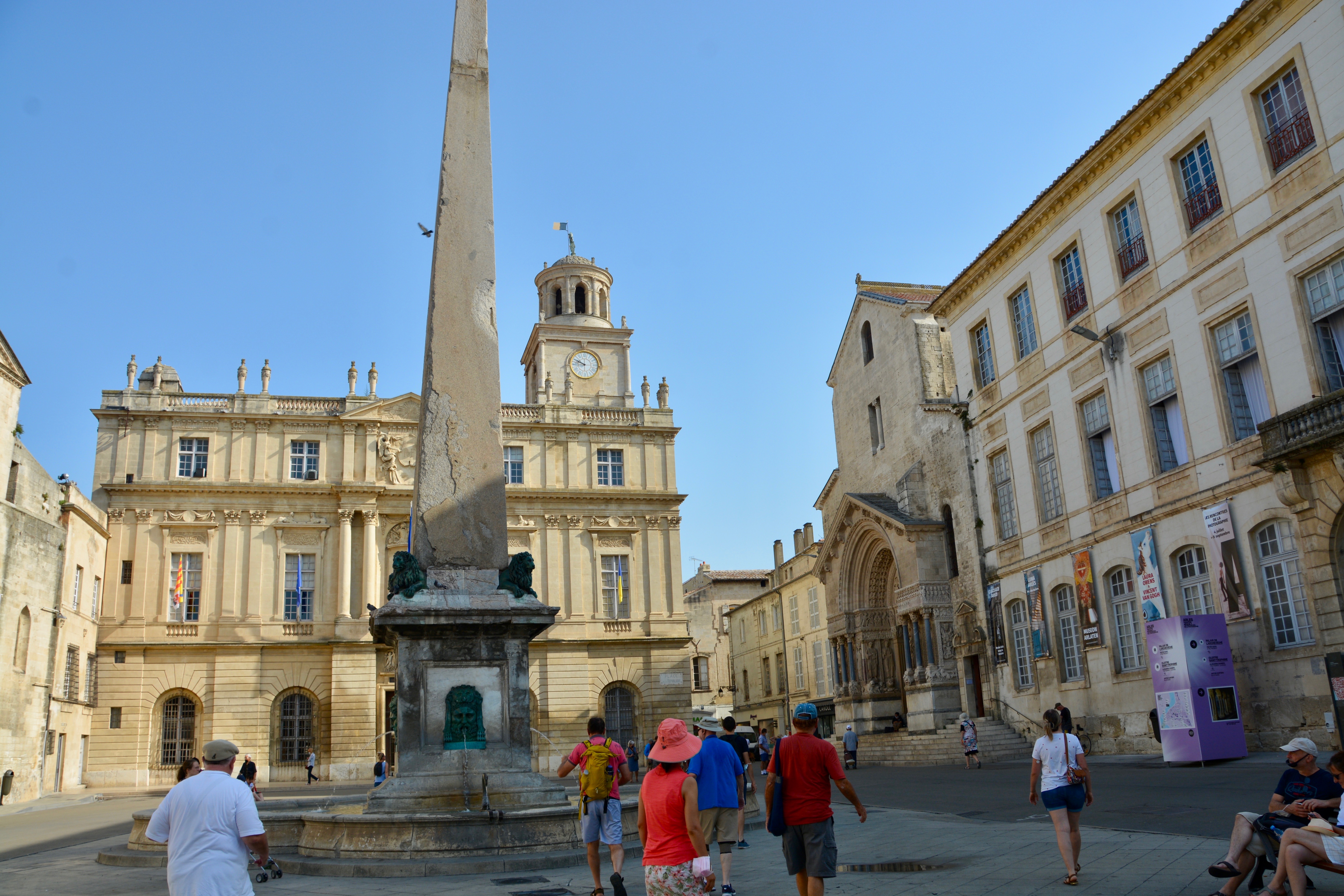
Photo ©Jean Janssen. Wonderful fountain in Place de la République in Arles, France. You will notice the spout in the foreground of the picture.

We ended the formal tour at the city’s gorgeous main square, Place de la République, and I started my break time just sitting at the wonderful fountain that graced the middle of the square. It was another hot day. Temperatures reached 105 degrees Fahrenheit (41 degrees Celsius), a record high for the city. At one point there was a man standing very close to me.  I couldn’t figure out what he was doing until I realized there was a fresh water spout next to me.  Several dogs enjoyed the water too.

Photo ©Jean Janssen. Enjoying the fountain in Arles, France
Photo ©Jean Janssen. On the main square in Arles, France

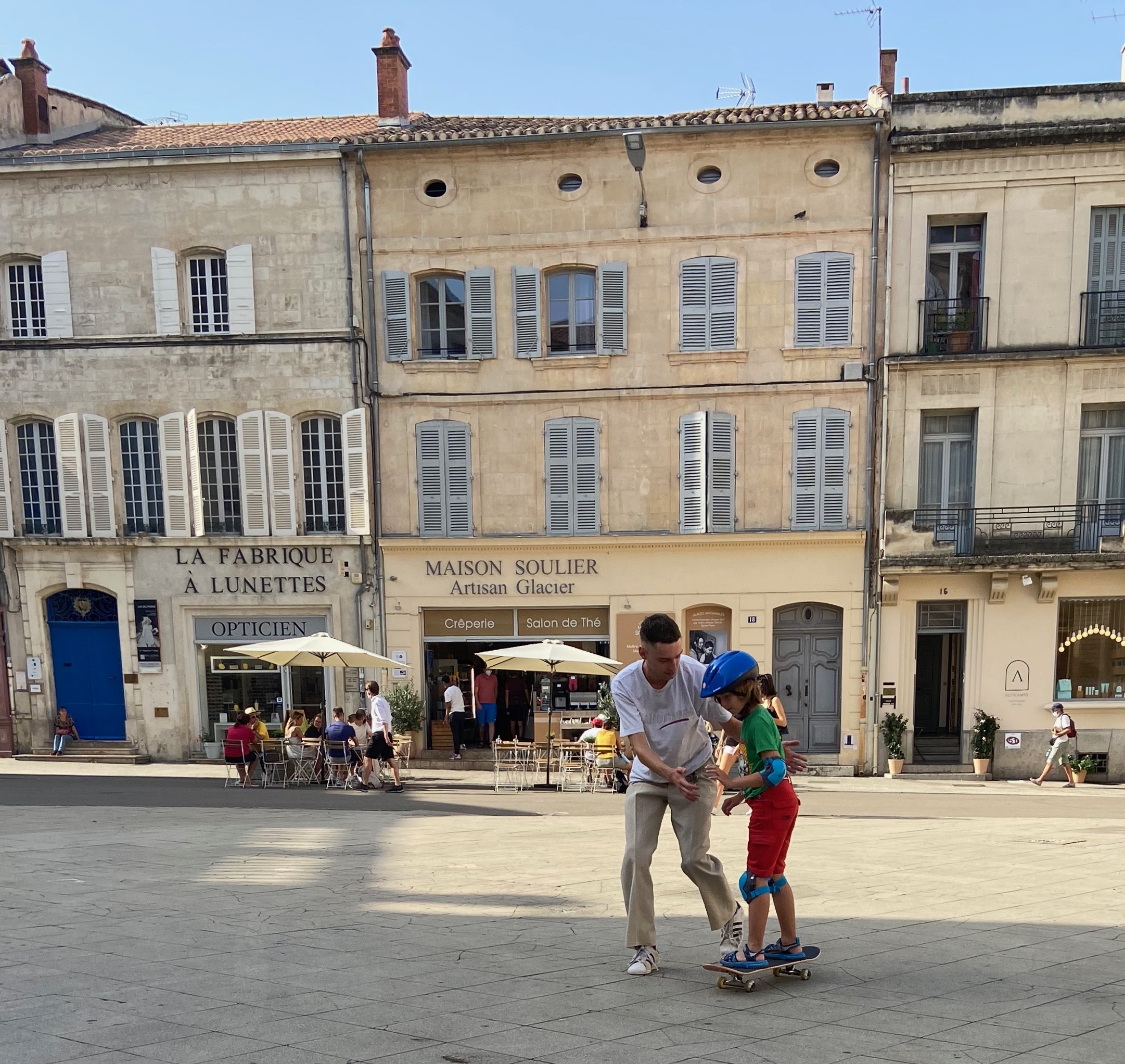
I had hoped Boris might turn up, but I never spotted him on the square.  I was going to talk him into taking me to a café.  While I sat, I enjoyed watching a young man teach a young boy how to skate board.  I was never sure if it was a formal or informal lesson, but the boy improved while I was watching. After a while I got tired of waiting for Boris so I headed off in the direction of the market.  I wasn’t into cheap goods or food products I couldn’t take home the next day, so I didn’t stay long. 

Photo ©Jean Janssen Arles, France

I did run into Boris who was just leaving a café and was headed to the market.  He wasn’t interested in sitting down again, so I went shopping at a Christian Lacroix store instead.  The café would have been cheaper for Boris.  The shop owner is a friend of Christian Lacroix’s wife.  Arles is his home; he was also born here.  The French designer is now 70, but he is still working.  This is his only shop in France and it sells his original designs.  I had fun picking out a special scarf.

Photo ©Jean Janssen Arles, France

Boris and I caught up with one another again on the square. After the tour groups walked out of the city and to the buses together, we went back to ship to cool off and have lunch before our afternoon tour. Unfortunately, we probably will not have any time to pack before the next tour. The great news was that our COVID test results were waiting for us when we got back to the room. We were both negative.

Photo ©Jean Janssen Cezanne, The Master of Provence, Carrieres de Lumieres,
Les Baux de Provence, France

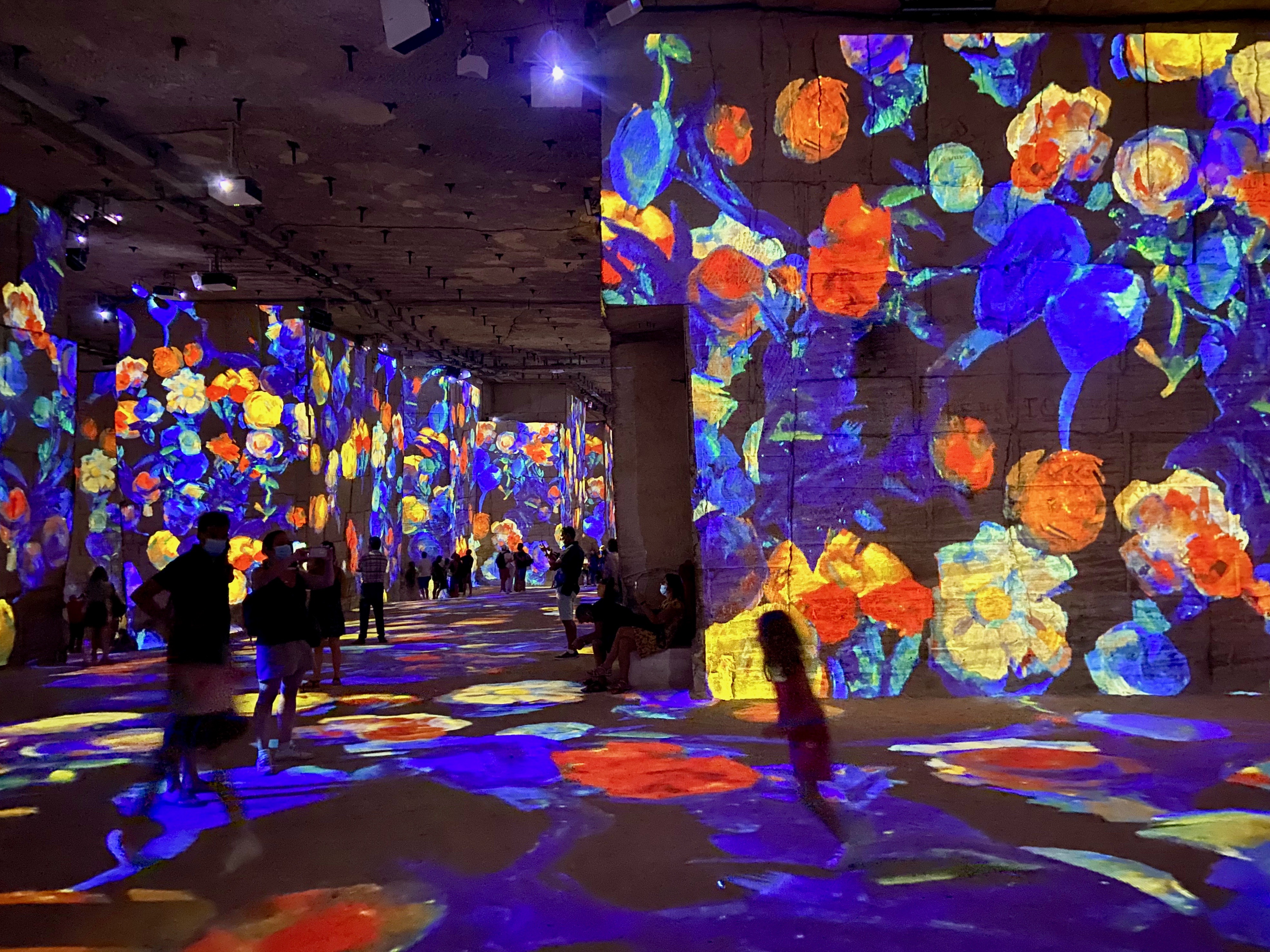
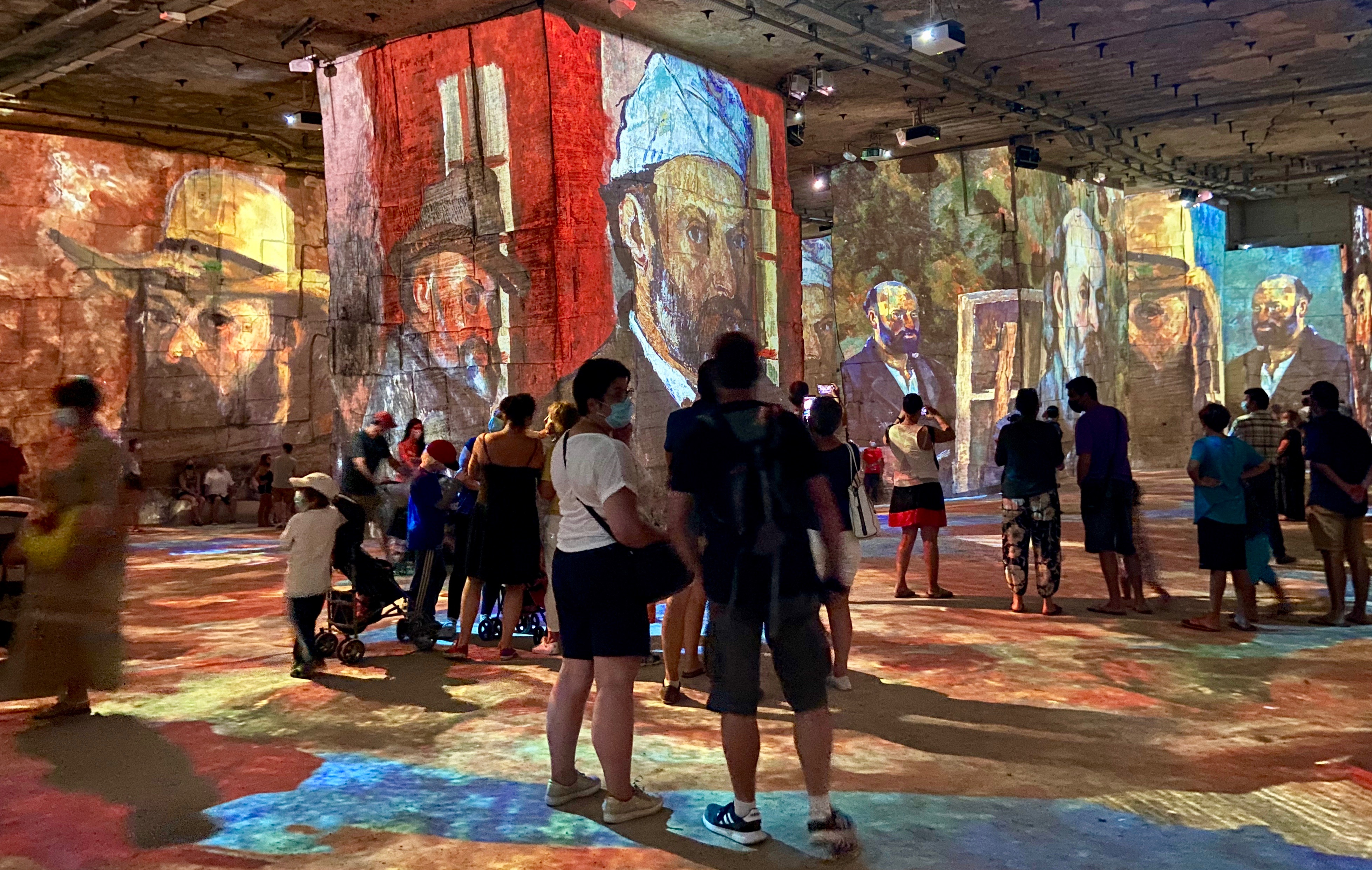
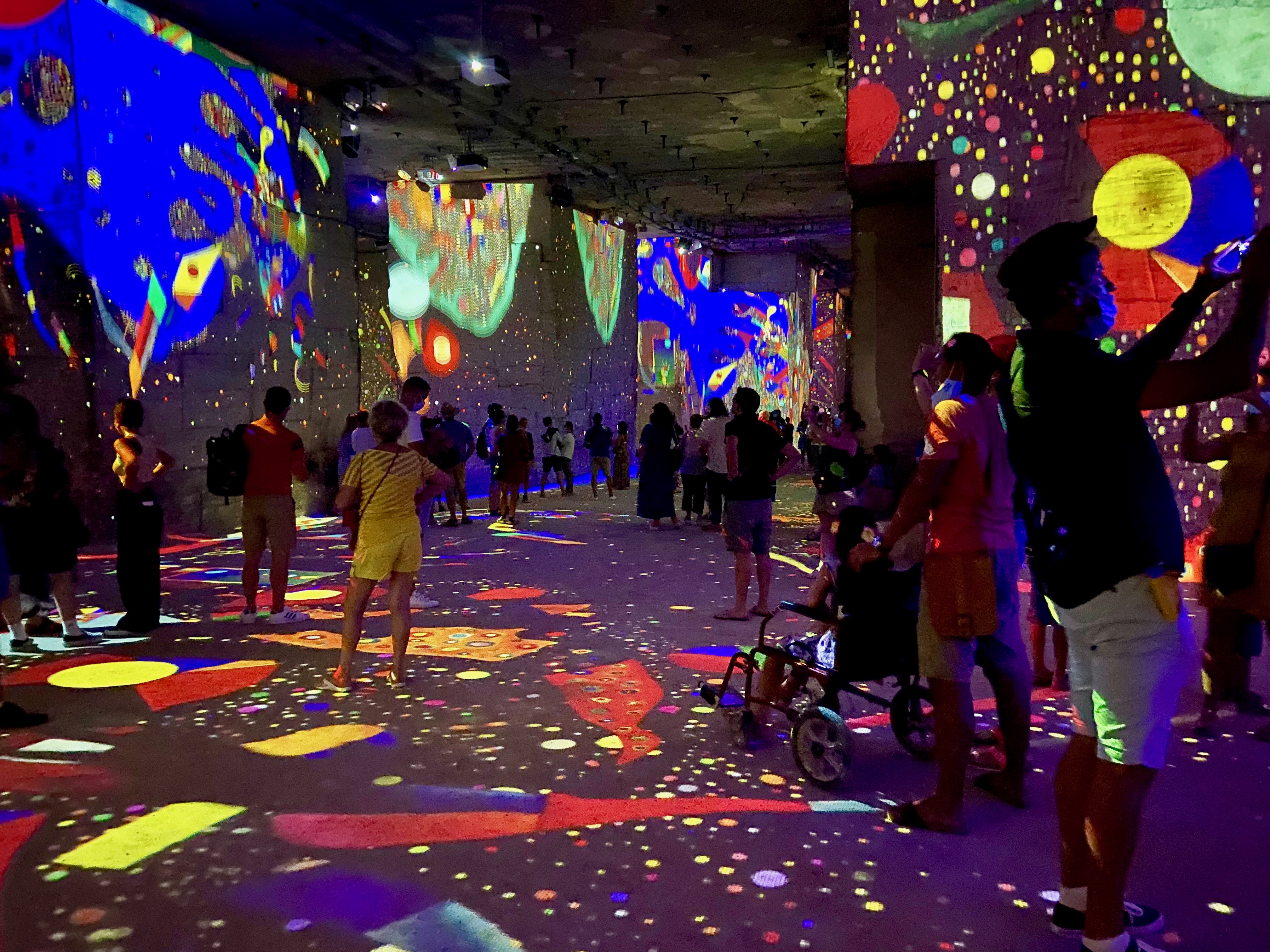
After lunch, we set out on our last excursion of the trip.  It was another hot day, so I skipped the shopping in Avignon again.  We are ending the day at an olive farm, but our first stop is near the medieval village of Les Baux de Provence in the heart of the Alpilles mountain range in France.  We are here to see Carrieres de Lumieres, literally “Quarries of Lights” in English.  This is total immersion through a multimedia show of pictures set to music.  The projections cover the surfaces of the limestone rock and even the ground of this former quarry.

Photo ©Jean Janssen Cezanne, The Master of Provence, Carrieres de Lumieres,
Les Baux de Provence, France

The facility opened its doors in 2012 with Gauguin – Van Gogh, painters of colour.  That year there were 239,000 visitors.  Today the the visitor count has risen to 770,000 annually.  The parking lots were full and there was a queue to get in.  They have now produced several different shows and the presentations travel internationally. The Van Gogh show will be at the Museum of Fine Arts in Houston where I live this fall.

Photo ©Jean Janssen Cezanne, The Master of Provence, Carrieres de Lumieres,
Les Baux de Provence, France

The current productions are Cezanne, The Master of Provence and Kandinsky, The Odyssey of Abstraction.  Jeanette’s presentation on Cezanne earlier this week really enhanced the experience for me.  These two shows through January 2, 2022.  There is a longer (about 40 minutes) primary show, followed by a second shorter presentation.  The ticket covers both presentations.  You can see both in just over an hour (although if I was on my own, I would have stayed for a second round).  There is very limited seating around the perimeter.  At this time, everyone must wear a mask and you must show proof of vaccination or recent negative test results.

Photo ©Jean Janssen Cezanne, The Master of Provence, Carrieres de Lumieres,
Les Baux de Provence, France

The production surfaces rise 23 feet (7000 mm) from floor to ceiling.  The music is also not to be discounted and adds immensely to the quality and enjoyment of the production.  “In 2017, [the producer] and the Commune des Baux received the ‘Thea Awards’, a prize awarded by an international committee: the Carrières de Lumières was awarded the prize for the best immersive production.”  Culturespaces:  Culture for Everyone.

Photo ©Jean Janssen Kandinsky, The Odyssey of Abstraction, Carrieres de Lumieres,
Les Baux de Provence, France

I loved it and it met with universal approval among the guests on our excursion.  Of course, it made me want to make reservations for the Van Gogh presentation in Houston.  However, it was very special to have seen a presentation of the birthplace of these multimedia productions.  I highly recommend a trip out to the quarry and catching these presentations in your own hometown when they come to visit.

Photo ©Jean Janssen Photo ©Jean Janssen The Quarry that is home to Carrieres de Lumieres,
Les Baux de Provence, France

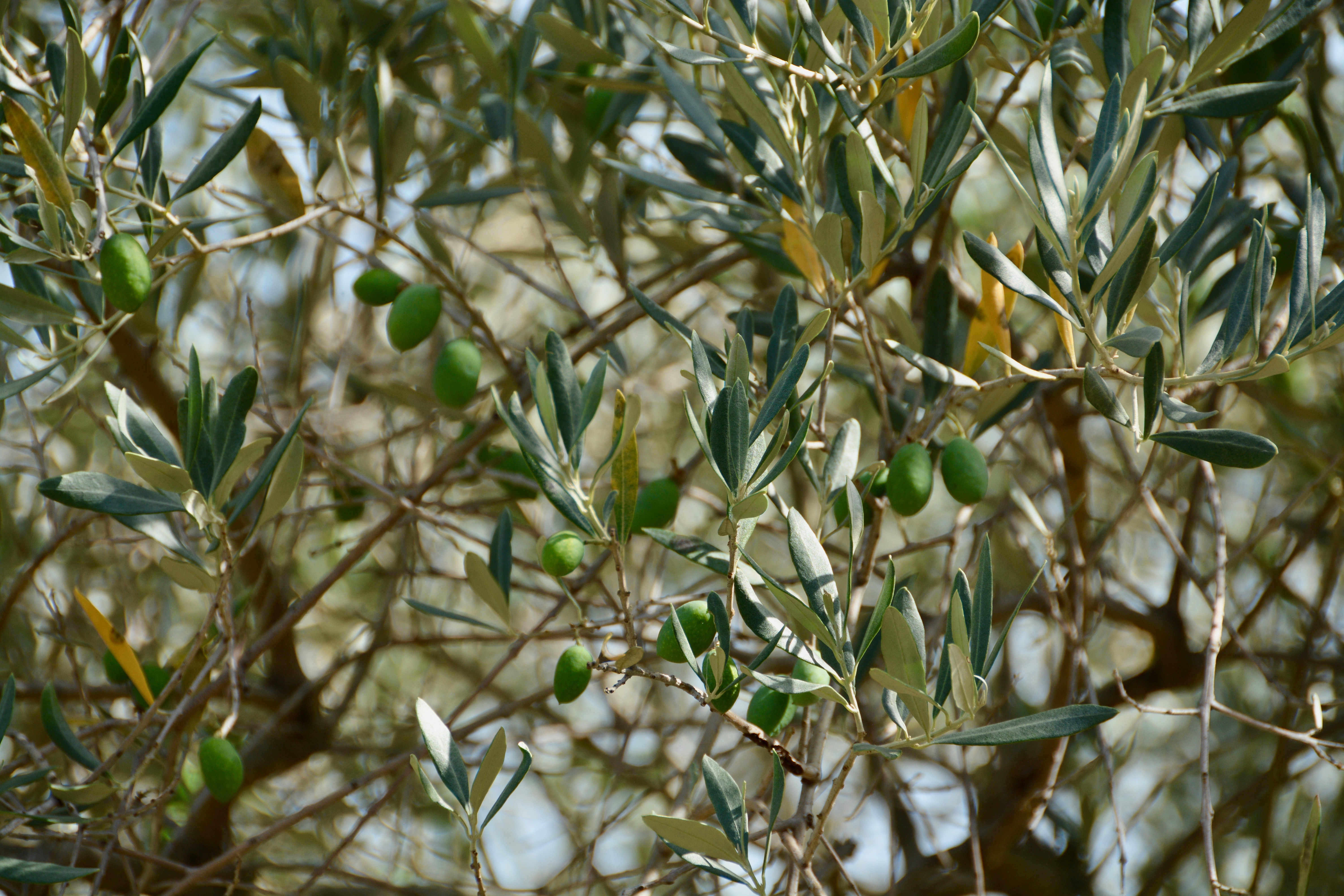
The final segment to our afternoon touring was a visit to a local olive farm.  The farm and the production facility have been in the same family for ten generations.  The current owner only has two daughters, but they run the production with precision and their olive oil has won international prizes.  The grandfather was very upset when the girls were put in charge, but after they won the prize, he was the one to step in front of the camera when the television crews arrived to interview the winners.

Photo ©Jean Janssen

The grandfather was also thrilled when one of the great-grandchildren was a boy.  Each time a child is born in the family, 100 new olive trees are planted.  When his great-grandson was born, he planted 700.

Photo ©Jean Janssen
Photo ©Jean Janssen

After touring the production facilities, we sat out under the trees and enjoyed local Rose wine and sampled olives and olive spreads.  Afterwards, we stopped in their giftshop and purchased some jars and olive cookies to take home.

Photo ©Jean Janssen

Just a fabulous day and a wonderful way to end our river cruise through Burgundy and Provence.  Safe travels to you all.  –Natasha

Posted in cruises, international, River Cruise | Tagged , , , , , , , , , , , | Leave a comment

Avignon in the Burgundy Region of France

Photo ©Jean Janssen. The walled city of Avignon, France

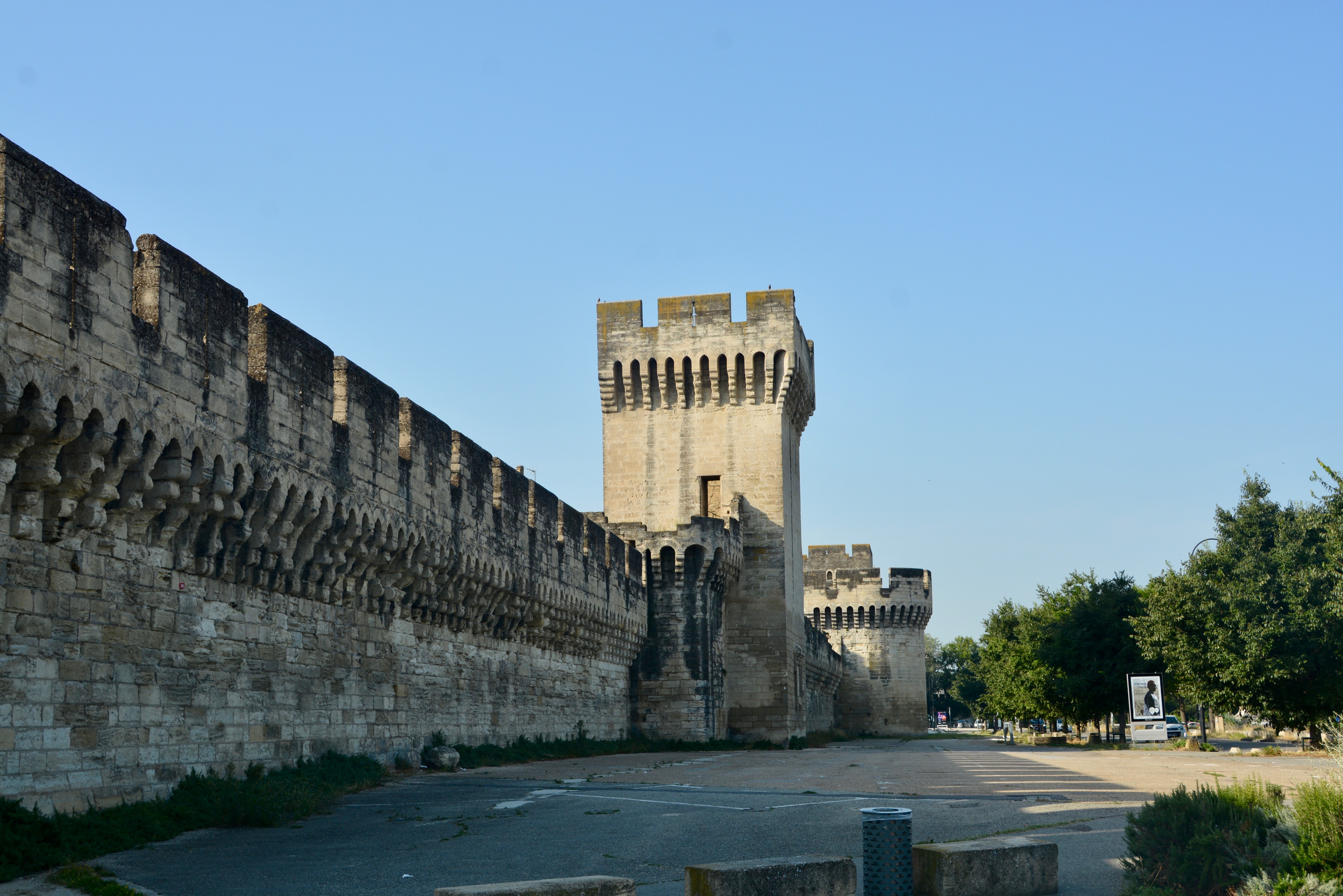
Today we are in the beautiful French city of Avignon in Burgundy.  This is one of the few remaining cities that has all its city walls still in place; the walls stretch for over three miles.  At our berth along the Rhone, the SS Catherine sits in view of the old city walls.  Only a small percentage of the citizens live within the walls.  Although it is possible to drive within the walled old city, parking is scarce so most of the residents park outside and large parking lots sit between our ship and the city walls.

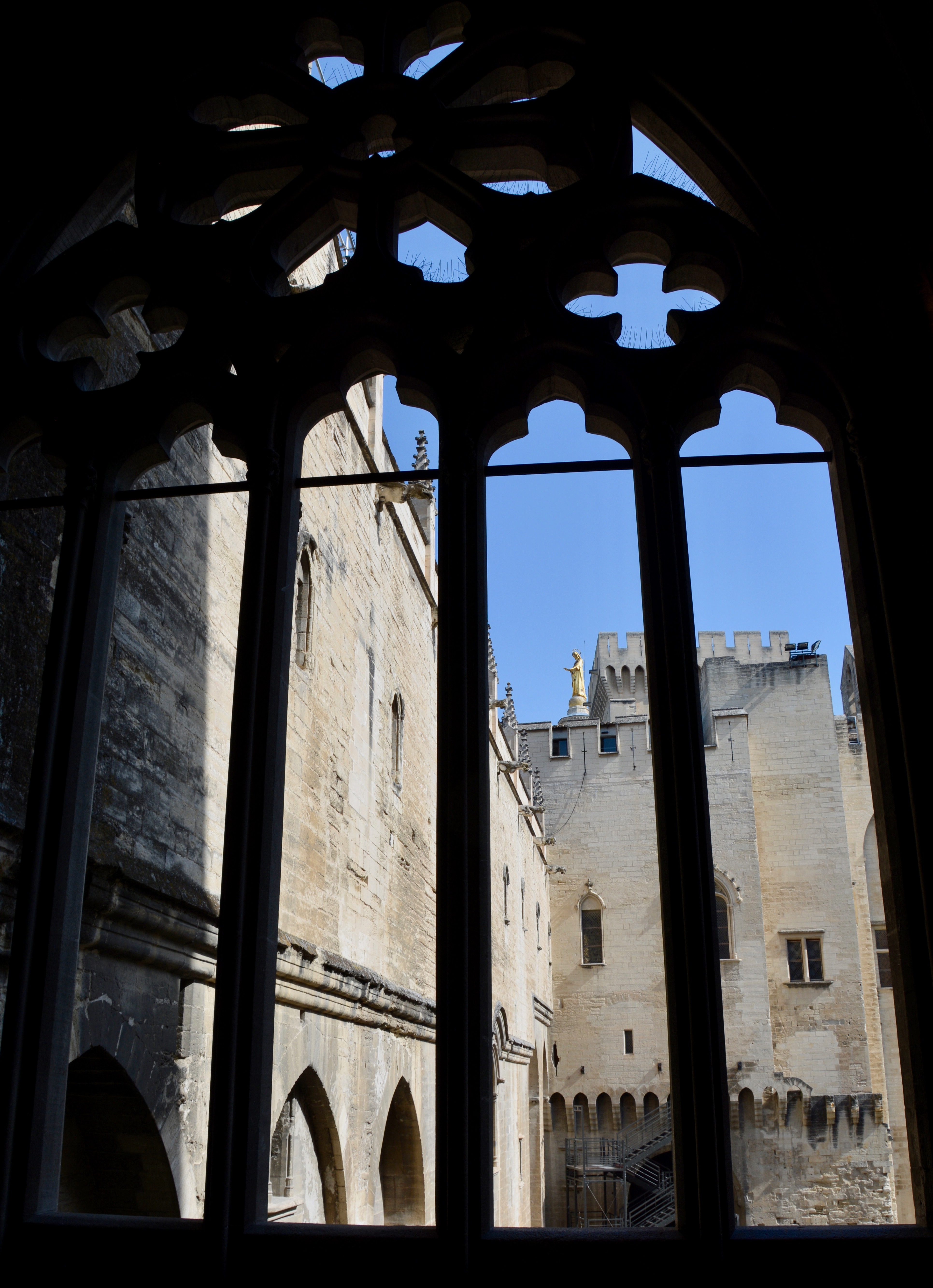
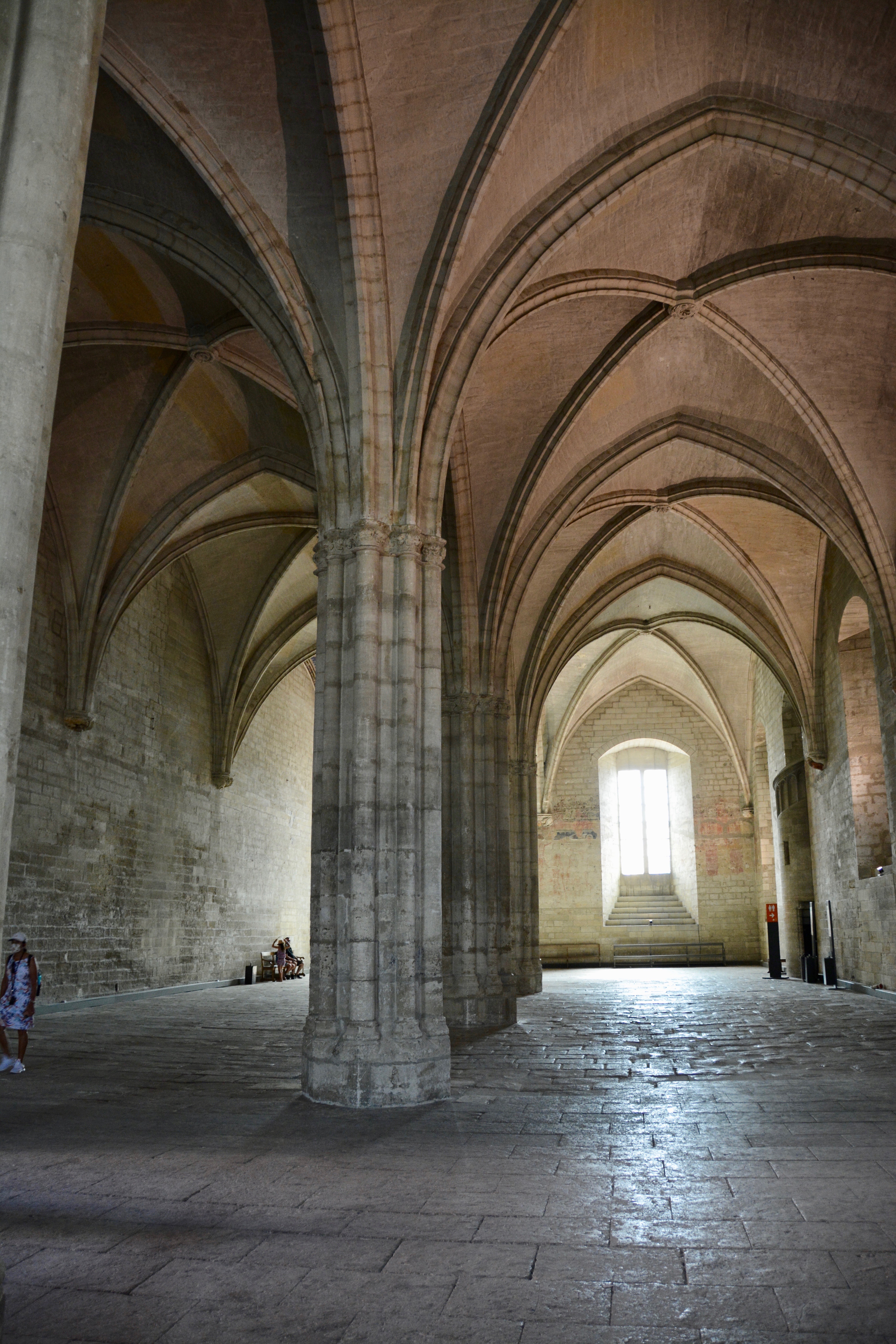
Photo ©Jean Janssen. Inside the Palace of the Popes, Avignon, France

We will visit the UNESCO designated district after breakfast today.  After records highs of 102 in Grignan yesterday, it is expected to be 105 degrees Fahrenheit (41 Celsius) in Avignon today.  We hope to get our outside touring done in the morning and then relax. I might do a little shopping in the afternoon.  Boris came off the ship with me, realized how hot it already was at 9 am and that the whole tour was walking, and turned around and went back on the ship.  Our primary destination in the city is the Palace of the Popes which has a lot of steps and Boris had hoped for a bus to get us there to conserve his energy.  The heat is really draining for him. 

Photo ©Jean Janssen. Palace of the Popes, Avignon, France. Fresco photo shot from a long distance-adjoining room-with a zoom lens and no flash.

The cruise director had offered Boris the opportunity to join the bus tour to the Roman aqueduct, but he has been there before.  I would have loved to have seen it.  The Pont du Gard is a 2000-year-old tri-level aqueduct which spans the entirety of the Gardon River for a total of 31 miles.  It was built in 19 BC and is a UNESCO designated site.

Photo ©Jean Janssen Avignon, France

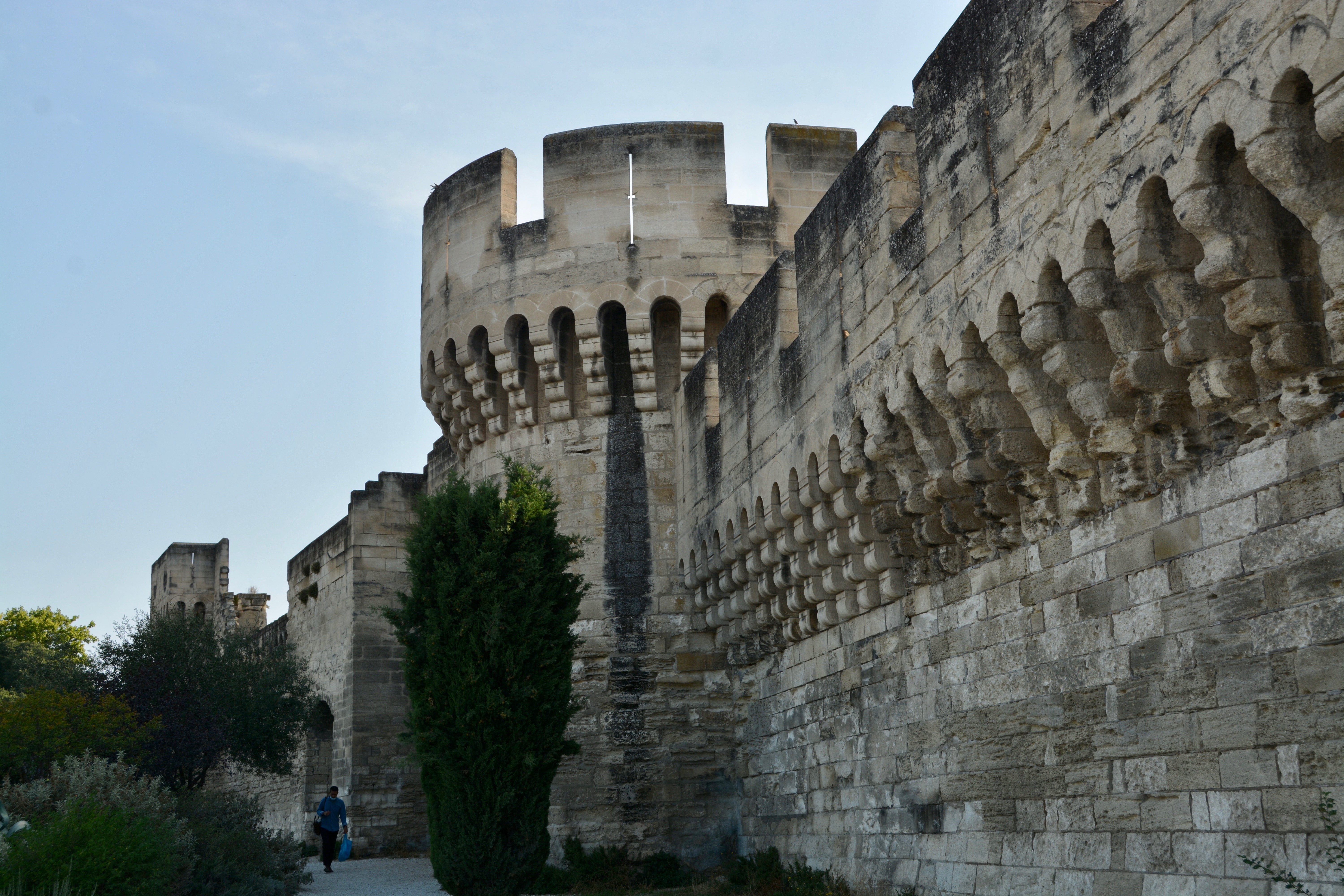
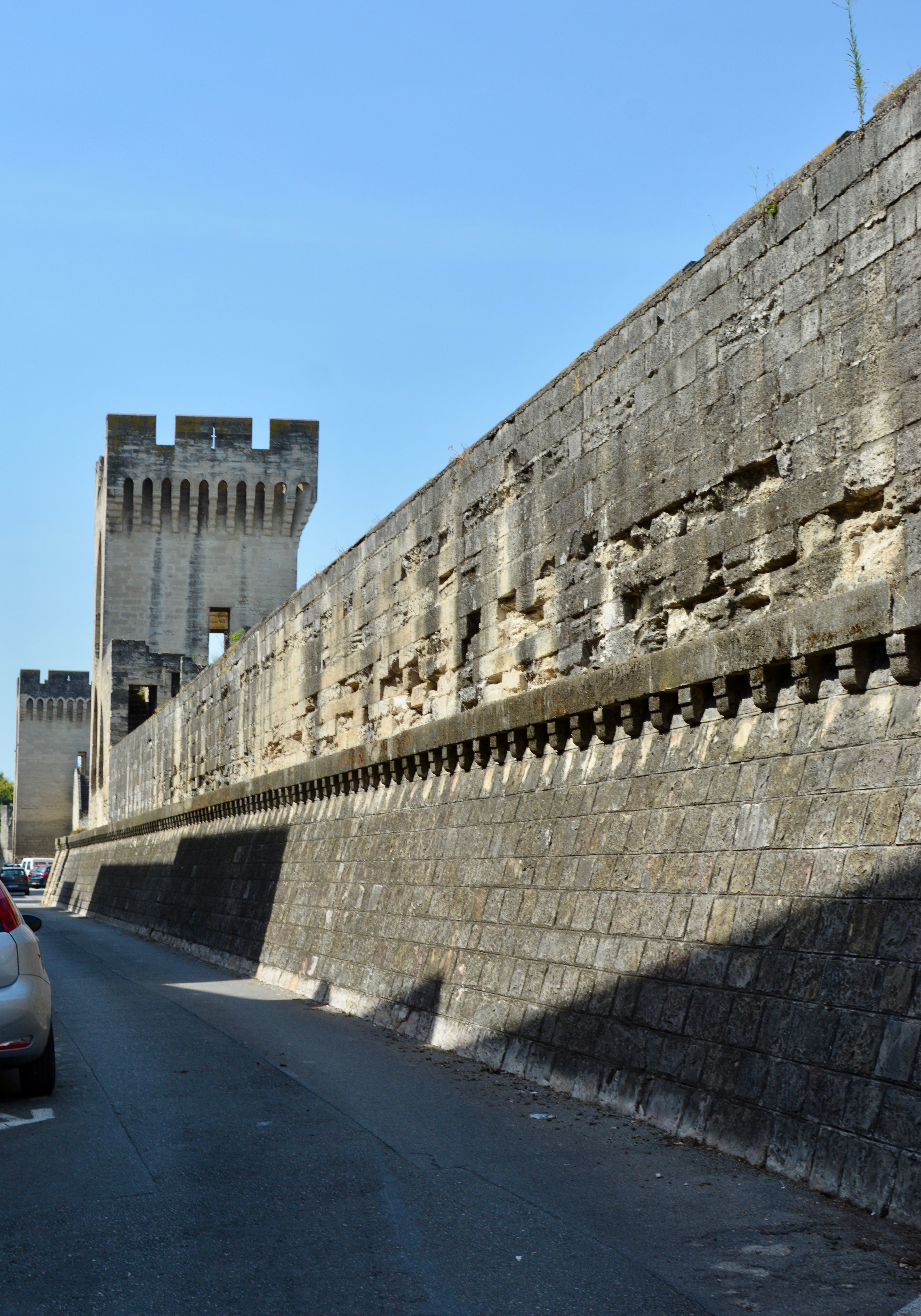
Following our Avignon guide, I crossed the subway (under street), passed the parking lots, and entered through one of the eight city gates. Avignon is a fortified city rich in medieval history; its buildings, 39 towers, 8 gates, walls, and bastions were built between 1350 and 1368 and restored in the 19th century.

Photo ©Jean Janssen Avignon, France

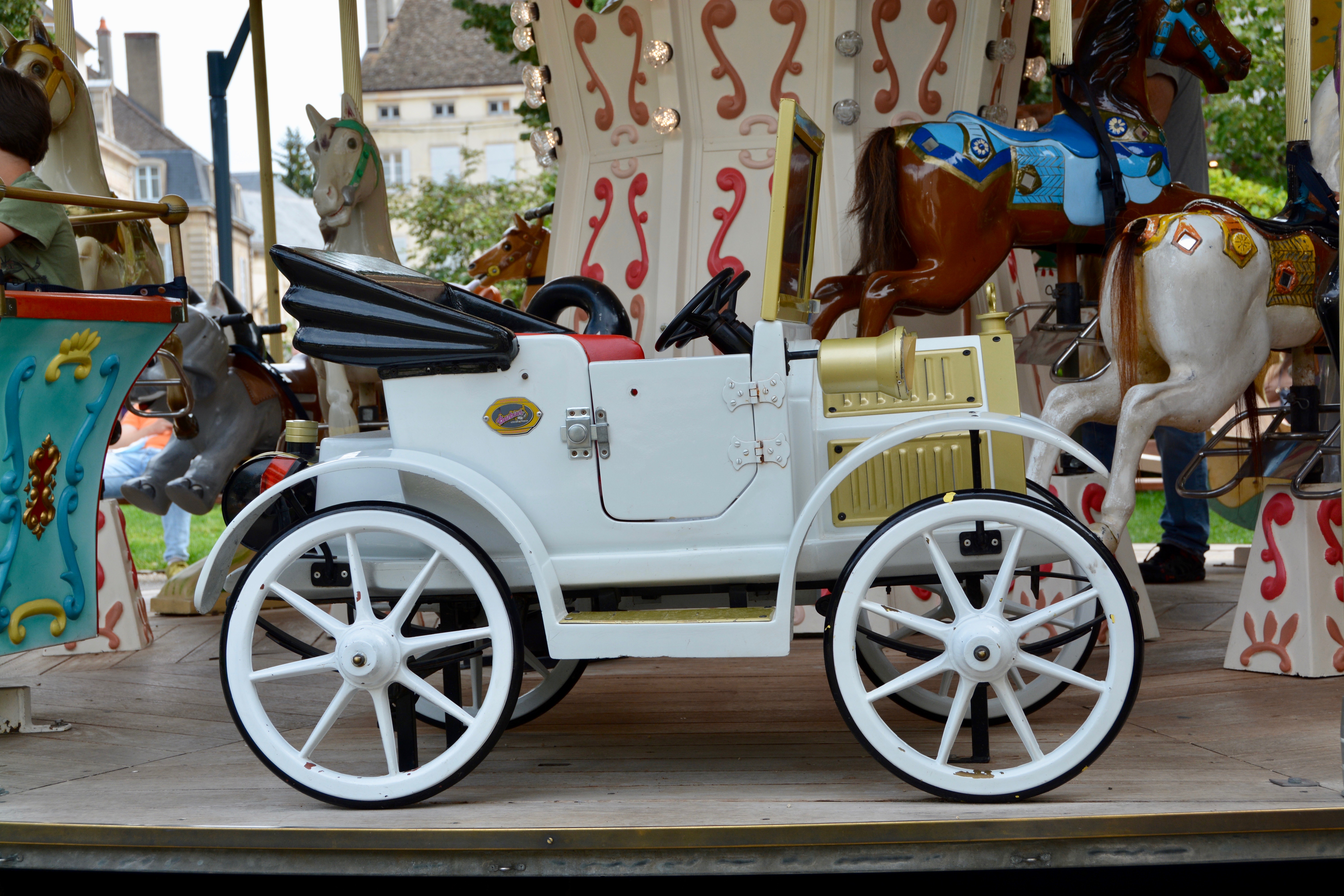
We stopped first at one of the main squares and noted the Theater.  The plaza had been completely filled with art installations, a carousel, and restaurants with outside seating that oozed into the central spaces.  It might have been charming had it not been so crowded.  Watch that you don’t trip over one of the many electrical cables taped to the ground.

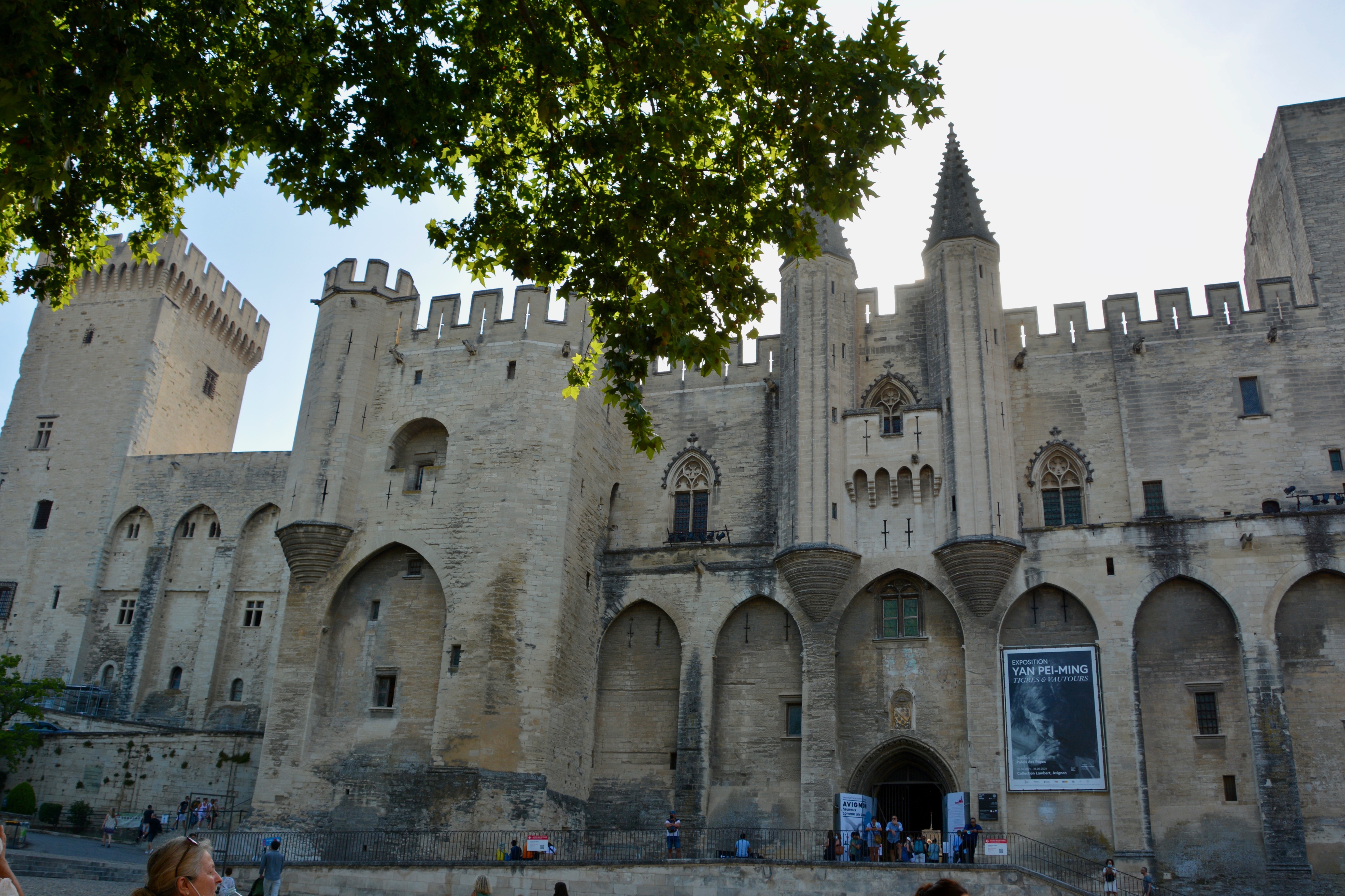
Photo ©Jean Janssen Palace of the Popes, Avignon, France

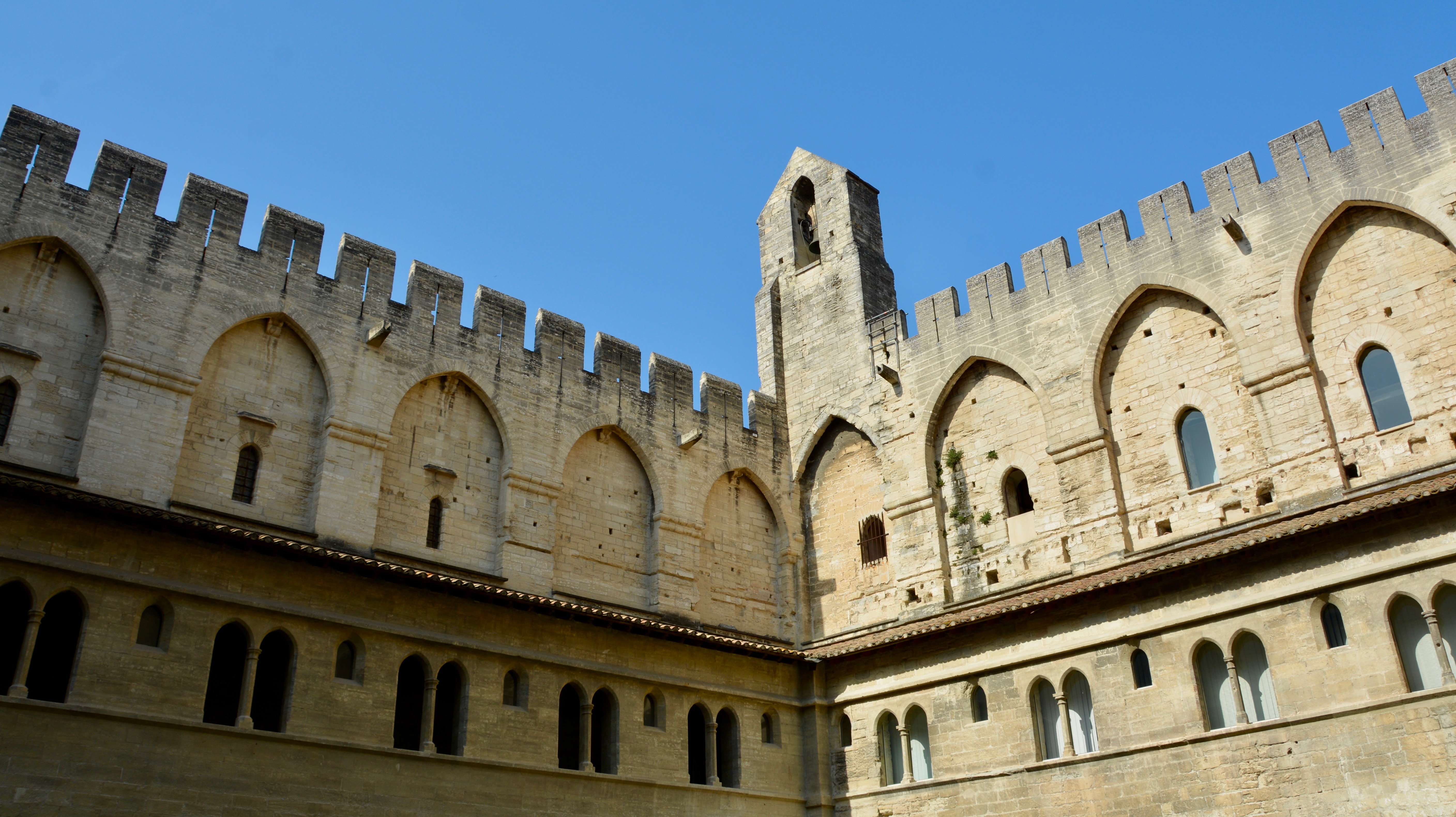
Once we made it to the huge square sitting in front of the Palace of the Popes, our guide went off to purchase the tickets giving us a chance to photograph the impressive façade.  The Palace is actually two buildings which were joined together, the older palace of Benedict XII, the east and northeast wings, and the “new” palace of Clement VI, the west wing.  Clement VI is considered the most extravagant of the Avignon popes and the difference is obvious when touring the structures, perhaps most directly obvious when you tour the private chambers of these two popes, viewed one after the other on the tour.  Later popes made only minor additions or changes to the Palace.

Photo ©Jean Janssen. Inside the Palace of the Popes, Avignon, France

Palsis des Papes, Palace of the Popes in English, “is one of the largest and most important medieval Gothic buildings in Europe. Once a fortress and palace, the papal residence was the seat of Western Christianity during the 14th century. Six papal conclaves were held in the Palais, leading to the elections of Benedict XII in 1334, Clement VI in 1342, Innocent VI in 1352, Urban V in 1362, Gregory XI  in 1370 and Benedict XIII in 1394.”  Wikipedia

Photo ©Jean Janssen The Palace of the Popes, Avignon, France

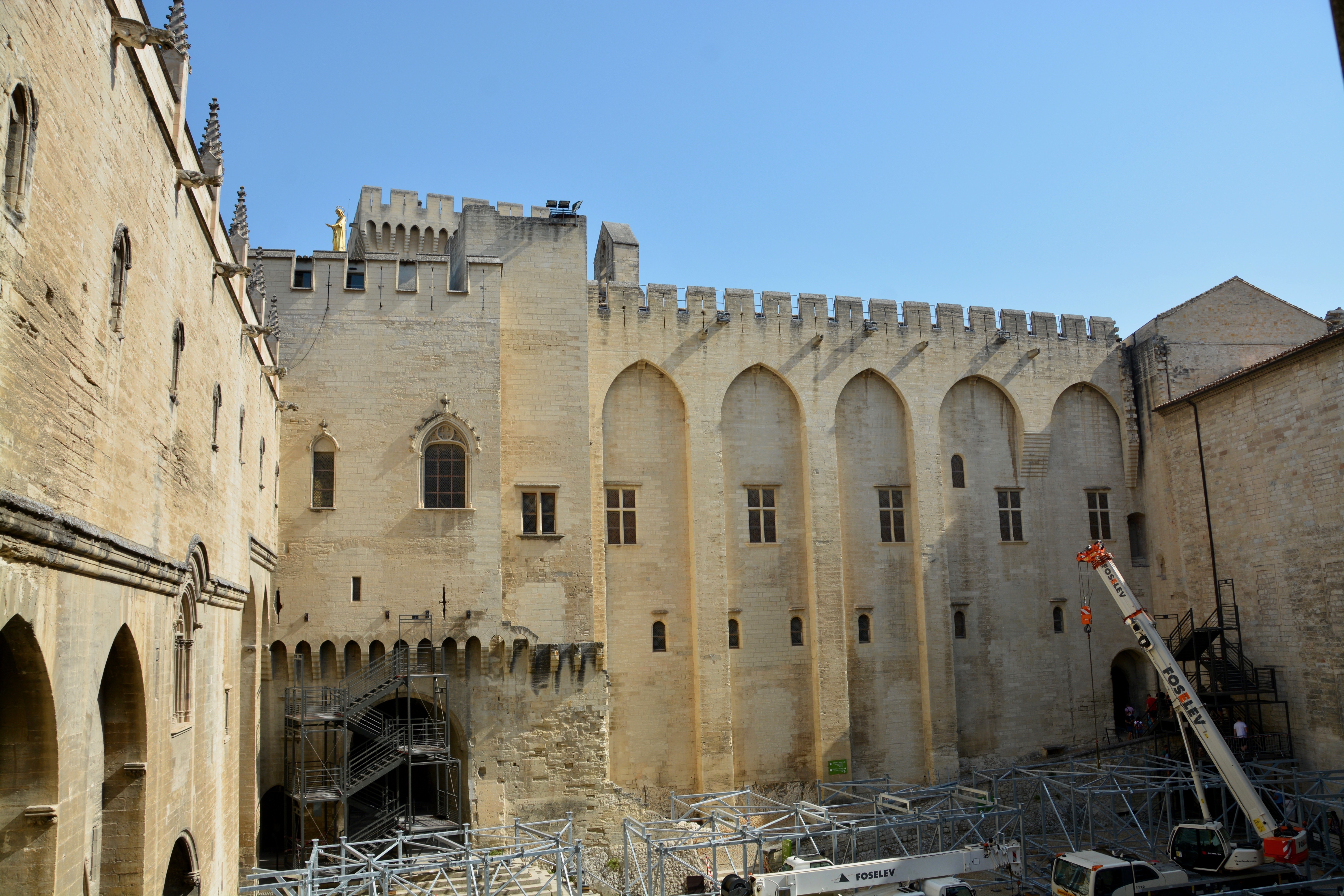
The Papal Curio was moved to Avalon in 1309 when violence broke out over the election to Clement V in 1305.  The Palace is huge and does require that the visitor is able to navigate a number of stairs.   It is incredibly hot and Boris would have been exhausted before we even made it inside.  There is major construction going on in the courtyard and the navigation wasn’t direct.

Photo ©Jean Janssen. The Palace of the Popes. This room was later used as a military barracks. Looking at the wall you can see the architectural details that were filled in or altered over time.

The Palace is empty.  It was stripped of all its decoration during the French Revolution.  It was later used as a military barracks.  Some of the frescoed chapels can still be seen, as well as the decoration in the bedrooms of the popes.  Photographs are allowed, but you are not permitted to photograph or videotape the frescos.

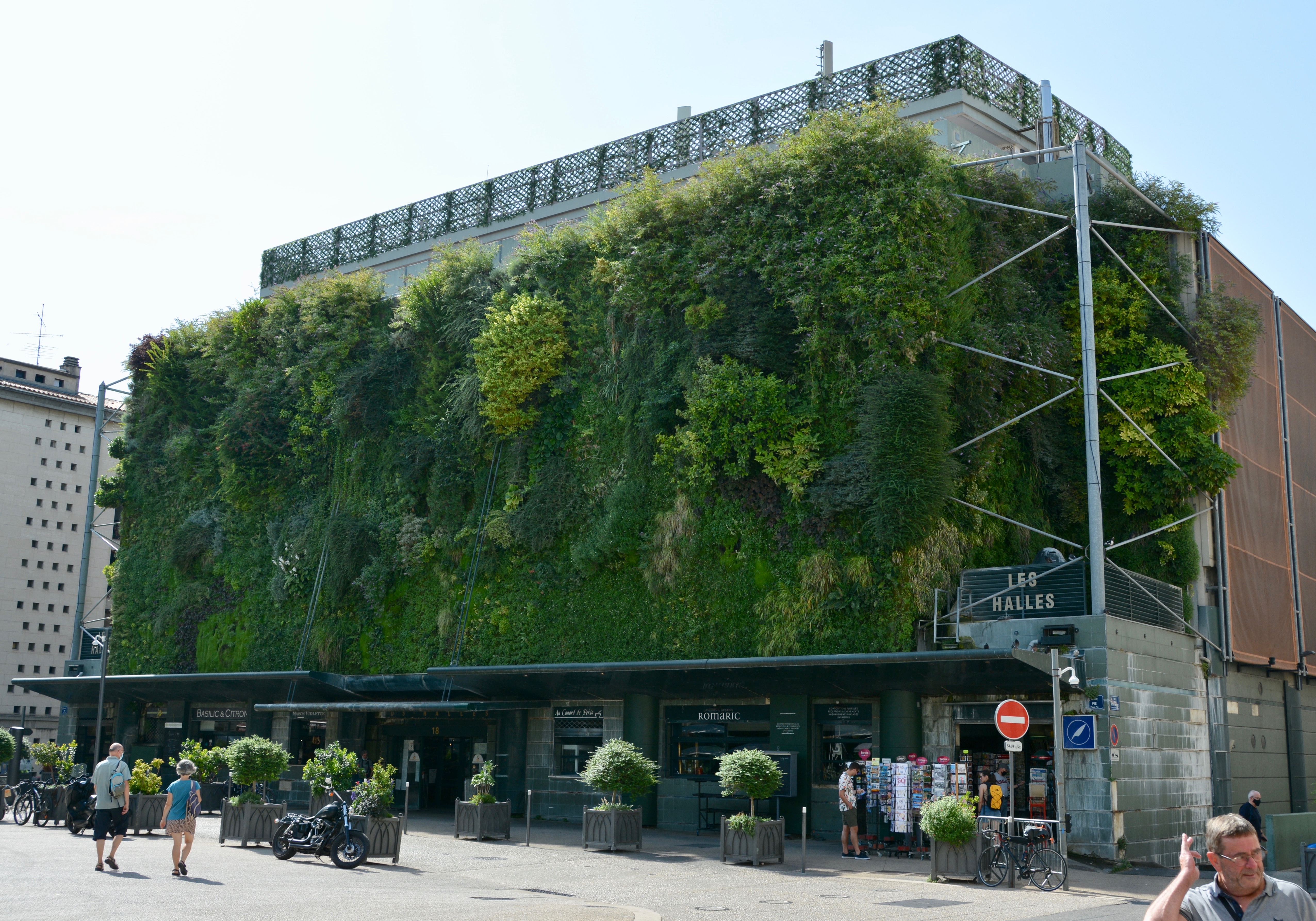
Photo ©Jean Janssen. Les Halles, Avignon, France
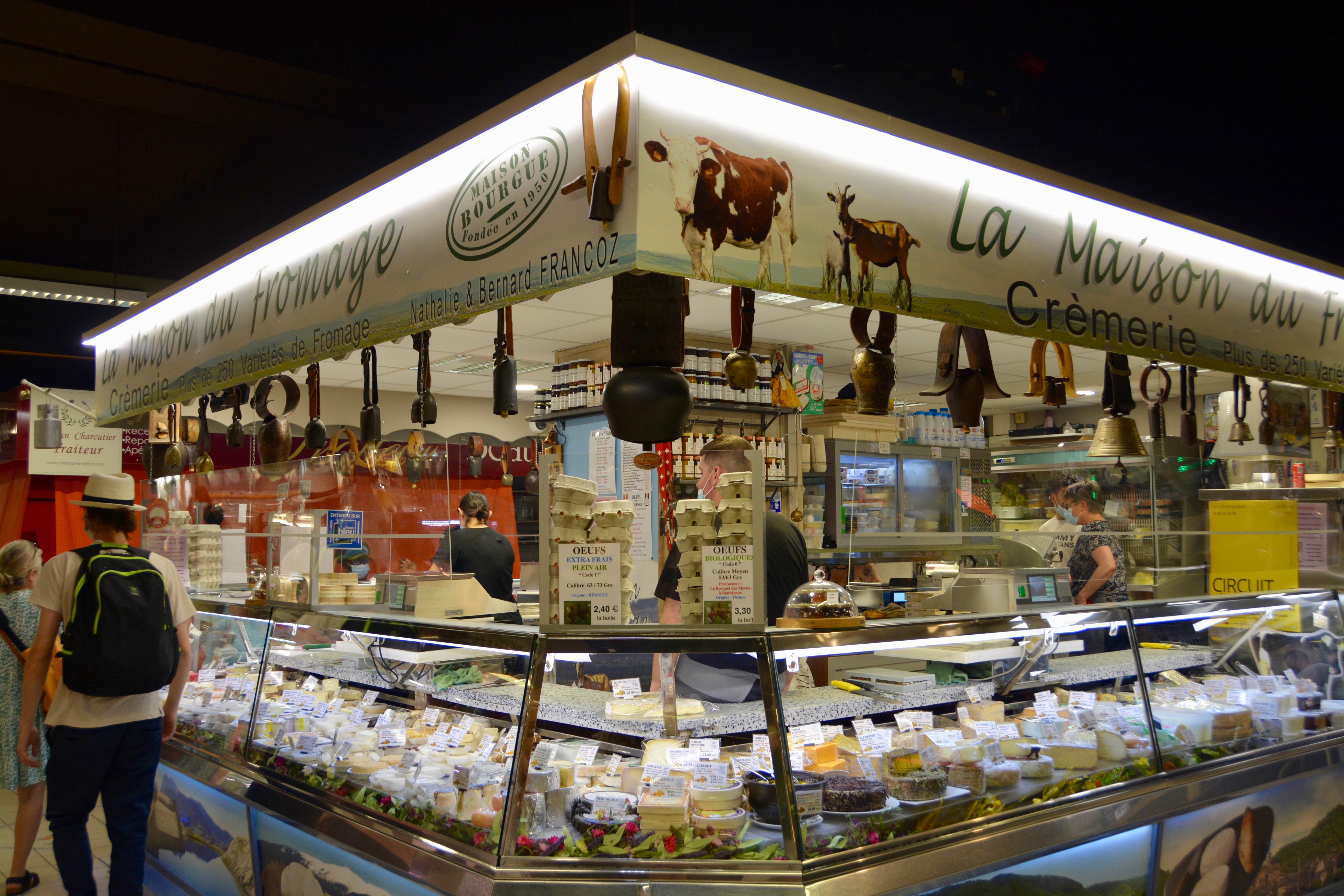
Photo ©Jean Janssen. Inside Les Halles, Avignon, France

After our Palace tour, we ventured a little farther into the walled city.  There are some wonderful shops and the city is quite charming, but the day had grown incredibly hot.  I was happy when I realized our next destination, Les Halles, was air conditioned.  Les Halles is a wonderful enclosed market with meat and seafood vendors, vegetable and fruit stands, cheese shops, and so much more.  Our guide recommended the oyster bar at the far end, but it was closed today (the proprietors were probably on their own annual holiday).

Photo ©Jean Janssen. Palace of the Popes, Avignon, France

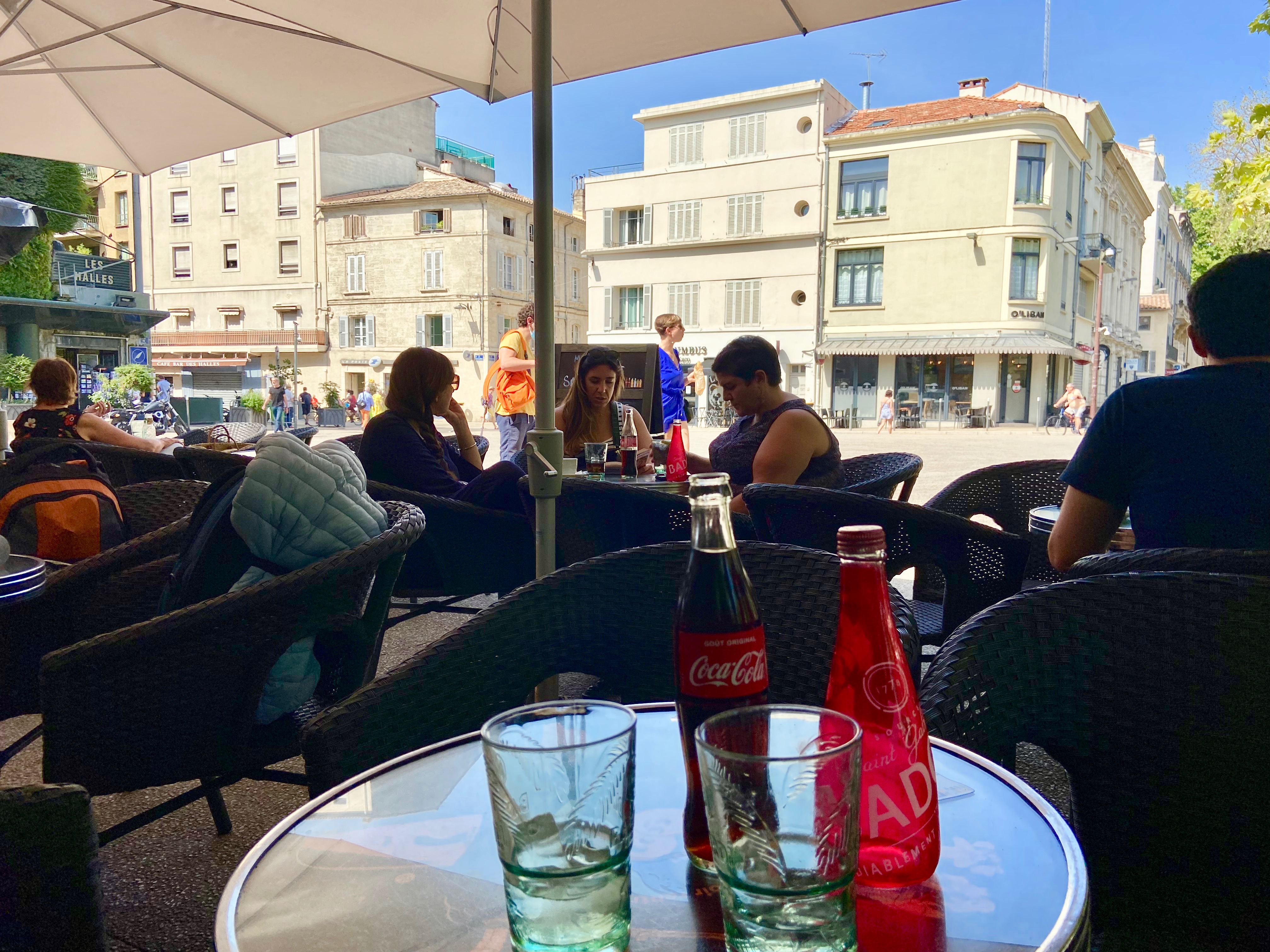
Given the bar was closed, after I looked around Les Halles I decided to go over to one of the cafes just outside the market and enjoy a cool drink for the balance of our free time.  I was surprised when they asked to see my COVID vaccination card, even when I was sitting outside.  Not a problem for me, I was excited and felt fortunate to receive my vaccinations (2 shots of Pizer) in March.  Just a few days ago, France began requiring vaccinations for those entering indoor spaces.  (They had checked our cards at the palace.)  Apparently, the regulation applied to café patrons whether seated inside or outside.  I had my vaccination card; we had wisely carried them every day when we were off the ship.  In France, they referred to it as a “pass”.

Photo ©Jean Janssen. Enjoying a cold drink in Avignon, France

I love sitting at French cafes, especially outside.  You get to experience a bit of French culture and you can’t beat the people watching.  I enjoyed a sparkling water in one of my favorite pink bottles that I collect and a cold Coke.  With the breeze and an umbrella overhead, sitting, watching, and enjoying a cold beverage felt like a little bit of heaven.

Photo ©Jean Janssen. Avignon, France

After the tour group gathered again, we headed back to the ship.  While many of the guests peeled off to do a little shopping, I wanted to check on Boris so I went back to the ship.  Once outside the walls, we asked the guide about the city’s famous bridge.  The Pont Benezet was built between 1177 and 1185 to span the Rhone River.  After a flood in 1668 destroyed portions of the bridge, only 4 of the 22 arches remain.  It is considered the most famous bridge in France and children even learn a nursery rhyme about the bridge, “Sur le Pont d’ Aviglon”.  The bridge is only one over from where we are docked.

Photo ©Jean Janssen. Joining our ship enroute along the Rhone.

Boris had a relaxing morning and joined me for lunch.  It has gotten so hot, over 100 degrees Farenheit, that I am not sure I want to walk around town shopping.  Boris and I decided to join the Chateauneuf du Pape wine tasting this afternoon.  We will go by bus to that wine producing region and stop at one of the new winery tasting room for a presentation and tasting.  Ironically, Chateauneuf du Pape is where we rejoined the boat after our tour yesterday as it sailed down the Rhone toward Avignon.

Photo ©Jean Janssen. Joining our ship enroute along the Rhone.

Another alternative tour is a kayak tour down the Gardon River.  They will pass under the aqueduct.  I would have loved to go if it wasn’t so hot.  We talked some of the guests that did go after they got back and they said there were so many people swimming in the river to cool off that they were constantly dodging bodies.

Photo ©Jean Janssen Avignon, France

The bus drive out provided beautiful scenery, but the tour guide was a little off.  She liked singing “Sur le Pont d’ Aviglon” and led the bus in song several times; I opted out.  We passed so many wonderful castles and vineyards, but there were no photo stops.

Photo ©Jean Janssen Chateauneuf du Pape, France. Notice the papal reference on the glass of the bottle.

It was the Avignon popes who promoted the wines of this region and John XXII who built the castle that is the symbol of the area.  Chateauneuf du Pape literally translates as “the Pope’s new castle”. The wines of this region are very popular in France, mostly bold reds but there are some whites.   The whites can be hard to find since only 7% of fields are planted with the white grapes.  Several people on the tour really love the wine.  These are blended wines, officially using several of 13 grape varieties (although there are 20 varieties in the region).  The most used grape variety in Chateauneuf du Pape is Grenache.

Photo ©Jean Janssen. Chateauneuf du Pape winery

After the educational presentation on the region and the grapes, we were ready for the tasting.  The winery representative did a nice job on the basics of tasting.  The wines were offered with infused chocolate-one lavender, one thyme-as an example of how the right food combination can enhance the flavor of the wine.  Neither Boris or I liked any of the offerings enough to buy the wine, but plenty of the guests did.

Photo ©Jean Janssen At the Chateauneuf du Pape winery

The guide made one more stop so we could take pictures of a hotel made to look like a castle.  With all the wonderful authentic castles, it was a poor choice.  She also led us in more singing on the way back.  She was the only bad tour guide we had on our River Cruise.  I was glad that Boris had an opportunity to get off the boat and they offered an excursion option that didn’t require us to spend much time outside.

Photo ©Jean Janssen. The Palace of the Popes, Avignon, France

Once back on the ship, we dressed for the Captain’s Dinner and then went to the Leopard Lounge for our COVID testing.  To return to the United States, citizens and visitors must present a negative COVID test taken within the last 72 hours regardless of your vaccination status.  Uniworld provided on-board testing at a cost of $40; they let us know that local pharmacies charged $25.  The convenience was worth the slight additional cost which was paid to a pharmacist who came to our ship after his regular work day ended.  Written results were sent to our stateroom and later we received formal paperwork with a QR code we could present at the airport. 

Photo ©Jean Janssen Inside the Palace of the Popes, Avignon, France

We talked to some people who were staying on after the cruise and had to wait an additional day and do their testing at a local pharmacy.  The results were supposed to be emailed, but they were still waiting for the results of their rapid test more than 8 hours later.  I think we made the right call testing on board.  The poor pharmacist that came over was exhausted.  With the regulation change in France, he was overwhelmed with 20 someodds who wanted to go out on the weekend and were not yet vaccinated so they went through testing.

Photo ©Jean Janssen. Inside the city walls, Avignon, France

Dinner and Dancing tonight and then one more day of touring in France tomorrow. 

–Natasha

Posted in cruises, international, River Cruise | Tagged , , , , , , , | Leave a comment

Viviers and Grignan, France, and a Truffle Dog

Photo ©Jean Janssen Viviers, France

If a town could ooze charm, this is it.  Today we are in Viviers, France right on the Rhone.  This well-preserved medieval town thrived in both the Middle Ages and the Renaissance.  Some writers call it an “architectural open-air museum”.  It boasts France’s smallest active Cathedral, two surrounding city walls, and vaulted passageways, including one that separates the lower from the upper town.

Photo ©Jean Janssen Viviers, France

This is Jeannette’s adopted home town and she will once again be our guide today (our choice).  I flat out asked her if it was her husband she fell in love with or this town.  The city is a photographer’s dream and it was no surprise that my camera battery ran out near the end of the tour.  We are going to visit the town, have an undisclosed experience depending on the guide, and then see the boulodrome where local men will teach the ship guests how to play petanque,  a game like horseshoes but played with steel balls.

Photo ©Jean Janssen. Viviers, France

There is a bit of an uphill trek associated with our tour of Viviers and I can already see Boris starting to consider opting out. He is having to use a cane on this trip and between the heat and the incline (which we are not used to coming from flat Houston, Texas) it has been a struggle for him. Viviers is also mostly cobblestones. At some point, Boris decided to rest in a square with a charmingly painted home beside him.

Photo ©Jean Janssen. Medieval window in Viviers, France
Photo ©Jean Janssen Same location, stepping back
Photo ©Jean Janssen Location of the baking house, Viviers, France
Photo ©Jean Janssen. Jeanette showed us ancient windows, doors, and doorways. That is quite a “pet door” at the bottom.

Jeanette showed us window archways that marked the age of the buildings. Some had been lovingly preserved or simply incorporated into a new structure. She also stopped at a building which had once been an oven house. Rather than all the residents have there own ovens, they took the dough to a specific location where the baking was done and then picked it up later. That was probably a much safer option in these crowded quarters.

Photo ©Jean Janssen. I photographed this courtyard on the way to the upper city. On the way down, Jeanette stopped in the same courtyard at the Maison des Chevaliers.
Photo © Jean Janssen. The often photographed Maison des Chevaliers, Viviers, France

In the lower city, Jeanette also pointed out the Maison des Chevaliers. The property was first owned by salt merchant and art lover, Noel Albert. He used his wealth to renovate the property in the 16th century with ancient Roman decorations.  “The different floors are decorated by mullioned windows framed by pilasters, Ionic, Doric columns and composites and busts in medaillion.” Du Rhone aux Gorges de Ardeche.

Photo ©Jean Janssen. Saint-Vincent Cathedral, Viviers, France
Photo ©Jean Janssen. Entrance to Saint-Vincent Cathedral, Viviers, France
Photo ©Jean Janssen Saint Vincent Cathedral, Viviers, France

We made our way to the upper city and France’s smallest active Cathedral, Saint Vincent’s. From the Belvedere of Chateauvieux we had wonderful (almost) 360 degree views of the area, including the beautiful tiled rooftops. Jeanette pointed out one eyesore that just had a red roof. She said the owner, like everyone else who lived in the medieval city, would be required to cover the red surface and replace the tiles to match the other buildings.

Photo ©Jean Janssen From the Belvedere of Cateauvieux we had wonderful views of the tiled rooftops of Viviers. The owner of the building with the red roof will be required to cover it in tiles.
Photo ©Jean Janssen Former Bishop’s Palace, now the town hall, in Viviers, France

From the top you can also see the former Bishop’s palace built in the Italian style with a reception room covered in mural paintings. When the large, opulent building, built in the style of 18th century private mansions, proved too large for church purposes it was swapped with the nearby city building and in 1986 became the town hall.

Photo ©Jean Janssen. Roadway hooks used to haul materials up the hillside for the construction of the Cathedral and the surrounding buildings.
Photo ©Jean Janssen Viviers, France

We passed through the opening that was made to haul materials up to the Cathedral and the ecclesiastical buildings. Along the narrow curved roadway were large hooks fixed into the wall and ground that were used to pull materials up. The road is essentially one way and Jeanette told us she had witnessed an incident of road rage on the spot. The car coming down from top can really not back up, so the other vehicle heading up the hill has to back down. The driver of the second car refused and simply got out of her car and walked away blocking the roadway. The incident occurred between two “little old ladies” of the village. Makes me wonder if there was more to it.

Photo ©Jean Janssen. Passageway to and from the upper city, Viviers, France

Making our way back down into the lower city, we picked up Boris and headed to our personalized activities. Two of the groups are going into the homes of their guides who live in medieval Vivers. Since Jeanette lives outside the city, our group is going to see a local potter in action. He made both a salad bowl and vase while we observed him at his wheel. He starts with a red clay.

Photo ©Jean Janssen Vivers, France
Photo ©Jean Janssen. Medieval jail with a window view, Vivers, France
Photo ©Jean Janssen Viviers, France

Afterwards, we enjoyed wine and appetizers on the patio of the potter’s shop. Natasha loves her pottery, so of course I did a little shopping keeping in mind that I had to be able to get the pretties home.

Photo ©Jean Janssen. The master at his craft in a Viviers pottery shop, France.
Photo ©Jean Janssen. Boris in line for drinks and appetizers at the Pottery Shop in Viviers, France

After the pottery shop, we headed back down the linden-tree lined lane toward the ship. We had passed the boulodrome where petanque is played on our way into town.  It is so popular that the town has a dedicated space with at least a dozen terrains where the game could be played. One of the benefits of petanque is that it doesn’t require a dedicated space like basketball would. We watched for a while, but it was hot and we were tired, so Boris and I headed back to our nearby ship to cool off and for lunch.

Photo ©Jean Janssen. Vivers’ boulodrome where local men taught the ship guests how to play petanque. 

This afternoon we are taking a special excursion to another French city, Grignan. The castle sits perched on a rocky promontory that has been occupied since the iron age. In the 5th and 6th centuries, Romans occupied this land. We had a wonderful view of the city as we approached. Departing the bus, we found a wonderful domed washing station. This communal washhouse was a city hub. Today, we saw several dogs enjoy the cool water, including a West Highland White Terrier (like our Peabody) named Igloo.

Photo ©Jean Janssen Grignan, France

Much of what we know of Grignan and life in this remote castle come from the writings of one of the first French female intellectuals, Madame de Sévigné She chose the older twice-married Count de Grignan, not particularly attractive, but utterly charming, as her daughter’s husband. The daughter, having given her husband two children, was relived of further duty in the eyes of her mother and could return to Paris and the court life her mother loved. However, the Countess de Grignan made the mistake of falling in love with her husband and (unlike her mother) enjoyed her marital sex life. As a result she wanted to stay in Grignan and it fell to her mother to visit her in the country. Madame de Sévigné corresponded with her daughter over many years and from her writings we have a clear picture of court life and the aristocratic attitudes that prevailed during the 17th century. She visited Grignan three times and died her on her third visit.

Photo ©Jean Janssen. Statue of Madame de Sévigné, Grignan, France
Photo ©Jean Janssen. The plume of Madame de Sévigné adorns the city’s bell tower in Grignan, France

Boris chose to stay in the lower town and enjoy the scenery from a local cafe; this is actually one of the best way to spend a day in France. I walked up the hill to the castle, the beautiful church, and the amazing views.

Photo ©Jean Janssen The castle at Grignan, France
Photo ©Jean Janssen. View from the top, Grignan, France

Saint-Sauveur College church is built into the cliff wall at the top of the hill. One of the things that make the church unique is that a terrace was built on top of the church instead of a bell tower with a cross. The church was built in 1535 by the Baron Adhémar and was consecrated by Pope Paul III in 1539. Madame de Sévigné is buried in Saint-Sauveur.

Photo ©Jean Janssen The Saint-Sauveur College church, Grignan, France
Photo ©Jean Janssen The terrace outside Saint-Sauveur College church, Grignan, France

The city is also known for the many varieties of roses that are grown there. I didn’t know this aspect of the city’s notoriety until later. I just snapped some pictures because I thought the flowers were exceptionally beautiful.

Photo ©Jean Janssen. A beautiful rose in Grignan, France

Walking back down, there was time for a little shopping; Boris had found the ATM. I bought some lavender oil. We just missed the seeing lavender in the fields; it is cut in July.

Photo ©Jean Janssen. Two sisters live next door in Grignan and duel it out each year through their flower presentation

Our last stop of the day is at a Truffle Farm that has been in the same family for generations. The methods and training are passed down from generation to generation and are well guarded secrets. He asked if anyone in our group was from California (where they grow truffles). I think he was trying to sniff out the spies. Jeanette translated for our host while he showed us the tools of the trade and petted his sweet truffle dog. They used pigs prior to 2000. However the pigs tended to eat the truffles when they found them and after a few years had to been retired. The pigs found the truffles instinctively, but the dogs have to be trained. This sweet dog had just had puppies but was anxious to get out to the trees.

Photo ©Jean Janssen. A successful truffle hunt.

We were in white truffle season. The black, more valuable, truffles have a different season. She quickly found several truffles. (Boris is convinced it was fixed; it was surprising that she found truffles in the oldest part of the farm which the owner told us doesn’t produce much.) Afterwards, we sampled some of the local wine and of course, truffles. They were wonderful. I bought wine, truffle slices, truffle butter, and truffle spread. Then, when asked, the owner brought out the adorable puppy that he has chosen to keep from the liter. She was a cutie. He quickly announced that she would not be going to America.

Photo ©Jean Janssen A truffle puppy
Photo ©Jean Janssen Grignan, France

Another fabulous day on the Rhone. While we were touring in the afternoon, the boat moved to Avignon where it will stay for the balance of our trip. We will tour the city in the morning.

Photo ©Jean Janssen. Lights along the Rhone as seen from the French Balcony in our cabin.

–Natasha.

Posted in cruises, international, River Cruise | Tagged , , , , , , , , , , , , , | 1 Comment

The Twin Cities of Tain L’ Hermitage and Tournon, France along the Rhone River

Photo ©Jean Janssen. Tournon, France as seen from Tain L’ Hermitage, France
Photo ©Jean Janssen Leaving the Ship along the Rhone.

After sailing all night on the Rhone, we are docked at Tain L’ Hermitage, France for a visit to the twin cities of Tain L’ Hermitage and Tournon.   After breakfast, we walked over to the historic Romanesque church built on the site where King Charles V of France and his cousin Joanna of Bourdon were married on April 8, 1350.  A statue outside commemorates the event.  I remarked to Boris that I thought the statue was of two children and he told me that Charles V was 12 at the time of the marriage.  I guess I was right.

Photo ©Jean Janssen. Statue commemorating the marriage of Charles V of France to his cousin Joanna Bourbon in Tain L’ Hermitage, France
Photo ©Jean Janssen Site of our organ concert in Tain L’ Hermitage, France

Some of the passengers slept in, but those that got up were treated to an organ concert featuring Bach, Mendelssohn, and Handel and performed by a guest artist Alexis Platz from Strasbourg.  The church was simple, but I just closed my eyes and enjoyed the music.  The organ is considered one of the best in the area and the concerts have been organized to draw in visitors.  This morning concert was exclusive to the ship’s passengers.

Photo ©Jean Janssen. Hermitage Hill, Tain L’ Hermitage, France
Photo ©Jean Janssen. Top of Hermitage Hill.

The city is at the base of the Hermitage Hill.  The hillside is covered in vineyards and at the top of the hill is a small chapel.  It is said that a hermit left society behind and went to the top of the hill where he lived out his life, hence the name of the hill and the town.  It was a lovely view looking up.  The city is also known as the home of the Valrhona Chocolate Factory and many passengers indicated a desire to walk over.  Some days you can smell the chocolate from the dock.  After the concert we walked back to the ship for a brief recharge and to collect our listening devices which we use for most excursions.  Our cruise director affectionally calls them gizmos. 

Photo ©Jean Janssen. Tournon, France

This afternoon our walking tour is being led by Jeanette who is originally from The Cotswolds in England.  She fell in love and followed a French man home.  The relationship didn’t work out, but she embraced her life and the people of France.  Years later when she needed an electrician for repairs to her tiny apartment, she met her future husband.  She has lived in France for 30 years and she and her French husband have a daughter.  Jeanette had retained her British citizenship, but given Brexit, she is now in the process of becoming a French citizen.  According to Jeanette, the British ex-pats, about 20% of British citizens, were not allowed to vote in the Brexit referendum.

Photo ©Jean Janssen. Pedestrian suspension bridge linking Tour L’ Hermitage and Tournon, France. This photo was taken from the Tournon side looking back at Hermitage Hill.
Photo ©Jean Janssen War Memorial, Tournon, France

Jeanette led us across the attractive, wooden-floored, pedestrian bridge that links the towns of Tain and Tournon.  Tain L’ Hermitage is on the more affluent side of the river which has the benefit of the hill and vineyards.  Tournon, our destination, is on the other side of the Rhone in one of the poorest counties in France.  We started our Tournon tour with the stop along the river with a marker recognizing the engineer Marc Sequin who constructed the first suspension bridge over the Rhone in 1825.  Across the street at the base of rock is an impressive war memorial.  It was not unusual for poorer counties to see many more of their boys sent to the front lines, and the losses were often heavy.  The memorial is set against the stone mount upon which the Castle Museum set in the tower ruins sits.

Photo ©Jean Janssen. This house is built right into the church in Tournon, France. Why not hang your wash line on the church?
Photo ©Jean Janssen. Upstairs home and ground level Pizza Parlor built into space that was formally a chapel of the Church of St. Julien in Tournon, France.

Winding through town we stopped at a unique church built into the rock.  It has been heavily damaged.  The rose window frame is in place, but it is empty and behind the façade the church is shaped like a box.  At one point the church was so in debt that it sold off its chapels.  Along one street, a house and the church share a wall and the owner has a washing line hung attached to the church.  On the side street, the spaces where there would have been chapels are now businesses that open to the exterior, rather than the interior of the church.  One was a pizza place.  Inside the church, the ceiling has been replaced with one made from the local chestnut wood, so the whole interior is very dark.  On the right side is an alcove adorned in candles, on the left is a remaining side chapel which is decorated with wonderful medieval frescos.  The rest of the left side wall is smooth due to the sold off chapels.

Photo ©Jean Janssen. Beautiful frescos inside St. Julian’s Church, Tournon, France
Photo ©Jean Janssen. St. Julien’s Church, Tournon, France
Photo ©Jean Janssen. Frescos in St. Julian’s Church, Tournon, France

The “Gothic…church of St Julien [was] [p]robably built on the site of a Roman temple and certainly in the place of a Romanesque church…[the church] is dedicated to St Julien, a Roman centurion beheaded in Brioude (Auvergne) during the reign of Emperor Diocletian (245-313). Erected as a collegiate church between 1316 and 1348, the church of St Julien constitutes a rather surprising architectural ensemble: the offset bell tower, the chapels replaced by houses, the Italian-style ceiling give it an atypical character.” Religiana.

Photo ©Jean Janssen. Tournon is beginning a revitalization.
Photo ©Jean Janssen Tournon, France

The city is rather charming and coming into its own.  Jeanette said that just years ago all the shops were closed and now (and in spite of COVID), new shops are opening and the town is seeing a revival.  I found it very attractive.  Regular Travel by Natasha readers know I love to photograph windows and doors, and Tournon was a treasure trove to me.  Boris was struggling with the heat and the hills and he cut his tour short and headed back to the boat.  I pressed on if for no other reason than to take some interesting photographs. 
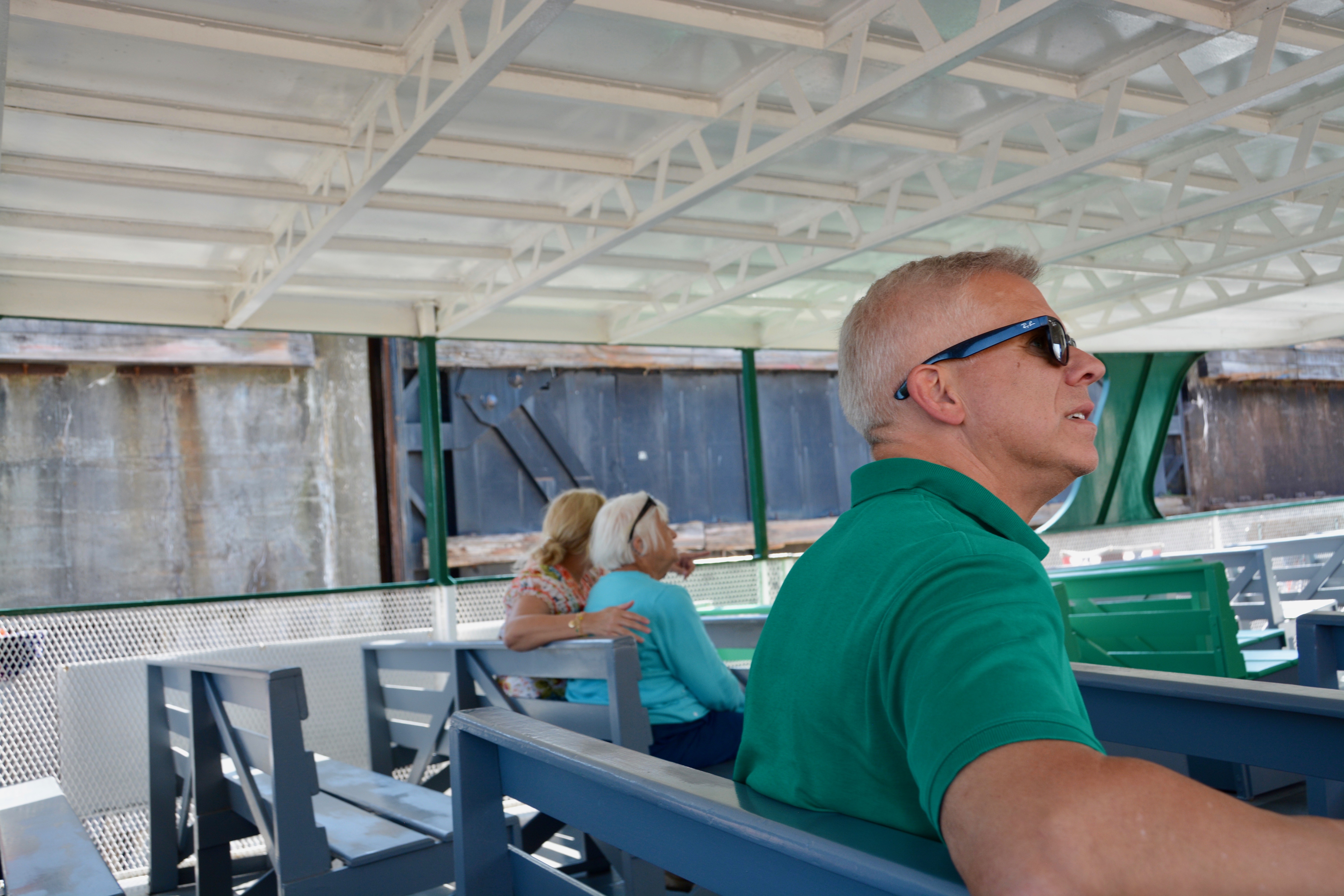
Photo ©Jean Janssen View from the castle terrance, Tournon, France
Photo ©Jean Janssen. Spotted growing along the wall of the castle museum, Tournon, France
Photo ©Jean Janssen View from the castle terrance, Tournon, France

After winding through the picturesque streets, we found ourselves at the city’s administrative building.  To the side was the entrance to the tower ruins.  We are having a reception on the Castle Museum terrace and enjoying some of the wines from a regional producer.  There was a white and two reds to sample.  Syrah grapes are the ones used to produce the more plentiful red wines in the region.  None of the selections overly impressed me, but I loved the fabulous views of the twin cities, the Rhone and the Hermitage Hill on the opposite side of the river.  It was very hot and luckily there was some shade.  Some of the ship’s guests hiked through the vineyards on Hermitage Hill as an alternate excursion.  A select few chose the masterpiece tour and had a tasting at a local winery.

Photo ©Jean Janssen Approaching the Castle Museum, Tournon, France
Photo ©Jean Janssen View from the castle terrance, Tournon, France

I headed back to the boat and found Boris cool and rested.  This afternoon the boat will cruise the Rhone towards our next stop Viviers.  In addition to the views, there is a chocolate and wine pairing to enjoy.  Natasha, as one of only about five people in the world who does not like chocolate, will pass on that option; Boris did indulge.  I actually did a little writing for the blog and emailed Rocky who is back at home with Peabody as I sat next to our French Balcony.  After his wine and chocolate, Boris napped.  When I realized the time, I headed to the Lounge for a presentation on Cezanne who spent some time and painted areas we will be visiting later in the week.  Jeanette is the featured lecturer.  She is both knowledgeable and entertaining.

Photo ©Jean Janssen. All along the Rhone, there are houseboat that have been converted into restaurants, bars, shops, and in Tournon, even a movie theater.

Tonight is the reception for returning guests, River Heritage members.  It is a nice opportunity for a few private words with the Captain, Hotel Director, Housekeeping Director, Chef, and Restaurant and Bar Manager.  I did learn that Uniworld will be introducing mystery cruises where all is arranged by the cruise line and you only find out where you are going three days before departure.  They will be starting in 2022 or 2023.

Photo ©Jean Janssen. Leaving the dock at Tain L’ Hermitage

We are now past the halfway point in the cruise.  Hard to believe there are only three more days of touring.  Natasha will be back tomorrow from Viviers, France, further south along the Rhone.
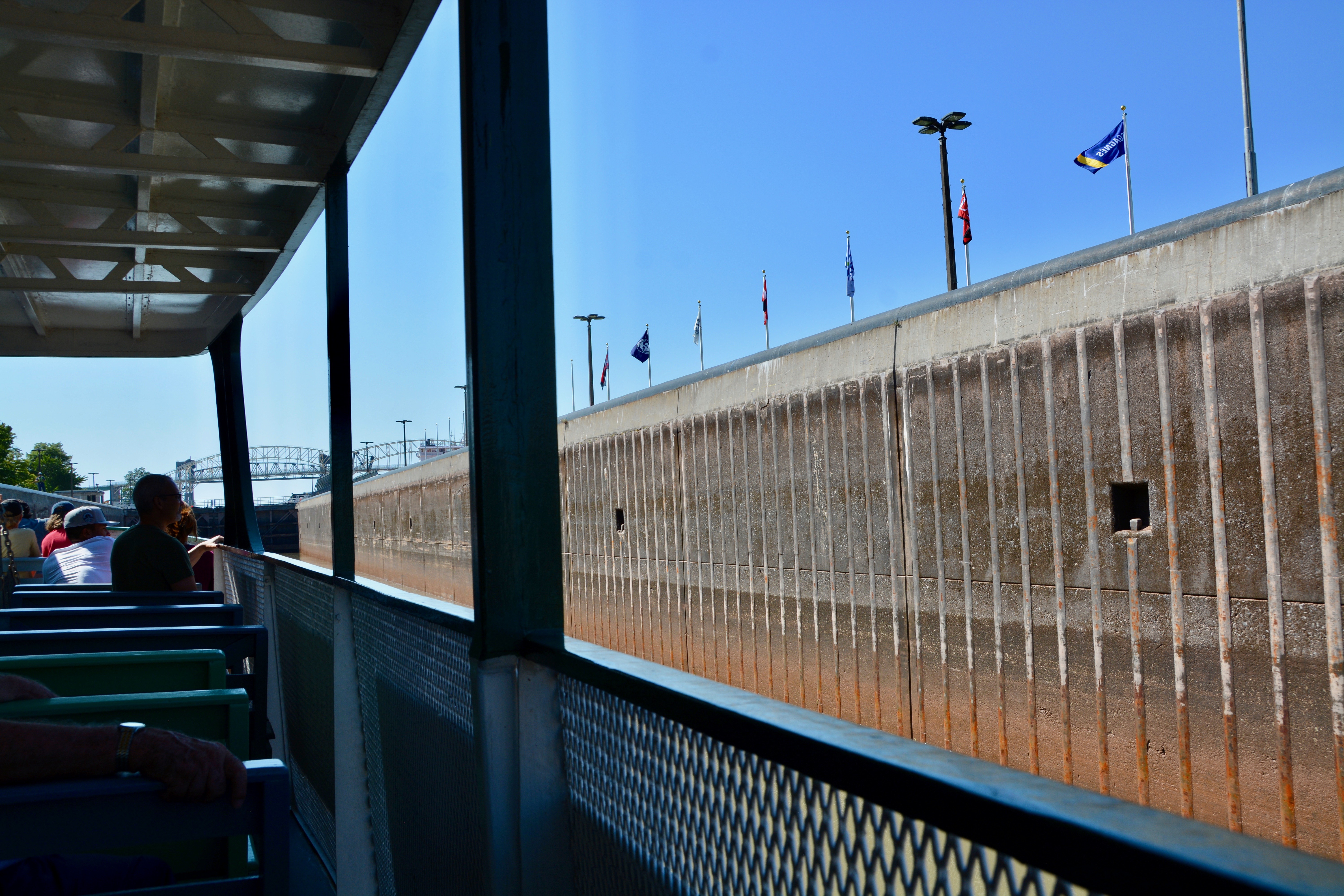
Photo ©Jean Janssen Tournon, France

Posted in cruises, international, River Cruise | Tagged , , , , , , , | Leave a comment

Lyon, France

Photo ©Jean Janssen. Lyon, France
Photo ©Jean Janssen. Along the riverfront, Lyon, France

Our ship has returned to Lyon for a day in the city.  We will not leave until midnight tonight.  Lyon is the third largest city in France behind Paris and Marseille.  There were a variety of tour options presented for today.  You could take a bike tour around the peninsula (with a warning that 20% would be in traffic); the second option was a five-hour walking tour (on cobblestones) through the city’s old town.  The third option, the one recommended for first time visitors, was the gastronomy tour which included a bus tour of the city and walking portions around the basilica and old town.  There were also several stops to sample the city’s goodies.

Photo ©Jean Janssen. Lyon’s Hotel Dieu
Photo ©Jean Janssen. The courtyard at the Hotel Dieu, Lyon, France

The city of Lyon has the benefit of two rivers, the Rhone and the Saone.  We are docked on the Rhone on the peninsula that sits between the two rivers.  Facing the river is Lyon’s Hotel Dieu.  (Like yesterday’s Hotel Dieu in Beaune, it offered hospital services to the poor.)  The local Hotel Dieu has the largest façade of any building in the city.  It is now the site of the Intercontinental Hotel and many shops and restaurants.  The courtyard is set up with chairs, tables, and canopies for people to enjoy the fresh air and sunshine.  Our first stop is the city market inside the Hotel Dieu.

Photo ©Jean Janssen. Sampler platter at the market at Le Halles, Lyon’s Hotel Dieu

The two-story market is very popular, so we have arrived early to beat the crowds.  Early August is a time many Europeans do their own vacationing, so some of the stalls were closed.  We stopped at the end of the upper section to enjoy samples of the meat, although our guide mentioned that the French do not eat meat in the morning.  That is probably why the tables are available to us.  There was a lovely sausage stuffed with pork, pistachios, and other goodies.  We also learned that apparently it is never too early to enjoy wine with your snacks.

Photo ©Jean Janssen. Red Pralines, a local favorite in Lyon, France

The guide also told us the background of the red pralines, a local favorite.  We’ll sample some later.  They are also referred to as pink pralines or praline roses.  I learned later that there are many origin stories.  Some date the treat back to the 18th century; others say the 19th.  Some say it was the color that was the inspiration; others say the roses.  Whatever the history, they are now eaten as treats or baked into pies and cakes and can be found all over the city.

Photo ©Jean Janssen. Basilica Notre Dame Of Fourviere, Lyon, France
Photo ©Jean Janssen. One of the Roman theaters as seen on the drive up to the Basilica, Lyon, France

After leaving Hotel Dieu, we wound our way up to the basilica, past the Cathedral and Place Bellecour. the largest pedestrian square in Europe.  To me it just looked like a large open and very hot space with no shade.  There are no trees of other greenery whatsoever.  It is a former parade ground with an equestrian statute of Louis XIV in the middle.  Most of the surrounding buildings are from the 1800s.  The most exciting thing we saw on the drive up were the two Roman theaters.  They sit side by side.  I wasn’t able to get a good picture, but on another trip I think they would definitely be worth a visit.

Photo ©Jean Janssen. Tour Metallique de Fourviere, Lyon, France

We parked and walked over to the square just in front of the Basilica.  From the square you got a great view of the Tour metallique de Fourviere, a replica of the upper third of its Paris cousin.  This metallic tower was built three years after Paris’ Eiffel Tower, but was not overseen by Eiffel.  Although it once had a restaurant and observation platform, today it is used for television transmission and is not open to the public.  It is the highest point in Lyon. 

Photo ©Jean Janssen. Basilica Notre Dame Of Fourviere, Lyon, France
Photo ©Jean Janssen. Exterior decoration on Basilica Notre Dame Of Fourviere, Lyon, France
Photo ©Jean Janssen. Door to the Basilica
Photo ©Jean Janssen. Exterior decoration on the Basilica Notre Dame Of Fourviere, Lyon, France

The basilica Notre Dame of Fourviere is a UNESCO World Heritage Site.  It sits on the spot which was once the Roman Forum of Trajan in a dominant position overlooking the city.  The church was built to thank the Virgin Mary for having spared the city from invasion during the Franco-Prussian war.  Our guide was not allowed to share information inside the church.  Additionally, Mass was going on so pictures were not permitted.  We could just take a quick peak inside.  The 19th century church has some beautiful mosaics lining the interior side walls.  It would definitely be worth a return visit.

Photo ©Jean Janssen. View from the basilica’s terrace with views on the peninsula, the Saone River in the foreground and the Rhone River at the tree line near the back of the photo
Photo ©Jean Janssen. Place Bellecour as seen from the Basilica’s terrance, Lyon, France
Photo ©Jean Janssen. Amazing architecture, including the city’s opera house, in Lyon, France as seen from the Basilica’s terrance.

The guide did encourage us to take in the amazing views of Lyon from the basilica’s beautiful terrace.  Place Bellecour was more impressive from this vantage point.  You could see far enough to see both rivers that are part of the city and view the perimeter of the peninsula in between the Rhone and the Saone.  The long façade of Hotel Dieu was perhaps even more striking from above.  We saw the Opera House and more of the city’s amazing architecture.

Photo ©Jean Janssen. Lyon’s Croix Rousse District

After leaving the panoramic esplanade, we made our way down to the city’s Croix Rousse area built on the slopes of the hill of the same name.  This cobblestoned historic sector just behind the columned Palace of Justice was slated to be torn down when a Councilman stepped in and gave the area historic status.  The silk weavers made their home in this area of the city. 

Photo ©Jean Janssen. You now find markers on the Lyon’s traboules.
Photo ©Jean Janssen. Inside one of Lyon’s traboules in the Croix Rousse district
Photo ©Jean Janssen. This doorway led to one of Lyon’s private traboules in the Croix Rousse district

The most fascinating thing about the Croix Rousse is the traboules, covered passageways that function as public hallways through the quarters of private houses.  They were used frequently by The Resistance during the war when they needed to hide someone or as a shortcut to make an escape.  Most of the traboules are now private.  Although there are estimated to be 300-500 traboules in Lyon, most in the old town, there are only five that are public.  Those residents willing to give public access to their traboules during limited hours enjoy free utilities and other added benefits.  The one we visited showed the Italian influence in its architecture.

While in the Croix Rousse, our guide pointed out a sign for Bouchons Lyonnais. It is a type of restaurant that serves the traditional cruise of the city. The food originated as a way to use the products that would have otherwise been wasted at the end of the day. This type of menu started in the Croix Rousse where the restaurants catered to the silk weavers.

Photo ©Jean Janssen. In Croix Rousse we sampled the red pralines baked into a cake.

We sampled cake made from the red pralines and had little bit of time to wander around Croix Rousse before we made our way back to the bus and our return to the ship for lunch.  We will have free time this afternoon and although I have lots of ideas about places to go-the Roman theaters, an inside visit to the basilica, or getting lost in the Vieux Lyon-I suspect I will end up taking a nap and trying to get caught up on my sleep.  I keep waking up in the middle of the night, as I have not adjusted well to the time change.  The days are also very warm.  When we landed in Frankfurt on Sunday morning it was 57 degrees Fahrenheit, but that was the last time we saw cool weather.  While the first morning was pleasant at 74 F, the afternoons have climbed to almost 90 F.  We are heading south and they are experiencing record high temperatures and the afternoons may be particularly brutal. We move again tonight and I will catch up with you tomorrow as Boris and Natasha head south along the Rhone River.

Photo ©Jean Janssen Along the Saone River in Lyon, France as seen from our French balcony
Posted in cruises, international, River Cruise | Tagged , , , , , , , , , , , | Leave a comment

Lunch with the Count de Rully at his Chateau in Burgundy, France

Photo ©Jean Janssen Chateau de Rully, France

Today our river cruise ship is docked in Macon, France in the Burgundy region.  The focus in this area is on wine and gastronomy.  There are small villages here with four-star restaurants and the fields are filled with vineyards as far as the eye can see. 

Photo ©Jean Janssen. Beaune, France

We started our day with breakfast at our assigned spot in the dining room with waiter service from the buffet.  In addition to the many buffet items, they also offer a daily breakfast special.  Today it was banana bread.  Boris and I decided to give it a try.  We were served was a thick wonderful bread, spread with fresh peanut butter, covered in fresh bananas, highlighted with honey, and topped with bacon crumbs.  That’s right!  It was an Elvis sandwich, the gourmet French variety of course.  Rocky would be so proud that we partook.

Photo ©Jean Janssen. Courtyard of the Hotel Dieu, Beaune, France

Today you had the option of the ride to Beaune, France through the beautiful countryside, a tour of the famous Hotel Dieu, and free time in this charming town.  Lunch was on your own.  For something extra special, you could visit Beaune and then go on to Rully for a wine tasting, lunch, and châteaux tour at the local castle.  We chose to add the castle option.  Both of these tours required that you were vaccinated.  A new policy in France requires that you show proof of vaccination before you can enter most indoor public spaces.

Photo ©Jean Janssen Beaune, France

Any unvaccinated guests, could take a city tour of Macon with lunch on the boat.  Only twelve guests didn’t take one of the tours into Beaune.  I don’t know if they are vaccinated or not, but they missed a special day.  Beginning next week, Uniworld is requiring all guests to be fully vaccinated at least two weeks prior to their travel.

Photo ©Jean Janssen. Beaune, France

We had an early departure time at 8:30 a.m. for the hour-long drive to Beaune.  The good news is that we were early for the Hotel Dieu tour.  A line was already forming, but our prior reservations meant we got to skip the line.  After just a brief stop at the Information Center for city maps, we went straight to the beautiful and famous Hotel Dieu des Hospices Civils de Beaune.  Hotel Dieu was the name given in the Middle Ages to hospitals for the poor that were located in urban centers.  This particular hospital was built in 1443 by Nicolas Rolin, chancellor to the Duke of Burgundy, and his wife, Guigone de Salins. 

Photo ©Jean Janssen. Beaune, France

“Beaune was coming out of the 100-year war, a period of unrest and plague that decimated the countryside. It was for the poor and the most disadvantaged that this masterpiece inspired by the most outstanding hôtels-Dieu of Flanders and Paris was built.”  Office of Tourisme of Beaune Pays Beaunois.   Nicolas’ pious wife Guigone urged him to do something to save his soul.  The chancellor was a wealthy man and already in his 60s, an old age in the 15th century.  The chosen outlet for his gift was a spectacularly beautiful hospital in the city of Beaune, a Palace for the Poor.

Photo ©Jean Janssen. Beaune, France

Hotel Dieu was classified as a historic monument in 1862.  The building continued to serve as a hospital until 1971.  In a beautifully ironic twist, portions of the hospital are closed today and not available for touring as the space is being used to administer COVID vaccinations. 

Photo ©Jean Janssen Title roof of the Hotel Dieu in Beaune, France as seen from the courtyard.

The façade is impressive, but once inside the courtyard you see what Beaune’s Hotel Dieu is perhaps best known for, its beautiful and colorful varnished tile roof.  Oddly, the main building which is the oldest part of the structure has a slate roof in a uniform color.  At that time in history, great wealth could be demonstrated by the quality of your roof and slate was considered the most expensive and therefore the most desirable material.  We took some time to enjoy the courtyard and this wonderful setting.  The polychrome roofs made for wonderful photographs, probably even better later in the day when hit by the full sun.

Photo ©Jean Janssen. The Great Hall of the Poor, Hotel Dieu, Beaune, France.

Next, we went inside the main hall with its 28 curtained beds lining the two long sides of the room.  At the far end of The Great Hall of the Poor is the chapel.  If they couldn’t restore your health, at least they could address your soul.  The Great Hall is a huge space.  Because of the foul air associated with illness, a large open space with windows was deemed best.  Of course, this isolation was ruined by the fact that the beds were right next to each other and they put anywhere from 1-4 people in each bed.  The large room was also very difficult to heat and never got above 60 degrees Fahrenheit in the winter so the patients would huddle together (and even closer to one experiencing fever) and then close their curtains further confining the germs.

Photo ©Jean Janssen. Some of the 28 beds in The Great Hall of the Poor, Hotel Dieu, Beaune, France.
Photo ©Jean Janssen. Busts of local dignitaries and the animals they looked like decorate the walls of
The Great Hall of the Poor, Hotel Dieu, Beaune, France

The main hall also has the carved heads and faces of local dignitaries next to a carving of an animal they resembled.  Who would want to be placed next to the carved pig?  The patients probably got a good laugh when they looked up.  The hall’s chapel is also very lovely.  The chancellor died first and was buried in the family crypt, but his wife, who found great joy and fulfillment at the hospital, asked to be buried in the Hotel Chapel.  The tile floor, added later, features individual tiles in a design intertwining the initials of the founding couple.

Photo ©Jean Janssen. Final resting place of Guigone de Salins, one of the founders of the Hotel Dieu. The surrounding tiles are decorated with the entwined initials of the two founders, Nicholas Rolin and Guigone, of the Hotel
Photo ©Jean Janssen. One of the other patient spaces at the Hotel Dieu, Beaune, France.

The opulence of the Great Hall of the Poor is striking and the poor who came here probably never experienced such luxury before.  Outside of the hall, we toured more patient spaces, some richly decorated with fewer beds.  We visited the Saint-Anne Room and the Saint-Hugh Room.  The Saint-Nicolas Room where the straw model, medical objects, and costumes are displayed was closed to the public today.  When the Sun King, Louis XIV, visited Beaune’s hotel Dieu, he was horrified that the men and women slept in the same room.  He decreed they must be separated and thereafter the richly appointed spaces were reserved only for men.

Photo ©Jean Janssen. Kitchen at the Hotel Dieu, Beaune, France
Photo ©Jean Janssen. Dragon’s Blood in the Pharmacy of the Hotel Dieu, Beaune, France
Photo ©Jean Janssen. Pharmacy at the Hotel Dieu, Beaune, France

We also made a stop in the hospital kitchen out of which not only the patients were served, but the community.  Free bread was handed out to all the citizens.  In the Middle Ages, the bread was used first as a plate or bowl and then as sustenance.  We made a stop in the laboratory where equipment used to produce the medicine was on display. The medicine was probably initially brought in, but over time the sisters who staffed the facility learned how to make the medicines and took over this responsibility.  The laboratory was connected to the pharmacy where the jar of Dragon’s Blood was the highlight.  As the guide suggested, it might have been right out of Harry Potter.  For the record, there is apparently a Dragon bush or tree in France that the substance comes from. 

Photo ©Jean Janssen Altar Screen by Rogier Van de Weyden in the Hotel Dieu, Beaune, France

Our final stop in the Hotel Dieu was through the Saint-Louis Room to see the altar screen that the chancellor and his wife commissioned from Flemish artist Rogier Van der Weyden to adorn the chapel.  The polyptych of the Last Judgement is housed in a separate, temperature-controlled room.  In the closed position, the screen is mostly in black and white, but when opened (as it was on Sundays) a very colorful scene of the Last Judgment was revealed.  As a judged soul, you definitely wanted to be headed to the left side and the beautiful golden castle, rather than the fiery right side.

Photo ©Jean Janssen Cathedral of Notre Dame de Beaune
Photo ©Jean Janssen. Interior frescos in the Cathedral of Notre Dame de Beaune
Photo ©Jean Janssen Exterior decoration, Cathedral Notre Dame de Beaune

After the tour we were given free time to explore the town.  Boris and I first found an ATM machine to get cash in Euros.  We have found the best exchange rates through ATMs rather than the exchange shops and kiosks in major cities or airports.  We wandered through the town and made a stop at the Romanesque Church, the Cathedral of Notre Dame de Beaune. “Despite its relatively modest size, [the cathedral] is one of the last great Romanesque churches in Burgundy.”  Trip Advisor.

Photo ©Jean Janssen. Village carousel, Beaune, France

Knowing we were going to a tasting and lunch directly after our visit in Beaune, we didn’t bother with a café.  It was Monday morning and most of the shops were closed, which is typical.  It is also August and many French shop owners close during this month to take their own vacation.  We found ourself at the square near our meeting point and sat down and watched the children enjoying the carousel.  We have seen carousels in many French villages and towns on this trip and well as on other visits to France.  I got a kick out of hearing songs from Disney’s The Jungle Book movie being sung in French as the carousel made its rounds.

Photo ©Jean Janssen. Beaune, France

Beaune is also famous for its annual wine auction held annually on the third Sunday in November.  85% of the premier crus and grand crus sold at this auction come from the 60 hectares of wine estate associated with the Hotel Dieu.  Gifts of vineyards to support the Hospices de Beaune were being made as early as 1457.   Christie’s auction house now organizes and runs the sale, considered the “most famous wine charity auction in the world.”  Proceeds support the Hotel Dieu.  Office of Tourisme of Beaune Pays Beaunois.

Photo ©Jean Janssen. Sunflower fields in Burgundy.
Photo ©Jean Janssen. Vineyards, Rully, France

From Beaune, we made our way through the countryside passing field after field of vineyards and the occasional restorative sunflower field.  Our destination was the hamlet of Rully for our lunch and castle visit.  The Count de Rully welcomed us into his home and wine estate.  We made a photo stop just before our arrival so we could take pictures of the castle, as it appeared from this vantage point.  A castle is a military structure.  Many were later converted into residences, as this one was.  In France, a structure of this type used as a residence is called a chateau.  The structure at Rully was at one time a castle and is now a chateau. Rully also has the distinction of being a wine estate.  I asked the Count and he shared that Rully Castle has never been attacked.

Photo ©Jean Janssen. Outer courtyard, Chateau de Rully
Photo ©Jean Janssen. Inside the Chateau is a portrait of the Count’s grandfather who removed the drawbridge and filled in the moat after he almost fell into it.

The castle once had a ten-foot dry moat surrounding the perimeter and a drawbridge.  You could still see the hinges for the drawbridge that was removed by the Count’s great grandfather.  Once inside the courtyard, we were greeted by the rather young and unassuming Count de Rully, Raoul de Ternary.  He is very personable.   He is married with three young sons.  His eleven-year-old is slated to be the next count.  He struck me as rather impoverished.  The French government gives no assistance for the upkeep of the estate, so the Count offers meals, tours, and receptions to maintain the structure which dates from the 1190s. 

Photo ©Jean Janssen. Wine Cellar, Chateau de Rully, France
Photo ©Jean Janssen. The Chateau’s best.

His estate includes vineyards and we went first to the wine cellar where we sampled two of his chardonnay wines.  The first is produced by a collective whether the local growers share their good, but not the top-rated grapes.  About 10% of the grapes in this wine came from his estate.  It was a light, fruity, and rather drinkable wine.  These grapes were often machine picked and fermented in metal containers.  The second sample was of his grand cru.  These grapes are hand-picked from a small plot on his estate just behind the chateaux.  Regionally, they do not want a very oaky chardonnay, so the aging is done in second- or third-year-old oak barrels.

Photo ©Jean Janssen. The “front door” of the Chateau Rully

The wine tasting was followed by lunch in the converted former stables, still sporting some of the estate’s old carriages and family portraits.  It was a very tasty lunch of beef bourguignon, a potato casserole, fresh bread, and the estate’s pinot noir.  I did not care for the wine, but the food was excellent.  Dessert was a beautiful apple tart.

Photo ©Jean Janssen. The Count de Rully takes us into the inner courtyard of the Chateau.
Photo ©Jean Janssen. Inside the inner courtyard of the Chateau. The oldest part of the castle is the tower in the center background.

We finished our estate visit with a tour of some of the historic family rooms.  The castle was started back in the 12th century, beginning with the towers.  The towers were originally the only portions of the castle where anyone lived.  The castle eventually expanded to four towers and two courtyards.  The ramparts are still in place.  The chateau has 40 rooms, including 20 bedrooms.  However, heating is an expensive exercise, so the count only maintains a portion of the rooms.  On the tour you won’t see the spaces the family currently lives in. Instead, you tour the ground floors rooms including the main sitting room or salon, the large dining room, the billiards room (designed to be used only by the men), a small library which served as the family chapel, the ladies’ boudoir (or gossip room for the ladies), and the oldest section of the chateau which housed the original kitchen.

Photo ©Jean Janssen. The portrait of Marie Fernand de Vaudrey in the Chateau de Rully.
Photo ©Jean Janssen. View through an interior window of the Chateau de Rully.
Photo ©Jean Janssen. The billiard table in the Chateau de Rully covered in the family’s coat of arms.
Photo ©Jean Janssen. The lady’s boudoir in Chateau de Rully

In each room, there are many family portraits and paintings by family members.  The Count can trace his lineage back for 46 generations.  The family’s last name has changed over the years.  If there was no male heir, the female heiress married and took on her husband’s name.  The current family name is De Ternary as it has been for the last three generations.  In one room the Count pointed out the portrait of the chateau’s lady, Marie Fernand de Vaudrey.  The Count de Rully described her as “the most important woman in the family’s history other than his wife”.  She was the mother of 14 children.  Already a widow at the time of the French Revolution, she was beloved by the community.  As nobility, she was imprisoned only briefly during the revolution.  It was the local community that petitioned for her release.  Because the family was able to survive through this period, the title is preserved to this day.

Photo ©Jean Janssen. In the dining room, the Count de Rully showed us this unique family heirloom, a highchair that converted into a child’s scooter.
Photo ©Jean Janssen. Ceiling decoration in the dining room of the Chateau de Rully.

The last stop on the tour was the chateau’s kitchen that was part of the original structure.  The kitchen was last renovated in the 1800s when a new tile floor was installed and an oven made its first appearance.  This was still the only kitchen in use when the Count was a boy.  Today they have a modern kitchen.  The Count said the castle does have a cellar, but he has no idea where to access it.  He suspects that the trapdoor is under the kitchen’s tile floor.

Photo ©Jean Janssen. The chateau’s kitchen in the oldest part of the castle.

You could purchase postcards with the castle’s recipes printed on them.  The Count also sold his estate wine.  I got a bottle of the grand cru chardonnay.  The Count de Rully signed the bottle for me.  I enjoyed the visit, mostly for the reality check on what surviving nobility live like.

Photo ©Jean Janssen. The Count de Rully signs a bottle of his wine for me.
Photo ©Jean Janssen. Everyone at the Chateau de Rully employs safe practices during the COVID pandemic.

We drove back to Macon through the lovely vineyards.  The ship sails tonight from Macon and returns to Lyon for some touring there when we will be more rested than on our arrival day in Lyon.  Just before arriving at the ship, the guide made a few announcements including that my suitcase had arrived at the ship.  I gave out a cry of joy.  Natasha will be dressing in style for the Captain’s Welcome Reception tonight.  Never have I ever been so happy to forgo a nap in order to unpack my suitcase.  More adventures in Burgundy and Provence (in clean clothes) to come.
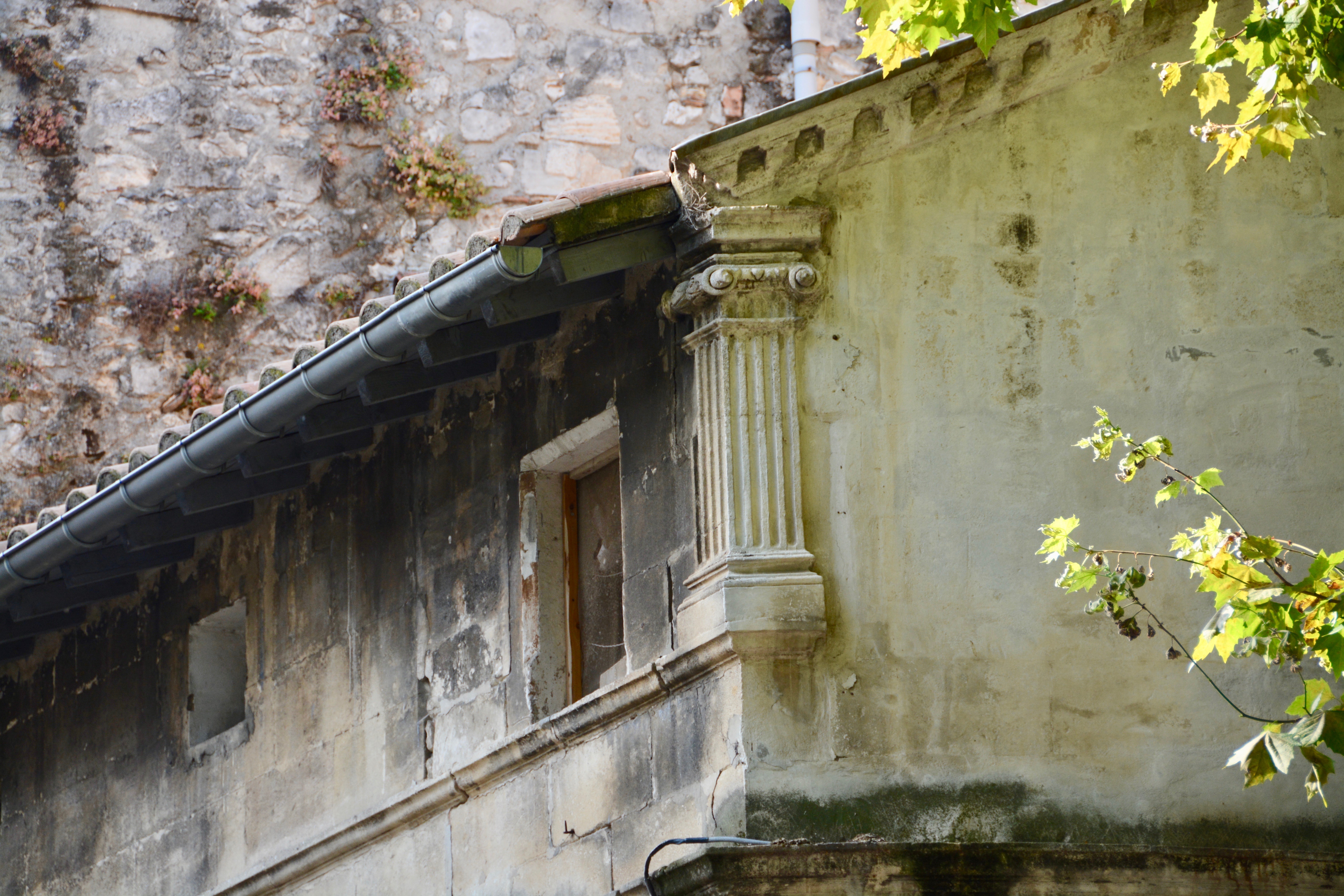
Photo ©Jean Janssen. Vineyards at the Chateau de Rully
Photo ©Jean Janssen. The priority tag ended up not meaning much, but at least my bag made it to the ship.
Photo ©Jean Janssen. Probably the seat I would have chosen on Beaune’s carousel.
Posted in Uncategorized | Leave a comment

An International Traveler Again

Photo ©Jean Janssen. The Uniworld’s SS Catherine

There has been a long drought, but Natasha is once again an international traveler.  Boris and I left today for France to take a river cruise through Burgundy and Provence.  The rules continue to change-including a change in COVID testing that happened just this week.  Fully vaccinated and staying on a river ship that is smaller than most hotels, we feel as safe as it is going to be for a while.  France also instituted policies that go into effect the day after our arrival that require that you must be vaccinated to go into most buildings.  While that will mean we have to carry around our vaccination cards, it will also make the indoor spaces safer.
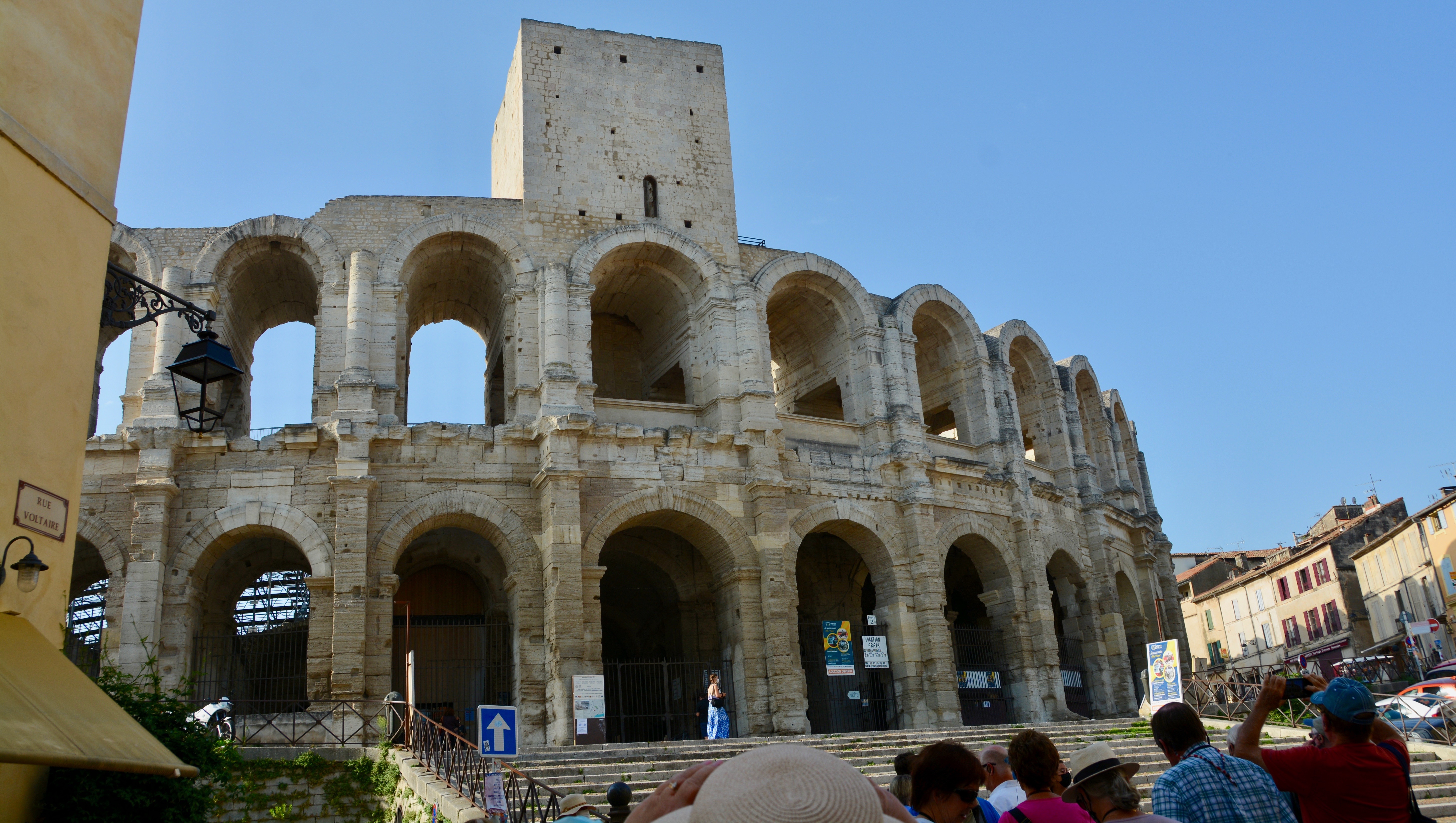
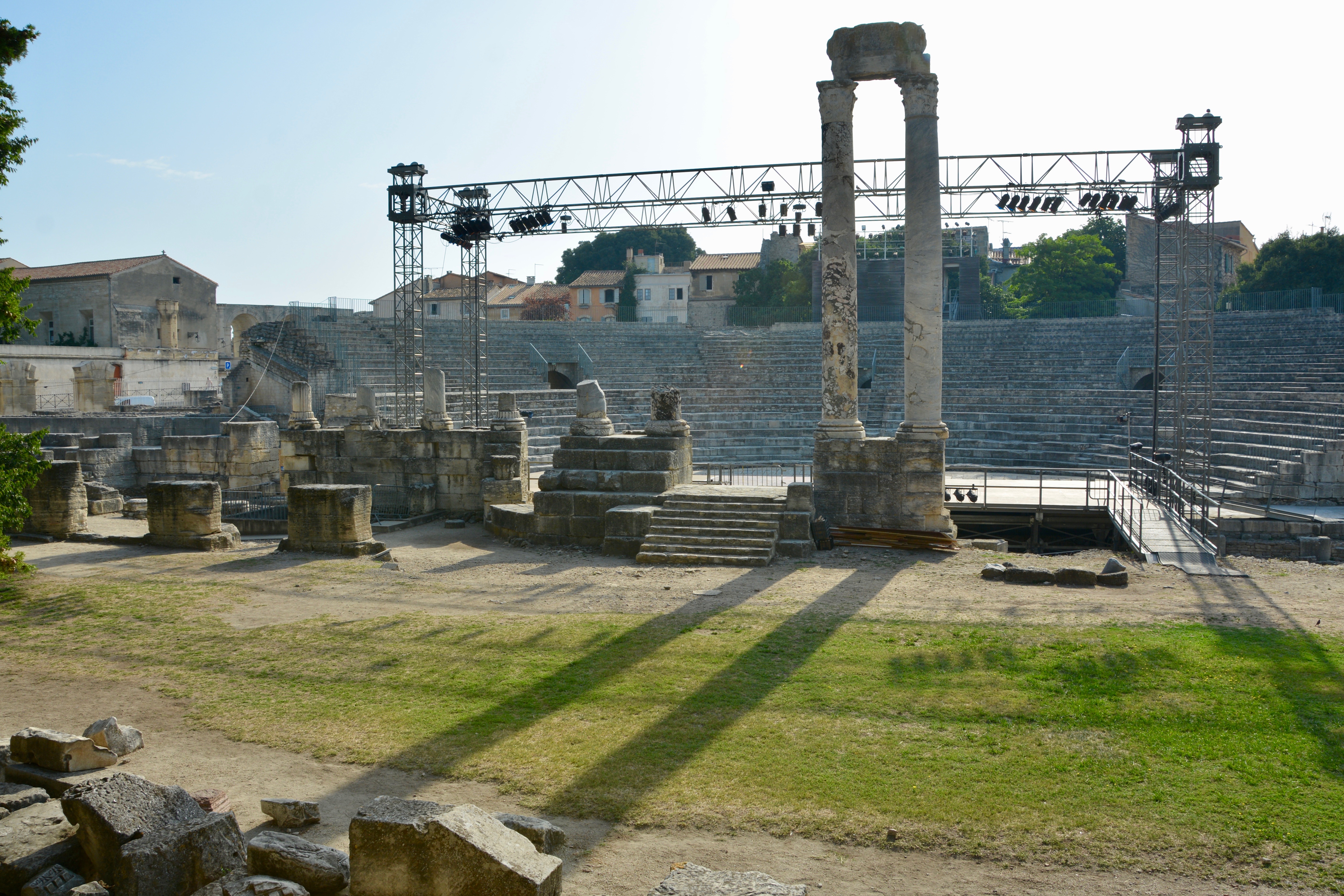
Photo ©Jean Janssen. Cathedral Norte Dame de Beaune

Check in to your flight(s) with an international destination also necessitates another level of requirements.  We got multiple emails in the days prior to departure to ensure that we were “travel ready”.  You have to check the requirements for countries where you will be in transit as well as those for your final destination.  Sometimes your COVID test has to be done no more than 48 hours before departure, sometimes 72.  Sometimes you fit an exemption; sometimes you do not.  Sometimes you can upload the paperwork 48 hours prior to departure, sometimes 12.  Residents of certain countries can travel to others, some cannot.  As of this writing, having been fully vaccinated for at least two weeks prior to travel, we will able to enter Germany (in transit) and then France with an uploaded vaccination card.  You must also carry the original with you.  We uploaded our information through the airline website.  The EU authorities had it in their system when we crossed passport control in Germany.

Photo ©Jean Janssen

It also didn’t help that they had completely changed the airline check-in and TSA security checkpoints at IAH while the airport is under major renovation.  Oh, and did I mention that the luggage belts were not working?  We were relieved when we got to the gate and very glad that we had gotten to the airport an hour earlier than we normally would have. 

Photo ©Jean Janssen. I (almost) had a row to myself on our international flight to Frankfurt. United has replaced the complimentary rectangular pillows with ones shaped like a neck pillow.

We had a quick turnaround in Dulles (Washington DC) with no time for lunch.  I am not big on airline food, but I had to partake on the flight to Frankfurt.  Before boarding, there was an extra check-in at the gate counter and we were glad all our information was already uploaded in the system.  While the flight to Dulles was completely full, I had a row to myself (until someone moved over to the end of my row at mealtime) on the flight to Frankfurt.  I ended up starting an HBO series that had been highly rated and watched the whole series.  I never slept.  Prior to takeoff from Washington DC, we had pulled away from the gate and then sat on the apron for about an hour. 

Photo ©Jean Janssen. Courtyard of the Hotel Dieu, Beaune, France

I would have used the term tarmac (instead of apron) here because that it what I thought the hard areas that the planes traveled and parked on were.  However, I learned when preparing this post that tarmac is really a trademarked term for the materials used to create the roadways at airports.  The proper terms for the different areas used by the plane are the apron-where they park and load/unload passengers and luggage; the taxiway-surfaces the airplanes move along to position for takeoff (and to the gates after landing); and the runways-that the planes use to take off and land.

Photo ©Jean Janssen Color in concrete

Anyway, the point is that we left very late and weren’t able to make up all the time in the air.  We landed in Frankfurt 20 minutes late.  That might not seem like much, but when you have to clear customs-as Germany was our EU point of entry-and only have an hour and 10-minute layover to begin with, you are in trouble.  Rather than having a gate assignment (maybe because we were late), the plane was parked out on the apron and buses took us on what seemed like a rather long ride to the terminal.  Of course, that ate up even more of our short layover time.  Then we crossed through passport control.  Fortunately, we were in the first bus and near the front of the line.  Also, since our vaccination information was pre-loaded, we got through quicker.  Our connected flight was on the other end, but at least in the same terminal as the arriving flight.  We ran.

Photo ©Jean Janssen Viviers, France

Although I am still not sure how Boris and I made it with 10 minutes to spare before takeoff, fortunately the gate agents were still letting passengers aboard the flight from Frankfurt to Lyon.  It was a short flight to Lyon, France where our river boat, the SS Catherine, is berthed.  We are meeting the transfer agent just past baggage claim.  Boris’ suitcase came off with the first group.  Yes, you guessed it.  Mine never showed up.  There is no lost luggage office or luggage officials in Lyon.  If you have missing luggage, you have to fill out a form at a kiosk in baggage claim.  Unfortunately, if your lodging is on a river ship it makes it a little more difficult to fill out the form.  Even with one employee trying to help, I was still not able to complete the kiosk questionnaire.  Boris went out to let the transfer agent know what was going on.

Photo ©Jean Janssen Beaune, France

One of the benefits of a small airport was that they let both Boris and the agent come back inside the secured baggage claim area.  Speaking French to the employee, the agent was able to assist me in completing the form.   We are hopeful the bag is in Frankfurt and will come over on the afternoon flight.  Our ship leaves its berth in Lyon at 6 pm.

Photo ©Jean Janssen. The TGV train station connects to the airport terminal in Lyon. We walked through on our way to the bus.

We had a bit of a walk out to the coach park and during that time we learned that the next flight to Lyon leaves Frankfurt at 6:30 pm and arrives at 7:45.   After getting us on the bus, the transfer agent let me know that she would go back and update the information to let them know that the bag would have to be sent to Macon, France.  We won’t arrive in Macon until 1:30 am, so no chance I will get the bag today.  Hopefully, it made it to Frankfurt.

Photo ©Jean Janssen Beaune, France

This trip I had done something I normally don’t do.   Aware of our tight layovers, I had packed an extra set of clothes in my carry-on bag.  It is always a good idea, but I don’t always have room in the carry-on for it.  I had also had lunch with a friend the week before I left who mentioned that she always added a nightgown to her carry-on bag to sleep in that first night.  I put that in too.  I won’t have everything I need, but thank goodness I packed a few extras.  These weren’t our original flights, but an airline cancellation resulted in us having to change our outbound flights.  We normally would have given ourself a little more time (and chosen fewer layovers).  However, we were just happy to find a way to get there.

Photo ©Jean Janssen Avignon, France

There were only 5 of us on a large bus headed from the airport to the ship. We learned later that there were only 55 passengers on the cruise for this itinerary, so our bus was actually carrying almost 10% of the ship’s passengers.  Our cruise line Uniworld has been running cruises since early July with capacity ranging from 30-100 guests per sailing.  The ship can accommodate 120 passengers.  The waiters tell us they love it with fewer guests; they can give more personal service and it is easier to accommodate social distancing.  The staff is so happy to be back at work.  Not everyone received “unemployment benefits” during the closure.

Photo ©Jean Janssen. As we walked across the gangplank from shore to ship, there were lovely swans floating in the water.

Shortly after our arrival, lunch started.  Uniworld offers extensive, elegant buffets for breakfast and lunch.  Currently, in line with heath regulations, you are accompanied through the buffet line by an employee who serves the food onto your plate.  They also get your drinks and any additional items you might want.  It was open seating at lunch, but that evening we were told that whatever seat we selected that night would be our seat through the cruise.  The tables are set up so that only family or friends traveling together sit together in the dining room.  This is a change of the usual pattern of sharing your table with other guests during meals.  It is a wonderful way to get to know your fellow passengers and we enjoy that aspect of the Uniworld cruises.  I am sure the practice will come back after pandemic restrictions are lifted.  We are hopeful that we will meet some other people traveling with us during the cruise excursions.

Photo ©Jean Janssen. View from our (closed and tinted) stateroom French Balcony. We are docked in Lyon, France on Saone River. You can see all the houseboats docked along the opposite site of the River.

The day ended with a welcome from the captain and the hotel director, followed by a briefing by the cruise director.  She stopped by and greeted me personally to let me know she knew about my bag situation.  She was in communication with the transfer agent and had recommended the bag be delivered sometime the next day while we are docked in Macon from 1:30 am to 4:30 pm.  Fingers crossed.  It is so nice that they are taking the time to give the issue their personal attention.

Photo ©Jean Janssen There is a waterfall behind the horse statue in the lobby of Uniworld’s SS Catherine. Behind the waterfall is a glass elevator. Standing inside the elevator looking toward the backside of the waterfall, I took this photograph. It almost looks like a painting.

We had a wonderful dinner with drinks and in spite of an afternoon nap, decided to go to bed early and try to get over our jet lag.  Tomorrow our exploration of this region of France begins.  Stay with me as the following posts will cover our travel in Burgundy and Provence.

Photo ©Jean Janssen Beaune, France
.Photo ©Jean Janssen. Chateau de Rully, France

Posted in cruises, international, River Cruise | Tagged , , | Leave a comment