Yugoslavia in a Yugo

DSC_1508

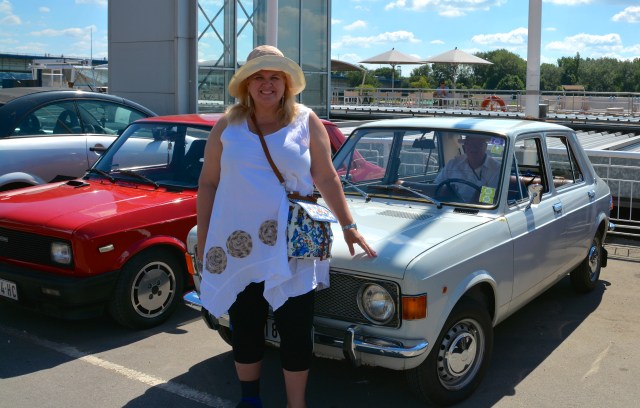
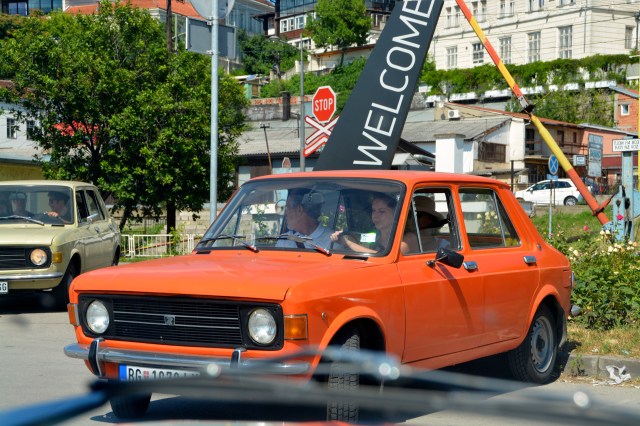
Natasha ready for her tour of “Yugoslavia” in a Yugo.

During our afternoon in Belgrade, Serbia, the cruise line is offering an optional tour to visit the city as the capital of Yugoslavia, a country that no longer exists.  The Kingdom of Yugoslavia was established in the 1920s.  After World War II, the kingdom became the Socialist Federal Republic of Yugoslavia.
DSC_1507

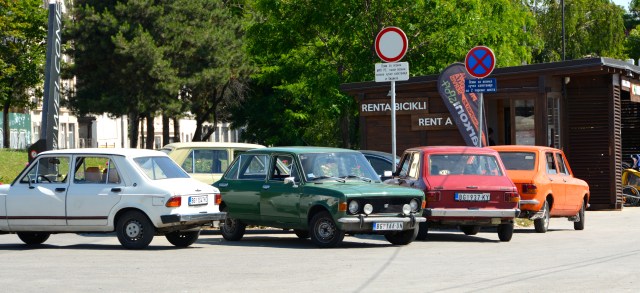
Photo ©Jean Janssen. Ready for touring. A collection of Yugos.
DSC_1510

Photo ©Jean Janssen. Our tour leader setting out.

With a collection of those iconic vehicles which even made it to the west as the cheapest cars on the market, this tour company offers you opportunity to ride in style (although without air conditioning).  The Zastava Koral, also marketed as the Yugo, was produced from 1977 to 2008.  It was marketed in the USA from 1985 to 1992 (when sales dropped to  only 1,412 cars sold).  The base model was introduced with a sticker price of less than $4,000.  By 1991, the Yugoslav wars contributed to a decline in quality due to the unavailability of parts which had traditionally been produced in the different and now clashing regions of Yugoslavia.
DSC_1509

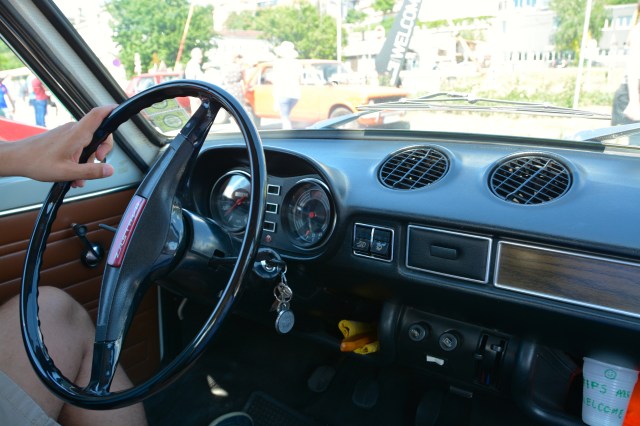
Photo ©Jean Janssen. The mint condition interior of our Yugo.
DSC_1511

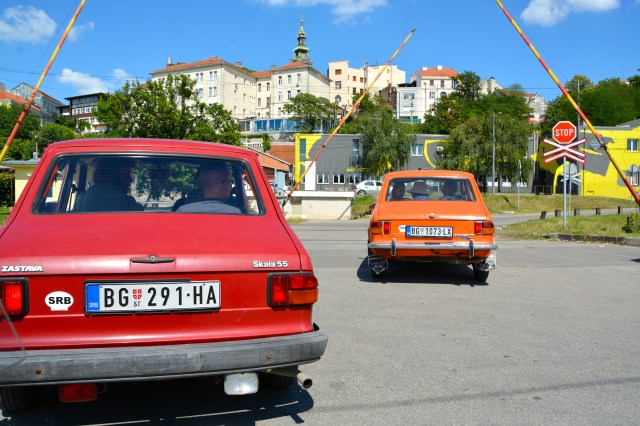
Photo ©Jean Janssen. Here we go.

We went out in groups of three cars.  The tour was priced by car with one to three guests with a driver.  Our driver was using his grandfather’s Yugo which was purchased in 1979 and spent most of its time in the garage.  I asked him if he learned to drive on this car and he laughed and told me he was not allowed anywhere near it.  It may be a basic car, but it was in pristine condition.  While he pointed out landmarks, we talked about what it was like to live in Yugoslavia and the time since its dissolution.  He is in his late 30s.
DSC_1513

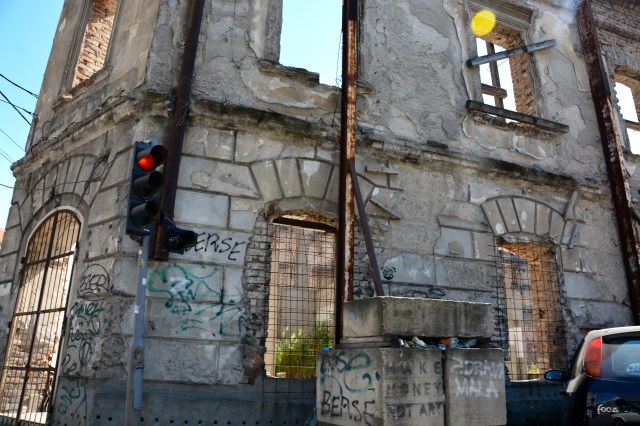
Photo ©Jean Janssen. Belgrade, Serbia.
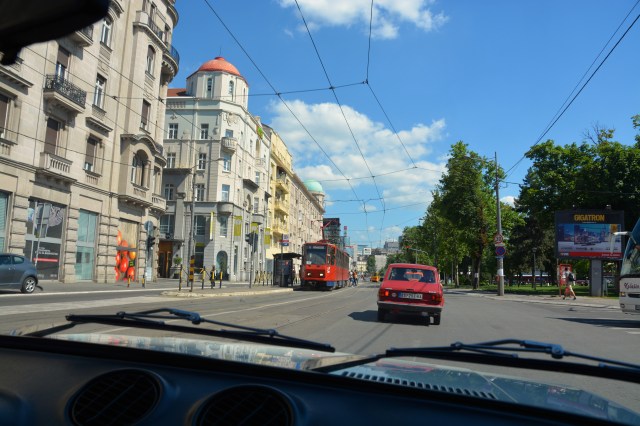
DSC_1516

Photo ©Jean Janssen. Touring Belgrade in a Yugo.

Arriving at a particular location, our tour leader (also one of three drivers in our tour group) would give us the history and a guided tour of the area.  It was a 2 for 1 deal, getting both the insight of our friendly driver and a tour guide.  Our drive through the city took us past more bombed out buildings in route to our first stop at the House of Flowers.
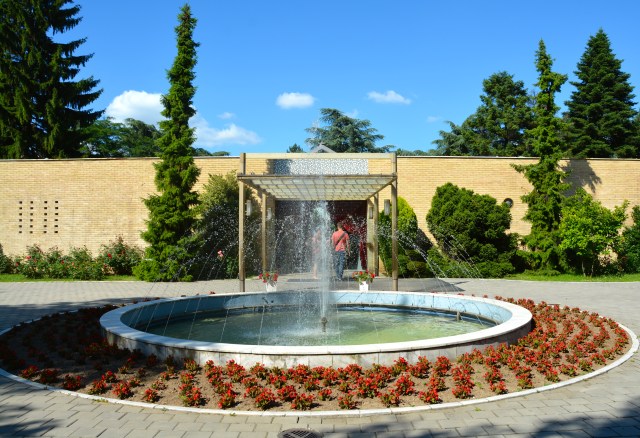
DSC_1546

Photo ©Jean Janssen. The House of Flowers, Belgrade, Serbia

The House of Flowers is the building and garden which contains the tomb of Josip Broz Tito, the Communist Leader of Yugoslavia from 1948 until his death in 1980.  The mausoleum is part of the larger Museum of Yugoslav History on the same grounds.
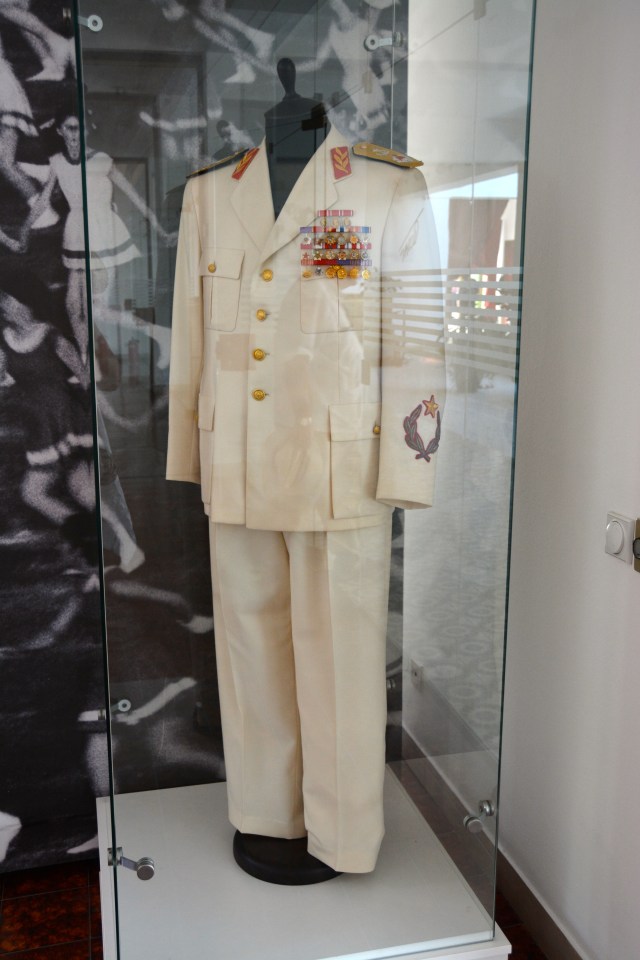
DSC_1532

Photo ©Jean Janssen. Tito’s uniform as displayed in the House of Flowers, Belgrade, Serbia.
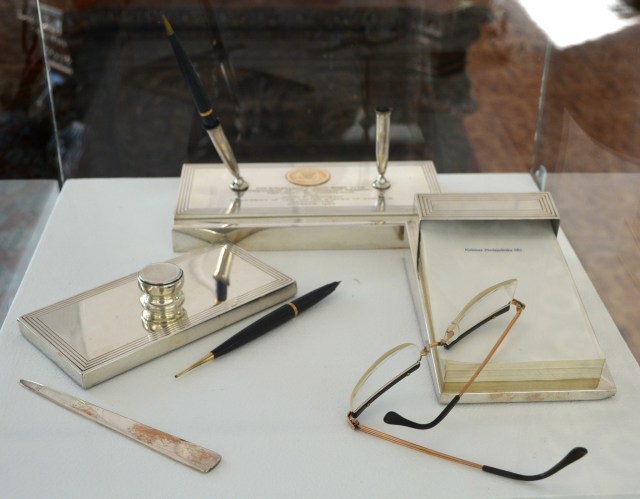
DSC_1534

Photo ©Jean Janssen. A desk set gifted to Tito from US President John F. Kennedy.

Just after World War II, Tito had very close ties to Moscow.  He was considered by some as second only to Joseph Stalin in the Eastern Bloc.  However, Tito wanted independent control and his own style of Communism.  Stalin believed that Tito would fail without Soviet support; Stalin also attempted to have Tito assassinated on several occasions without success.  Tito’s break from Moscow endeared him to the Yugoslavian people.  It also allowed him to seek support from the west.
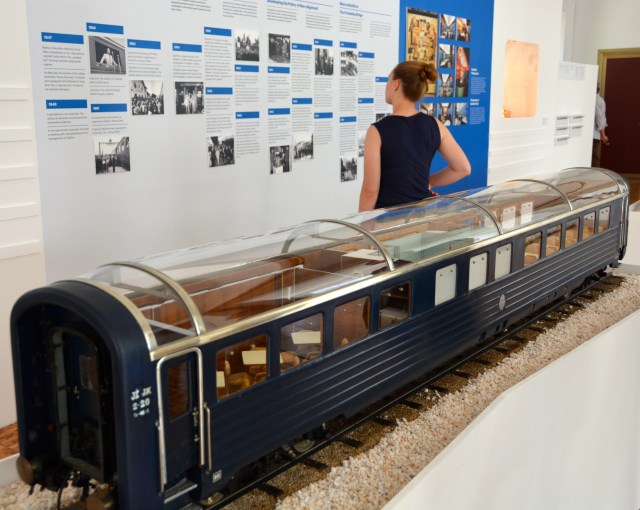
DSC_1539

Photo ©Jean Janssen. Model of the Blue Train, Tito’s Peace Train and traveling residence, in the House of Flowers, Belgrade.

During the Cold War, Tito tried to adopt a position of neutrality for Yugoslavia.  Unique among the Eastern Bloc countries, he allowed foreigners to visit the country and Yugoslavian citizens to travel abroad.  Tito himself reached out to countries all over the world and traveled extensively.  At the House of Flowers, we saw a model of the Blue Train, commonly called the Peace Train.  In this traveling residence, Tito traversed his own country to interact with his citizens and made over 120 “peace missions” traveling to 71 foreign states and meeting with over 60 foreign leaders.
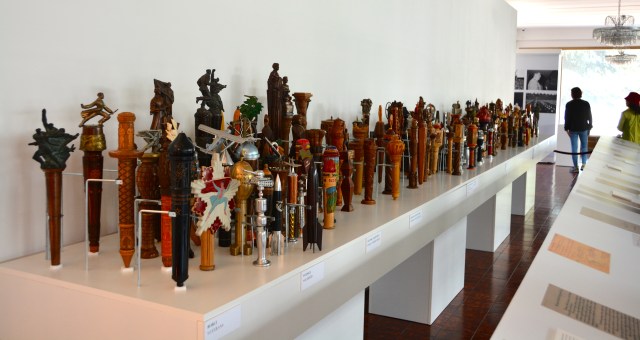
DSC_1531

Photo ©Jean Janssen. Display of some of the relay batons given to Tito on his birthday. They came from the military, organizations, villages, and schools. It is estimated that 1/3 of the Yugoslav citizens participated in these ceremonies by designing, making, or carrying the batons.

While the focus at the House of Flowers is on Tito himself, it is also a chronicle of Yugoslavia during its communist years.  The exhibits give excellent time lines on the history of the country.  The gifts given to Tito are on exhibit as well as film clips and photographs from the period.  Our guide gave us some background on the exhibits, particularly the unusual batons gifted to Tito.  The origin of the presentation of the relay baton goes back to the Kingdom of Yugoslavia and is met to symbolize the communication between the people and their ruler.
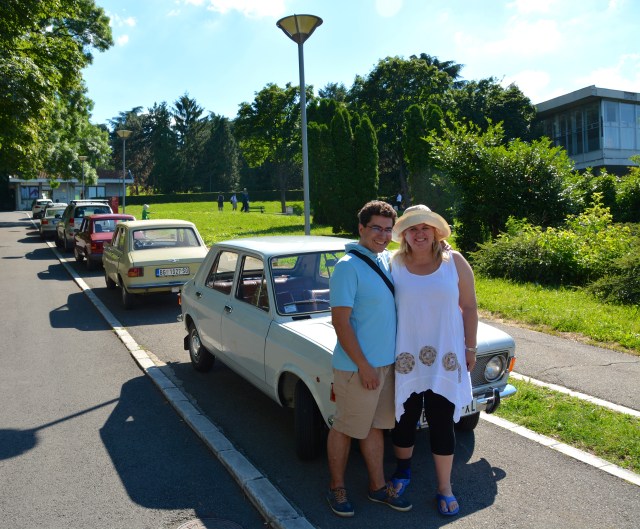
DSC_1549

Natasha with our driver and his Yugo on the National Yugoslav Museum grounds, location of the House of Flowers, in Belgrade, Serbia.

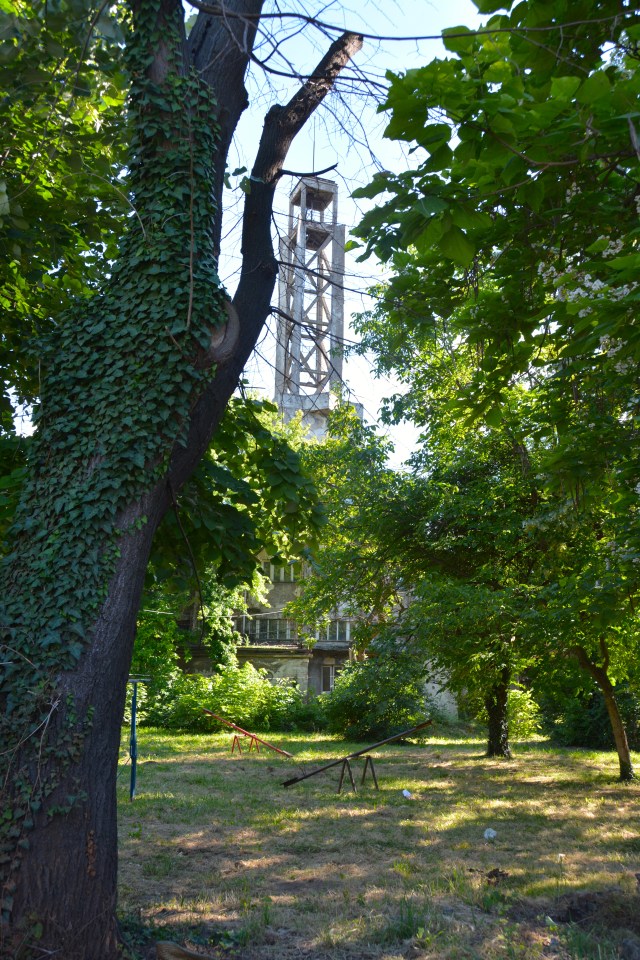
After our tour, it was back to our driver and our Yugo to head to our next stop.  After crossing the Sava River, we found ourselves at the original Belgrade Fair Grounds founded in 1937.  On the grounds, there were multiple pavilions.  In 1941, the Gestopo took over the area and turned the pavilions into barracks and the fair grounds into a concentration and extermination camp.  The communications tower, which is abandoned but still stands, was the guard tower.  After 1945, the fair grounds were not rebuilt on this location.
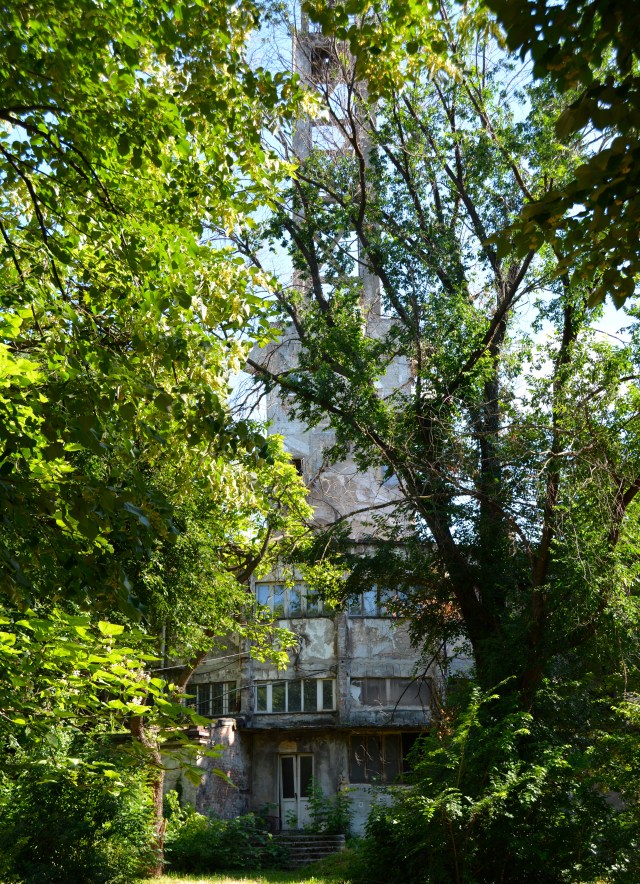
DSC_1553

Photo ©Jean Janssen.  Behind the overgrown trees and bushes is the central tower of the original Belgrade Fair grounds (1937).  In 1941, it was converted to the guard tower of the Sajmiste Concentration Camp.

The Sajmiste Concentration Camp, later called the Zemun Concentration Camp, was the Nazis’ repository for Jewish women, children, the old and infirm, some Jewish men and gypsies. “Women and children were placed in makeshift barracks and suffered during numerous influenza epidemics. Kept in squalid conditions, they were provided with inadequate amounts of food and many froze to death during the winter of 1941–42.  Between March and May 1942, the Germans used a gas van sent from Berlin to kill thousands of Jewish inmates.”
DSC_1555

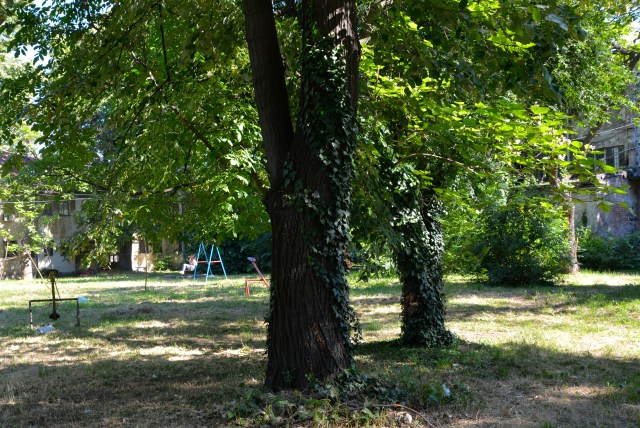
Photo ©Jean Janssen. On the day of our visit to the site of the Sajmiste Concentration Camp in Belgrade, a child enjoyed a swing in the playground on the grounds of the former extermination camp.

The camp was later used to imprison additional Jews and members of the local resistance.  Most of the estimated 32,000 who passed through the camp and 20,000-23,000 who were killed or died while imprisoned there were Serbs.  Towards the end of the war, the Germans tried to erase the evidence of the camp deaths, exhuming thousands of bodies and incinerating them.  It is believed that half of all Serbian Jews died at the Sajmiste Concentration Camp.
DSC_1563

Photo ©Jean Janssen. Another look at the Central Tower at the Concentration Camp with children’s playground equipment in front.

Oddly, it appears the former barracks are apartments and a children’s playground sits on the site of the camp.  Across the street is a restaurant.  While noted as “one of the most important memorial places in Serbia”, there is only one small sign commemorating the losses at this site.  Mostly, it appears abandoned and overgrown.
DSC_1567

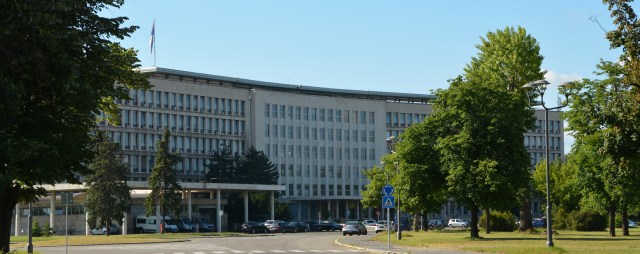
Photo ©Jean Janssen. A side view of the Palace of Serbia, next to the parkland.
DSC_1571

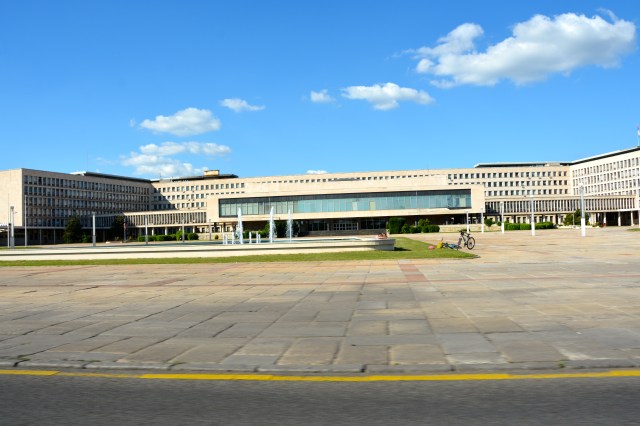
Photo ©Jean Janssen. Avenue view of the Palace of Serbia.
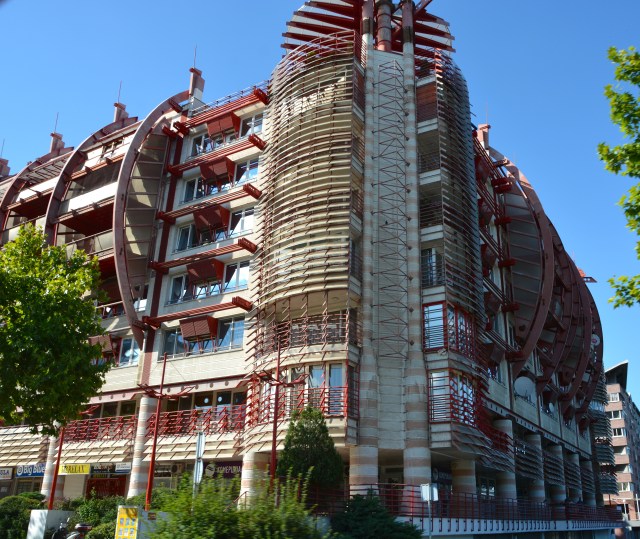
DSC_1572

Photo ©Jean Janssen. Blending the old (soviet) and the new in Novi Belograd, Serbia.

On both tours we drove through New Belgrade, a planned city from 1948, showcasing  Soviet style architecture.  During our afternoon tour in Novi Belograd, we made a stop at Palace of Serbia; several ministries and agencies of the Serbian government are housed in this sprawling building.  I felt an uneasy feeling in this area.  In the parkland that surrounds the Palace of Serbia, lone males, many shirtless, roamed among the trees.  It reminded me of hippy hollow in Austin, Texas.
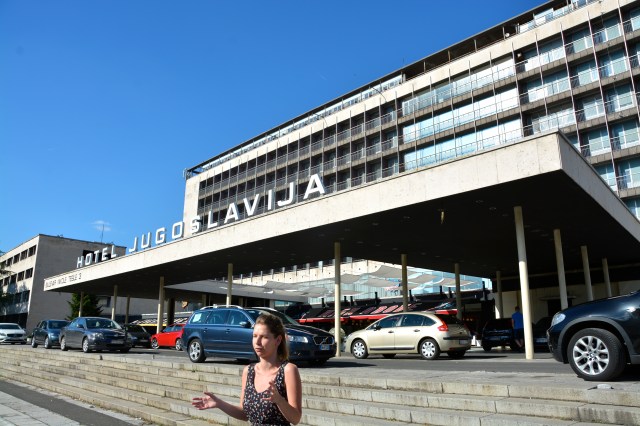
DSC_1576

Photo ©Jean Janssen. Hotel Yugoslavia, New Belgrade, Serbia.
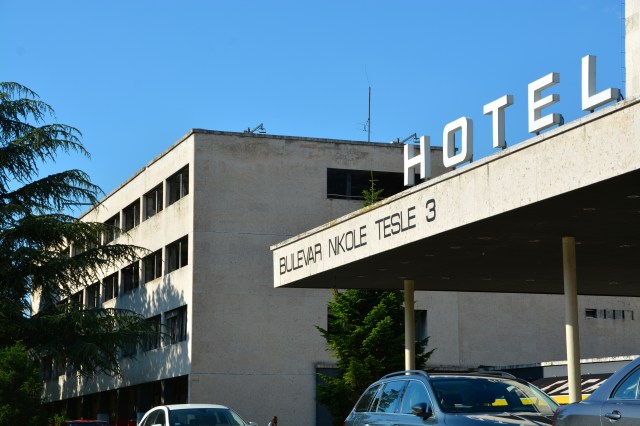
DSC_1578

Photo ©Jean Janssen. The west tower of Hotel Yugoslavia, hit by two NATO missiles.

While the buildings were tightly packed in the city of Belgrade, Novi Belograd features wide avenues and patios among the concrete structures.  Our next stop was Hotel Yugoslavia.  The hotel was once a luxurious property built in 1969 to appeal to visiting celebrities and dignitaries.  Some of the famous people to have stayed at the hotel include Queen Elizabeth II, Richard Nixon, Jimmy Carter, Tina Turner, Neil Armstrong, and Buzz Aldrin.  Due to information regarding those in residence, the west tower was bombed by NATO in 1999.

DSC_1584

Photo ©Jean Janssen. Interior of the Hotel Yugoslavia. Our guide said it is as it was in its prime.

DSC_1590

Photo ©Jean Janssen. Behind the Hotel Yugoslavia.

The hotel is now past its heyday with only one floor of the hotel currently in service.  I checked on-line and an air-conditioned room goes for $42 a night.  The back side of the hotel overlooks the river and is lined with cafes (including a Mexican cantina) and service shops.  Riverside appeared to be a pretty popular during our visit.
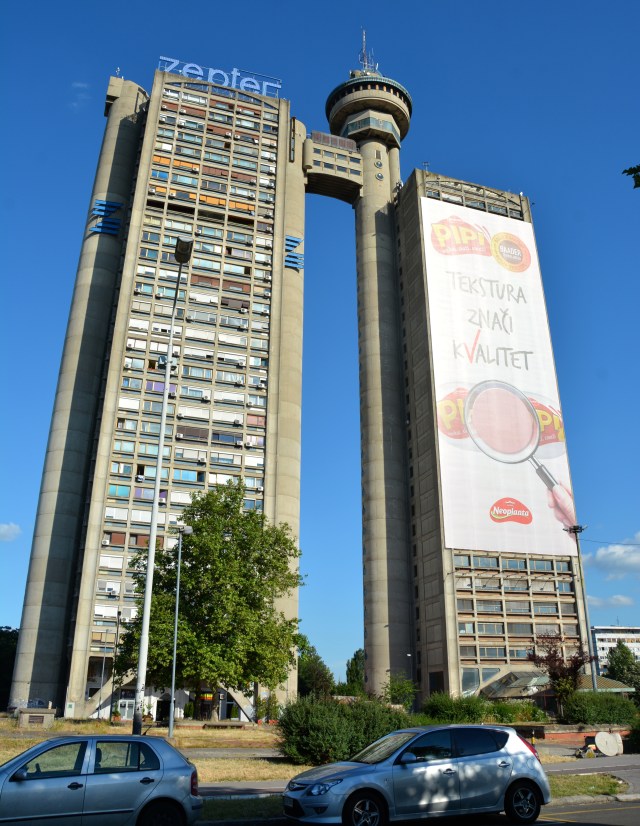
DSC_1595

©Jean Janssen. The Genex Tower, officially the Western City Gate, in Belgrade, Serbia.

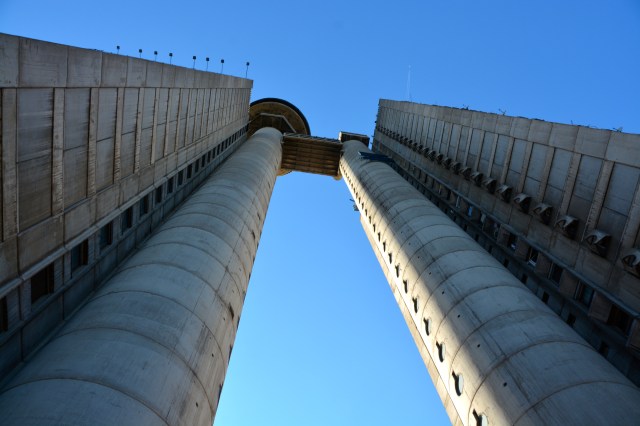
Our last stop before returning to the city of Belgrade is the Genex Tower, the Western City Gate.  The 35-story tower is built in the Brutalist Style often associated with socialist architecture. The two towers are connected with a two-story bridge with a revolving restaurant on top.  However, upon completion, the restaurant only revolved for a few days before breaking down.  It was never repaired.  The restaurant was only for the employees of the office building businesses and their guests.  Our driver had once eaten in the restaurant.  He said the views were fantastic.

DSC_1597

Photo ©Jean Janssen. Around the Western City Gates, support services are nonexistent and the grounds are in horrible shape.

The office building is closed and appeared to have been abandoned for some time. The windows of this tower are now covered with a promotional “billboard”.  These tall on-building billboards are found all over town, often covering abandoned or bombed-out buildings.  The bridge and restaurant are also closed.
DSC_1614

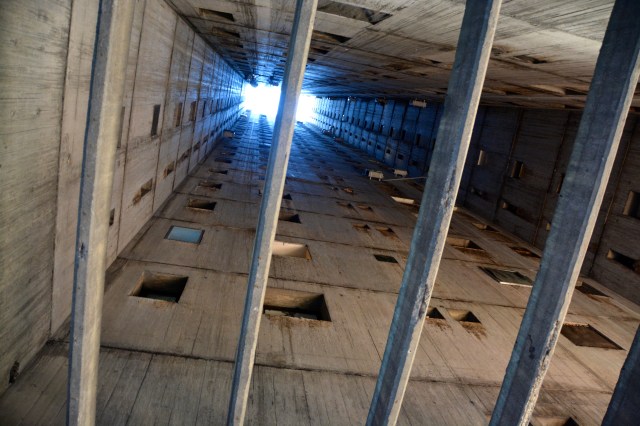
Photo ©Jean Janssen. The residential tower at the Western City Gate is open in the center. This is the view from the hallway on the ground floor through the center.  The hallway is open to the outside on both ends.

The second tower is residential, originally intended for the office workers next door.  The residential tower is still occupied, but it is hard to imagine a bleaker home in an iconic building.  The grounds are in horrible shape.  We went inside the residential tower walkway and looked up and it appeared just as depressing.  This tower is actually slightly taller than the office building.  There were times when the power would go out which meant among other things no elevator service.  Rather than make the long walk down and back up, residents on the higher floors would lower baskets with a list and money for friends or family to do their shopping and return the items to the baskets to be hauled up by rope to the apartments. above.
DSC_1604

Photo ©Jean Janssen. The Western City Gate in New Belgrade, Serbia.

The buildings were designed in 1977 to represent a raised city gate welcoming visitors arriving to the city from the west.  However bleak the present condition, the building did make for a wonderful photographic opportunity.  (I just wouldn’t want to live there.)

DSC_1618

Photo ©Jean Janssen. Boris converses with our driver outside the Western City Gate in Novi Beograd.

Boris and I loved our driver.  It was very interesting to have the direct contact with a local.  He has a mixed ancestry from the Yugoslavian regions and beyond and is currently studying Hungarian (which he has found a very difficult language to learn).  He told us about a program through the Hungarian government where by if you can show ancestry from the Austro-Hungarian empire and pass a test in Hungarian, you can get Hungarian citizenship and thus EU citizenship.  He takes the test next week; he can try again if things don’t go well the first time. The Hungarians currently have a low birth rate.  Since one of my grandmothers was Austrian, I could potentially take advantage of the same offer.  Now all I have to do is learn the Hungarian language.  Natasha could one day be an EU citizen.


After saying goodbye to our driver, we found the folk dancing on the ship already in progress.  We enjoyed the show and our full day in Serbia.  Tomorrow we go to another former Yugoslavian region, Croatia.  Good night, I am off to study my Hungarian.
 

Posted in cruises, international, River Cruise | Tagged , , , , , , , , , , , , , , , , , , , , , , , | Leave a comment

Belgrade, Serbia

DSC_1489

Photo ©Jean Janssen. Belgrade, Serbia

DSC_1385

Photo ©Jean Janssen. At the Royal Palace, Belgrade, Serbia

Today we are docked at Belgrade, the capital of Serbia, at the intersection of the Danube and Sava Rivers.  Serbia was part of the former Slavic nation of Yugoslavia and the dominate region in Yugoslavia.  Belgrade was the capital for each country.  Serbia is the country in the Balkans which retains the closest ties to Russia.

DSC_1321

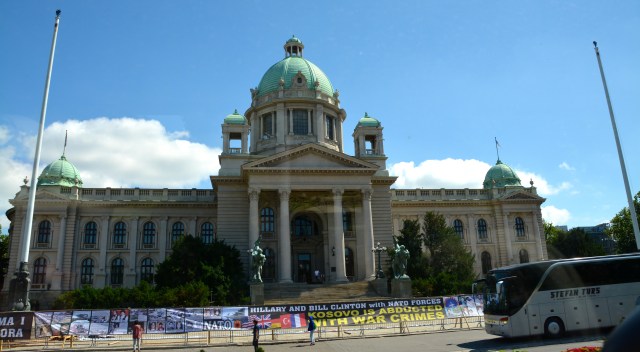
Photo ©Jean Janssen. House of the National Assembly, Belgrade, Serbia. Note the interesting political signs in front.

DSC_1522

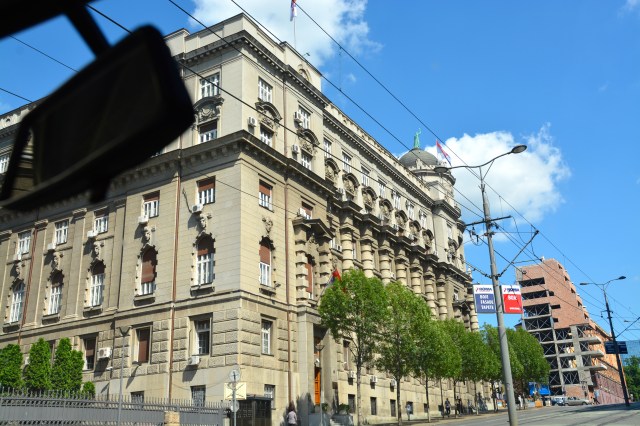
Photo© Jean Janssen. Serbian government building in Belgrade.

The six regions that made up Yugoslavia split in the 1990s in the difficult period after the fall of communism.  The Yugoslav Wars erupted when ethnic Serbs in the departing regions opposed the withdrawal from Yugoslavia.  Today the disputed region of Kosovo is still considered part of their nation by the Serbians.  The United States, along with a majority of the countries of the United Nations, consider Kosovo an independent country.  In 1999, during the Kosovo War, NATO bombed several strategic sites in the city.  Many of these buildings have been left in their bombed state as a memorial.  It felt like our guide’s favorite line was “that was bombed by NATO”.

DSC_1524

Photo ©Jean Janssen. Bombed out Ministry of Defense building across the street from Serbian government building, Belgrade.

DSC_1525

Photo ©Jean Janssen. Serbian Ministry of Defense building damaged in the 1999 NATO bombing.

After a drive through the city, we reached the Royal Palace, home to the Karadordevic royal family who have no real standing in the country.  They do not own the residence, but are allowed to live there.  Visitors are very limited and we are fortunate our cruise line was able to secure us entry.  If the Prince is in residence, you are not allowed to take photographs of him, but he often greets the guests.  He is not on the property today.

DSC_1367

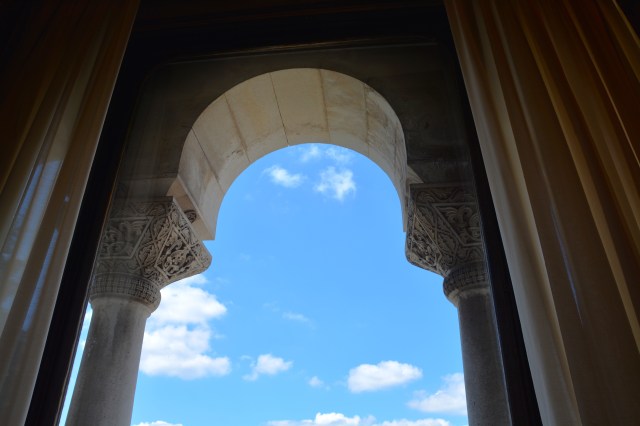
Photo ©Jean Janssen. Looking out from within the Royal Palace, Belgrade, Serbia.

DSC_1372

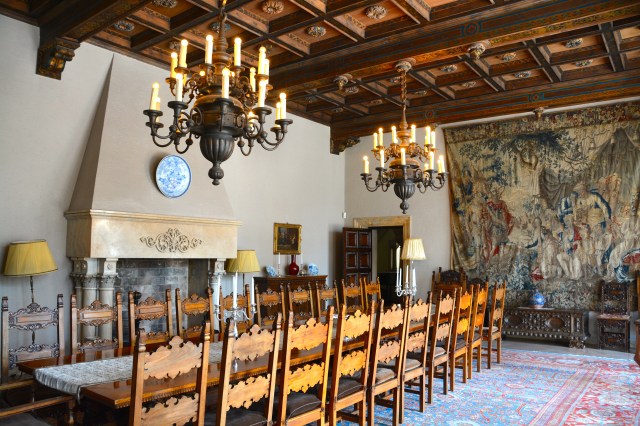
Photo ©Jean Janssen. Dining room in the Royal Palace, Belgrade, Serbia.

DSC_1379

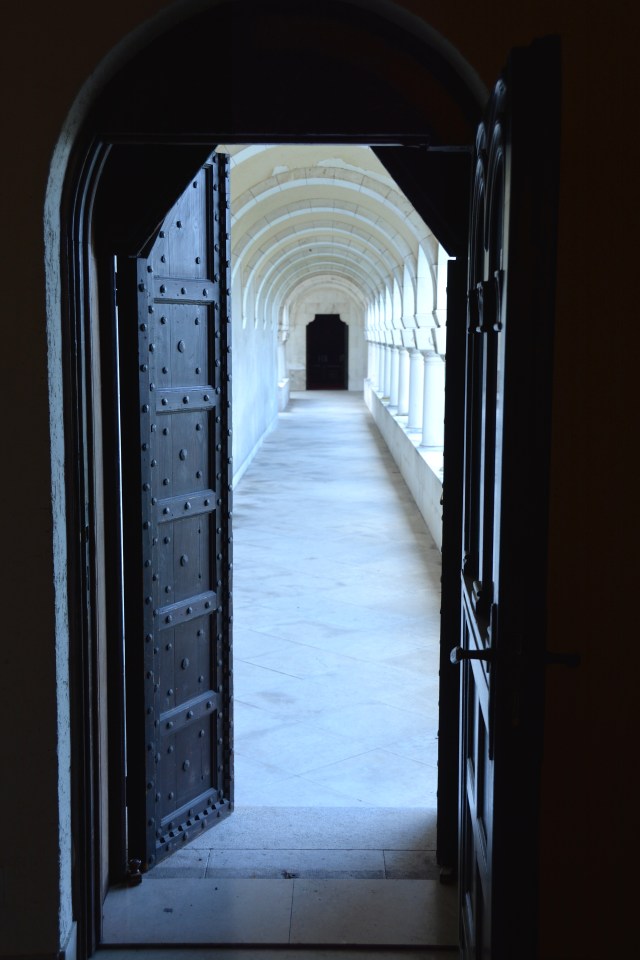
Photo ©Jean Janssen. Courtyard at the Royal Palace, Belgrade Serbia.

DSC_1369

Photo ©Jean Janssen. Interior of the Royal Palace, Belgrade, Serbia.

The palace has a beautiful wooded setting.  If a building could be photogenic, this palace would be it.  I do have a love for photographing windows and doorways and I had a field day at this residence.

DSC_1330

Photo ©Jean Janssen. On the grounds of the Royal Palace, Belgrade, Serbia

DSC_1435

Photo ©Jean Janssen. Looking into the Oriental Room in the Royal Palace Basement.

DSC_1428

Photo ©Jean Janssen. Basement in the Royal Palace, Belgrade, Serbia.

DSC_1430

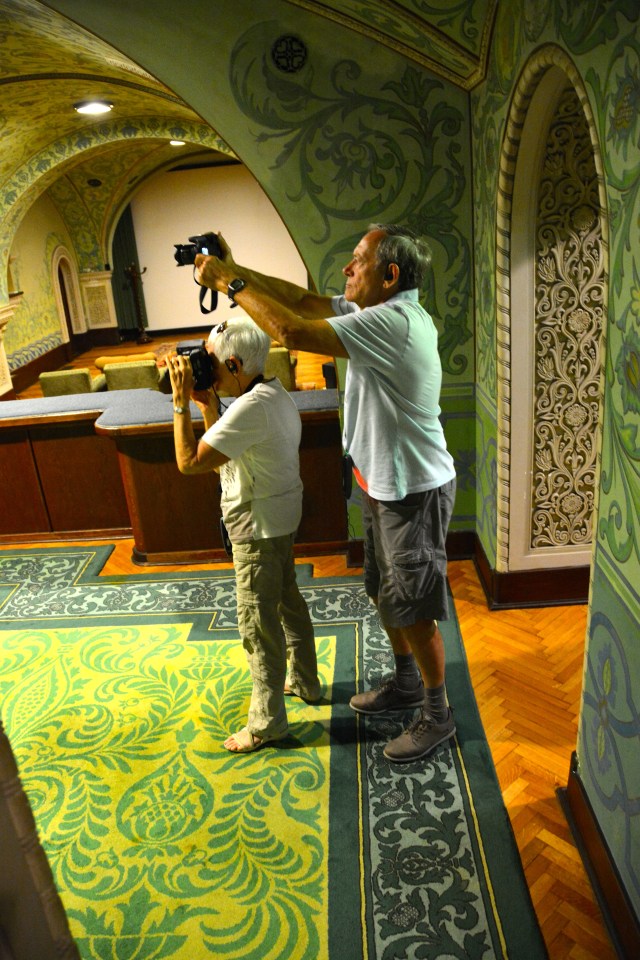
Photo ©Jean Janssen. This fun couple from Cape town, South Africa both loved taking pictures as much as I did.

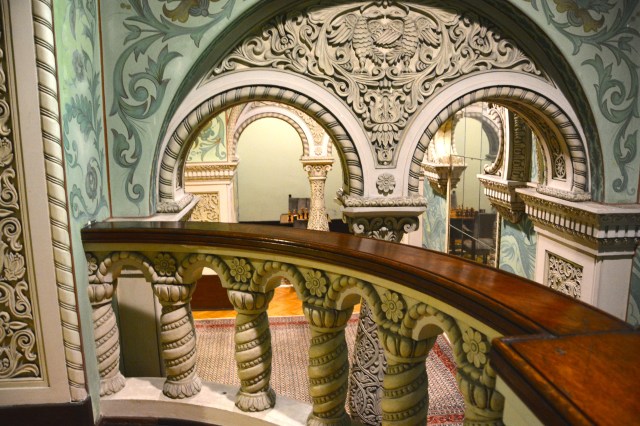
One of the most beautiful parts of the Palace was the basement with its arched ceilings and uniquely decorated rooms for private conversation, billiards, and movie screenings.

DSC_1520

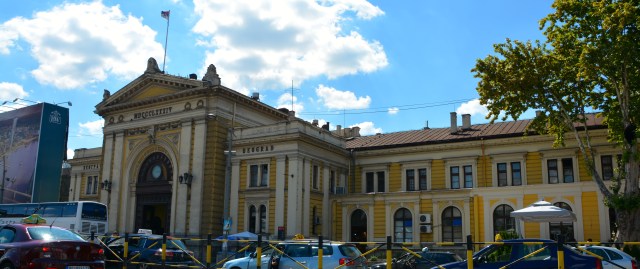
Photo ©Jean Janssen. Railway station near the new waterfront development in Belgrade, Serbia.

DSC_1465

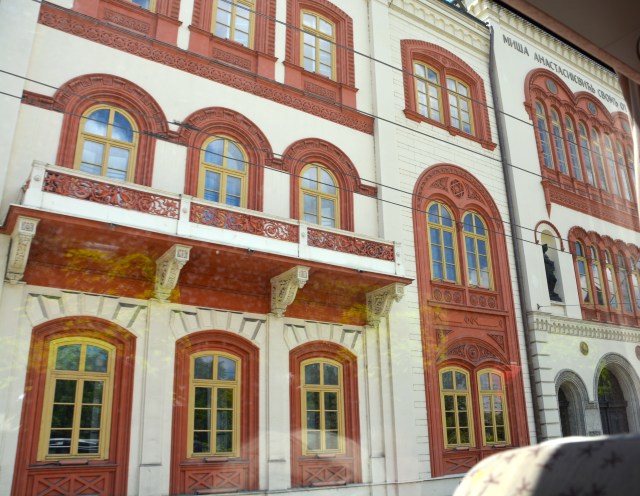
Photo ©Jean Janssen. Belgrade University.

DSC_1461

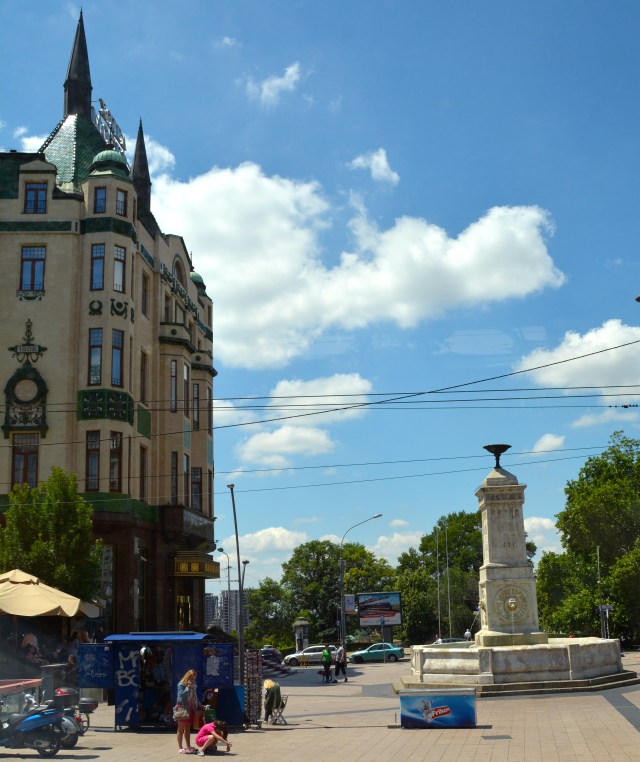
Photo ©Jean Janssen. Hotel Moskva, Belgrade, Serbia.

DSC_1462

Photo ©Jean Janssen. National Museum of Serbia on Republic Square.

DSC_1467

Photo ©Jean Janssen. Belgrade, Serbia.

Next to the palace is the American Embassy which is behind a wall and heavily guarded.  After leaving the Palace we drove by and saw the new controversial waterfront development near the railroad station.  Many families were displaced by force to clear the area.  We also passed the National Museum, closed for renovation through 2018.  We saw some beautiful architecture; I took photos of buildings I found unique.  In several cases I found out that these were some of the landmarks of the city.  Our guide told us that there is not a single street in the city in which the architecture is all the same style.

DSC_1479

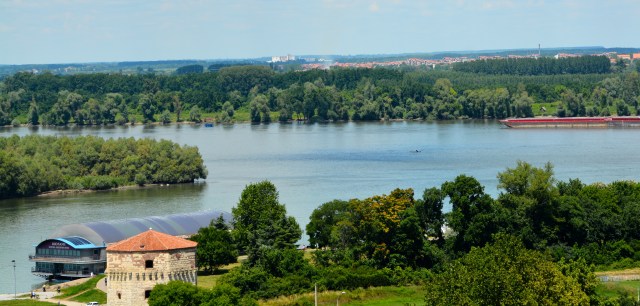
Photo ©Jean Janssen. The Belgrade Fortress sits at the intersection of the Danube and Sava Rivers.

DSC_1498

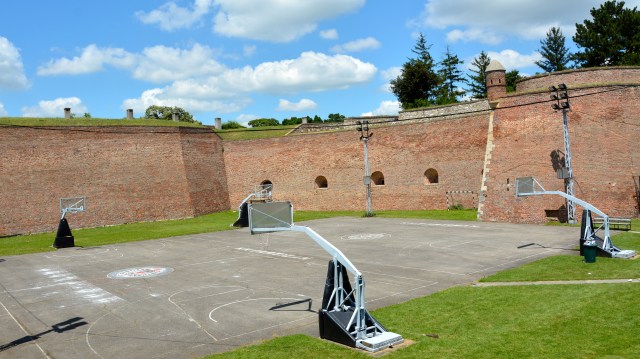
Photo ©Jean Janssen. The fortress walls surround the basketball court.

DSC_1501

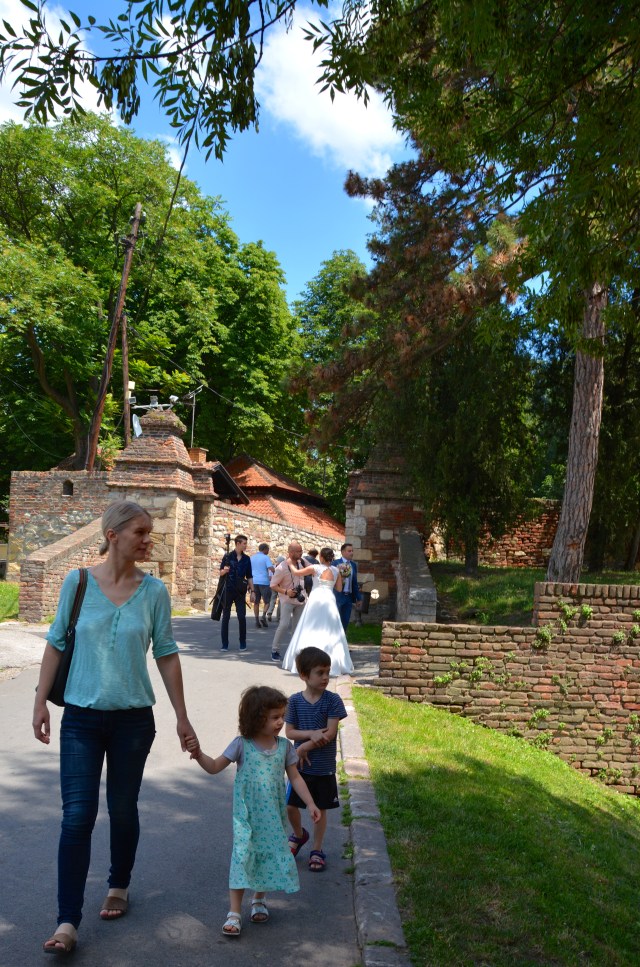
Photo ©Jean Janssen. A beautiful park skirts the edge of the Belgrade fort hosts to athletes, families, and on this day, a bride and groom taking wedding photographs.

Last we visited the Kalemegdan Fortress, built on Roman ruins.  We passed through the Stambol gate by the converted walls of the fort that now houses tennis and basketball courts.  The fort has the unique setting overlooking the intersection of the Danube and Sava Rivers and is the most visited attraction in the city.

DSC_1503

Photo ©Jean Janssen. Missing our own Peabody, I snapped this picture of a westie near the Belgrade Fort.

Our guide pointed out the steps which lead from the park entrance and the major pedestrian street to the dock where our ship is docked below.  We went back to the ship for lunch.  Our fellow passengers have a free afternoon to enjoy the park and the city.  We have chosen to take an optional tour and see Belgrade as it was as the capital of Yugoslavia.

DSC_1388

Photo ©Jean Janssen. Carving detail at the Royal Palace, Belgrade, Serbia.

DSC_1362

Photo ©Jean Janssen. From the interior of the Royal Palace, Belgrade


Posted in cruises, international, River Cruise | Tagged , , , , , , , , , , , , , , | Leave a comment

The Iron Gates on the Danube

DSC_1294

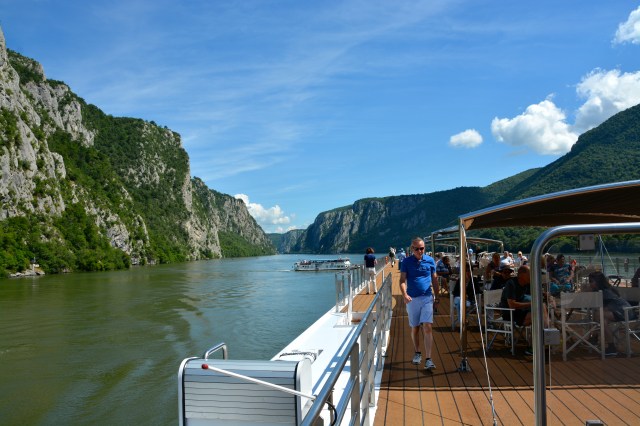
Photo ©Jean Janssen. Cruising the Iron Gates along the Danube River, Eastern Europe

Today is one of scenic beauty as we cruise the Iron Gates, a series of gorges in the Danube River that separates Romania and Serbia.  Yes, Natasha is about a gain another country.  This is the longest series of gorges in Europe.  The gorges also separate the Carpathian Mountains and the Balkans Mountains.  Given our western direction on the Danube, we will first pass through the two-lock system at the Dam.

DSC_1163

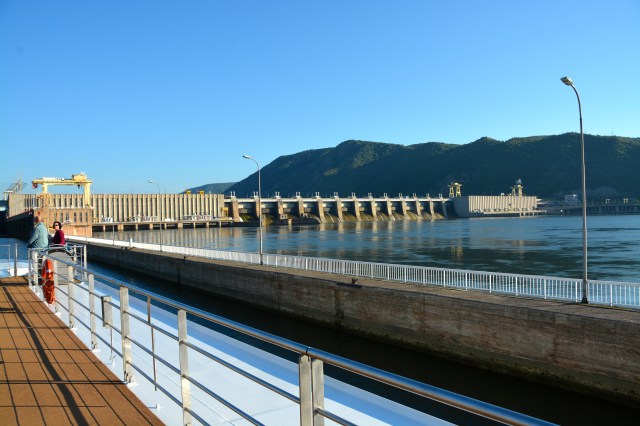
Photo ©Jean Janssen. Iron Gate Dam on the Danube

The dam (or more accurately a series of two dams) is not without controversy.  Several settlements were permanently lost due to the construction, as well as the Isle of Ada Kaleh.   The primary purpose of the dams’ construction was to provide hydroelectric power to the two countries the dams border (originally Yugoslavia and Romania, now Serbia and Romania).  In fact one of the eeriest parts of the passage was when we were directly under the power lines; the buzzing was intense.

DSC_1168

Photo Jean Janssen. Heading into the first lock. Note the electric power lines above the lock. The dam was built to generate hydroelectric power.

We were expected to reach the dam between 7 and 8 am.  It takes about an hour and a half to go through the locks.  I woke up in plenty of time but opened the shades to note the beginning of the low barriers and realized that at 6:20 am we were a lot closer than I anticipated.  I threw on some clothes, put my hair in a clip, and headed up to the sun deck with my camera.

DSC_1200

Photo ©Jean Janssen. Within the lock.

DSC_1207

Photo ©Jean Janssen. In the lock, note the difference in water levels.

The dam is huge.  Although I have been through many locks large and small, I think this is the only time I have been through a double lock system.  My first lock experience was as a child when I went through the Soo/Sault Locks between Ontario, Canada and Michigan in the US.  The Sault Locks allow for boat traffic to travel between Lake Superior and the lower Great Lakes.

DSC_1236_2

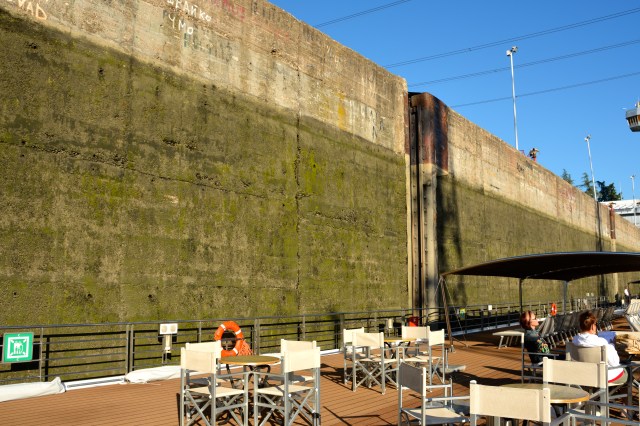
Photo ©Jean Janssen. Looking out my Juliet Balcony on the River Beatrice, I took this picture showing how close the ship sits to the lock wall.

This double lock system means we will rise before traveling into the second lock,  repeat the process, and ultimately rise about 115 feet. Depending on your arrival time, you may be in locks on the Romanian or Serbian side.  We are going through a Serbian lock.  As with most locks, it is shocking how close you get to the side when you pass through.  Our cabin faces the Serbian side and we were right against the lock wall.

DSC_1227

Photo ©Jean Janssen. Homage to the long dead communist leader of Yugoslavia on the Serbian side of the Danube at the Iron Gates Dam. The paint color was bright enough that it caught our eye from a distance (this shot is taken with a zoom lens) and that the memorial continues to be maintained.

Given our early arrival at the dam, I felt fortunate to have seen the entire passage from the sun deck (except for that one intentional trip to the cabin to get the lock wall picture).  We will reach the most scenic part of the Iron Gates in about an hour, so it was time to grab breakfast.  I ordered the wonderful Uniworld eggs benedict and had a couple of mimosas.

DSC_1238

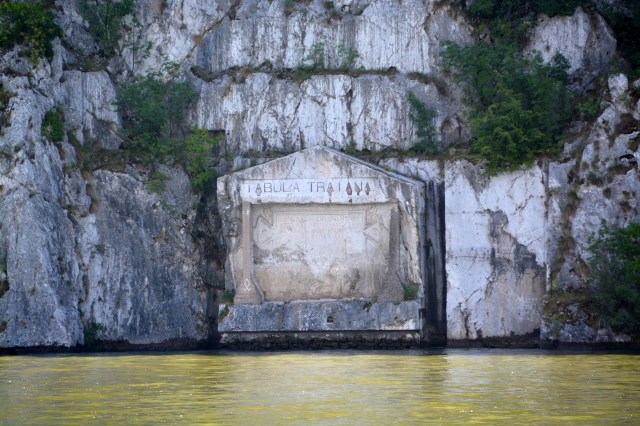
Photo ©Jean Janssen. Plaque commemorating Trajan’s Bridge over the Danube on the Serbian side of the River. I got this great shot from the Juliet Balcony of our cabin on the River Beatrice.

When I headed back to the cabin to grab my camera, what a surprise I got.  Commentary had already begun upstairs (we are ahead of schedule) and looking out the window I spotted one of the famous landmarks along our Iron Gates route.  We were at the Great Kazan, the most famous and narrow of the Iron Gates gorges where Roman Emperor Trajan ordered a bridge be built across the Danube.  Constructed in the years 103 to 105, the bridge created passage and allowed for the final conquest of Dacia, the ancient name for what is now Romania.

DSC_1248_2

Photo ©Jean Janssen. Rock Carving of the Dacian King who opposed domination by the Roman Empire on the Romanian side of the Danube. It was carved between 1994 and 2004.

Not wanting to miss anything, I headed back up to the sun deck.  Keeping the festivities going, our new friends from Tomball (just outside Houston), Carl and Lyle, ordered more champagne and the mimosa morning continued.  At the small Kazan, a rock carving of the Dacian King Decebulas, constructed between 1994 and 2004, who opposed Trajan is found on the Romanian side of the River.  The rock carving of Decebulas is 131 feet high and the tallest rock sculpture in Europe.

DSC_1243

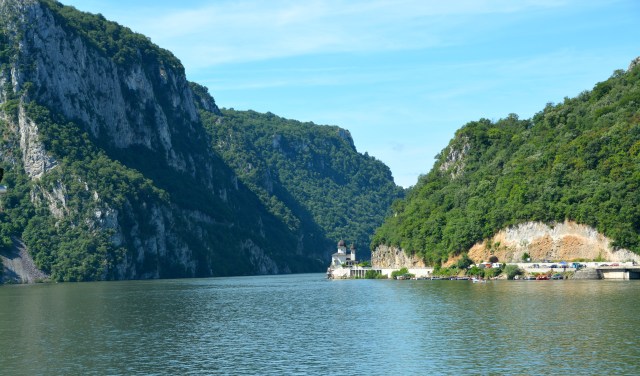
Photo ©Jean Janssen. The Great Kazan in the Iron Gates on the Danube. Just off-center to the right is the Mraconia Monastery.

DSC_1252_2

Photo ©Jean Janssen. River view of the Mraconia Monastery on the Romanian side of the Danube in the Iron Gates.

At the Great Kazan, we also saw the charming Mraconia Monastery and the road that wraps around the Danube.  On either side of the Iron Gates gorges are the national parks maintained by Romania and Serbia.

DSC_1256

Photo ©Jean Janssen. Romanian roadway (note the car) wrapping around the Danube through the Iron Gates.

Farther in our journey we spotted many caves in the Rock formations.  The largest cave on the Danube, Ponicova, is located within the Iron Gate gorges.  We saw boats at the large entrance and at a dockside opening with stairs.  The Ponicova Cave is accessible by water or by land.  It was a beautiful, relaxing morning cruising the gorges.

DSC_1289

Photo ©Jean Janssen. Dockside entrance to the cave system along the Danube in the Iron Gates.

DSC_1290

Photo ©Jean Janssen. There was lots of tourist travel at the water entrance to the Poricova Cave in the Iron Gates of the Danube. It is on the Romanian side.

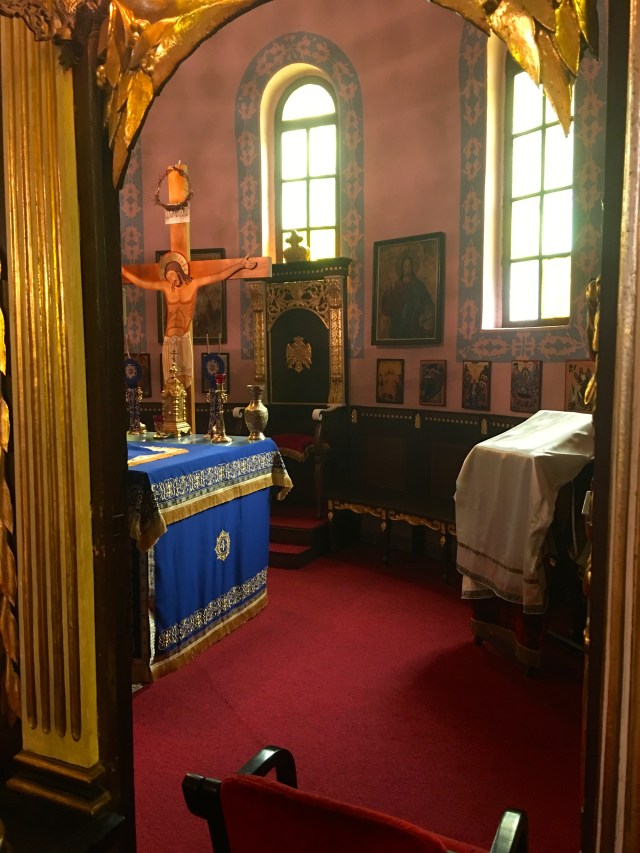
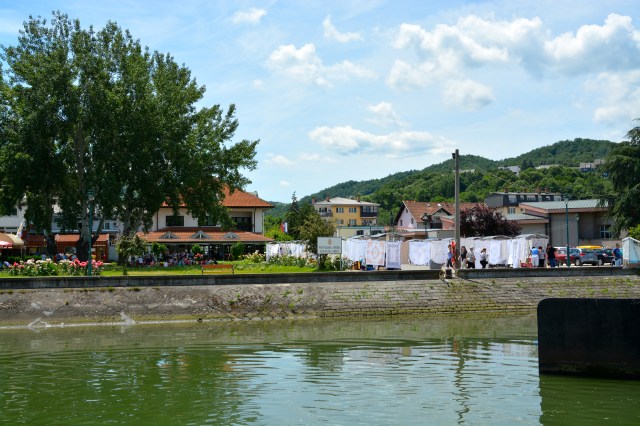
Once the Iron Gates were behind us, we had lunch at prepared for a short stop at a Serbian town of Donji Milanovac.  Locals had come out with embroidered linens for sale, as well as some local wines.  We got off the boat and wandered through the town.  I walked up to the Orthodox Church where I was warmly greeted by the young priest who welcomed us in. He was burning incense and was playing recorded chanting.  He had the door to the altar open, although the entrance was blocked.  It was probably the only opportunity I will have to see an Orthodox altar which is generally hidden.

IMG_8711

Photo ©Jean Janssen. We were missing our burgers, so Carl ordered them for us for lunch. Lyle presents the all American burger.

IMG_8724

Photo ©Jean Janssen. Inside the Serbian Orthodox church.

IMG_8726

Photo ©Jean Janssen. Most visitors to an Orthodox church will never see the altar.

IMG_8730

Photo ©Jean Janssen. Note the lovely icons inside the chandelier in the Serbian Orthodox Church.

Some of the ship’s guests and a fair number of the crew went ashore in Donji Milanovac.  Although all our food and drinks (including alcohol) are free on board, people still tried the local bars and  Serbian beer and wine.  I have already been to several of the Eastern European countries on this itinerary when we cruised the Black Sea and Hungary on land-based trips and other river cruises.  However, this is the first time I have been to Serbia.  Natasha is now been to 120 countries.

DSC_1310

Photo ©Jean Janssen At our first stop in Serbia, Donji Milanovac, the locals brought out their handmade linens and homemade wine to sell.

Continue reading

Posted in cruises, international, River Cruise | Tagged , , , , , , , , , , , , , | Leave a comment

A Rock Castle in Bulgaria

DSC_1122

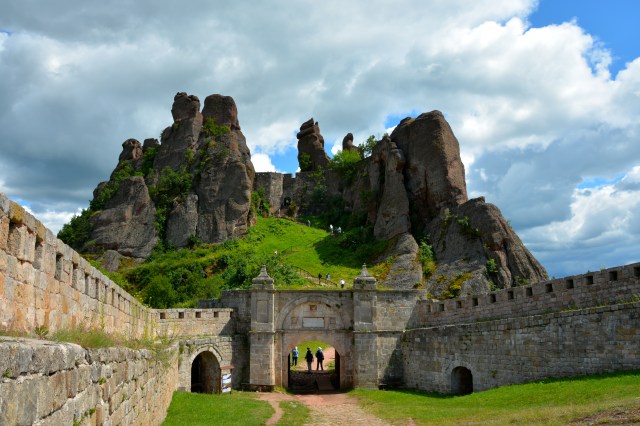
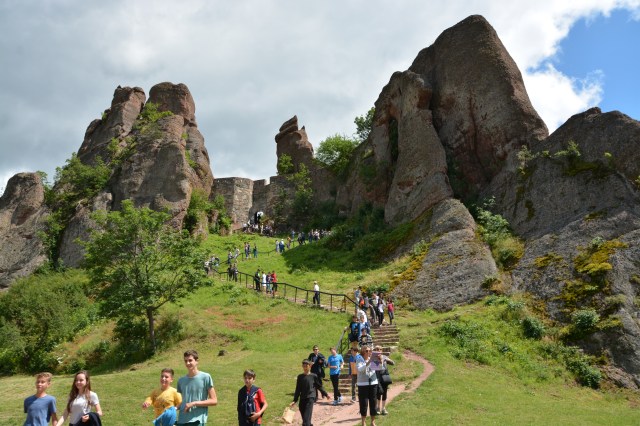
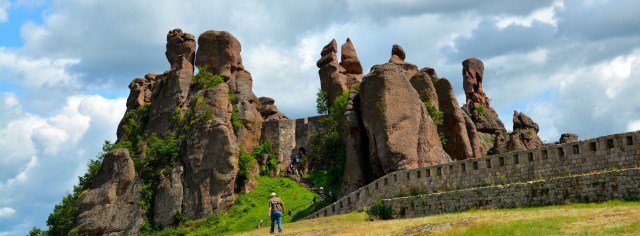
Photo ©Jean Janssen. The Belogradchik Fortress in the Rock Formations, Bulgaria.

Today we are docking in Vidin, Bulgaria on the Danube.  We have two touring options, both included with our cruise.  You can take your passport, cross a bridge back into Romania, and go to a cultural center with food and wine options.  We chose the alternative option and stayed in Bulgaria to visit some famous rock formations.

DSC_1072

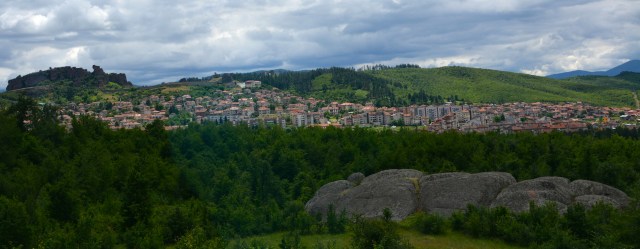
Photo ©Jean Janssen. Coming into the city below the fortress. Belogradchik, Bulgaria.

We don’t dock in Vidin until 1 pm, so it was a lazy morning for me and I lingered over a late breakfast.  It was a great catch-up after yesterday’s full day of touring.  The ride out to the rock formations is about an hour through the green Bulgarian countryside.  This region is known for its agriculture, particularly the vineyards.  As we head into the mountains, we leave the Carpathian Mountains behind and see the Balkans ahead.

DSC_1133

Photo ©Jean Janssen Mountain views from the fortress.

DSC_1091

Photo ©Jean Janssen. View of the Balkans and the rock formations from the hotel terrace.

This was the Germans’ route to Turkey.  The Bulgarians tried to remain neutral during WWII.  With the threat of invasion and the promise of new lands, the Bulgarians did sign with the Axis powers, but did not participate in the invasion of Yugoslavia.  Their young leader was summoned to Berlin to explain his actions.  He died only a week later after returning from Germany; many believe he was poisoned.

DSC_1140

Photo ©Jean Janssen. A stork nest in Bulgaria.

We made a comfort stop in the town of Belogradchik, which translates to small white city.  The people like to white wash their houses and use red tiles on their roofs.  Once again we enjoyed some Bulgarian pastries.  Belogradchik is an important stop on the rail lines that connect Vidin with Sofia, the country’s capital.  From the hotel terrace we had lovely views of the rocks, formed some 230 million years ago.  People often see faces or an animal in the rock formations.

DSC_1106

Photo ©Jean Janssen. I see a face in these rock formations.

DSC_1089

Photo ©Jean Janssen. View from the hotel terrace.

This is when Natasha has to fess up that she has had to be a little less adventurous on this trip.  I tore a tendon in my right foot and although I have a brace I am limited when it comes to extended walking or climbing.  I am having surgery as soon as we get home.

DSC_1130

Photo ©Jean Janssen. Within the second gate, the schoolchildren made the climb look easy.

DSC_1105

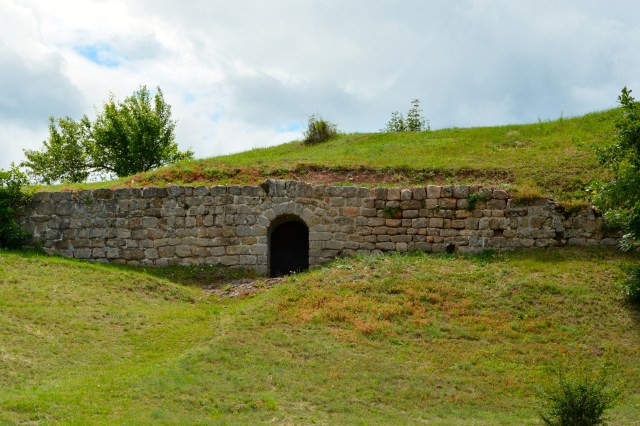
Photo ©Jean Janssen There are tunnels through the walls in the lower formations, Belogradchik Fortress, Bulgaria.

To see the fortress, there are four levels.  You go in through the first gate and see the later fortifications.  From here our guide gave us a brief history.  Going through the second gate, you arrive at the long, winding staircase to the older fortress.  This is as far as I could go.  Once you reach the fortress at the top, there is another shorter climb to even more spectacular views.  People told me that I did make the right call on the stairs; they were a bit treacherous.

DSC_1125

Photo ©Jean Janssen. The second gate in the Belogradchik Fortress, Bulgaria.

DSC_1111

Photo ©Jean Janssen. More tunnel entrances within the fortress walls

DSC_1098

Photo ©Jean Janssen. Boris takes off toward the fortress (without a camera).

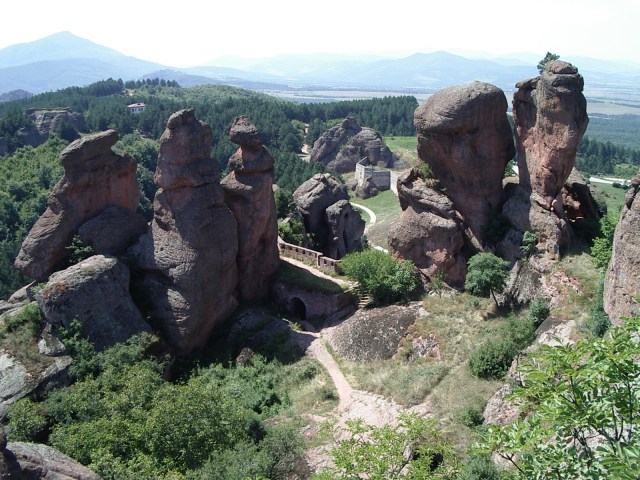
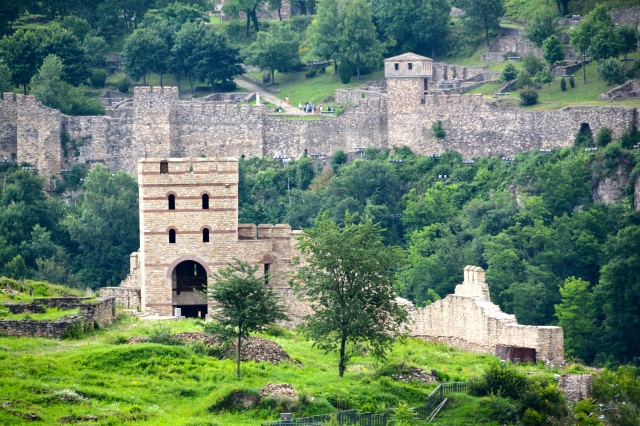
Even from below the views were breathtaking and I personally thought the most marvelous shot was looking up at the imposing castle.  The fortress only has constructed walls on two sides, the natural rock formations serving as the remaining walls.  The original structure was built during the 1st-3rd centuries when this part of Bulgaria was part of the Roman Empire.  It was originally used as a hideout and for surveillance.  It was not until the 14th century that additional fortifications were built outside the original structure.

Belog_2

A view from above. Belogradchik Fortress

DSC_1112

Photo ©Jean Janssen. With the “newer” fortifications in the foreground. Belogradchik  Fortress, Bulgaria.

Boris hit the souvenir booths outside the fortress walls and then it time for our bus ride back to the River Beatrice in Vidin.  Vidin is located in the Northwestern part of the country near the border with Serbia.  This is the poorest part of the country.  Danube- based industry has not done well here since the fall of communism.

DSC_1127

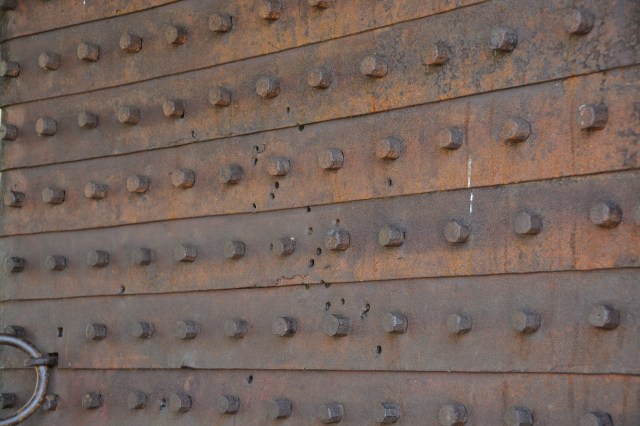
Photo ©Jean Janssen Bullet holes in the metal doors in the second gate at the Belogradchik Fortress.

DSC_1146

Photo ©Jean Janssen. Yes, Boris in Bulgaria. His last souvenir purchase in the country.

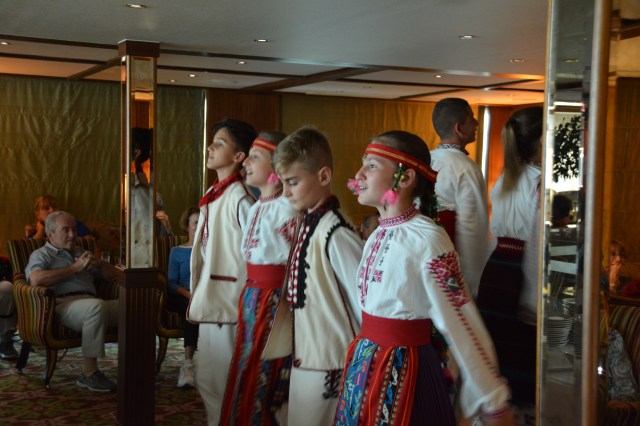
Upon our return there was a performance by young Bulgarian dancers.  Unfortunately, they performed with their backs to the uncovered lounge walls which meant it was hard to get a good picture.  After their performance, we had a yogurt demonstration, Bulgaria being one of the larger producers of the culture.  They also supply cultures for many of the Greek yogurts.

DSC_1155

Photo ©Jean Janssen. Bulgarian Children performed for us on the River Beatrice.

Tomorrow will be an early morning as we sail through the locks and then scenic sailing through the Upper and Lower Kazen, the most beautiful section of the Iron Gates.

DSC_1113

Photo ©Jean Janssen. One more look, Belogradchik Fortress, Bulgaria.

Posted in cruises, international, River Cruise | Tagged , , , , , , , , , | 2 Comments

Boris in Bulgaria

DSC_1062

Photo ©Jean Janssen. Boris in Bulgaria. Give him a hat and a pretty girl and he is happy.

We woke to enjoy one of those fabulous Uniworld breakfasts before heading out to explore Bulgaria, our next stop on our Eastern European river cruise.  It looked a little grey outside so I asked the front desk attendant if rain was predicted.  She said it would be sunny.  I should have followed the program advice instead.  I brought a raincoat and umbrella on the cruise, but left both in the room.  Boris wisely got both of us umbrellas.

DSC_1003

Photo ©Jean Janssen. The ancient Bulgarian city of Veliko Tarnovo.

We left the riverside city of Rousse where we were docked for our day-long tour of the medieval capital of Bulgaria, Velikovo Tarnovo, and the Bulgarian village of Arbanasi.  Along the way, we will have a traditional Bulgarian lunch and be back to the ship by 5 pm.  Some guests chose to tour Rousse and see the cave churches instead.  Their tour ends at 2 pm.

DSC_0965

Photo ©Jean Janssen. Rousse, Bulgaria.

DSC_0971

Photo ©Jean Janssen. Newer apartment construction with shops on the bottom. Rousse, Bulgaria

As we left Rousse, a city of soviet-style apartments and crumbling architectural beauties used for that purpose, the guide gave us information about Bulgaria.  It is a country of 7.2 million with a declining population.  They rely on tourism, grain farming, and heavy industry as their main sources of income.

DSC_0967

Photo ©Jean Janssen. Rousse, Bulgaria

Under communism, they were part of the 5-year plan of specialization between countries.  Bulgaria concentrated on textiles, computers, bicycles, farming, and ship building.   There was negative unemployment; they even brought in workers from Cuba and Vietnam to assist with the ship building.  With the collapse of communism and the loss of guaranteed markets, there was massive unemployment.  Having always been given a job and guaranteed employment, people did not have the mindset to deal with the new system.  In the 90s, unemployment was at 25%.

DSC_0991

Photo ©Jean Janssen. Veliko Tarnovo is on the Varna River, Bulgaria.

Bulgaria joined the EU and with investment from the European Union unemployment dropped as low as 4%.  It now hovers around 7%.  Not all EU countries are on the same footing.  If coming from another EU nation, you still have to go through immigration to enter Bulgaria or when entering another EU country from Bulgaria.  They do not use the Euro currency.

DSC_0987

Photo ©Jean Janssen. Ancient bridge, Bulgaria.

Bulgarian children go to school until the age of 16; some go on for more advanced studies.  They are experiencing a brain drain, especially in the medical profession, where their students can make far more money abroad.  There is a large expat community of Bulgarians in Chicago.  The most popular courses of study are math and the sciences and the students do very well in international competitions in these areas.  The average monthly income in Bulgaria is 500 euros.

DSC_1008

Photo ©Jean Janssen. Veliko Tarnovo, Bulgaria.

DSC_1006

Photo ©Jean Janssen Veliko Tarnovo, Bulgaria

It was a lovely drive to Veliko Tarnovo through the Bulgarian countryside.  The city itself sits on three hilltop with the River Yantra below.  It is the medieval capital of Bulgaria.  Today it is a University town with a thriving artists community and one of the few cities in Bulgaria that is growing.  It has a incredible setting and tourism continues to grow.

DSC_1002

Photo ©Jean Janssen. Veliko Tarnovo, Bulgaria

DSC_0994

Photo ©Jean Janssen. Velido Tarnovo.

We took a comfort stop at a local hotel and admired the view while trying Bulgarian pastries.  We will return here to do a little shopping later today in the artisans shops.  As we re-boarded the buses, the rain started.  Closer views of the castle were all from inside the bus and at least one photo stop was cancelled due to rain.

DSC_1017

Photo ©Jean Janssen decoration on exterior of Orthodox church in Arbanasi, Bulgaria

DSC_1021

Photo ©Jean Janssen. Church of the Archangels, Michael and Gabriel, Arbanasi, Bulgaria

We went on the the village of Arbanasi less than 4 miles from Velido Tarnovo.  Arbanasi is a tourist designation in and of itself with its beautiful 17th and 18th century churches (disguised on the outside) and the buildings in the Bulgarian National Revival style.  In fact, any new construction in the village must follow this architectural style.  It is enchanting and the light rain (it had eased a bit at this point) made it even more romantic.

DSC_1023

Photo ©Jean Janssen. We enjoyed beautiful a cappella chanting in Arbanasi.

In the historic Orthodox Church of the Archangels Michael and Gabriel, we heard lovely chanting by four a capella singers.  People stand in the Orthodox churches and there is limited seating for the infirm with high arms around the edges.  When you wanted to pull yourself out of these narrow spaces, you learned why they had high arms.

DSC_1038

Photo ©Jean Janssen. Exterior of the Church of the Nativity of Christ, Arbanasi, Bulgaria.

We next visited the Church of the Nativity of Christ where a wonderful guide told us about the amazing artwork and architecture.  From the exterior the building was very unassuming.  During foreign rule, the churches were permitted if they had a low profile and no bell tower.  They were dug deep into the earth to give the full height inside.  Unfortunately, no interior photographs were permitted in this church.

DSC_1039

Photo ©Jean Janssen. Rooftops in Arbanasi, Bulgaria

DSC_1043

Photo ©Jean Janssen. Home interior, note the beautiful carved ceiling, Arbanasi, Bulgaria

DSC_1045

Photo ©Jean Janssen. “Indoor Plumbing” at the historical museum Arbanasi, Bulgaria

We did a little more walking the village in the rain ending up at a gift shop that sold rose oil products, a regional favorite.  After the shop, we walked across the street tot he village museum where they depicted what life had been like for the inhabitants.

DSC_1052

Photo ©Jean Janssen. Home Confinement Room where mothers stayed with their newborns for 40 days after their birth to regain strength. After 40 days the child was introduced to society and baptized.

After the museum, we went to a charming restaurant where were served  a traditional Bulgarian lunch-a salad of cucumbers and tomatoes, a vegetable soup, a meat stew with bread, and a yogurt dessert.  The rain was really pouring outside, so we were happy to be indoors and enjoy the wonderful food and the music and dancing.

DSC_1063

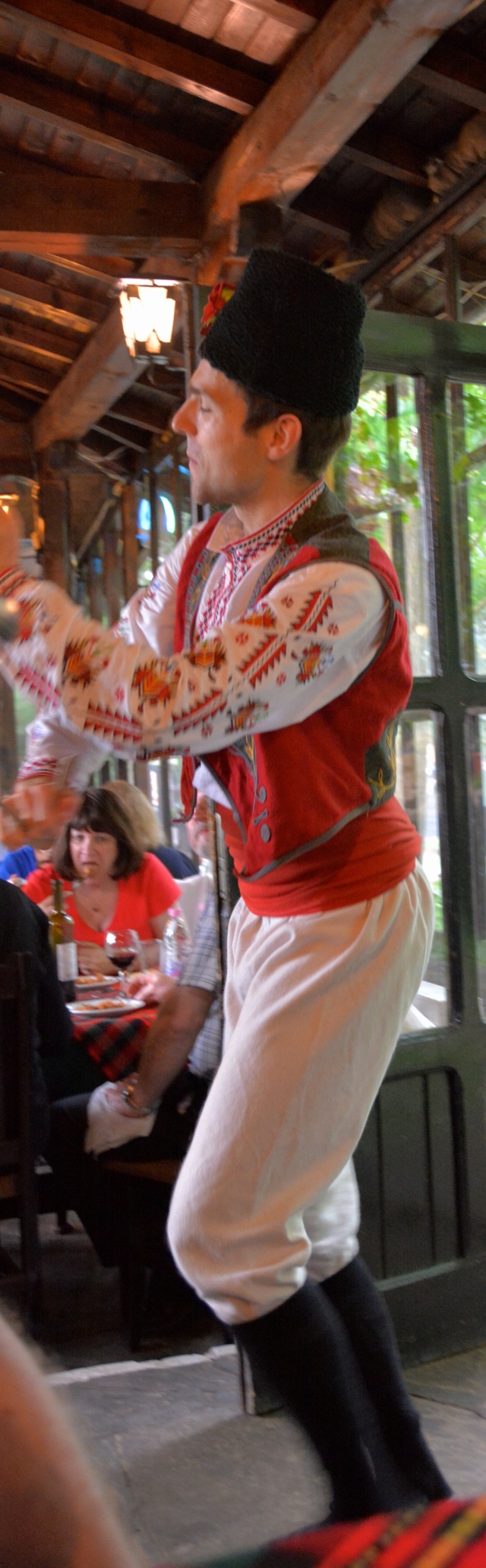
Photo ©Jean Janssen. Bulgarian dancer, Arbanasi, Bulgaria

After lunch we returned to Velido Tarnovo and walked the artisan street in the rain.  Both Boris and I found handicrafts to take home with us-decorated wooden spoons, embroidery, and a mask.  We enjoyed our full day in Bulgaria.

DSC_1066

Photo ©Jean Janssen. Bulgarian musicians, Arbanasi, Bulgaria

Posted in cruises, international, River Cruise | Tagged , , , , , , , , , | 2 Comments

Snagov Monastery and the Mogosoaia Palace near Bucharest, Romania

DSC_0887

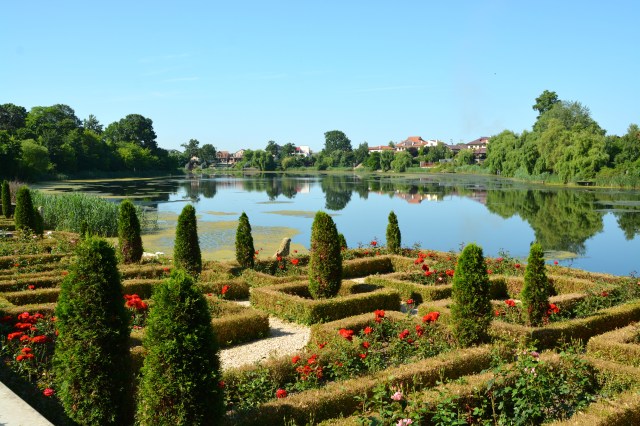
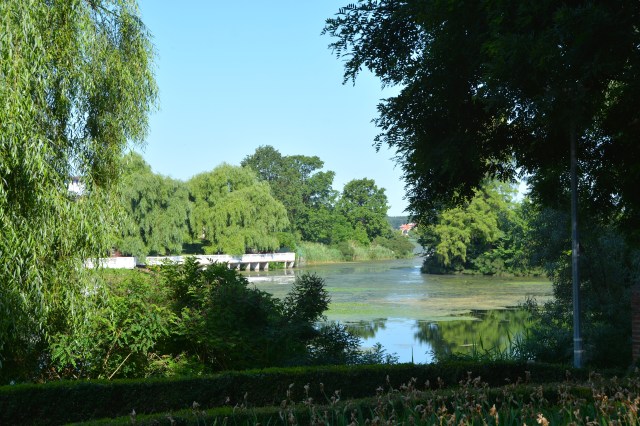
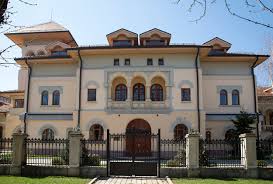
Photo ©Jean Janssen. Beautiful lakeside setting of the Mogosoaia Palace outside Bucharest, Romania.

We set our bags outside the room early and then went down for an early breakfast.  We are touring the countryside near Bucharest today with stops at the Snagov Monastery and Mogosoaia Palace.

DSC_0889

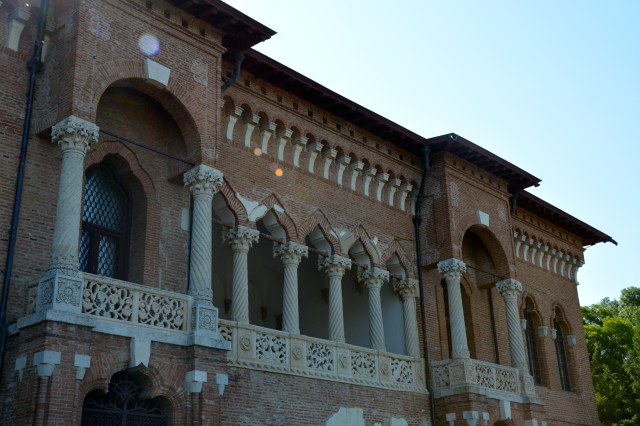
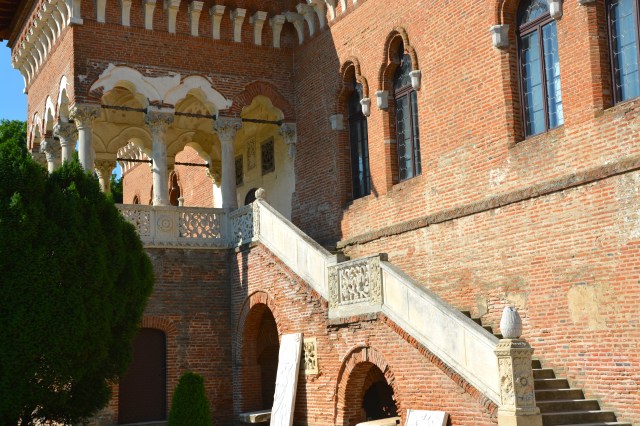
Photo ©Jean Janssen. Front facade of the Mogosoaia Palace facing the lake.

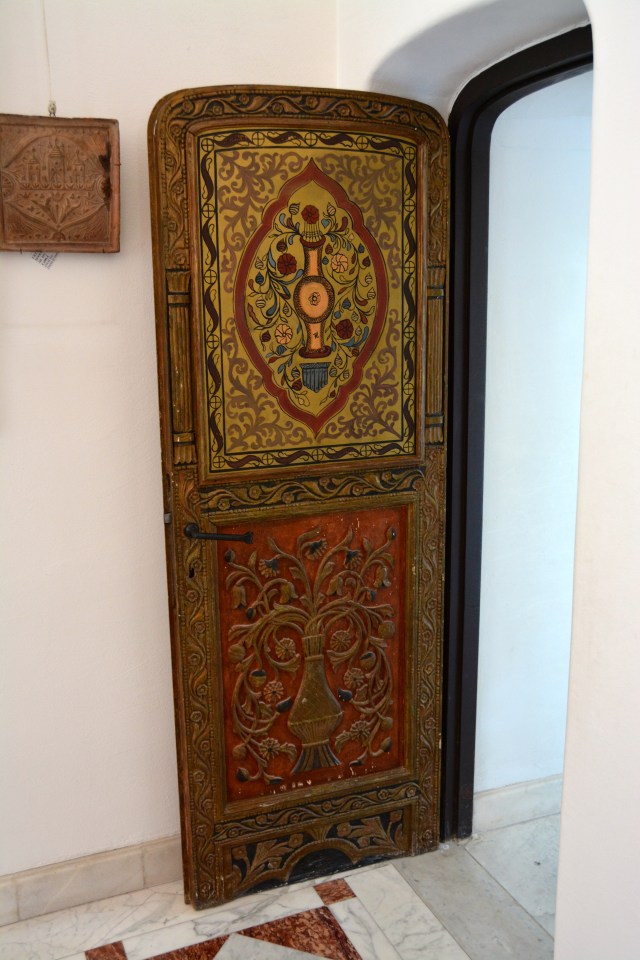
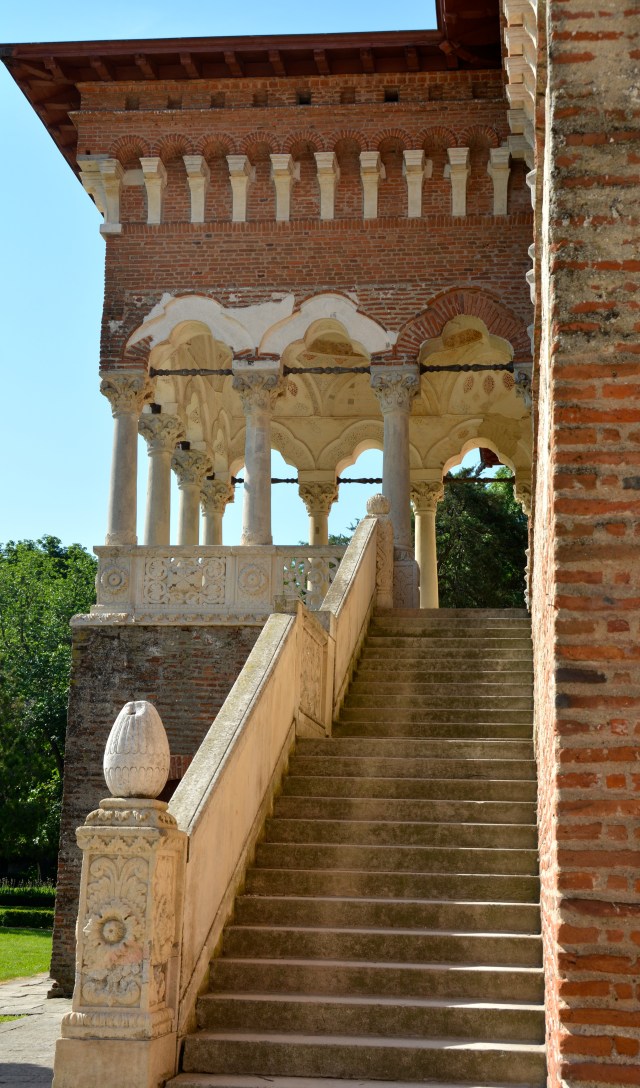
The Palace has a lovely setting on a lake about 6 miles from Bucharest.  “It was built between 1698-1702 by Constantin Brâncoveanu in what is called the Romanian Renaissance style or Brâncovenesc style.”  After murdering the family, the Ottomans took over the Palace in the early 1700s and made it an inn.  It was later returned to the family and stayed in their hands until the 19th century.  Notable were the beautiful small-tiled floors and the ornate doors.

DSC_0896

Photo ©Jean Janssen. Interior Door in the Mogosoaia Palace.

DSC_0898

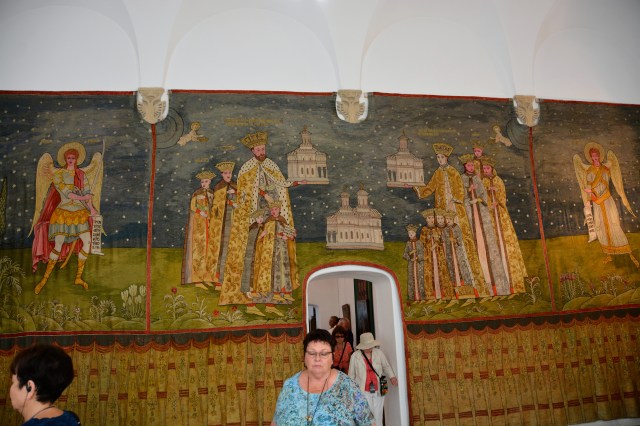
Photo ©Jean Janssen. Tapestry in the Mogosoaia Palace showing the murdered Brâncoveanu family-husband, wife, 4 sons, and 7 daughters.

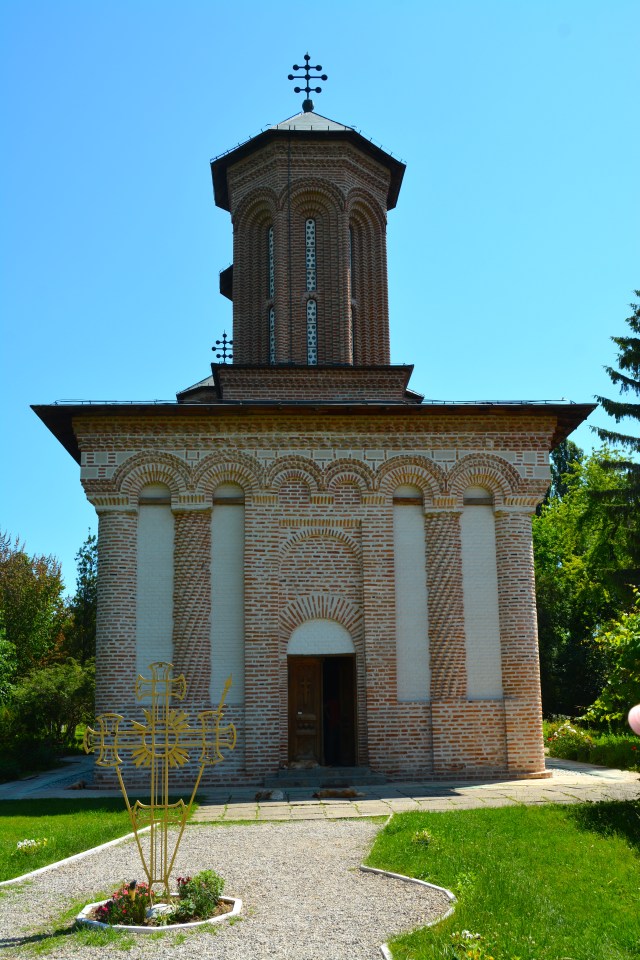
After touring the interior of the Palace, we spent a little time at the church which sat next door and did a little walking around the Palace grounds before reboarding the coach to go to the Monastery.

DSC_0885

Photo ©Jean Janssen. View from the Mogosoaia Palace.

DSC_0881

Photo ©Jean Janssen. Mogosoaia Palace.

Our next stop was the Sangov Monastery, about a 45 minute drive from Bucharest.  The monastery sits on an island in a lake and is best known as the resting place of Vlad the Impaler.  Although he was killed in the forests near this island, DNA testing suggests that Vlad is not actually here.  Regardless of whether Vlad was buried here, he did have a connection to the monastery, building fortifications, a new church, bell tower, a prison and torture chamber on the island.  At one time, coins were also minted on the island.

DSC_0910

Photo ©Jean Janssen. Snagov Monastery outside Bucharest, Romania.

DSC_0913

Photo ©Jean Janssen. Sleepy greeters enjoying the shade at the Snagov Monastery.

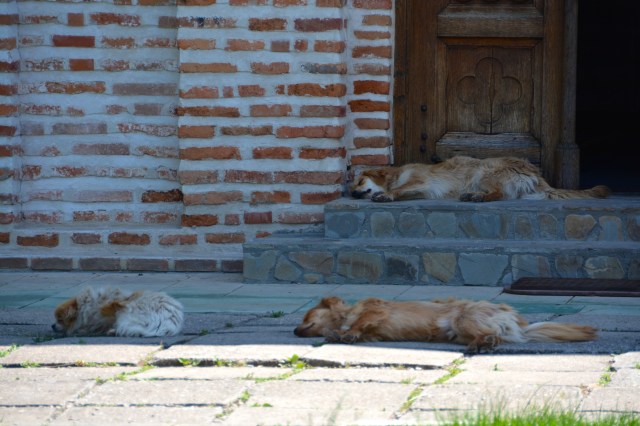
Up until 5 years ago when a bridge was built to the island, the monks shuttled visitors over in boats.  It is a peaceful setting, as evidenced by the dogs who slept in the shade near the monastery.

DSC_0922

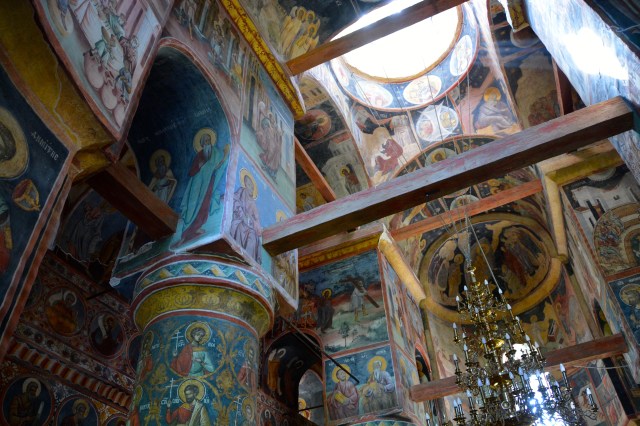
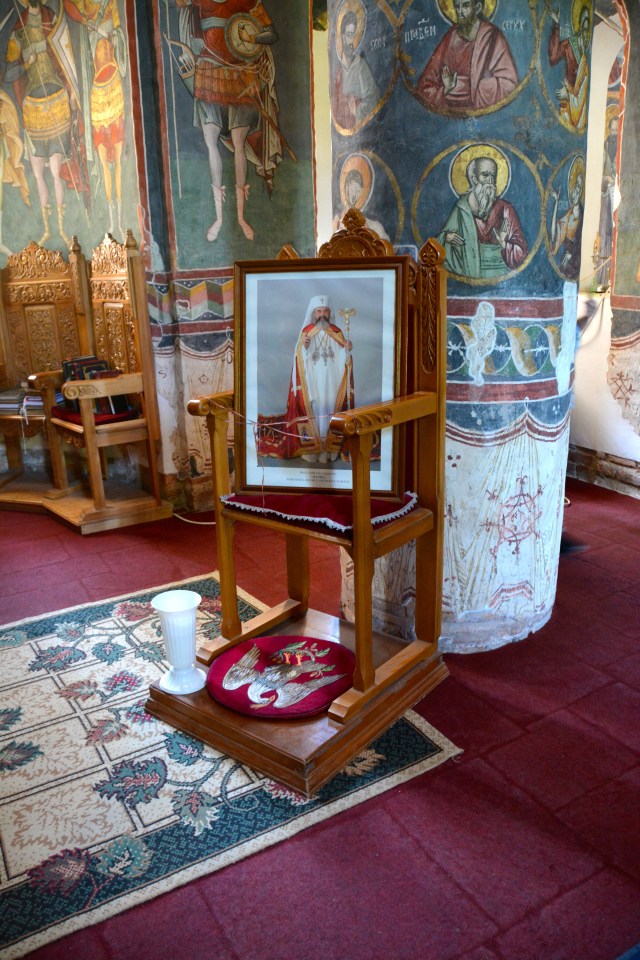
Photo ©Jean Janssen. Interior of the Snagov Monastery Church.

DSC_0921

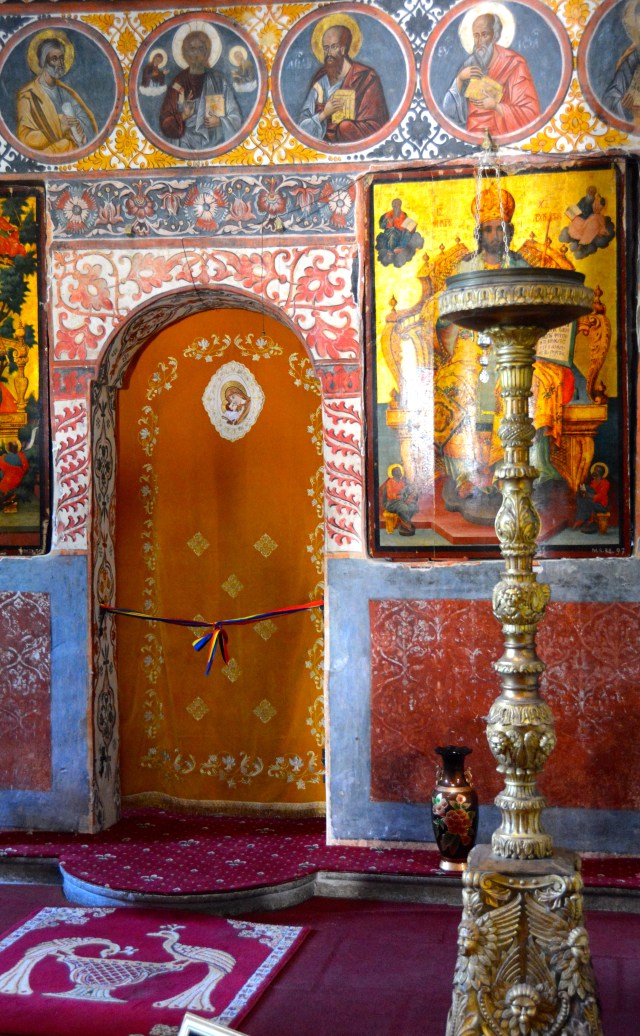
Photo ©Jean Janssen. Entrance to the altar in the Snagov Monastery Church.

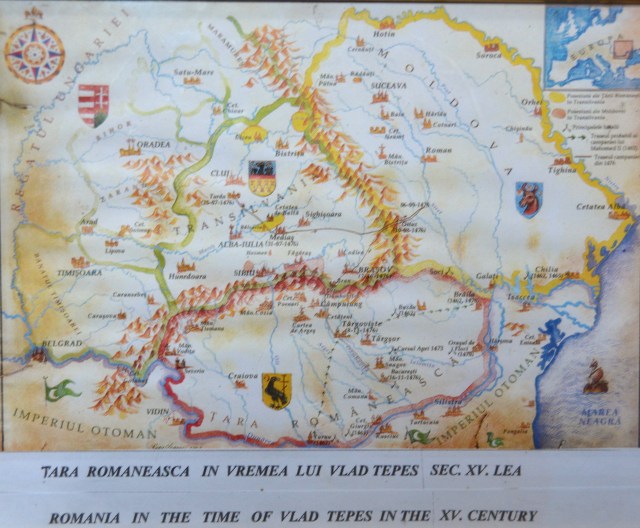
Walking through the bell tower, you arrive at the church with its beautiful painted interiors and soaring ceilings.  We had some time to spend in the cool interior.  Inside the church where was also a display regarding Vlad the Impaler, including some good maps of what the country looked like at the time he ruled.  His alleged grave is also marked.

DSC_0932

Photo ©Jean Janssen. Map showing the area at the time of Vlad’s rule.

DSC_0923

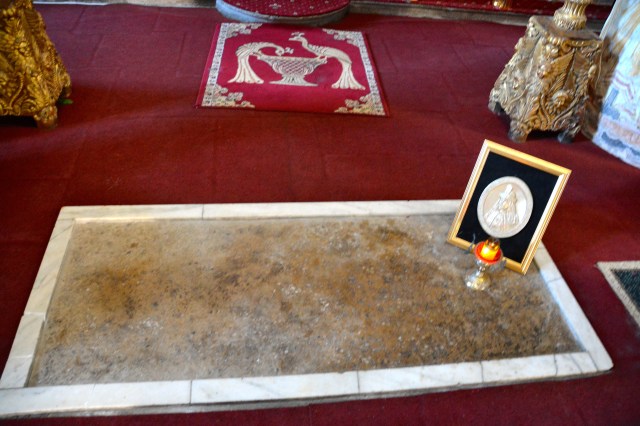
Photo ©Jean Janssen. Alleged grave of Vlad the Impaler inside the church at the Snagov Monastery.

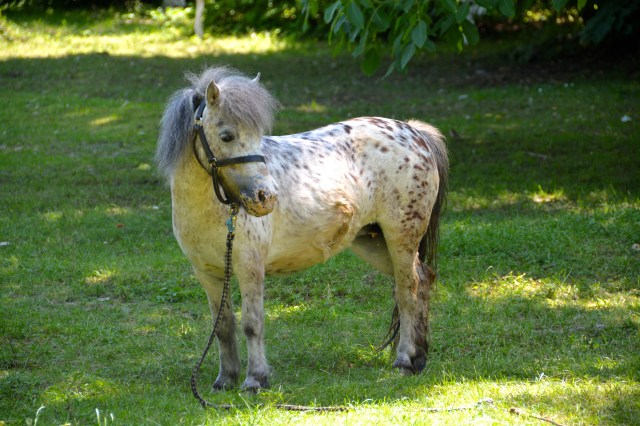
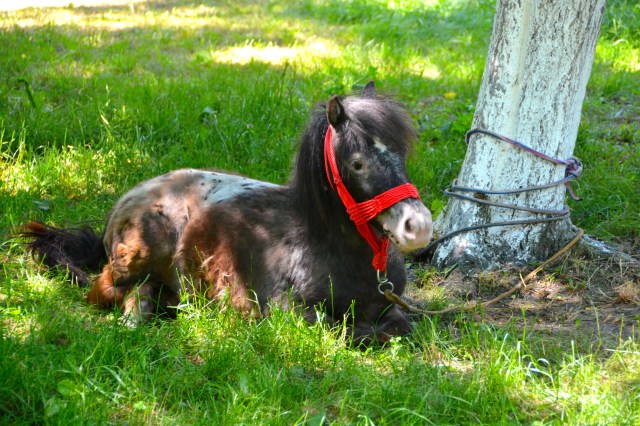
Outside we wandered the lovely grounds, creating the friendly miniature horses that were staked on the lawn.  There is also a picturesque well behind the church and a gazebo as well.

DSC_0935

Photo ©Jean Janssen. Miniature horses on the grounds of the Snagov Monastery.

DSC_0939

Photo ©Jean Janssen Snagov Monastery Church as seen from the back side.

After the monastery, we went back to the hotel (although we had all checked out) for a lunch break.  Since Boris and I had been there for several days we were familiar wight he area and choose an Italian restaurant on a street behind the Romanian Athenee Concert Hall to have lunch.  We saw several of the musicians coming and going with their instruments and for a while heard a performer warming up.

DSC_0960

Photo ©Jean Janssen. Last lunch in Bucharest, behind the Romanian Athenee Concert Hall.

Also at the restaurant were other people from the ship.  We met two women from New Orleans, both retired teachers and two younger men, Mark and David, who both work in Washington DC.  I think a lot of people just ate at the hotel.

images

Canadian Embassy, Bucharest

After lunch we waited at the hotel for them to call our bus.  As we rode out of the city she told us a little more.  We once again passed the embassies, noting the odd Green building that serves as the Canadian Embassy, close to the one for Russia.  We drove by many of the beautiful older homes.  75% of the properties were returned to the families after communism, but that doesn’t mean all had the means to keep them up.

DSC_0963

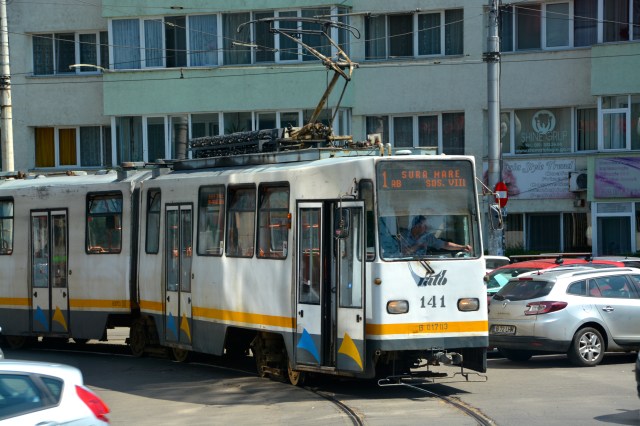
Photo ©Jean Janssen. One of many transportation options in Bucharest.

Romania has been part of the European Union for 10 years and the EU’s investment in the country is obvious in some of the wonderful renovation work that has been done.  The expenses were shared by the EU and the local governments.  Bucharest does have a modern unground METRO system.  All the lines are $1 (I might have the currency wrong) regardless of where you go.  There are also lots of car in Bucharest, in fact more cars than people.  The most common is the Dacia; this word is also the original name of the country.

DSC_0961

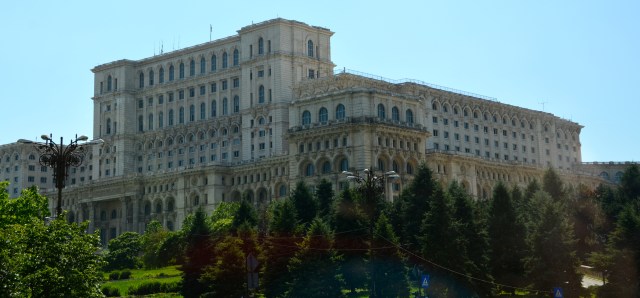
Photo ©Jean Janssen. Parliament Building, Bucharest.

We passed the Parliament building one last time.  Most of the guest told us the inside tour wasn’t worth it.  It was just lots of marble and meeting rooms and had a very cold feeling to it.  The building is the second largest in the world, behind the pentagon.  We also saw a huge Orthodox Cathedral under construction and I thought of Alex and his complaints that too much money was spent on building new churches rather than new infrastructure like new roads.

Unknown

Ceausescu’s Villa in Bucharest

Some of the people on our ship had taken an optional tour to Ceausescu’s villa in Bucharest.  We had seen it on the Panoramic tour and it looked surprisingly modest for a villa.  The home just opened for visitors in March 2016 and those that went found it fascinating.  Their clothing has even been kept in airtight storage to preserve it.  I may have missed out on something there.  Would love to hear from anyone that has visited the villa.  Also, the hop on/hop off bus for the city comes highly recommended.

DSC_0893

Photo ©Jean Janssen. Mogosoaia Palace, Romania.

We had an hour and a half drive from the city to the River Beatrice that was at dock in Giurgiu, Romania.  When we arrived, they took our passports and we had a drink in the lounge while they checked us in.  Our bags were already in the room and we were able to unpack before we left the dock.  We have been on the Uniworld’s River Beatrice before.

DSC_0924

Photo ©Jean Janssen. Church at the Snagov Monastery, Romania.

Our river travel time was a whole 15 minutes.  We basically just crossed the Danube to Rousse on the Bulgarian side.  The Danube serves as a natural boarder between the two countries.  Touring Bulgaria tomorrow.

DSC_0943

Photo ©Jean Janssen At the Snagov Monastery, Romania.

Posted in cruises, international, River Cruise | Tagged , , , , , , , , , , , , , | Leave a comment

Bucharest, Romania

DSC_0834

Photo ©Jean Janssen. Library building across from the Palace and next to Communist headquarters and Revolutionary Square. In front is the statute of King Carol I, Bucharest, Romania.

We had the breakfast buffet at the Radisson Blu. It was essentially the same food as at the Hilton, but with a nicer presentation. We saw one of the families that had been at the Hilton joined us for the cruise. We had time to go upstairs after and collect our things for the tour. We won’t be back to the hotel until late this afternoon.

DSC_0843

Photo ©Jean Janssen. Revolutionary Square and the Communist Party Headquarters, Bucharest, Romania. Ceausescu and his wife fled by helicopter from the top of this building. The monument is to those who lost their lives in the quest for freedom from Communist oppression. It is to represent a stake or sword through the heart, although the locals think the heart looks more like a potato.

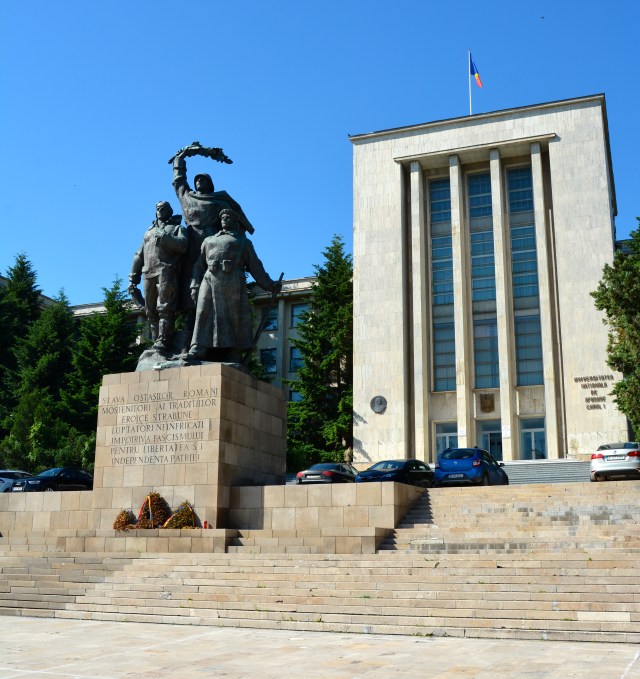
The bus tour started out with the buildings be had seen nearby-The Palace, the Concert Hall, the Statute of King Carol I and the University building. Next door and almost across from the palace was Revolutionary Square and the communist headquarters building where the protests were and where Nicolae Ceausescu and his wife Elena famously attempted to escape by helicopter in 1989. The helicopter didn’t have enough fuel, so it had to land before the border. The Ceausescus were later captured, hastily tried, and executed. In the square there is now a monument to the protest victims that is said to represent a stake/sword through the heart. The residents think the heart looks more like a potato. I have to agree.

DSC_0744

Photo ©Jean Janssen. Bucharest’s Military Academy since 1889.

DSC_0737

Photo ©Jean Janssen. Reliefs added by the Communists to the Military Academy in Bucharest.

We next passed one of the Oldest Orthodox Churches in the country. About 86% of the Romanian people are of this faith. We went pass the many academic buildings of the University most dedicated to a particular discipline. We made a stop at the military academy, Carol I National Defense University that has been in use since 1889. The communists added the wall carvings outside. They detail the country through its’ pre-20th century history on one side, completely ignores the era of royal leadership, and then highlights World Wars I and II on the other side.

DSC_0747

Photo ©Jean Janssen. The Parliament building in Bucharest, Romania, commonly referred to as Ceausescu’s Palace.

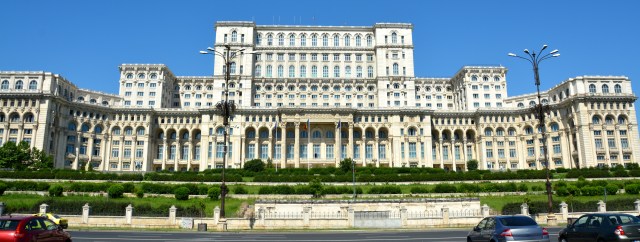
We drove by the Parliament Building, one of the largest in the world. The residents refer to it as Ceausescu’s Palace. The building is only in partial use for the government, having always been far bigger than is needed. Some of the conference space is rented out.

DSC_0748

Photo ©Jean Janssen The “mini me”. Elena Ceausescu’s building across from the Parliament Building in Bucharest.

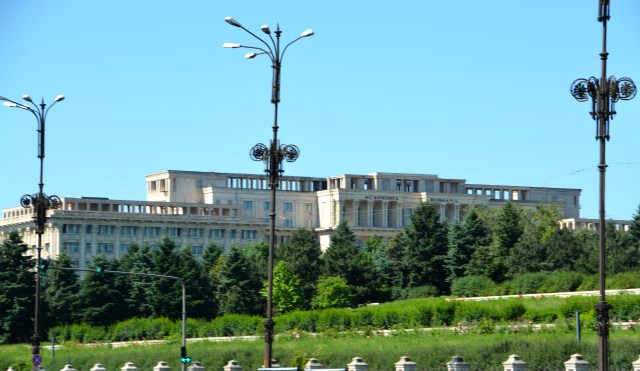
Ceausescu’s wife Elena, with no college degree, fancied herself a chemist. So, Ceausescu built her a smaller version of the building across the street from a side facade as an institute to chemical studies. Across from the front of the Parliament building are two moon-shaped buildings for supportive offices and there is a fountained street with more office and residential space intended for offices and homes for well-connected party members.

DSC_0858_3

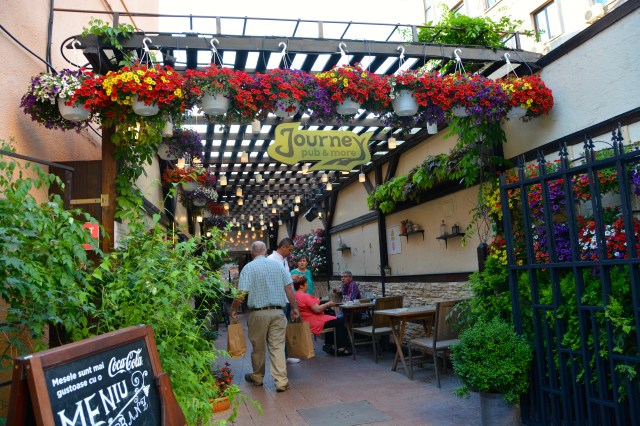
Photo ©Jean Janssen. Journey Pub, Bucharest. Most of the restaurants and bars took advantage of the weather with outdoor seating.

Ceausescu wanted a completely new and modern city and he leveled everything in this area of town to complete his dream. Our guide told us that the lighted fountains are particularly beautiful at night. However, she also said that she was glad the construction dream was never fully realized. The buildings are cold and sterile.

DSC_0833

Photo ©Jean Janssen. The Athenee Concert Hall (the one we could see from the Hilton balcony) as seen from street level in Bucharest, Romania.

After a photo stop to view the façade of the Parliament building, we went to the Lipscani Old Town where we left the bus. The guide gave us a short tour of the area including a small, but very lovely Orthodox Church, a Romanian brewery/pub, and the ancient royal court.

DSC_0846

Photo ©Jean Janssen. Next to the Palace is one of the oldest Romanian Orthodox churches in Bucharest.

In the Romanian Orthodox church, women stand on the left side, men on the right. There are a very limited number of seats for the disabled, but otherwise the members stand for the 2 -hour services. Except for baptisms and prior to the consecration of the church, the priest is the only one to go behind the screen at the front where the altar is. There is a door in the screen. During the service, the members can hear the priest, but cannot see him. Decoration inside the church is by paintings.

DSC_0824

Photo ©Jean Janssen. The ancient court of Vlad the Impaler, Old Town, Bucharest, Romania

Our last tour stop was the ancient royal court. This was a real residence of our old friend, Vlad Tepes Dracul (Vlad the Impaler). It was to this location that the Ottoman sultan dispatched diplomats to attempt to control Vlad after their military loss to him. The diplomats failed to show respect by removing their turbans. Vlad sensed the insincerely of their words, refused to accept the sultan’s proposal, and ordered that the turbans of the Ottoman diplomats be nailed to their head. They were then free to leave (if they could).

DSC_0822

Photo ©Jean Janssen. The Old Inn, Bucharest.

After viewing the ruins of the royal court, we were given free time in the old town to get lunch. Hanul lui Manuc was right by the royal court. Built in 1808, until 2007 when it was closed for renovation, it was the oldest operating inn in Bucharest. The space also contains perhaps the most famous restaurant in the city. It is on the recommended restaurant list and Boris wanted to eat there. I was a little concerned about time. We had just under an hour left to eat and get back to the bus for our late afternoon tour.

DSC_0810

Photo ©Jean Janssen. Stairs in the interior courtyard of the old inn, Bucharest.

DSC_0814

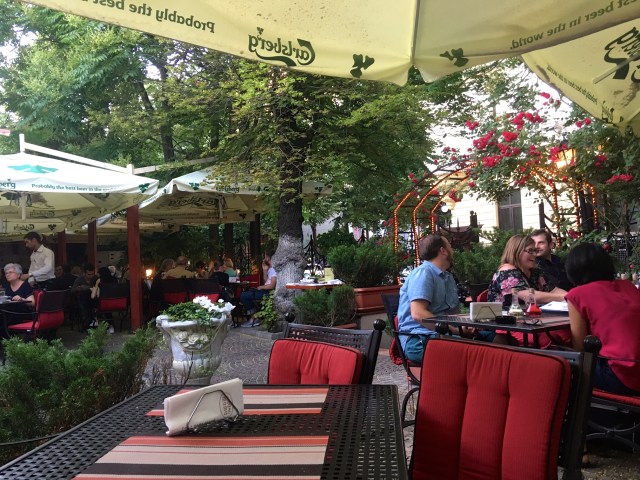
Photo ©Jean Janssen. Courtyard Dining at the Old Inn, Bucharest.

In the summer months, you eat in the large courtyard of the hanual lui (translates to “the old inn”). It is a beautiful setting with umbrellas keeping the area cool. We ordered several of the recommended traditional dishes. Boris liked the food. I found it exceptionally bland and dry.   Sorry, while I love the feel and the setting, I cannot recommend the food. The servers were also the least friendly we have had in Romania. Stop by, step inside the courtyard and take a few pictures, but pass on the food and drinks. You’ll save yourself the disappointment and some money; this was our most expensive meal of the trip so far and the smallest and least tasty.

DSC_0827

Photo ©Jean Janssen. Ice Cream in the old city, Bucharest.

We also missed our afternoon tour. Of course, this had been Boris’ intent all along. He had never had any interest in seeing the interior of the Parliament Building.   We wandered back to near the bus stop and had some ice cream before catching a cab back to the hotel. It was a really hot afternoon.

DSC_0855

Photo ©Jean Janssen. Many of the landmarks in Bucharest are conveniently located near each other. Grab a bike and go.

I was tired and took a nap. When things had cooled off, I headed out to take pictures of some things we had seen from the bus but couldn’t really get pictures of. All were within walking distance. Then I met up with Boris at the handicraft store we had seen the night before. Everything there was handmade in Romania.

I got some lovely embroidered traditional blouses and pottery. Boris got an icon and some woven bookmarks. I highly recommend My Romanian Store and the very helpful young woman who assisted us. We asked the young clerk for a recommendation for a casual restaurant nearby and she suggested Journey Pub, just around the corner and down a few blocks. We sat in a covered garden-like setting.

DSC_0863

Photo ©Jean Janssen. The Journey Pub in Bucharest had these cute menus in a small suitcase. Drinks and food in a garden-like setting.

Carrying out their theme, Journey presents their menu in a small suitcase with a world map on the outside. We had a friendly server and tried a bunch of small things. Boris was discovering new Romanian beers as well. After dinner we walked back to the hotel. We had to pack and be ready to have our bags out early in the morning. The bags are going to the ship; we are going on a countryside tour. One more day near Bucharest and then we board Uniworld’s River Beatrice.

DSC_0868

Photo ©Jean Janssen. Last night in Bucharest.

Posted in cruises, international, River Cruise | Tagged , , , , , , , , , , , , , , , , , | Leave a comment

The Village Museum in Bucharest, Romania

DSC_0595

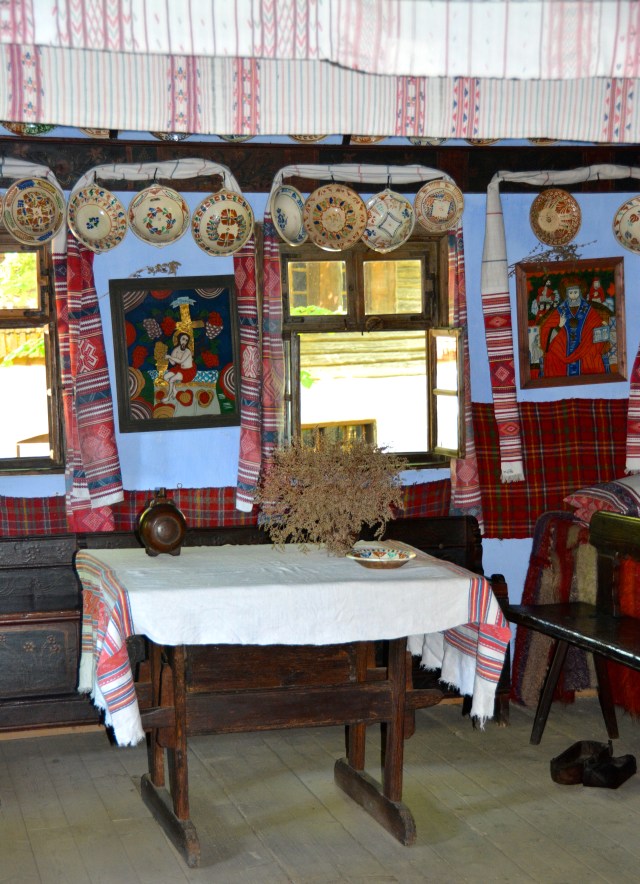
Photo ©Jean Janssen. Interior of a home at the Village Museum in Bucharest, Romania.

IMG_8691

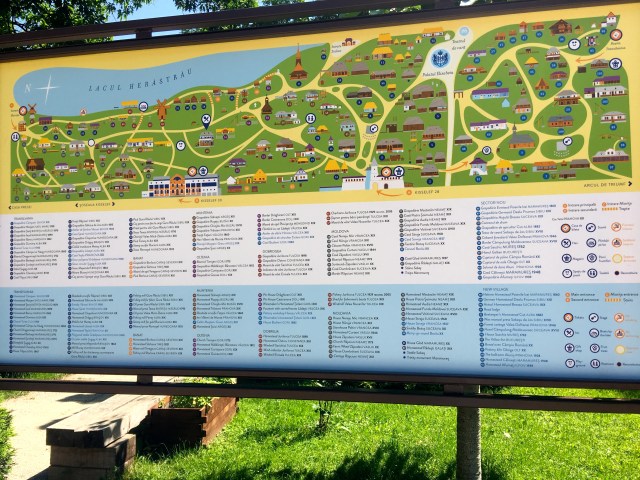
Photo ©Jean Janssen. Site map for the Village Museum in Bucharest, Romania.

After a long day in Transylvania, we relaxed this morning and secured a late checkout. We are transferring hotels to join the cruise line tour group. After a big breakfast, we took a cab to the Village Museum (Muzeul Satului in Romanian) that has been around since the 1930s. The museum’s official name (in English) is the Dimitrie Gusti National Village Museum.  It is a collection of over 272 houses from all over Romania that have been dismantled and rebuilt as a display on how Romanians from different regions lived in the 19th and 20 centuries. The museum has a lovely setting on the edge of a lake in one of Bucharest’s parks. On display there are mostly houses, but you can also see the supporting buildings (barns, haylofts, windmills, etc.), churches, and even a dance hall. The wonderful park setting under the trees made for comfortable touring even in the heat. Other tourists and Romanian families joined us as well.

DSC_0607

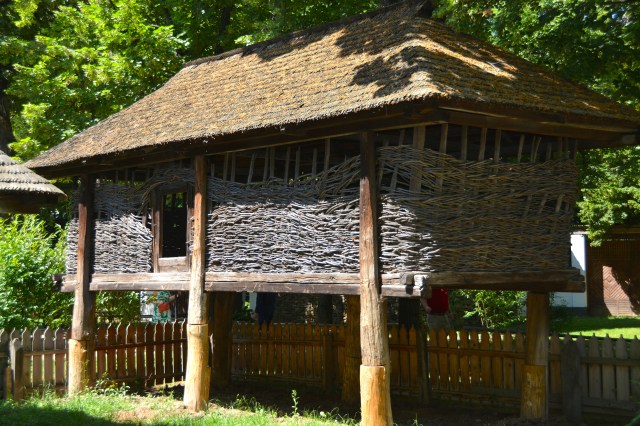
Photo ©Jean Janssen. Hay Loft storage structure, a supporting building to the Romanian homes rebuilt at the Village Museum in Bucharest, Romania.

DSC_0615

Photo ©Jean Janssen. Most of the houses at the Village Museum in Bucharest had these wonderful decorated gates. Also note the tree stump that is supporting the porch of the home.

Both our cab driver and Alex recommended the museum. I was in my element, taking so many pictures I even filled up the memory card and had to start deleting pictures so I could keep going. I loved that these were actual homes rebuilt with their gates, fences, wells, barns, and even yard art in place. Although from many regions of the country, they were placed next to each other to create a village-like setting.

DSC_0700

Photo ©Jean Janssen. Repositioned Romanian home at the Village Museum in Bucharest.

For each building, there was a sign (also in English) telling you the region the home came from, how the people lived, and the time frame of the home’s construction and use. Pictures of people in the regional costumes and maps completed the signage. Unfortunately the gift shop was out of a printed guide in English. That is something I would have taken home.

DSC_0644

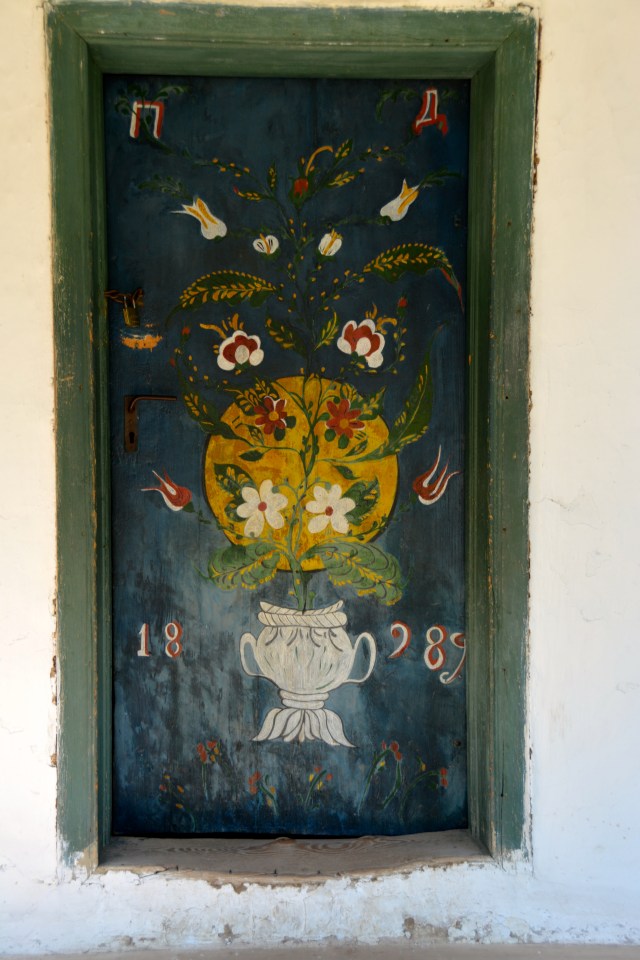
Photo ©Jean Janssen. Decorated door of a 1889 home of a Lipponvan family originally from Russia at the Village Museum in Bucharest, Romania.

Boris and I spent hours at the museum. There was also a café if you wanted a snack. The gift shop was also very nice and had quality merchandise. I looked for the decorated wooden spoons Alex had recommended as a keepsake. The designs each have a specific meaning.

DSC_0626

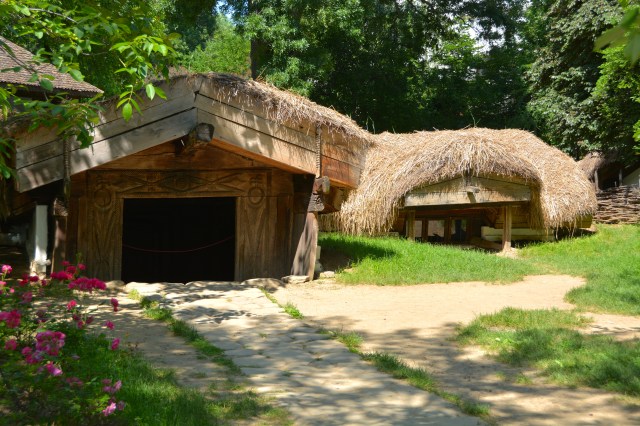
Photo ©Jean Janssen. This half-buried house was originally built around 1800 and is now at the Village Museum in Bucharest. These homes were designed for defensive purposes. From a distance, it just looked like a haystack.

DSC_0690

Photo ©Jean Janssen. Well display at the Village Museum in Bucharest.

After we completed our touring, we took a cab back to the hotel.  Cabs are very cheap in Romania, just make sure they use the meter or set a price before you go. The official cabs will be numbered and have the rate printed on the outside of the cab; these are the ones to use. If you are leaving from the hotel, have them call one for you. The concierge will give you a ticket with the cab number on it.

DSC_0704

Photo ©Jean Janssen. A Romanian church from 1722 at the Village Museum in Bucharest.

We weren’t hungry so we just went up to the lounge to grab a drink before the transfer. The Radisson Blu, there we will be staying with the tour group, is just around the corner; we just rolled our bags over. Uniworld had a check-in desk in the lobby where they gave us the information on the land portion of the cruise. Then we checked in at the registration desk for the hotel. Because the guests were coming at such different times, they did not hold a reception but gave us each a drink voucher instead.

IMG_8698

Photo ©Jean Janssen. Bar in the Radisson Blu on Calea Victoriei in Bucharest. It looks like a giant ice cube. The glass floor has water jets underneath it.

The Radisson Blu is as different as night and day from the Hilton. While conveniently located on Calea Victoriei, there is no Palace view. However, everything was very modern and the room amenities and particularly the bathroom were a definite upgrade. With a multi-story all glass front and a bar right in the center of the lobby that looks like an ice cube (the glass floor underneath the bar has jets shooting out water), the hotel is definitely going for that hip vibe. Boris proclaimed immediately that it was too trendy for him. I liked it.

IMG_8696

Photo ©Jean Janssen. Summertime outside dining at La Mama in Bucharest.

After we settled in, we went out to try another recommended restaurant in the area, La Mama. We once again had Romanian food. I tried the grilled trout that Alex had suggested given the regional access to very fresh fish. It was fresh and presented whole. We also had the plum brandy, a specialty of the country. We were seated outside in the courtyard under umbrellas. It was very crowded the entire time we were there. The restaurant is right around the corner from the palace; it was originally the home of one of the king’s mistresses.

DSC_0665

Photo ©Jean Janssen. Interior of a Romanian home at the Village Museum in Bucharest.

Our big meals have been costing between 200-240 lei ($50-$60) for two. That is for appetizers, main courses, side dishes, desserts, bottled water, and alcohol. You could eat here for very little for a normal-sized meal.

DSC_0705

Photo ©Jean Janssen. Dated 1775 from the Berbesti Village in the Mara Valley, Romania rebuilt in the Village Museum, Bucharest.

After dinner, we walked back to the hotel and did a little window-shopping at a handicrafts store nearby and noted the hours for the next day. They have switched the schedule for the day tours. Tomorrow we have the panoramic tour of Bucharest, lunch in the old town, and the afternoon at the Parliament building.

Posted in cruises, international, River Cruise | Tagged , , , , , , | 1 Comment

Brasov, Transylvania


DSC_0567

Photo ©Jean Janssen. Transylvania is a region of Romania. The literal translation into English is “across the forest.”

DSC_0511

Photo ©Jean Janssen.  Council Building, now the local history museum, Brasov, Transylvania

In all fairness, this post should be titled Brasov, Transylvania and a conversation with Alex, a Romanian.  As our private tour continued through the day, I really felt I had the opportunity to get to know a person more than just hear the words of a tour guide.

DSC_0546

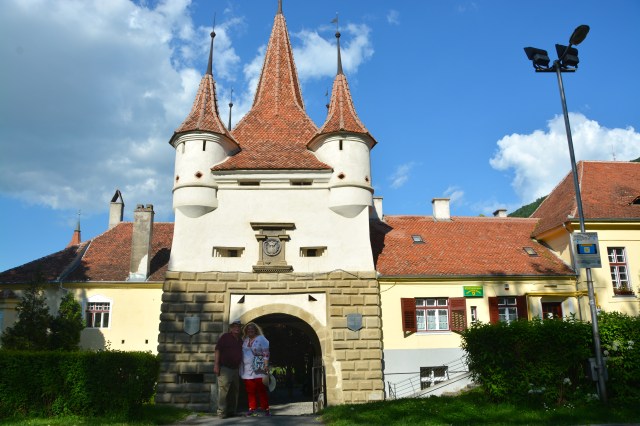
Alex took this picture of Boris and I at St. Catherine’s Gate, the only medieval city gate in Brasov that survives.  It obviously sits at a lower elevation than when it was erected.  It was maintained by the Tailors’ Guild and is on the site of and named for a Monastery which was here in former times.  The four small turrets, also seen on other Transylvanian towers, notified those that entered that the city had the “power of the sword” (judicial autonomy to decide life or death).


DSC_0552

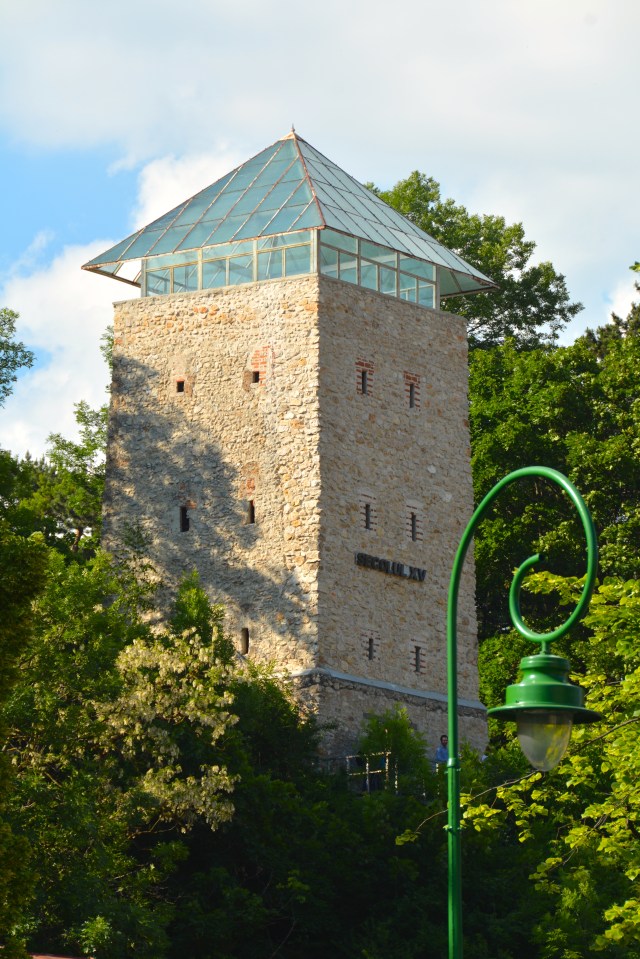
Photo ©Jean Janssen. Recently restored city tower with glass top roof, Brasov, Transylvania.

We left Bran Castle and went to the special Transylvanian city of Brasov.  Those of you reading the blog, already know that Transylvania is today a region in Romania.  We passed villages with German Saxon style homes, much different from the other neighborhoods we had seen.  These homes had a gate right at the roadway which opens into the garden and then the home within.  They are not in the least bit inviting.  All you see is gate after gate, all in a line.  The German Saxons had a great deal of influence in the development Brasov.  They were craftsmen and traders, Brasov being on the trade route from the Ottoman Empire and the West.  Brasov was at one time a walled city.  Following a medieval custom, it was the craftsmen’s guilds who maintained the towers and gate along the city walls.

DSC_0515

Photo ©Jean Janssen. The Black Church as seen from Council Square, Brasov, Transylvania.  It is currently under renovation.  It is smaller, but modeled after the one in Cologne, Germany.

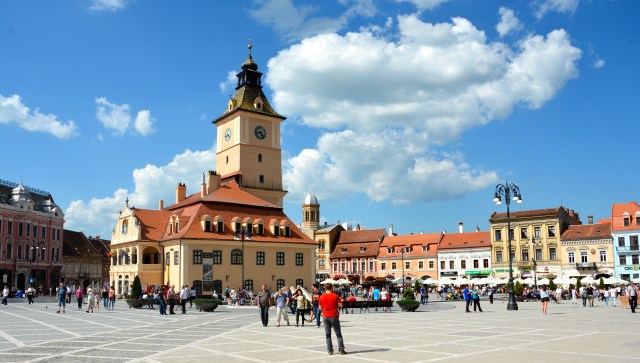
Alex once again had a parking connection.  After leaving the van, we entered the old town by the Black Church, a gothic style church completed in 1477 so named because of the color it took on from the great fire of 1689.  It is a Lutheran Church, although there is little of this German population left in the city.  We entered the Council Square, most of which is owned by the church.  The square definitely has a German feel reminiscent of town squares we have visited in Germany and Western Poland.

DSC_0514

Photo ©Jean Janssen. Council Square, Brasov, Transylvania.

DSC_0502

Photo ©Jean Janssen. Building facade, Brasov, Transylvania.

Having a late lunch as typical Romanians do, we followed Alex’s suggestion and went to local restaurant on the square.  We tried a sampler platter of many meats, potatoes, and vegetables.  We added a side of polenta with cheese and sour cream.  It was so much food, but we loved it.  The most traditional meat in Romania is pork and it is usually served with polenta.  I also tried the orange lemonade, a nice treat on a day that had grown very warm.  After lunch, Alex gave us time to stroll down the main shopping street and take photographs.

DSC_0504

Photo ©Jean Janssen. Food cart in Brasov, Transylvania.

DSC_0505

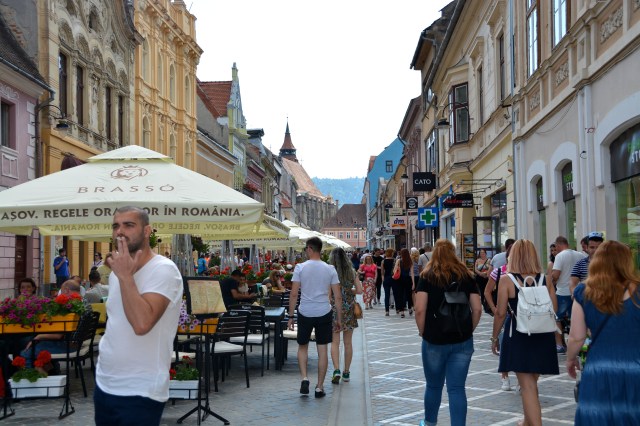
Photo ©Jean Janssen. Outside dining along the main shopping street in Brasov, Transylvania.

I learned a couple of things during my stroll.  If you are going to sell from a street cart it should be a gypsy-style wagon.  If you are going to offer sidewalk dining, you have to decorate with red geraniums.  Finally, your individual lemonade will be served in a small pitcher or carafe with a straw (actually I learned that a few days ago).

DSC_0528

Photo ©Jean Janssen. Boris toured a World War I exhibit inside the Council building. He cut it short when he got to the World War II section that glorified the Romanian army that fought with the Nazis. The feel of this exhibit might have something to do with the people’s strong dislike of communism. In fact from 1950 to 1960, the name of the city was changed to Orasul Stalin (Stalin City).  This was not a popular choice.  Alex spoke out very strongly against communism, especially against Stalin.

DSC_0517

Photo ©Jean Janssen. There is an Orthodox Church right on the Square, with a friendly KFC right next door. 🙂

I enjoyed taking pictures around the square.  Boris made a new friend inside a local book shop who told him about a World War I exhibition going on in the Council Building, now a museum.  I think Alex was pleased that Boris was interacting with the locals.  Alex was very flexible so he set Boris up with the tour and he and I visited on a bench in the shade meeting Buggy, a french bulldog.  Not to be outdone with local interaction by Boris, I visited with the owners and shared that my brother has 3 french bulldogs as I petted Buggy.

DSC_0532

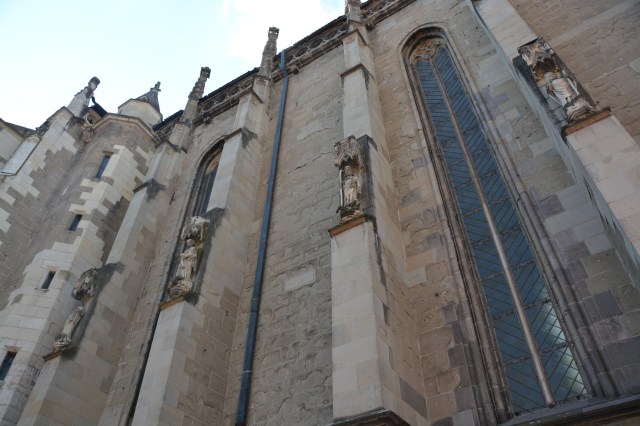
Photo ©Jean Janssen. Statuary on the facade of the Black Church, Brasov, Transylvania.

DSC_0536

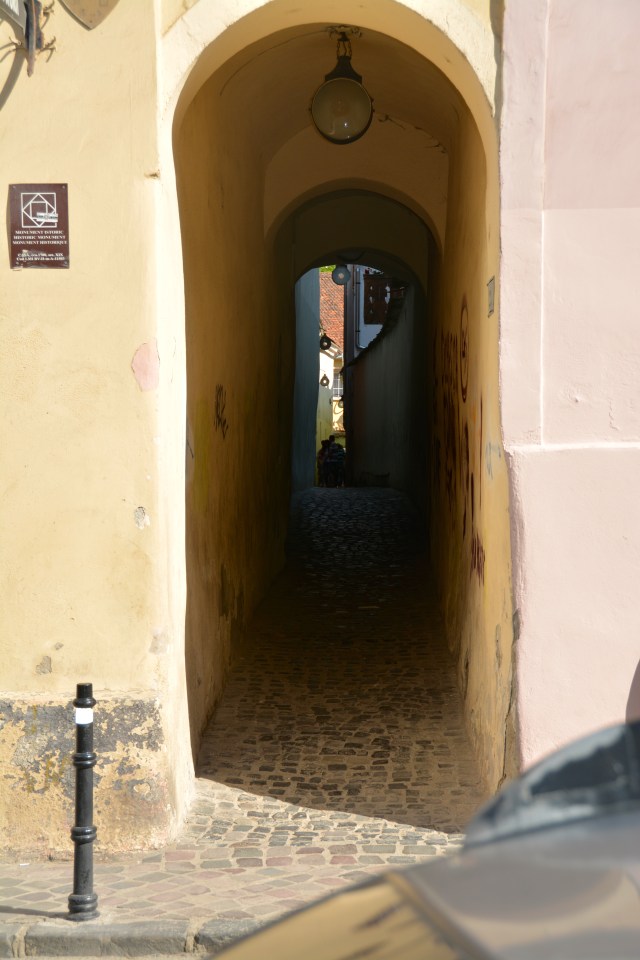
Photo ©Jean Janssen. Rope Street in Brasov, Romania’s narrowest street.

DSC_0540

Photo ©Jean Janssen. Strolling through old town Brasov, Transylvania.

DSC_0556

Photo ©Jean Janssen. The law courts, Brasov, Transylvania, Romania.

DSC_0537

Photo ©Jean Janssen. Synagogue in old town Brasov, Transylvania, Romania.

When Boris joined us, Alex gave us a brief tour around old town Brasov.  We saw the towers, Romania’s narrowest street, a Jewish synagogue, a sign depicting the home of Vlad’s favorite mistress from the area, and the law courts.  This is after all, Alex’s hometown.  Although his parents are both originally from Wallachia, they met at school and moved to Transylvania.  On our way out of the city, Alex pointed out the apartment building where he grew up and where his parents still live in a 3-bedroom apartment they now own.  Next door was the playground he enjoyed as a child.  Alex’s dad is a plumber and in exchange for some work he had done-in lieu of pay-he asked to get an apartment in a good neighborhood.  While an older soviet-style building, it was noticeably nicer that most others we had seen.  Alex told us that most of the apartments in the Soviet-era buildings have been extensively renovated inside.

DSC_0561

Photo ©Jean Janssen. The Carpathian Mountains, Transylvania, Romania.

As we left Brasov we had two choices, take the short way back and face certain traffic returning to Bucharest-we had seen it coming in-or take the winding mountain path that was 30 km longer.  Alex let me choose and I went with forest.  It turned out to be an excellent choice.  Yes, it was a 4 hour return trip, but we made it at least 2 hours faster than other tour groups in his company who took the original route home.

DSC_0569

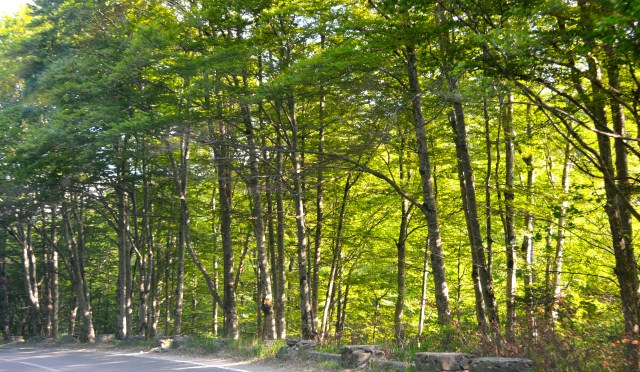
Photo ©Jean Janssen Roadside Forest, Transylvania.

Alex and I talked the whole time back to Bucharest, with Boris fading in and out.  I learned more about his country, but we also ventured into taboo topics like politics and religion.  I wonder if he knew I was a skilled litigator.  I am not sure I even know when I am “taking someone’s deposition”.  One tidbit I will share, according to Alex “the national sport in Romania is corruption”.

DSC_0574

Photo ©Jean Janssen. Want to know how winding the road was? Not the clearest picture, but Alex’s APP tells the tale.

The countryside was extraordinarily beautiful.  Horses roamed free-although I saw this in villages too-and shepherds tended sheep (or were sometimes sleeping on the job).  The road did wind, but fortunately Alex was driving and I got to take it all in.  We are traveling in the Carpathian Mountains, on a cool, forested, winding path.

DSC_0560

Photo ©Jean Janssen. Little gypsy houses in the Carpathian Mountains, Transylvania.

We did drive though an area with a gypsy settlement with very small houses-you don’t need as much if you are nomadic.  The houses have no electricity (unless bootlegged) and no running water.

DSC_0562

Photo ©Jean Janssen. Romanians just created these impromptu parks in the fields by the side of the road. I saw these all over on the drive back to Bucharest.

Frequently on the road, we passed by fields where people had just pulled over and parked on the meadow.  Some were just enjoying the sun, others had meals and fires going.

As we neared Bucharest, we once again passed the refineries.  The world’s first were in Romania, established three years before the one in Titusville, Pennsylvania.  In another first, Romanian Henri Coanda invented the jet engine; he also holds several patents.

DSC_0520

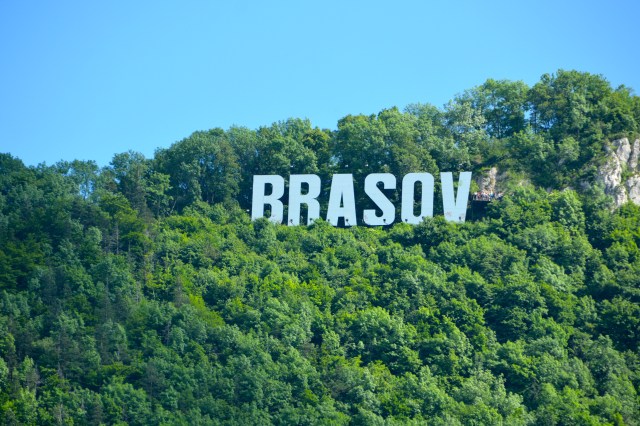
Photo ©Jean Janssen. Brasov’s hollywood style sign in the mountains that surround the city.

But the Romanian with whom I am most impressed is my new friend Alexandru Stan.  Alex worked on a river cruise line, starting at age 19.  He did that for seven years, working himself up to the 3-bar position of purser.  No small feat, and a position of extreme importance and responsibility.  He was born during the communist regime to parents whose whole lifetime to that point had been dictated by that political party’s whims.  His grandparents had fought in the world wars and seen their land and possessions striped from them.  He was a child in the 90s just after the communist government fell when his country was in transition and a very unsafe place.  He has survived to be a special young man willing to spend the day sharing his country and a bit of his personal story with a visitor.

DSC_0501

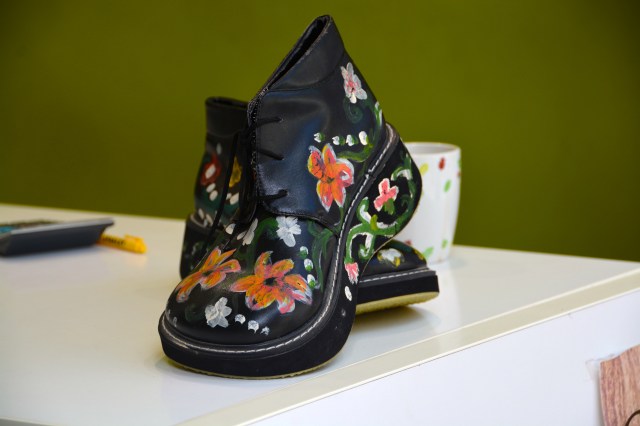
Photo ©Jean Janssen. What the cool kids are wearing in Transylvania these days. As seen window shopping in Brasov.
You won’t find a better guide than Alex.  If you want to really experience Romania, Alex recommends a 10-day full country tour.  He is an independent contractor now, doing most of his work with Unzip Romania, who has outstanding ratings on Trip Advisor.  I met their organizer Diana and several of their other guides, all of whom are knowledgeable and friendly.  Alex is also the Romanian representative for a River Cruise line (although not Uniworld which is who we are traveling with).

DSC_0507

Photo ©Jean Janssen. More red geraniums! Brasov, Romania

We had a long drive back, but I thoroughly enjoyed my day.  It was beautiful and enlightening.  I didn’t find any vampires, but I have another chance when I visit the Parliament Building in a few days. 🙂

DSC_0563

©Jean Janssen. Transylvania.

Posted in cruises, international, River Cruise | Tagged , , , , , , , , , , , | Leave a comment

Countryside Touring in Transylvania and Wallachia, Romania

DSC_0417

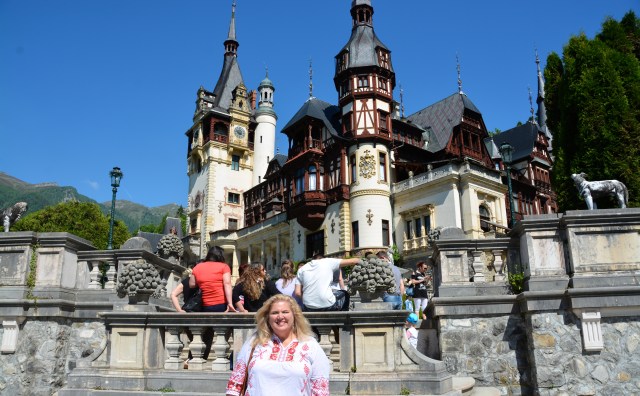
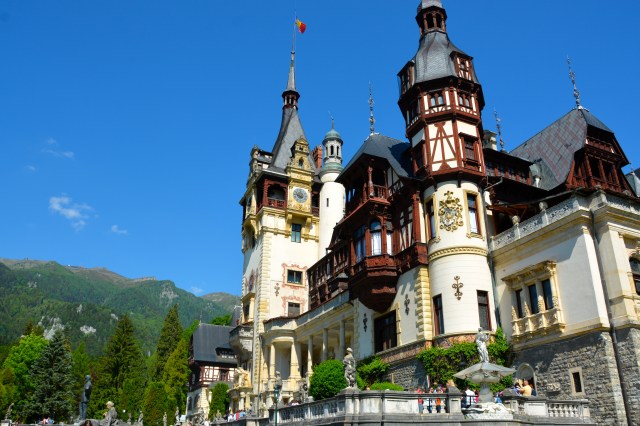
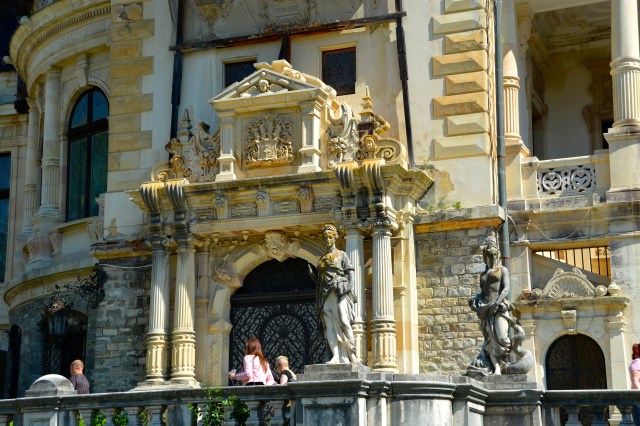
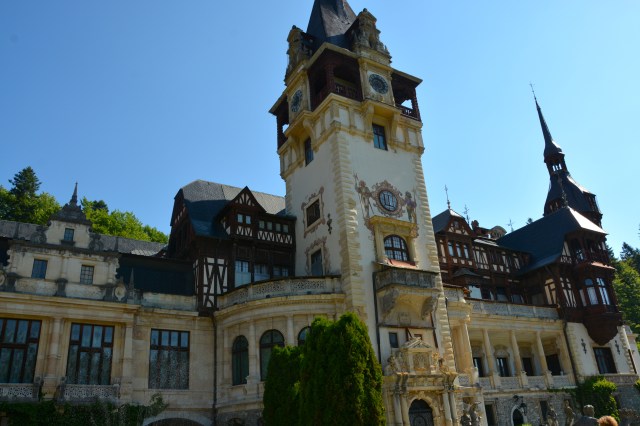
Natasha at Peles Castle, Sinaia, Romania. Summer Residence of the King of Romania.

Ok, I admit it.  When I knew we were coming to Romania for a River Cruise I wanted to come in a few days early so I could visit Transylvania.  Its not that I believe in vampires, but there is just something mysterious about this region of Romania that was once its own country.  I started by researching day trips out of Bucharest where we are based.  I found a couple that would take me to some of the special castles in the region and a lovely Transylvanian city.  My hope was to see some of the villages in the region where time has stood still and the horse-drawn cart is still in use.

DSC_0442

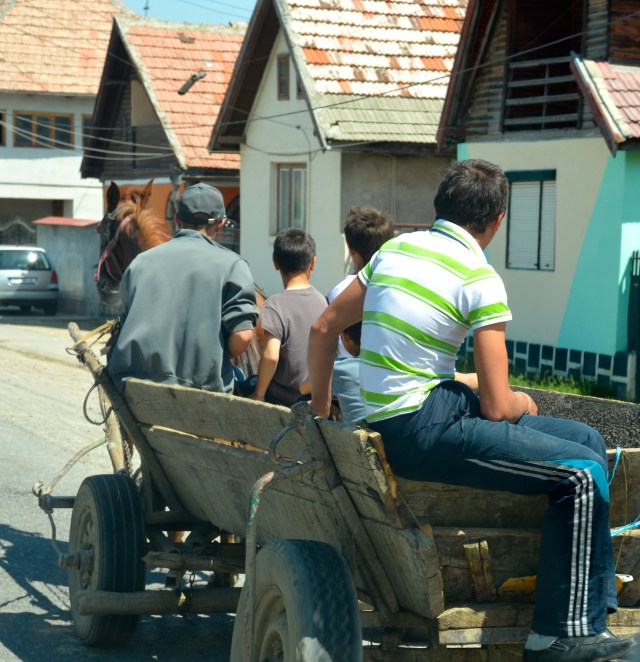
Photo @Jean Janssen. Spotted on the major road in route to Bran Castle, Transylvania, Romania.

We booked a full day tour with Unzip Romania (through Viator).  It was not substantially more to book the tour as a private one, so it is just Boris and I with our guide.  We booked before we left home and pre-paid in American dollars.  A few days ago, I was sent the name of the tour guide and the confirmation time for pick-up in our hotel lobby.  We enjoyed a big buffet breakfast and were at the concierge desk at 7:30 am to meet Alex.

Peles-Castle-104439

If you love carved walnut and stain glass windows, you are going to love Peles Castles.

Even though it is just the two of us, Alex brought a mini van so we are sitting up a little higher which is great for touring.  He invited one of us to join him up front, so I was excited to ride shotgun.  Right off it was clear he had read my comments sent along with our reservation.  Boris and I both love history, so Alex jumped right in and filled us in as we traveled out of city.  We have about a two hour drive to our first designation, Peles Castle, a royal summer residence commissioned by King Carol I in 1873 and completed in 1883.

images-2

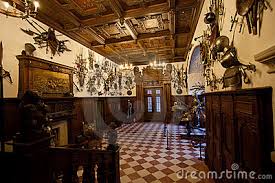
Carol I’s interest in weaponry was revealed in his vast collection of armory from all over the world.


images-1

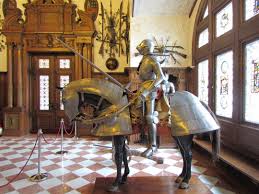
The most valuable piece in the Peles Castle armory is the full-suited knight and horse with lance.

Carol I, born Prince Karl of Hohenzollern-Sigmaringen, was a German selected by Romanian nobles to lead the new country rather than to create in-fighting among the barons by selecting one of their own.  He entered the country under an assumed identity to protect his safety.  He ruled Romania from 1866 to 1914, the longest reigning Romanian monarch.  He served first as a Reigning Prince until the military victories he led allowed him to declare Romania an independent nation in 1877.  He was crowned King in 1881.

DSC_0395

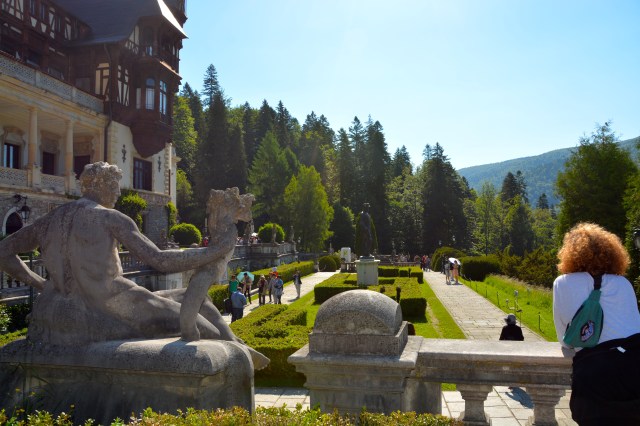
Photo ©Jean Janssen. The gardens at Peles Castle, Sinia, Romania.

In addition to his military victories, he brought innovation to the young country.  He ordered the building of the first bridge over the Danube.  When he arrived in the country, he did not speak the language but learned Romanian in only one year.  He further endeared himself to the Romanian people by adopting the native spelling of his name.

DSC_0420

Photo ©Jean Janssen. Peles Castle, the beautiful summer residence of the King of Romania in Sinaia at the foot of the Bucegi Mountains.

The castle is located in the Bucegi Mountains in the charming village of Sinaia with the look of a Swiss ski resort.  With only two-lane traffic, vehicles move in the area at a snail’s pace.  Alex is well known in the area and he secured us great parking and tickets with no wait.  The private tour does not include attraction entrance fees, but Alex passed on the discounted prices to us.  We also had the choice of the basic tour or the extended one which includes the private apartments.  There is a hefty fee for the use of a camera in the interior so I opted out.  That said, there was so much to photograph that I think I would have gotten my money’s worth.

peles-castle-2

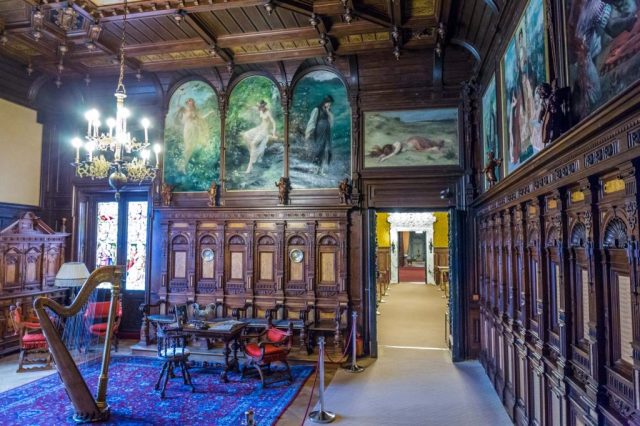
The music room in Peles Castle.

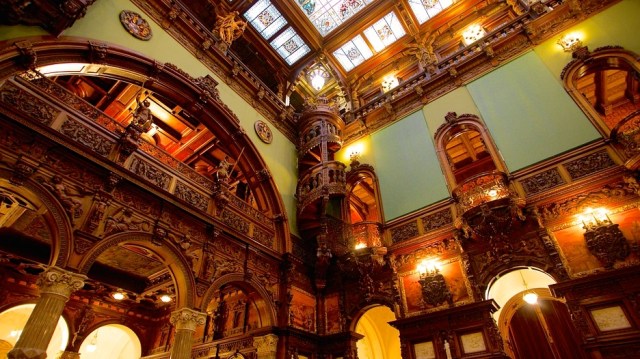
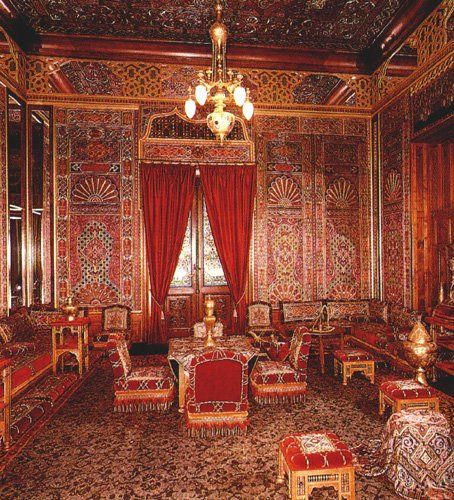
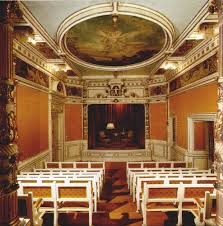
If you like dark, carved wood and stained glass, Peles Castle would be a favorite.  Each room also features a different theme based on different parts of the world.  The three ballrooms flow into one another.  One is in the Venetian style, one is Ottoman, and one is decorated with mock thrones.  The castle features a 36-seat dining room table off the center ballroom.  After dinner, the men retired to the Turkish room for smoking and drinking.  The ladies retreated to the music room where Queen Elizabeth played the piano and harp.  The teak wood furniture in this room was a gift to King Carol I from an Indian Maharaja.  Later in the queen’s life she wrote fairy tales; paintings featuring her characters appear in the room.  The stained glass in the music room also depicts fairy tale characters.

8e2b96b4dc3427df54ad4f19c5fa7852

The Turkish Room in Peles Castle.

The queen was devastated by the death of her only child, a daughter Maria who was not yet age 4 when she died of scarlet fever.  It was after her child’s death that Elizabeth began the writing under the pen name of Carmen Sylva.  She wrote numerous works in English, German, Romanian, and French.

As relatively recent construction, for a castle that is, Peles features some pretty neat conveniences like an elevator and a central vacuum system.  All the maids hooked hoses in at the same time and then the switch was turned.  Dust all over the castle was sucked in.  More significantly, Peles was the first European castle to be lit entirely by electric current which was produced by hydro power at the castle’s own plant.

images

The theater in Peles Castle.

The castle also features a secret passage from the library to the king’s bedchamber above.  You pass through Carol I’s office.  Rumor is that he always stood during audiences so the meetings would be shorter.  There is also a 60-seat theater.  Shortly after the first film was produced in the world, the castle theater was renovated to accommodate a screen.  Romania’s first screening of a film took place in this theater.

DSC_0403

Photo ©Jean Janssen. Detail on Peles Castle, Sinaia, Romania.

DSC_0392

Photo ©Jean Janssen. Peles Castle viewed from the fountain.

After completing the interior tour, Alex gave us time to take photographs and tour the gardens.  The great thing about the private tour is that you can choose to allocate your time as you wish.  When we left Sinaia, the crowds, as well as the traffic, had grown.  Peles is on the historical route from Transylvania to Wallachia.  Carol I had also chosen this location for the beauty of the landscape and its similarities to the Black Forest in Germany.  I would have to agree.

DSC_0443

Photo ©Jean Janssen. Bran Castle from a distance, Transylvania.

DSC_0427

Photo ©Jean Janssen. Monument to a World War I soldier who lost his arm and returned to battle to throw grenades from the trenches. Romania

Our next stop is Bran Castle in Transylvania.  Large wooden markers identify the spot where you pass from one region into an other.  Alex had picked up on Boris’ comments regarding his love for World War I history.  He pointed out that each village had a monuments to local members who had died in each of the world wars.  In route to Bran he pointed out the statute of a particular soldier who lost an arm in battle and asked to be returned to the front; the solider drew grenades from the trenches-the statute depicts this feat.

DSC_0431

Photo ©Jean Janssen. World War I battle site graveyard, Romania

DSC_0435

Photo ©Jean Janssen. Romanian grave in a World War I cemetery. The wooden marker in the back was erected by the Orthodox Church.

Alex also told us about cemeteries at the site of certain battles where soldiers from both sides were buried.  He made an unscheduled stop at one of the cemeteries for us.  Both German and Romanian soldiers are buried in marked graves and a large monument marks the site.  There are also wooden crosses erected by the church.  Alex said that while the soldiers had fought against each other, all were comrades at arms in death as each served bravely for their own countries.

DSC_0440

Photo ©Jean Janssen. Gypsy cart pulled by a horse, Romania.

We passed through a village where a gypsy settlement was just beyond the houses along the road.  While Sasha Baron Cohen stayed at a resort in Sinaia, this is where the mythical village of his homeland in Borat was filmed.  In perfect timing, we slowed behind a wooden gypsy cart being pulled by a horse.  The gypsy people are an ethnic minority in Romania; to a limited extent, they are still a nomadic people.

DSC_0475

Photo ©Jean Janssen. Bran Castle, Transylvania, Romania.

As we neared to Bran Castle, Alex gave us the real history of “vampires” and Vlad the Impaler (Vlad Tepes Dracula) who was said to inspire Bram Stroker’s Dracula.  If you want to go on believing in the myth, you might want to skip the next paragraph.  Vampire really is a word used by the Romanians.  Alex’s grandmother uses it to describe those “who have a thirst for blood”, but not in the literal sense.  The word is used to describe those who enjoy the kill but not by sucking blood from a body through their mouth.  His grandmother knows nothing about Dracula.  The guides liked to joke that the real Romanian vampires are in Parliament.

DSC_0462

Photo ©Jean Janssen. A replica of Vlad the Impaler “uniform” shown in the Bran Castle.

Vlad the Impaler was a real figure in history; in fact, he is considered a hero by the Romanians.  His father was Vlad Dracul, a surname that came from the word dragon or devil.  The younger Vlad watched his father and older brother be killed by the Ottomans who took he and a younger sibling to be raised in their culture. This was a common practice.  As adults, they returned the young leaders to their homeland contemplating their loyalty and the swift payment of their taxes.  Vlad saw his younger brother be used for the sultan’s pleasure.  He learned their language and their tactics.

DSC_0447

Photo ©Jean Janssen. Interior of Bran Castle, Transylvania. Because its Tudor style remind the queen of her English heritage, she liked Bran Castle and it was later renovated to accommodate their visits. Note the bear rug. 80% of the world’s black bears are found in Romania.

When returned, Vlad had no love for the Ottomans.  He refused the payment of taxes and defeated the tax collectors.  At night, he infiltrated their camp with his warriors dressed as Ottomans and speaking their language.  He murdered thousands and left the bodies impaled on spikes along the path the survivors had to take to return home.  Thus he earned his moniker.

DSC_0449

Photo ©Jean Janssen. Interior courtyard of Bran Castle, Transylvania.

However, Vlad was the ruler of Wallachia, not Transylvania.  The medieval Bran Castle was really a customs stop, not a home or fortress.  Vlad stayed there only a few times in route between the two regions and usually for less than 24 hours a visit.  The castle sits at a strategic location between Transylvania and Wallachia.

DSC_0446

Photo ©Jean Janssen. The castle featured a hidden staircase that could be drawn up through the the fireplace chimney. Later renovations created a dark narrow passageway up to the upper levels, terraces, and courtyard walkways.

In other words, there is very little connection between Vlad and Bran, but that has not stopped the tourism industry.  One fun story (depicted by a photograph inside the castle) reports that a British tourist looking for the site of the mythical story asked two local peasants who did not speak English if this was Dracula’s castle.  Upon their affirmative reply, the connection was born.  The castle was very crowded during our visit.  They clearly promote the connection.  Alex has even brought young American tourists here, dressed in costume, for Halloween.  The holiday (not really observed by Romanians) is well celebrated at Bran.
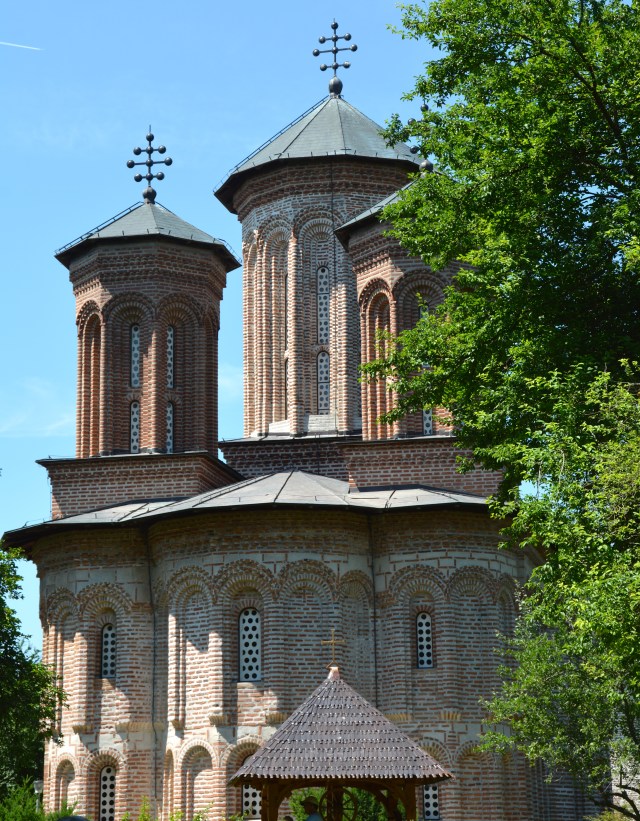
DSC_0466

Photo ©Jean Janssen. Terraces and covered walkways look into the interior courtyard of Bran Castle.
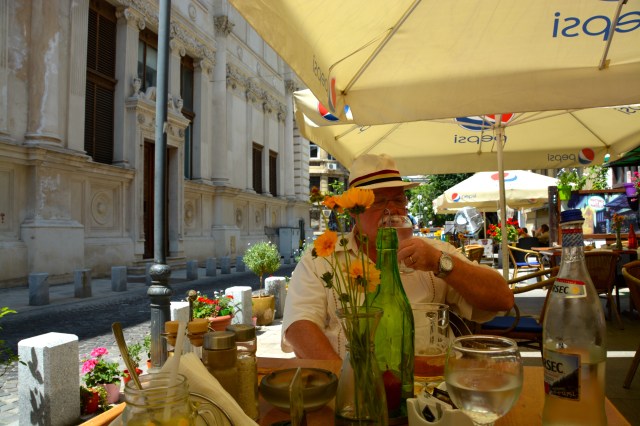
DSC_0485

Natasha’s Vampire Hunt in Transylvania.

After our interior visit, we walked down to the small lake to take pictures of the castle from below.  Visitors lounged on the hillside on this sunny day.  We stopped at the souvenir booths outside the castle gates for cold water.  Boris also found a traditional Romanian mask that can be worn over the head featuring real wool.  Of course, he bought it.  We met up with Alex in the parking lot to head toward the Transylvanian city of Brasov, Alex’s hometown.

Posted in cruises, international, River Cruise | Tagged , , , , , , , | Leave a comment