Dunedin, New Zealand

DSC_5737

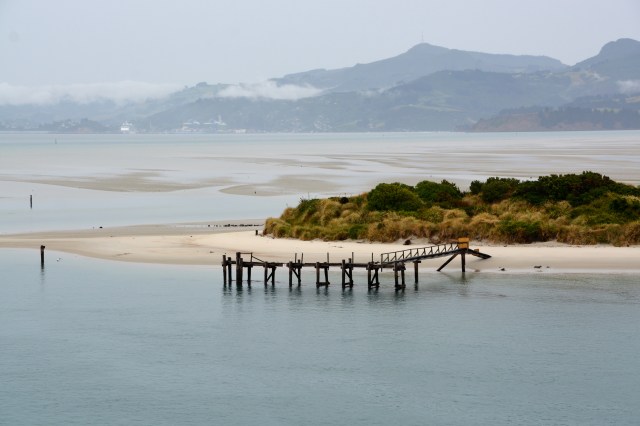
©Jean Janssen   Coming into the harbor at Port Chambers, New Zealand

DSC_5986

©Jean Janssen The Edwardian Railway Station in Dunedin, New Zealand

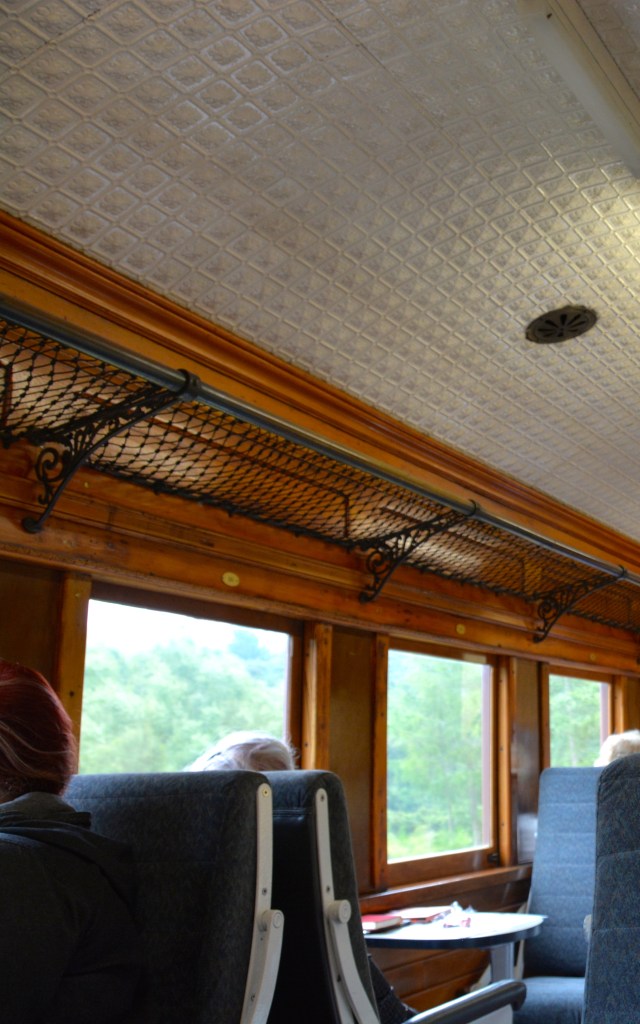
We are in Port Chambers the seaport gateway for Dunedin on the southern island of New Zealand.  Our tour today is by train into the Taieri River Gorge of gold rush fame.  We were actually met directly on the pier by the train whose tracks ran along side our boat.  We scored a seat in one of the vintage cars that have been renovated for comfort but retain their vintage charm with a tin ceilings and iron luggage racks.
DSC_5918 - Version 2

©Jean Janssen   A vintage car on the Tairei Gorge Railway. Note the tin ceiling and iron luggage racks

After passing through the charming port city, we arrived at Dunedin and made a brief stop at the beautiful Victorian Railway Station where we will be able to get off near the end of our tour.  Each car has a hostess who brought us snacks and drinks.  Margaret, a volunteer, served our car.  She works one or two days a week to support the tourist trade.  The railway line would be unable to operate without these valuable volunteers.
DSC_5751

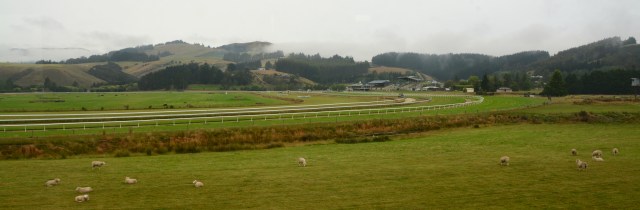
©Jean Janssen   The Wingatui Horse Racing Track near Dunedin, New Zealand

The opening part of the route through Wingatui Junction is owned by the New Zealand Government.  After Wingatui, we had wonderful views of the countryside, passing sheep stations (sheep ranches) and farmland.  We saw the Wingatui horse racing track and the farms where championship horses are bred and raised.

DSC_5960 - Version 2

©Jean Janssen   Future champions frolicking in the field outside Dunedin, New Zealand.

Construction of the rail line through the Taieri River Gorge (a gorge formed millions of years ago by natural causes) began in 1879 near the end of the gold rushes when the agricultural and pastoral potential of the land was being explored.  The line was used to haul “[t]housands of tons of farm produce and fruit and hundreds of thousands of head of livestock”through central Otago to the port and as a supply train with early morning deliveries to the country towns along the route.
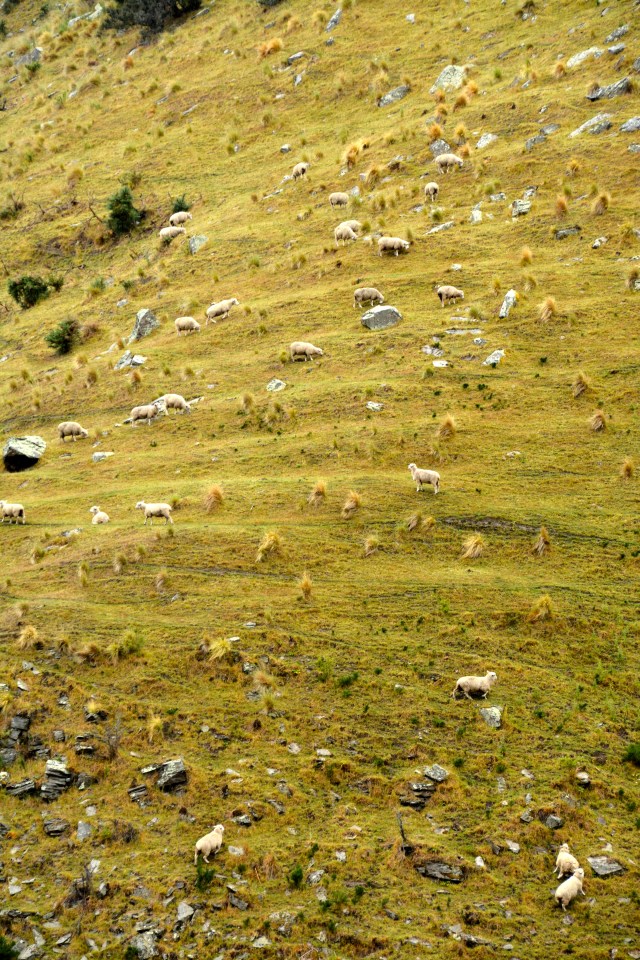
DSC_5776

©Jean Janssen   Sheep in the rocky hillside of the Tairei River Gorge, New Zealand

“Transport licensing protected the railway from road competition until 1961 for the carriage of livestock and until 1983 for general freight.”  In 1990, it was announced that the line would close.  The Dunedin City Council sponsored the Save the Train appeal which resulted in the line’s purchase by Taieri Gorge Railway Limited.  “It is the longest privately-owned railway in New Zealand.” The Otago Excursion Train Trust supports the rail line and was instrumental in bringing cruise ships to Dunedin.  Our hostess Margaret is a trust volunteer.
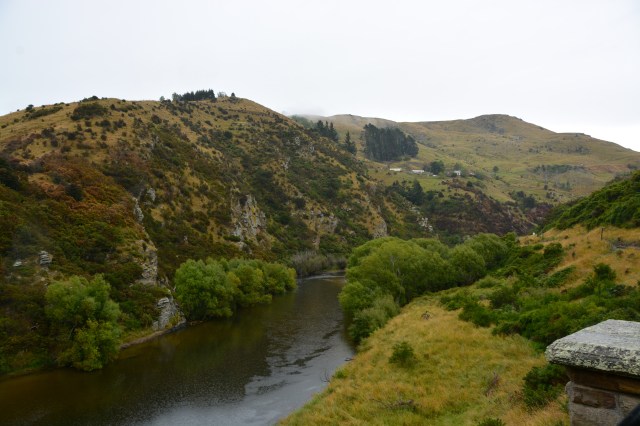
DSC_5762

©Jean Janssen   Along the Tairei River Gorge, New Zealand

We passed through 10 tunnels along the route, the Salisbury Tunnel being the longest.  After the tunnel the photographers all jockeyed for position to catch a picture of the Wingatui Viaduct, “one of the largest wrought iron structures in the southern hemisphere.”  We passed through several crossing stations and water stops that were part of the original service on the line before reaching Hindon Station where we made a brief stop.

DSC_5924

©Jean Janssen   The Wingatui Viaduct along the Tairei Gorge, New Zealand

Hindon Station is still used as a crossing station.  It is the site where the first section of the line opened in October of 1889.  There were beautiful views into the gorge and line accenting the rocky hillside.  A statue of a dog is erected here.  “Sue” represents all the collie sheep dogs that have worked in this area.
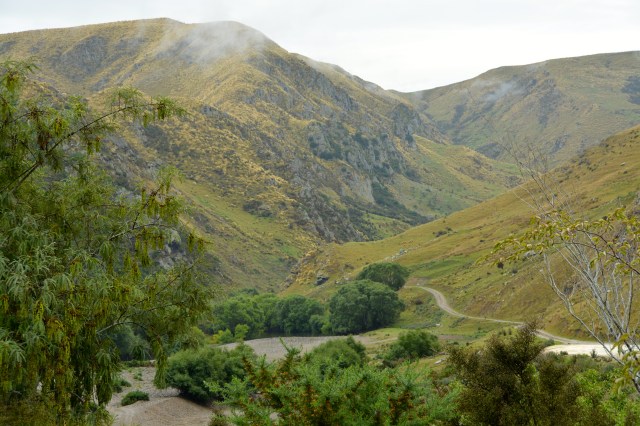
DSC_5775

©Jean Janssen   View at Hindon Station along the Taitei Gorge, New Zealand
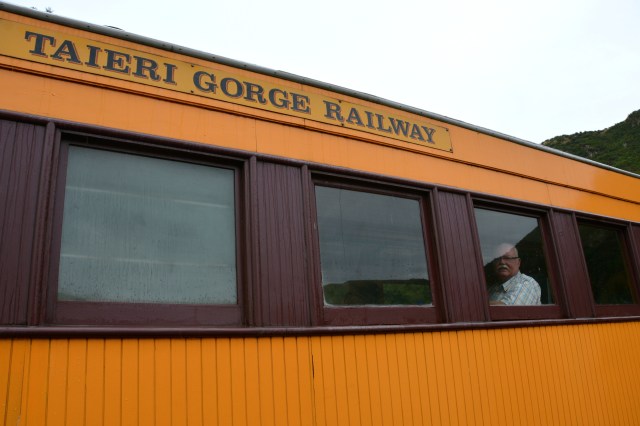
DSC_5788

©Jean Janssen   Boris in our coach along the Taieri Gorge, New Zealand

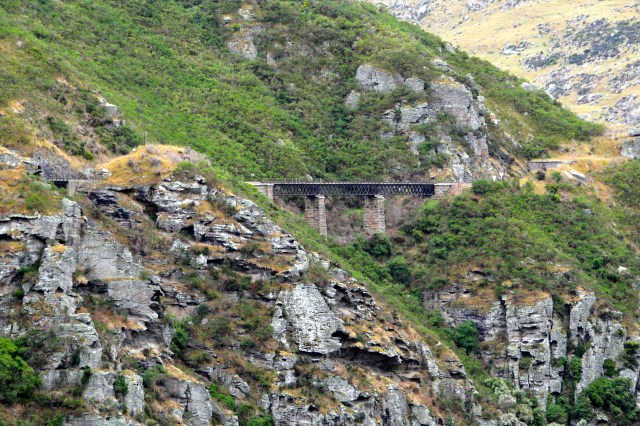
After Hindon, the hillsides became more steep and the gorge more rocky.  Boris and I had the more gorgeous views on our side of the coach.  The day had warmed, so I was able to open the window and enjoy the breeze.  It also meant better pictures shooting without the reflective properties of a glass window.  We climbed higher in the gorge.  Stone chimneys marked the place were the construction workers had had their camp.  At the Notches, we crossed four very deep gulches.
DSC_5833

©Jean Janssen   “The Notches” of the Taireri Gorge, New Zealand. Note the two bridges and the tunnel ahead.

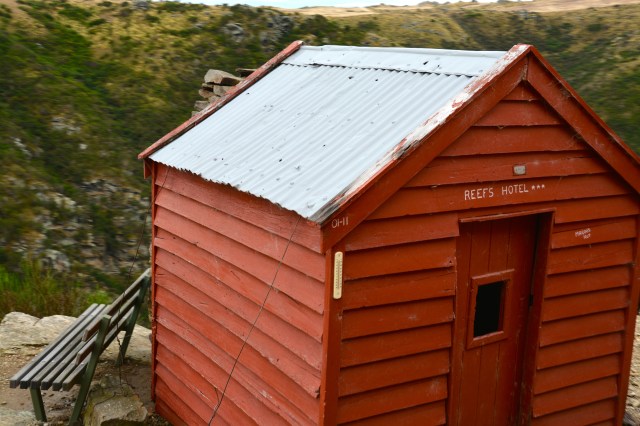
Just before leaving the gorge and reaching the flat plains, we passed the Reefs where a “hotel” for miners has existed since 1906.  The Barewood Gold Mines are just over a mile to the south.  You better not blink or you will miss the hotel.  I was one of the lucky one  photographers to get a picture.
DSC_5854

©Jean Janssen   The Reefs Hotel for miners along the Tairei Gorge, New Zealand

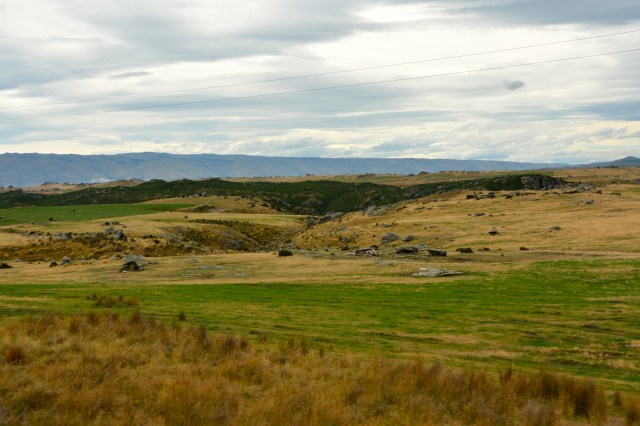
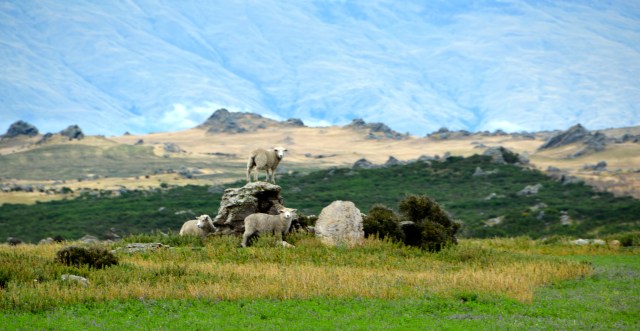
At Pukerangi (means hill of heaven), we stopped and got off the train to visit a refreshment and crafts market set up at this sheep station (ranch).  This port was our first time to walk on New Zealand soil and Boris and I had not had the opportunity to get New Zealand currency.  (We have found that you get the best exchange rates are by using the ATM.)  A few of the vendors took credit cards or American currency.  Rather than turn the train, an engine was set up on the other end.  Unfortunately, this meant we had the same view going and coming.  Some people exchanged sides, but we were across from a wheelchair bound patron who was unable to sit on our side.  We actually had the better view.
DSC_5857

©Jean Janssen   Near Pukerangi, New Zealand
DSC_5860

©Jean Janssen  “King of the Mountain” near Pukerangi, New Zealand

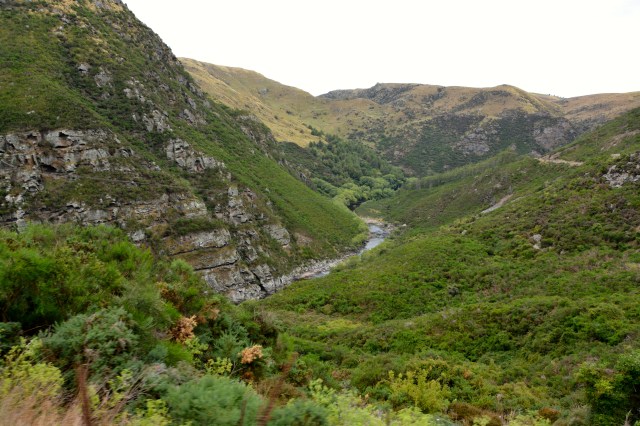
The ride back was downhill and much faster.  A picnic type lunch was served by Margaret.  She also offered wine and quickly ran out of one variety.  With the open window I thought I would get lots of pictures, but we were moving pretty quickly.  At one point I went and stood on the outside porch of the coach.  It was cool and offered great views of the tremendous scenery.
DSC_5823

©Jean Janssen   Along the Tairei Gorge, New Zealand

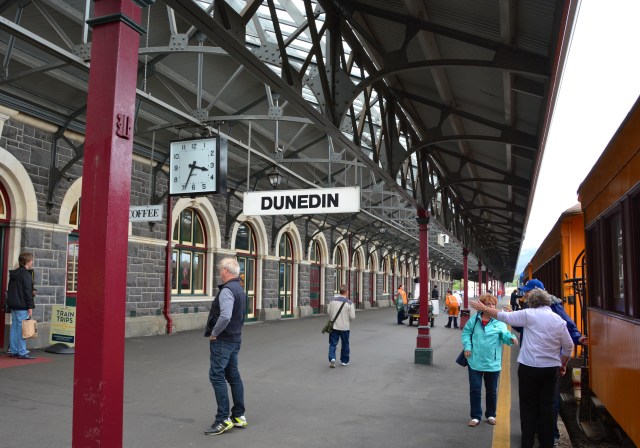
On the return trip, we made one stop in Dunedin.  With only 45 minute left before the last shuttle left the city for the boat and with 15 minutes to take pictures, I elected to use the time for photography and make the rest of the return via train.
DSC_6009

©Jean Janssen   Platform of the Dunedin Station, New Zealand   It is the country’s longest railstation platform

Most European settlements in New Zealand were by English immigrants.  Dunedin has the distinction of being settled by Scottish settlers who named their city Dunedin, a derivation of the Gaelic name for Edinburgh.  Margaret was very proud of her Scottish heritage and told us that the Scottish immigrants here were much better educated that most of the English who came to New Zealand.  Traditional Highland Games have been held here for over 150 years.
DSC_5999

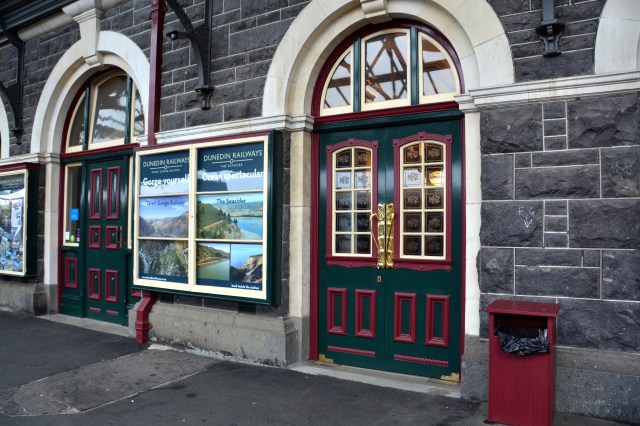
©Jean Janssen Platform side of the Railway Station at Dunedin, New Zealand

The Maori people came to this area between 1250 and 1300 AD.  The first colonists were the Scots who came in 1800s.  The discovery of gold in 1861 resulted in a population boom.  New Zealand’s first university, The University of Otago, was founded in Dunedin.
DSC_5977

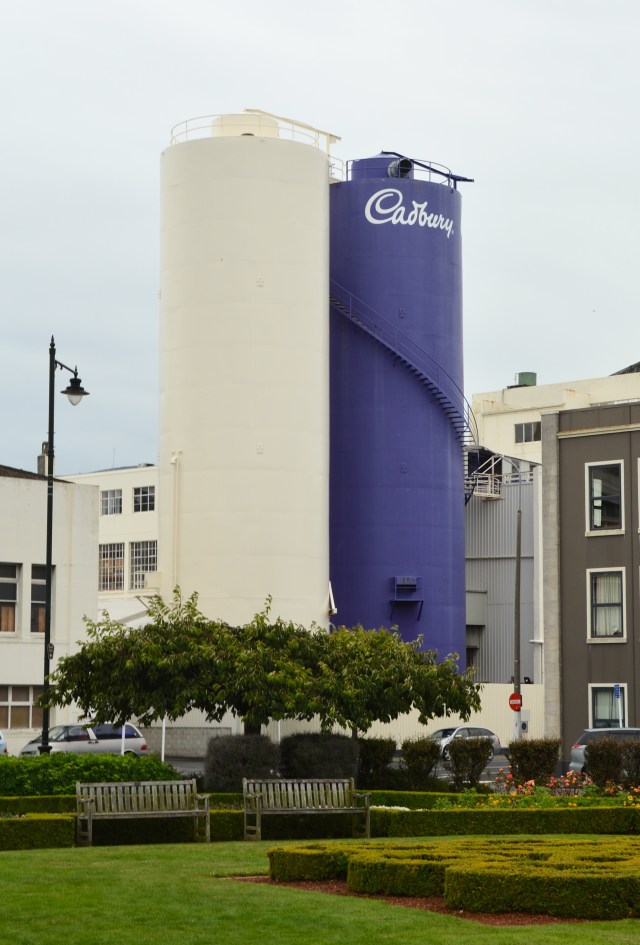
©Jean Janssen Cadbury World is an attraction in Dunedin, New Zealand
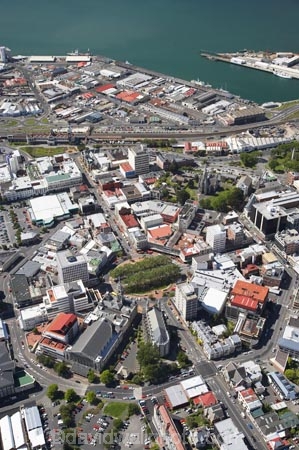
The Octagon and Otago Harbour, Dunedin, South Island, New Zealand - aerial

The Octagon and Otago Harbour, Dunedin, South Island, New Zealand – aerial

In addition to the beautiful railway station, the city boats several lovely Edwardian buildings and the 19th century botanic gardens.  A short walk from the train station is the Octagon, the central hub of the city and a pedestrian area featuring a statute of Scottish poet, Robert Burns.  The Cathedral, Municipal Chambers (Town Hall), and the very modern Public Library (donated by American Andrew Carnegie) are all found on the Octagon.

DSC_5988 - Version 2

©Jean Janssen   Anzac Square and the Dunedin Law Courts, Dunedin, New Zealand

You can also check out one of the World’s Steepest Streets, Baldwin Street or visit the Dunedin Law Courts.  If you want to satisfy your sweet tooth, you can check out Cadbury World and see how they make chocolate while you try a few samples.
DSC_5985

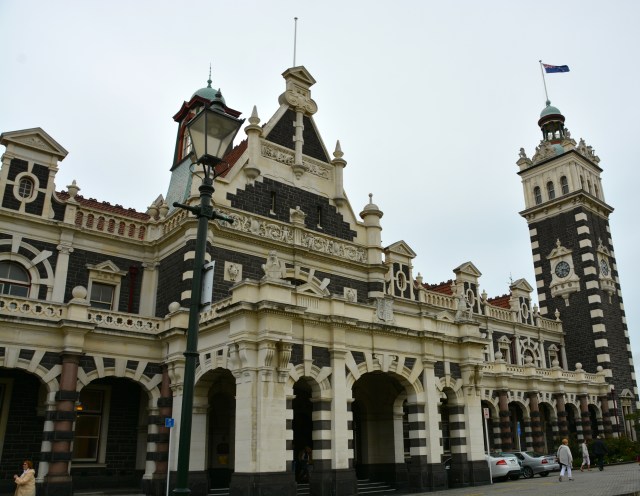
©Jean Janssen The Railway Station in Dunedin, New Zealand. It is often called the Gingerbread house. My image only captures about half of it.

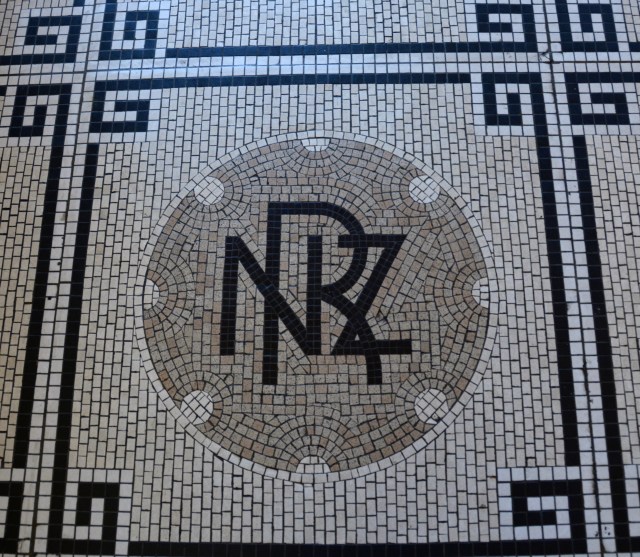
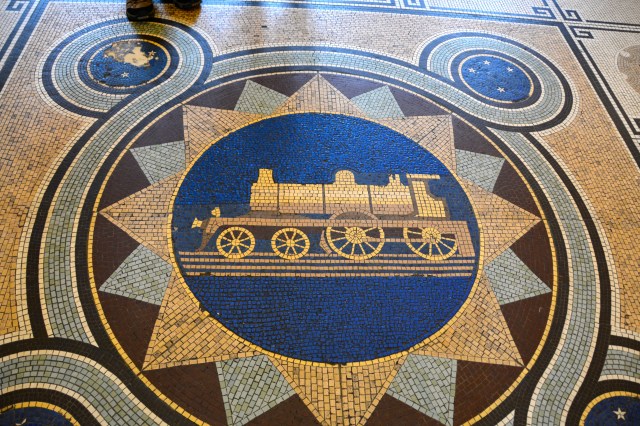
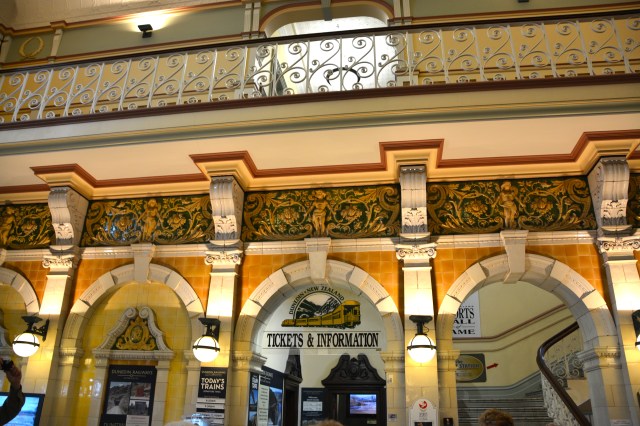
I spent most of my time at the most photographed spot in Dunedin, the railway station built in the Edwardian Style between 1903 and 1906.  At the time of its construction, this was the busiest station in the country.  The interior is even more beautiful than the facade.  The main hall, or booking hall, features a floor of 750,000 mosaic tiles by Minton and Royal Doulton porcelain on its balcony floor.
DSC_6006

©Jean Janssen Mosaic floor tiles in the booking hall of the Dunedin Train Station
DSC_5995

©Jean Janssen   Center of the mosaic floor featuring 750,000 Minton tiles at the Dunedin Train Station, New Zealand
DSC_5993

©Jean Janssen    View of the balcony in the booking hall of the Dunedin Train Station, New Zealand

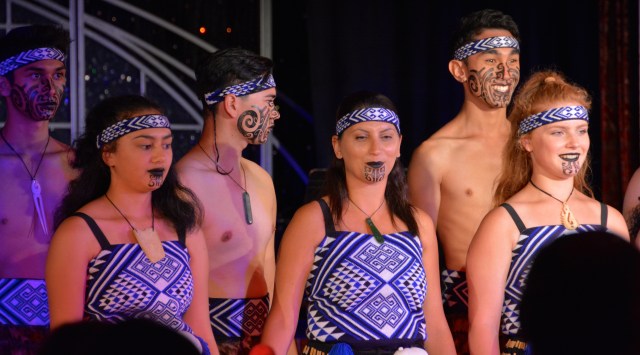
After our break in Dunedin, we rode the train back down to the dock.  Before entering the station, an official came on board to check our boarding cards and picture ids.  Apparently, this is a requirement in New Zealand.  It was a full day of touring.  We quickly changed for dinner and the evening’s special event, an appearance by a local student group who demonstrated traditional Maori dance and song in the costume and paint of the local tribe.  They invited the cruise guests to join them and a few of the men did so shirtless to mimic the boys.  It was a great start to our land-based touring of New Zealand and our introduction to the Maori culture.
DSC_6019

©Jean Janssen   Maori performers on ship in Port Chambers, New Zealand
DSC_5791

©Jean Janssen At the Hinton stop along the Tairei Gorge, New Zealand


Posted in Uncategorized | Leave a comment

Milford Sound, New Zealand

DSC_5698

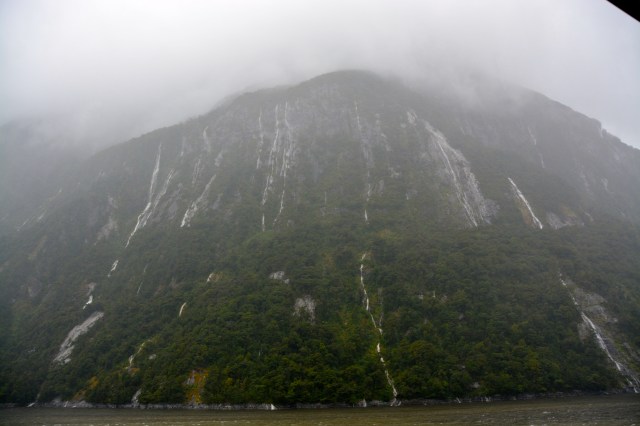
©jean Janssen Milford Sound, New Zealand

For the last two days we have crossed the Tasman Sea. We are once again on the boat today, but land is in sight as be traverse the fjords on the southwestern side of New Zealand. Warned of the Tasman’s Sea reputation for rough waters, Guest Relations handed out seasick pills and there were bags along the railings in the hallways and staircases. Boris and I took the pills and did just fine on the crossing.

DSC_5684

©Jean Janssen Milford Sound, New Zealand

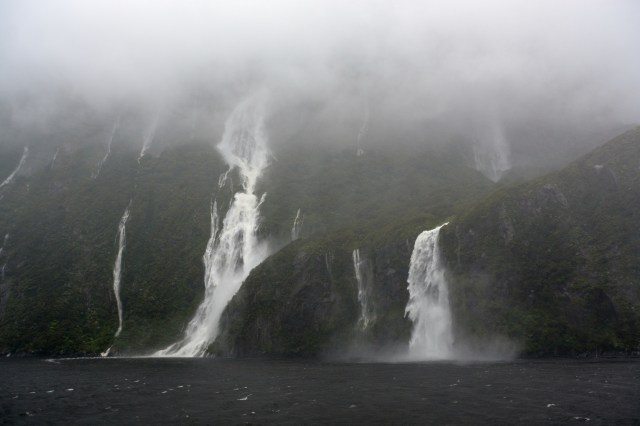
We were scheduled to arrive at the entrance to Milford Sound at 6:30 am, so I asked Boris to wake me up by that time. He is a very early riser. I woke up when I felt the boat slowing and asked if he knew what time it was. Boris said it was just after 5 am, but I took a peek anyway. My view was breathtaking, a series of waterfalls in the gray mist. We were wrong about the time. It was after 7 am and we were already almost at the far end of the sound where we were meeting the tender for those taking a two-day land excursion to Queenstown; it was also our turnaround point.

DSC_5670

©Jean Janssen Meeting the excursion boat in Milford Sound, New Zealand

In the sun, the green peaks are reputed to be beautiful. In the early morning rain, it was magical. The Sound is one of the wettest places on the planet with an average of 23 feet (7m) of rain a year. Between the melting snow and the rain, hundreds (yes, hundreds) of waterfalls are created. The pictures I had seen were taken in sunlight showing full color. My photographs, shot in the limited morning light with the rain falling, look like they were taken with black and white film. They are not.

DSC_5696

©Jean Janssen   The largest waterfall in Milford Sound. For scale, note the ship near the bottom of the fall.

Milford South is not technically a sound, which is a wide inlet from the sea.  It is actually a fjord, a deep narrow inlet surrounded by tall peaks. It is part of Fjordland National Park and a world heritage site carved out during the last ice age.   Because of all the rain and cascading fresh water into the sound, 10m of fresh water sits on top of the sea water found in the sound which makes for some interesting aquatic life.   In addition to the many unique New Zealand birds found here, seals, dolphins, and penguins are among the animal life found in Milford Sound.

DSC_5710

©Jean Janssen Milford Sound, New Zealand

Boris and I sat on our balcony and just stared. When the rain started coming onto the balcony, we retreated inside leaving the door open until the boat changed direction and it was safe to sit outside again. Milford Sound is a place of unbelievable beauty that everyone should see during his or her lifetime. It is like a dream.

DSC_5712

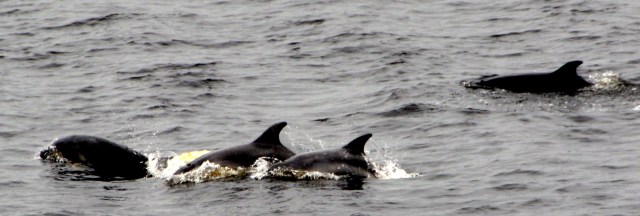
©Jean Janssen Dolphins in the Fjords of Southwestern New Zealand

When we were once again at sea, Boris and I went to breakfast and the boat picked up speed, a lot of speed. The captain announced that given how well we had maneuvered through Milford Sound, the pilot had suggested we pass through some other fjords, so we were going to go fast to create additional time for the bonus scenery. After a nap-I am on vacation-we had lunch by the tall windows in the dining room and in the afternoon sat on the balcony enjoying the view as we passed through the fjords of southwest New Zealand. In one fjord I was rewarded with a school of dolphins. Welcome to New Zealand, Natasha.

DSC_5720

©Jean Janssen The Fjords of Southwestern New Zealand.

Posted in Uncategorized | Leave a comment

Hobart, Tasmania

DSC_5581

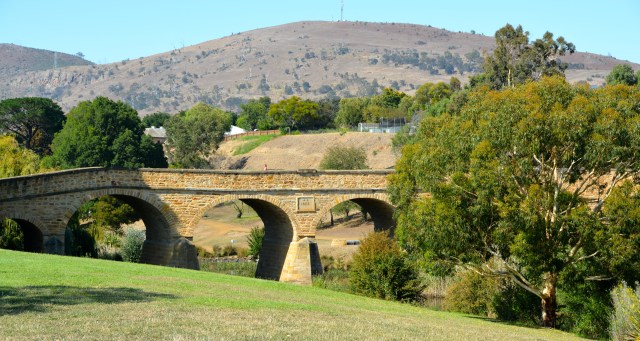
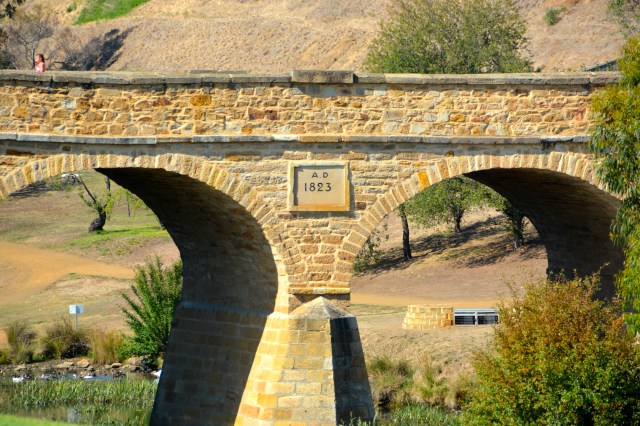
©Jean Janssen The oldest bridge in Australia, Richmond, Tasmania, built by convict labor in 1823.

This morning we are in the capital of Tasmania, Hobart. The state has a population of 512,000 people and about 100,000 live in Hobart. If you add in its suburbs, about half of the island’s population lives here. As you enter the harbor, all the land is covered in homes. It looks like every house has either a view of the mountains (Mt. Wellington), the water, or both.

DSC_5608

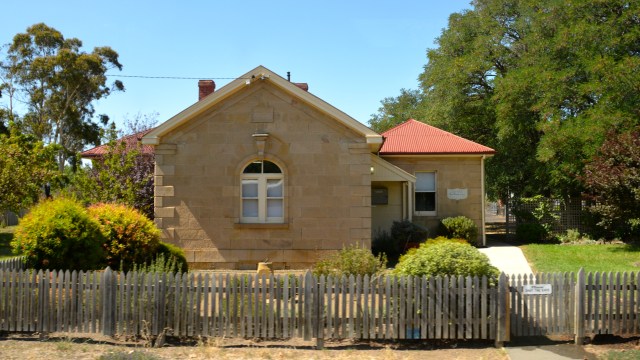
©Jean Janssen Original schoolhouse still in use today, Richmond, Tasmania

Dutchman Abel Tasman first sailed into Marian Bay in Tasmania in 1642, naming it for his commanding officer Van Diemen. It was known as Van Diemen’s Land for many years and original land grants bear that name.  Since 1855 the island has been known as Tasmania. Abel Tasman didn’t think much of it and never came back. It was not until 1804 that the English established the first successful colony in Hobart.

DSC_5538

©Jean Janssen War memorial, Hobart, Tasmania

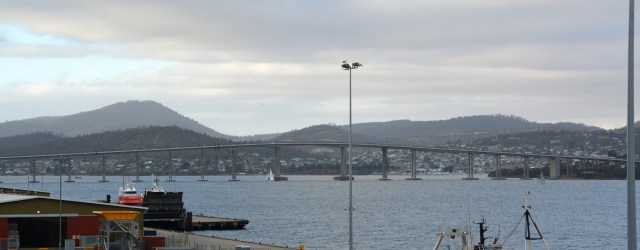
We took a brief ride through Hobart, although there wasn’t a lot to see in this relatively young city. The most beautiful park used to be a burial ground. The City has tried to maintain many of the original sandstone buildings. The large bridge we can see from our ship crosses the River Durban separating the east and west sides of the city. A captain who preferred to take his ship under the bridge closer to the shore one night knocked out two bridge piers. The ship was loaded with zinc that became concrete-like underwater.  That ship still sits at the bottom of the river. Periodically, unsuccessful salvage attempts are made.

DSC_5535

©Jean Janssen Harbor Bridge in Hobart, Tasmania. Note the lack of symmetry in the support columns.

At the time of the accident there was no lighting on the bridge.  Cars passing over the bridge didn’t realize sections of the bridge were out and drove off the edge.  The damage to the bridge meant that suddenly a large portion of the population was cut off from their jobs and vital city services. In the three years reconstruction took, government funds were used to develop the isolated east side of the city. The designers could not simply replace the piers with the ship sitting under the roadway, so a new structural design emerged.  Today the bridge is secure, but lacks a symmetrical look.DSC_5582

©Jean Janssen Australia’s oldest Bridge, Richmond, Tasmania. The bridge was built by convict labor in 1823.

Tasmania’s Governor is not elected, but rather named by the Queen on the recommendation of the local officials. The current governor is a woman, the country’s first. She enjoys a lovely stately home on a hilltop. Leaving the city behind, we passed the hilly, dry landscape hope to wine and whiskey producers. The flat land provides the ground for grain production.

DSC_5603

©Jean Janssen Richmond, Tasmania

Our first stop is Richmond, a historic town that used to do a bustling business with its mills until the River Pitt became too shallow. The enterprising townspeople reinvented the area years later when they discovered tourists liked the charming, historic village. Today it is filled with gift shops, bakeries, restaurants, and an alarming number of ice cream parlors. The local “lolly shop” will even put your sweets into ice cream.

DSC_5574

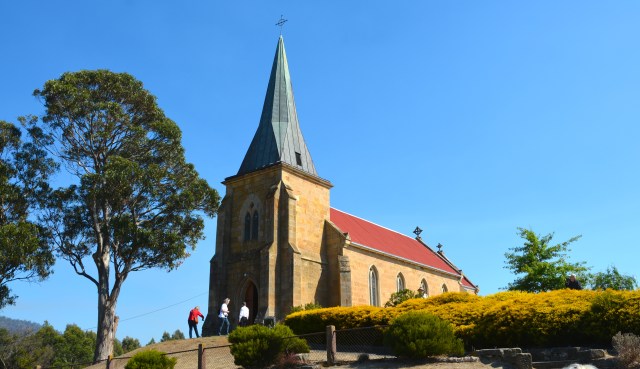
@Jean Janssen St. John’s, the oldest Catholic Church in Australia, Richmond Tasmania

Richmond is also home to St. John’s Catholic Church, the oldest Catholic Church (1836) in Australia. To reach St. John’s you cross the river on the oldest bridge in Australia built by convict labor in 1823.

DSC_5600

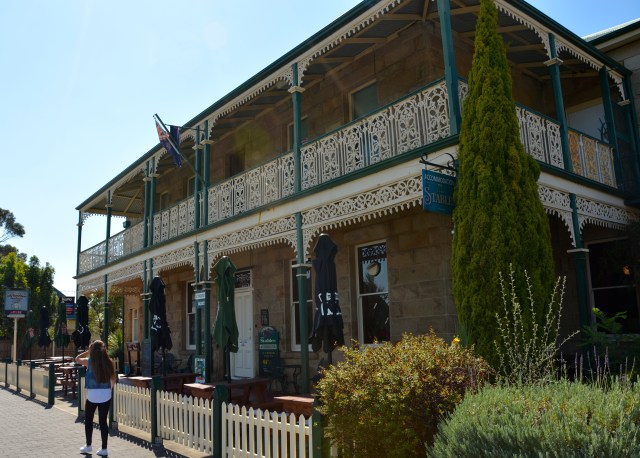
©Jean Janssen The Richmond Arms, Richmond, Tasmania

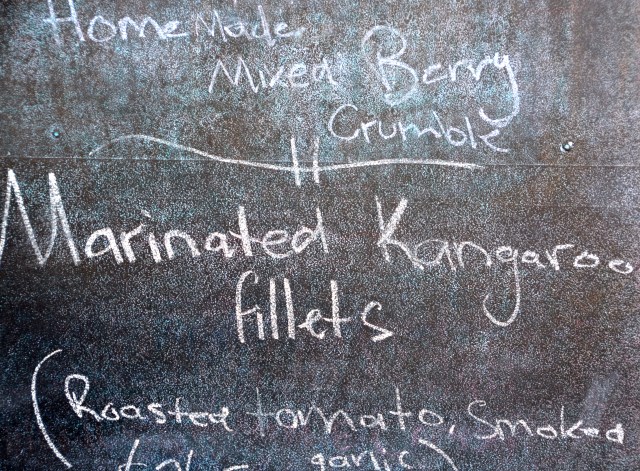
After viewing the church and taking photographs of the bridge, we parked in town. I walked around a bit and took a few pictures. I thought the Richmond Arms was charming until I read their chalkboard menu and realized they were serving marinated kangaroo fillets. I did do a little shopping and finished my visit at the post office where I sent a few cards back to the states. Boris shopped and toured the gaol (jail).

DSC_5598

©Jean Janssen Chalkboard menu at the Richmond Arms, Richmond, Tasmania

We retraced our route and made our next stop at the Coal Valley Vineyard, a small family winery. They ship to mainland Australia, but since 9/11 are no longer able to ship to the UK, Canada, and the United States. We tried a sparking wine, two Rieslings, a Pinot Noir, and a Merlot/Cabernet blend. Although she told us the area is perfect for growing the grapes for the Pinot-in fact they pulled out the vines used in the Merlot/Cab production to put in more of the vines for the pinot grapes-my personal opinion was that the Pinot Noir was the weakest offering. Generally I am not a Riesling fan, but both these offerings-one dry, one sweet-were pretty good. My favorite was the sparkling pinot noir chardonnay and I bought two bottles. Not sure if these will both make it home; there may be a cabin party on the ship.

DSC_5615

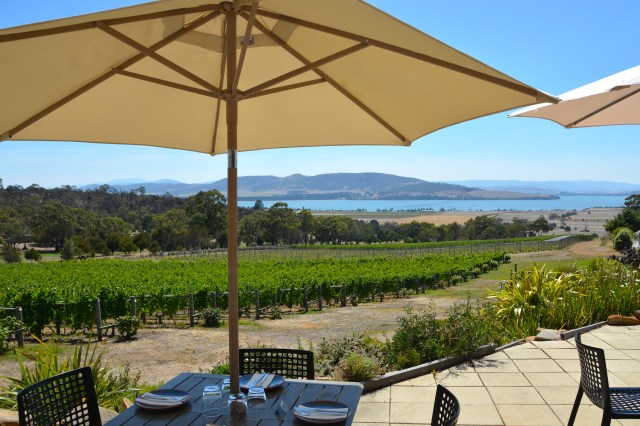
©Jean Janssen Coal Valley Vineyards, Hobart, Tasmania

The winery has a lovely sitting along the Pitt. They also offer meals and a beautiful terrace to enjoy the view of the vineyard and river while you enjoy your food and wine. A tasting flight is $5 and you can add a cheese plate for another $10 if you prefer just to snack. There were other wineries along the route and you could make a day of tastings if you had a driver.

DSC_5646

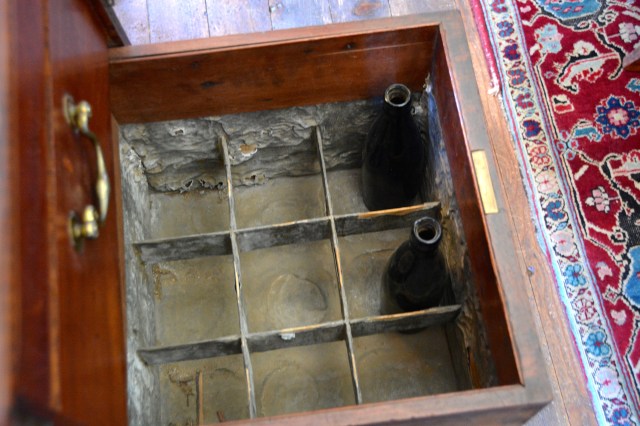
©Jean Janssen Early refrigeration, Runnymede, Hobart, Tasmania

Our final stop was back in town, Rummymede, a traditional Tasmanian home. This was not a two-story upper crust establishment, but a single story regency style sandstone villa for a family who wanted a weekend home outside the city-at least it was outside the city when it was built in 1840. It has been operated by the national trust since 1964. Original efforts were to make it into a stately home, but a later revision thought to bring it back to what it was like for the Bayley family, the third owners of the home, that lived here for 100 years.

DSC_5654

©Jean Janssen Rummymede with its unique shutters, Hobart, Tasmania

We were rushed to finish on time, but we had a fabulous guide Ian with a cheeky personality. Master mariner, Captain Charles Bayley was prominent in the whaling industry, primarily exporting whale oil to the American market. He renamed the property Runnymede after one of his whaling ships, a portrait of which hangs over the fireplace in the museum. The home has been added on to a few times. It has very clever shutters for the windows and French doors covers that dropped into the floor. The steps leading up to a high bed also served as the enclosure for a chamber pot. Ian also showed us a wonderful high chair that converted into a stroller.

DSC_5656

©Jean Janssen corrected wallpaper border Runnymede, Hobart, Tasmania

I loved the dining room table leaves that were crescent moon-shaped, expanding the oval table at the ends rather than in the middle. The enterprising Mrs. Bayley found that while decorating she had run out of wallpaper. Rather than reorder from England and end up with a different die lot and experience delays, she painted in the unfinished area. It was a detailed and remarkable likeness. You could tell now that they are not all wallpaper only because the color had aged differently on the wallpaper and on the paint. Mrs. Bayley’s painted portion was more vibrant.

DSC_5641

©Jean Janssen Dining Room, Runnymede, Hobart, Tasmania

The period artifacts they had collected added a great deal to the tour. 60% of the collectables and furnishings in the home were original to families that lived there.  There were wonderful gardens and outbuildings to tour, but we didn’t have time.  If period home touring is something that you like, visit Runnymede and be sure to ask for Ian; he “made” the tour.

DSC_5618

©Jean Janssen Coal Valley Vineyard, Hobart, Tasmania. The rose bushes at the end of rows are not decorative. The plants are susceptible to disease and alert the vineyard owners if there might be problems with their vines.

After dropping off the wine bottles and other purchases and a nice lunch on the ship, Boris and I returned to the cruise terminal for the crafts market. There is a special market each Saturday in Salamanca Square near Battery Point, just one of the many areas in town with free wi-fi. The booths came to us since we were not docked on a Saturday. Boris and I found some cute local crafts and used up our Australian Dollars. Next stop is New Zealand.

DSC_5648

©Jean Janssen Runnymede, Hobart, Tasmania

Posted in Uncategorized | Leave a comment

Port Arthur, Tasmania, Australia

DSC_5530

©Jean Janssen The penal colony ruins at Port Arthur, Tasmania

Tasmania! We are anchored in the bay off Port Arthur, Tasmania. Port Arthur was developed as a penal colony. The historical park, a UNESCO World Heritage Site, where we made land is a day’s visit in and of itself, but Boris and I are headed to a reserve to see the endangered Tasmanian Devils.

Originally part of the same landmass as Australia, the island separated about 10,000 years ago. Tasmania is now a state of Australia. While the port appeared lush and green and we experienced rain and cold, Tasmania is suffering from a crippling drought. The drought is so severe that cattle and sheep farmers are beginning to sell off or butcher their stock because of a lack of water and food.

DSC_5533

©Jean Janssen Our ship at anchor in the harbor at Port Arthur, Tasmania

Boris didn’t bring a jacket and was really cold. I was in long sleeves, pants, and a thin jacket and was still a bit chilled. The temperature has probably dropped more than 40 degrees since our day in Melbourne. The dock is only suitable for small boats, so we are tendering in from the ship.

DSC_5520

©Jean Janssen Penal Colony ruins at Port Arthur, Tasmania

It was too lovely a setting for a penal colony. The beautiful brick building, now in ruins, was originally a mill but was converted when water and manual labor was unable to power the equipment. It coincided with the transfer of English prisoners overseas. Over a 50-year period, England transferred over 160,000 prisoners to Australia. 75,000 of those went to Tasmania. England also transferred another 60,000 to the colonies now known as the United States, ending only with the outbreak of the Revolutionary War.

DSC_5532

©Jean Janssen At the harbor at Port Arthur, Tasmania

Attempting to curb crime, the Crown enacted harsher penalties-like the death penalty for stealing a rabbit. But when people are hungry, they will take the risk and the prisons filled to beyond capacity. The transfer of prisoners had additional advantages beyond alleviating overcrowding and getting rid of a certain element of society. Once a prisoner had served his/her sentence they were not returned to England but rather helped to colonize the area. Having a large population of prisoners in the area was also a deterrent to other countries coming in to take over the land.

DSC_5527

©Jean Janssen Timeline for the prison at Port Arthur, Tasmania

Conditions in the prison were very harsh and supply ships with food and other items often didn’t make it in time for some of the prisoners.   Male prisoners outnumbered female 16 to 1. When released, these males often kidnapped the Aboriginal females, adult and children. Prisoners and Colonists severely outnumbered the only 7,000 Aboriginals on the island. Poor relations resulted in the Black War that almost completely wiped out the Aboriginal population. It was effectively genocide with only 300 Aboriginals left when fighting ended.  There was an attempt to move all the native people by a human chain to the peninsula where Port Arthur is located, but the natives knew the land and by the time they arrived only two were left, the rest dead or hidden.

DSC_5517

©Jean Janssen Historical Park at Port Arthur, Tasmania

We walked through the historical park that was the penal colony to reach our buses. Located on an isthmus, it was a prison without walls. There is a wonderful visitor’s center and well worth a day or half day’s visit.

Our buses drove through the tree-filled, hilly countryside. The village of Port Arthur is no more than a general store, but swells with the summer tourists many of who bring in campers and stay several days. One of the attractions that has developed is the UnZoo, our destination.

DSC_5230

©Jean Janssen The Tasmanian Devil is actually pretty cute. At the UnZoo, Port Arthur, Tasmania

Jon Coe, an American zoo designer, developed the concept. Fences were removed from what was an animal reserve with cages. There is now free movement of the animals within the area, with a few exceptions. After a nice introduction at the entrance, people headed off but I surveyed the first display and was rewarded when first one and then two Tasmanian devils appeared. They are nocturnal animals, but the feeding schedule at the UnZoo has trained them to be awake during the day. Tassie devils look like a small dog or very large rat; they are dark in color with white bands. If you weren’t watching them feed, you would think them very cute.

DSC_5246

©Jean Janssen The Tasmanian Devil eats everything-meat, fur, and bones. At the UnZoo, near Port Arthur, Tasmania

The Tasmanian devil has fallen victim to a terminal facial cancer, highly contagious, and passed by biting. Given the way they eat, transmission is frequent. 90% of the wild Tasmanian devil population has been wiped out by this illness. Fortunately, it has never reached the peninsula where Port Arthur is located. Later in the day we are scheduled to see a feeding.

DSC_5260

©Jean Janssen Pademelons, a type of wallaby at the UnZoo, Port Arthur, Tasmania

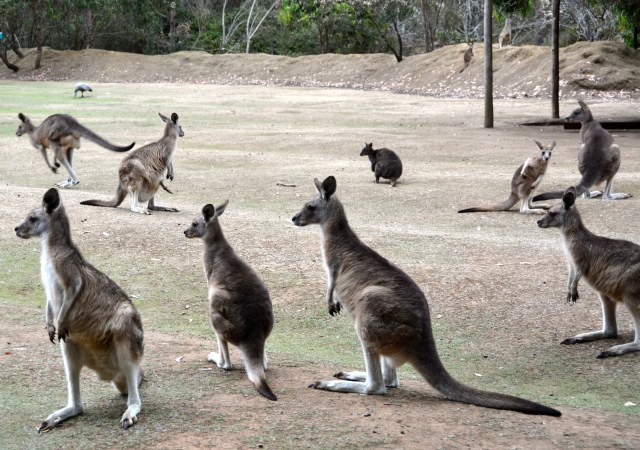
After passing the outdoor “theater” where the bird show will be located at the end of our visit, we encountered pademelons, small wallabies. They got relatively close to us, but moved very quickly when they wanted away from you. The next area found us amidst a mob of kangaroos. These are forester kangaroos, a relative of the Eastern grays we saw near Melbourne.   The foresters are much smaller than the grays.   As it was a cool day, the kangaroos were all out in the open and very friendly. If you want to pet them, you rub under their chin rather than along their backs.

DSC_5315

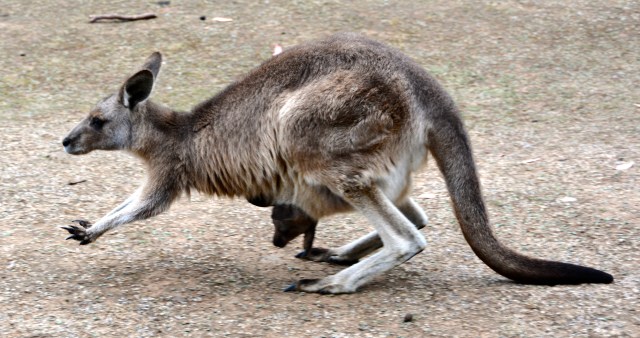
©Jean Janssen Look closely and you’ll see the joey with his head out of mom’s pouch. At the UnZoo, Port Arthur, Tasmania

I was thrilled when I realized that some of the mothers had joeys that were old enough to peak out of the pouch. One decided that he would just ride with his head out surveying the world. One was nursing and all you could see was his legs and tail hanging outside the pouch. We also met a joey that had only recently left the pouch and still stayed close to mom to nurse and learn.   It was hard to leave this area, but we were going to pass through again at feeding time.

DSC_5377

©Jean Janssen Mom and joey on the move. The UnZoo, Port Arthur, Tasmania

Leaving the open grassland, I passed through the forest where a skittish wallaby moved quickly when he saw me. We were on our way to the waterfront. You could really see the effects of the drought here. It was still a beautiful area, but the birds had moved much farther out to capture the water. I decided to go back to the kangaroos.

DSC_5294

©Jean Janssen Feeding time at the UnZoo, Port Arthur, Tasmania

At feeding time, both Boris and I fed the kangaroos. There was plenty of feed for everyone and wallabies and geese were also happy to partake. This would be a wonderful experience for children, but all the adults in our group were having a ball. One of the guests on our ship was in a wheelchair and the set-up also allowed her to feed the kangaroos; she was thrilled. The joy on her adult daughters’ faces as they watched their mom feed the animals warmed my heart. The Unzoo is fun for all.

DSC_5268

©Jean Janssen Boris, enough said.

After the kangaroo feeding, we were led to the Tasmanian devil area where they simulated a feeding. When settlers heard the screeching sound the devils make when fighting for food coming from the forests at night, they thought the sound came from the devil.  This is how the animal got its name. There was only one devil for the simulated feed-the trainer put a wallaby leg on a pole and chain. After creating resistance, she attached it to a hook and got out of the contained area while the tassie devil ate. The Tasmanian devil’s jaw is the strongest relative to its size. It left nothing, eating meat, fur, and bone. After finishing its food, it returned to its cute, happy state. Eek.

DSC_5473

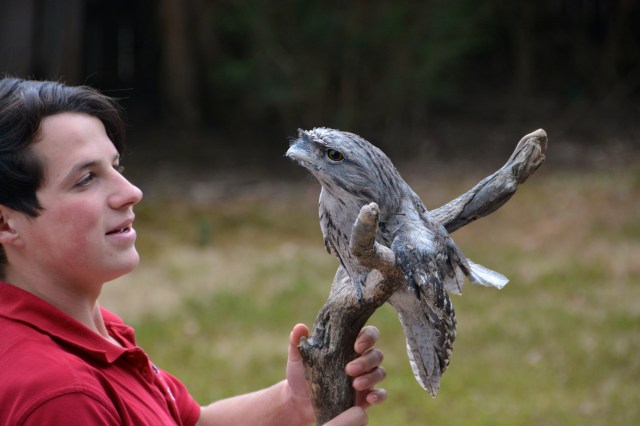
©Jean Janssen The Tawny frogmouth

On that happy note, we returned to the bird theater for the performance featuring a young trainer Colin (18 going on 30 as the owner described him) and native birds.   A beautiful Galah, like the one I had seen in the wild outside Melourne, led off the show pulling down the welcome banner. The show featured many unique birds native to this area. One I had never seen was the tawny frogmouth. We saw both a male and female; both those on property were injured and couldn’t fly. They blended in so well with the surroundings, most of us didn’t know the male bird had been there the whole time when he was brought out to the group.

DSC_5540

©Jean Janssen The Tasmanian Police Pipe Band in Hobart, Tasmania

After the Unzoo we boarded our buses again for the drive back to the dock, passing lavender fields. The product has become quite popular and a strong export for Tasmania. Unfortunately, we didn’t have time to tour the historical park. The ship is moving midday to Hobart, the capital of Tasmania. We have an Azamazing Evening tonight featuring the Tasmania Police Pipe Band and the Tasmanian Symphony Orchestra. I am hopeful for fireworks too. On to the capital…

DSC_5346

©Jean Janssen The forester kangaroo, a smaller relative of the Australian Eastern Gray

Posted in cruises, international | Tagged , , , , , , , , , , , , , , , | Leave a comment

Natasha Goes Walkabout and sees Koalas and Kangaroos

DSC_5136 - Version 2

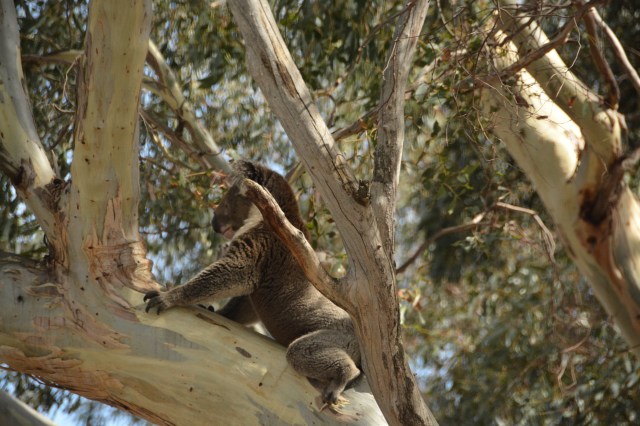
©Jean Janssen “Cruz” at You Yangs State Park, near Melbourne, Australia

Today we are in Melbourne, our only other mainland Australian port, and I couldn’t visit this country without my koala and kangaroo fix. It was a hot day for a walkabout with temperatures reaching 104 degrees Fahrenheit.

DSC_5121

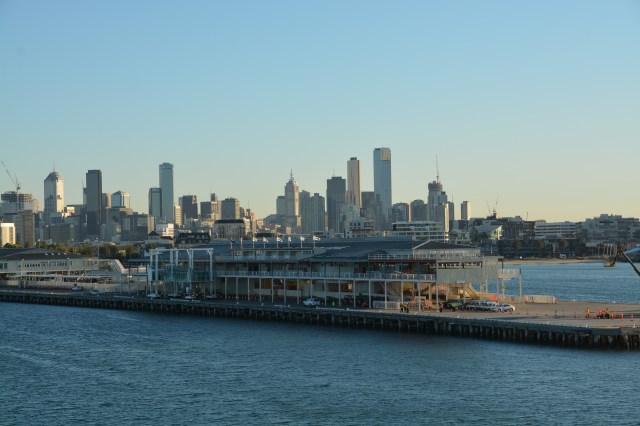
©Jean Janssen Historic Port Terminal in Melbourne, Australia

Boris and I were scheduled for the afternoon departure, but we wanted to get back so we could go into the city late afternoon. The Land Discoveries director told us to go ahead and come down at the time for the morning departure and see if anyone didn’t show up. There were no “no-shows”, but she asked if they could fit us in anyway. We made it. Another good reason for the morning departure was that we were pretty sure that the animals would not be active in the afternoon heat.

DSC_5205

©Jean Janssen Billabong, Seredip Sanctuary outside Melbourne, Australia

We had an amazing guide Scott Roberts who is with Echidna Walkabout Nature Tours, a group dedicated to animal and habitat preservation. Guiding is only half of what he does. A researcher with Scott’s organization has “discovered” and educated about a new way to identify individual koalas by the unique markings inside the koala’s nose.

We were picked up at the pier by coach and driven to the You Yangs Mountain Range (more like tall hills) for the first stop at the You Yangs Regional Park part of Victoria Parks, the state park system. (Sydney is in the state of New South Wales; Melbourne is in the state of Victoria.)

DSC_5123

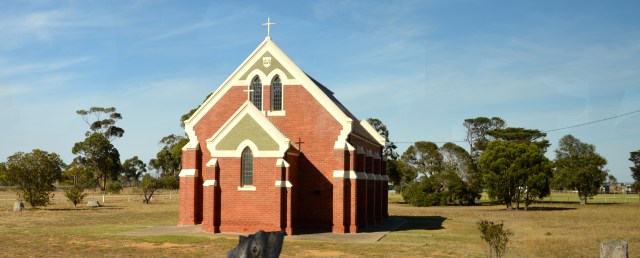
©Jean Janssen A small Catholic Church seen on the way to You Yangs State Park near Melbourne, Australia

Only one hour outside the city of Melbourne and we were in the bush. The grasslands were flat and dry, although we did see sheep and horses in the fields. There was even a miniature horse farm just before we arrived at the reserve. The eucalyptus trees are everywhere, even along the roadways leading out of Port Melbourne where we are docked. There are 700 species of gum (also known as eucalyptus) trees; koalas will eat 100 of these species.

DSC_5217

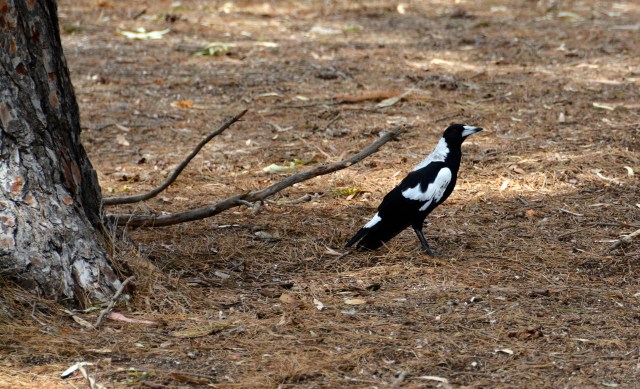
©Jean Janssen Magpie, Serendip Sanctuary outside Melbourne, Australia

The bus pulled into the parking lot of the regional park and we were told where the restrooms were and our meeting spot. Before we got out of the bus, we looked over and there was a koala climbing first down and then up a tree. Anytime I have seen koalas they have been sleeping or repositioning themselves to sleep again. It was really exciting. Since we had to go to the area as a group, everyone made the rest stop and then collected.

Unfortunately, by the time we were all together again, Donna (the koala) had decided it was too hot in the tree and was resting in the bushes on the ground. It made it particularly hard to see her.   We then walked over to see Pat, a older female who was asleep in a tree that was better shaded.

DSC_5142.JPG

©Jean Janssen.  Cruz surveys the You Yangs State Park near Melbourne, Australia

Although we waited quite a while, neither koala made much of a move so we boarded the bus to tour the park. It was a particularly nice setting near the mountains. We thought our koala sightings were over when one of the passengers spotted Cruz up in a tree. We got the bus driver to back up (not particularly easy) and we got a good look at Cruz, a male koala. The higher seating in the bus actually gave us a better vantage point. At one point Cruz did look up and check out our guide on the ground, but then went back to sleep.

It is actually the peak of mating season for the koalas. The males have a distinctive snore and the louder the snore the more attractive the koala. Boris would do very well with female koalas.   A male koala is easily identified by the large sweat gland on his chest. The scent is used to attract the females.

I was pretty disappointed that I didn’t get the climbing shot of Donna with my camera, but was very pleased with the pictures of Cruz. It is always a superior experience to see animals in their natural habitat although there is no way to predict how much you will actually get to see or capture on film/disk.

DSC_5147.jpg

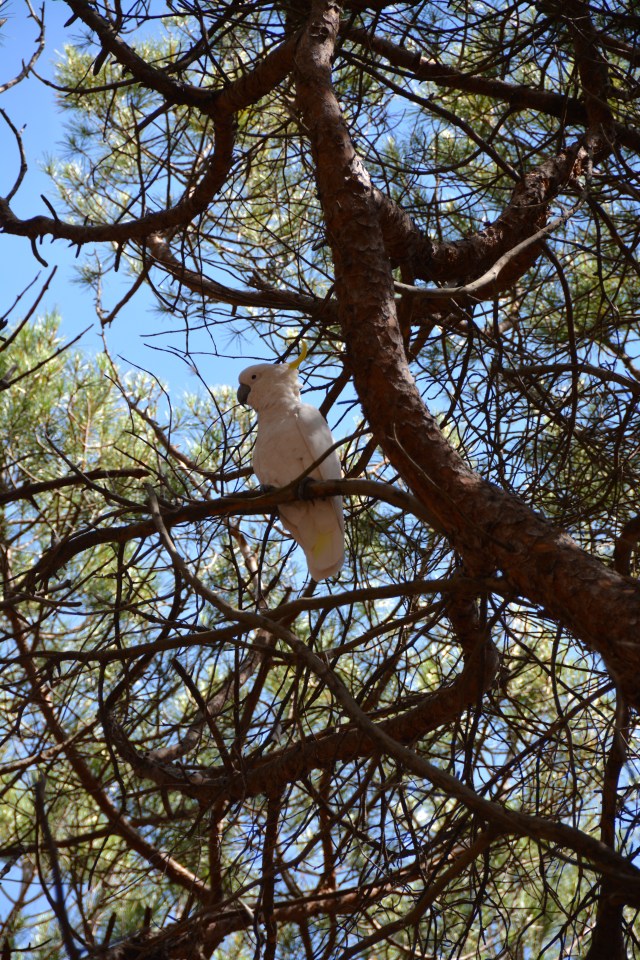
©Jean Janssen.  Cockatoo at Serendip Sanctuary near Melbourne, Australia

After leaving the Regional Park, we made a 10-minute drive over to Serendip Sanctuary. First stop was for the toilets and then Morning Tea-coffee, hot tea, or cold water served alongside sweets. In this picnic area I found trees filled with large cockatoos. I was fun watching them in flight and grabbing some pictures.

DSC_5165

©Jean Janssen Eastern Grays Kangaroos at Serendip Sanctuary outside of Melbourne, Australia

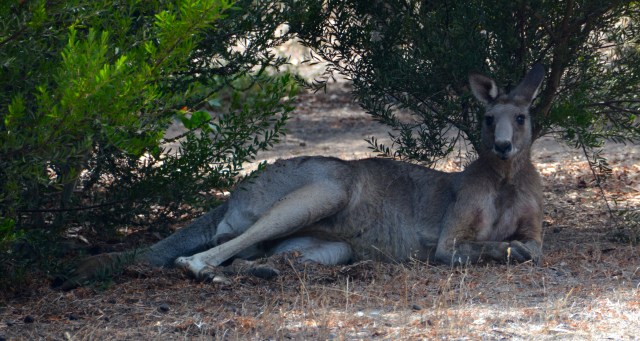
Next we walked as a group into the bush in search of kangaroos. This particular reserve was started in the late 50s on an old sheep farm so some of the tree plantings are new and in rows giving us a greater opportunity to see these unique animals. In cooler weather, the kangaroos will be out in the middle of the grasslands, but in this heat they seek the shade of the trees. (While the smaller wallaby is always found in the forest.)

DSC_5164

©Jean Janssen Eastern Gray Kangaroo enjoying the shade at Serendip Sanctuary outside Melbourne, Australia

As we learned from Scott, you do not walk directly at the kangaroo (unless you want to scare it off) but approach from an angle. If we stayed together as a group and kept our distance, they might let us stay and watch. Scott gave us very specific instructions and then had to stop and give them again as soon people would try to wander on their own, separating the group and scaring away the kangaroos.

DSC_5171

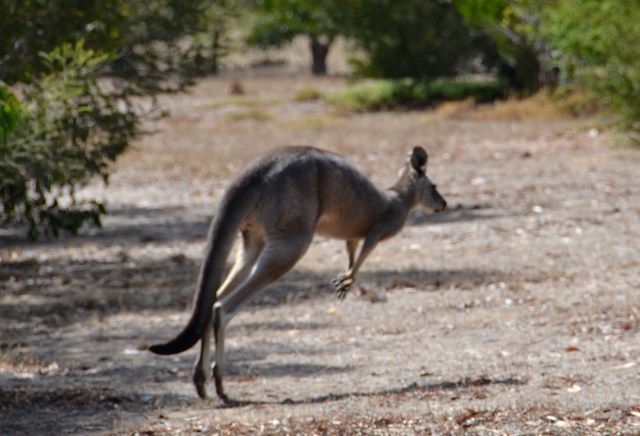
©Jean Janssen Eastern Gray Kangaroo on the move in Serendip Sanctuary near Melbourne, Australia

We were rewarded seeing them at rest, hopping through the reserve, and just staying in the shade as the temperature reached over 100 degrees Fahrenheit. There are 4 species of kangaroos and we saw the Eastern Grays. To the north the kangaroos are smaller and lighter in color due to environmental reasons. The male eastern gray kangaroo can reach 6 ½ feet tall and weigh 200 lbs.

DSC_5191

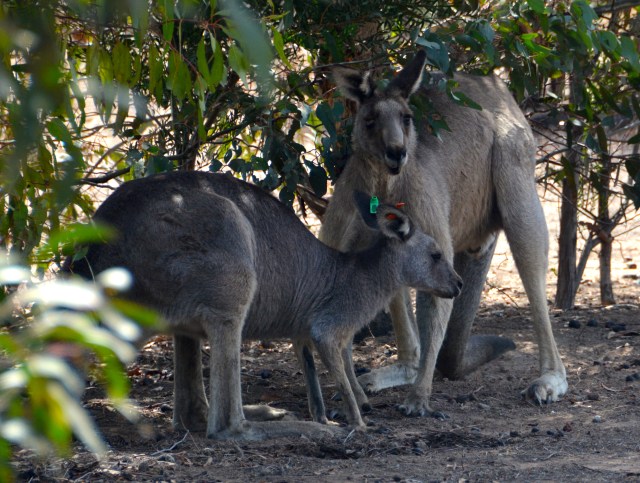
©Jean Janssen Eastern Gray Kangaroos at the Serendip Sanctuary outside Melbourne, Australia

The reserve generally does not tag the kangaroos, except those used in specific behavioral research. A few of the kangaroos we saw (but not all) were tagged. Making our way around the droppings that Scott had used to pinpoint where the kangaroos were, we made our way back to the bus.

DSC_5212

©Jean Janssen  Billabong at Serendip Sanctuary outside Melbourne, Australia

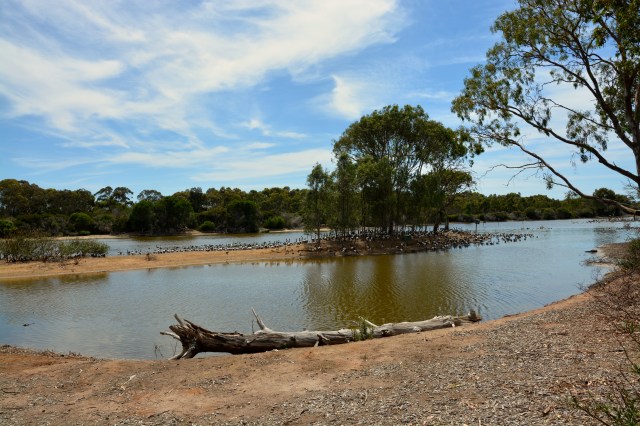
Our final stop was a billabong. I have heard the word many times in rhymes, songs, and even as a name of a clothing company, but I didn’t really know what it meant. “Billa” is the Aboriginal word for water. A billabong is the area of the river that has been isolated when the river diverges or part dries up. The billabong is used as a watering hole. I learned part of the meaning from Scott and the rest from Robin, an Australian guest on our cruise.

DSC_5215

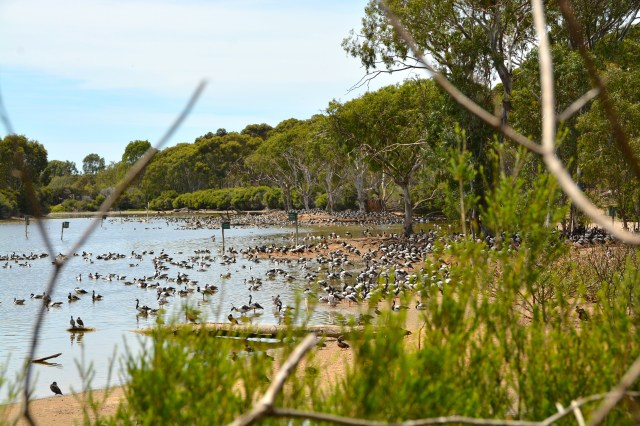
©Jean Janssen Magpie Geese at a Billabong outside Melbourne, Australia

Magpie geese dominated this particular billabong. You couldn’t miss the honking. Scott said that when he started working at the reserve there was water on both sides of the bridge. One side was completely dry on our visit. He said it would take two or three years worth of rains to fill it back up.

DSC_5221

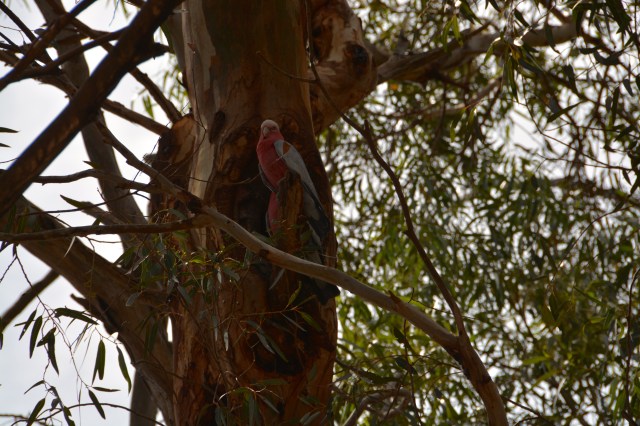
©Jean Janssen.  The beautiful Galah at Serendip Sanctuary near Melbourne, Australia

Scott had told us about the many birds we would see, but I didn’t spot as many varieties as I thought I would. However, just on the way back we saw a Galah, a beautiful bird Scott had told us about on the way out of Port Melbourne. He said its coloring was like Neapolitan ice cream with white, pink, and brown stripes; it was an apt description.

kcbookfront

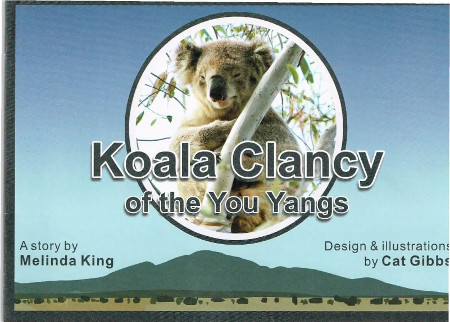
On the way back into town, Scott passed around a children’s book written by an aboriginal member of the research staff who is a descendant of the Wamba Wamba tribe. She used it as a tool to describe the animal’s behavior but also to educate on the dangers that the koala faces, primarily loss of habitat. There are no more than 80,000 and maybe as few as 43,000 koalas in Australia today. I bought a copy of the book because it was well done, but mostly because 100 % of the proceeds benefit their preservation efforts.

DSC_5159

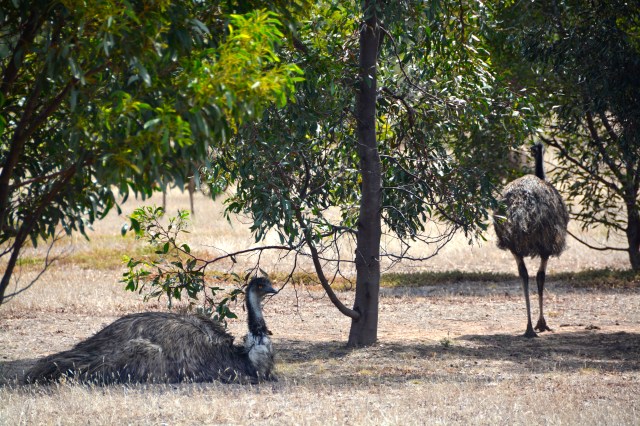
©Jean Janssen Emus at Serendip Sanctuary near Melbourne, Australia

Once back at the ship we found out the trams into town were not working (some said it was probably due to a strike, others said a bridge was out) and buses were nowhere in sight. After a late lunch and with the temperature at 107, Boris said no to the $40 cab ride to town. I was going to go for it, until I saw that where were no cabs around. They probably decided anyone that wanted to go had done so or were working the area around the Australian Open that started that day.

I was bummed to not see Melbourne, but instead I downloaded my pictures of Donna, Pat, Cruz, and the roos. Besides, I need another excuse to come back here to visit Melbourne and see the blue penguins on Phillip Island (the #1 referral on an attraction in this area). Natasha is off to Tasmania next.

DSC_5224

©Jean Janssen Melbourne sail away

Posted in cruises, international | Tagged , , , , , , , , , , , , , , , , , | Leave a comment

Sydney, Australia

DSC_4905

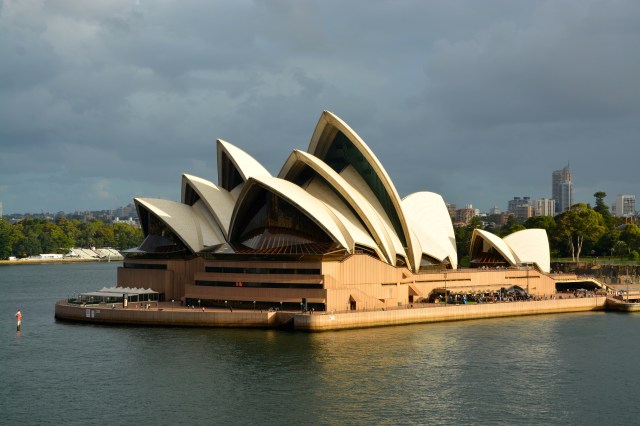
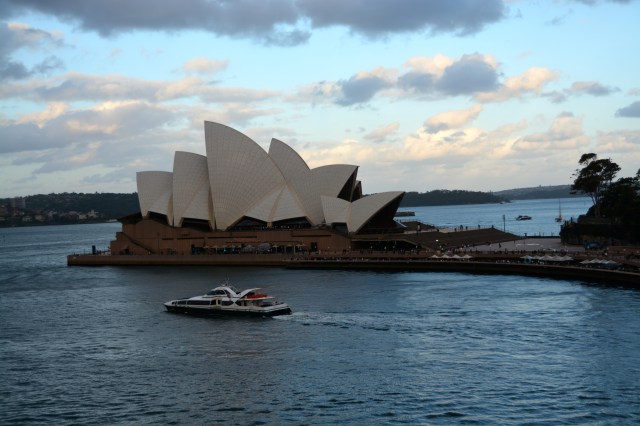
©Jean Janssen Sydney Opera House, Sydney, Australia

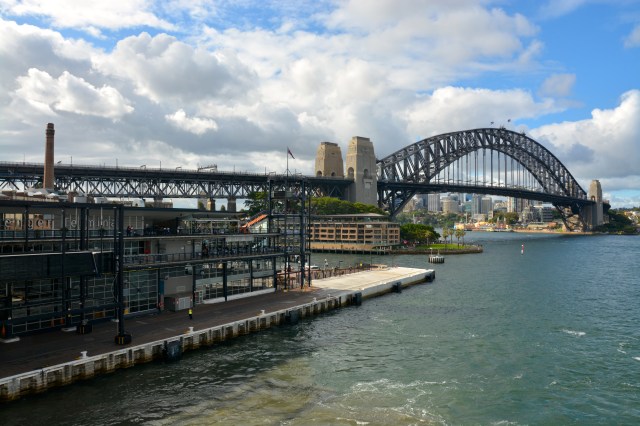
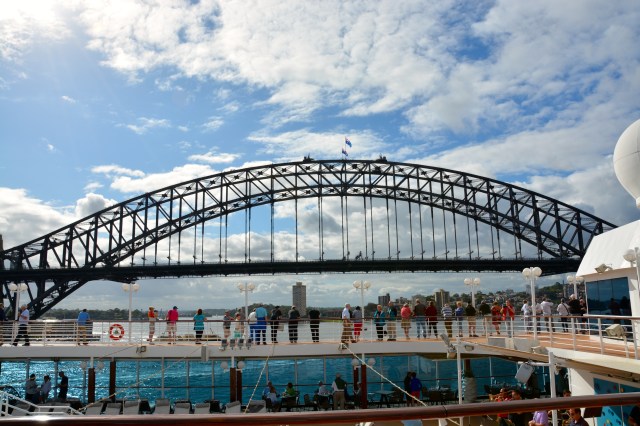
Natasha is cruising again; this time to Australia and New Zealand, including stops in Tasmania.  We flew in yesterday on Air New Zealand directly from Houston to Auckland, New Zealand.  After a short layover, we flew to Sydney, Australia where the boat is docked in the White Bay Terminal.  In the evening we transferred to the Overseas Passenger Terminal in Circular Quay, passing under the Harbor Bridge and getting our first view of the Sydney Opera House.
DSC_4879

©Jean Janssen  Harbor Bridge, Sydney Australia

After a quick breakfast this morning and a visit with the tourist rep in the ship’s lobby, we are off to catch the hop on/ hop off bus and tour Sydney. From our berth at the Overseas Passenger Terminal in Circular Quay, it is a short walk by the Museum of Contemporary Art to wharf 6 and the buses on the main street outside. This is the starting stop for the tour.

DSC_4916

©Jean Janssen  Sydney Opera House at Dusk

Although I am a big proponent of these buses and the Sydney version had 24 stops, it covered a relatively small geographical area and at 40 Australian dollars (adult/ one-day ticket) was more expensive than most buses of this type. I didn’t see much competition, so they may simply we able to charge whatever they like.

DSC_4935

©Jean Janssen  An architectural mix in Sydney, Australia

The city has an eclectic blend of architecture representing the various periods of growth of the city. Unfortunately, there was an overabundance of unattractive 60s-type buildings.

DSC_4921

©Jean Janssen Sydney, Australia

We passed first by Hyde Park before making our way to Woolloomooloo (name for baby kangaroo in the native tongue) and Kings Cross. At the El Amamein fountain a crafts market was set up on this summer Saturday. The Kings Cross area was lively with lots of pedestrians including families. The area blends cafes, boutiques, sex shops, and McDonalds. There was no need for the audio to refer to the area’s “underbelly”; it was quite evident.

DSC_4911

©Jean Janssen Entertainment area along the waterfront, Sydney, Australia

Sydney boosts many finger wharves jetting out into the water. The largest is found in Woolloomooloo. Nearby some of the Australian naval fleet was anchored.   A lively nightlife is found in this area, with naval personnel some of the common patrons.

DSC_5091

©Jean Janssen Australian Naval Fleet anchored in Sydney

DSC_5043

©Jean Janssen Sydney Botanical Gardens

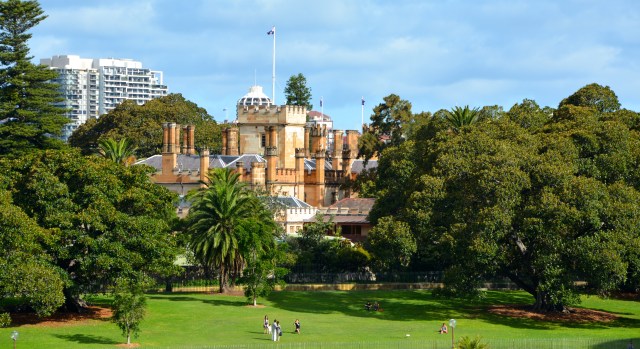
We passed next by the Royal Botanical Gardens, before returning to Circular Quay for the stop for the Sydney Opera House. Since we are planning to tour the Opera House in the afternoon, we stayed on board the bus to make the circuit.


DSC_4928

©Jean Janssen Sydney Railway Station

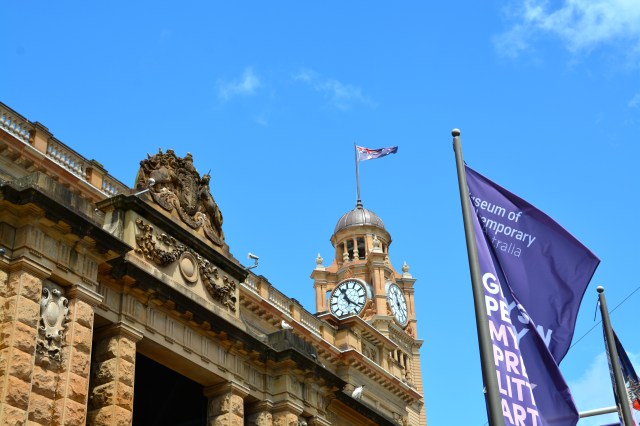
Passing the attractive State Library, we made our way to the central railway station. Like the Hyde Park stop where people made their connection to the “Bondi Beach and Bays Route”, lots of guests got off at the railway station for bus transfers and trains.

DSC_4941

©Jean Janssen Anzac Bridge

We next rode through the unattractive university campus to the fish market stop and views of the Anzac Bridge; this is the area we were docked at yesterday.

DSC_4940

©Jean Janssen Historic Terrace Cottages, Sydney, Australia

Next we went through Chinatown and passed the Ian Thorpe Aquatic Center, a 40 million dollar public swimming facility named for their Olympic champion. Boris didn’t care for the building, but I rather liked it. In Chinatown, we also passed by unique homes that I photographed, noting that it was a shame they were not better preserved. The audio eventually identified them as historic “terrace cottages” which are under heritage protection. Although they can’t be torn down, it is disappointing that they are not better maintained.

DSC_4925

©Jean Janssen Sydney, Australia

Finally we rode around Darling Harbor where a new convention center is under construction. This is home to the world’s largest IMAX and a harbor side Ferris wheel. The area is highly attractive to tourists, not only for the water setting but the many entertainment options in the area. Unfortunately, the construction made this area less picturesque than it might otherwise have been. A return visit when the convention center is complete will be in order.

DSC_5034

©Jean Janssen Overseas Passenger Terminal, Circular Quay, Sydney, Australia

The bus’s last stop led us directly to the Overseas Passenger Terminal so he hopped off there to grab lunch before our afternoon excursion. We ate on the ship on the outdoor terrace with a view of the Harbor Bridge to our left and the Sydney Opera House on our right; doesn’t get much better than this. Boris decided he had “done” Sydney, so he bailed on me after lunch.

DSC_5052

©Jean Janssen The wharfs in Circular Quay, Sydney

I walked around circular Quay, passing the Contemporary Arts Museum and water taxi stops. At wharfs 1-6, you can find ferries or water tours going just about anywhere. The set up looked more like a train station and I guess with its water setting, travel around Sydney requires water transportation and convenient and stocked water terminals. Buskers of all types also fill this area.

DSC_4897

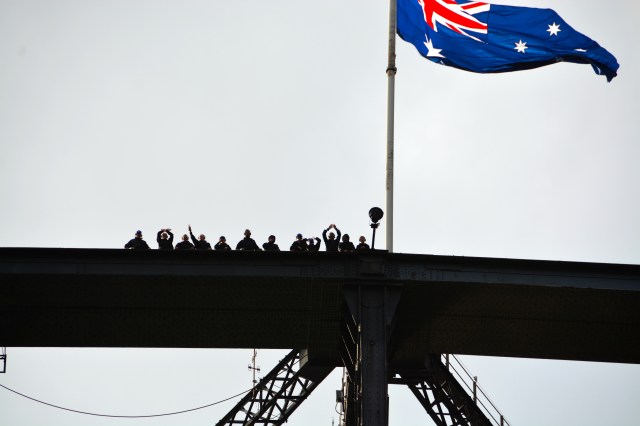
©Jean Janssen Harbor Bridge walkers at the Summit, Sydney, Australia

Heading up the other side of the Quay, I passed sidewalk cafes, bars, and shops before reaching the peninsula that is home to the Sydney Opera House. This was my activity of choice for my remaining type in Sydney, although I did consider the walk on the top of the Harbor Bridge. You’ll pay about $150 to make this walk, although a straight shot on the level pedestrian walkway is free if you just want to get across.

DSC_5025

©Jean Janssen The steps at the entrance to the Sydney Opera House also serve for concert seating creating an additional performance venue.

Doubling the space for bodies outside the opera house, a lower level houses more bars and restaurants and it is on this concourse that you find the ticket office for the opera house tours. Cost is $37 for an adult ticket for a one-hour tour. There is a live tour guide and you are given headsets so you can hear her over the crowds and as to not disturb others once inside. You are asked to take a photo that is later worked into a souvenir book you can buy at the end for a hefty $50. You can carry a small purse and camera, but you have to check larger bags and backpacks.

DSC_4968

©Jean Janssen View of the Joan Sutherland Theater as seen from the Concert hall foyer of the Sydney Opera House.

The opera house’s iconic design by Danish Jorn Utzon was chosen in 1957 from 233 blind submissions from architects worldwide. Utzon’s design was originally set aside before being later selected. The white roof sails, that looked more like fans to me, are recognized all over the global. The opera house, dedicated by Queen Elizabeth II in 1973, took 14 years of construction and two planning years to complete at a cost of $102 million. Originally, it was thought the building could be completed in three years at a cost of $7 million. One of the interesting facts that we learned is that it was paid for by the sale of lottery tickets. So successful was the lottery ticket sale that the structure was paid for 18 months after it was completed. The State of New South Wales owns the Sydney Opera House.
DSC_4949

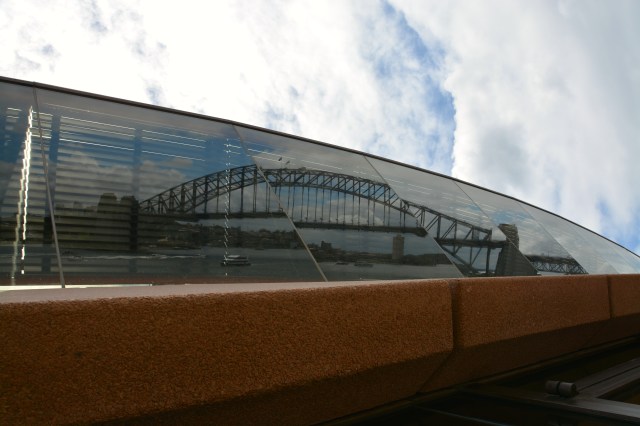
©Jean Janssen Looking up at the glass at the Sydney Opera House, you see the Harbor Bridge reflected.

Actually a more appropriate name for the complex would be the Sydney Performing Arts Center. It has 6 performance venues (plus the outside main steps and forecourt where concerts are held), multiple concession areas and a restaurant. The two large theaters both face the water, a unique aspect of Utzon’s design. We began the tour on the waterside terrace of the Concert Hall where specially situated glass allowed you to look up and see the reflection of everything along the waterfront.

DSC_4977

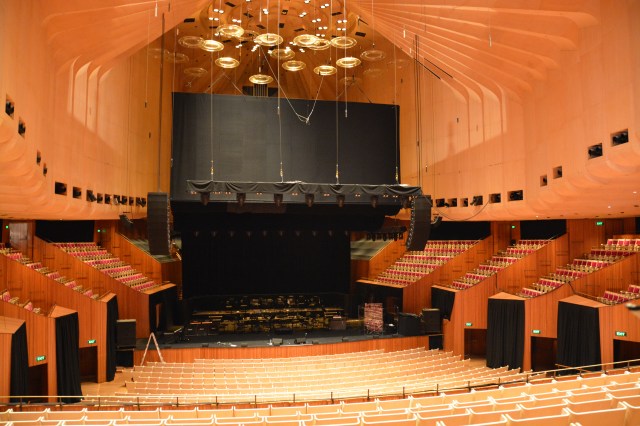
©Jean Janssen Concert Hall, Sydney Opera House

We toured the Concert Hall, the largest venue, seating 2,679 patrons. This theater is used for symphony performances. To provide year-round employment for the musicians, the symphony alternates between Melbourne and Sydney on a three-month basis.   The symphony is currently in Melbourne; opera performances were taking place in Sydney.

DSC_4957

©Jean Janssen Waterside foyer of the Concert Hall of the Sdyney Opera House

Natasha loves purple, but the bright foyer carpet surprised me. Our guide said it was a reflection of the 60s when the building was constructed. The interior of the foyer also had special glass imported from France and installed so that you could see through it at night. Both the terrace and this upper foyer provided incredible views of the waterfront and the Harbor Bridge.

DSC_4982

©Jean Janssen Seating in Sydney Opera House Concert Hall

The concert hall featured lots of native woods. The ergonomically designed seats (which actually are quite comfortable) are made from white birch, a wood so light at first I thought it was plastic. Seating goes around the entire stage, although it is closed off in the back for some performances. Another unique feature of the theater is the glass rings that can be lowered to just above the orchestra so the sound is returned to them quickly.

DSC_5007

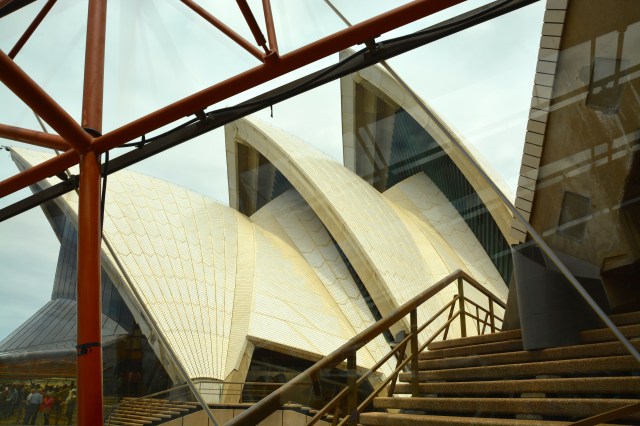
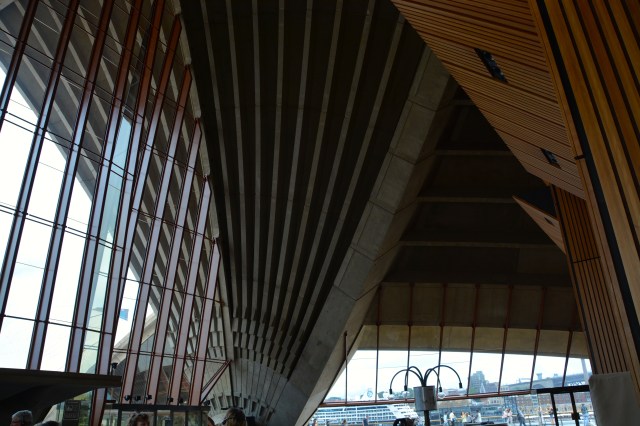
©Jean Janssen City-side foyer of the Concert Hall at the Sydney Opera House showing revolutionary framing for the iconic venue.

Utzon did not consult an engineer when designing his sketches, so much of the technology to complete the opera house had to be developed. The concrete solution to construct the sail framing that we saw in the stairways just outside the concert hall was one example of this new technology.

DSC_4996

©Jean Janssen Roof tiles on the Sydney Opera House

A matinee opera performance was taking place, so we did not tour the smaller Opera Theater, now called the Joan Sutherland Theater. The ballet also performs in that venue.   We did go outside the building to the area between the two theaters where you could touch the sail roof where it meets the ground. I had no idea that the structure is covered with tiles, 1,056,006 tiles to be exact. The tiles come in two colors-cream and white-and are arranged in a chevron pattern. They are self cleaning, needing only rain water which drains off and back into the sea.
DSC_4944

©Jean Janssen Children’s performance outside the Sydney Opera House

The other theaters are special performance venues. As it is summer, there are several children’s productions going on, including one outside in a terrace café. Our final stop was the Utzon Room for very small gatherings. Originally covered in dark paneling and carpet, when Utzon was brought back to the project in 1999 he asked that the paneling be removed to expose the concrete as he had originally intended. The carpet was also removed from the untreated wood floors. Utzon won a prestigious award for his design late in his life, but is said to have been most proud of having this concert venue named for him.

DSC_5069

©Jean Janssen Sydney Opera House from the water.

The Sydney Opera House became a UNESCO World Heritage Site in 2007, one year before Utzon’s death. It is said to be the most iconic building of the 20th century.

DSC_5054

©Jean Janssen Sydney sail-away

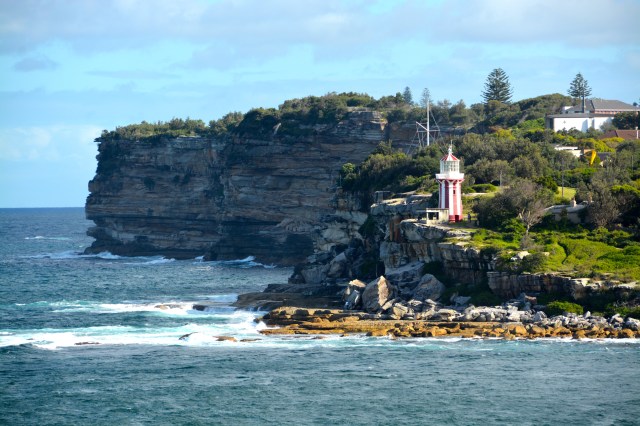
I loved the tour. Afterwards and wandered around the area a little, checked out one of the many benches, and popped in the UGG store (unfortunately none of my selections were available in my size during this summer sale). In the evening before dinner, I enjoyed the sail-a-way up on the deck, getting a different perspective on some of the sites identified on our morning bus tour. I would definitely recommend a harbor tour if you are not visiting Sydney by cruise ship. Welcome to Australia, Natasha. Next stop Melbourne.

DSC_5106

©Jean Janssen Sydney sail-a-way


Posted in cruises, international | Tagged , , , , , | Leave a comment

Route des Vins, France

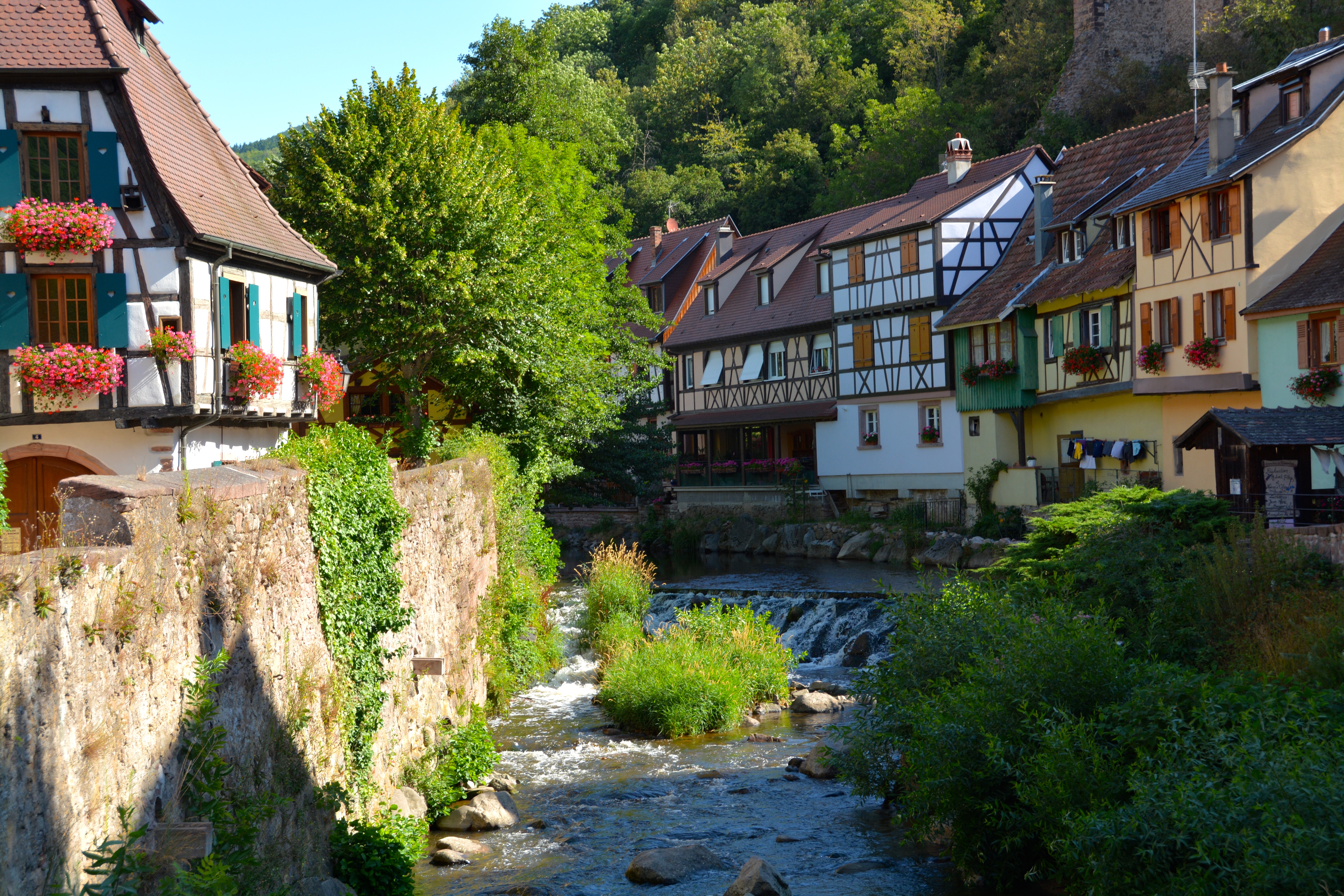
Fairytale town of Kaysersberg, France. ©Jean Janssen

Fairytale town of Kaysersberg, France.
©Jean Janssen

Darrell was all thumbs up about escorting the girls on the Wine Road Tour. ©Jean Janssen

Darrell was all thumbs up about escorting the girls on the Wine Road Tour.
©Jean Janssen

Today, our last excursion day of the cruise, we have our choice of two long half-day tours in this wine producing region along the Alsatian wine road, the route des vins which hugs the foothill of the Vosges mountain range.   You could go to the Colmar, a beautiful larger city or visit two picturesque villages along the route.  Of course, Boris had to blaze his own trail and took Wendall (Sharon’s husband) along; they are going to visit WWI battlefields and the German trenches at Col du Linge and Hartsmanwillerkopf.  That leaves Darrell to take care of the girls (Kim, Sharon, and Jean).  He’s a good sport and was in our favor, except when he asked for the receipts from our shopping to share with the husbands.

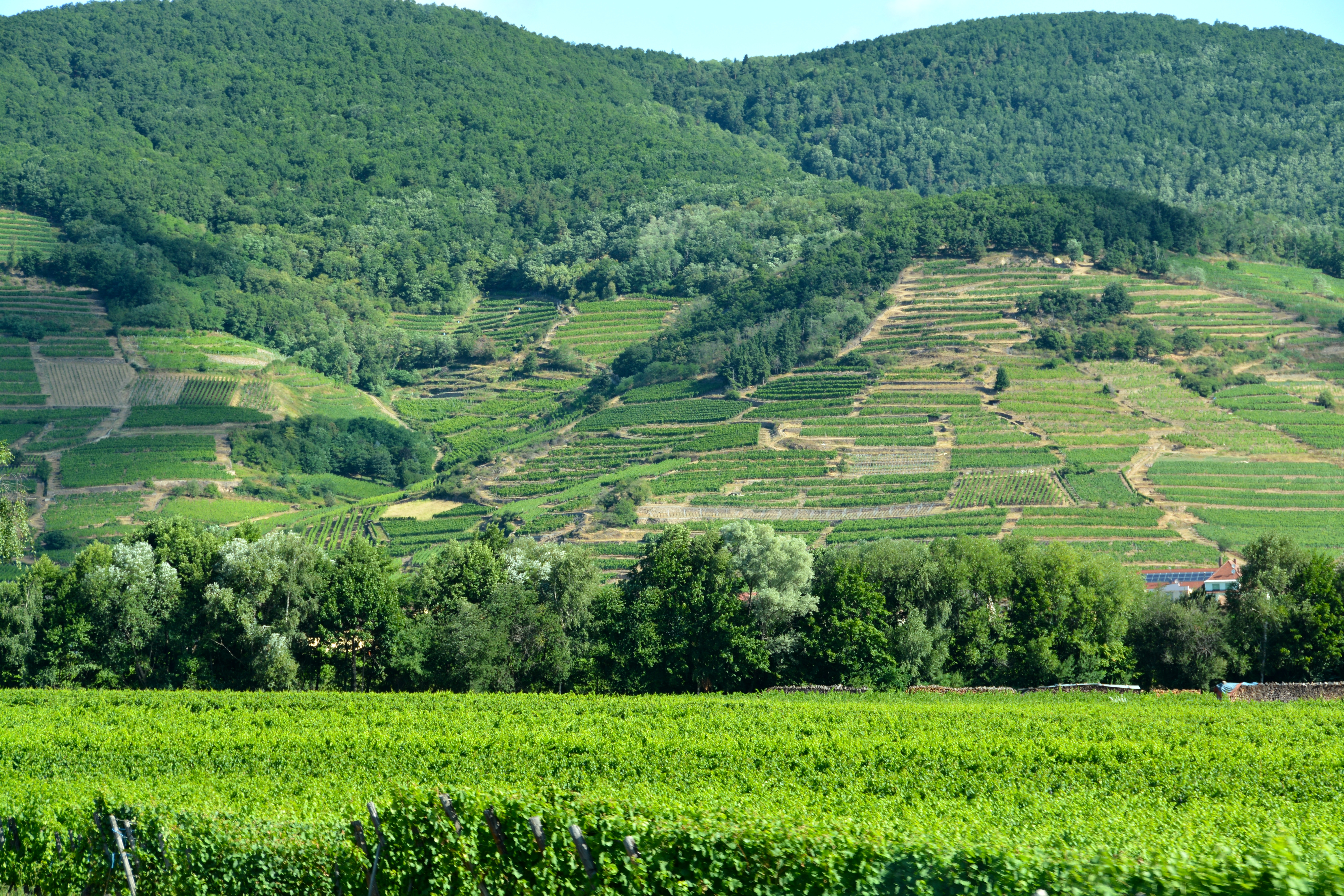
Terrace farming and vineyards along the Alsatian wine road, France ©Jean Janssen

Terrace farming and vineyards along the Alsatian wine road, France
©Jean Janssen

Stork nest in the Alsatian wine region, France ©Jean Jansen

Storks?  Baby storks? Regardless, this is a stork nest in the Alsatian wine region, France.  
©Jean Jansen

We once again have our guide from Strasbourg.  The ride out is lovely with terraced farming and vineyards along the way.  We even saw more of the stork nests.  Control of this wine-producing region has gone back and forth between Germany and France.  As we drove along, we saw little plots here and there; all the harvesting is done by hand.

Kaysersberg, France along the Alsatian wine road. ©Jean Janssen

Kaysersberg, France along the Alsatian wine road.
©Jean Janssen

Kaysersberg, France ©Jean Janssen

Kaysersberg, France
©Jean Janssen

The first village was Kaysersberg with the stream running through it and the remains of a 12th century castle on the terraced hillside.  You thought you had stepped into a fairytale.  Even the walking path from the coach park to the main street was bordered by vines of green grapes still growing in anticipation of a fall harvest.

Medieval castle ruins, Kaysersberg, France ©Jean Janssen

Medieval castle ruins, Kaysersberg, France
©Jean Janssen

Kaysersberg, France ©Jean Janssen

Kaysersberg, France
©Jean Janssen

Our guide gave us a little overview of the village and walked us to the church in the center of the village.  She also pointed out the free toilets (as every good guide must) and the best vantage point for photographing the castle, before giving us free time.  Darrell and Kim had already gone off shopping.  Sharon hung with me for a while while I took photos and then we split up to do a little shopping.

A great use for children's umbrellas, Kaysersberg, France ©Jean Janssen

A great use for children’s umbrellas, Kaysersberg, France
©Jean Janssen

Kaysersberg, France ©Jean Janssen

Kaysersberg, France
©Jean Janssen

Kim picked out a great hat and is all ready for a tea party or the Kentucky Derby. This is a girl after my own heart; I love hats.  I had to drag Sharon out of the shops as the tour group was leaving.  She was mostly just looking, but didn’t want to miss any minute of opportunity.

Along the Alsatian Wine Road, France ©Jean Janssen

Along the Alsatian Wine Road, France
©Jean Janssen

Leprosarium outside Kaysersberg, France ©Jean Janssen

Leprosarium outside Kaysersberg, France
©Jean Janssen

As we left Kaysersberg, our guide pointed out the leprosarium just outside of the village.  These were places of quarantine.  It was a little house outside the city walls.  The people could, under limited conditions, enter the city but had to be outside when the gates closed at night.   As we drove on to our next stop, we saw the remains of medieval castles.  These fortifications were dismantled by the French in the 1700s.

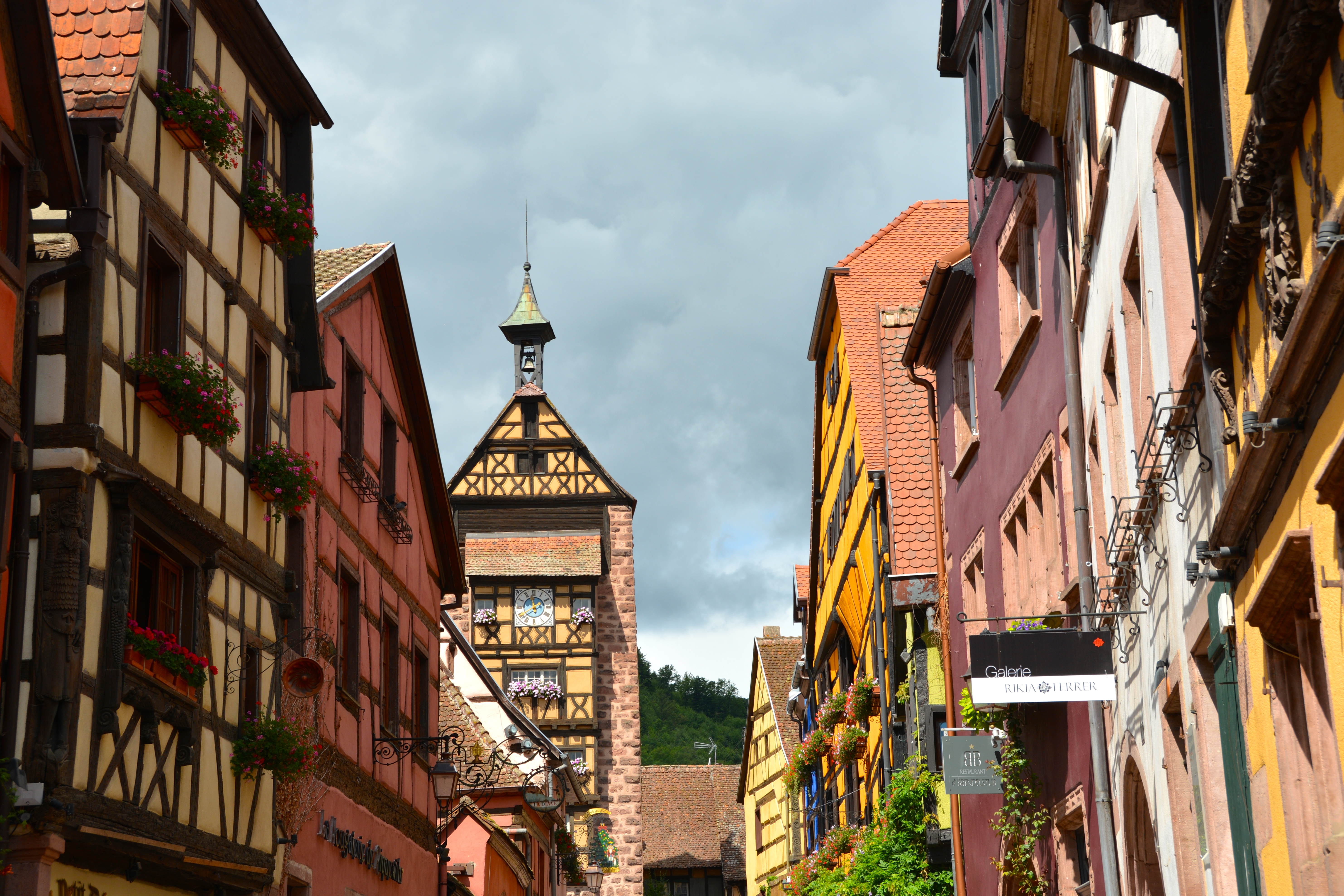
Welcome to Riquewihr, France ©Jean Janssen

Welcome to Riquewihr, France
©Jean Janssen

Riquewihr, France ©Jean Janssen

Riquewihr, France
©Jean Janssen

In route to Riquewihr, our guide told us about some of the other features of the region.  With the industrial revolution, people had moved down from the mountains and populated the area.  In modern times, the Rhine was harnessed for hydro power with 11 hydro power plants along the Rhine in France.  Farmers in the area also receive corn subsidies, making profit on the subsidies not on the sale of corn; subsidies are provide to prevent massive imports of corn from the United States.  In France, the corn is not commonly consumed but used to feed cattle.

Riquewihr, France ©Jean Janssen

Riquewihr, France
©Jean Janssen

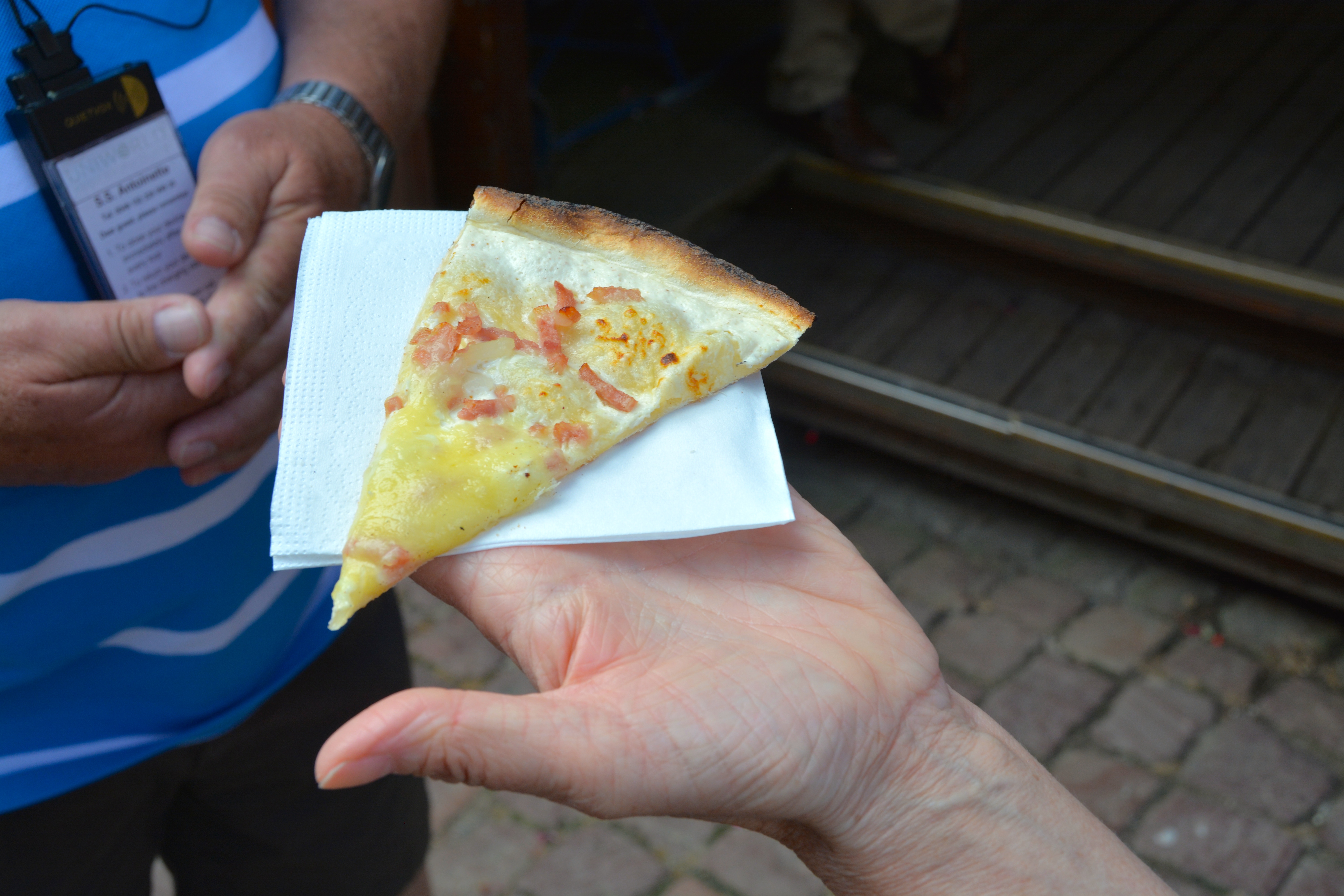
Flammeduchen, an Alsatian specialty ©Jean Janssen

Flammeduchen, an Alsatian specialty
©Jean Janssen

Our guide will be leaving us in Riquewihr.  She walked us into the town and pointed out a few things.  She recommended going into one of the many tasting rooms to try the local wines.  She mentioned the sparkling and I was all over that.  We also had the chance to try a couple of the local treats including the best coconut macaroons I have ever eaten.  I bought a variety pack to take home, liking the orange-flavored the best.  We also tried a Alsatian specialty, flammekuchen, a flat bread topped with onions and bacon.  It was fabulous.

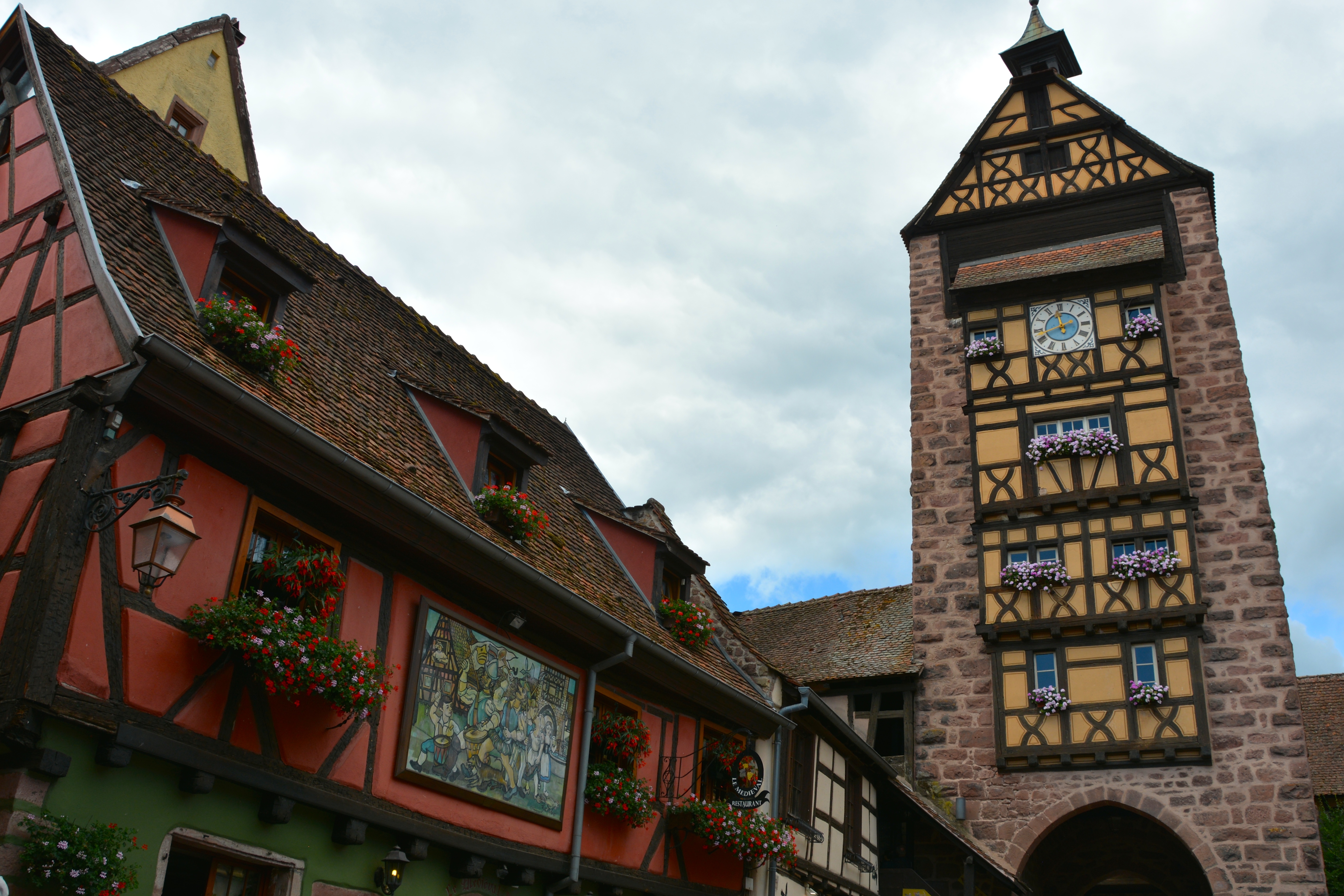
Colorful buildings and window boxes in Riquewihr, France ©Jean Janssen

Colorful buildings and window boxes in Riquewihr, France
©Jean Janssen

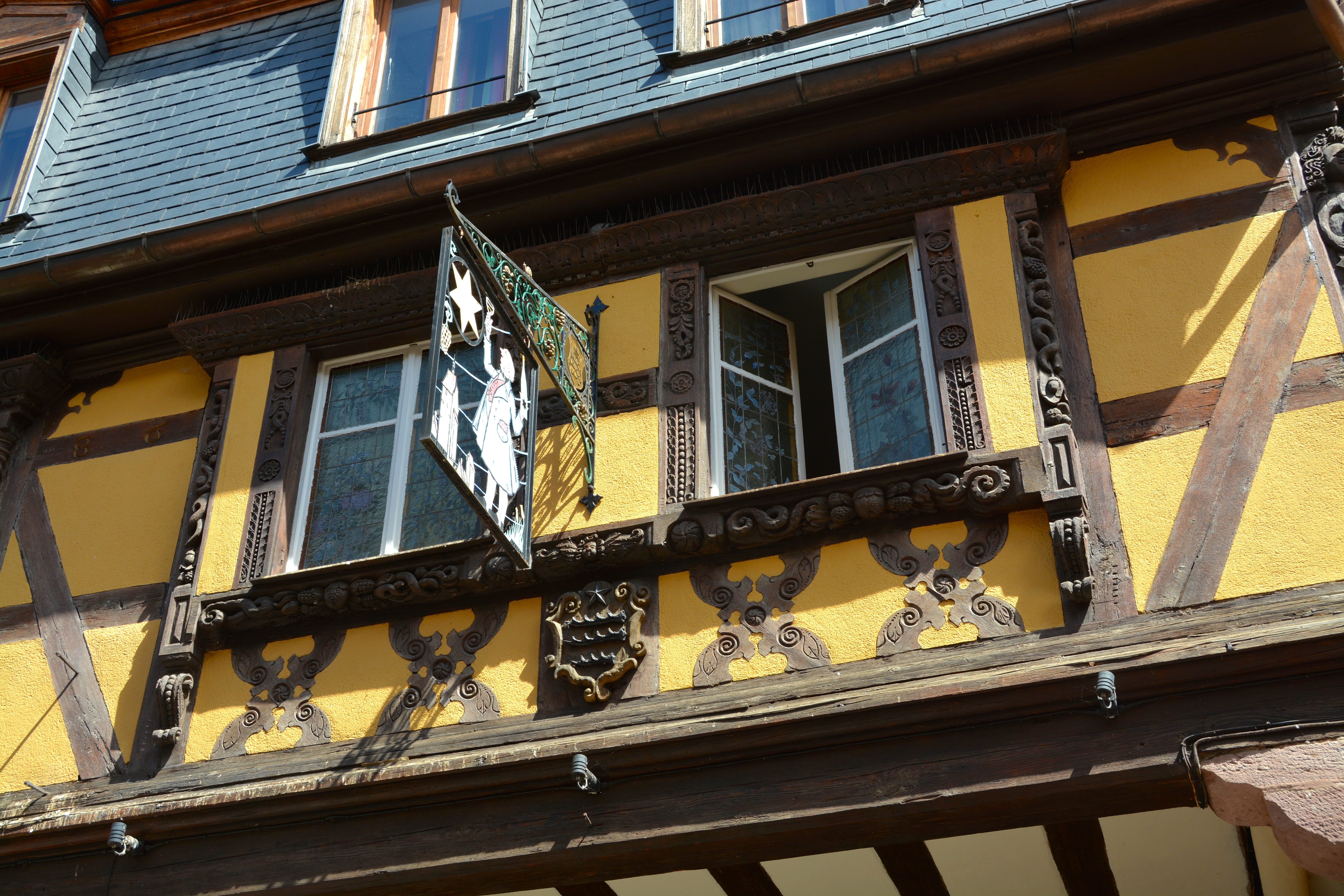
I milled up and down the sloping high street taking pictures of the half timber houses and beautiful window boxes.  This section of the city looks unchanged since the 1600s, although clearly everything is freshly painted and the shops offer up to date items.

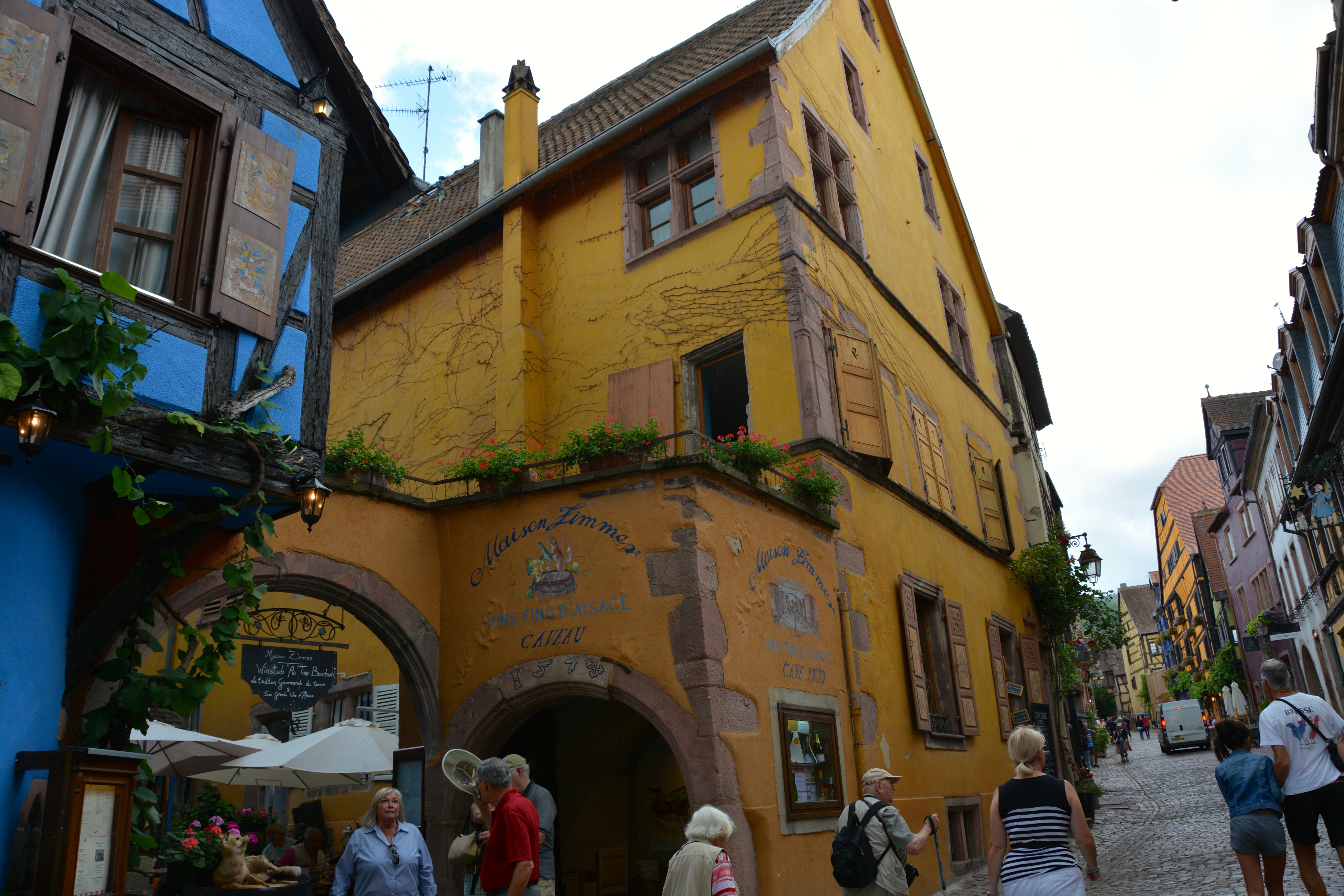
Cellar wine tasting room in Riquewihr, France. Note the year carved into the post, 1579. ©Jean Janssen

Cellar wine tasting room in Riquewihr, France. Note the year carved into the post, 1579.
©Jean Janssen

The street entrance for my tasting room in Riquewihr, France ©Jean Janssen

The street entrance for my tasting room in Riquewihr, France
©Jean Janssen

I ended up popping into one of the winery outlets with a cellar tasting room.  I tried the sparking wines.  For 5 euros you got a flight of 4.  I had a taste of each of their 3 sparkling wines and a rose.  I actually only liked one of them and purchased a bottle to take home with me.

When I came out of the tasting room it started to rain so that was my excuse to duck into a few of the shops.

Riquewihr, France ©Jean Janssen

The rain cleared out the shopping street in Riquewihr, France
©Jean Janssen

Riquewihr, France ©Jean Janssen

Riquewihr, France
©Jean Janssen

I ventured into a store selling linens in colors and designs of the type I have seen in French themed stores in the United States.  I felt fortunate to find some napkins to go with a tablecloth I had purchased in Strasbourg and then found another tablecloth to celebrate with as well.  While they add weight to the bag, I did not have the same concerns with packing as I had with the pottery.  Since Boris and I are leaving to fly home out of Bassel, Switzerland and making a connection in Frankfurt, we have pretty limited weight allowances on our luggage due to the smaller plane.

Loved this tiled roof in the Alsatian region of France ©Jean Janssen

Loved this tiled roof in the Alsatian region of France
©Jean Janssen

Kaysersberg, France ©Jean Janssen

Kaysersberg, France
©Jean Janssen

It was a delightful day and a photographer’s dream.  We enjoyed the ride back in and were surprised when Wendall and Boris met us shortly after our late lunch.  I did some of the packing and then met Sharon at the pool.  Our ship is one of the few riverboats that actually has a pool aboard.  We lounged there for a while and eventually the boys came and collected us.  I finished the packing and then enjoyed dinner with our river cruise friends.

Riquewihr, France ©Jean Janssen

Riquewihr, France
©Jean Janssen

Uniworld offers an additional savings if you book aboard.  You just fill out a sheet and then they contact you later about the particulars.  We think we will come back to France on our next journey.  After two back-to-back cruises, one ocean, one river, I am headed home to the Texas heat and to celebrate Rocky’s college graduation.  Here’s to the next adventure…

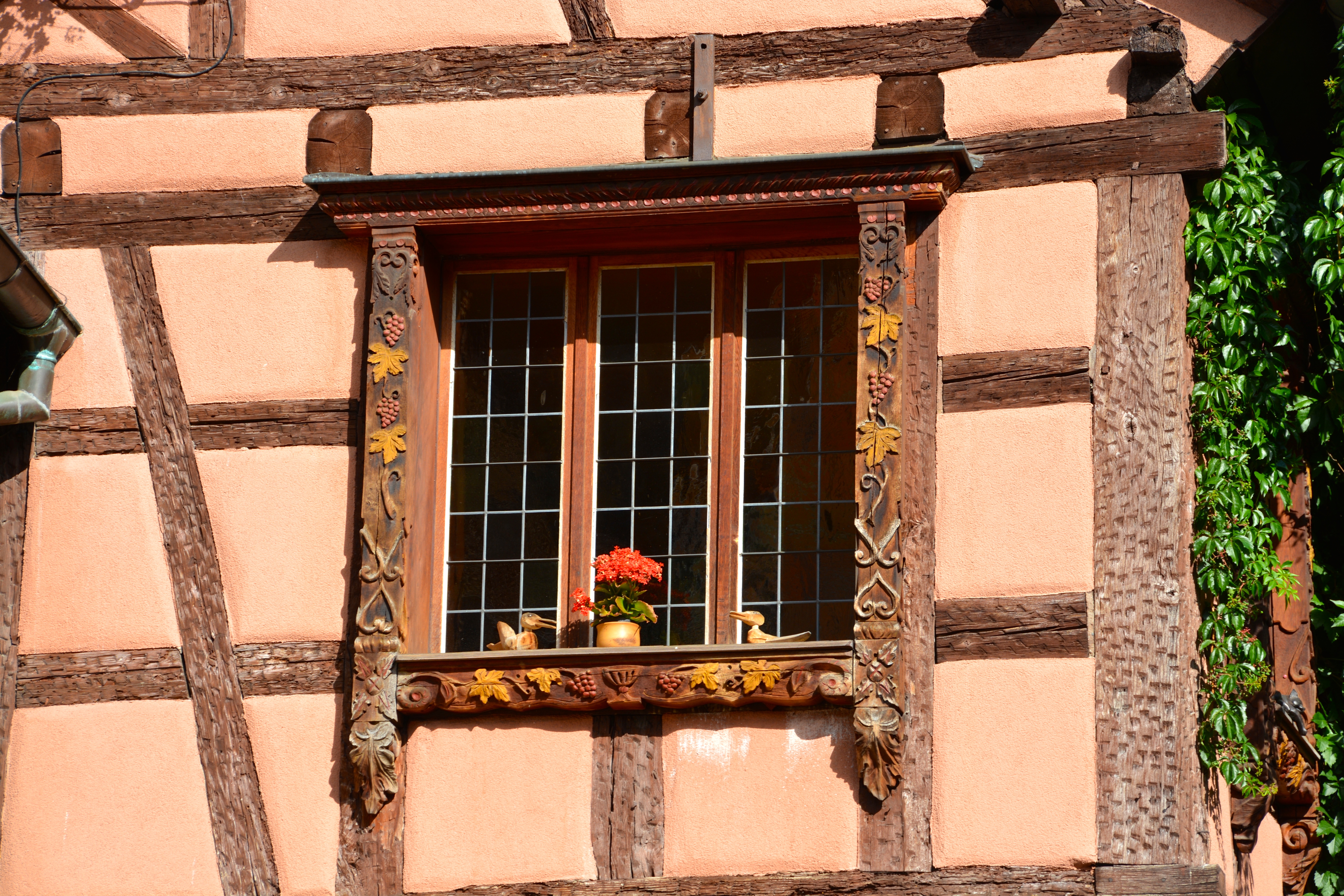
Wood carving details, Kaysersberg, France ©Jean Janssen

Wood carving details, Kaysersberg, France
©Jean Janssen

Posted in international, River Cruise | Tagged , , , | 2 Comments

Strasbourg, France and the Black Forest, Germany

The Black Forest, Germany ©Jean Janssen

The Black Forest, Germany
©Jean Janssen

Today we dock in Germany, but cross the river to visit France-Strasbourg, a French city with a German name.  In the afternoon we return to Germany to visit the Black Forest.

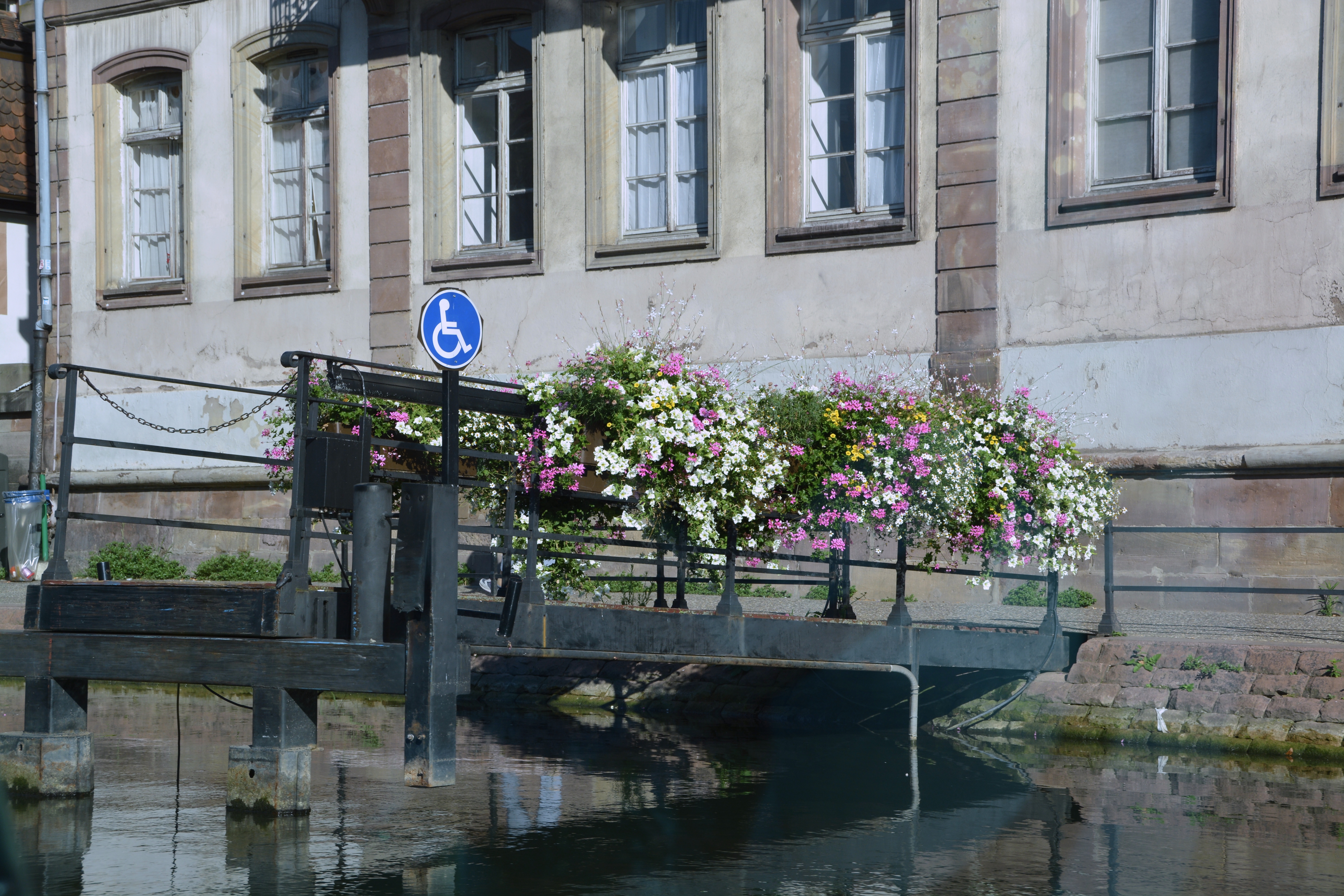
Along the canal, Strasbourg, France ©Jean Janssen

Along the canal, Strasbourg, France
©Jean Janssen

Wildlife along the canal, a beaver on the steps, Strasbourg, France ©Jean Janssen

Wildlife along the canal, a beaver on the steps, Strasbourg, France
©Jean Janssen

We had the choice of morning excursions, Boris was inclined to go and walk around the city, but the canals offer the best view of the various sections of the city.   I suggested we join the canal tour.  Strasbourg sits between two navigable rivers and the old section of the city is circled by the canals.  From the outside canal near the Rhine we moved to the canal that connects the Rhine to the Seine; you can go all the way to Paris.

A tour bus took us to the boat dock where we joined the other bus groups.  The two tour guides shared the narration duties on the boat. The boat was very nice and the view was great but the tinted windows and morning glare made it very difficult to take pictures.  I wonder if in different weather the boat top could be removed?

View of the half timber buildings along the canal in Strasbourg. ©Jean Janssen

View of the half timber buildings along the canal in Strasbourg.
©Jean Janssen

One of the first things we noticed was all the swans and the houseboats on the river.  These  houseboats are old barges parked in the canal  Over 100 families live on the river.  25 % of the housing in Strasbourg is subsidized.  Strasbourg is the seat of the European Parliament and the headquarters of many European humanitarian organizations, including the section of the European Union that deals with human rights violations including kidnapping between parents who are citizens of different countries.  We passed the section of the city where these agencies are housed, beautiful buildings right along the canal.

Along the canal, Strasbourg, France ©Jean Janssen

Along the canal, Strasbourg, France
©Jean Janssen

Control of the city has transferred between many groups, particularly the Germans and the French.  The city has a French flavor, but a particular section was developed with a definite German flavor to appeal to that group at a time when they were in control of the city.  In fact, today many Germans from different regions of Germany visit the city for the familiarity of the architecture in this section, similar buildings have been destroyed in their home cities during the war.

We had great seats at the front of the canal boat just behind the guide in Strasbourg, France ©Jean Janssen

We had great seats at the front of the canal boat just behind the guide in Strasbourg, France
©Jean Janssen

Strasbourg Cathedral ©Jean Janssen

Strasbourg Cathedral
©Jean Janssen

We passed through two locks while on the canal with a special V opening invented by Leonardo di Vinci who took into consideration the flow of the river when creating the design.  We passed the Little France Hospital and the Tanner’s Quarter. We saw the convent that became a prison and is now a prestigious University for Administration Studies.  We learned that the more carving in the timber on the facade of the home, the more prosperous the owner.  We passed the Raven Bridge (Torture Bridge) where prisoners were put in cages and dropped in the river.  If they got out, they were free; most were eaten by ravens (hence the name).

Strasbourg's old city on the way from the Raven's Bridge to the Cathedral of Our Lady. ©Jean Janssen

Strasbourg’s old city on the way from the Raven’s Bridge to the Cathedral of Our Lady.  This is Place du Marche aux Cochons de Lait.
©Jean Janssen

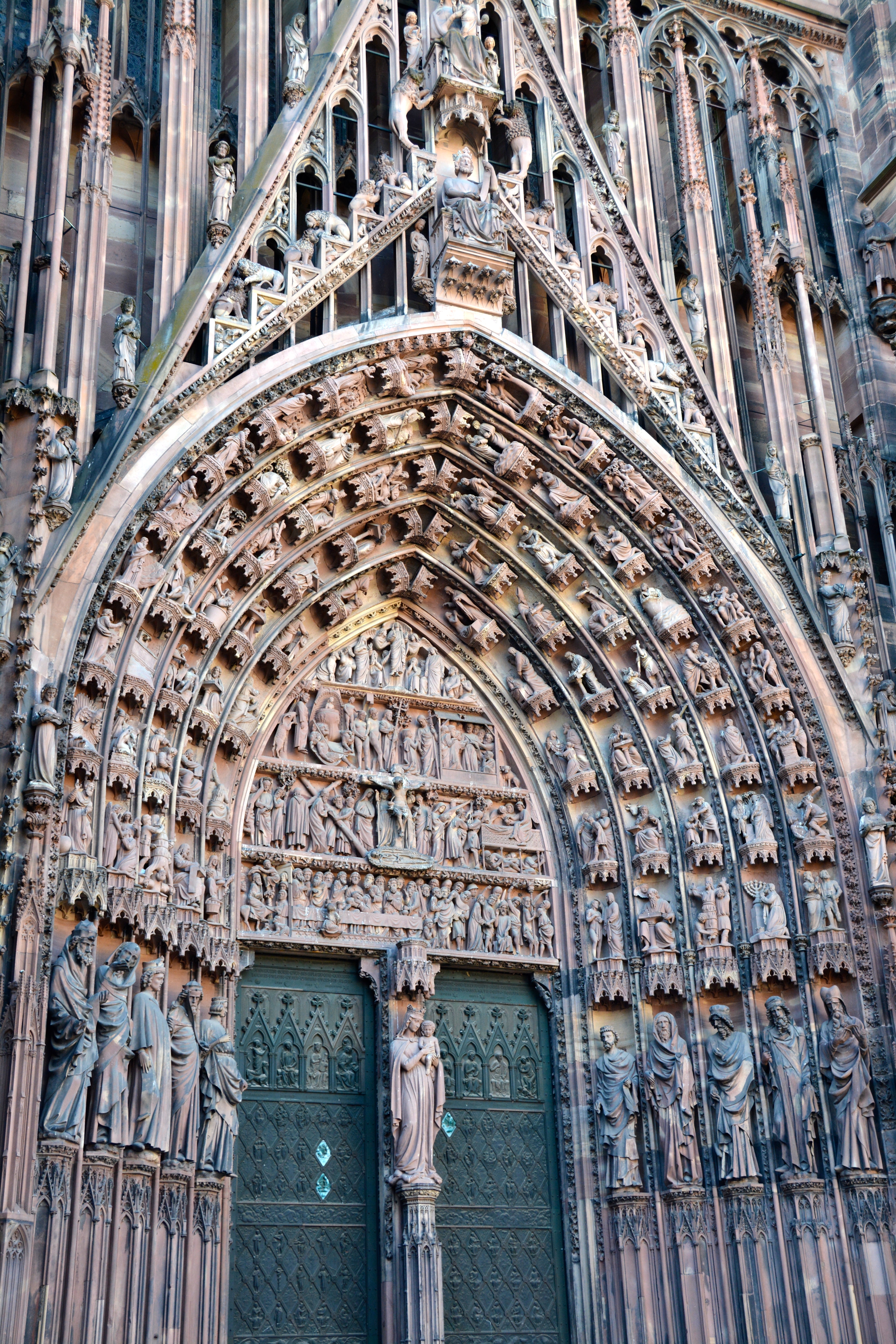
Strasbourg's Cathedral of Our Lady ©Jean Janssen

Strasbourg’s Cathedral of Our Lady, side view
©Jean Janssen

Strasbourg Cathedral, France ©Jean Janssen

Strasbourg Cathedral, France
©Jean Janssen

At the conclusion of the canal tour, we left the boat and took the short walk to the Cathedral.  I enjoyed the cruise which gave us a great feel for the city and the various sections.  This was a tease and just made me want to return to Strasbourg.  Had we not been interested in seeing the Black Forest, this would have been a great city to spend the afternoon in.  Once at the Cathedral, our guide pointed out the various sites and the free toilets.  There is lots of great shopping in this area of the city.  Some headed straight to the stores (Boris included).  I went into the Cathedral.

Cathedral of our Lady of Strasbourg ©Jean Janssen

Cathedral of our Lady of Strasbourg
©Jean Janssen

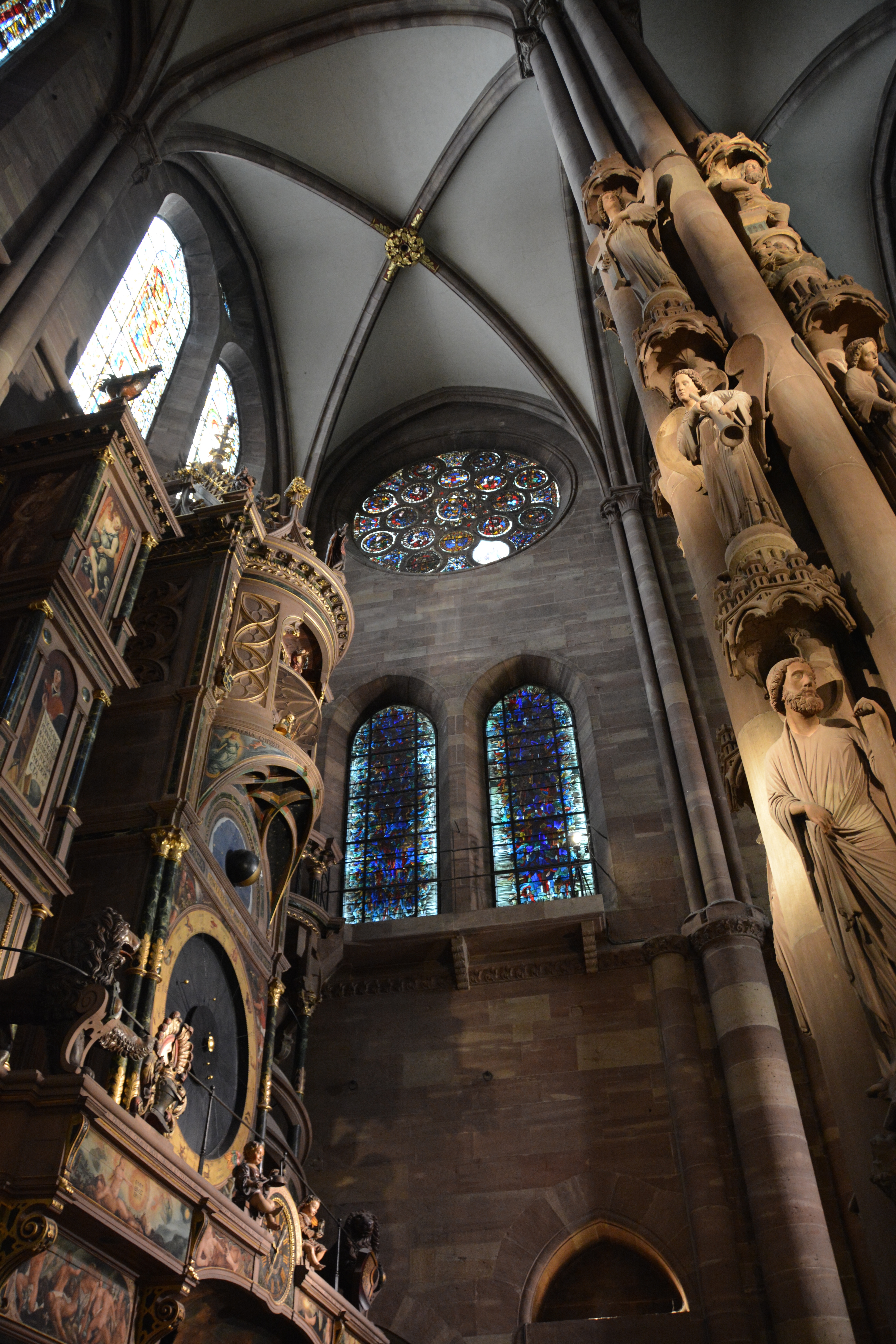
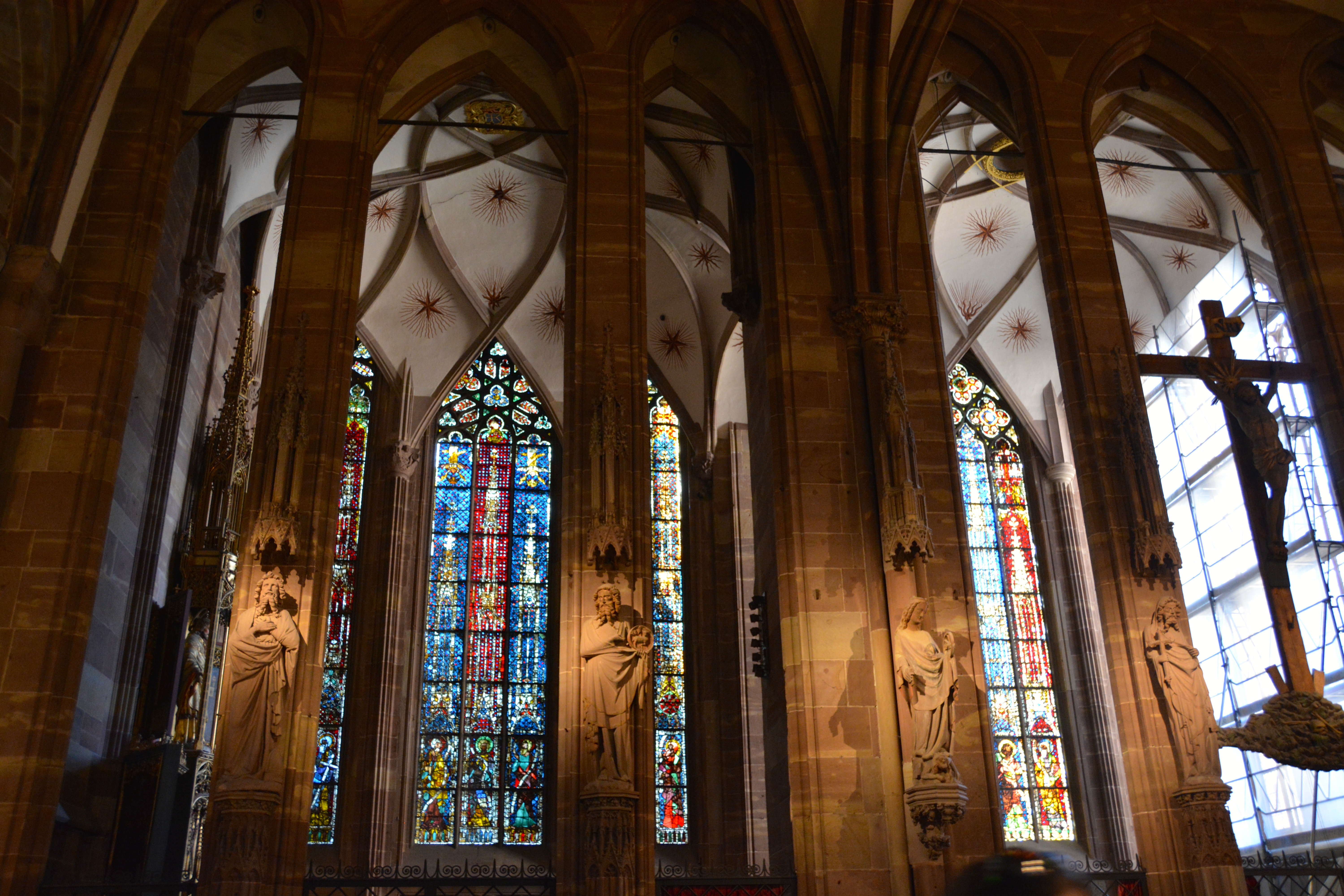
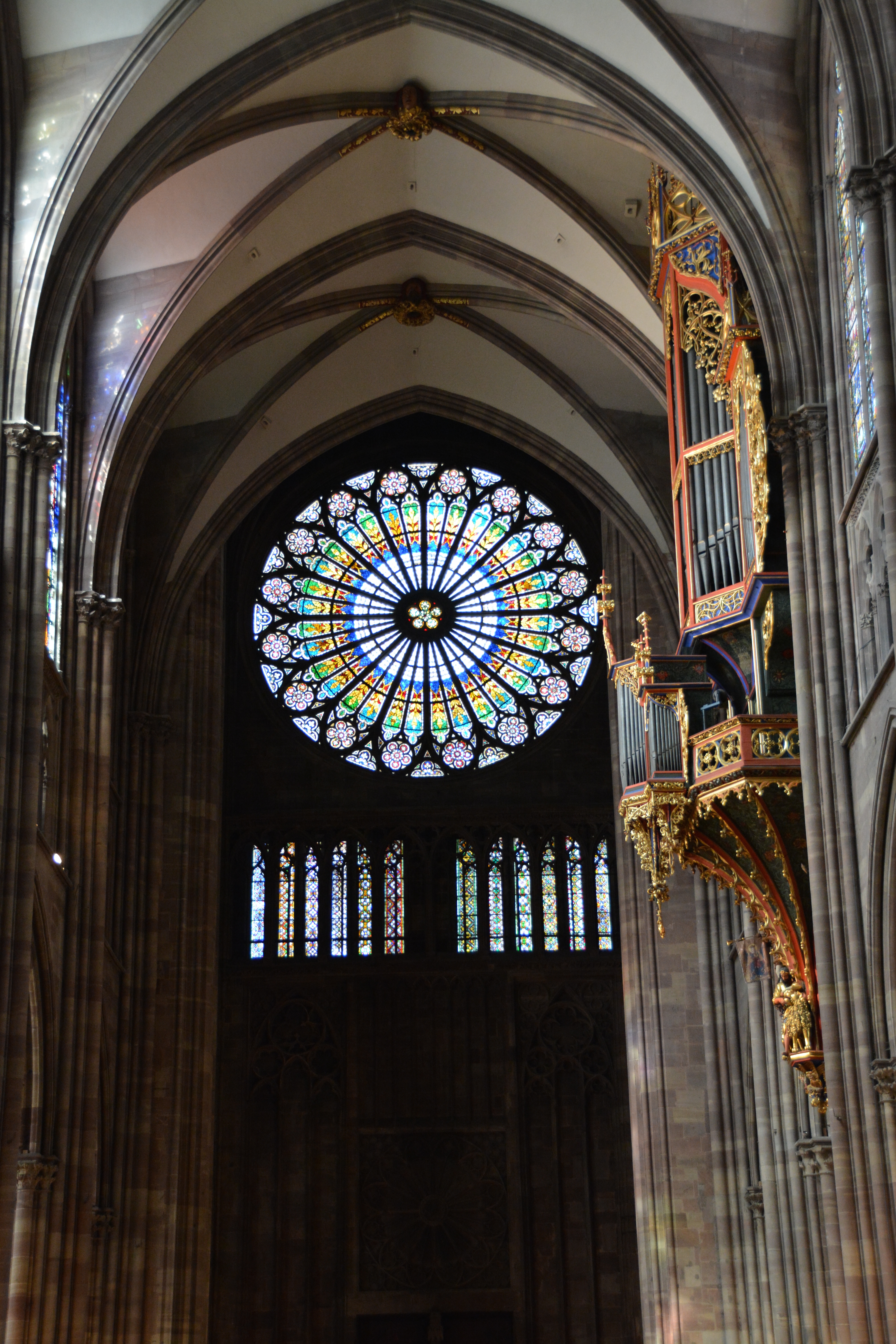
The interior of the Cathedral was gorgeous with beautiful stained glass and a unique astronomical clock.

The Astronomical Clock in Strasbourg's Cathedral. ©Jean Janssen

The Astronomical Clock in Strasbourg’s Cathedral.
©Jean Janssen

Strasbourg Cathedral ©Jean Janssen

Strasbourg Cathedral
©Jean Janssen

Strasbourg, Germany ©Jean Janssen

Strasbourg, Germany
©Jean Janssen

When I left the Cathedral, I found Boris looking for me.  He had found some interesting shops, including one that sold wonderful pottery (which I collect).  The shop is La Maison de Hanssen & Gretel, 7 rue du Chaudron 67000 Strasbourg. Unfortunately, they did not offer direct shipping so it was not cost effective to purchase the pottery.  Pottery is extremely delicate and heavy to carry home.  I have learned from experience that you can not expect it to all be in mint condition when you arrive home.  My carry on was small, so no extra space there.  They did have some lovely table linens and I selected several thinking how much Sharon would like this shop; then she passed by.  I think she has linen radar.  We both delighted the French owners with our purchases; the wife made the linen items personally.

Strasbourg, Germany ©Jean Janssen

Strasbourg, Germany
©Jean Janssen

We crossed the canal and met our guide, a resident of the Black Forest for her entire life, for the afternoon tour.  Lunch is included in our excursion and we’ll take the bus directly to the restaurant.  There is a fair amount of driving involved to reach the afternoon stops.

Home in German Village we passed through on our way to the Black Forest. ©Jean Janssen

A half-timbered house in one of the German villages we passed through on our way to the Black Forest.
©Jean Janssen

We crossed back into Germany.  At the end of the work day, so do many of the French .   There is a 23% tax on renting and owning housing in France, but there is also a lower income tax.  As a result, French citizens live in Kiel (on the German side where our boat is docked), but cross back over to Strasbourg in France to work.

Stork nest in village near Kiel, Germany ©Jean Janssen

Stork nest in village near Kiel, Germany
©Jean Janssen

One of the things this region is noted for is the storks.  In the 1970s there were only 9 pair of storks left.  During a particular season of the year they returned to Africa, but large numbers were dying in route.  As a preservation method, conservationists began clipping the wings of the storks and after a few years the storks no longer attempted to make the trip  Their number has grown to 700 storks today.  Villages contribute to the cause by setting out food in buckets.  Cameras were also install to learn what nesting materials were being used and unsafe items are removed from the nests.

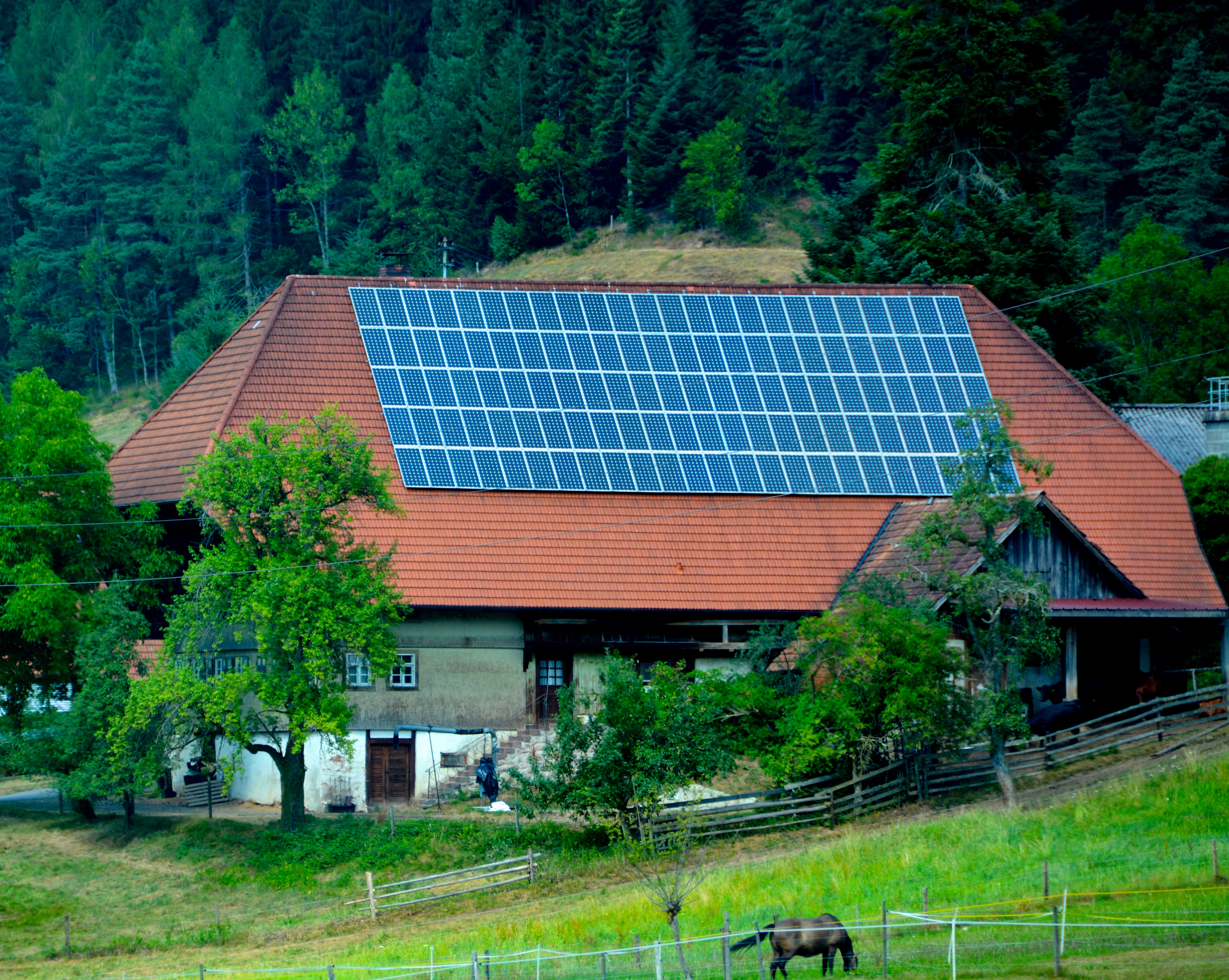
Solar energy panels were all over the homes we saw in the Black Forest. ©Jean Janssen

Solar energy panels were all over the homes we saw in the Black Forest.
©Jean Janssen

We passed fields of flowers with a honor system pay box where customers could pick their own flowers and leave the payment.  One survey showed the the #1 leisure activity in Germany is gardening.  Another favorite is bicycling, also used for regular transportation.  In Freiburg, the unofficial capital of the Black Forest, almost 100% of the citizens own bicycles and they make 45% of all their trips by bicycle.

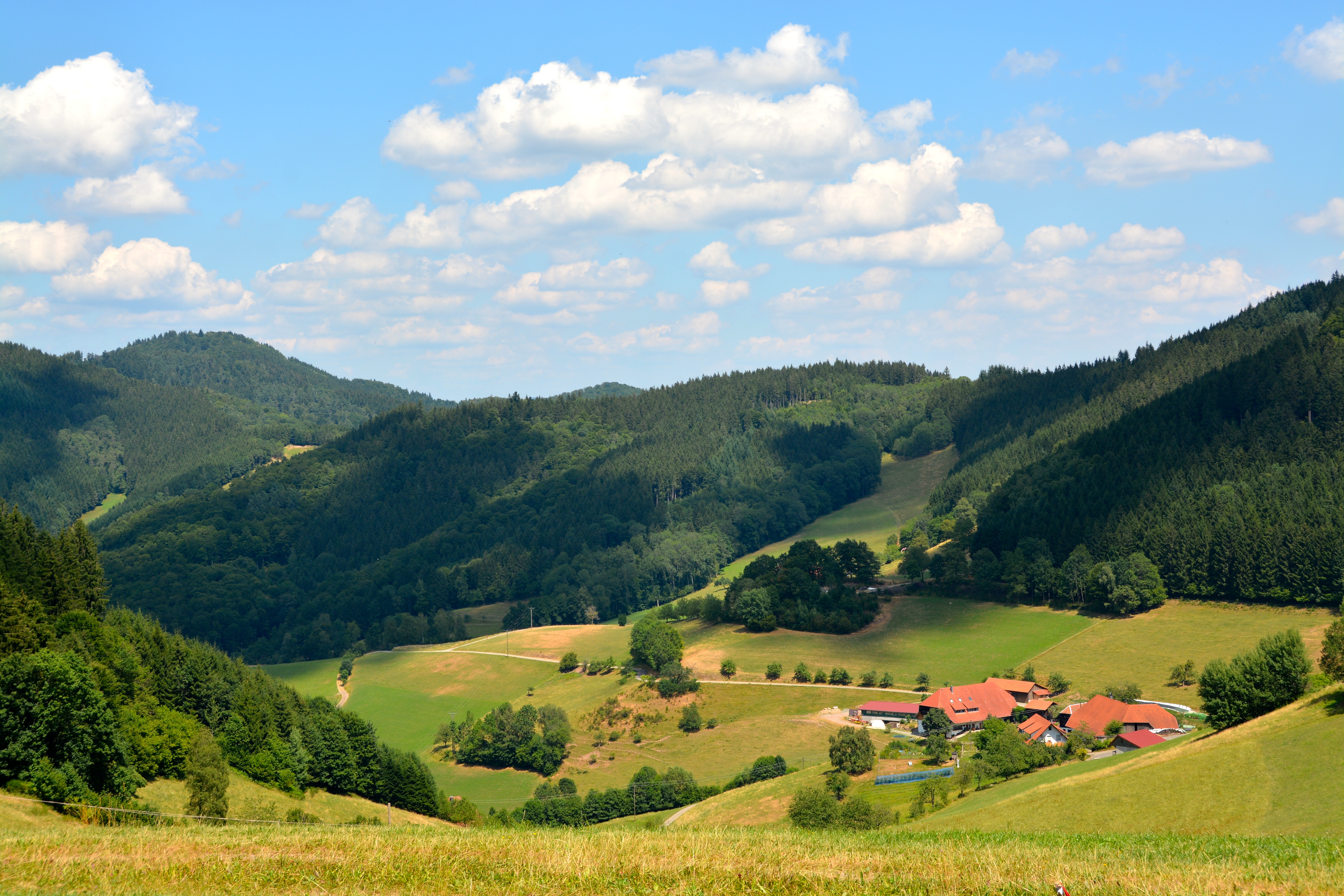
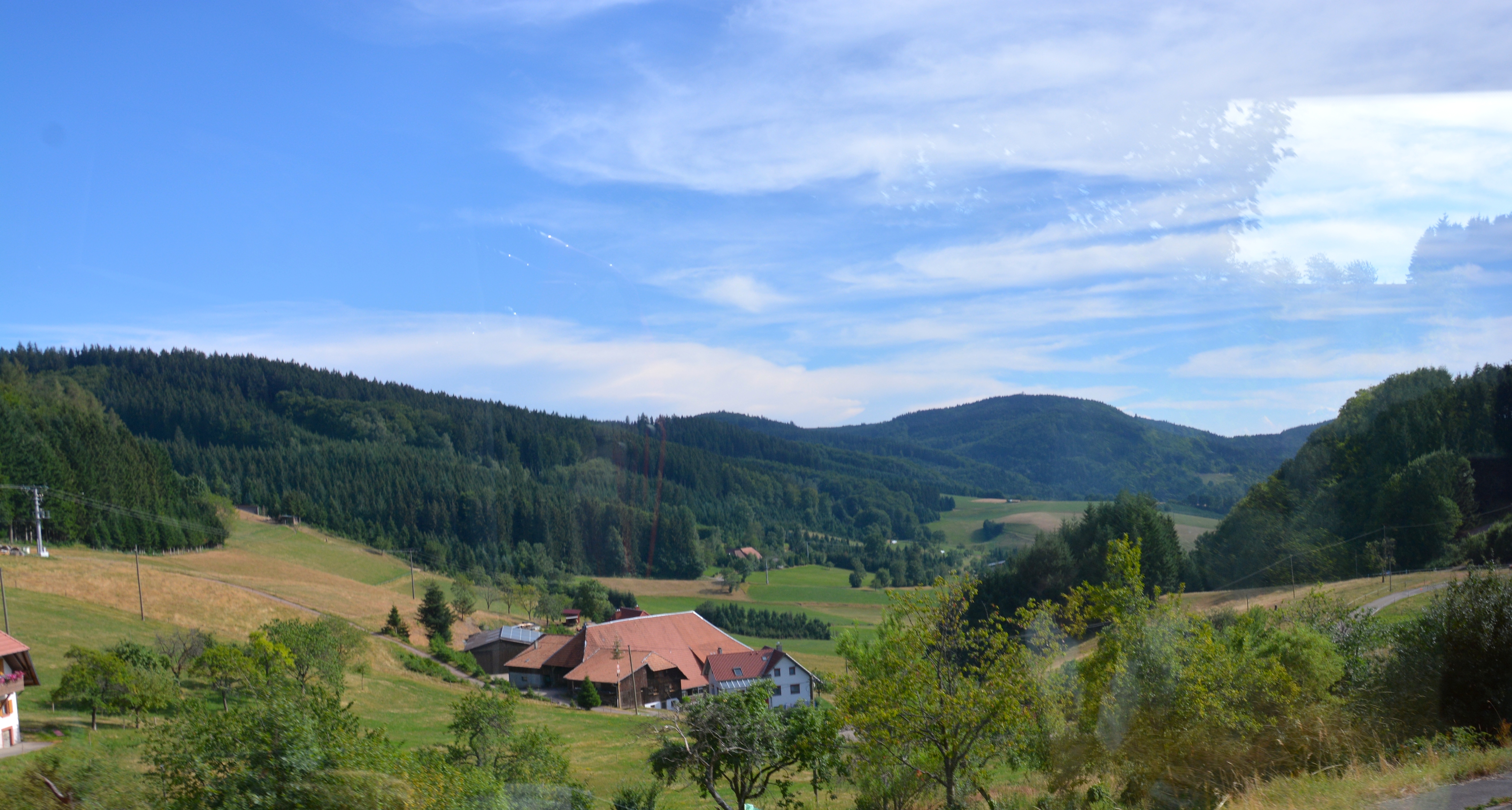
The Black Forest, Germany ©Jean Janssen

The Black Forest, Germany
©Jean Janssen

The country is 40% forest.  The pathways we traveled were not entirely or densely covered, but the cleared areas serve their part in preservation.  The Romans feared the Black Forest and did not clear the land but simply made roads through it.  The Irish came 1200 years ago and began to clear the area, building monasteries.  There was significant logging in the 14th century; Amsterdam was built of wood from the Black Forest.

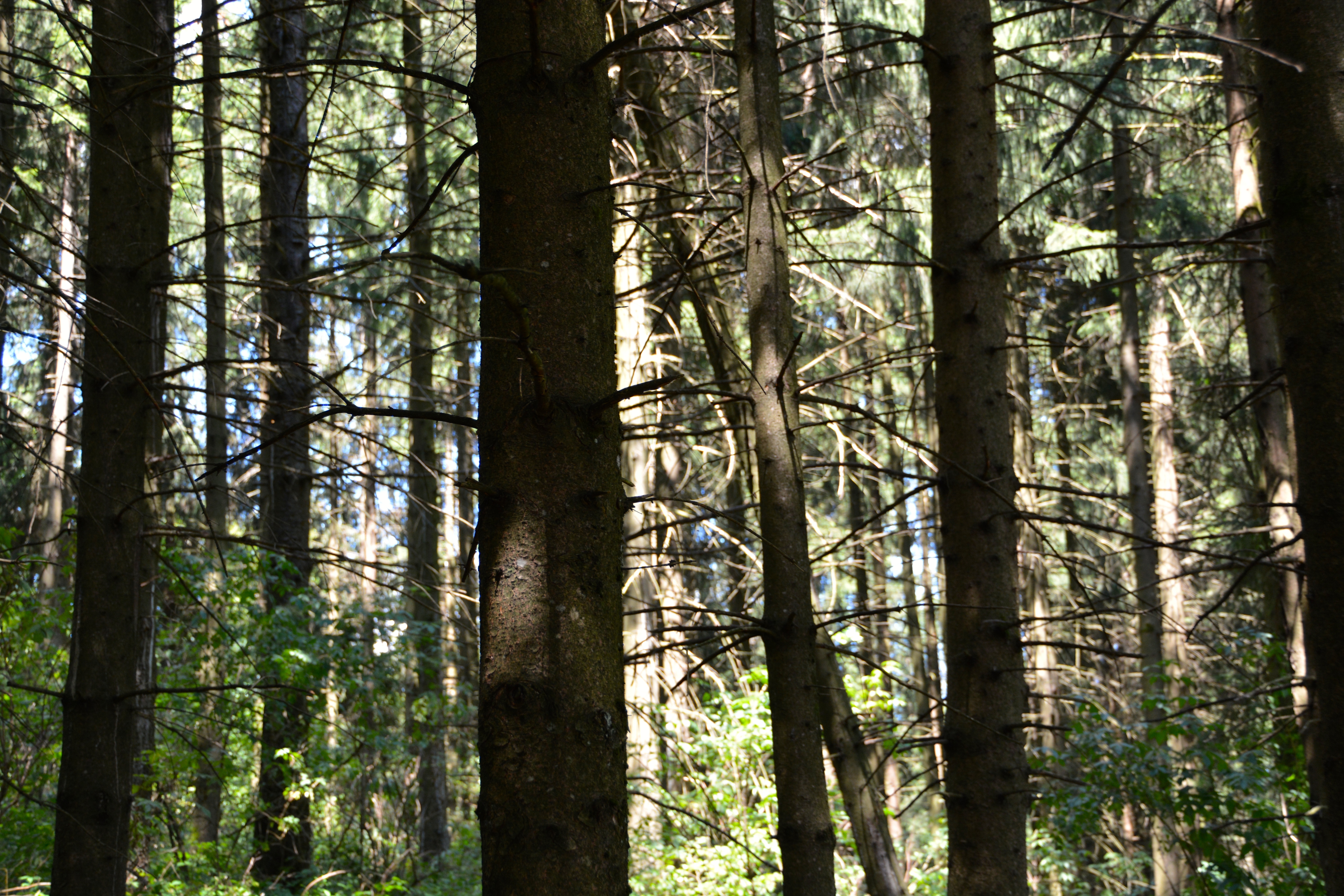
Trees of the Black Forest, Germany ©Jean Janssen

Trees of the Black Forest, Germany
©Jean Janssen

Reforesting efforts began in the 1850s.  While the area used to be predominately beech trees, most of the reforesting has been done with spruce.  70% of the world’s cardboard production is done with trees from the Black Forest.   Two of three tea bags are made from wood coming from the Black Forest.

View at our lunch stop. The Black Forest, Germany ©Jean Janssen

View at our lunch stop. The Black Forest, Germany
©Jean Janssen

We stopped for a traditional cold lunch of meats, cheese, and salad, including the famous black forest ham.  The food was wonderful and we had the opportunity to have lunch with Sharon and Wendall who were also on the tour.  There was time for just a brief walk in the forest and enjoyment of the lovely views before we were off to The House of Black Forest Clocks.

Larger than life working coo-coo clock in the Black Forest, Germany ©Jean Janssen

Larger than life working coo-coo clock in the Black Forest, Germany
©Jean Janssen

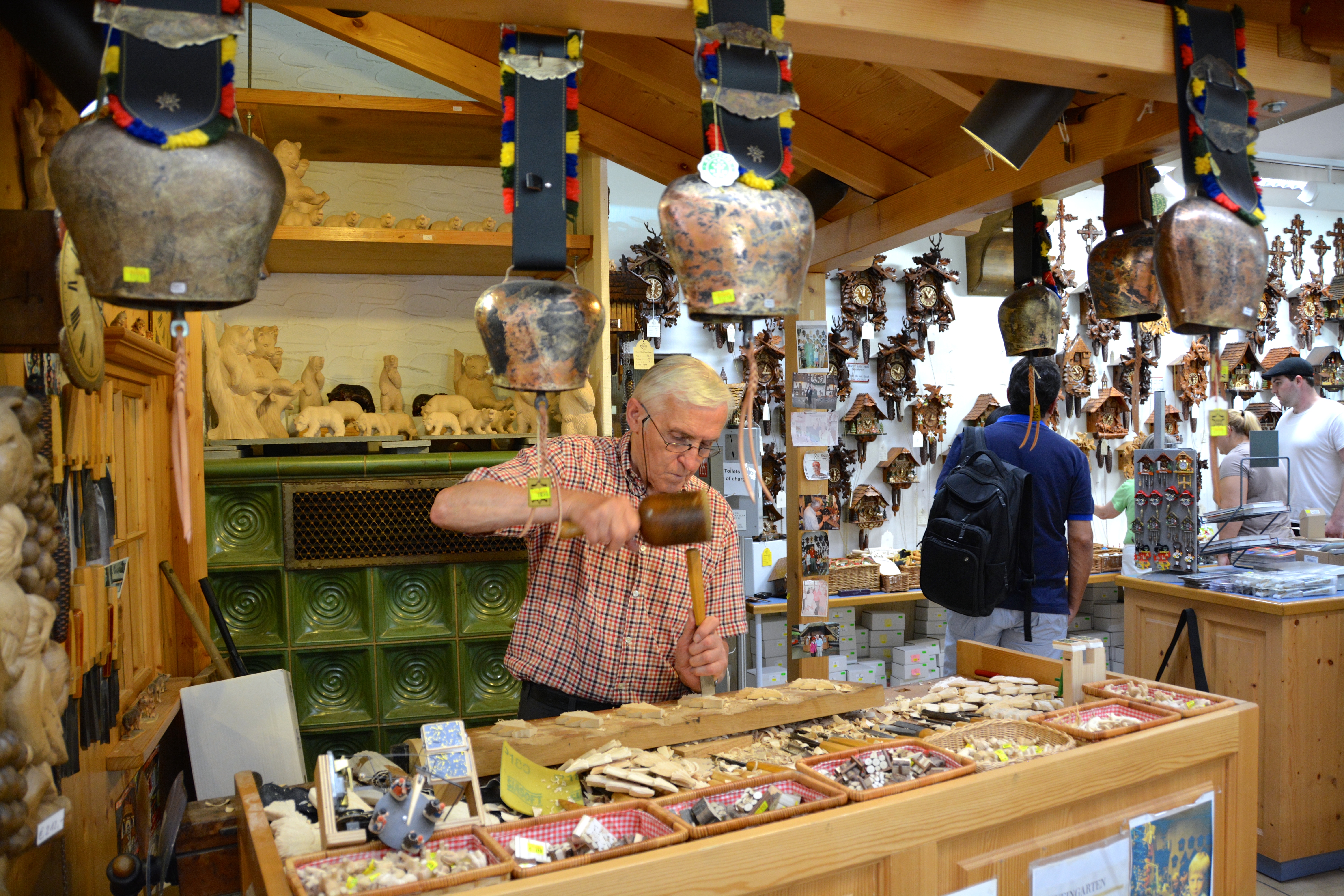
Right out front at our destination was what must be the world’s largest working coo coo clock.  Along with the Pom Pom hats, cake, and ham, the carved wooden clocks are a symbol of the Black Forest.  The clocks are a tradition going back 350 years.  They are made almost entirely out of wood and were originally built by farmers in winter when it was too cold to work outdoors.  The call of the coo-coo was probably chosen because it only needs two notes and is easy to replicate.  (It is not because coo coo birds are good parents.  The coo coo does not take care of its own young; it leaves their eggs in the nests of other birds, often ones smaller than themselves.  They leave the rearing to these substitute parents.)  Our guide passed around a sample bellows for us to see how the sound is produced.

Owner, Mr. Adolf Herr, shows us how the clocks are made at the House of Black Forest Clocks. ©Jean Janssen

Owner, Mr. Adolf Herr, shows us how the clocks are made at the House of Black Forest Clocks.
©Jean Janssen

My selection at the House of Black Forest Clocks. ©Jean Janssen

My selection at the House of Black Forest Clocks.
©Jean Janssen

At the House of Black Forest Clocks, you can browse through the gift shop and go upstairs and have a piece of black forest cake (included in our tour) in their cafe.  Of course we picked out our own special clock.  I had a hard time, but decided to go with the one I was first drawn to.  Upon arrival, we were greeted by the owner Mr. Adolf Herr (yes, Mr. Mr.) who designs the clocks.  He offered each of us a sampling of cherry wine.  Inside he demonstrated his carving skills. He is a 6th generation clockmaker.

I don’t eat chocolate, but joined Boris while he sampled the cake.  When we left, Mr. Herr gave us a copy of the recipe for traditional Black Forest Cake.  Our guide translated some of the ingredients for us.

Vogtsbauernhof of 1612 on its original site. Gutach, The Black Forest, Germany ©Jean Janssen

Vogtsbauernhof of 1612 on its original site.
Gutach, The Black Forest, Germany
©Jean Janssen

A close up view of the front of the Vogtsbauernhof of 1612 Gutach, Germany ©Jean Janssen

A close up view of the front of the Vogtsbauernhof of 1612
Gutach, Germany
©Jean Janssen

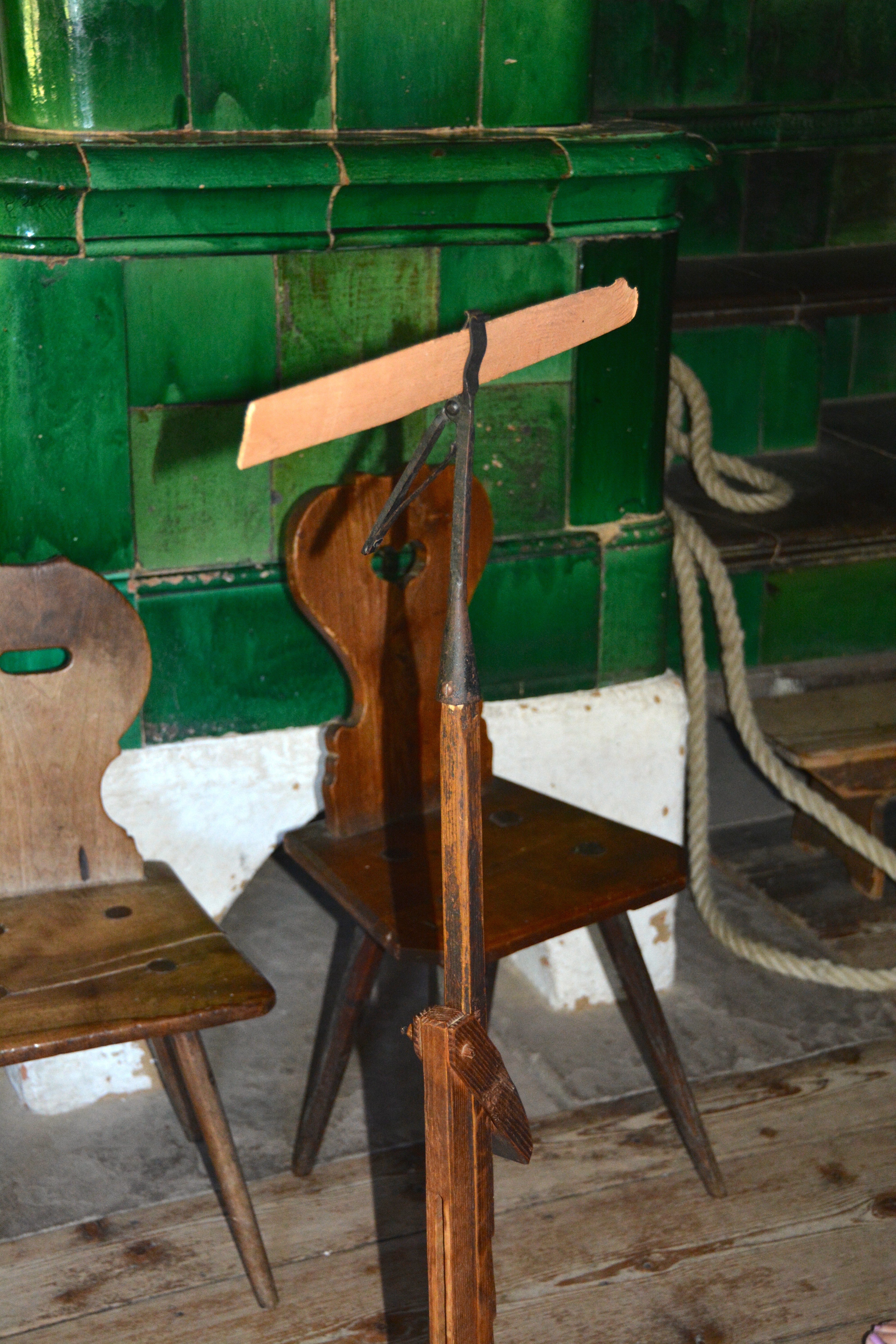
Home heating method, a small sliver of wood is lit on the end of medal tongs and set in the middle of the room. Vogtsbauernhof, the Black Forest, Germany ©Jean Janssen

Home heating method, a small sliver of wood is lit on the end of medal tongs set on a stand.  The stand is placed in the middle of the room.
Vogtsbauernhof, the Black Forest, Germany
©Jean Janssen

Our final stop was Vogtsbauernhof, the open air museum of Black Forest traditions and culture where they have original traditional village dwellings of the Black Forest.  We had less than two hours, but you could spend the whole day here.  I definitely recommend more time than we had.  Our guide began by taking us to one of the traditional homes and giving us some background.

It is a fascinating study of a way of life.  The home had space for the family on the ground floor with a ladder to the upper, bedroom floors.  The cattle had the far end of the lower floor.  Carriages and sleds were stored on the top floor.  The home was built on a sloping hillside and a ramp connected the third level to the land for easy access.

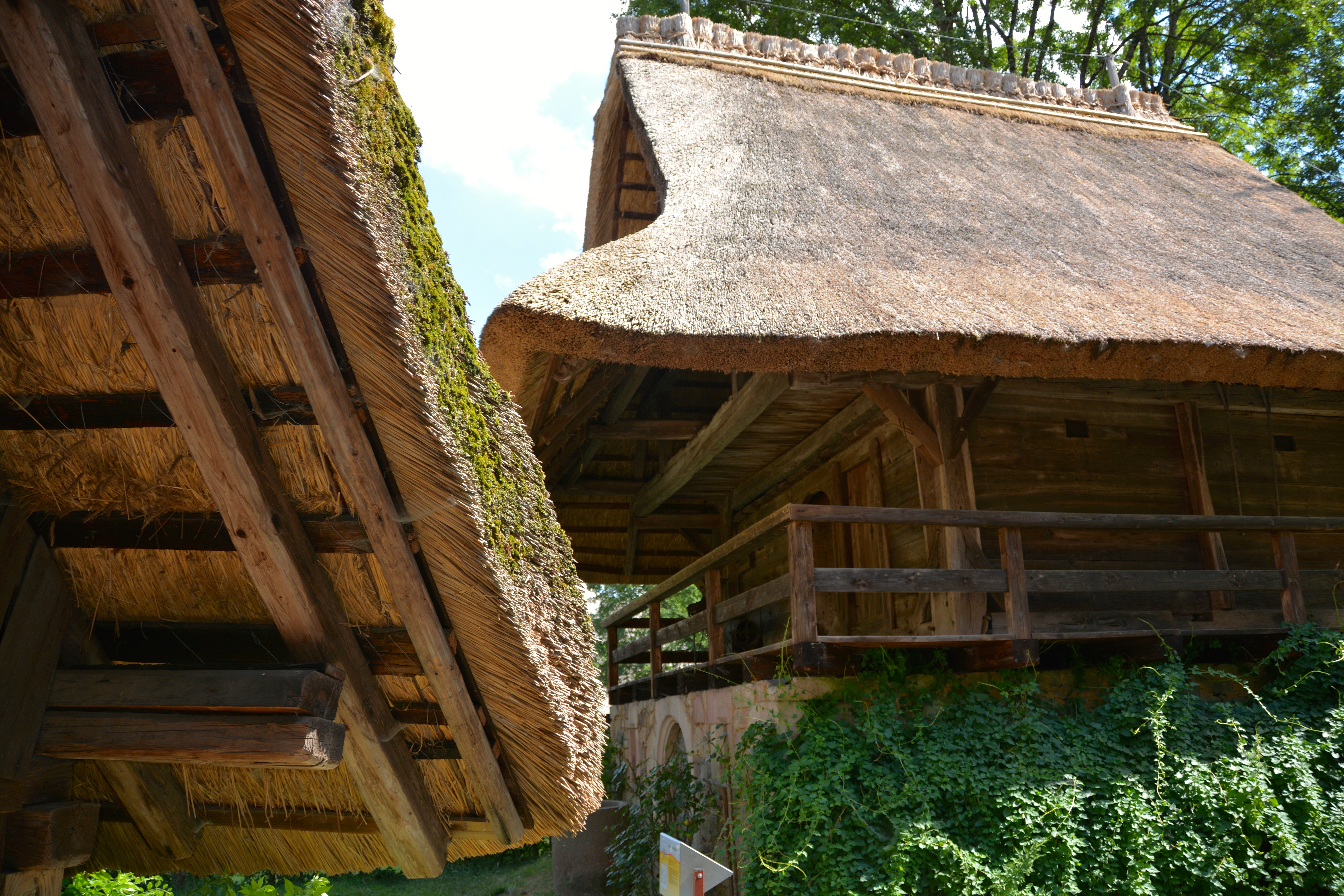
Thatched roofs on the dwellings at Vogtsbauernhof in the Black Forest, Germany ©Jean Janssen

Thatched roofs on the dwellings at Vogtsbauernhof in the Black Forest, Germany
©Jean Janssen

The roofs of the dwellings were thatched, except over the doorways where both the people and animals entered.  In the case of a fire and burning thatch, the alternate roof over the doorways allowed  people and animals to escape the fire unharmed.  It took anywhere from 300 to 500 trees to provide the wood to build a single home.

A family tours Vogtsbauernhof in the the Black Forest, Germany ©Jean Janssen

A family tours Vogtsbauernhof in the the Black Forest, Germany
©Jean Janssen

The heat was kept inside to keep the wood dry and prevent insects; smoke meat; provide better warmth; and to camouflage the smell of the animals.  Of course there were lots of lung problems.  This is one of the reasons beds were shorter.  (I always thought it was because people had been shorter and had gotten taller over time).  People slept upright so they could breathe better so the bed didn’t need to be as long.  Lying down was also associated with death.

Vogtsbauernhof, The Black Forest, Germany ©Jean Janssen

Vogtsbauernhof, The Black Forest, Germany
©Jean Janssen

Electricity did not come to the Black Forest until 1919.  Prior to that oil lamps were used.  300 traditional homes are still in use in the Black Forest today.

In the Black Forest, Germany ©Jean Janssen

In the Black Forest, Germany
©Jean Janssen

During the ride home our guide passed around a personal photo album of things she had talked about, including the animals of the region.We were exhausted after a long hot day, but it was fabulous and I recommend a visit.  Lots of farm houses rent out rooms and I think that would be the best way to experience the area.  Better start working on my German.

In the Black Forest, Germany ©Jean Janssen

In the Black Forest, Germany
©Jean Janssen

Posted in international, River Cruise | Tagged , , , , , | 1 Comment

Heidelberg, Germany

City of Heidelberg, Germany as viewed from the castle. ©Jean Janssen

The Neckar River and the city of Heidelberg, Germany as viewed from the castle.
©Jean Janssen

Heidelberg is a bucket list German city for Boris and I.  The cruise line offered an optional afternoon excursion and attending was the a no-brainer choice for us.  Until 2013, Heidelberg was the headquarters of the American forces in Germany.  Today the city is 20% students.  56 noble prize winners have come from Heidelberg.  The University and tourists are the biggest business draws to the city.

On the way up to the castle, Heidelberg, Germany. ©Jean Janssen

On the way up to the castle, Heidelberg, Germany.
©Jean Janssen

gardens viewed, looking down from the castle, Heidelberg, Germany ©Jean Janssen

terraced gardens, looking down from the castle, Heidelberg, Germany
©Jean Janssen

Our bus guide differed from our city guide; the people in our bus were separated into two groups.  Going into town, we passed the site of a nuclear plant.  There used to be 29 in Germany; there are only 7 now in operation and they hope to have all shut down by 2025.  The guide said they were big on green energy, particularly solar panels and windmills.  The windmills are so successful that they are often turned off because they deposit too much energy into the system.  However, energy is not cheap.  Gasoline prices are at least double to what we pay at home and include a 75% tax.

Homes along the river in Heidelberg, Germany. ©Jean Janssen

Homes along the river in Heidelberg, Germany.
©Jean Janssen

Boris checks out the markings on the bridge tower showing flooding levels and dates. Heidelberg, Germany ©Jean Janssen

Boris checks out the markings on the bridge tower showing flooding levels and dates. Heidelberg, Germany
©Jean Janssen

After passing the energy belt, we passed the “social accommodation belt” where housing was constructed after the war to provide homes for refugees.   But it is upon coming into the city that you see the beautiful homes lining the river.  My pictures, that had to be shot out of the bus windows, do not do the view justice.

The city sits along the Neckar River and is most famous for its University.  “Heidelberg is a popular tourist destination due to its romantic and picturesque cityscape, including Heidelberg Castle and the baroque style Old Town.”  It is bordered by the Holy Roman Mountains, Königsstuhl  and Gaisberg.  If there was any doubt this valley floods, one only has to look at the markings on the bridge towers showing water heights and dates when the Neckar severely overflowed.

Funicular ride up to Heidelberg Castle, Germany ©Jean Janssen

Funicular ride to and from Heidelberg Castle, Germany
©Jean Janssen

After entering the city and driving along the river front, our first stop was the castle.  It is a winding road up to the top and our motor coach driver was most impressive to make it successfully in that large vehicle.  I enjoyed the ride up though, peering into the town below as things became smaller and smaller.  From the old city, you can also take a funicular up.  The drop off point is right next to the castle ticket office and entrance.  The funicular continues up to the summit of Königsstuhl Mountain.

Heidelberg Castle, Heidelberg, Germany ©Jean Janssen

Heidelberg Castle, Heidelberg, Germany
©Jean Janssen

As we left the coach parking lot and before entering the castle, our new guide told us about the University fraternities.  In the 1800s almost all University men were members of these organizations, now it is only about 10%.  Seven fraternities still practice the old method of dueling and scaring of the face. Most still employ the drinking games; led by the President, members consume about 40 drinks a night.  Heidelberg University does have one fraternity for women.

Courtyard of Heidelberg Castle, Heidelberg, Germany ©Stephen Pate

Natasha in the courtyard of Heidelberg Castle, Heidelberg, Germany
©Stephen Pate

Heidelberg Castle Couryard, Heidelberg, Germany ©Jean Janssen

Heidelberg Castle Couryard, Heidelberg, Germany
©Jean Janssen

The castle is a mix of various architectural styles, often butting up again one another.  The courtyard is a photographer’s dream, as long as you are ok shooting around all the people.  On one side we saw ruins set for a theatrical performance with the undamaged building serving as the backdrop.  It was very hard to keep up with the dialog of our tour guide.

Heidelberg Castle, Heidelberg, Germany ©Jean Janssen

Heidelberg Castle, Heidelberg, Germany
©Jean Janssen

Heidelberg Castle, Germany ©Jean Janssen

Heidelberg Castle, Germany
©Jean Janssen

The castle has been built and rebuilt suffering major damage both during the 30-years war and by lighting on multiple occasions.  You’ll notice the same red brick in the city below as at times the castle grounds were used as a quarry for building materials.   The castle as a tourist attraction has been popularized by Americans.  Mark Twain wrote glowingly about his visit to the castle and its situation on the hillside overlooking Heidelberg and the overgrowth adding to the mystique.  “Misfortune has done for this old tower what it has done for the human character sometimes – improved it.”  From A Tramp Abroad by Mark Twain.

Heidelberg Castle ©Jean Janssen

Heidelberg Castle
©Jean Janssen

Heidelberg Castle, Germany ©Jean Janssen

Heidelberg Castle, Germany
©Jean Janssen

World's Largest Wine Barrel, Heidelberg Castle, Germany. The tourists below and above give a perspective on the barrel's size. ©Jean Janssen

World’s Largest Wine Barrel, Heidelberg Castle, Germany. The tourists below and above give a perspective on the barrel’s size.
©Jean Janssen

After visiting the exterior of the castle and the courtyard, we visited the wine cellar and the exceptionally large wine barrel inside.  It was interesting viewing and we were all happy to be out of the heat and have a chance to sit down.  This is a great spot for a break with toilets and refreshments available.  The Heidelberg Tun is the world’s largest wine barrel, holding 58,124 gallons of wine. Staircases allow you to view the barrel from all sides and the top platform can even be used as a dance floor.

Heidelberg from the castle terrace. ©Jean Janssen

Heidelberg from the castle terrace.
©Jean Janssen

Once outside again, we went to the castle terrace for more incredible views of the river and city.  There is also a deep footprint and the accompanying story of a suitor jumping from a window.  With my 9 1/2 or European 41 (shoe size) foot, it was a perfect fit.

Church of the Holy Spirit and Market Square, Heidelberg, Germany ©Jean Janssen

Church of the Holy Spirit and Market Square, Heidelberg, Germany
©Jean Janssen

Jesuit Church, Heidelberg, Germany ©Jean Janssen

Jesuit Church, Heidelberg, Germany
©Jean Janssen

Leaving the castle, we once again rode the coach.  This time we went down to river to a drop off stop for our free time in the old town.  Our guide walked us in and then pointed us in several directions we might pursue for various sites. Boris was determined to find himself some dueling swords.  I wanted to see the University and the Jesuit church.  We split up at market square between the Rathaus and The Church of the Holy Spirit for our short free time in Heidelberg.  (I suspect this square is the spot for the Christmas Market; this spot would be perfect and customary for this holiday tradition.)

Heidelberg University, Heidelberg, Germany ©Jean Janssen

The Library at Heidelberg University, Heidelberg, Germany
©Jean Janssen

Stained Glass Window in Chapel on Heidelberg University Campus, Heidelberg, Germany ©Jean Janssen

Stained Glass Window in Chapel on Heidelberg University Campus, Heidelberg, Germany
©Jean Janssen

I wandered into several churches, eventually passing the Jesuit church, just off the main thoroughfare.   I decided to go down a little further and make my way back this direction.  I did visit a University Chapel with some very interesting modern stained glass windows; I was fortunate that the caretaker let me in since I arrived just 5 minutes before closing.  I walked a bit through the University area and then backtracked to the the Jesuit church with its stark white interiors.  All the churches I visited were different from each other and lovely.

Heidelberg Castle viewed from the old town below. Heidelberg, Germany ©Jean Janssen

Heidelberg Castle viewed from the old town below. Heidelberg, Germany
©Jean Janssen

Heidelberg Germany Old Town ©Jean Janssen

Heidelberg Germany Old Town
©Jean Janssen

Heidelberg, Germany ©Jean Janssen

Heidelberg, Germany
©Jean Janssen

The walk into the old town and out again afforded us wonderful views of the castle.  I didn’t do any real shopping, as some of the ship’s guests did, but I did make a stop into a bakery for some of the wonderful meringues I saw in the window and added a almond pastry as well.  My friend Sharon found a wonderful linen shop by the pedestrian bridge that crosses the Neckar; she was our “go to girl” when looking for linens.  Boris didn’t find his dueling swords, but was happy to share my purchases.

View of Heidelberg Castle from Corn Market, Heidedlberg, Germany ©Jean Janssen

View of Heidelberg Castle from Corn Market, Heidedlberg, Germany
©Jean Janssen

Heidelberg did not disappoint.  This is a place to return to; perhaps during the holiday markets?

Boris and Natasha along the Neckar River, Heidelberg, Germany

Boris and Natasha along the Neckar River, Heidelberg, Germany

Posted in international, River Cruise | Tagged , , | Leave a comment

Speyer, Germany

Although the city is famous for its Romanesque Cathedral, I was partial to the painted paneling in Trinity Lutheran Church in Speyer, Germany ©Jean Janssen

Although the city is famous for its Romanesque Cathedral, I was partial to the painted paneling in Trinity Lutheran Church in Speyer, Germany
©Jean Janssen

DSC_3938

Speyer, Germany ©Jean Janssen

Today we are docked at Germiersheim, about a 20 minute shuttle ride into Speyer (and the famous Romanesque Cathedral).  This afternoon we are going to Heidelberg, a “bucket list” German city for Boris and I.  The ship offered three options for morning touring.  You could take a shuttle into town and stay as long as you wanted; the last shuttle returned in the early evening.  Alternatively, you could take the bus in for a walking tour of Speyer.  Your third option was to go to a vinegar tasting and cooking demonstration at Doktorenhof Vinegar Estate.  All these were complimentary offerings.  Boris and I are going to take the Speyer walking tour.

View at we arrived at the city of the spires of the Romanesque Cathedral at Speyer, Germany. ©Jean Janssen

Our view as we arrived in Speyer, the spires of the Romanesque Cathedral, Speyer, Germany.
©Jean Janssen

Those going to the vinegar tasting could also sign up for a vinegar cooking class in the afternoon.   The Heidelburg tour is another afternoon option.  For these last two there was a fee, although much less than excursions of the same length on other cruise lines.  I suspect they are just recouping costs rather than making a lot of money on these optional tours.  They are enticements to take the cruise.  Certainly Boris and I were excited when we saw Heidelberg on the itinerary when we were looking at cruise options.

Speyer, Germany ©Jean Janssen

Technik Museum Speyer, Germany
©Jean Janssen

Arriving into Speyer, we saw the technical museum, Technik Museum Speyer.  From our shuttle drop off point, you could walk over.  The 747 mounted on top of the museum, one of many planes at the museum (there was also lots of older military aircraft), was originally mounted higher but there were objections since it made the museum taller than the Cathedral.  The plane was lowered. You walk up to tour the airplane; going down you can slide or walk.  (In summertime, wear something long enough to cover your legs if you intend to slide or you might burn your bottom.)

Speyer Romanesque Cathedral, Speyer, Germany ©Jean Janssen

The Southern facade of Speyer Romanesque Cathedral, Speyer, Germany
©Jean Janssen

On the western facade of the Imperial Cathedral Speyer, Germany ©Jean Janssen

On the eastern facade of the Imperial Cathedral Speyer, Germany
©Jean Janssen

Our first stop was to tour the exterior of the Cathedral.  The Basilica was built as a mausoleum in 1030 by Conrad II and was consecrated in 1061.  The second building phase lasted from 1081-1106 when the four towers and two octagonal domes were added.  It is the largest Romanesque building in the world.  It was the burial place for German Emperors for 300 years; 11 crown heads are buried here.

As we toured the eastern cascade of the Cathedral, you could see wonderful carvings that looked almost primitive.  Turning away from the basilica, portions of the medieval walls were present.  The Heidenturmchen, or Heath Tower, used to sit next to the Rhine in a marshy area called the heath.  Our guide only mentioned them in passing and didn’t take us by them, but Boris wandered over to take a look.

Heath Tower, part of the medieval walls in Speyer, Germany ©Jean Janssen

Heath Tower, part of the medieval walls in Speyer, Germany
©Jean Janssen

Eastern facade of Speyer Cathedral, Speyer, Germany. Note the wonderful encircling gallery. ©Jean Janssen

Eastern facade of Speyer Cathedral, Speyer, Germany. Note the wonderful encircling gallery.
©Jean Janssen

The great bronze doors of Speyer Imperial Cathedral, Germany ©Jean Janssen

The great bronze doors of Speyer Imperial Cathedral, Germany
©Jean Jansse

The Cathedral was seriously damaged by fire in 1689 and additional portions that had become unstable were removed in 1755.  Between 1772 and 1778 portions were rebuilt as an exact copy of the original design and are  “regarded as one of the first great achievements of monument preservation in Europe.”  Later reconstruction were less exact and more an interpretation of medieval architecture.  The Cathedral is a UNESCO World Heritage Site.

The western facade was obviously made of newer stone and was rebuilt in 1855.  In front of the Cathedral sits a large bowl, the Domnapf (or Cathedral Bowl) erected as a boundary between the religious and secular areas of the city and also used for the payment of taxes in wine.  (This is a famous region for vineyards.)  After a change in the tax laws, each new arriving Bishop was required to fill the bowl with wine for the pleasure of town leadership.

Eastern facade of the Imperial Cathedral at Speyer with the domnapf in the plaza. ©Jean Janssen

The western facade of the Imperial Cathedral at Speyer with the domnapf in the plaza.
©Jean Janssen

The tour then moved into the city to visit the Jewish heritage site.  Boris was very disappointed that the tour did not include the interior of the Cathedral.  (He was not too impressed with our tour guide, a former military officer.)  We were promised free time at the end of the tour and hope to have the opportunity to visit then.

The entrance to the Mikvah, Jewish ritual bath, at Speyer, Germany ©Jean Janssen

The entrance to the Mikvah, Jewish ritual bath, at Speyer, Germany
©Jean Janssen

Recognizing the tax proceeds to be collected from prosperous Jews, Christians in the city built a synagogue to encourage Jewish settlement.  They built a wall around the quarter for “protection” and then charged more taxes for this protection.  Included in the remains were the outlines of synagogue and a second prayer room for the women.  Our guide pointed out the openings in the wall where the sound would pass through to the women.

Looking into the Mikvah, Speyer, Germany ©Jean Janssen

Looking into the Mikvah, Speyer, Germany
©Jean Janssen

Stairs leading into the immersion pool in the medieval Mikvah at Speyer, Germany. ©Jean Janssen

Stairs leading into the immersion pool in the medieval Mikvah at Speyer, Germany.
©Jean Janssen

Best preserved is the ritual bath, or Mikvah, built in 1128.  After a time of impurity, one would have to clean the body and obtain ritual purity before entering the Temple.  Examples of times of impurities would include after menstruation or childbirth and before resuming marital relations for a woman, illness, or touching a dead body.  The Mikvah is commonly used during the process of conversion to Judaism.  Some family friends who are Jewish and adopted children made use of a Mikvah as part of their children’s conversion.

The believer enters the water naked and goes completely under multiple times. The water in the Mikvah comes from a spring, rain, or natural ground water.

After leaving the Jewish quarter, we walked past the town hall to visit a Protestant church built in the early 18th century.  The French had burnt all Protestant churches in Speyer in 1689.  Trinity Lutheran Church was build by the town council (controlled by the Protestants) between 1701 and 1717.  It was considered a public building and as such had to have a a picture of the municipal symbol which is the Catholic Imperial Cathedral.

Trinity Lutheran Church, Speyer, Germany. Note the unusual placement of the organ, above the altar. ©Jean Janssen

Trinity Lutheran Church, Speyer, Germany. Note the unusual placement of the organ, above the altar.
©Jean Janssen

We were very fortunate to have the opportunity to visit the church.  It is kept locked and we were locked in and out by our guide.  The church will be closed for two years for renovation and restoration of the painted wooden panels beginning four days after our visit.  Trinity Lutheran has several design differences from other churches of its kind.  First, as mentioned above, there is a picture (municipal symbol) of a Catholic church inside a Lutheran one.  Second, the church has a crucifix, rather than a cross, which is commonly found only in a Catholic Church.  Third, depicting the importance of the music, the organ is positioned above the altar (highly unusual).

Rear of Trinity Lutheran Church in Speyer, Germany showing the beautifully painted wood paneling of the double canopies. ©Jean Janssen

Facing away from the altar and towards the rear in Trinity Lutheran Church in Speyer, Germany showing the beautifully painted wood paneling of the double canopies (balconies).
©Jean Janssen

Double-seated rows 1-5 in Trinity Lutheran Church is Speyer, Germany. ©Jean Janssen

Double-seated rows 1-5 in Trinity Lutheran Church is Speyer, Germany.
©Jean Janssen

Additionally, rows 1-5 are “double-seated”.  There are benches facing in toward each other.  The pulpit is midway through the church.  Normally the persons in rows 1-5 face the altar.  During the time the minister is at the pulpit, the people switch benches and face the pulpit.

The church also features double canopies for the congregates.  Trinity Lutheran is a working church, but the canopies or balconies are only used during Easter and Christmas Eve when the church is exceptionally full.

I found the church to be absolutely beautiful and reminiscent of the wonderful wooden Protestant churches we visited in Poland.  I look forward to a return visit when the painting restoration is complete.

Boris on the main street in Speyer, Germany. Note the fabulous maypole. ©Jean Janssen

Boris on the main street in Speyer, Germany. Note the fabulous maypole.
©Jean Janssen

DSC_3972

Speyer Imperial Cathedral, Germany ©Jean Janssen

The day had grown incredibly hot.  The tour ended at Trinity Lutheran, our only inside venue (except the interior of the Mikvah).  I really wanted to see the interior of the Cathedral, but the ticket office was not yet open when we had been by before.  Boris was less thrilled with that idea.  We did wander around a bit.  The sidewalk cafes with umbrellas were busy and inviting; there were more churches to see, but the sun had rather wiped us out.  Since we knew we had some climbing to do in Heidelberg, we decided to take it easy in the shade by the Cathedral (although you know I was still snapping pictures).

Speyer Imperial Cathedral, Germany ©Jean Janssen

Speyer Imperial Cathedral, Germany
©Jean Janssen


You certainly could have found more things to do in Speyer, but we took the shuttle back to the ship for lunch and to be ready for our afternoon excursion to Heidelberg.  Actually, it also gives me an excuse to come back.

Posted in international, River Cruise | Tagged , , , , , , , , , , | Leave a comment