Highlights of Budapest

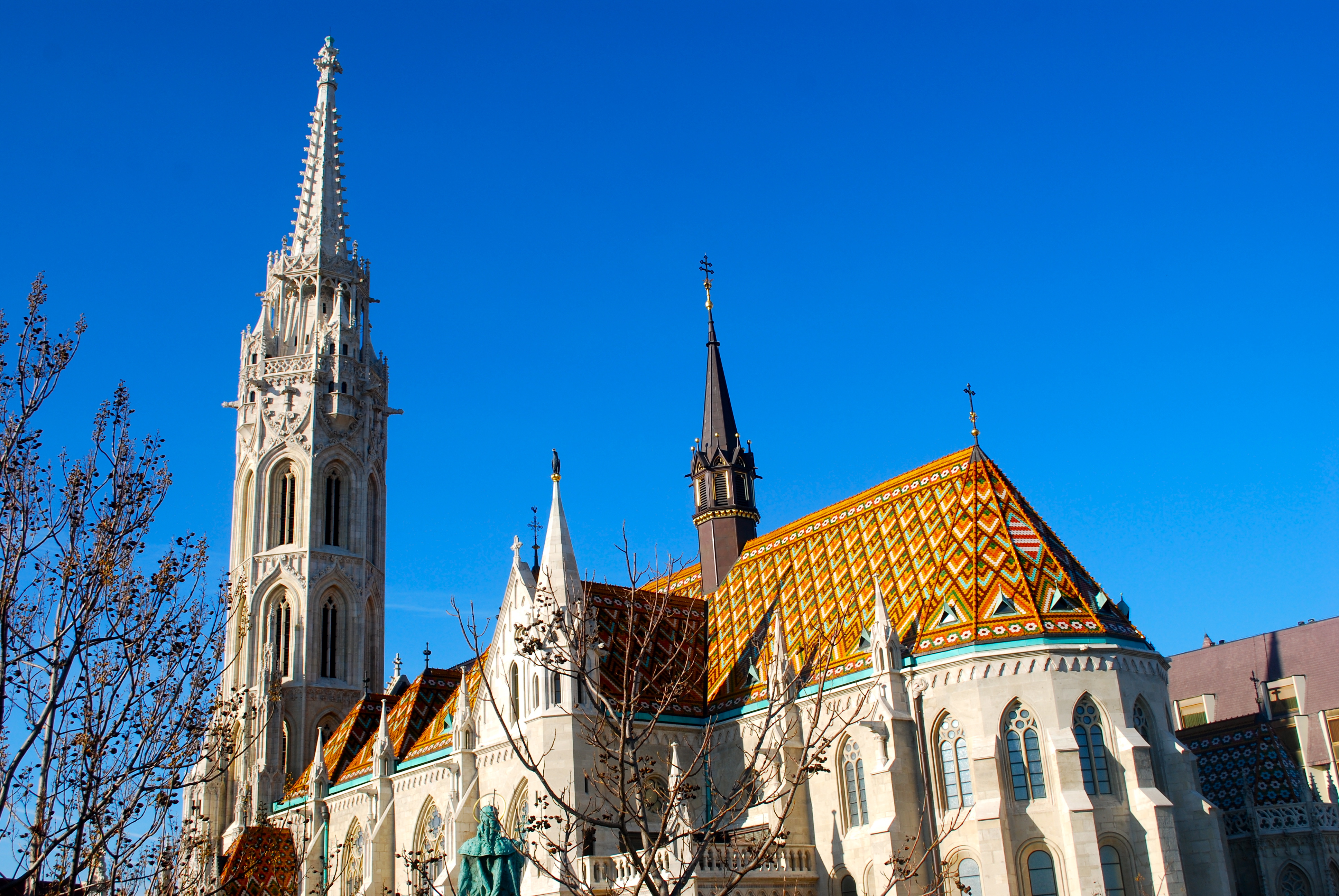
The porcelain tile roof of St. Matthias's Church, Budapest

The porcelain tile roof of St. Matthias’s Church, Budapest
©Jean Janssen

I slept in a little late this morning.  Ok, I had to be on the bus at 9 and I woke up at 8:20 am still needing a shower, breakfast, and to pack my day bag.  I made it, wet hair shoved in my hat.  We will take a bus tour of the city, eventually stopping in the castle district in Buda and the Christmas market in Pest.
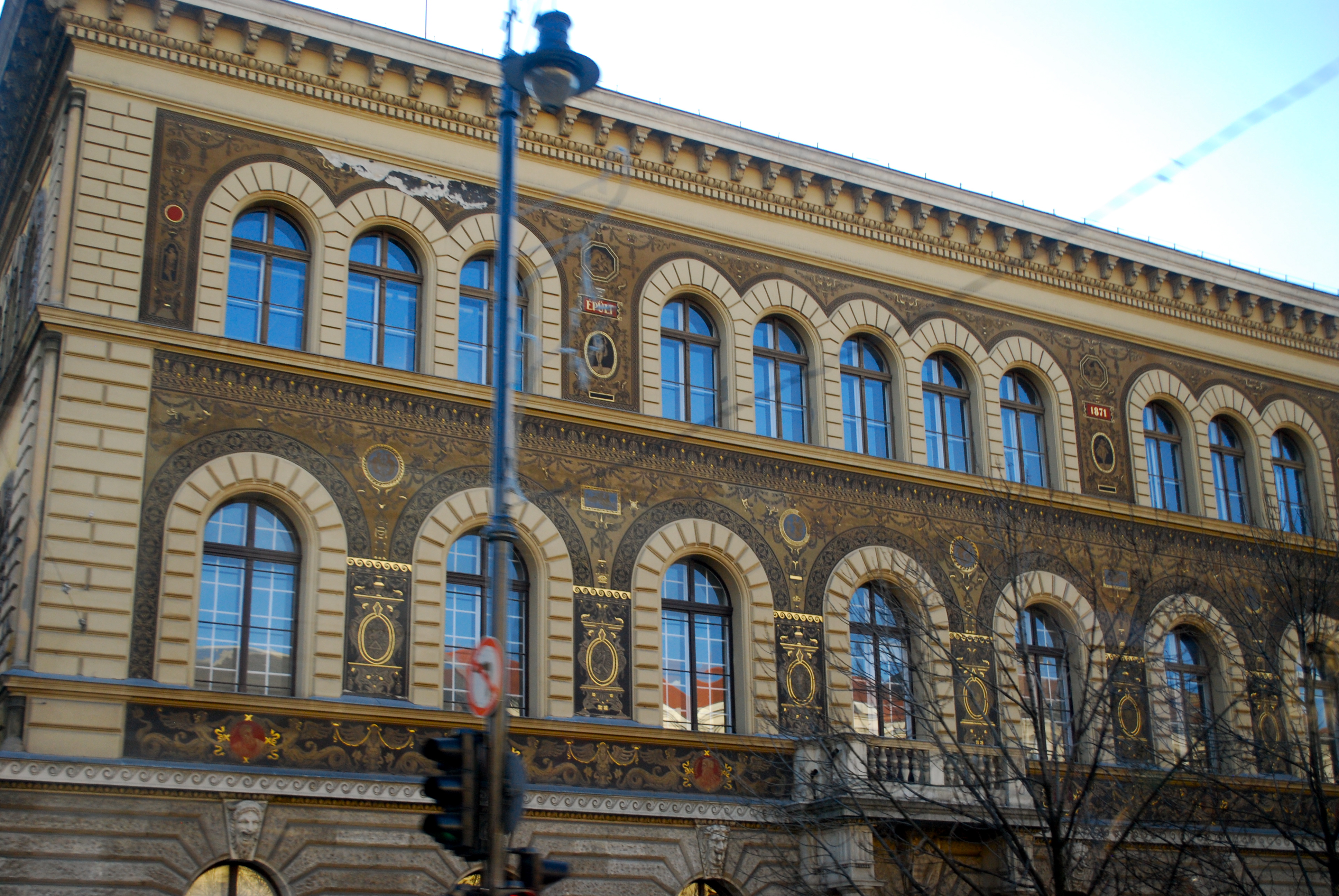
Beautiful Buildings.  Budapest, Hungary ©Jean Janssen

Beautiful Buildings. Budapest, Hungary
©Jean Janssen

We first passed a building I noticed when we first drove in. This brand new building, a glass structure made to look like a whale, sits atop a brick warehouse from the 19th century.  The building is supposed to focus on culture, but so far its focus has been on drinking per our guide.
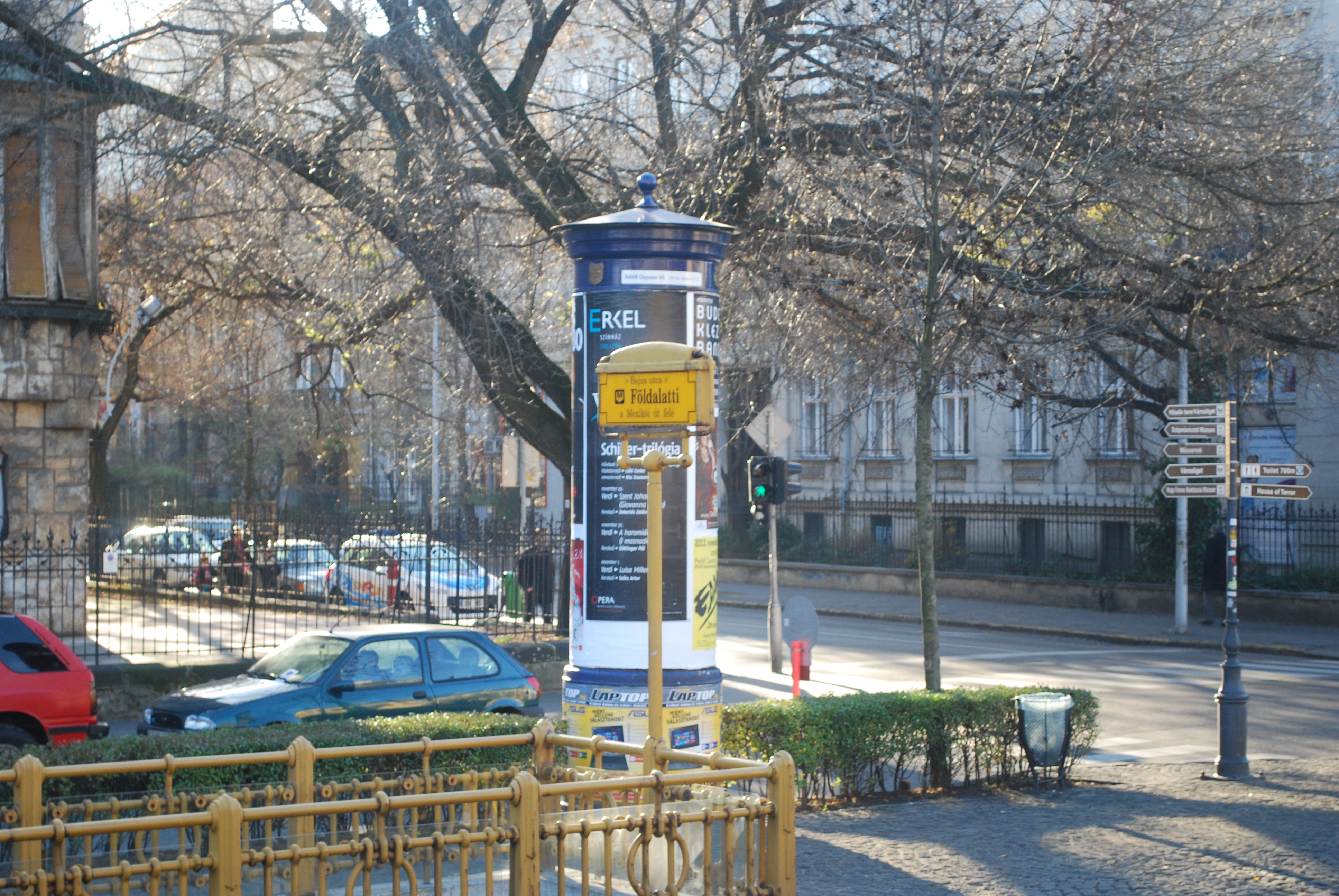
Underground entrance in Budapest.  This city had the second underground line.  The first was in London and powered by steam.  Budapest's was electric. ©Jean Janssen

Underground entrance in Budapest. This city had the second underground line. The first was in London and powered by steam. Budapest’s was electric.
©Jean Janssen

We passed down the lovely avenues of Pest, noting the efficient tram system and the beautiful buildings.   We passed the Jewish quarter, seeing the large attractive brick Synagogue, and the fashion district.  Our guide recommended a return visit to the Jewish Quarter to see the inside of the Synagogue and visit the “ruins bars”.  Young people moved into the area and set up bars in the ruins, often in the courtyard of a Synagogue.  Today, they happily coexist.
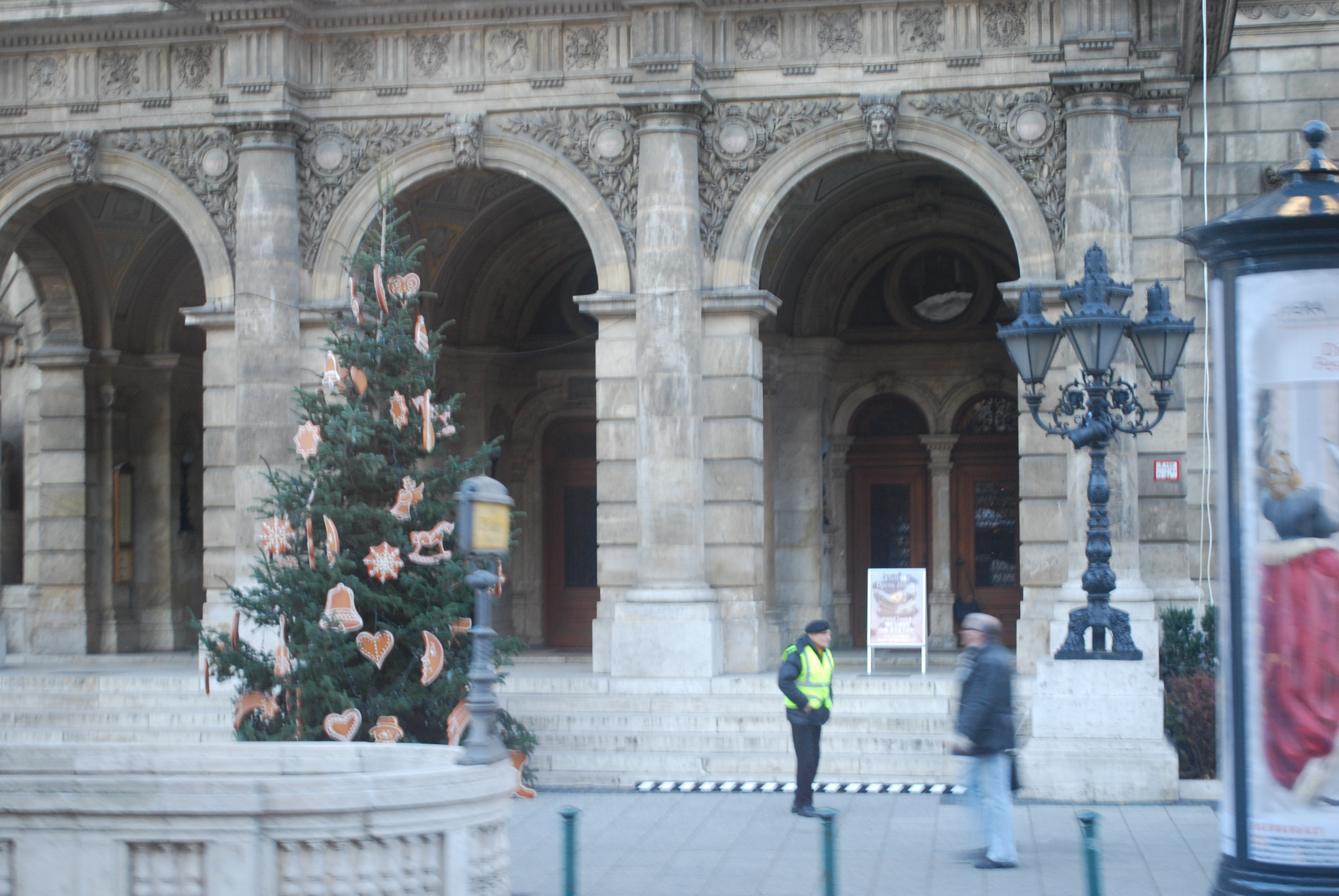
Gingerbread ornament tree in front of the Budapest Opera House

Gingerbread ornament tree in front of the Budapest Opera House
©Jean Janssen

The opera house survived the war and as we passed we saw the guarded Christmas tree out front decorated with large-scale Gingerbread ornaments.  We saw St. Stephen’s the large Catholic Cathedral with a dome to rival that of the parliament building.  There was a small Christmas market and ice-skating rink at the church.  All the trees along the avenues had lost their leaves, but were decorated with “fairy” lights and must be a spectacular sight at night.
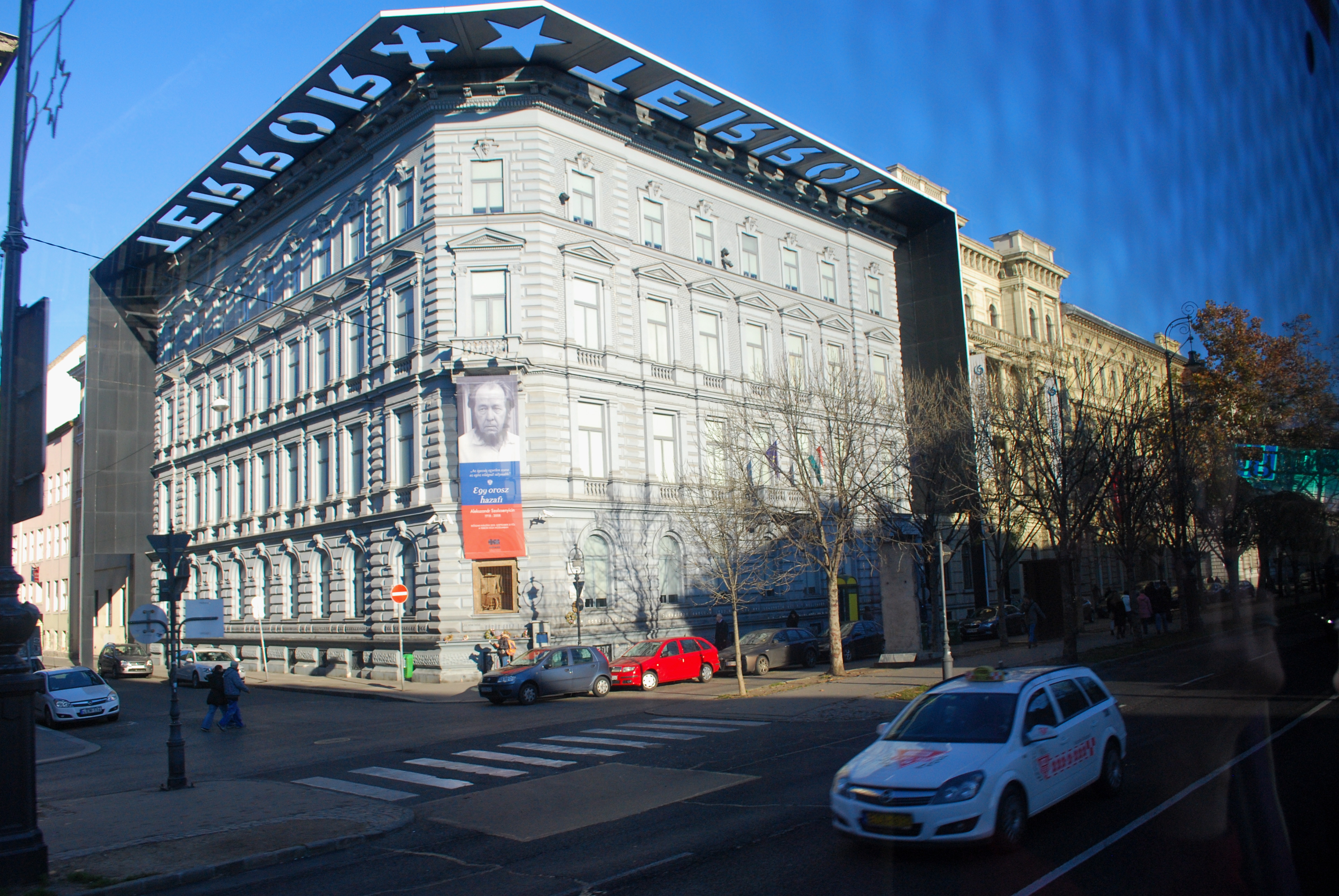
The Terror Museum, former Nazi and KGB headquarters in Budapest.  Note the roof. ©Jean Janssen

The Terror Museum, former Nazi and KGB headquarters in Budapest. Note the roof.
©Jean Janssen

A Monday, all the museums were closed.  We passed the Terror Museum, the former Nazi headquarters and later home to the Soviet KGB in Hungary.  We visited this museum the last time we were here and I must say it is very well presented, one of the best modern museums I have ever visited.  You start at the ground level and follow the history chronologically as you go up each floor.  At the top, you take an elevator to the basement were the interrogation rooms and cells are located.  A film shown during the slow ride down sets the mood.  Excellent.  The museum so impressed Rocky that he wrote about it in his college admission essays.

Hero's Square, Budapest

Hero’s Square, Budapest
©Jean Janssen
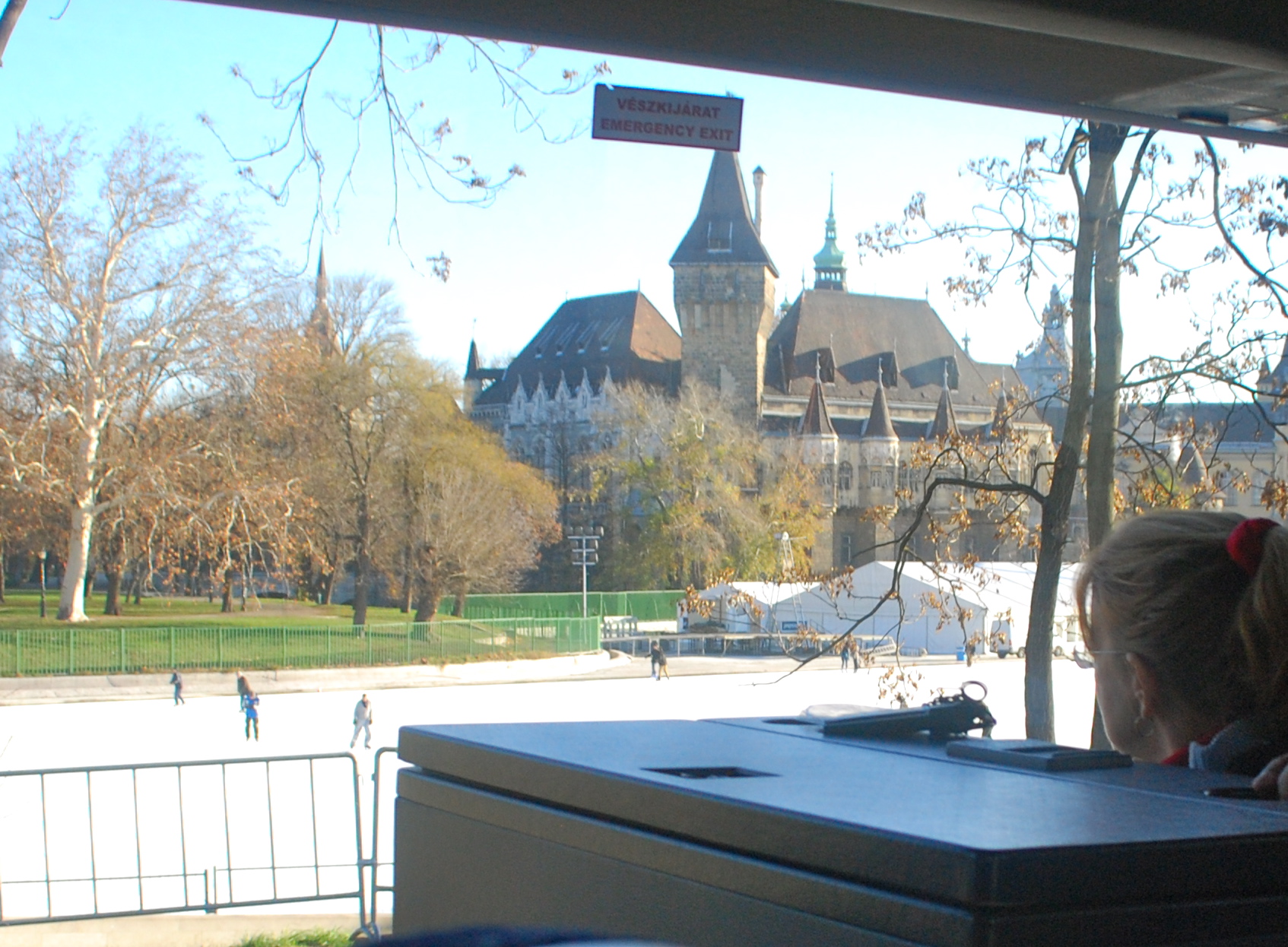
ice skating rink near Hero's Square, Budapest

ice skating rink near Hero’s Square, Budapest
©Jean Janssen

Eventually we made it to Hero’s Square with its imposing monuments.  It sits at the end of the avenue on the edge of a park where the thermal baths are located.  There is also a fairytale-like castle with a large ice-skating rink out front that can accommodate 1700 skaters.

Next we drove over the famous chain bridge with its imposing lions.  Legend has it that the sculptor realized his error in not remembering to carve tongues in the lions’ mouths on the day of the dedication and was so distraught that he jumped into the river. On the opposite side of the Danube is Buda.  Immediately after crossing the bridge you see the funicular to the top of the castle district near St. Matthias’s Church.  Our bus took us closer and we walked the short distance to the church.  Last time we were here we stayed at the Hilton next door.  The church was under restoration then.
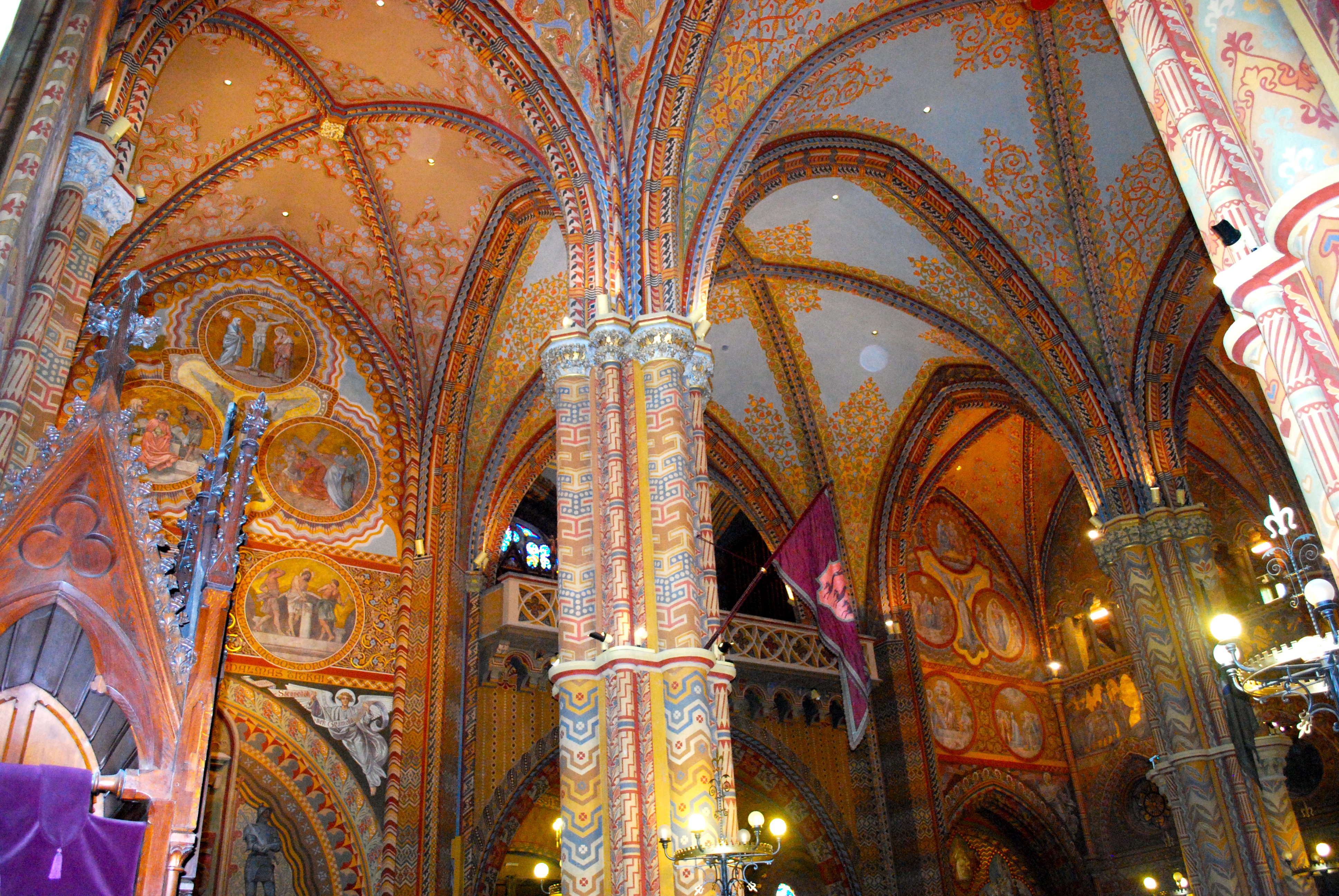
interior, St. Matthias Church, Budapest ©Jean Janssen
interior, St. Matthias Church, Budapest
©Jean Janssen

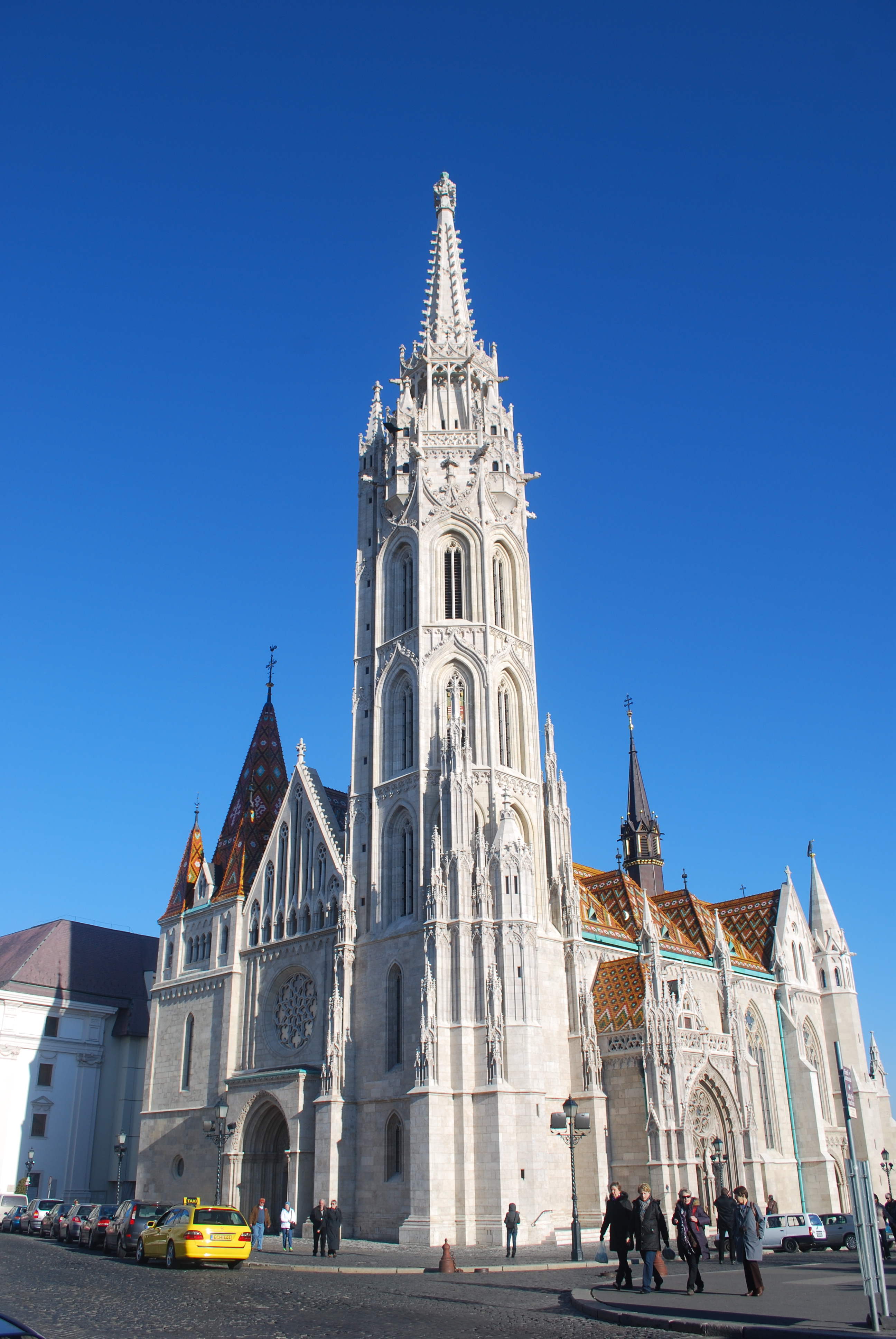
St. Matthias Church, Budapest

St. Matthias Church, Budapest
©Jean Janssen

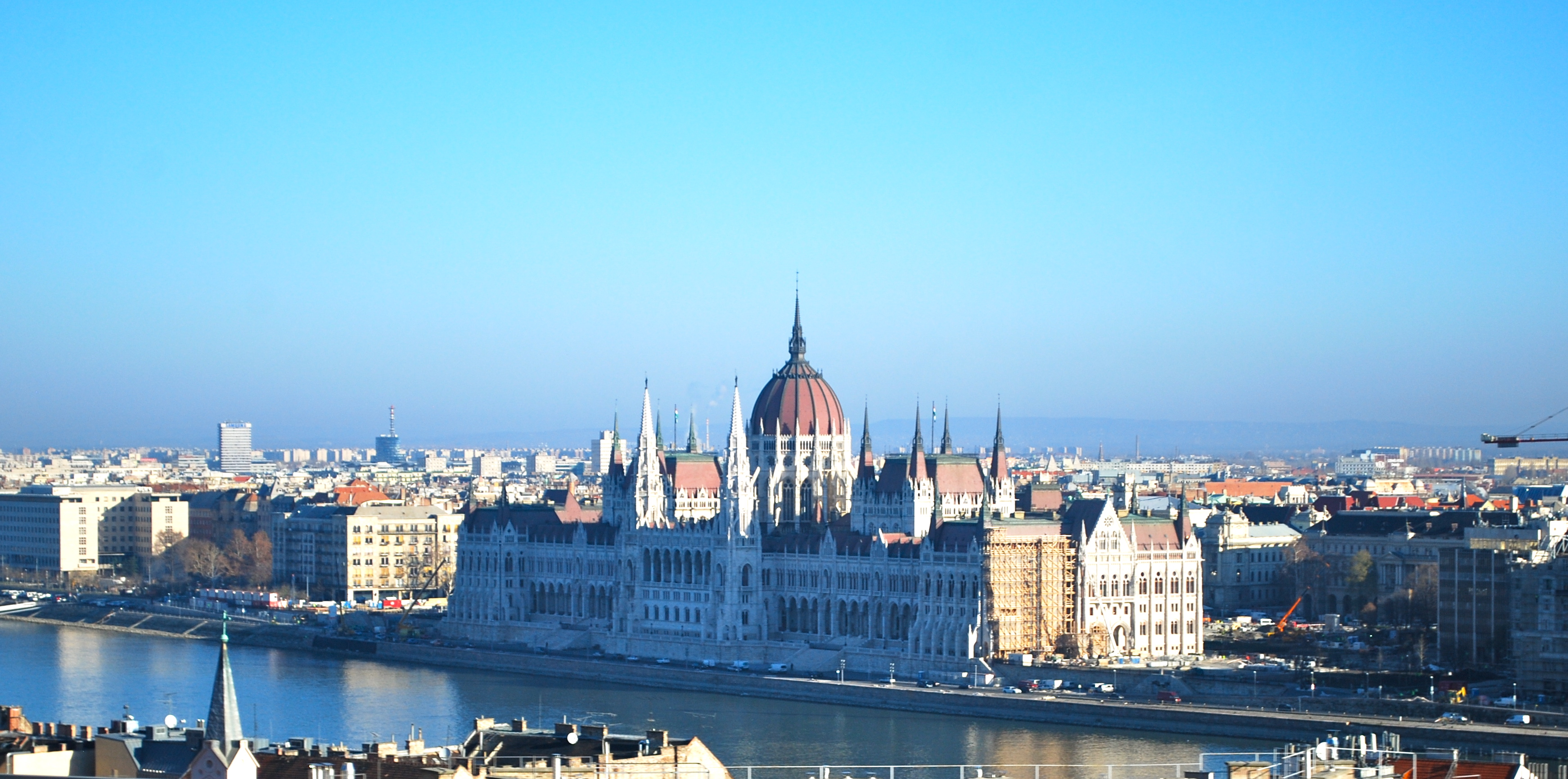
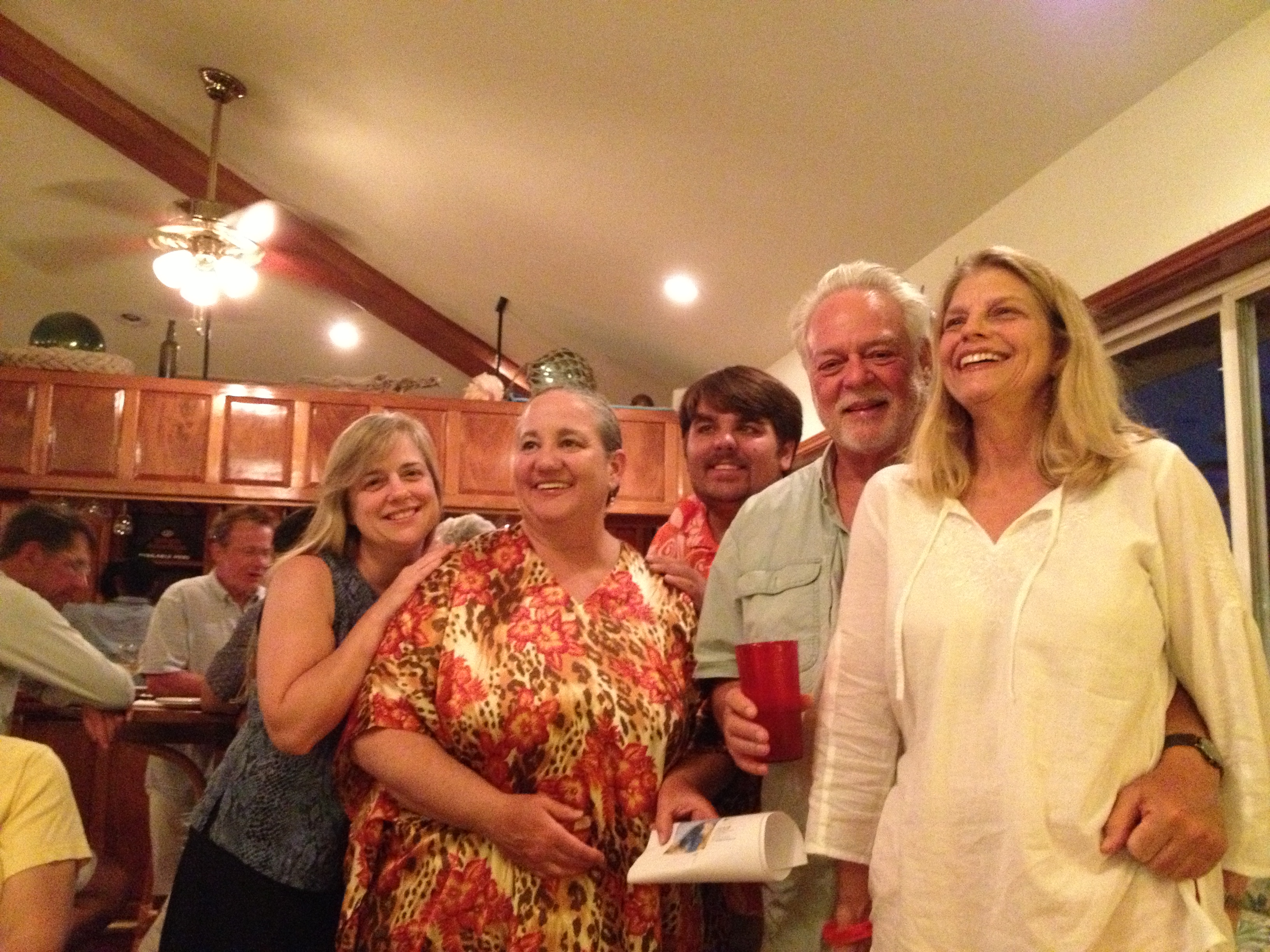
It is a lovely church with restoration just completed.  Heat has also been added.  When the Turks occupied Buda it was a mosque and the Ottoman influence is reflected in the decoration.  The viewing platforms surrounding the church courtyard offer excellent views of Pest, particularly the Parliament building.  I ran into a couple I sat next to on the plane and took a picture of their group.

Returning to the bus, we drove back to Pest to visit the Christmas market, still in its infancy.  I expected lots of Christmas ornaments, but it was mostly food and handicrafts.  Boris and I both bought hats-mine felt fashion, Boris’ in a style worn by the Hungarian kings.  I got some wonderfully decorated gingerbread cookies and a beautiful ornament made from cornhusks.  Boris and I both sampled the hot, spiced wine and the local sausage.  There was a huge advent wreath in the market square as well as a huge Christmas tree just at the end of the shopping street.
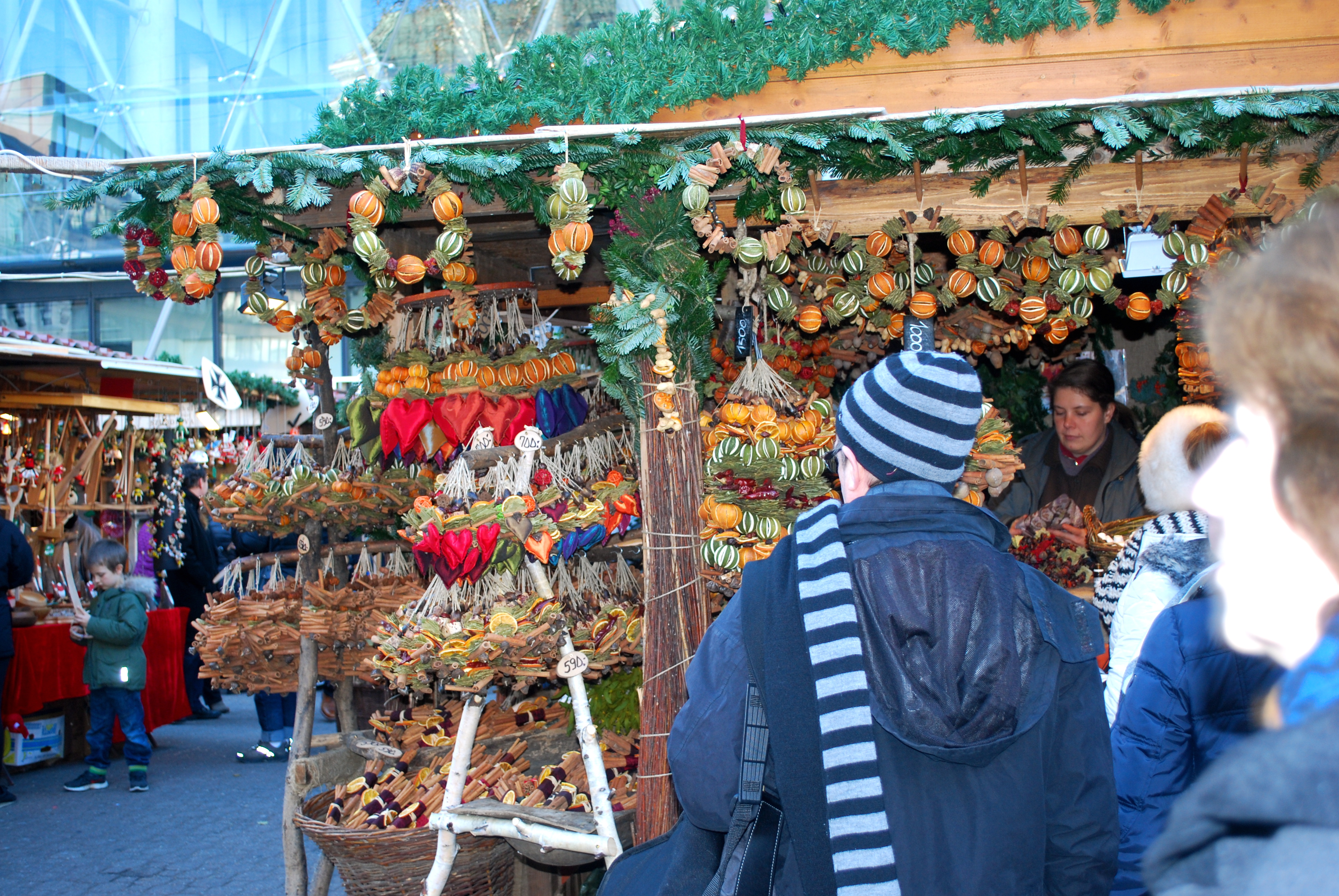
Budapest Christmas market at the end of Vaci Street. ©Jean Janssen

Budapest Christmas market at the end of Vaci Street.
©Jean Janssen

Back on board, we had a late lunch of Hungarian specialties including goulash.  I had another glass of wine.  After lunch, Boris headed out to the Roman ruins and I decided to rest a bit before going out to grab some more pictures and visit the historical market.  Ah the best made plans…I fell asleep for two hours and woke up as it was getting dark (between 3:30 and 4 pm at this time of year).  No more wine at lunch for Natasha.

The Parliament Building at night on the Danube, Budapest. ©Jean Janssen

The Parliament Building at night on the Danube, Budapest.
©Jean Janssen

In the evening, the boat was finally moved and we left Budapest on the Danube passing once again the amazing buildings-the castle, St. Matthias’s’ Church, the Parliament Building-that face the river.  I was bundled up on the “freeze” deck and then came down to change for the Captain’s welcome and gala dinner.  I wore a simple cocktail dress, but most people did not dress up at all.
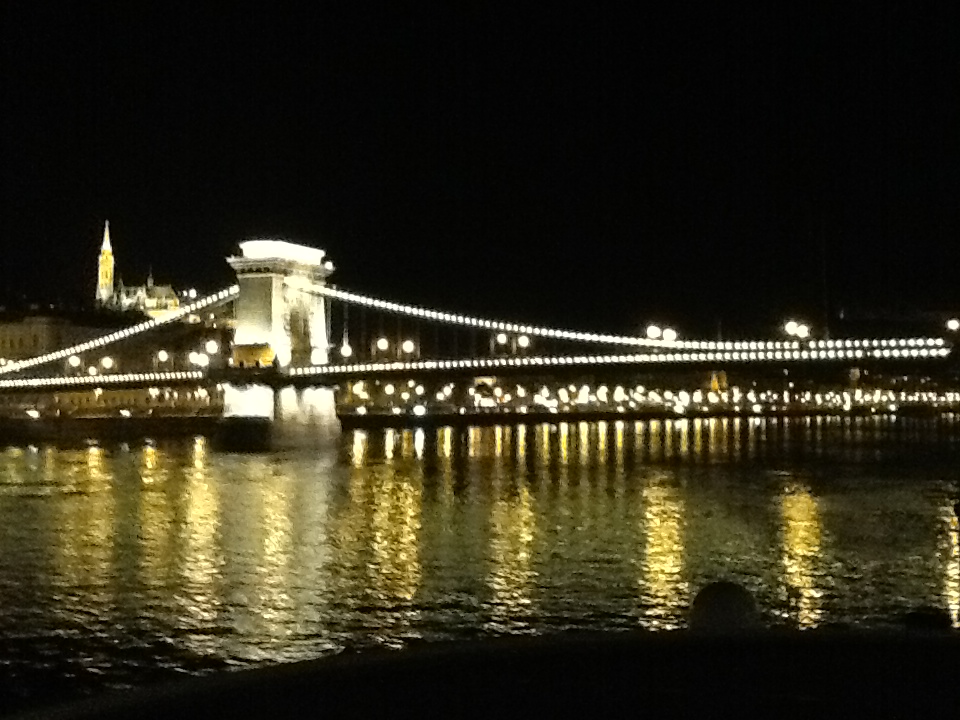
The Chain Bridge with St. Matthais Church in the background as we cruised out of Budapest at night. ©Jean Janssen

The Chain Bridge with St. Matthais Church in the background as we cruised out of Budapest at night.
©Jean Janssen

More wine at dinner so I am sleepy again.  (I didn’t promise not to drink in the evening.)  We bid Hungary goodbye and welcome Slovakia in the morning.
Posted in cruises, international, River Cruise | Tagged | 1 Comment

Budapest or Bust

Budapest, Hungary

Budapest, Hungary
©Jean Janssen

Natasha is back.  After many months of domestic travel, Boris and I are off again to several international destinations.  This time we are trying a river cruise leaving from Budapest, Hungary and ending in Passau, Germany.  We will visit four countries-Hungary, Slovakia, Austria, and Germany.  In addition to morning touring, we will get to eat and shop our way through the Christmas markets along the Danube.

In route to Budapest, we have a layover in Frankfurt.  We landed in the Z terminal, now a year old.  We were here when it opened last year; last time, we navigated through with Boris in a wheelchair on our way to Tuscany.  Z is now familiar and broken-in.  Still very nice, but to go to the end of Z to the opposite end of A (which are next to each other) is really a long hike even with frequent moving sidewalks.  Got to enjoy the Lufthansa lounges in both Houston and Frankfurt.  Since they serve complimentary sparkling wine in their lounges and on-board, Natasha was feeling good.

DSC_0172

Budapest, Hungary
©Jean Janssen

Budapest has a relatively small airport.  It took a while for our luggage to show up; we were pretty worried.  The Uniworld representative was there waiting.  We were slightly delayed by waiting for some passengers who had not shown up, but were eventually transported by bus to the shore of the Danube River.  We passed by lovely historic buildings and also some Soviet-era housing.  Some had long advertising banners along the side; others had light-up advertising on their roof.  In the case of the Soviet housing, this was an improvement.

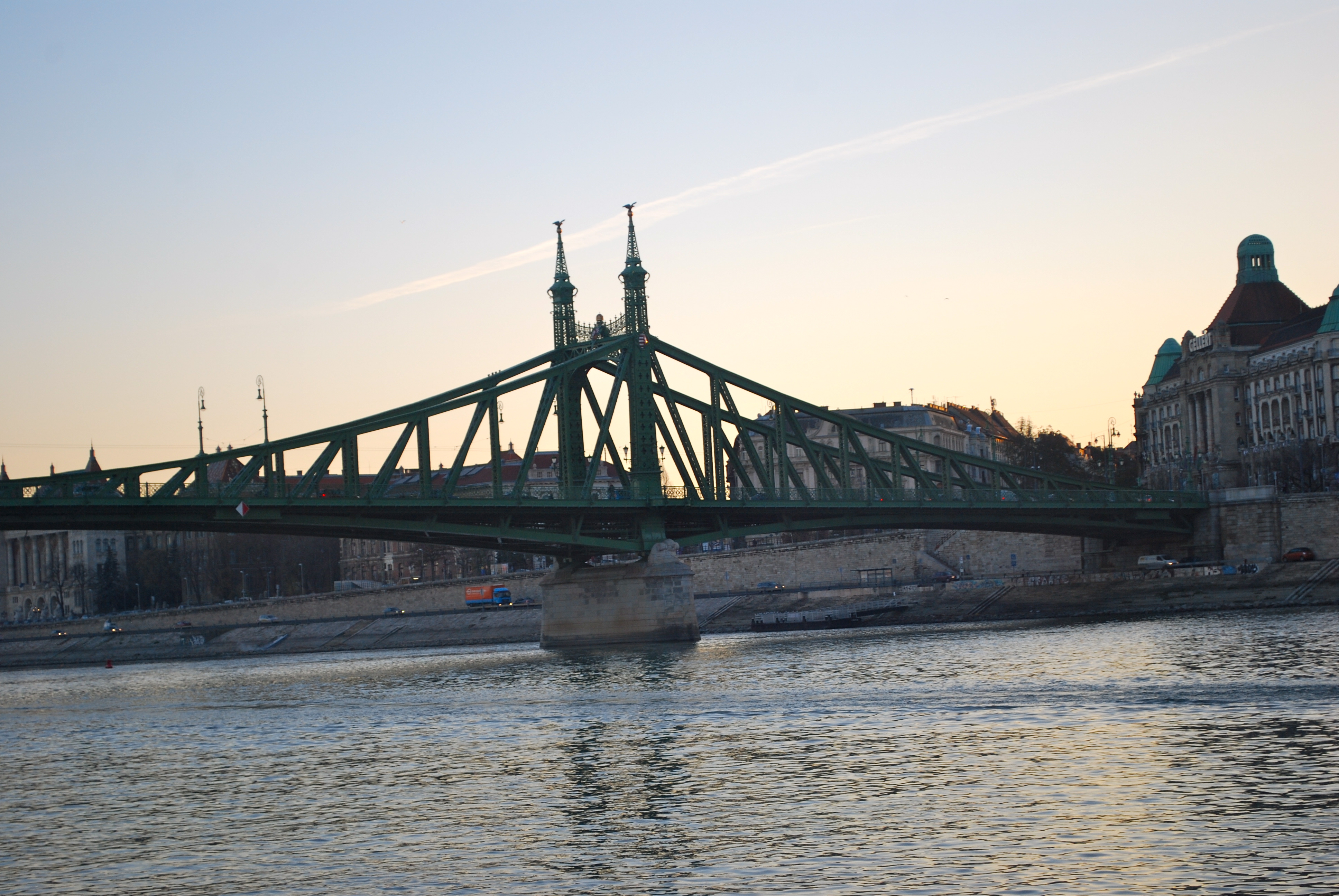
The Liberty Bridge as seen from our Juliet balcony

The Liberty Bridge as seen from our Juliet balcony
©Jean Janssen

Our boat, the River Beatrice is docked on the Pest side of the River and we had lovely daytime views of some of the ruins of Buda on the opposite side of the River (once separate cities).  During the war all the bridges connecting Buda and Pest were destroyed.  Today there are 10 lovely connecting bridges, each a little different and lovingly lit at night.  We are docked between the Liberty and the Elizabeth bridges, right in the heart of it all.

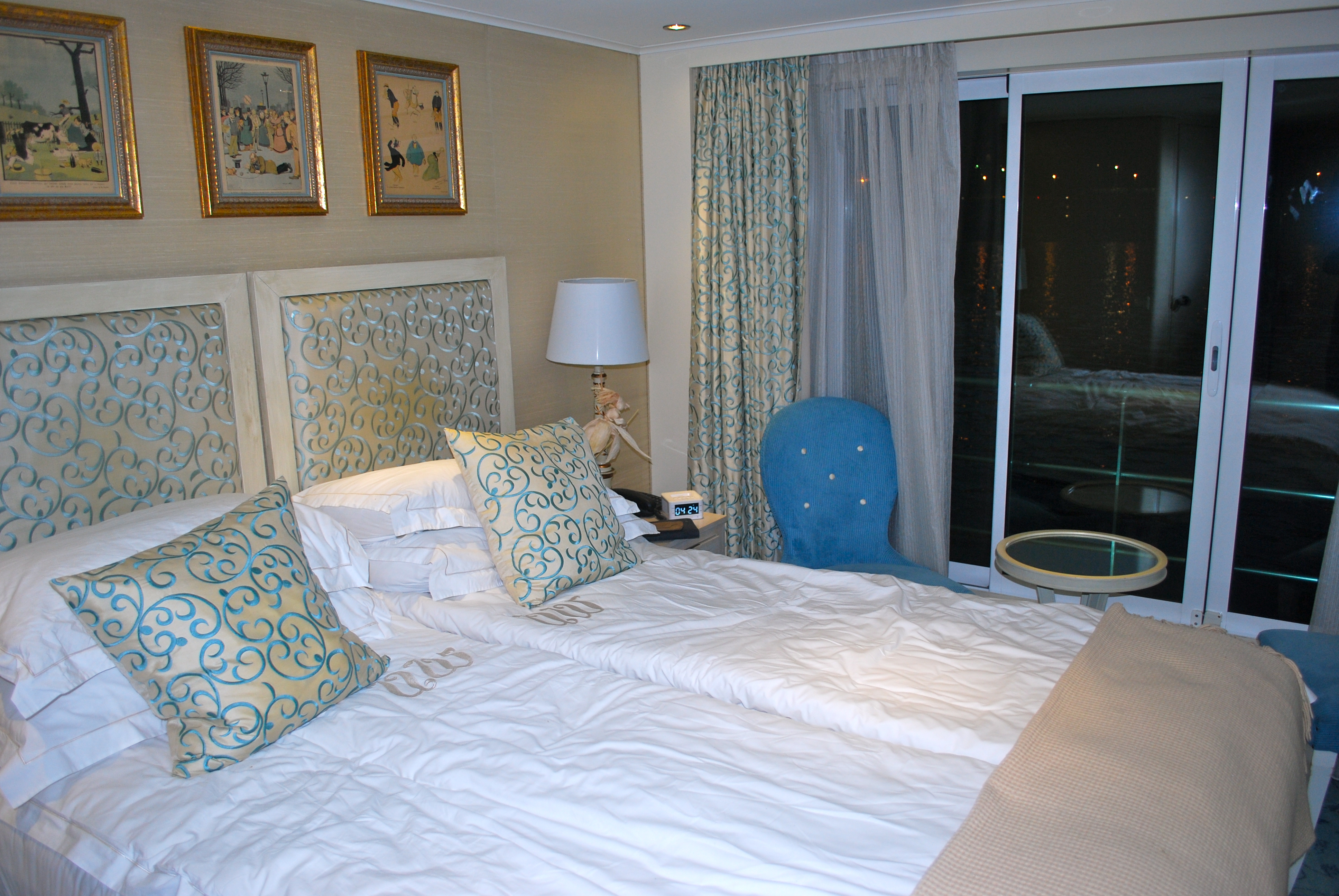
Our room aboard the Uniworld River Beatrice. ©Jean Janssen

Our room aboard the Uniworld River Beatrice.
©Jean Janssen

For Boris and I, this is our first river cruise.  While we knew the boat would be smaller, we were shocked by the diminutive size.  There are 142 passengers on board, mostly Americans.  The staff is all European and had just come off a break.  This is the company’s first Christmas Market cruise this season.  Our room is quite lovely, decorated in a soft blue and cream.  The beds are extremely comfortable.  The bathroom is extremely small, just the basics.  But is it a beautiful white marble and has L’Occitane bath products.  There is plenty of storage for a week’s worth of clothes.

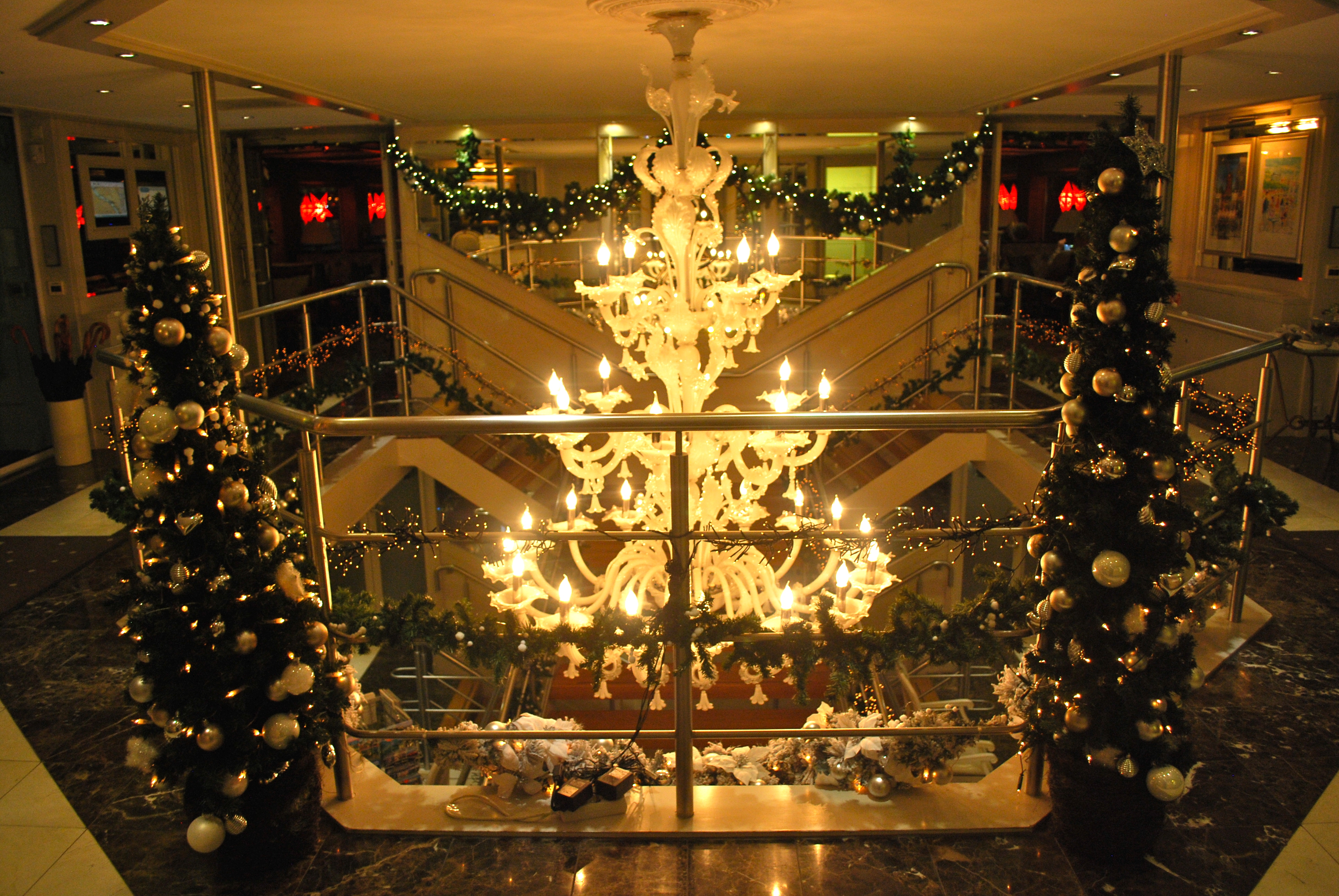
Christmas aboard Uniworld's River Beatrice. ©Jean Janssen

Christmas aboard Uniworld’s River Beatrice.
©Jean Janssen

available 24 hours a day  aboard the River Beatrice. ©Jean Janssen

available 24 hours a day
aboard the River Beatrice.
©Jean Janssen

The highlight of the room is the Juliet balcony.  It is too cold to leave open for long periods, although one passenger claims she left hers open all night.  You can’t go out on the balcony, but the door opens floor to ceiling and it is wonderful for viewing or photographs.

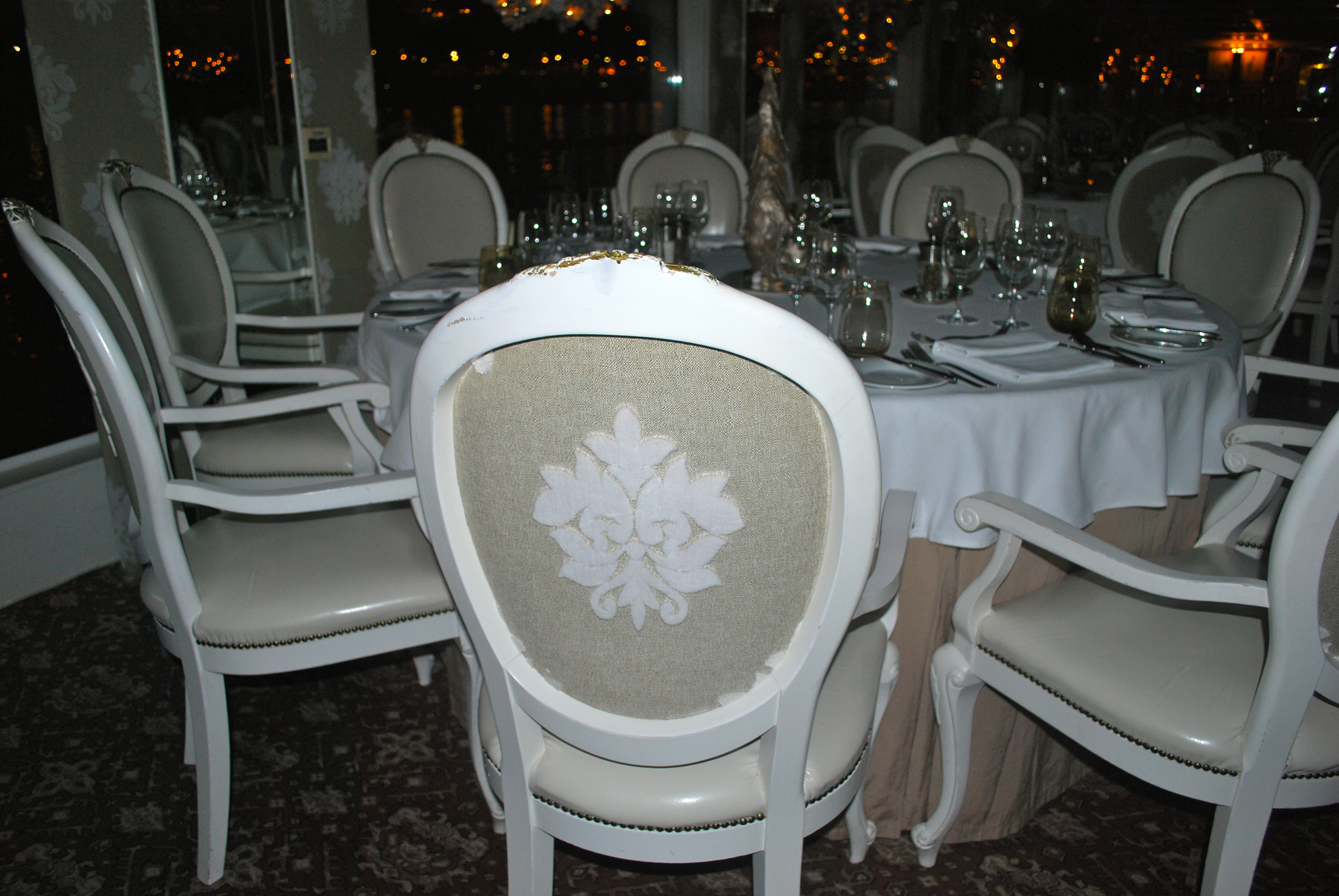
At the front end of the ship is the comfortable Lounge in its deep reds.  Below it is the dining room decorated in neutrals with white and silver Christmas decorations-lovely.  Gingerbread Houses are found throughout the ship.  On the opposite end of the ship is the Captain’s Lounge and Library, open 24 hours a day with a fancy coffee machine.  There is outdoor sitting which would be perfect in warmer weather.  On the lower floor there is a very small gym and a self-serve laundry facility.  The top level is the sun deck, nicknamed the freeze deck by the program manager in his presentation.

Dining Room decor aboard the River Beatrice.  Emma would love these chairs. ©Jean Janssen

Dining Room decor aboard the River Beatrice. Emma would love these chairs.
©Jean Janssen

The ship focuses on regional dishes in the dining room.  Everyone eats at the same time, but service was very efficient.  Beer, wine, and soft drinks are complimentary in the dining room during meal times.  All the tables are for groups.  Intimate couple dining is not available.  If you don’t like visiting with your fellow passengers during mealtimes, you are going to be disappointed.

Night view from our Juliet balcony in Budapest. ©Jean Janssen

Night view from our Juliet balcony in Budapest.
©Jean Janssen

We enjoyed our first evening aboard the River Beatrice, but it is now time for some much-needed sleep.  Good night from the blue Danube.

Posted in cruises, international, River Cruise | Tagged , , , | Leave a comment

Take me out to the Ballgame

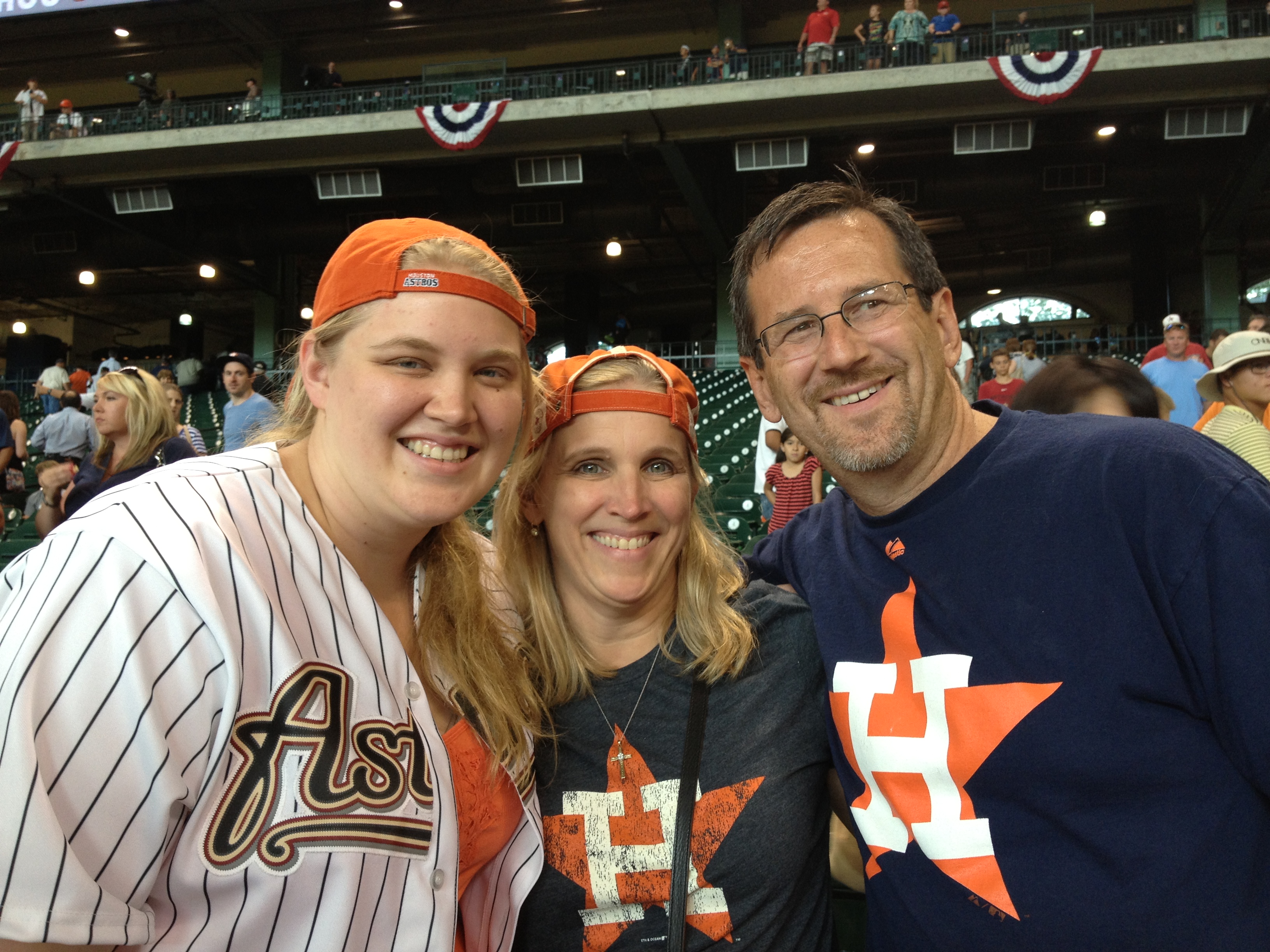
Maggie, Emma, and Dudley sport Astros gear for the game. ©Jean Janssen

Maggie, Emma, and Dudley sport Astros gear for the game.
©Jean Janssen

Its Memorial Day and what better way to spend the day than a baseball game.  Ok, it is indoors, but come on its Houston and its 90 degrees (F) outside.  For my non-American readers, Memorial Day is our day of remembrance for those who died in the service of our country and in defense of democracy.  It is a work holiday for those not in the retail, restaurant, or entertainment industry.  Don’t bother trying to get your dry cleaning done; those shops are all closed.

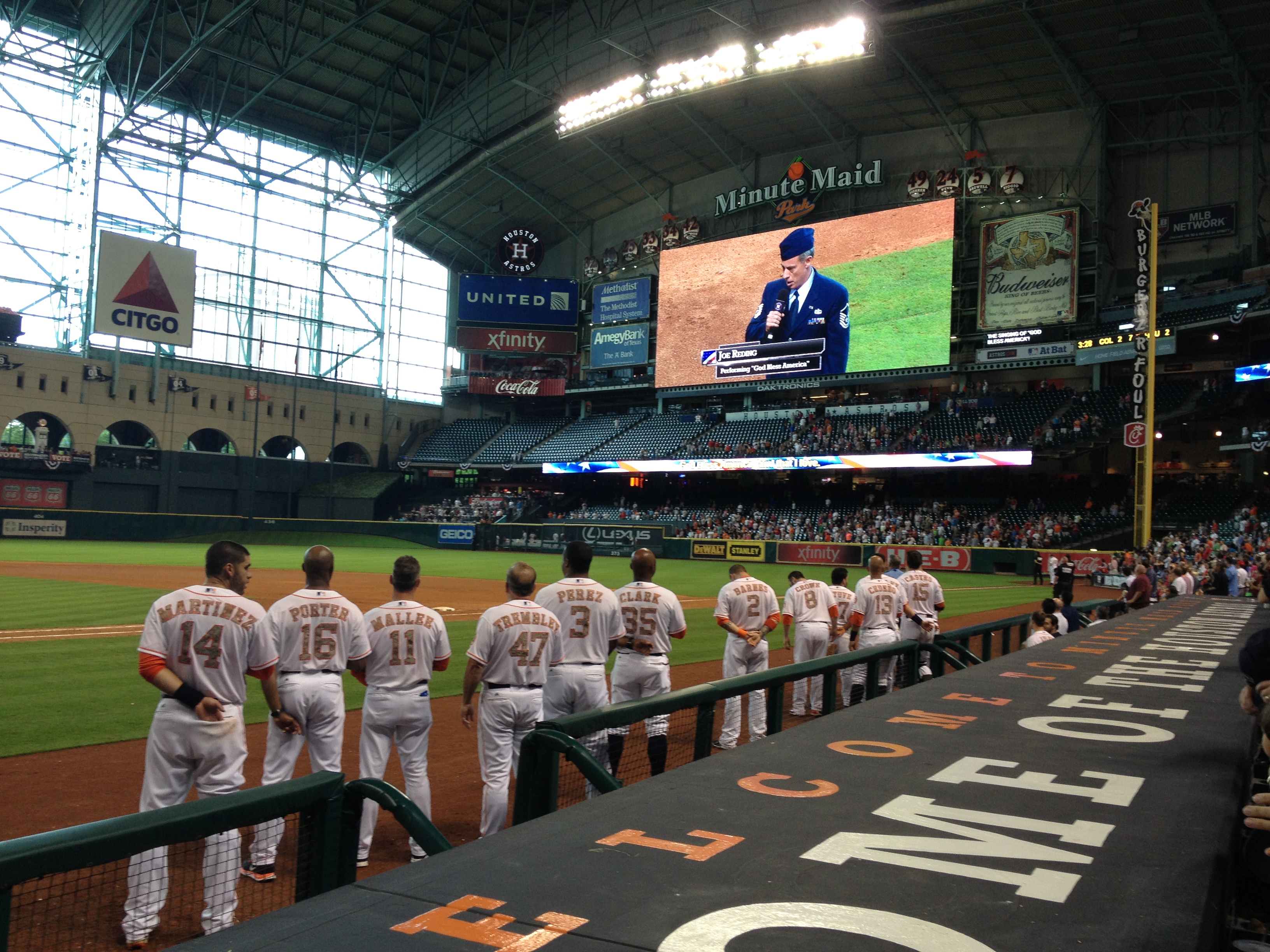
The National Anthum and American the Beautiful were lead by a serviceman soloist. ©Jean Janssen

The National Anthem and American the Beautiful were led by a serviceman soloist.
©Jean Janssen

Because of the holiday, there were lots of cool extras at the game. Members of the various branches of the service and veterans of various military operations were presented and honored before the game.  There was a huge American flag on the field held by servicemen and women and an air force officer who led us in the National Anthem and later in the game, America the Beautiful.  The first pitch was thrown out by a 90-year-old veteran of WWII and survivor of the 1941 attack on Pearl Harbor.  The teams had special uniforms with the words and numbers in  a camouflage fabric and camouflage hats.

From my first row seat behind the Astros dugout. ©Jean Janssen

From my first row seat behind the Astros dugout.
©Jean Janssen

We were in the Jack in the Box section, but they started handing out coupons at the top and ran out before they got to the first and second rows.  I guess they figure if you get to sit that close to the dugout you don’t need the coupon perk.  Yes, Natasha got one of the best seats in the house, right behind the home team dugout.  We got to see that action up close and the coaches and players coming and going.  If you want to be heard, this is the place to sit.  You can also vote on the best looking players-our group did not come to a consensus.

Pretty good seat huh? ©Jean Janssen

Pretty good seat huh?
©Jean Janssen

I was in the first row, second seat in.  (The first seat is not so good since you are directly behind the camera.)  I was in the background on the each shot when a left-handed batter came up.  Put on your lipstick Natasha; due to the length of the game several applications were needed.  It was actually a lot of pressure.  I wanted to look involved; couldn’t scratch; and didn’t want to be shoving food down my throat.  I am sure several of you saw me. 🙂

Craig Biggio is in white at the far end of our row.  Note the banners for Memorial Day and the warning sign for those seated in the first row. ©Jean Janssen

Craig Biggio is in white at the far end of our row.
Note the banners for Memorial Day
and the warning sign for those seated in the first row.
©Jean Janssen

Just down the row from us was Astros’ legend, Craig Biggio.  He is a really nice guy and now part of the Astros administration (assistant to the GM) and actually a neighbor; he lives two blocks from us and his children went to the same parochial school as Rocky.  Most importantly, he is Maggie’s favorite.  She was actually wearing a copy of his jersey at the game.  I thought she was going to swoon.  He got there just before the game started, climbing over the fence.  He stayed for about seven innings.  He left when I went to the bathroom.  Perhaps he thought I was leaving and there was no reason to stay.  Later the new Astros President Reid Ryan came and sat in the same row; I actually passed him in the aisle when I went up to the restroom.

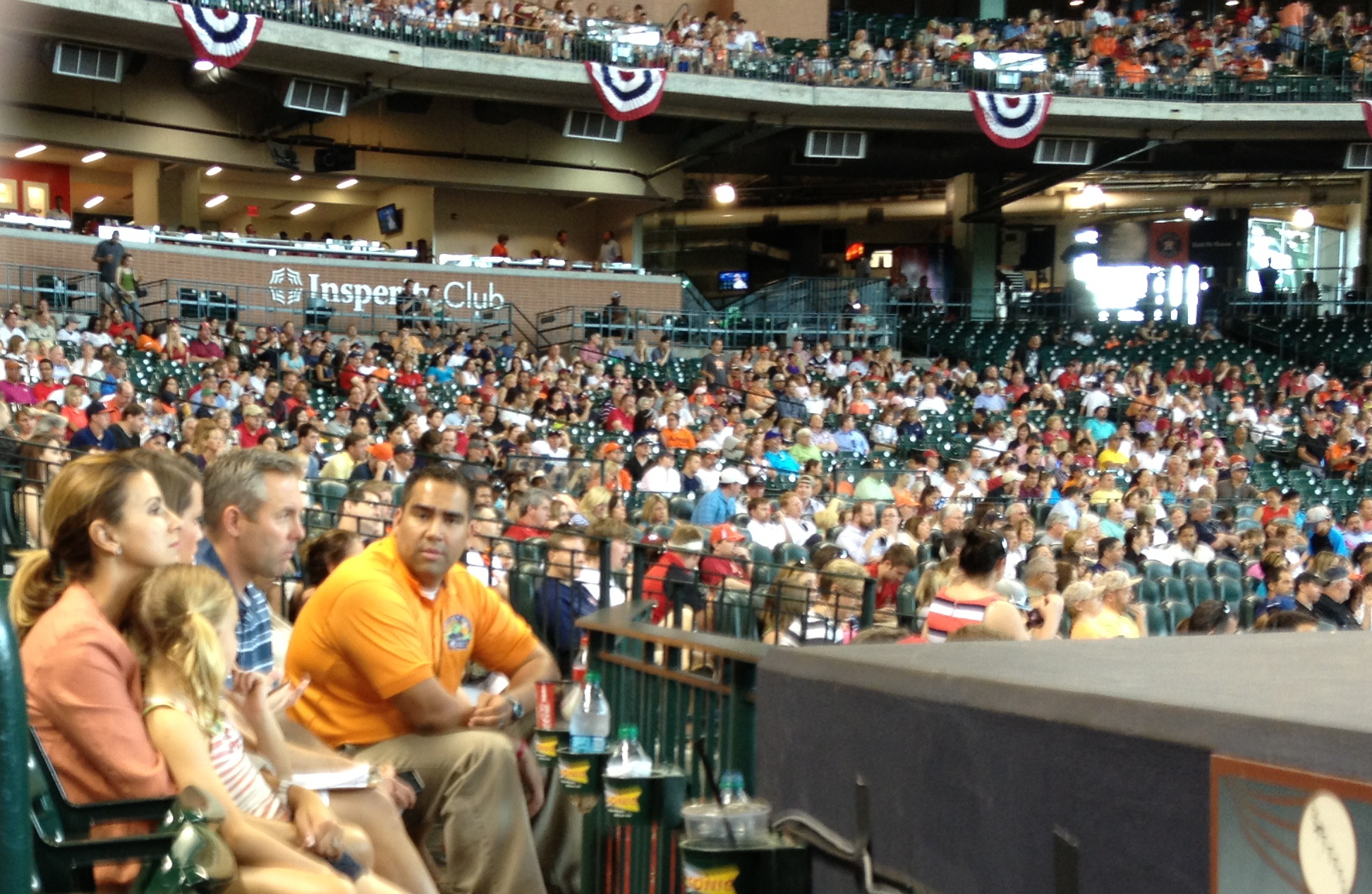
Also on our row, the new Astros President of Business Operations, Reid Ryan and his family. ©Jean Janssen

Also on our row, the new Astros President of Business Operations, Reid Ryan (in blue and white striped golf shirt) and his family.
©Jean Janssen

Ryan is the eldest son of Hall of Famer Nolan Ryan.  He spent his childhood running around the Astrodome, often serving as a batboy.  At the May 17th press conference announcing him as President of Operations, Ryan said that “Today really is a dream come true because you grow up an Astros fan here in Houston.  Everybody’s got their hometown team that they had, and the Astros were mine. This is just a very special day.”

We saw a great game from the perfect seats. ©Jean Janssen

We saw a great game from perfect seats.
©Jean Janssen

It wasn’t all people watching.  We actually saw a really good game, tied most of the time.  As it progressed, the action seemed to build-although I am not a fan of ending the inning with the bases loaded when we are at bat.  I got to see a squeeze play and a walk-off game winning hit.   (Dudley, who is a great fan of the game, educated me on the terminology.)

This couple got caught by the kissing cam.  He followed it up with an on-screen proposal.  She said yes.  I saw them as we left the stadium and they agreed to a picture. ©Jean Janssen

This couple got caught by the kissing cam. He followed it up with an on-screen proposal. She said yes. I saw them as we left the stadium and they agreed to a picture.
©Jean Janssen

They are going to keep you interested.  There are big screen events throughout the game.  The camera will zoom in on you and superimpose bongos on the screen for you to “play”.  There is the oblivious cam where they search for clueless fans and start a timer until the patron realizes they are on the big screen.  Test your skills as the baseball is quickly shifted between cans on the screen and you have to guess where it ends up.  There is also a kissing cam; the camera focuses on a couple inviting them to kiss on screen.  One cute young couple got picked and he followed it with a proposal with words on the big screen.  He even got down on one knee.  She was clearly surprised and shook her head yes.  I ran into them after the game and they agreed to a picture for the blog.

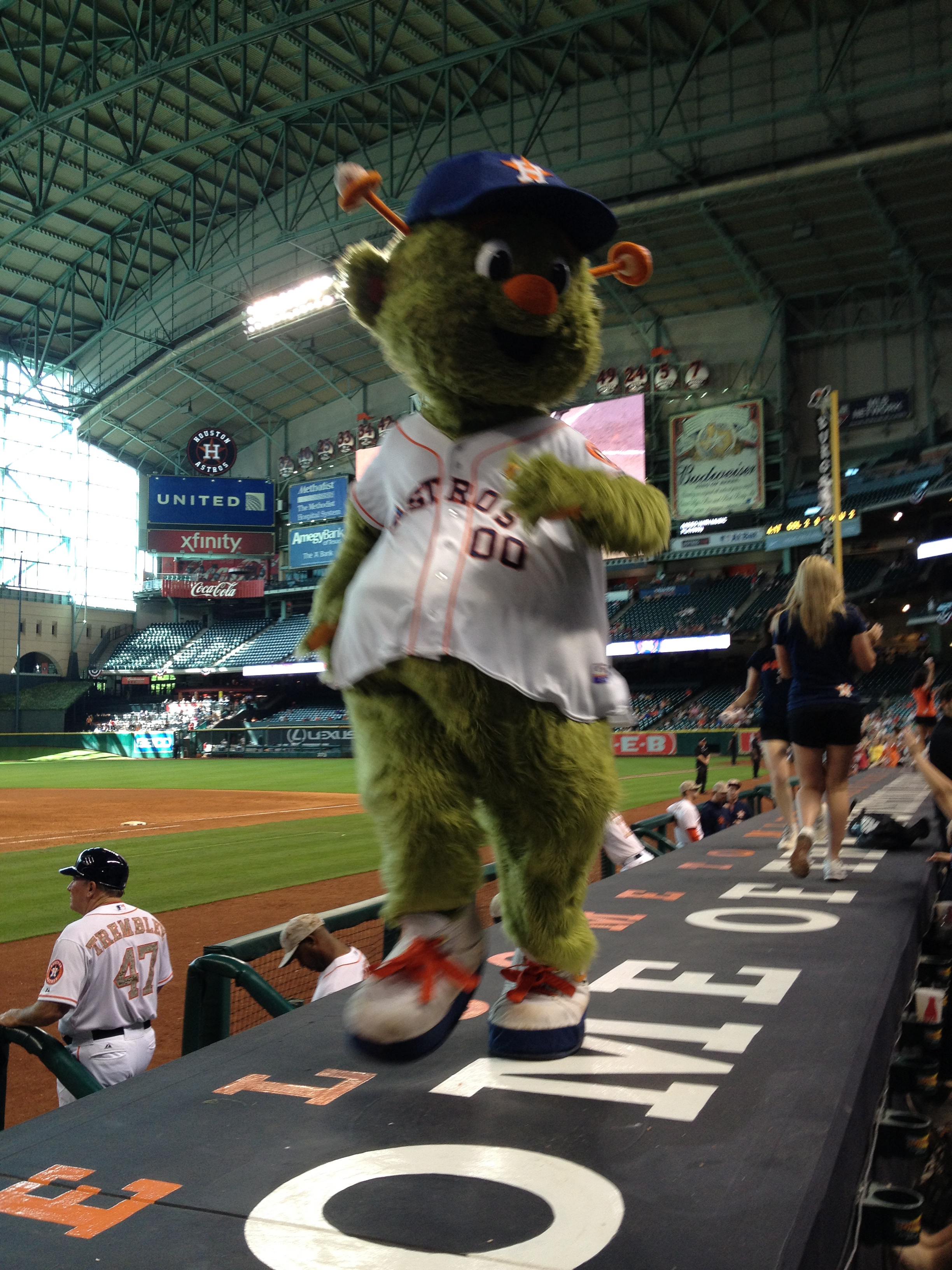
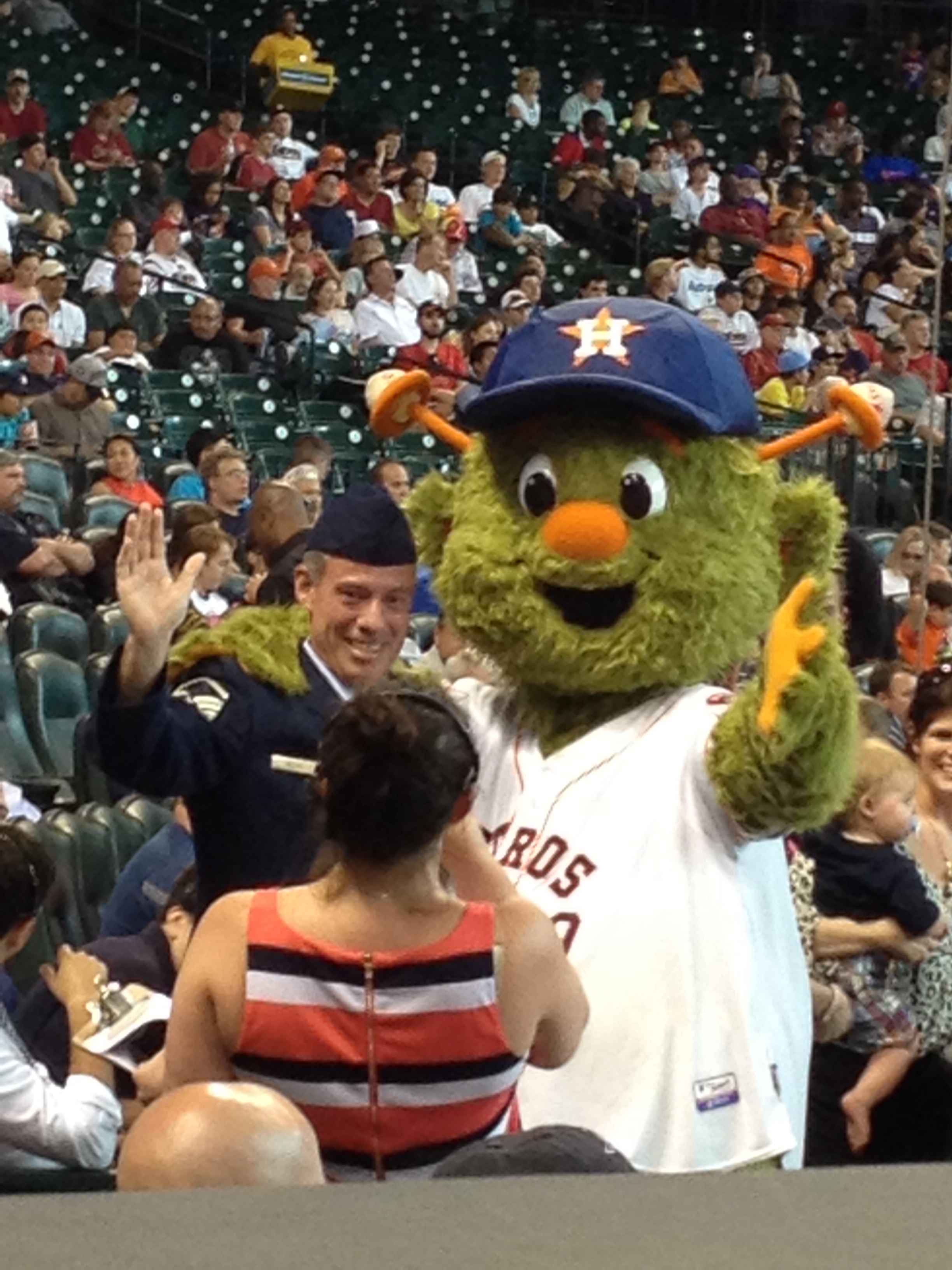
From 1990-1999, the Astros mascot was Orbit, a large furry green alien whose name and origin pay homage to Houston’s association with NASA and the city’s nickname of Space City.  In this, the Astros’

Orbit struts his stuff on the catwalk, aka the roof of the Astros' dugout. ©Jean Janssen

Orbit struts his stuff on the catwalk, aka the roof of the Astros’ dugout.
©Jean Janssen

inaugural season in the American League, Orbit has returned bigger than ever.  He strutted his stuff on the catwalk (also known as the roof of the Astros dugout), shot tee shirts out of cannon, hung out with players and the soloist, climbed over the same fence as Biggio, and most importantly…wait for it…gave Natasha a high five!!

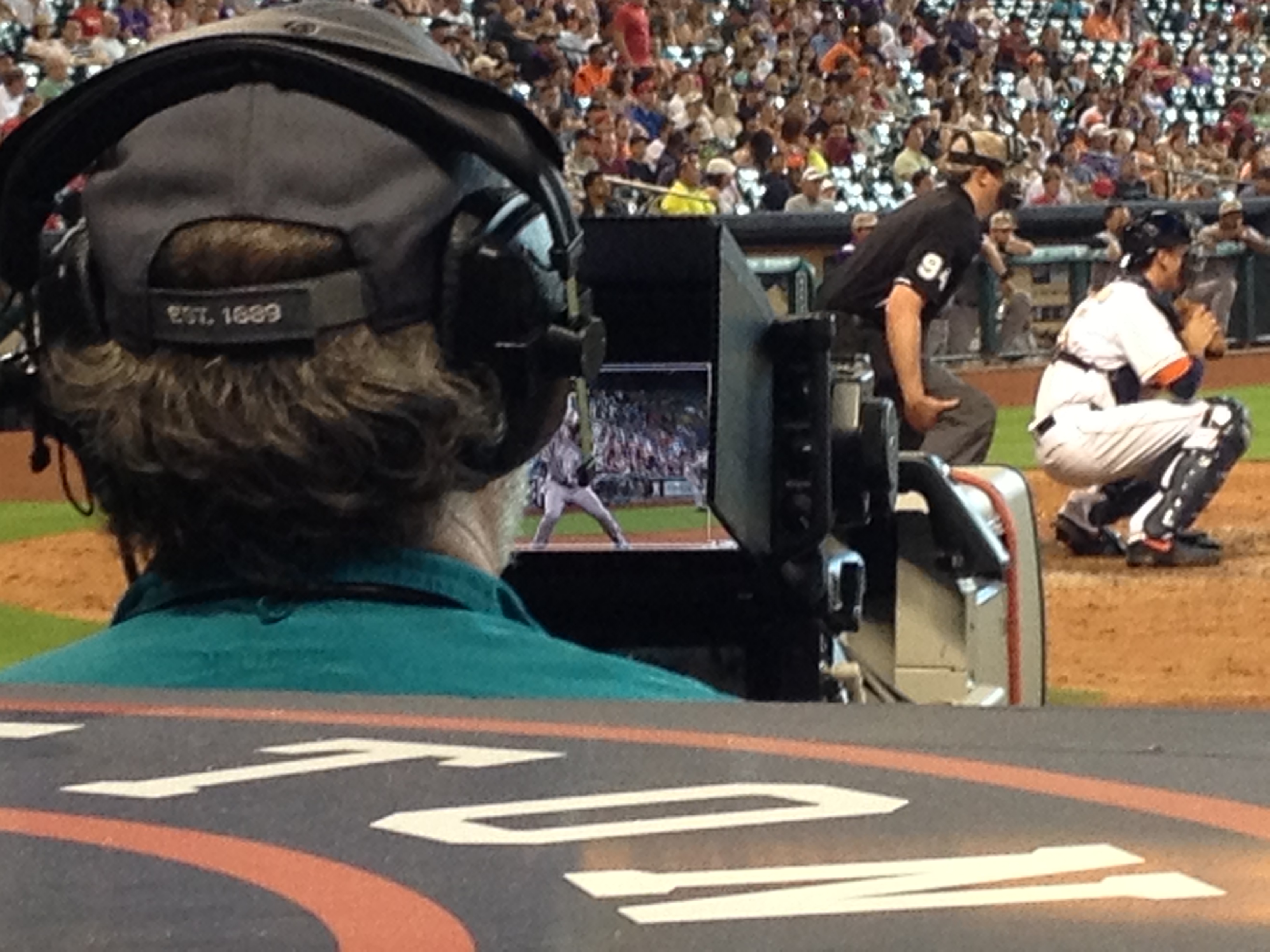
I had sat in these seats before on Emma’s invitation and I thrill to all its attractions.  Obviously, you have an excellent view of the game and the players.  You are in the background of the shots on left-handed batters, and you can watch the goings on of the cameraman’s screen from your seat.

From my seat, I could watch the action live and follow it on the camera. ©Jean Janssen

From my seat, I could watch the action live and follow it on the camera.
©Jean Janssen

Natasha got a high five from Orbit. ©Ann Janssen

Natasha got a high five from Orbit.
©Ann Janssen

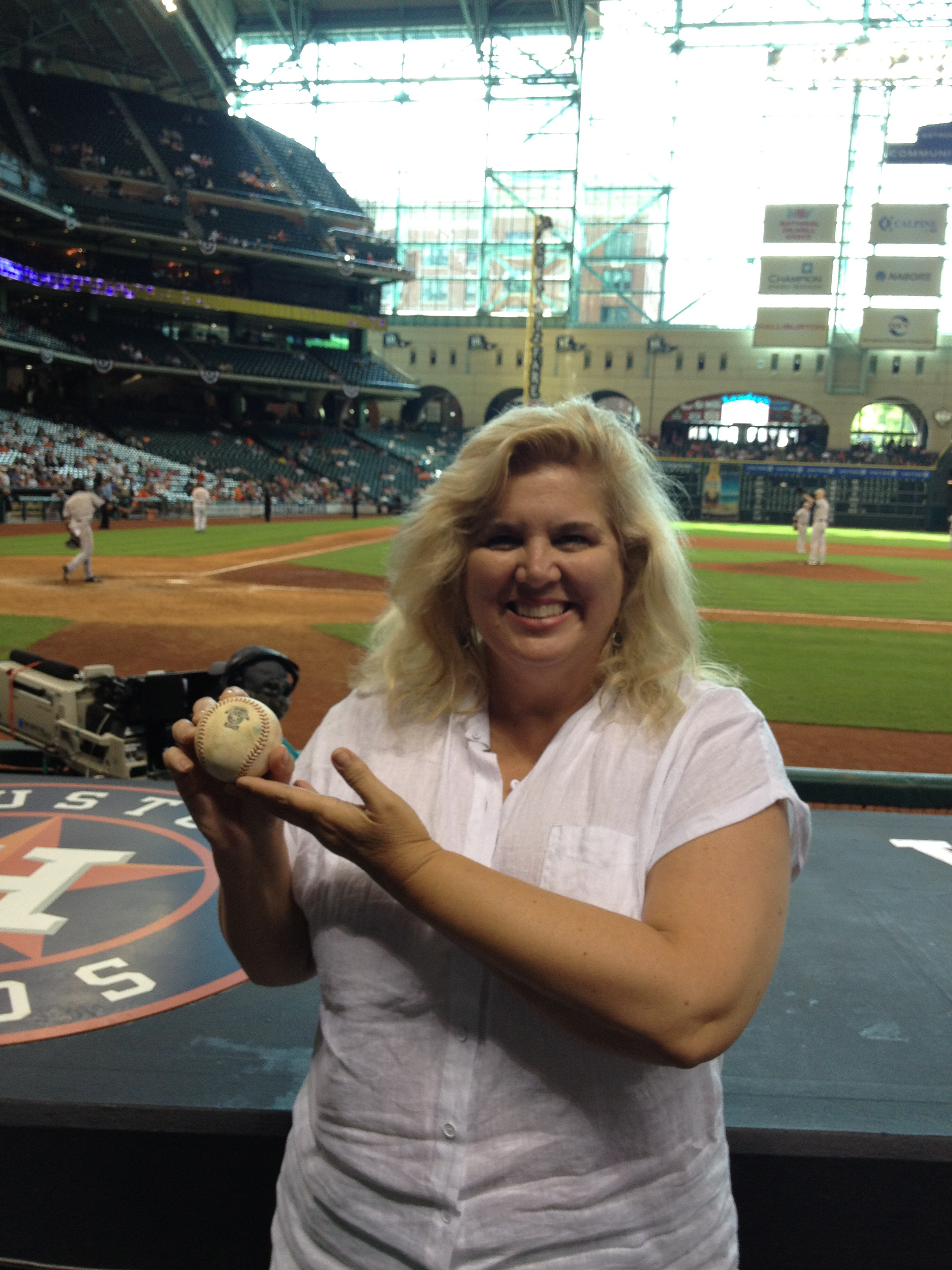
But the thrill I had hoped for was to get one of the practice balls.  The game balls are tossed by the batboy to Astros PR reps who sell them to fans.  (A few fans might also be lucky enough to catch a foul ball or a homerun.)  The practice balls are often tossed over the dugout by players or coaches to the adoring fans.  They love to toss them to kids.  It has been my dream to get ball.  This year they are extra special because they are stamped for the American League Inaugural Season.  When we arrived at our seats I knew I was sunk.  There were kids everywhere.  When I went to the bathroom later in the game, Maggie even got a ball.  (She is headed to do volunteer work in Rwanda in a week so keep her in your prayers.)

Natasha and her Astro's Inaugural Season official ball. ©Ann Janssen

Natasha and her Astro’s Inaugural Season official ball.
©Ann Janssen

Then late in the game (when the kids had started to clear out) I called again to Coach Clark for a ball.  He had to turn his attention to giving signals so I thought my opportunity was lost.  Then after the start of the inning, out of the blue (and with no person or hand in sight) Coach Clark rolled a ball to me across the dugout roof.  I was thrilled and so surprised I forgot to say thank you.  Wow!!  It’s all scuffed up and everything.  The next inning I was able to catch Clark’s attention and thank him.  Dave Clark is the Astros first base coach.  He has also served the Astros as the third base coach and interim manager.

I thought it couldn’t get any better.  Tied at the end of nine innings, we even got to see extra innings of play.  Although people continued to leave as the game drew out, those that stayed-like us-got a real treat.  We won in the bottom of the 12th inning with a walk-off game winning hit.  The stadium erupted and the remaining fans more than compensated for those that had already left.

Rocky got this great shot of the gatorade being dumped on Brandon Barnes and a female reporter.  Barnes had the game-winning walk off hit. ©Theodore Crane

Rocky got this great shot of the gatorade being dumped on Brandon Barnes and a female reporter. Barnes had the game-winning walk off hit.
©Theodore Crane

A class act.  Astro Brandon Barnes continues to sign the fans' baseballs after a pie in the face. ©Jean Janssen

A class act. Astro Brandon Barnes continues to sign the fans’ baseballs after a pie in the face.
©Jean Janssen

After a players’ celebration on the field, a female news reporter pulled Brandon Barnes over to talk about his game winning hit.  The rest of the team had other ideas and Barnes got soaked in gatorade as did the front of the female reporter’s white shirt.  Rocky got a great picture.  (Looking for the best link on Brandon Barnes I noted that his wikipedia entry has already been updated to acknowledge the game-winning hit and that it was the first walk-off hit of the Astros’ season.)  It wasn’t over for Barnes.  He also got a shaving cream pie in the face.  He was a class act.  He continued to sign kids’ baseballs while the shaving cream burned.

Maggie, Natasha, and Rocky after the game. ©Ann Janssen

Maggie, Natasha, and Rocky after the game.
©Ann Janssen

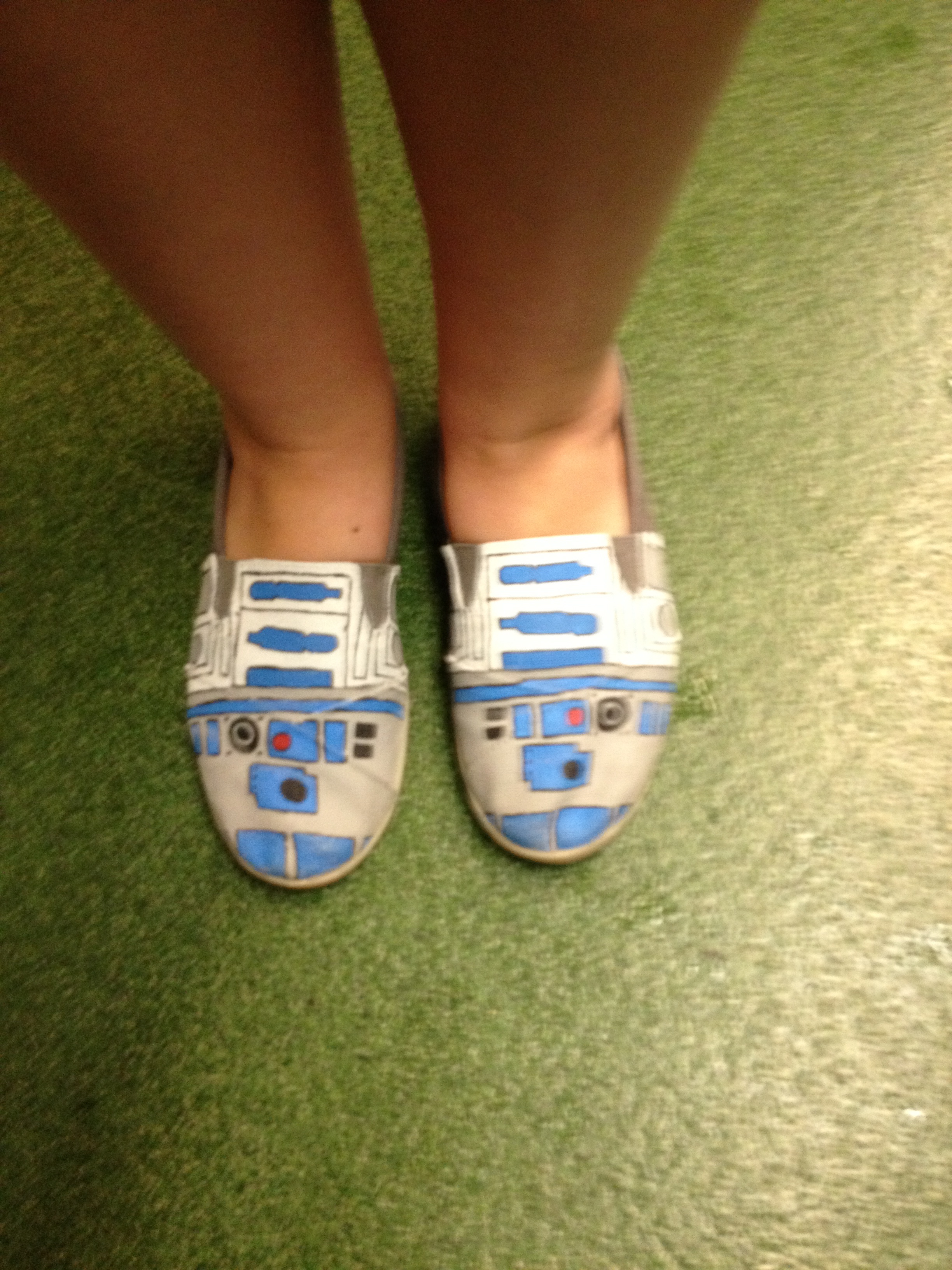
One fan's R2D2 shoes. ©Jean Janssen

One fan’s R2D2 shoes.
©Jean Janssen

What an awesome experience.  (Many thanks to Janice who does fan/crowd control on our row of seats.)  We continued to have fun on the way out.  I ran into the newly engaged couple and spotted one fan with these cool R2D2 shoes.  Who can just go home after that?  We went to the Original Ninfa’s on Navigation to celebrate with dinner and margaritas-nifaritas, strawberry, and sangria soaked.  There was a crowd so we had to wait a while to order which meant more time for chips, salsa, and drinks.  This fan stuff-particularly when you are on camera :)-is rough.

The post soaking interview with Brandon Barnes. ©Jean Janssen

The post soaking interview with Brandon Barnes.
©Jean Janssen

This guys gets around.  Orbit with the game's soloist. ©Jean Janssen

This guy gets around.
Orbit with the game’s soloist.
©Jean Janssen

Posted in domestic travel | Tagged , , , , , | 1 Comment

Rocky reaches 100 dives and the Elbow at Turneffe Atoll, Belize

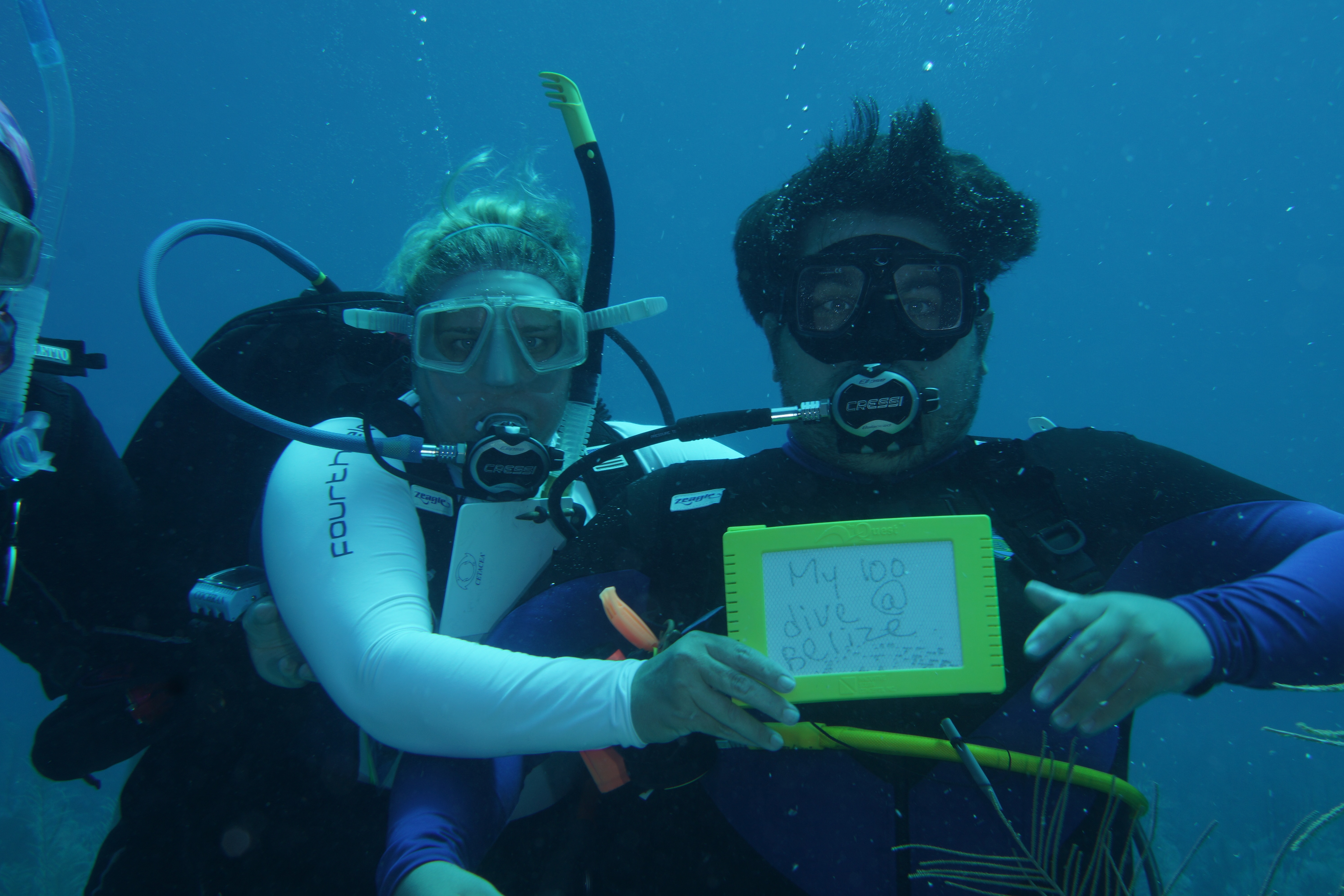
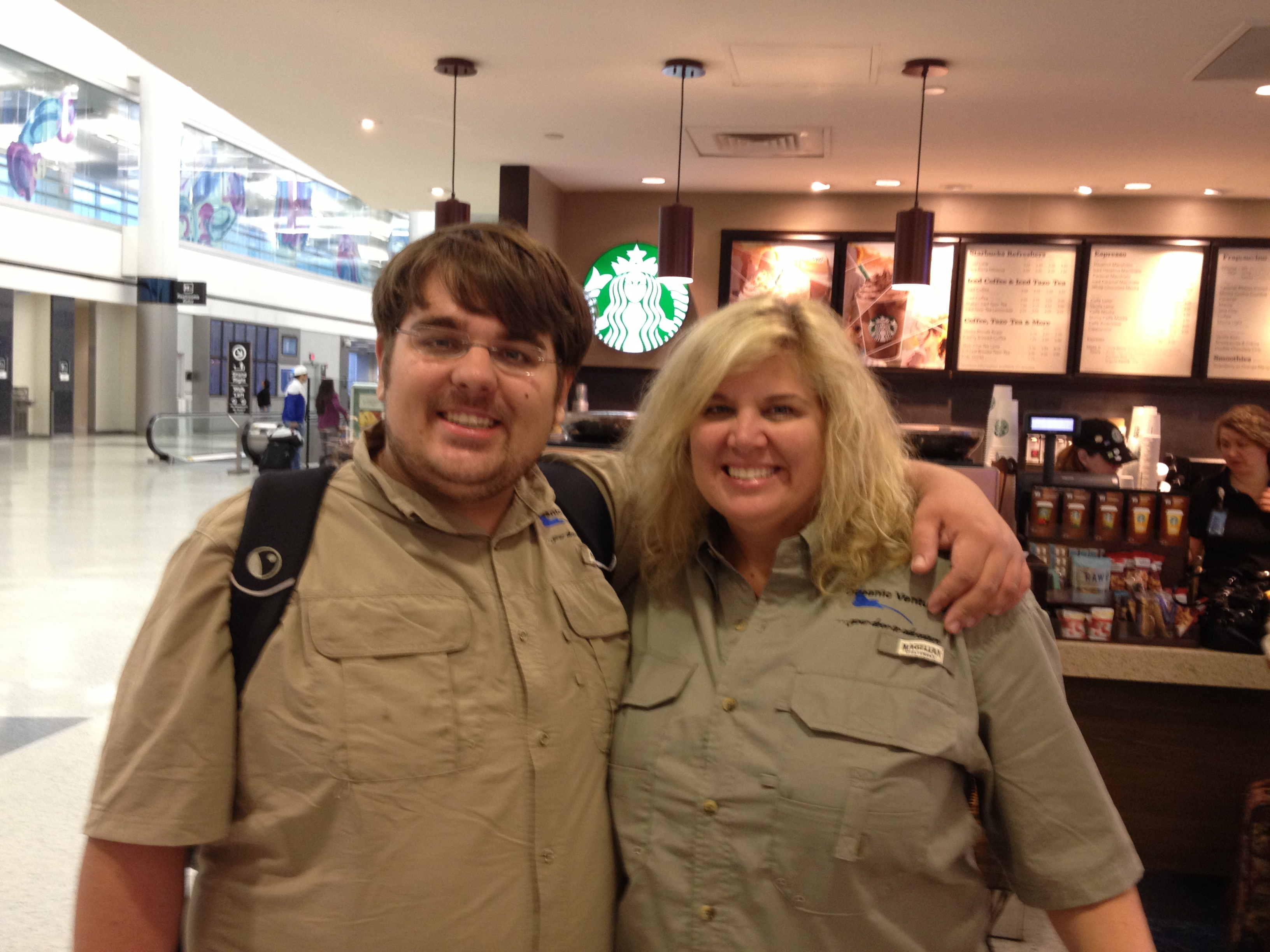
Rocky reached 100 dives on our trip to Belize.  He is now also a master diver.  Natasha the proud mom holding the slate. ©Bill Fuqua

Rocky reached 100 dives on our trip to Belize. He is now also a master diver. Natasha the proud mom is holding the slate.
©Bill Fuqua

Surfacing at the dive boat. ©Bill Fuqua

Surfacing at the dive boat.
©Bill Fuqua

Well it can’t always be fabulous.  After a terrific day of diving at the Blue Hole and Half Moon Cay, we tried unsuccessfully to reach one of the Atoll’s top dive sites, Lindsey’s Back Porch.  Swimming into heavy current for an hour really isn’t my thing, but my air did hold out.  There were beautiful schools of fish at the beginning and a turtle in the distance, but it went downhill from there.  We have been spoiled.  I am also bummed because Donna is out for the rest of the week to give her knee the chance to recover.

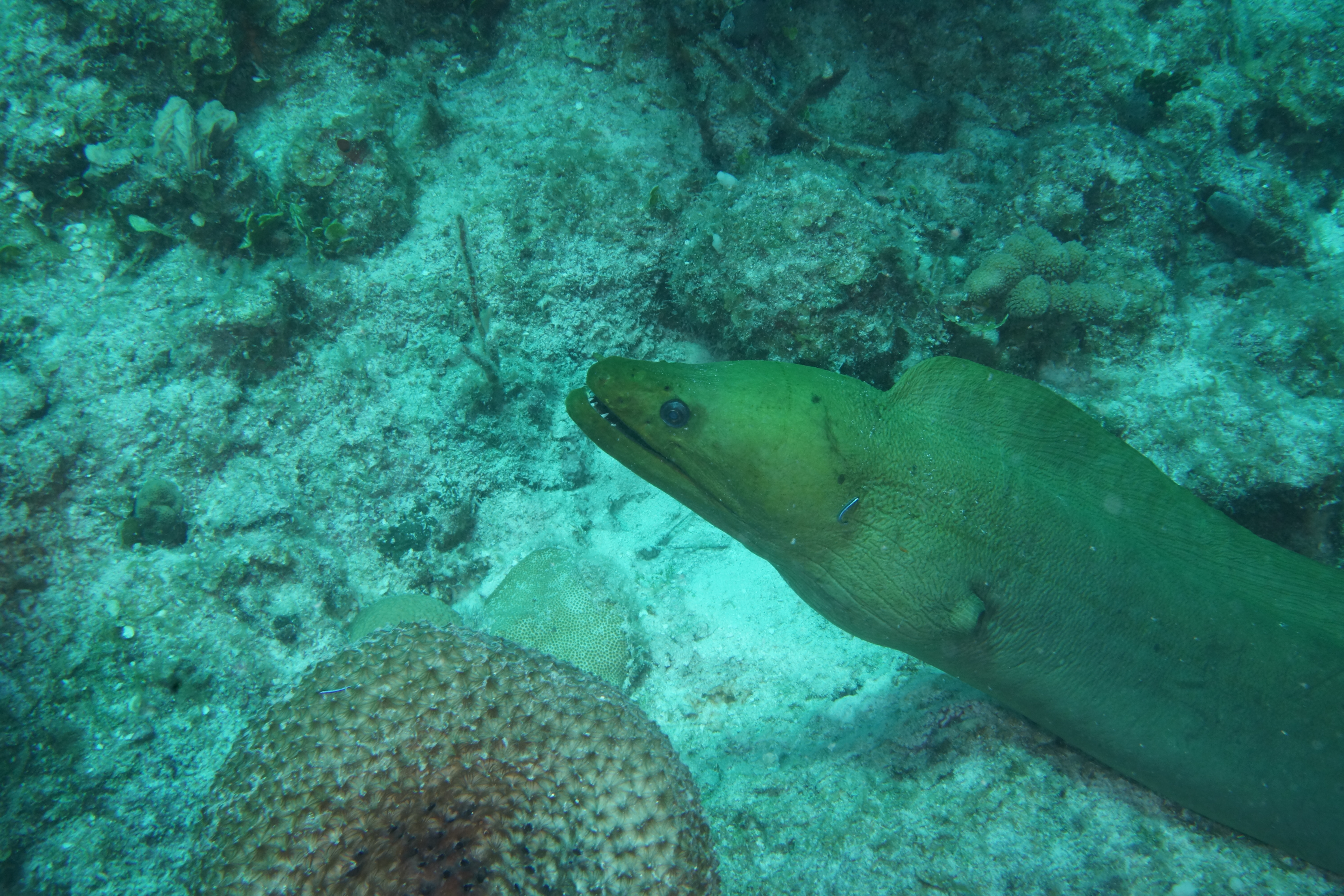
A green moray eel on the move. ©Bill Fuqua

A green moray eel on the move.
©Bill Fuqua

It was a day of contrasts.  The next two dives were what I like to call aquarium dives with colorful fish of an infinite variety everywhere.  Found more of my small crab with the blue pinchers, beautiful soft coral with blue tips, a super huge crab, and a wide variety of Caribbean reef fish.  We saw a free swimming green moray eel, unusual as they are usually in a small opening with just their face out and mouth open.

Christmas tree worms on the coral. ©Bill Fuqua

Christmas tree worms on the coral.
©Bill Fuqua

We saw even more on our last dive of the day and I introduced Rocky to Christmas tree worms that make their home in small openings in the coral.  They are (surprise, surprise) shaped like Christmas pines and pop closed when you approach.  Perhaps more fascinating is to watch them open again when they no longer feel threatened.  The worm actually never leaves the hole and the “tree” part is really the breathing apparatus.

We swam very close to a small school of horse-eyed jacks at The Elbow at the Turneffe Atoll, Belize. ©Bill Fuqua.

We swam very close to a small school of horse-eyed jacks at The Elbow at the Turneffe Atoll, Belize.
©Bill Fuqua.

The following day we head to The Elbow at the the southern tip of the Atoll.  This is the site to see large sealife and schools of big fish.  We were warned that this dive could be rougher than yesterday’s botched attempt to reach Lindsey’s Back Porch.  The Elbow did not disappoint.  We saw large schools of spadefish and snapper, southern stingrays, a hawksbill turtle, several barracuda, and were very close to a small school of horse-eyed jacks.  Of course my favorite was the beautiful spotted eagle ray we saw in the grassy flats that gracefully moved toward us before heading out.  The dive was not as challenging as I expected.  There is no predicting the current.

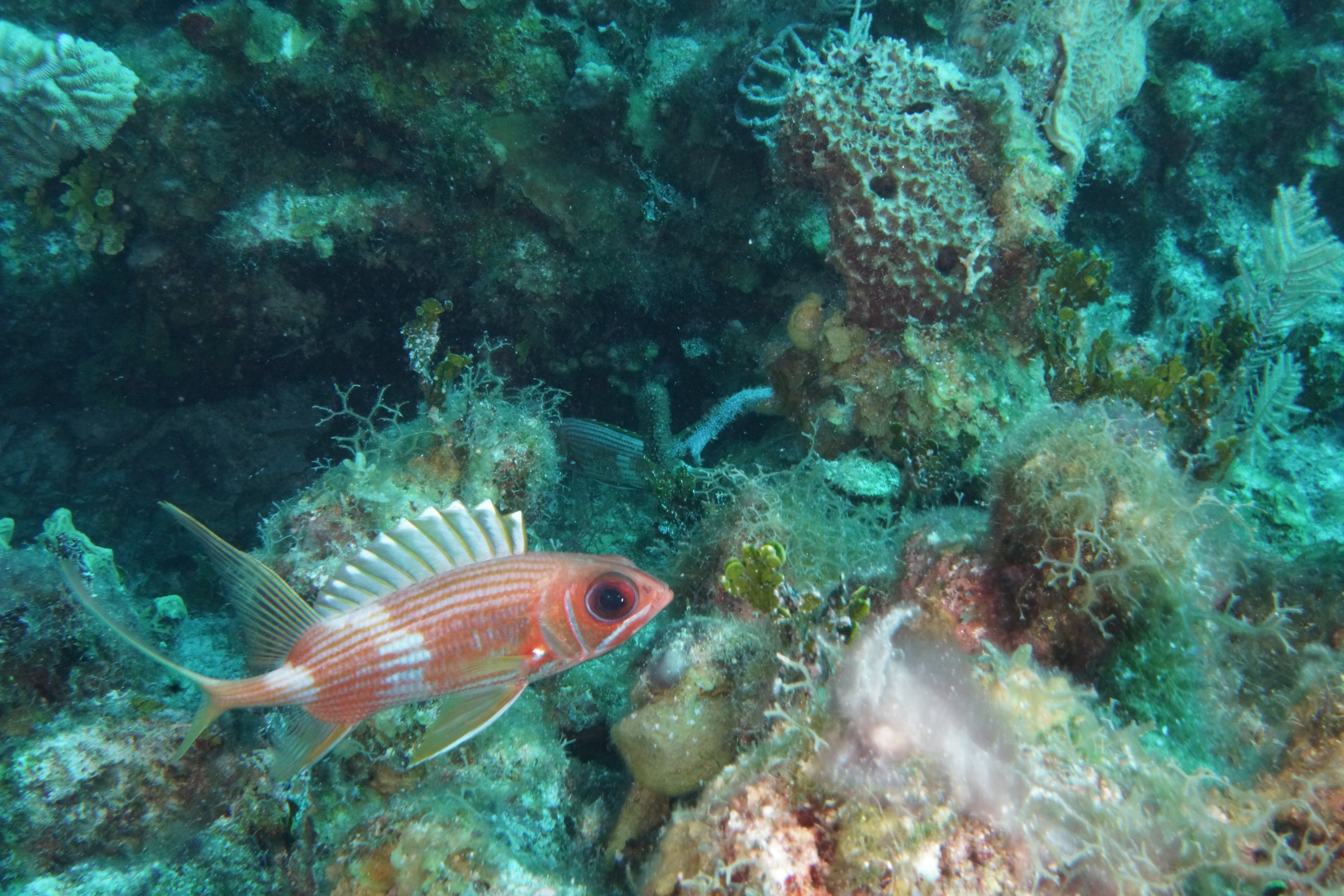
The big eyes and retrackable dorsal fin of the squirrel fish captures your attention.

The big eyes and retrackable dorsal fin of the squirrelfish capture your attention. They feed at night and during the day can be found under ledges.
©Bill Fuqua

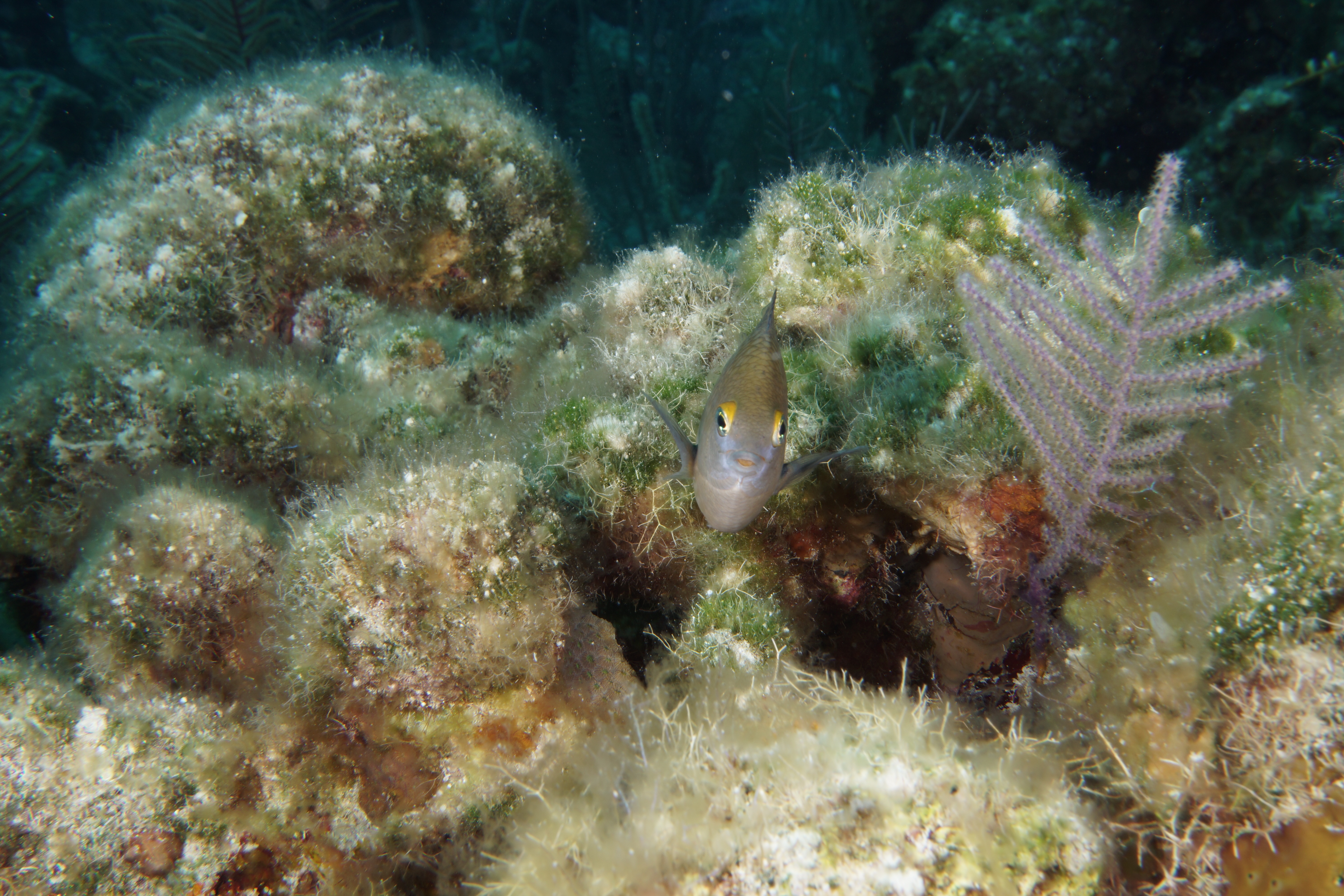
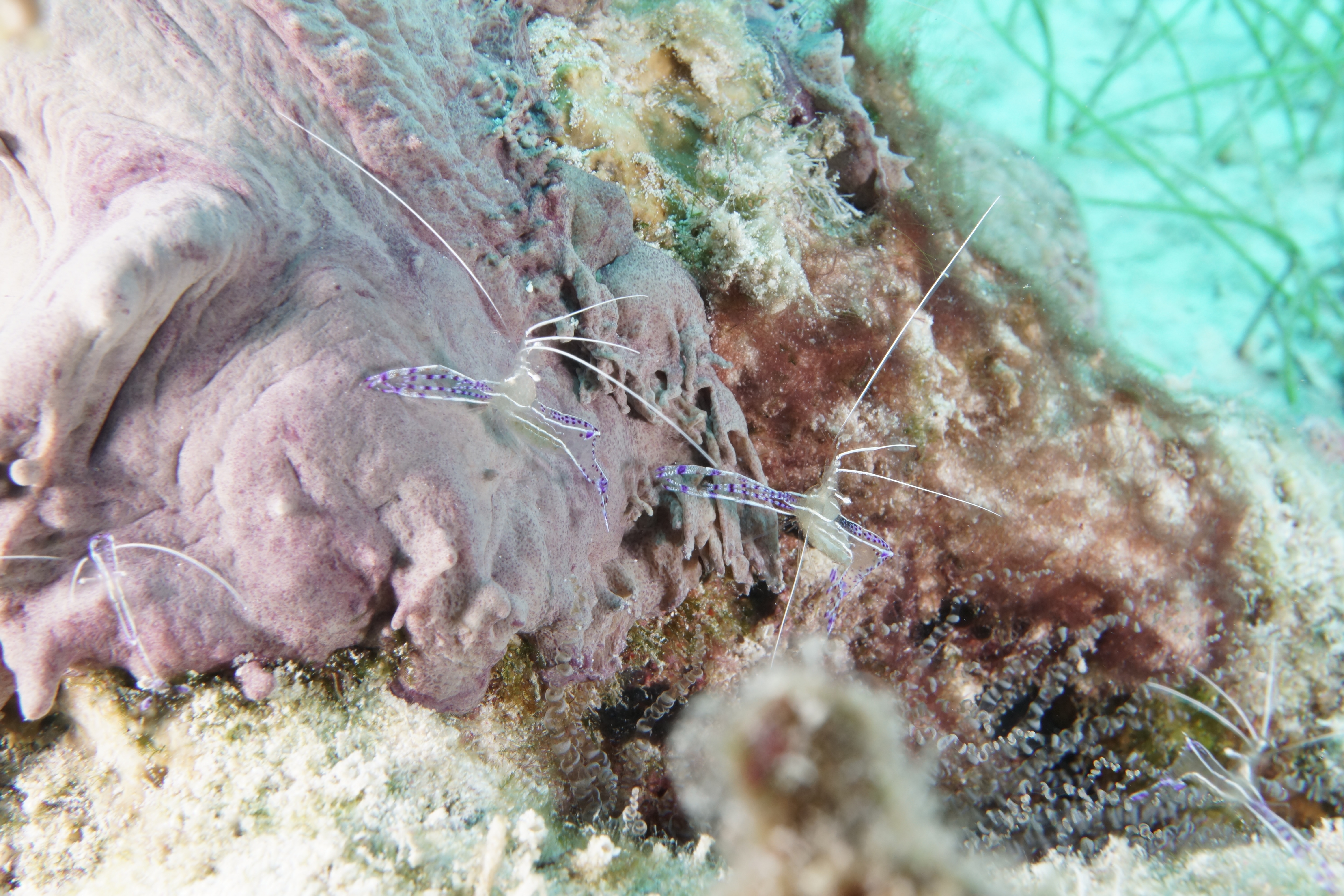
Our next dive was outside the reef and the visibility was poor.  However, we still saw lots of goatfish, squirrelfish (with their large eyes), yellow-headed jawfish, a barred hamlet, a juvenile drum, along with the seemingly millions of small smooth trunkfish.  I spotted another of the small Pederson shrimp.

Our final dive for the day was through clear waters and we saw another free-swimming green moray eel.  Rocky found a spotted moray on his own and a really large lobster. I was treated to another spotted eagle ray and indigo hamlet.  The great find of the dive was a spotted toadfish, rare, but a more frequent find on this atoll than in other parts of the world.

The spotted toadfish. Turneffe Atoll, Belize ©Bill Fuqua

The spotted toadfish. Turneffe Atoll, Belize ©Bill Fuqua

I have been taking a fish ID class through Oceanic Ventures and we had our final class tonight.  It has really enhanced my dives and I find myself naming fish throughout and coming back to check the reference material when I am not sure of what I saw.  There is only one more practice day; tomorrow is our last day of diving.  Some people are doing two dives and then going to see the manatees, but I will be joining Rocky for all three.  On the third, his open water dive total will be 100.

Bill stopped a different variety of pufferfish from the ballonfish I spotted.  His is a more rare variety. ©Bill Fuqua

Bill stopped a different variety of pufferfish from the ballonfish I spotted. His is a more rare variety.
©Bill Fuqua

The first dive was another aquarium dive, only now I can name what I am seeing.  Not only am I identifying the fish, but also their behaviors as well.  I saw “hanging” Creole Wrasses, a “drive-through car wash” at a cleaning station, kissing fish, and who can forget Donna’s boyfriend.  The second dive at Midway was even more populated.  Of course since it is my last day, the Atoll treated me to the sighting of a spotted eagle ray.  I found a ballonfish, a type of pufferfish.  Our dive guide grabbed it and it puffed up fully.  We all got to touch the spines and watch it slowly return to its normal size as it swam away.

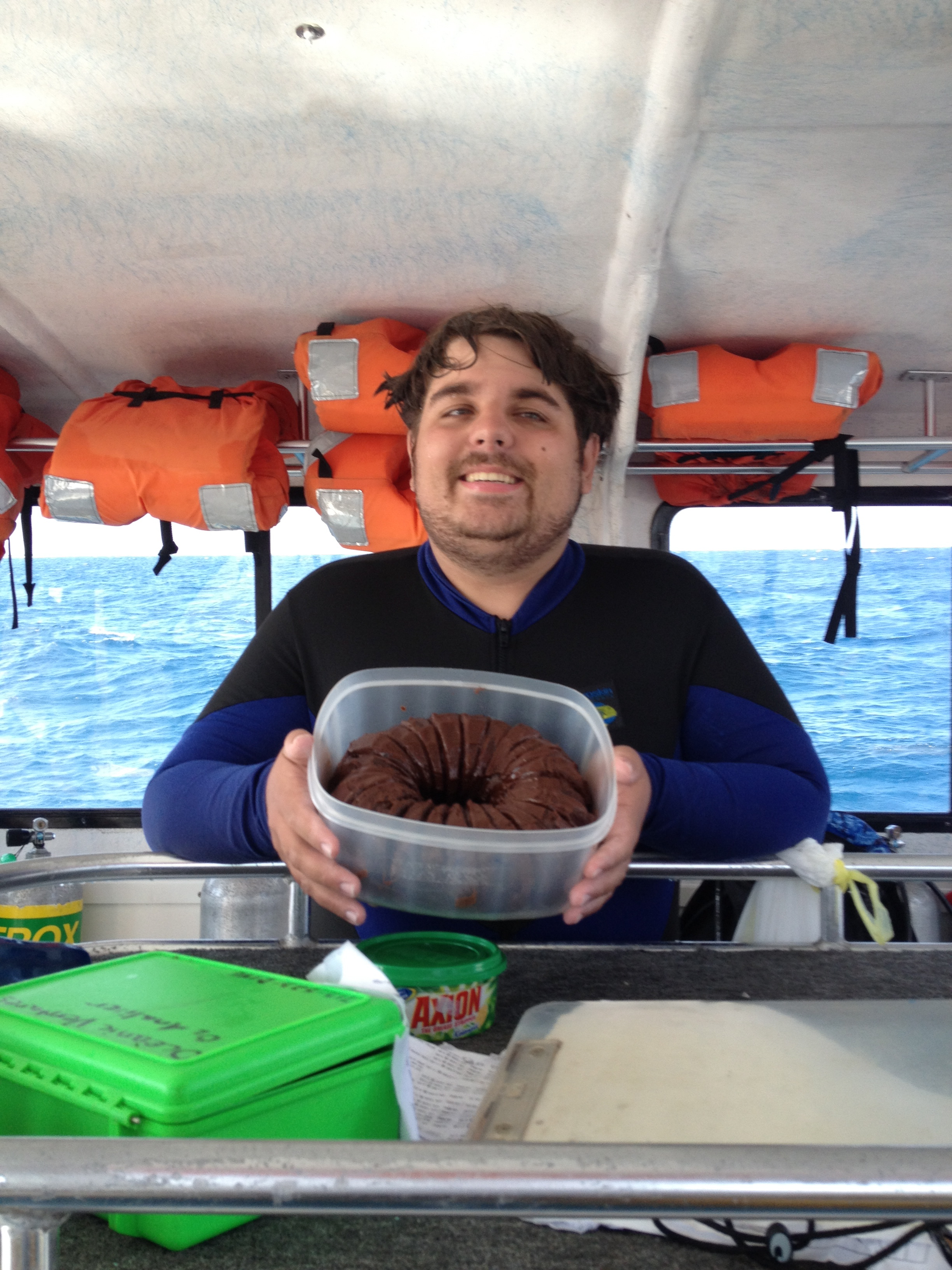
Rocky got a chocolate cake right on the boat in celebration of reaching 100 dives. ©Jean Janssen

Rocky got a chocolate cake right on the boat in celebration of reaching 100 dives.
©Jean Janssen

For our final dive of the day and Rocky’s 100th, we were close to the resort in rougher seas at The Wishbone.  We started with a picture (underwater) and ended with a cake (above water).  Not the best dive of the trip, but we did have a few special finds.  We spotted a goldentail moray eel, more rare than the green and spotted eels we have seen on several of our dives at the Atoll.  Dive Mom found a file fish on coral and Denroy pointed out the first soapfish of the trip.

Turneffe Flats provides a cleaning service as part of the dive fee so once we identified our gear for the staff (and took along our mask and fins) we could head back to our rooms to pack our personal things.  The boat captains and dive masters leave this evening so they can have a 36-hour break before the next group arrives.  Rocky brought his cake back to share with the divers and staff during the send off.

Award winners-Debbie, Dive Mom, Ted, Fred, and Janet. ©Jean Janssen

Award winners-Debbie, Dive Mom, Ted, Fred, and Janet.
©Jean Janssen

During the appetizer “hour” our group gathered to vote on our favorite and unusual finds for the week and have the opportunity to win a gift certificate door prize.  Donna and I shared a gift card for suggesting the (most popular) unusual behavior-Donna’s boyfriend’s boatside send-off.  Dive Mom also presented awards to those who had reached milestones during the trip.  Debbie Fuqua reached 300 dives on the first dive of the week,  Fred and Janet Heyne each reached 100 dives, and Rocky was recognized for his 100 dives and new master diver status.

Some of the Turneffe Flats staff gave us a send-off at the dock on the morning of our departure. ©Jean Janssen

Some of the Turneffe Flats staff gave us a send-off at the dock on the morning of our departure.
©Jean Janssen

We have a early morning departure, so we headed back to make sure our dive gear had all made it to the room and spread it out for a little extra overnight drying.  Bill had shared his pictures with me, so I enjoyed the recap of the trip through his photos until I fell asleep.  Tomorrow we leave the Atoll in the morning and spend several hours at the Radisson before our afternoon flight home to Houston.  It was a wow trip.

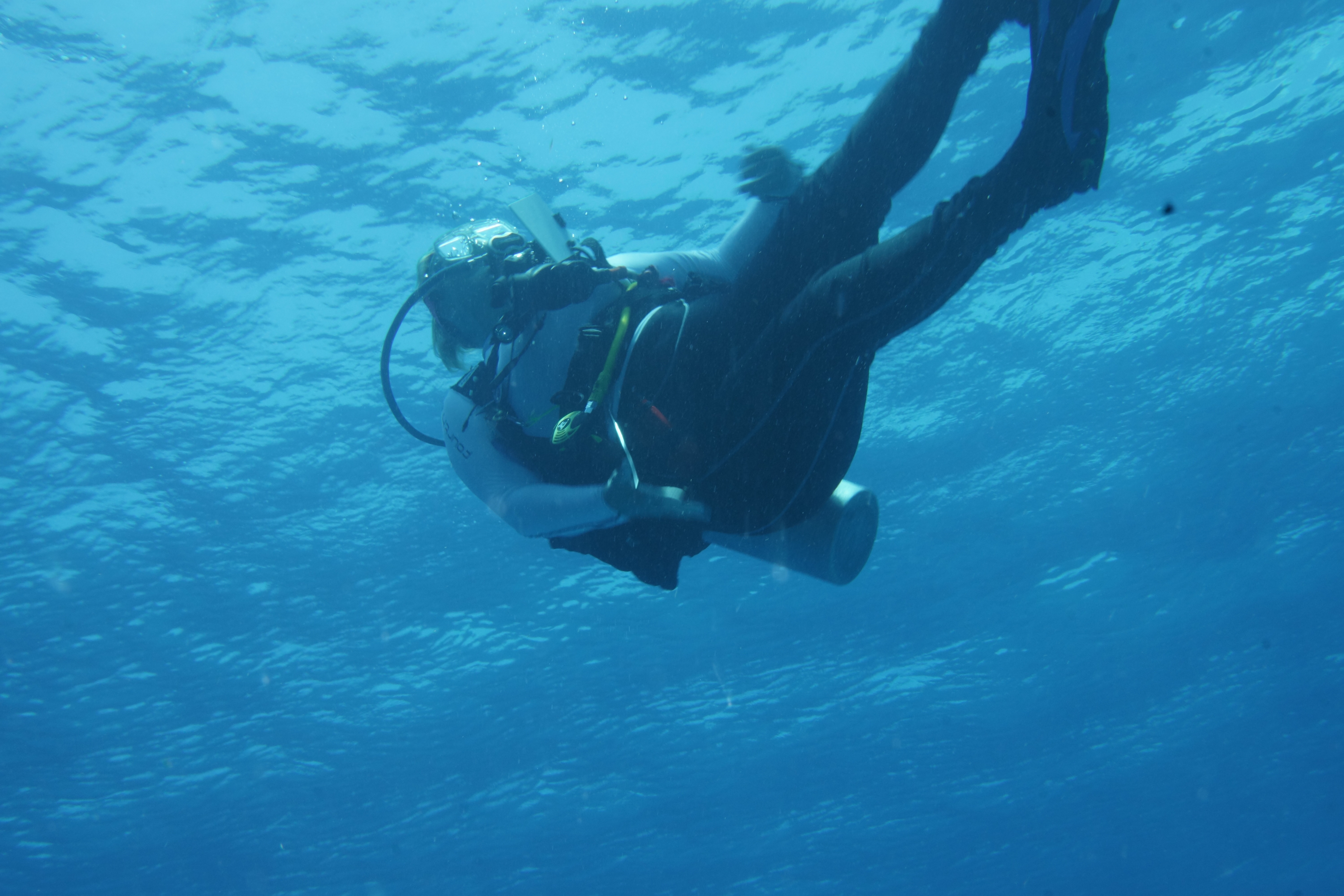
Natasha loves her diving. ©Bill Fuqua

Natasha loves her diving.
©Bill Fuqua

Bill Fuqua, our amazing underwater photographer. ©Donna Collins

Bill Fuqua, our amazing underwater photographer.
©Donna Collins

About the photographer:  You’ll notice that the underwater photography is credited to Bill Fuqua, a member of our OVI group.  Yes, Bill has special equipment, but the wonderful shots you see are the result of his sharp eye and amazing photography skills.  You can find more of Bill’s underwater photography on his facebook page. Natasha is off to her next adventure... ©Bill Fuqua

Natasha is off to her next adventure…
©Bill Fuqua
Posted in international, Scuba diving | Tagged , , , | 1 Comment

Diving the Blue Hole and Turneffe Atoll, Belize

Some of our group's divers and a shark exploring the Blue Hole, Belize. ©Bill Fuqua

Some of our group’s divers and a shark exploring the Blue Hole, Belize.
©Bill Fuqua

We started our second day of diving with a “test dive” for the Blue Hole, a controlled 130 ft. dive.  (Our recreational limits are normally 110 feet.) For the test dive, we will be going to 115 feet and the dive staff will determine if our skills and reactions make us candidates for the Blue Hole dive scheduled for tomorrow.  Most dive outfitters will not impose any requirements other than certification to take you to the Blue Hole and I was impressed with the dive staff at Turneffe Flats and love their safety conscious approach.

A flamingo tongue, a sea snail.  Turneffe Atoll, Belize. ©Bill Fuqua

A flamingo tongue, a sea snail. Turneffe Atoll, Belize.
©Bill Fuqua

Both Rocky and I passed the tests, descending quickly to 46 ft (representing the ledge at the the Blue Hole) and maintaining our composure at depth.  I only went to 107 feet because I had forgotten to switch my computer out of nitrox; the nitrox mix I was using has a depth limit of 110 feet.  Nitrox helps minimize the nitrogen absorbed by the body during diving.  You finish the day less tired.  It is a healthier way to dive if you are doing long multiple dives in a single or series of days.  Use of nitrox involves additional certification and often there is an a surcharge to the cost of an air cylinder.  (At Turneffe Flats, nitrox costs an additional $10 per dive.)

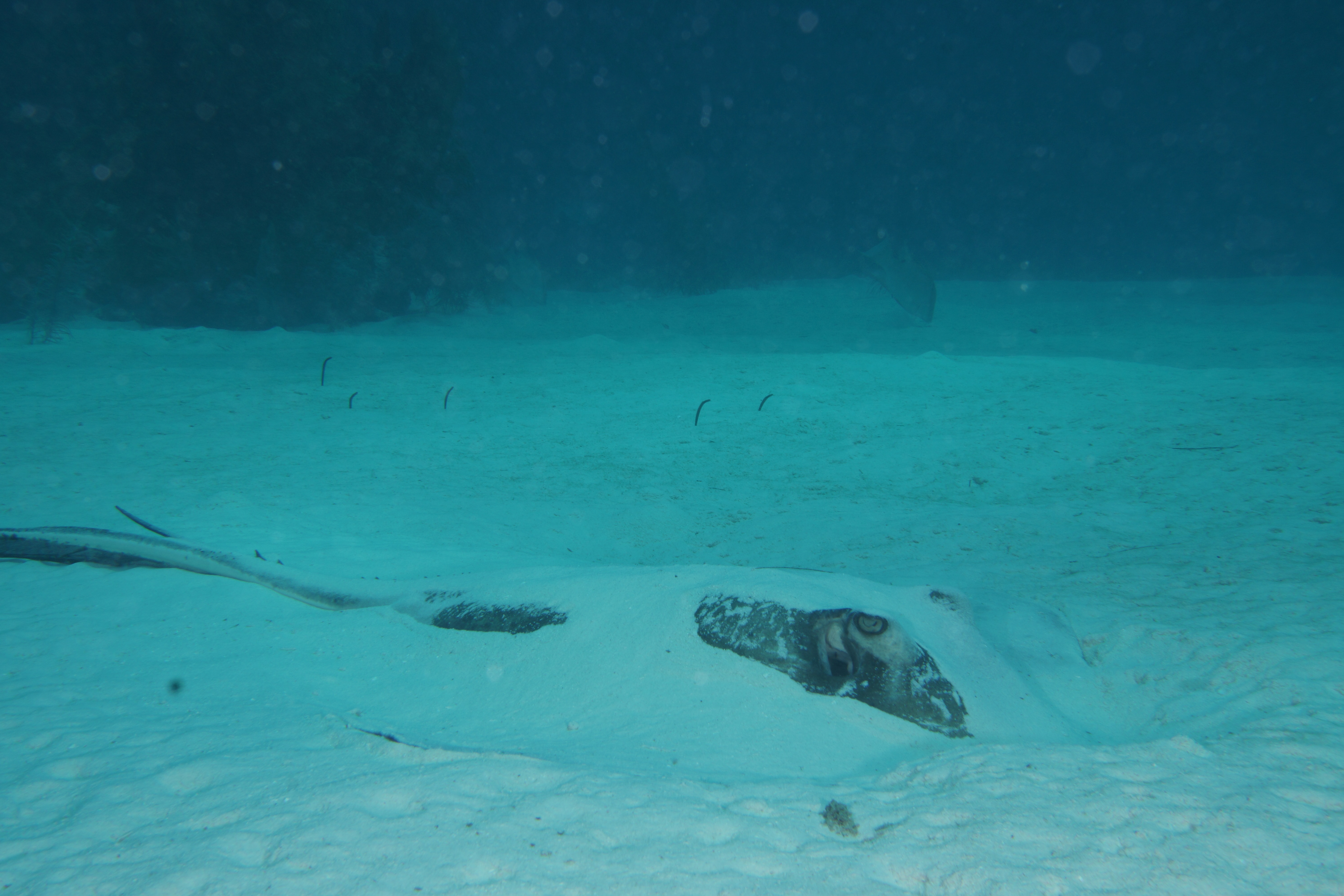
This stingray had partially buried himself in the sand. ©Bill Fuqua

This stingray had partially buried himself in the sand.
©Bill Fuqua

We came back from depth in a zig zag pattern, noting black coral along the way.  This time Rocky got to hold one of the pederson shrimp.  We also saw what at first appeared to be a dying stingray.  The roughtail stingray had buried itself part way in the sand and was actually resting.  Dive Mom played with it a little and it eventually swam away.  When it moved we noted that there was a fish underneath.  It was a sharksucker, which is in the remora family.

An indigo hamlet.  I love his tie-dyed look. ©Bill Fuqua

An indigo hamlet. I love his tie-dyed look.
©Bill Fuqua

Our next two dives were shallower.  On dive two, I saw an indigo hamlet which looks like a tie-dyed fish and a flamingo tongue on coral.  The flamingo tongue is a small sea snail only about an inch in size.  The shell it white, but it has a spotted soft exterior that moved when touched.  Donna was also followed by a remora.  It is normal behavior for them to select the diver in the group they like best and follow them.  Donna’s boyfriend, as he came to be  known, swam very close to her and returned again and again.  He even followed her all the way to the boat when she was getting out.  Donna was convinced he was trying to communicate his undying passion.  “Stay with me, my love”.  What a great entry in the log book.

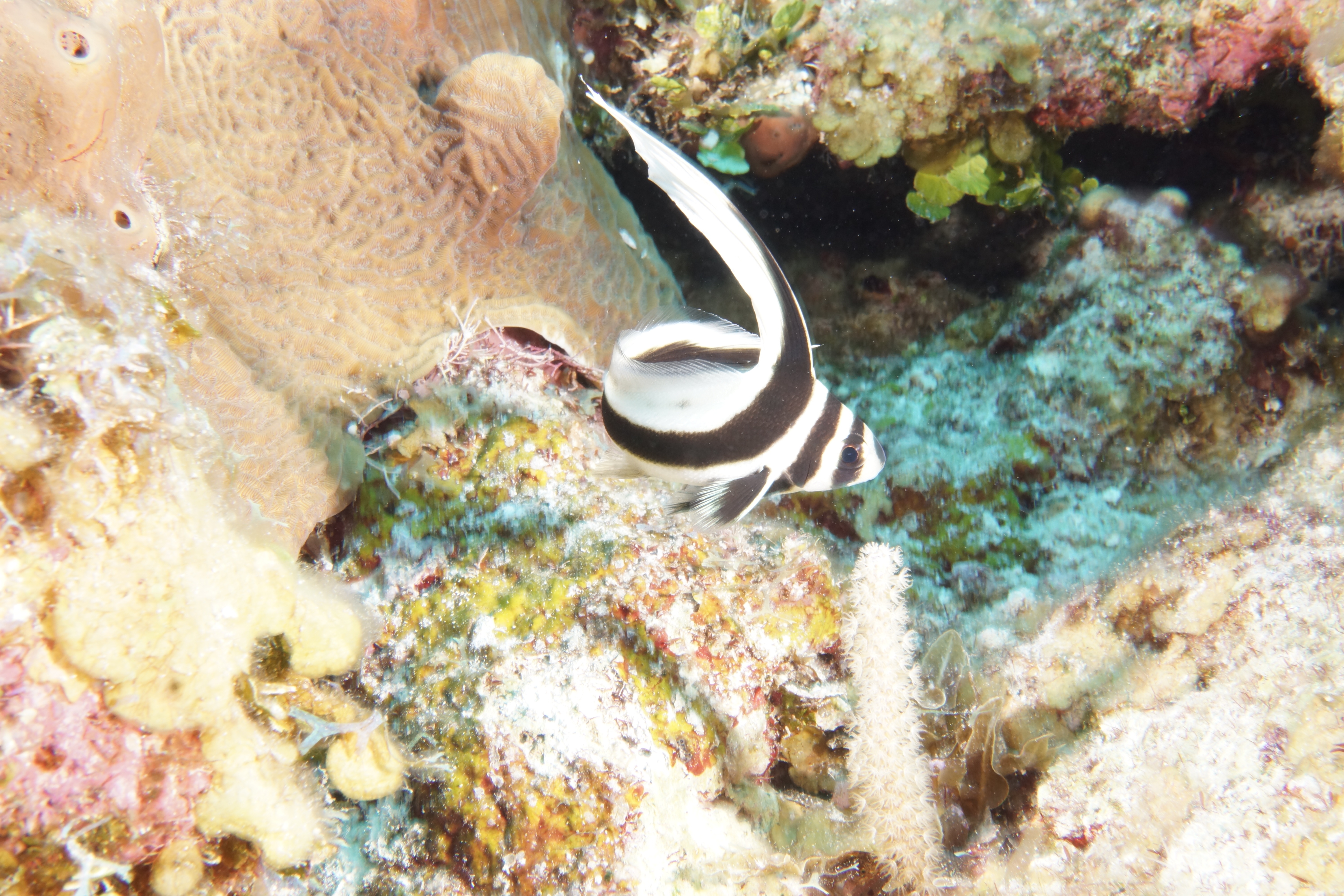
Juvenile Drum ©Bill Fuqua

Juvenile Drum
©Bill Fuqua

One of the highlights of our dive was finding a juvenile drum.  They are beautiful and protect themselves by doing an erratic dance, swimming in varying patterns.  Dive mom and I hung out there a while just watching.

Our third dive was a simulated drift dive so we could get the feel for the different pick-up methods the boat uses in varying conditions.  At the very beginning of the dive, we saw a sea turtle and later we saw two large resting sand divers-great at camouflage.

Half Moon Cay, Belize. ©Jean Janssen

Half Moon Cay, Belize.
©Jean Janssen

Our third dive day was a trip out to the Blue Hole and Half Moon Cay.  Since we had an hour and 30 ride out and we wanted to be one of the first groups, we departed at 7 am rather than our usual 8 am.  That meant getting up extra early to be ready and have time for breakfast.  In spite of our early departure, we were not the first to arrive at the Blue Hole.

The Great Blue Hole, Belize.

The Great Blue Hole, Belize.

The Great Blue Hole is a submarine sinkhole off the coast of Belize, almost a thousand feet wide and 407 ft. deep.  Stalactites are found at 130 feet, formed before the water level rose and the cave flooded.  The site was made famous by Jacques-Yves Cousteau who declared it one of the ten best dive sites in the world.  His ship is the one who created the opening in the reef that our boat went through to reach the site.  In 2012, the Discovery Channel named the Great Blue Hole #1 among its top 10 most amazing places on earth.  It is a UNESCO World Heritage Site.

Blue Hole dive briefing.  Note the not so subtle notation for reaching 417 ft. ©Donna Collins

Blue Hole dive briefing. Note the not so subtle notation for reaching 417 ft.
©Donna Collins

Rocky was already a little leery about going in, but when the guide announced the hole’s history (not created by a meteorite) and that there were sharks at our selected depth, he decided he was out.  The plan was to descend quickly to the ledge at 46 ft., then down to 80 ft., and ultimately 130 feet where the stalactites are located.  We will only be at the 130 ft. mark for 8 minutes max.  The entire dive will not last more than 30 minutes.    My new computer tracked my bottom time and with careful monitoring I reached 133 feet and began my assent within limits never getting closer than 3 minutes to my no decompression limit.  My computer gave me a deep stop of 3 minutes at 52 ft. and the standard 3 minute safety stop at between 20 and 10 feet.

We wove in and out between the stalactites at an approximate depth of 130ft. in the Great Blue Hole, Belize. ©Bill Fuqua

We wove in and out between the stalactites at an approximate depth of 130ft. in the Great Blue Hole, Belize.
©Bill Fuqua

At depth, we saw lots of reef sharks who came quite close as we wove in and out between the stalactites.  The sighting of some sharks is common here, but rumor has it that that certain Belize dive operators are ‘chuming’ the area to increase the shark population.  Given the number of sharks, I was glad Rocky had not made the dive.  When he was young and a new diver, we dove off the coast of Kauai, Hawaii and saw quite a few sharks.  That night on the news they reported that a tiger shark had attacked a surfer in the area we had been diving.  We cancelled our dives for the next day and since then Rocky has always been leery about diving in “shark infested” waters.

Stalactites in the Great Blue Hole, Belize. ©Bill

Stalactites in the Great Blue Hole, Belize.
©Bill

Next stop was a dive at Half Moon Cay wall, considered one of the most beautiful dive sites in the area.  It was a drift pick-up dive like we had “practiced” yesterday.  There were lots of garden eels with their heads sticking out of the sand; they pop down when you get close.   We saw several rays, some with a fish companion.  Spotted gobies in the sand and a group of hogfish with their pronounced upturned snout.  The highlight for me was the past through or swim through, a narrow break in the coral reef that allows a diver to go through.  This is one of my favorite dive attractions.

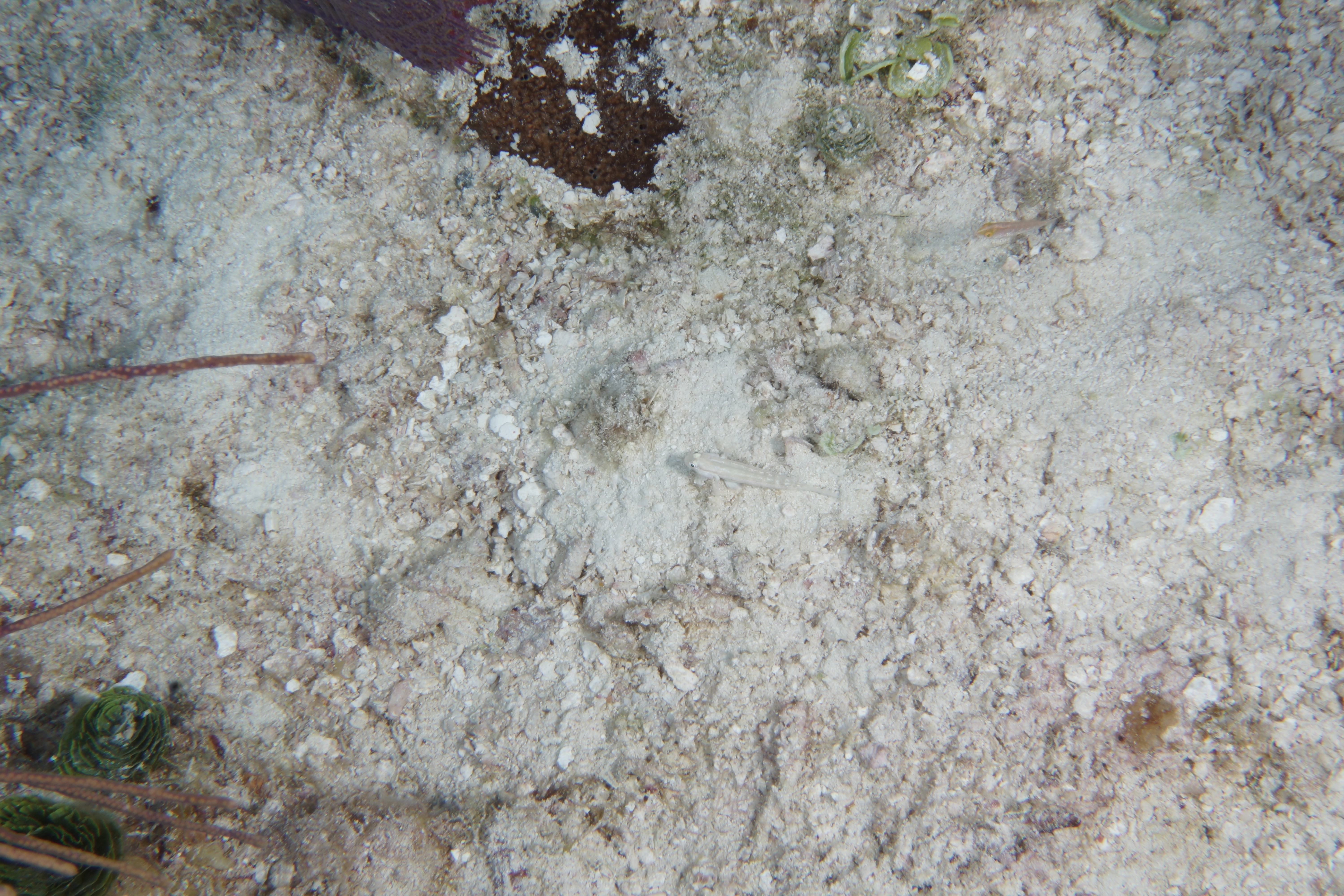
Look close and you'll see a white goby in the sand. ©Bill Fuqua

Look close and you’ll see a white goby in the sand.
©Bill Fuqua

You might consider this dive the best of “Donna Jean”-swim throughs for me and crap in the sand for Donna (my usual dive buddy).   Donna is a bottom dweller and loves to look at all the little stuff in the sand flats.  Many divers pass this by, but if you spend the time to look closely there is lots of interesting marine life that has camouflaged itself to blend with the white sand.  On one of our first dive trips together one of the seasoned divers couldn’t remember which of us was which so he just called both of us Donna Jean.  The name stuck.

On Half Moon Cay, Belize. ©Jean Janssen

On Half Moon Cay, Belize.
©Jean Janssen

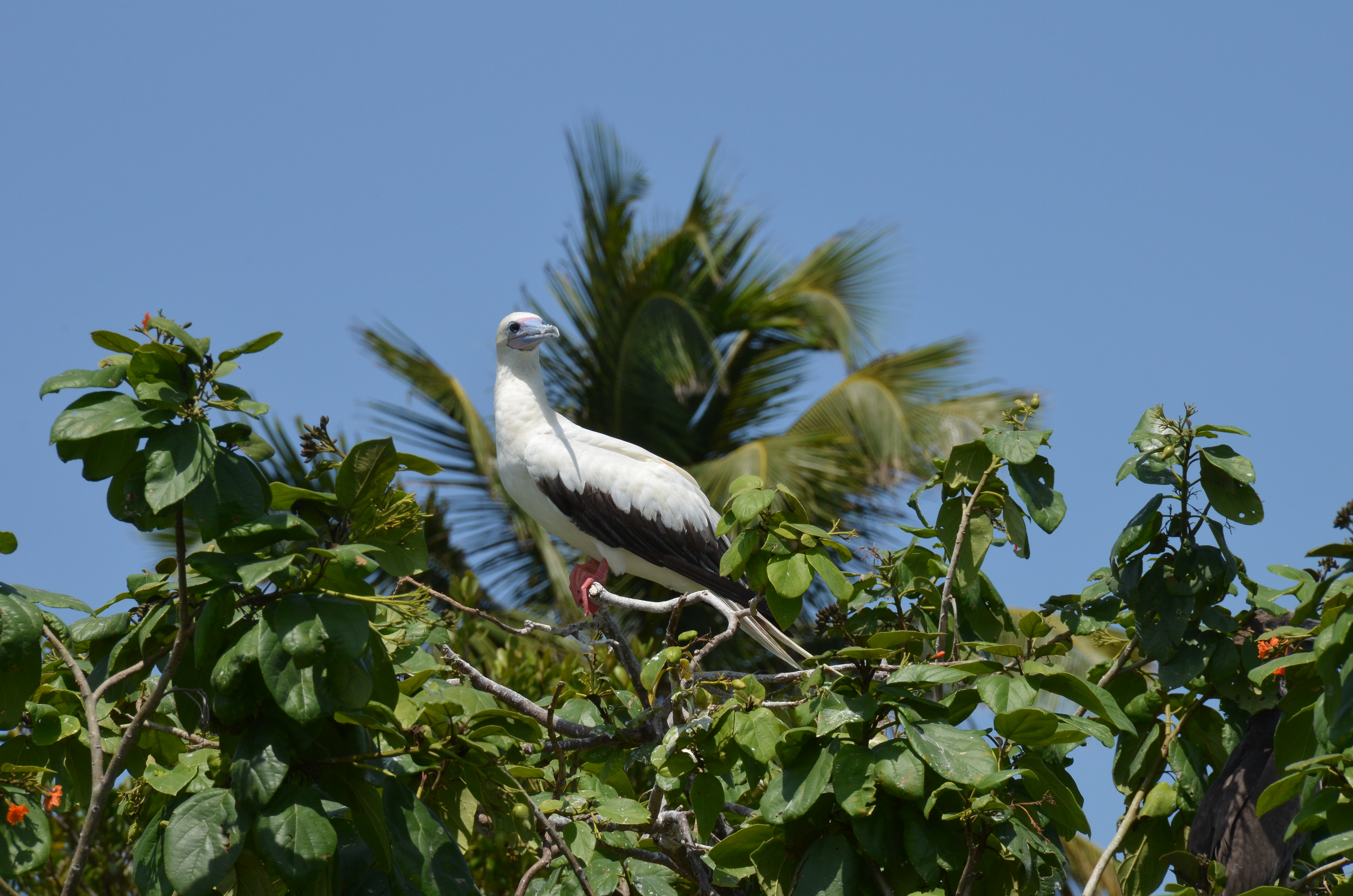
Red-footed booby, Half Moon Cay, Belize. ©Jean Janssen

Red-footed booby, Half Moon Cay, Belize.
©Jean Janssen

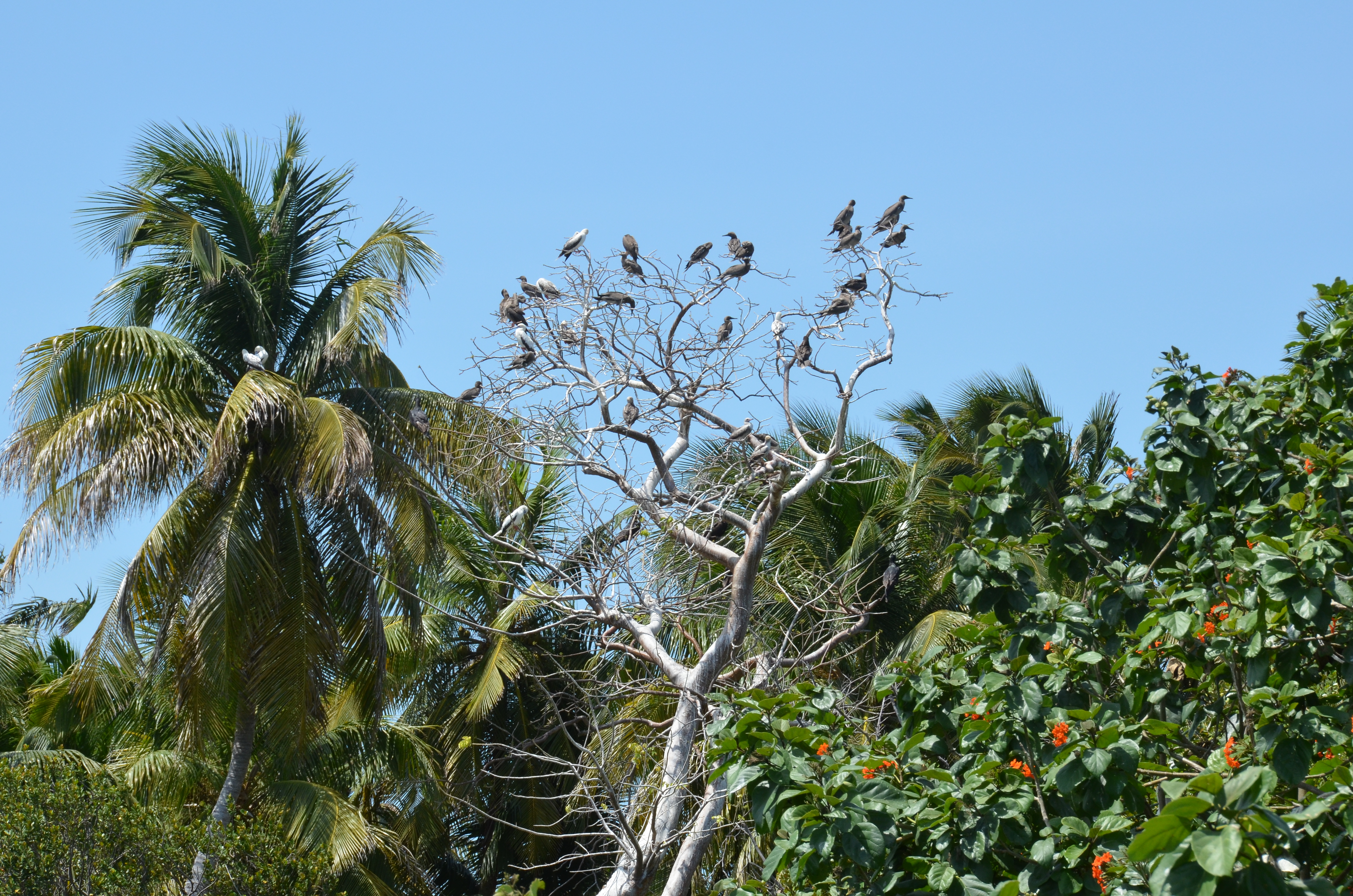
After this dive was went to Half Moon Cay to enjoy a picnic lunch of fried chicken.  Yummy!!  Half Moon Cay is considered a natural monument and the island is maintained by the Belize Audubon Society.  There is a small entrance fee to enjoy the dock, picnic tables, marked trails, and boobie observation deck.  Turneffe Atoll is the closest of three Atoll to Belize.  Half Moon Caye is located on the southeast corner of Lighthouse Reef Atoll, the furthest from Belize of the three atolls.  With about 4,000 breeding birds, it is the only known breeding colony of the red-footed booby.

From the observation platform.  Half Moon Cay, Belize. ©Jean Janssen

From the observation platform. Half Moon Cay, Belize.
©Jean Janssen

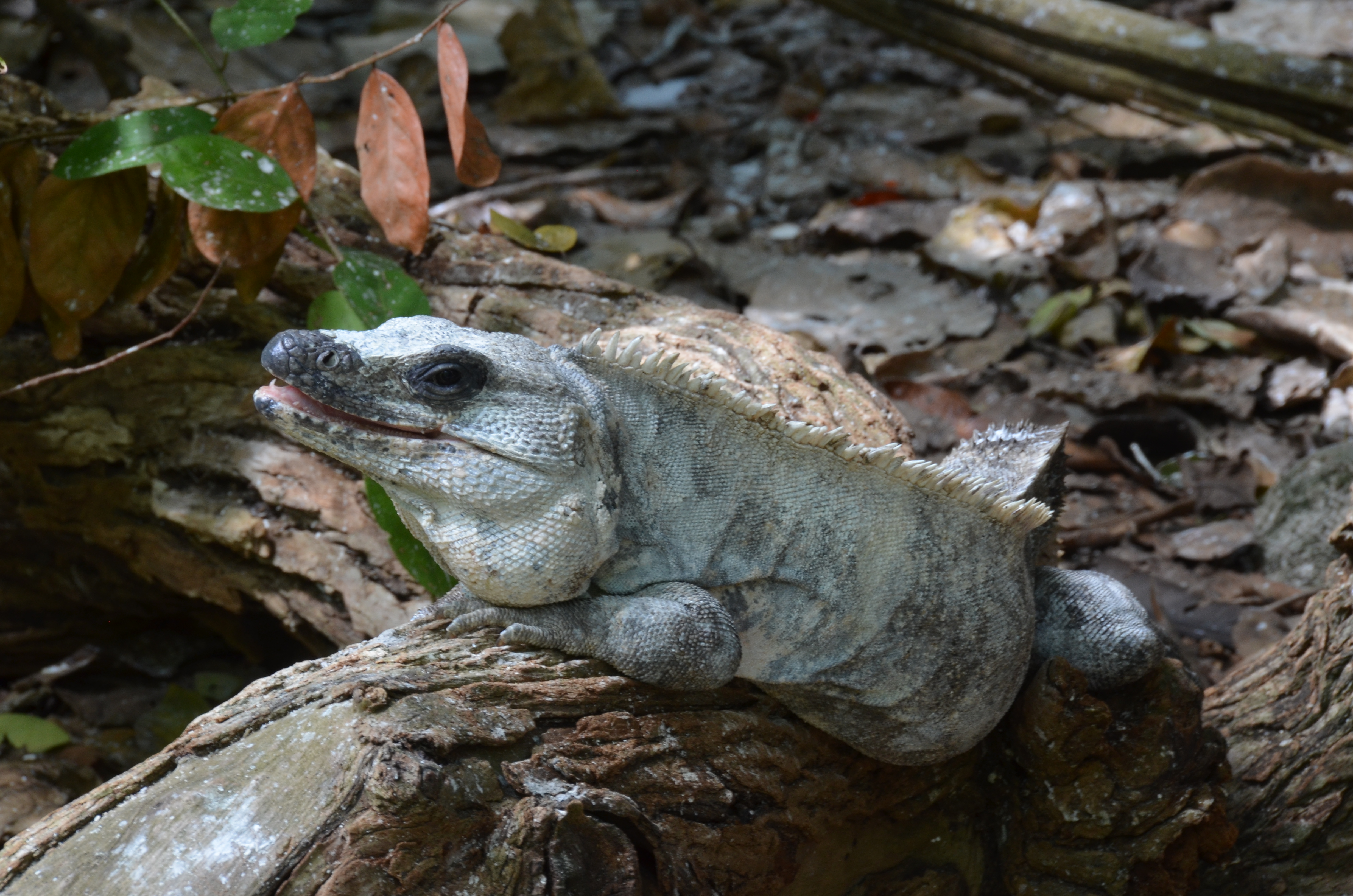
After lunch we took the trail to the observation platform to see the nesting area of the boobies and frigate birds.  Along the way we spotted several of the lizard species common to the Cay.  There was also the “cool tree” what felt wonderful to the touch.  Research is done on the Cay and  housing for those individuals and (yea) bathrooms for us were spotted on our walkabout.  It was a lovely spot for a picnic.  Dive Mom had her eye on the hammock.

One of dive guides, Denroy, took us on a tour of Half Moon Cay and demonstrated his tree climbing skills learned as a child. ©Jean Janssen

One of dive guides, Denroy, took us on a tour of Half Moon Cay and demonstrated his tree climbing skills learned as a child.
©Jean Janssen

Donna somehow twisted her “bad” knee on the picnic bench, so she was out for the day (and perhaps the rest of the trip).  We carefully helped her aboard the Ms. Ellie.  So glad she got to enjoy the Blue Hole and the Half Moon Cay Wall dive (aka the Donna Jean dive) before the accident.

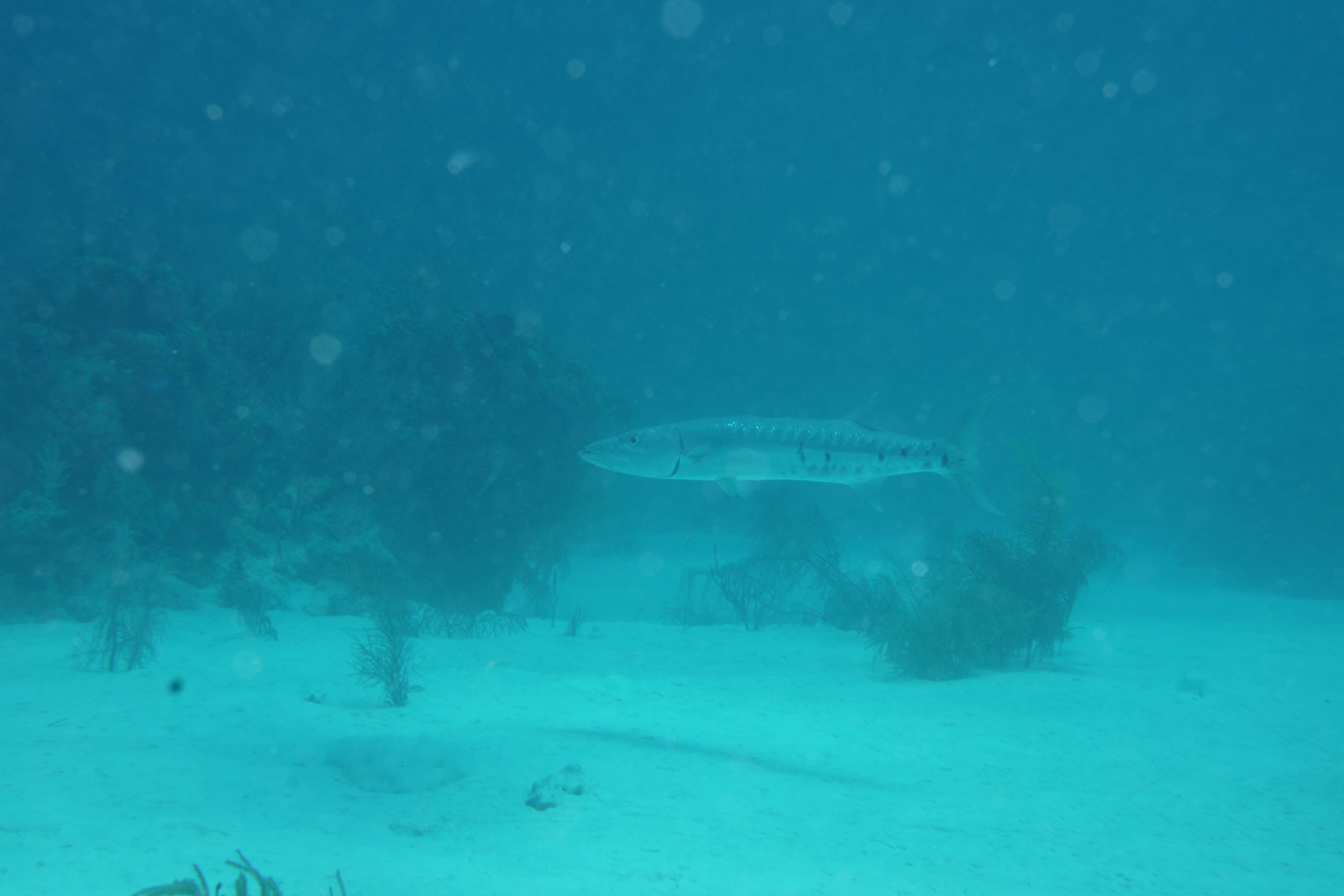
One of the barracuda spotted on our dive trip. ©Bill Fuqua

One of the barracuda spotted on our dive trip.
©Bill Fuqua

Final dive for the day was the Chimney at Half Moon Cay.  Natasha is in heaven with all the pass-throughs.  We started with the perfect one, the Chimney for which the site gets its name.  Straight down and then up and out at 86 ft.  It was deeper than we should have gone today, but we did it as a bounce dive ascending quickly when we came out of the reef.  There was another zig-zag pass-through with a barracuda at the turn.  Hello!

Belize Turtle. ©Bill Fuqua

Belize Turtle.
©Bill Fuqua

A large black grouper followed us around the reef.  In the grassy area, we found a large turtle just munching away.  Rocky is a sucker for turtles and he enjoyed touching and petting it (at the dive master’s direction).  There was a remora underneath and when he came out and swam around the shell on the turtle’s back, the turtle tried to swat it away.  Stay below if you want to hang out.

Lots of rays, some buried in the sand and others in that beautiful graceful glide.  We even saw two tarpon on our safety stop.  What a perfect dive and a fabulous day.  I love being a diver.

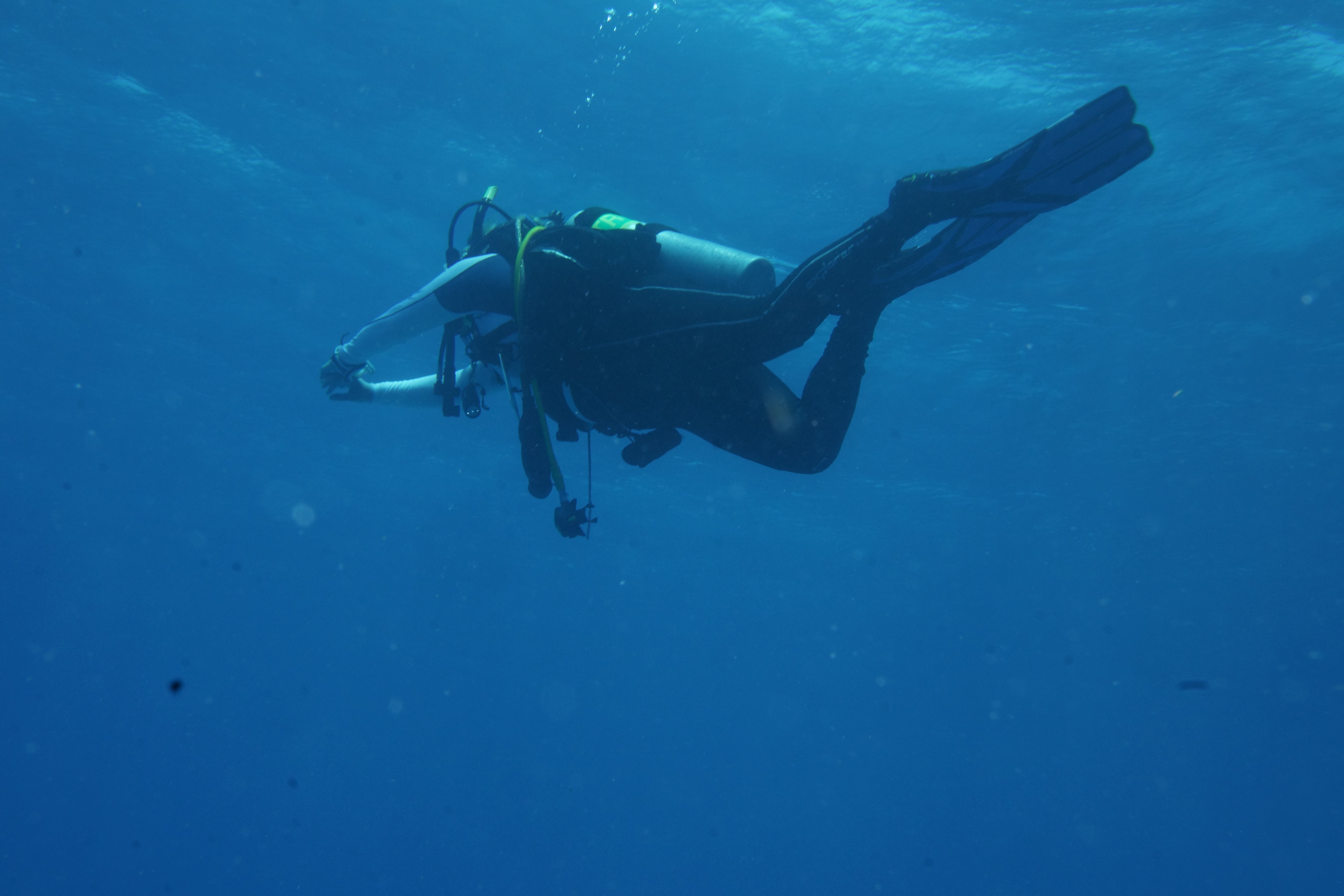
Natasha and Rocky on a safety stop.  All divers pause between 15 and 20 feet for 3 to 5 minutes as a precausion before completing their dive. @Bill Fuqua

Natasha and Rocky on a safety stop.
All divers pause between 15 and 20 feet for 3 to 5 minutes as a precausion before completing their dive.
@Bill Fuqua

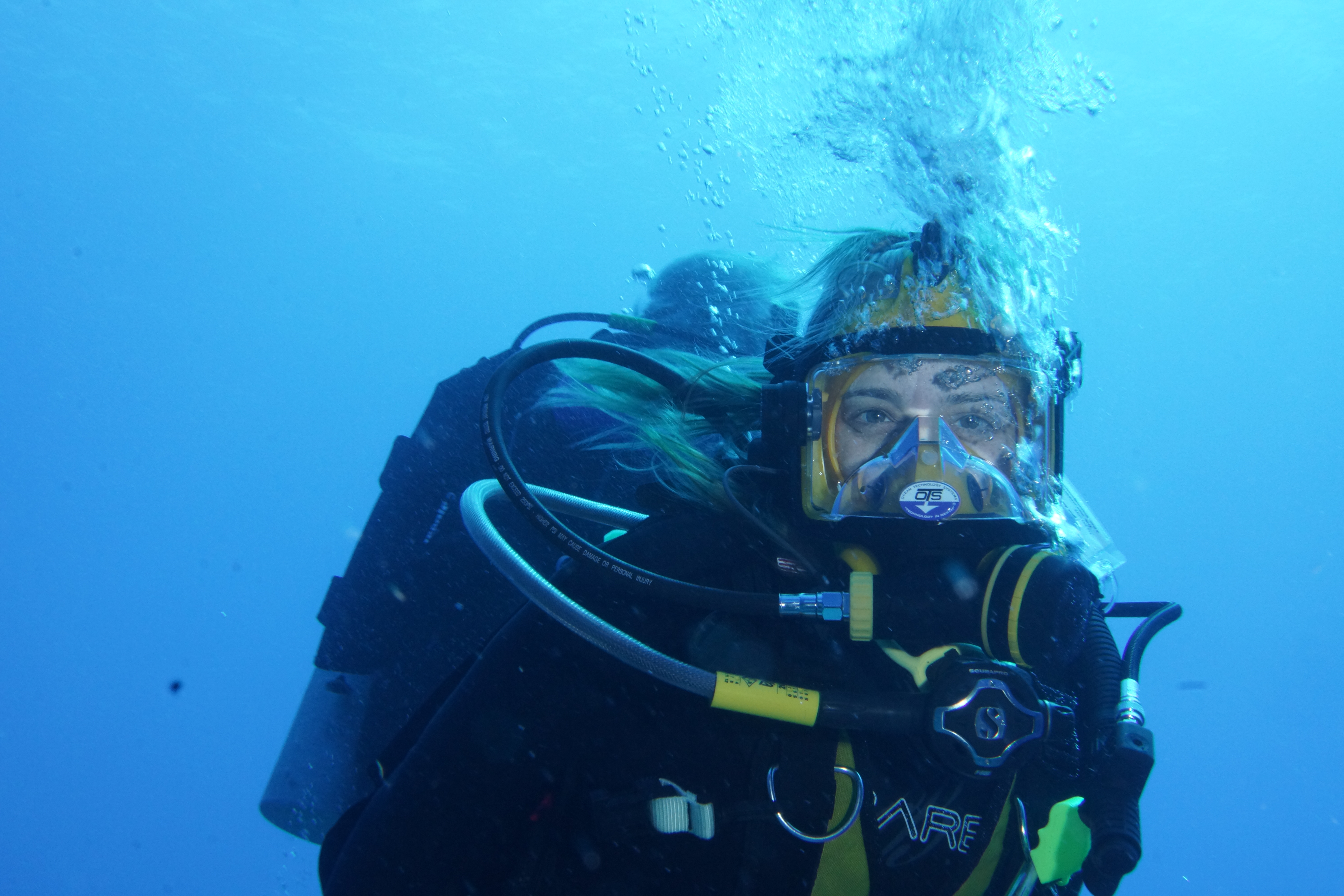
Debbie Fuqua models the amazing masks that allow Debbie and her buddy Bill to talk underwater.  ©Bill Fuqua

Debbie Fuqua models the amazing masks that allow Debbie and her buddy Bill to talk underwater.
©Bill Fuqua

About the photographer:  You’ll notice that the underwater photography is credited to Bill Fuqua, a member of our OVI group.  Bill and his wife Debbie (an amazing diver herself; she reached 300 open water dives on the first dive of this trip) wear these really cool masks that cover much more of their face than the standard mask and provide greater visibility.  They can also talk to one another underwater!!  He has a pretty cool camera too.  Yes, Bill has special equipment, but the wonderful shots you see are the result of his sharp eye and amazing photography skills.  You can find more of Bill’s underwater photography on his facebook page. 

Posted in international, Scuba diving | Tagged , , , , , | Leave a comment

Diving in Belize at the Turneffe Atoll

Natasha enters the water via a giant stride off the dive boat.  Turneffe Atoll, Belize. ©Bill Fugua

Natasha enters the water via a giant stride off the dive boat. Turneffe Atoll, Belize.
©Bill Fuqua

On our way to Belize-Rocky and Natasha in the Houston airport.

On our way to Belize-Rocky and Natasha in the Houston airport.

With just a few days of recovery from India and still jet-lagged, Rocky and I are headed to Belize for some post-semester diving.  Rocky is just as tired as I am.  He finished finals at 10 pm, moved out of his dorm and drove home the next day, and then had an early wake-up to be at the airport at 6 am for our flight.  Thankfully, it is a short two-hour flight from Houston to Belize City.

Dive Mom ©Bill Fugua

Dive Mom
©Bill Fuqua

We are once again traveling with Oceanic Ventures and Dive Mom.  Our group is 14 strong, with 13 of us diving.  One our OVI friends, Zaide, is at the house dog-sitting Peabody.  We didn’t have the heart to put him in the kennel again after his three-week stay while we were in Asia.  No up-grade on this flight, but I did get all four bags checked “fee-free” on United.  You are guaranteed to have to check luggage on a dive trip unless you rent everything.  We carry all our equipment with us except for weights and cylinders (notice Ann that I did not say tanks).

Upon arrival in Belize and after clearing customs, the resort has arranged for us to be transported to the Radisson Hotel at the dock where the Atoll resort boats and live-aboard dive boats transfer their guests.  We have to wait here until 4 pm when all the inbound flights arrive so all the guests can be taken to the Atoll in one trip.  It is a 90-minute ride (in good weather).   You can enjoy the pool and bar and have some lunch.  Rocky and I had large portions of some great fish and chips-fabulously fresh fish I might add.  Our luggage was transferred directly to the boat and we only had to keep up with our carry-on bags.

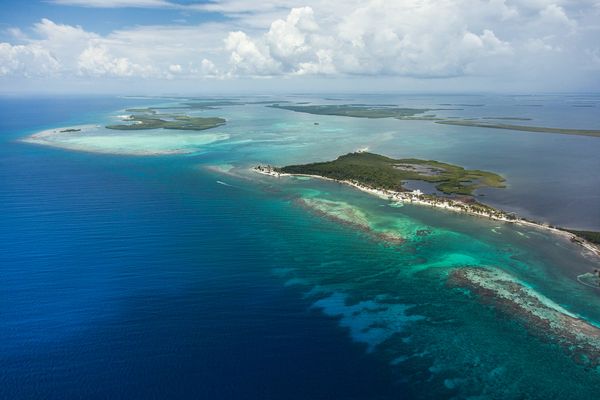
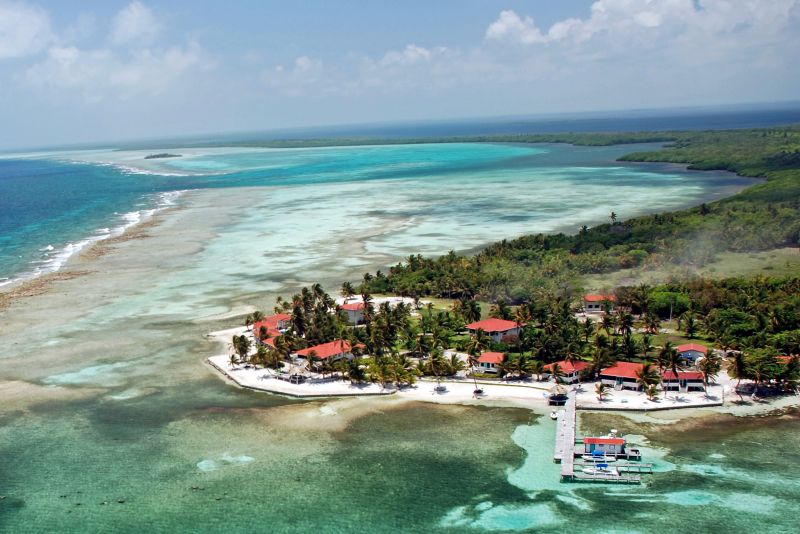
Turneffe Atoll, Belize

Turneffe Atoll, Belize

When we got word that there would be a two-hour delay for some of the guests, they went ahead and took us early to make sure the big boat would pass through the mangroves before dark.  “An atoll is a ring-shaped coral reef including a coral rim that encircles a lagoon partially or completely.  There may be coral islands (cays) on the coral rim.”  We are headed to the Turneffe Atoll, the largest atoll off the coast of Belize.   In November 2012, Turneffe Atoll was named a marine reserve.  It is 30 miles long and 10 miles wide with 12 acres of island.

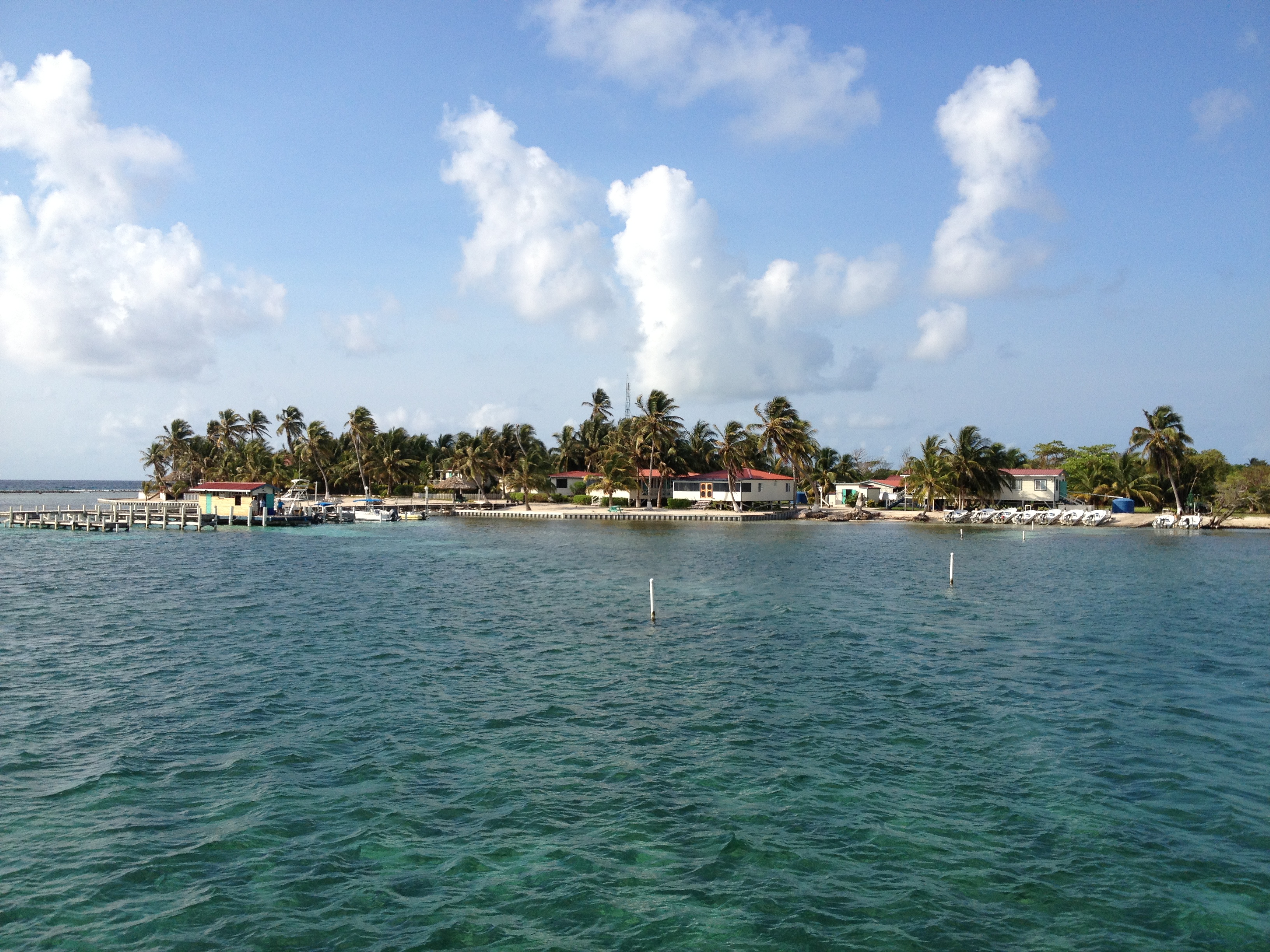
Turneffe Flats, Turneffe Atoll, Belize

Turneffe Flats, Turneffe Atoll, Belize

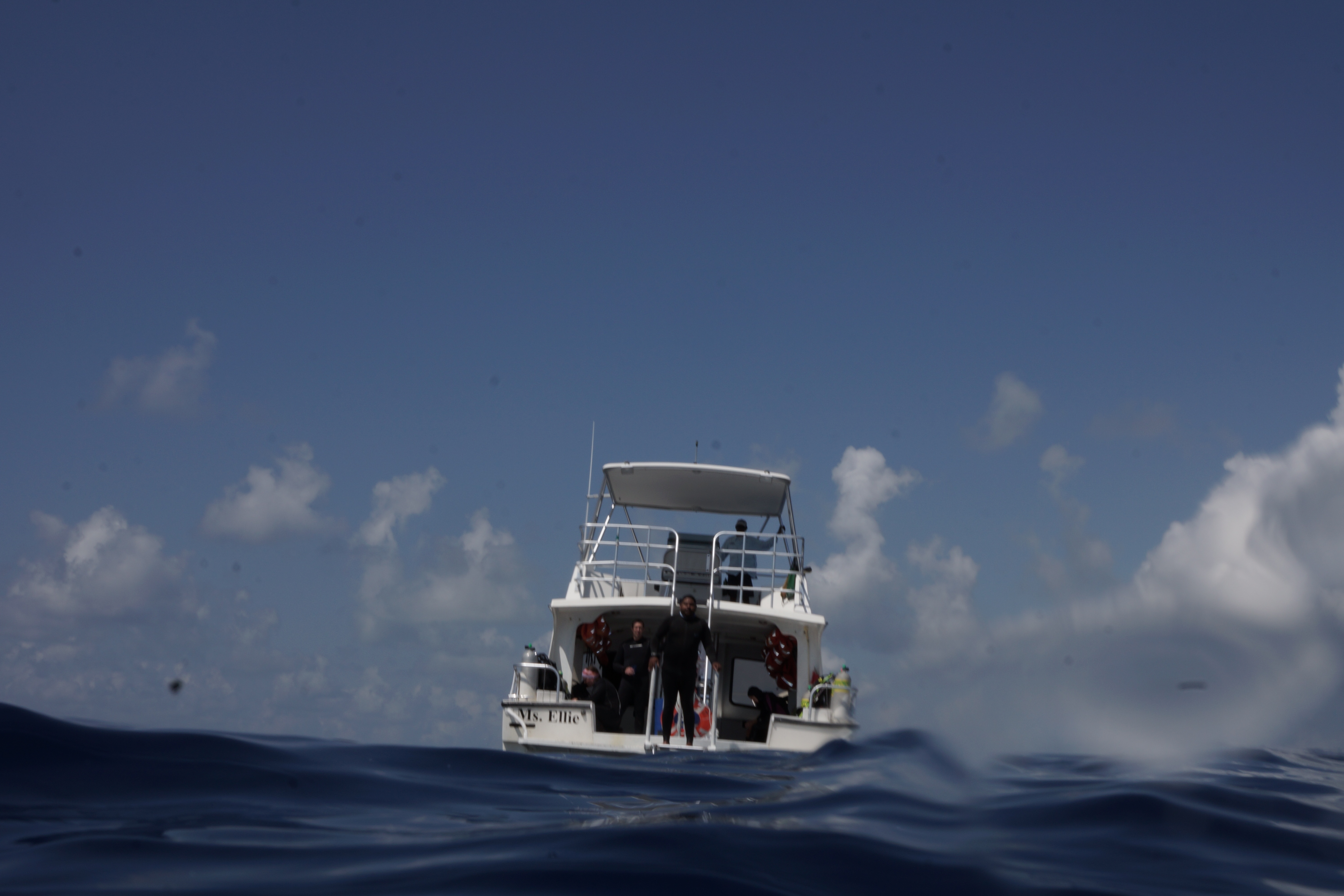
To some, Turneffe is best known as the fishing destination to catch an angler’s “Grand Slam”- permit, bonefish, and tarpon.   We are staying at Turneffe Flats, a resort that accommodates only 28 guests.  They stretched to 32 this week by using some of the staff cabins for guests.   There are 18 divers, 6 adventure travelers, and 8 fishermen among the guests.  We crossed over to the atoll on the Ms. Ellie, the large boat that we will use for our dives.

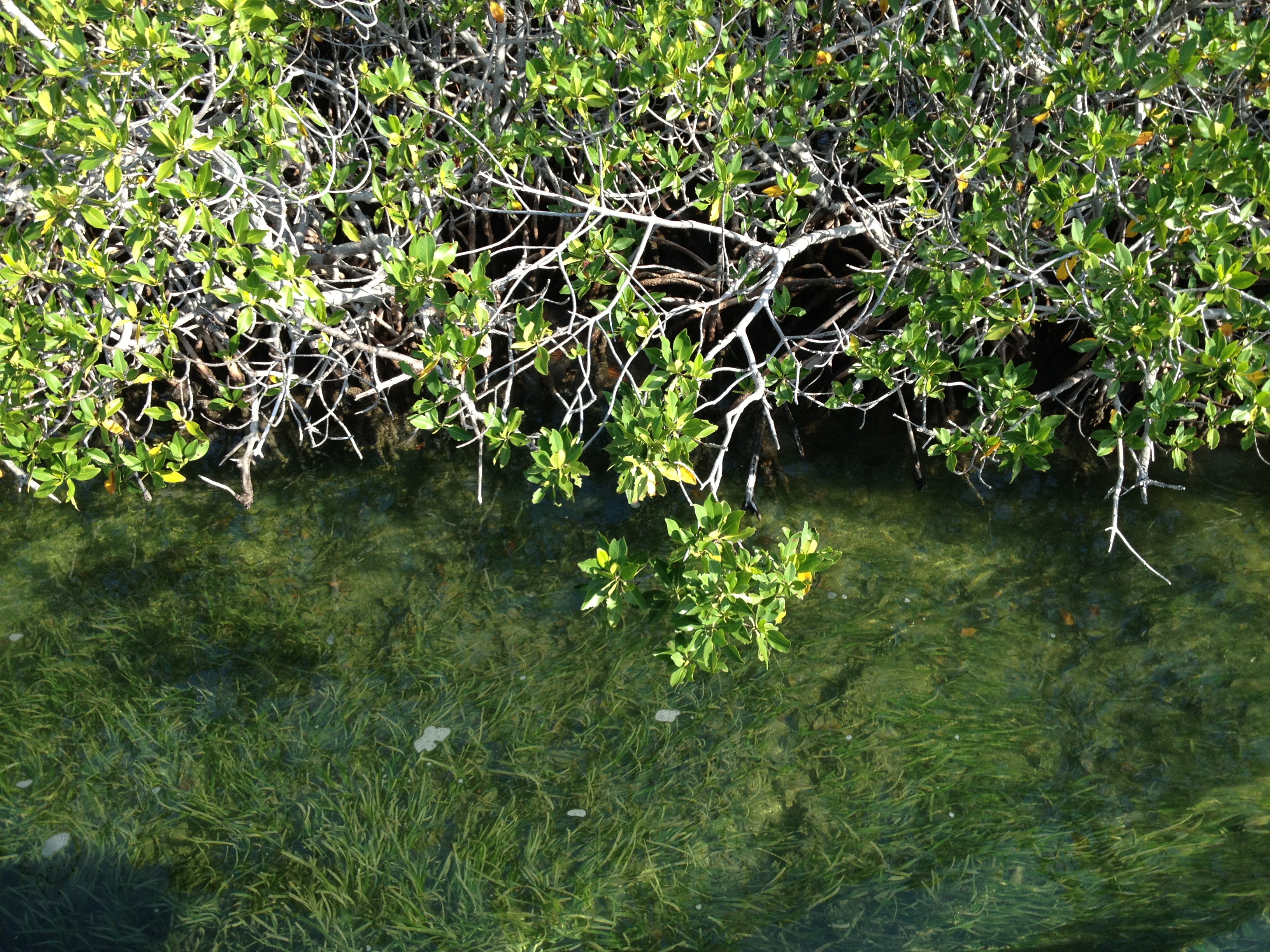
The natural nursery, the mangroves of Turneffe Atoll, Belize ©Jean Janssen

The natural nursery, the mangroves of Turneffe Atoll, Belize
©Jean Janssen

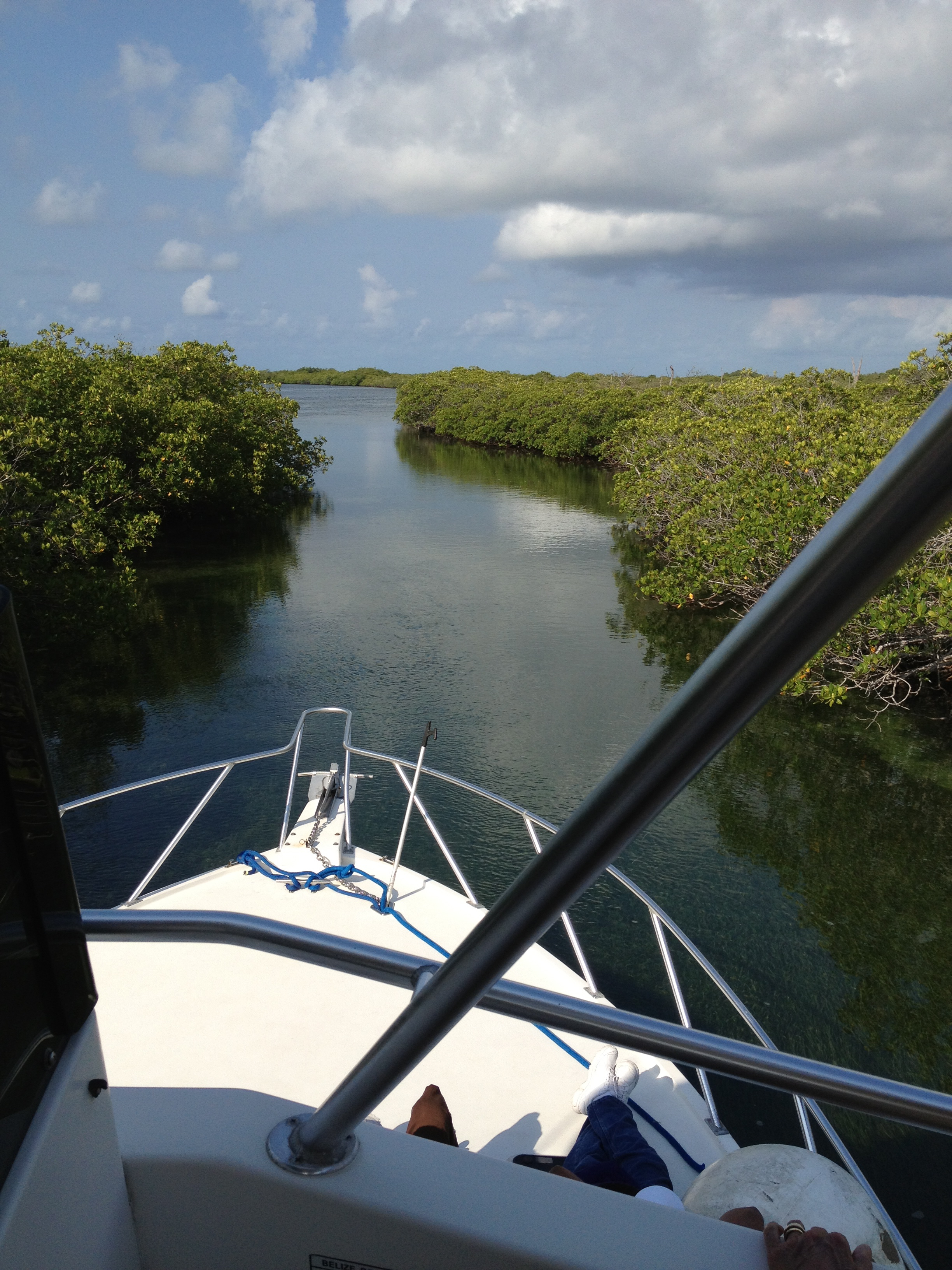
To stay cool, I sat up on the captain’s deck.  Once out on the open ocean, we did hit some rough water and even on the upper deck I got soaked.  Fortunately, it was warm enough that I dried out before our arrival at the resort.  Once we reached the Atoll, we slowed down considerably to pass through the mangroves.  These mangroves provide the perfect environment for young fish earning them a reputation as a “natural nursery”.  There are more than 200 mangrove islands on the Atoll.  The plants absorb the salt water and filter the salt out through their leaves delivering fresh water to the plant.  They are beautiful, but the passage through them is narrow and shallow and I saw why they wanted to bet the Ms. Ellie through during daylight hours.

Passing through the mangroves.  Turneffe Atoll, Belize ©Jean Janssen

Passing through the mangroves.
Turneffe Atoll, Belize
©Jean Janssen

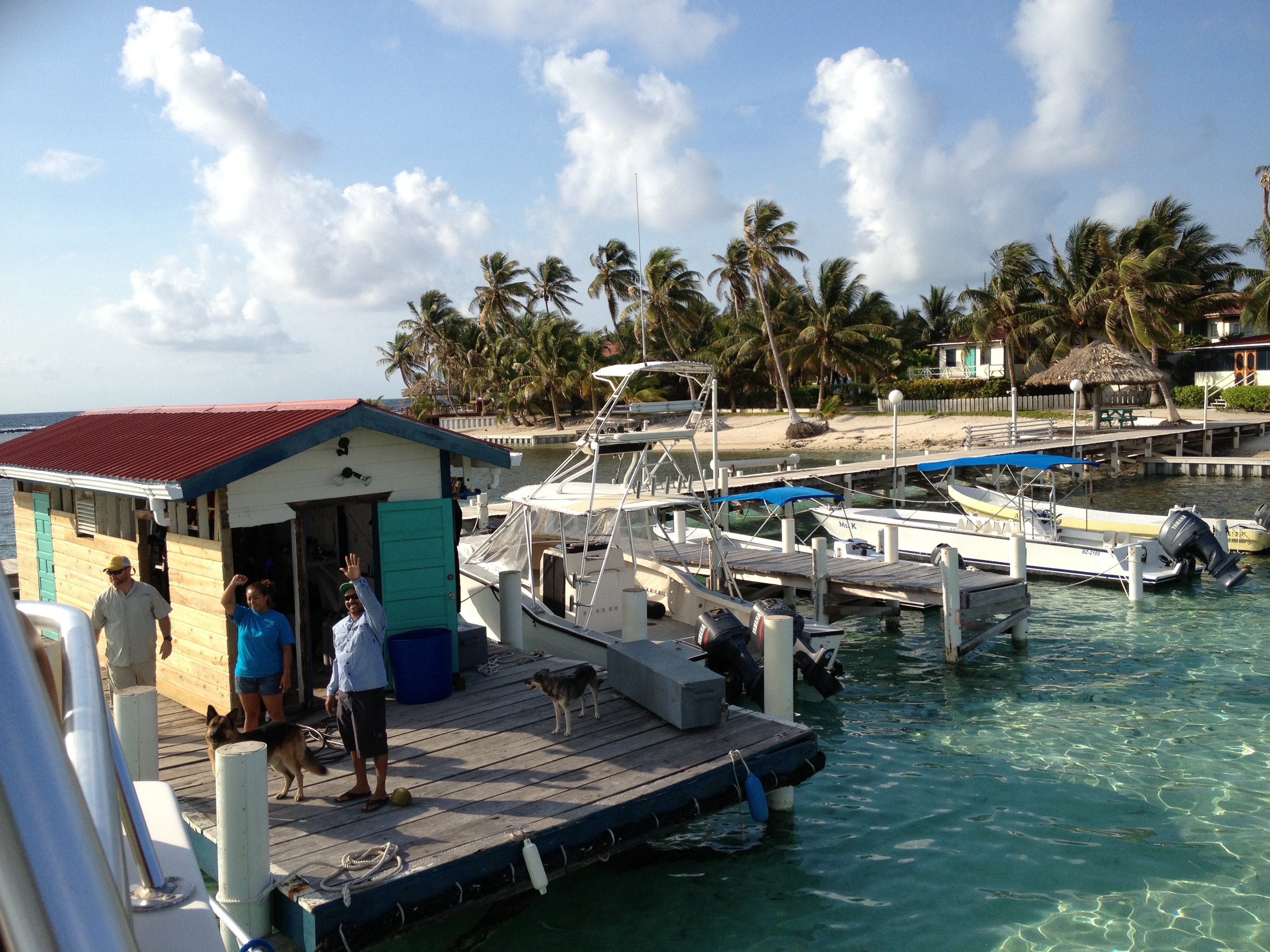
After the mangroves, we rode through the lagoon where dolphins passed along side us.   After passing through the mangroves on the east side of the Atoll, we arrived at Turneffe Flats. We will have beautiful sunrises here, but sunsets will be in the distance.  Our bags were taken directly to our rooms and we headed to the dining room/lounge area to complete the check-in paperwork.  No keys here, although a locked safe bag is provided for your valuables.  No cash or credit cards are needed while on the island.

These are the cabins you want, but not neccessarily what you will get at Turneffe Flats.  Regarding of size, configuration, or amenities, all rooms are charged out at the same price.

These are the cabins you want, but not neccessarily what you will get at Turneffe Flats. Regardless of size, configuration, or amenities, all rooms are charged out at the same price.

All rooms are not created equal.  Ownership feels that the value in your resort fee, comes from the meals and general services and consequently, Turneffe Flats has the absurd policy of charging the same price for each room.  Although the trip description said two queen beds, Rocky and I got totally shafted.  We are in a “villa” with three rooms off a central common area.  We got the tiny room in the back with barely enough space for two TWIN beds and a nightstand in between.  There are not individual temperature controls for these rooms; we were at the mercy of one of the other couples in the “villa”.  They were exceptionally nice people, but did not speak English. (Their room was also four times as big as ours.)  While everyone else had a lovely water view, our view was of a dry-docked boat.  What really “pissed me off” was that I was paying the same price as the other guests.  I voiced my unhappiness.

Beach lounge chairs at Turneffe Flats, Turneffe Atoll, Belize. ©Jean Janssen

Beach lounge chairs at Turneffe Flats, Turneffe Atoll, Belize.
©Jean Janssen

Once our luggage was in the room you couldn’t walk in, so they opened a storage closet for us to put our suitcases in.  After sorting out our dive gear out to be picked up by the dive staff, we headed back to the dining room.  At 6:15 each evening, complimentary appetizers are served in the bar just off the dining room (really just separate areas in one large room).  All the food is included in the resort fee.  You can choose a dive package, fishing package, or adventure package.  There is actually quite a lot to do here even if you don’t fish or dive.  Larry was the adventure traveler in our group and he reported to us each day on their activities.

After seeing my room, I needed a drink.   During the cocktail hour, the staff comes around and takes your order for lunch the next day.  There were quite a few choices-salads and sandwiches.  These will be packed on the dive boat for us in the morning.  If you want to add a soft drink to your lunch order, that cost is added to your bar tab which is not included in the resort fee.  Dinner is a set menu, so no choice there.  Although the pecan-crusted snapper was exceptionally good, I couldn’t help but worry about another night when I might not like the dinner offering.
After a day of travel, we were exhausted and were in bed by 8:15 pm.  Breakfast is at 7 am the next morning.

Its important to know the rules, otherwise diving can be pretty scary. ©Bill Fugua

Its important to know the rules,
otherwise diving can be pretty scary.
©Bill Fuqua

Our first morning on the Atoll, we started with breakfast before the dive briefing.  Our dive gear was left out and staff will pick it up and set up our equipment on the boat.  Each morning at breakfast you can choose between the standard meal that includes eggs, meat, toast, and fruit or choose the “special for the day”.  Dry cereal is also available, as is coffee, tea, water, and orange juice.  After breakfast, we went straight to the dive shop for our briefing.  Forms were filled out and our certification cards were collected. The staff will hold the C card and our nitrox card for the week.  (Guess that saves them from copying them all.)  The orientation was very thorough and I was especially pleased that they went through the hand signals that occasionally vary from country to country and dive master to dive master.  You don’t want to get caught underwater using hand signals that no one understands.

View of the resort from our dive boat, the Ms. Ellie. ©Jean Janssen

View of the resort from our dive boat, the Ms. Ellie.
©Jean Janssen

We will dive three one-tank dives each day.  The boat is large enough to accommodate all the cylinders, so we will not return to the resort until after all the day’s diving.  Lunch is packed on board and will be pulled out after the day’s second dive.  Of course there were snacks and fresh water and limeade available after each dive.  We are in a dive group of six with a dive master, a good size.  Rocky is my buddy and Donna (my frequent buddy when Rocky is not along) is also in the group.

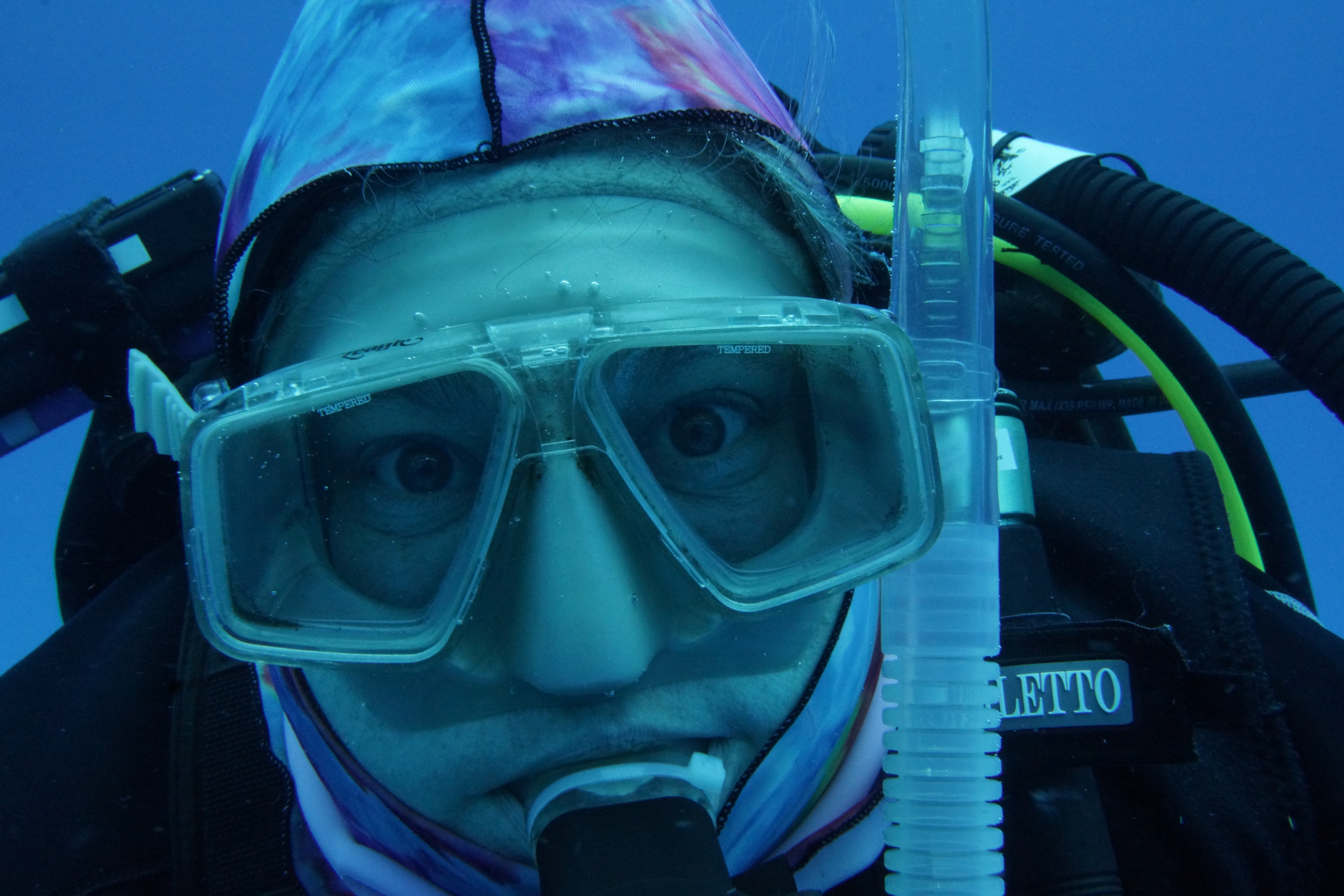
a friendly face underwater. ©Bill Fugua

a friendly face underwater.
©Bill Fuqua

When diving inside the barrier reef, the water is very clear and calm with an easy entry.  We are anchor diving with limited current.  This is easy diving and a great way to start off the week.  The Atoll is known for the rare white-spotted toadfish, eagle rays, turtles, moray eels, nurse and reef sharks, trunkfish, grouper, snapper, permit, and horse-eye jacks.

Multiple pederson shrimp on the coral reef.  They are each only a few inches long. ©Bill Fugua

Multiple pederson shrimp on the coral reef.
They are each only a few inches long.
©Bill Fuqua

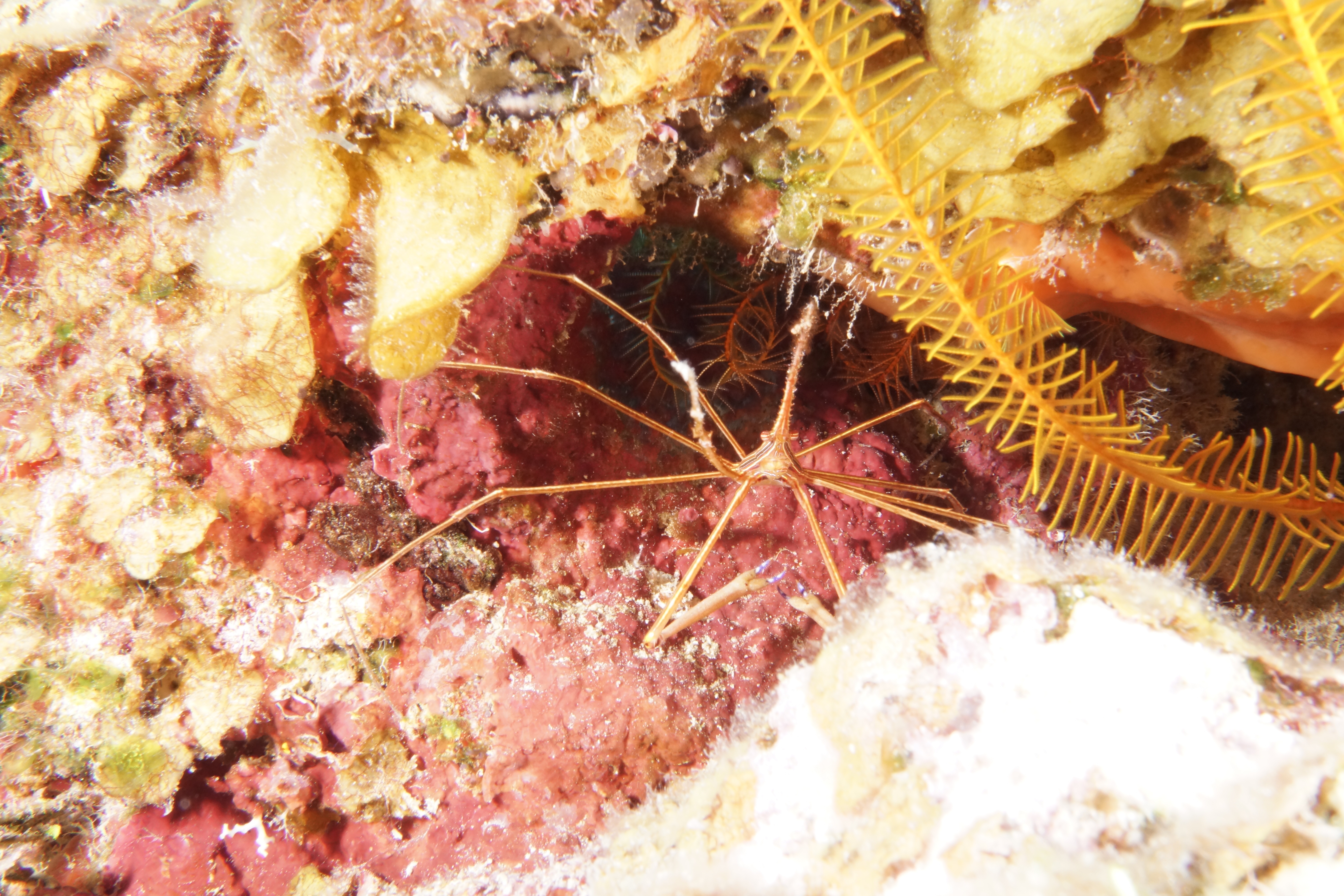
Right off the bat, we saw lots of really cool small things.  I held a small Pederson Shrimp and yellow-line arrow crab that our dive master found and presented to us.  The reefs were very healthy and the area teaming with fish-foureye butterfly fish, blue tangs (Dori for the Nemo fans), trumpetfish, yellowhead wrasse, blueheads, Creole wrasse in large schools, and squirrelfish with their big eyes.

Our second dive we found garden eels in the sand flats and queen angelfish, rock beauties, gray angelfish with their yellow accent fins, and the biggest lobster I have ever seen in the reefs.  Highlights included the barracuda and a graceful spotted eagle ray.  I have seen many rays, but the beauty and movement of this spotted eagle ray was breathtaking.

I got to hold one of these small crabs on the first dive.  Check out the blue pinchers. ©Bill Fugua

I got to hold one of these small crabs on the first dive.
Check out the blue pinchers.
©Bill Fugua

After a tasty chicken salad sandwich for lunch, we went in for our shallower third dive seeing another spotted eagle ray (this one smaller) and a moray eel.  This was truly an aquarium dive with the plentiful marine life on the reef.  I loved the yellowhead jaw fish that hang vertically above their small hole in the sand, ducking in when you get close.  We also spotted a flounder, a rare find given their clever camouflage techniques.

By the end of three hour-long dives (with at least an hour surface interval between each), we were exhausted.  After a dinner of chicken, some of the more adventurous considered a hunt for the alligators that populate the Atoll, but I headed back to my small room and was once again in bed by 8:15 pm.

Rocky commented on the beauty of the night as we headed back to our space.  The sky was clear and the stars brilliant.  We had just enough light to steer clear of the hermit crabs that crossed our path as they headed out to sea.  Sweet dreams to the tired and happy divers.

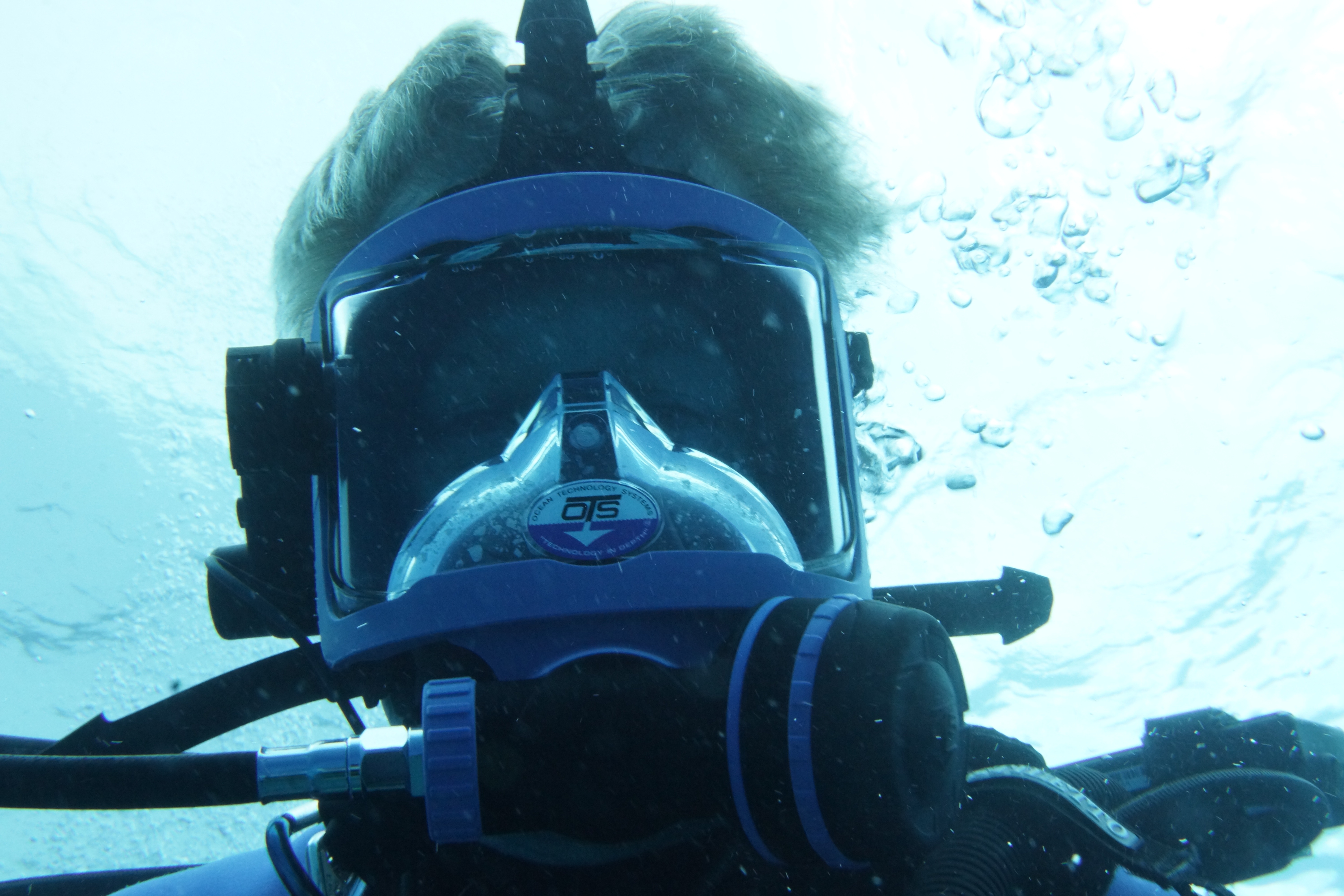
A self portrait. ©Bill Fuqua

A self portrait.
©Bill Fuqua

About the photographer:  You’ll notice that the underwater photography is credited to Bill Fuqua, a member of our OVI group.  Yes, Bill has special equipment, but the wonderful shots you see are the result of his sharp eye and amazing photography skills.  I don’t take my camera the first day and after I saw Bill’s work I left it in the case and enjoyed the record of the trip that Bill created.  He was kind enough to share his photos with me.  You can find more of Bill’s underwater photography on his facebook page. 

Posted in international, Scuba diving | Tagged , , , , , , | 1 Comment

Taj Mahal and Agra, India

Boris and Natasha at the Taj Mahal Agra, India.

Boris and Natasha at the Taj Mahal Agra, India.

Stepping out of the terminal in Delhi, the heat immediately strikes one; it is dry.  What a change this is from the coastal Indian cities we have been visiting.  The hotel representative was there to help us inside baggage claim and he directed us to our driver as we went out.  He helped us all the way to the car, a nice touch.  We came into terminal 3 that is less than two years old.  It is expansive and impressive.

At the Taj Mahal, Agra, India. ©Jean Janssen

At the Taj Mahal, Agra, India.
©Jean Janssen

What a great driver we had to the hotel.  He was warm and friendly and spoke with me for the 30-minute drive to Hilton New Delhi Janakpuri, one of the closer hotels to the airport.  He joked that there were no monuments to be seen on the way, only the prison.  He pointed it out to me when we drove by about 9:00.  At one of the gates a crowd had gathered to either be let in for a visit or waiting for someone to be released.

On the highway in Agra, India. ©Jean Janssen

On the highway in Agra, India.
©Jean Janssen

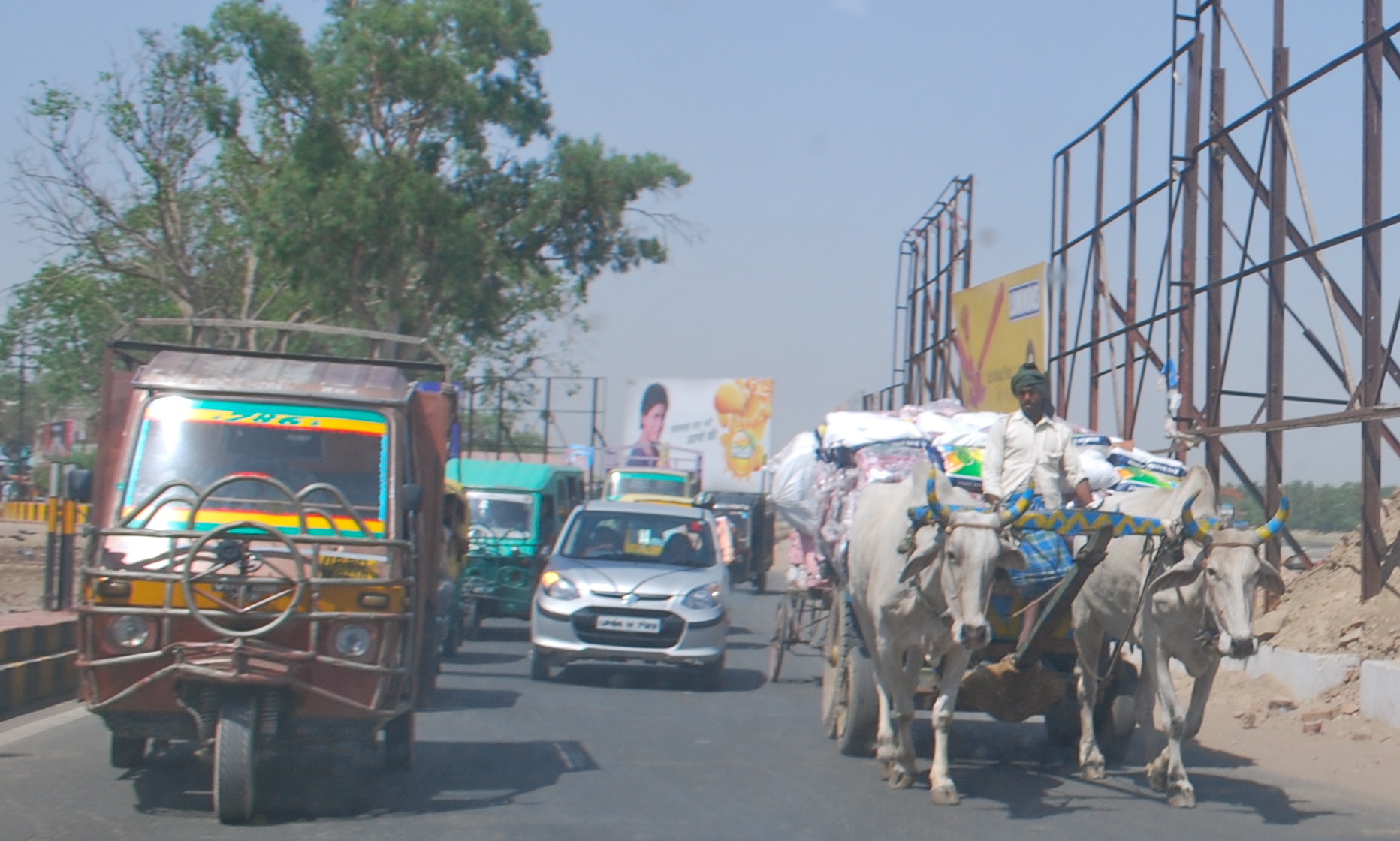
We really hadn’t been through an Indian city at night.  There was lots of activity.  Immediately upon leaving the airport, you see small villages and the merchants with their goods for sale.  Apparently the traffic is heavy until 9 pm and even after that there is lots of activity.  Suddenly cows, push carts, bicycles, and tuk-tuks jockeyed with the cars, trucks, and buses for the roadway.  We passed a pavillon and Boris asked if it was a fair, and the driver told us no, it was an Indian wedding.

Boris checks out the water buffalo from the "Baby Taj" Agra, India. ©Jean Janssen

Boris checks out the water buffalo from the “Baby Taj” Agra, India.
©Jean Janssen

That was the highlight of the evening.  I saw the adorned horse the groom rode in on, the bands that herald the family’s arrival, and a beautifully decorated carriage.  The “field” itself was covered in lights and colored banners and the music was infectious.  I had seen these things in movies, but it was magical to see up close.  Moments later, we passed another one; it was beautiful.  Our driver told us that it was a “lucky” day and the many weddings were taking place that evening.  When we arrived at the hotel the driver, sensing my enthusiasm, questioned gate security and informed me that there was also a wedding in the hotel that evening.
We were greeted outside the door and taken directly to the executive lounge for check-in.  We had scored an upgrade.  Well I say directly, but we rode up with some of the wedding guests and the hotel representative encouraged me to step out at the floor and take a look.  It was a beautiful rooftop reception.  She told me that as long as I dressed up I could just go and everyone would just think the other family invited me.  I was not so sure I would blend in that easily.

Agra, India ©Jean Janssen

Agra, India
©Jean Janssen

Our room is on the 10th floor and after settling in, I heard what I thought was by now a familiar sound.  I looked out the window and saw the bride’s family arriving for a 4th wedding at a reception hall across the street.  I watching the dancing and the band and then saw the gathering of the groom’s family farther down the street.  They had their own band and lighted escort.  You guessed it.  While Boris unpacked, I watched the groom’s family arrive with the groom on horseback.  That was 4 weddings in one night, a great start to our trip to Delhi.

Today we have an early start due to the long ride to Agra-4 hours-and our attempt to beat the crowd.   Arjun Sachdeva, our guide, and the driver were there early (5:40) to pick us up.  Having just gotten out of the shower, Boris and I came downstairs about 5:55 am, still 5 minutes early.  After grabbing our packed breakfast at reception, we were off.

Packing them in to get to the Taj Mahal.   ©Jean Janssen

Packing them in to get to the Taj Mahal.
©Jean Janssen

Arjun is a wonderful guide and I questioned him non-stop for the first hour; Boris ate his breakfast.  We were going the quickest way instead of the most scenic, but we still passed the foreign embassies, President’s home, and one of the four remaining forts in Delhi.  When we hit the new highway, I noted that there were no lane markers.  It wouldn’t have mattered; nobody acknowledges “lanes”.  People freely cross the roads, animals roam around, and there was even someone herding water buffalo against the traffic.  When we finally made it to the toll road, the lane makers finally appeared; they were still largely ignored.

Why the long drive to Agra?   It is the home of the Taj Mahal.  Enough said.

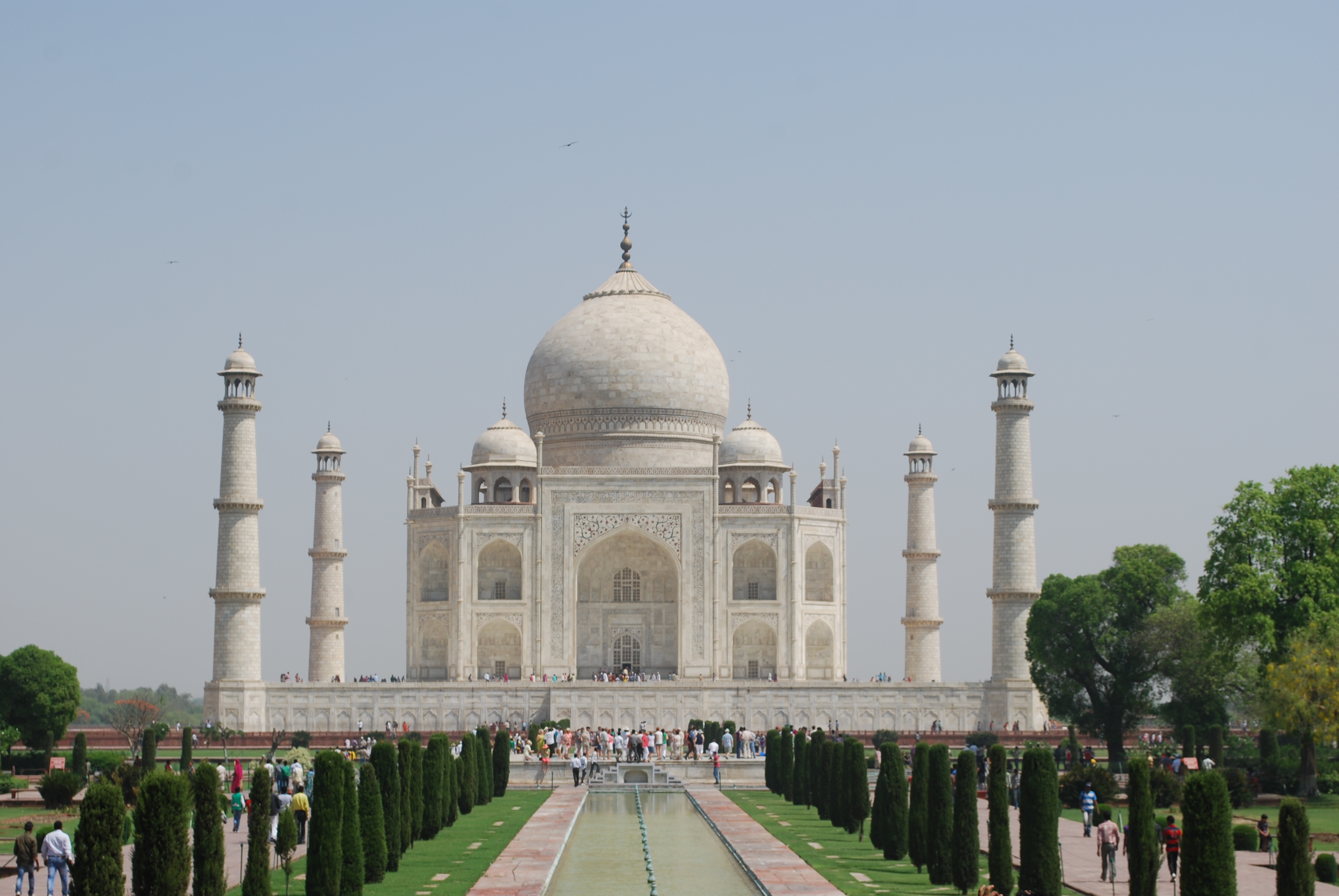
The Taj Mahal, Agra, India. ©Jean Janssen

The Taj Mahal, Agra, India.
©Jean Janssen

Sharing the road in Agra, India. ©Jean Janssen

Sharing the road in Agra, India.
©Jean Janssen

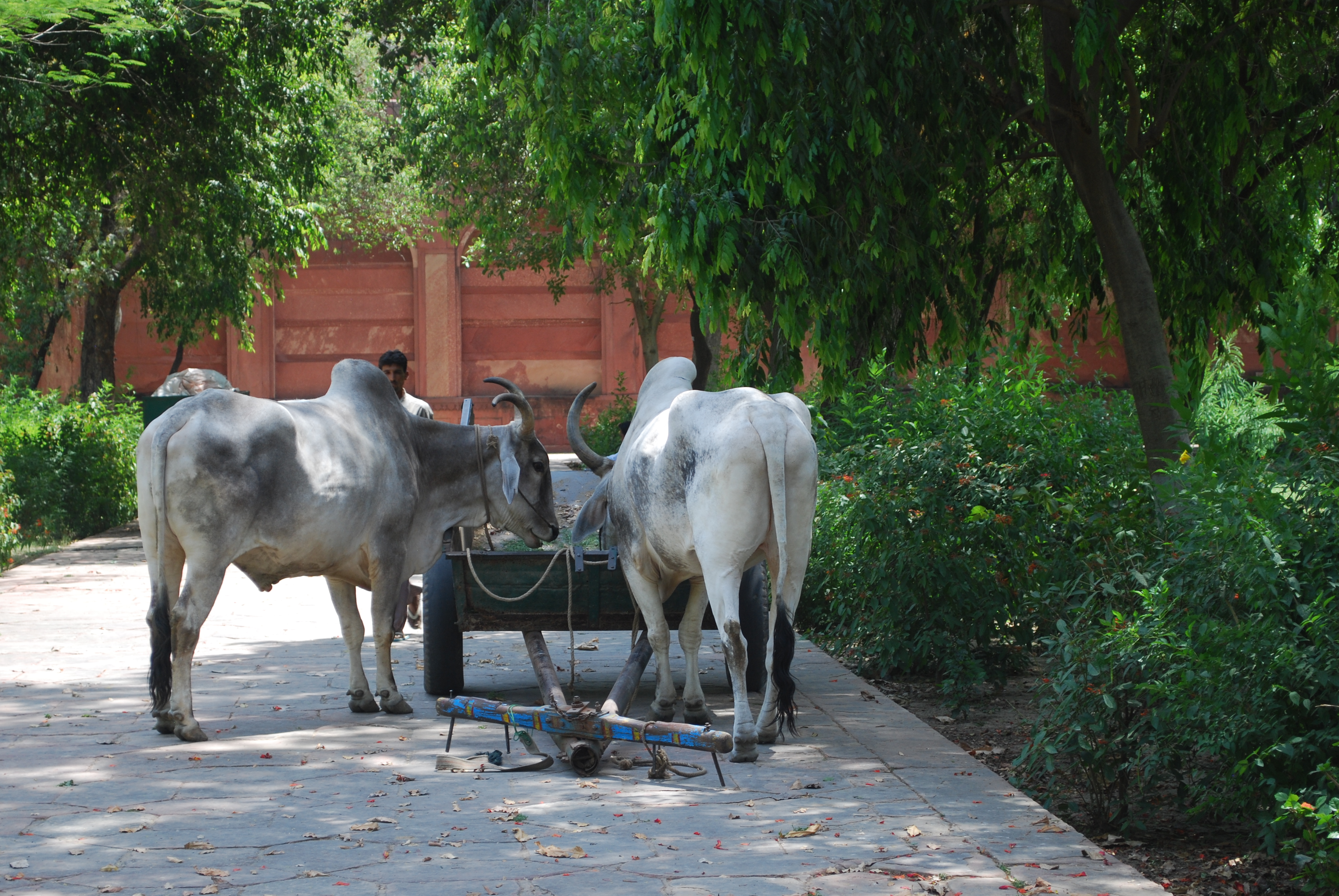
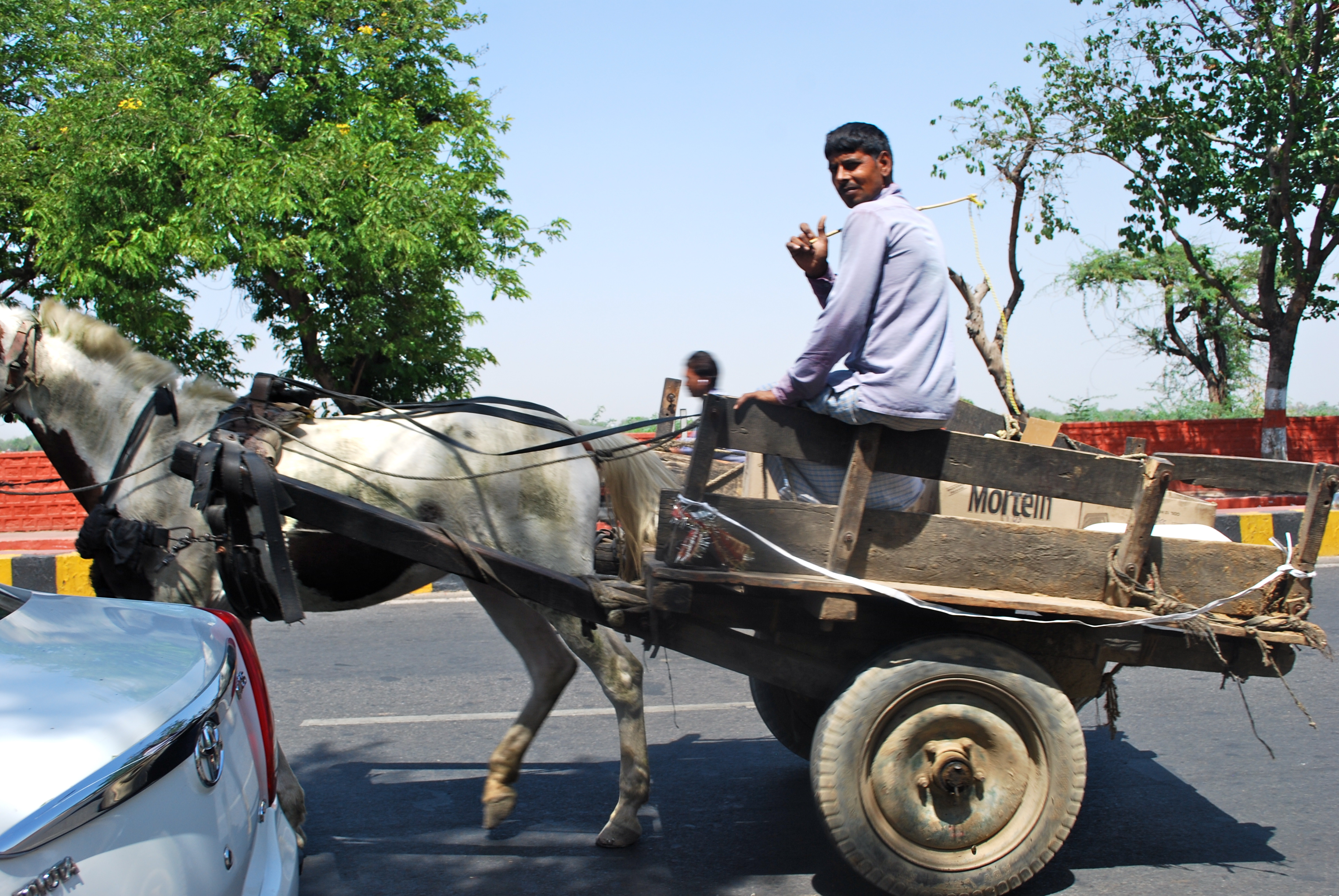
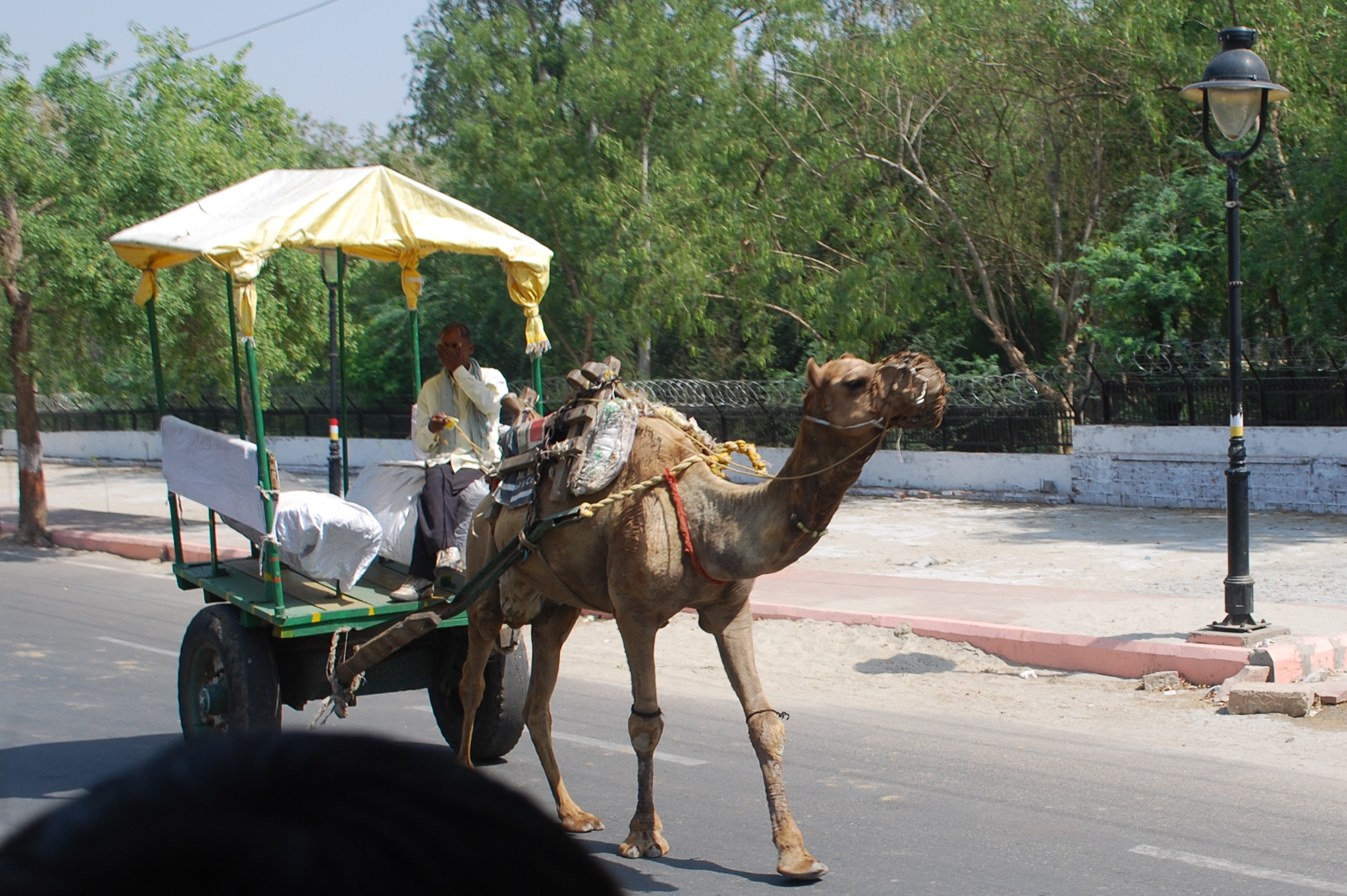
The drive in through Agra was eye opening. There was every kind of vehicle imaginable.  People carried goods on their head, pulled goods in a cart on foot, pulled goods on a cart behind their bicycle, pulled goods on a cart behind their motorcycle, pulled a card with oxen, pulled a cart with water buffalo, pulled a cart with horses, drove goods on a tuk-tuk, ect.   There were some cars and trucks too.

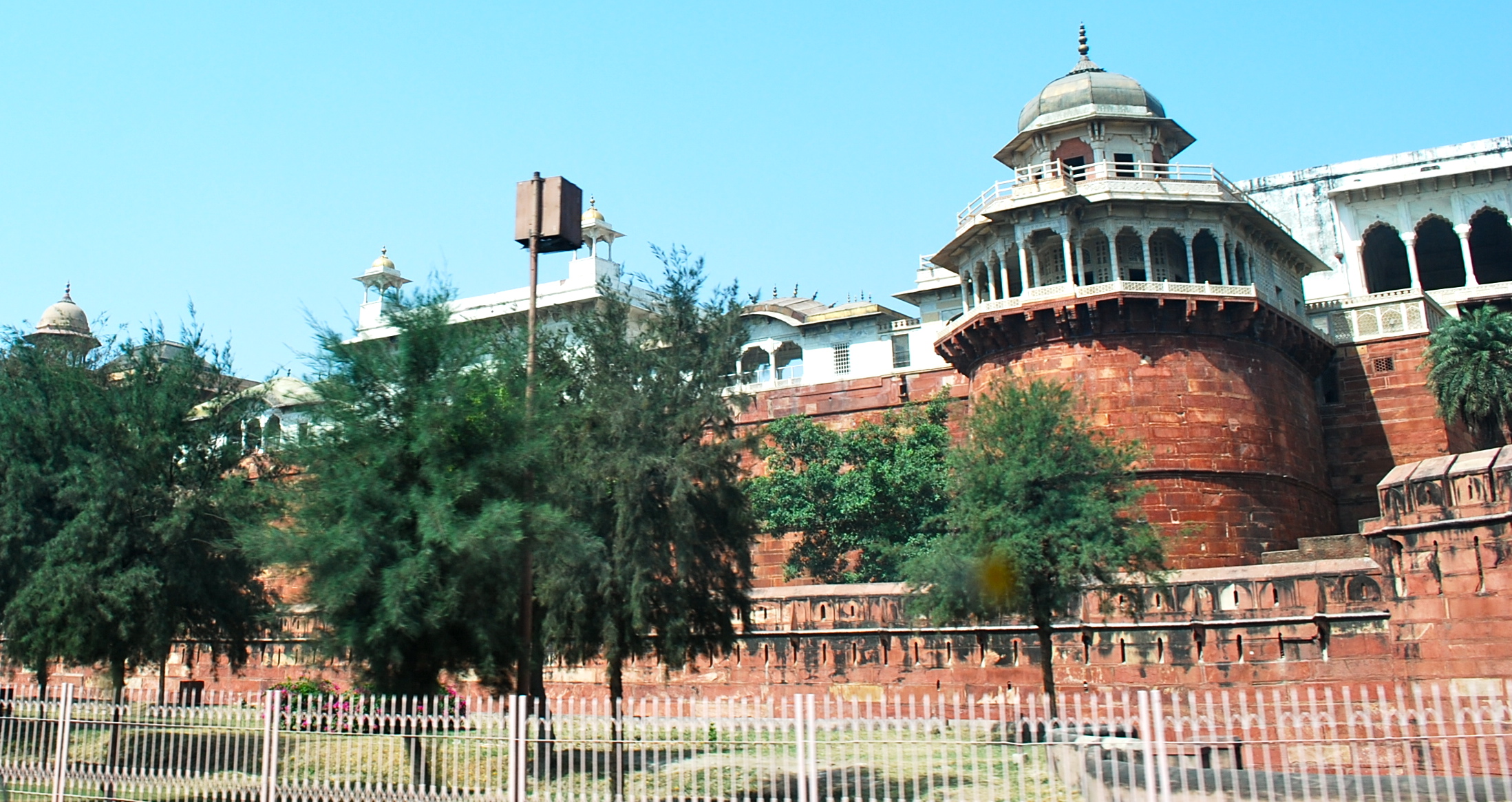
After passing the “Baby Taj”, we crossed a bridge to see herds of water buffalo grazing, playing in the water, and shading themselves with the bridge below.  As we rounded a turn, the Agra fort came into view on the right and the Taj Mahal was on the left.

Agra Fort, India ©Jean Janssen

Agra Fort, India
©Jean Janssen

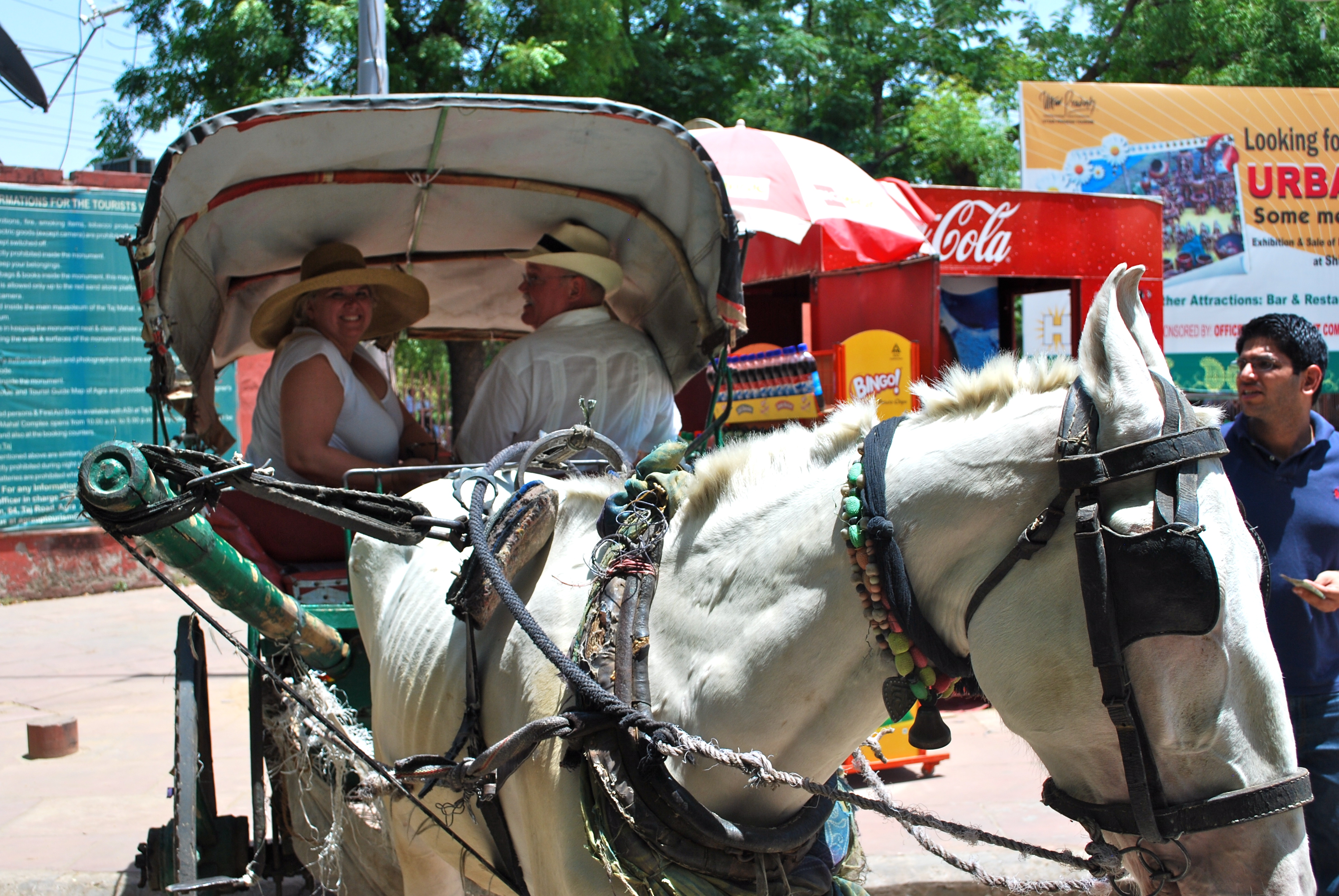
Boris and I on the tonga.  Arjun, our guide for Agra and Delhi is blue shirt on the ride side of the tonga.

Boris and I on the tonga. That is Arjun, our guide for Agra and Delhi, wearing the blue shirt.

We were meeting our local guide at the East gate, typically used by foreign guests.  Most domestic visitors enter from the West gate.  The South gate, with no parking, is for local visitors.  There is a distance to reach the entrance from parking so we rode in on a Tonga, a horse-drawn cart,  What a lovely way to arrive.  As expected, there is heavy security (and no cell service for that reason), but not a long wait so we were inside fairly quickly.

The main gate to the Taj Mahal, Agra, India. ©Jean Janssen

The main gate to the Taj Mahal, Agra, India.
©Jean Janssen

The various entrances merge in a central courtyard.  On the north is the formal entrance gate to the Taj Mahal. It looks more like a palace and is made of red sandstone and white marble.  It is beautiful in and of itself.  Looking in from the center of the courtyard, you can see straight through the Main gate, past the fountains and platforms, to the exquisite tomb that is the Taj Mahal.

Our local guide was very creative with his picture taking suggesting this shot with the reflection of the Taj Mahal in the reflection of my sunglasses.

Our local guide was very creative with his picture taking suggesting this shot with the reflection of the Taj Mahal in my sunglasses.

Our local guide told us about the history, construction, and materials of this wonder.  He was also wonderful with the camera and took lots of pictures, suggesting multiple locations and poses. Once you step off the main gate, you can no longer use video camera.  Except inside the tomb itself, you are able to use a still camera throughout the complex.  The beautiful white marble is adorned with semi-precious stones that add to its luster.  Paint would have faded, but the jewels still sparkle.

The colorful markings are inlaid semi-precious stones with the marble flowers cut from a single slab of marble for each panel. ©Jean Janssen

The colorful markings are inlaid semi-precious stones with the marble flowers cut from a single slab of marble for each panel.
©Jean Janssen

You must take your shoes off to enter the tomb or you can use the shoe covers purchased with your ticket.  The tombs themselves are in a lower level with no ventilation, but have been reproduced on the ground floor of viewing.  Wood stairs have been constructed over the marble stairs for easier access and preservation.

Beautiful detail work on the Taj Mahal, Agra, India. ©Jean Janssen

Beautiful detail work on the Taj Mahal, Agra, India.
©Jean Janssen

The tomb was built by Mughal emperor Shah Jahan in memory of his third wife, Mumtaz Mahal, his only wife to bear him children-14 in total.  She died in childbirth at age 38.  The first and second wives have small unadorned tombs outside the east and west gate.  (At least the other wives got nice white marble domes on their tombs.)  The third wife’s remains are in the center of the of The Taj Mahal mausoleum.  Shah Jahan had intended to build a mirror black tomb (white for love; black for sadness) north of the river, but it was never completed.  The foundation for the black Taj can be viewed on the north side.  He is buried beside his wife in the Taj Mahal, the placement of his “casket” the only lack of symmetry in the whole complex.

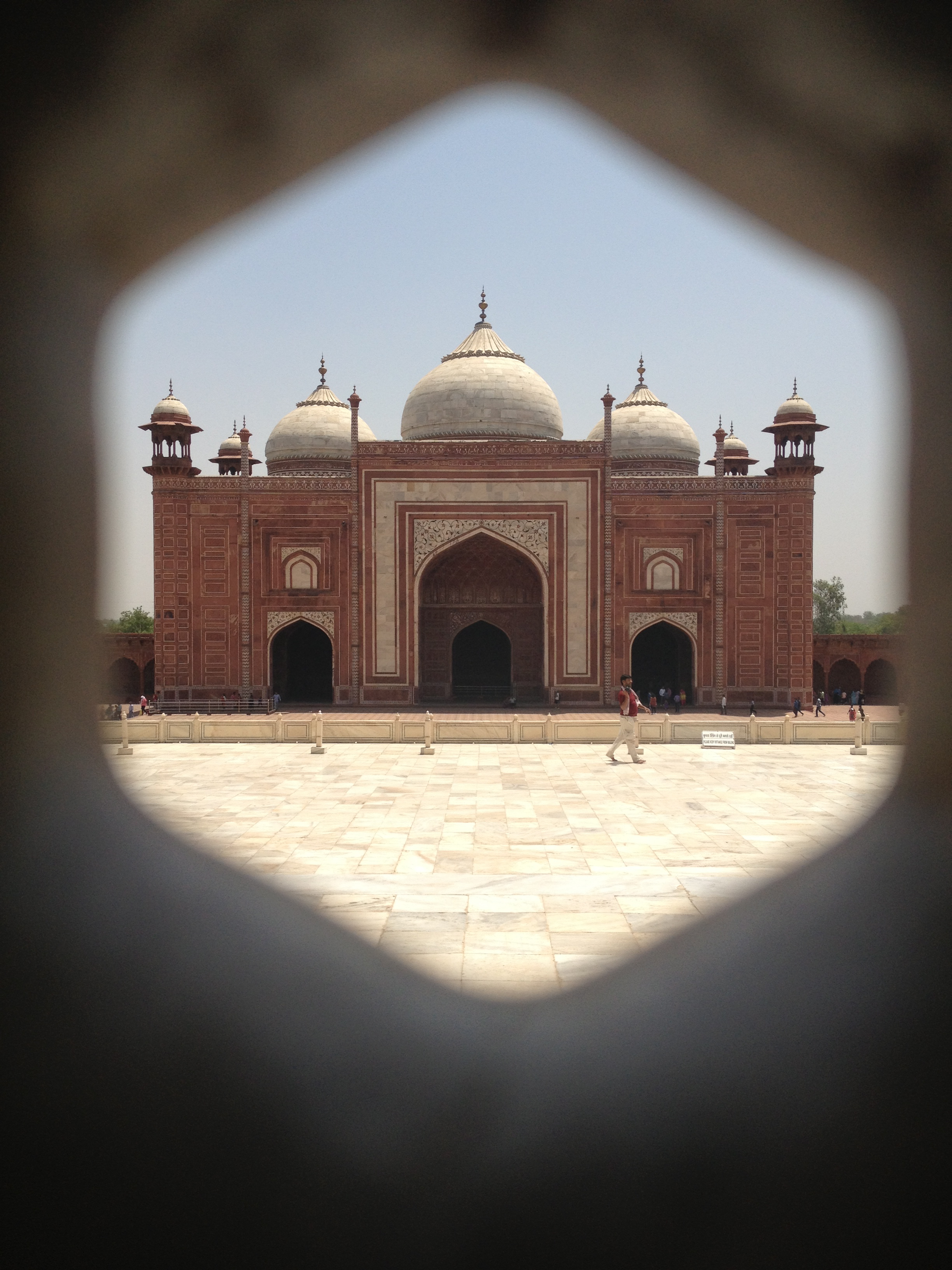
View of Taj Mahal guesthouse as seen through the lattice work window coverings in the Taj Mahal. ©Jean Janssen

View of Taj Mahal guesthouse as seen through the lattice work window coverings in the Taj Mahal.
©Jean Janssen

While inside, a flashlight reveals the luminescence of some of the stones and the detail work on each pedal of the flowers.  The lotus was her favorite.  Through the latticework window panels, you can look through any opening and see a complete picture of the red sandstone guesthouse beside the Tomb.  (You can also sneak a “framed” picture with your cell phone and a watchdog guide.)  On one side of the Taj Mahal is the guesthouse; on the other side is a mosque.  They are mirror images.  On either side of the center fountain, there are identical music platforms.

Some of Boris' "rock star" groupies at the "Baby Taj" ©Jean Janssen

Some of Boris’ “rock star” groupies at the “Baby Taj”
©Jean Janssen

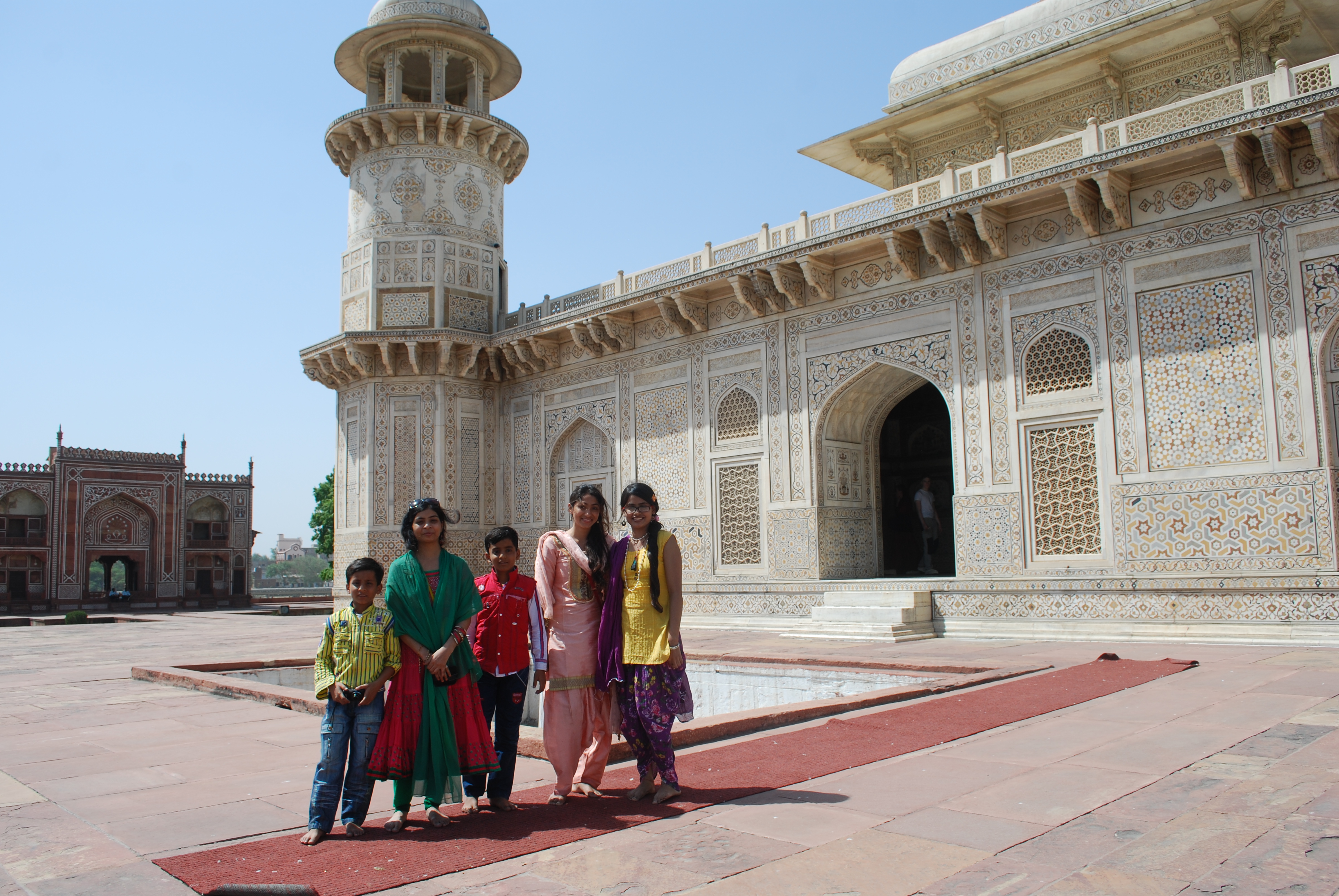
After our viewing, we went to lunch at Indiana.  Our guide suggested wonderful dishes to share and perhaps the best bread I have ever had.   We then did a drive-by of the Agra Fort and made a stop at Etimad-ud-Daula’s Tomb, often called the “Baby Taj” and built 30 years before the earlier.  The “jewel box” is clearly an inspiration for the Taj Mahal.  After seeing the adornment of the Taj Mahal, the artwork at this Mughal mausoleum looks primitive.  It is still a beautiful setting.  Boris once again enjoyed his rock star status when several young women, calling him “Uncle”, asked to wear his hat and have their picture taken with him.

Water buffalo in Agra, India. ©Jean Janssen

Water buffalo in Agra, India.
©Jean Janssen

From the balcony of the waterside gate, I got a good view of the grazing and bathing water buffalo.  We once again had the long drive back, but avoided the worst of the rush hour traffic and arrived at the hotel just at sunset.  We experienced such beauty today.

A picture taken by our local guide at the Taj Mahal.

A picture taken with my camera by our local guide at the Taj Mahal.

Posted in international | Tagged , , , | Leave a comment

Mumbai (Bombay) and Bandra, India

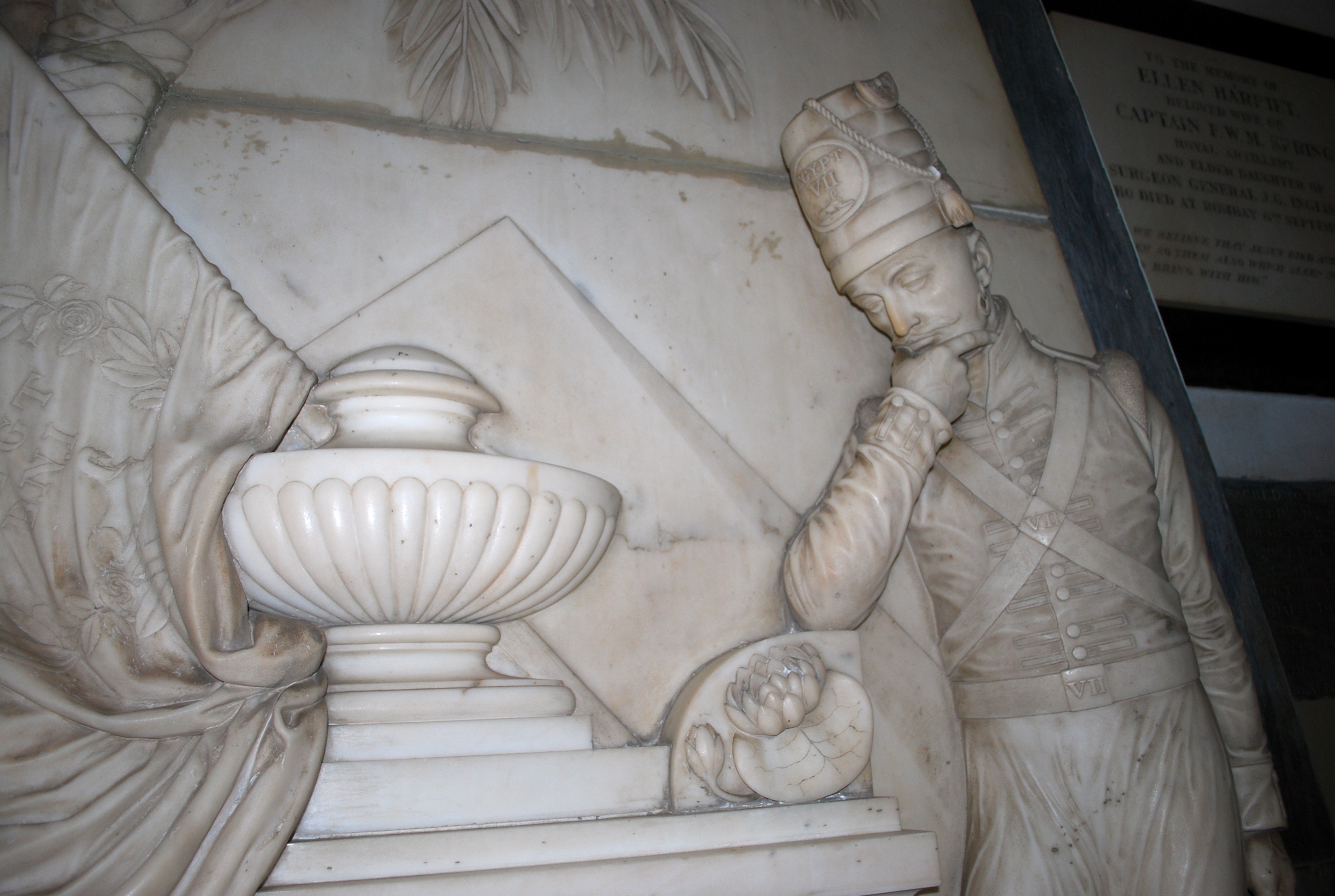
A carved marble tomb in  St. Thomas Church of North India in Mumbai. ©Jean Janssen

A carved marble tomb in St. Thomas Church of North India in Mumbai.
©Jean Janssen

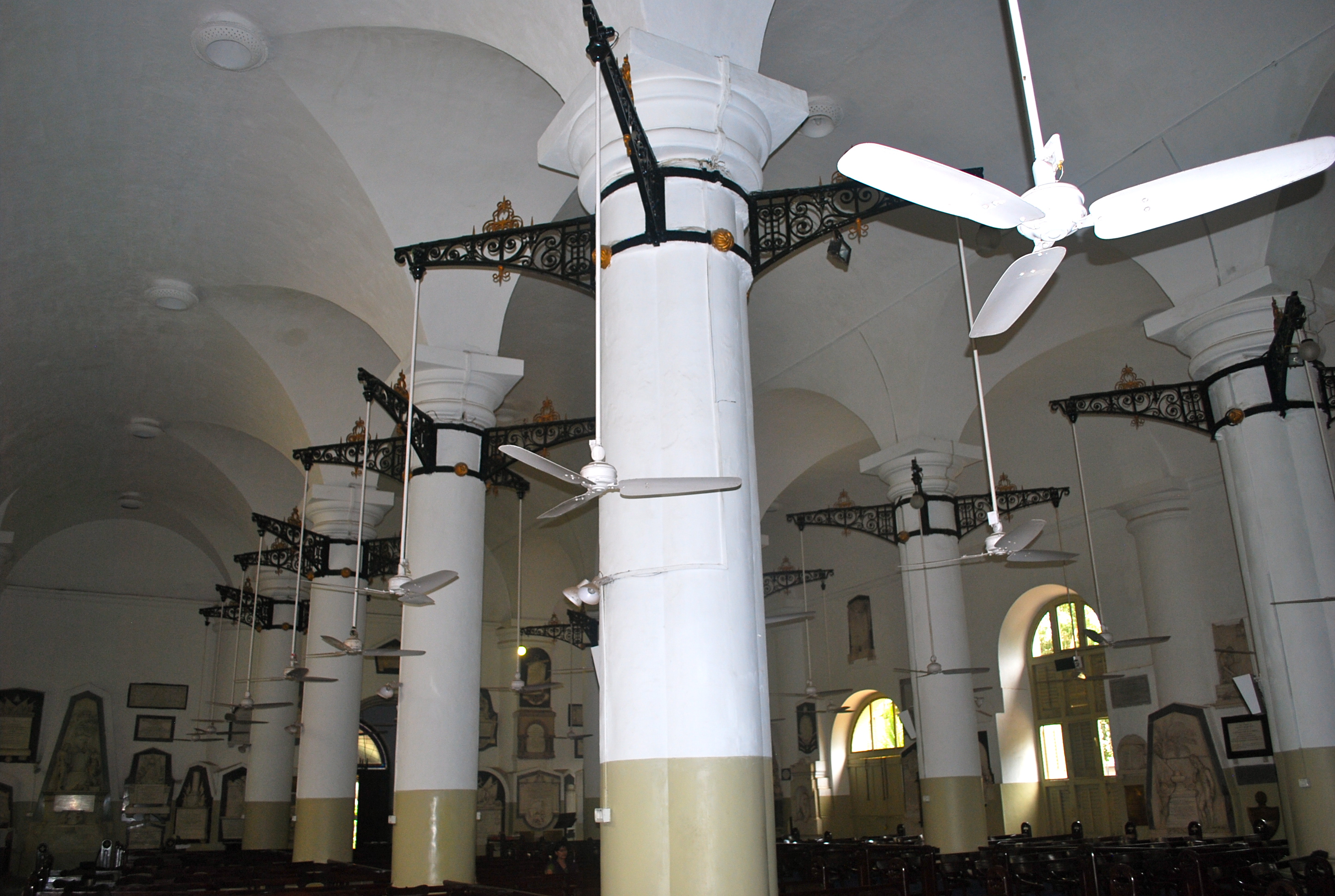
Interesting ceiling fans in the St. Thomas Church of North India in the fort district of Mumbai. ©Jean Janssen

Interesting ceiling fans in the St. Thomas Church of North India in the fort district of Mumbai.
©Jean Janssen

Today is our Mumbai tour with Fabian.  We started us off in the Fort area with a showing of some of the historical buildings and the beautiful St. Thomas Church, formerly Anglican and now used by the Church of Northern India whose rites are essentially Anglican.  The church has many beautiful marble tombs and the most interesting ceiling fan system I have seen.  It was a perfect stop for the two of us.  I could photograph the details and Boris could explore the British history.

Interior tower of the Taj Mahal Palace Hotel which opened in 1903 in Mumbai India. ©Jean Janssen

Interior tower of the Taj Mahal Palace Hotel which opened in 1903 in Mumbai India.
©Jean Janssen

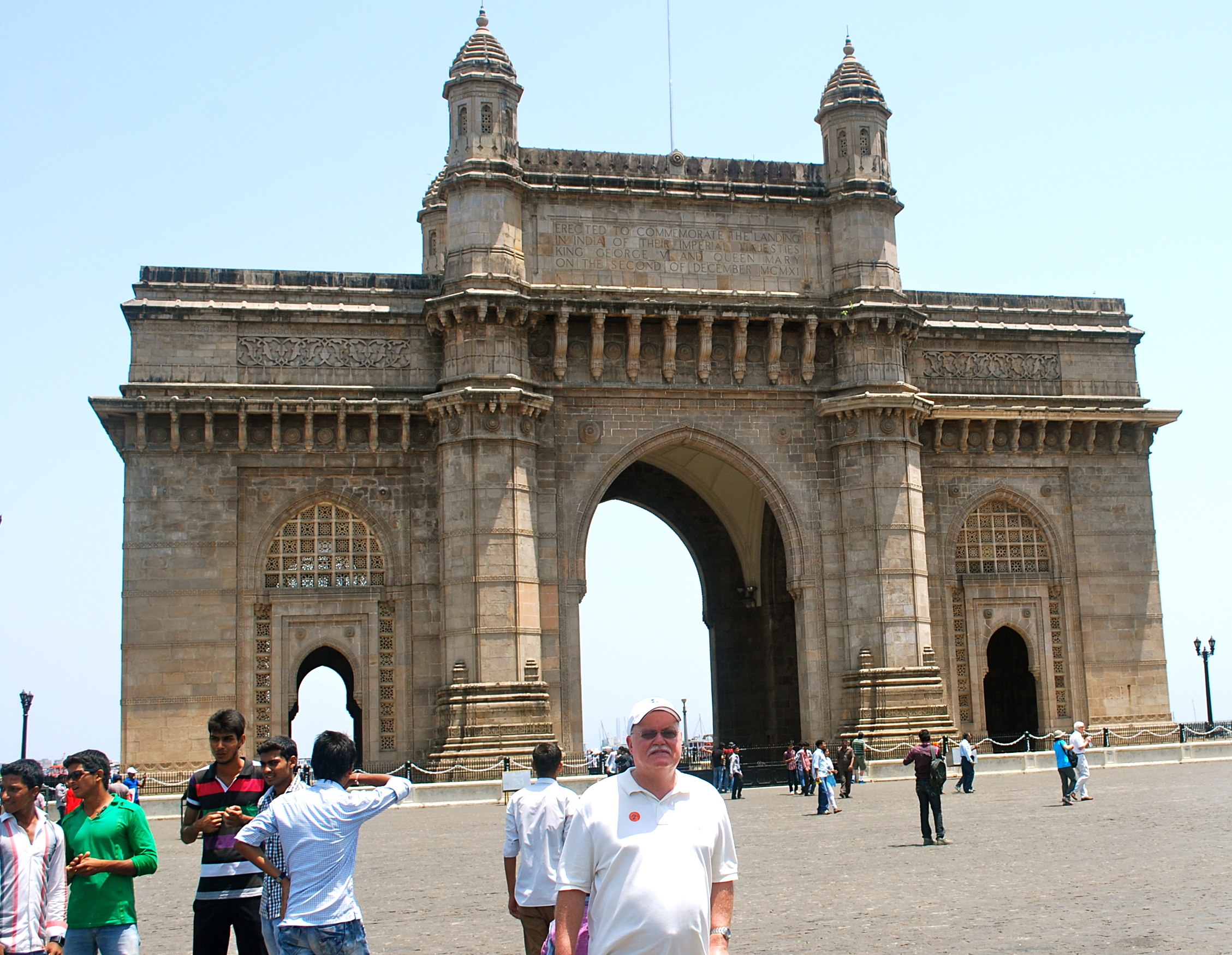
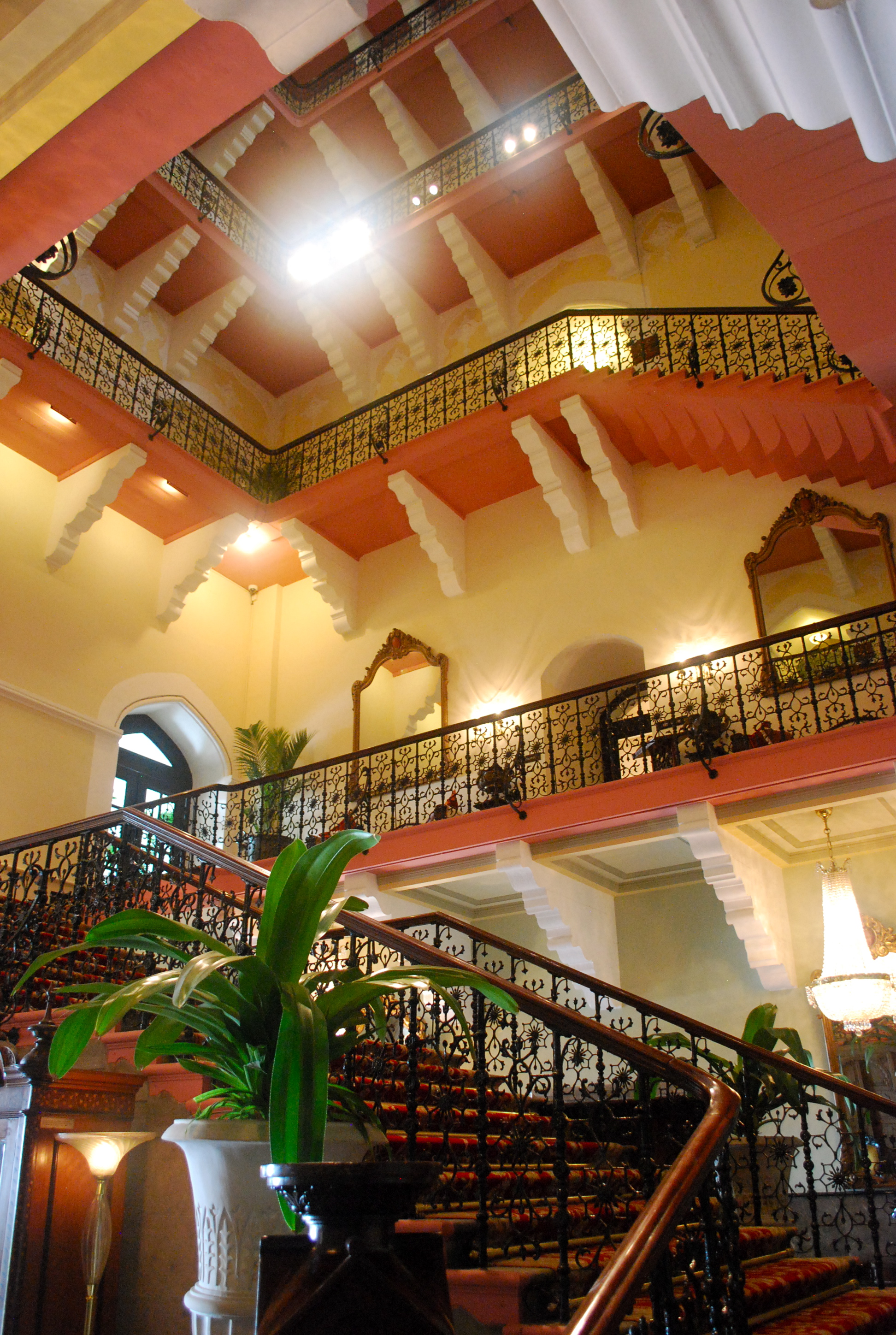
We once again saw the Gateway of India, but this time went inside the Taj Mahal Palace hotel next door.  Jamsetji Tataan, an Indian industrialist who was refused accommodations in a local European-run hotel, built the hotel, which opened in 1903 and predates the Gateway by 21 years.  Ironically, most of the guests we saw appeared to be of European or American.  We even ran into Frank and Janet who were checking into the hotel.  With the view of the Gateway and the waterway, it is the perfect location.  The hotel was the site of a terrorist attack at the hands of four gunmen in 2008 and as a result, security is heavy.

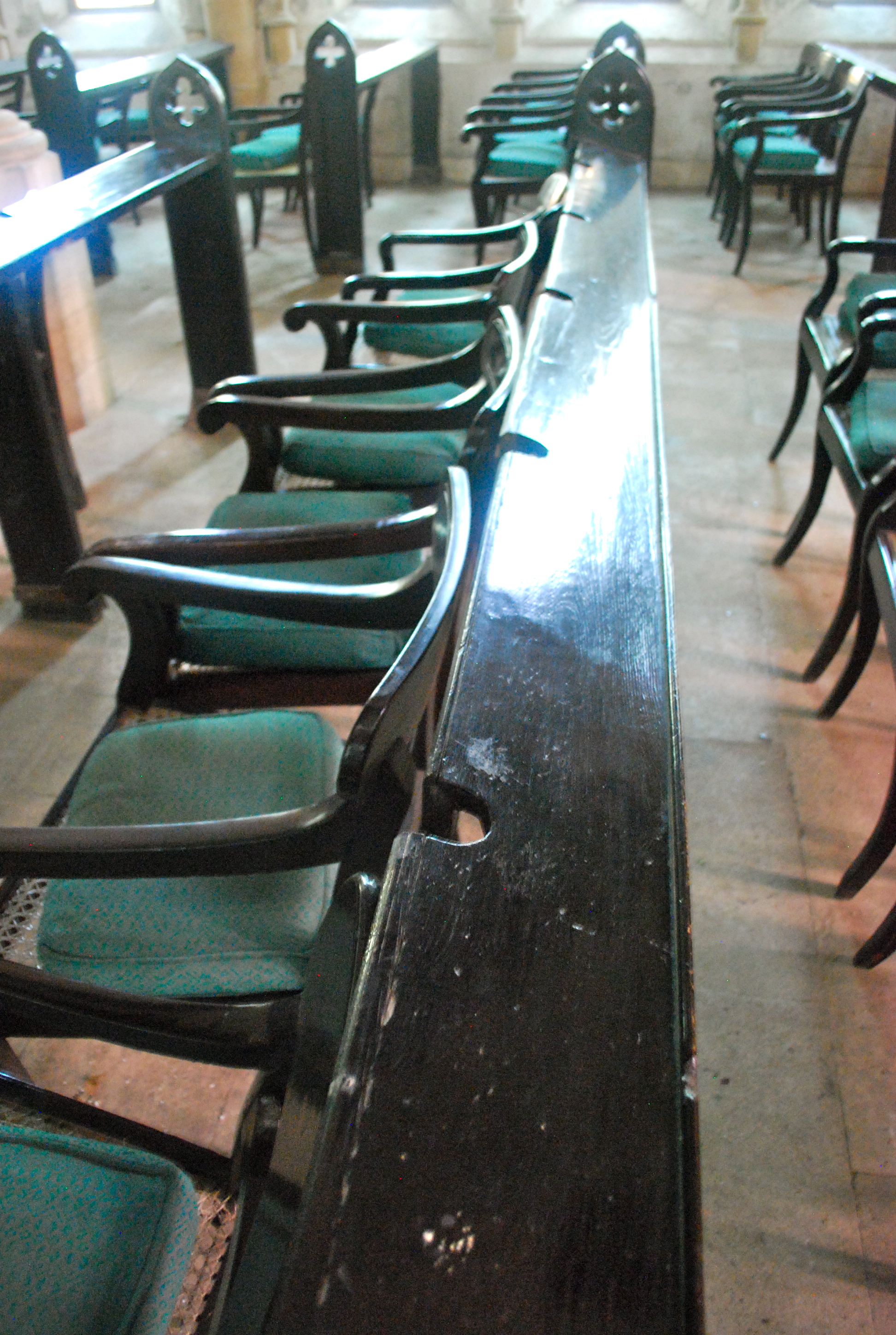
We passed many former British military barracks, in some cases still used by the Indian army, on our way to the memorial church for those who served in the Afghan and Sikh wars.  Fabian applied to the caretaker who unlocked the door so we could take a look.  The caretaker told us that the current parish is very small with only 30-40 members.  The names of officers are carved into marble panels on the wall.  The church dedication is to those officers, non-commissioned officers, and private soldiers who served from 1838-1843 and in 1848.

There were holes where the soldiers put their rifles during services in the Afghan and Sikh Memorial Church in Mumbai, India. ©Jean Janssen

There were holes where the soldiers put their rifles during services in the Afghan and Sikh Memorial Church in Mumbai, India.
©Jean Janssen

The names of the commemorated military personnel are listed by regiment.  Some of the original regimental flags can be seen in glass cases at the back of the church.  As you walk in, you pass the thick rope still used to ring the bells by hand.  Most interesting were the special notches in the pews where the soldiers rested their rifles.

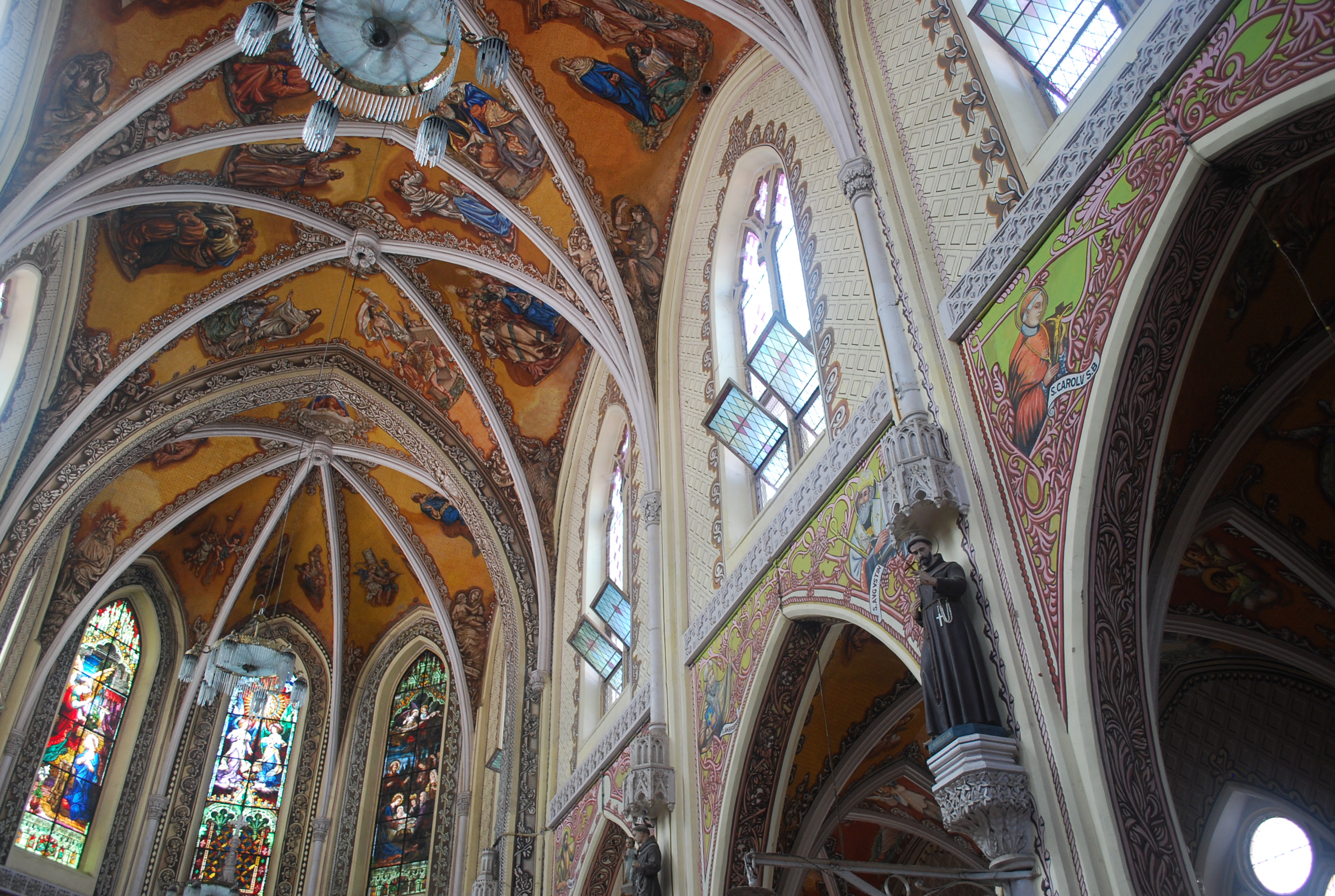
All along the way through Mumbai, Fabian pointed out landmarks and historical spots to us.  He was very quick to access our interest and tailored the tour to our reactions.  The things he showed us served as a backdrop to the history and culture he shared.  Not on the original itinerary, he even stopped at the Catholic Cathedral of the Holy Name, the site of Pope Paul VI’s and Pope John Paul II’s visits.  Appropriately, there is a bell named “Paulina” commemorating Pope Paul’s visit and a statute of John Paul II presented by the envoy of Pope Benedict on the 25th anniversary of John Paul II’s visit.  In contrast to the Anglican and Church of North India places of worship, the Cathedral was very colorful with painted scenes on all the walls and lots of stained glass, even on the opened windows.

The beautiful painted ceiling, walls and stained glass windows of the Cathedral of the Holy Name in Mumbai, India. ©Jean Janssen

The beautiful painted ceiling, walls and stained glass windows of the Cathedral of the Holy Name in Mumbai, India.
©Jean Janssen

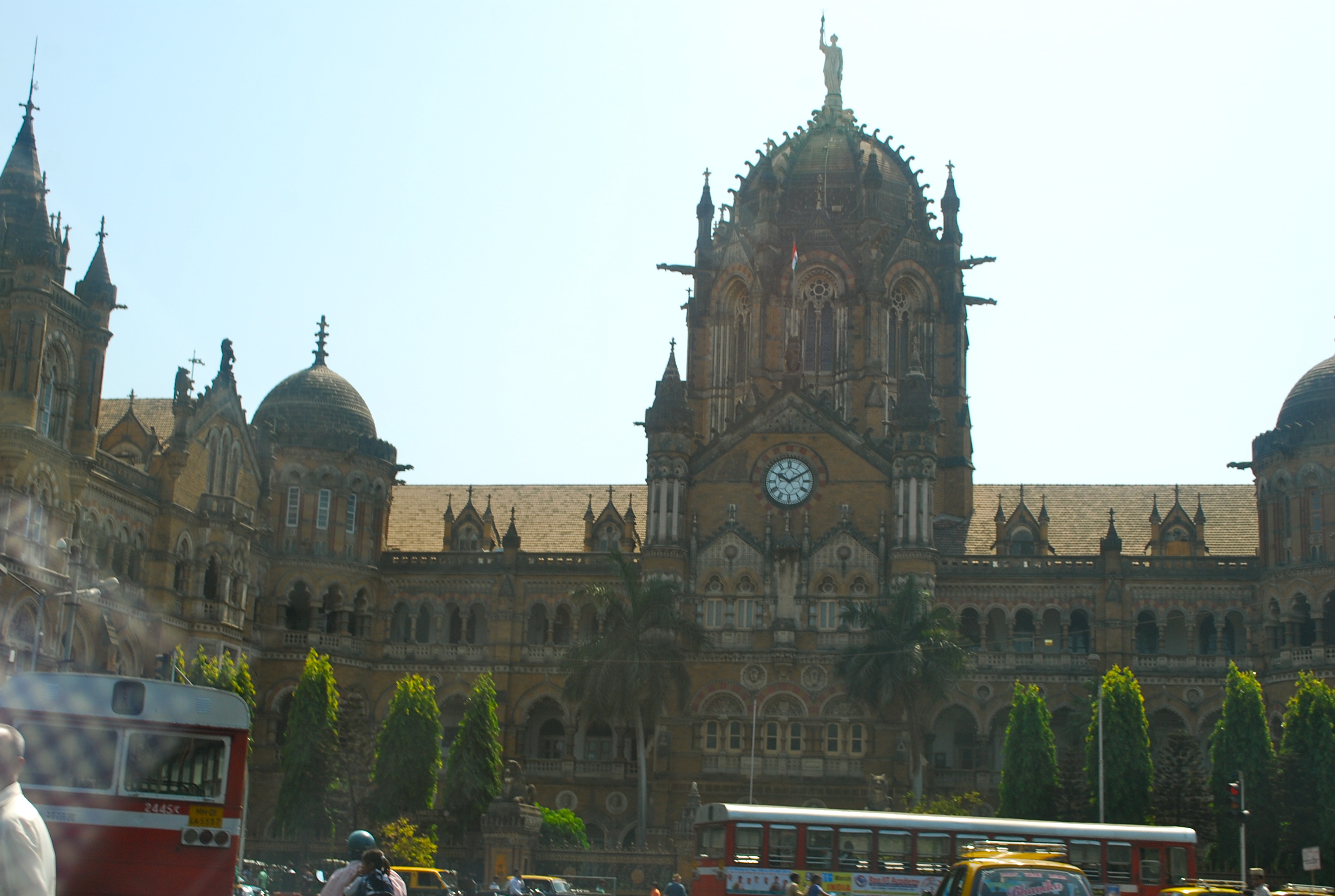
The Sv, Terminus train station in Mumbai, a UNESCO World Heritage Site. ©Jean Janssen

The Chhatrapati Shivji Terminus (formerly the Victoria Terminus) train station in Mumbai, a UNESCO World Heritage Site.
©Jean Janssen

From here we passed by other historic buildings including the High Court, Chhatrapati Shivji (formerly Victoria) Terminus-the very large and very busy train station and UNESCO World Heritage Site-and the University of Mumbai, among others.  It is a holiday in Mumbai, Maharashtra Day, celebrating the creation of the state of Maharashtra where Mumbai is located.  We saw many park areas filled with Indians playing cricket, perhaps the most popular sport in the country.  When we asked Fabian about the sport he said that “cricket is a gentlemen’s game and there are no gentlemen left in India.”

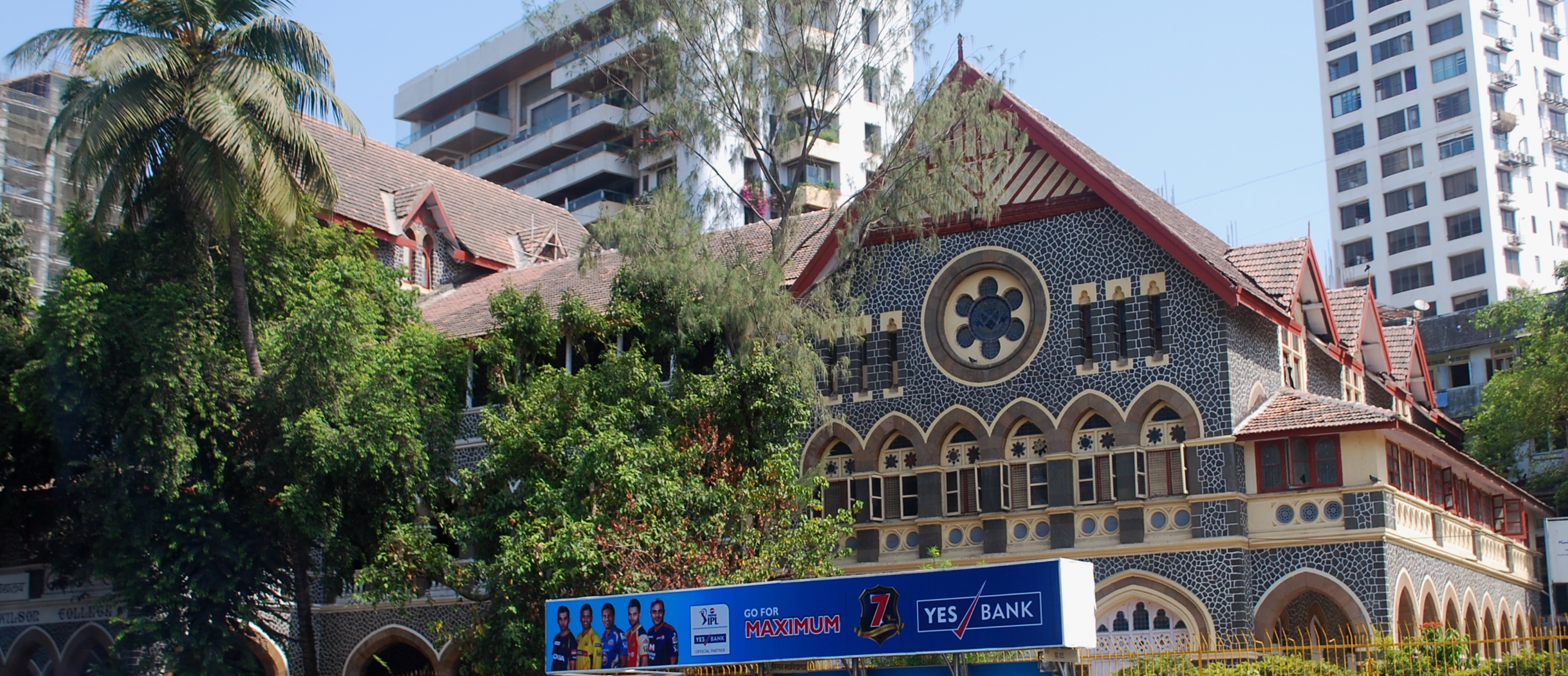
The Wilson College along Marine Park Drive, Mumbai, India. ©Jean Janssen

The Wilson College founded by the Scottish Missionary Society in 1836, along Marine Park Drive, Mumbai, India.
©Jean Janssen

After a drive along Marine Park Drive, we drove to the Malabar Hill District, arguably the most exclusive residential area of the city, and applied to visit a Jain Temple.  Services were in progress and so we were unable to go in.  Our next stop was the park with it beautiful gardens and topiaries built on top of a reservoir, the Banganga Tank.  Fabian took our picture at the Hanging Gardens overlooking the Arabian Sea.  We passed the Parsi Tower of Silence, slightly visible among the trees.  Traditionally, those of the Parsi faith did not bury their dead, but left them out for the vultures in these tower structures.  This ritual exposure is a fast-fading tradition

Gandhi House, Mumbai India. ©Jean Janssen

Gandhi House, Mumbai India.
©Jean Janssen

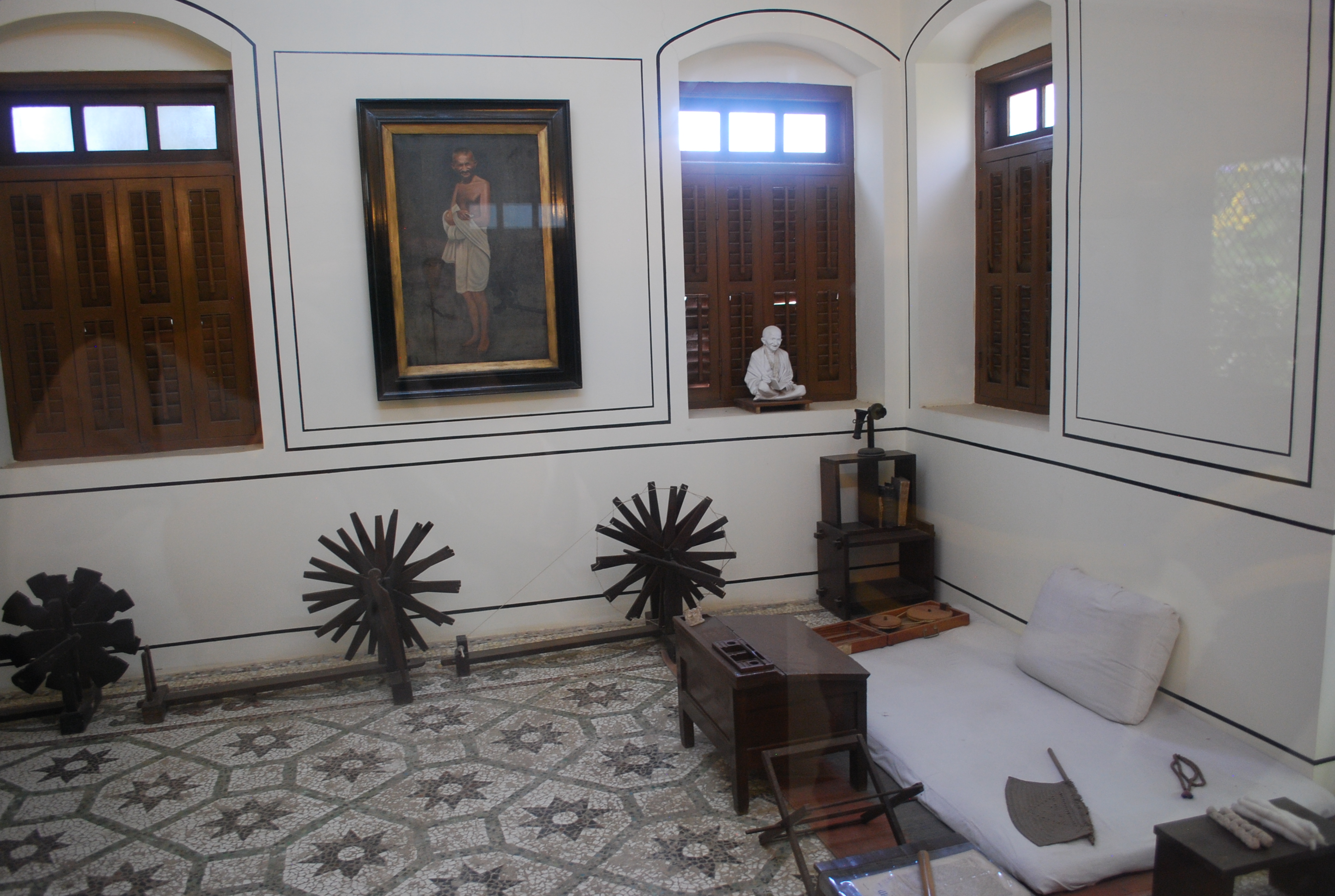
Our next visit was to the Gandhi House where Mahatma Gandhi was held under house arrest.  It is a small home in a middle class neighborhood with exhibits and photographs celebrating his life.  We ran into many other tour groups there from our ship and once again enjoyed the speed and selectivity of our private tour with Fabian.

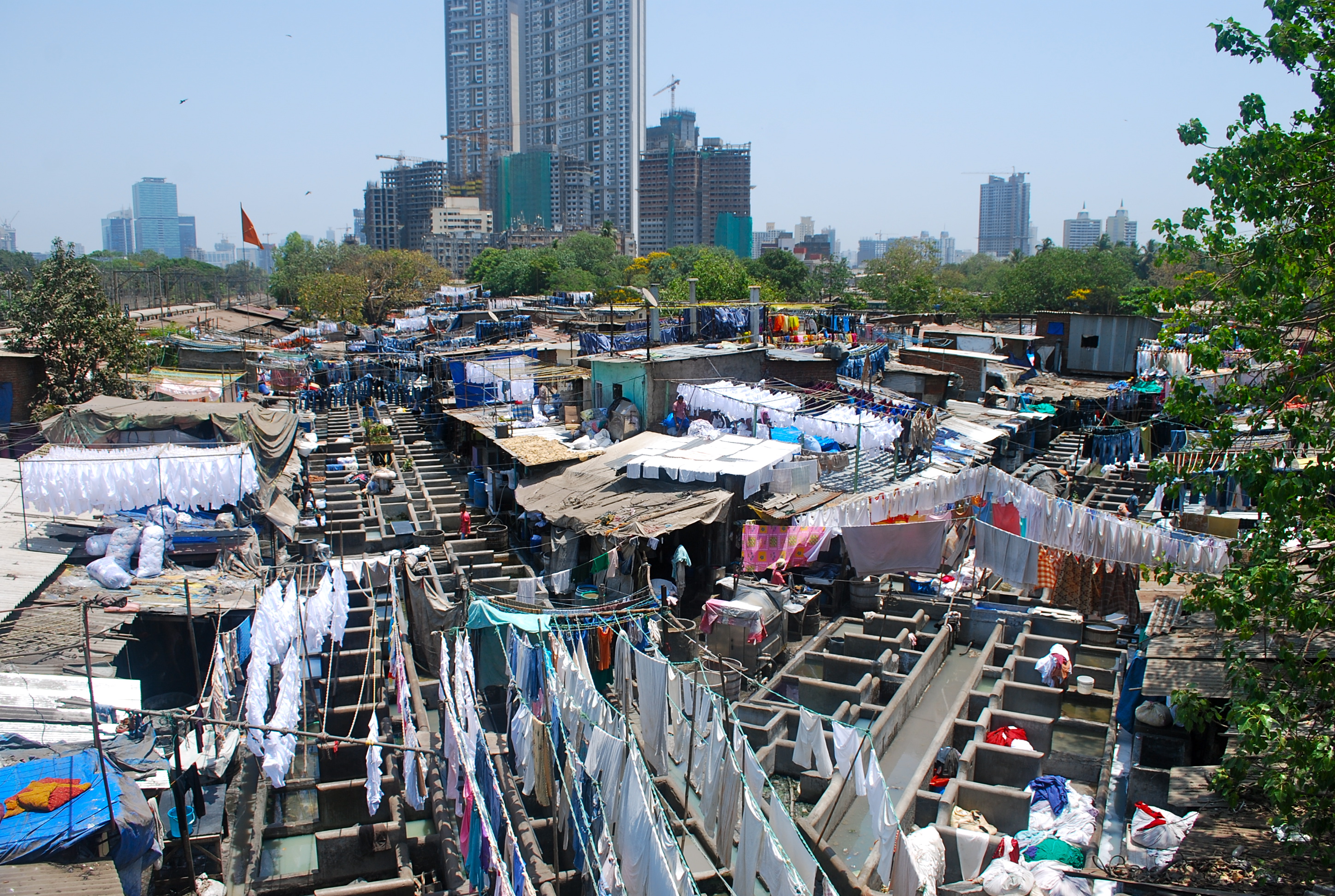
"Doing the wash"  Mumbai, India. ©Jean Janssen

“Doing the wash” Mumbai, India.
©Jean Janssen

We drove next into one of the older and poorer sections of the city.  Our stop along the bridge allowed us to see the work of those people with the contracts with smaller hotels and restaurants for the washing of their linens.  There are troughs for the washing and then the linens and clothing are hung in the sun to dry.  Clearly, it is done in color groups and stretches on for blocks and blocks.

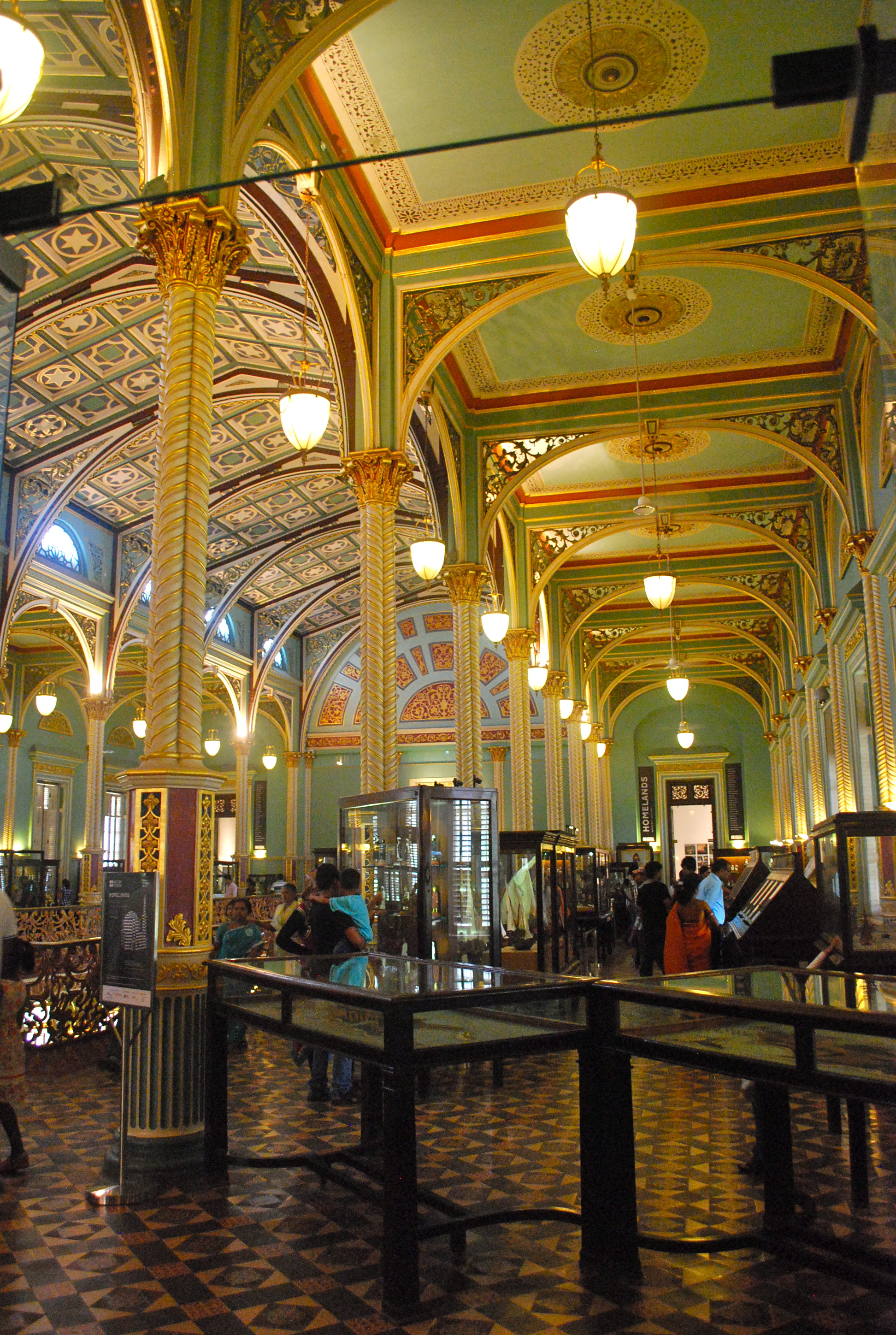
Mumbai City Museum, India. ©Jean Janssen

Mumbai City Museum, India.
©Jean Janssen

Fabian took us next to what for me was one of the cultural highlights of the day, the Dr. Bhau Daji Lad Mumbai City Museum, established in 1855 and the second oldest museum in Mumbai.  The museum is next to the zoo and current home to the statute for which Elephanta Island got it’s name.  (The elephant statute is actually outside just to the right of the museum entrance.)  Fabian wisely made our first stop the documentary presentation on the restoration of the museum and its artifacts.  While the famous Prince of Wales Museum focuses on history, the City Museum focuses on culture.  The building itself is lovely.   When you see what it looked like before restoration, you will be amazed.  On your visit note the original floor tiles, turnstiles, and wood and glass display cases.

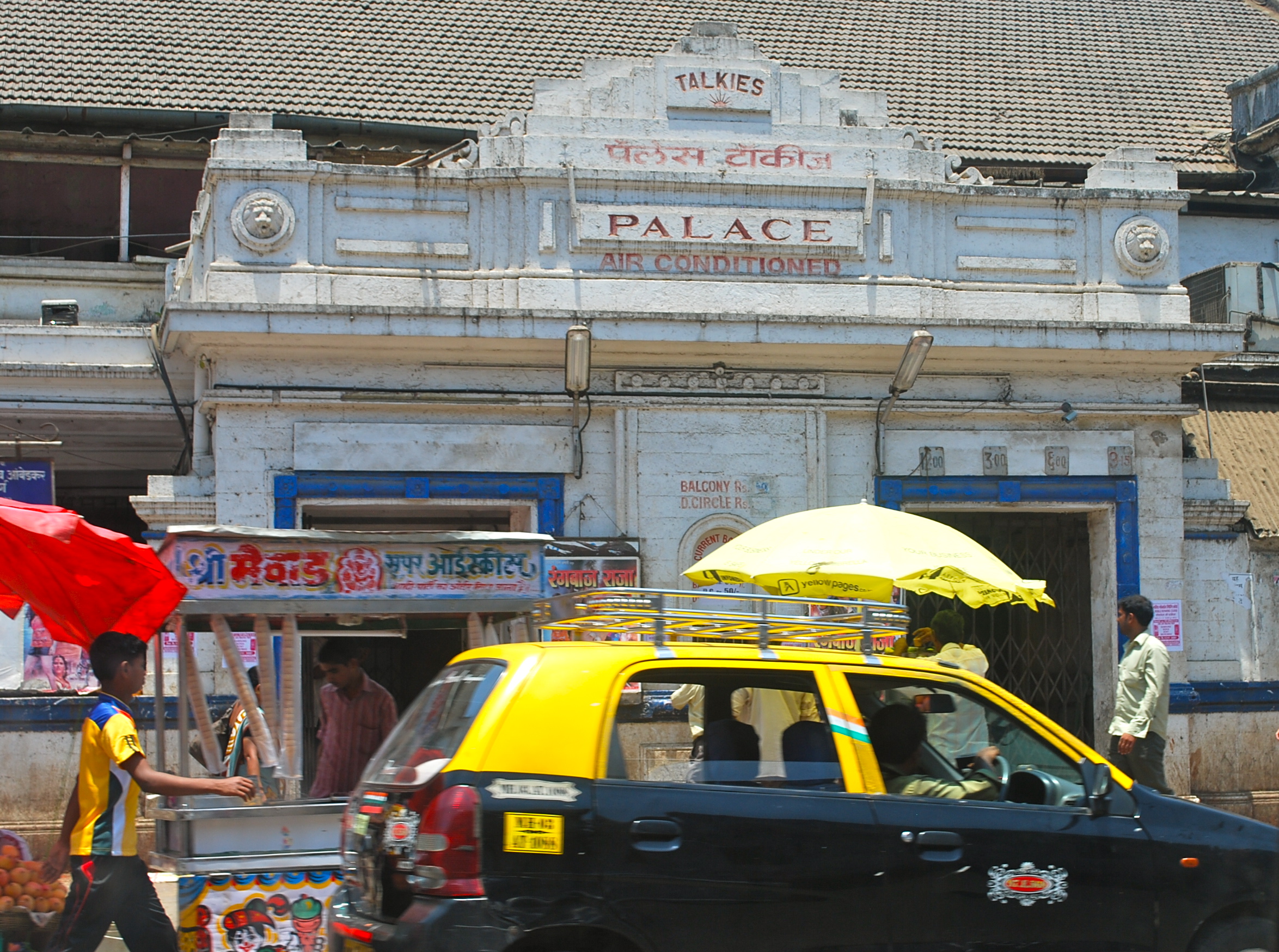
The Palace Theater, one of the original movie theaters in Mumbai.  Notice the reference to "talkies" at the top. ©Jean Janssen

The Palace Theater, one of the original movie theaters in Mumbai. Notice the reference to “talkies” at the top.
©Jean Janssen

It was finally time for lunch.  Fabian took us to the Copper Chimney.  It is a very popular restaurant with an extensive buffet and usually a quick in and out.  Since it was a holiday, it was full of families and we actually had to wait 20-30 minutes for our table.  Even though it cut into our tour time, I didn’t mind; we had already seen a lot and it was nice to sit down for a while in the cool air conditioning.  Other than the naan (bread), I didn’t recognize a single thing on the buffet, although everything was named.  The solution…try a little of most things and go back for more of what I liked.  This was a great theory, but I liked every single thing I tried.  Natasha cleaned her plate and somehow found room for dessert too.
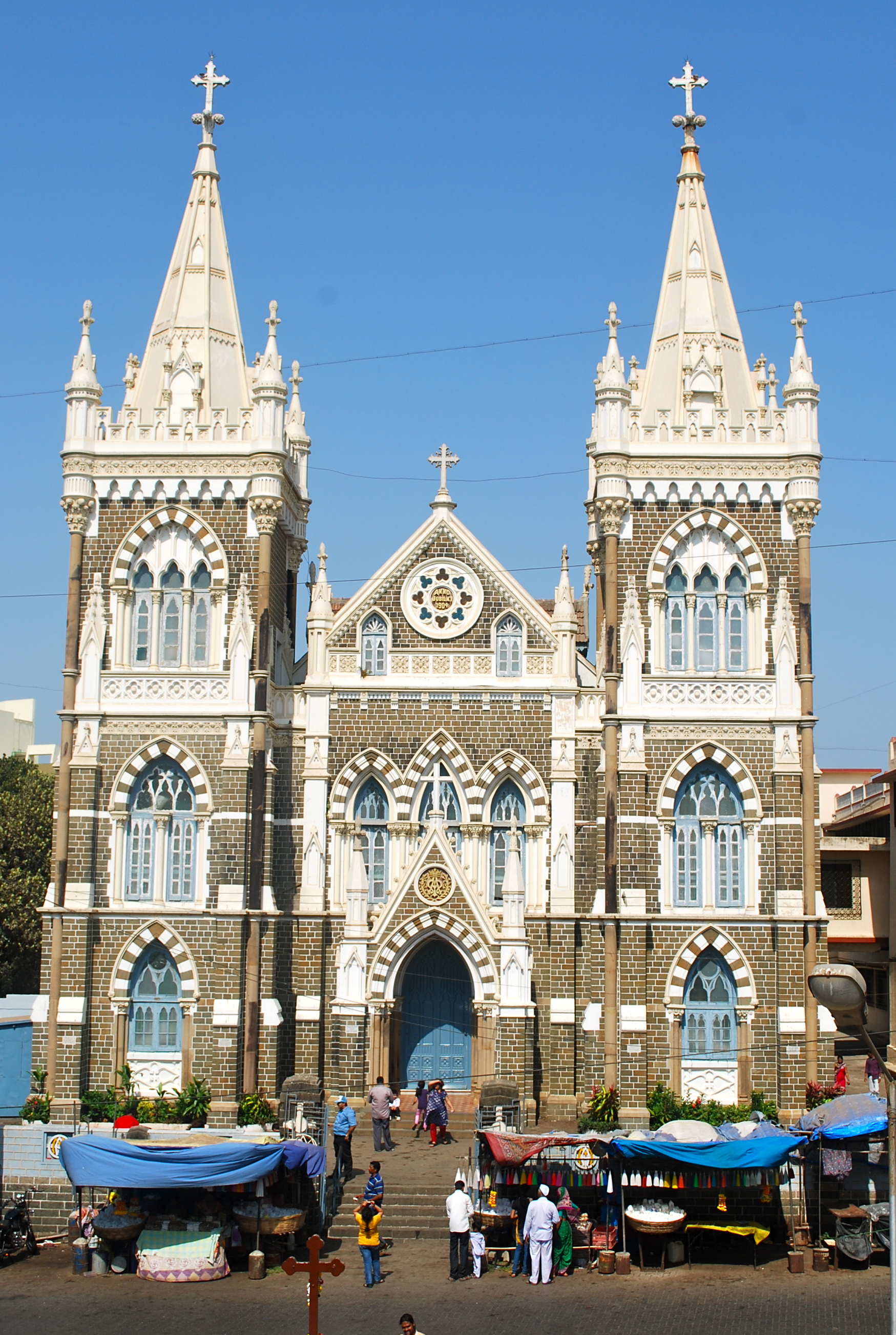
Mount Mary Basilica, Bandra, India.  People of all faiths come here on pilgrimage to seek help or give thanks for it.  In front, vendors sell garlands of flowers and candles to give as an offering. ©Jean Janssen
Basilica of our Lady of the Mount, Bandra, India. People of all faiths come here on pilgrimage to seek help or give thanks for it. In front, vendors sell garlands of flowers and candles to give as an offering.
©Jean Janssen

After lunch we had limited time so Fabian took us to Bandra, “the Queen of the (Mumbai) Suburbs” where he grew up and in route to the airport.  Formerly mostly Christian, it is now home to many groups.  The high-priced accommodations along the seafront promenade are home to several Bollywood stars and we saw groupies camped out in hopes of a glance.

Our first stop in Bandra was the Mount Mary Church, a pilgrimage site for people of many faiths.  In front of the Basilica there are vendors selling garlands of flowers and candles to be purchased as an offering.  Across the street, a circular staircase leads up to another small shrine with a view out to the sea.  This time I was the rock star; a father approached Fabian to see if I would be willing to take a picture with his son.
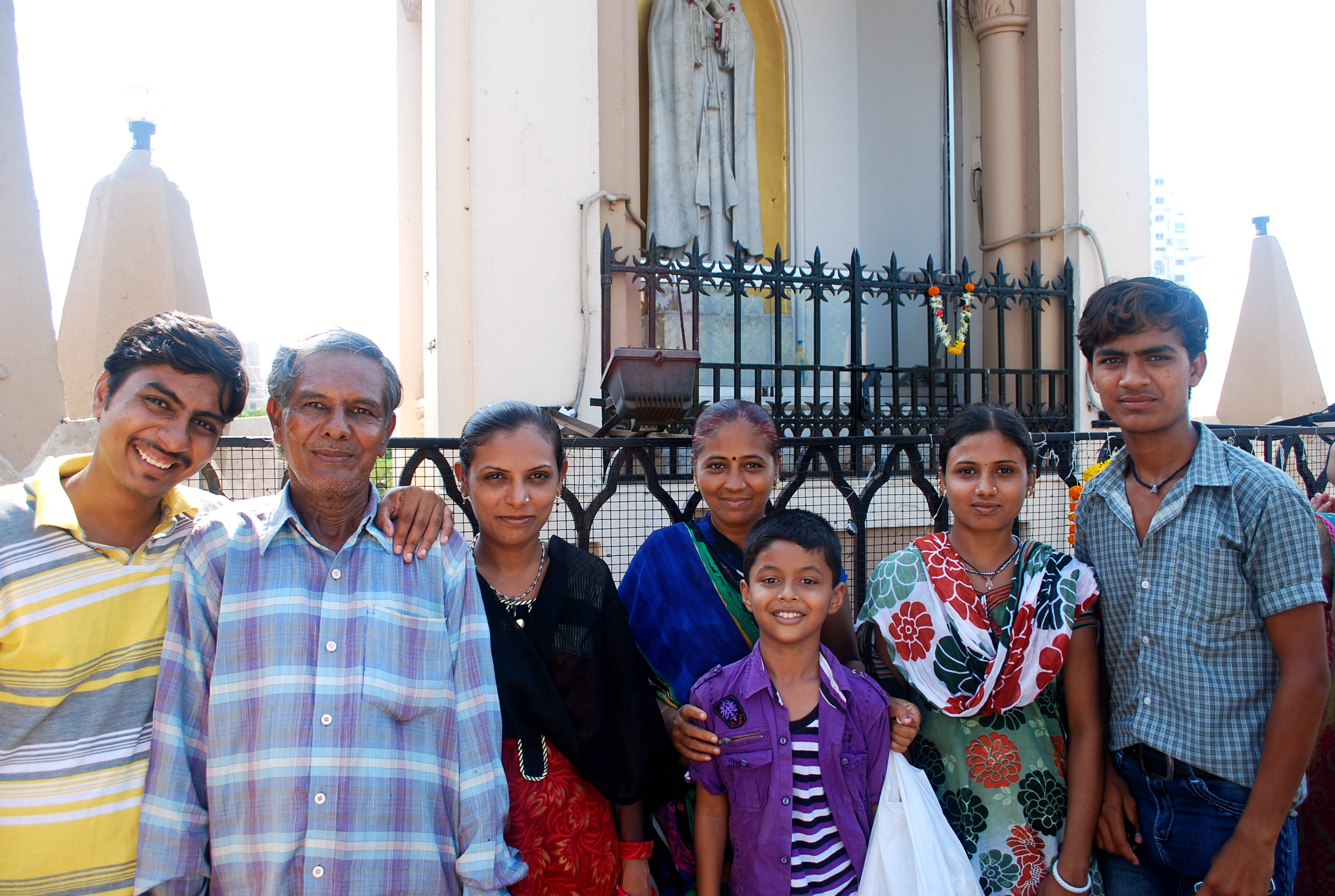
This Indian family asked to take a picture with me. At Mount Mary Church, Bandra, India. ©Jean Janssen

This Indian family asked to take a picture with me. At Mount Mary Church, Bandra, India.
©Jean Janssen

Our guide Fabian at his favorite bench at Fort Bandra. ©Jean Janssen

Our guide Fabian at his favorite bench at Fort Bandra.
©Jean Janssen

We made another stop at the Bandra Fort with a lovely view of the city of Mumbai and the new Sea Link, a cable-stay bridge connecting Bandra to South Mumbai that we had driven across.  The fort is also a holiday picnic area and was full of people today.  Restoration of a bandstand is currently underway.  Formerly a haven for drug dealers, much effort has been put in to clean up the area.  We enjoyed the lovely setting.

City limits marker now outside the Mumbai City Museum.   ©Jean Janssen

City limits marker now outside the Mumbai City Museum.
©Jean Janssen

On our way out of Bandra, Fabian diverted off the main rooms and through the winding streets of the villages that were the original settlements of Bandra now completely obscured by the higher, more modern buildings.  There were shrines to The Virgin Mary every block or two, testament to the area’s Catholic heritage.  Having seen much more than we thought we could pack into one day and thoroughly pleased with the job Fabian had done for us, we headed to the airport for our flight to Delhi.  Tomorrow is the Taj Mahal.

Posted in international | Tagged , , , , , , , , , | Leave a comment

The Gateway of India and the Elephanta Caves, Mumbai

At the dock in Mumbai (Bombay), India. ©Jean Janssen

At the dock in Mumbai (Bombay), India.
©Jean Janssen

Today we are in Mumbai, formerly known as Bombay.  The late arrival of the pilot and the customs officials meant we missed our noon arrival and tours left later than expected.  We are doing a full day tour of Mumbai tomorrow with Fabian from Tours by Locals after we get off the ship.  Today we are visiting the Elephnata caves on an island off the coast with a ship’s tour.

We once again had to undergo a face-to-face inspection with customs officials before getting off the ship.  Then our landing cards were checked as we exited the ship and checked again when we went through metal detectors in the customs building that we completely ignored when they went off.  After boarding the bus, we stopped at the green gate (the tourist departure gate) and an officer got on and once again checked the landing cards.

Boris at the Gateway of India, Mumbai. ©Jean Janssen

Boris at the Gateway of India, Mumbai.
©Jean Janssen

We drove through the fort area and came to the Gateway of India, an iconic landmark erected in 1932.  The park outside is inundated with vendors and families, but the beautiful banyan trees are what capture your attention.  Looking towards the harbor, you are struck by the size of the massive Gateway arch and number of colorful boats in the water.  After the opportunity to take a few pictures, we went to the waterside of the Gateway to board our boat.

The Gateway of India from the water with some of the colorful boats to Elephanta Island. ©Jean Janssen

The Gateway of India from the water with some of the colorful boats to Elephanta Island.
©Jean Janssen

What followed was a 45-minute ordeal with 4 men yelling to different boats-to come in, not come in, dock here, don’t dock here, etc.-while we waited in the sun.   We had been the first group to arrive, but the CME group had left first and had been the first expected.  The boat that docked was too large for our group.  After all three of the smaller tour groups arrived, CME finally showed up.  Then it was determined that the large boat was too high a step given the tide level so another boat was sandwiched between it and the dock.  Then the CME group boarded the large boat through the smaller one anchored.  This situation was not going to be good for Boris whose greatest difficulty in touring since the accident has been getting in and out of small moving boats and tenders.

As expected, it was very difficult for Boris when we finally did our pass through from boat to boat.  One of the bumper tires he was expected to plant his foot on gave way.  It was pretty scary, but we finally got underway to the island.

The Elephant statute from which Elephanta Island gets its name is now displayed outside the Mumbai City Museum. ©Jean Janssen

The Elephant statute from which Elephanta Island gets its name is now displayed outside the Mumbai City Museum.
©Jean Janssen

Elefanta Island is named for the elephant statute that was found there.  The statute is now displayed outside the Cultural museum in Mumbai.  Dropped in transit, it had to be rebuilt.  Today, there are actually no elephant carvings (expect the elephant head on one of the popular Hindu gods) on the island.  It is known for the impressive Hindu shrines carved into the rocks.  There are several islands with religious rock carvings, but mostly with Buddhist depictions.  Depending on who was in power, different oppressed groups built their shrines off the mainland.

Aboard the train for the long ride down the pier to Elephanta Island. ©Jean Janssen

Aboard the train for the long ride down the pier to Elephanta Island.
©Jean Janssen

Depending on the conditions, it is a 60-90 minute ride to the island from the Gateway of India.  We got a little sea spray near the island, but it was otherwise a smooth ride.  Once course when we tied up, we had to pass to multiple boats to reach the dock, another tough journey for Boris.  There is a long concrete dock to reach the island, but there is also a small gage train you can ride.  We all hopped on and I was reminded of the miniature train near the Hermann Park Zoo in Houston.  Upon reaching the land, we were immediately approached by vendors.  We traveled down the newly paved sidewalk to the climb up to the caves.  (I know it was newly paved because we actually saw the work in progress.)

Sedan chairs bearers waiting for a customer on Elephanta Island, India. ©Jean Janssen

Sedan chairs bearers waiting for a customer on Elephanta Island, India.
©Jean Janssen

The 130 widely spaced stairs and platforms pose quite a challenge.  Like most of the guests, I chose to make the climb.  A few, like Boris, wisely chose the sedan chairs.  It was grueling, but not of nearly the length of our climb at the Great Wall of China.  Of course it was incredibly hot which was the main problem.  I am not sure how some of the older guests made it.  Riding a sedan chair posed other problems, as the bearers constantly asked you for tips, complained of your weight, and tried to stop midway up saying it was as far as they go.  Make sure you don’t pay them until the very top where there is no more stairs and you see the security building for the caves.

Along the staircase on Elephanta Island, India. ©Jean Janssen

Along the staircase on Elephanta Island, India.
©Jean Janssen

There are vendors all along the staircase up.  Mercifully, many have added coverings in some places to help reduce the heat.  Do your shopping (if any) on the way down.  Once you get to the top, women with water jars on their heads approach you for a picture.  Unless you want to pay, politely refuse.  There are also lots of mischievous monkeys in this area, so watch your belongs.  They will also snatch water bottles and snacks.

Cave entrance, Elephanta Island. ©Jean Janssen

Cave entrance, Elephanta Island.
©Jean Janssen

The cave entrance draws you in and you are immediately stunned by the size, detail, and preservation of the shrines.  I would not have understood much of what was going on, but are guide gave us a detailed description of each panel.  It was much cooler in the caves that enjoy a wonderful ocean breeze.  The good news is that we were the first group to arrive on the island besides the Indian tourists so we probably had the best opportunity to see each shrine.

Elephanta Caves dedicated to Shiva.  off Mumbai, India. ©Jean Janssen

Elephanta Caves dedicated to Shiva. off Mumbai, India.
©Jean Janssen

Some of the Indian tourists were as curious about us, as we were in the shrines.  It had already been determined that Boris was the rock star.  One group asked Boris to pose in pictures with their family at the Gateway of India.  Our guide said that it was the children’s summer vacation so many of the people visiting were from the countryside where they rarely, if ever, see western tourists.  (The experience reminded me of our visit in T Square in Beijing where visitors to Mao’s tomb from the Chinese provinces looked at us like we were aliens; they would not even acknowledge a greeting.)  The curious Indian families were actually quite friendly, unlike the Indian urbanites who were unfriendly and disrespectful to women.

Elephanta Caves dedicated to Shiva, a Hindu deity. ©Jean Janssen

Elephanta Caves dedicated to Shiva, a Hindu deity.
©Jean Janssen

I love the caves and as a bonus the walk down was not difficult.  I followed Boris down.  He was riding; I was walking.  I wanted to be able to get a picture.  On the way down, they carried him backwards.  They had stopped midway up with him, but he had insisted on the full ride.  This time they didn’t even try not to take him all the way down.  We got a cool drink at a bar at the bottom and waited for the rest of our group.  Cows and goats roamed freely among the visitors.  As most of you know, cows are sacred in India and are not disturbed.  You’ll even see them on the streets of Mumbai.

The Rock Star on his ride down in the sedan chair on Elephanta Island, India. ©Jean Janssen

The Rock Star on his ride down in the sedan chair on Elephanta Island, India.
©Jean Janssen

Apparently a statute of a ram would have usually been placed in this center area at a Hindu Shrine.  This Indian man took its place.  Elephanta Island. ©Jean Janssen

Apparently a statute of a ram would have usually been placed in this center area at a Hindu Shrine. This Indian man took its place. Elephanta Island.
©Jean Janssen

With more people waiting for the train, it was a scramble to get on, but Boris could not have made that walk.  Fortunately there were no pass-through and we were able to board the boat directly from the dock.  The sea was rougher, so our guide suggested riding on the top to avoid getting wet.  The steps up were treacherous, so Boris wisely chose to stay downstairs.  I enjoyed the cool breeze and the receding sun from the top of the boat and enjoyed a visit with a couple from Minnesota.

On the boat ride in, we got a wonderful view of the Gateway of India and the Taj Mahal Palace Hotel next door.  The iconic hotel was built in 1903 after an Indian was refused accommodations in a local European-run hotel and he decided to build his own, even more impressive hotel.  It was the site of terrorist attacks in 2008 and is now under heavy security.  Taj hotels are now a chain and we had snacks at one in Colombo, Sri Lanka.

Building the sidewalk for us as we arrive.  Beside these women were the men chiseling the stone into bricks.  Elephanta Island, India ©Jean Janssen

Building the sidewalk for us as we arrive. Beside these women were the men chiseling the stone into bricks. Elephanta Island, India
©Jean Janssen

Back to the boat for our last evening on board…

Posted in cruises, international | Tagged , , , | 1 Comment

Goa, India “Pearl of the Orient”

Basilica of the Bom Jesus, Old Goa, India. ©Jean Janssen

Basilica of the Bom Jesus, Old Goa, India.
©Jean Janssen

Today was are in docked in the Indian state of Goa, the smallest in terms of area and the fourth smallest in terms of population.  It is on the west coast of India on the Arabian Sea.  It was ruled by a succession of Hindu kings until conquered by the Muslims who held it for 10 years.  The Portuguese assumed control in 1510 and stayed until 1962, 15 years after India gained independence from Great Britain.

Basilica of the Bom Jesus, Old Goa, India ©Jean Janssen

Basilica of the Bom Jesus, Old Goa, India
©Jean Janssen

Shortly after the arrival of the Portuguese, Jesuit and Franciscan missionaries arrived and began converting the local inhabitants to Christianity.  It is the beautiful churches of Old Goa that we will be visiting today.  Old Goa was the original capital until the Portuguese moved the seat of government to Panjim (or Panaji in Hindu) in 1759 due to cholera and other epidemics that swept Old Goa.

Beautiful teak wood pulpit in the Basilica of the Bom Jesus. ©Jean Janssen

Beautiful teak wood pulpit in the Basilica of the Bom Jesus.
©Jean Janssen

We once again have a landing card, a new one, but the departure was a little less onerous; I presume because this is not our first port in India.  We are docked at Marmugoa, a natural harbor.  We take a bus from the harbor to Old Goa by following the southern bank of the Mandovi River and then crossing north at a narrow section of the river.  Marmugoa is Goa’s only year-round operational port.

We were traveling at low tide and we saw women out in the shallow sections of the river collecting shellfish.  The Goans use lots of spices, but the food is not spicy (hot).  The spices are ground in the flesh of a coconut and mixed with seafood.  This state’s economy is not dominated by agriculture.  40% of the Goans work in tourism; mining and related activities are also popular forms of employment.  The main tourist season is winter when the weather is warm and dry (about 19 C).  Goa welcomes mostly domestic tourist.  Goa has an 87% literacy rate, second only to Kerala.

The teak wood, gold-leafed altar piece features the baby Jesus and St. Ignatius Loyola, founder of the Jesuit Order. ©Jean Janssen

The teak wood, gold-leafed altar piece features the baby Jesus and St. Ignatius Loyola, founder of the Jesuit Order.
©Jean Janssen

There are eight remaining churches in Old Goa, two of which still have regular masses.  We are visiting three of the churches.  Our first stop is the Basilica Bom Jesus where the remains of Saint Francis Xavier are enshrined. St. Francis Xavier was born in Spain and along with St. Ignatius of Loyola founded the Jesuit order.  St. Xavier based his missionary work out of Goa and was much beloved.  He died in China at age 46 and the Goans requested that his remains be returned to them.

The relics are encased in airtight glass and silver and are displayed high on a side altar.  There is a ceremony every 10 years and the case is lowered and taken to the Cathedral across the street (which is larger).  The relics are displayed for 45 days from November to January in commemoration of his death on December 3.  When the shrine was last lowered in 2004, two million pilgrims came to pay their respects.

The relics of St. Francis Xavier at the Basilica of the Bom Jesus in Old Goa, India. ©Jean Janssen

The relics of St. Francis Xavier at the Basilica of the Bom Jesus in Old Goa, India.
©Jean Janssen

The churches at Goa were named World Heritage Sites in 1986.  Although the Goan churches are now maintained by the archeological society, seven Jesuit Priests still conduct services at the Basilica and the Cathedral.  The Jesuits hold a special place in my heart with Rocky’s attendance at the Jesuit High School and the many relationships I formed while working with the Mothers’ Club.  My visit was quite moving.

The Cathedral of St. Catherine in Old Goa, India.  The remains of St. Francis Xavier are brought to the Cathedral for viewing during the 45-day period each 10 when they are lower from the side altar at the Basilica of the Bom Jesus. ©Jean Janssen

The Cathedral of St. Catherine in Old Goa, India. The remains of St. Francis Xavier are brought to the Cathedral for viewing during the 45-day period each 10 when they are lower from the side altar at the Basilica of the Bom Jesus.
©Jean Janssen

While the Basilica, with its gold leaf over teak wood, took 9 years to build (consecrated in 1605), the Cathedral of Saint Catherine, completed in 1642, took 90 years to complete.  It is just across the street.  The richly gold-leafed main altar panels depict the life and beheading of St. Catherine.  There are 15 altars and seating for 5,000 in the Cathedral.  It is one of the largest churches in Asia.  Some of the chapels featured preserved frescos.  There is also a canopied seat for the Archbishop and box seating for the nobility.

The beautiful grounds at the Cathedral of St. Cajean, Old Goa, India. ©Jean Janssen

The beautiful grounds at the Church of St. Cajetan
Old Goa, India.
©Jean Janssen

While the Spanish Jesuits built the Basilica, the Portuguese financed the building of the Cathedral.  Behind the Cathedral is the Archeological Museum housed in the former Franciscan Monastery.  Our third stop was the was the Church of St. Cajetan, built by Italian Friars in the second half of the 17th century and modeled after St. Peter’s in Rome.  It no longer operates as a church and certainly did have more of a museum field.  The soaring ceiling and dome were impressive.  The site also has beautiful grounds.

Viceroy Arch, Old Goa, India. ©Jean Janssen

Viceroy Arch, Old Goa, India.
©Jean Janssen

On the way back to the bus, we spotted the viceroy arch where the new Portuguese leader would enter the city.  As we left Old Goa we saw evidence of the city walls that once surrounded the city.  We drove along the Manbor River to Panaji, Goa’s new capital.  The River has two islands in it where the Portuguese nobility had formerly made their home.  People still live there and there is regular ferry service.  We are driving along the backside of the houses as the primary entrance is too the River.  Many have their own private dock.  Our guide compared it to Venice.

We saw bamboo sticks in the river that hold nets to catch fish that are collected at low tide.  There are mangroves that can grow in salt water and salt “making” is practiced here.  We crossed a bridge built by slave labor during Portuguese times that connects Old Goa to the new capital of Panaji.  Throughout Panaji we saw examples of Portuguese colonial architecture (like we saw last year when we visited Portugal) with the familiar roofs, porches, and balconies.

Riverboat Casino in Panaji, Goa, India.  The bamboo sticks in front are used to attach a net for fishing. ©Jean Janssen

Riverboat Casino in Panaji, Goa, India. The bamboo sticks in front are used to attach a net for fishing.
©Jean Janssen


Soaring interiors of the Church of St. Cajetan in Old Goa, India.  The church is modeled after St. Peter's in Rome. ©Jean Janssen

Soaring interiors of the Church of St. Cajetan in Old Goa, India. The church is modeled after St. Peter’s in Rome.
©Jean Janssen

There is a river promenade over three miles long.  Gambling is not allowed on land, so all along the river we saw casinos on the water.  There are high taxes to be paid by locals to reach the floating casinos.  This is meant to discourage locals; the casinos are intended for tourists.  Goa’s many beaches also serve to attract tourists.  There are also lower taxes on alcohol in Goa than in other Indian states.

We learned a few assorted facts from our guide as we made our way back to the ship.  It is illegal to demand a dowry, but they are still common in Goa.  A dowry is often in cash and kind, with appliances being a typical item.  All the gifts are displayed on the eve of the marriage, first at the bride’s home and then (after being carried over) at the groom’s home.  The bridal gown is also displayed prior to the wedding.

The gold-leafed altar panels depicting St. Catherine's life and death, the chandelier under which St. Francis Xavier's  relics are placed, and the private box for the nobility all in St. Catherine's Cathedral in Old Goa, India.

The gold-leafed altar panels depicting St. Catherine’s life and death, the chandelier under which St. Francis Xavier’s relics are placed, and the private box for the nobility all in St. Catherine’s Cathedral in Old Goa, India.

Frescoed archway of a chapel in St. Catherine's Cathedral, Old Goa, India. ©Jean Janssen

Frescoed archway of a chapel in St. Catherine’s Cathedral, Old Goa, India.
©Jean Janssen


The Indian freedom fighters fought hard to earn their independence from Portugal, finally driving them out in a single day with the assistance of the Indian army.  I spotted a monument to the freedom fighters dedicated in 1988 in the port city of Marmugao on our way back to the ship.

We ended the day with a second Chef’s Table dinner with the Barnes Family back on the ship.  Tomorrow we port in Mumbai (Bombay), our last destination before leaving the Azamara Journey.

Another bright red beard.  I learned this is not natural or symbolic, just an act of vanity. ©Jean Janssen

Another bright red beard. I learned this is not natural or symbolic, just an act of vanity.
©Jean Janssen

Posted in cruises, domestic travel | Tagged , , , , | Leave a comment