Durban, South Africa

Port of Durban, the largest port in South Africa.  Note our beautiful rainbow. ©Jean Janssen

Port of Durban, the largest port in South Africa. Note our beautiful rainbow.
©Jean Janssen

Once again I got up early to see the helicopter pilot and once again was disappointed.  It was very cloudy, perhaps that was the reason the pilot boat was used instead.  We were treated to a beautiful rainbow that seemed to end at the ship.  (I was never actually the pot of gold before.) Today we are in Durban in the largest port in Africa and the third largest city in South Africa.

Boris at the hospital at Rorke's Drift rebuilt on the original foundation.  The hospital burned during the battle between the British and Zulu.

Boris at the hospital at Rorke’s Drift rebuilt on the original foundation. The hospital burned during the battle between the British and Zulu.

On deck, I visited with some couples from Durban who were getting off the ship today.   One of the wives was a real estate agent and confirmed that neighborhoods were indeed becoming mixed.  She said it was her black clients that bought the most expensive houses, often with government incentive money designed for education.  They did not recommend me going into town on my own. My scheduled zip line tour was cancelled and Boris has discouraged me from going with him to Rorke’s Drift and Isandlwana.  He knows that I do not enjoy looking at old battlefields and would be hard-pressed to justify the 8+ hours of driving involved.

The storage room at Rorke's Drift, originally a church.  In front is the marking of where the mealy bags were placed.  These are sand bags used as defensive works.

The storage room at Rorke’s Drift, originally a church. In front is the marking of where the mealy bags were placed. These are sand bags used as defensive works.

Since it is not safe for me to be out on my own here, I am staying aboard the ship.  I got in some time at the pool (although it was so hot you could not stay in the sun long), had lunch poolside, attended a destination lecture, and watched movies in the suite.  I had hoped to work on my blog postings on the computer, download my pictures, and maybe capture the internet while we are in port, but my computer would not pull up the welcome screen.  I am having bad luck with electronics.

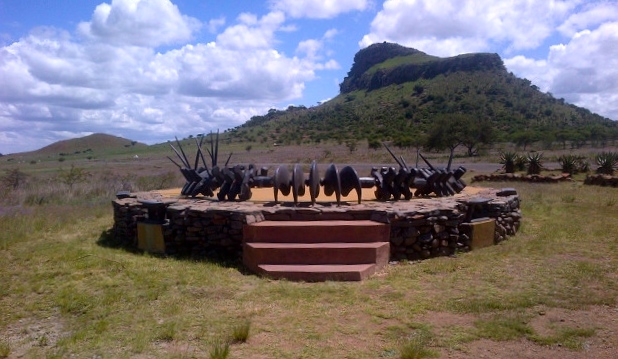
Zulu Monument at Isandlwana

Zulu Monument at Isandlwana

When Boris got back and announced that his ipad had not taken a charge in spite of being plugged in the entire night before, we realized that we had a plug problem.  We found another outlet in the room where I could fully charge the camera battery, his ipad, and my laptop.  I was glad I had brought an adaptor along and could use the European plug.  While I am still disappointed that I missed the pictures at Inkwenkwezi, I feel somewhat vindicated.  It was not my stupidity, but a bad outlet that caused the battery problem.

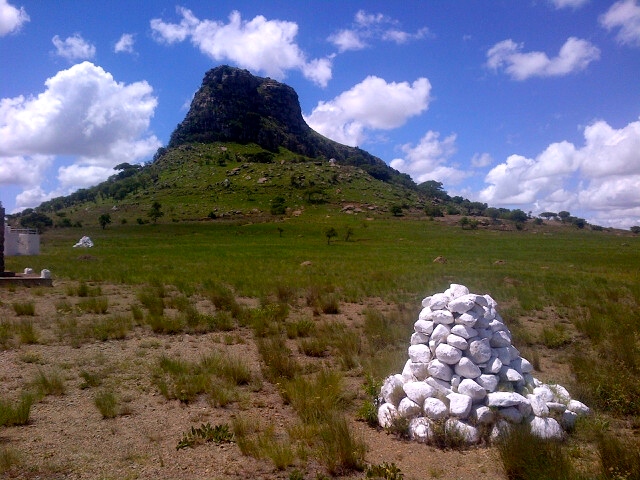
The battle site at Isandlwana.  The cairns mark the spot of burial of the British soldiers.

The battle site at Isandlwana. The cairns mark the spot of burial of the British soldiers.

I admit that I was a little apprehensive about Boris heading out on his own with just a driver, but he got back an hour before he thought he might and three hours before the boat was due to sail at 11 pm.  The port pilot was picked up by helicopter this evening.  No way to miss it; it was so loud.  All the activity was on our side of the boat, so I saw it all from my balcony.  My pictures are no good as we were restricted from using a flash that might have caused problems for the helicopter pilot.  The helicopter hovered near the ship and finally pulled up the port pilot on a cable.  Fortunately, the pilot was wearing white so he/she was easy to spot.  It was very cool.

The film Zulu, 1964, told the story of Rorke's Drift.  It was Michael Caine's first film.

The film Zulu, 1964, told the story of Rorke’s Drift. It was Michael Caine’s first film.

I invited Boris to be a guest blogger, but he declined and told me to feel free to share his experience with my readers.  So you will get his journey, washed through my understanding.  During the Anglo-Zulu wars, Rorke’s Drift was the garrison protected by 139 British soldiers while the main column was wiped out at Isandlwana.  After defeating the British at Isandlwana, 4000 Zulu warriors advanced on Rorke’s Drift.  The mostly Welsh garrison, though vastly unnumbered, successfully defended their post.  11 Victoria crosses were awarded, the largest number ever awarded for a single battle to date.   The Victoria Cross is the highest honor bestowed on British military.   The movie Zulu (Michael Caine’s first movie in 1964) told the story of Rorke’s Drift.  Boris has a keen interest in British history and his visit to these to battlefields was the most anticipated part of the trip for him.  Boris felt the war was “unjust and stupid”.  He toured with a Zulu guide.

Monument at Isandlwana.

Monument at Isandlwana.

On the way back, Boris and his guide stopped to get gas at Meuthen, near the Zulu capital of Ngomo.  Next door to the gas station was a KFC (Kentucky Fried Chicken-they are everywhere, including across from the Sphinx in Cairo) with three silver BMWs in front and suited men in the parking lot.  Boris’s guide pointed out the cars and said that the king of the Zulus was inside having his dinner.  According to the guide, the Zulu kings are traditionally obese as a sign of their wealth and success.  KFC is one way to keep up the tradition.

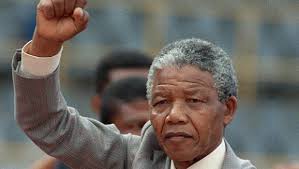
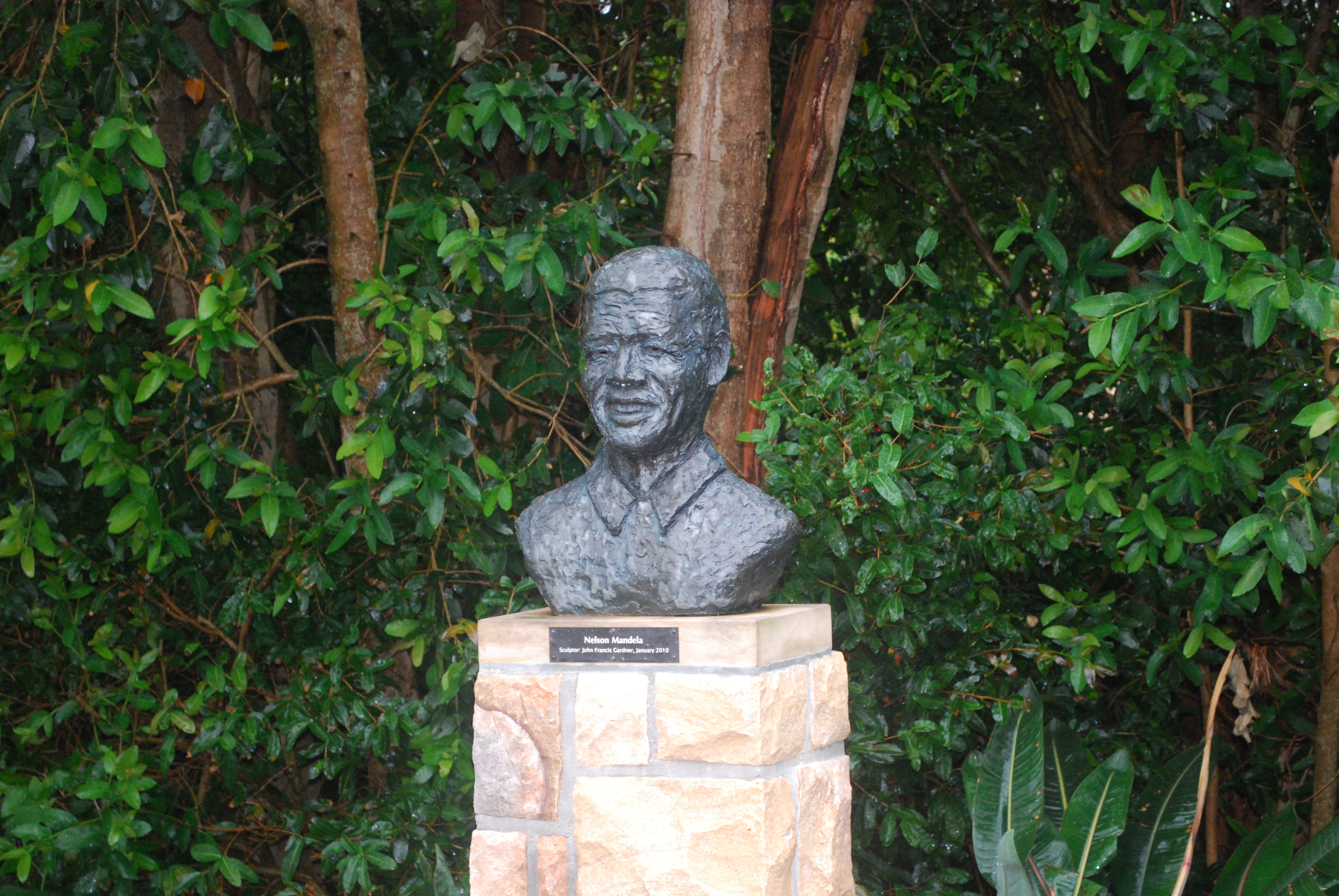
Nelson Mandela

Nelson Mandela

I do love the part of cruise where guest lecturers familiar with the region are brought on board to supplement the experience.  One of our lecturers is Michael Burke, a BBC journalist who lived in Cape Town with his family during the last years of apartheid.  The film clips he showed us (some too harsh to have been shown to the public at the time) and the first hand experiences that he related were fascinating.  He was extremely complimentary of Nelson Mandela who he spoke to and argued with on several occasions.  In one such instance, he recalled Mandela calmly stating that he “would defer to [Burke’s] superior knowledge of his country.”  He was clever with a putdown.

South African flag.  Created as the result of a contest.  Originally it had no specific meaning although people have taken the yellow to represent the gold in SA, the black to represent the black people, the white to represent the white people, blue for the ocean, green for the environment, and red for the blood shed.

South African flag. Created as the result of a contest. Originally it had no specific meaning although people have taken the yellow to represent the gold in SA, the black to represent the black people, the white to represent the white people, blue for the ocean, green for the environment, and red for the blood shed.

Mike Burke also spoke on the current state of South Africa.  He mirrored much of what our guides told us about theft, government corruption, and AIDS.  He gave us additional statistics on the problem of violent crime.  In a country with only a fraction of the population of the United States, it has 5 times the murder rate and 8 times the murder rate of the United Kingdom.  In South Africa, an armed robbery is committed every 5 seconds.

Most startling were the statistics he shared on rape. 1 in 4 South African women said they had been raped; 1 in 4 South African men admitted to committing rape.  Women’s groups say that a rape is committed every 24 seconds in South Africa; the government says it is not that bad, it is one every 36 seconds.  South Africa has the worse rape statistics in the world.

South Africa also continues to lag behind in education crippled with a system that is both failing and corrupt.  In performance in math and sciences, South African students fall behind all countries other than Yemen.

Perhaps not what you want to hear, but your experience can never be complete without the information often not shared with a country’s tourists.

Posted in cruises, international | Tagged , , , , , | Leave a comment

Madagascar-Natasha reaches 100 countries

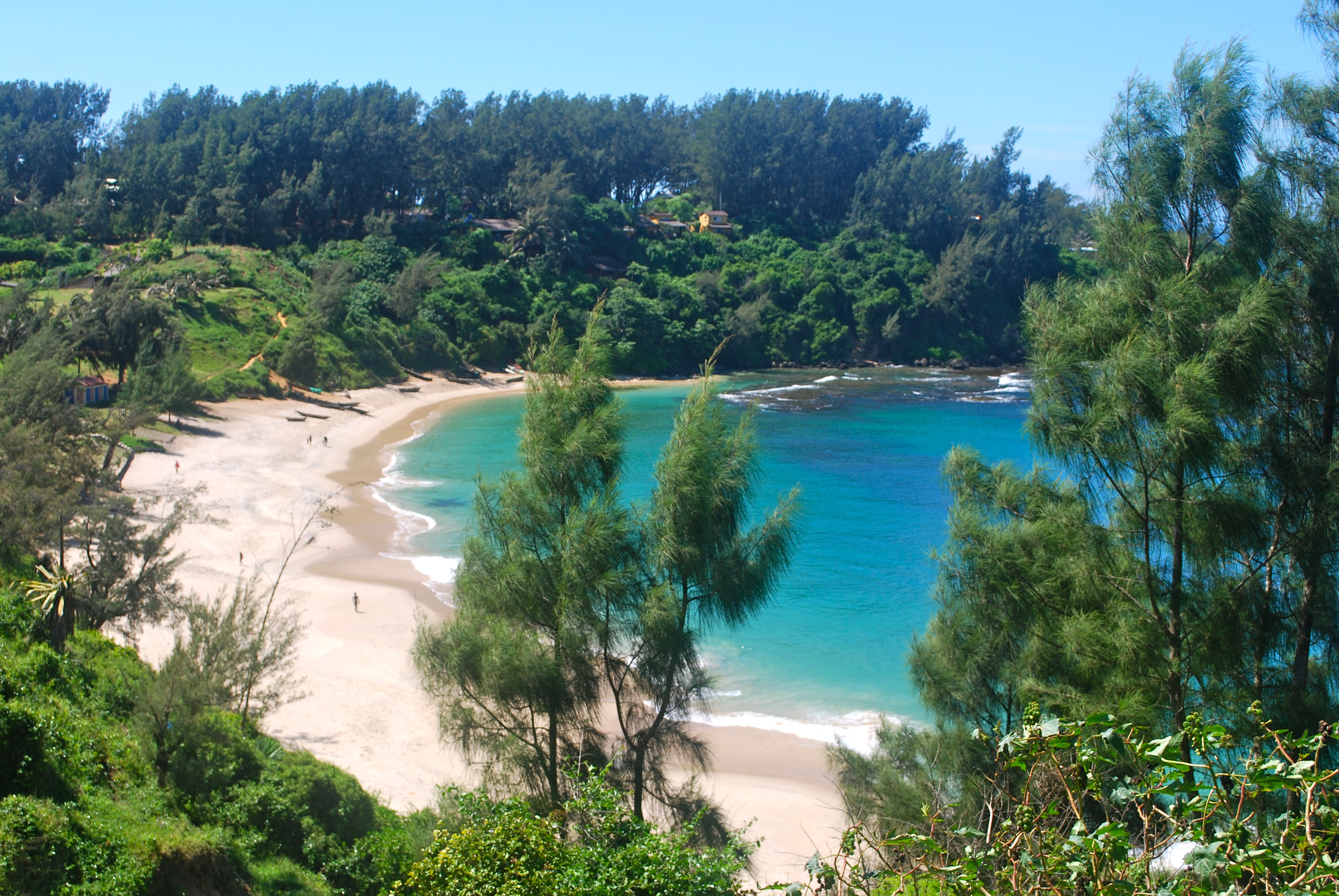
gorgeous coastline near Fort Dauphin, Madagascar ©Jean Janssen

gorgeous coastline near Fort Dauphin, Madagascar
©Jean Janssen

After two gorgeous days at sea, we reached the island nation of Madagascar.  I reached 100 countries on my world quest!  We are docked at the brand new port near Fort Dauphin, named the same year as the birth of the heir to the French throne and later Louis XIV of France.  The Malagasy name for the town is Tolagnaro.  A modern road built by the mining company reaches the port.  Another highway out of town is also of this modern construction and in excellent condition.

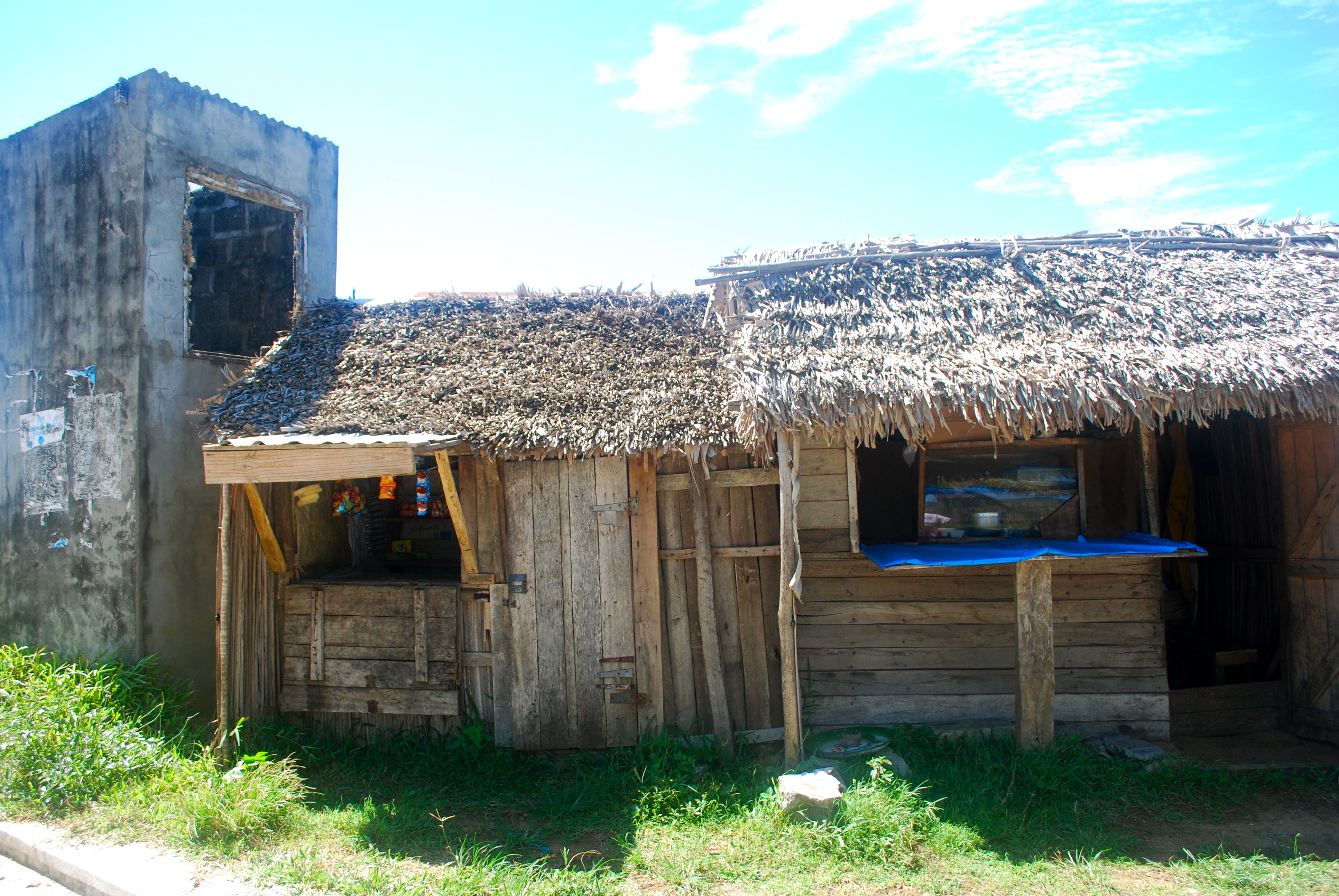
typical home in Madagascar; often their is a little shop attached like with this one. ©Jean Janssen

typical home in Madagascar; often their is a little shop attached like with this one.
©Jean Janssen

All of the tour vehicles are of different sizes.  We rode with a driver, guide, and only one other couple for a very personal tour.  Our young 23-year-old guide was excellent and spoke beautiful English.  He was taught by a Peace Corp worker from Texas and now teaches English to young students; he is not paid for teaching.

Fort Dauphin structure made of mud, eggs, and honey.  Madagascar. ©Jean Janssen

Fort Dauphin structure made of mud, eggs, and honey. Madagascar.
©Jean Janssen

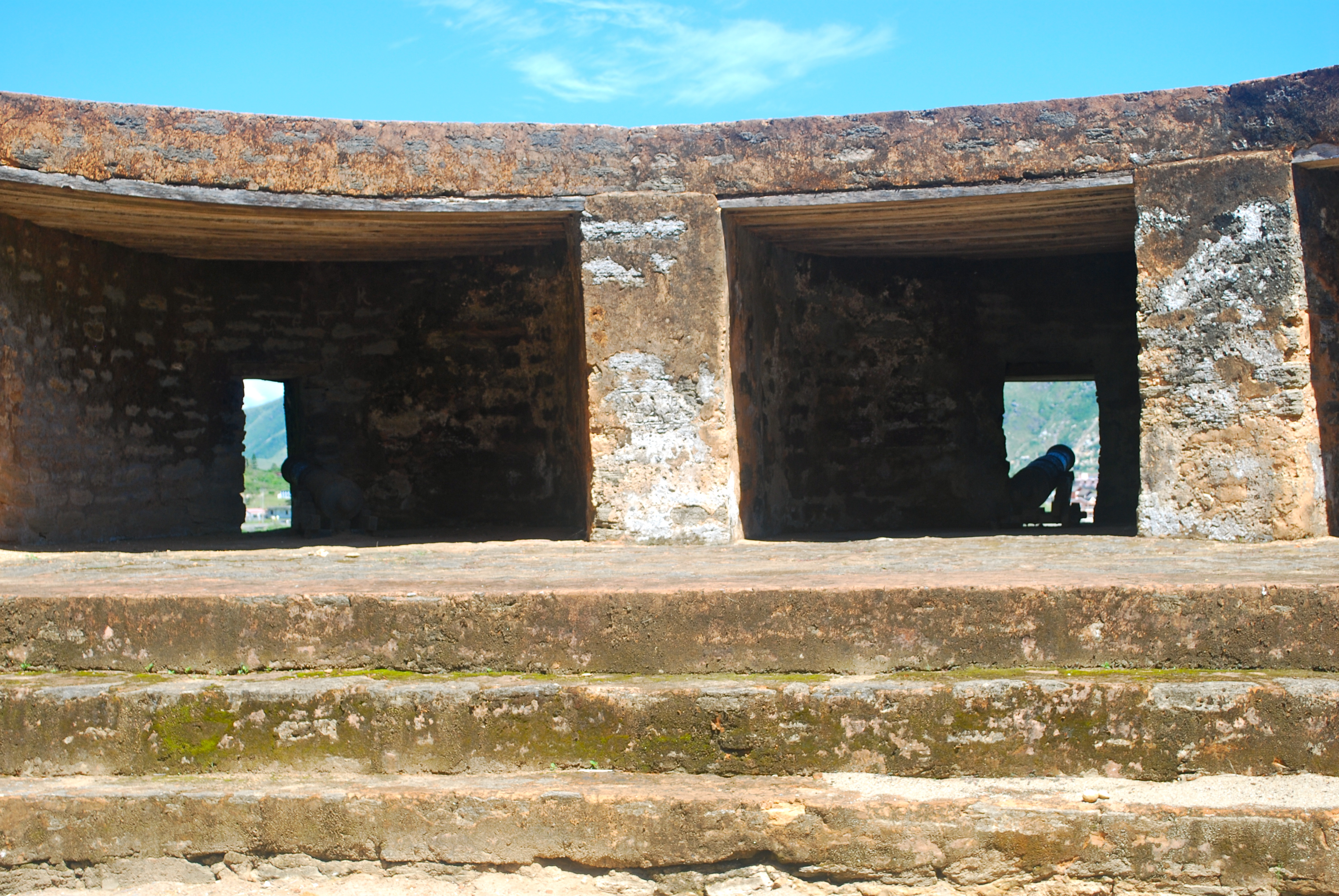
Fort Dauphin is the country’s oldest town and sits on a peninsula bordered on three sides by breathtakingly beautiful beaches.  After leaving the port, we made a few stops to take scenic photographs and then drove to the old fort itself, which they refer to as a museum.  We parked in front of the courthouse and walked around the fort grounds spotting old canons and installations made of mud, eggs, and honey.  The grounds still have a military presence.  There is a small museum on the grounds and it was our guide’s descriptions of the use of the articles we saw that made it interesting.  None of the signage was in English.

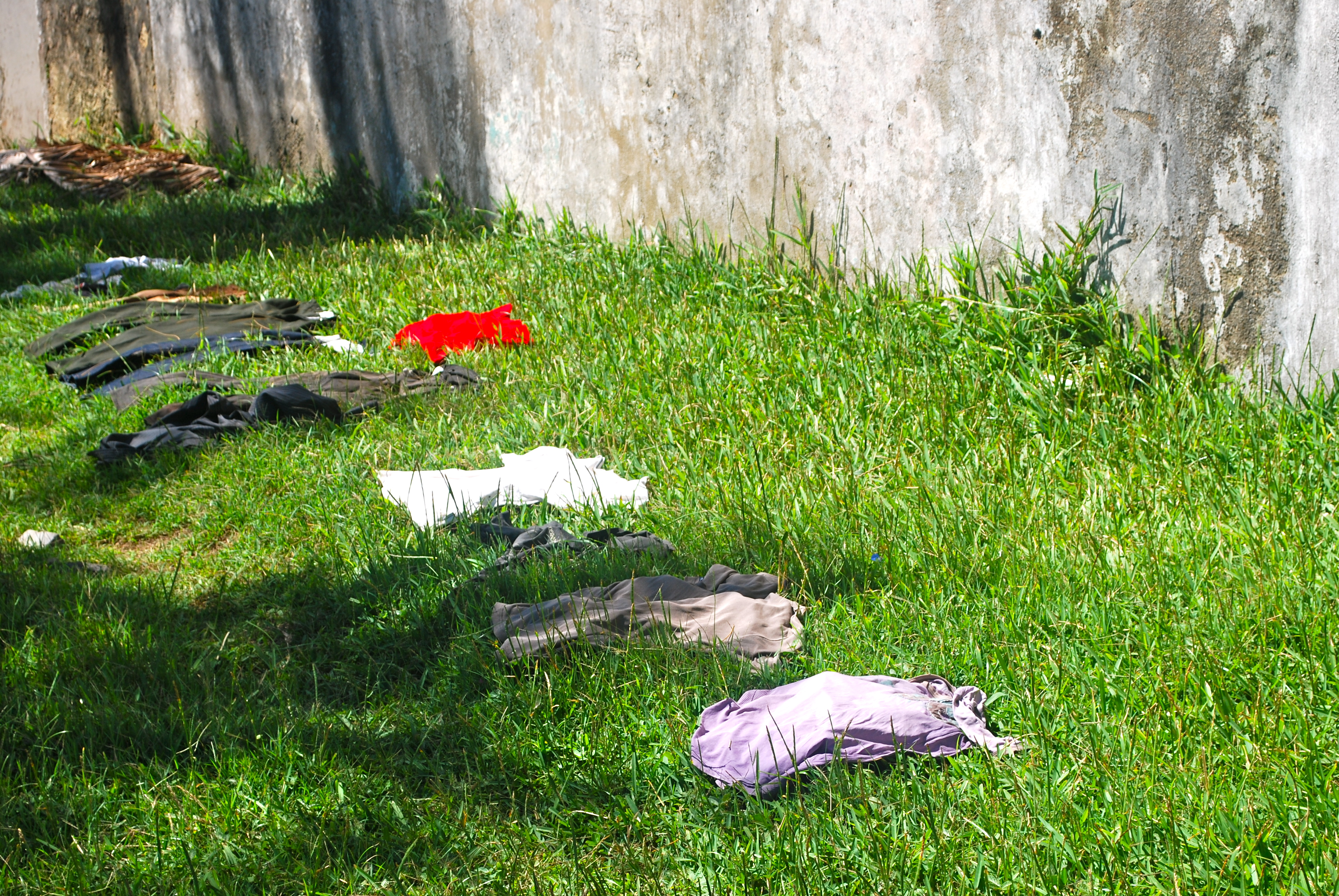
Drying clothes Madagascar style.  Saw this all over the country-drying clothes on the ground.  The fort still houses military and this picture was taken at the fort. ©Jean Janssen

Drying clothes Madagascar style. Saw this all over the country-drying clothes on the ground. The fort still houses military and this picture was taken at the fort.
©Jean Janssen

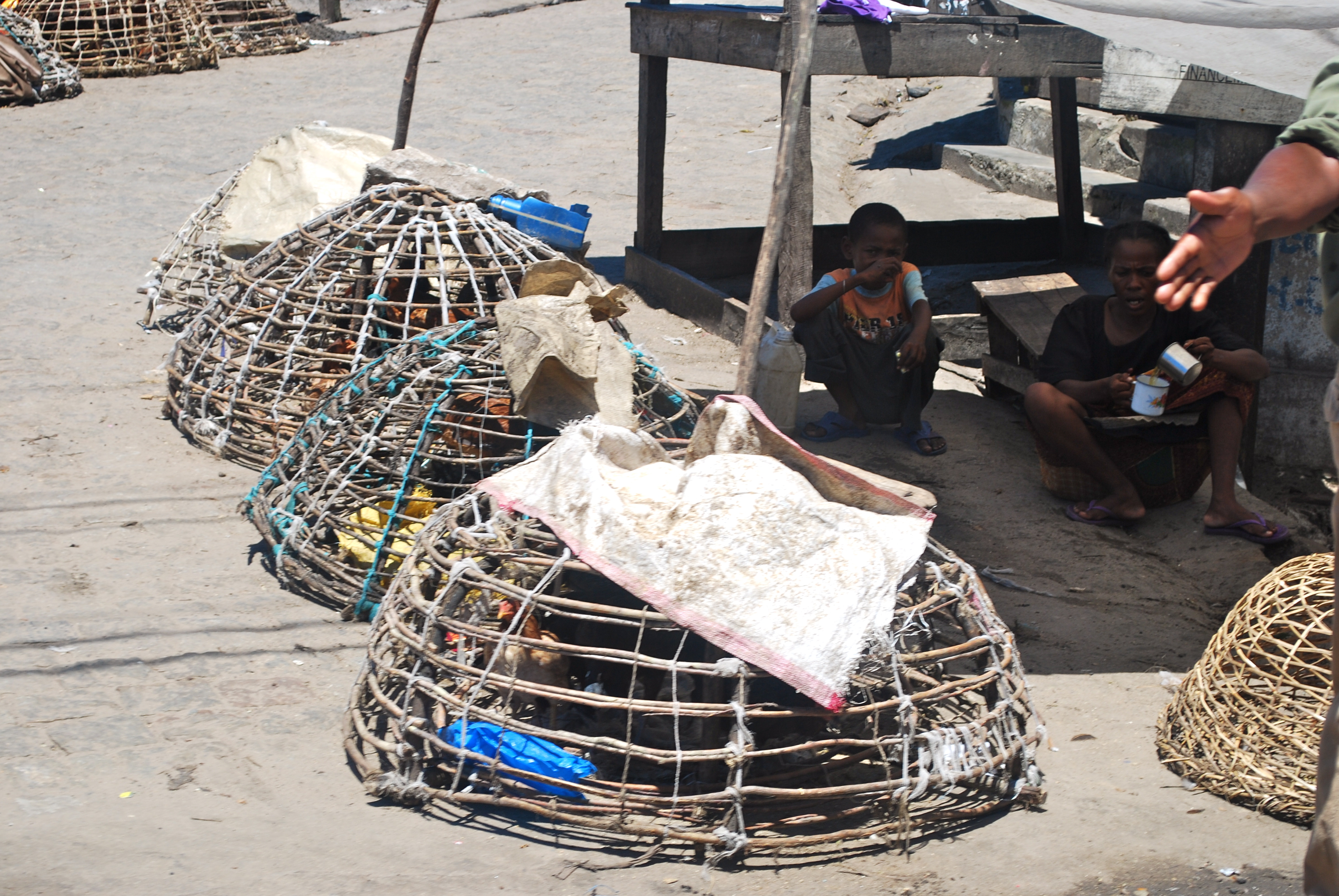
City Market, Fort Dauphin, Madagascar ©Jean Janssen

City Market, Fort Dauphin, Madagascar
©Jean Janssen

One of the primary occupations here is fishing.  Our guide’s father is a fisherman.  He showed us the use of the woven lobster traps that only last one to seven days.  Before his father might catch 20-40 lobsters a day; now he often only has 1 or 2.  Some of the more interesting pictures in the museum were of the women’s hairstyles.  The difference was not between tribes but in the station in life of the woman.  A young, unmarried woman fixes her hair in a different fashion.  (We saw the various styles on dancers later in the day.)

There had been no traffic (most people walk everywhere) until we reached town and passed through the busy city market.  People do not have refrigeration, so you make daily purchases.  Our guide said it was this busy Monday-Saturday.  Most people go to church on Sunday.  There islanders that following Christian, Muslim, and tribal faiths.

city market, Fort Dauphin, Madagascar ©Jean Janssen

city market, Fort Dauphin, Madagascar
©Jean Janssen

We are headed to the Lemur Reserve and once off the main highway we hit one of those “hard on your shocks” kind of roads.  All the way, are women and children returning to their village from the market carrying their purchases in baskets on their heads.  They were others out tending their rice fields.  We experienced a slice of life, passing through many villages on our way to the reserve.

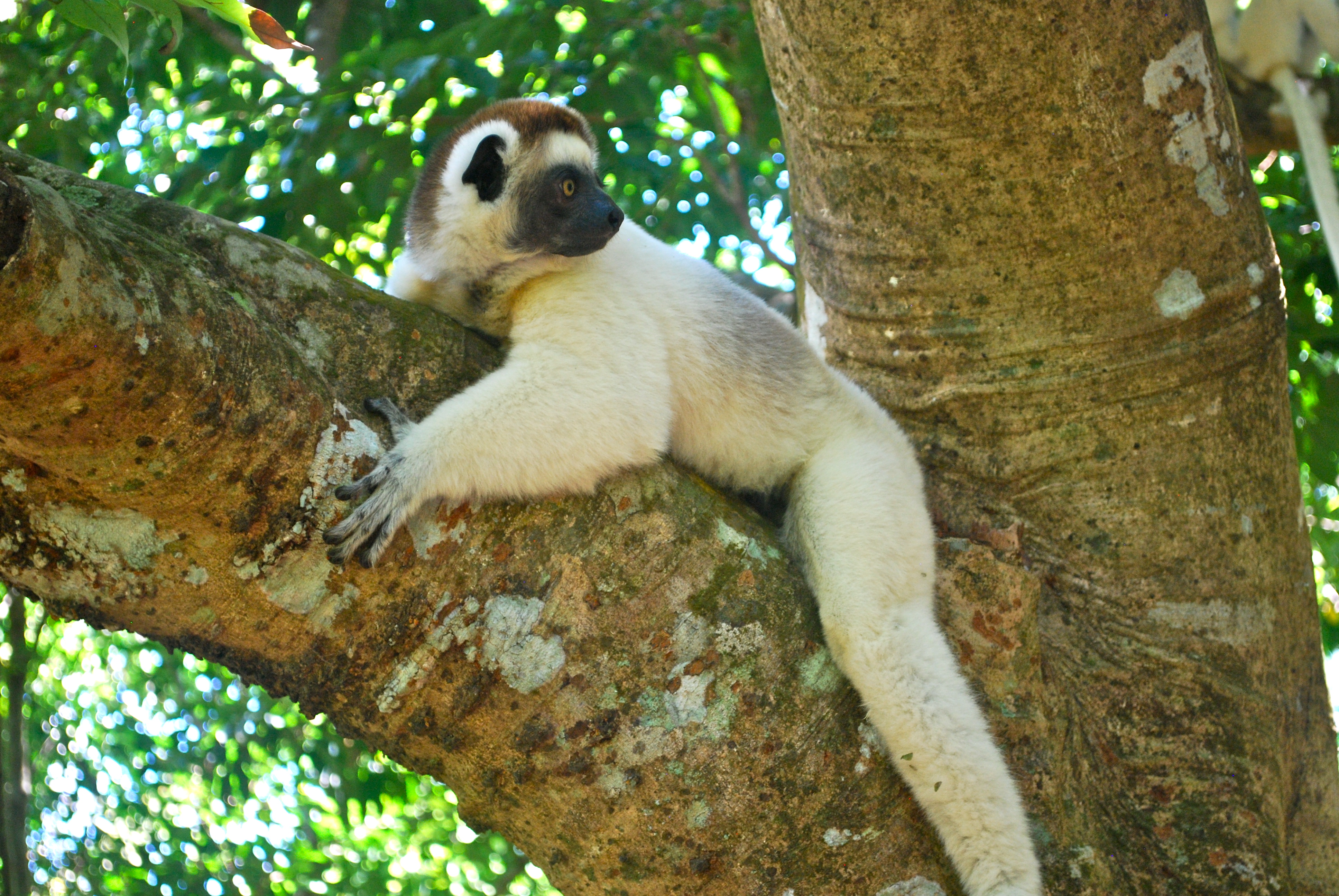
A sifakas (dancing lemur) Madagascar ©Jean Janssen

Sifakas (dancing lemur)
Madagascar
©Jean Janssen

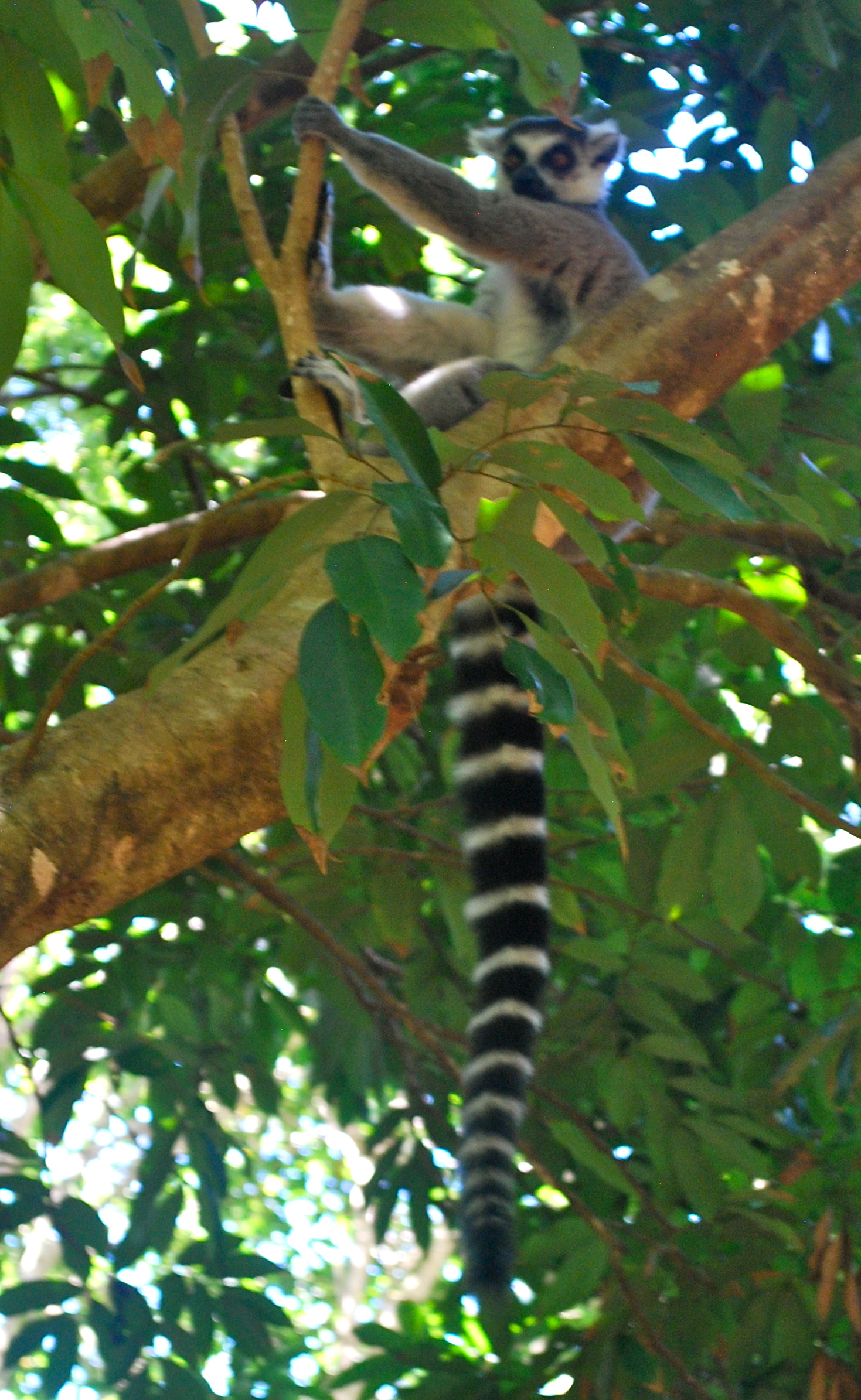
A ringtail lemur Madagascar ©Jean Janssen

A ringtail lemur
Madagascar
©Jean Janssen

I love lemurs, there are 101 varieties unique to Madagascar.  The are 4 types at the reserve that come out during the day.  It is rare to see the small bamboo lemur, but we saw all of the other three in the trees.  Boris got separated from our group and took a mini tour with our guide when we finally caught up to him.  I could have watched the lemurs all day.

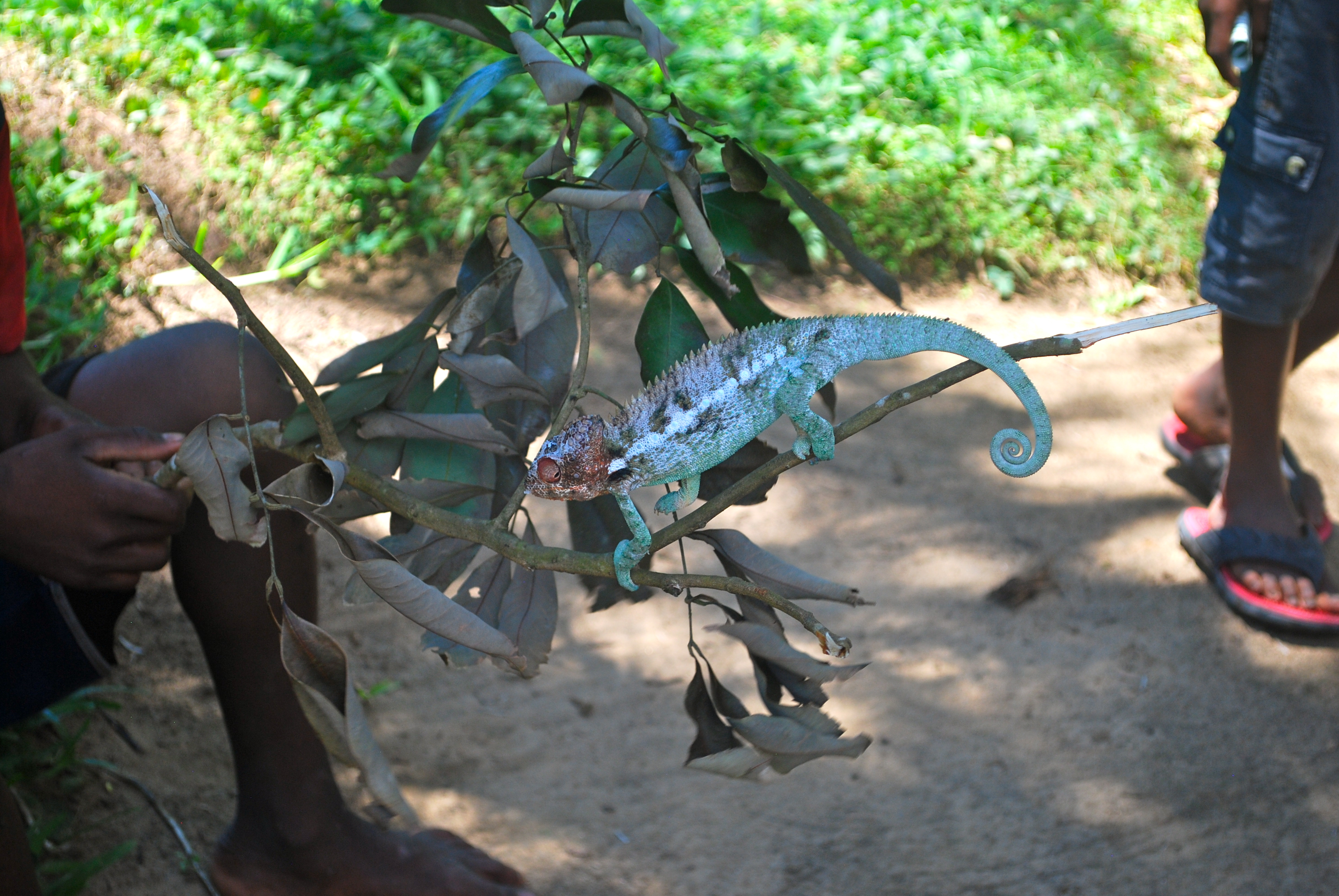
The first animals we saw were actually chameleons

chameleon at the reserve Madagascar ©Jean Janssen

chameleon at the reserve
Madagascar
©Jean Janssen

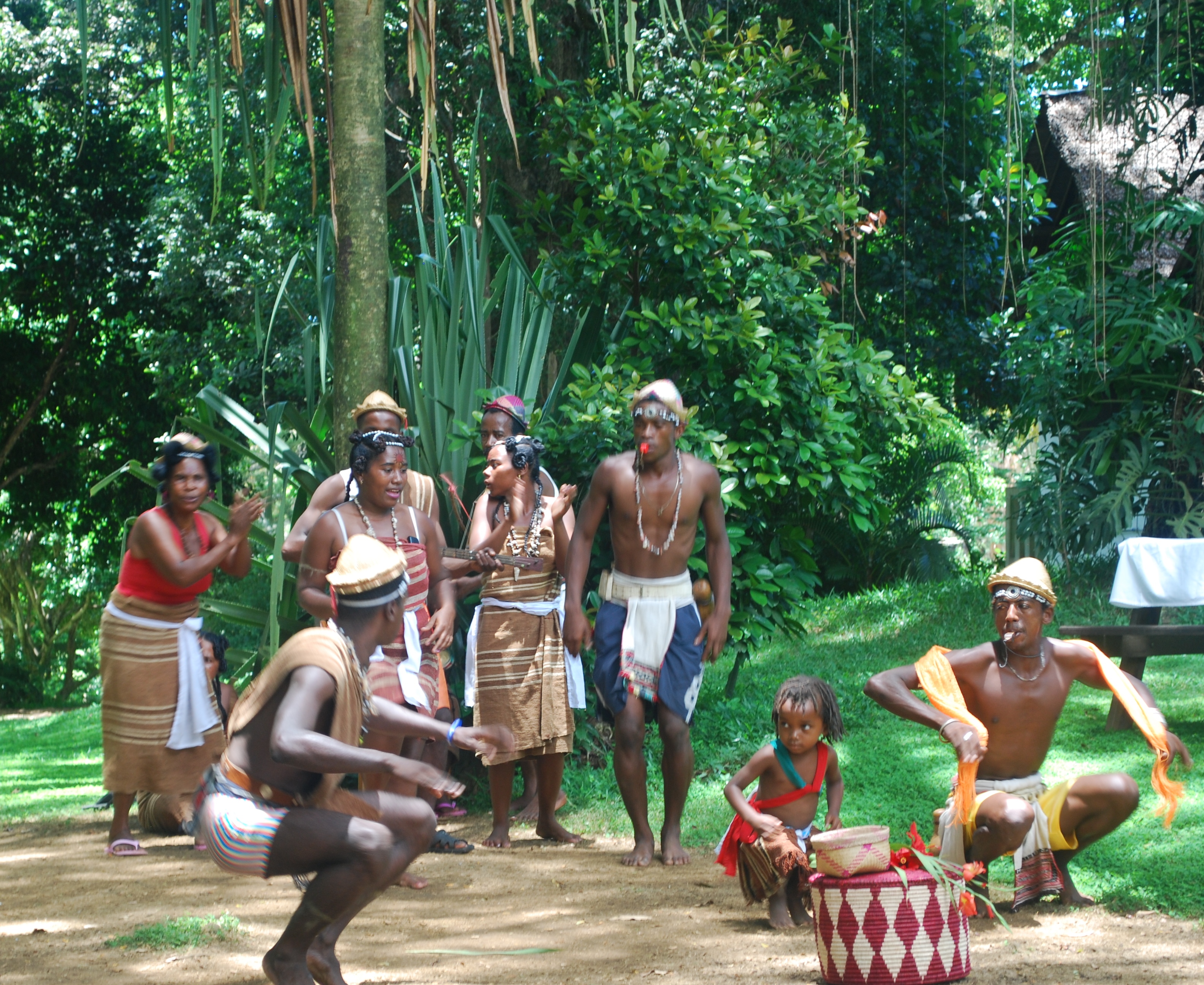
that changed color in the hand of our guide to match his skin tone.  There were also crocodiles and tourtouses at the reserve.  At the end of the tour, we had the opportunity to see some of the native dances.  Some of the women wore the hair styles we had seen depicted in the photos at the museum.

Native dancers at the lemur reserve, Madagascar

Native dancers at the lemur reserve, Madagascar
©Jean Janssen

Posted in cruises, international | Tagged , , , , | 6 Comments

Maputo, Mozambique

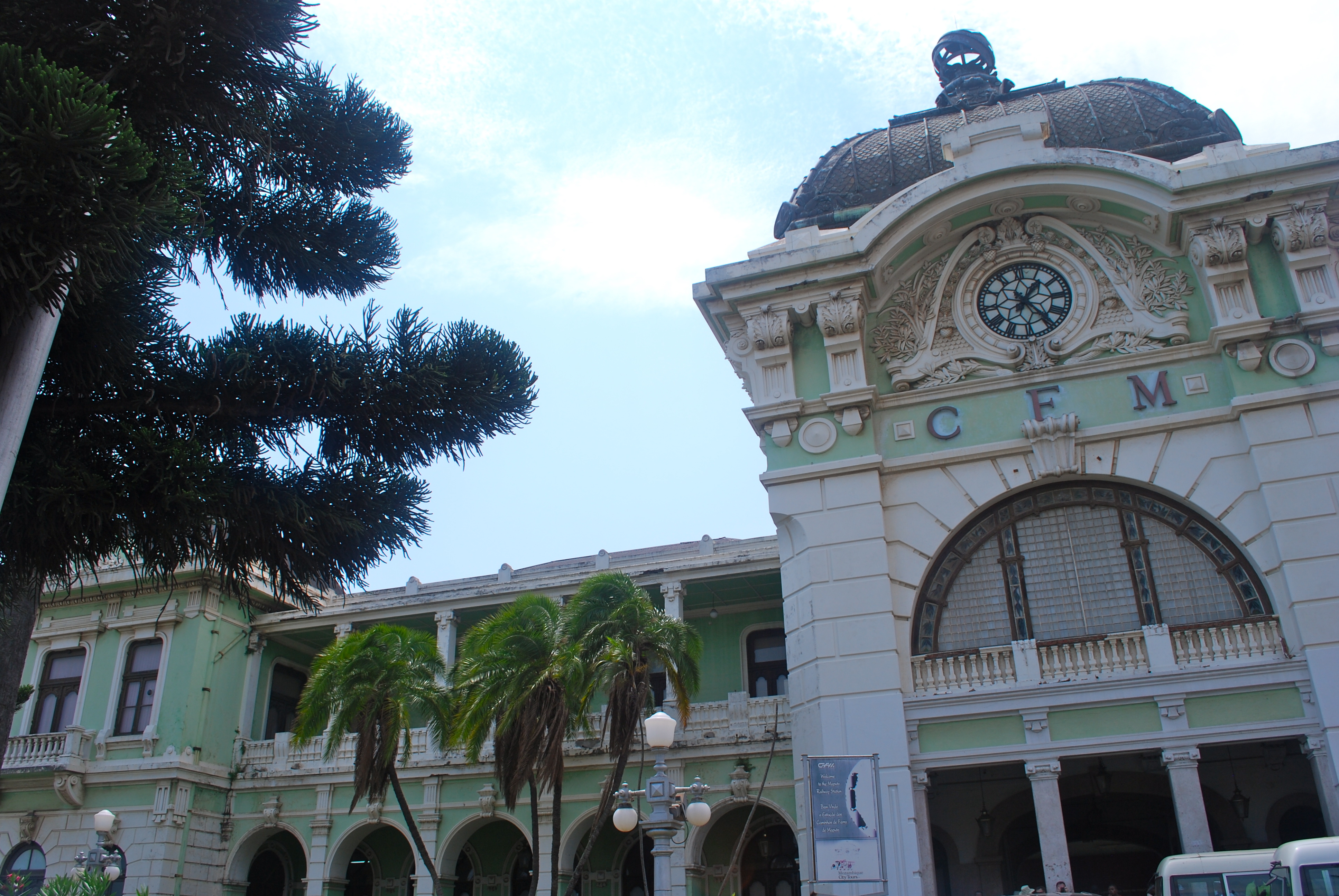
Maputo, Mozambique, Station station designed by Eiffel. ©Jean Janssen

Maputo, Mozambique, Station station designed by Eiffel.
©Jean Janssen

Our next stop is Maputo, Mozambique a destination clearly only included in the itinerary on the urging of their tourism agency.  During the Portuguese domination Maputo was known as Lourenco Marques.  The city, the country’s largest and its capital, is clearly not set up for tourism.  The guide struggled to find enough locations to take us to fill up the four hours.  The architecture is a mix of crumbling colonial, Soviet bland, and shanties.  I will complement them on the mode of transportation.  We rode in wonderful vans with plush seats and air conditioning.  The van had instructional signs inside indicating that it had been manufactured in Japan or was intended for Japanese tourists.  Locals rode under much harsher conditions.

Maputo train station, Mozambique.   ©Jean Janssen

Maputo train station, Mozambique.
©Jean Janssen

Interior of the train cars still used at the Maputo station.  Nothing seemed to be updated.  If the window breaks, they just leave the pain empty. ©Jean Janssen

Interior of the train cars still used at the Maputo station. Nothing seemed to be updated. If the window breaks, they just leave the pain empty.
©Jean Janssen

Our first stop was literally just moments outside the port gates.  We stopped to see the Maputo Train Station designed by Eiffel.  It is still used daily by computers and those going to destinations outside Mozambique.  Immediately upon stepping from the coach, we were bombarded by people trying to sell us anything we would be willing to buy.  They were in your face and all around you.  I was not struck by fear, but the situation was annoying and sad.

The station was lovely in its fading glory.  It was a place that time forgot.  The cars, which we were able to step inside, continue to deteriorate and continue to be used.  Outside, in addition to the hawkers, people stood waiting for buses and vans.  This is clearly the transportation hub of the city.

The Municipal market, Maputo, Mozambique ©Jean Janssen

The Municipal market, Maputo, Mozambique
©Jean Janssen

Our next stop was the municipal market.  Many of the vendors here wore native costume, but we had been warned to ask before taking a person’s picture.  We saw mostly food items, the fish completely covered with flies.  I think there were even more street peddlers outside the market than at the train station.  I got separated from the group due to the large crowd and followed the guide’s instruction to wait for him at the entrance.  He then transferred us through the gauntlet of peddlers to our van.  While we waited for the others, we were hit up through the door and windows to buy t-shirts, woodcarvings, flip-flops, jewelry, and more.  As usual, Boris bought a few things.  One couple insisted on taking a taxi back to the ship.  He told the guide he didn’t feel well, but I think the street vendors had taken their toll on the couple.

Inside the municipal market, Maputo, Mozambique   ©Jean Janssen

Inside the municipal market, Maputo, Mozambique
©Jean Janssen

Independence Square, Maputo, Mozambique ©Jean Janssen

Independence Square, Maputo, Mozambique
©Jean Janssen

We next went to Independence Square to see the interesting statute of Field Marshall Michele, the first “so-called” President, although actually a dictator, of independent Mozambique.  On the “square”, actually a circular thoroughfare, was a Municipal Building, and the Cathedral.  Seeing the interior of the Cathedral with its African art was to have been the highlight of my day.  It was closed.  Apparently, it is common for the Mozambique government to arbitrarily close buildings with no warning.

We went next to the Iron House, literally a building made of iron, which was also closed.  Clearly constructing a house of iron in this hot and humid climate was not the smartest idea.  It remains an oddity for tourists.

The Museum of Natural Science, Maputo, Mozambique.  the Museum's claim to fame is its collection of elephant fetus. ©Jean Janssen

The Museum of Natural Science, Maputo, Mozambique. the Museum’s claim to fame is its collection of elephant fetus.
©Jean Janssen

Our next stop was the Museum of National History, whose claim to fame is its collection of Elephant fetuses.  Mostly, the museum held taxidermy animals in violent (although realistic) poses.  Our guide said this stop was a favorite among tourists; I don’t think today’s guests would agree.  Boris’ favorite line of the day was the guide telling us that all the animals inside were real, but the dinosaurs outside were not.  Really?  The outside dinosaurs were something you would find in a children’s playground.  I want to meet the person who thought these were real.

Costa do Sol public beach in Maputo, Mozambique ©Jean Janssen

Costa do Sol public beach in Maputo, Mozambique
©Jean Janssen

Drink vendors at the Costa do Sol, Maputo, Mozambique.  Everything is sold in glass bottles and there is broken glass everywhere on the beach. ©Jean Janssen

Drink vendors at the Costa do Sol, Maputo, Mozambique. Everything is sold in glass bottles and there is broken glass everywhere on the beach.
©Jean Janssen

We drove next by a house owned by the Mandela family, many of the beachside foreign embassies, and the homes of many of the government officials.   The route to the popular  Costa do Sol public beach was so full of potholes our driver was constantly swerving from side to side.  I noticed the vendors selling drinks or bar-b-que chicken on the side of the road.  Our guide said our planned stop was for 30 minutes, but he wasn’t sure that we would want to stay that long.  Everyone said 10 minutes, except for a single older woman in the front who wanted her full 30 minutes.

I got out briefly and took a few pictures and watched Boris bargain for “worthless crap from all over the world” (as his nephew puts it).  Then, I retreated to the air- conditioned comfort of the van.   I have never seen more broken glass in all my life.  One guest commented that he couldn’t understand with all the beautiful beaches in Africa, why we had been taken to its ugliest.

Get a snack of peanuts at the beach, Maputo,  Mozambique ©Jean Janssen

Get a snack of peanuts at the beach, Maputo,
Mozambique
©Jean Janssen

The peddlers followed Boris to the van and to the delight of all the other van guests, they continued to thrust items into the van though the doors and windows hoping for another sale.  Some had rather long arms.  After 30 minutes the older guest reappeared, the guide on our elbow, and announced that she had had a lovely stroll on the beach.  The rest of the guests who had been sitting in the van for 25 minutes of her 30-minute stroll, just smiled.

There was a drive back to the city where the only new buildings we passed were government property and we were reminded that in Africa, it is often only the politicians that enjoy any wealth in independence.   I did see an interesting machine along the side of the road that I asked the guide about.  It was for extracting the liquid from sugarcane.  You purchased a stalk and then took it to one of these entrepreneurs for the extraction.  We passed a fort in route and Boris was disappointed that a visit there was not part of our itinerary.

Natasha in Mozambique.

Natasha in Mozambique.

I am sorry that I cannot enthusiastically encourage other travelers to visit Maputo.  We had an excellent guide, but the city does not have much to recommend it.  Upon independence, the oppressive Portuguese that had colonized the area fled, taking with them the capital investment and educated leadership.  Government corruption has meant the diversion of funds into political ventures or the politicians’ pockets and the people remain desperately poor.  I remain hopeful for the people.  If you travel in Mozambique, take along your own toilet paper.

DSC_0123Today, I did reach 99 countries in my quest for membership in the Travelers’ Century Club.  I will reach the milestone on our next stop in Madagascar.

Posted in cruises, international, Uncategorized | Tagged , , | Leave a comment

Richard’s Bay and the Hluhluwe-Umfolozi Game Reserve, South Africa

African White Rhino, Hluhluwe-Umfolozi Game Reserve, South Africa ©Jean Janssen

African White Rhino, Hluhluwe-Umfolozi Game Reserve, South Africa
©Jean Janssen

Today is our last South African port, Richard’s Bay.  The community of Richard’s Bay was created in the 1976 when the need for a port in the area arose.  Tax incentives were offered to encourage industrial growth.  Population estimates range from 50,000 residents to over 1 million.  It is a relatively new community for South Africa, so the homes, business, and support services are all modern.  Richard’s Bay has a new “American style” shopping mall that our neighbors from the suite next door visited for the wifi.

Unemployment is officially at 14%, but locals estimate it at 41%.  There are plenty of barbed wire topped and electric fences, security system signs, and security staff on call at intersections to show that theft and violent crime are real problems for homeowners and businesses.

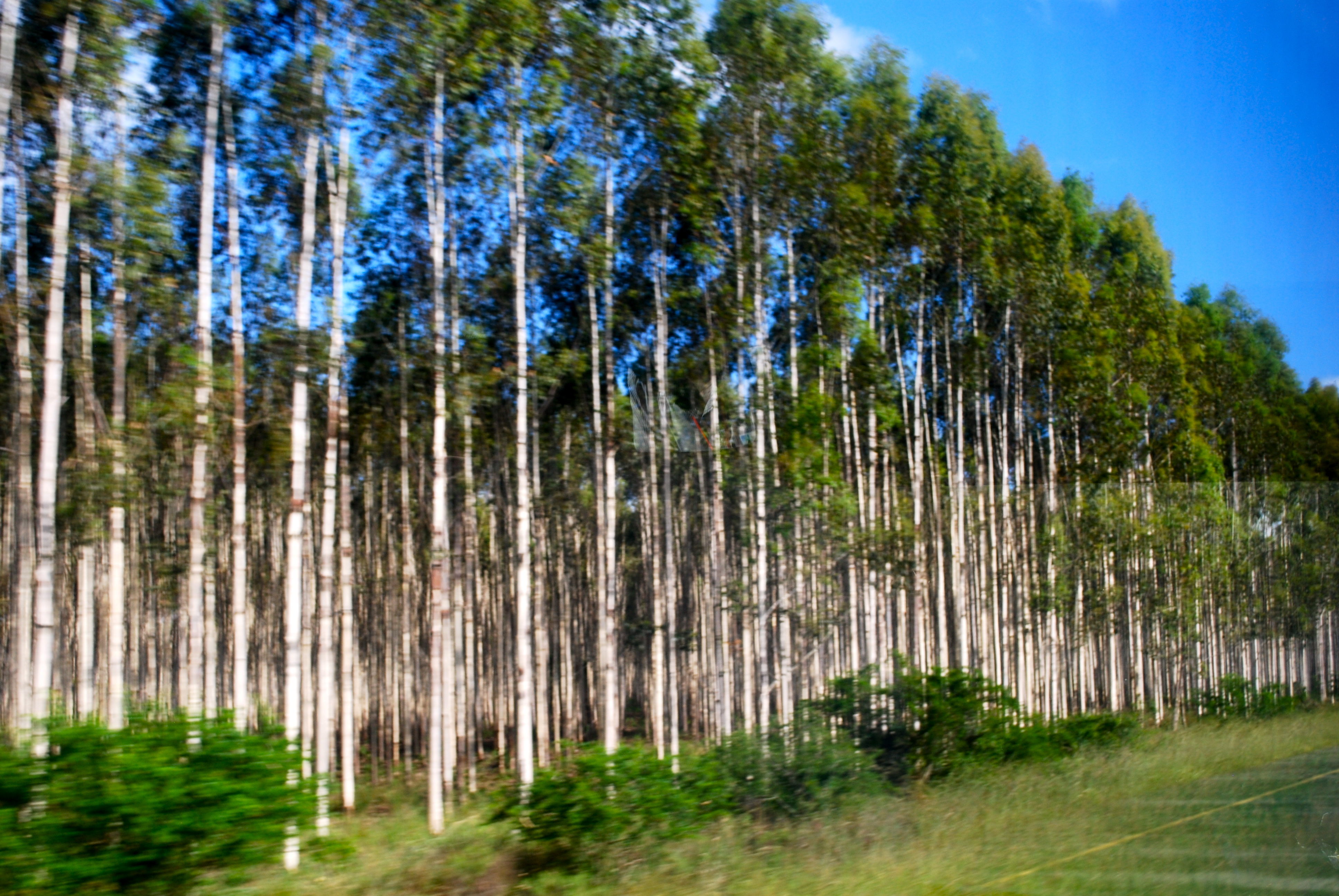
Eucalyptus tree forests for paper mills, Richard's Bay, South Africa. ©Jean Janssen

Eucalyptus tree forests for paper mills, Richard’s Bay, South Africa.
©Jean Janssen

Richard’s Bay is where the coal leaves South Africa and the distribution center at the port was massive.  As we drove out of town, we saw the forests of eucalyptus trees used in the production of paper and cardboard.  These trees absorb large amounts of water and utilize most of the minerals in the soil, so you must have a permit to plant them and re-cultivate the land with indigenous plants after harvesting the trees.  Since we have about an hour and a half drive out to the animal reserve, our guide used the opportunity to educate us on the South Africa and particularly this area of the country.  She had wonderful pictures and articles that she shared with us.

Boris got me one of these traditional Zulu hats.

Boris got me one of these traditional Zulu hats.

This area of South Africa is the traditional home of the Zulus.  While, the first two Presidents after the end of apartheid were Xhosa from the Eastern Cape, the current President, Jacob Zuma, is Zulu.  The Zulus are the largest ethnic group in South Africa.  Traditionally, men had to serve their chief when they were young and did not get married until age 35 or 40 so they were permitted multiple wives to allow them to quickly grow their families.  Zulu men can still have as many wives as they can afford.  Most urban Zulus have only one wife.  President Zuma has 7 wives, one ex-wife, and one deceased wife (and about 20 children).  Modern Zulus will often have a “white wedding” and a traditional one.  Opposite of the concept of dowry, Zulu men pay a “bride price” usually in cattle (the traditional measure of wealth), so baby girls are welcomed.

Boris got himself the Zulu headdress and spear.  He was disappointed that he could only find a small shield.  Have no idea how we are going to get that long throwing spear into a suitcase.

Boris got himself the Zulu headdress and spear. He was disappointed that he could only find a small shield. Have no idea how we are going to get that long throwing spear into a suitcase.

By law children must remain in school until age 14 and by law are not supposed to be sexually active until 18.  To get married before age 21, you must have your parents or the government’s permission.  Child brides are not common, except in the Hindu culture.  The government does not recognize marriages involving underage children as official marriages.

AIDS is wide spread; unofficially 40% of the population is HIV positive.  However, if an HIV positive woman becomes pregnant and begins early treatment there is hope.  Treatment during early and late pregnancy along with no breast-feeding and post-birth treatment can result in a child who is HIV negative.  At this early stage, there is no way to know if the child will later develop AIDS, but it is remarkable progress in the treatment of HIV.

Malaria was wiped out in South Africa as a result of wide spread campaigns in the 1930s and 1950s.  DDT is still used in areas where the nation borders on other countries without containment.  When we left Senegal (our fueling stop) in route to Johannesburg, the interior of the aircraft was sprayed.  My guess is that the other areas of the aircraft were sprayed as well.  I remember the announcement informing the passengers of the process and letting them know it was “required by law”.

tradtional round home with thatched roof, rural South Africa ©Jean Janssen

tradtional round home with thatched roof, rural South Africa
©Jean Janssen

Public transportation is a problem in South Africa.  We passed by vans that are a private transportation alternative.  These “taxi vans” get stuffed with people.  You stand on the side of the road and hail them with a hand signal regarding the requested route.  If they are going the same way, they will stop and pick you up or give you a hand signal to tell you they are full.  If they are on a different route they simply pass you by.  The hand signals change regionally.  Our guide told us of a driver who lost his license after stuffing 47 people in his van.

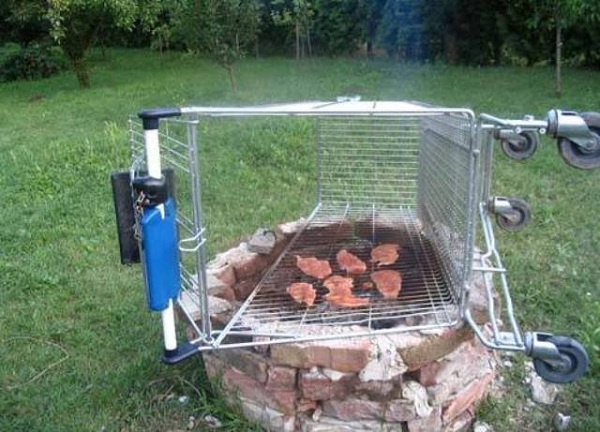
Shopping-Cart-Barbecue-GrillOn the lighter side, our guide showed us pictures of people’s creative use of shopping carts.  One used it as the grill for a bar-b-que, the entire cart turned on its side over the fire.  The best photograph was of a car with no wheels that was hoisted onto 4 shopping carts and was being pushed down the road.

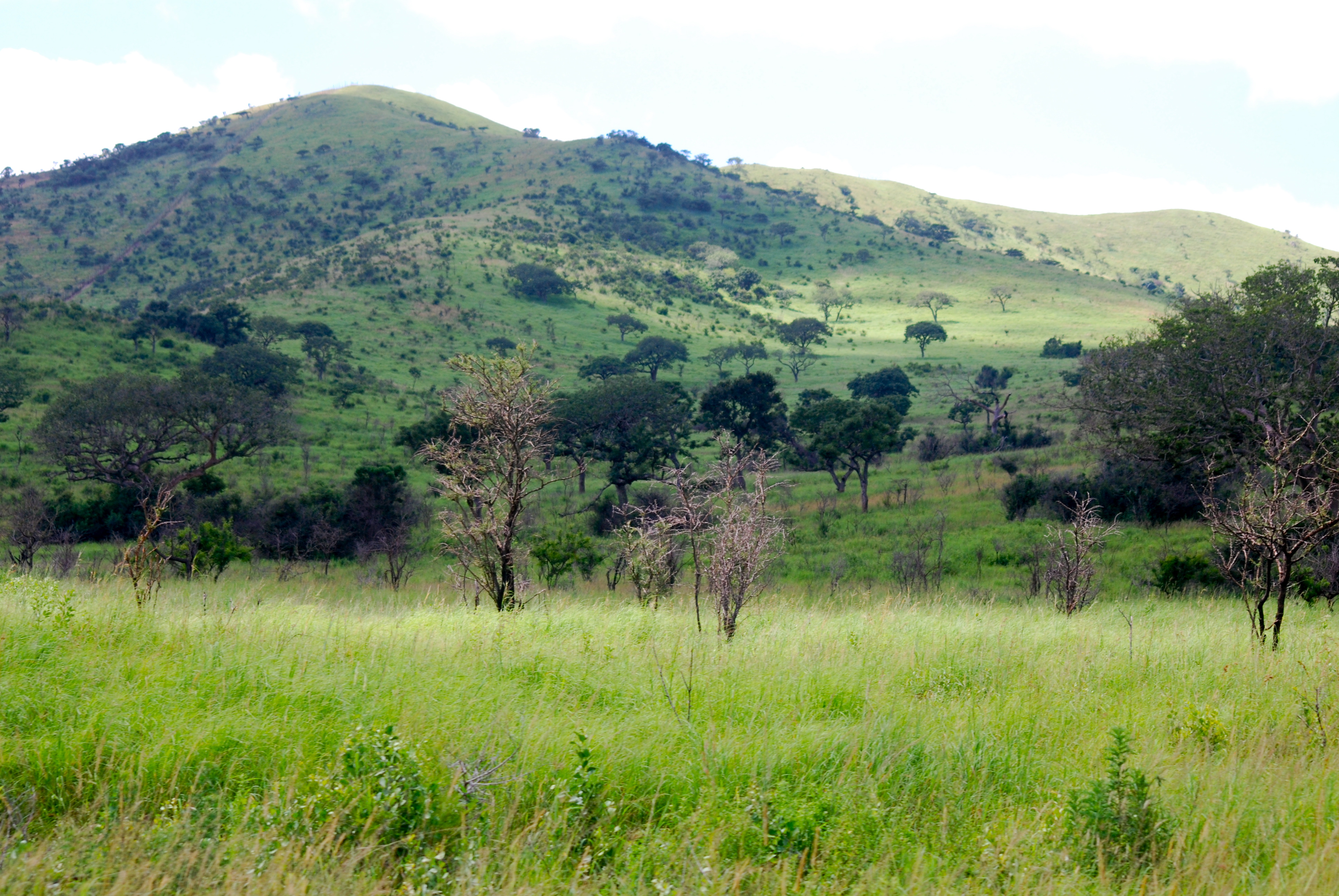
landscape near the Hluhluwe-Umfolozi Game Reserve, South Africa ©Jean Janssen

landscape near the Hluhluwe-Umfolozi Game Reserve, South Africa
©Jean Janssen

As we got closer to the reserve, the topic changed to animals.  Throughout South Africa, they refer to the “Big 5”.  These animals are even found on one side of the South African currency.  The Big 5 include the rhino, elephant, lion, leopard, and Cape buffalo.  We saw three of the Big 5 at Inkwenkwezi.  Because the Zulu still hunt leopard for their skins, they are wary of people and so are rarely spotted in this area.  However, the first animal the guide mentioned was not one of the big five.  It was the hippo, the animal that kills the most people in South Africa.  In 2012, a man went into his backyard in response to noise and found a hippo.  The man lost his leg; the hippo wandered on.

Hluhluwe-Umfolozi Game Reserve, South Africa ©Jean Janssen

Hluhluwe-Umfolozi Game Reserve, South Africa
©Jean Janssen

There will be no hippos at the Hluhluwe-Umfolozi Game Reserve.  The 235,000-acre reserve is the oldest game reserve in all of Africa and was started to protect the rhino, still the subject of major poaching due to an erroneous belief that the horn has medicinal properties.  There were 948 rhino poached in South Africa in last year alone.  The rhino horn is actually made of the same material as the human fingernail and has no medicinal value.  The demand for the horn is high in Asian cultures and the poaching will not stop when the people who live near the Rhinos are poor and people who demand the horns are uneducated.

DownloadedFile Yao Ming, a Chinese national and international basketball star (he played in the USA for the Houston Rockets) has a campaign in China to educate people of the true properties of the rhino horn.  He has a successful track record in animal rights, educating people on the danger of the declining shark population due to the demand for shark fin soup.  The campaign resulted in this soup disappearing from 90% of the menus where it was previously offered.  We saw clips from both his campaigns on our suite television.  Some predict that the rhino might be gone in 25 years if the poaching cannot be contained.

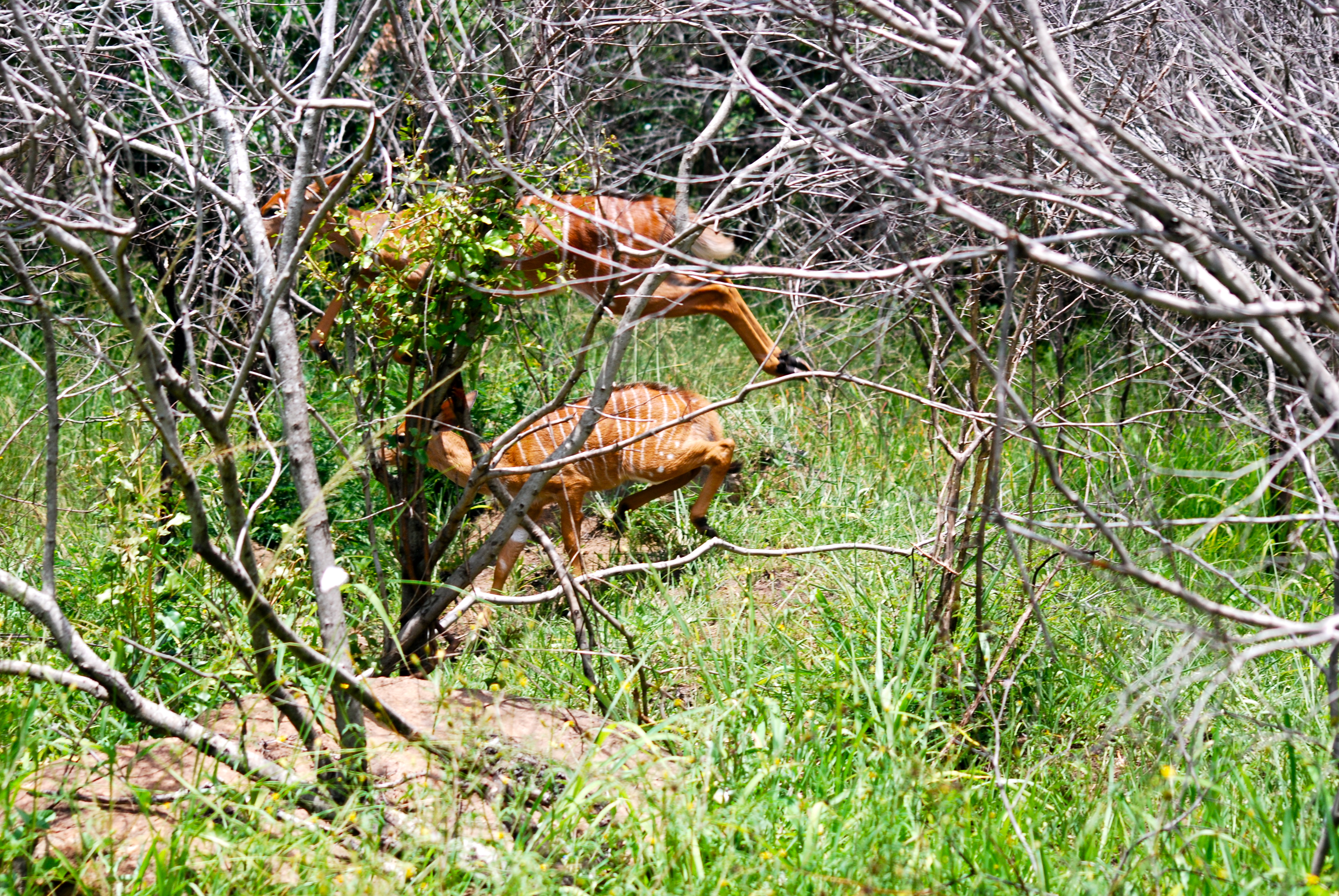
Leaping Nyala in the brush at Hluhluwe-Umfolozi Game Reserve, South Africa. ©Jean Janssen

Leaping Nyala in the brush at Hluhluwe-Umfolozi Game Reserve, South Africa.
©Jean Janssen

Once reaching the reserve, we transferred to vehicles that were similar to the Land Rovers at Inkwenkwezi, but these were small Toyota trucks with a retrofitted bed.  They were not as comfortable and difficult for Boris to climb into.  We were seated on the back row, the bumpiest.  I had a middle seat.  I was disappointed, but it proved to be fine as I was able to take pictures on both sides.  On a few occasions, I passed the camera to Boris or our other seatmate to get the shot.

View of a river in the Hluhluwe-Umfolozi Game Reserve, South Africa ©Jean Janssen

View of a river in the Hluhluwe-Umfolozi Game Reserve, South Africa
©Jean Janssen

The landscape of the reserve was breathtakingly beautiful and the breeze that flowed through the “jeep” kept us cool.  Our guide who spoke to us in heavily accented English and on her radio in Afrikaans, drove at a pretty fair clip while keeping a watch out for the animals.  Boris thought the ride less rough than Inkwenkwezi.  In the morning, we spotted only a few rhino and water buffalo in the distance and I cursed myself for not having a full battery on our last game reserve trek.  After about a three-hour drive, we stopped for lunch at the Hilltop Restaurant and enjoyed a wonderful buffet lunch and stunning views of the reserve.

Herd of water (or cape) buffalo leading the watering hole in Hluhluwe-Umfolozi Game Reserve, South Africa. ©Jean Janssen

Herd of water (or cape) buffalo leading the watering hole in Hluhluwe-Umfolozi Game Reserve, South Africa.
©Jean Janssen

A buffalo calf crosses the road following mom. Hluhluwe-Umfolozi Game Reserve, South Africa. ©Jean Janssen

A buffalo calf crosses the road following mom. Hluhluwe-Umfolozi Game Reserve, South Africa.
©Jean Janssen

The afternoon proved very exciting as we came across a large herd of the cape buffalo feeding.  We stopped and watched as they crossed the road in front of us, noting several babies among the herd.  Shortly after we ran across rhinos just off the road, their magnificent horns coming up out of grass when they took a break from feeding.  Down by the river we saw one of the “mud boys”, an older male water buffalo that had taken some time off for himself and was enjoying the muddy riverbank.

You rarely see a giraffe at rest.  They sit for very short periods of time due to their extreme vulnerability in this posiion.  At least one member of the herd stands guard. ©Jean Janssen

You rarely see a giraffe at rest. They sit for very short periods of time due to their extreme vulnerability in this posiion. At least one member of the herd stands guard.
©Jean Janssen

Standing guard.  Hluhluwe-Umfolozi Game Reserve, South Africa. ©Jean Janssen

Standing guard. Hluhluwe-Umfolozi Game Reserve, South Africa.
©Jean Janssen

Our guide drove us to a hilltop to look out over the reserve and we saw a stunning herd of giraffes in the distance.  These lovely creatures are my favorite African animals.  We followed the road down and were rewarded with views of another group nearby.  They rest for only about 10 minutes at a time, as they are extremely vulnerable in a resting position on the ground.  At least one member of the herd stands guard.  The group we noticed had two guards, some distance apart and facing in opposite directions.  Two zebra joined the herd of giraffes.

Hluhluwe-Umfolozi Game Reserve, South Africa ©Jean Janssen

Hluhluwe-Umfolozi Game Reserve, South Africa
©Jean Janssen

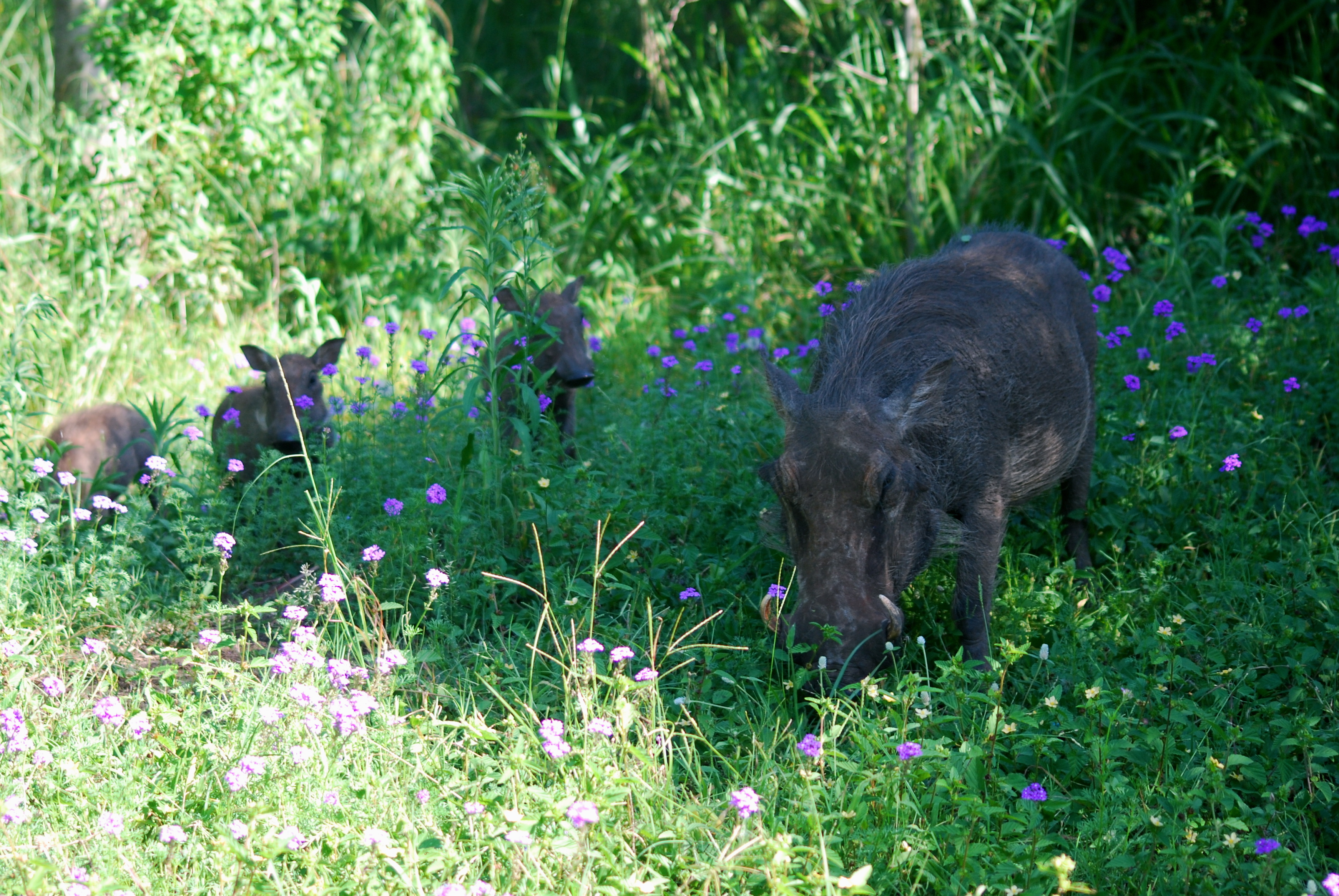
The later the day got (and the cooler) the more Rhino we saw, each closer to us.  Near the end, we were rewarded with three frolicking in the mud just off the road.  On the other side of the road, a herd of zebra made its way away from us.  There were baboons on the road just before the exit; and on the way back to the bus, I saw a family of warthogs with four small babies.  What an afternoon!

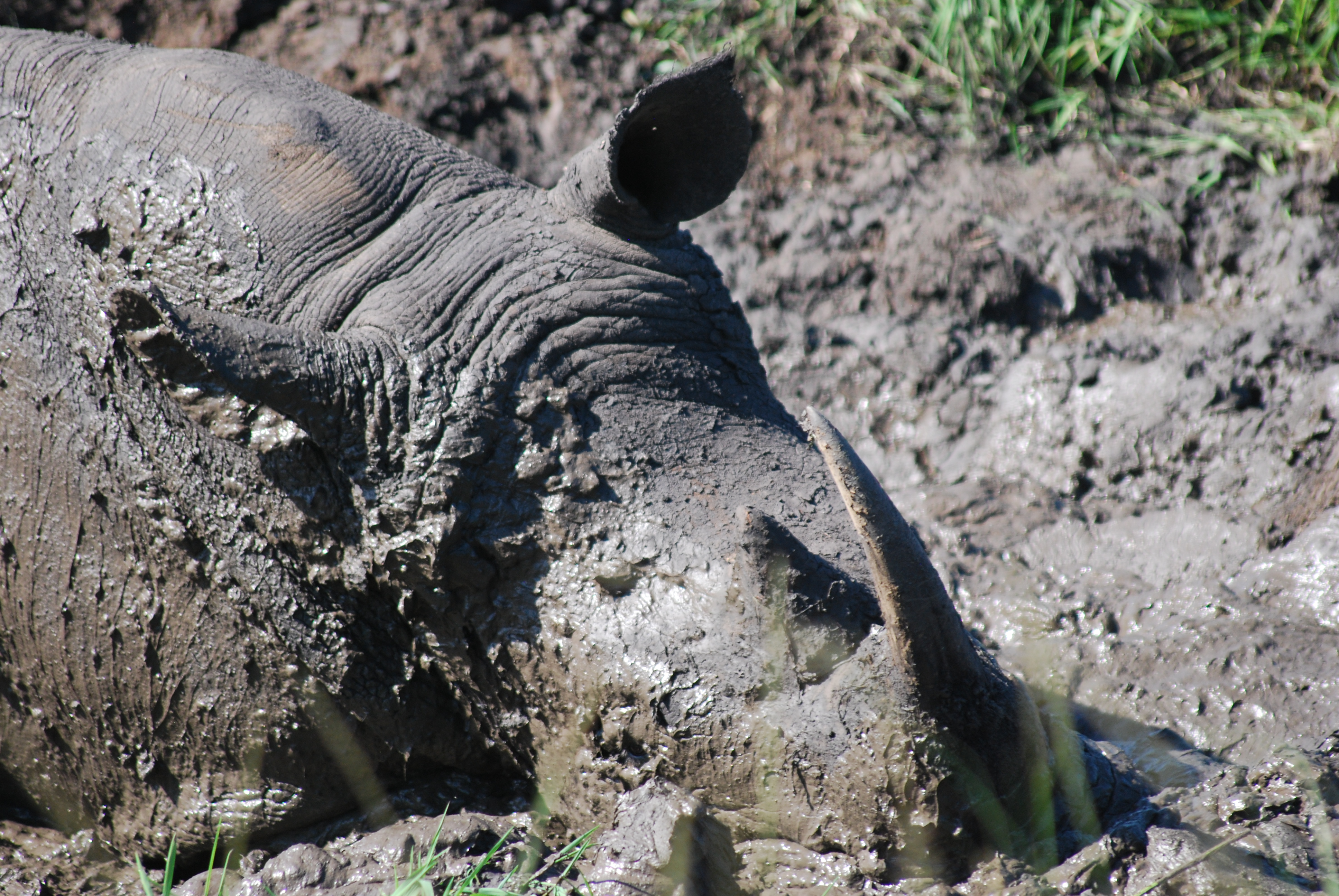
Hluhluwe-Umfolozi Game Reserve, South Africa  Rolling in the mud helps the rhino cool.  After the mud dries and falls off, it takes with it any fleas or ticks that have gotten on the rhino. ©Jean Janssen

Hluhluwe-Umfolozi Game Reserve, South Africa Rolling in the mud helps the rhino cool. After the mud dries and falls off, it takes with it any fleas or ticks that have gotten on the rhino.
©Jean Janssen

Mother Warthog and her babies. Hluhluwe-Umfolozi Game Reserve, South Africa. ©Jean Janssen

Mother Warthog and her babies. Hluhluwe-Umfolozi Game Reserve, South Africa.
©Jean Janssen

South Africa is a country of incredible beautiful and fascinating people.  It is also a place of violent crime sitting on a precipus waiting to see what will happen after the recent death of the inspirational leader who brought them out of apartheid.  Mandela’s political influence had waned by the time of his death, but it is his spirit of forgiveness and hope that South Africa will need to draw from in its continued struggle for a successful democracy.

Finally, we got to see the port pilot picked up by helicopter as we were leaving Richard's Bay. ©Jean Janssen

Finally, we got to see the port pilot picked up by helicopter as we were leaving Richard’s Bay.
©Jean Janssen

Posted in cruises, international | Tagged , , , , , , , | Leave a comment

East London and the Inkwenkwezi Game Reserve, South Africa

Natasha goes to her first game reserve, Inkwenswezi, near East London, South Africa ©Jean Janssen

Natasha goes to her first game reserve, Inkwenkwezi, near East London, South Africa
©Jean Janssen

After a rough night and a horrific sea day with most of the passengers having skipped at least one meal, we reached our first port on the East Cape of South Africa, East London.  East London is the only river port in Africa; the Buffalo River empties into the Indian Ocean here.  It is, unfortunately, a dying city.   The wool and pineapple industries extinguished, East London has 45% unemployment.  Overall the unemployment rate in South Africa is about 26%.  The only thing that keeps East London going is its Mercedes Benz manufacturing facility.  They are quite proud of the fact that they have just been awarded the production rights to the new “C class” Mercedes.  A new parking garage to hold the finished vehicles sat across from our dock.
Pilot boat in the morning fog, East London, South Africa ©Jean Janssen

Pilot boat in the morning fog, East London, South Africa
©Jean Janssen

Our destination lecturer had told us that it was worth getting up early to see the pilot lowered to the ship from a helicopter and see the porpoises lead us into the East London harbor.  I wasn’t so sure I would see anything when I got out to the top deck.  The fog was so thick that they were using the foghorn on our approach.  Then I noticed that we weren’t really moving much and a pilot boat came out of the mist.  One of our navigational officers was on the piloting overhand of the ship and so I asked him.  The helicopter is used at Durban, our next port.  Just another mistake made by the lecturer.
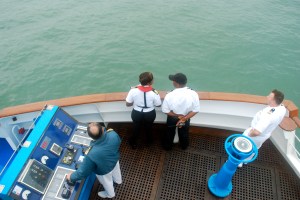
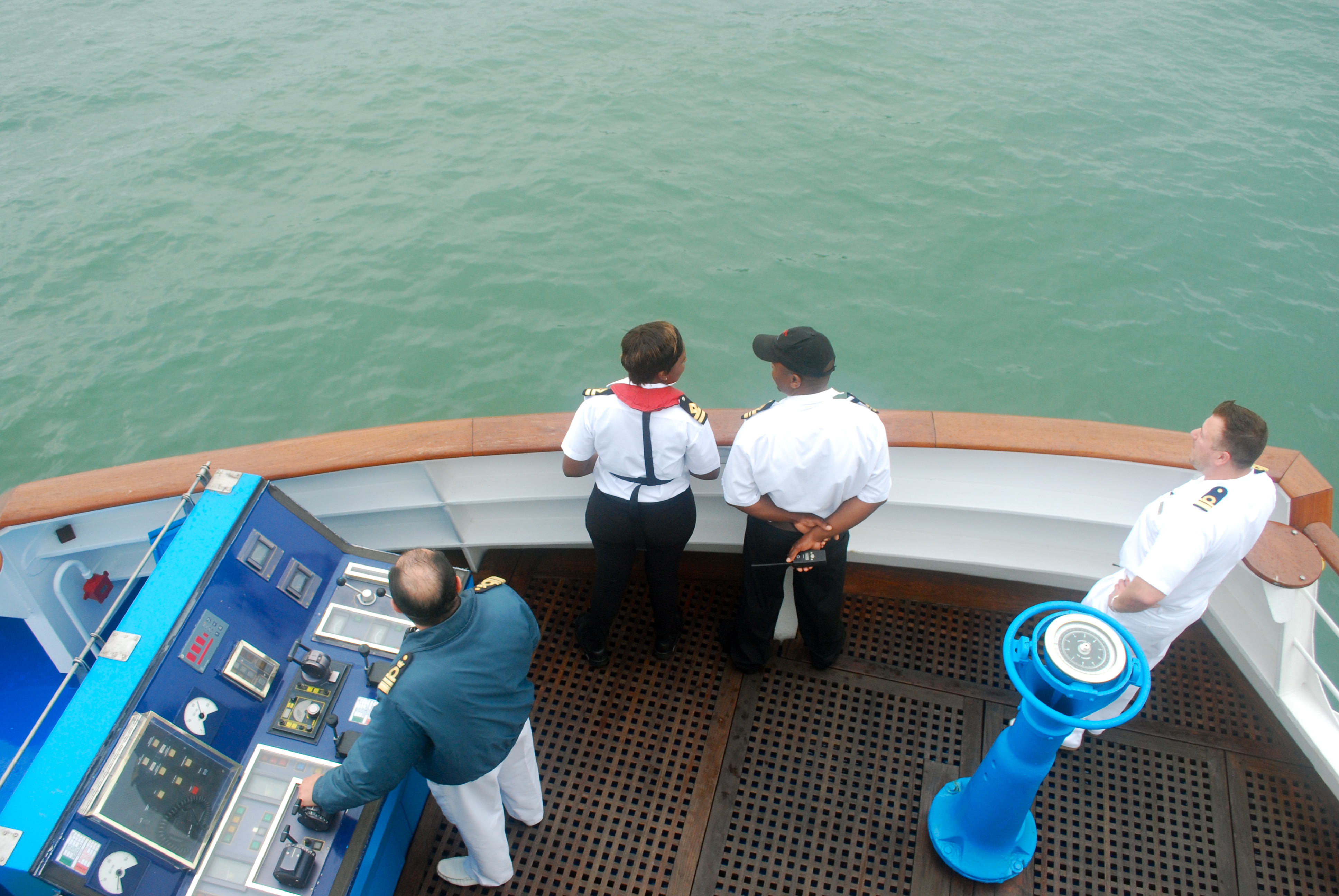
Officers on the Silver Wind Navigational Bridge which hangs out over each side of the ship to assist with docking.  Our captain is at the the controls, our pilot is in white, and the two other officers are the port pilots for East Durban. ©Jean Janssen

Officers on the Silver Wind Navigational Bridge which hangs out over each side of the ship to assist with docking. Our captain is at the the controls, our pilot is in white, and the two other officers are the port pilots for East Durban.
©Jean Janssen

The particular blast of our foghorn was letting them know we were a ship “in wait” (there is a different blast if we were actually stopped).  Since he was right below me, I asked the officer about the female pilot I noticed in Cape Town.  He said in the rest of the world the pilot is almost always male, but that in this area they had had mostly female pilots.  Two pilots came on board today, a male and a female, both black (also unusual).  South Africa is a changing society.
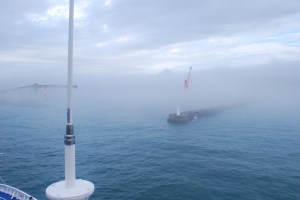
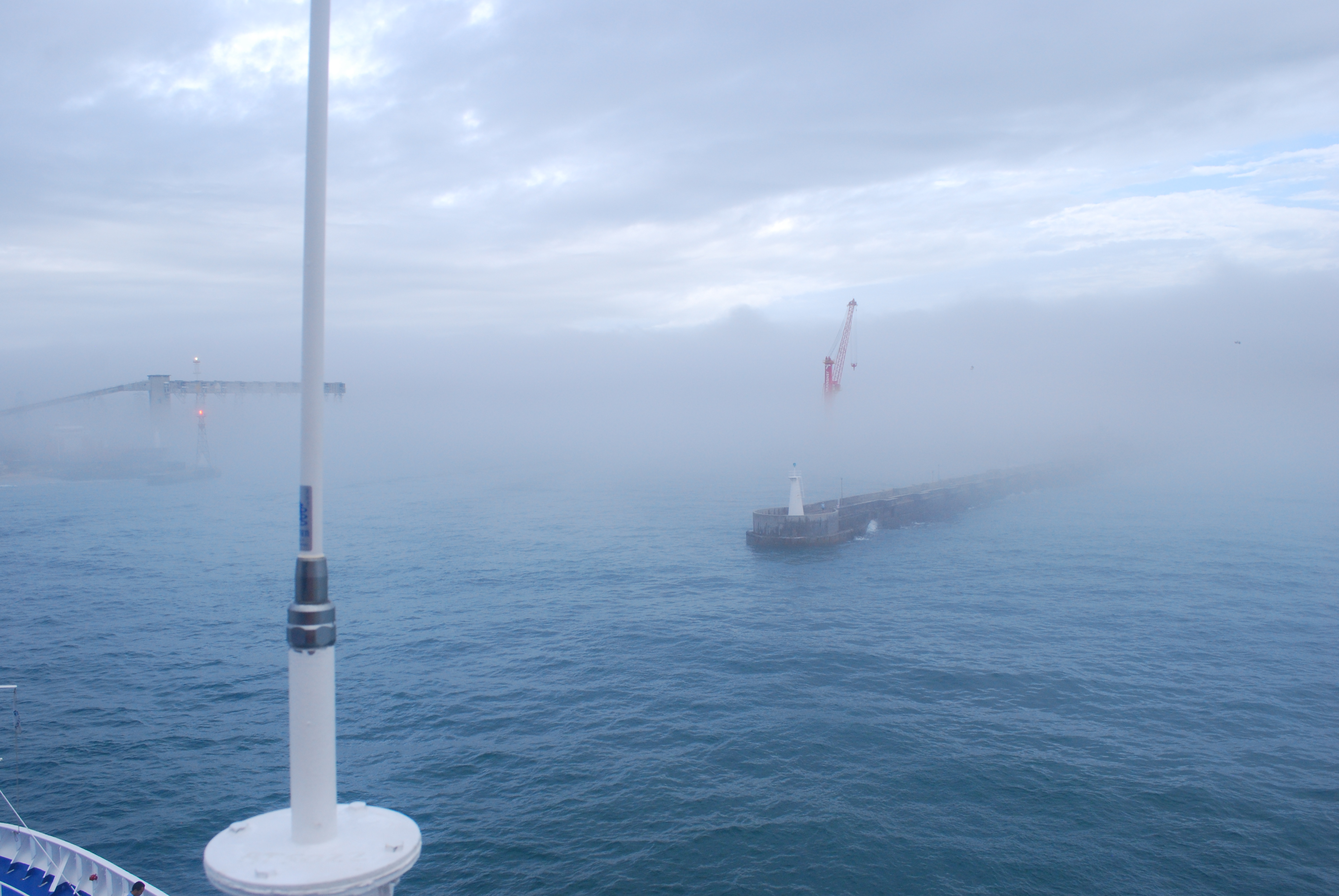
East London coming into view through the fog, aboard the Silver Wind in South Africa. ©Jean Janssen

East London coming into view through the fog, aboard the Silver Wind in South Africa.
©Jean Janssen

All of us outside were surprised when the city quickly came into view.  We had only been a half-mile from land.  By the time we docked shortly after, the fog was dissipating quickly.  We boarded the bus for our ride to the Inkwenkwezi (bright star) Game Reserve.  We passed through the downtown, where some of the empty hotels had been converted into shops and others just sat empty.  Along the waterfront, even the “nicest” hotels looked very sad.  Leaving the city we passed through an upscale neighborhood where half the large homes had been converted into B & Bs.  These large houses with 6 or 7 bedrooms were from “inherited money”, the original wealth coming from the wool industry.

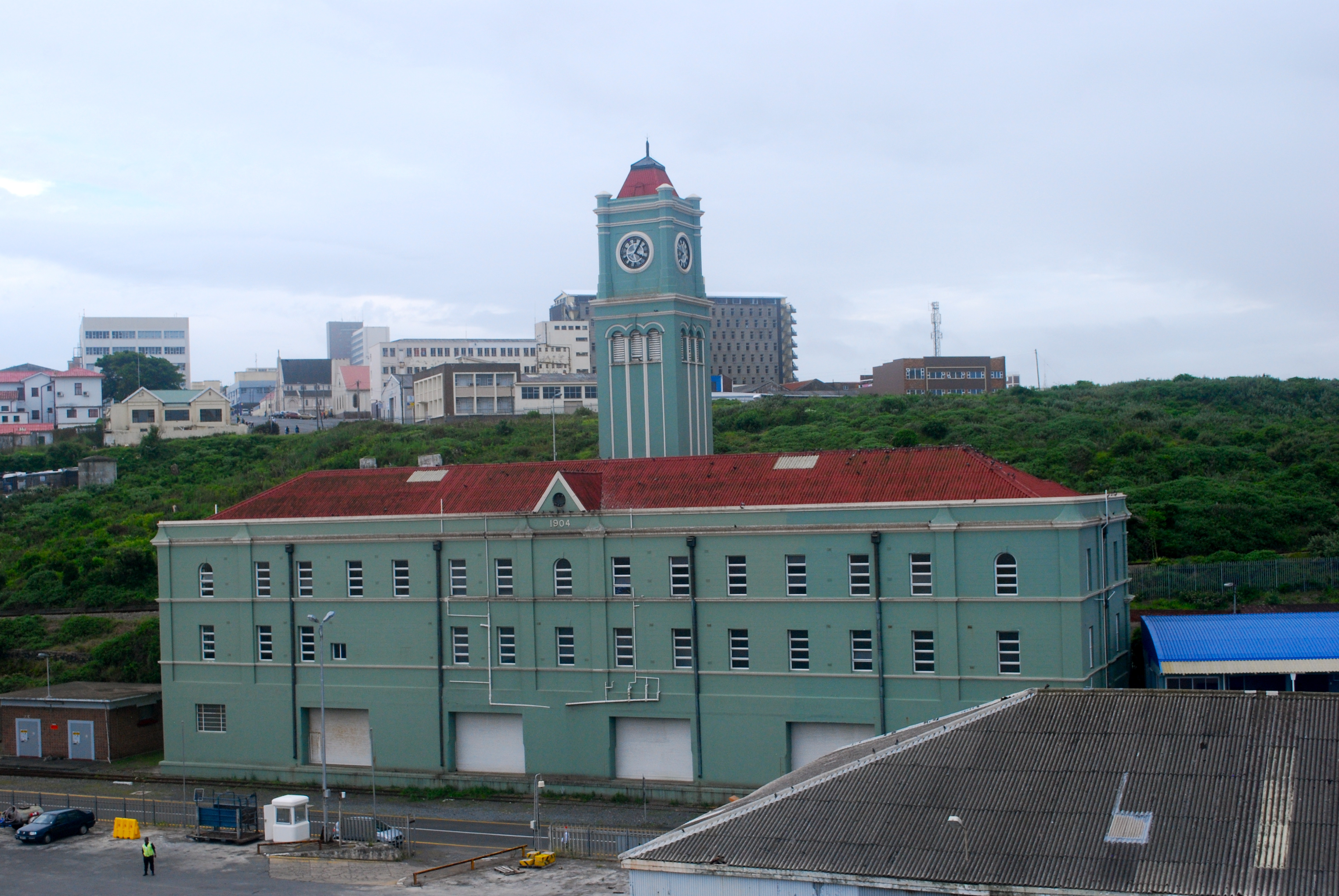
East London was once a thriving port. Note the date on the building, 1904.  There only major export now is Mercedes Benz C class autos. ©Jean Janssen

East London was once a thriving port. Note the date on the building, 1904. There only major export now is Mercedes Benz C class autos.
©Jean Janssen

With such a high unemployment rate, it is not unusual that theft crimes are very high in the area.  Most of the nicer homes sported signs from a security company, high walls, barbed wire on top of their fences, or all three.  We passed one business the guide pointed out that had acquired two ostriches to combat crime.  The problem went away with these new “guard dogs”.  Unfortunately, since the business was within city limits they had to get rid of the deadly animals; the thefts started once again.  Our guide’s husband is a dairy farmer.  On Christmas Eve, he found six of his pregnant dairy cows slaughtered where they stood, everything taken except the entrails and the fetuses.  They were jersey cows and do not have much meat, but in their pregnant state these jerseys must have looked fat and meaty.  Poverty and hunger can lead to such acts.

In addition to theft, Aids is rampant.  18-25 people die each week in East London from aids.  (That is a shocking, and not misprinted, statistic as related by our guide.)  East London formerly saw both English and German immigration.  The native people are Xhosa.  (The word begins with a clicking sound, but is pronounced in English as a K.)  Xhosa is one of the eleven official languages of South Africa.  Nelson Mandela’s heritage is Xhosa.
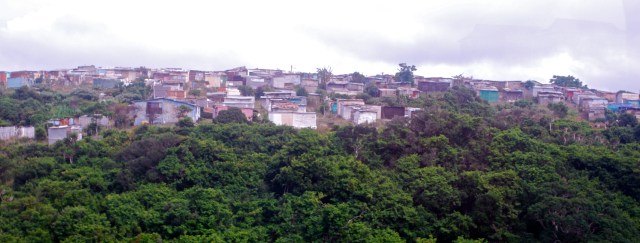
Xhosa settlement outside East London, South Africa.  Nelson Mandela was Xhosa. ©Jean Janssen

Xhosa settlement outside East London, South Africa. Nelson Mandela was Xhosa.
©Jean Janssen

As we passed a Xhosa settlement, our guide told us about the circumcision ritual that brings 16-year-old boys into manhood.  (Females are not circumcised in the Khosa culture.)  No anesthetic is used but the boys are worn into an exhausted condition before the cutting is done with a spear.  He is also taught a new language which he can speak in front of females but not be understood by them.  The boy then builds a hut and when the healing is complete, he burns everything he used during the time inside the hut.  This is symbolic of passing into manhood.

When the Xhosa man marries, it is the wife who builds the family’s mud house, although the husband may add the roof.  The practice of dowry is still part of the culture.  The dowry is usually in cows and based on the woman’s fertility.  It is not uncommon for the couple to first have a child before marriage to prove fertility.  The man can at any time send the woman back to her mother, bringing great shame on the woman.  Before marriage, girls are taught how to be good wives and keep their husbands interested.  They also learn another language only known to other married woman.  (Married Xhosa couples can all be in the same room together speaking about their spouses without the spouse knowing what is being said.)

As depressing as the city had been in its decay, the countryside was in its beauty-fertile and green with its hills and valleys.  When our guide told us that those removed to the countryside during apartheid had chosen not to come back, I couldn’t blame them.  When the city held rampant disease, poverty, and unemployment, I would choose the lush countryside.  The recent rain had made it all the more beautiful.
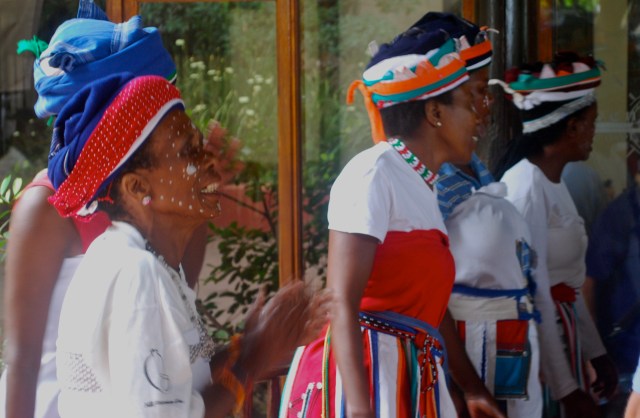
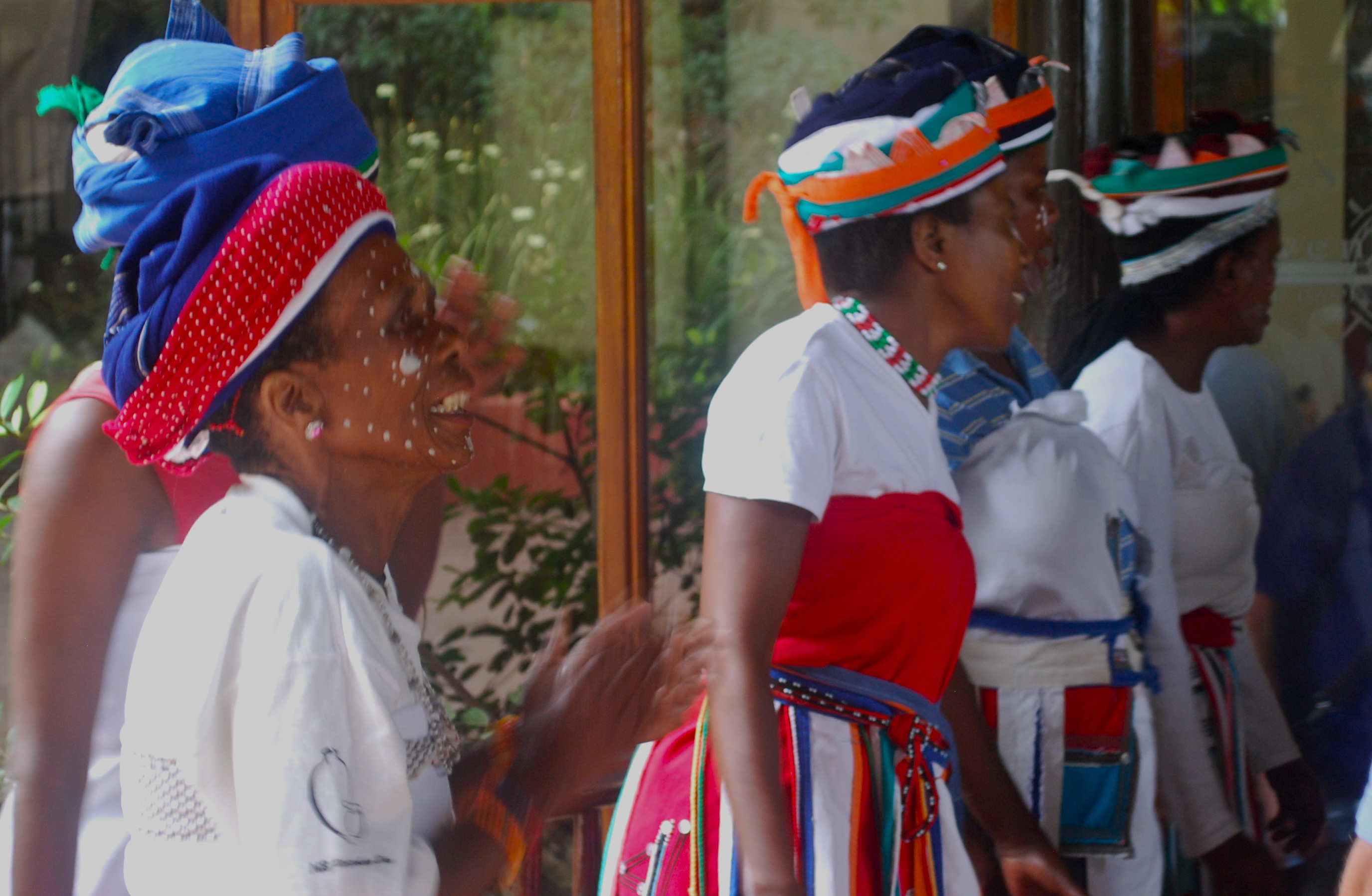
Xhosa women in native dress greeted us at our arrival at the Inkwenkwezi Game Reserve near East London, South Africa. ©Jean Janssen

Xhosa women in native dress greeted us at our arrival at the Inkwenkwezi Game Reserve near East London, South Africa.
©Jean Janssen

Singing Xhosa women in native dress greeted us when we arrived at Inkwenkwezi.  They were friendly and waved to us as they performed.  After a comfort stop, we boarded our Land Rovers for the 3-hour drive on the game reserve.  Our guide was young, probably in his late twenties, but very knowledgeable about the animals and the ecology of the reserve.  The guide also drove the vehicle.  One guest could sit in front with him with three quests in each of the three rows behind the driver.  The thick canvas cover kept all the sun out from above and behind, but the vehicle was open on the sides.  It is a bit of a struggle to climb into, but I did better than most.
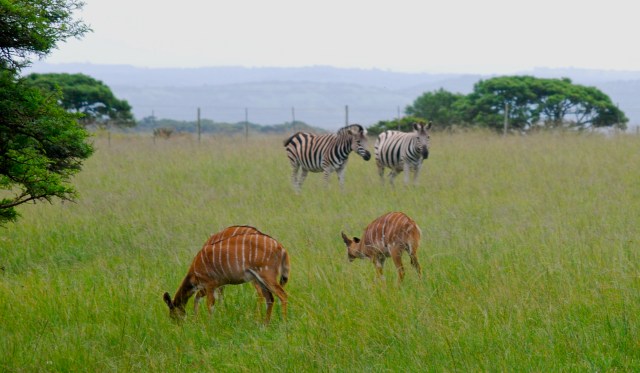
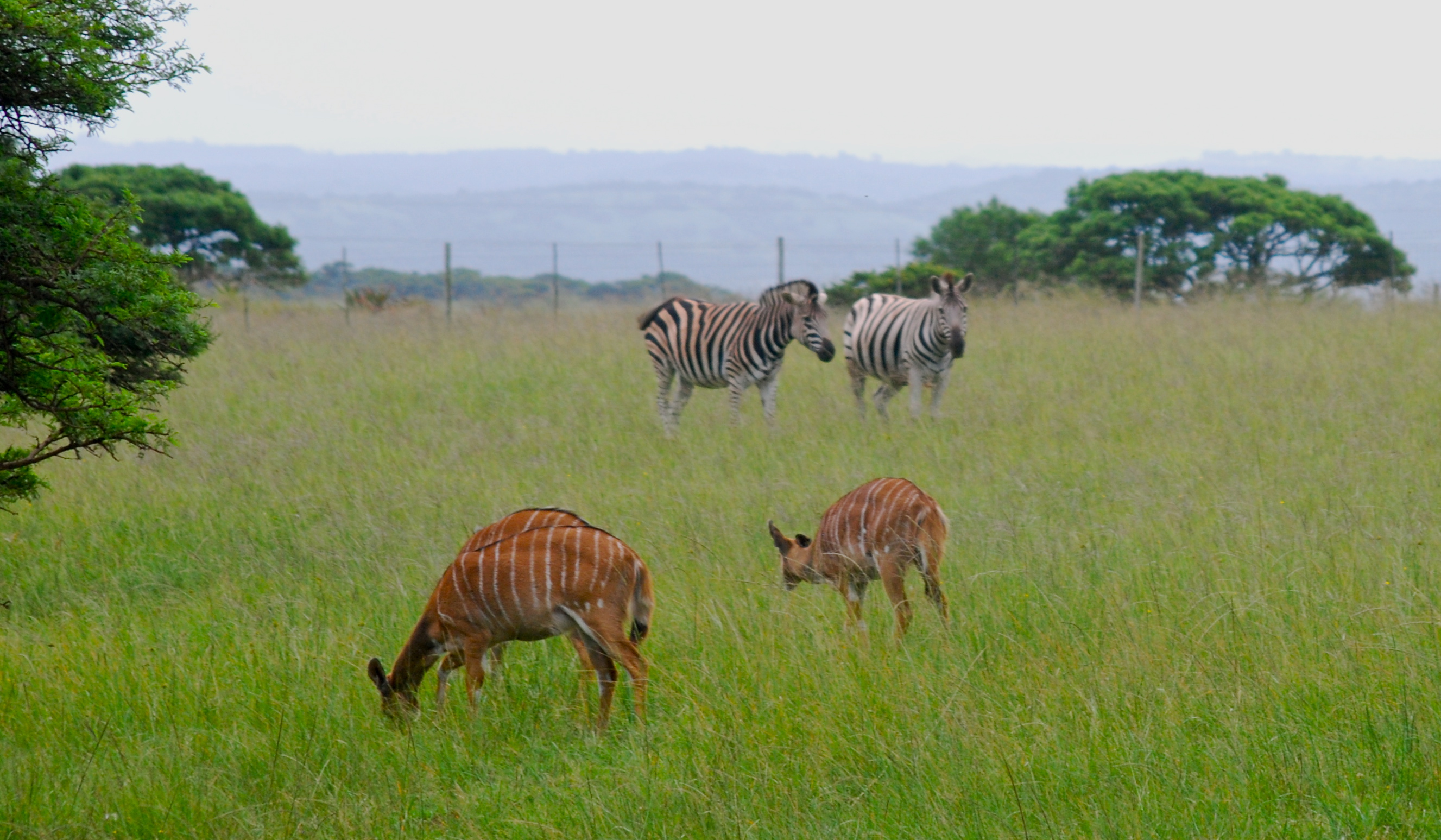
Zebra and Nyala near the edge of the Inkwenkwezi Game Reserve, South Africa. ©Jean Janssen

Zebra and Nyala near the edge of the Inkwenkwezi Game Reserve, South Africa.
©Jean Janssen

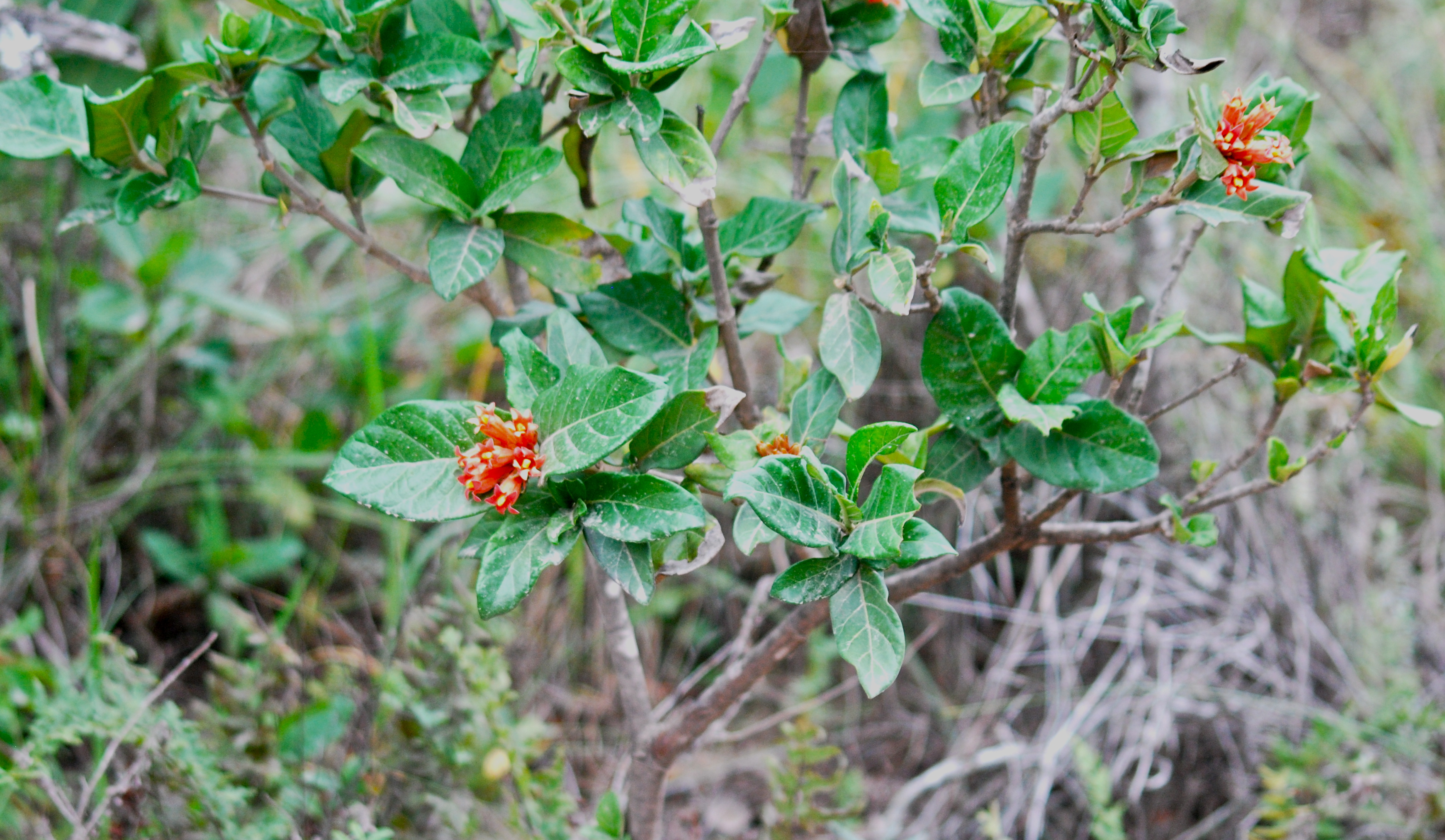
We saw zebra and nyalas soon after boarding, but then passed through thick brush where a path was carved out for the vehicle and listened to the Christmas beetles.  They spend 15 years underground and then come out from November-January (hence the name).  The sound was quite loud and just added to the authentic feel of the experience.  We felt the paper-like bark of the corkwood tree and saw the wild pomegranate that Zulu men used to make bracelets for their wives.  I learned that when in the wild, a human could eat what a monkey eats, but never to follow the example of a bird or baboon.
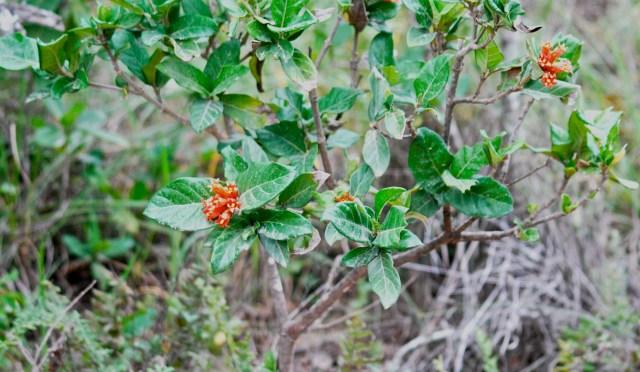
Zulus use these pomegranate flowers to make bracelets for their wives.  Inkwenkwezi Game Reserve, South Africa. ©Jean Janssen

Zulus use these pomegranate flowers to make bracelets for their wives. Inkwenkwezi Game Reserve, South Africa.
©Jean Janssen

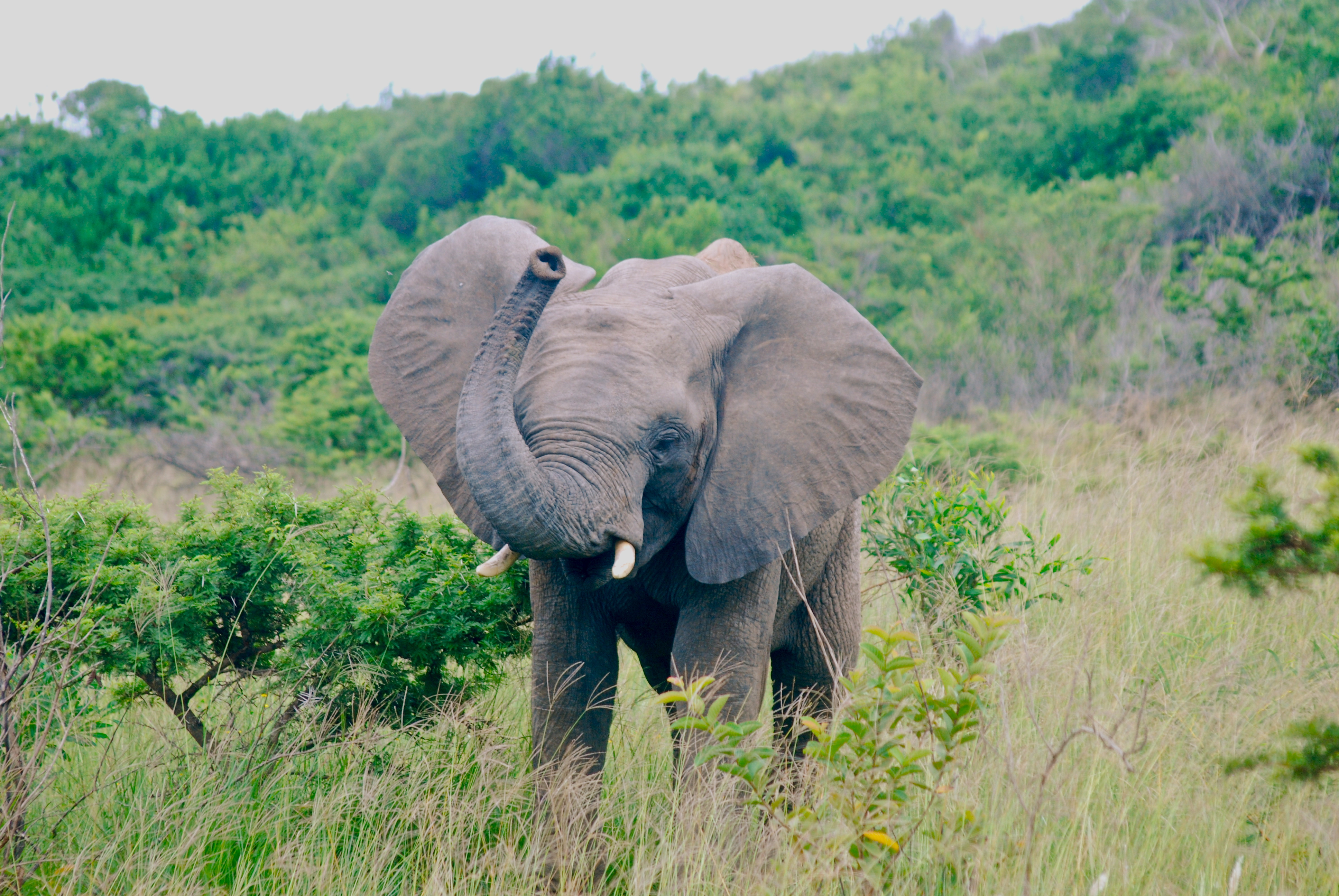
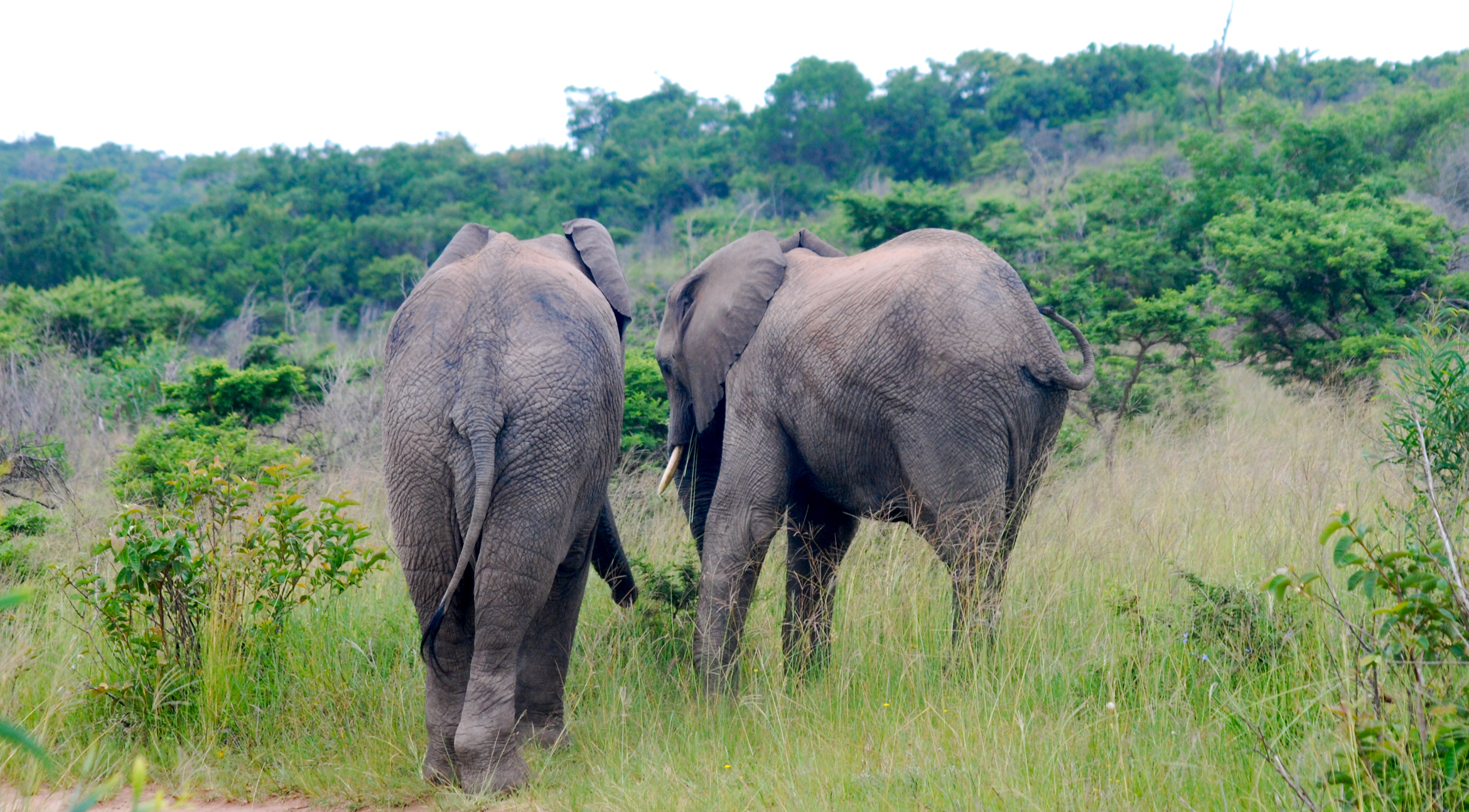
As the brush gave way to a clearing, we were greeted by a pair of relatively young African elephants, one male and one female.  They are identifiable as African elephants by their large ears.  (I know you were thinking I was going to say because I was in Africa.  Got ya.)  They have lots of veins behind those large ears that they seemed to be almost constantly flapping.  The movement stimulates circulation and keeps them cool.  Did you know that elephants are right or left “handed”?  You can tell by the wear on the male’s tusks which one he is.
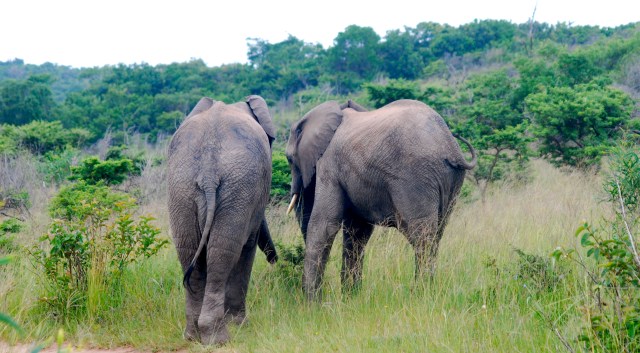
African elephants, Inkwenkwezi Game Reserve, South Africa. ©Jean Janssen

African elephants, Inkwenkwezi Game Reserve, South Africa.
©Jean Janssen

Elephants have six sets of teeth.  When they lose their last set and can no longer chew, they search out the bones of other elephants hoping to draw out the calcium as some form of nutrition.  This is the reason for the phenomenon of the elephant graveyard.  I was learning a lot.  We were encouraged to ask lots of questions and I did.

Enjoying the grasses, Inkwenkwezi Game Reserve, South Africa. ©Jean Janssen

Enjoying the grasses, Inkwenkwezi Game Reserve, South Africa.
©Jean Janssen

Why do elephants stick their trunks in each other’s mouths?  Actually they can learn a lot of information that way.  They find out where the other found food or water.  They also have supportive families.  Our guide told us of a situation that he witnessed where a small female couldn’t get the water out of a particular spot.  The other elephants kept filling her mouth with water until she was full.  Then the older elephants drank for themselves.  Beautiful.
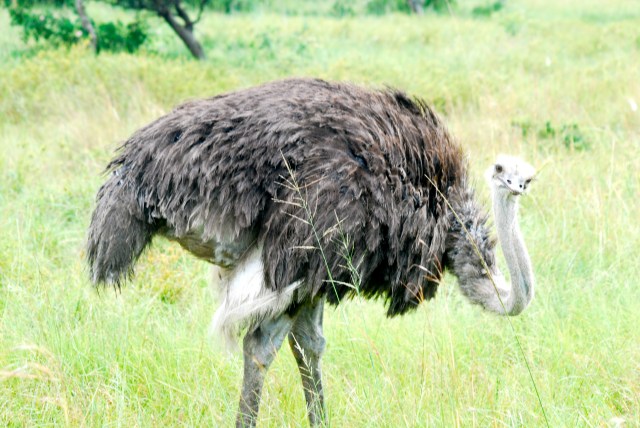
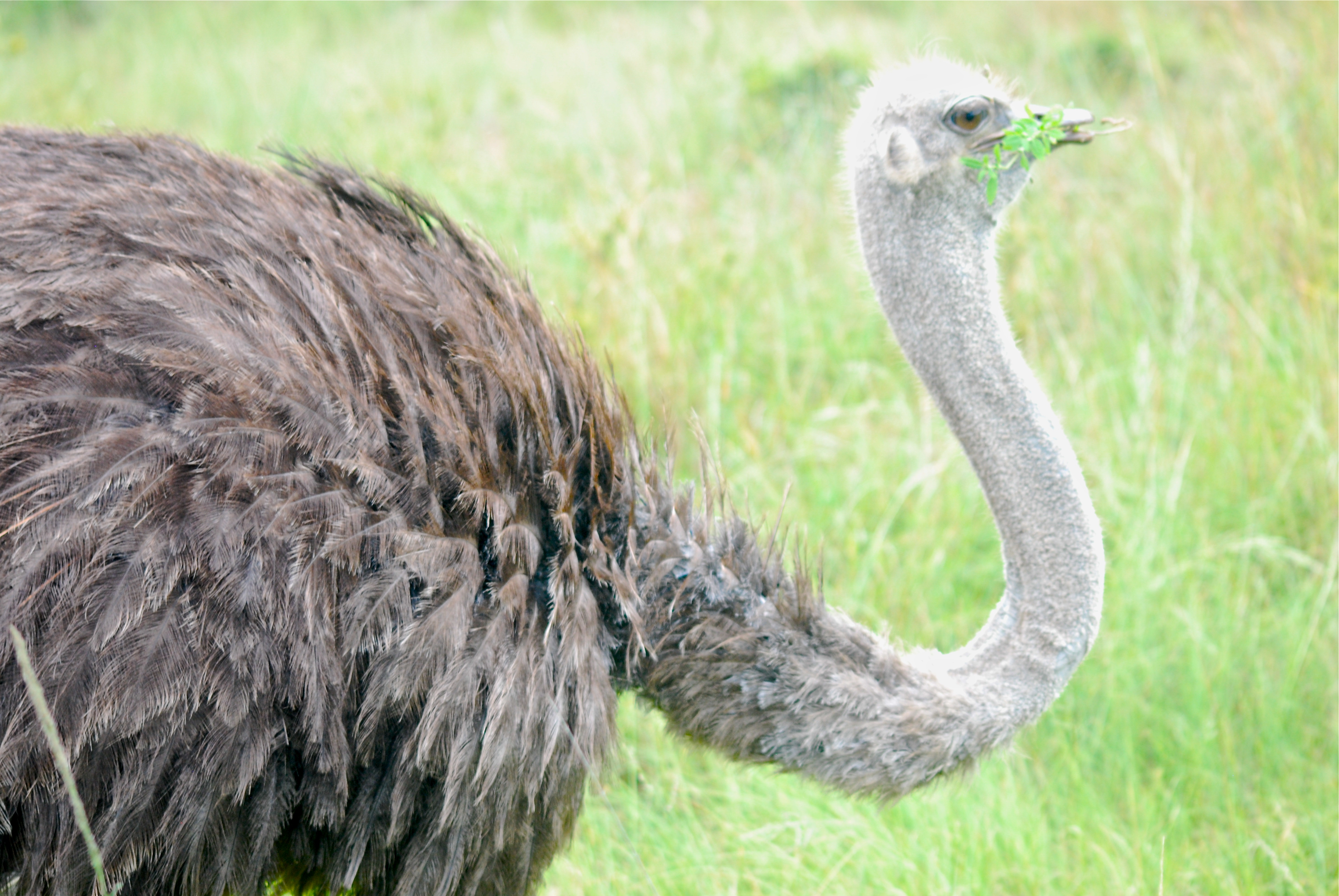
African guard dog?  The ostrich, Inkwenkwezi Game Reserve, South Africa. ©Jean Janssen

African guard dog? The ostrich, Inkwenkwezi Game Reserve, South Africa.
©Jean Janssen

Next we came across some guard dogs, I mean ostrich. (I am seeing if you are actually paying attention and reading all this.)  The female ostrich is gray as it sits on the eggs during the day and the color camoflauges her to appear as an anthill.  The male is black and sits on the nest at night.  One ostrich got very close to our vehicle.  So close that my camera shutter wouldn’t work with it so close to my zoom lens.  When I put the camera down she came closer until her face was about a foot from my face.  That is when I pulled my head back.  She really posed for us.

This is the point in the story that Natasha has to make a confession.  I had failed to fully charge my camera battery.  (Kind of like failing to check your air level on an underwater dive, but my frequent readers know I have already done that.)  I was thinking of fudging and not giving up the information, but the quality and quantity of my pictures goes down when we were armed only with Boris’ blackberry with its dated camera.  (There is a reason this company is predicted to go under in 2014.)  I could have been devastated, but instead I decided to just enjoy what I was seeing and while I will not have the opportunity again to get those pictures again, the excitement of the moment was worth it all.
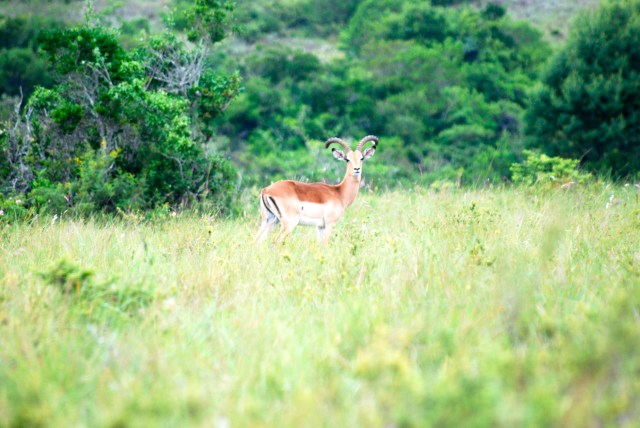
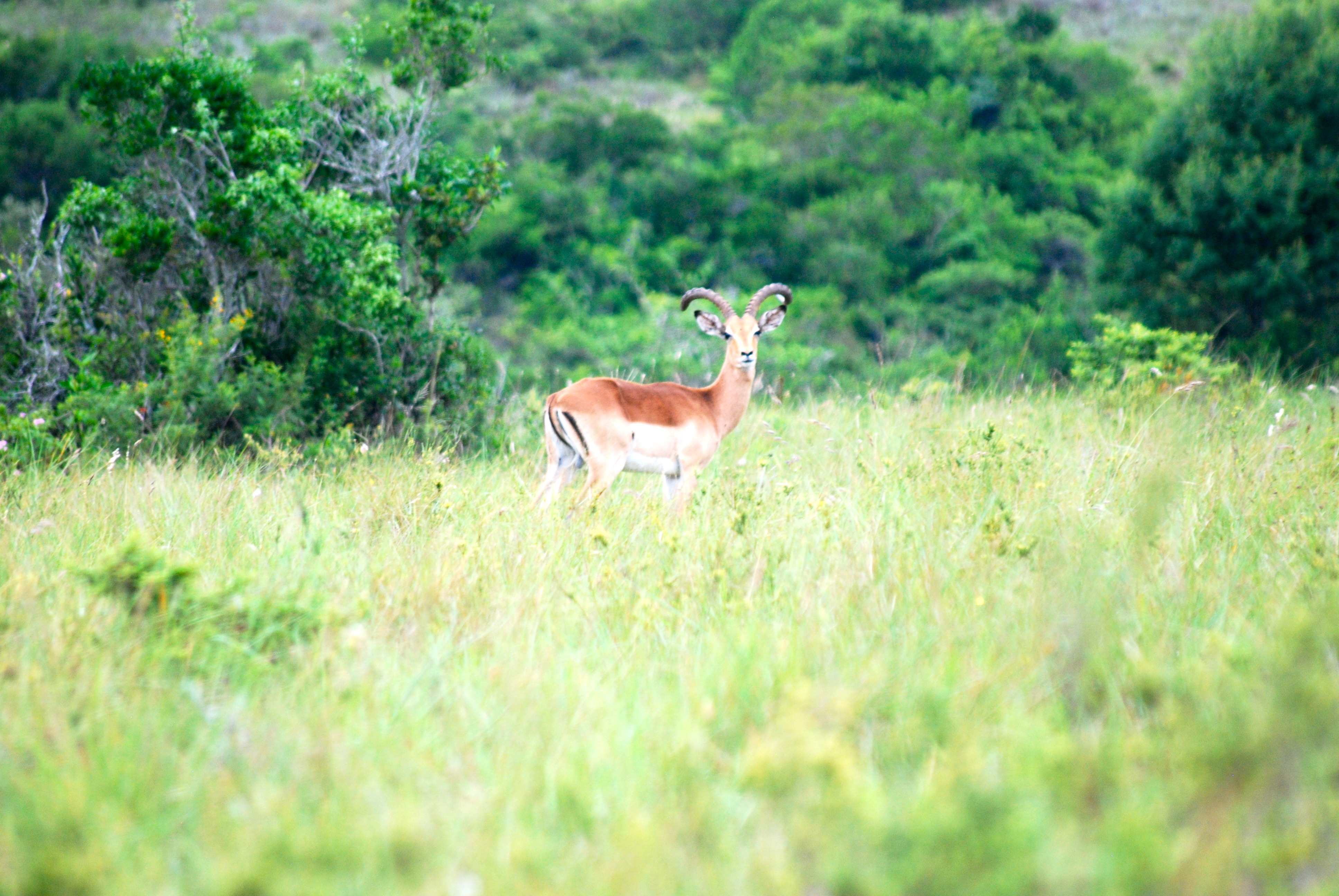
Got this great shot of an impala before the battery went out.  Inkwenkwezi Game Reserve, South Africa. ©Jean Janssen

Got this great shot of an impala before the battery went out. Inkwenkwezi Game Reserve, South Africa.
©Jean Janssen

We saw wildebeests, the females much smaller than I would have imagined.  We saw a family of rhinos with the small male baby who just stared at us.  We saw herds of giraffes, some taller than I have ever seen.  We saw them gallop across the plain and eat from the tall trees.  They are slow animals, so they only sleep for two hours at a time to protect themselves and often live in herds where all do not sleep at the same time.

We saw more herds of Burchell zebra, distinguished by the brown stripe between the darker stripes and the continuing striping down the legs.  (This is one of three types of zebra.)   The distinctive shadow brown stripe diminishes the farther north these zebra are found. Also, while I pronounce the name of these animals as zeebras.  Our guide, white but who spoke fluent Xhosa to all the white and black staff, pronounced it zaybras.  You wanted to ask another question just to get him to say it again.

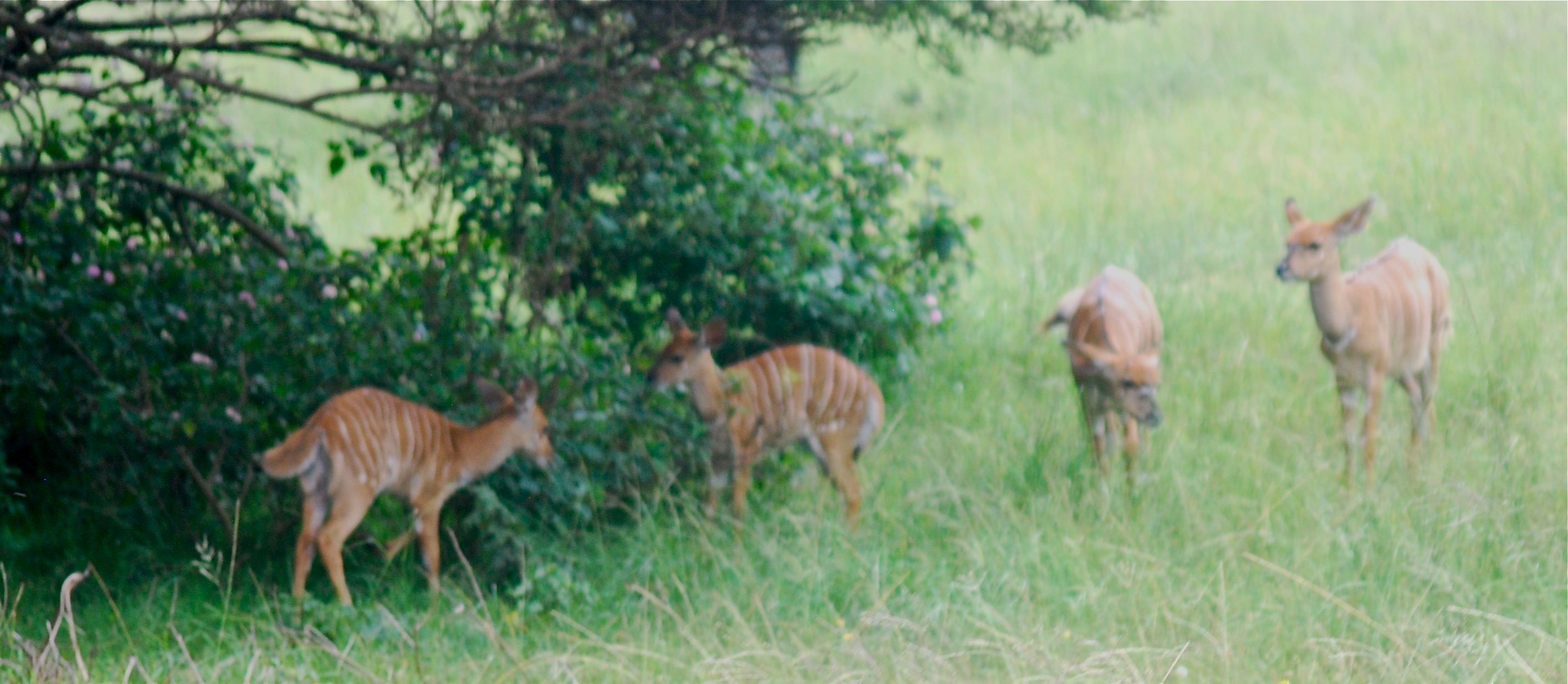
Nyala, Inkwenkwezi Game Reserve, South Africa. ©Jean Janssen

Nyala, Inkwenkwezi Game Reserve, South Africa.
©Jean Janssen

We saw lots of antelope-nyala, impala, and the large eland.  The name and mascot for the South African rugby team is an antelope, the springbok.  In spite of the date of conception, the nyala synchronize the birth of their babies so they can all be born at the same time.  The females then establish a nursery and all the females take care of all the babies.  We saw a breeding group of nyala with one male and up to 45 females.

We saw a family of warthogs, two adults and four babies running through the brush as the “foreigners” approached.  In case of illness, most is left to nature.  However, if one of the large expensive animals becomes ill they bring in a vet.  Although the breeds thrive in the reserve, they bring in new animals every five years to prevent inbreeding.

Like the animals, the plants have self defense mechanisms.  We saw an acacia tree that grows thorns when over-harvested, the worse the condition, the larger the thorns grow.  This tree also has a sap nicknamed African Chewing Gum.  It was honey-colored and shiny.  It tried it; it had no flavor.
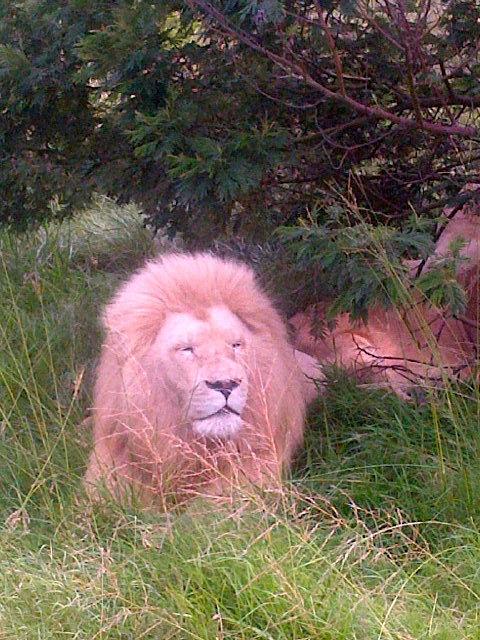
White male lion at Inkwenkwezi Private Game Reserve, Eastern Cape, South Africa. ©Jean Janssen
White male lion at Inkwenkwezi Private Game Reserve, Eastern Cape, South Africa.
©Jean Janssen

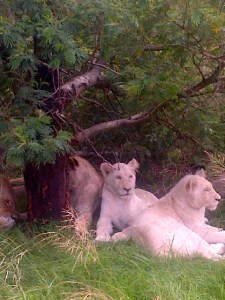
Female White Lions, Inkwenkwezi Private Game Reserve, South Africa. ©Jean Janssen

Female White Lions, Inkwenkwezi Private Game Reserve, South Africa.
©Jean Janssen

About 2/3 into the ride, we stopped for refreshment and then went into the lion enclosure.  Here we saw the beautiful white lion, one male and two females, three of the only 300 that still exist.  The lions appeared regal and sat posed for us (except for one of the brown females that kept rolling on her back and clearly wanted to play); we were very close-I was less than 10 feet from the pride of seven lions including both white and brown lions.

This is the only time the experience did not seem quite authentic, since the lions were in an enclosure and the evidence that they were fed rather than hunted was right before us.  However, we were also in the enclosure, an enclosure that had two gates and guard box where pistols and ammunition was stored.   At the moment when we went in and the gatekeeper handed the guide the small first aid kit, it didn’t register that the bag actually contained a gun for protection.
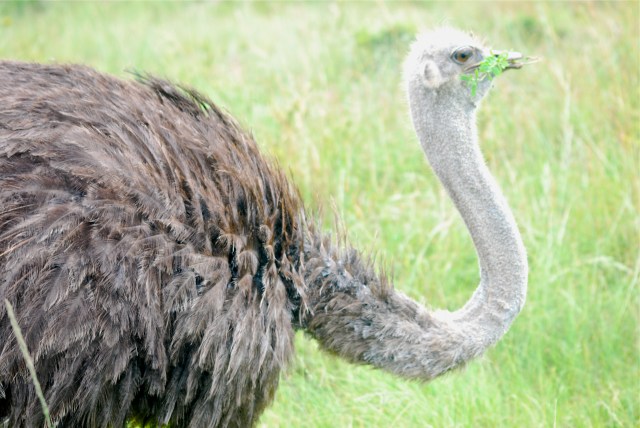
Enjoying the grasses.  Inkwenkwezi Game Reserve, South Africa. ©Jean Janssen

Enjoying the grasses. Inkwenkwezi Game Reserve, South Africa.
©Jean Janssen

The trip out and back was rough.  These are not roads, but pathways.  Sometimes it was rock and sometimes it was mud.  It was always uneven and full of ruts.  Our guide called the bumpy ride, an African massage.  I think one of the guests put it best when he said “hard on the hemorrhoids”.  Would I do it again?  Yes, in a second.  For Rocky, who loves and knows so much about these animals, this would be paradise.  I loved the whole experience. From the green rolling hills and valleys to the sky that had cleared to a crystal blue highlighted with the whitest clouds.  There is something magical in seeing a giraffe standing on a hilltop silhouetted against the sky or a three-month-old baby zebra jumping over a large rock to run to his mother.
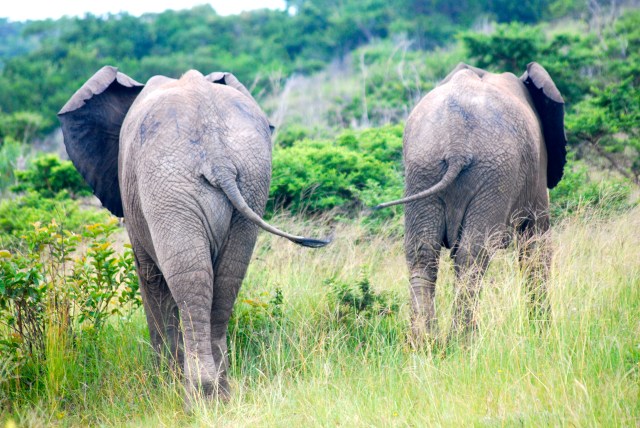
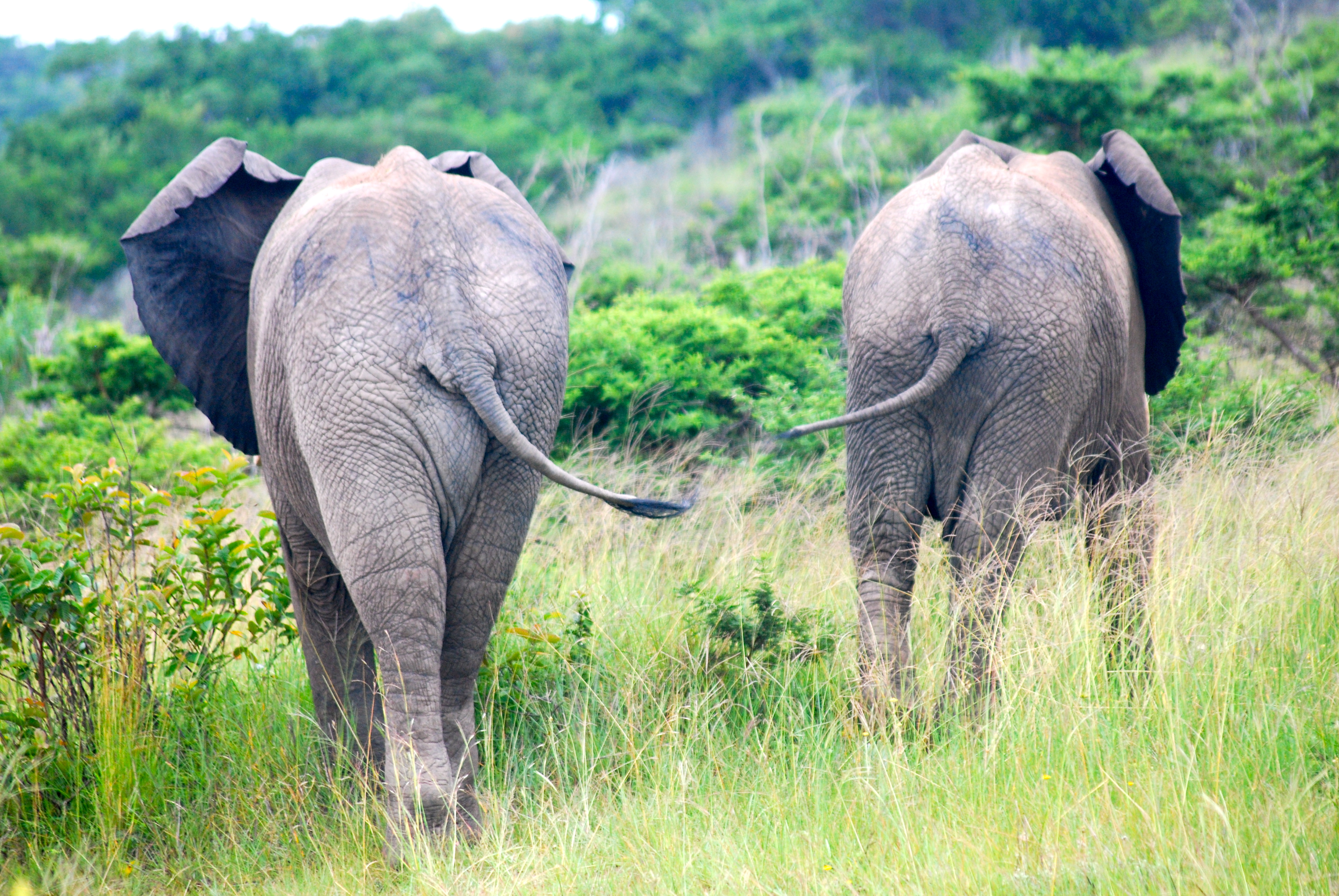
African elephants, Inkwenkwezi Game Reserve, South Africa.  I think this is my favorite photo of them.  Note the tails. ©Jean Janssen

African elephants, Inkwenkwezi Game Reserve, South Africa. I think this is my favorite photo of them. Note the tails.
©Jean Janssen

Those that had been on other game rides or reserve rides said they saw more at Inkwenkwezi in three hours than in days at other locations.  South African President Zuma’s daughter recently got married at Inkwenkwezi with the elephants as the backdrop to her ceremony.  I think we choose well for today’s outing.  (Rocky, I’ll come back with you.  Remind me to charge the camera battery.)

Posted in cruises, international, Uncategorized | Tagged , , , , , , , , , , | 3 Comments

Cape of Good Hope, Africa

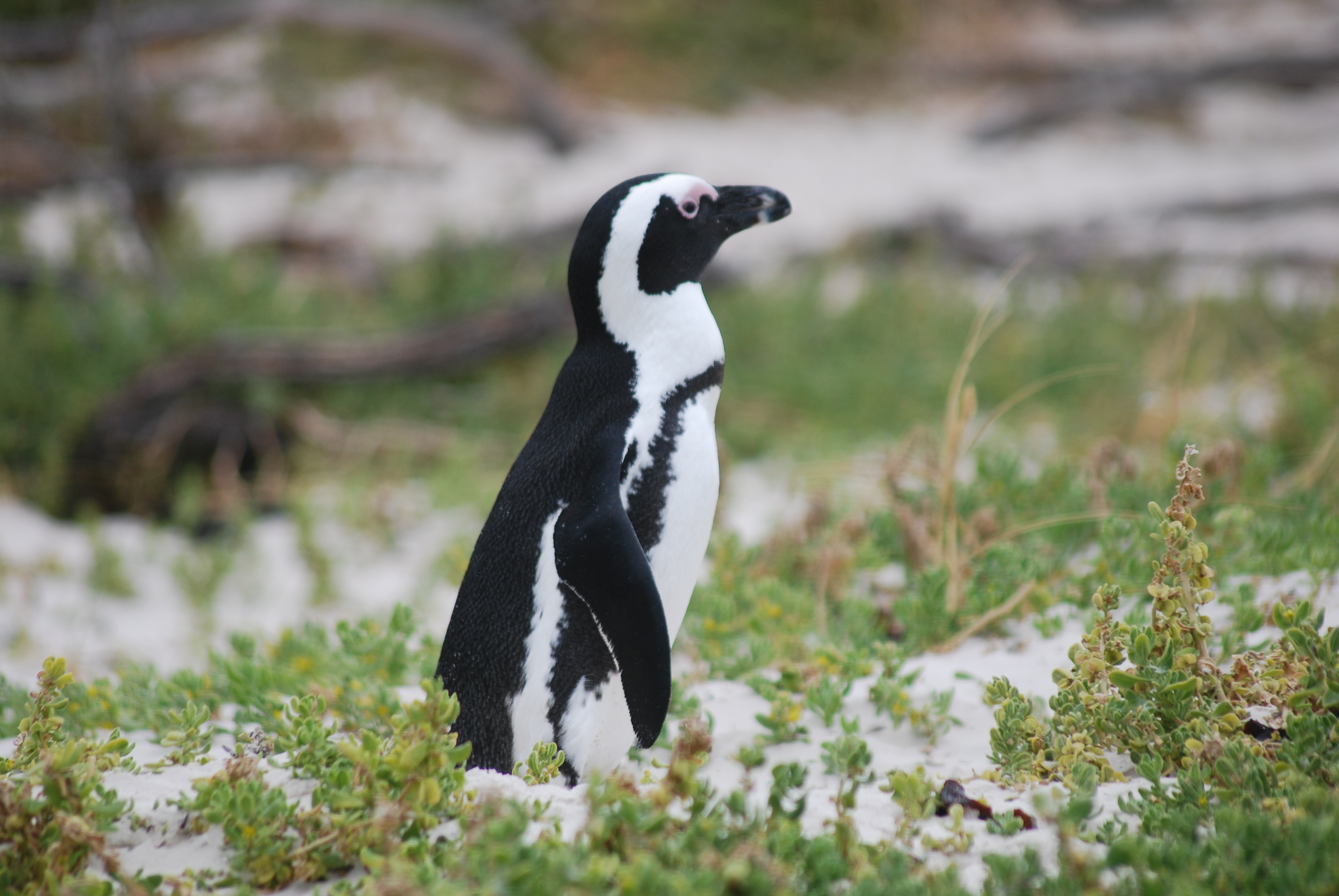
African penguin near the Cape of Good Hope, South Africa ©Jean Janssen

African penguin near the Cape of Good Hope, South Africa
©Jean Janssen

Our second full day in Cape Town we were able to board the ship.  Our hotel shuttle driver took us directly to the pier gate where a porter took our bags into a small storage building where we did a brief check-in before going to the registration desk on the ship.  We were able to get on at 1 pm and have lunch, although the rooms were not ready until 2 pm.  I was pleasantly surprised by our stateroom, having feared that like the rest of the ship it would be a miniature version of Silver Seas Spirit, the newer larger ship we took to Morocco and loved.  The room was nice and we once again had a walk-in closet.  The bathroom is much smaller, to be expected on a smaller ship.  Since my bag was in the room, I started the unpacking; Boris’ bag arrived during the process.

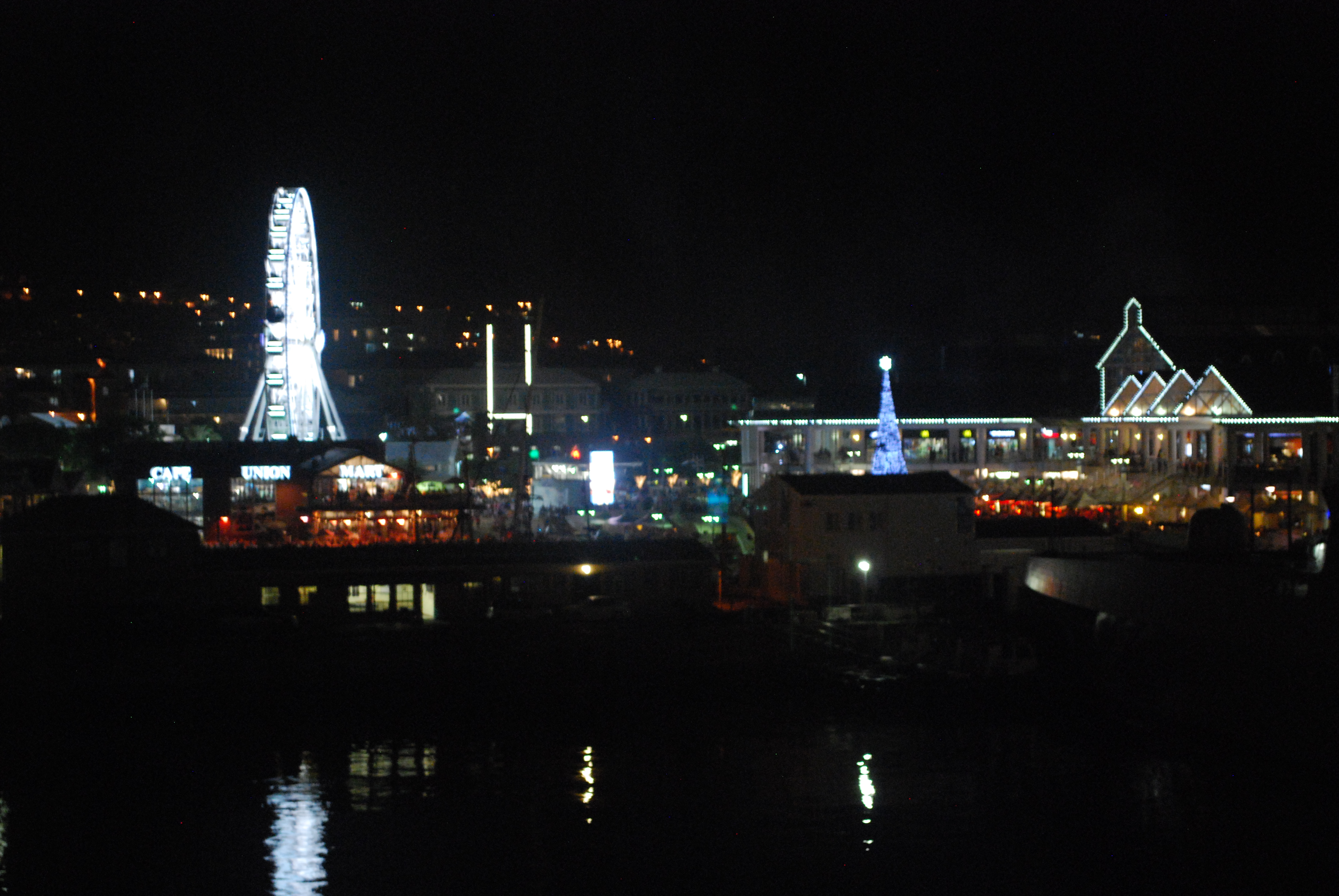
Victoria and Alfred Waterfront at night as seen from our suite balcony.  Cape Town, South Africa. ©Jean Janssen

Victoria and Alfred Waterfront at night as seen from our suite balcony. Cape Town, South Africa.
©Jean Janssen

Dinner in the restaurant that evening was ho hum and the service spotty.  Having visited the Victoria and Albert Waterfront the day before, I didn’t get back off the ship.  Boris has the start of a cold, so he went ashore to get some medicine.  We enjoyed our lovely view of the harbor and Table Mountain from our balcony; glad we had visited the day before when the top of the mountain was not covered in clouds.  We are still not on a regular sleep schedule and I am anxious to get in line with the South African clock.

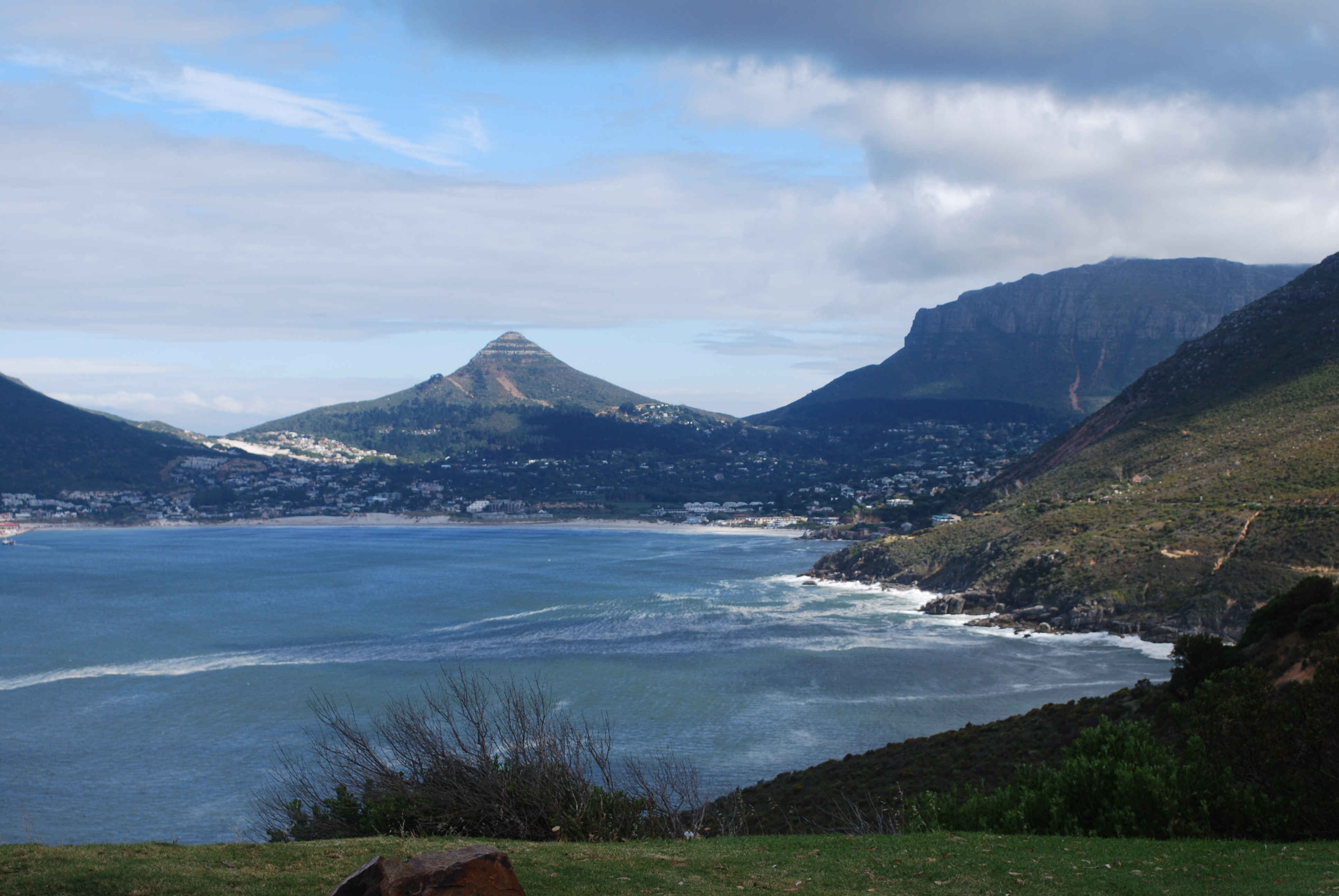
Chapman's Bay, South Africa ©Jean Janssen

Chapman’s Bay, South Africa
©Jean Janssen

After our overnight on the ship in port, we have an excursion before our ship leaves Cape Town at 5 pm.  Our peninsula tour will take us to the Cape of Good Hope, to see the African penguins, and to Cape Town’s beautiful botanical gardens.  We started early and discovered that there were only 13 on tour, even though we had a large bus.  We headed back to Cable Bay, this time in the opposite direction of our hop on/hop off tour bus.  There were people walking dogs on the beach or a few in exercise clothes on the boardwalk, but otherwise the beach was deserted.  Farther down the room, a 30k race was taking place.  We saw runners heading toward us and cyclists headed in the same direction as our bus.

The Sentinel at Chapman's Bay, South Africa.  The area below is called the dugeons by surfers.  The Bay holds the record for surfers, 103 on one wave. ©Jean Janssen

The Sentinel at Chapman’s Bay, South Africa. The area below is called the dugeons by surfers. The Bay holds the record for surfers, 103 on one wave.
©Jean Janssen

Just past Chapman’s Bay the road got tight and we drove very close to the wonderful rock formations.  This stretch of road had been closed for a time while protective measures were added to prevent rocks from crashing into motorists (after a successful lawsuit in which just that had happened.).  We stopped at a lookout point and we able to photograph the bay and the rock formation on one end, the Sentinel.  Just below is a famous surfing spot called the Dungeons.  Name says it all.  We passed Hout Bay and Kommetjie, a Dutch community and the only part of South Africa where the current ruling party is not the majority.

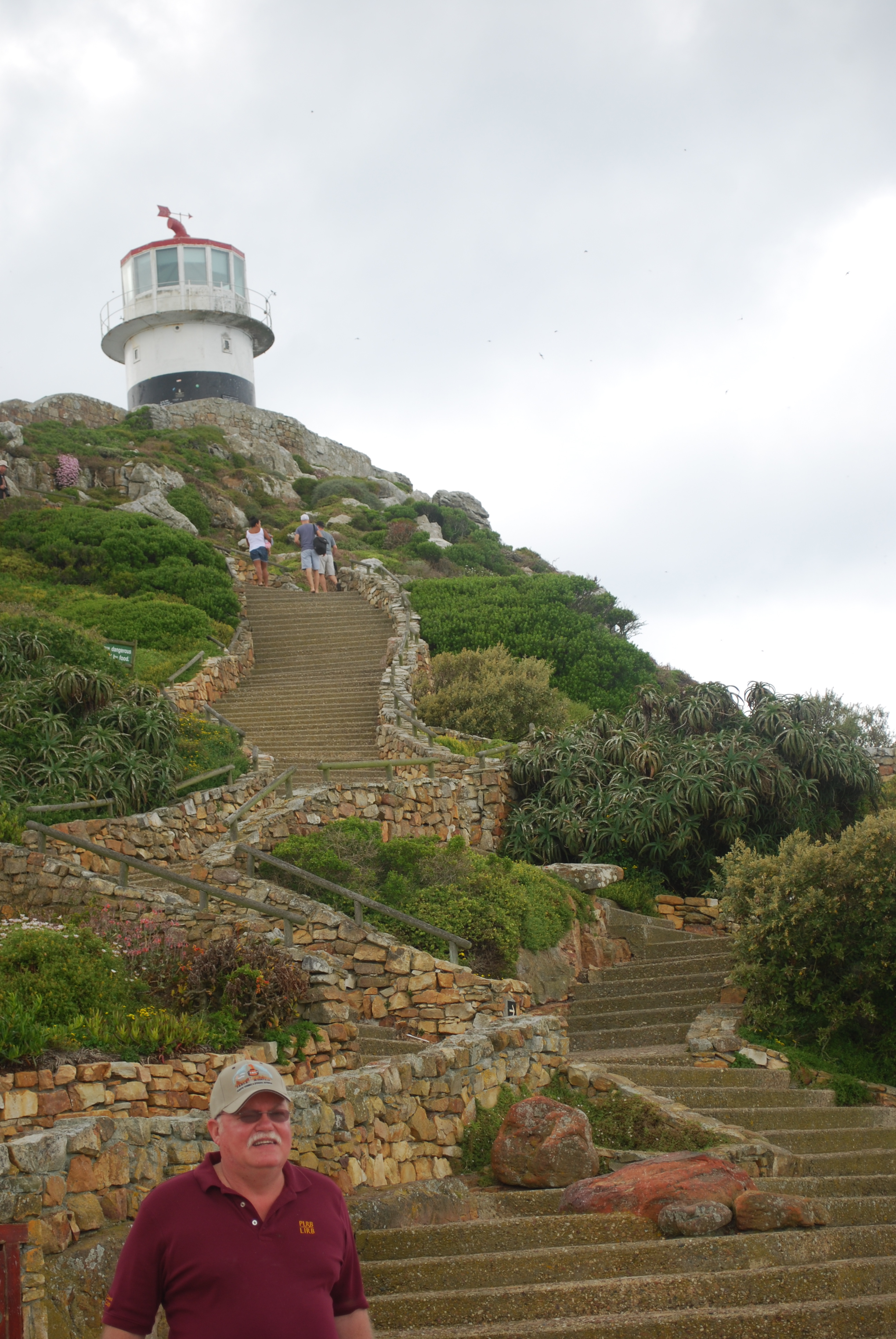
Natasha at Cape Point, the Cape of Good Hope, Africa where the Atlantic and Indian oceans meet.  The southern most point in Africa.

Natasha at Cape Point, South Africa where the Atlantic and Indian oceans meet. The southern most point in Africa.

We finally reached the Cape of Good Hope National Park.  All the plant life here is native to the area and the wild grasses, many of which flowered, were quite beautiful.  We drove almost to the top of the rock formation and then took the funicular up to the lighthouse.  There was a lovely view of the white sandy beach and the water where the Atlantic and Indian Oceans meet.  We drove down to the shoreline to the Cape of Good Hope where our guide showed us the dry kelp that is now being harvested for a variety of uses.  We saw kelp all along the shoreline on the Cape and back toward Cape Town.  We also had our photo op by the sign marketing the southern most point of the African continent.  Boris and I had our picture taken by the sign in Afrikaans; there is also one in English.

Native Grasses, South Africa. ©Jean Janssen

Native Grasses, South Africa.
©Jean Janssen

Our way back to Cape Town was along the coastline of the Indian Ocean.  We had come out along the Atlantic.  The closest to the National Park had a large ostrich farm.  These birds have lean meat that has become more popular and their feathers are used in costumes for Carnival.  In another community, Scarborough, all the residents landscaped their yards with native flowering grasses; it was lovely.  Many of the communities along this coastal highway are home to individuals who serve in the South African Navy.

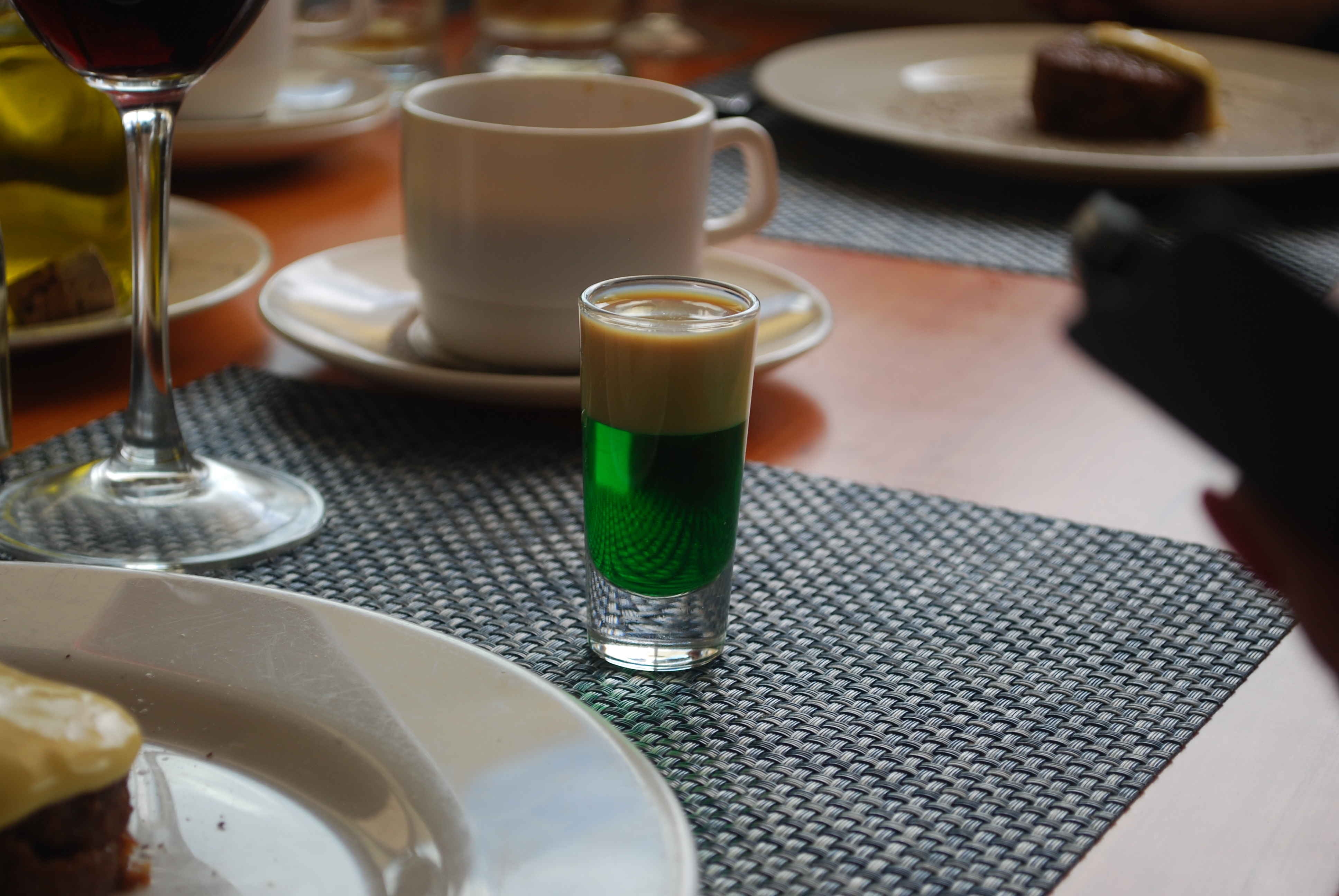
National drink named for the rugby team, Sprinkbok (an antelope), South Africa. ©Jean Janssen

The springbokkie (shot), the national drink of South Africa named for the rugby team, the Sprinkbok (an antelope)
©Jean Janssen

Our next stop was for lunch at a local open-air restaurant next to a very popular public beach.  It was a Sunday during the summer holidays and families had set up tents and were enjoying the water and the sun.  We had a fabulous meal of fried sea bass and calamari.  We also got to know some of our fellow tour participants.  There was a young couple from the Locata, Switzerland (the Italian part of the country); an 86-year-old woman from Vancouver whose accent betrayed her years growing up in Montreal; and an adorable couple from Denmark whose company we really came to enjoy.  At the other table was another Swiss couple, but from Geneva where French is the primary language; a couple from Nice, France where the wife spoke very little English and the husband none; and an annoying couple from New York who kept trying to pay for souvenirs with American dollars after repeatedly being told that only local currency was accepted.

We were definitely the “fun table” and the guide came over to us when it was time to try the local drink, a springbokkie (almost like the name of the SA rugby team).  Our 86-year-old, enjoying the trip as a birthday present to herself, was our guinea pig.  She drank it as a shot.  See, I told you we were the fun table.

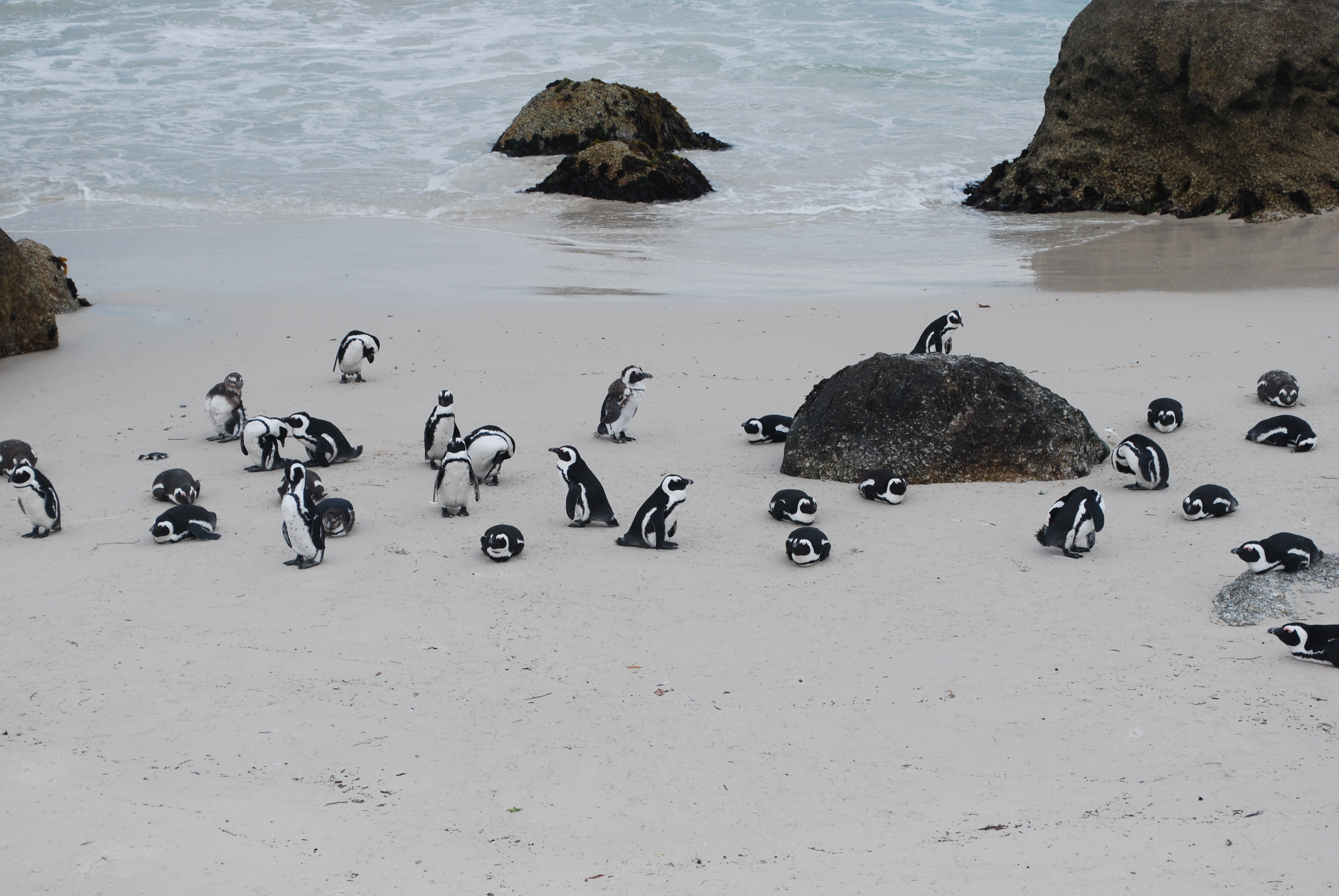
African Penguins, South Africa ©Jean Janssen

African Penguins, South Africa
©Jean Janssen

From the restaurant, it was a short walk over to the National Park that is home to the African Penguins, formerly called jackass penguins for the sound they make.  Our friend Angela from Birmingham, England had been bitten by a penguin here and it took a full year for her to recover.  One young child, observing some penguin activity asked her parents if the penguins were mating.  Upon receiving a positive reply, she announced that she “didn’t think they should be doing that on Sunday.”  The penguins were not the only entertainment.  While smaller than the penguin colonies were visited in South America, it was no less exciting.

I loved these pineapple flowers that we saw at the Kirstenbosch Gardens in Cape Town, South Africa. ©Jean Janssen

I loved these pineapple flowers that we saw at the Kirstenbosch Gardens in Cape Town, South Africa.
©Jean Janssen

The wind had grown quite strong; as we returned to Cape Town for our final stop at the botanical gardens, it began to rain.  I think the guide expected most of us to say we were not interested under the conditions, but most of us went in anyway and were lucky as the rain stopped and we were able to enjoy the green gardens of Kirstenbosch.  I recommend a visit and only wish I had a blanket, picnic basket, and a good book.  I could have stayed for hours.  There was also to be a concert there that evening and given the long lines, it appeared people were not discouraged by the bad weather.  Kirstenbosch reminded me of the Meijer Gardens in Grand Rapids, Michigan.

DSC_0547

We were pulled from the dock in the Victoria and Alfred Waterfront by two tugboats.
©Jean Janssen

When we reached the ship, we found out that our entire tour group had missed the muster drill.  We will have to do it tomorrow on the sea day.  We decided to view the sail away from our room.  There were two tugboats pulling our ship away from the pier.  It was quite exciting seeing the ship maneuver out of the relatively small harbor.  There were quite a few officers on the overhang pilot station, including one woman in blue.  When we finally got out of the harbor and I saw her board the pilot boat, I realized she was the port pilot.  All our ship’s officers had been dressed in white.

African penguins on the beach near Cape Town, South Africa. ©Jean Janssen

African penguins on the beach near Cape Town, South Africa.
©Jean Janss

After we cleared the harbor, I quickly got into the shower so I could be ready for our dinner at La Terrazza, the Italian restaurant on board.  I could barely stay standing, the storm that we had seen coming had made the sea rough.  It was so bad that after we got to the restaurant, Boris immediately switched sides of the table so he didn’t have to see us battling the high waves.  Before the first course was even served, he excused himself and said he just didn’t think he could eat.  By the time I went back to the room, the stewards had lined up seasickness bags along the railings in the hallway.

Tribute statute to Nelson Mandela in Kirstenbosch Gardens, Cape Town, South Africa. ©Jean Janssen

Tribute statute to Nelson Mandela in Kirstenbosch Gardens, Cape Town, South Africa.
©Jean Janssen

We had a horrible night.  It was almost impossible to sleep for any stretch of time, as the sea grew worse.  By morning, I didn’t think I could take it any more and skipped breakfast.  The only place that was reasonably comfortable was lying down in bed.  You couldn’t walk around because you couldn’t stay upright.  Even sitting up, you would begin to feel nauseous.  It was the roughest seas that I had ever experienced and I cursed the day I had ever let Boris talk me into this smaller boat.  It took a full 24 hours before things calmed down and all I did all day was to attend a lecture at 4 pm and our make-up muster drill after that.  Boris had gone to trivia and didn’t make the drill, but fortunately for him they did not take attendance.  What a way to “enjoy” the first sea day.

Boris at the lighthouse at Cape Point, Cape of Good Hope, South Africa. ©Jean Janssen

Boris at the lighthouse at Cape Point, South Africa.
©Jean Janssen

Luckily I was able to stand in the shower to get ready for the formal night.  We skipped the Captain’s Reception (no standing for me) and went straight to dinner.  Best meal we have had on the boat so far-escargot, mushroom soup, and lobster.

We sat at a table next to a couple from North Carolina; their Welch accent was so strong you would never have guessed that they had lived in NC for 47 years.  We enjoyed visiting with them between courses and it was a nice way to close out the evening.  Now we are just hoping for a good night’s sleep, something that has eluded us since our arrival in South Africa.

African penguin, South Africa near the Cape of Good Hope. ©Jean Janssen

African penguin, South Africa near the Cape of Good Hope.
©Jean Janssen

Posted in cruises, international | Tagged , , , , , | Leave a comment

Cape Town, South Africa

DSC_0220

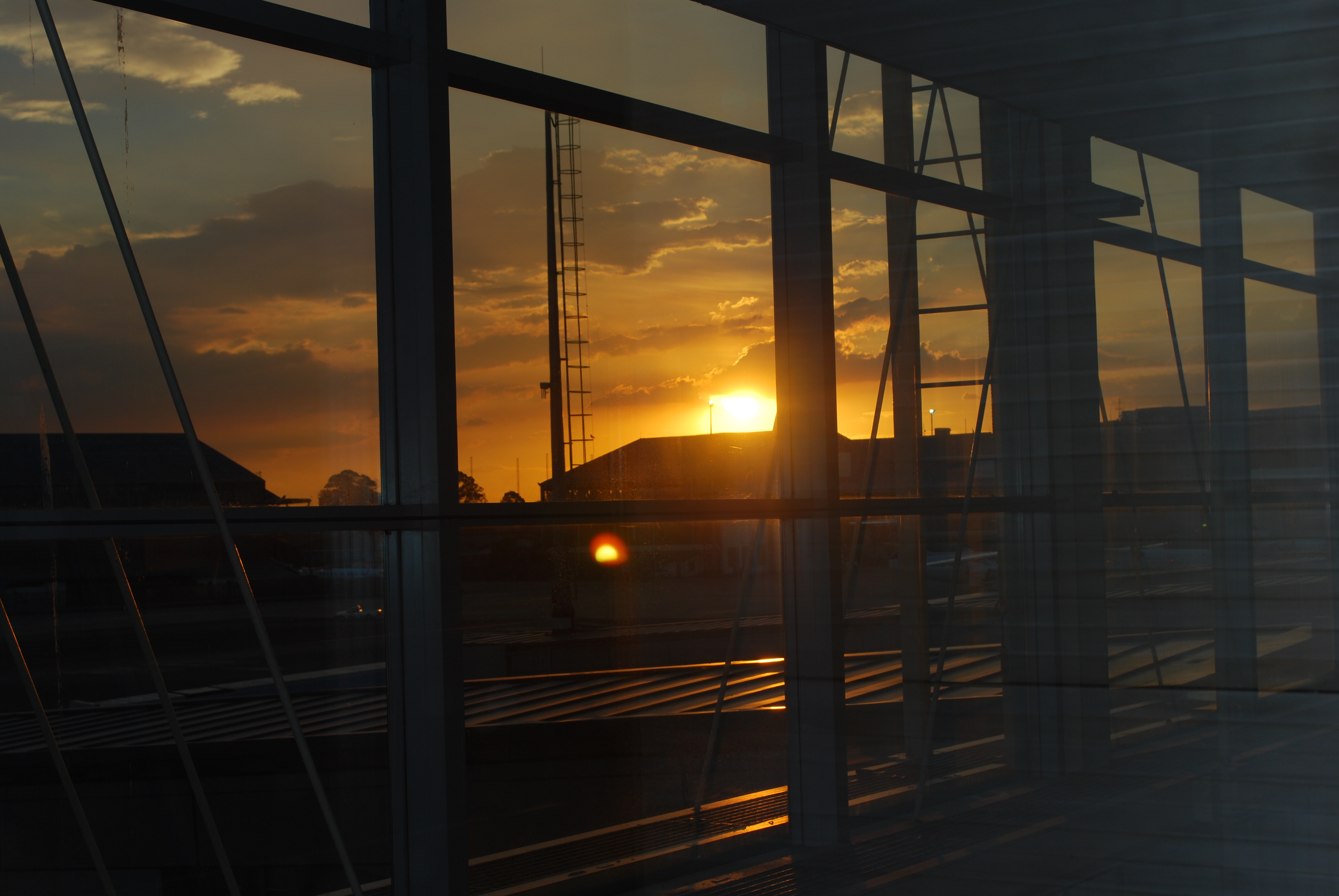
Our first South African sunset. Johannesburg Airport. ©Jean Janssen

Our first South African sunset. Johannesburg Airport.
©Jean Janssen

Well, it certainly took a while to get here,  almost 30 hours door to door.  We are in Cape Town, South Africa.  This is my first trip to this end of the African continent and we get to enjoy summer weather.  In spite of living in a major “travel from” US city we still had to make several stops, including a “no you can not get off the plane” stop in Senegal.  We left the morning of January 1 and arrived at almost 10 p.m. on the night of January 2.  We enjoyed our first South African sunset in the Johannesburg airport before boarding the flight to Cape Town.

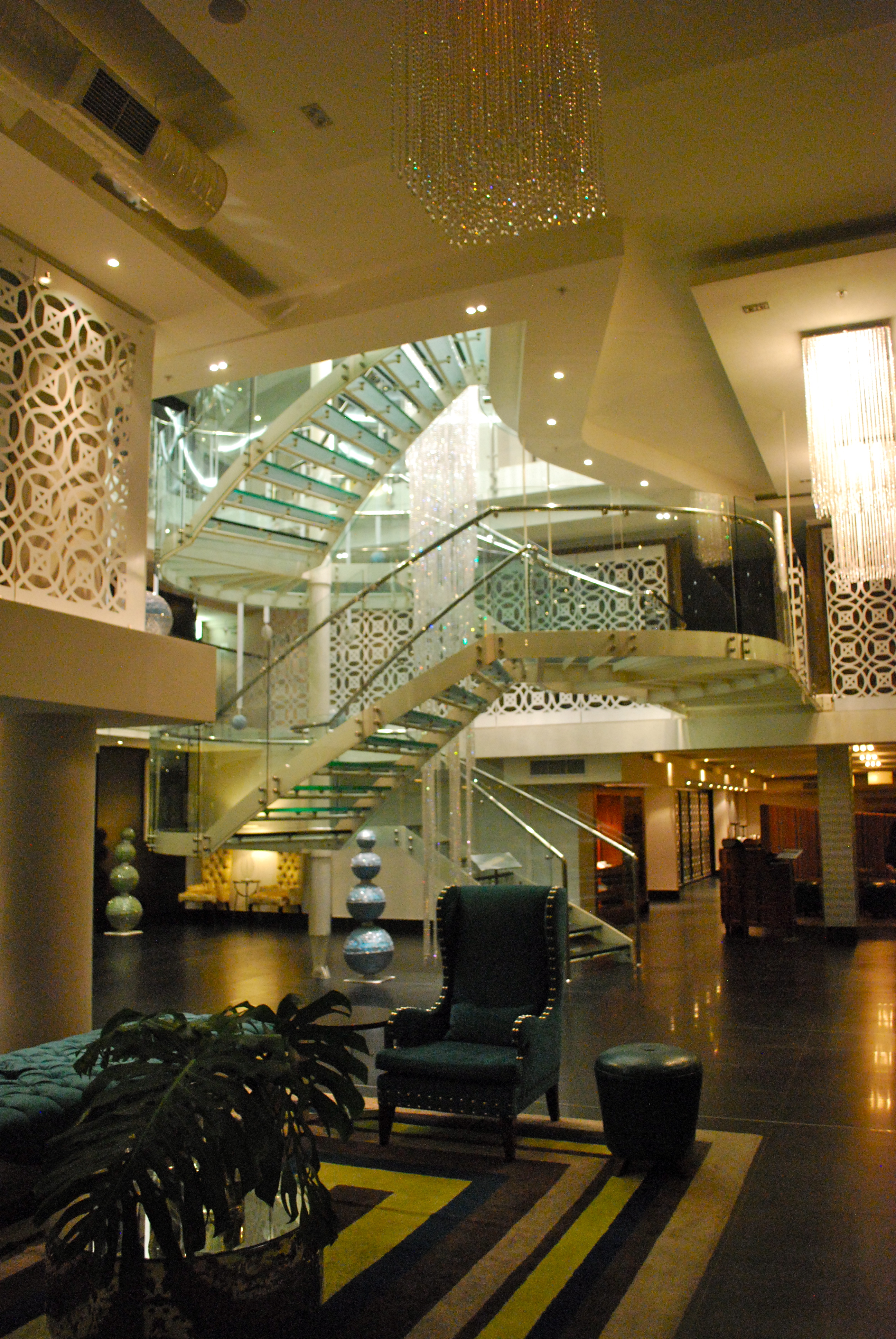
The Doubletree Lobby, Upper Eastside, Cape Town, South Africa. ©Jean Janssen

The Doubletree Lobby, Upper Eastside, Cape Town, South Africa.
©Jean Janssen

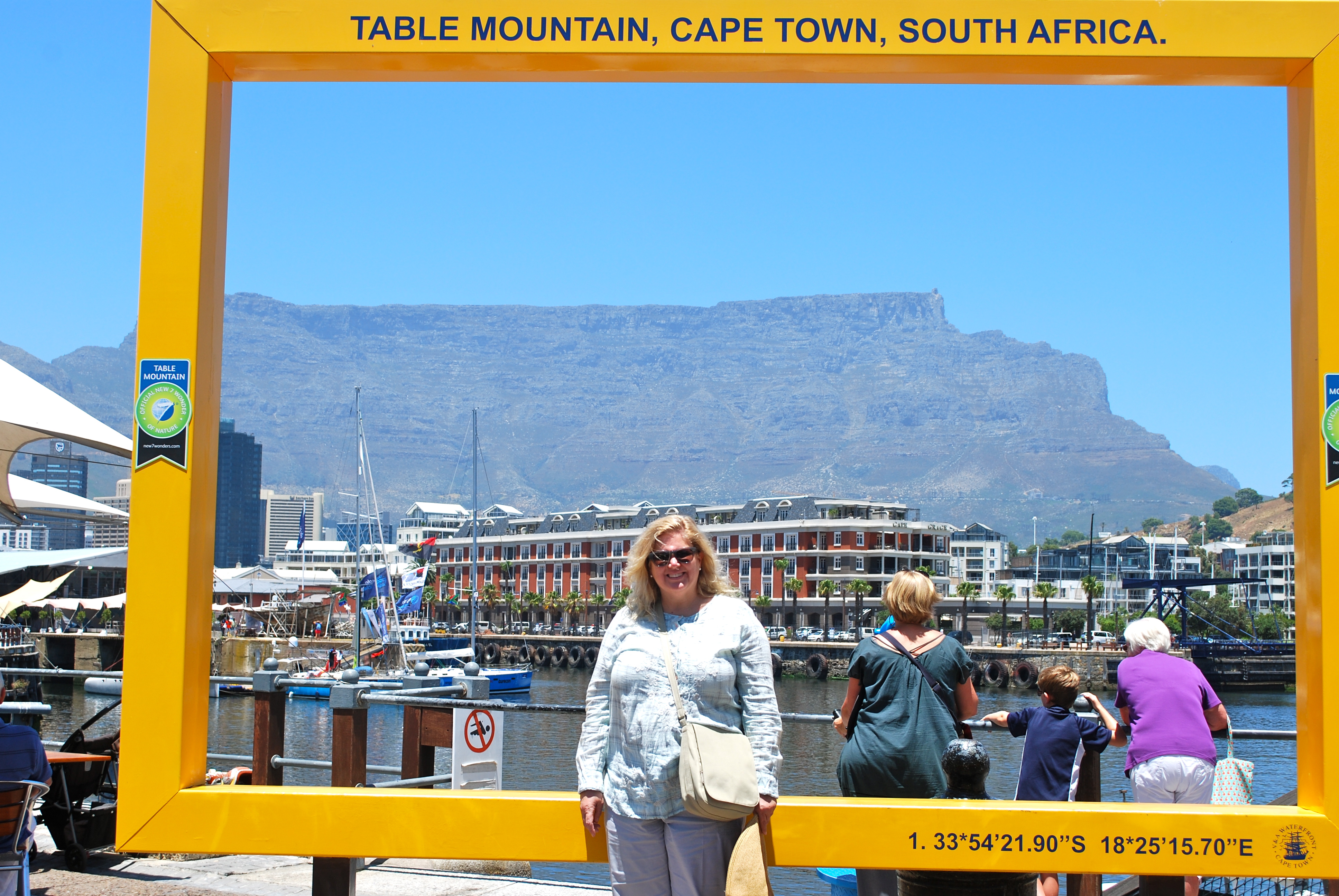
Our hotel, the Doubletree, is not in a tourist area, but we have this cool two-level loft room.  There is a free shuttle to the Cape Town waterfront which we took advantage of today.  Our shuttle driver went the extra mile and took us directly to the Hop On/Hop Off bus stop.  The waterfront area is very large and he probably saved us 30 minutes of walking over and trying to locate the tour starting point.  There were a lot of people in line for the blue line peninsula tour, but we were able to get right on for the red line city and surrounding tour and both grab “window” seats-actually outer edge seats since it is an open air double-decker bus.  Plug in your headphones, select your language, and enjoy a guided tour timed to your position.  Significantly, you can get off at any of the 18 stops on the route and re-board a later bus which run approximately every 15 minutes.  Boris and I use these in lots of cities.  We often do a complete circuit as an orientation and then get off and on the second time around.  You can even start your tour at one of the other stops.  (Our favorite Hop On/Hop Off is in Barcelona, Spain.)
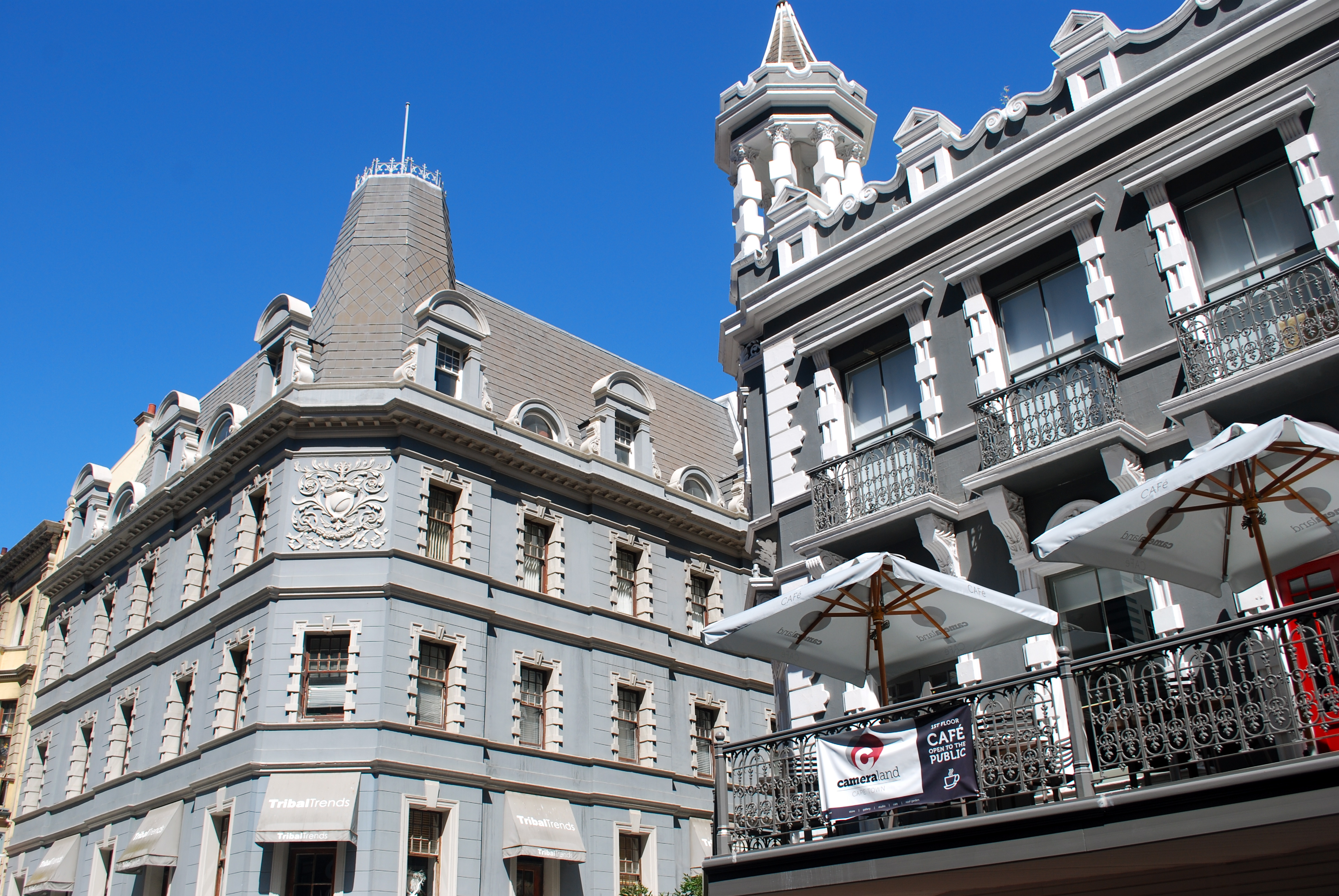
Cape Town, South Africa ©Jean Janssen

Cape Town, South Africa
©Jean Janssen

After leaving the waterfront and passing by the Convention Center, we drove through Downtown Cape Town, a mix of old and new buildings and shops and street vendors.  I was struck by the simplistic beauty of a brick church was I later learned was St. George’s Cathedral, home to Archbishop Desmond Tutu, a retired Anglican Bishop, social activist, and outspoken opponent of apartheid.  Bishop Tutu won the Noble Peace Prize.  At a time when churches were racial segregated, St. George’s famously advertised that they were open to persons of all races.

Castle of Good Hope, Cape Town, South Africa ©Jean Janssen

Castle of Good Hope, Cape Town, South Africa
©Jean Janssen

We drove through District Six where in the time of apartheid where no mixing of the races was allowed, varied races had made their homes and mixed harmoniously. In 1966, the Government declared the area “white only” under the Group Areas Act and bulldozed  district six leaving over 60,000 people homeless.  They left only places of worship standing.  Today, most of the area is still fields of weeds, development blocked by those who used the area as a memorial to those who suffered under apartheid.  The “white only” technical institute in district six was integrated in 1987.

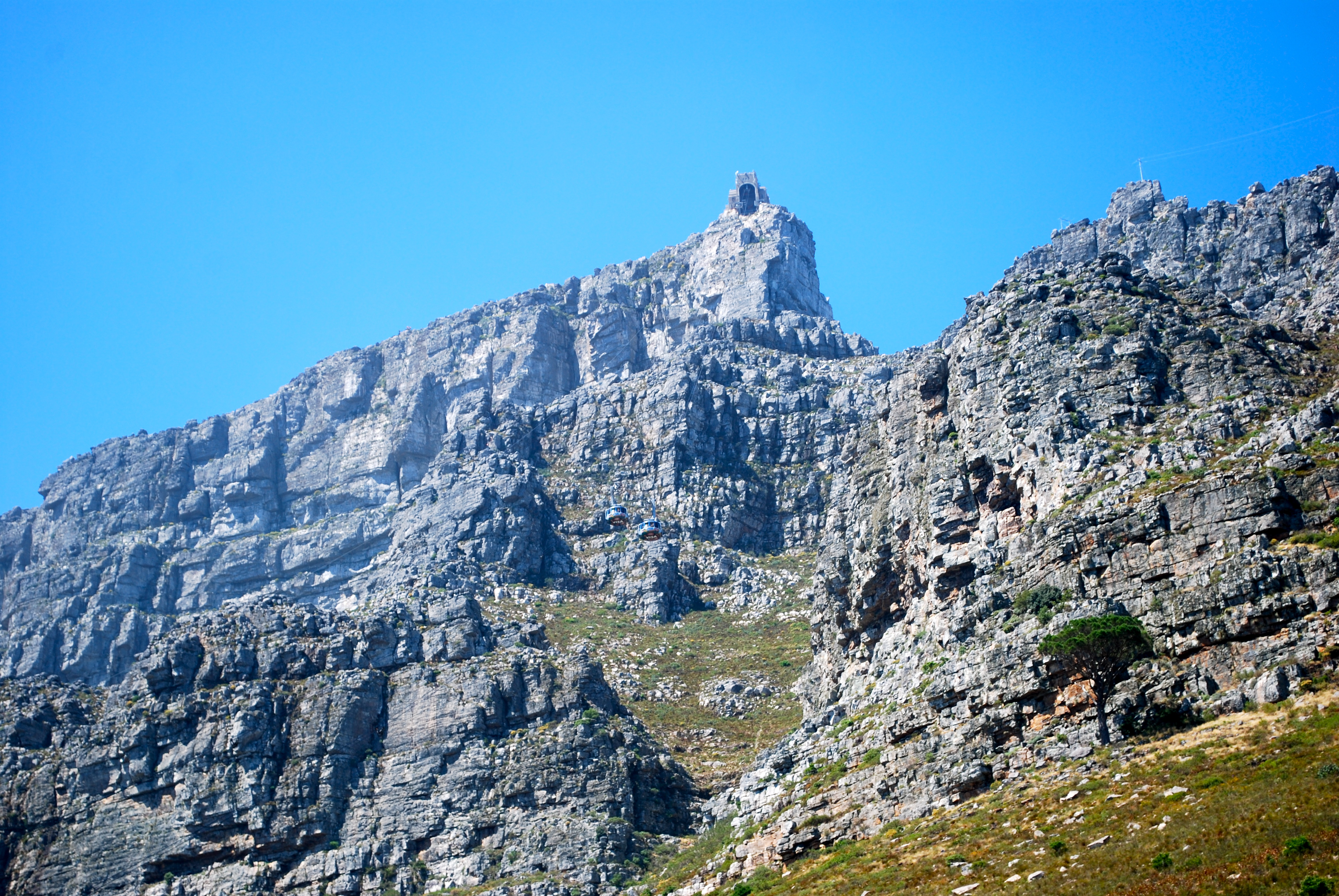
The Summit of Table Mountain with the Cable Car Tunnel Station at the high point.  If you look closely at the photograph, you'll see the two cable cars passing each other. ©Jean Janssen

The Summit of Table Mountain with the Cable Car Tunnel Station at the high point. If you look closely at the photograph, you’ll see the two cable cars passing each other.
©Jean Janssen

view of Cape Town from Table Mountain ©Jean Janssen

view of Cape Town from Table Mountain
©Jean Janssen

Boris’ interest was peaked when we passed The Castle of Good Hope, really the remains of a fort.  It was the one stop he was tempted by.  From the castle we passed back through town on our way to Table Mountain.  Signal Hill, Table Mountain, and Devil’s Peak created a bowl effect inside of which sits Cape Town.  We went through the pass and up the winding room to the cable car station.  It is summer vacation and the lines at the cable station were horrible.  I wanted to go, but Boris really couldn’t stand the heat and the thought of the wait in the midday sun.  The cable car ride looked fabulous.  (It was on my “must do” list so I am hoping for another opportunity-promised by Boris-before we leave Cape Town.  It is one of the top three tourist attractions of Cape Town, along the the waterfront and Robben Island where Nelson Mandela was held prisoner.

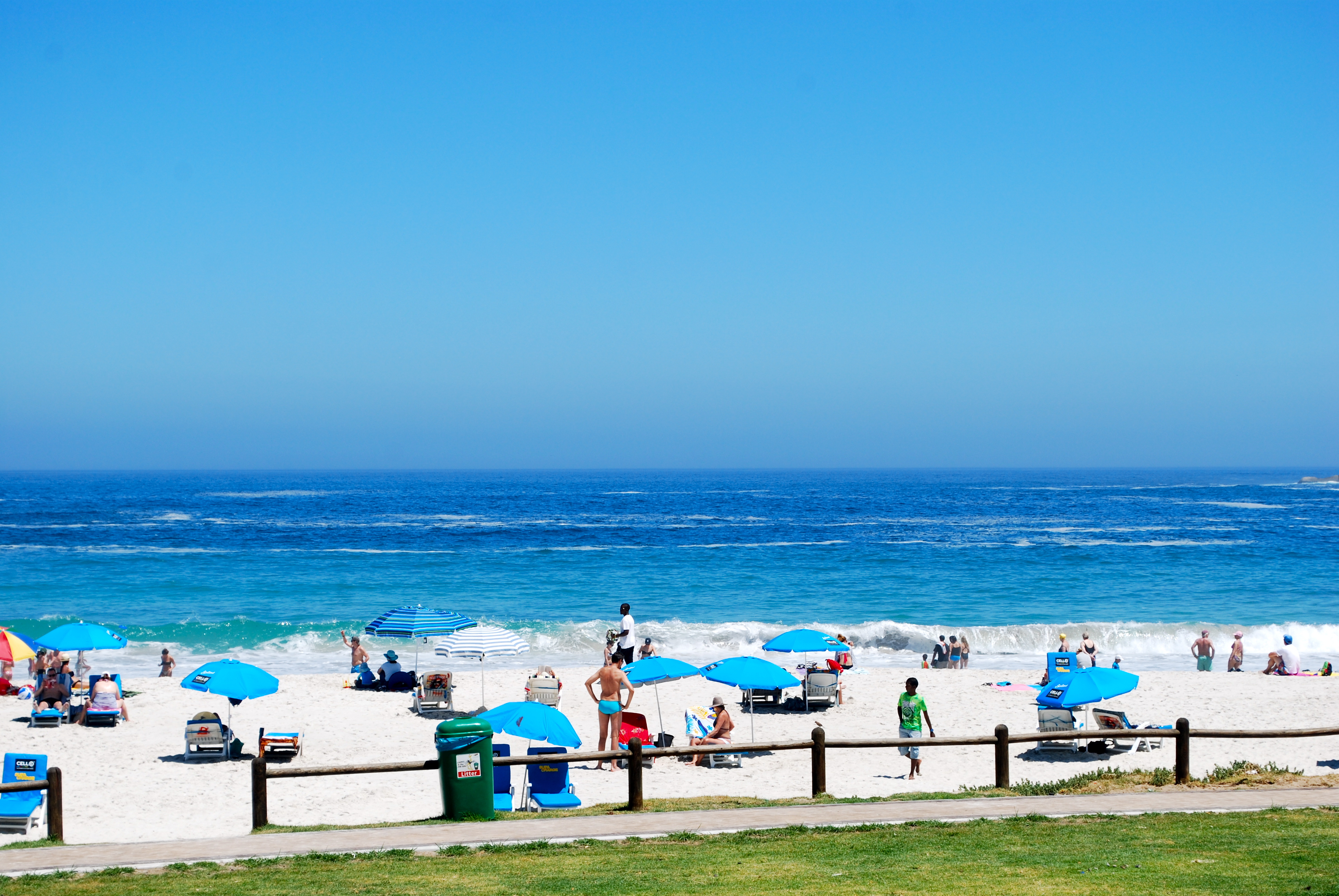
Camps Bay beach

Camps Bay beach

We returned once more to the pass and reached Camps Bay on the opposite side of Table Mountain where the ridged outcrops are referred to as the 12 apostles (although there are 17).  We drove down to the shoreline enjoying gorgeous views and then drove along Beach Road.  I could have spent the day at Camps Bay or one of the surrounding beach communities.  The weather phenomenon created by the mountains means that the water here is actually colder in the summer than in the winter, but there were lots of people in the water today.  We continued our trek along the shoreline, but as we got closer to Cape Town, the beaches were not as nice but the home still enjoyed spectacular views.

Robben Island in the distance off the coast of Cape Town, South Africa

Robben Island in the distance off the coast of Cape Town, South Africa

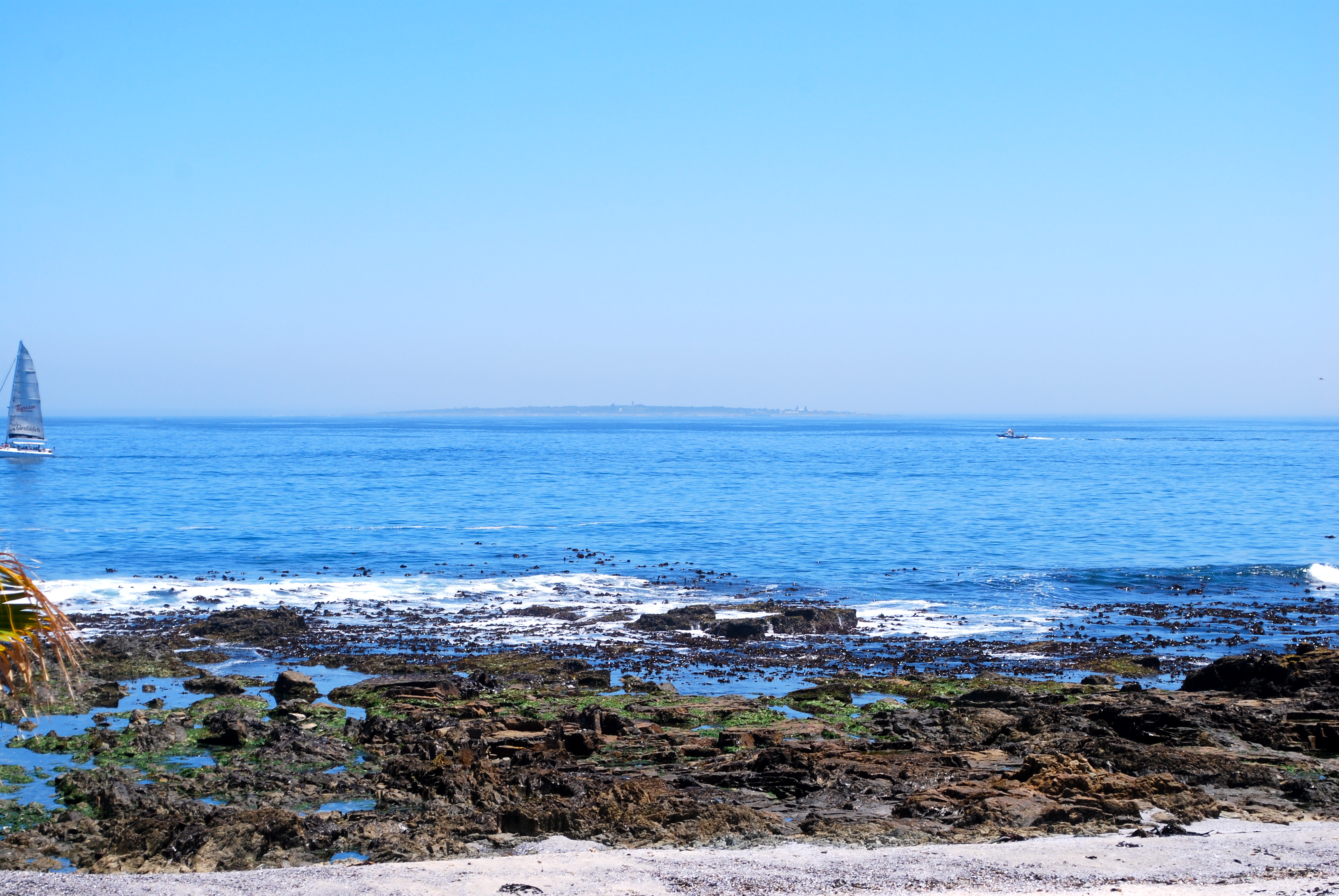
We returned to the Waterfront in Cape Town passing the lighthouse and catching a glimpse of Robben Island off in the distance.  The maximum security prison  was used primarily for political prisoners and has housed three of South Africa’s Presidents, including current President Jacob Zuma.  The facility ceased operation as a prison in 1996  and is now a museum.  If you want to visit in the summer months, you need to book early.  We found this out the hard way.

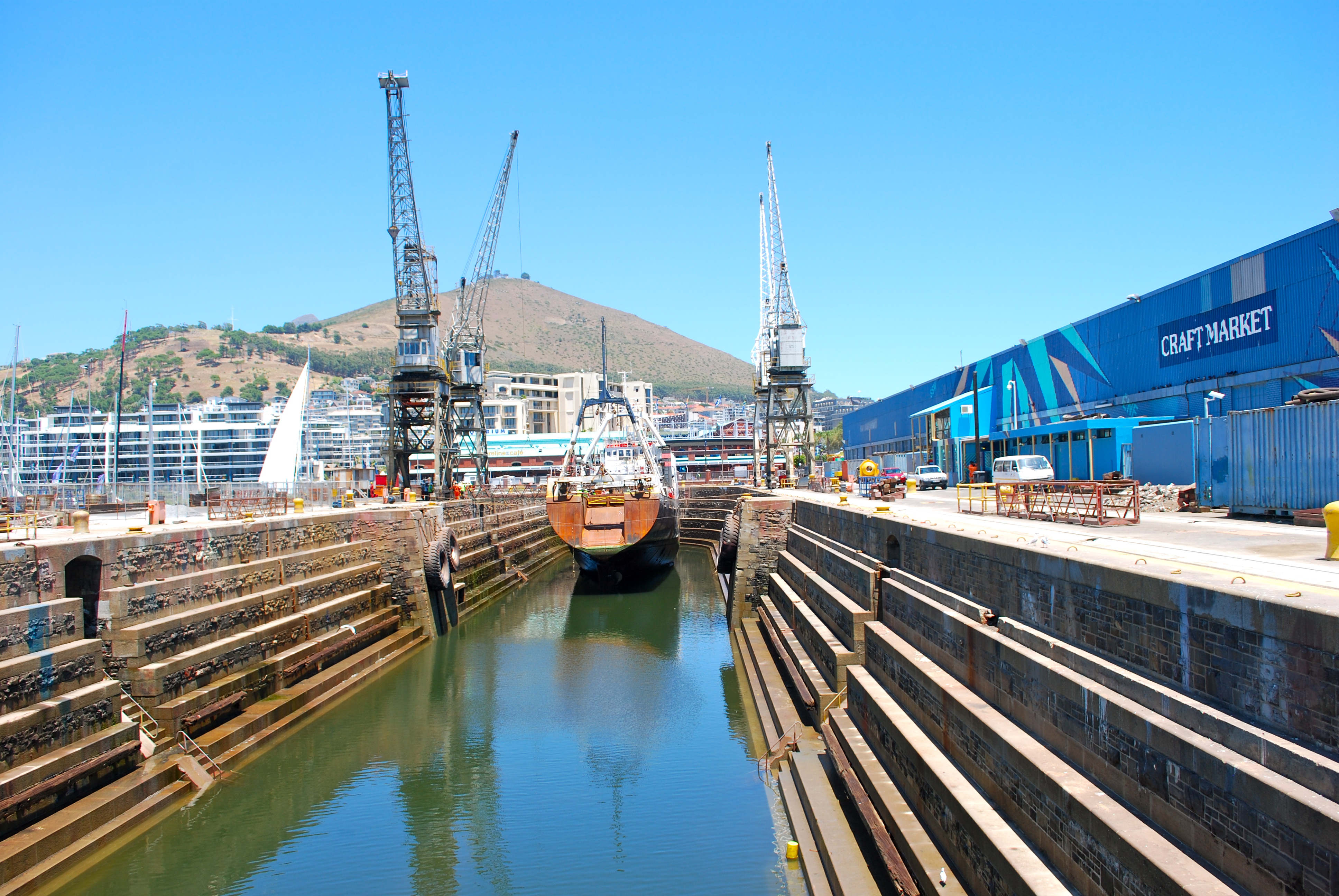
Boat in dry dock next to the Crafts Market, Cape Town, South Africa. ©Jean Janssen

Boat in dry dock next to the Crafts Market, Cape Town, South Africa.
©Jean Janssen

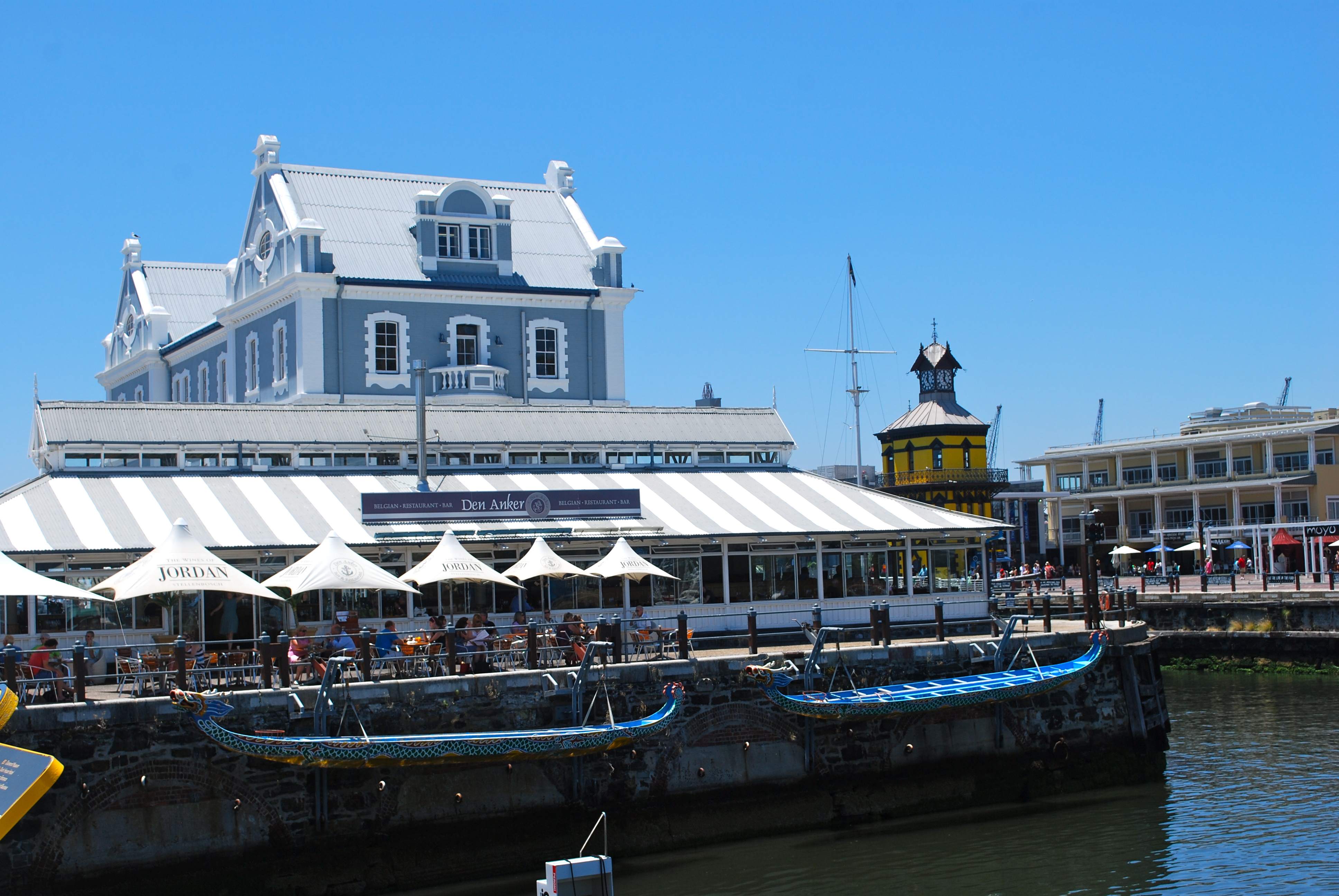
Our lunch spot der anders  at the Waterfront, Cape Town, South Africa ©Jean Janssen

Our lunch spot der anders at the Waterfront, Cape Town, South Africa
©Jean Janssen

At the waterfront, we passed through the crafts market with some really nice crafts.  Boris found a wellness area where you could get a shoulder and neck massage and noted this for a later visit.  The area reminded me of the waterfront in San Francisco, so I was not surprised to learn that waterfront development in Sydney, Australia and in San Francisco served as models for the Cape Town development.  The Cape Town version offers a more working port experience with the dry docks and the swinging bridges (moved to allow the boats to pass).

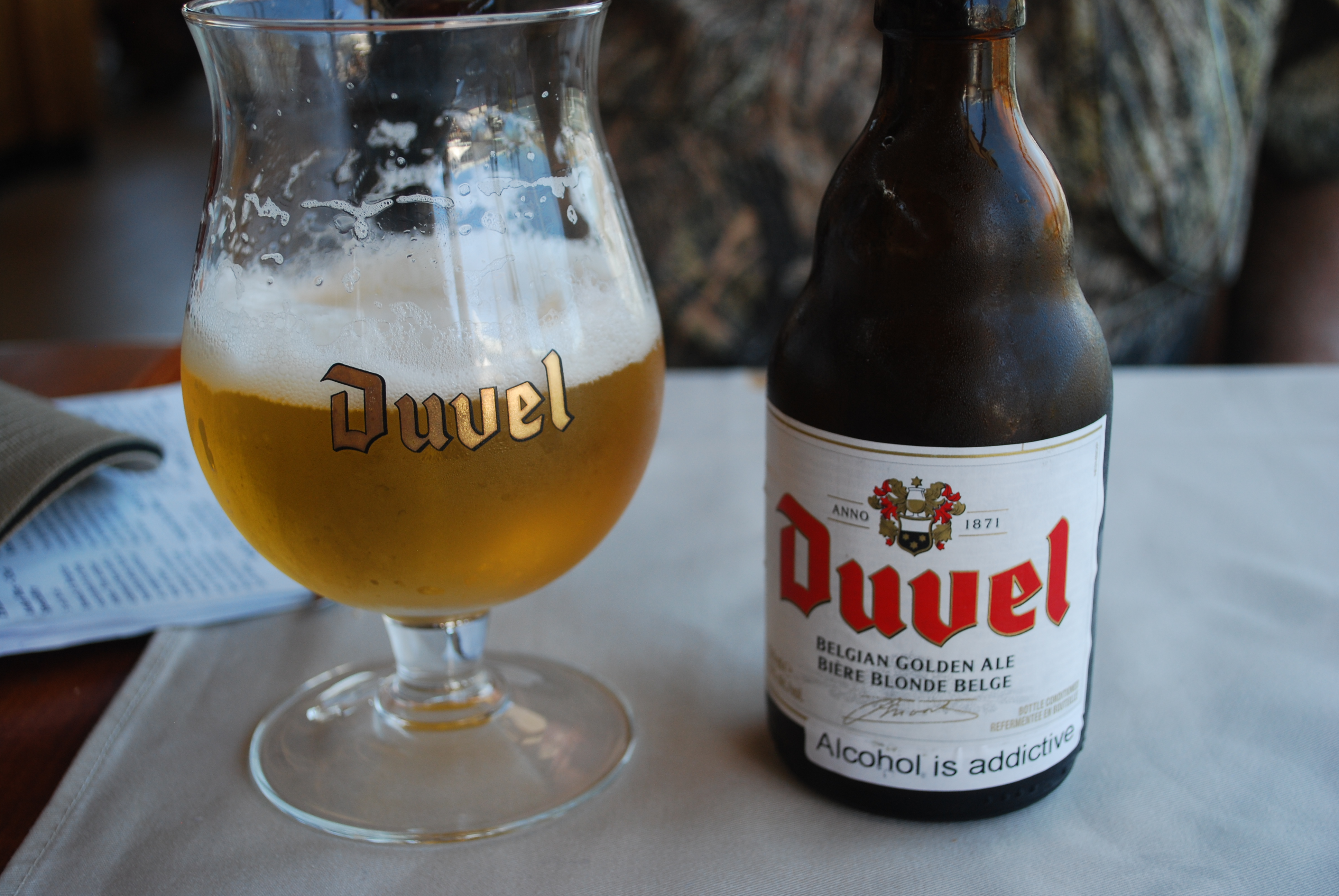
Note the added warning label ©Jean Janssen

Note the added warning label
©Jean Janssen

We found a picturesque Belgium restaurant with lovely views of the harbor and Table Mountain and enjoyed a lunch of fries, mussels, and beer.  His beer bottle carried a special warning label (added later) which I had never seen.  I told Boris he needed to keep ordering different beers so I could see if this was a South Africa thing.  He said he was happy to help with my project.
DownloadedFileAfter our late lunch, there was more touring of the waterfront.  I stopped into the sea rescue office and bought a hat and t-shirt for Rocky in support of their mission.  This nonprofit, volunteer organizations rescues those stranded at sea.  There motto is a quote from Theodore Roosevelt (Rocky is a big fan), “Do what you can, with what you have, where you are.”

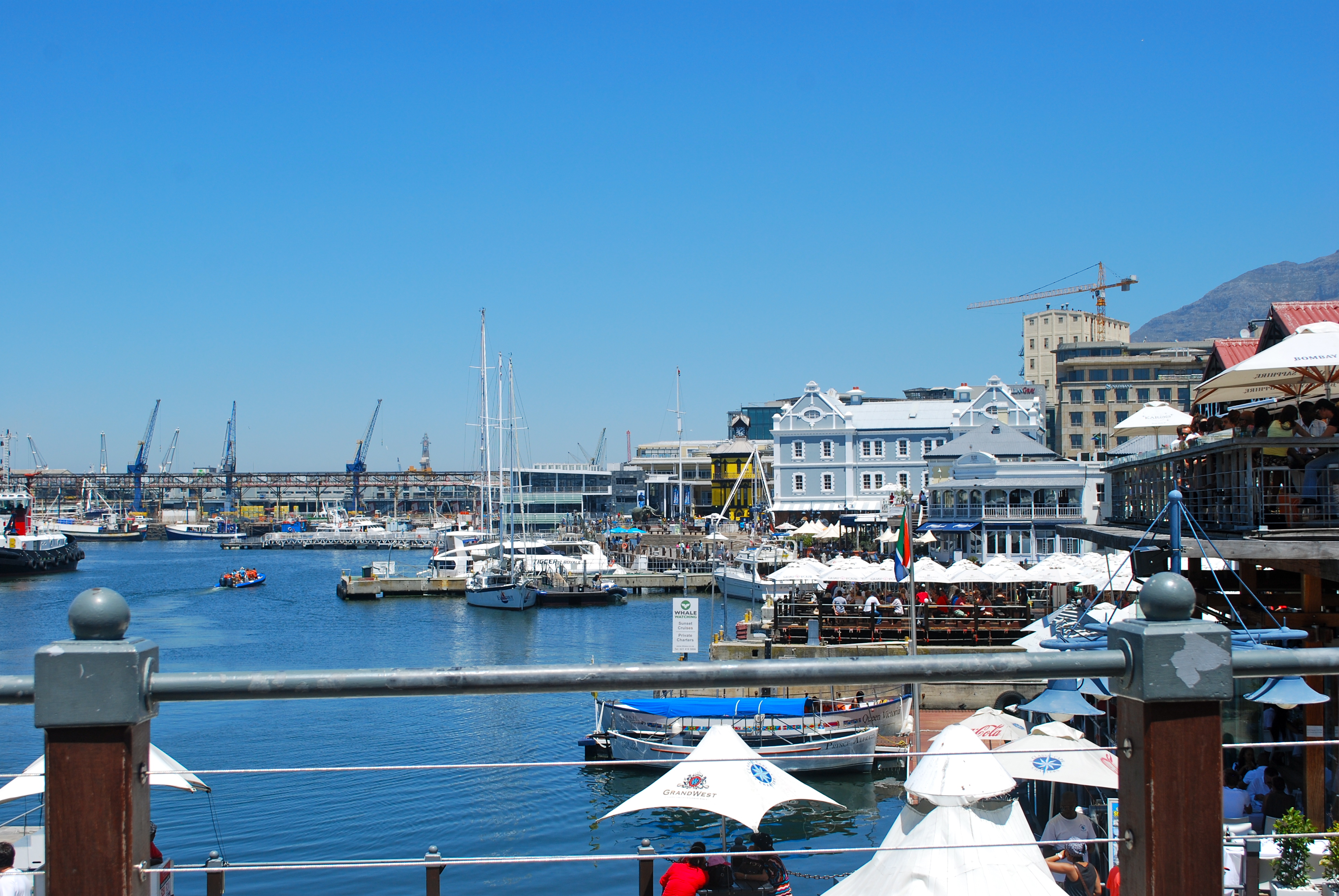
Victoria and Alfred (not Albert as you might expect) waterfront, Cape Town, South Africa ©Jean Janssen

Victoria and Alfred (not Albert as you might expect) waterfront, Cape Town, South Africa
©Jean Janssen

Dockside entertainment. Victoria and Alfred Waterfront, Cape Town, South Africa ©Jean Janssen

Dockside entertainment.
Victoria and Alfred Waterfront, Cape Town, South Africa
©Jean Janssen

There is lots of dining and even more shopping in the Waterfront development.  Rocky’s souvenirs were all I got today because we spotted our ship, The Silver Wind, docked right in the area and know we’ll be back here the next two days.  We grabbed the shuttle back to the hotel and I went straight to take a nap.  Boris just wanted a light dinner in the room, so we didn’t go out even though it was Friday night and this is a party city.  I am enjoying my last bit of internet before going onboard and have messed up my attempt at adjusting to the time change, but at least I got to submit a post before the internet gets limited or nonexistent (and very expensive).

©Jean Janssen

©Jean Janssen


Posted in cruises, international | Tagged , , , , , , , | 2 Comments

Passau, Bavaria, Germany

Passau, Germany ©Jean Janssen

Passau, Germany
©Jean Janssen

Just after we crossed the border into Germany from our cabin on the River Beatrice traveling on the Danube. ©Jean Janssen

Just after we crossed the border into Germany from our cabin on the River Beatrice traveling on the Danube.
©Jean Janssen

We crossed the border into Germany while we were at Breakfast this morning.  Passau is very close to Austria and the Czech Republic.  There was snow on the banks of the Danube and it continued to snow today.  Really feels like Christmas.

We had biting wind for our walking tour of the old city; it is perhaps the coldest day of our weeklong trip.  Our guide is a University student who grew up in Passau, went to Munich for his undergraduate degree, and was back in Passau for his masters.   He told us he chose to return to his hometown for his masters because the school was 65% woman; the odds were in his favor.  Passau is in the region of Bavaria.  Our guide said he considers himself Bavarian first and German second.

Passau, Germany as seen from our cabin on the River Beatrice traveling on the Danube. ©Jean Janssen

Passau, Germany as seen from our cabin on the River Beatrice traveling on the Danube.
©Jean Janssen

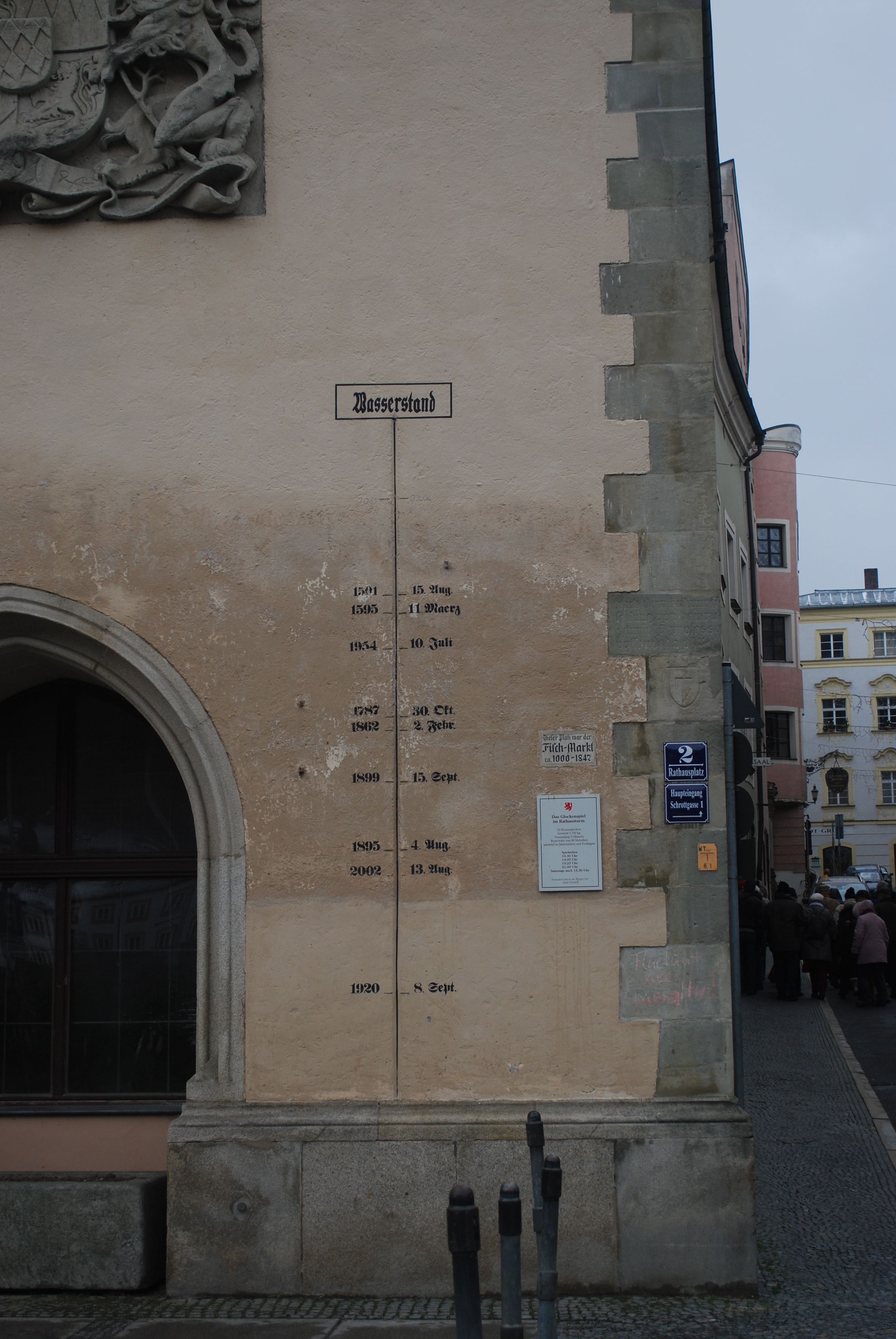
Water level markings on the same clock tower as seen in the previous picture.  The 2013 level is above all those shown here.  Passau, Germany ©Jean Janssen

Water level markings on the same clock tower as seen in the previous picture. The 2013 level is above all those shown here. Passau, Germany
©Jean Janssen

In June of this year (2013), the Danube reaching its highest level in 500 years, flooding Passau.  There were marks all over the buildings showing where the water reached before receding.  The city has a population of 50,000 + 10,000 students.  The students proved to be an important part of the clean up team.  Because it was important to remove the mud before it harden and became like concrete, volunteer crews worked quickly to clear the city in one week.  The government normally compensates flood victims 50% of the cost, but this year reimbursements were up to 80%, presumably because it was an election year.  We saw some incredible pictures of the flooding and devastation.

Always fun to have a student guide and hear his perspective.  We learned a lot about the local breweries and special events.  We walked down one street where the cobblestones were colorfully painted and we were told that this street is where an annual race occurs with the runners all in high heels.  The winner takes home 100 Euros; the participants were all men.

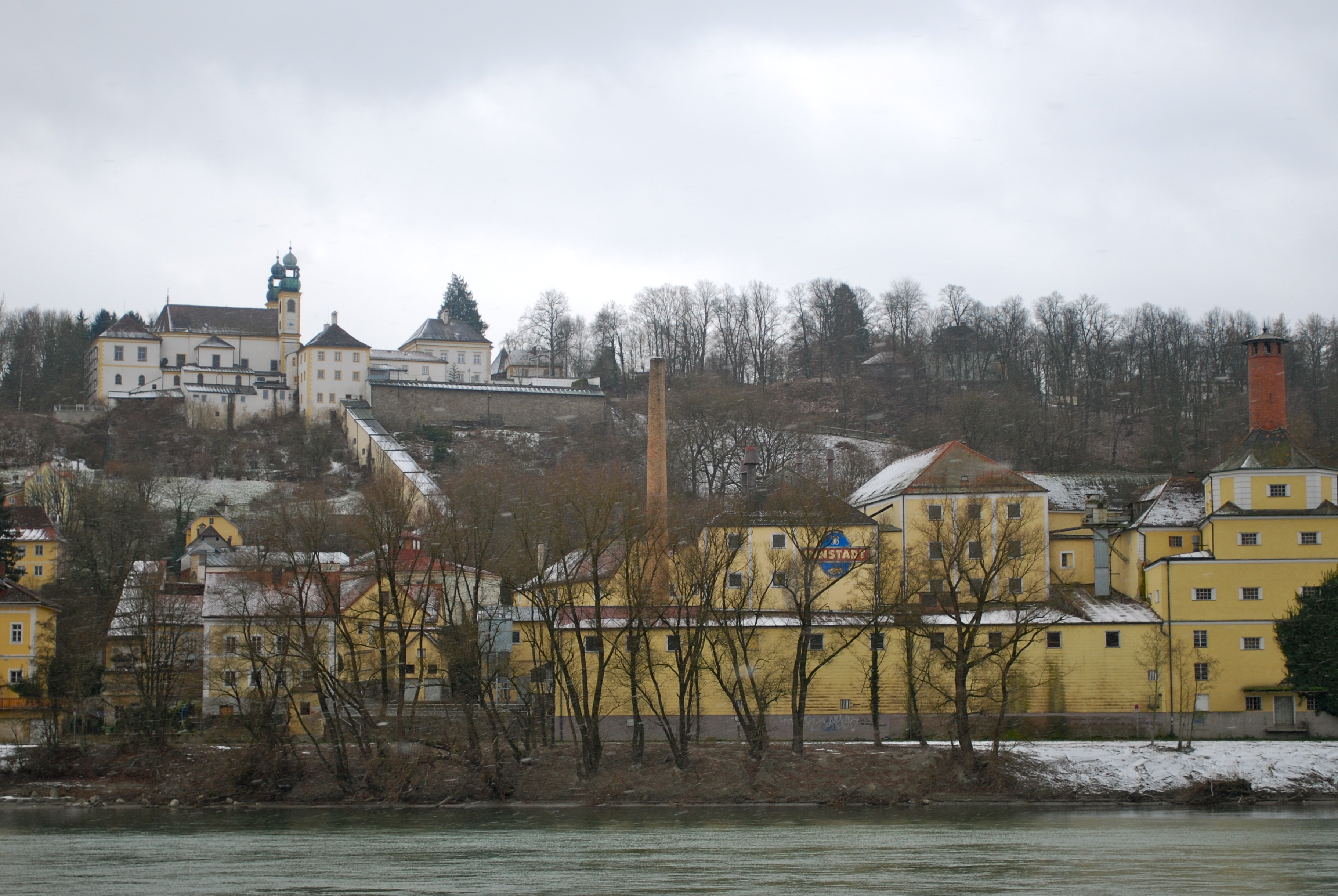
The largest brewry in Passua Germany (in yellow).  One of the important sights pointed out to us by our University student guide. ©Jean Janssen

The largest brewry in Passua Germany (in yellow). One of the important sights pointed out to us by our University student guide.
©Jean Janssen

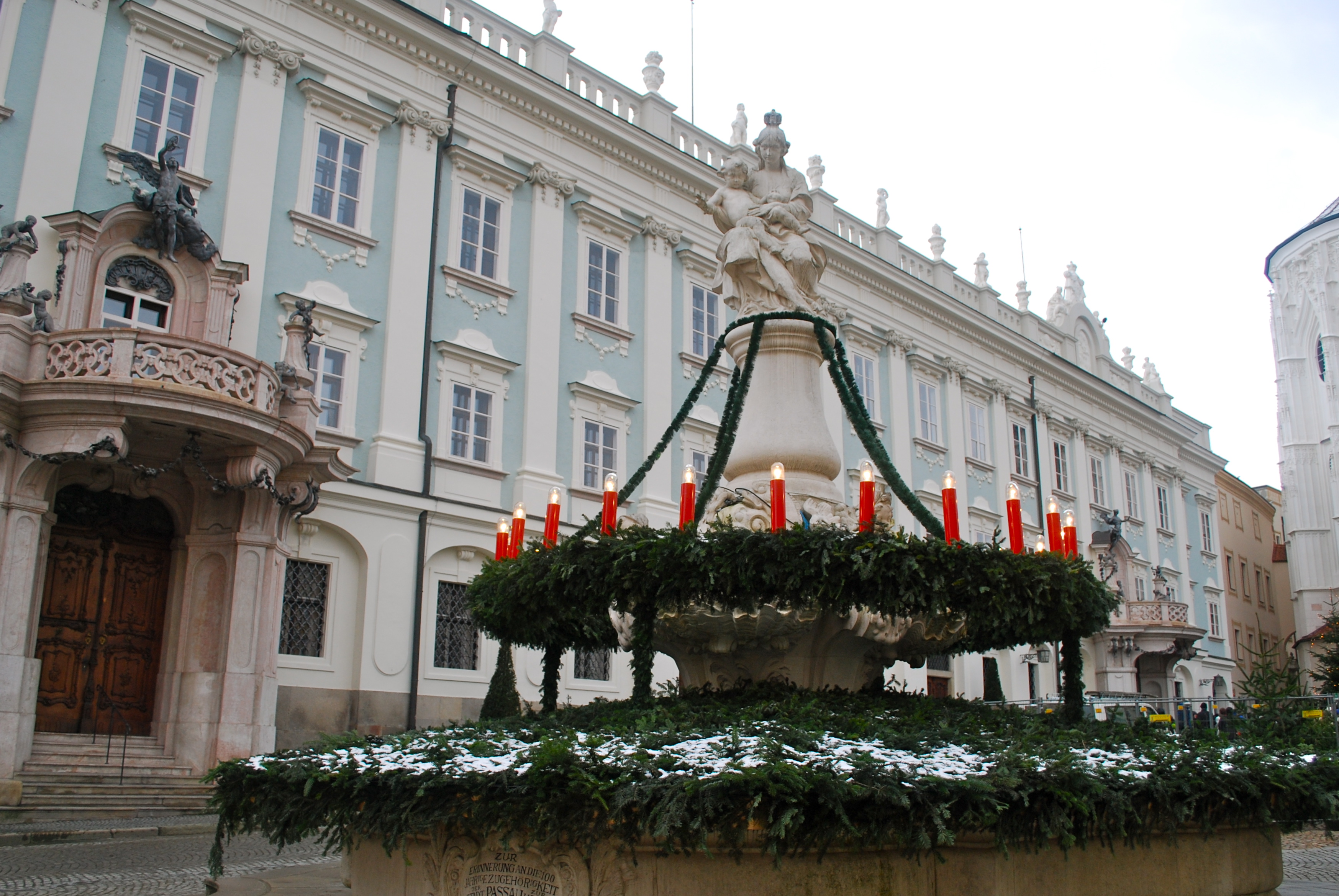
Advent Wreath atop a covered fountain just behind the Cathedral in Passau, Germany. ©Jean Janssen

Advent Wreath atop a covered fountain just behind the Cathedral in Passau, Germany.
©Jean Janssen

At perhaps my favorite spot in the whole city, a large advent wreath encircled the fountain.  Originally the wreaths had 24 candles to represent all the days in December leading up to Christmas.  There were designed in response to children’s pestering questions about how soon Christmas would be.  In years when candles were scarce, the number was reduced to 4 to represent weeks.  Four is the typical number of candles seen on advent wreathes today.

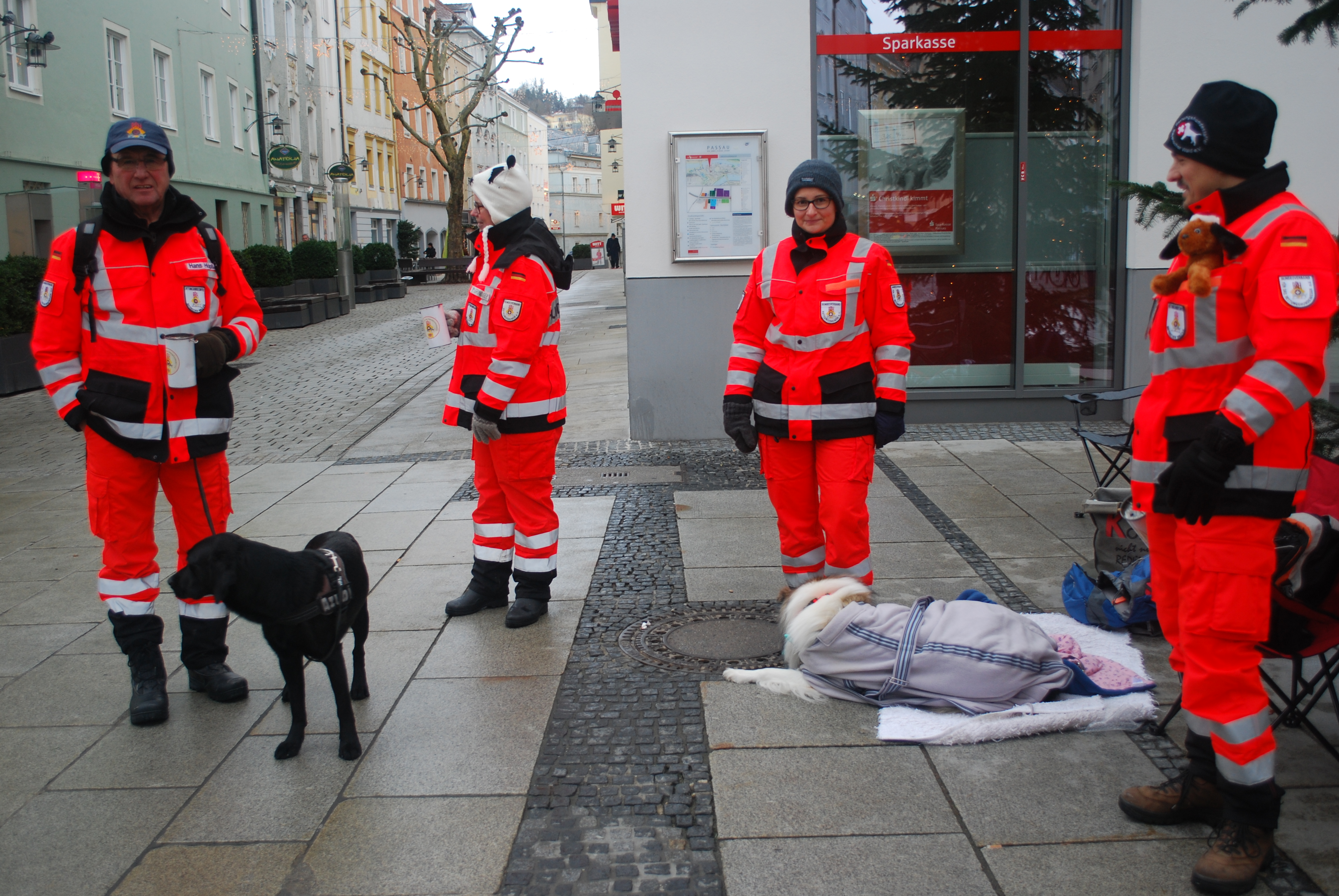
Major shopping area in Passau Germany.  Those in bright red are firemen with rescue dogs collecting support. ©Jean Janssen

Major shopping area in Passau Germany. Those in bright red are firemen with rescue dogs collecting support.
©Jean Janssen

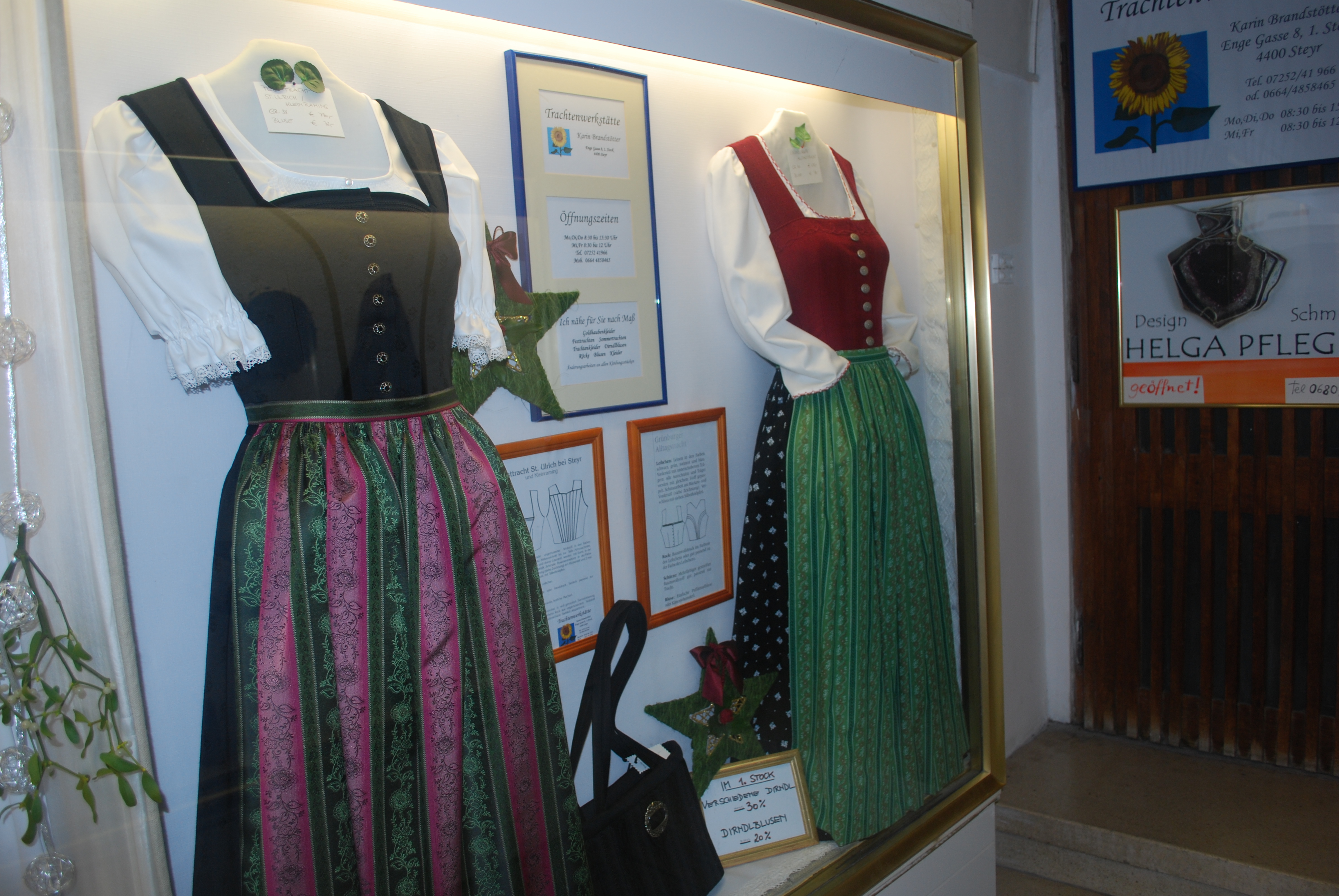
After touring the historic buildings, we ended the tour on the major shopping streets.  There was a gingerbread-making demonstration that our group chose not to attend.  Boris was interested in a tradition outfit, but we went back to the shop where we saw them and saw the cost was $1,800.  We passed; Boris pouted.

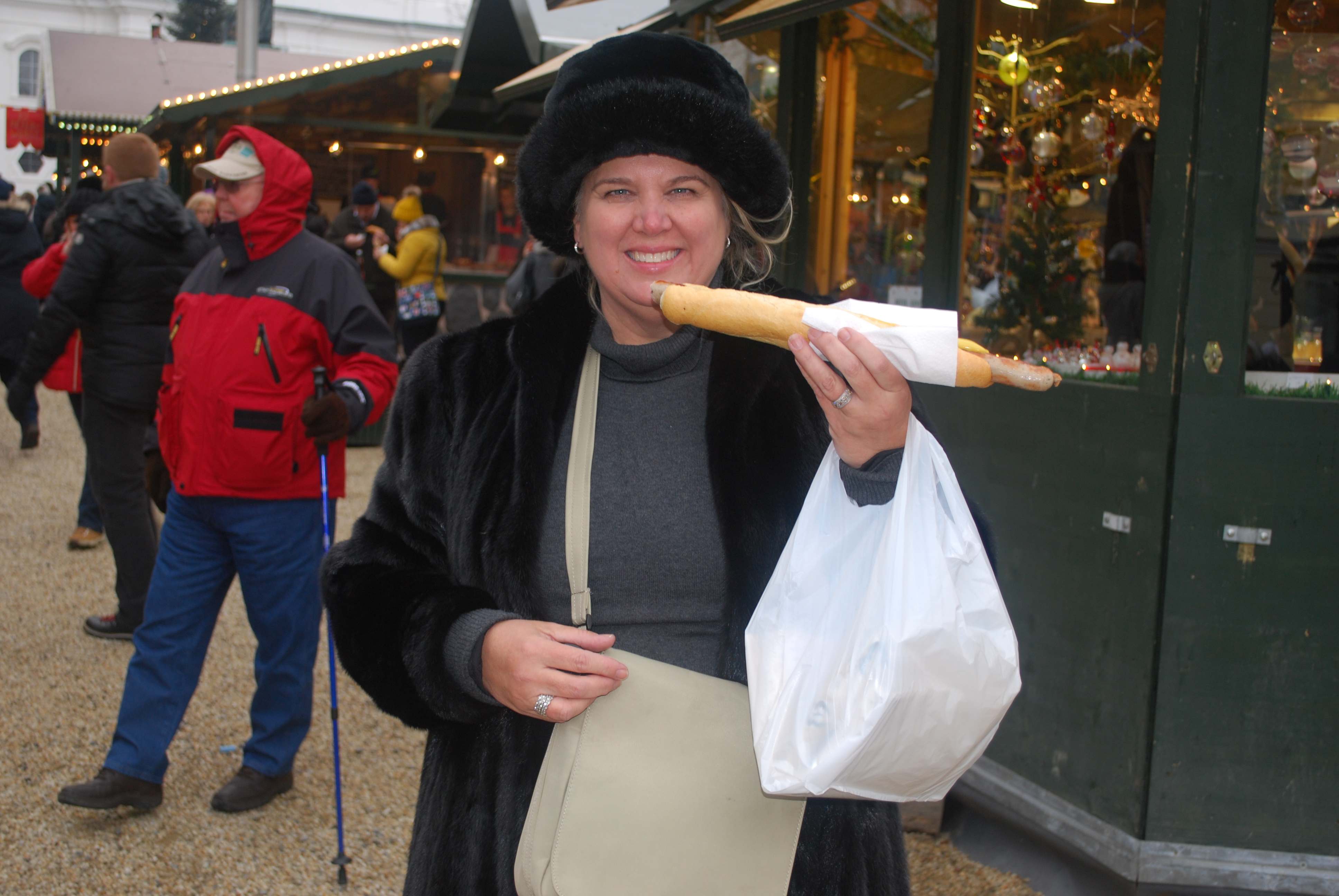
This was our last day of shopping, so we had high hopes when we went to the Christmas market.  It did not disappoint.  The morning and afternoon on weekdays are wonderful times to visit the markets because they are not crowded.  Today is Saturday and it is packed.  We found the wonderful ceramic Bavarian houses we had heard about.  There were linens, ornaments, chocolates, and even packed sausages among our purchases.

St. Stephen's Cathedral, Passau, Germany ©Jean Janssen

St. Stephen’s Cathedral, Passau, Germany
©Jean Janssen

The market is on the main square outside the Cathedral, a sister to St. Stephens in Vienna and far lovelier in my opinion.  The organ concert came highly recommended, so we broke off from our shopping to attend.  It was packed; I could not believe the number of people that were in attendance.  The concert featured pieces by local composers and their mentors.  While I only recognized one piece, I could certainly appreciate the performance.

The Christmas Market in Passau, Germany just in front of St. Stephen's. ©Jean Janssen

The Christmas Market in Passau, Germany just in front of St. Stephen’s.
©Jean Janssen

One of the tasty treats we tried at the Passau Christmas Market.  Melted cheese on top of rye bread and then you add your own topping.  We tried half berries (sweet) and half speck (salty).  Ok, I admit it.  I had already eaten some when I remembered to take the picture. ©Jean Janssen

One of the tasty treats we tried at the Passau Christmas Market. Melted cheese on top of rye bread and then you add your own topping. We tried half berries (sweet) and half speck (salty). Ok, I admit it. I had already eaten some when I remembered to take the picture.
©Jean Janssen

We returned to the market after the concert and made a few final purchases.  We also tried a few food items.  It had one of the seriously long bratwurst.  Fabulous.  Boris also spotted this wonderful melted cheese that was spread on rye bread.  They you could add red onions, speck (ham), or berries on top.  Wonderful.

Since the boat docked right next to the old town, we headed back to drop off our packages and warm up.  In spite on keeping on my thermals, coat, hat, and gloves, I was freezing during the concert (probably because we sat still for so long).  On the way back, I spotted another shop off the beaten path that sold traditional clothing and suggested we go after lunch.  Boris stopped pouting.

Exploring my German roots with this extra long bratwurst at the Christmas Market in Passau, Germany.

Exploring my German roots with this extra long bratwurst at the Christmas Market in Passau, Germany

After the food at the market, we really weren’t that hungry, but it was a special Bavarian lunch on the ship and it was perhaps the best meal of the entire trip.  (Didn’t regret eating the food in the market though; I’ll have to diet next week.)
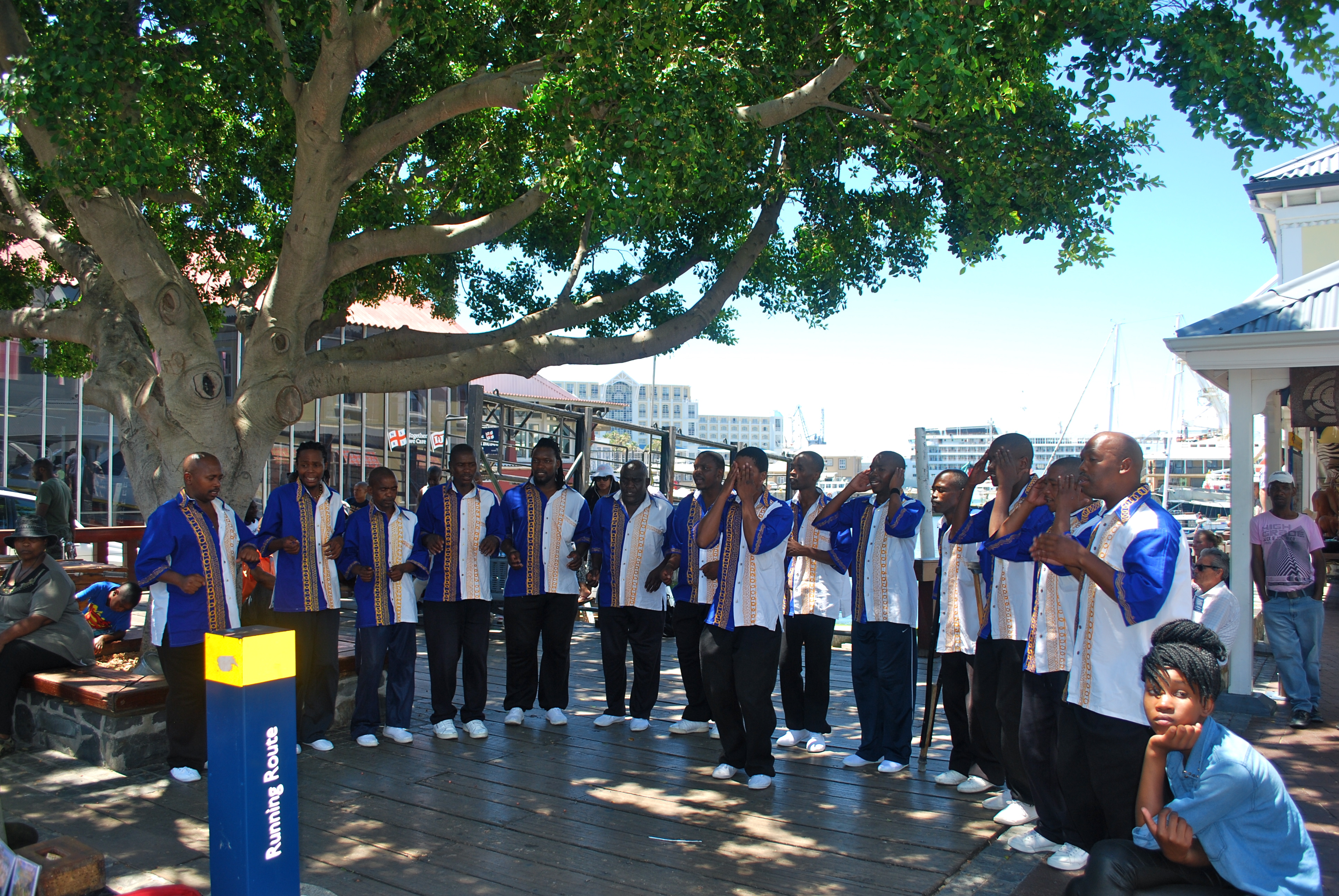
This is what a drundl looks like.  Shop window in Krems, Austria. ©Jean Janssen

This is what a dirndl looks like. Shop window in Krems, Austria.
©Jean Janssen

After the meal, I dealt with the impossible Internet so I could check in for our flight home.  About 2:30 or 3 pm we ventured out again.  We started at the clothing store.  Boris got a vest and shirt to match his Loden jacket and hat.  He really wanted me to get a traditional dress, apron, and blouse (a dirndl).  He picked a silk one.  There was also a fabulous jacket of cloth, leather, and embroidery that he picked out for me for Christmas.  I was rather surprised.  Prices were about a ¼ of the other store’s prices.  I think Boris was just so excited that I found the shop.

Passau, Bavaria, Germany ©Jean Janssen

Passau, Bavaria, Germany
©Jean Janssen

Our Westie, Peabody, would have loved this darling fraulein.  Passau, Germany ©Jean Janssen

Our Westie, Peabody, would have loved this darling fraulein. Passau, Germany
©Jean Janssen

We went back to the advent wreath so I could get a picture by it and we stopped in a few more shops to pick up those last few gifts.  The Christmas lights at the market came on before we went back to the ship to pack.  There was a farewell reception and dinner.  The evening’s entertainment was two folk singers; I knew all the songs.  Nobody could really stay long as you either needed to get up early for the 1 hour and 40 minute drive to the Munich airport (some were leaving as early as 3 am) and/or still needed to pack.  On the River Cruise it is not necessary to have your baggage out until 45 minutes before your departure time.
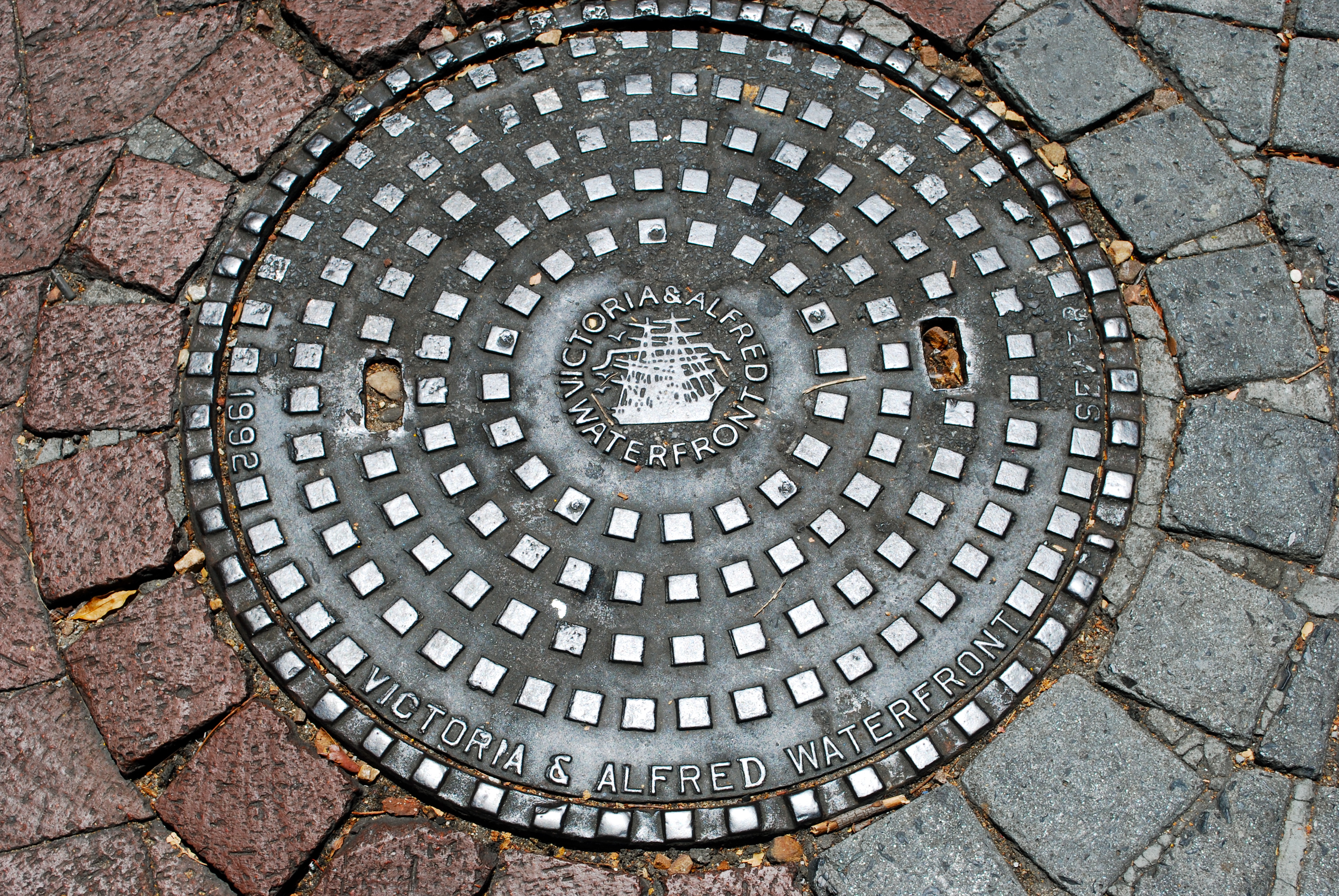
Rescue Dogs in Passau, Germany.  One of these guys was wrapped up for the cold. ©Jean Janssen

Rescue Dogs in Passau, Germany. One of these guys was wrapped up for the cold.
©Jean Janssen

Passau, Germany ©Jean Janssen

Passau, Germany
©Jean Janssen

We had a wonderful trip.  I recommend both the river cruise and the Christmas Markets.

— Natasha

Posted in cruises, international, River Cruise | Tagged , , | 2 Comments

Last Day in Austria-Christkindl, Steyr, and Linz

The bus that takes visitors from Streyl and Christkindl.  Yes, we got snow today. ©Jean Janssen

The bus that takes visitors from Steyr to Christkindl. Yes, we got snow today.
©Jean Janssen

2/3rds of the passengers on the boat are going to Salzburg today.  If Boris and I weren’t spending a week there in March, I would be on one of those buses too.  Boris signed us up for the optional tour to Christkindl, Steyr, and Linz.  We are actually docked in Linz; the square with the Christmas market is just three minutes from our ship’s berth.  The forecast calls for snow today and we saw flurries as we boarded the bus.

In Austria, we saw Advent Wreaths in all sizes and colors and placed any and everywhere, even on the ground. ©Jean Janssen

In Austria, we saw Advent Wreaths in all sizes and colors and placed any and everywhere, even on the cobblestones.
©Jean Janssen

The Church at Christkindl, Austria ©Jean Janssen

The Church at Christkindl, Austria
©Jean Janssen

Today the focus of the first part of our excursion is really all about Christmas.  All our Austrian guides have talked about their own Christmas traditions. The Christmas season really begins here with the start of Advent, which is a time of fasting; the Christmas season ends with the Epiphany on January 6.  Our first stop is Christkindl, just under an hour’s drive from the ship.  The town’s name is literally Christ Child.  We think of the Christ Child as the infant Jesus, but in Austria the Christkindl is usually depicted as an angel.  It is the Christkindl, not Santa Claus, who brings gifts on Christmas Eve (December 24).  The fur tree is not brought into the home until that day.  In Austria, the father usually decorates the Christmas tree while the mother prepares the Christmas Eve dinner.  It is a live tree adorned with real candles and candies (usually chocolate).  The children are not allowed into the room until all is ready and a bell is rung to signal that the Christkindl has been there.  The evening includes carols, the reading of the Christmas story from the bible, opening gifts, and a big meal.

Altar at the Church at Christkindl, Austria.  It is supported by the tree with the figure of baby Jesus imbedded in it (seen near the bottom). ©Jean Janssen

Altar at the Church at Christkindl, Austria. It is supported by the tree with the figure of baby Jesus imbedded in it (seen near the bottom).
©Jean Janssen

The origin of the city of Christkindl comes from a man who was cured of his epilepsy and wanted to thank the God for the cure.  He placed a small figure of baby Jesus in a tree trunk.  People began to make a pilgrimage to the tree (which was at the location that the city is today) and petitioned for a church to be built on the site.  The church was designed by an Italian architect, but was completed by the same Austrian designer who created the Abbey at Melk that we saw from the Danube at sunset yesterday.  In many churches the altar panels are built into the back wall to provide stability, but this altar panel is self-sustaining and designed around the tree trunk with the imbedded figure of the infant Jesus.  Parts of the tree trunk are visible from the front; a look from the side provides a better view of the trunk.

Post Office at Christkindl, Austria ©Jean Janssen

Post Office at Christkindl, Austria
©Jean Janssen

After a visit to the church, we stopped in the post office so anyone who wanted to mail his or her Christmas cards could do so, receiving the special Christkindl stamp.  I sent a postcard home and bought some postage stamps.  The post office clerk then added the Christkindl stamp to my collectable stamp pages and thanked me for letting her help me design something.  She was very nice and seems interested in helping me put together a way to have a keepsake.  Our guide told us that the lines at that post office can get very long so we were lucky to be the first group of the day.

This Nativity was constructed between 1900 and 1939 and has over 600 figures, most move. ©Jean Janssen

This Nativity was constructed between 1900 and 1939 and has over 600 figures, most move.
©Jean Janssen

Our last stop in Christkindl was their museum where we saw two very special nativity scenes.  Upstairs was an amazing display featuring all aspects of life in the area around the time of Jesus’ birth.  The display spanned the length of the entire upper floor.  My favorite section was the one depicting the carpet traders and their servants.  On the ground floor was a display that took up the width of the room with several levels to the depiction.  The engineer who built it came to Austria to help design weaponry.  He worked on the nativity for almost 40 years, from 1900 to 1939 (the year he died).  There are over 600 figures and most of them move.  It was lovely to see baby Jesus reach out to the people who had come to see him.

A typical St. Nicholas Day gift in Austria. ©Jean Janssen

A typical St. Nicholas Day gift in Austria.
©Jean Janssen

Today is a special day in Austria, the fest of St. Nicholas.  Children may put out clean shoes, or plates of cookies in anticipation of his visit.  Since this is a time of fast, St. Nichols leaves only small gifts of fruit, nuts, or chocolate.  In some parts of the country, foil-wrapped chocolate in the shape of St. Nicholas is the gift.  St. Nicholas may visit the home with his scary assistant bringing the book that shows if the child has been good or not during the year.

The chocolate (less frightening version) of the Krampus. ©Jean Janssen

The chocolate (less frightening version) of the Krampus.
©Jean Janssen

If not, you may be taken by the Krampus, the scary devil-like assistant.  Our guide related that when she was three years old she had been scared by the Krampus who claimed to have two live children in the sack he was carrying.  The Krampus is usually played by a teenage boy; it is said that it is not a safe time for young girls to be on their own.  The mother of one of the young adult woman passengers told us that her daughter was almost taken in a grocery store by a Krampus when they were visiting Austria when she was younger.

Steyr, Austria ©Jean Janssen

Steyr, Austria
©Jean Janssen

Our next stop was Steyr, a city very close to Christkindl.  We had had snow flurries off and on during the drive up, but it stirred up again just as we left for Steyr.  Our guide told us it was the first time that she had seen anyone shovel snow this year.

Oldest building in Steyr, Austria. ©Jean Janssen

Oldest building in Steyr, Austria.
©Jean Janssen

We drove into the old town through the narrow gate and immediately passed the trade guild building for those we worked with iron ore.  We drove to the middle of the town plaza (egg shaped, not a square) and the driver dropped us off by the huge Christmas tree that seem to mark every Christmas market.  We were next to the city’s oldest standing building from 1497.  The decoration on the buildings was wonderful.  Like other Austrian cities, each floor had three windows on each level.  The higher your status, the lower your floor.

We walked down to where the two rivers meet in Steyr, our guide giving us the very good advice to look up to note the decoration on each building and what they symbolized as we passed by.  The biting wind whipped across the bridge, but I had to stop to see the beautiful swans floating on the river.  This was another fairytale moment to add to the trip.

Where the two rivers meet in Steyr.  There were at least 20 swans on the water. ©Jean Janssen

Where the two rivers meet in Steyr. There were at least 20 swans on the water.
©Jean Janssen

Decorated gingerbread display in a store window, Steyr, Austria. ©Jean Janssen

Decorated gingerbread display in a store window, Steyr, Austria.
©Jean Janssen

After crossing the bridge, we visited the Christmas museum.  It was really a collection of antique Christmas ornaments and tree displays.  Nothing really kept my attention here.  It was in a large house and you could take an indoor sleigh ride to see “what the angels were doing on the upper floors”.  We passed.  It was very cold, so Boris and I returned to the main plaza and had a nice lunch in the Hotel Mader.  The food was excellent.  Boris had wiener schnitzel and tried a couple of the local beers.  We shared a ham and goat cheese appetizer and I had a roasted chicken with risotto that was seasoned perfectly.  I sat facing the window and saw several series of snow flurries while we enjoyed our meal.

Steyr, Austria ©Jean Janssen

Steyr, Austria
©Jean Janssen

We encountered pretty serious snow on the way from Steyr to Linz. ©Jean Janssen

We encountered pretty serious snow on the way from Steyr to Linz.
©Jean Janssen

There was time for just a few more pictures after lunch and then we boarded the bus for the trip back to Linz.  The snow started in earnest on the trip back and at one point the driver asked the guide to be silent so he could concentrate on the road.  When we got to the city we did a quick coach tour through downtown Linz before returning to the ship.  Just as we got back, the snow cleared so Boris and I decided to walk back into town with the guide.  We stopped at the information center and she showed us the map on Linz set out on the large ground floor of the building, a unique find that only Boris and I got to see.

Boris on the floor map of  Linz, Austria. ©Jean Janssen

Boris on the floor map of
Linz, Austria.
©Jean Janssen

The same building has the balcony from which the Anschluss was announced (annexation of Austria into Germany by Adolph Hitler on March 12, 1938).   Surprised at the location?  Linz was Hitler’s boyhood home; he grew up and went to school here.  According to our guide, he was a poor student and never graduated.  Boris had already done the research before we arrived so he knew about the connection.  I give our guide credit; she mentioned it as part of the town’s history.  She would have preferred not to.

The annexation of Austria into Germany in 1938 was announced from this balcony (where tree is) in Linz, Austria.  Linz was Adolph Hitler's boyhood home. ©Jean Janssen

The annexation of Austria into Germany in 1938 was announced from this balcony (where tree is) in Linz, Austria. Linz was Adolph Hitler’s boyhood home.
©Jean Janssen

Having bought a “few” gifts and other Christmas items on this trip, Boris and I were in need on another suitcase so we went down through the shopping district to the mall (called the Passage) that the guide suggested.  We found one and earned a lot of comments from our fellow travelers about having to buy it.  (We have to do this all the time.)  We had spotted a hat store on the way to the mall and of course had to return there so Boris could buy himself a traditional Austrian hat to go with his Loden coat (an Austrian style jacket) that he had purchased in Munich on a previous trip.

Christmas Market in Linz, Austria. ©Jean Janssen

Christmas Market in Linz, Austria.
©Jean Janssen

Our last stop was the Christmas market in the main square.  It was my least favorite of any we had visited and we bought very little.  There is another market at the other end of the shopping street, but we never got that far.  As we were leaving the market the snow returned; we walked back to the boat enjoying the snow and the Christmas lights which were now on.  We went to teatime in the boat’s lounge and I did some laundry while the majority of the other passengers were still off the ship.  In the evening they announced that the other buses were blocked by a 50-car pileup on the highway and their arrival to the ship was delayed until 9 pm.  (They were supposed to get back at 5:15.)  Our specialty dinner and briefing for tomorrow’s activities was cancelled.  They served the regular dinner in a restricted portion of the dining room to those guests who had taken the optional tour and were on the boat.

Linz, Austria ©Jean Janssen

Linz, Austria
©Jean Janssen

Fortunately, the evening entertainment went on as planned.  The vocalist and composer told us about Austrian Christmas/Advent traditions and sang local Christmas songs in German.  I once again got to hear Still, Still, Still and we all joined in the English verses of Oh Christmas Tree and Silent Night.  It was a nice evening.   Boris made the right call in not selecting Salzburg.  On to Germany…

Posted in cruises, international, River Cruise | Tagged , , , | Leave a comment

Krems and the Wachau Valley, Austria

The church at Gottweig Abbey seen through the ironwork at the Imperial Staircase. Krems, Austria, the eastern edge of the Wachau Valley. ©Jean Janssen

The church at Gottweig Abbey seen through the ironwork at the Imperial Staircase.
Krems, Austria, the eastern edge of the Wachau Valley.
©Jean Janssen

We docked early today in Krems, Austria and after breakfast boarded buses for the Gottweig Abbey, home to the Benedictine Monks.  Boris is feeling better after 21 hours of rest.  You can actually see the Abbey, set high on a hillside, from the Danube.  This is the eastern edge of the fertile Wachau Valley and we passed the monks’ vineyards along the way.  Arriving at the Abbey, we took a moment to admire the lovely view across the Danube to Krems and the valley beyond, very picturesque.  We visited the guest wing of the monastery, and had the chance to wall up the Emperor’s Staircase.  The entire ceiling above the wide staircase is covered in a fresco by Paul Troeger.  Traditionally, the monks would not enter this part of the Abbey.

The organ in the Church at Gottweig Abbey, Krems, Wachau Valley, Austria. ©Jean Janssen

The organ in the Church at Gottweig Abbey, Krems, Wachau Valley, Austria.
©Jean Janssen

Altar in the church at Gottweig Abbey, Krems, Wachau Valley, Austria ©Jean Janssen

Altar in the church at Gottweig Abbey, Krems, Wachau Valley, Austria
©Jean Janssen

After our inside visit, we went out into the courtyard and saw the outside of the cloister and church before going in to hear the organ concert.  The abbey church is adorned in soft colors and guiding.  There are many cherubs among the decorations.  On the altar, the winding columns are covered in a beautiful turquoise.  The organ concert was wonderful and featured some traditional Christmas carols- Still, Still, Still and Silent Night, among others.  Afterwards, most left the church, but I stayed to take a few pictures and then followed another group to the lower chapel below the altar.

In the guest wing of the Abbey there was an indoor Christmas market held only for the few days before December 6 (a special day of celebration in Austria).  We just hit it lucky.  Here I found a few more Christmas treasures and checked another requested item off my list.  There were some wonderful wood carvers among the vendors.  One supplied nativity scenes to churches, but you had to be prepared to part with 1,000 + Euros.

Krems, Wachau Valley, Austria ©Jean Janssen

Krems, Wachau Valley, Austria
©Jean Janssen

Krems, Wachau Valley, Austria ©Jean Janssen

Krems, Wachau Valley, Austria
©Jean Janssen

The tour took us next to Krems, described in some guidebooks as a “fairytale town”.   Since a prison (largest in the Wachau Valley) and a Monastery sit next to each other right in the town, “fairytale” wasn’t the first word that came to mind.  Boris didn’t want to overdo it the first day back, so he went back to the boat with some of the other guests.  I entered the town through the clock tower gate and found the fairytale.

Wall Fresco, Krems, Wachau Valley, Austria ©Jean Janssen

Wall Fresco, Krems, Wachau Valley, Austria
©Jean Janssen

We were given a short orientation tour.  There was a very small Christmas market, but it was there that I finally found many unique ornaments to add to my trees.  I spent most of our short time in Krems touring the main street.  It was all shops, restaurants, and banks, but I focused on the architecture.  I wandered off the main thoroughfare on a few side streets and then we back to the local company that specializes in the favorite regional product, apricots.  My plan was to purchase some of the apricot wine, but the store closed for a late lunch and I was out of luck.

Monastery Church at Weissenkirchen, Wachau Valley, Austria ©Jean Janssen

Monastery Church at Weissenkirchen, Wachau Valley, Austria
©Jean Janssen

After the short ride back to the boat, Boris and I had lunch and as we sat there visiting with our new friends from Pittsburg we began to notice the beautiful countryside of the Wachau Valley, named a UNESCO World Heritage Landscape in December 2000.   “The Wachau is a 19-mile stretch along the Danube that cuts through a rocky gorge amid the foothills of the Bohemian Forest between Krems and Melk.”  The countryside was amazing, but we viewed it through the windows of the lounge.  It was so dreadfully cold outside and there was a sharp wind cutting across the “freeze” deck that I only stepped outside momentarily to take the occasional picture standing on my tiptoes so the lens would clear the top of the safety glass.  Fortunately, you could also hear the commentary in the Lounge.  This valley will be a place for a return visit by river cruise in warmer weather.

St. Michael's, Wachau Valley, Austria ©Jean Janssen

St. Michael’s, Wachau Valley, Austria
©Jean Janssen

We passed the beautiful monastery church in Weißenkirchen; the city was settled by Protestants but knew periods of violence when the Catholic Church was not so tolerant.  I saw a dredging barge that appeared to be pulling from the Danube.  Later we passed St. Michael’s perched on the rocky hillside.  We were going against the current and red and green buoys marked the deepest (most navigatable) part of the river.

Along the Danube in the Wachau Valley ©Jean Janssen

Along the Danube in the Wachau Valley
©Jean Janssen

All along the Valley, vineyards were in the landscape.  There are a multitude of charming cities where most people are employed in the wine making industry-production and marketing.  As our guide told us earlier, “the best wine produced by the winemaker is the one he sold.”  The villages were also colorful; we passed one village where an orange house sat next to a green one that was next to a pink one that was next to blue one that was next to a yellow one.   I had to write the colors down in order to remember.

Along the Danube, Austria ©Jean Janssen

Along the Danube, Austria
©Jean Janssen

The Abbey at Melk, Austria ©Jean Janssen

The Abbey at Melk, Austria
©Jean Janssen

At one point we seemed to be heading straight into the sunset.  We continued all the way down to Melk, seeing the huge monastery silhouetted against the sunset.  We timed our arrival perfectly, arriving at the Melk Abbey in the last rays of the sunset.  Boris had left long ago to take a nap, but I had sat through the journey through the entire valley stopping for cup of tea, sandwiches, and a gingerbread cookie that was part of the demonstration going on in the room.  If I can convert from metric, I might even be able to make the recipe.  (I have a new apron to wear while I am making them.)

This picture was taken a little earlier.  In the distance you can see three towers of the Abbey at Melk, Austria ©Jean Janssen

This picture was taken a little earlier. In the distance you can see three towers of the Abbey at Melk, Austria
©Jean Janssen

Rising up in the lock along the Danube. ©Jean Janssen

Rising up in the lock along the Danube.
©Jean Janssen

Before dinner in the room, we passed through a lock (6 of 11).  I touched the side again.  A smaller lock, the water level rose much faster.  The captain has to reach it  at just the right time; you need an appointment to go through (or at least a larger boat does).  This is one reason the boat must leave on time and not wait for late passengers.  A missed appointment can mean a 5-hour delay in the journey.  We passed through several more locks during dinner and again in the room before going to sleep.  Most guests will be going to Salzburg tomorrow but as we will be there for a week in March, Boris has selected the optional trip to Steyr and Linz for our day.  We will also make a stop in the tiny village of Christkindl.

But the best find of the day may be these.  Guess what everyone is getting for Christmas?

The Christmas gift of choice for the special people on your list.  As seen in Krems, Austria. ©Jean Janssen

The Christmas gift of choice for the special people on your list. As seen in Krems, Austria.
©Jean Janssen

Posted in cruises, international, River Cruise | Tagged , , , , | 2 Comments