Heidelberg, Germany

City of Heidelberg, Germany as viewed from the castle. ©Jean Janssen

The Neckar River and the city of Heidelberg, Germany as viewed from the castle.
©Jean Janssen

Heidelberg is a bucket list German city for Boris and I.  The cruise line offered an optional afternoon excursion and attending was the a no-brainer choice for us.  Until 2013, Heidelberg was the headquarters of the American forces in Germany.  Today the city is 20% students.  56 noble prize winners have come from Heidelberg.  The University and tourists are the biggest business draws to the city.

On the way up to the castle, Heidelberg, Germany. ©Jean Janssen
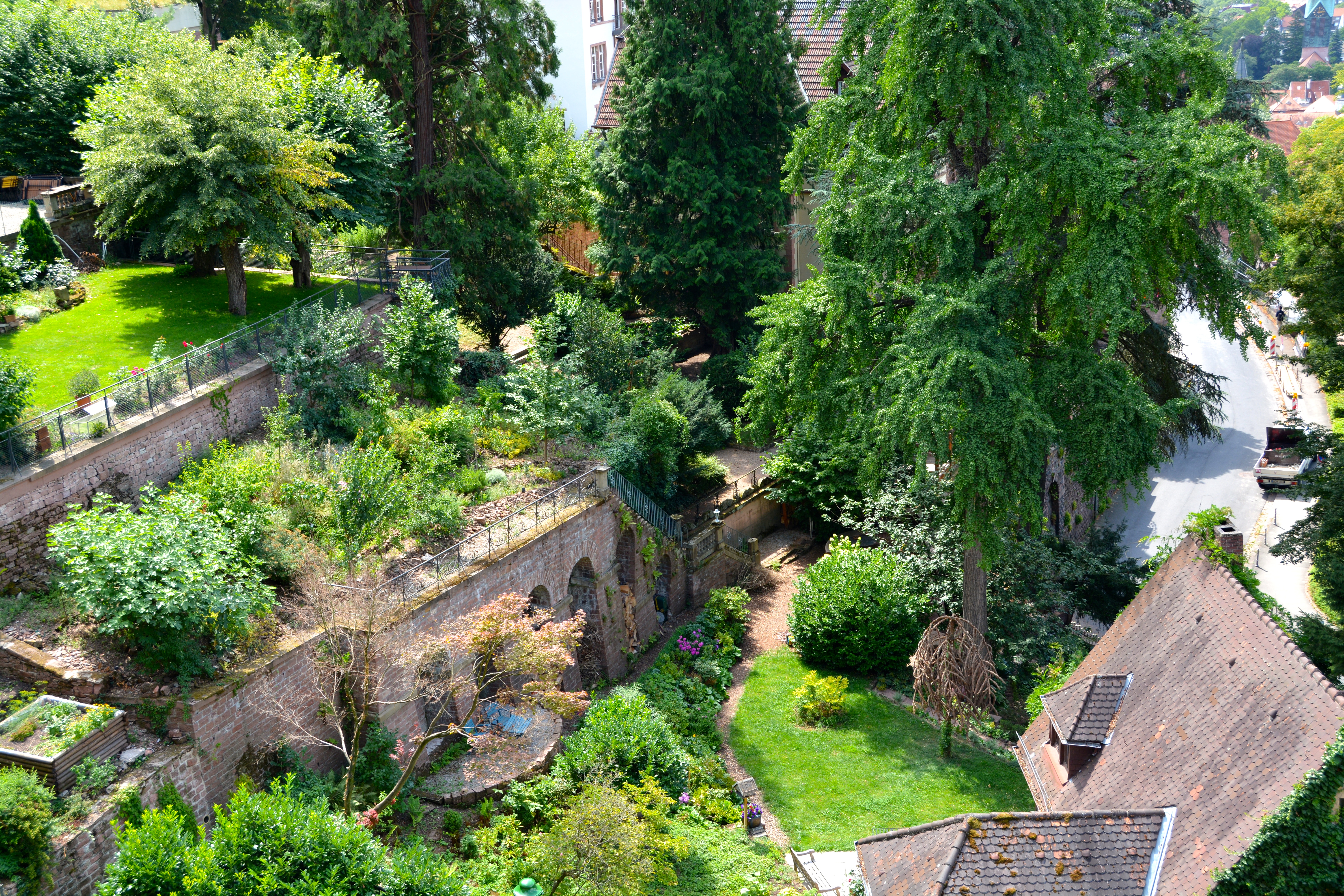
On the way up to the castle, Heidelberg, Germany.
©Jean Janssen

gardens viewed, looking down from the castle, Heidelberg, Germany ©Jean Janssen

terraced gardens, looking down from the castle, Heidelberg, Germany
©Jean Janssen

Our bus guide differed from our city guide; the people in our bus were separated into two groups.  Going into town, we passed the site of a nuclear plant.  There used to be 29 in Germany; there are only 7 now in operation and they hope to have all shut down by 2025.  The guide said they were big on green energy, particularly solar panels and windmills.  The windmills are so successful that they are often turned off because they deposit too much energy into the system.  However, energy is not cheap.  Gasoline prices are at least double to what we pay at home and include a 75% tax.
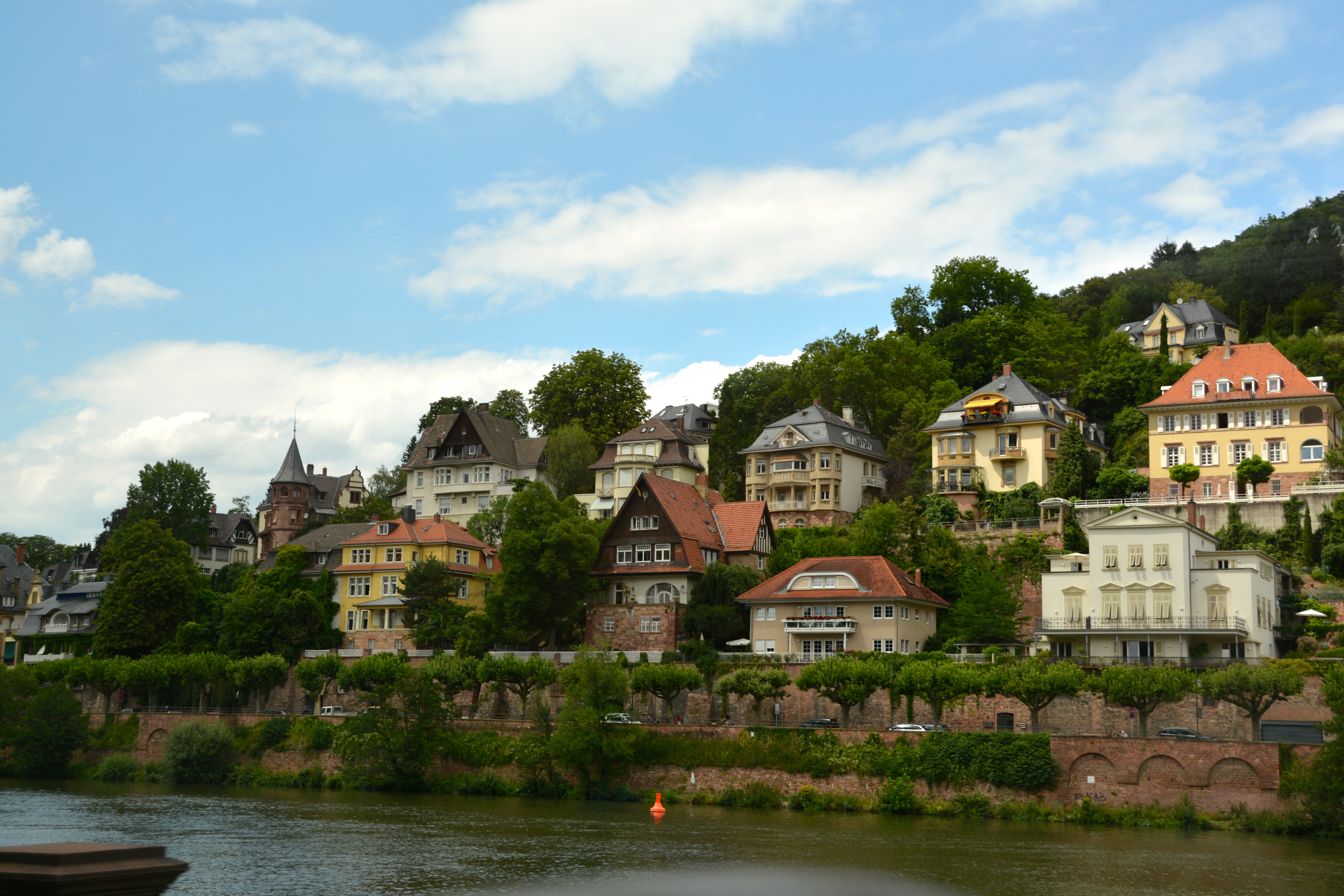
Homes along the river in Heidelberg, Germany. ©Jean Janssen
Homes along the river in Heidelberg, Germany.
©Jean Janssen

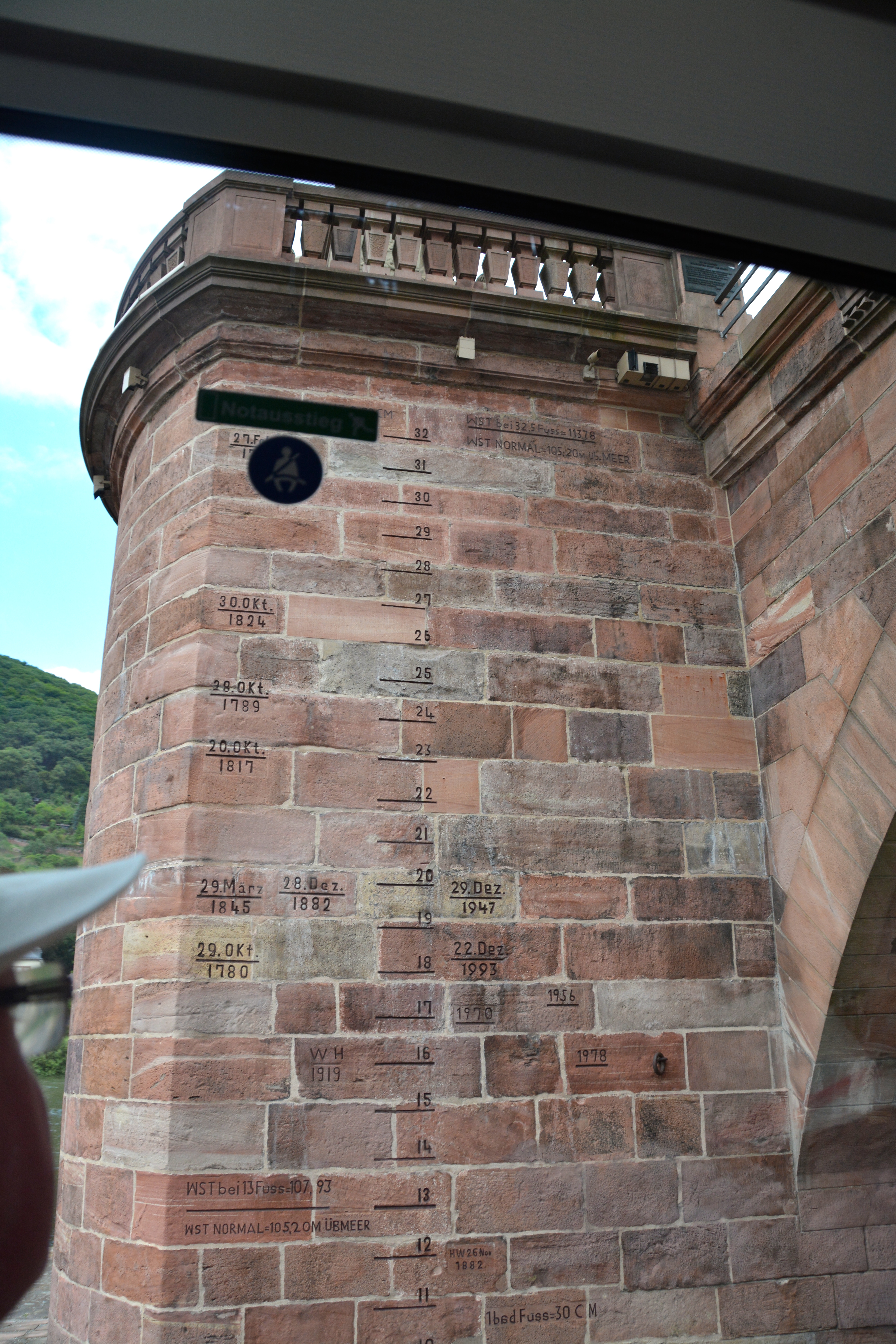
Boris checks out the markings on the bridge tower showing flooding levels and dates. Heidelberg, Germany ©Jean Janssen

Boris checks out the markings on the bridge tower showing flooding levels and dates. Heidelberg, Germany
©Jean Janssen

After passing the energy belt, we passed the “social accommodation belt” where housing was constructed after the war to provide homes for refugees.   But it is upon coming into the city that you see the beautiful homes lining the river.  My pictures, that had to be shot out of the bus windows, do not do the view justice.

The city sits along the Neckar River and is most famous for its University.  “Heidelberg is a popular tourist destination due to its romantic and picturesque cityscape, including Heidelberg Castle and the baroque style Old Town.”  It is bordered by the Holy Roman Mountains, Königsstuhl  and Gaisberg.  If there was any doubt this valley floods, one only has to look at the markings on the bridge towers showing water heights and dates when the Neckar severely overflowed.

Funicular ride up to Heidelberg Castle, Germany ©Jean Janssen

Funicular ride to and from Heidelberg Castle, Germany
©Jean Janssen

After entering the city and driving along the river front, our first stop was the castle.  It is a winding road up to the top and our motor coach driver was most impressive to make it successfully in that large vehicle.  I enjoyed the ride up though, peering into the town below as things became smaller and smaller.  From the old city, you can also take a funicular up.  The drop off point is right next to the castle ticket office and entrance.  The funicular continues up to the summit of Königsstuhl Mountain.
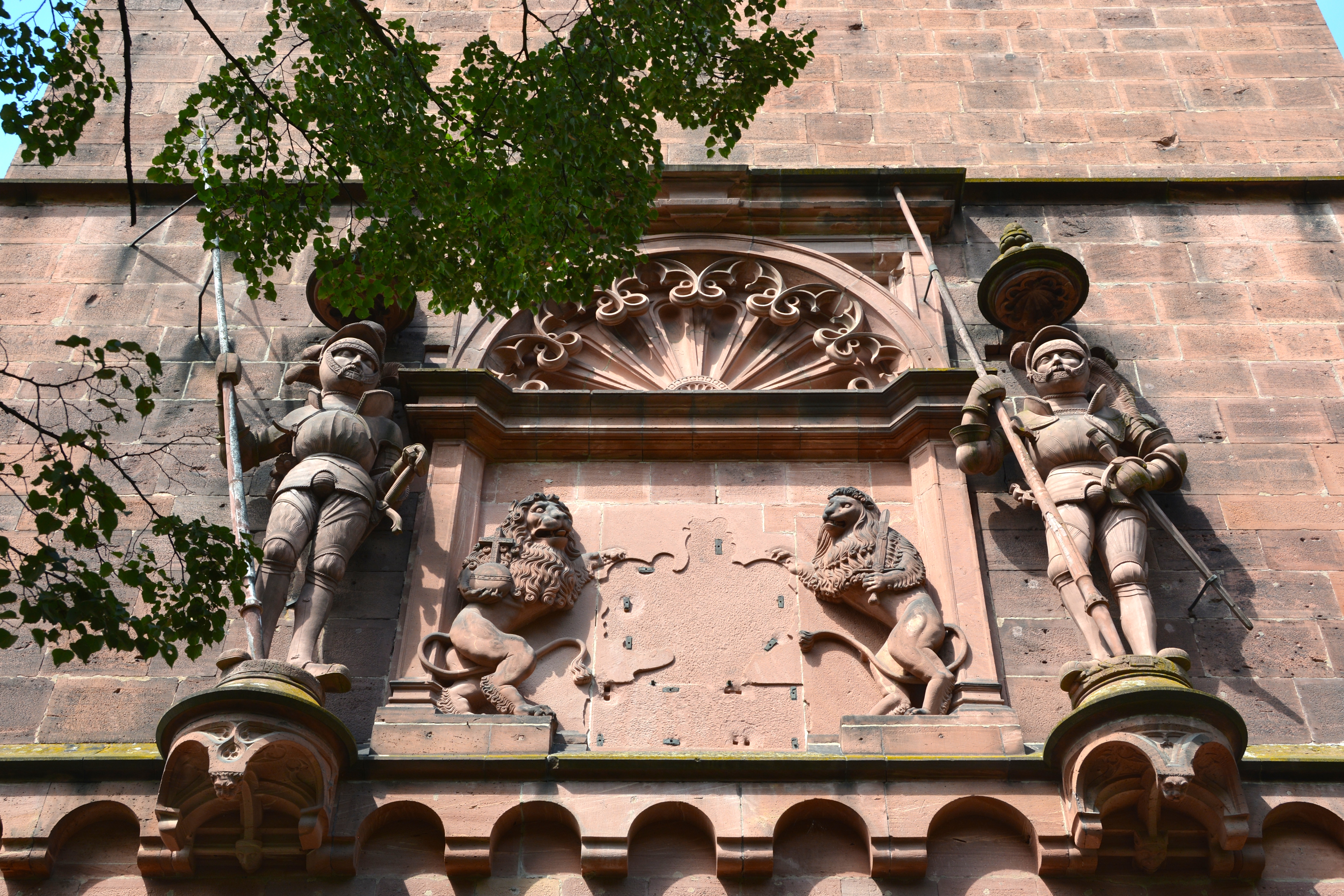
Heidelberg Castle, Heidelberg, Germany ©Jean Janssen

Heidelberg Castle, Heidelberg, Germany
©Jean Janssen

As we left the coach parking lot and before entering the castle, our new guide told us about the University fraternities.  In the 1800s almost all University men were members of these organizations, now it is only about 10%.  Seven fraternities still practice the old method of dueling and scaring of the face. Most still employ the drinking games; led by the President, members consume about 40 drinks a night.  Heidelberg University does have one fraternity for women.
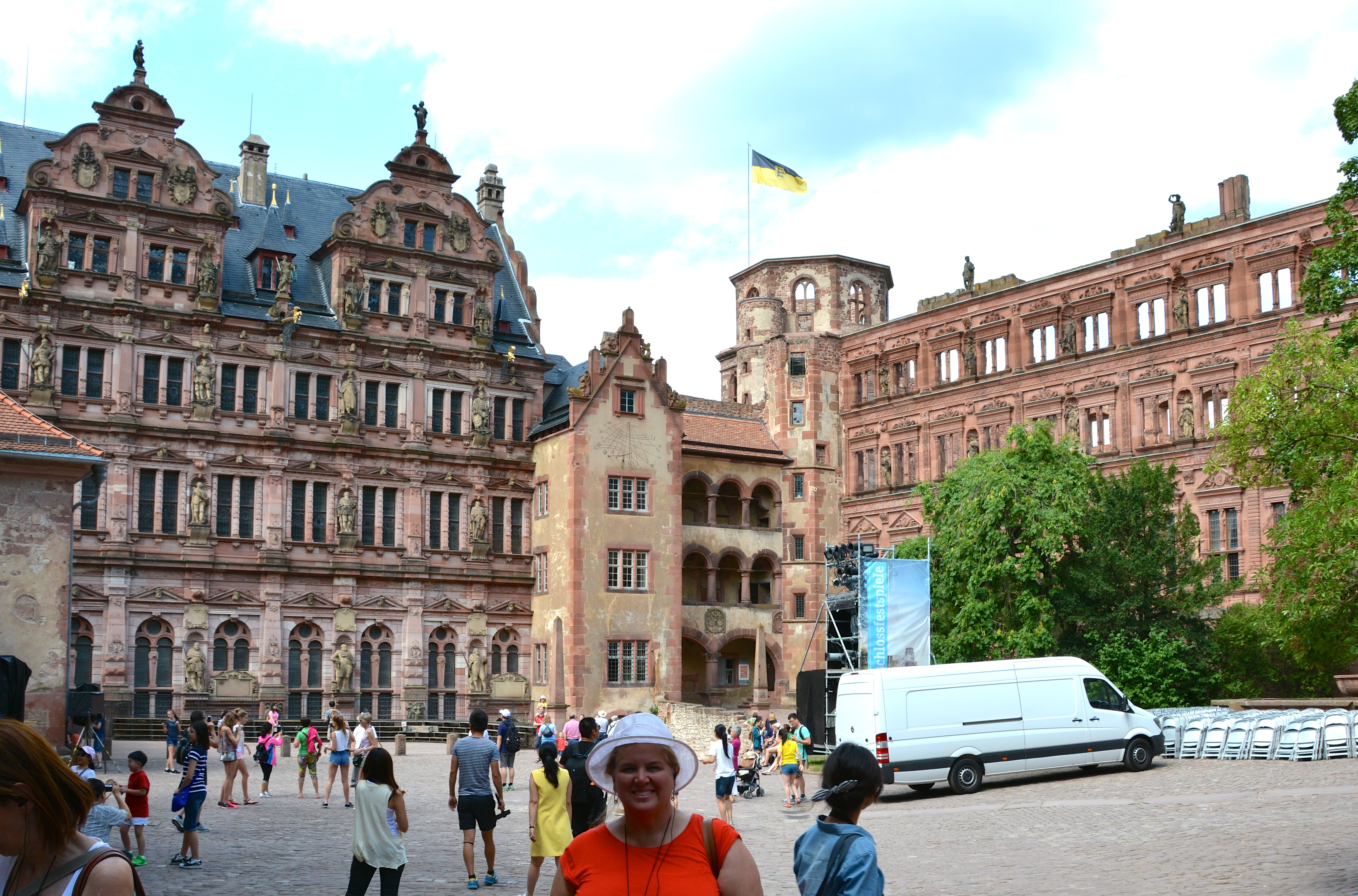
Courtyard of Heidelberg Castle, Heidelberg, Germany ©Stephen Pate
Natasha in the courtyard of Heidelberg Castle, Heidelberg, Germany
©Stephen Pate

Heidelberg Castle Couryard, Heidelberg, Germany ©Jean Janssen

Heidelberg Castle Couryard, Heidelberg, Germany
©Jean Janssen

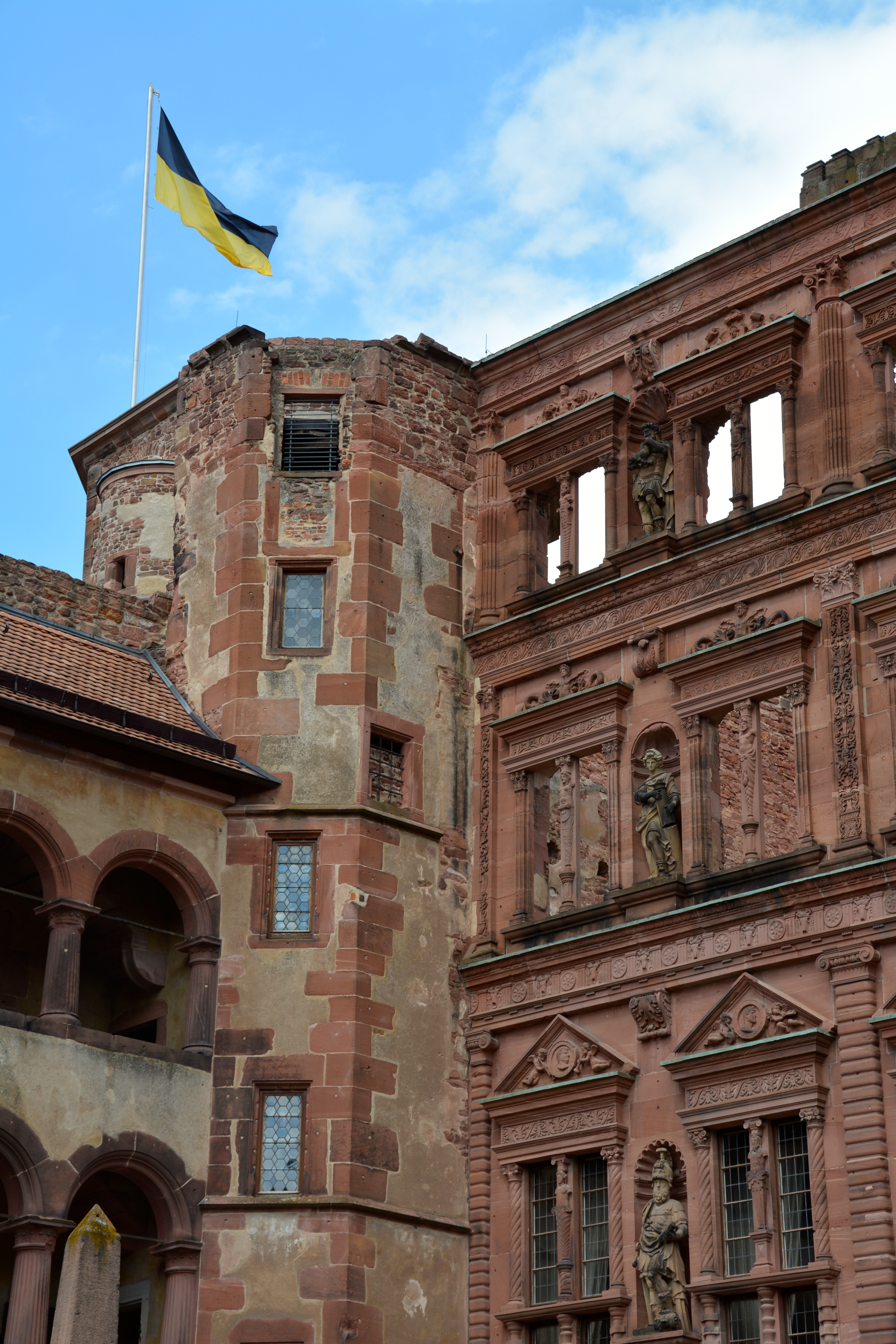
The castle is a mix of various architectural styles, often butting up again one another.  The courtyard is a photographer’s dream, as long as you are ok shooting around all the people.  On one side we saw ruins set for a theatrical performance with the undamaged building serving as the backdrop.  It was very hard to keep up with the dialog of our tour guide.

Heidelberg Castle, Heidelberg, Germany ©Jean Janssen

Heidelberg Castle, Heidelberg, Germany
©Jean Janssen

Heidelberg Castle, Germany ©Jean Janssen

Heidelberg Castle, Germany
©Jean Janssen

The castle has been built and rebuilt suffering major damage both during the 30-years war and by lighting on multiple occasions.  You’ll notice the same red brick in the city below as at times the castle grounds were used as a quarry for building materials.   The castle as a tourist attraction has been popularized by Americans.  Mark Twain wrote glowingly about his visit to the castle and its situation on the hillside overlooking Heidelberg and the overgrowth adding to the mystique.  “Misfortune has done for this old tower what it has done for the human character sometimes – improved it.”  From A Tramp Abroad by Mark Twain.

Heidelberg Castle ©Jean Janssen
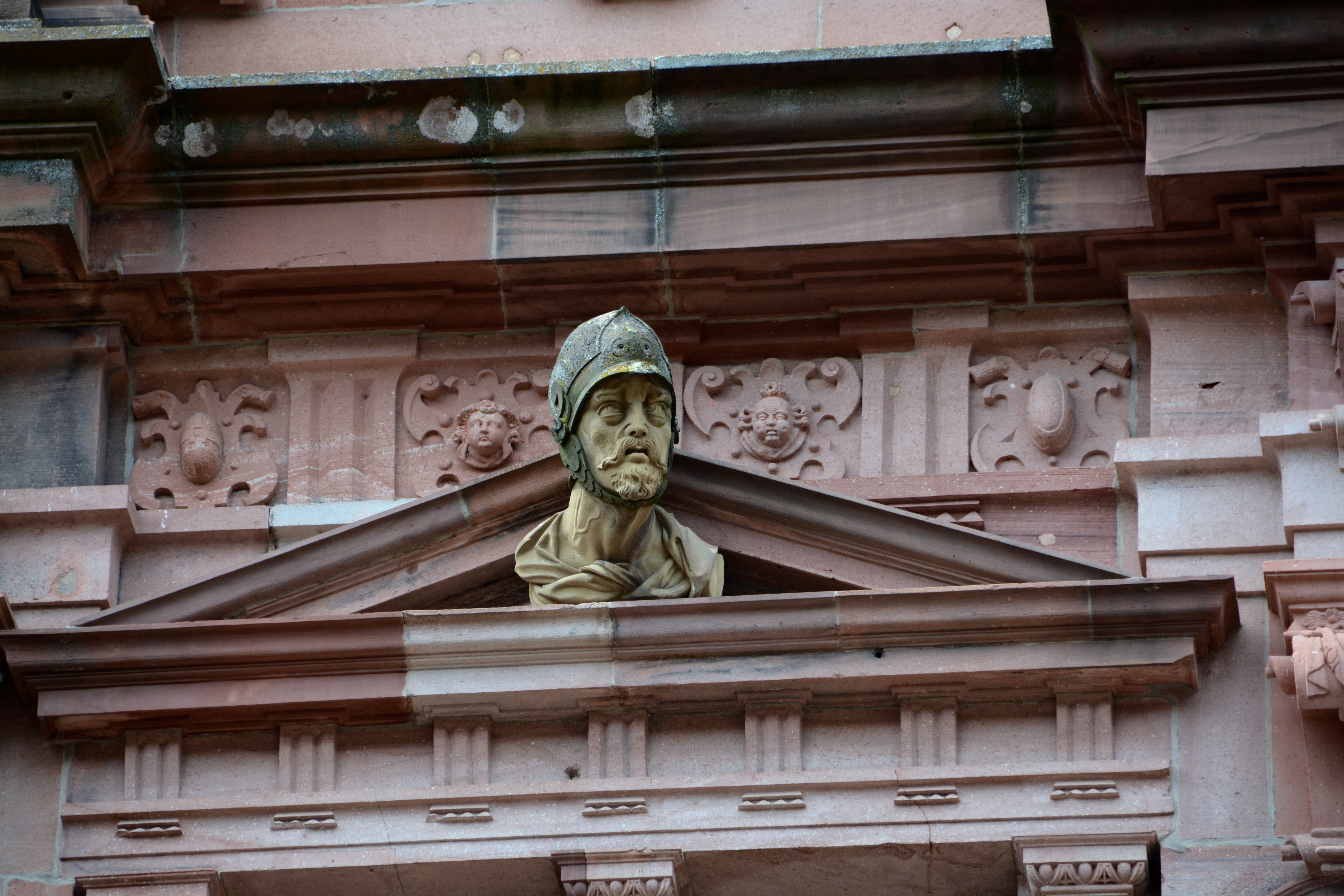
Heidelberg Castle
©Jean Janssen

Heidelberg Castle, Germany ©Jean Janssen

Heidelberg Castle, Germany
©Jean Janssen

World's Largest Wine Barrel, Heidelberg Castle, Germany. The tourists below and above give a perspective on the barrel's size. ©Jean Janssen

World’s Largest Wine Barrel, Heidelberg Castle, Germany. The tourists below and above give a perspective on the barrel’s size.
©Jean Janssen

After visiting the exterior of the castle and the courtyard, we visited the wine cellar and the exceptionally large wine barrel inside.  It was interesting viewing and we were all happy to be out of the heat and have a chance to sit down.  This is a great spot for a break with toilets and refreshments available.  The Heidelberg Tun is the world’s largest wine barrel, holding 58,124 gallons of wine. Staircases allow you to view the barrel from all sides and the top platform can even be used as a dance floor.

Heidelberg from the castle terrace. ©Jean Janssen

Heidelberg from the castle terrace.
©Jean Janssen

Once outside again, we went to the castle terrace for more incredible views of the river and city.  There is also a deep footprint and the accompanying story of a suitor jumping from a window.  With my 9 1/2 or European 41 (shoe size) foot, it was a perfect fit.

Church of the Holy Spirit and Market Square, Heidelberg, Germany ©Jean Janssen
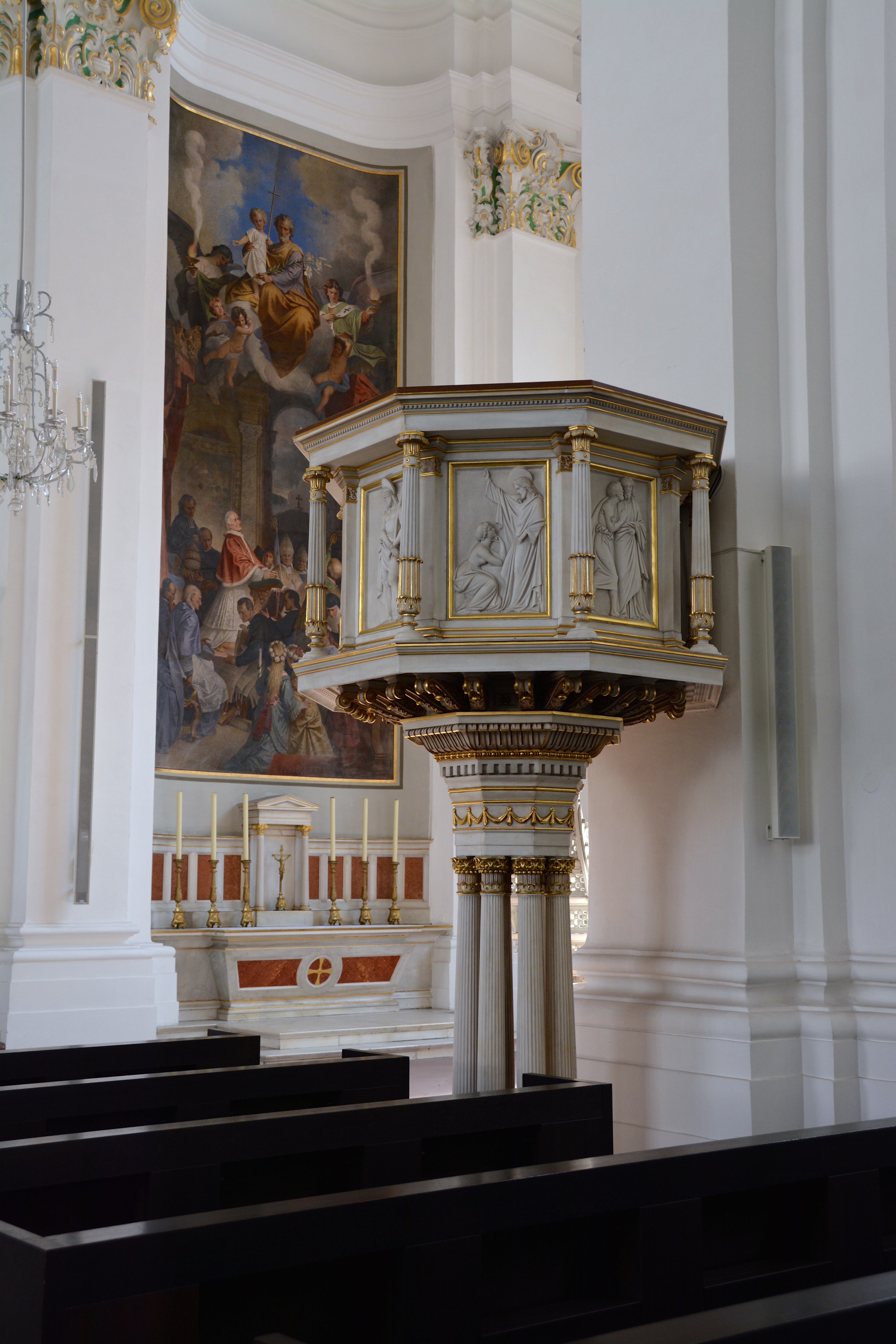
Church of the Holy Spirit and Market Square, Heidelberg, Germany
©Jean Janssen

Jesuit Church, Heidelberg, Germany ©Jean Janssen

Jesuit Church, Heidelberg, Germany
©Jean Janssen

Leaving the castle, we once again rode the coach.  This time we went down to river to a drop off stop for our free time in the old town.  Our guide walked us in and then pointed us in several directions we might pursue for various sites. Boris was determined to find himself some dueling swords.  I wanted to see the University and the Jesuit church.  We split up at market square between the Rathaus and The Church of the Holy Spirit for our short free time in Heidelberg.  (I suspect this square is the spot for the Christmas Market; this spot would be perfect and customary for this holiday tradition.)

Heidelberg University, Heidelberg, Germany ©Jean Janssen
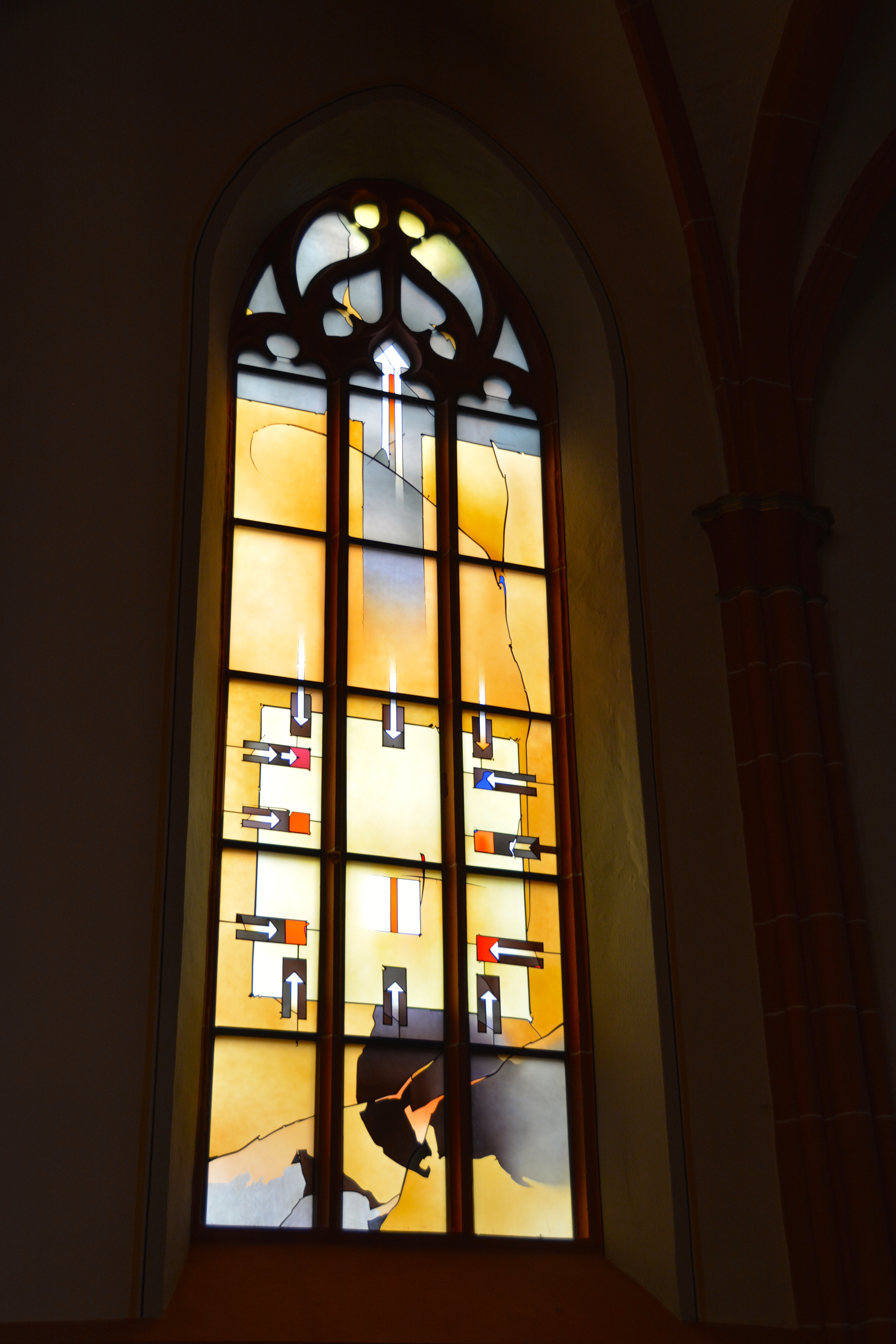
The Library at Heidelberg University, Heidelberg, Germany
©Jean Janssen

Stained Glass Window in Chapel on Heidelberg University Campus, Heidelberg, Germany ©Jean Janssen

Stained Glass Window in Chapel on Heidelberg University Campus, Heidelberg, Germany
©Jean Janssen

I wandered into several churches, eventually passing the Jesuit church, just off the main thoroughfare.   I decided to go down a little further and make my way back this direction.  I did visit a University Chapel with some very interesting modern stained glass windows; I was fortunate that the caretaker let me in since I arrived just 5 minutes before closing.  I walked a bit through the University area and then backtracked to the the Jesuit church with its stark white interiors.  All the churches I visited were different from each other and lovely.
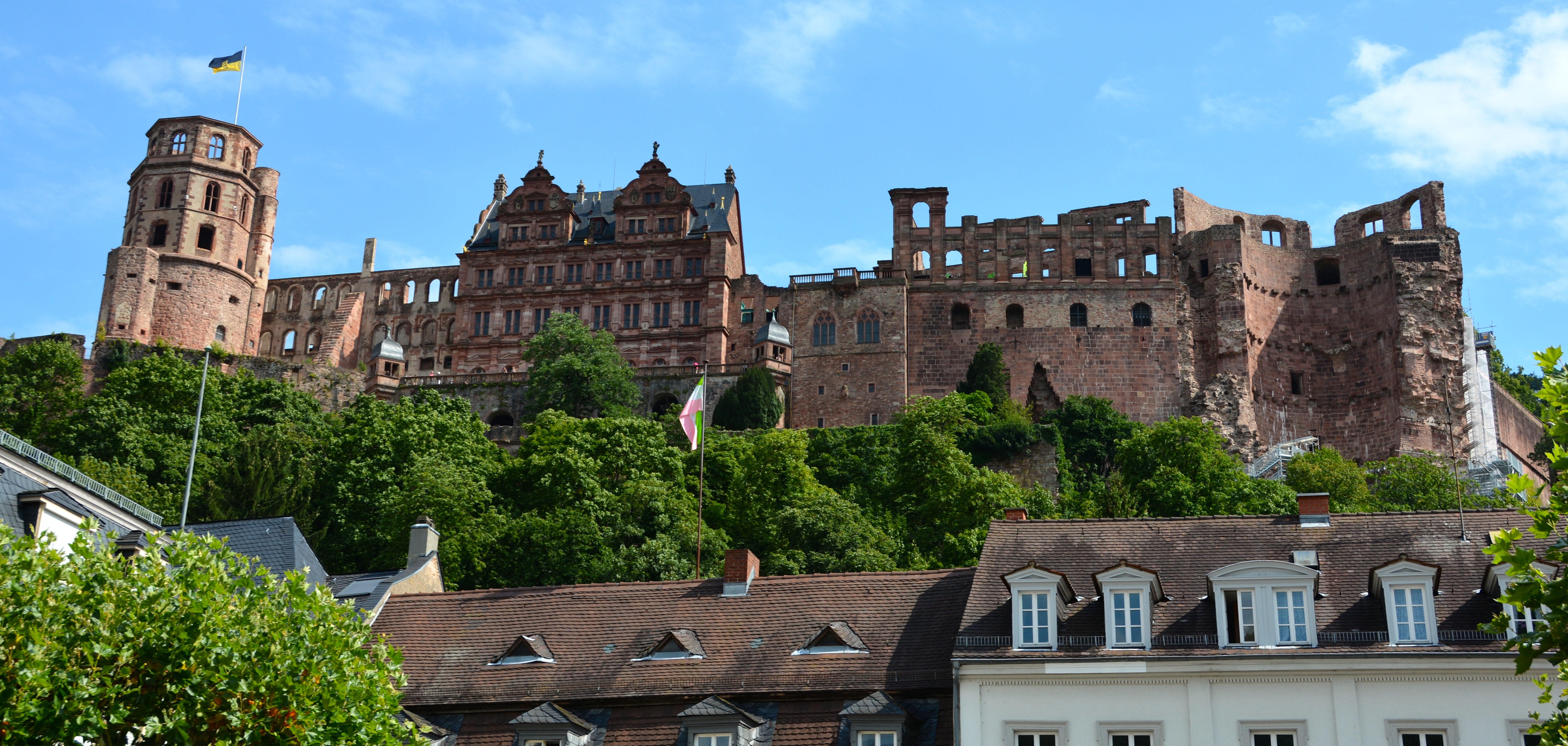
Heidelberg Castle viewed from the old town below. Heidelberg, Germany ©Jean Janssen
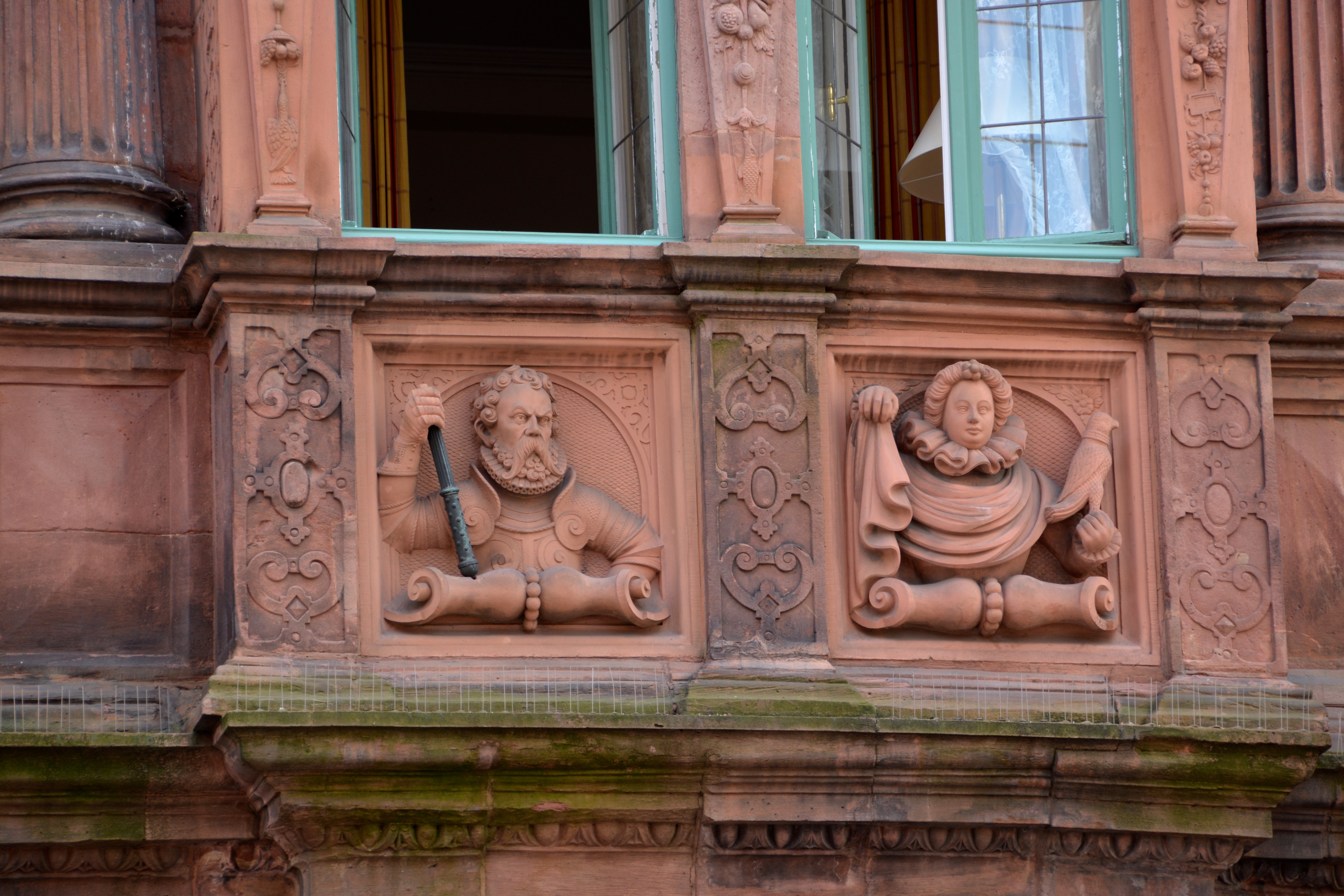
Heidelberg Castle viewed from the old town below. Heidelberg, Germany
©Jean Janssen

Heidelberg Germany Old Town ©Jean Janssen
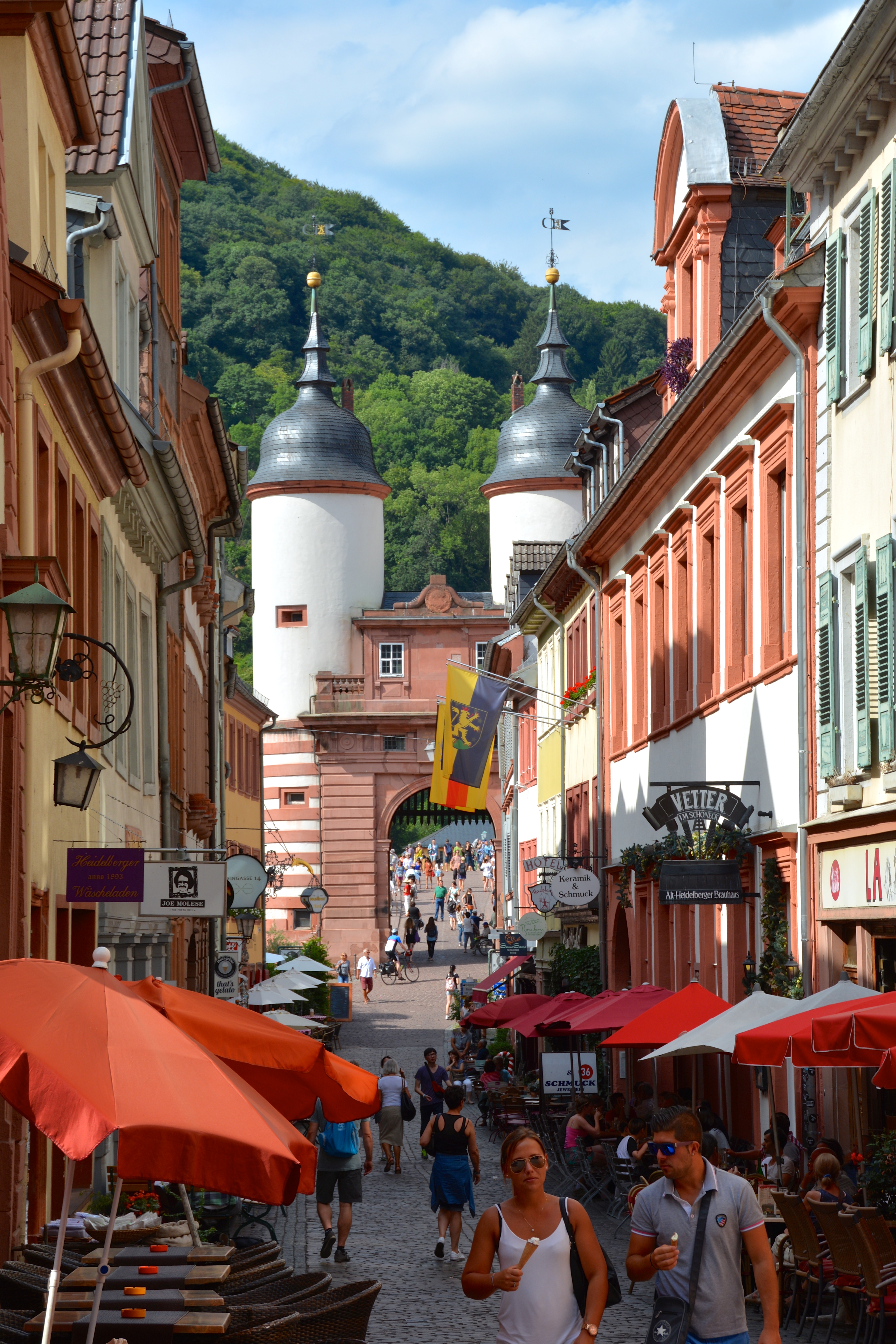
Heidelberg Germany Old Town
©Jean Janssen

Heidelberg, Germany ©Jean Janssen

Heidelberg, Germany
©Jean Janssen

The walk into the old town and out again afforded us wonderful views of the castle.  I didn’t do any real shopping, as some of the ship’s guests did, but I did make a stop into a bakery for some of the wonderful meringues I saw in the window and added a almond pastry as well.  My friend Sharon found a wonderful linen shop by the pedestrian bridge that crosses the Neckar; she was our “go to girl” when looking for linens.  Boris didn’t find his dueling swords, but was happy to share my purchases.

View of Heidelberg Castle from Corn Market, Heidedlberg, Germany ©Jean Janssen

View of Heidelberg Castle from Corn Market, Heidedlberg, Germany
©Jean Janssen

Heidelberg did not disappoint.  This is a place to return to; perhaps during the holiday markets?
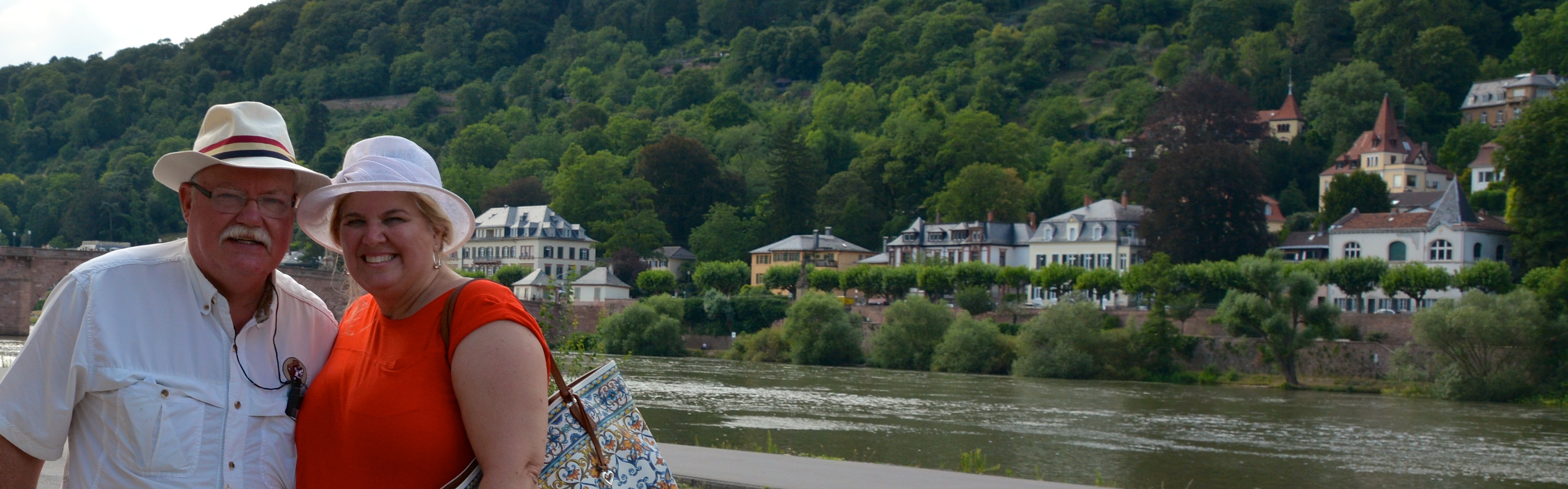
Boris and Natasha along the Neckar River, Heidelberg, Germany

Boris and Natasha along the Neckar River, Heidelberg, Germany
Posted in international, River Cruise | Tagged , , | Leave a comment

Speyer, Germany
Although the city is famous for its Romanesque Cathedral, I was partial to the painted paneling in Trinity Lutheran Church in Speyer, Germany ©Jean Janssen

Although the city is famous for its Romanesque Cathedral, I was partial to the painted paneling in Trinity Lutheran Church in Speyer, Germany
©Jean Janssen

DSC_3938

Speyer, Germany ©Jean Janssen
Today we are docked at Germiersheim, about a 20 minute shuttle ride into Speyer (and the famous Romanesque Cathedral).  This afternoon we are going to Heidelberg, a “bucket list” German city for Boris and I.  The ship offered three options for morning touring.  You could take a shuttle into town and stay as long as you wanted; the last shuttle returned in the early evening.  Alternatively, you could take the bus in for a walking tour of Speyer.  Your third option was to go to a vinegar tasting and cooking demonstration at Doktorenhof Vinegar Estate.  All these were complimentary offerings.  Boris and I are going to take the Speyer walking tour.

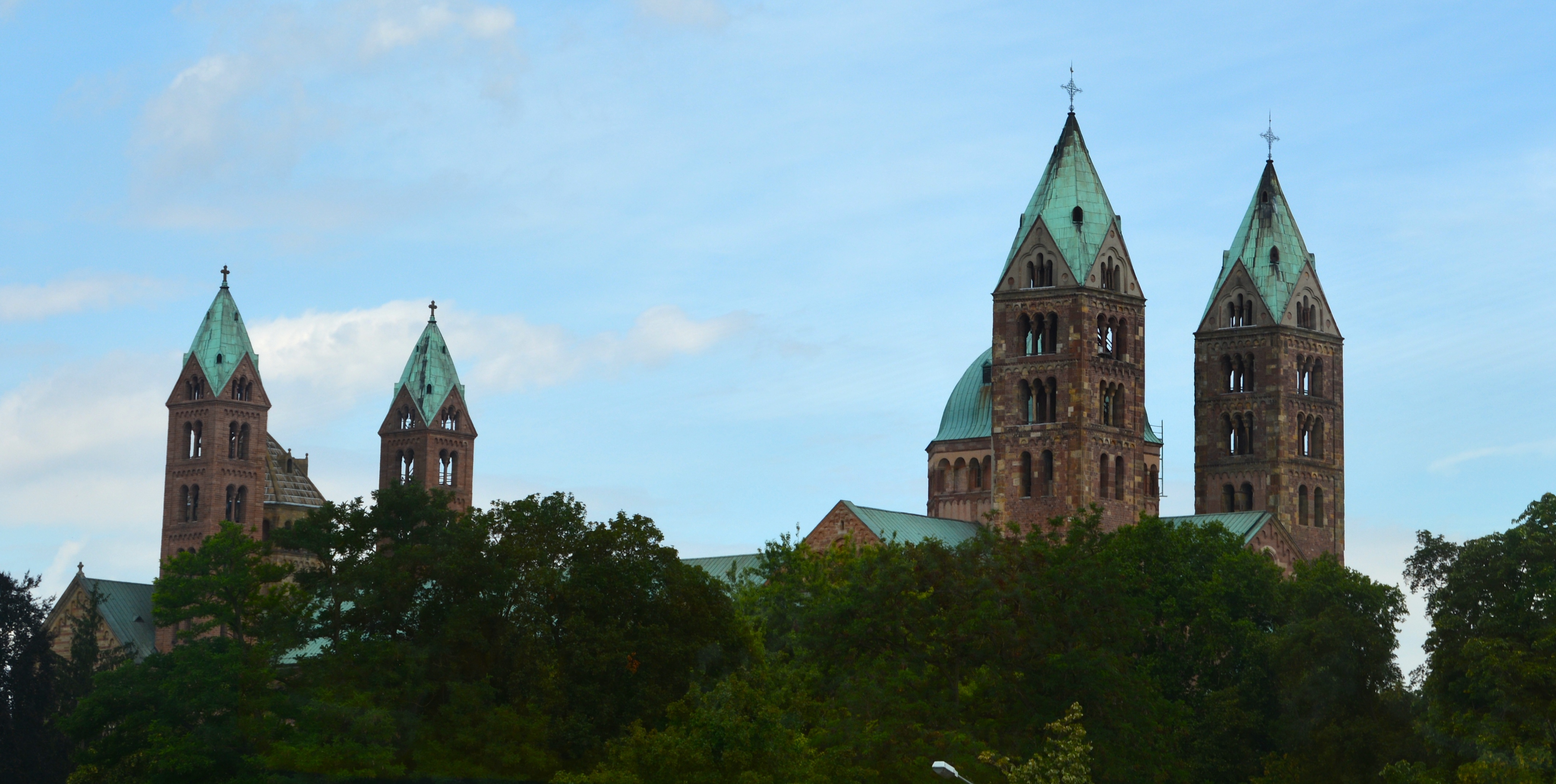
View at we arrived at the city of the spires of the Romanesque Cathedral at Speyer, Germany. ©Jean Janssen

Our view as we arrived in Speyer, the spires of the Romanesque Cathedral, Speyer, Germany.
©Jean Janssen

Those going to the vinegar tasting could also sign up for a vinegar cooking class in the afternoon.   The Heidelburg tour is another afternoon option.  For these last two there was a fee, although much less than excursions of the same length on other cruise lines.  I suspect they are just recouping costs rather than making a lot of money on these optional tours.  They are enticements to take the cruise.  Certainly Boris and I were excited when we saw Heidelberg on the itinerary when we were looking at cruise options.

Speyer, Germany ©Jean Janssen
Technik Museum Speyer, Germany
©Jean Janssen

Arriving into Speyer, we saw the technical museum, Technik Museum Speyer.  From our shuttle drop off point, you could walk over.  The 747 mounted on top of the museum, one of many planes at the museum (there was also lots of older military aircraft), was originally mounted higher but there were objections since it made the museum taller than the Cathedral.  The plane was lowered. You walk up to tour the airplane; going down you can slide or walk.  (In summertime, wear something long enough to cover your legs if you intend to slide or you might burn your bottom.)
Speyer Romanesque Cathedral, Speyer, Germany ©Jean Janssen

The Southern facade of Speyer Romanesque Cathedral, Speyer, Germany
©Jean Janssen

On the western facade of the Imperial Cathedral Speyer, Germany ©Jean Janssen

On the eastern facade of the Imperial Cathedral Speyer, Germany
©Jean Janssen

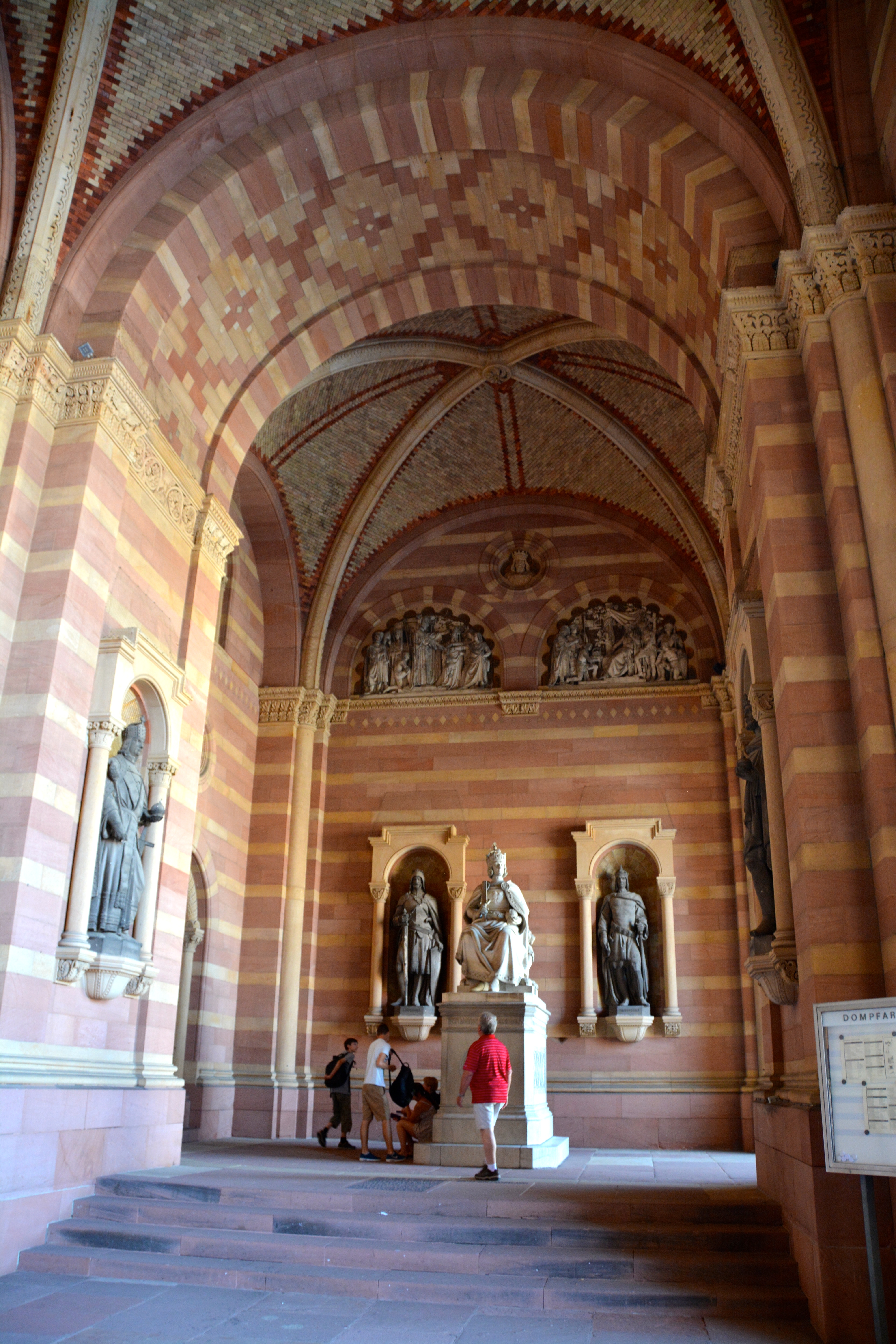
Our first stop was to tour the exterior of the Cathedral.  The Basilica was built as a mausoleum in 1030 by Conrad II and was consecrated in 1061.  The second building phase lasted from 1081-1106 when the four towers and two octagonal domes were added.  It is the largest Romanesque building in the world.  It was the burial place for German Emperors for 300 years; 11 crown heads are buried here.

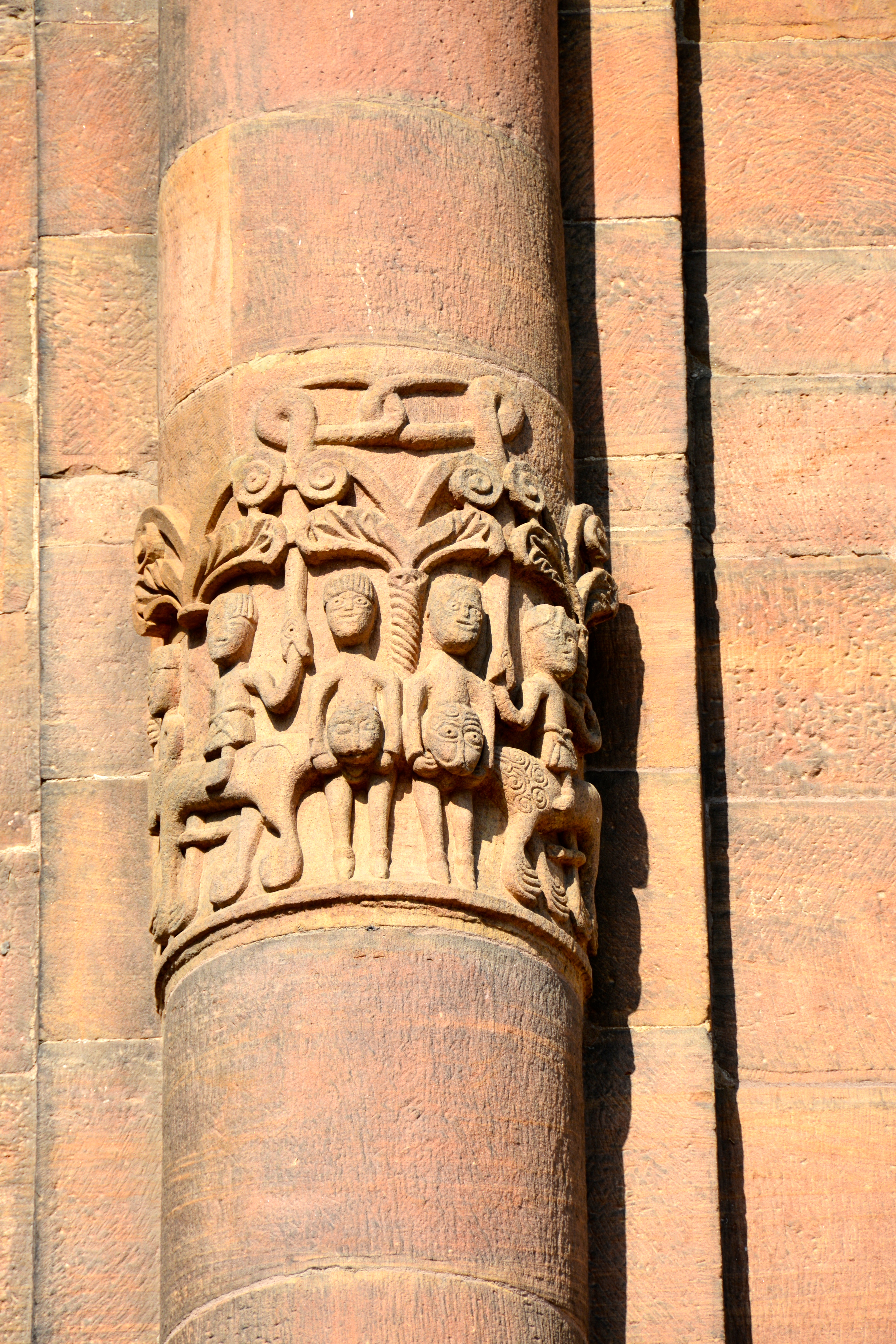
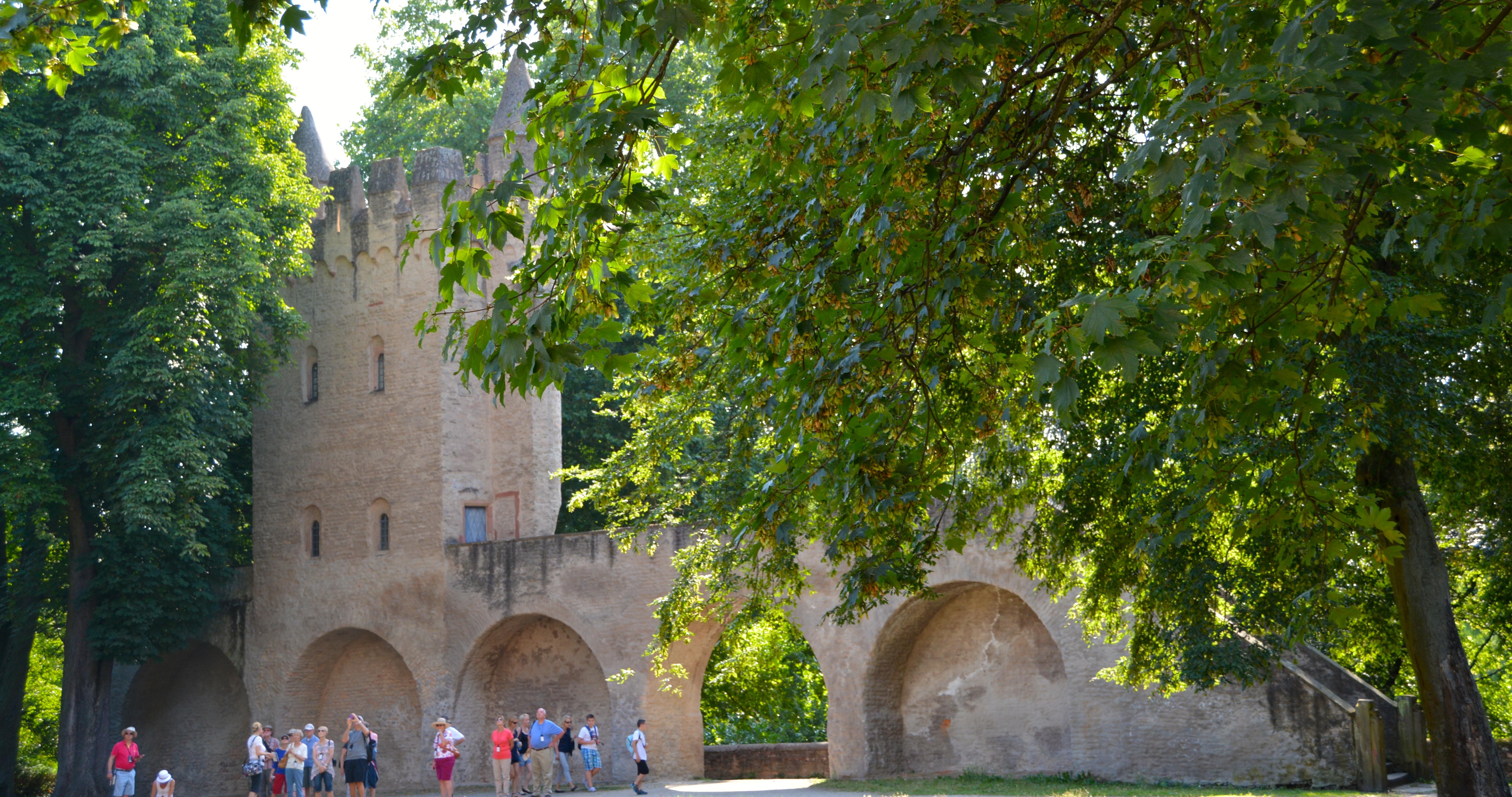
As we toured the eastern cascade of the Cathedral, you could see wonderful carvings that looked almost primitive.  Turning away from the basilica, portions of the medieval walls were present.  The Heidenturmchen, or Heath Tower, used to sit next to the Rhine in a marshy area called the heath.  Our guide only mentioned them in passing and didn’t take us by them, but Boris wandered over to take a look.

Heath Tower, part of the medieval walls in Speyer, Germany ©Jean Janssen
Heath Tower, part of the medieval walls in Speyer, Germany
©Jean Janssen

Eastern facade of Speyer Cathedral, Speyer, Germany. Note the wonderful encircling gallery. ©Jean Janssen

Eastern facade of Speyer Cathedral, Speyer, Germany. Note the wonderful encircling gallery.
©Jean Janssen

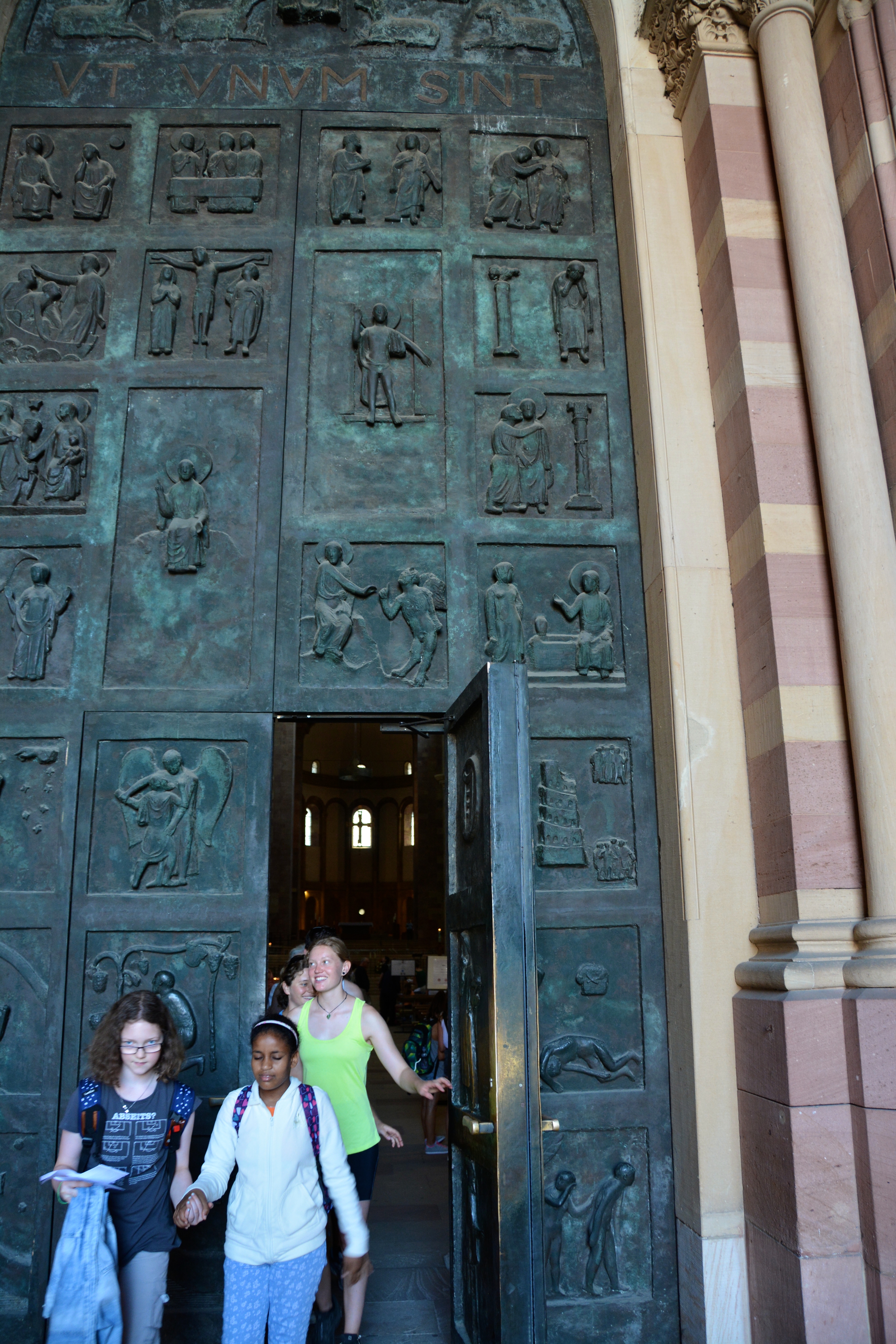
The great bronze doors of Speyer Imperial Cathedral, Germany ©Jean Janssen
The great bronze doors of Speyer Imperial Cathedral, Germany
©Jean Jansse

The Cathedral was seriously damaged by fire in 1689 and additional portions that had become unstable were removed in 1755.  Between 1772 and 1778 portions were rebuilt as an exact copy of the original design and are  “regarded as one of the first great achievements of monument preservation in Europe.”  Later reconstruction were less exact and more an interpretation of medieval architecture.  The Cathedral is a UNESCO World Heritage Site.

The western facade was obviously made of newer stone and was rebuilt in 1855.  In front of the Cathedral sits a large bowl, the Domnapf (or Cathedral Bowl) erected as a boundary between the religious and secular areas of the city and also used for the payment of taxes in wine.  (This is a famous region for vineyards.)  After a change in the tax laws, each new arriving Bishop was required to fill the bowl with wine for the pleasure of town leadership.

Eastern facade of the Imperial Cathedral at Speyer with the domnapf in the plaza. ©Jean Janssen

The western facade of the Imperial Cathedral at Speyer with the domnapf in the plaza.
©Jean Janssen

The tour then moved into the city to visit the Jewish heritage site.  Boris was very disappointed that the tour did not include the interior of the Cathedral.  (He was not too impressed with our tour guide, a former military officer.)  We were promised free time at the end of the tour and hope to have the opportunity to visit then.

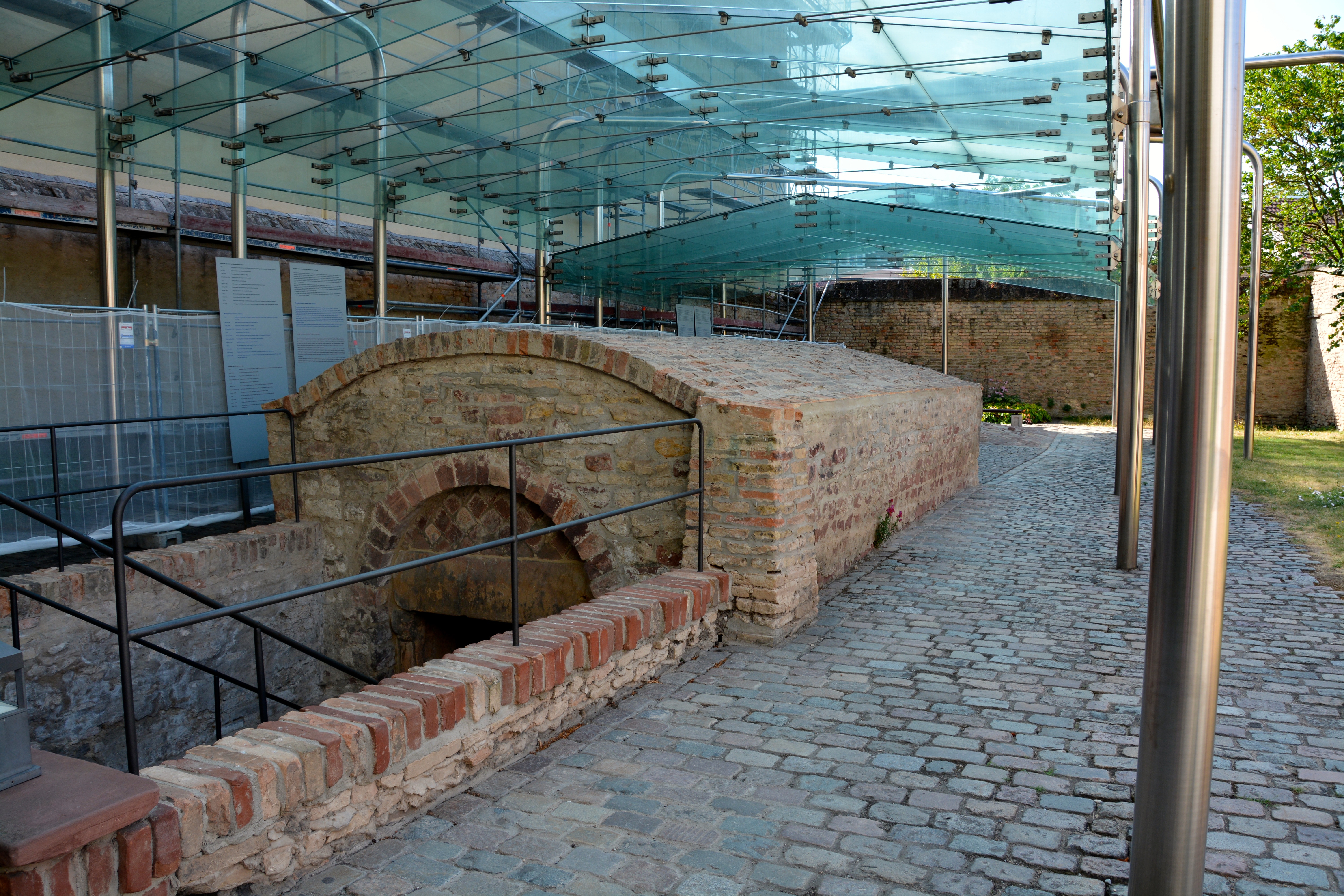
The entrance to the Mikvah, Jewish ritual bath, at Speyer, Germany ©Jean Janssen
The entrance to the Mikvah, Jewish ritual bath, at Speyer, Germany
©Jean Janssen

Recognizing the tax proceeds to be collected from prosperous Jews, Christians in the city built a synagogue to encourage Jewish settlement.  They built a wall around the quarter for “protection” and then charged more taxes for this protection.  Included in the remains were the outlines of synagogue and a second prayer room for the women.  Our guide pointed out the openings in the wall where the sound would pass through to the women.
Looking into the Mikvah, Speyer, Germany ©Jean Janssen

Looking into the Mikvah, Speyer, Germany
©Jean Janssen

Stairs leading into the immersion pool in the medieval Mikvah at Speyer, Germany. ©Jean Janssen

Stairs leading into the immersion pool in the medieval Mikvah at Speyer, Germany.
©Jean Janssen

Best preserved is the ritual bath, or Mikvah, built in 1128.  After a time of impurity, one would have to clean the body and obtain ritual purity before entering the Temple.  Examples of times of impurities would include after menstruation or childbirth and before resuming marital relations for a woman, illness, or touching a dead body.  The Mikvah is commonly used during the process of conversion to Judaism.  Some family friends who are Jewish and adopted children made use of a Mikvah as part of their children’s conversion.

The believer enters the water naked and goes completely under multiple times. The water in the Mikvah comes from a spring, rain, or natural ground water.

After leaving the Jewish quarter, we walked past the town hall to visit a Protestant church built in the early 18th century.  The French had burnt all Protestant churches in Speyer in 1689.  Trinity Lutheran Church was build by the town council (controlled by the Protestants) between 1701 and 1717.  It was considered a public building and as such had to have a a picture of the municipal symbol which is the Catholic Imperial Cathedral.

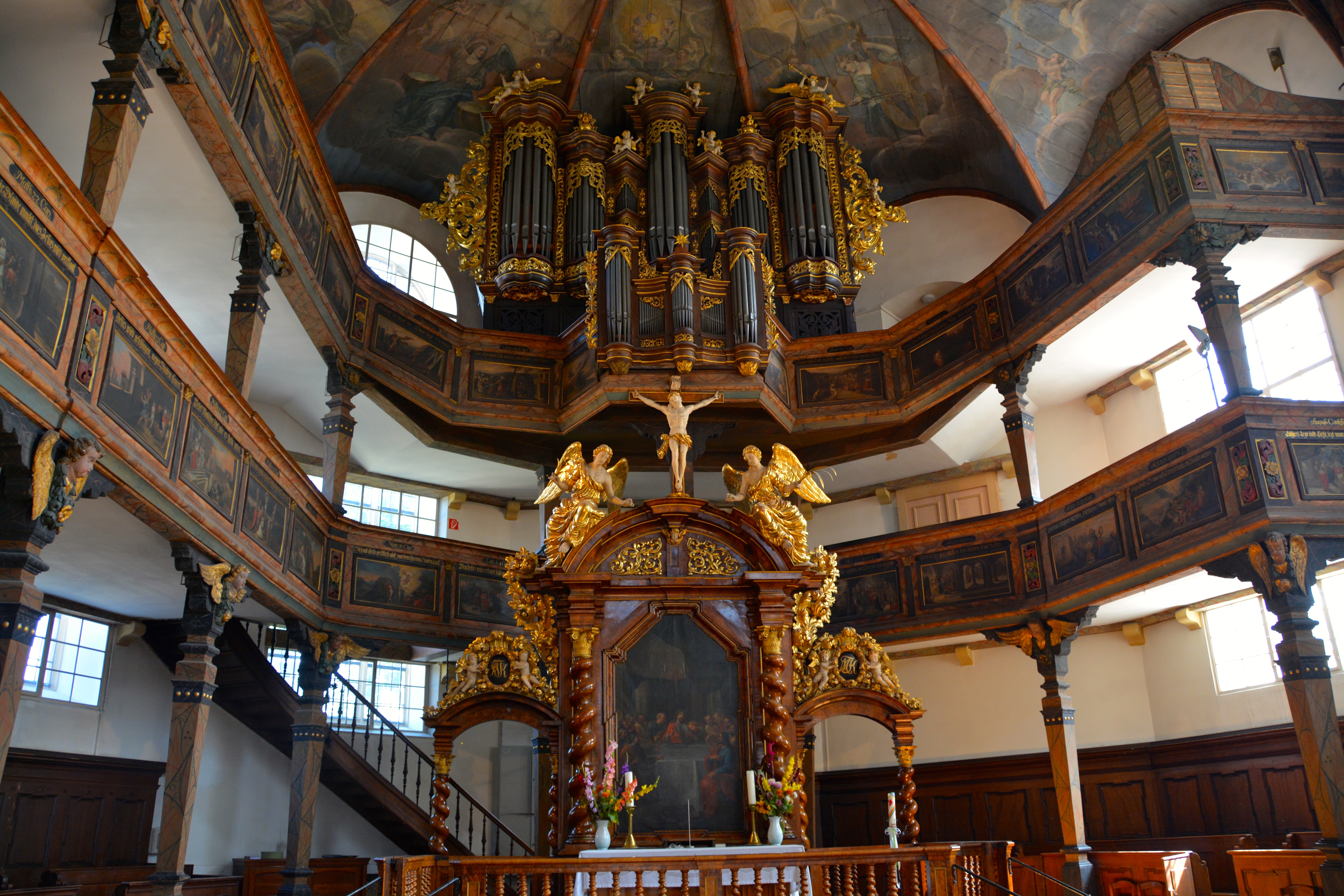
Trinity Lutheran Church, Speyer, Germany. Note the unusual placement of the organ, above the altar. ©Jean Janssen

Trinity Lutheran Church, Speyer, Germany. Note the unusual placement of the organ, above the altar.
©Jean Janssen

We were very fortunate to have the opportunity to visit the church.  It is kept locked and we were locked in and out by our guide.  The church will be closed for two years for renovation and restoration of the painted wooden panels beginning four days after our visit.  Trinity Lutheran has several design differences from other churches of its kind.  First, as mentioned above, there is a picture (municipal symbol) of a Catholic church inside a Lutheran one.  Second, the church has a crucifix, rather than a cross, which is commonly found only in a Catholic Church.  Third, depicting the importance of the music, the organ is positioned above the altar (highly unusual).

Rear of Trinity Lutheran Church in Speyer, Germany showing the beautifully painted wood paneling of the double canopies. ©Jean Janssen

Facing away from the altar and towards the rear in Trinity Lutheran Church in Speyer, Germany showing the beautifully painted wood paneling of the double canopies (balconies).
©Jean Janssen

Double-seated rows 1-5 in Trinity Lutheran Church is Speyer, Germany. ©Jean Janssen

Double-seated rows 1-5 in Trinity Lutheran Church is Speyer, Germany.
©Jean Janssen

Additionally, rows 1-5 are “double-seated”.  There are benches facing in toward each other.  The pulpit is midway through the church.  Normally the persons in rows 1-5 face the altar.  During the time the minister is at the pulpit, the people switch benches and face the pulpit.

The church also features double canopies for the congregates.  Trinity Lutheran is a working church, but the canopies or balconies are only used during Easter and Christmas Eve when the church is exceptionally full.

I found the church to be absolutely beautiful and reminiscent of the wonderful wooden Protestant churches we visited in Poland.  I look forward to a return visit when the painting restoration is complete.

Boris on the main street in Speyer, Germany. Note the fabulous maypole. ©Jean Janssen

Boris on the main street in Speyer, Germany. Note the fabulous maypole.
©Jean Janssen

DSC_3972

Speyer Imperial Cathedral, Germany ©Jean Janssen

The day had grown incredibly hot.  The tour ended at Trinity Lutheran, our only inside venue (except the interior of the Mikvah).  I really wanted to see the interior of the Cathedral, but the ticket office was not yet open when we had been by before.  Boris was less thrilled with that idea.  We did wander around a bit.  The sidewalk cafes with umbrellas were busy and inviting; there were more churches to see, but the sun had rather wiped us out.  Since we knew we had some climbing to do in Heidelberg, we decided to take it easy in the shade by the Cathedral (although you know I was still snapping pictures).

Speyer Imperial Cathedral, Germany ©Jean Janssen

Speyer Imperial Cathedral, Germany
©Jean Janssen


You certainly could have found more things to do in Speyer, but we took the shuttle back to the ship for lunch and to be ready for our afternoon excursion to Heidelberg.  Actually, it also gives me an excuse to come back.

Posted in international, River Cruise | Tagged , , , , , , , , , , | Leave a comment

The Romantic Rhine Valley: Boppard to Rudesheim

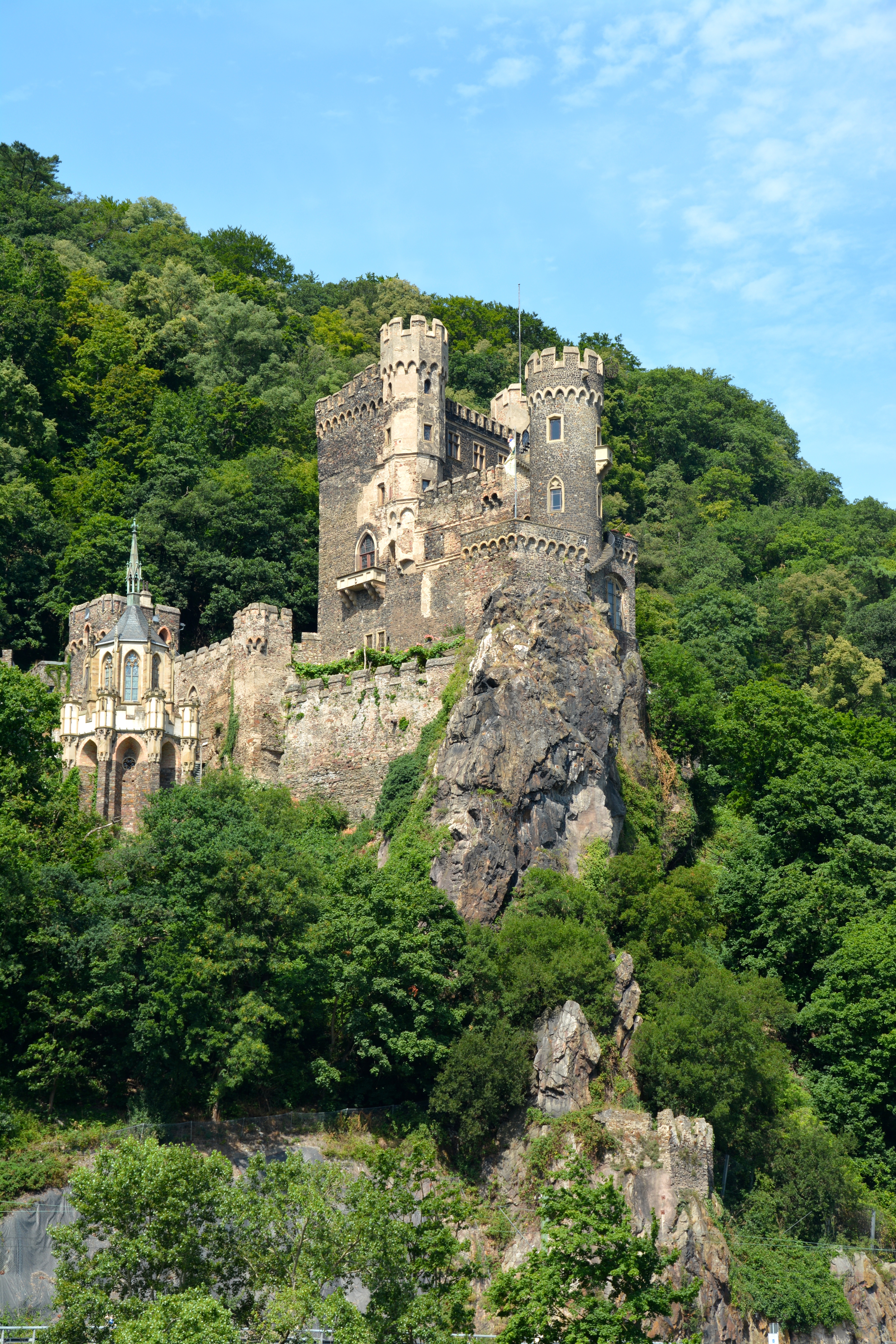
Rheinstein Castle along the Rhine ©Jean Janssen

Rheinstein Castle along the Rhine
©Jean Janssen

I got up early for my big day.  After breakfast, I was up on the sun deck at 8 am for the departure from Boppard for the 18 castles we will see in the next 4 hours.  This section of the Rhine has been a UNESCO World Heritage Site since 2001.  Our cruise director provided a commentary during our ride.

Boppard, Germany ©Jean Janssen

Boppard, Germany
©Jean Janssen

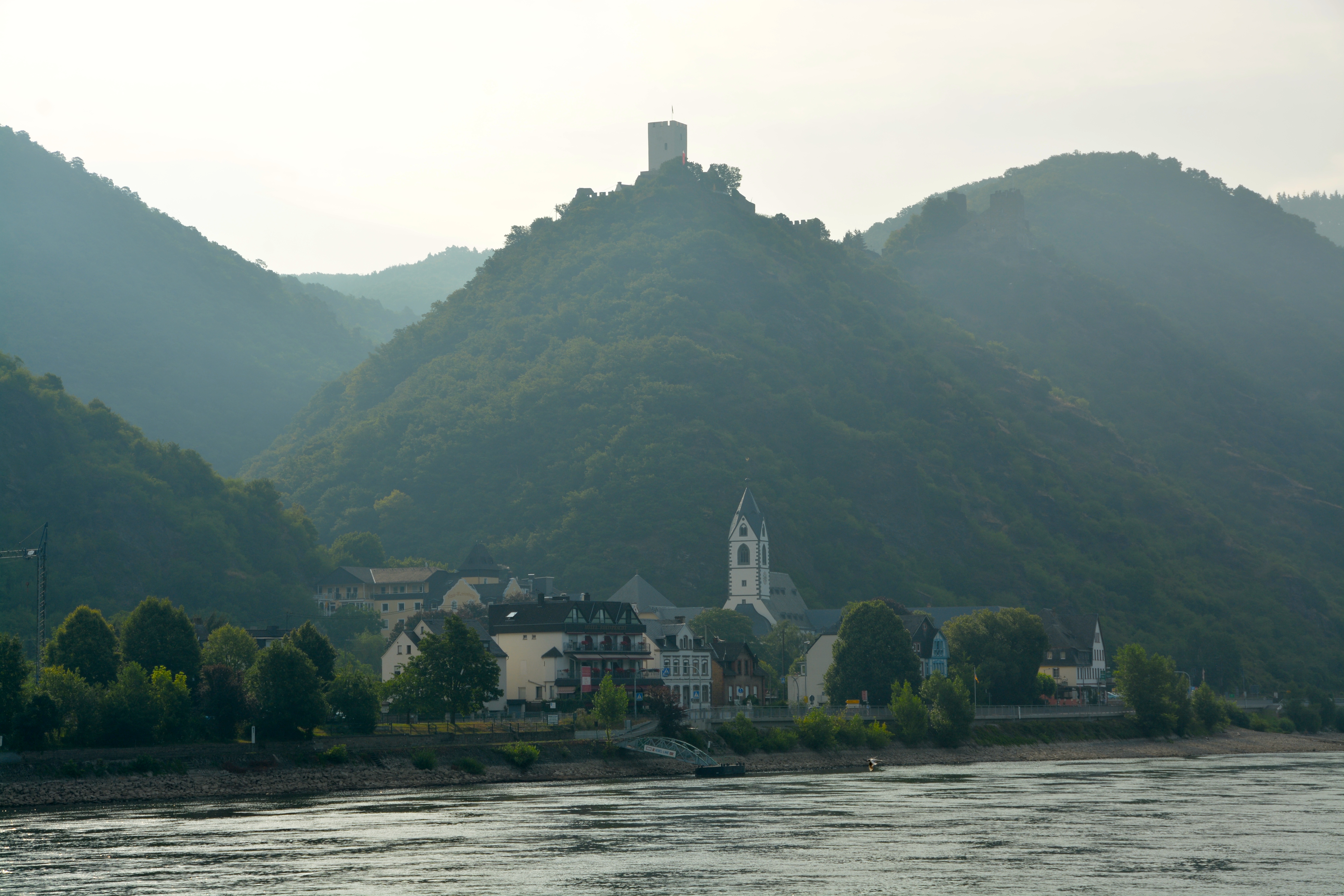
Our first viewing was the twin castles of Sterrenberg and Liebenstein the homes of two brothers who both fell in love with the same woman.  They built a wall in between the two.

Our first castle, Sterrenberg, in the morning light. ©Jean Janssen

Our first castle, Sterrenberg, in the morning light.
©Jean Janssen

Our cruise director's favorite church. Why? You have to walk through the pub to access it. ©Jean Janssen

Our cruise director’s favorite church. Why? You have to walk through the pub to access it.
©Jean Janssen

We were outside until 10 am viewing the beautiful scenery.  We saw much more than just the castles, including the lovely terrace farming of grapes for the wine the region is famous for.  By 10 it was just too hot so we retreated to the lounge that was air conditioned and the commentary could still be heard.  The lounge slowly filled up with like-minded passengers.

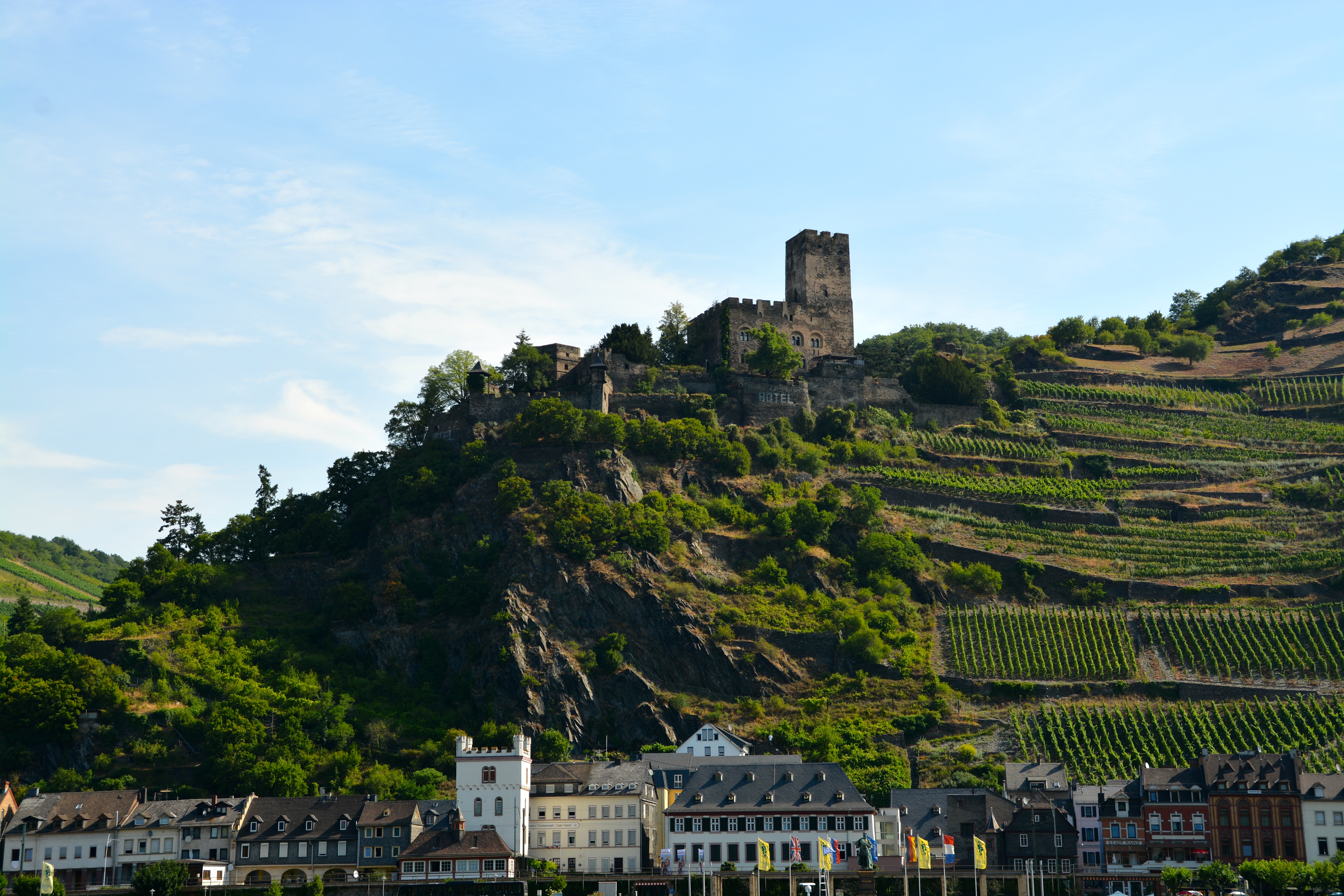
So much more to see than the castle, with the charming village below and the picturesque terrace farming. ©Jean Janssen

Gutenfels Castle with the charming village below and the picturesque terrace farming.
©Jean Janssen

tunnel entrances disguised as castles along the Rhine, Germany ©Jean Janssen

tunnel entrances disguised as castles along the Rhine, Germany
©Jean Janssen

We saw train tunnel openings that from a distance had the appearance of a small castle tower.  Apparently they were constructed this way in the hope that they would be viewed as having historical significance and not be bombed in times of conflict.  Our cruise director also pointed out his favorite church whose only entrance was through the adjoining local pub.

Castle along the Rhine, Germany ©Jean Janssen

Rheinelfs Castle along the Rhine, Germany
©Jean Janssen

Castle along the Rhine, Germany ©Jean Janssen

Schoenburg Castle along the Rhine, Germany
©Jean Janssen

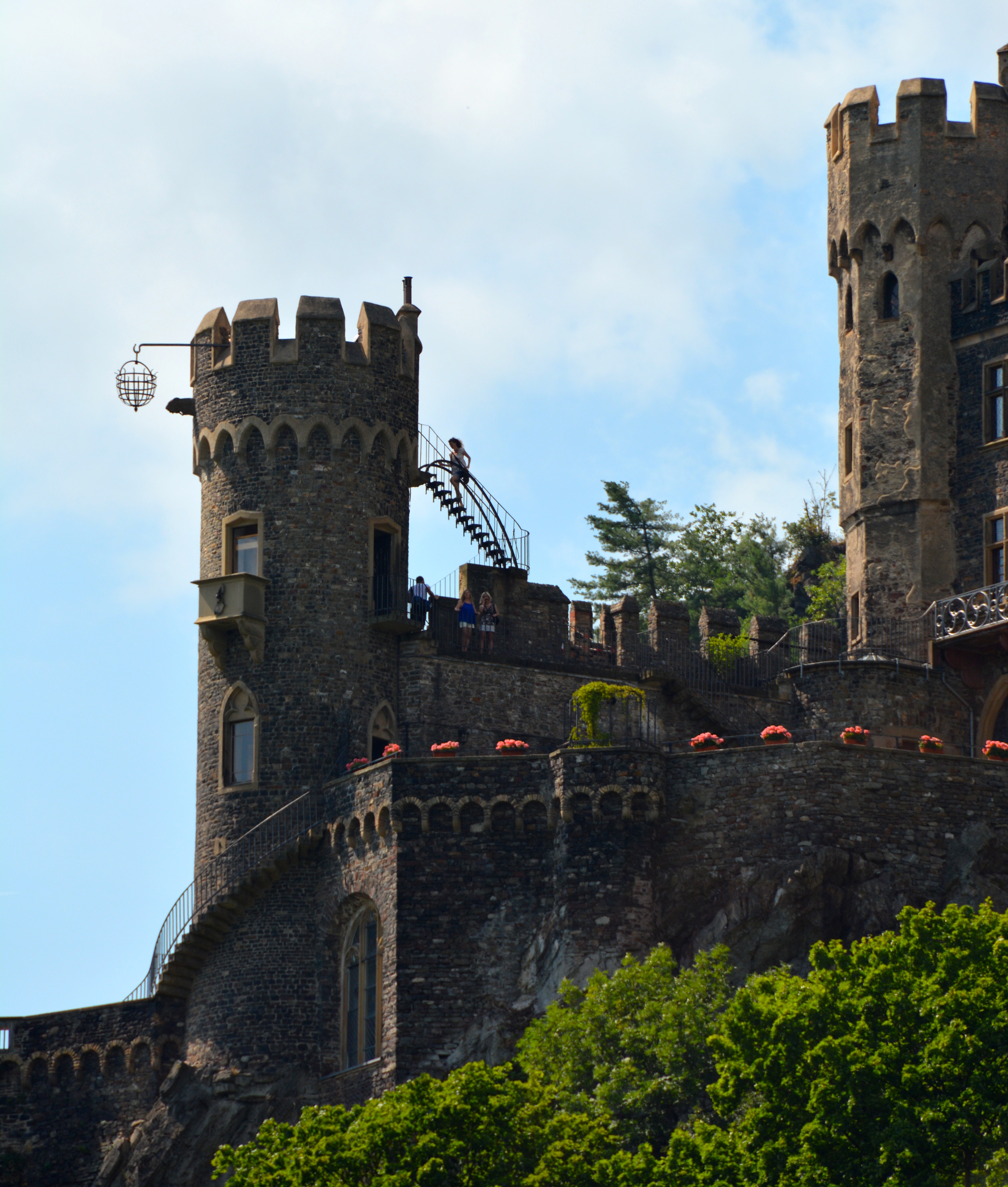
Castle on the Rhine, Germany ©Jean Janssen

Rheinstein Castle on the Rhine, Germany.  note the guest touring on the spiral staircase.
©Jean Janssen

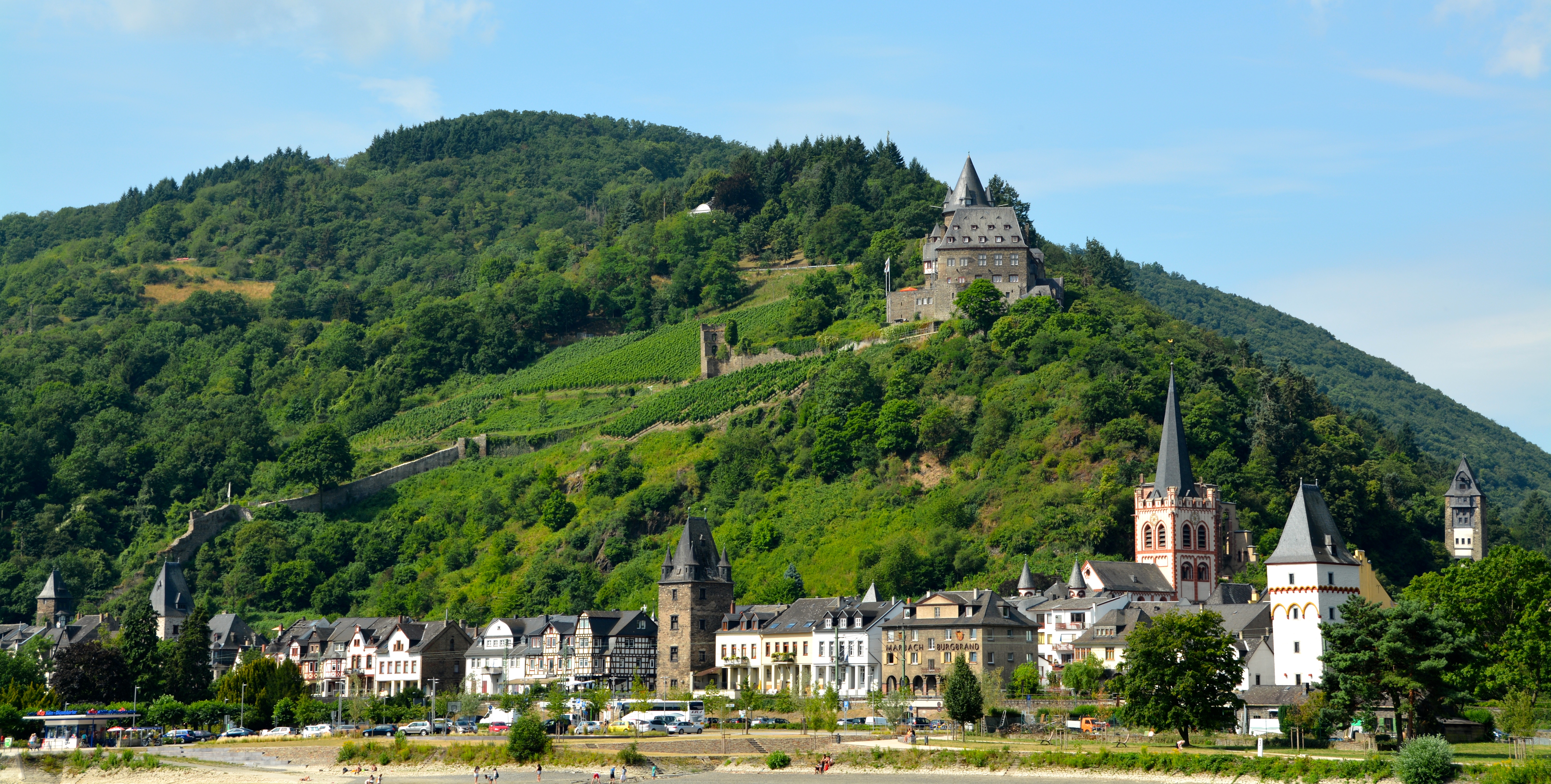
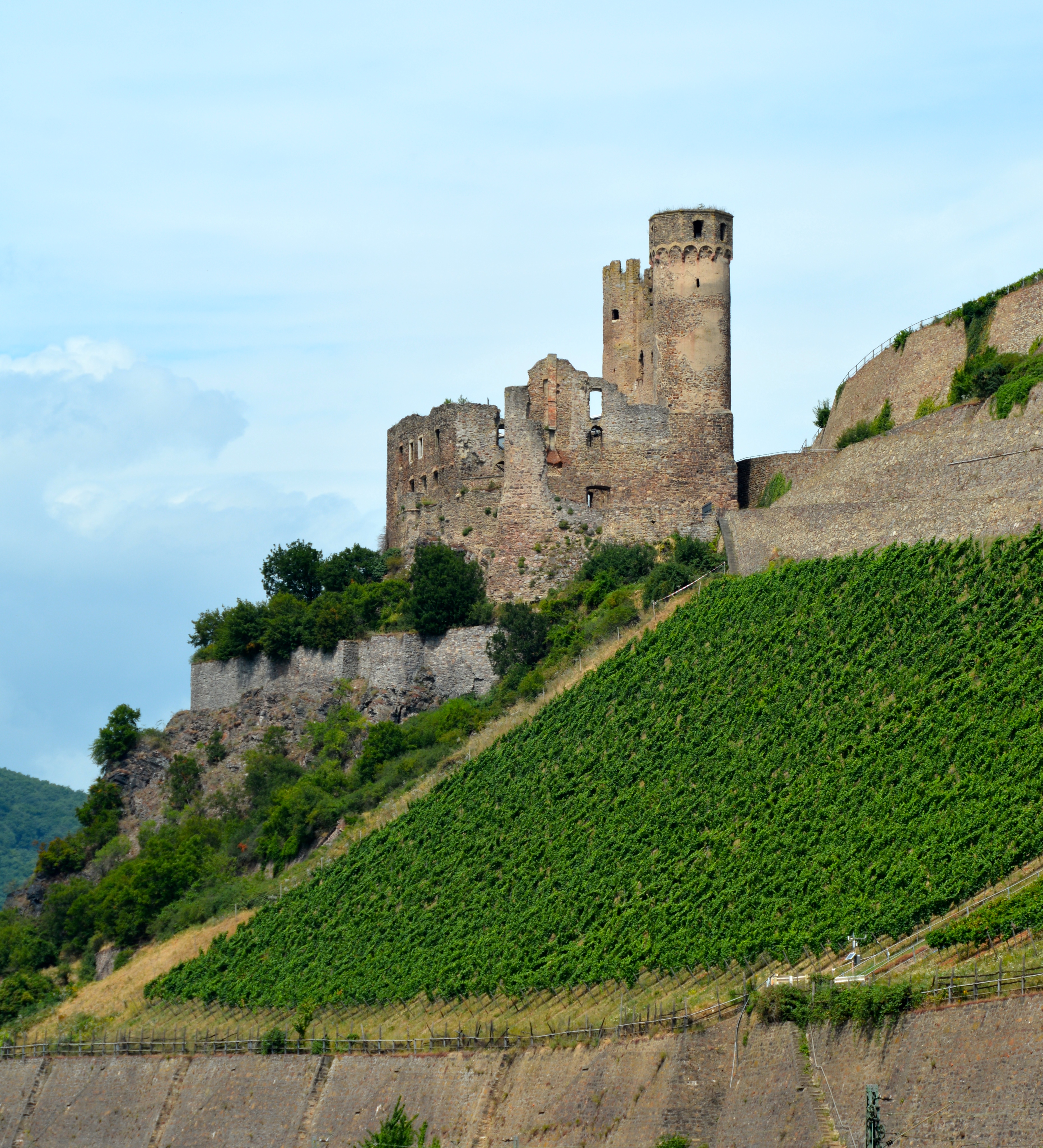
Many of the castles had been added onto over time and showed multiple building styles particular to different periods of history.  Some were in partial ruin.  Some were hotels and others private property that did not welcome visitors.  One of my favorite castles, Stahleck, still had large segments of the city walls in place and cascading down the hillside and up again.  The view from the river was spectacular.  I am not sure that land touring could have ever afforded such stunning views of the castles.

Castle along the Rhine, Germany. Note the amazing city walls on the hillside. ©Jean Janssen

Stahleck Castle along the Rhine, Germany. Note the amazing city walls on the hillside.
©Jean Janssen

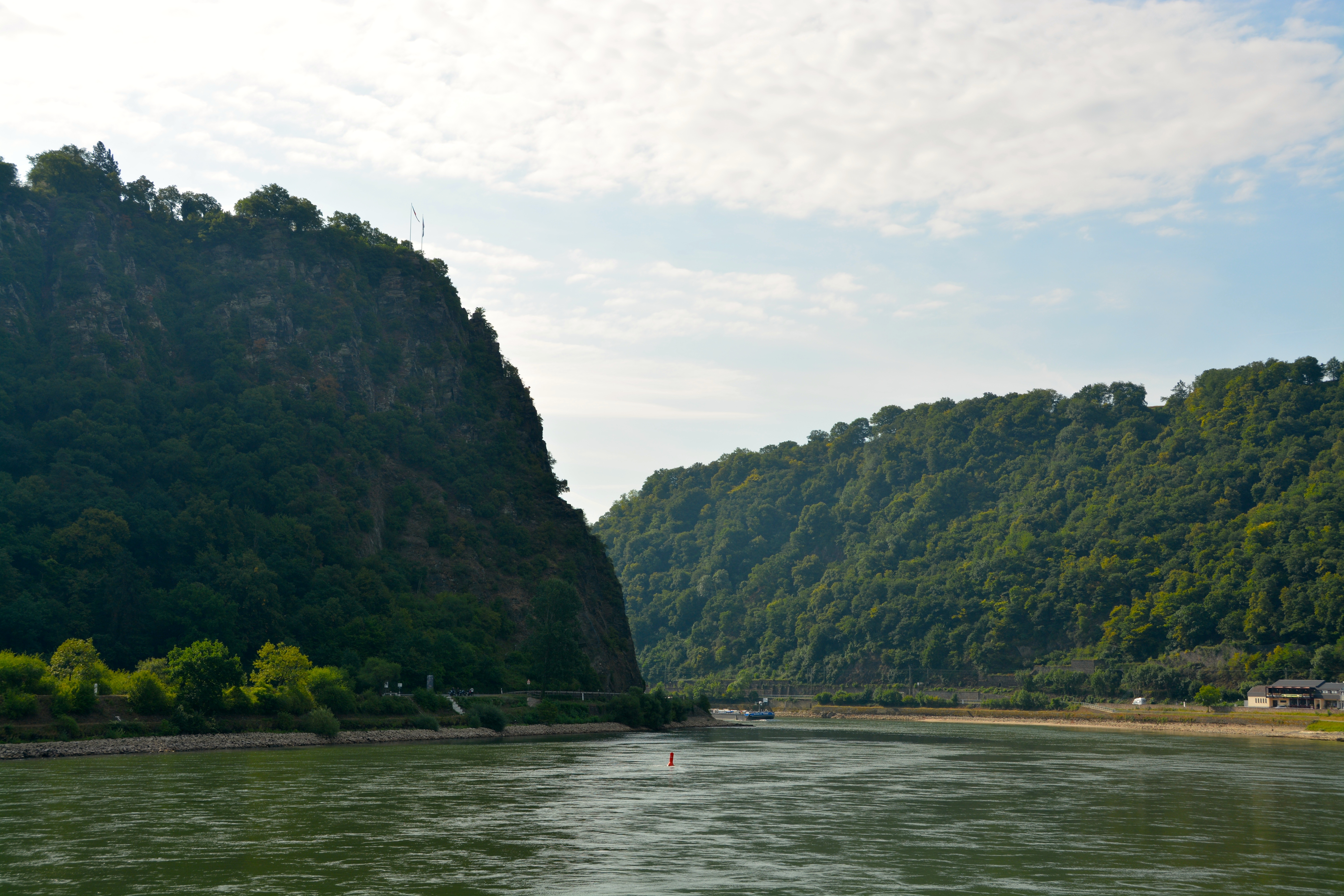
Lorelei, the River Rhine, Germany ©Jean Janssen

Lorelei, the River Rhine, Germany
©Jean Janssen

Midway through our trip we passed the bend in the River at Lorelei.  Lorelei “is a rock on the eastern bank of the Rhine near St. Goarshausen, Germany, which soars some 120 metres above the waterline. It marks the narrowest part of the river between Switzerland and the North Sea.”  Many folk stories, poems, and ballads are also associated with the rock and a beautiful woman or mermaid also by the name of Lorelei.

Ehrenfels Castle and more evidence of the wine region. ©Jean Janssen

Ehrenfels Castle and more evidence of the wine region.
©Jean Janssen

Maus Tower on the Rhine, Germany ©Jean Janssen

Maus Tower on the Rhine, Germany
©Jean Janssen

Another specialty of the Uniworld cruise was a traditional German Fruhschoppen, a meal midway between breakfast and lunch, served in the L’Orangerie on the sun deck.  The ceiling for this room can be lowered when necessary to pass under a low bridge.  There were rolls and salads, but Natasha loves her sausage and I went straight to that, trying each of the 5 varieties offered.  There were also wonderful mustards-a sweet, a hot, and a regular.

Niederwald Monument, Rüdesheim, Germany ©Jean Janssen

Niederwald Monument, Rüdesheim, Germany
©Jean Janssen

At the end of our river tour, we passed the Niederwald Monument and arrived at the city of Rudesheim. The monument was built between 1871 and 1883 to commemorate the unification of Germany.  A cable car goes up to the monument.   No lunch needed, we decided on a short nap before our afternoon tour.  We made it out to the small train taking us into town, but literally got shoved into the back compartment; designed for 2, there were 4 of us.

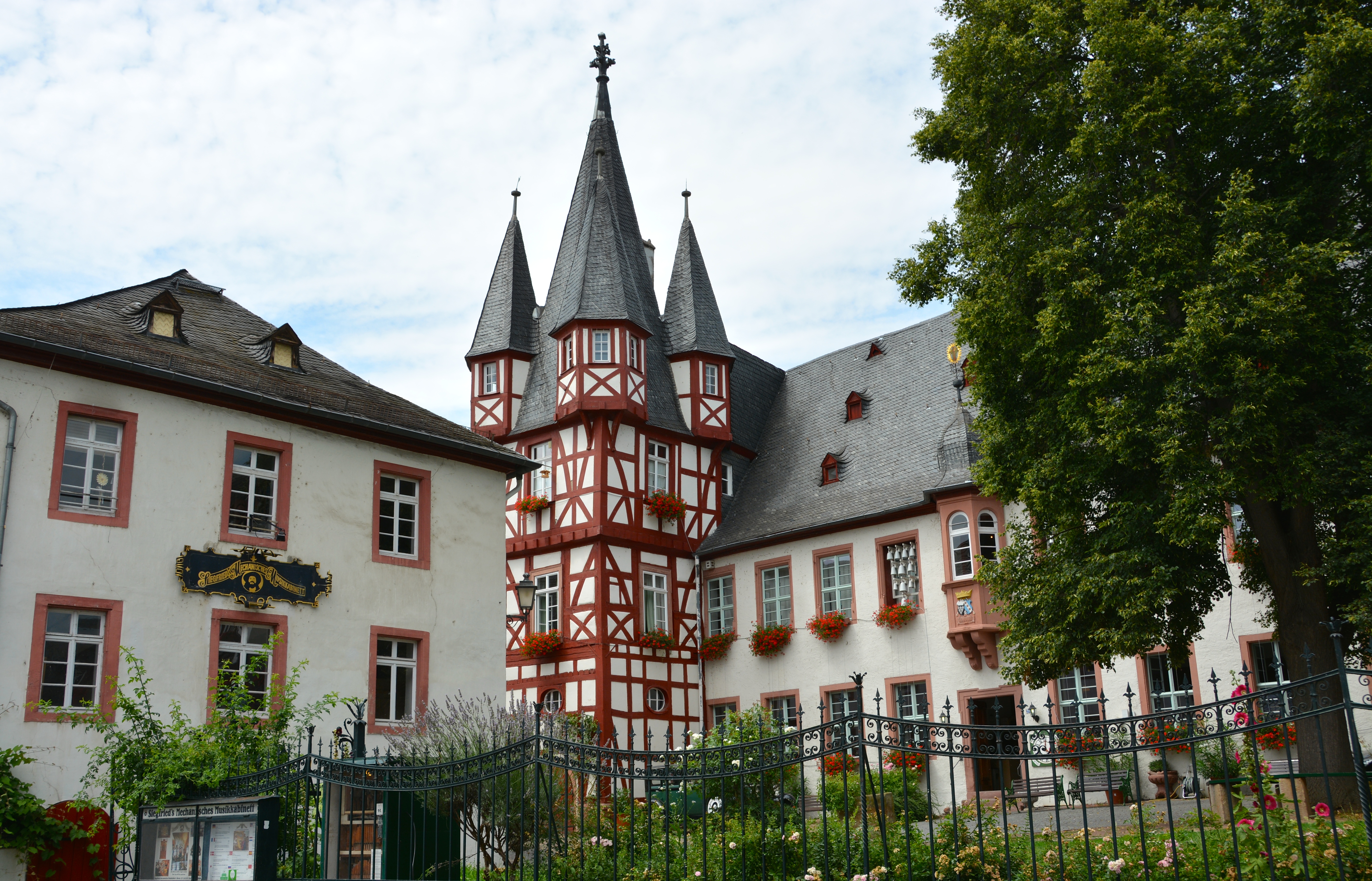
Siegfreids Mechanical Music Museum, Rudesheim, Germany

Siegfreids Mechanical Music Museum, Rudesheim, Germany

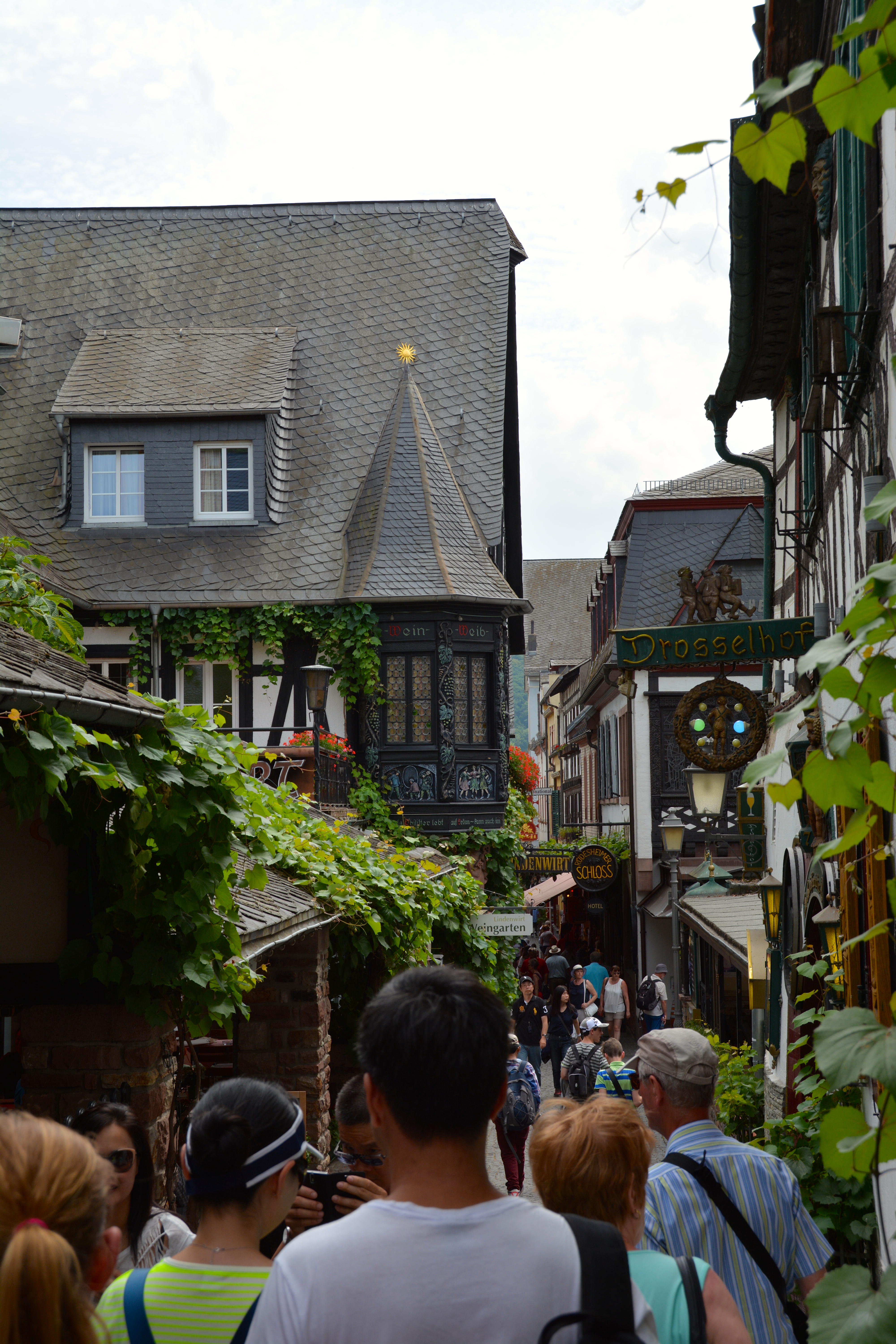
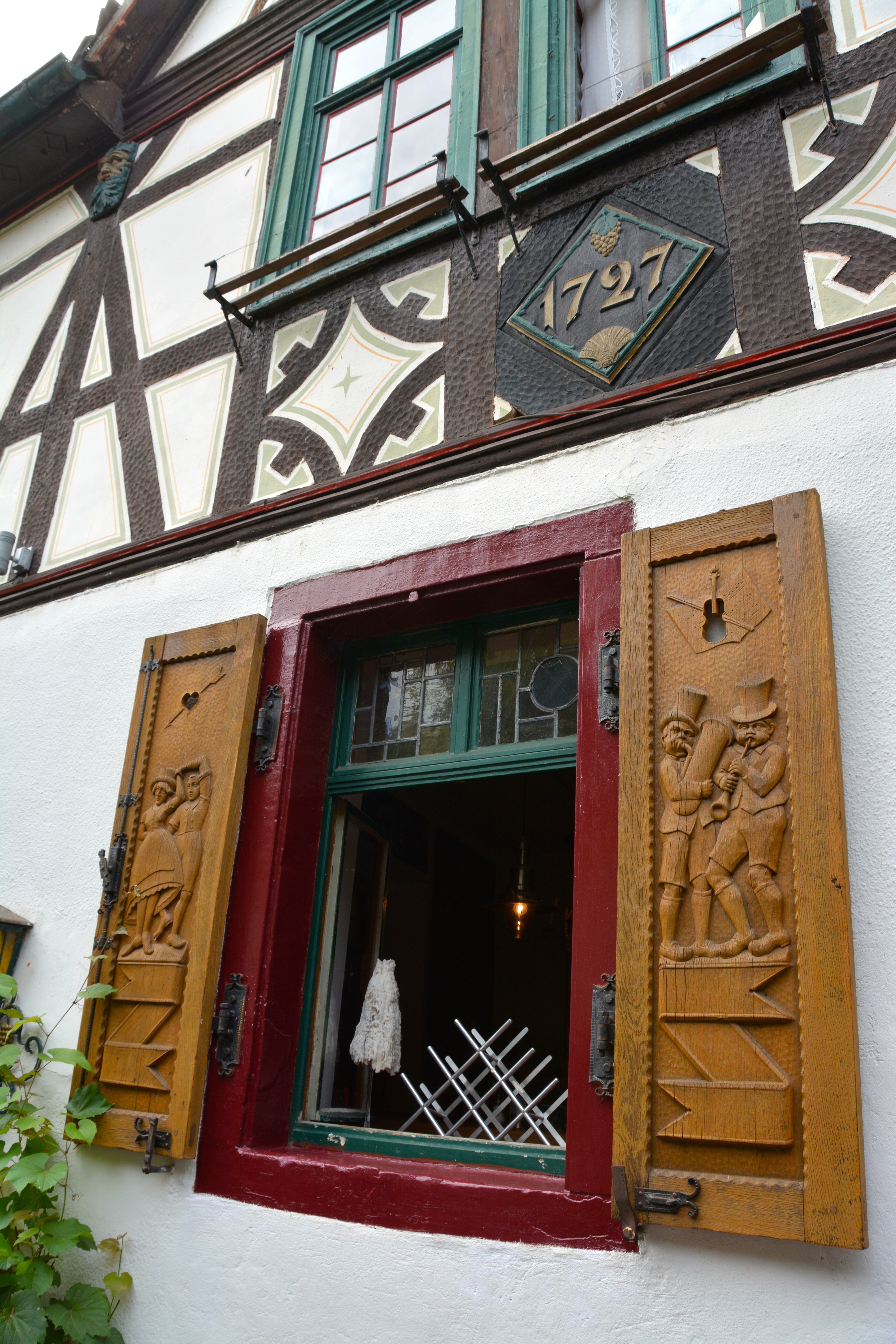
The town of Rudesheim was charming.  If you like music boxes there is a unique museum of small mechanical devices.  Lots of shopping available and those shops were packed.  Lots of tourists in town today.  The most charming street was a narrow as could be.  I am sure this would be a perfect place for visiting the holiday markets.

Rudesheim, Germany ©Jean Janssen

Rudesheim, Germany
©Jean Janssen

Rudesheim, Germany ©Jean Janssen

Rudesheim, Germany
©Jean Janssen

Boris took me into one shop where he had found a music box he liked.  Inside we met a couple from Texas who had been living in Germany the last four years.  They are returning home next month, so they were buying a complete collection of small ceramic dwellings like those Boris and I starting collecting on our holiday market trips.  They had the boxes loaded on dollies.  With more to go, they let Boris ahead of them to make his single item purchase.

Pastries in Rudishem, Germany ©Jean Janssen

Pastries in Rudesheim, Germany
©Jean Janssen

Rudesheim Coffee ©Jean Janssen

Rudesheim Coffee
©Jean Janssen

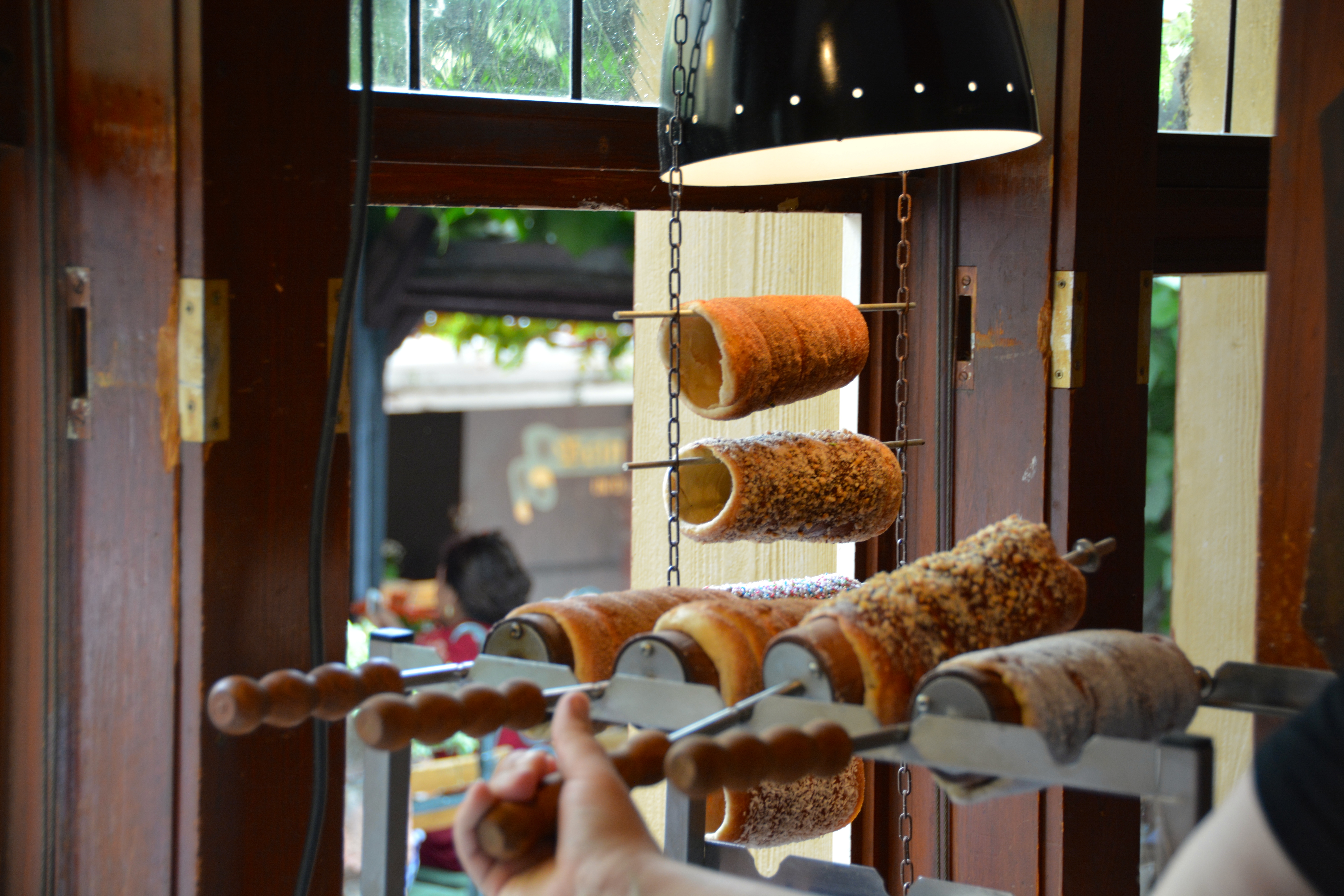
Before going into town, we were told about the Rudesheim Coffee (think Irish coffee, Mexican coffee, etc.) made with the local brandy, whipped cream, coffee, and chocolate shavings.  They are even served in a special cup.  Not a coffee drinker, I got one with hot chocolate instead.  What I really wanted was the funnel cake-like rolled pastry which came in many varieties.  We chose simple cimmamon-delicious!

As if we hadn’t already done enough today, after our free time in town (during which I also did a little shopping), Boris and I got aboard the bus (with all our packages) and joined the Uniworld outing the Schloss Vollrads.  The estate had been in the same family for 830 years, through 27 generations.  They produce wine from the Riesling grape variety.

Schloss Vollrads, near Rudesheim, Germany ©Jean Janssen

Schloss Vollrads, near Rudesheim, Germany
©Jean Janssen

The “castle” is now divided into rooms for rent for corporate of family functions.  There are no overnight accommodations except for a single night stay for couples who have just married on the estate.  We went from room to room hearing about the history, the wine making process, the unique corks, and tasting the wine.

Bottle unique to this region of Germany from the Schloss Vollards Vineyard. This winery also uses a unique glass cork. ©Jean Janssen

Bottle unique to this region of Germany from the Schloss Vollards Vineyard. This winery also uses a unique glass cork.
©Jean Janssen

They do offer a dry variety, but all four we tried were too sweet for me.  They market the wine in a bottle that is unique to the region and use a special glass cork that only fits these bottles.  I wasn’t crazy about the wine, but Boris got a bottle of the driest variety and I didn’t mind having a sample of one of those corks.

Schloss Vollrads, near Rudesheim, Germany ©Jean Janssen

Schloss Vollrads, near Rudesheim, Germany
©Jean Janssen

That night on the ship we celebrated the 60th birthday of one our new cruise friends from Florida.  We were honored to be asked to join Kim and Darrell.  I recommended that she not tell anyone her age; I thought she was younger than me when I first met her.

Posted in international, River Cruise | Tagged , , , | Leave a comment

The German Corner on the Rhine, Koblenz and on to Boppard, Germany

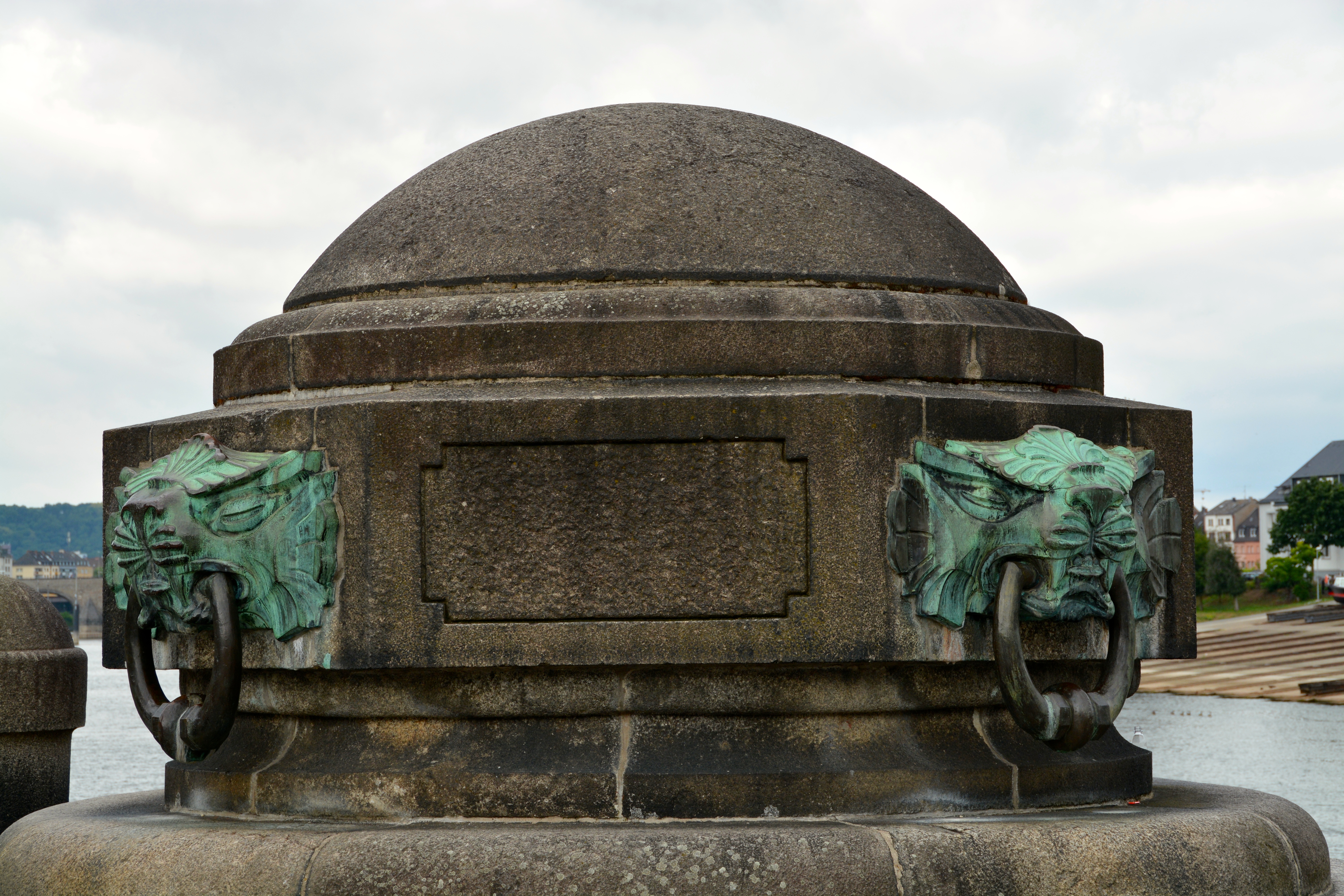
The Duetsche Eck, the German Corner, at the intersection of the Rhine and Moselle Rivers, Germany. ©Jean Janssen

The Duetsche Eck, the German Corner, at the intersection of the Rhine and Moselle Rivers, Germany.
©Jean Janssen

On this, our second full day of river cruising, we will make two stops.  This morning we will stop at Koblenz at the intersection of the Rhine and Moselle Rivers.  The intersection is known as the Deutsches Eck (German Corner) and a large statute of Wilhelm I who united the German Empire marks the corner.  The statute was “reduced to rubble” in 1945, the mount left as a reminder.  A replica of the statute was mounted in 1993.  The site attracts 2 million visitors a year.

At the German Corner, Koblenz, Germany ©Jean Janssen

At the German Corner, Koblenz, Germany
©Jean Janssen

Boris is an early riser and he was up to have breakfast and be on deck to see our boat pass the corner.  We diverted from the Rhine and our boat is docked along the Moselle River.  Uniworld offers at least one include tour each day, but today there are even more offerings.  Passengers can (at no additional cost) take a walking tour of Koblenz or can walk pass the German Corner and board the cable car up to the fortress, crossing over the Rhine River and giving fabulous ariel views.

The cable car over the Rhine at the German Corner with views of the Ehrenbreitstein fortress. ©Jean Janssen

The cable car over the Rhine at the German Corner with views of the Ehrenbreitstein fortress.
©Jean Janssen

I really wanted to take the cable car and Boris agreed.  With the tour group, we walked along the Koblenz waterfront and past the German corner to reach the cable car station along the Rhine.  The cable car is very smooth and the views were fabulous.  From the top of the cable station, it is a short walk to “Ehrenbreitstein, Europe’s second-largest preserved fortress.”  The cable car was actually added in 2011 not to reach the fortress but for a horticultural exhibit.

The nazi symbol was once at this spot, the guide suggested these were marks from American guns, Ehrenbreitstein Fortress, near Koblenz, Germany. ©Jean Janssen

The nazi symbol was once at this spot, the guide suggested these were marks from American guns, Ehrenbreitstein Fortress, near Koblenz, Germany.
©Jean Janssen

Ehrenbreitstein Fortress, Koblenz, Germany ©Jean Janssen

Ehrenbreitstein Fortress, Koblenz, Germany
©Jean Janssen

A castle was erected on this spot around 1000 and it was converted to a fortress in the 16th century.  The structure in existence today is a reconstruction of the fortress destroyed by the French in 1801.  The French blew it up when they had to retreat from this side of the Rhine.  The present structure has been occupied by the Prussians, The French, Americans, and the Germans.  The structure is pretty impressive.  We saw only one location that sustained damage during WWII.

Ehrenbreitstein Fortress, Koblenz, Germany ©Jean Janssen

Ehrenbreitstein Fortress,
Koblenz, Germany
©Jean Janssen

There are multiple museums to visit.  The location is also used for concerts.  Perhaps the best reason to visit the fortress is to enjoy the views from the cable car up and down and the fabulous views of the German Corner.

Along the Koblenz waterfront, Moselle River ©Jean Janssen

Along the Koblenz waterfront, Moselle River.  One of my readers asked and yes this is a statute, not a real person.
©Jean Janssen

Along the Moselle River, Koblenz ©Jean Janssen

Along the Moselle River, Koblenz
©Jean Janssen

After the cable ride down, we wandered around Koblenz enjoying what had become a rather warm day.  Lunch was on the ship while still docked at Koblenz.  Some of the passengers were riding the complimentary bikes the 14 miles to our next  stop, Boppard.  The boat will move in the afternoon.  Uniworld also offered a optional tour of Marksburg Castle in the afternoon.  Boris and I are going.  We will join the boat in Boppard at the end of our tour.  Anticipating tomorrow’s cruise through the castle viewing section of the middle Rhine, we thought it would be fun to actually visit a castle.

Marksburg Castle, Braubach, Germany ©Jean Janssen

Marksburg Castle, Braubach, Germany
©Jean Janssen

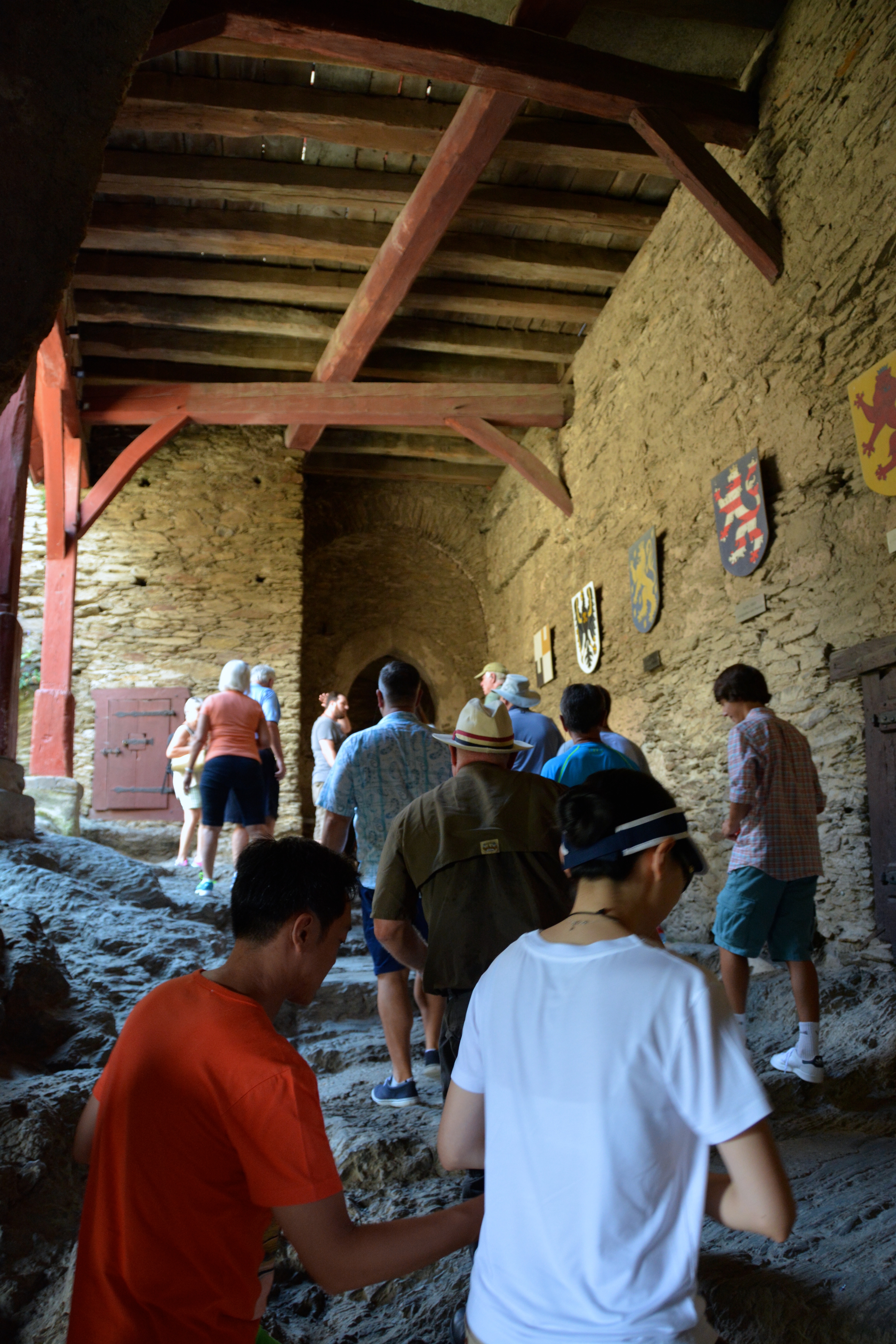
Entrance to Marksburg Castle, Crests showing controlling family are on the right wall. ©Jean Janssen

Riders’ Staircase in Marksburg Castle, Crests showing controlling families are on the right wall.
©Jean Janssen

We took a bus to to Marksburg Castle, passing two other castles on the way.  From bus parking we had a like hike up to begin the tour.  Marksburg Castle has been lived in for 700 years and is the only hill castle on the Rhine that has never been destroyed.  On the Riders’ Staircase, you see the family crests of those that dominated the castle in chronological order through 800 years of history.

We had an interesting guide who walked us through the castle, locking us in and out of sections of the castle as we moved through.  There have been additions to the structure over time.  The castle even had multiple moats, now used for growing herbs and flowers.

In the moat garden of Marksburg, Castle ©Jean Janssen

In the moat garden of Marksburg, Castle
©Jean Janssen

Woodwork detail inside Marksburg Castle, Germany ©Jean Janssen

Woodwork detail inside Marksburg Castle, Germany
©Jean Janssen

The Notches Gate, one of four gated in Marksburg Castle, Germany ©Jean Janssen

The Notches Gate, one of four gates leading into Marksburg Castle, Germany
©Jean Janssen

You have to pass through four gates.  The first was the drawbridge gate with its slate floor.  Just past this gate is the visitors center, gift shop, and refreshment terrace.  The tour (and the locking in and out) begins at the Fox Gate and after that it is just a short walk to the Notches Gate.  As you pass through Notches Gate you see a balcony (machicolation) where rocks were thrown onto invaders that made it this far.  Just beyond this gate is the Riders’ Staircase with the family crests.  Beyond are the batteries with several canons positioned out to the Rhine.  There are wonderful views of the river and beyond from this vantage point.

View of the Rhine from Marksburg Castle. ©Jean Janssen

View of the Rhine from Marksburg Castle.
©Jean Janssen

In the armoury, Marksburg Castle ©Jean Janssen

In the armoury, Marksburg Castle
©Jean Janssen

Colin tries on a helmet in the Marksburg Castle Armory. ©Jean Janssen

Colin tries on a helmet in the Marksburg Castle Armory.
©Jean Janssen

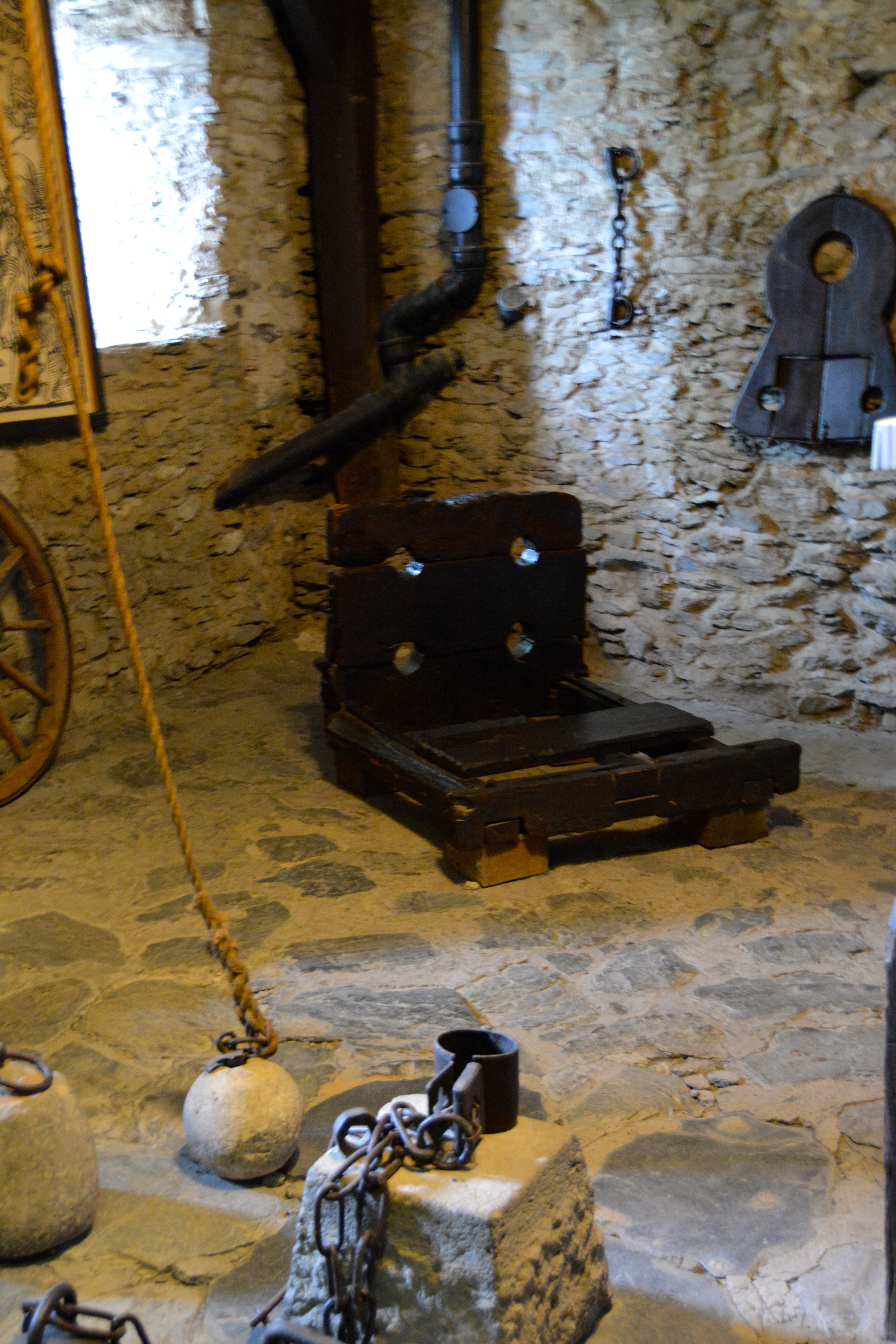
Instruments of torture in Marksburg Castle, Germany ©Jean Janssen

Instruments of torture in Marksburg Castle, Germany
©Jean Janssen

Interior of Marksburg Castle, Germany ©Jean Janssen

Interior of Marksburg Castle, Germany
©Jean Janssen

The tour takes you through many areas of the castle from the wine cellar, bed chamber, banquet hall, great hall, even a medieval privy (toilet).  The armory and forge are included, as well as the old stables where torture devices are on display.  The interior painting was interesting, especially in the small chapel.

View from Marksburg Castle, Germany ©Jean Janssen

View from Marksburg Castle, Germany
©Jean Janssen

When the tour was concluded (and we were locked out of the castle), we decided a break on the terrace with the lovely views would be perfect.  Unfortunately the day had gotten so hot that we decided to walk down the hill instead in hopes that the air conditioning in the bus was on.

Boppard, Germany ©Jean Janssen

Boppard, Germany
©Jean Janssen

Along the shopping street in Boppard, Germany ©Jean Janssen

Along the shopping street in Boppard, Germany
©Jean Janssen

Boppard, Germany ©Jean Janssen

Boppard, Germany
©Jean Janssen

We passed the boat as we reached Boppard and waited on the shore as they completed the docking process.  The cruise director then offered a walking tour of the picturesque village where we will be docked for the night.  I needed some pharmacy items, so I also did a little roaming on my own.

Tomorrow morning we begin the middle section of the Rhine where there are more than 20 castles viewable from the water during a 4 hour cruising tour.  We passed/saw three castles today between Koblenz and Boppard.  This is my primary reason for choosing this itinerary.  Can’t wait.

Across the Rhine river from Boppard, Germany.  A ferry connects the two areas. ©Jean Janssen

Across the Rhine river from Boppard, Germany. A ferry connects the two areas.
©Jean Janssen

Posted in international, River Cruise | Tagged , , , , , , , , | Leave a comment

Cologne, Germany

DSC_3018

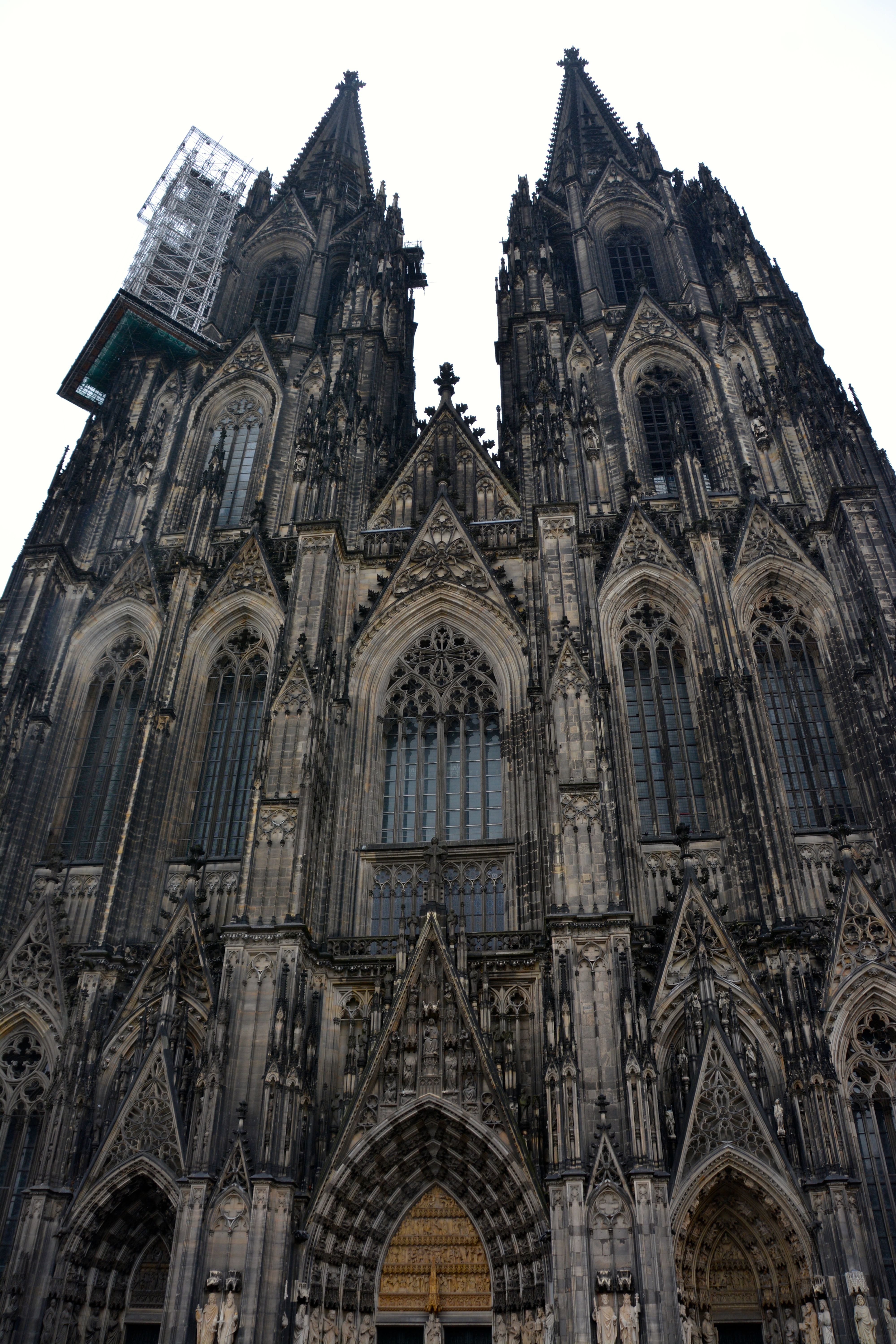
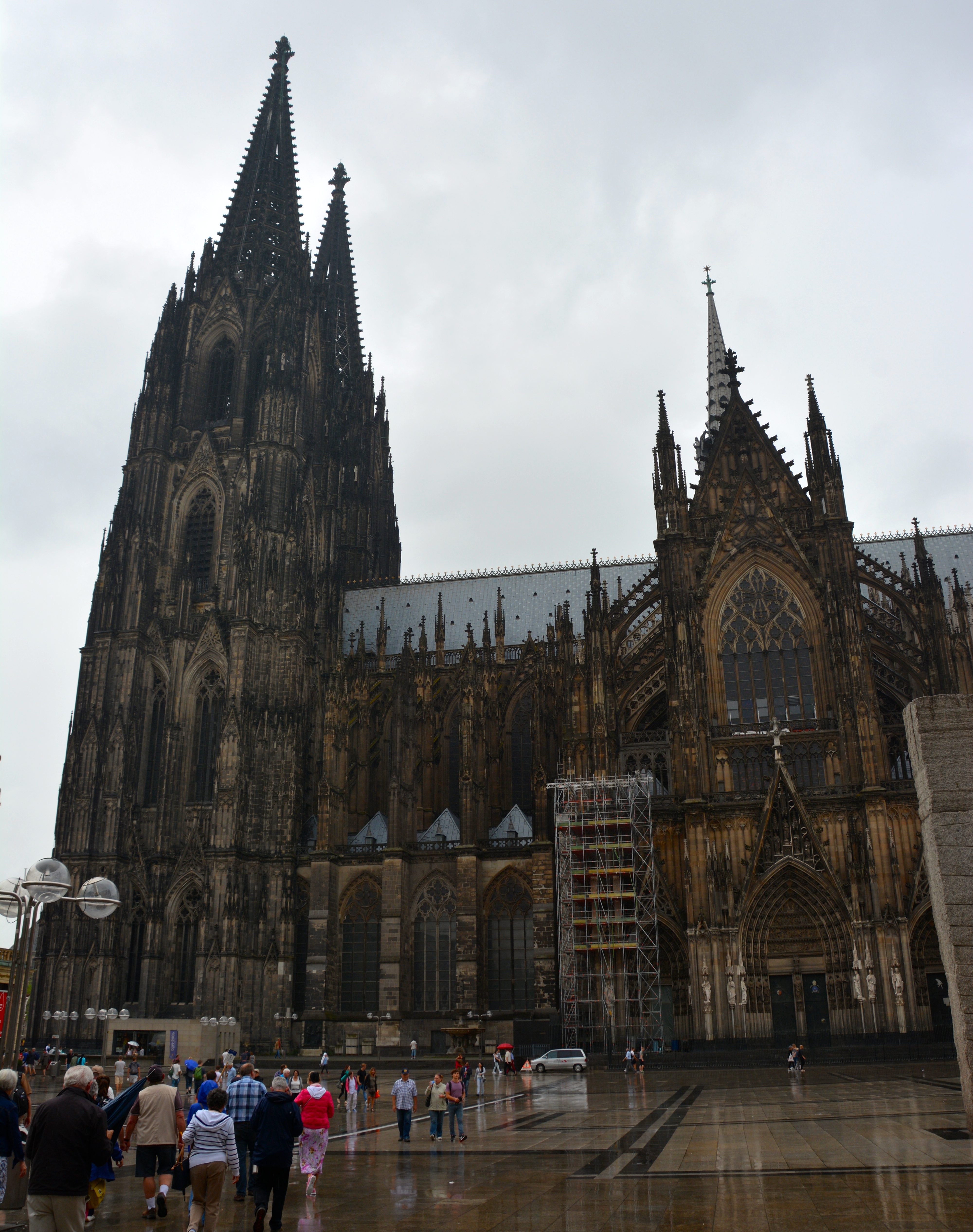
The facade of Cologne Cathedral, the largest church facade in the world. Cologne, Germany ©Jean Janssen

Already in Europe at the end of my British Isles cruise with Ted, I flew over to Amsterdam to meet Boris for cruise number two.  This is a river cruise on the Rhine.  I first saw this itinerary when we looked at holiday market river cruises.  After my winter experience of having to jump up and go outside to take a photo and run back in (due to outside temperatures of 20 degrees Fahrenheit, -7 Celsius), I decided we should try this cruise in the summer when I could sit outside on the sun deck and watch the castles on either side of the Rhine River.

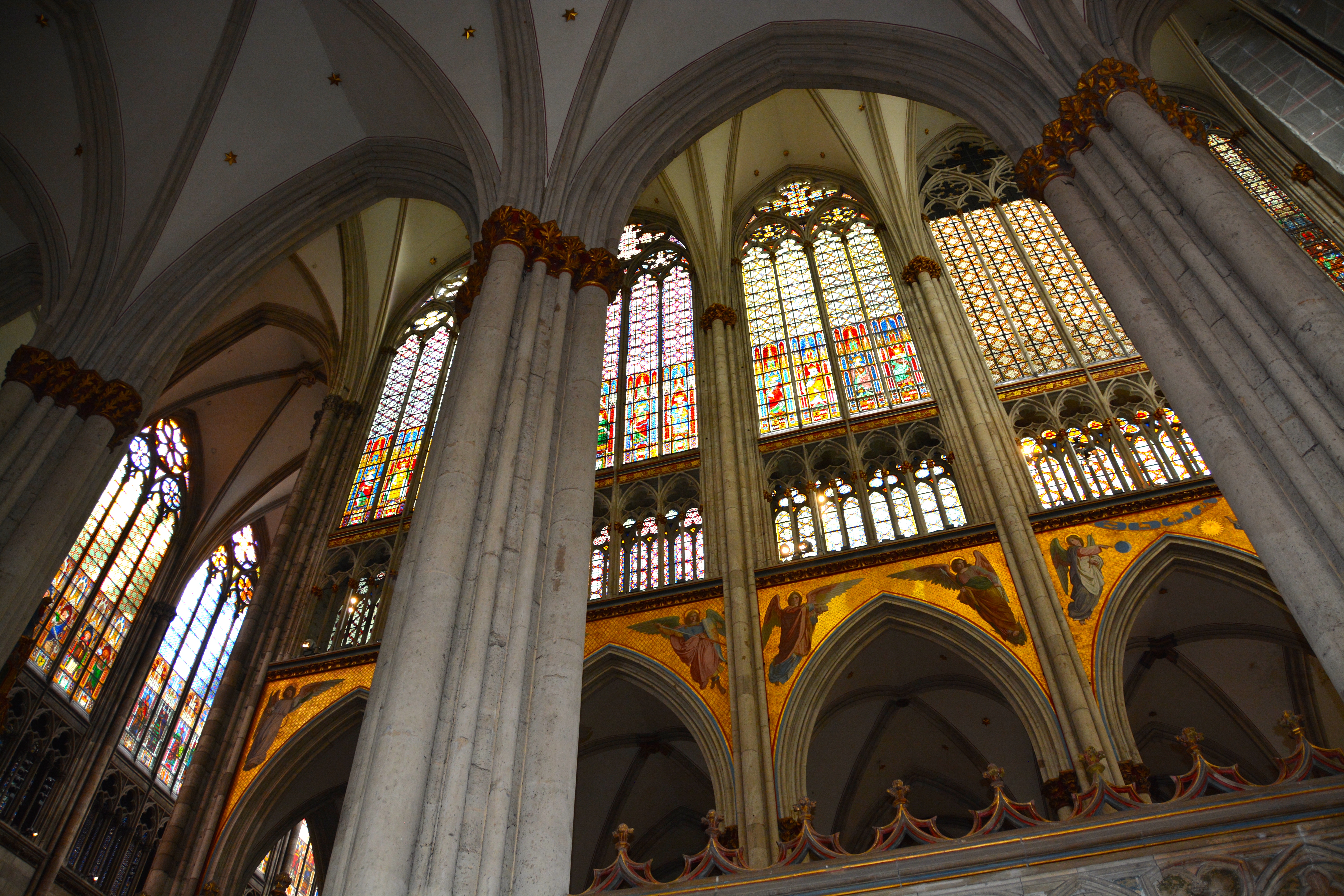
Interior of Cologne Cathedral, Germany ©Jean Janssen

Interior of Cologne Cathedral, Germany.  Note the many different types of stain glass replacements.
©Jean Janssen

My plane from Edinburgh was late getting in, so I ended up not going into town and just stayed at the airport hotel.  The Sherton was very convenient; it was connected to the terminal entrance hall.  There were plenty of places to eat and I can just walk right over in the morning and meet Boris at the baggage claim exit.  He is flying in overnight.  Transfers from the airport to the ship are included in our cruise ticket price.

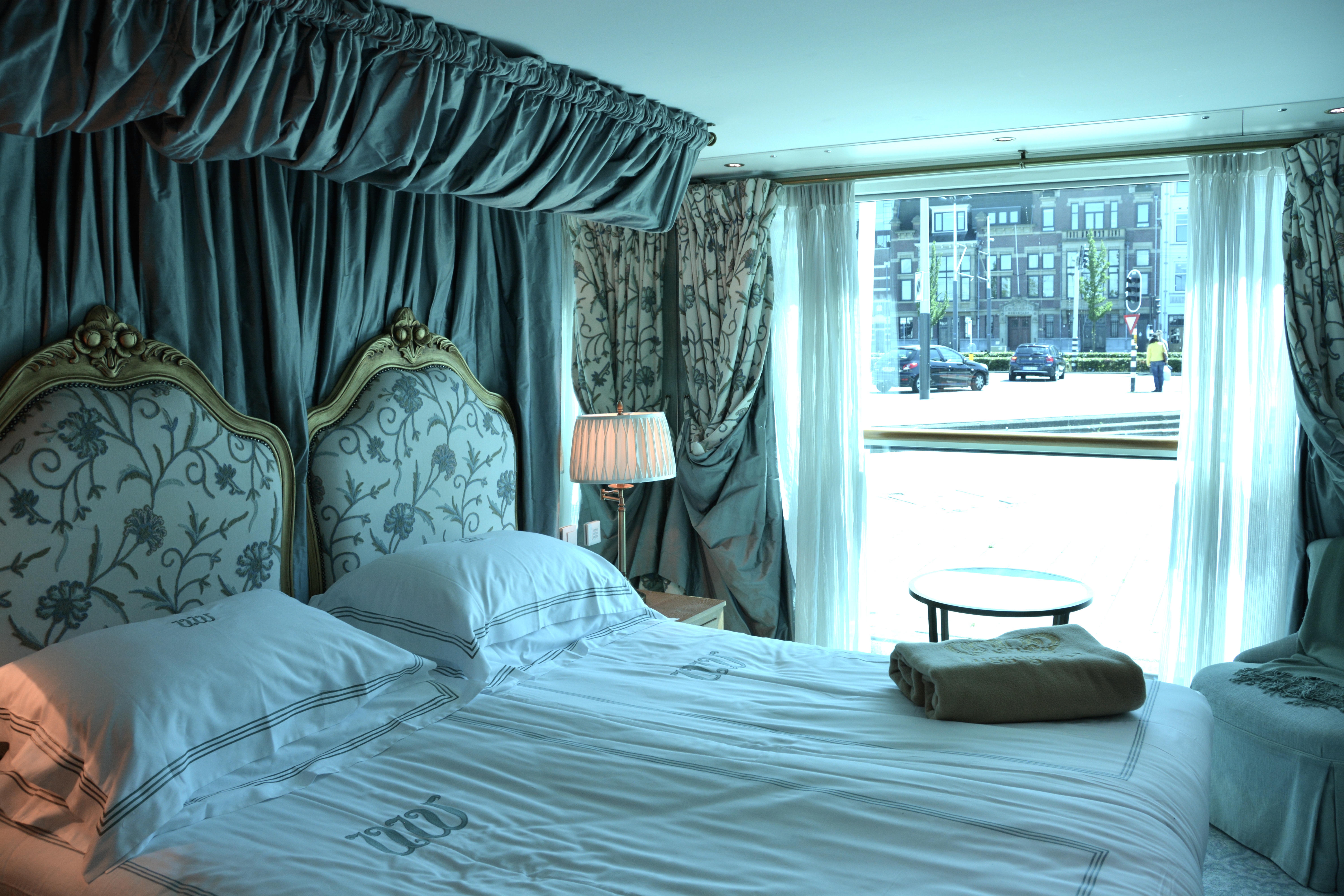
Our beautiful room aboard Uniworld's  SS Antoinette. ©Jean Janssen

Our beautiful room aboard Uniworld’s SS Antoinette.
©Jean Janssen

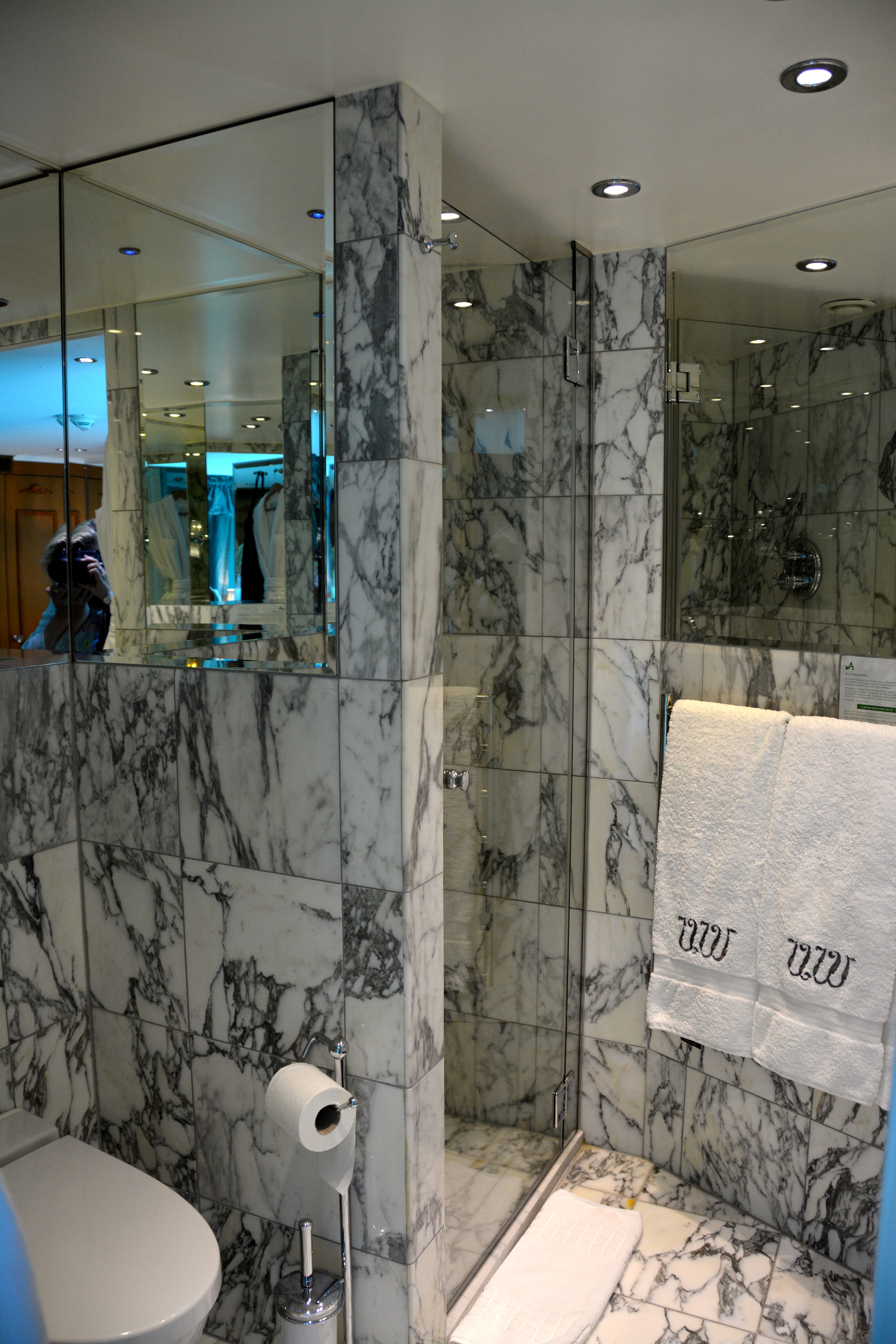
Small, but pretty swanky bathroom on the SS Antoinette. ©Jean Janssen

Small, but pretty swanky bathroom on the SS Antoinette.
©Jean Janssen

After a night’s sleep, the good news is that I could start this trip without jet lag.  The bad news, Boris was jet-lagged.  When we got to the ship he wasn’t really interested in touring Amsterdam, even though it was just a 15 minute walk to the heart of the city.  I had an early lunch on the ship and intended to go into town on my own.  I started to rain so Boris said he would just rest a bit and would go with me when the rain stopped.  Unfortunately it just got worse.  After our British Isles Cruise, I was tired of touring in the rain so we waited.  About the time the rain ended, we were told the rooms were ready (over an hour early) so we went and unpacked.  Well I unpacked; Boris finally had a bed and fell asleep quickly.

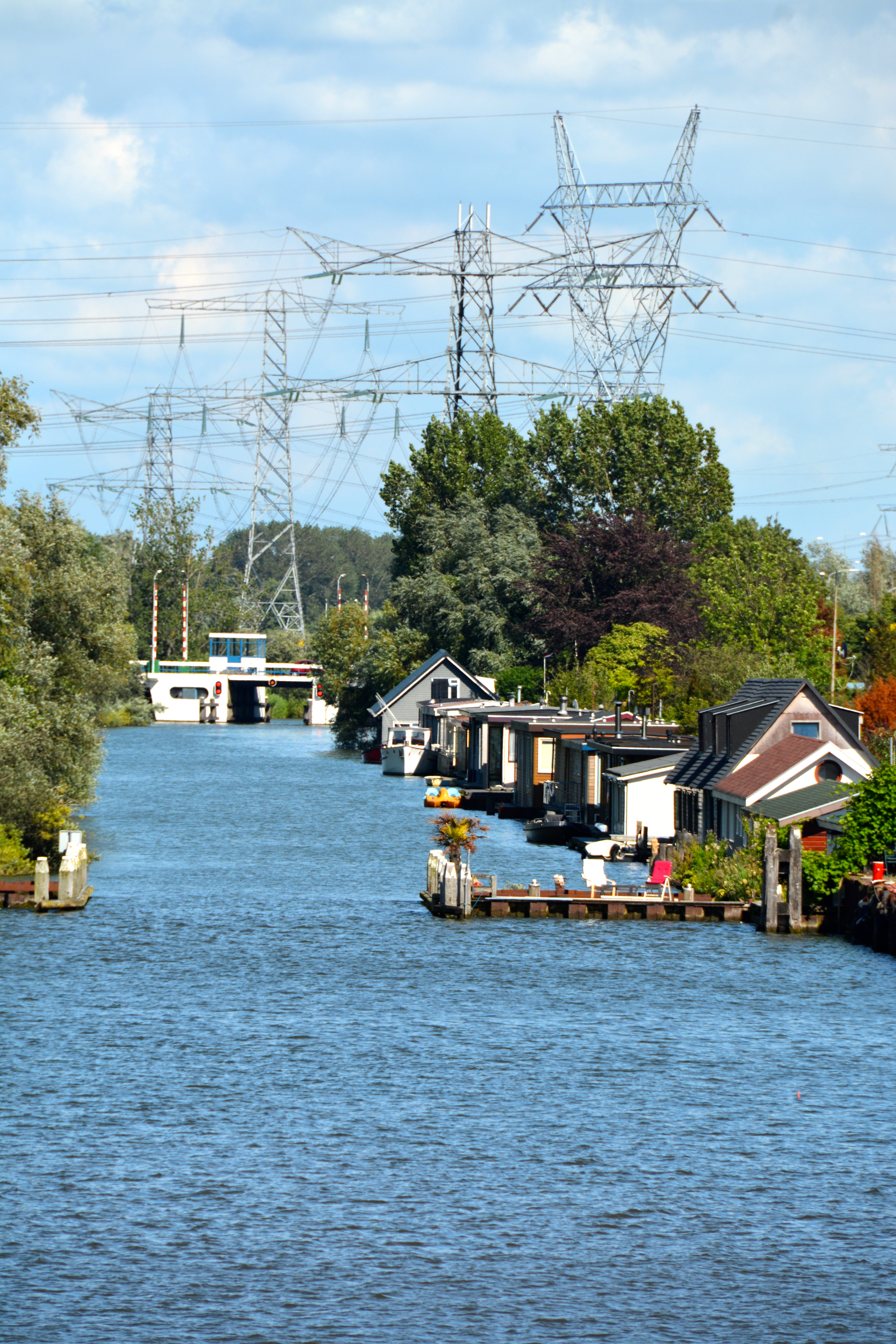
Amsterdam canal viewed as we left the city. ©Jean Janssen

Housed along this Amsterdam canal viewed as we left the city.
©Jean Janssen


About 3 pm the sun came out and I decided to tour a little before dinner.  Reviewing the daily program to see what time I needed to back I realized we actually had a 3:30 call back to the ship for a 4 pm departure.  So much for touring Amsterdam.  Instead I opened our very cool push-button window and almost got hit by a fishing line that was being cast.  After being told that yes, the fishing was pretty good from this dock, I closed the window and decided to open it when the boat wasn’t tied up.

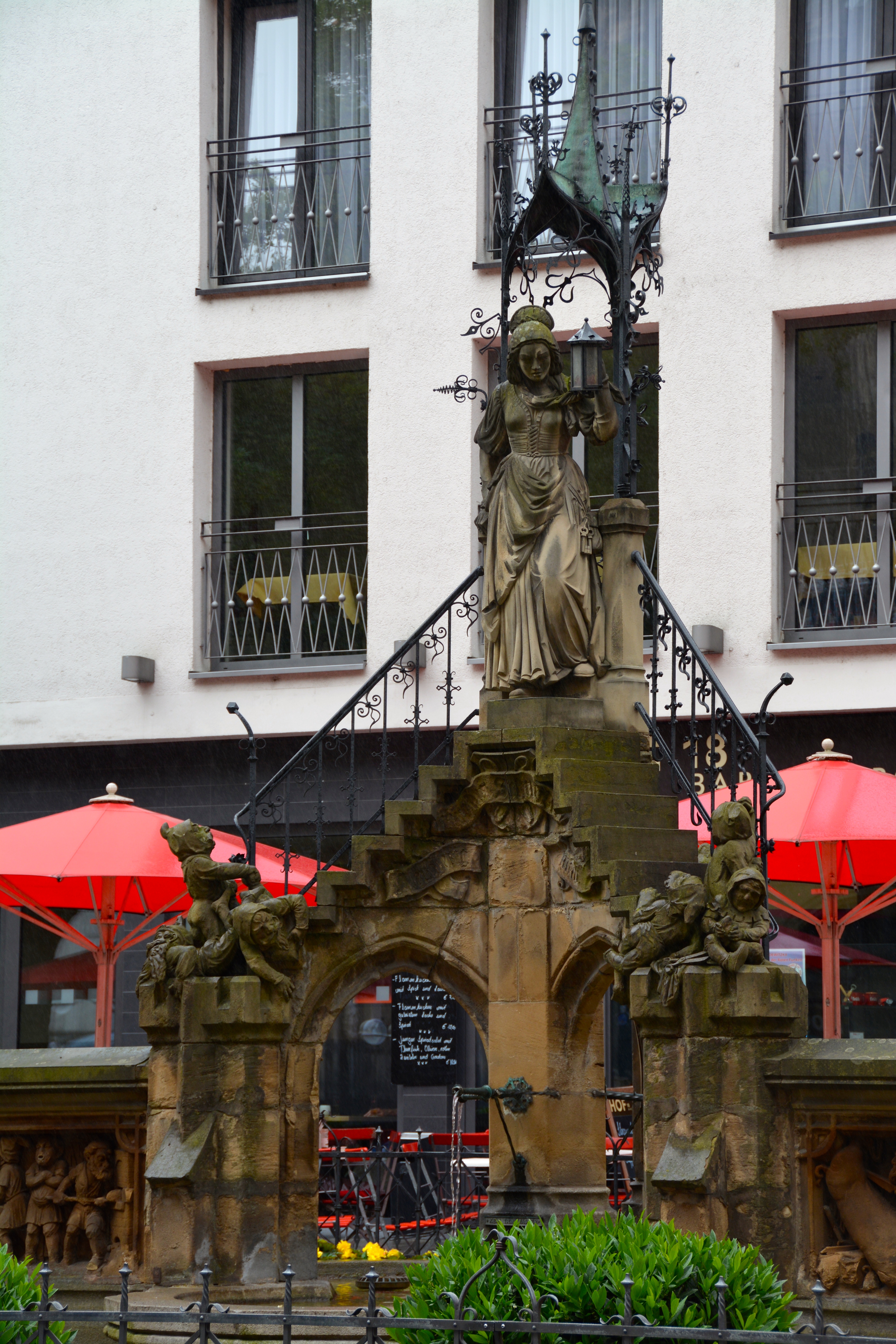
Elf Fountain and Statute, Cologne, Germany.  The statutes recall the fable where elves did the work for the citizens until tricked by the Tailor's Wife into being seen.  They never returned to work again. ©Jean Janssen

Elf Fountain and Statute, Cologne, Germany. The statutes recall the fable where elves did the work at night for the citizens while the townspeople slept until tricked by the Tailor’s Wife into being seen. They never returned to work again.
©Jean Janssen

After the muster drill and the itinerary orientation, we had dinner with a couple from Adelaide, Australia that we had met on the bus from the airport.  Our waiter recognized Boris from one of our other cruises (he can be quite demanding so I am not surprised he was remembered).  It was an early night for us since Boris was tired.  Our first  stop is Cologne, Germany recognizable for the personal fragrance items that were invented here in 1709 and the Cathedral (which Boris has always wanted to see).

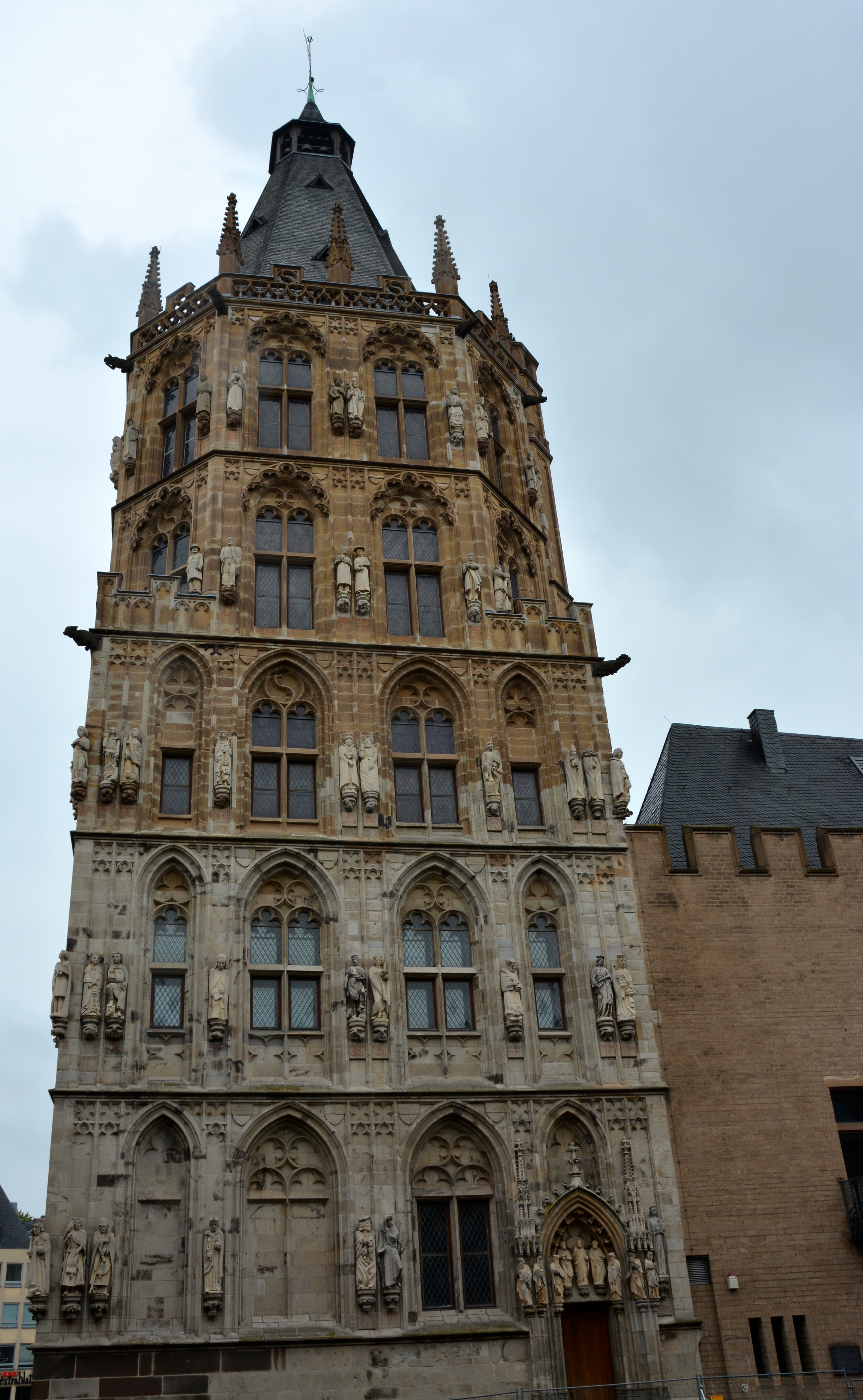
Town Hall, Cologne, Germany ©Jean Janssen

Town Hall, Cologne, Germany
©Jean Janssen

We actually made what the cruise line calls a technical stop in Zons, Germany.  We got off the boat here early afternoon to board buses for Cologne.  The boat will arrive in Cologne about 5 pm.  You could opt to stay on the boat if you don’t want to participate in the city and Cathedral tour.  Some of Zons’ medieval walls are still standing.  It originated as a toll stop on the Rhine.  The big news in town today was that a Mosque was under construction there.  Zons is a popular weekend stop for picnickers.

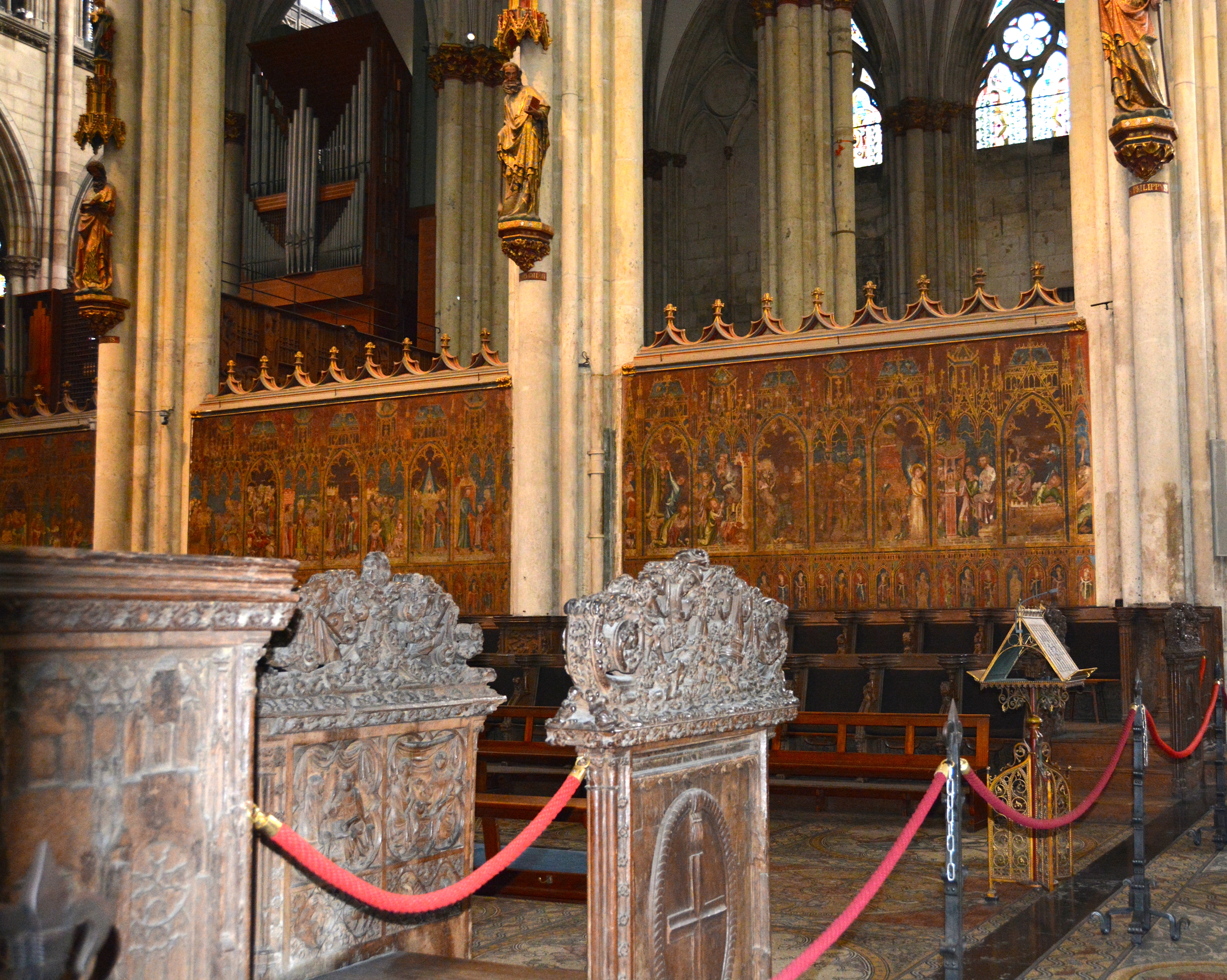
Painted panels in Cologne Cathedral ©Jean Janssen

Painted panels in Cologne Cathedral
©Jean Janssen

As we were leaving Zons, the guide pointed out rental units.  Most Germans prefer to rent because the laws favor renters and make it very difficult to remove a tenant.  To get them out, you have to should that you need the property for yourself.

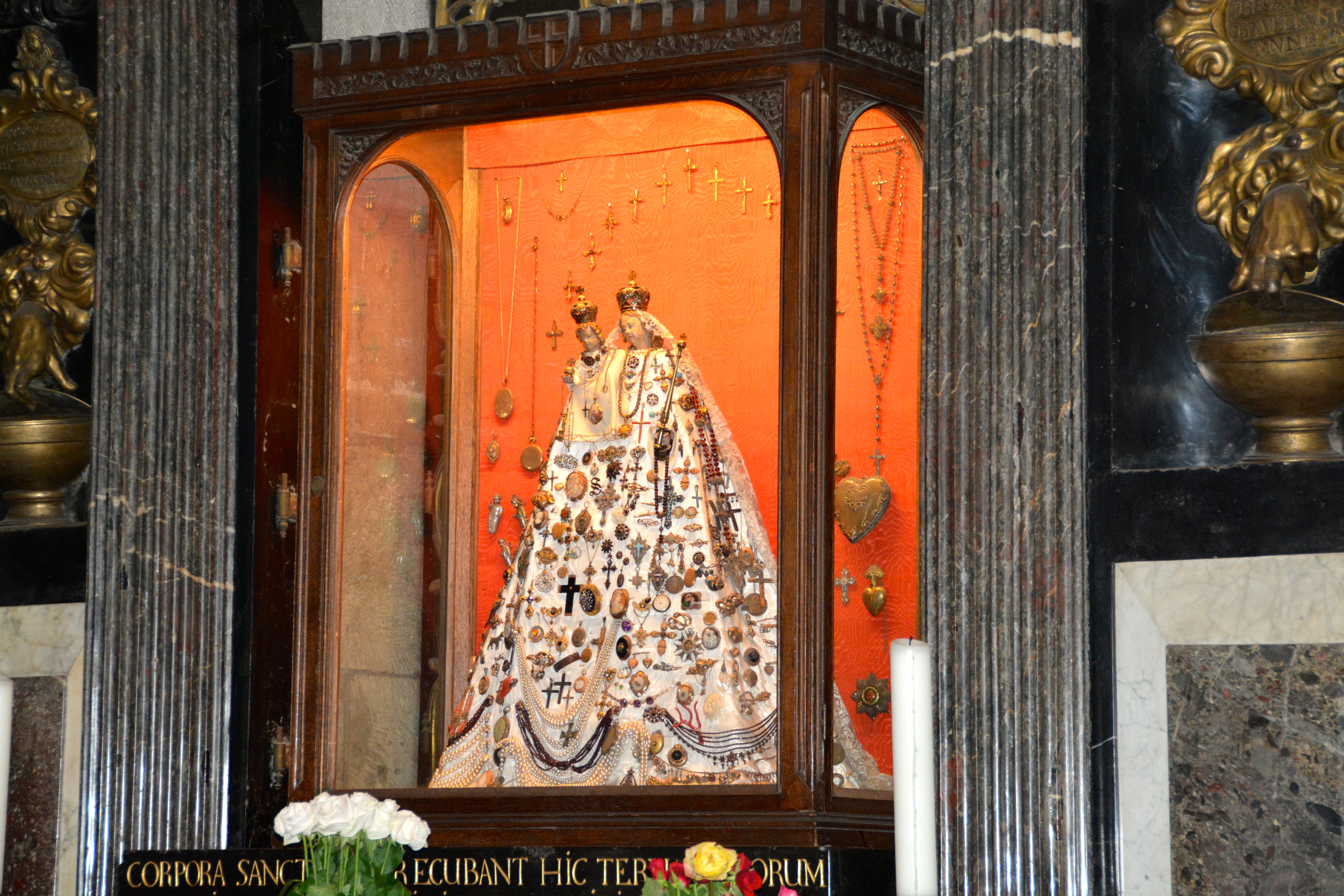
Women left jewelry in penance for their sins.  Cologne Cathedral, Germany. ©Jean Janssen

Women left jewelry in penance for their sins. Cologne Cathedral, Germany.
©Jean Janssen

There is farming in the region, but the government regulates what your can grow.  There is lots of corn production, not because the people eat corn-it is fed to their livestock-but to prevent high corn imports from the USA.    We did see some beautiful flower fields where you could go in a pick your own flowers; payment is on the honor system.

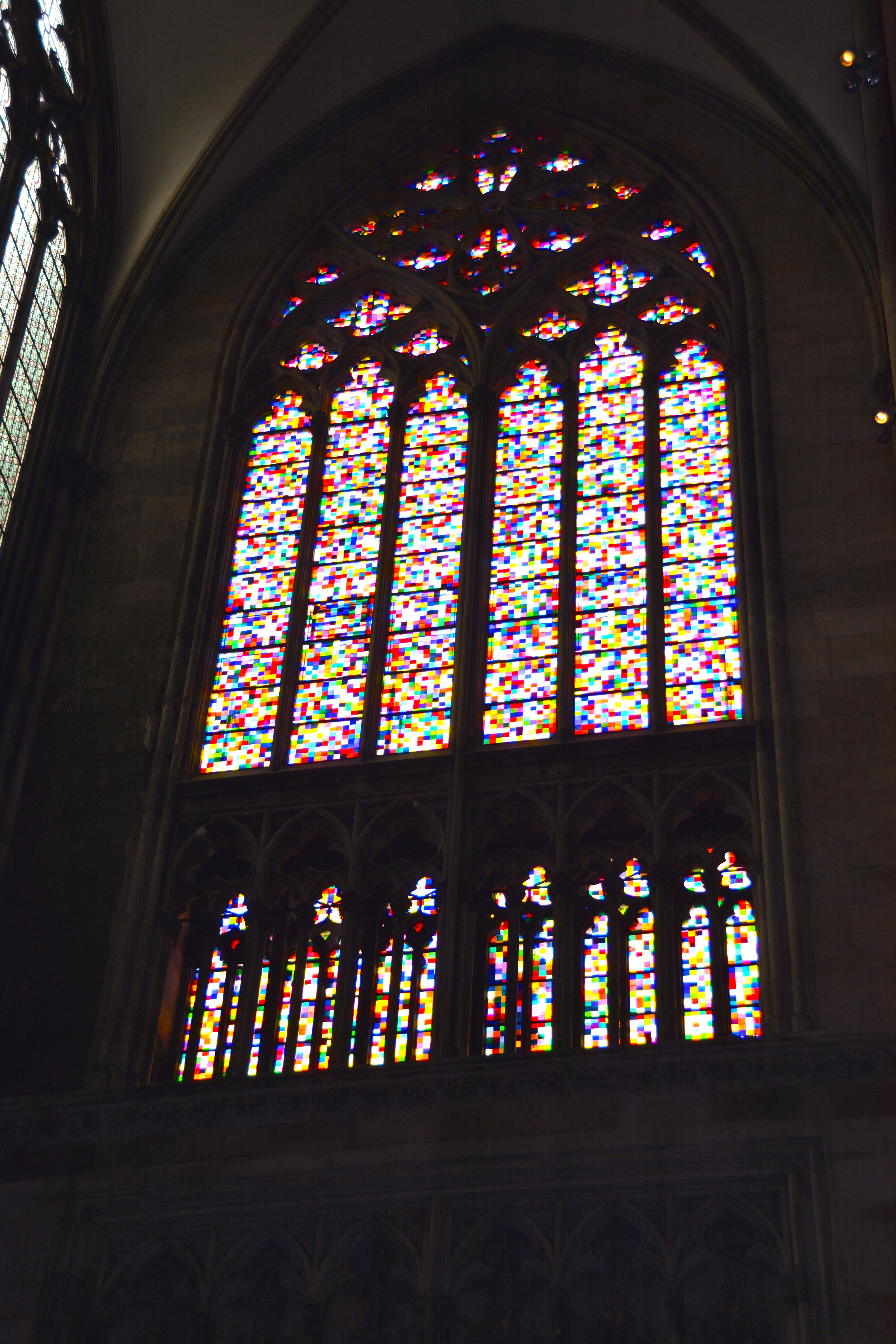
One of the large, and somewhat controversial, stain glass replacements in Cologne Cathedral reflecting the time of its replacement.  Definitely a 60s-70s vibe. ©Jean Janssen

One of the large, and somewhat controversial, stain glass replacements in Cologne Cathedral reflecting the time of its replacement. Definitely a 60s-70s vibe.
©Jean Janssen

Driving into Cologne, we were on the autobahn for a short period of time.  There are no speed limits on the German freeways.  Traffic mass dictates the speed.  Traditionally this is a coal producing region.  A chemical belt surrounds the city of Cologne.

Roaming around Cologne, Germany ©Jean Janssen

Roaming around Cologne, Germany
©Jean Janssen

18 million people, about 1/4 of the German population,live in this area of the country, more than the entirety of Eastern Germany before unification.  Cologne is the 4th largest city in Germany.  During its Golden Age, Cologne was the largest city in Northern Europe.  Cologne had 100 churches, 18 of which remain today.  It is an important Roman Catholic City; its Archbishop is a Cardinal.

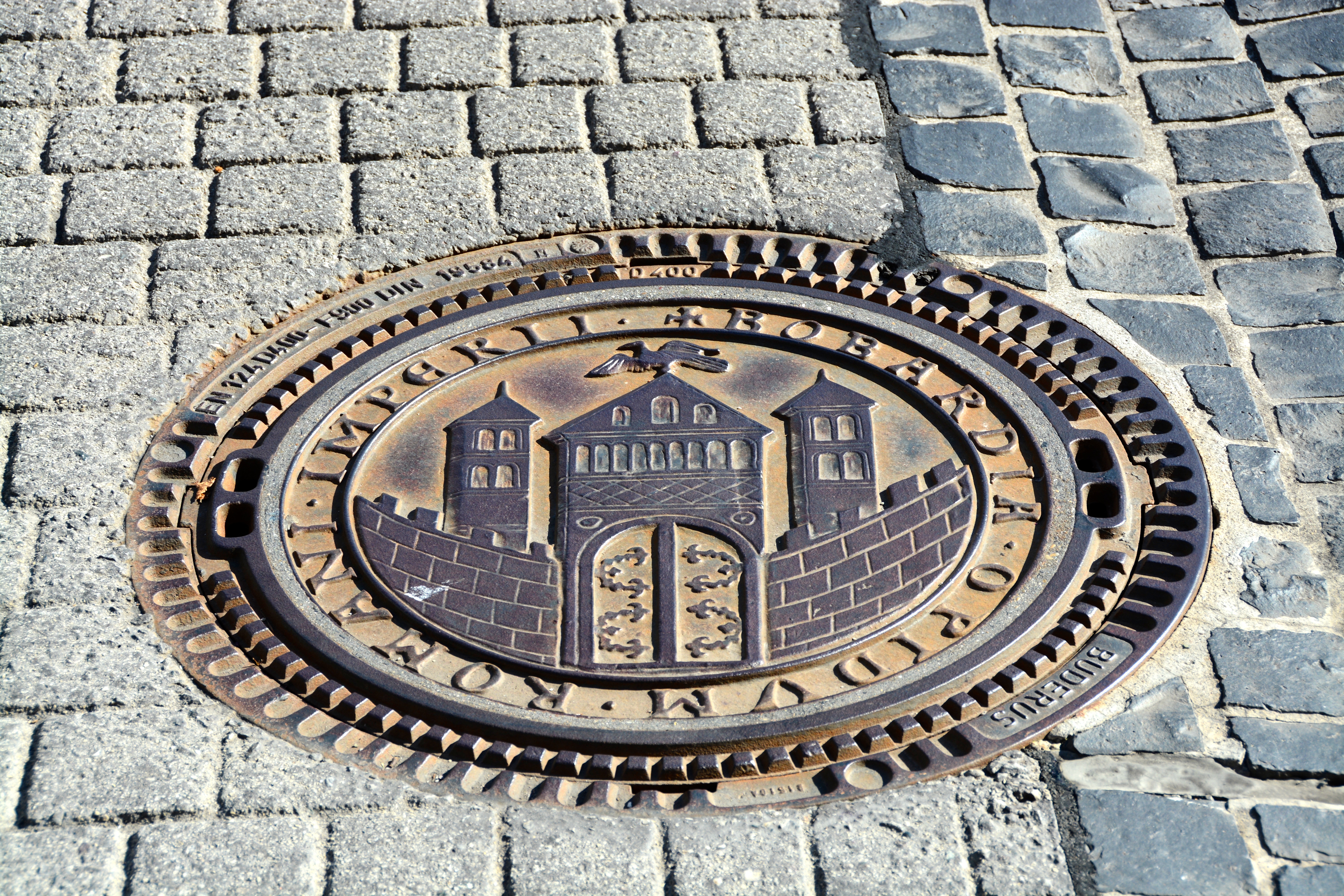
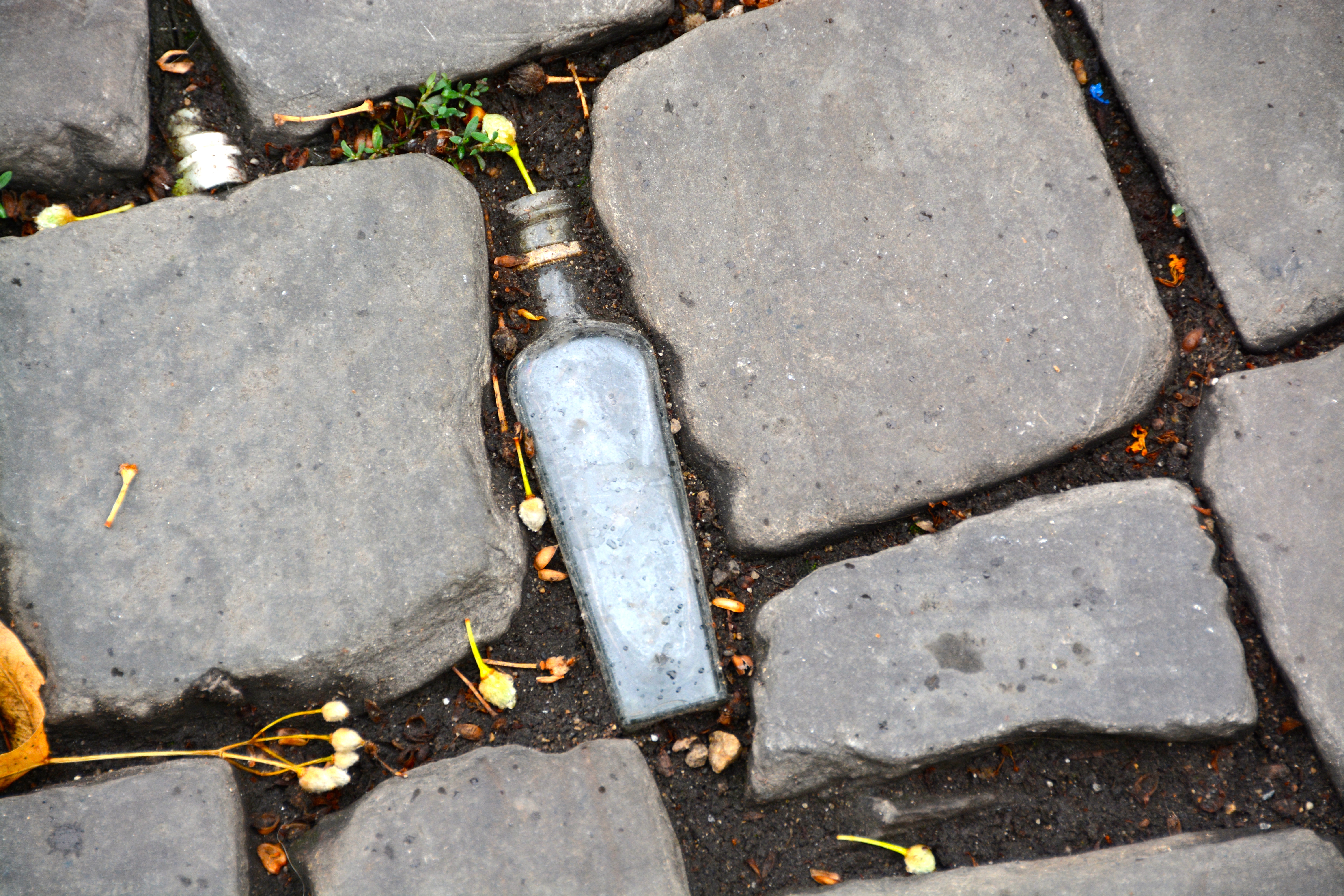
Interesting things to be found among the cobblestones in Cologne, Germany ©Jean Janssen

Interesting things to be found among the cobblestones in Cologne, Germany
©Jean Janssen

In 1910, the city walls were pulled down and a green belt made around the city.  Today there are also small hills, growth over the rumble of WWII that was collected here. 70% of the city (90% of the inner city) buildings were destroyed during WWII.  There are more ruins of the Roman Walls near the center of the city, as they were never pulled down.  They continue to be discovered.

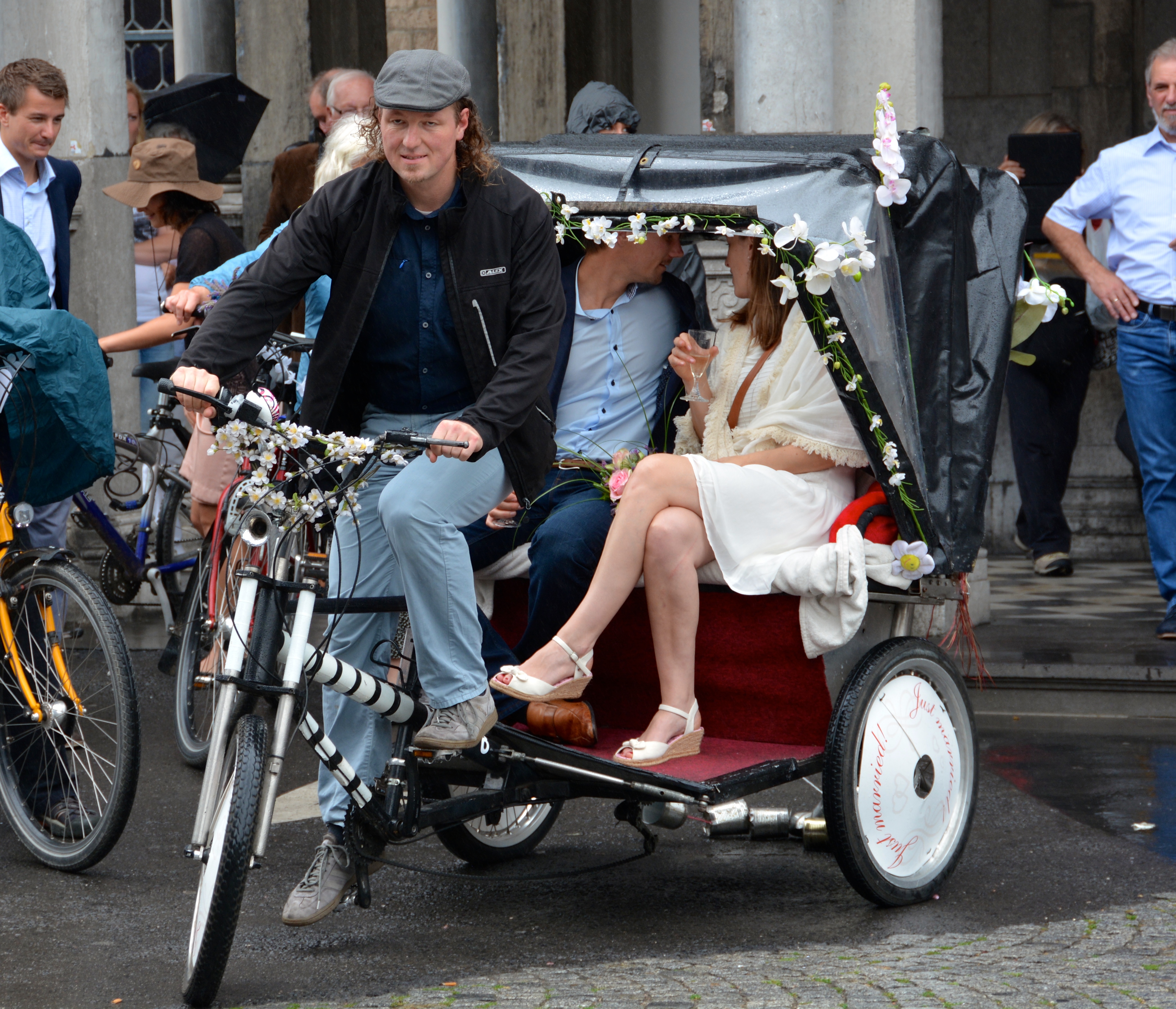
Newlyweds leaving city hall in Cologne, Germany. ©Jean Janssen

Newlyweds leaving city hall in Cologne, Germany.
©Jean Janssen

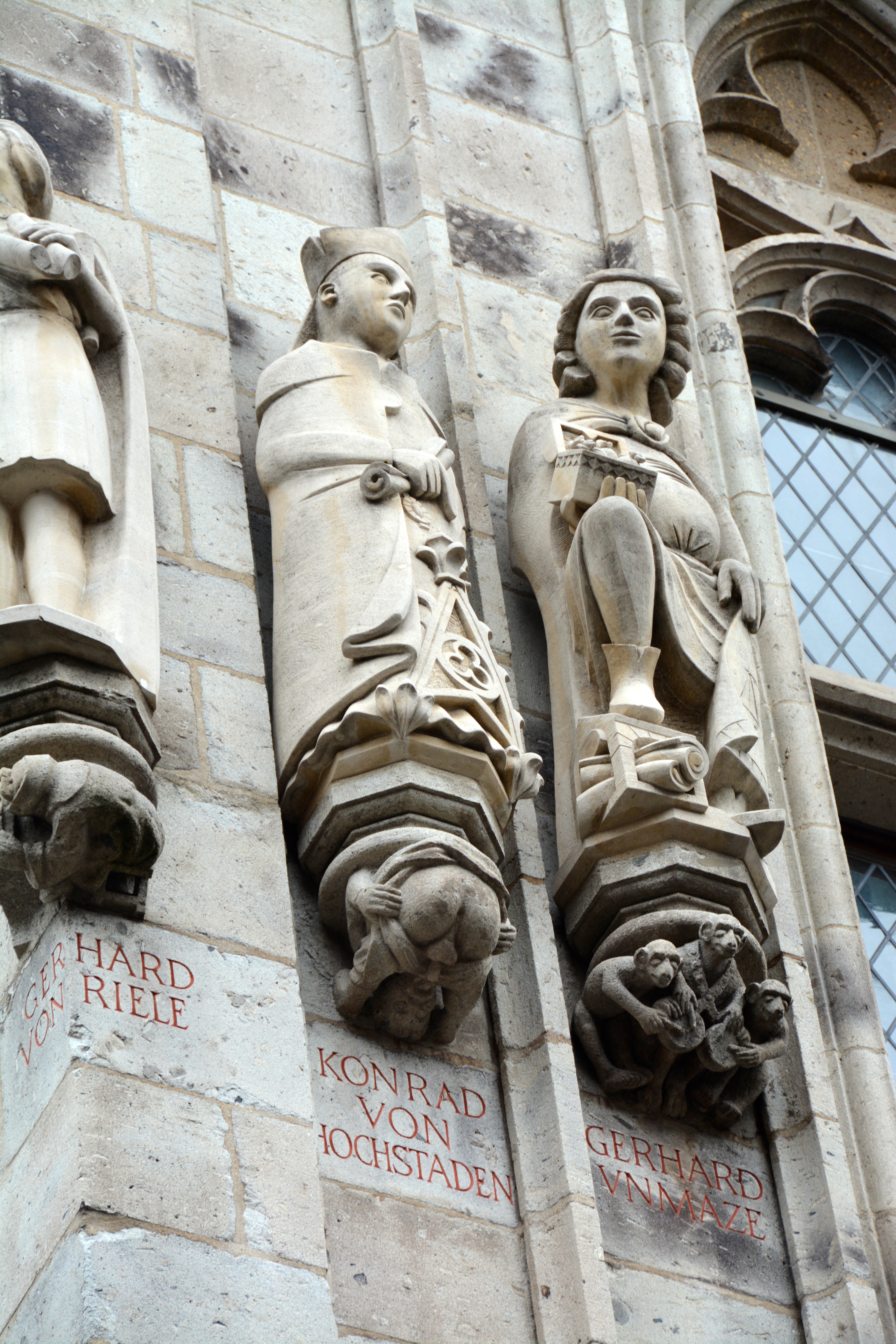
Detail on some of the Town Hall statutes, Cologne, Germany  If you are charged with raising taxes, you might not be the most popular; check out the extra detail added to the "bottom" of the middle statute. ©Jean Janssen

Detail on some of the Town Hall statutes, Cologne, Germany If you are in charge of raising taxes to fund construction, you might not be the most popular; check out the extra detail added to the “bottom” of the middle statute.
©Jean Janssen

Upon arrival we took buses to the Cathedral for our guided tour (included in the price on Uniworld River Cruises).  Cologne’s Chinatown is right next to the Cathedral.  We had a great guide, Markus; he was very funny.  Because they limit the number of guided tours through the Cathedral at any given time, we did a tour around the city center first.  My first observation was that the most popular hair style for young German men (and some older ones too) is partly shaved with full and long on top raised to heights that defy gravity.

We saw some Roman ruins, the elf fountain, the original site for cologne fragrance, and the statute-covered town hall.  It was raining, so I am not sure if the tour was abbreviated for that reason or there just wasn’t that much to see.  The city was heavily bombed during WWII, which could explain the limited sites as well as some of the functional, but highly unattractive buildings that we saw.

Side view of Cologne Cathedral, Germany ©Jean Janssen

Side view of Cologne Cathedral, Germany
©Jean Janssen

After the brief (or abbreviated) city tour, we finally made it to the Cathedral.  The Cologne Cathedral was hit by 14 arial bombs during WWII, but survived.  Much of the stained glass had been removed and the reconstruction shows various styles of glass as it was replaced over time.  The Cathedral remains in a constant state of repair because of weather, pollution, and reconstruction.  The Cathedral is a World Heritage site and Germany’s most-visited monument with a average of 20,000 visitors a day.

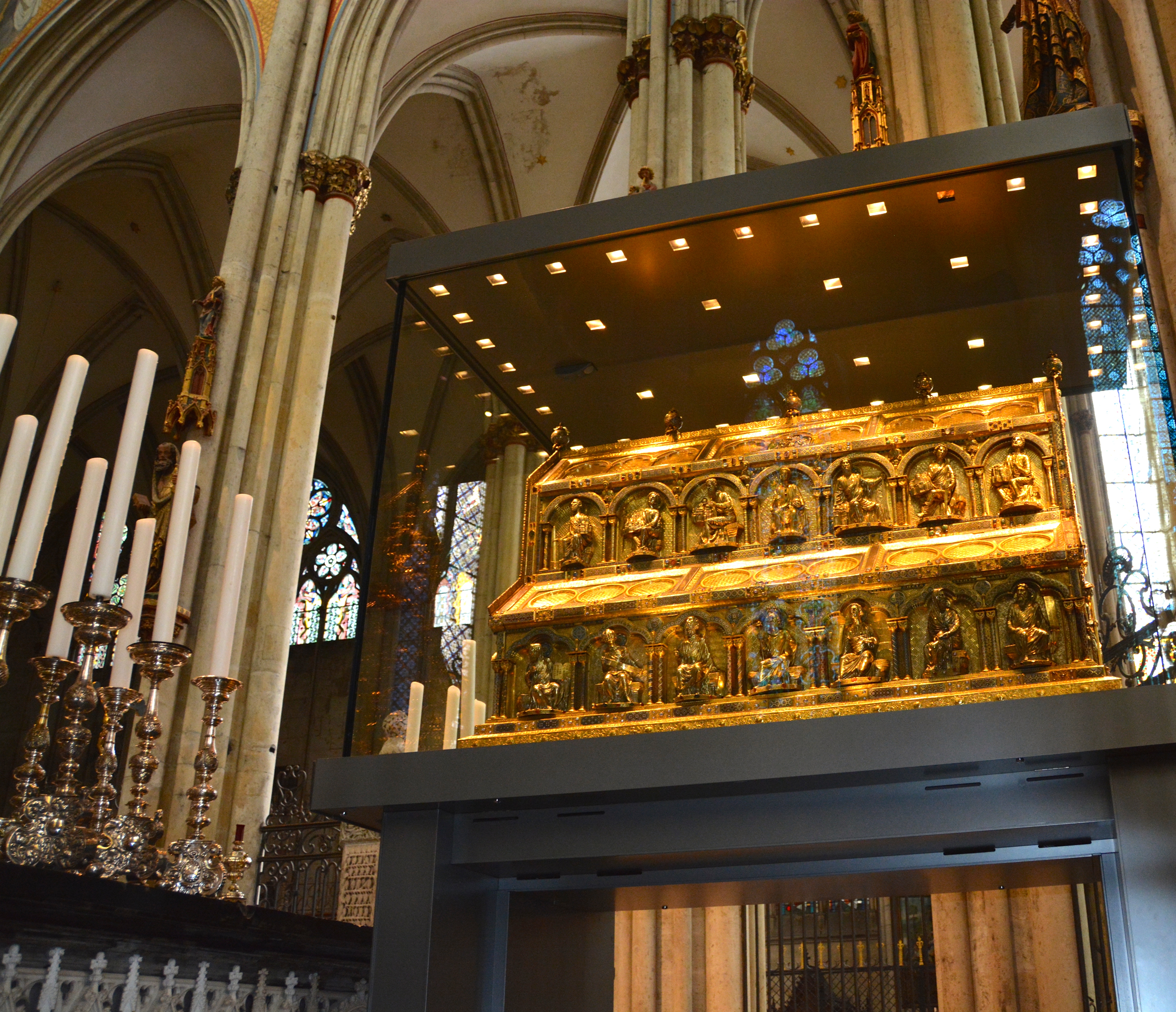
Reliquary of the Three Kings or Magi, Cologne Cathedral, Germany. ©Jean Janssen

Reliquary of the Three Kings or Magi, Cologne Cathedral, Germany.
©Jean Janssen

The Cologne Cathedral is the largest Gothic Church in Northern Europe.  With its twins spires, it has the largest facade of any church in the world.  Construction began in 1248 and halted in 1473, not beginning again until the 19th century.  Construction was completed in 1880.  Noteworthy is the fact that the construction never deviated from the original plans.  The Cathedral holds the reliquary of the three kings or magi, perhaps the primary reason it attracted so many pilgrims and continues to attract visitors today.

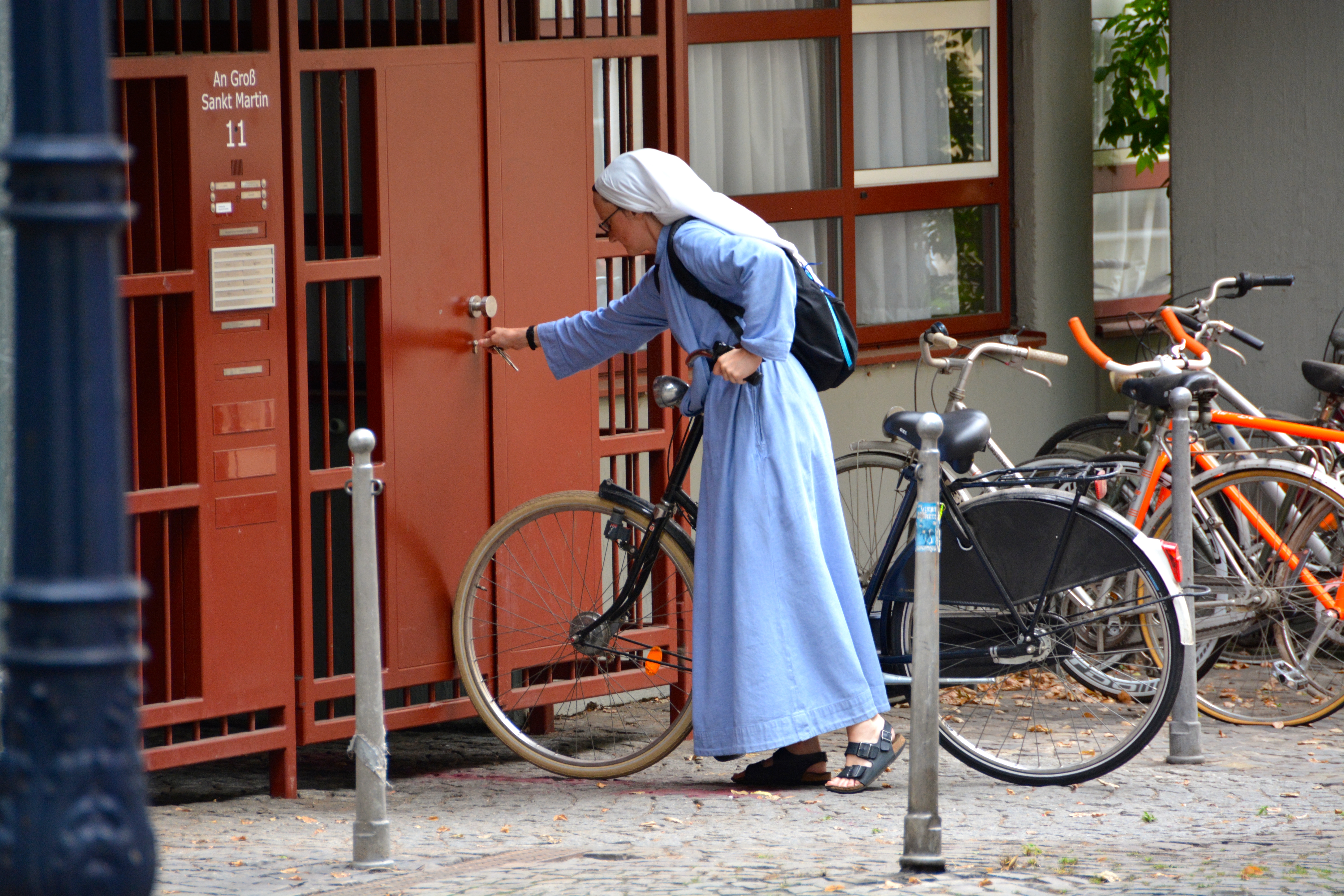
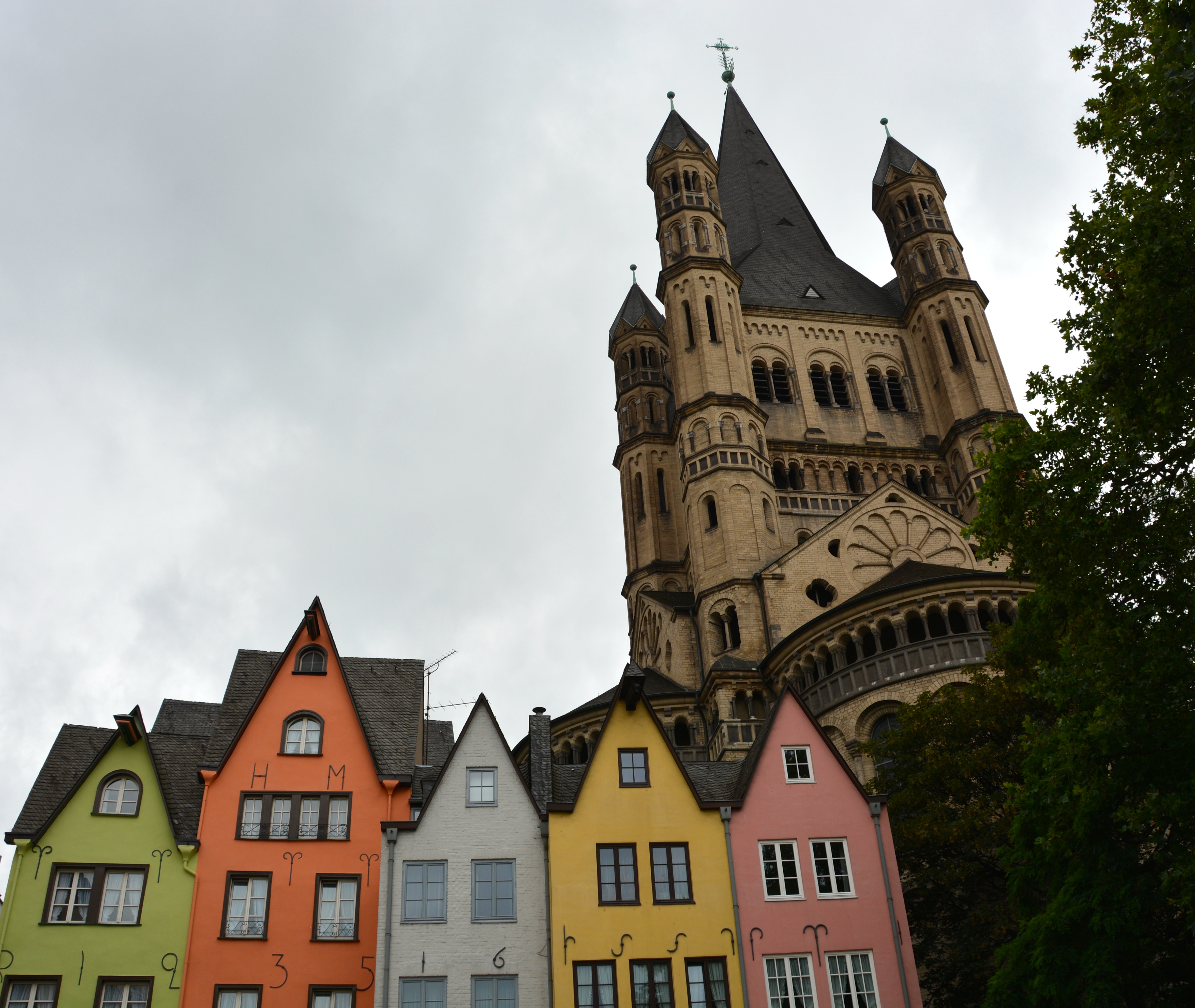
As viewed from our pub stop along the waterfront with Great Saint Martin Church in the background and reconstructed period building in the front. ©Jean Janssen

As viewed from our pub stop along the waterfront with Great Saint Martin Church in the background and reconstructed period buildings in the front.
©Jean Janssen

After our Cathedral visit, our guide pointed out a few other places for us to visit including Starbucks with its no-pay restroom, in contrast to most public toilets where the “pee dragon” (attendant) collects the fee.  Next we snaked through the narrow streets to reach the waterfront.  From here he pointed the way back to our ship.  In the shadow of Great Saint Martin Church, we stopped in a pub and sat outside while Boris tried the local beer and a pretzel.  It was an excellent pretzel; we ordered another.  Boris didn’t want to share.

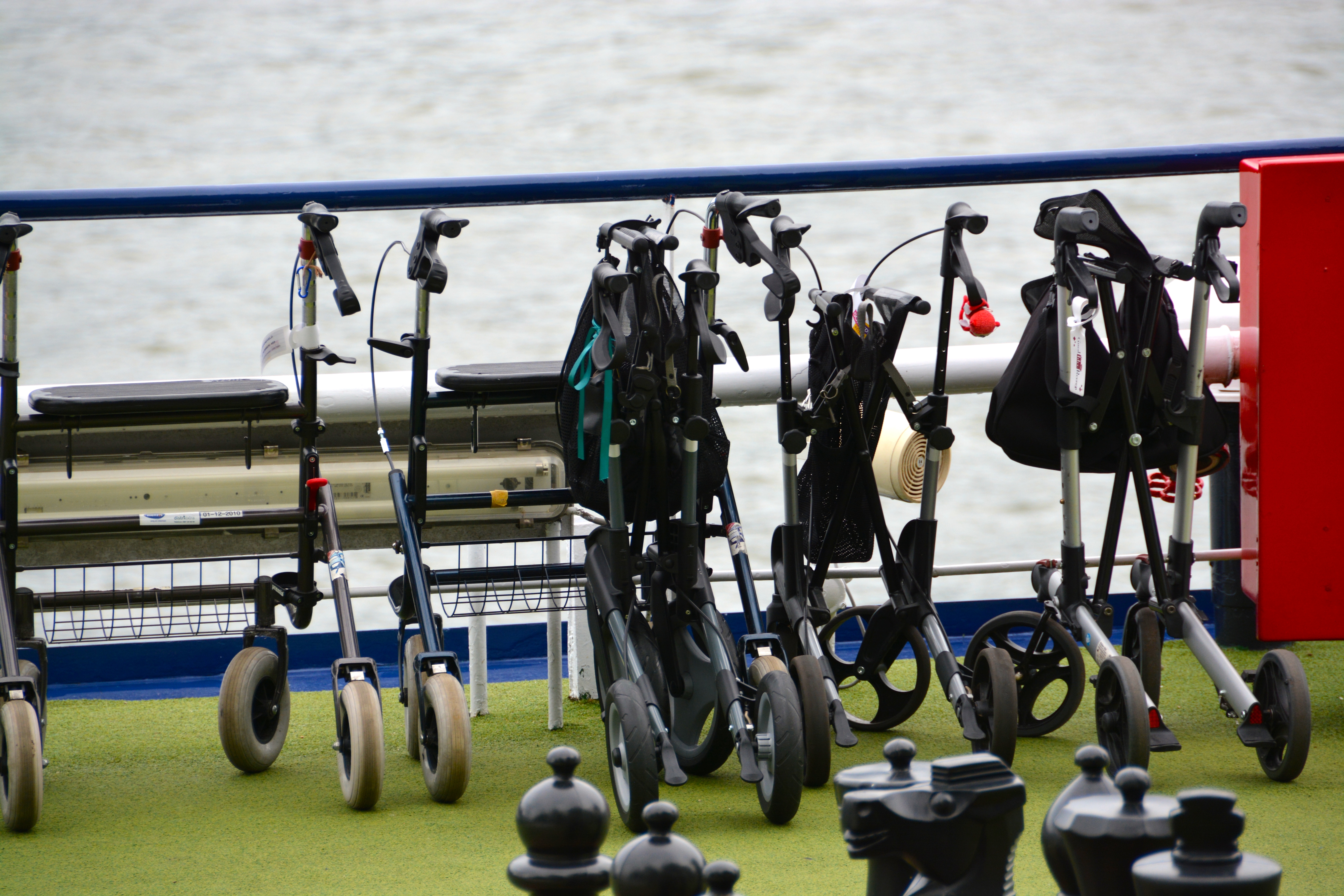
As we strolled along the waterfront at Cologne, we noted all the riverboats at dock.  Most have bicycles on their top deck that guest can check out for day use.  This boat (not ours) also had a parking area for walkers. ©Jean Janssen

As we strolled along the waterfront at Cologne, we noted all the riverboats at dock. Most have bicycles on their top deck that guests can check out for day use. This boat (not ours) also had a large chest set and a parking area for walkers.
©Jean Janssen

After our break we strolled back to our ship along the waterfront.  We were not the only River Boat in Cologne that day.  We didn’t see that much to do in the city, so after dinner we stayed aboard.  Boris is still jet-lagged so he fell asleep early.

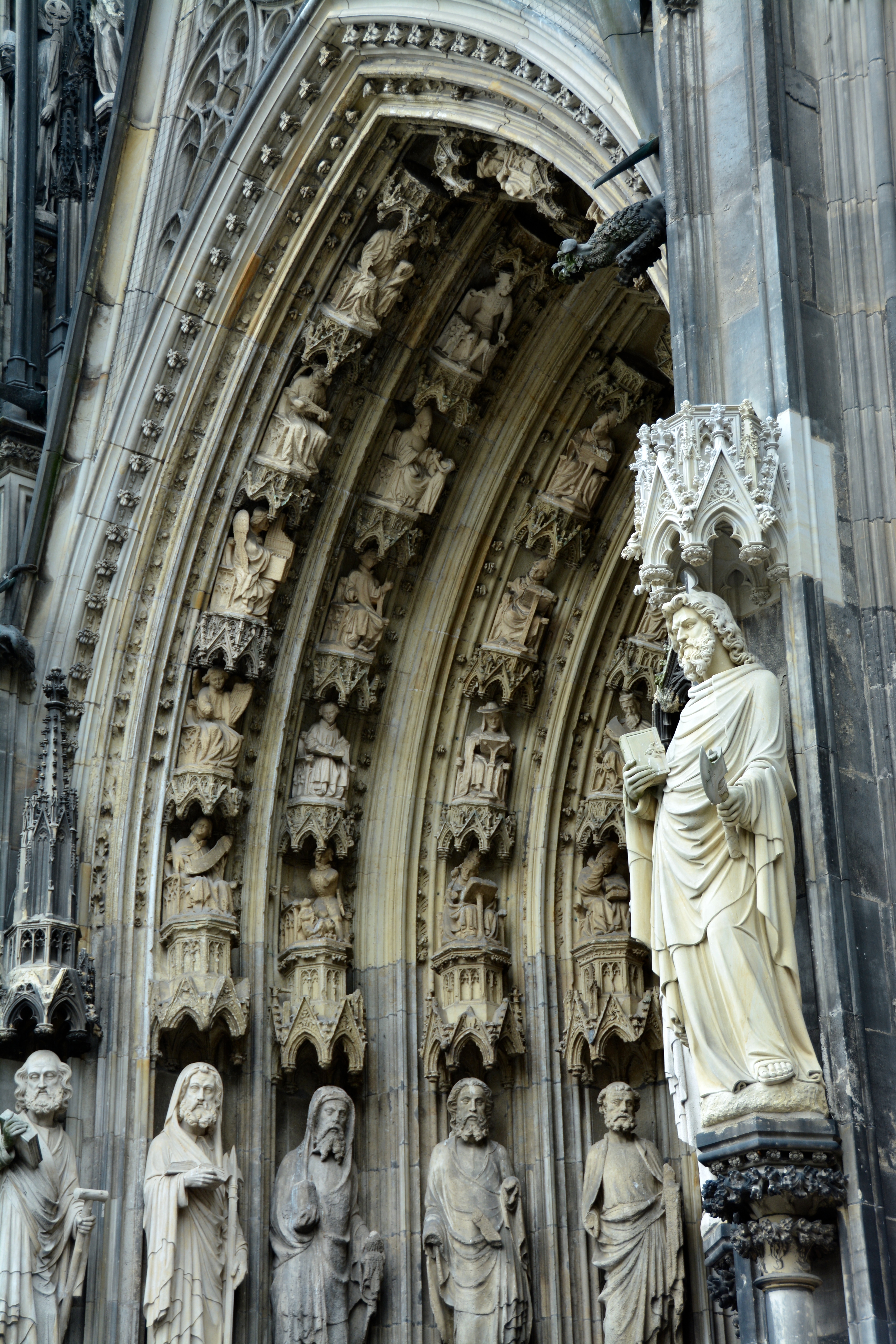
Detail on the entrance to Cologne, Cathedral ©Jean Janssen

Detail on the entrance to Cologne, Cathedral
©Jean Janssen

The SS Antoinette is one of three “superships” that Uniworld has.  This is the first of the three, launched in 2011.  It is a longer ship where the standard facilities-lounge and dining room-are just a little bit bigger.  There is also a cinema that shows three movies a day and a covered swimming pool (with a wide back door that can be opened, although generally it is closed during sailing due to engine noise).  Our “juliet balcony” room has a wonderful feature, the window.  It is almost the complete width of the room and can be raised or lowered by a one touch button (or stopped during at a midpoint).  The window opens to half the height of the room.

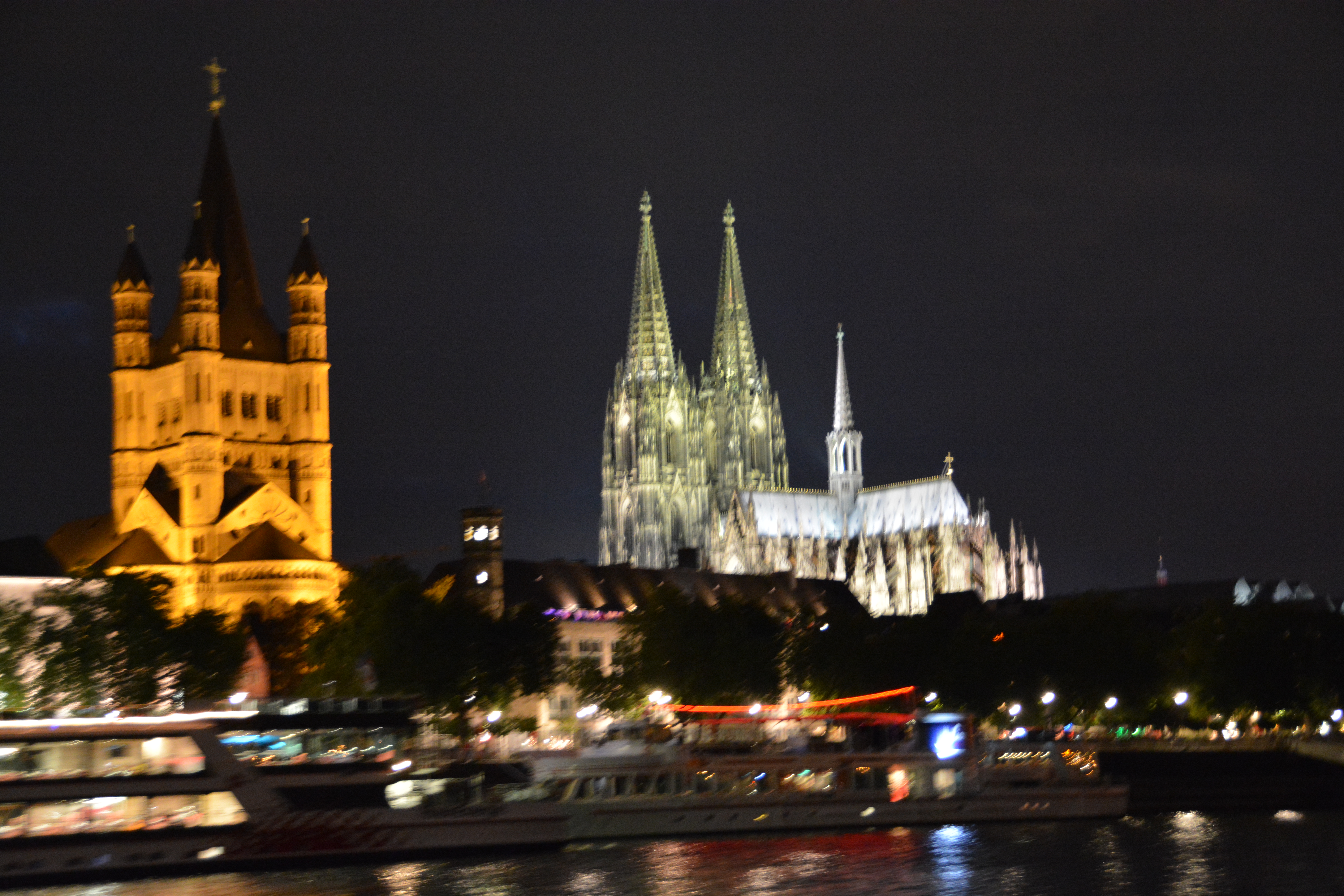
Cologne Cathedral as viewed from the Rhine at night. ©Jean Janssen

Cologne Cathedral as viewed from the Rhine at night.
©Jean Janssen

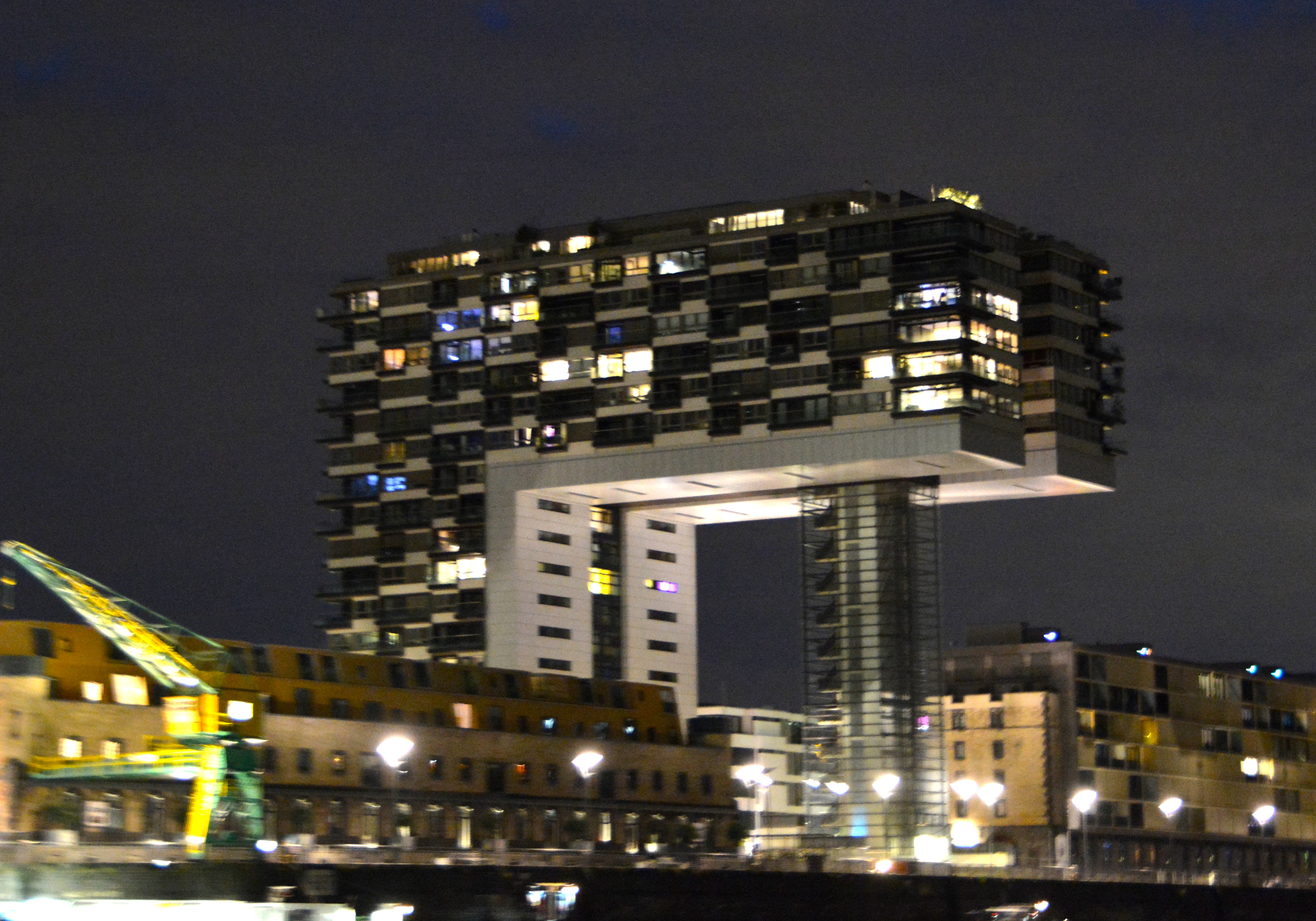
Tonight I enjoyed that window, opening it and the curtains as we sailed down the river Rhine, leaving Cologne.  There was a lovely view of the Cathedral, all lit up at night.  Further down the river, I saw some really architecturally interesting buildings that seemed to defy gravity.  I later identified them as the Kranhaus (“Crane House” in reference to the harbor cranes used to load or off load ship cargo) buildings.  Two appeared to be commercial buildings and one looked like a residential building. (I confirmed I was correct later.)  Each are 17 stories and shaped like an upside down “L”.

Part of the complex of Kranhaus buildings in Cologne, Germany. ©Jean Janssen

Part of the complex of Kranhaus buildings in Cologne, Germany.
©Jean Janssen

Tomorrow on our southwardly journey on the Rhine, we reach the German Corner.

Posted in international, River Cruise | Tagged , , | Leave a comment

Edinburgh, Scotland: Royal Yacht Britannia and the Palace of Holyroodhouse

Royal Yacht Britannia docked in Leith (seaport for Edinburgh), Scotland ©Jean Janssen

Royal Yacht Britannia docked in Leith (seaport for Edinburgh), Scotland
©Jean Janssen

For our second full day in Edinburgh, we have plans to see both the Palace of Holyroodhouse with the adjoining Abbey Ruins and the Royal Yacht Britannia.  We walked over to the Ocean Terminal to see the Yacht when it opened in the morning.  Again, we used the fast track lane since we already had our ticket as part of the Royal Edinburgh Ticket (RET).  I priced the tickets individually and after considering the price of the tour bus ticket, once we had gone to 2 of the 3 major attractions with the RET we were already saving money.

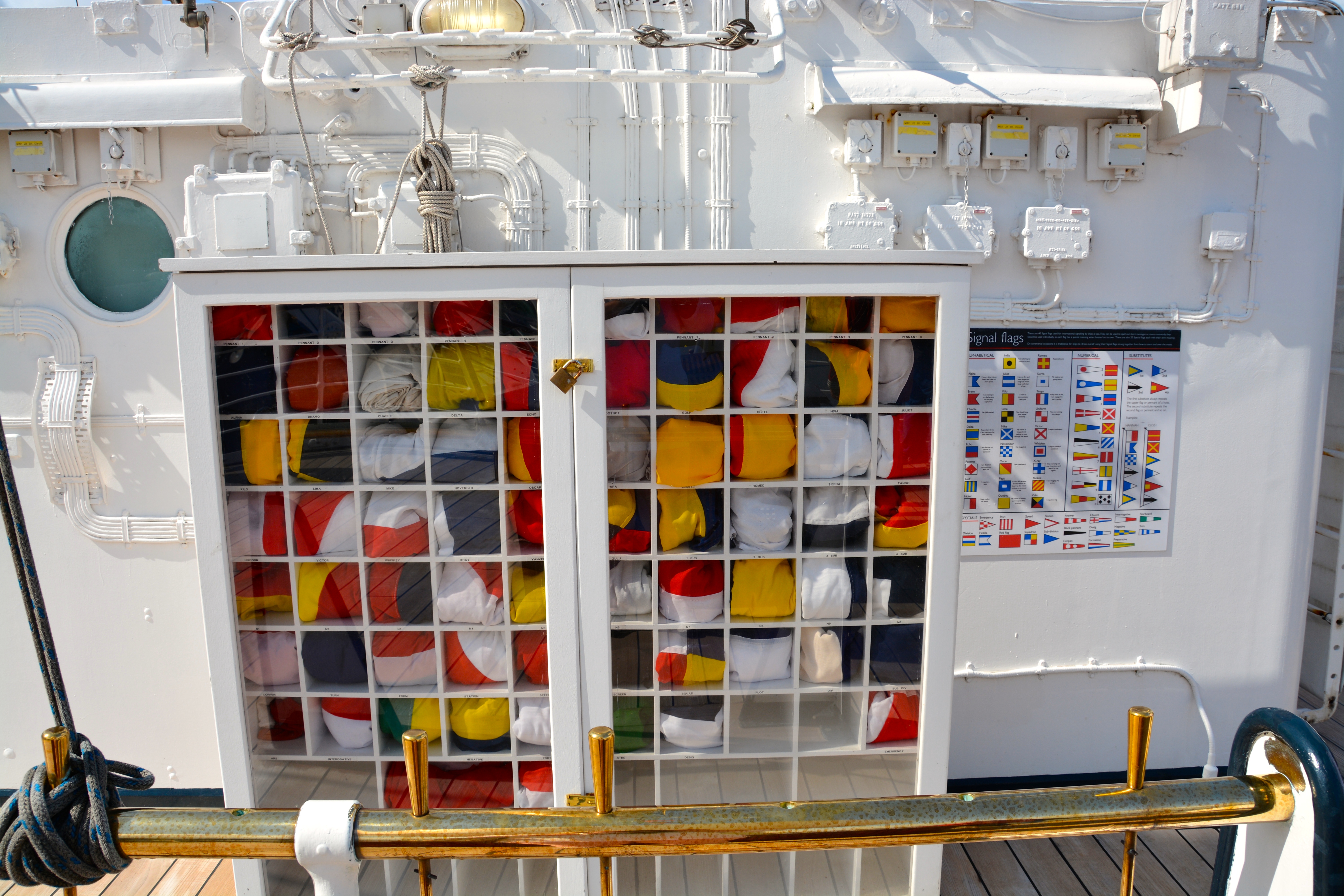
Signal Flags on the Royal Yacht Britannia ©Jean Janssen

Signal Flags on the Royal Yacht Britannia
©Jean Janssen

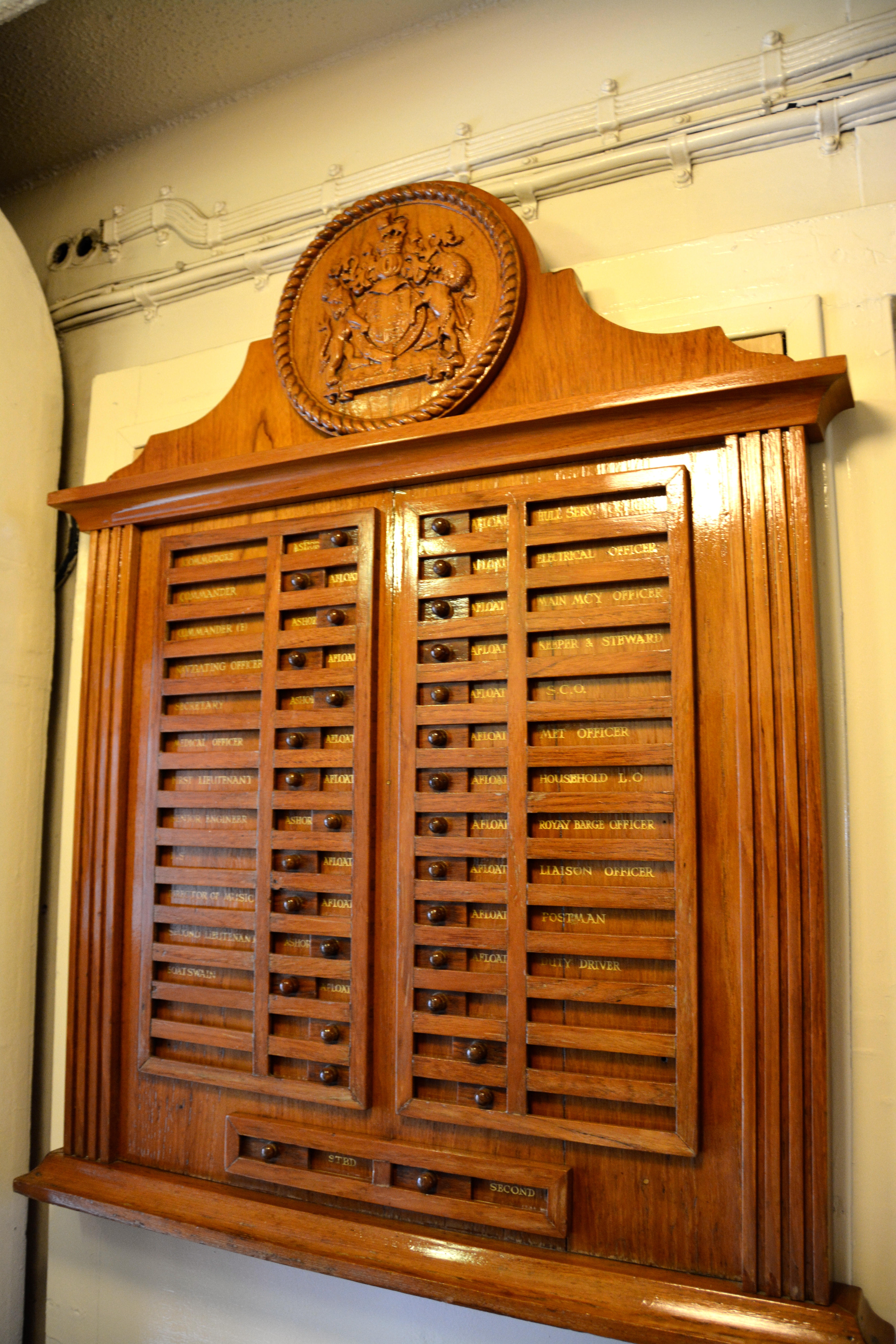
This sliding panel board showed who was on or off the ship on the Royal Yacht Britannia. ©Jean Janssen

This sliding panel board showed who was on or off the ship on the Royal Yacht Britannia.
©Jean Janssen

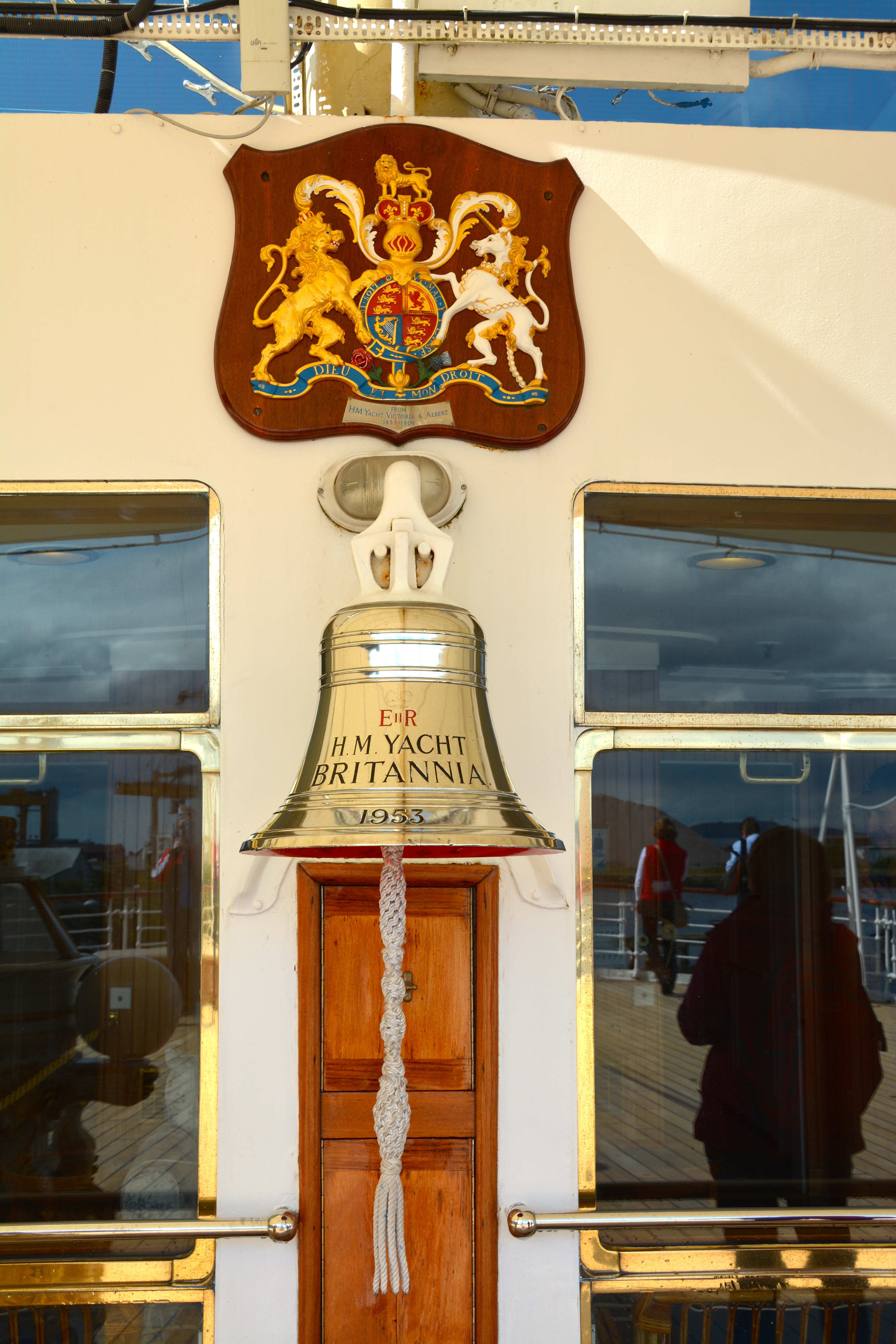
You access the yacht from the second floor of the Ocean Terminal in Leith.  (Thats the 3rd floor to Americans)  From Edinburgh, you can take the Majestic Tour bus out to the terminal.  If you drive, there is free parking in the garage.  Your ticket price (not cheap) includes a self-guided audio unit.  The layout is well done and well marked.  There are stairs, but a lift (elevator) is available.  Trip Advisor has rated the Britannia as the UK’s #1 Attraction.

The Ship was launched in April 1953 and served the royal family for 44 years.  It has been decommissioned and various venues submitted proposals to display the yacht.  Edinburgh won out and the ship is docked at Leith (Edinburgh’s seaport) and is open for visitors.

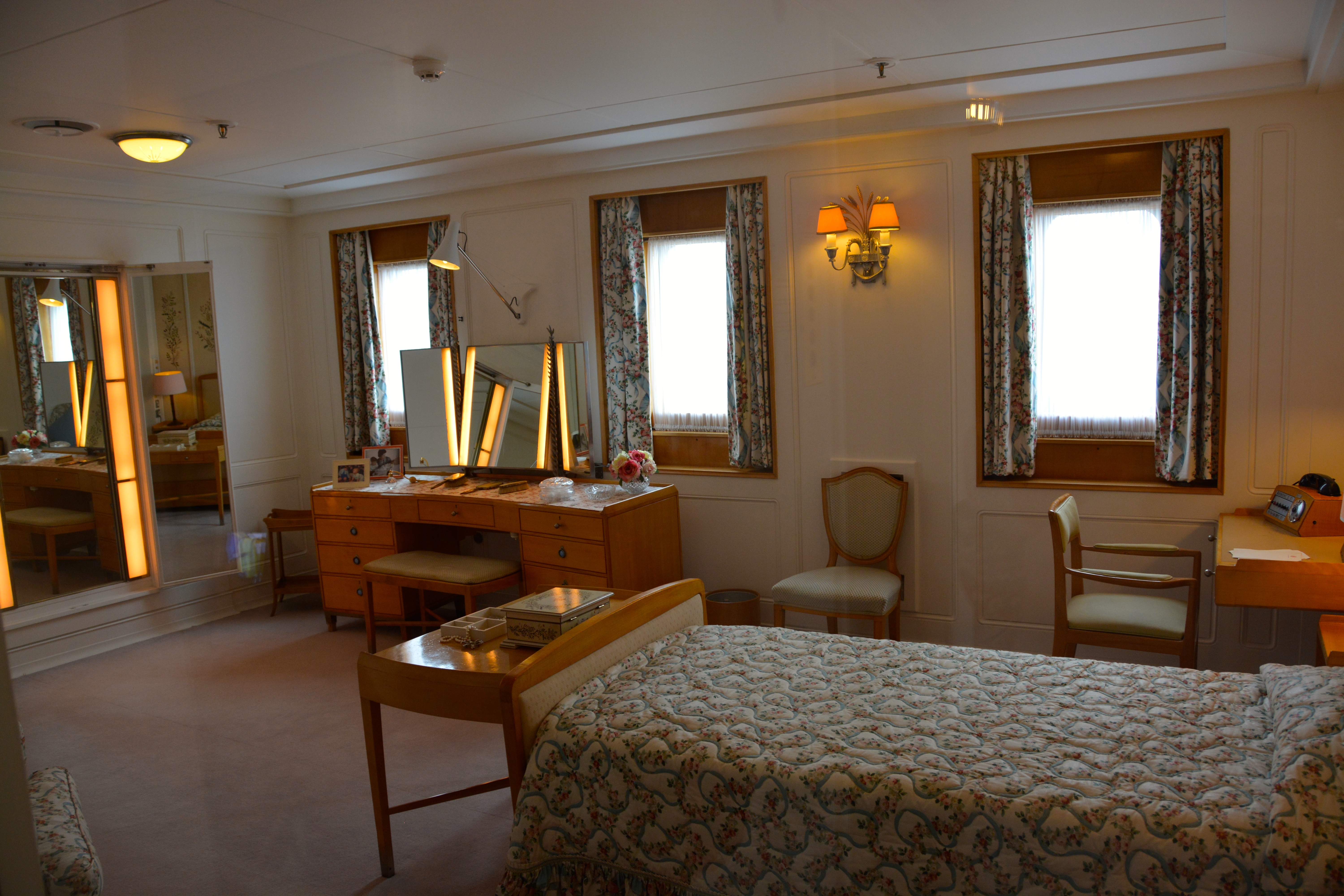
The quite modest royal bedroom of the queen.  That bed is way too small for me.  Royal Yacht Britannia ©Jean Janssen

The quite modest royal bedroom of the queen. That bed is way too small for me. Royal Yacht Britannia
©Jean Janssen

The yacht was a royal residence and a site for state visits, official receptions, honeymoons, and family holidays.  It was originally designed to be converted into a hospital ship, although it was never used for this purpose.  It was decommissioned in 1997.

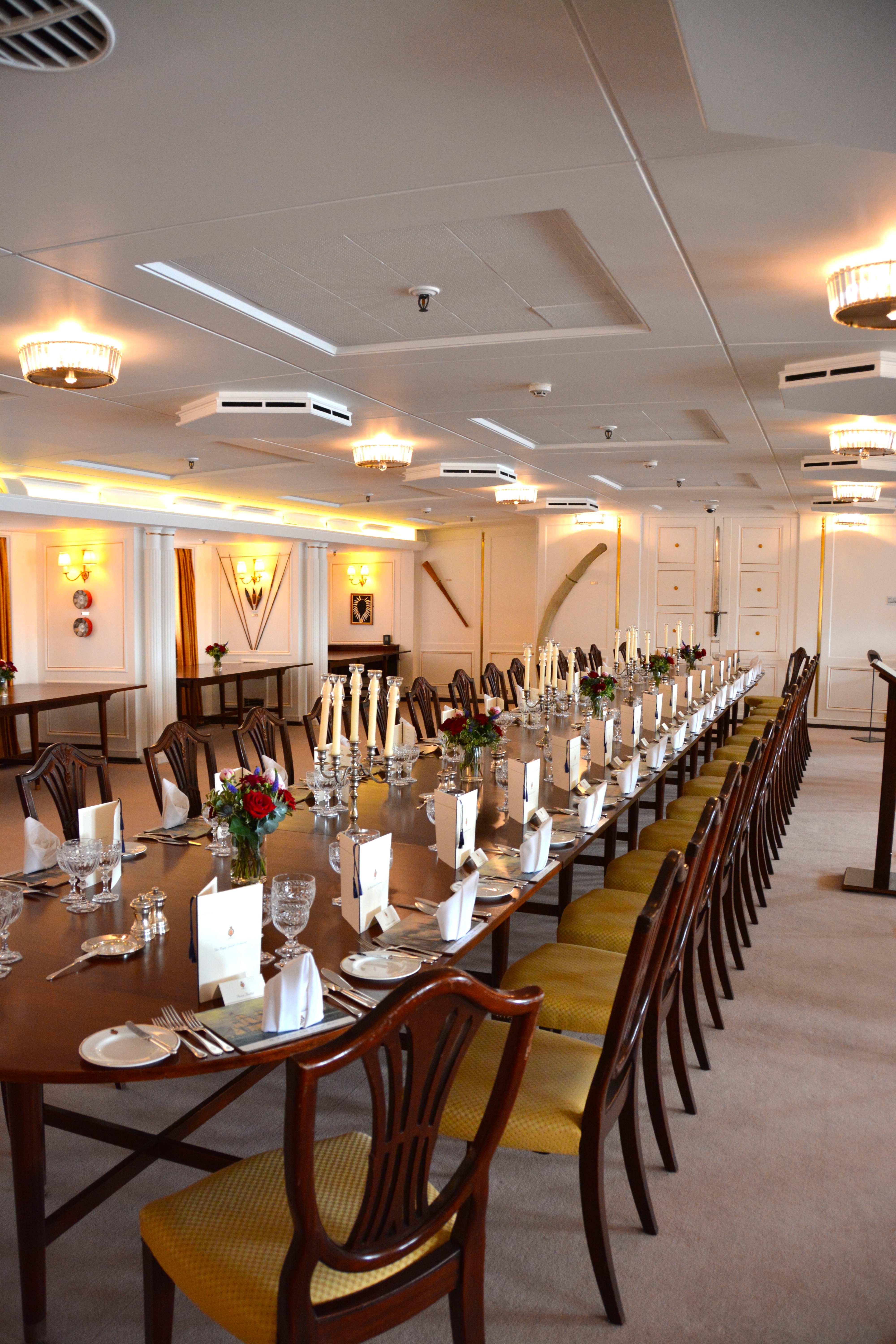
The State Dining Room aboard the Royal Yacht Britannia. ©Jean Janssen

The State Dining Room aboard the Royal Yacht Britannia.
©Jean Janssen

In addition to the tour, you can visit the tea room with nice views of the harbor (but we have these same views from our own ship).  You can rent the Britannia for private events.  In 2011, the Queen’s granddaughter Zara Phillips held a pre wedding event on the yacht.

Some of the crew quarters aboard the Royal Yacht Britannia ©Jean Janssen

Some of the crew quarters aboard the Royal Yacht Britannia
©Jean Janssen

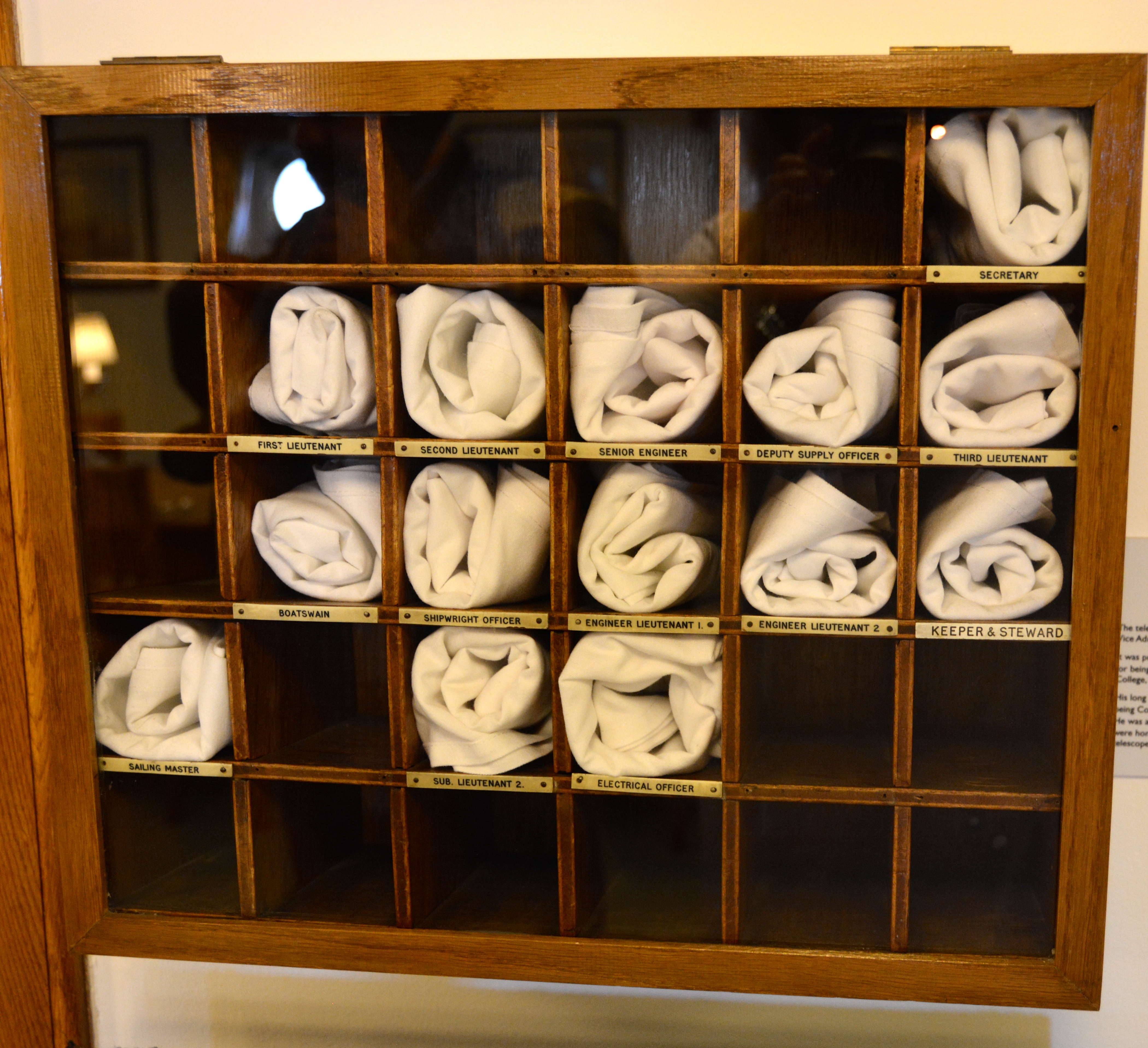
Officer's individual napkin cubby on the Royal Yacht Britannia. ©Jean Janssen

Officers’  individual napkin cubby on the Royal Yacht Britannia.
©Jean Janssen

Probably for security purposes, the name of the vessel is not found on the outside of the ship.  Allow about an hour and a half to visit the Britannia.  In addition to the the navigational equipment, captain’s quarters, and the royal apartments and common areas, you can view the various lounges and accommodations of the crew.  Rank was strictly observed and it was interesting to note that there were multiple crew lounges (on a vessel where space was at a premium) each dedicated to a particular crew group/rank.

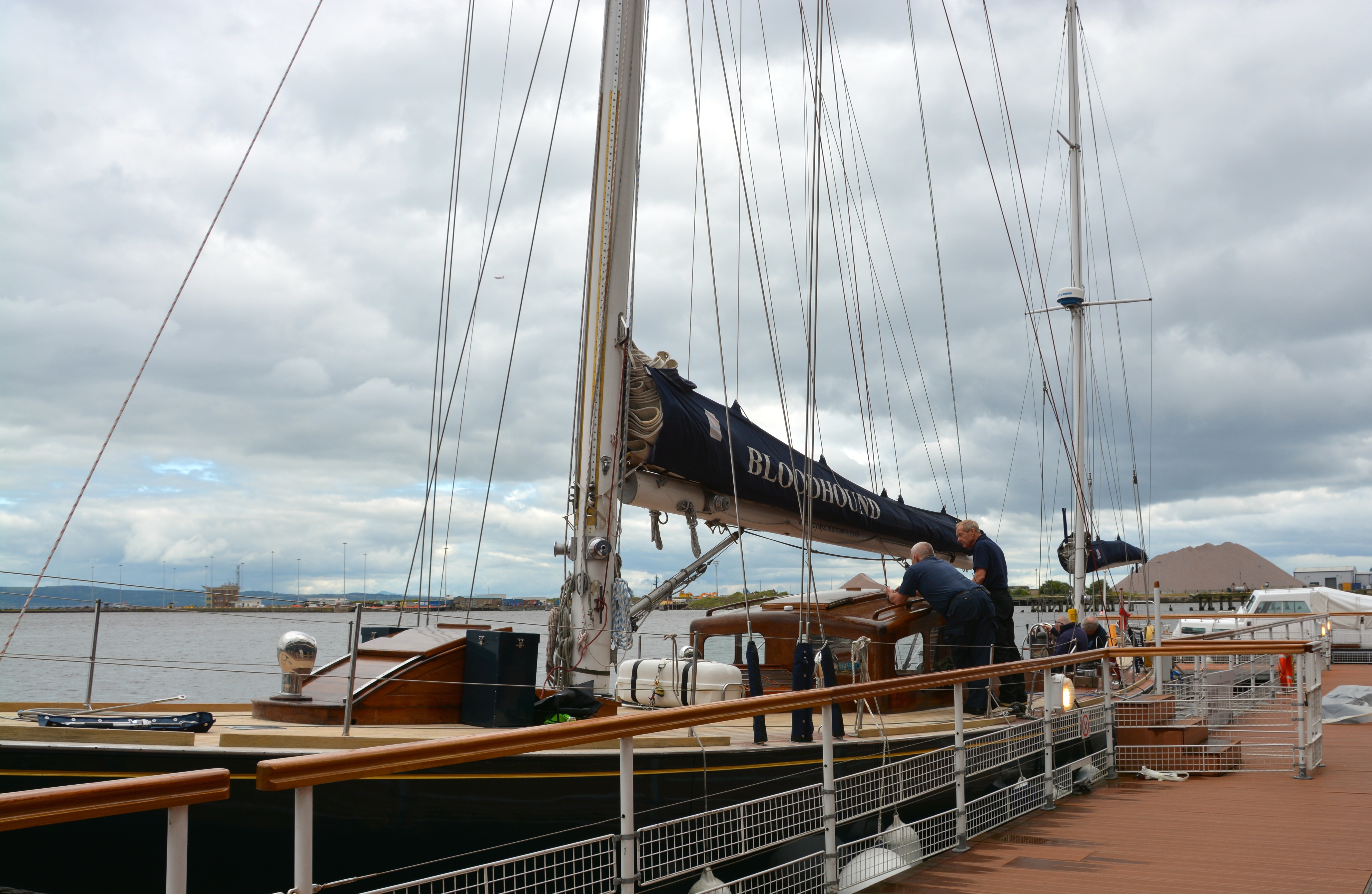
Royal Racing Yacht, the Bloodhound on display alongside the Britannia ©Jean Janssen

Royal Racing Yacht, the Bloodhound on display alongside the Britannia
©Jean Janssen

On the final level, you can view the spotless engine room and a space with a additional display.  From this level, you can also access the docking area for the Bloodhound, the Royal Racing Yacht.  I noticed while we toured the ship that there was crew preparing the Bloodhound.  As we passed by I spoke with a guide who told me that this was the last day that the Bloodhound was at dock for a while.  Each year, it is taken out and sailed for maintenance purposes.  Interestingly, the crew is all made up of former crew of the Britannia.

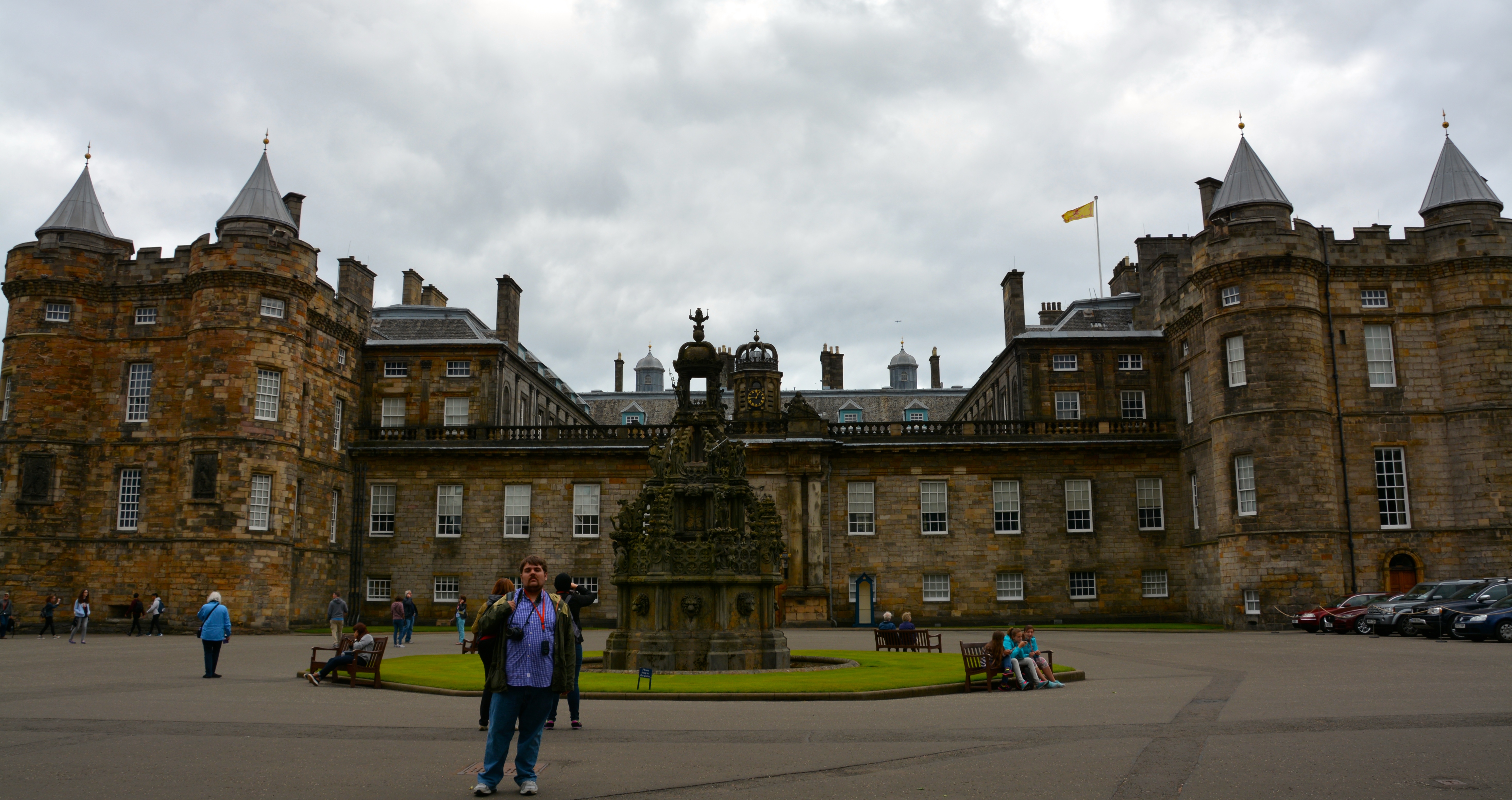
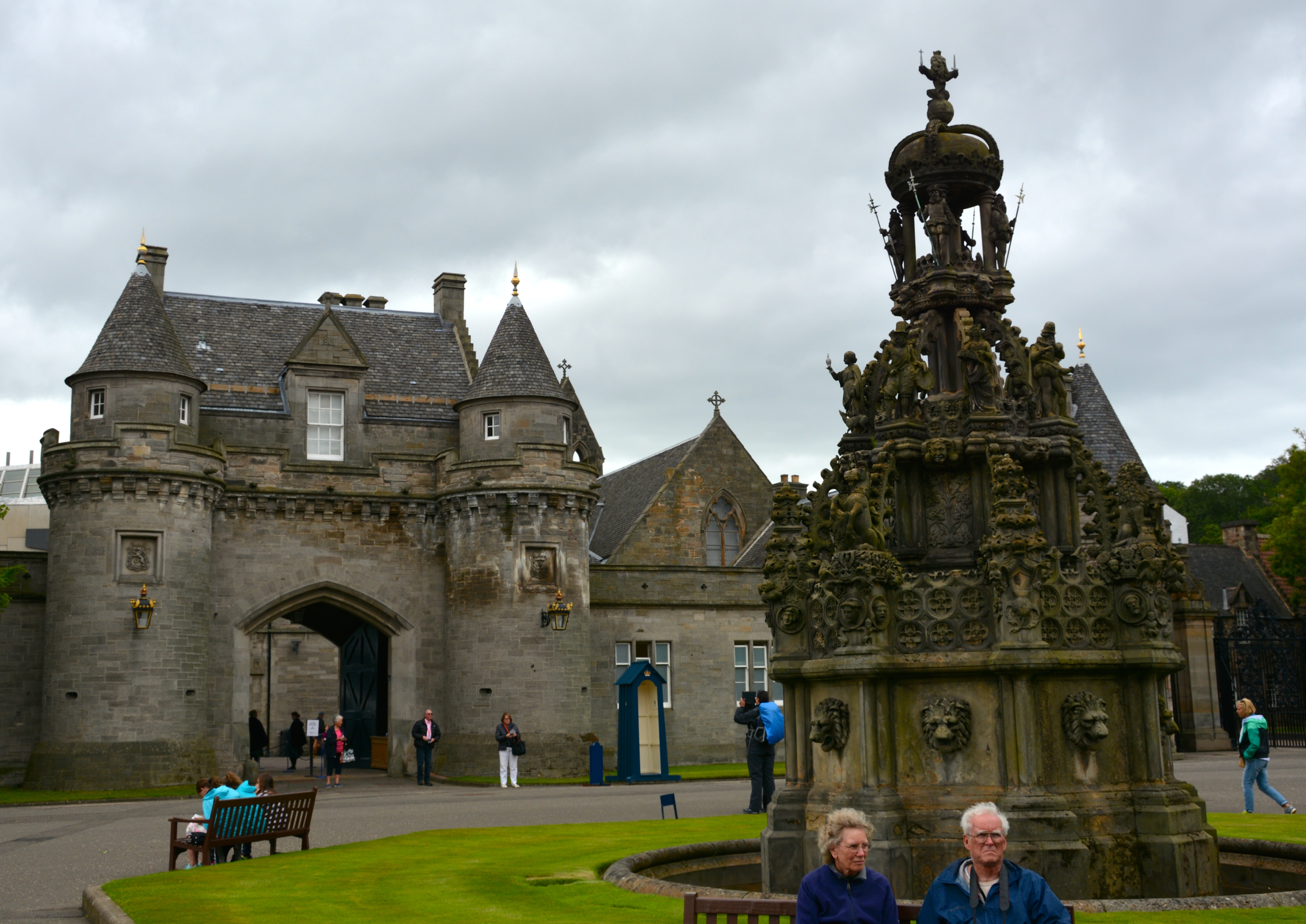
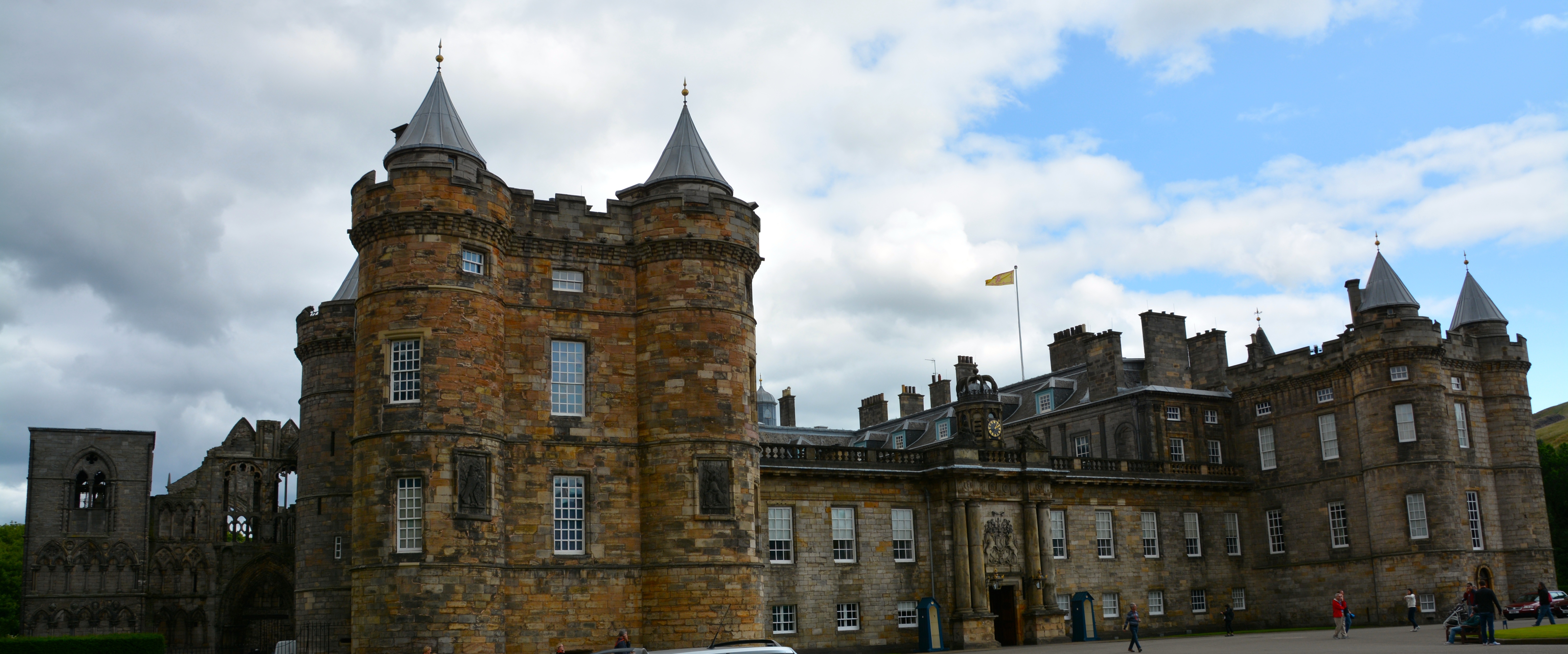
The Palace of Holyroodhouse, Edinburgh, Scotland.  The original medieval tower is on the left side. ©Jean Janssen

The Palace of Holyroodhouse, Edinburgh, Scotland. The original medieval tower is on the left side.
©Jean Janssen

The Britannia has a nice gift shop that you pass through as you leave and exit once again into the Ocean Terminal mall.  Just outside is a bus stop where we were able to catch the Majestic Route Tour Bus and head back into Edinburgh.  The Palace of Holyroodhouse is a stop on all of the Hop-on/Hop-off bus routes.

Palace of Holyroodhouse, Edinburgh, Scotland ©Jean Janssen

Palace of Holyroodhouse, Edinburgh, Scotland
©Jean Janssen

Palace of Holyroodhouse is the Queen’s official residence in Edinburgh.  You can tour the state apartments and the historic chambers of Mary, Queen of Scots. Adjoining the Palace are the beautiful ruins of the Holyrood Abbey.  The Palace has wonderful views of the mountains.  Like the yacht, your tour of the Palace was self-guided with the use of an handheld audio unit.

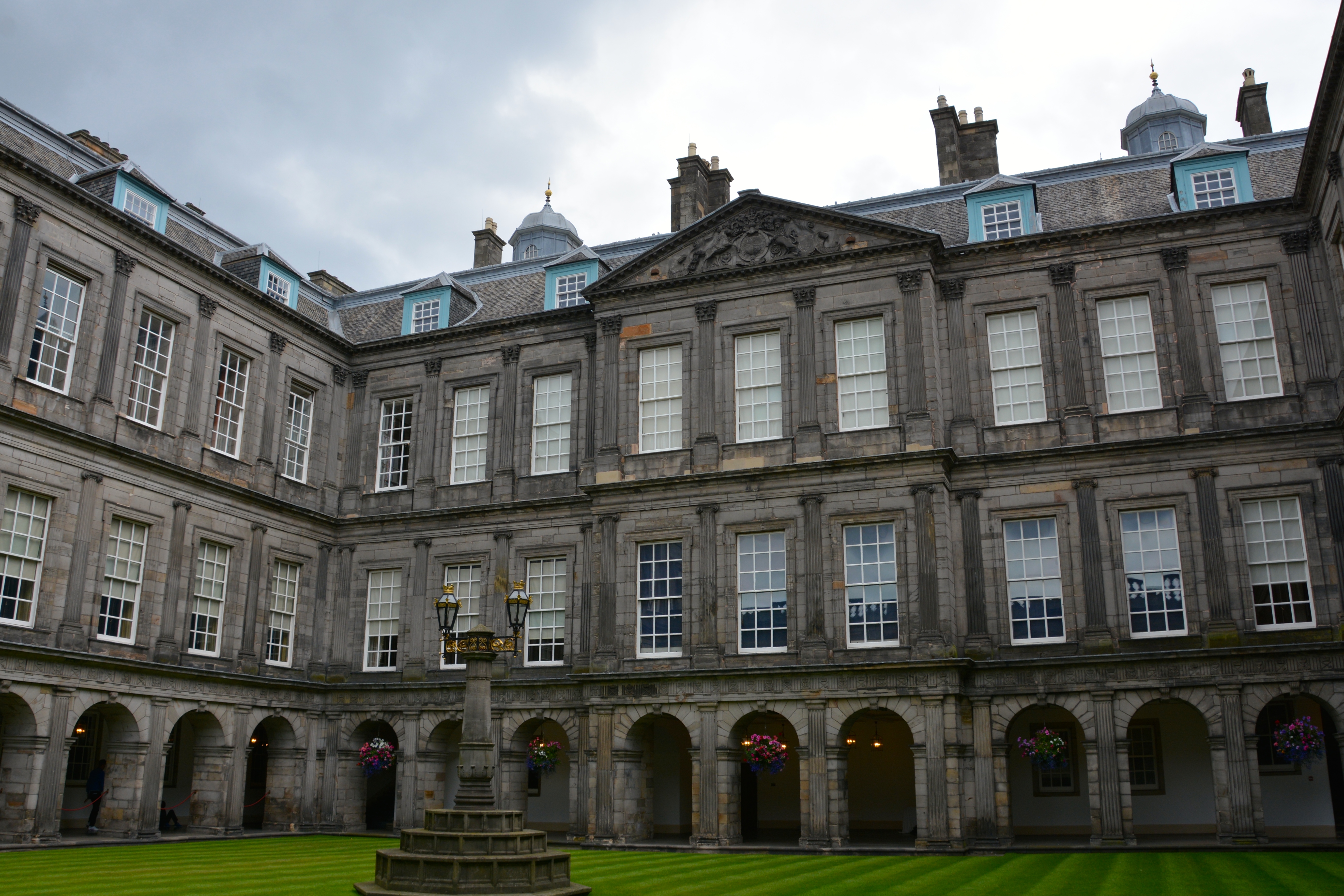
Interior Courtyard, Palace of Holyroodhouse, Edinburgh, Scotland ©Jean Janssen

Interior Courtyard, Palace of Holyroodhouse, Edinburgh, Scotland
©Jean Janssen

The queen is in residence at Holyrood Palace during Holyrood Week, the end of June to the beginning of July, when she receives the keys to the city of Edinburgh.  Scottish Kings began to reside at the Abbey at Holyrood beginning in the 15th Century enjoying the parkland rather than the “more exposed” Edinburgh Castle.  When the royal lodgings grew larger than the Abbey, it was the determined that the residence would become a Palace.

Palace at Holyroodhouse.  Abbey ruins are on the far left with Medieval tower next to it. Edinburgh, Scotland ©Jean Janssen

Palace at Holyroodhouse. Abbey ruins are on the far left with Medieval tower next to it.
Edinburgh, Scotland
©Jean Janssen

Perhaps Holyrood’s most famous resident, Mary Queen of Scots married both of her Scottish husbands at Holyrood and witnessed the death of her secretary David Rizzo in her apartments here.  Near the end of the Palace tour, you visit her rooms in the original medieval tower.  When her son James VI moved the court back to London, the significance of Holyrood faded.

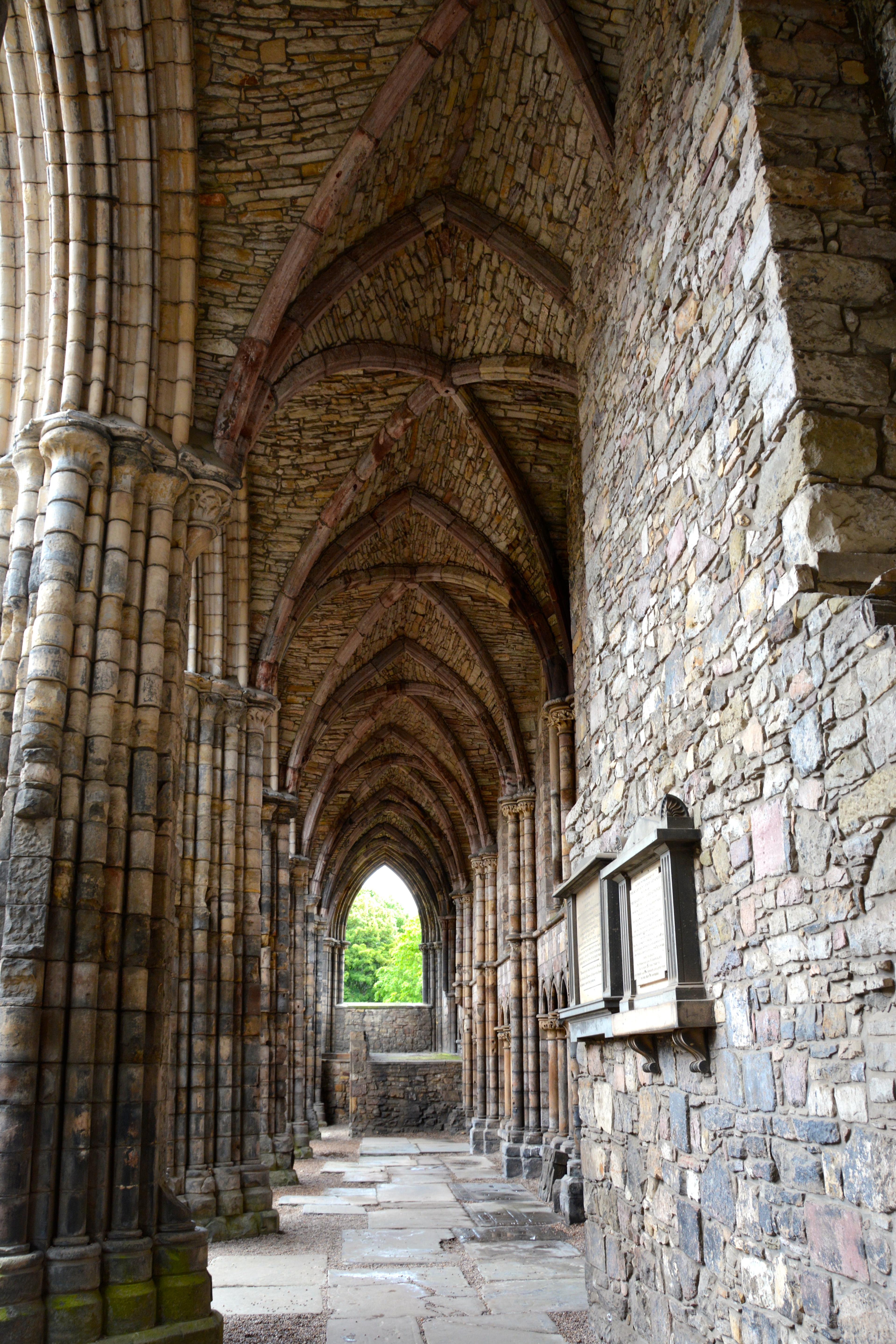
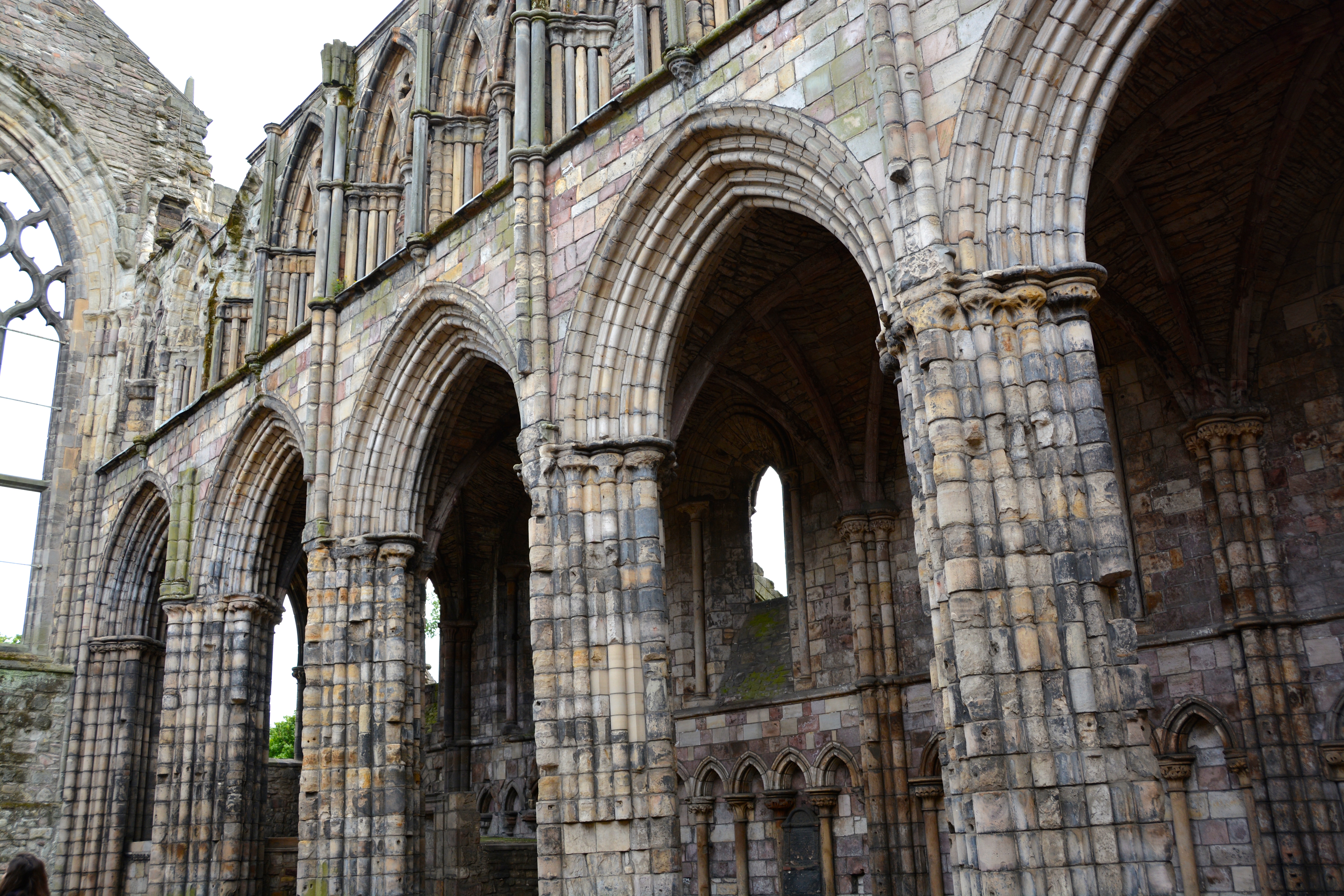
Abbey ruins at Holyroodhouse, Edinburgh, Scotland ©Jean Janssen

Abbey ruins at Holyroodhouse, Edinburgh, Scotland
©Jean Janssen

We enjoyed the visit to the castle interior (no pictures permitted), especially the rooms of Mary Queen of Scots.  One of the charming additions to the Palace tour is looping video of the childhood recordings of some of more recent royals, including Queen Elizabeth II.

Holyrood Abbey Ruins, Edinburgh, Scotland ©Jean Janssen

Holyrood Abbey Ruins, Edinburgh, Scotland
©Jean Janssen

Holyrood Abbey ruins, Edinburgh, Scotland ©Jean Janssen

Holyrood Abbey ruins, Edinburgh, Scotland
©Jean Janssen

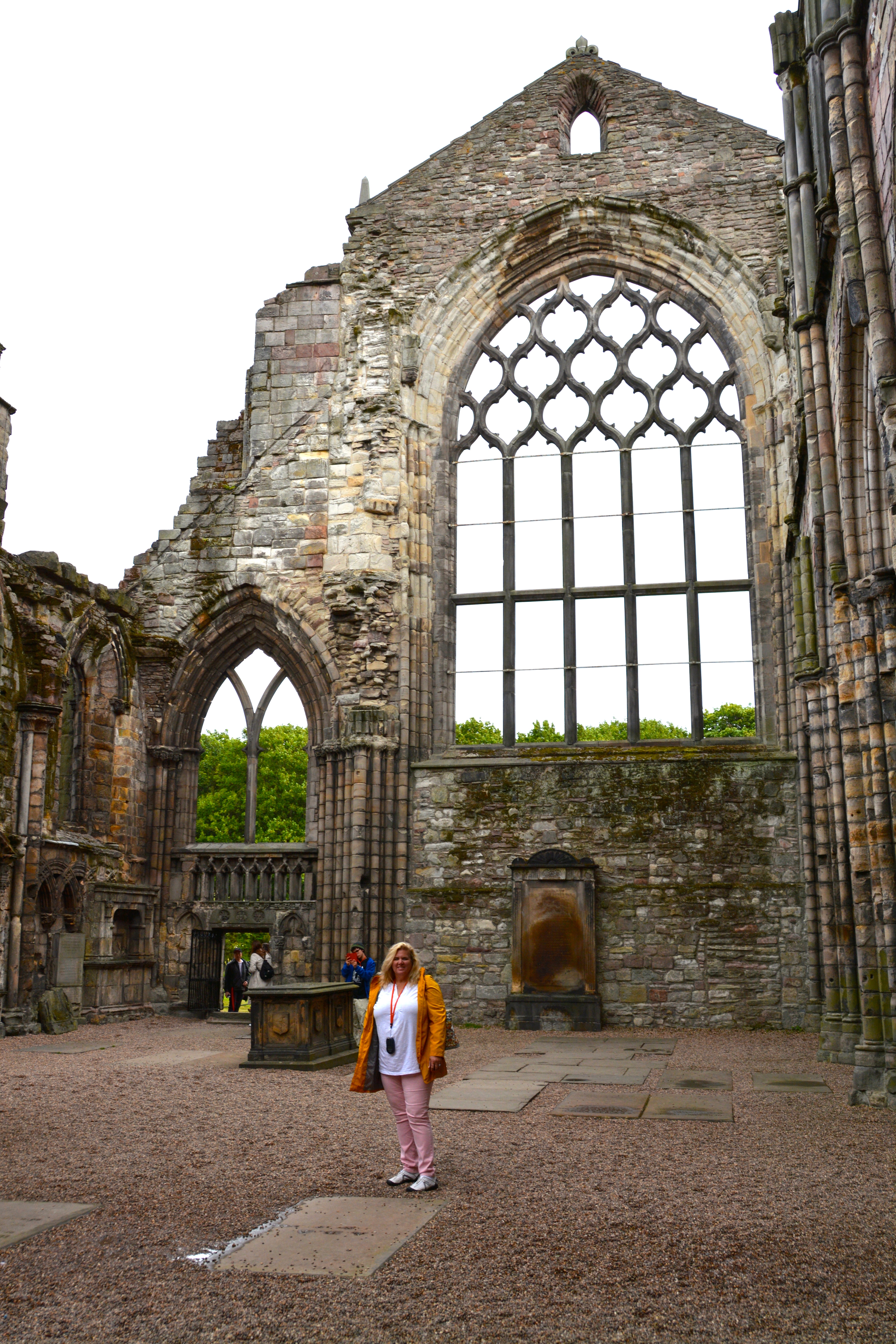
After exiting the Palace interior, we had the opportunity to walk through the Abbey ruins and the gardens beyond.  The ruins have been called “romantic”, an apt description.  The Abbey was founded in 1178 by King David I of Scotland.  “Holy Rood” means Holy Cross and is in reference to the fragment brought to Scotland by David’s mother, St. Margaret, and kept at the Abbey until the 14th century.

Initial damage was done to the Abbey in 1544 and 1547 by invading English Armies.  Further damage was done by angry mobs during the Scottish Reformation.  There have been reoccurring suggestions to restore the Abbey, but those have been rejected.  The ruins are quite picturesque.

Natasha at the ruins of Holyrood Abbey, Edinburgh, Scotland ©Theodore Crane

Natasha at the ruins of Holyrood Abbey, Edinburgh, Scotland
©Theodore Crane

After our Palace and Abbey visit, Rocky and I finished our hop-on/hop-off experience and headed back to the ship.  We have to pack this afternoon as we get off the ship very early in the morning.

As viewed through the gates, the medieval tower of the Palace at Holyroodhouse, Edinburgh, Scotland ©Jean Janssen

As viewed through the gates, the medieval tower of the Palace at Holyroodhouse, Edinburgh, Scotland
©Jean Janssen

What an amazing trip with Rocky in celebration of his college graduation!  So proud of my son and fabulous travel buddy.  We had a great trip to the British Isles.

Rocky and Natasha Hillsborough House, Northern Ireland

Natasha and Rocky
Hillsborough House, Northern Ireland


Posted in cruises, international | Tagged , , , , , , | 1 Comment

Edinburgh, Scotland

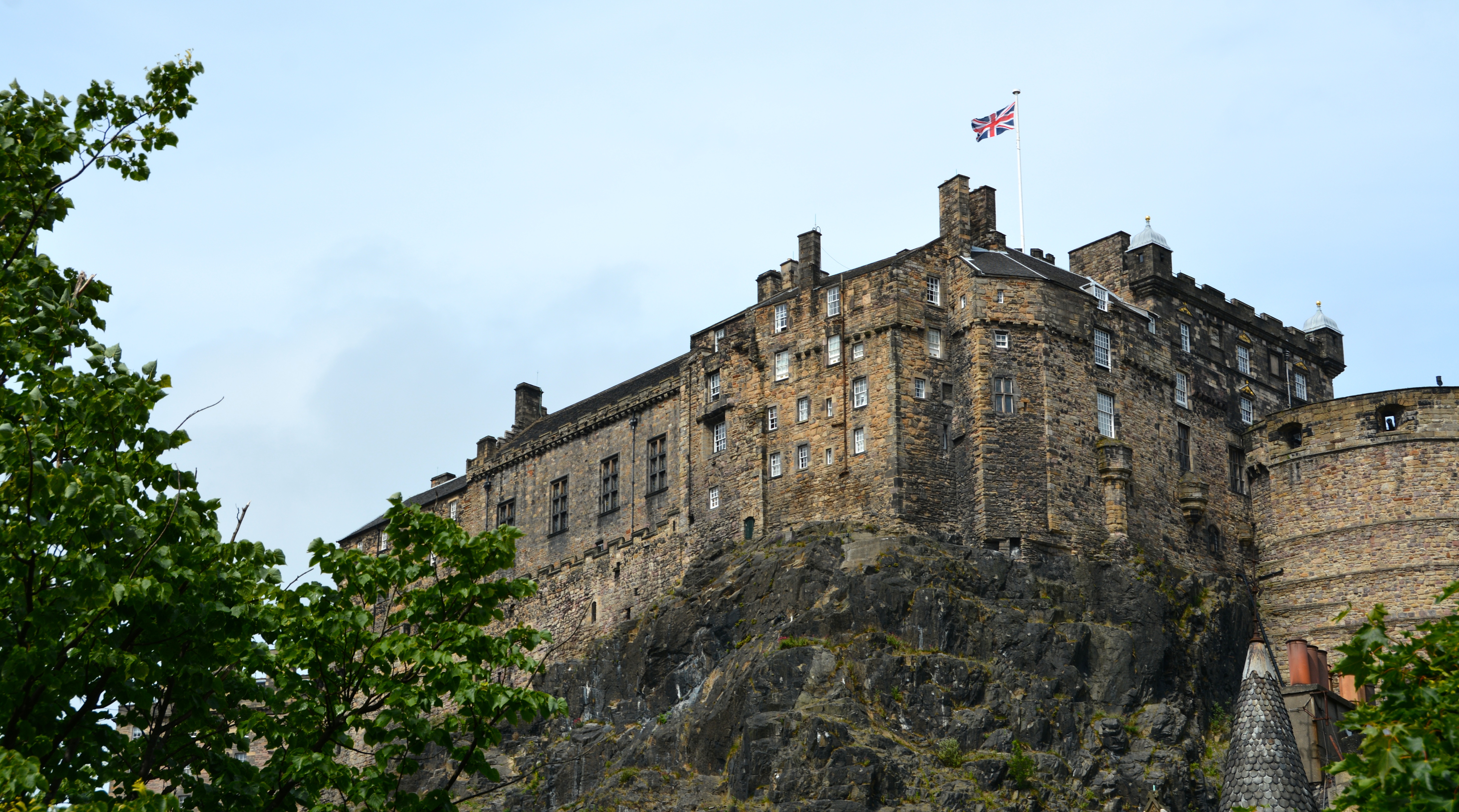
Edinburgh Castle sits atop a cliff in the very center of the Scottish Capital of Edinburgh ©Jean Janssen

Edinburgh Castle sits atop a cliff in the very center of the Scottish Capital of Edinburgh
©Jean Janssen

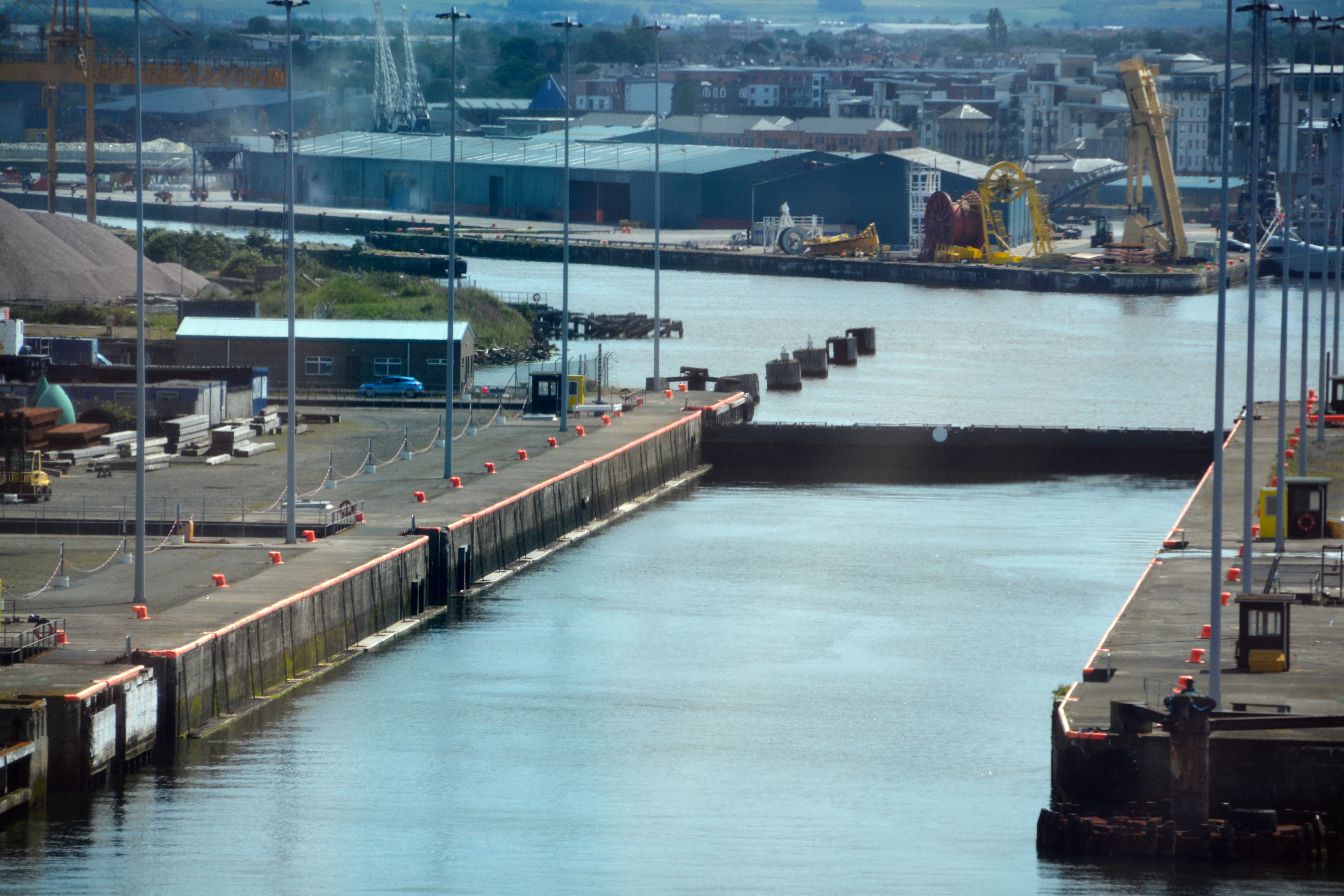
We had a tight fit to make it into the lock admitting us the Edinburgh harbor at Leith, Scotland ©Jean Janssen

We had a tight fit to make it into the lock admitting us the Edinburgh harbor at Leith, Scotland
©Jean Janssen

Getting into our last port, Edinburgh, Scotland was not so easy.  Our boat fit in the lock at Leith harbor with only two feet to spare.  We went up in the Lookinglass Lounge to see the pilot take us in.  It was a late afternoon arrival and we had a planned party that night, so we decided not to go into town but rather walk over to the Ocean Terminal to see one of the premier sights, the Britannia, the Queen’s decommissioned royal yacht.

The Britannia at dock in Leith, Scotland.  When we locked out the window of our cabin, the Britannia was our view. ©Jean Janssen

The Britannia at dock in Leith, Scotland. When we looked out the window of our cabin, the Britannia was our view.
©Jean Janssen

Unfortunately, the Britannia Visitors’ Center quit taking visitors 1 1/2 hours before closing time so we were too late to see it that day.  I am embarrassed to say, we went to a movie in the Ocean Terminal.  Rocky and I are both movie addicts; he is a graduating with a degree in Film and this is his graduation trip, so that was our rationalization.  The movie wasn’t good, but I did learn a few things from the experience.

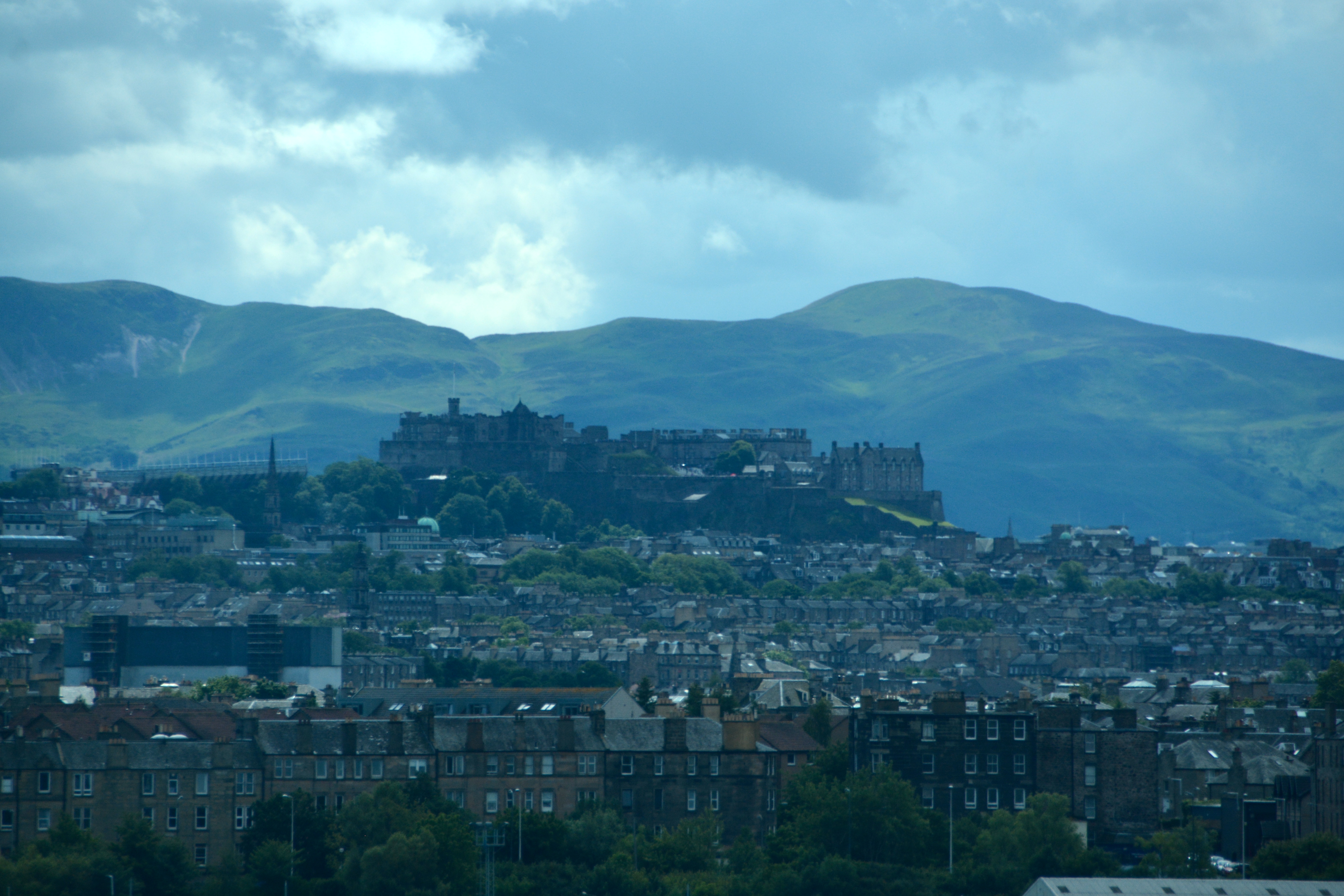
From our ship's berth in Leith, Scotland, you could see Edinburgh Castle ©Jean Janssen

From our ship’s berth in Leith, Scotland, you could see Edinburgh Castle
©Jean Janssen

When Rocky was young, we took him to one of the wonderful old London theaters (stage production).  What we were most stuck by was the fact that theater popcorn is favored sweet as opposed to salty (and that they sold ice cream right inside the theater during the intermission).  When we went to the movie theater on this trip, I asked if the popcorn was sweet or salty.  The answer:  they offered both.  You could have one or the other or a combination of both.  We did the combo.

Edinburgh, Scotland ©Jean Janssen

Edinburgh, Scotland
©Jean Janssen

Another interesting offering, the theater had special showings for autistic audience members.  I don’t know how it is done or what is different, but I was fascinated by the concept.  Would love to hear from anyone who knows more about that experience.

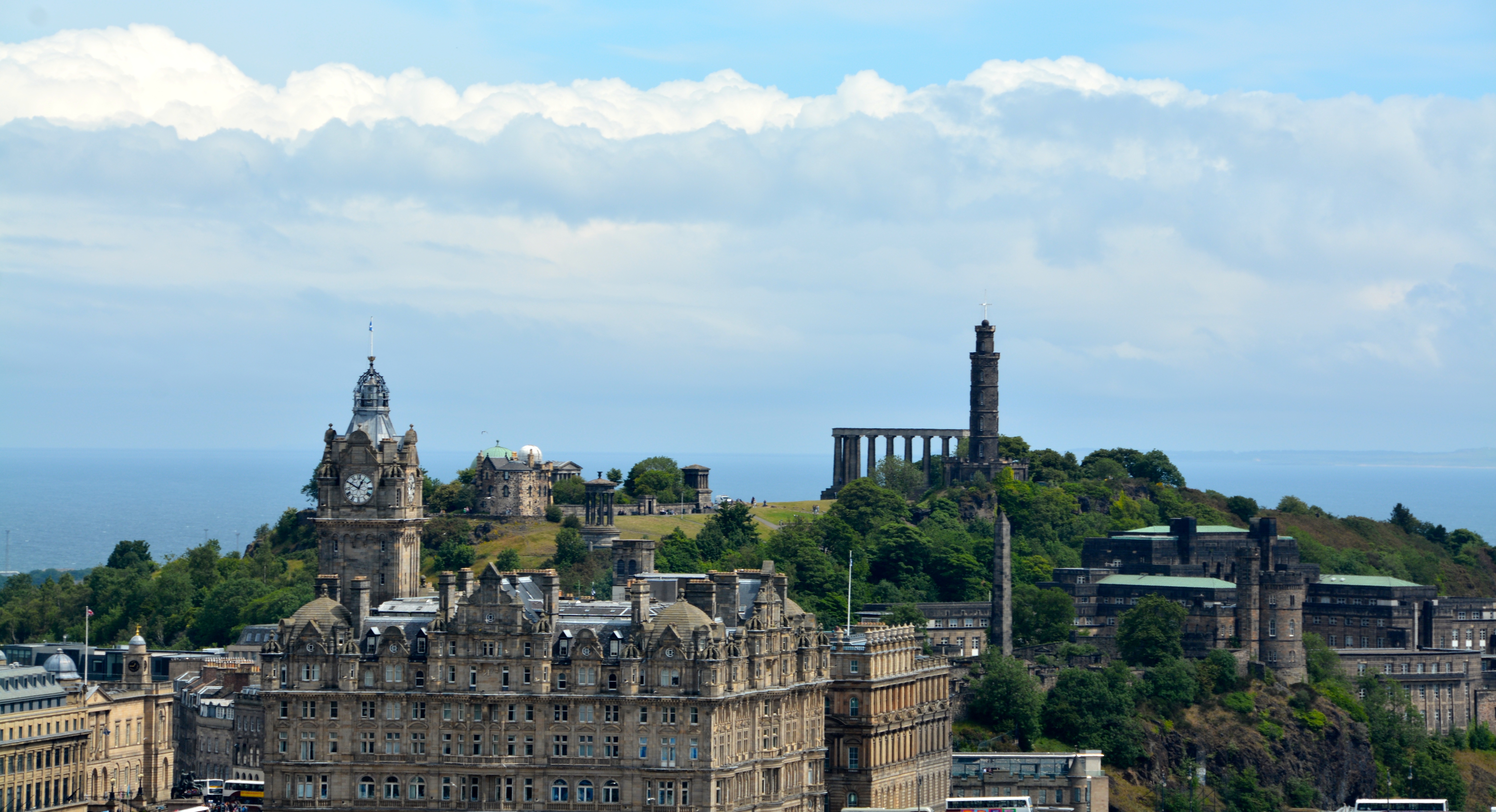
One of the city views from Edinburgh Castle ©Jean Janssen

One of the city views from Edinburgh Castle
©Jean Janssen

The next morning, our first full day in Scotland’s capital, we caught the Hop-On, Hop-Off Bus right at the passenger terminal for our ship.  There is also a pick up at the Ocean Terminal.  The buses run four distinct routes, some with a multi-language recorded commentary, others with live guides in English.  The Majestic route (recorded guide on blue and gold buses) is the one that comes out to Leith.  I suspect at some point these were competing services, but today you can buy a t ticket for a single route, or one that allows you to hop on any of the four. (14 pounds for single; 22 for multiple routes).

Edinburgh, Scotland ©Jean Janssen

Edinburgh, Scotland
©Jean Janssen

Having decided what we wanted to see, we actually took the extra step of buying the Royal Edinburgh Ticket which lets us use all four routes for 48 hours and give us fast track entry to Edinburgh Castle, The Royal Yacht Britannia, and the Palace of Holyroodhouse.  The cost is currently 49.5 pounds with discounts for seniors, students, and children.  We took advantage of Rocky’s student status (he graduates August 8) and bought one adult and one student ticket.

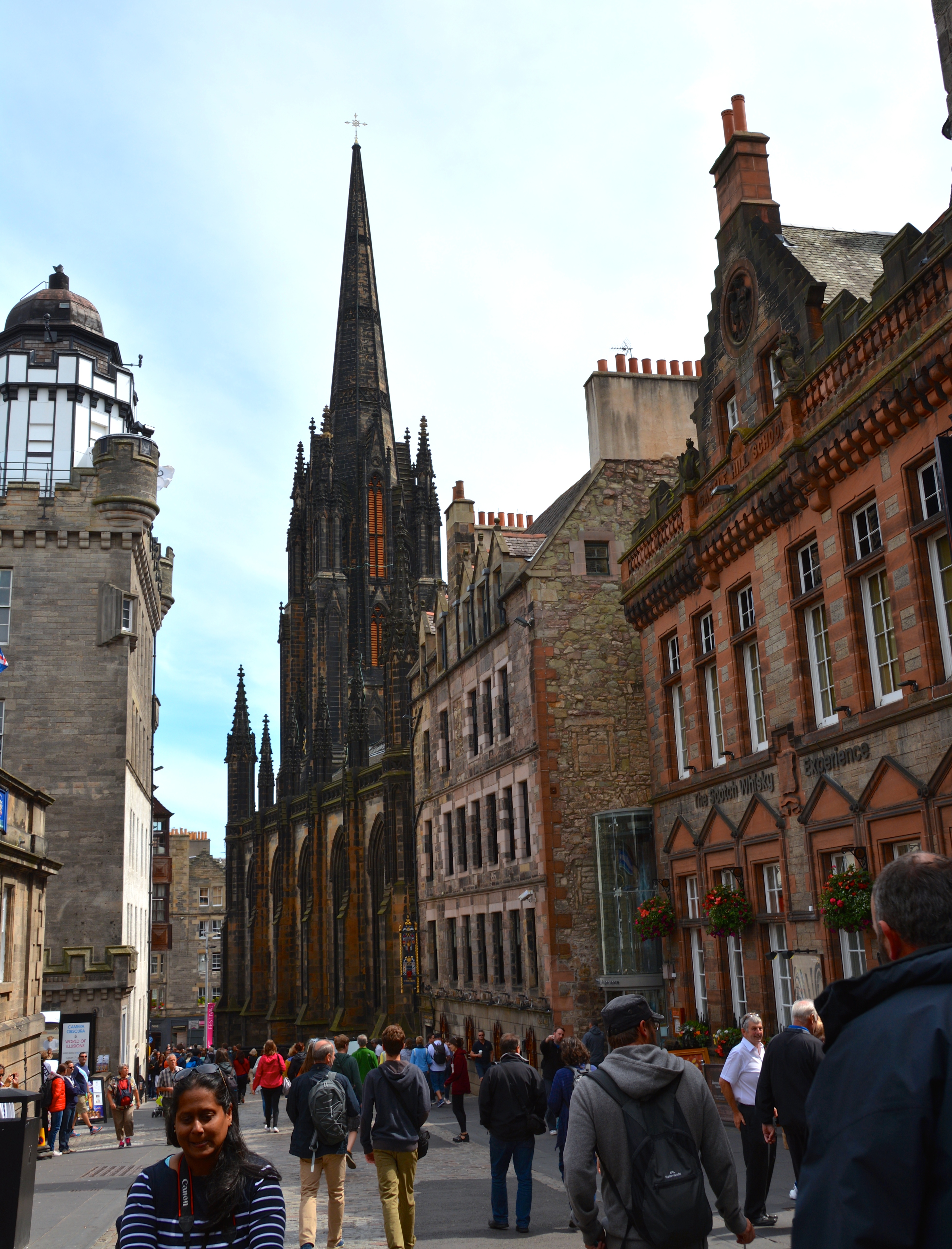
Looking down the royal mile from Edinburgh Castle. ©Jean Janssen

Looking down the royal mile from Edinburgh Castle.
©Jean Janssen

We rode to the originating point of the Majestic Route and got off at the intersection of all four routes on the bridge at Waverley Station.  We took the Edinburgh Tour bus route (live guide on green buses) to see more of the city.  We spent about three days in Edinburgh when Rocky was small, but we enjoyed today’s refresher tour.  Near the end of this route after riding up the Royal Mile was the stop for Edinburgh Castle.  We decided to get off there and take our tour.

Entrance to Edinburgh Castle.  You can just see the edge of the stadium seating in blue on the left.   ©Jean Janssen

Entrance to Edinburgh Castle. You can just see the edge of the stadium seating in blue on the left.
©Jean Janssen

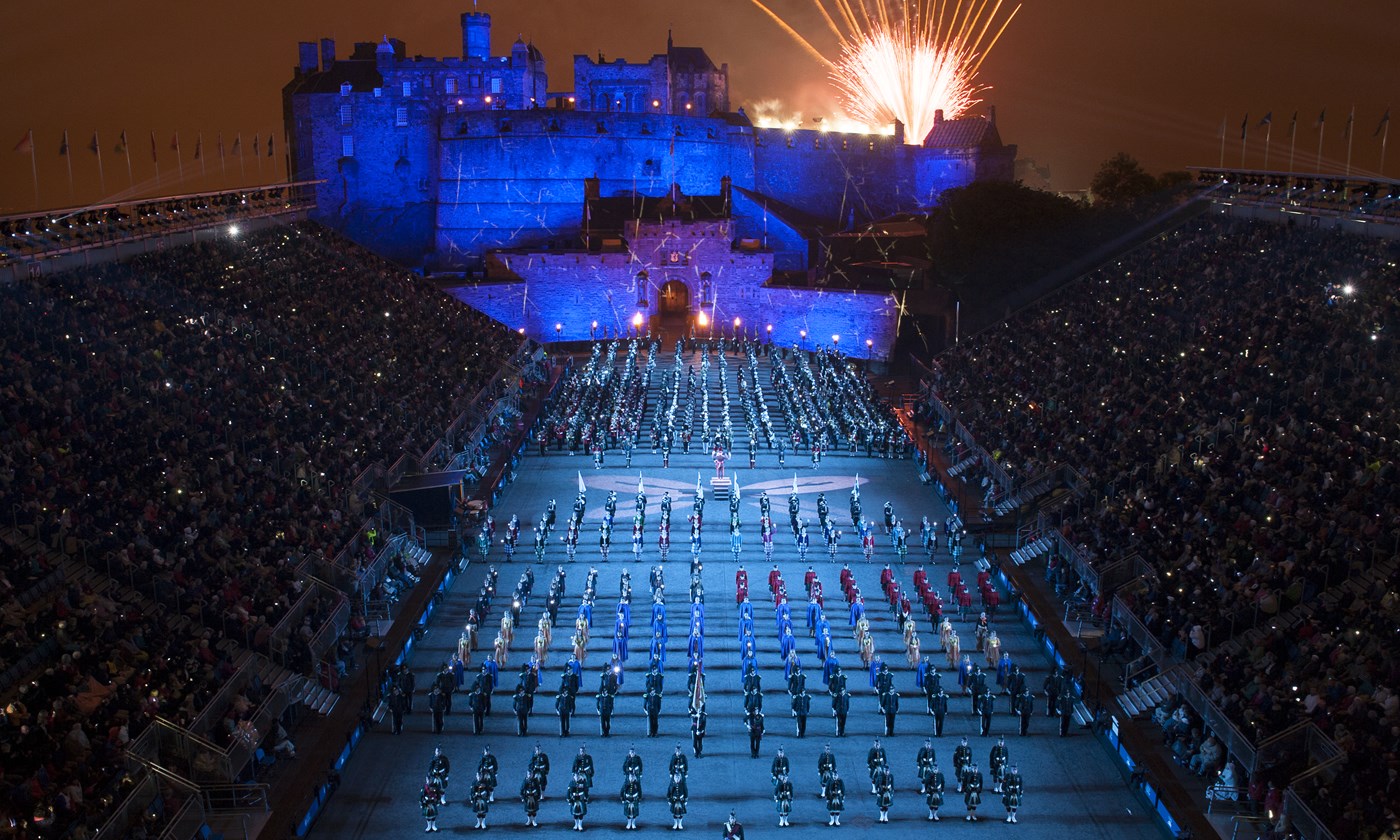
The high end of the royal mile (actually a little more than a mile) is the Castle; the Palace of Holyroodhouse is at the other (lower) end.  If you want to walk the mile, start at the top-the castle which is older in time-and walk down to the Palace, later in time.  You will also save your legs a bit.  There was stadium seating set up outside the castle, which takes away from the facade.  However, this is necessary seating for the Royal Edinburgh Military Tattoo.  These are new temporary stands that can be erected in a month for the August event.  It is also being used for concerts and festivals now that it is up.  It will be removed in September.

2014 Royal Edinburgh Military Tattoo.

2014 Royal Edinburgh Military Tattoo.

I have never seen the Tattoo, but a close friend has and said it is amazing.  It always sells out, so plan early if you want to attend.  International military regiments are the primary performers at the Tattoo.

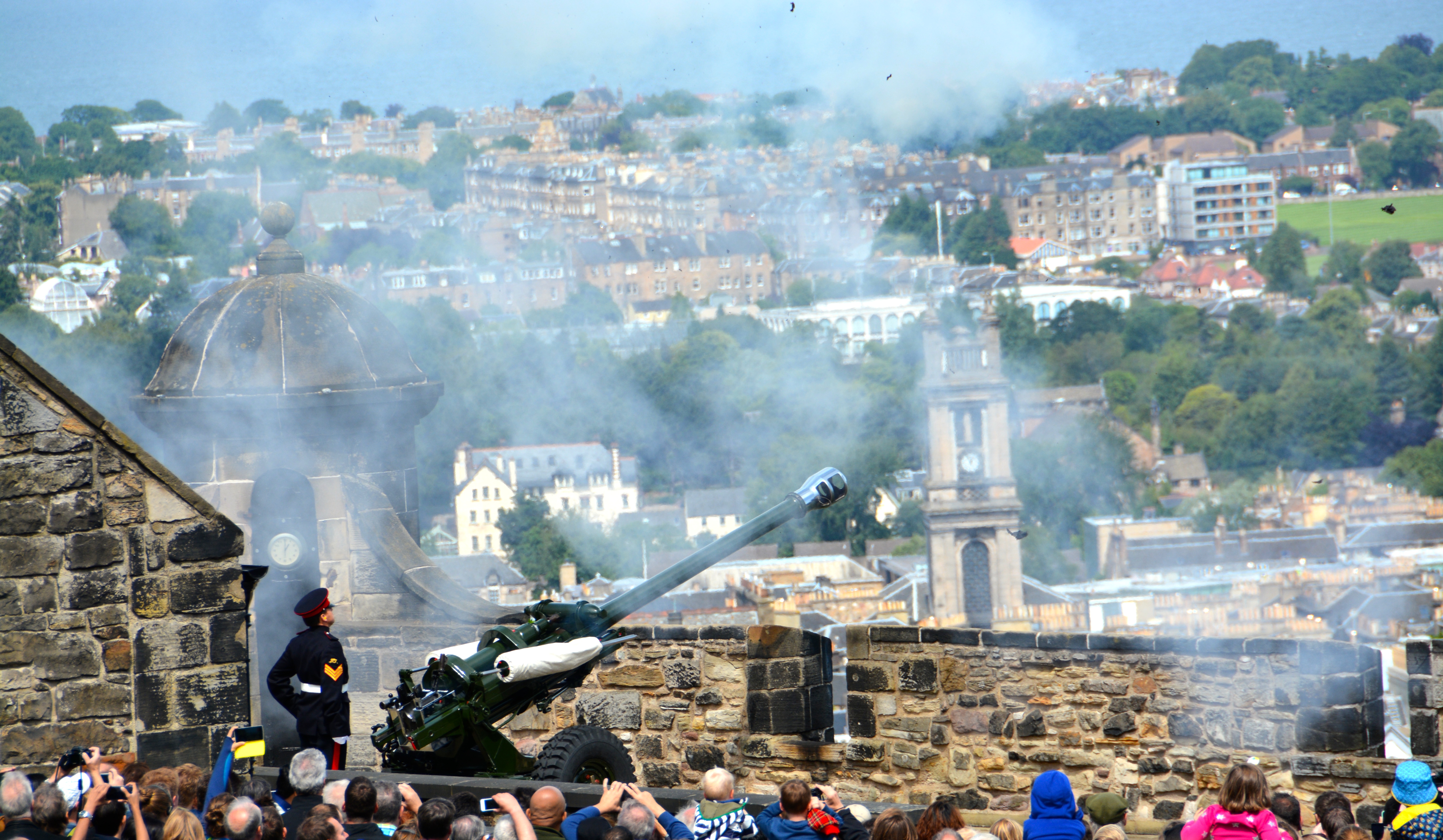
The one o'clock gun at Edinburgh Castle, Scotland ©Jean Janssen

The one o’clock gun at Edinburgh Castle, Scotland
©Jean Janssen

In the royal apartments of Edinburgh Castle.  Note the fabulous ceiling. ©Jean Janssen

In the royal apartments of Edinburgh Castle. Note the fabulous ceiling.
©Jean Janssen

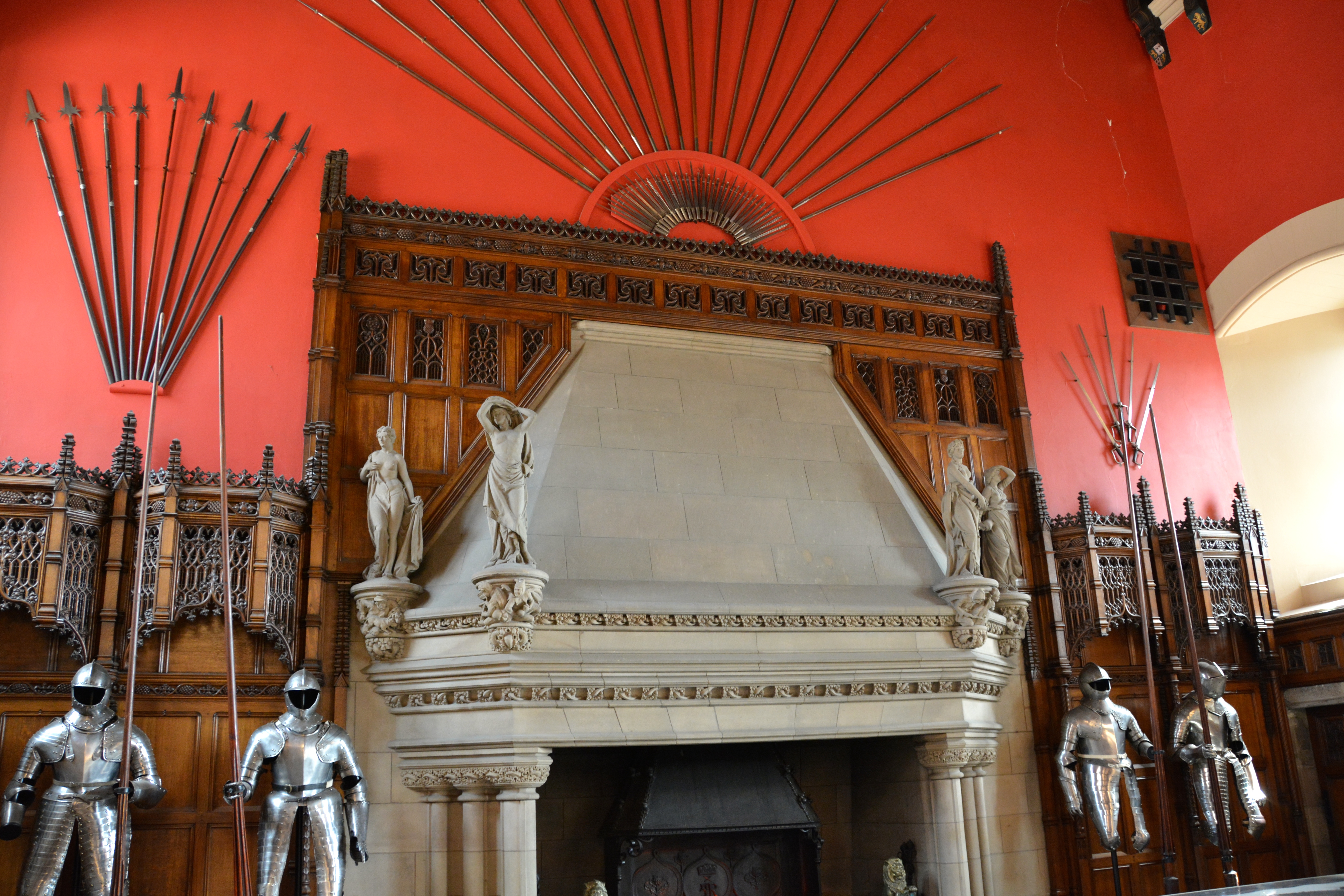
There is quite a lot to see at the castle-the royal jewels, military museums, the memorial to fallen solders (which looks like a chapel), the royal apartments, the great hall with the well-positioned displays of armor, etc.  We arrived just before the 1 0’clock gun so we stayed in that area for a while before moving inside to see more of the castle.  The gun is shot from a platform.  From the platform you have a wonderful view of the city, perhaps the most impressive part of the castle.

We were very happy to fast track and not stand in the long ticket line to gain entrance to the castle. All the various exhibits were part of our ticket and although there were large crowds at the exhibits, but most of the lines moved smoothly.

The Great Hall, Edinburgh Castle, Scotland ©Jean Janssen

The Great Hall, Edinburgh Castle, Scotland
©Jean Janssen

After the castle, we realized that there was no way to make it back for a late lunch on the boat and then to get over to the Britannia before it closed.  We decided to look for a place for lunch.  You can guess what Natasha was looking for-fish and chips.  We wandered around a bit but everything was crowded even though it was well into the afternoon.

Deacon Brodie's Tavern, Edinburgh, Scotland ©Jean Janssen

Deacon Brodie’s Tavern, Edinburgh, Scotland
©Jean Janssen

We ended up back on the Royal Mile at Deacon Brodie’s Tavern.   The “tavern is named after William Brodie, one of the inspirations for Robert Louis Stevenson’s Jekyll and Hyde” and Jekyll and Hyde memorabilia covers the walls.  Like most pubs we ran across on this trip, there is also an upstairs area for food service.  We headed upstairs and were the first in line, but they waited until the place was half empty before they seated us.  We were pretty frustrated.  It ended up being worth the wait when we got a wonderful table at the window overlooking the Royal Mile.

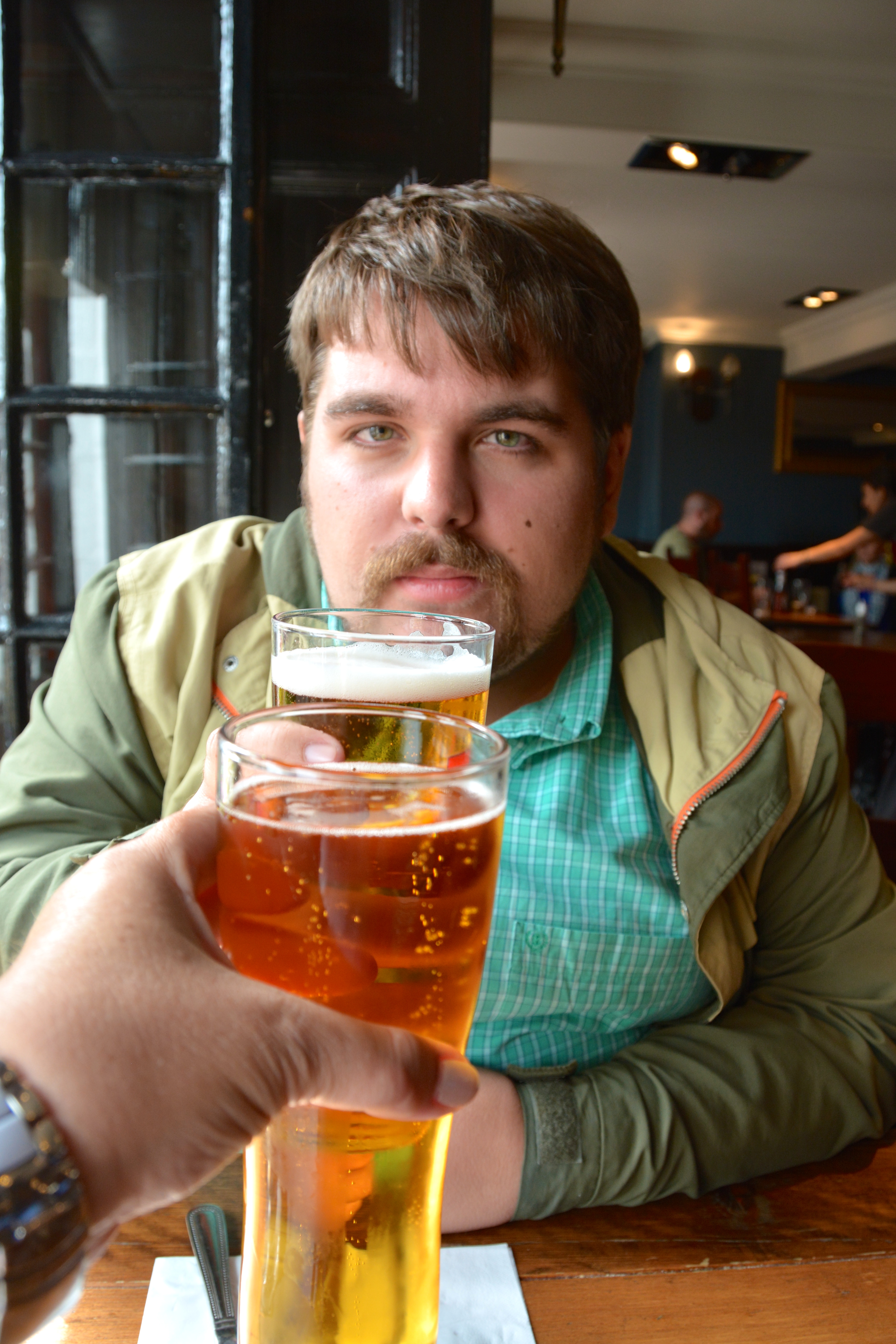
A toast with our first glass at Deacon Brodie's Tavern on the Royal Mile, Edinburgh, Scotland ©Jean Janssen

A toast with our first glass at Deacon Brodie’s Tavern on the Royal Mile, Edinburgh, Scotland
©Jean Janssen

We shared a sampler platter of appetizers and a single order of fish and chips-still too much food.  Rocky tried a Tennent’s beer, their most popular. Big thumbs up.  I tried a Mortimer’s Cider; it was wonderful, cold and refreshing.  Then we had another one.  Uh, cider has alcohol.  After two, I was toast.

Edinburgh, Scotland ©Jean Janssen

Edinburgh, Scotland
©Jean Janssen

It was headed into evening when we finished and the last bus in our route out to the ship was at 5, so we finished out the green route and switched back to the blue majestic route.  The other routes include the red bus City Sightseeing Tour with a recorded guide, the most popular if you look at the amount of people that were riding that route.  The last option is Mac Tours which operates in vintage buses.  All routes operate buses that have two levels and many of the upper levels have partial covers.  You are not allowed to use umbrellas on the upper level.

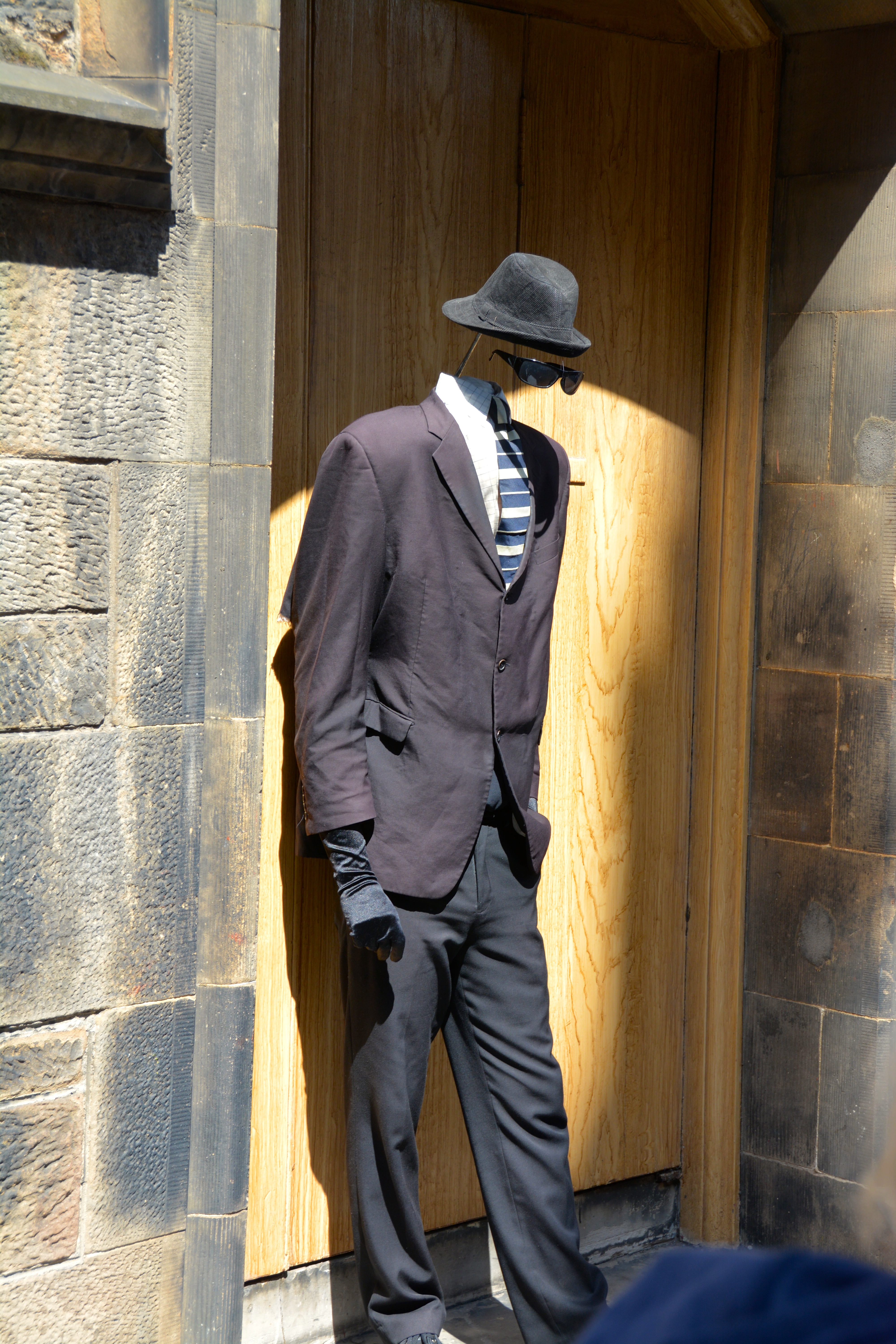
We thought this busker along the Royal Mile, but pretty clever.  Edinburgh, Scotland ©Jean Janssen

We thought this busker along the Royal Mile was pretty clever. Edinburgh, Scotland
©Jean Janssen

The blue bus took us out to Leith passing the botanical gardens.  This route goes to the more remote locations.  There were some sprinkles on the way back, but we never had to move inside due to rain.

Edinburgh, Scotland ©Jean Janssen

Edinburgh, Scotland
©Jean Janssen

After a night on the ship, we are back touring Edinburgh tomorrow.


Posted in cruises, international | Tagged , , , , , , , | Leave a comment

Invergordon, The Scottish Highlands

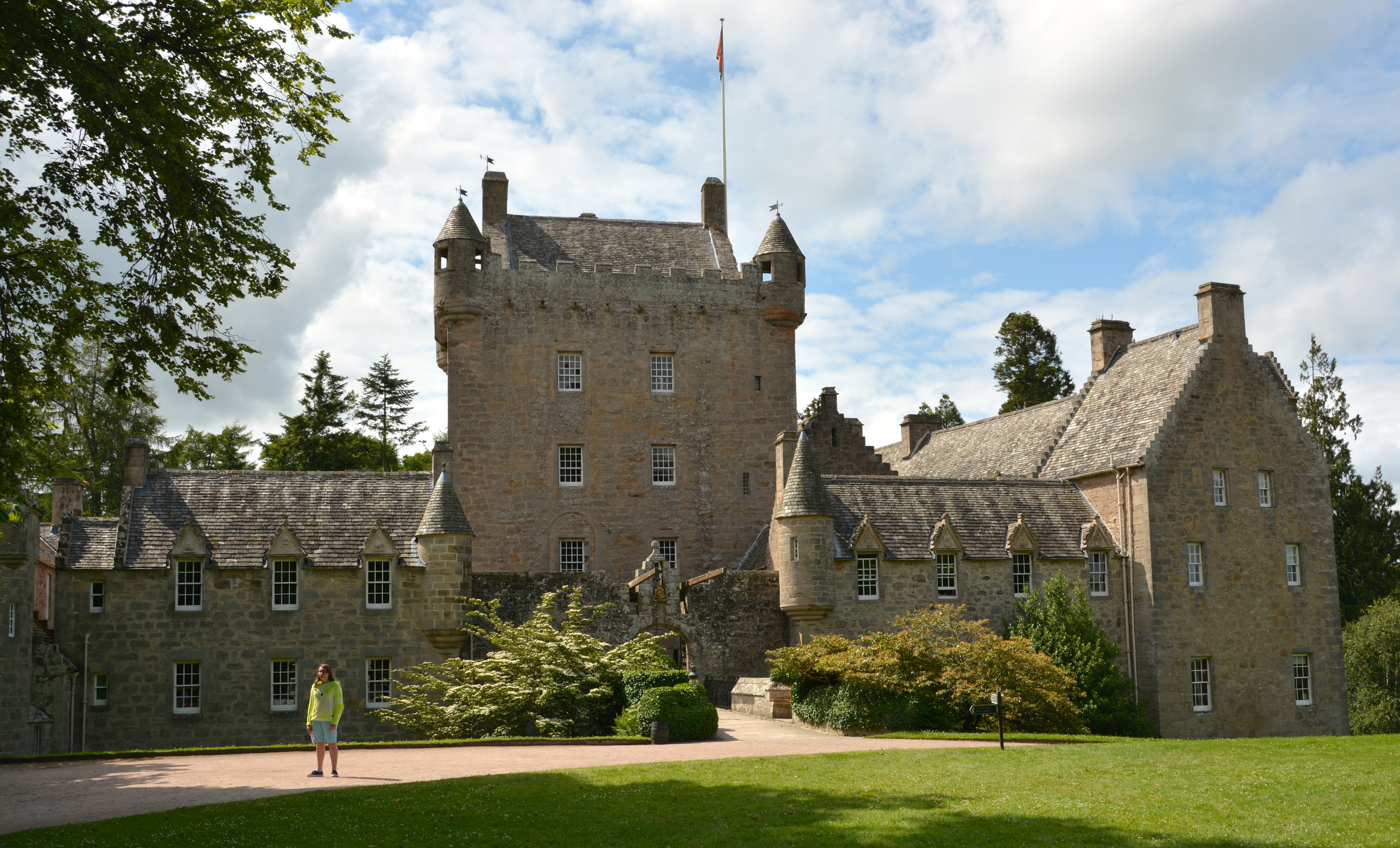
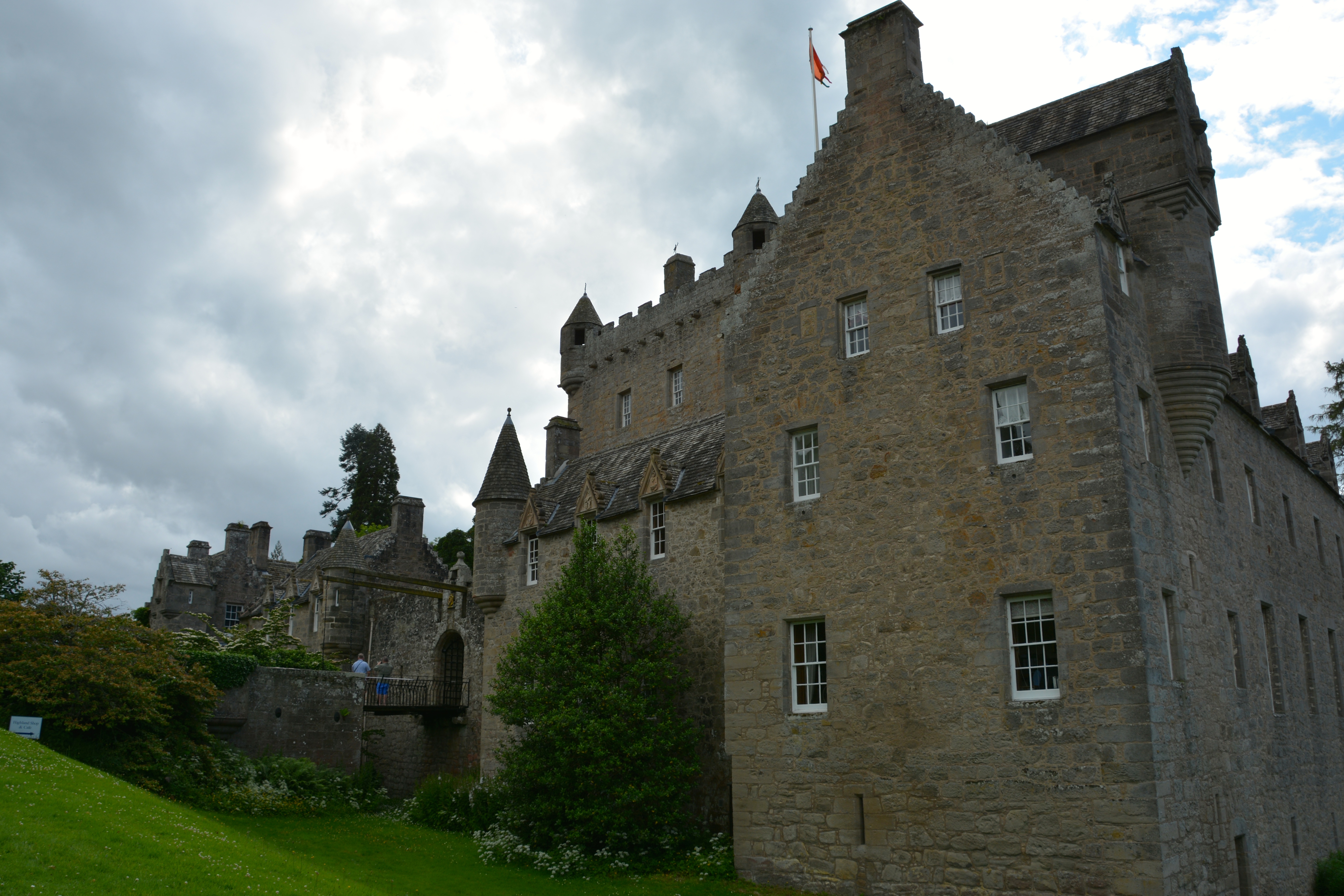
Cawdor Castle, Nairn, the Scottish Highlands ©Jean Janssen

Cawdor Castle, Nairn, the Scottish Highlands
©Jean Janssen

Today we are docked at Invergordon, Scotland in Cromarty Firth (Fjord), a narrow inlet from the North Sea.  Cromarty Firth is called the “seaway to the Scottish Highlands”.  We are very close to Inverness and Culloden Moor.  Invergordon’s port was used as a Royal Navy base from the early 19th century until the 1950s.  Today, it primarily serves as a repair and supply yard for North Sea oil rigs.  Several were in evidence in the harbor.

The charming port city of Invergordon, the Scottish Highlands ©Jean Janssen

The charming port city of Invergordon, the Scottish Highlands
©Jean Janssen

This afternoon we travel to outside Inverness to see Culloden Moor and Cawdor Castle.  Loch Ness and Urquhart Castle ruins are also close by.  Surrounding Invergordon are also several exclusive whiskey distilleries.  With rain threatening, we donned our raincoats and grabbed umbrellas and headed into down.

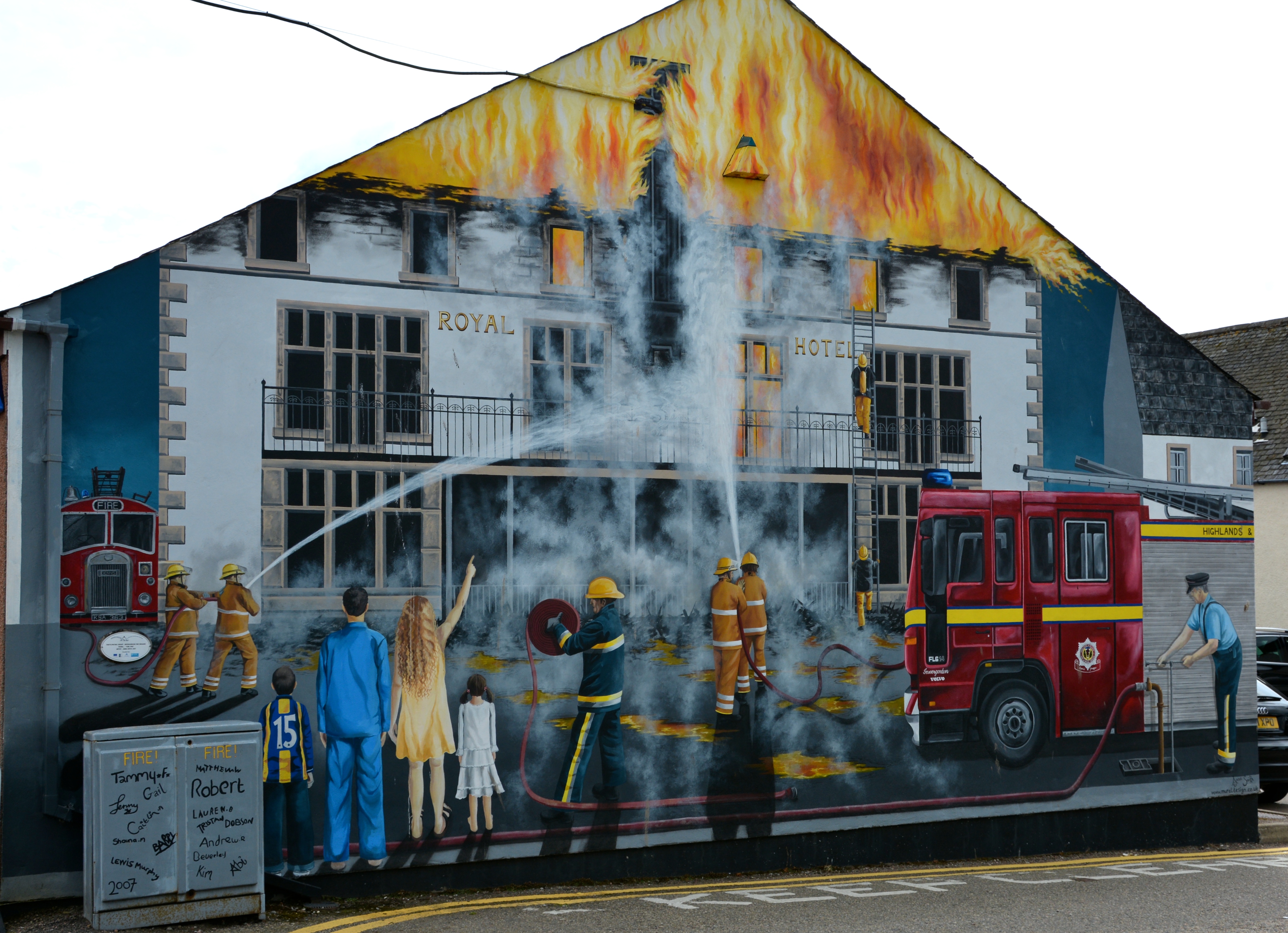
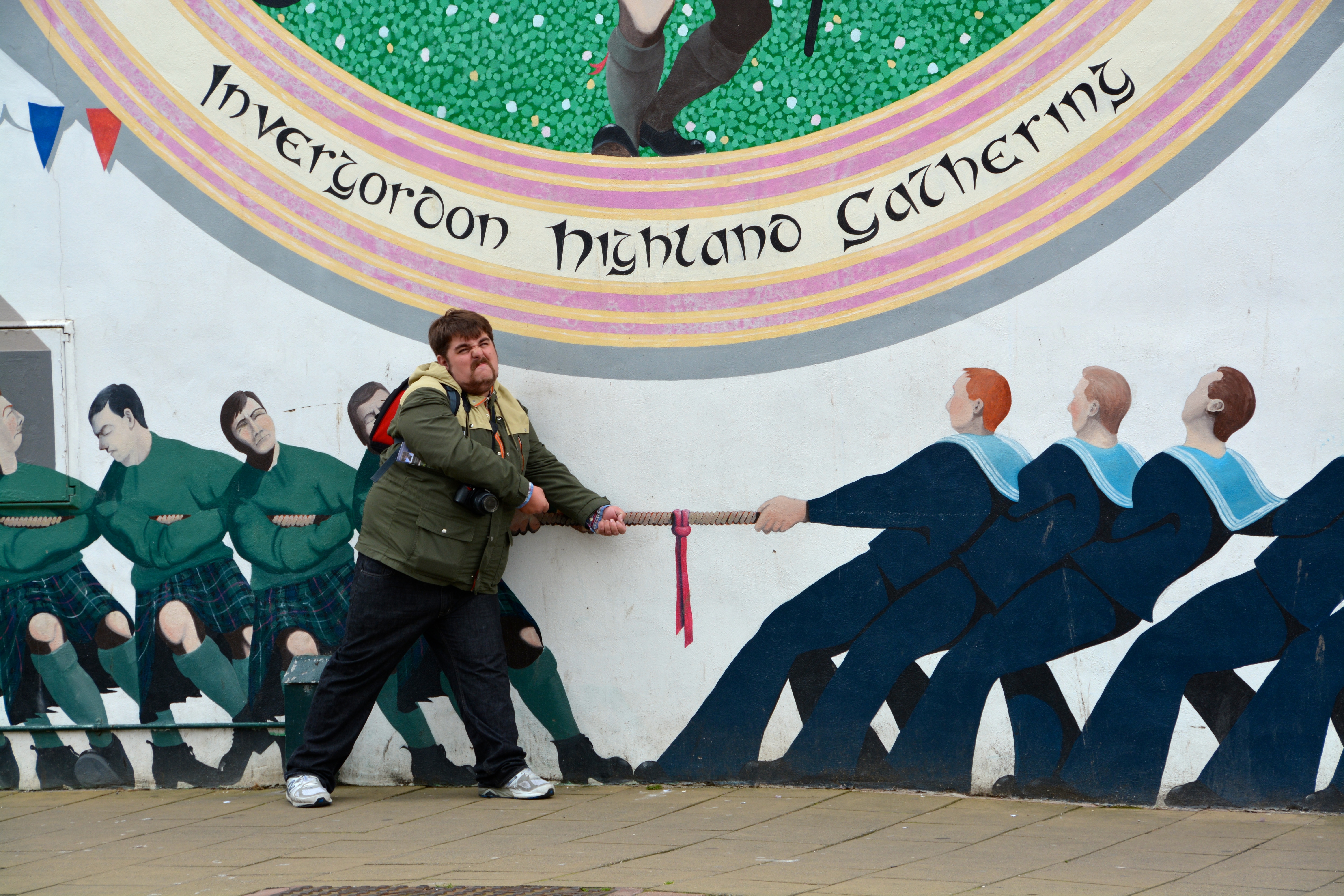
One of the town murals, Invergordon, Scotland ©Jean Janssen

One of the town murals, Invergordon, Scotland
©Jean Janssen

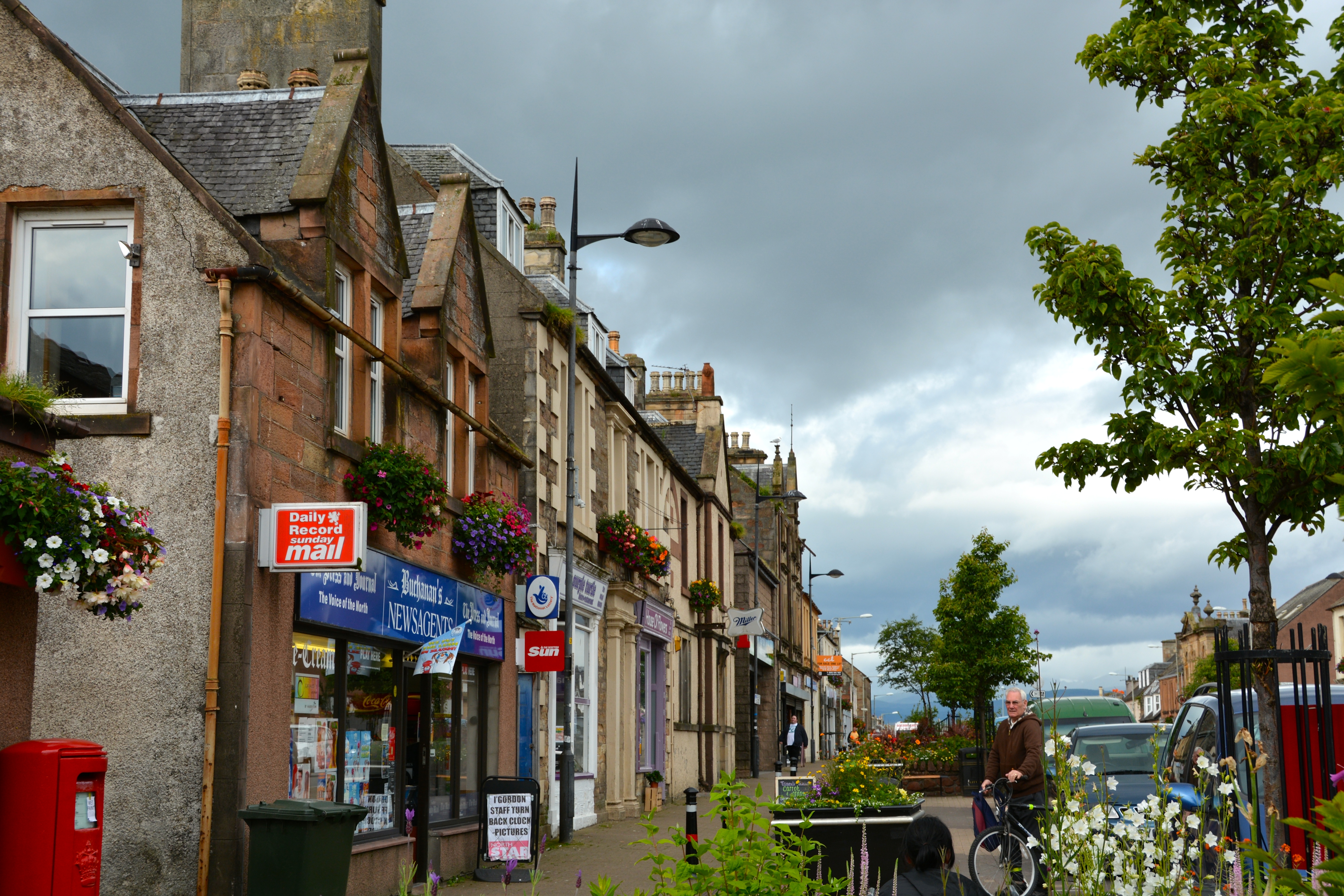
The seaport of Invergordon as an interesting high street with quaint shops and a series of building-size murals depicting events in the city’s history.  Rocky and I toured the town and went on a hunt to find each of the murals.

Rocky got into the spirit of one of the town murals in Invergordon, Scotland ©Jean Janssen

Rocky got into the spirit of one of the town murals in Invergordon, Scotland
©Jean Janssen

The tour took us all over the town-the bowling lawn, church yards, the train station, and up and down the high street.  At the local church we were welcomed inside where a hugh screen was set up to acknowledge the visit of our passengers and crew.  They had even set up tables and chairs inside and were serving coffee.  We ducked into some of shops, sometimes to avoid the often light and occasionally heavy rain.

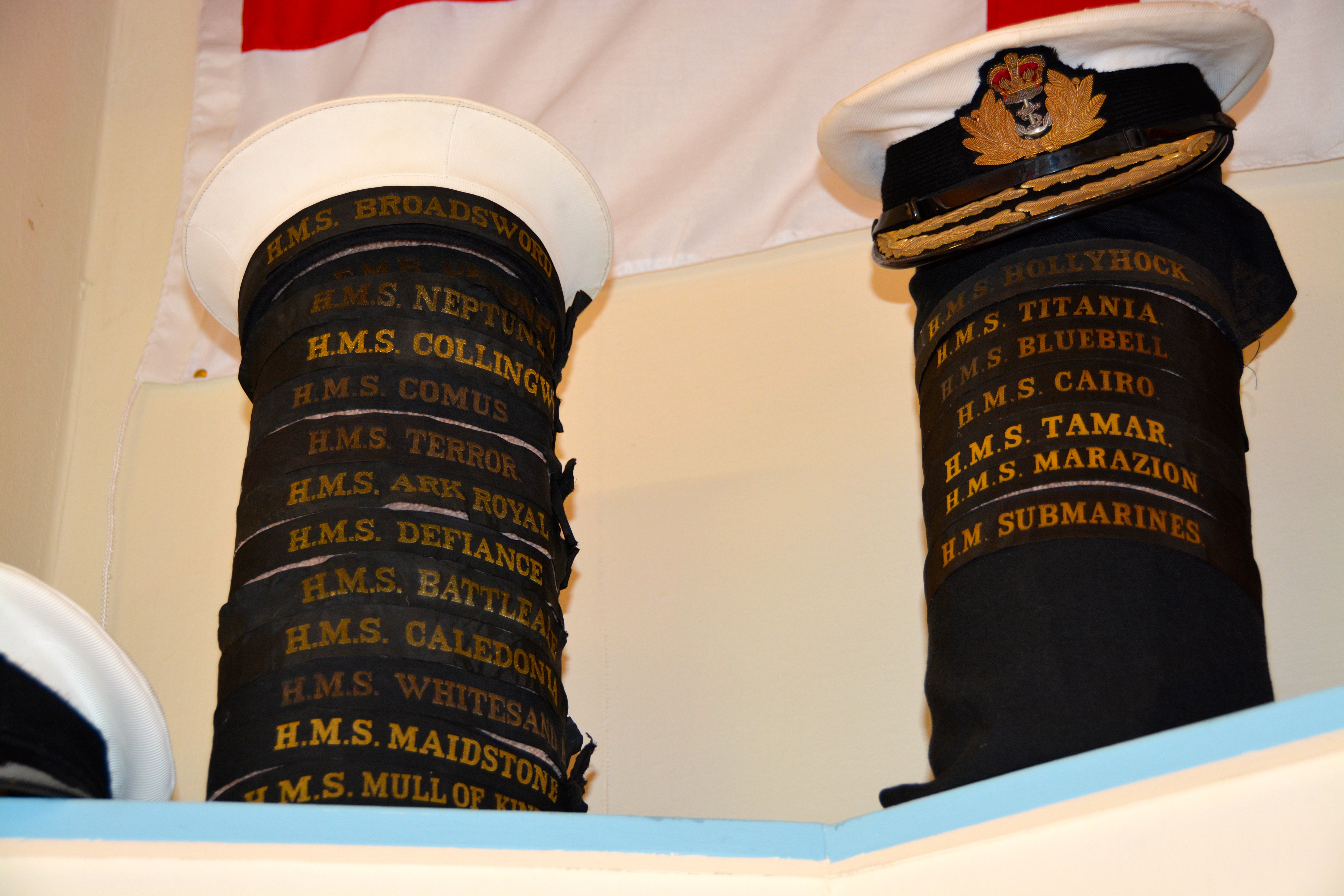
City Museum, Invergordon, Scotland ©Jean Janssen

City Museum, Invergordon, Scotland
©Jean Janssen

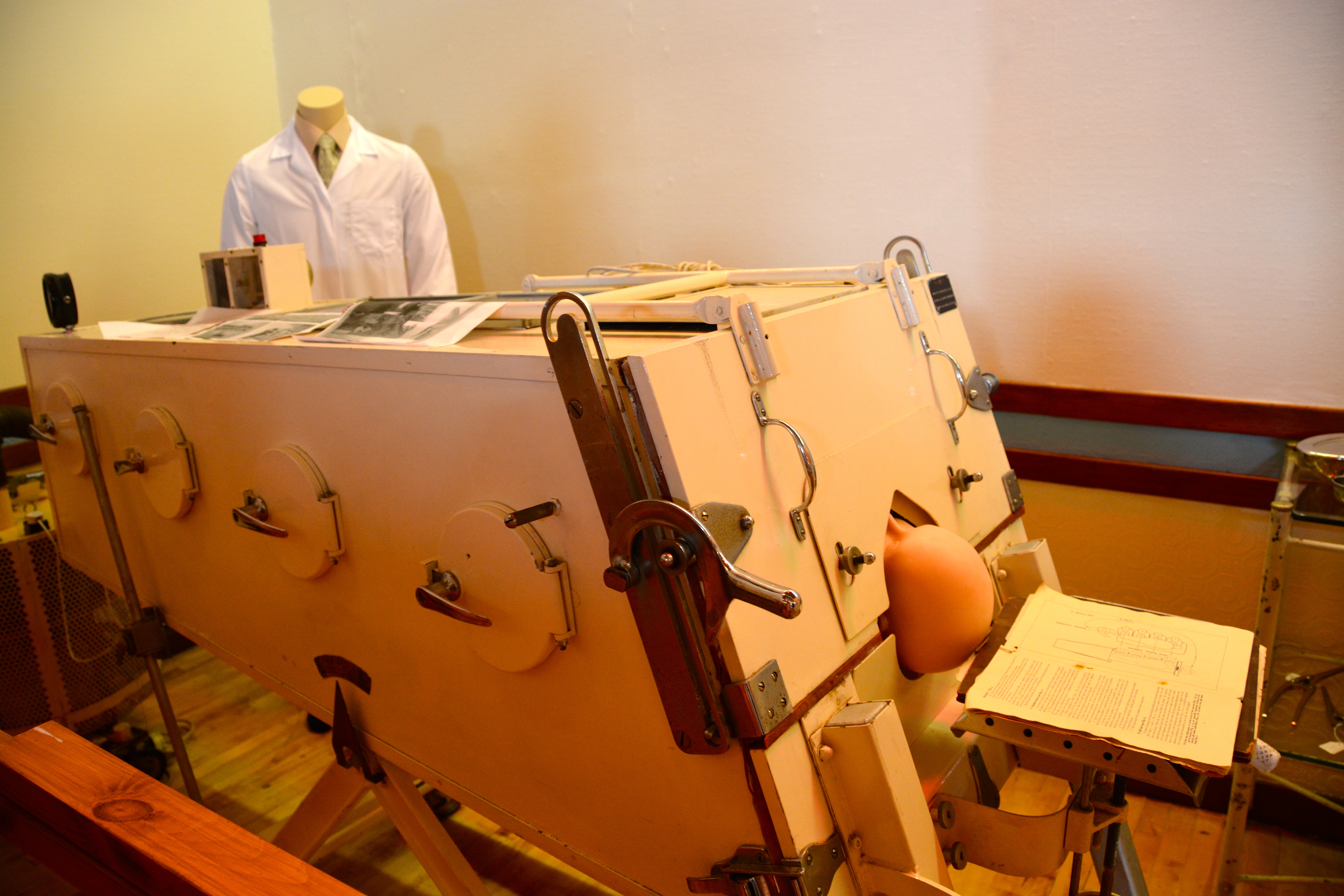
We eventually made it down to the Arts and Crafts Fair at the local museum.  We picked up a few things to support the local craftsmen who were very friendly and then toured the small, but well-done museum.  I was expecting a maritime museum, but there was really a little bit of everything.  I enjoyed some of the old uniforms (especially the dive one) and ceremonial wear.  There were some interesting artifacts and even an exhibit to a Polish regiment that was stationed here during WWII.  Some of the old medical equipment was particularly fascinating.

Old Iron Lung, City Museum, Invergordon, Scotland ©Jean Janssen

Old Iron Lung, City Museum, Invergordon, Scotland
©Jean Janssen

After I used up all my cash at the Arts and Crafts Fair and a museum donation, we made a quick trip back into town for an ATM before having lunch on the ship.  Fortunately the rain had let up.

I had to shoot this from pretty far away and out of a bus window, but the aqueduct was used in the filming of one of the Harry Potter movies. ©Jean Janssen

I had to shoot this from pretty far away and out of a bus window, but the aqueduct was used in the filming of one of the Harry Potter movies.
©Jean Janssen

Our afternoon bus tour took us through some of charming village along Cromarty Firth and we passed a gorge used in the filming of one of the Harry Potter movies.  I was reminded that JK Rowling is from Edinburgh.  We later passed an old acquduct used to film a train sequence from one of the movies.

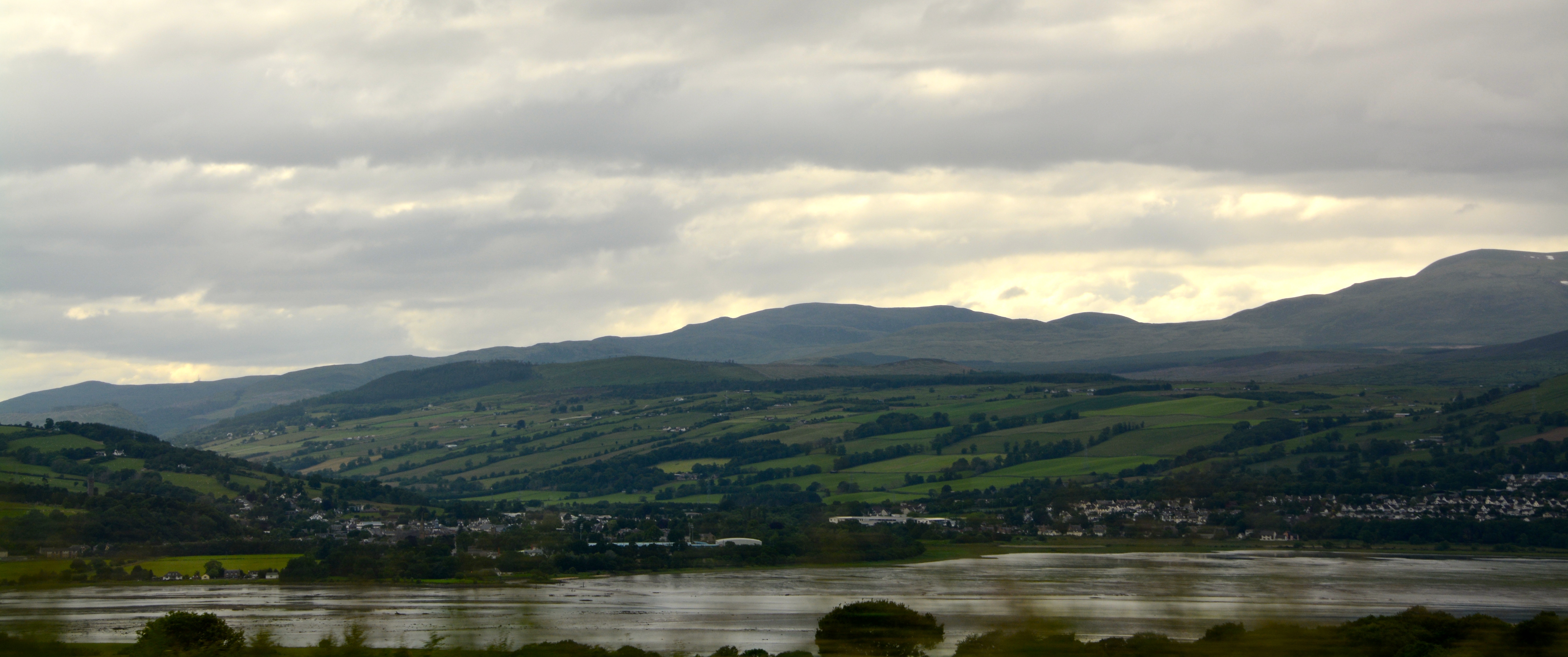
Along Cromarty Firth, the Scottish Highlands ©Jean Janssen

Along Cromarty Firth, the Scottish Highlands
©Jean Janssen

We passed through Inverness, the Highland capital and a major port from which a lot of wood is transported (think Ikea).  The city has a population of about 70,000 and is growing.  Nothing here is allowed to be built over two stories high.  Culloden Moor is only 3 miles form Inverness.

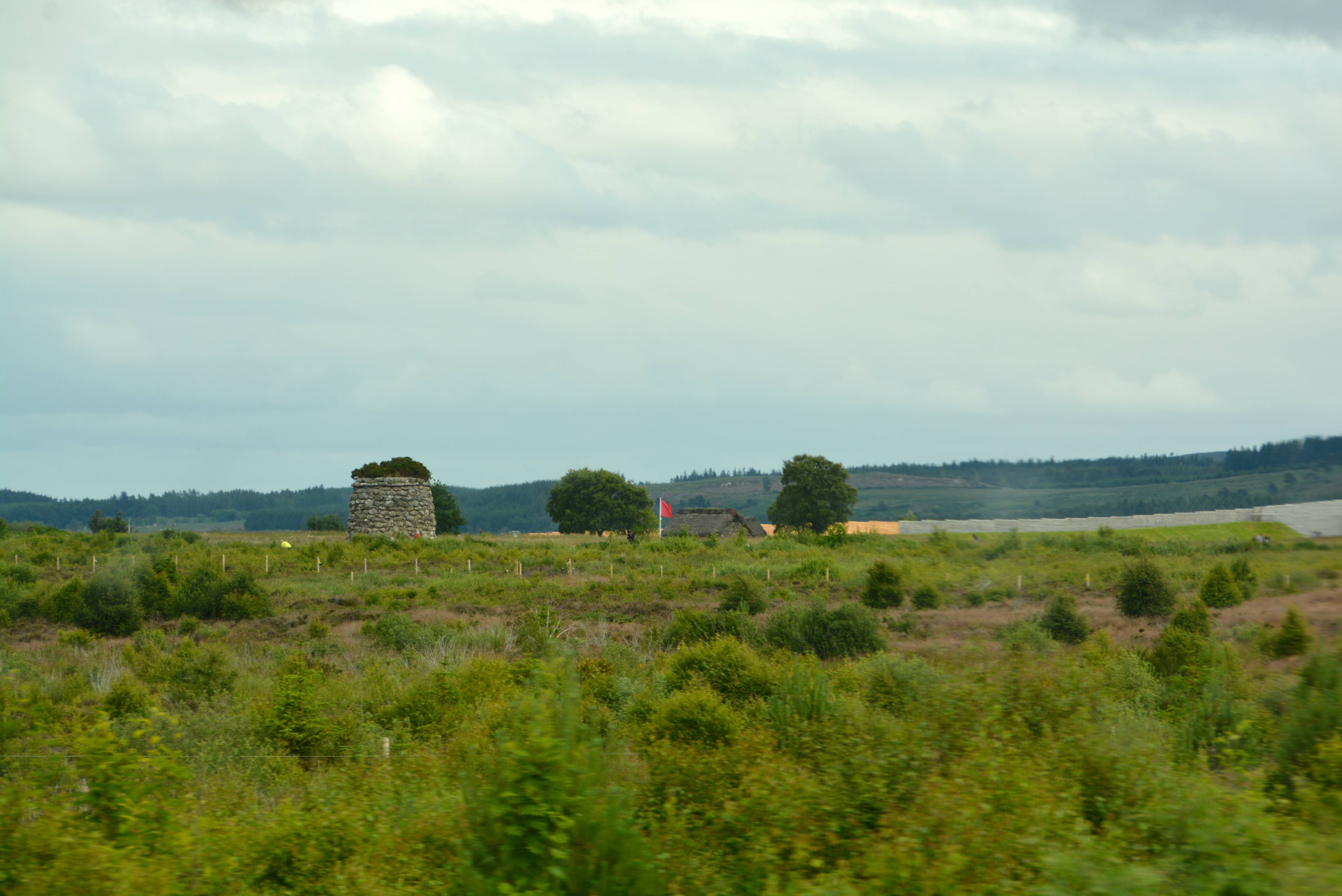
Site of the Battle of Culloden, near Inverness, the Scottish Highlands ©Jean Janssen

Site of the Battle of Culloden, near Inverness, the Scottish Highlands
©Jean Janssen

Our family had visited Culloden and the wonderful visitors’ center before.  You can walk the battlefield and see the stone markers from the clans involved.  Red and Blue flags mark the lines of the Royalist and Jacobite forces.  Seeing it this time was much more meaningful since I know more about Scottish history from my reading.

This shot of the castle gives you an idea of where the moat once was. ©Jean Janssen

This shot of the castle gives you an idea of where the moat once was.
©Jean Janssen

From the Cawdor Castle Gardens, Nairn, Scotland ©Jean Janssen

From the Cawdor Castle Gardens, Nairn, Scotland
©Jean Janssen

The ca

Our next stop was Cawdor Castle and its lovely Gardens.  The Castle dates from the 14th Century; it was built as a fortress by the Thane of Calder.  It is said he traveled and decided that wherever his donkey chose to rest he would build his home.  The beast rested under a holly tree.  That holly tree is found in the dudgeon of the castle to this day.  The castle is still home to the family so no inside photos are permitted.

Entrance to the medieval tower of Cawdor Castle.  Note the drawbridge supports. ©Jean Janssen

Entrance to the medieval tower of Cawdor Castle. Note the drawbridge supports.
©Jean Janssen

The castle also has a Macbeth connection, many believe it to be the setting of Duncan’s murder.  However the real life events on which the play was based took place in the 11th century and the castle was not built until the 14th.  Shakespeare did write the play for a performance for King James and his cousin, the King of Denmark at Hampton Court in 1606.

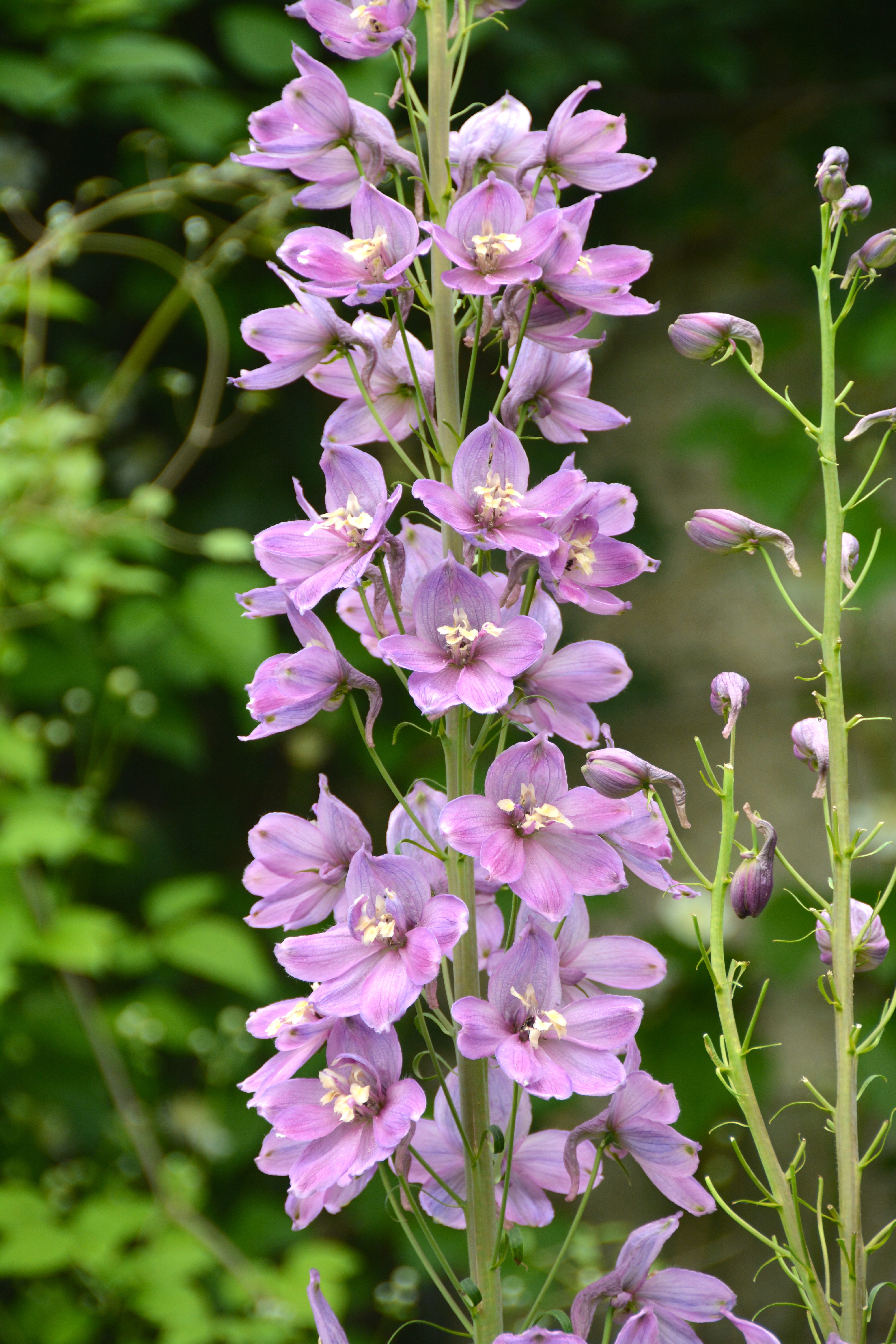
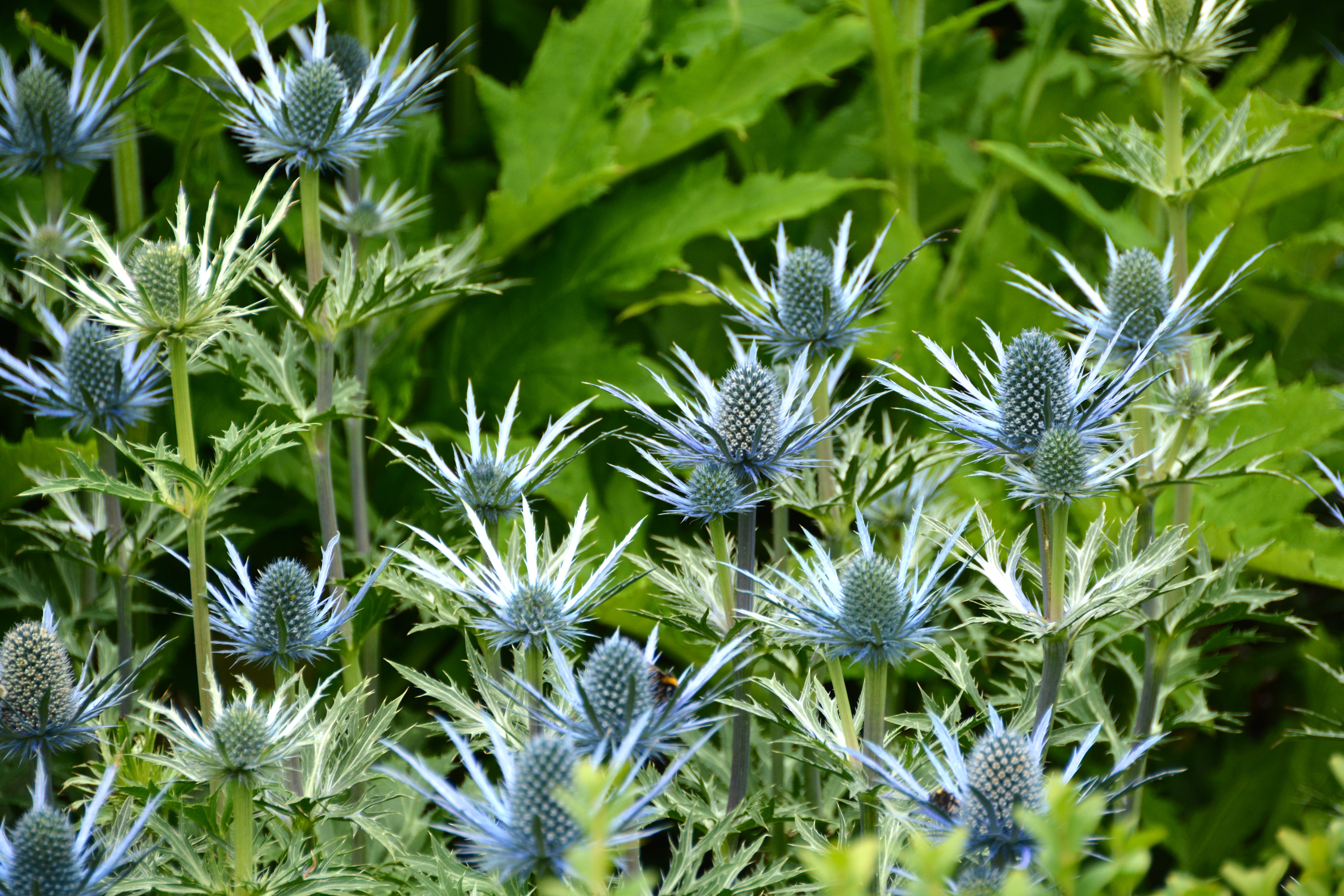
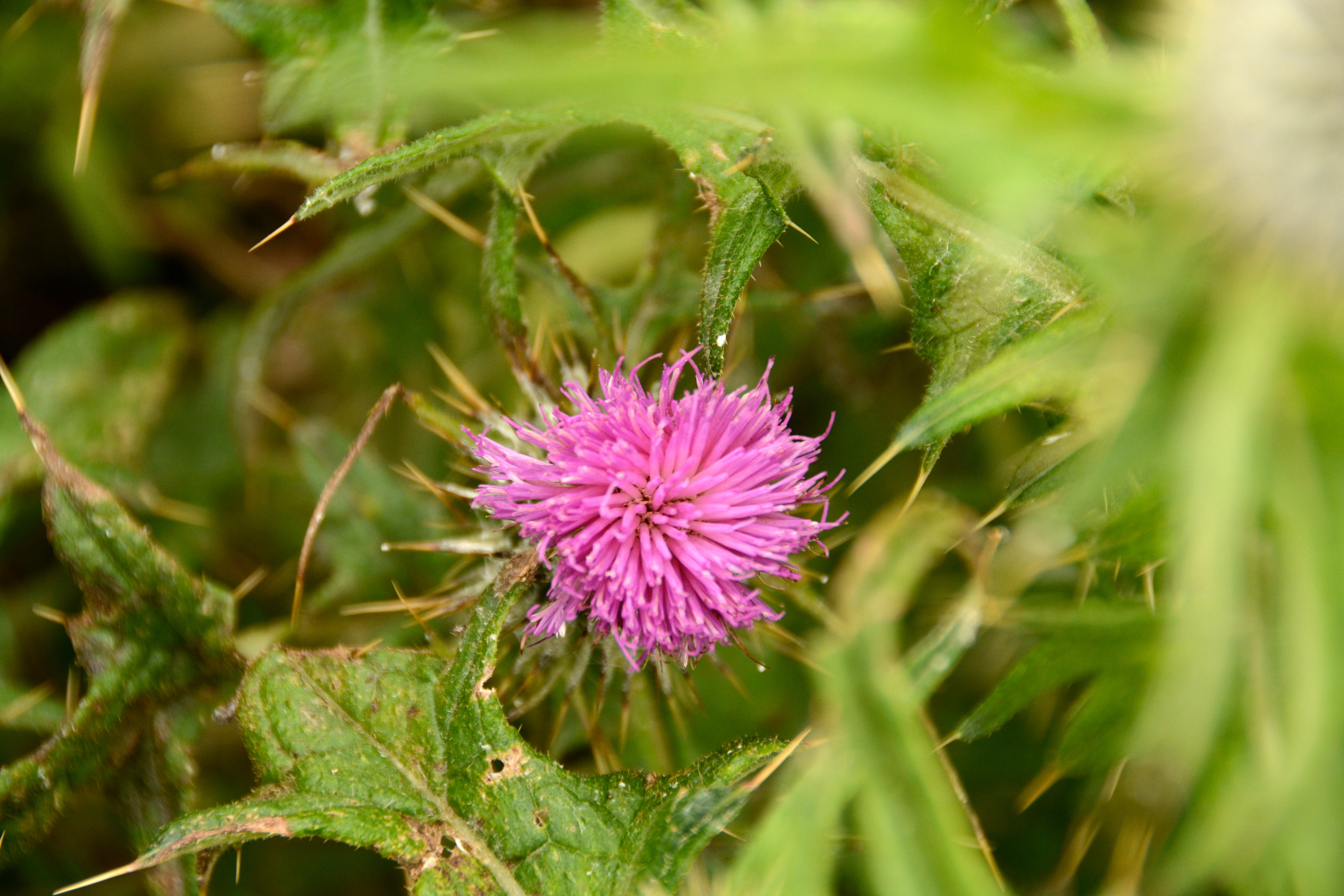
Scottish thistles in the gardens at Cawdor Castle, Nairn, Scotland ©Jean Janssen

Scottish thistles in the gardens at Cawdor Castle, Nairn, Scotland
©Jean Janssen

After touring the interior of the castle, we took time to enjoy the fabulous gardens.  In the walled flower garden sits a maze of hedges.  Although told not to go in, many children were enjoying a try at it.

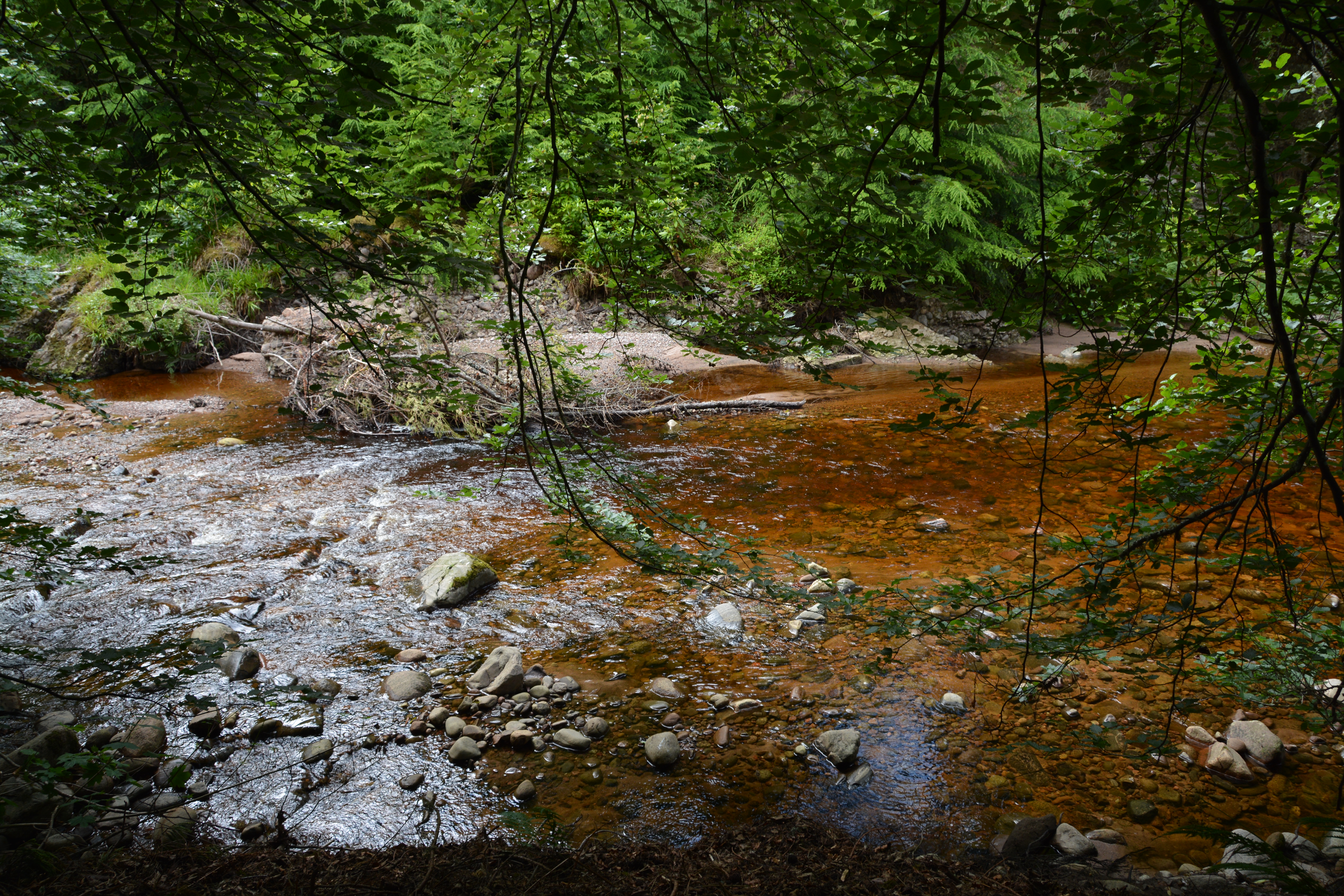
The wild garden and stream where reached by passing through a door in the castle garden walls.  Cawdor Castle, Nairn, Scotland ©Jean Janssen

The wild garden and stream where reached by passing through a door in the castle garden walls. Cawdor Castle, Nairn, Scotland
©Jean Janssen

The wild garden, Cawdor Castle, Nairn, Scotland ©Jean Janssen

The wild garden, Cawdor Castle, Nairn, Scotland
©Jean Janssen

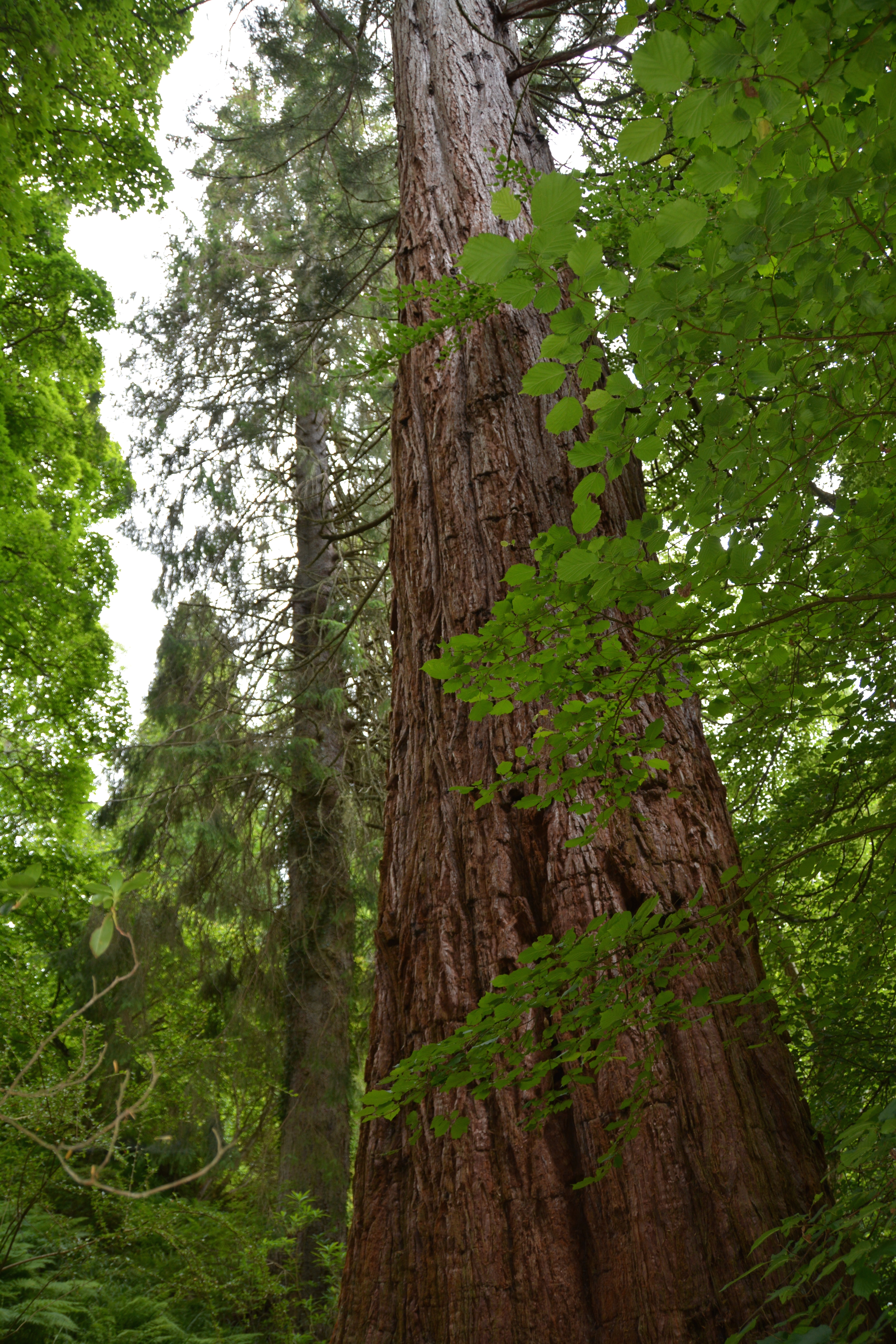
On the opposite side of the castle sat the flower gardens.  First we went through the door into the “secret garden” or wild garden.  Here are the beautiful soft wood, redwoods and the wonderful stream with the clear water.  We walked a while in this area and crossed the bridge over the stream before heading back inside the walls surrounding the flower garden.  It was a cool and comfortable walk, but we still worked up a bit of a sweat.

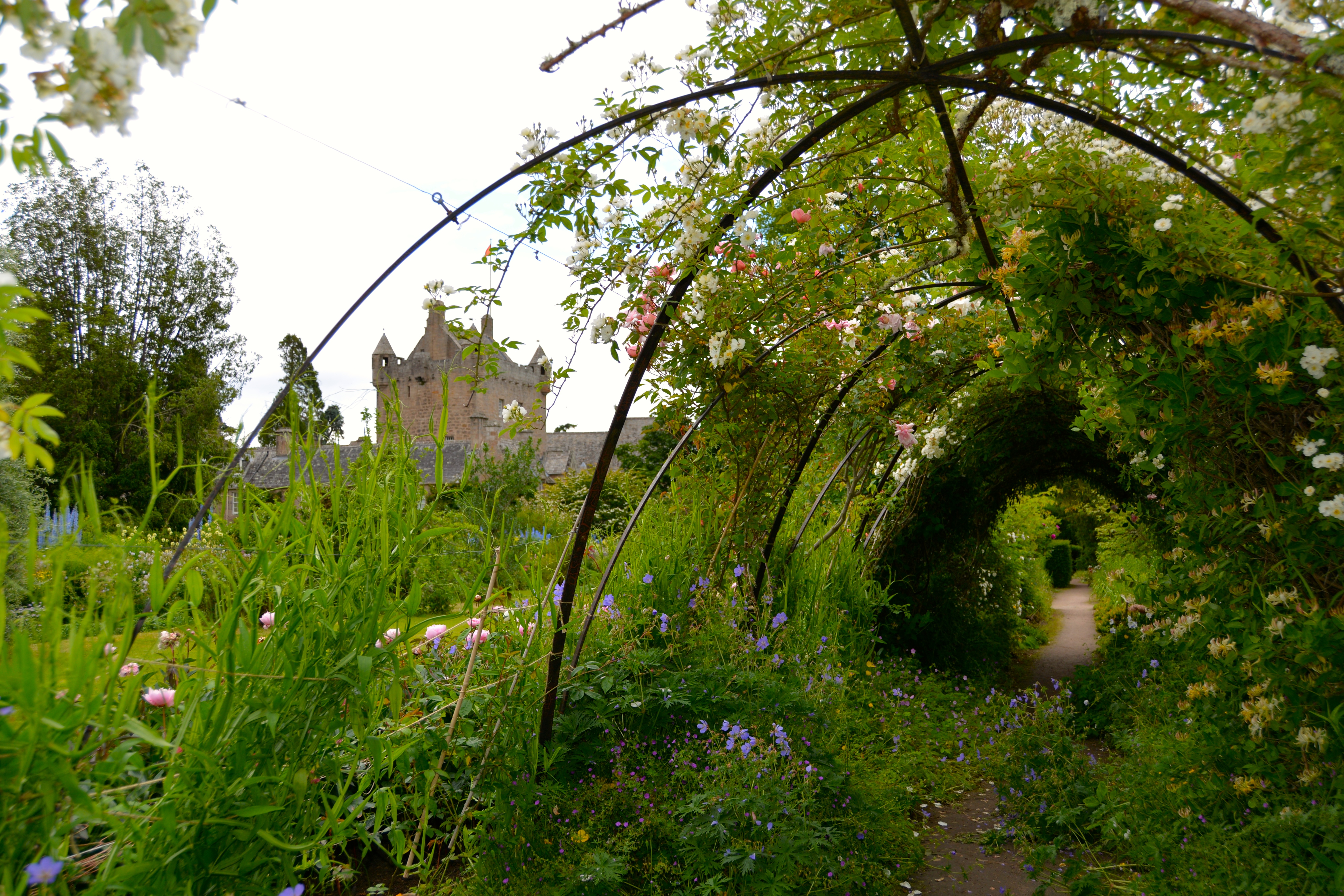
Cawdor Castle as seen through the trellis of the castle flower garden ©Jean Janssen

Cawdor Castle as seen through the trellis of the castle flower garden
©Jean Janssen

We spent our remaining time at the castle roaming around the flower garden, taking pictures, and enjoying the benches after our woodland hike.  The flowers were varied and beautiful and the garden peaceful.  The sky was at times threatening, but it never rained and the clouds kept the afternoon cool.

In the gardens of Cawdor Castle, Nairn, Scotland ©Jean Janssen

In the gardens of Cawdor Castle, Nairn, Scotland
©Jean Janssen

Gypsy wagon at Cawdor Castle, Nairn, Scotland ©Jean Janssen

Gypsy wagon at Cawdor Castle, Nairn, Scotland
©Jean Janssen

On the return ride to the ship, the guide talked about the area around Cromarty Firth, the Black Isle Peninsula and Dingwall, the home of Macbeth and the administrative capital of Scotland. We saw shetland ponies and heard about when they used to be taken into coal mines for long periods of times.  We also saw small donkeys.

The clan’s strength was in their people and their ownership of cattle.  The Frazier, MacKenzie, and MacClouds were just some of the powerful glans of this area.  The Highland cow has a very shaggy coat.  The Aberdeen Black Angus is also a popular breed.

The strength of the Highlands was clan system based on the people and their cattle.  The clearances, making way for sheep and displacing the people and the cattle, are now hundreds of years in the past.  Today, cattle once again dot the Scottish Highland landscape. ©Jean Janssen

The clearances, making way for sheep and displacing the people and the cattle, are now hundreds of years in the past. Today, cattle once again dot the Scottish Highland landscape.
©Jean Janssen

This guide also talked about the clearances, from 1746 to the 1860s when millions of Scots left.  In the world today, 90 million people claim ancestry to Scotland through these emigrants.

Bagpipes on the dock at Invergordon, Scotland ©Jean Janssen

Bagpipes on the dock at Invergordon, Scotland
©Jean Janssen

We head next to our last port Edinburgh where we will be docked for several days.  As the sun set and just before our schedule departure, we looked outside our window and saw a young group of pipers with drums.  They played for a long time, reacting to the crowds on the upper level balconies.  It was very cold so we stayed in the room and banged on the window.  Eventually one of them spotted us and spread the word; we were acknowledged after each song.  It was very cool.

Bagpipe band outside our cabin window, Invergordon, Scotland ©Jean Janssen

Bagpipe band outside our cabin window, Invergordon, Scotland
©Jean Janssen

Posted in cruises, international | Tagged , , , , | Leave a comment

The Outer Hebrides: Isle of Lewis, Scotland

Natasha and Rocky at the Calanais Stone Circle, Isle of Lewis, Western Isles, Scotland

Natasha and Rocky at the Calanais Stone Circle, Isle of Lewis, Western Isles, Scotland

Continuing our exploration of the Hebrides, the island group off the west coast of Scotland, today we are on the Isle of Lewis.  Isle of Lewis and Harris is the largest island in the Outer Hebrides; the Outer Hebrides are also known as the Western Isles.  Lewis is the northern part of the island.  The major city of Stornoway is where we are anchored.  Of the 30,000 people who live in the Western Isles, 9,000 live in Stornoway.

Part of the Calanais Stone Circle on the Isle of Lewis, Scotland ©Jean Janssen

Part of the Calanais Stone Circle on the Isle of Lewis, Scotland
©Jean Janssen

Our original plan was to visit Harris, the Southern part of the island and home to the weavers of the famous Harris Tweed.  Unfortunately, there was not enough interest in that excursion, so we are going on the Lewis Highlight Tour instead.  This may have worked out for the best.  Having not done my homework, I was unaware of the major stone grouping at Calanais on Lewis.  I am so glad we didn’t miss that.

Stornoway, Isle of Lewis, Scotland ©Jean Janssen

Stornoway, Isle of Lewis, Scotland
©Jean Janssen

Our guide worked hard on her English and only a few times struggled to find the right English word.  Gaelic is promoted here and the signposts are written in both English and Gaelic, with Gaelic listed first.  Since Gaelic is the major language spoken here, I assumed that it was our guide’s first language.  (I learned later that she is a student from Germany and German is her first language.) Leaving the dock, we passed the wonderful town hall with its red accents; both Rocky and I liked the building and the way it stood out.

Lews Castel, Stornoway, Isle of Lewis Scotland.  Red music festival tent is set up in the foreground. ©Jean Janssen

Lews Castle, Stornoway, Isle of Lewis Scotland. A red music festival tent is set up in the foreground.
©Jean Janssen

As we passed through the town of Stornoway, we saw the Lews Castle, rebuilt in the 1800s.  In addition to being a residence, it has also been a hospital and college and is now a luxury hotel.  The castle is set on a tree-filled estate, valued parkland on an island where each tree had to be brought in; they are not native to the island due to the soil and the heavy winds that plauge the island.  The castle estate grounds are really the only area where trees are found on the Isle of Lewis.   Tents were set up all around the castle for the area music festival, celebrating its 25th anniversary this year.

Isle of Lewis, Western Isles, Scotland.  Note the traditional stone fences supplemented with more modern fencing. ©Jean Janssen

Isle of Lewis, Western Isles, Scotland. Note the traditional stone fences supplemented with more modern fencing.
©Jean Janssen

Fishing farming, Isle of Lewis, Western Isles, Scotland ©Jean Janssen

Fishing farming, Isle of Lewis, Western Isles, Scotland
©Jean Janssen

The typical Lewis landscape is flat with peat.  Harris, the southern portion of the island, is more hilly with rocks.  The peat makes an excellent, cheap fuel, but it is very hard labor to remove it.  Some of the peat on the island is 1,000 years old.  The peat burns smokey and warm.  The island is also battered by wind and lots of wind turbines are in evidence.  As in Skye, they are controversial.  Fish Farming (mostly salmon and mussels), also found on Skye, is another  controversial measure.

Calanais Stone Circle, Isle of Lewis, Outer Hebrides, Scotland ©Jean Janssen

Calanais Stone Circle, Isle of Lewis, Outer Hebrides, Scotland
©Jean Janssen

I spotted my first Scottish thistle by the gate at the Calanais Stone Circle. ©Jean Janssen

I spotted my first Scottish thistle by the gate at the Calanais Stone Circle.
©Jean Janssen

We saw of couple of single stones before reaching the Calanais Stone Circle (Tursachan Chalanais in Gaelic) believed to be 4,000 years old.  (The are often referred to as the Callanish Stones.  I use the spelling given on the translated markers at the site.)  “The stones were probably moved with rollers, wooden frames and brute strength.”  It is actually a complex of multiple stone sets, sometimes used for burials.  At some point the rituals had Celtic origins, but not druid.

Rocky at Dun Carloway Broch, Isle of Lewis, Outer Hebrides, Scotland ©Jean Janssen

Rocky at Dun Carloway Broch, Isle of Lewis, Outer Hebrides, Scotland
©Jean Janssen

Interior of Dun Carloway Broch, Isle of Lewis, Scotland ©Jean Janssen

Interior of Dun Carloway Broch, Isle of Lewis, Scotland
©Jean Janssen

Our next stop was the Dun Carloway Broch, an iron age structure.  The broch is found exclusively in Scotland.  The round house is built of stone and tapered to create the illusion of height.  There was an interior staircase of stone and multiple levels created in the interior by timber.  The roof was thatched, but lower than the height of the structure to insure it was not blown away.  This type of structure was used between 300 BC and 200 AD.  It is difficult to have anything of great height on Lewis due to the wind, so the broch was not a practical structure.

Blackhouse Village, Isle of Lewis, Scotland ©Jean Janssen

Blackhouse Village, Isle of Lewis, Scotland
©Jean Janssen

Thatched roof repair at Blackhouse Village, Isle of Lewis, Scotland ©Jean Janssen

Thatched roof repair at Blackhouse Village, Isle of Lewis, Scotland
©Jean Janssen

The final stop on our tour was Garenin Blackhouse Village, a collection of historical structures now serving as a living museum.  The houses were lived in until 1976.  Up to 15 people lived in a single structure based on an original Viking design with a fire in the middle and a hole in the roof above.  This rendered the interior walls black.  The name, Blackhouse Village, is either a reference to the color of the interior walls or maybe was just a translation error as  “Thatched House” and “Black House” in Gaelic sound almost the same.

Blackhouse Village, Isle of Lewis, Scotland ©Jean Janssen

Blackhouse Village, Isle of Lewis, Scotland
©Jean Janssen

The village did not get electricity until 1952 and piped fresh water did not arrive until 1962.  Even then, it was a single tap for the entire village.  We were given an orientation by a young male museum guide who lives in this area of Lewis (he made a joke about the townies who enjoy the luxuries of Stornoway; our guide was clearly enchanted by him) and then had the opportunity to wander around.  You can now stay in these structures as a holiday rental or as part of the youth hostel.

Rory weaving Harris Tweed on a traditional loom at the Blackhouse Village, Isle of Lewis, Scotland ©Jean Janssen

Rory weaving Harris Tweed on a traditional loom at the Blackhouse Village, Isle of Lewis, Scotland
©Jean Janssen

In one of the museum structures, Rory worked on an old loom making the famous Harris Tweed cloth.  Although we saw so many sheep, there are not enough sheep on the island to produce that quantity of Harris Tweed wool.  To qualify as Harris Tweed, the cloth must be made on the island by local weavers .  Only the softest wool is used.  The color is added to the wool before it is spun into yarn to saturate it.  The individual designs are done at home by the weavers and then sent in.  There are a few factories on the island with multiple looms for the weavers to work at as another option.  The fabric is later used for furniture and purses.

Blackhouse Village, Isle of Lewis, Scotland

Blackhouse Village, Isle of Lewis, Scotland

Blue Whalebone, Isle of Lewis, Scotland ©Jean Janssen

Blue Whalebone, Isle of Lewis, Scotland
©Jean Janssen

On the way back to Stonoway, we passed a whalebone from a blue whale that beached itself nearby.  The whalebone is now covered in fiberglass to preserve it and still has the original harpoon from the whale’s injury.  Our guide also talked about the crofting history of the island, a tenant situation with no opportunity for ownership.  The law changed in 1950 giving crofters the opportunity to buy their own land.

As we passed a large monument on a hilltop, our guide told us of the New Years Day drowning in 1919 of 205 islanders who had survived World War I and were on their way home.  The ship hit rocks and sank just 20 yards from shore while waiting family members watched.  The waters were freezing and although there were 284 men on board, there were only 80 lifejackets.  The lifeboats were quickly overwhelmed and capsized.  39 did survive the freezing water and 40 more were pulled ashore by a sailor who tied a rope to the rocks on the shore.  The Iolaire Disaster was “the worst peacetime disaster of a British ship since the Titanic”.

Isle of Lewis, Western Isles (Outer Hebrides), Scotland ©Jean Janssen

Isle of Lewis, Western Isles (Outer Hebrides), Scotland
©Jean Janssen

After that sobering note, I needed to cheer myself up.  Having spotted a Harris Tweed shop in town, I decided I better pay the store a visit.  I had been eyeing the Harris Tweed purses for several days now.  This store sold the fabric and clothing made from it, mostly men’s jackets and some women’s jackets in a masculine design.  Not for me, but then I found a jacket in a unique design.  The purple tweed one was not in my size and I tried on a dark one which was more flattering than I thought.  Then the manager pulled out a lighter colored one with a thin pink stripe running through it in my size.  Sold.  This will be my birthday present to myself and the big purchase of the trip.

Finally spotted some Scottish heather (with the purple flowers) on the Isle of Lewis, Scotland ©Jean Janssen

Finally spotted some Scottish heather (with the purple flowers) on the Isle of Lewis, Scotland
©Jean Janssen

After my successful shopping trip, we took the tender back to the ship.  Mainland Scotland tomorrow.

As seen from our cabin at anchor just off Stornoway, Isle of Lewis, Scotland ©Jean Janssen

As seen from our cabin at anchor just off Stornoway, Isle of Lewis, Scotland
©Jean Janssen

Posted in cruises, international | Tagged , , , , , , , , , , , , , | Leave a comment

The Inner Hebrides: Isle of Skye

Isle of Skye, Inner Hebrides, Scotland ©Jean Janssen

Isle of Skye, Inner Hebrides, Scotland
©Jean Janssen

Our Scottish adventure continues with visits to the Hebrides, the island group off the western coast of Scotland.  Our first half day was to the Isle of Skye, the largest island in the Inner Hebrides, closer to the coast of Scotland.  We have actually been here before, spending several days on Skye when Rocky was younger and discovering the heritage of our West Highland Terrier, Peabody.  Our hosts that visit were the Macdonalds who at one time had been Westie breeders.  Flora Macdonald was famous for smuggling Bonnie Prince Charlie to Skye after the disastrous Battle of Culloden and the end of the Jacobite Rebellion.

Isle of Skye, Inner Hebrides, Scotland ©Jean Janssen

Isle of Skye, Inner Hebrides, Scotland
©Jean Janssen

Since we had been to both places on the offered excursions, we picked the tour that also provided us with more scenic touring of the island.  Skye has absolutely breathtaking landscapes.  The tour bus can not go everywhere, but we certainly did on our last visit.  Give yourself at least 2-3 days to discover the beauties of this island.

Portree pier, Isle of Skye, Scotland ©Jean Janssen

Portree pier, Isle of Skye, Scotland
©Jean Janssen

We have to go in by tender to the city of Portree.  I recognized the pier restaurants and shops from our previous visit and the many films in which it is featured.  Unfortunately, being a Sunday, most places were closed on our afternoon arrival.

Eileen Donan Castle, Isle of Skye.  The exterior is a popular movie sight.

Eileen Donan Castle, Isle of Skye. The exterior is a popular movie site.

At the edge of the pier, we met our guide and set off to view the landscape and Dunvegan Castle.  Another picturesque spot, known to us from previous visits, is Eileen Donan Castle; this castle had been featured in many films.  The castle had lay in ruins for more than two centuries when it was finally rebuilt.

Isle of Skye, Scotland ©Jean Janssen

Isle of Skye, Scotland
©Jean Janssen

Our kilted guide shared lots of interesting information about the island.  (He was wearing a kilt of the Macdonald tartan.)  He has lived here for many years and his children grew up on Skye.  He told us about the island’s hostel system where children who did not live near the one island school would come in for the week and only see their families on the weekends.  Those who lived on neighboring islands for in more remote corners of Skye might not see their families for the whole term.

Isle of Skye, Scotland ©Jean Janssen

Isle of Skye, Scotland
©Jean Janssen

He also spoke about the Gaelic language, outlawed in Scotland after the Battle of Culloden.  It is not the same as the Gaelic spoken in Ireland.  It is also not the Scottish language, but rather the language of the Highlands.  Its use is encouraged now and the language is making a comeback.  It will take time.  According to our guide,”more people in Scotland speak Polish than Gaelic.”

We were riding on a “floating road” set on peat.  When we stopped to take photographs you could tell the difference; your feet sank into the soft moist earth.  Regular roads are set on bedrock.  He pointed out the commercial forestry and also the purposely burned land and the scaring.  He said that nature actually repairs this better and the regrowth was better for the wildlife.  I saw this last year in Tanzania where sections of the reserver were purposely burned.

Rocky at Dunvegan Castle, home to Clan MacLeod for 800 years, Isle of Skye, Scotland ©Jean Janssen

Rocky at Dunvegan Castle, home to Clan MacLeod for 800 years, Isle of Skye, Scotland
©Jean Janssen

After the photo stop, our next was at Duvaegan Castle which has been in the same family for 800 years, the MacLeod family.  It is believed to be the oldest continuously inhabited castle in the Highlands.  As it is the official home of the 30th MacLeod chief Hugh MacLeod, there were no inside photos permitted.  There most famous artifact is the fairy flag, said to have magical powers.  Rocky spotted articles belonging to Flora Macdonald and Bonnie Prince Charlie.  There was also a fabulous Claymore.

View from Duvegan Castle, Isle of Skye, Scotland.  Seal trip leave from this area. ©Jean Janssen

View from Duvegan Castle, Isle of Skye, Scotland. Seal trip leave from this area.
©Jean Janssen

Dunvegan Castle has beautiful grounds and seal trips are run out of the Harbor below.  I remember spending a lot of time looking for the seals on our last visit.

As a cruise vacation and stops in lots of sea ports, we saw seagulls everyday.  This gull sits on a rooftop in Portree, Isle of Skye, Scotland. ©Jean Janssen

As a cruise vacation and stops in lots of sea ports, we saw seagulls everyday. This gull sits on a rooftop in Portree, Isle of Skye, Scotland.
©Jean Janssen

On our way back to Portree, our guide talked about the Highland Clearances.  In the 18th and 19th Centuries, tenant farmers (crofters) were cleared from the Highland estates to make way for sheep farming.  The Clearances devastated the Gaelic culture and the highland way of life.  The clan strength had been in the people and the cattle.  In the “Year of the Sheep”, 1792, a massive wave of emigration occurred with many Scots going to America, Canada, New Zealand, and Australia.

Bay at Portree, Isle of Skye, Scotland ©Jean Janssen

Bay at Portree, Isle of Skye, Scotland
©Jean Janssen

After our tour, we had only a very short time before our boat left Skye so we had to go straight to the tender.  I am glad this was not our only visit to Skye, it was more of a teaser half-day visit.

Posted in cruises, international | Tagged , , , , , , | 1 Comment