
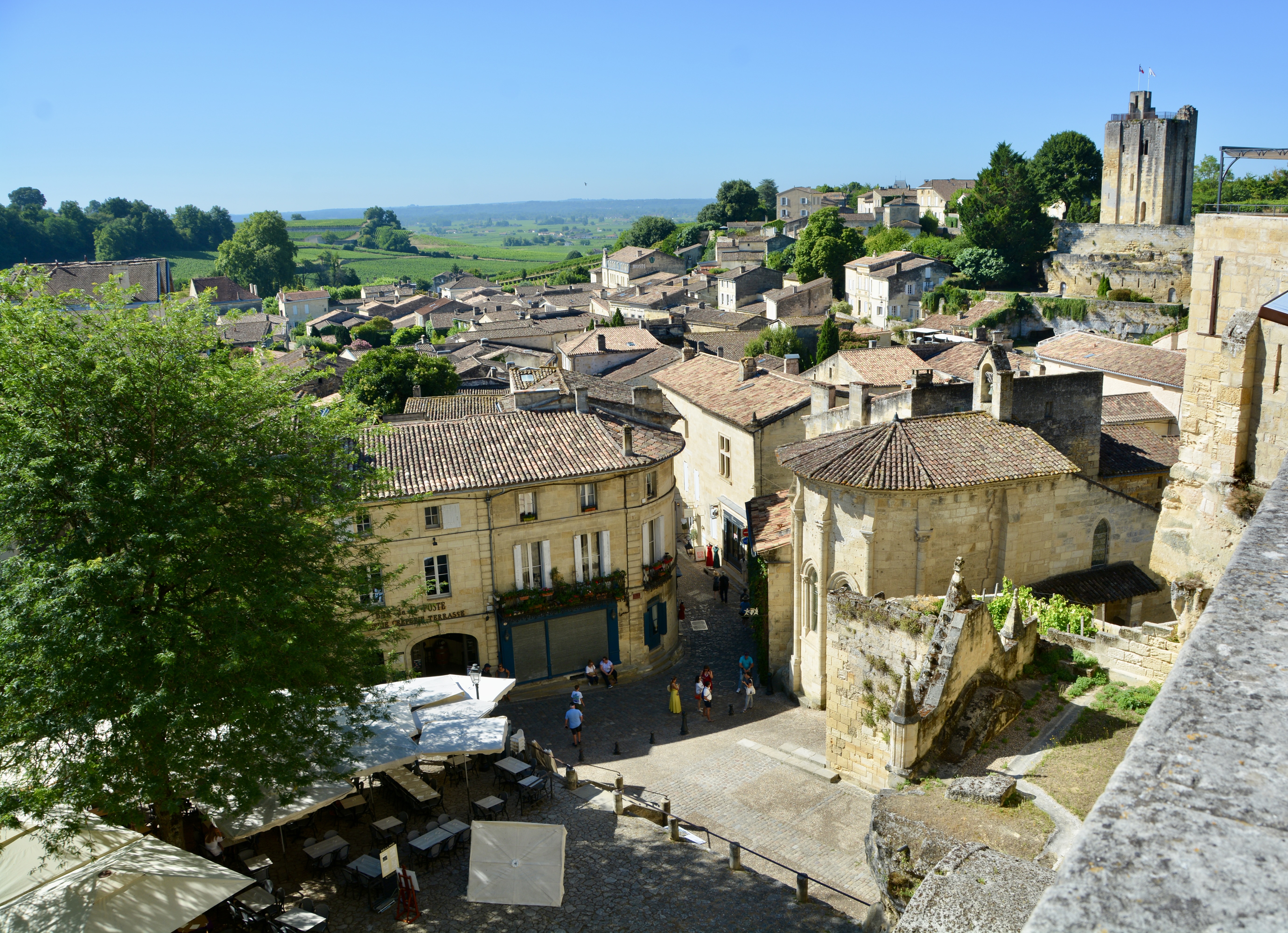

Today we travel by bus only 8 km (less than 5 miles) from Libourne to Saint-Emilion which our cruise director referred to as a hill town. If you are thinking Tuscan hill town, you will need to adjust. Saint-Emilion is also only 40 km (less than 25 miles) from Bordeaux. After the bus departure the ship will release its moorings and eventually reposition to a pontoon on the opposite side of the river.

The reason for the maneuver is the phenomenon known as the mascaret. Mascaret is the French term for a tidal bore. “The tidal bore is a natural phenomenon on estuary rivers. The tidal bore is produced when the water level is lower and the tidal coefficient exceeds 90 (late spring to autumn). It starts at the mouth of the estuary, at the time of the falling tide / rising tide with the rising flow of the ocean against the downward flow of the river…This wave, occurs often in the Gironde estuary. It can reach up to 2 meters high, and travels between 15 and 30 km/h. Surfers can ride the wave for up to 10 minutes.” purefrance.com.

Twice a day, everyday of our two-night stay in Libourne, the boat will release and draft downriver a bit to accommodate the mascaret. If not, it is likely that the mooring lines would snap.


The French town of Saint-Emilion has many religious ties and has been considered a pilgrimage site. There are beautiful churches, convents, and cloisters throughout the city. “The legend tells us about a monk from Brittany who fled from Vannes, his hometown, to seek refuge in one of the natural caves in a place called Ascum Bas (former name of the village) in the 8th century. His name was Emilion. Living the life of a hermit he accomplished a few miracles and rapidly became famous in the region and even far beyond its borders. Soon he had many disciples and with their help he evangelized that place and made it become a great religious center. Even after his death his followers carried on his legacy and even called the town after him: Saint-Emilion.” Bordeaux-tourism.co.uk


Our guide worked hard to get us through the city as easily as possible. There are a few challenges if you are bothered by steep inclines. As usual, Uniworld offered an easy-walking group. We chose the regular tour. We will tour the city first in the early hours when there are very few people about, then it is out to the nearby countryside to enjoy a tasting, and finally we return to the city for free time. On this morning’s walk, I am not only enjoying the scenery, but decided what I might want to do when we return later.
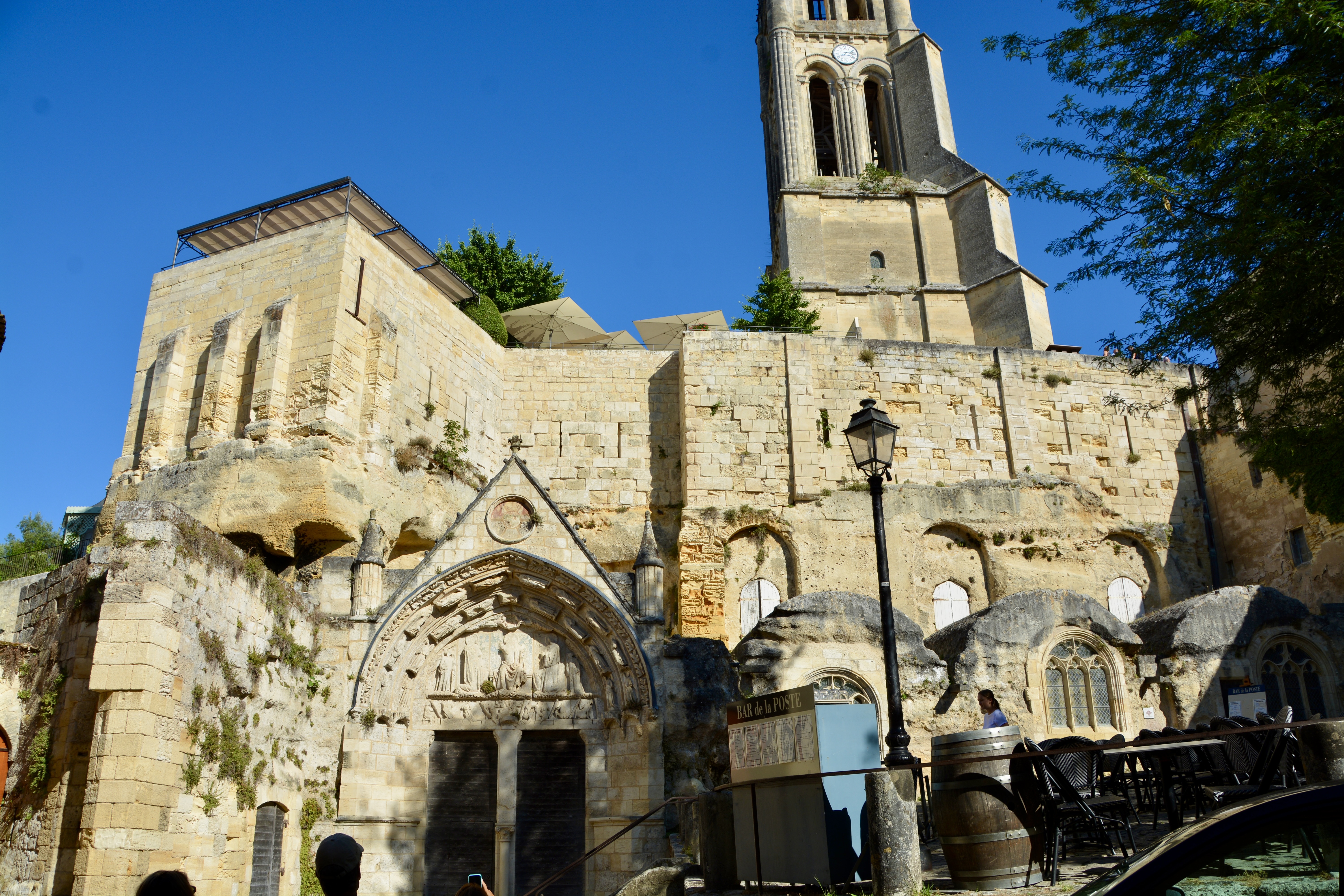

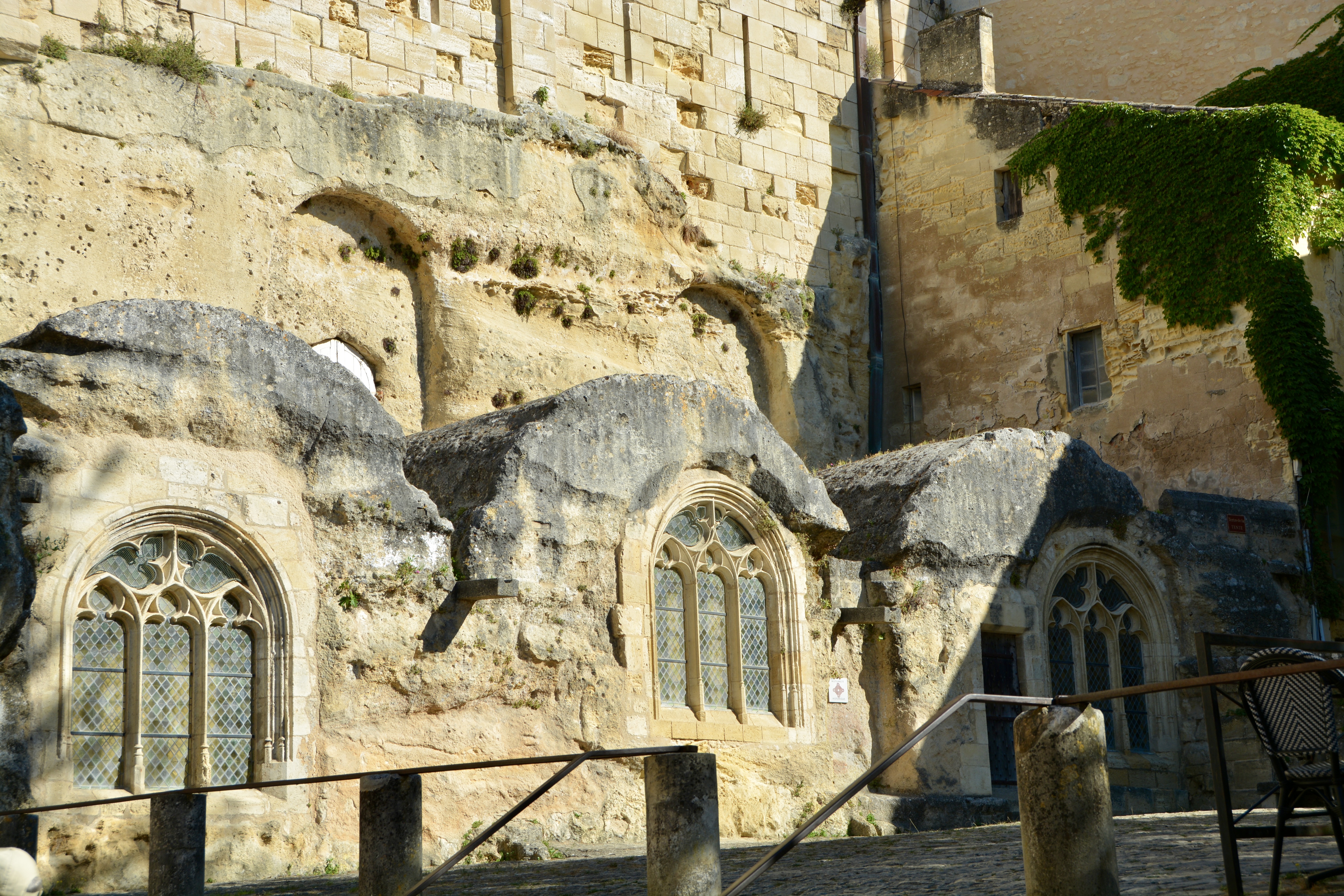
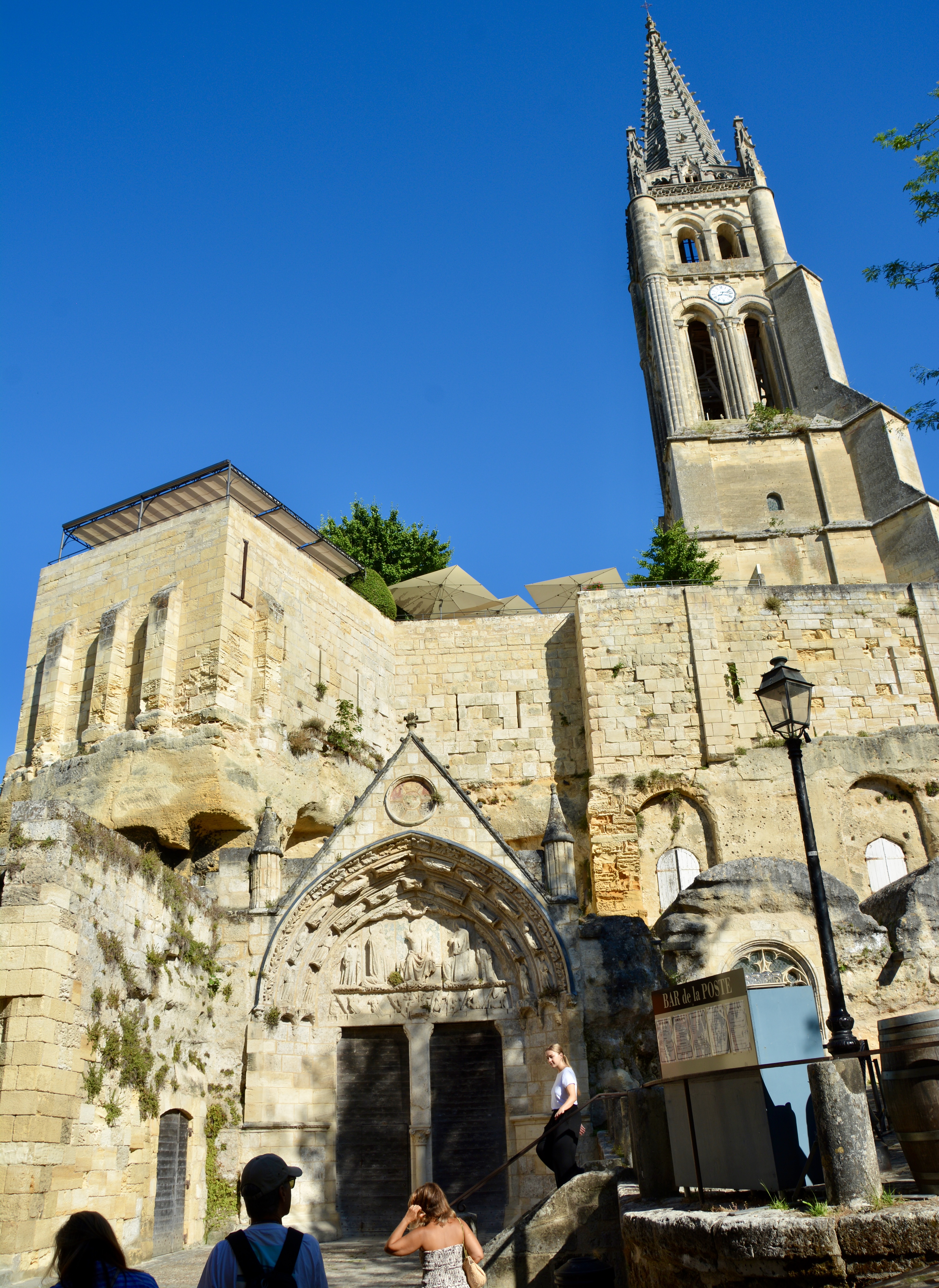
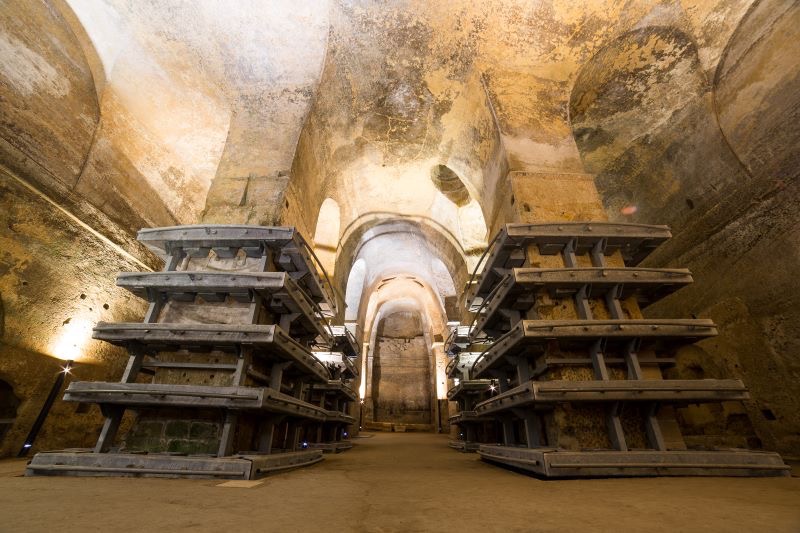
Our first stop is the monolithic church, an underground church from the early 12th century. The church is locked and you must visit with a guide. The proportions are huge. The church is almost 40 feet high and almost 125 feet long. The bell tower is over 223 feet tall. The church is dug into the limestone plateau right in the heart of the city. It was probably developed around the pilgrim activity for visitors to the tomb of St. Emilion and the need to accommodate hundreds of pilgrims.

“Carved in the 12th century, painted in the 14th, devastated in the 16th, battered in the 18th during the Revolution and restored in the 20th! Today, it is still consecrated and hosts regular religious ceremonies, sometimes concerts, but also induction ceremonies of the Brotherhood of Wines of Saint-Emilion – The Jurade.” saint-emilion.tourisme.com. It is a must-see for any visitor to Saint-Emilion; unfortunately due to its fragile state-there are serous support structures inside-you are not allowed to take pictures of the interior.

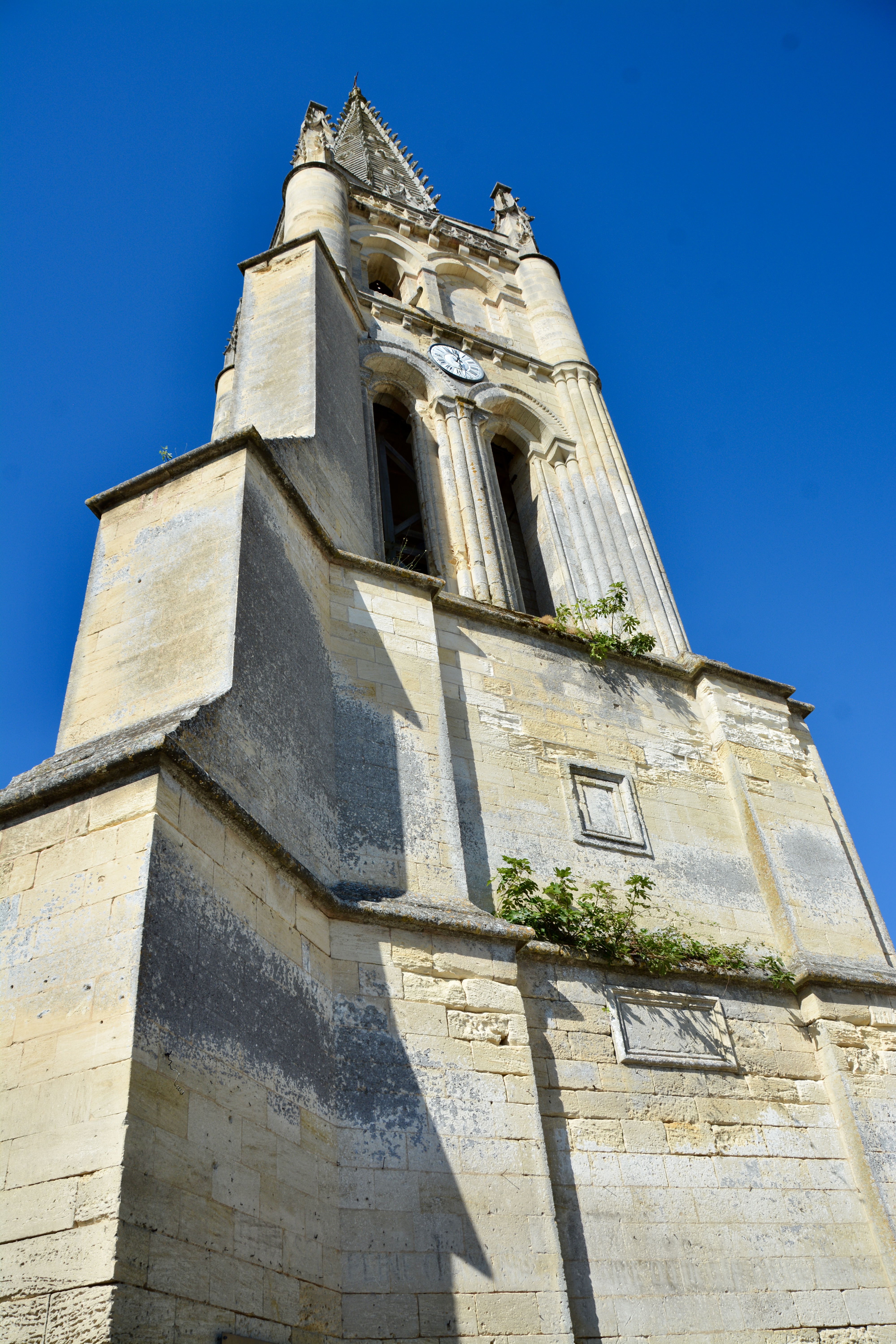
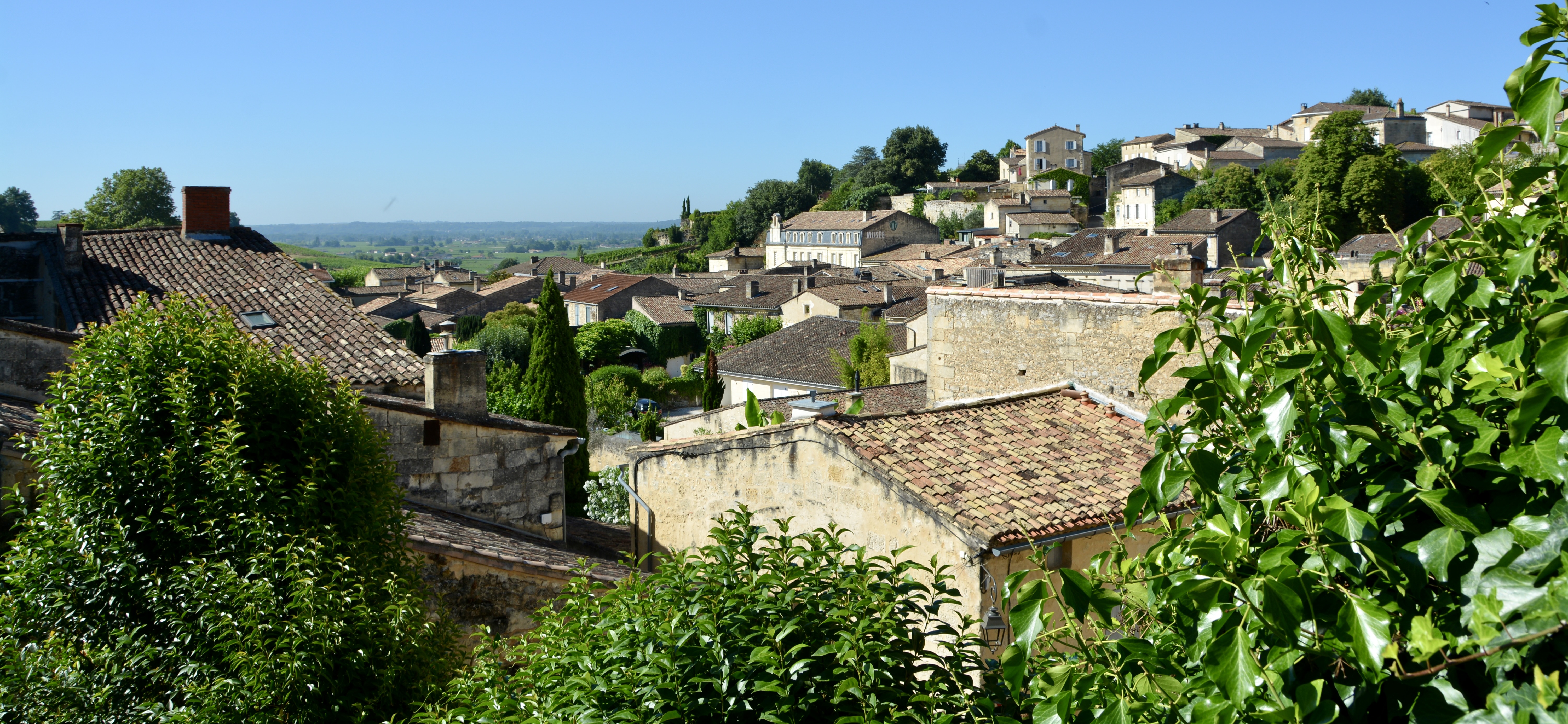
After our visit to the church, the guide walked us over to a terrace view of Saint-Emilion that tells you why people might refer to this as a hill town. We also got a closer view to the tower. The church tower is not centered and the difficult weight distribution is just one of the reasons that so many supports are required in the interior of the monolith church.

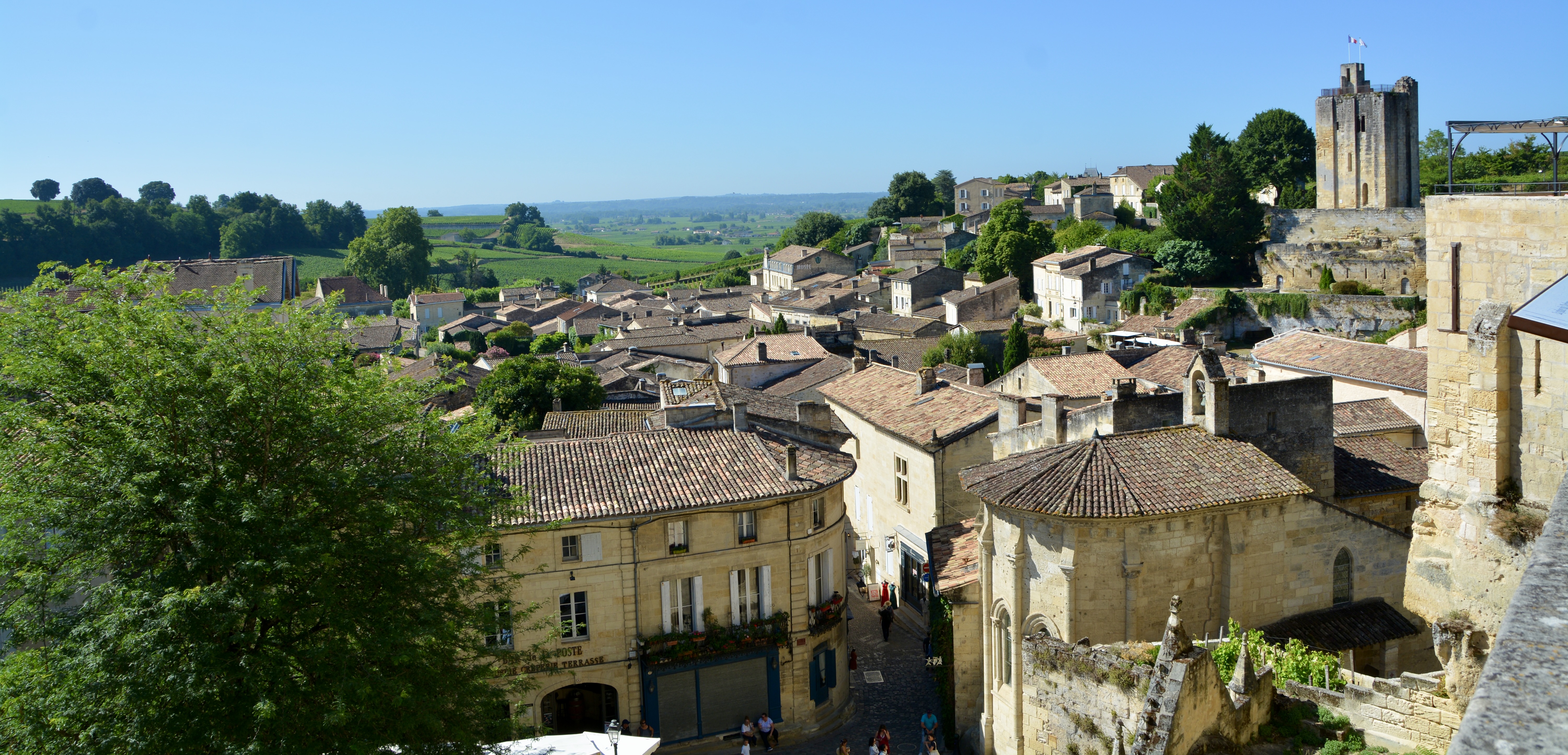
You could see the city starting to fill up. There were lots of lovely cafes with inside and outside dining. Our guide also pointed out a 14th-century cloister built by the Franciscans that was mostly destroyed during the French Revolution. In the 19th century, the underground galleries were converted to produce and store sparkling wine. Today you can visit for a tasting of the local sparkling wine. Outside of the Champagne region of France, sparkling wines are referred to as cemant. The local speciality is Cremate de Bordeaux and is found at Les Cordeliers. I put that on the list for later.
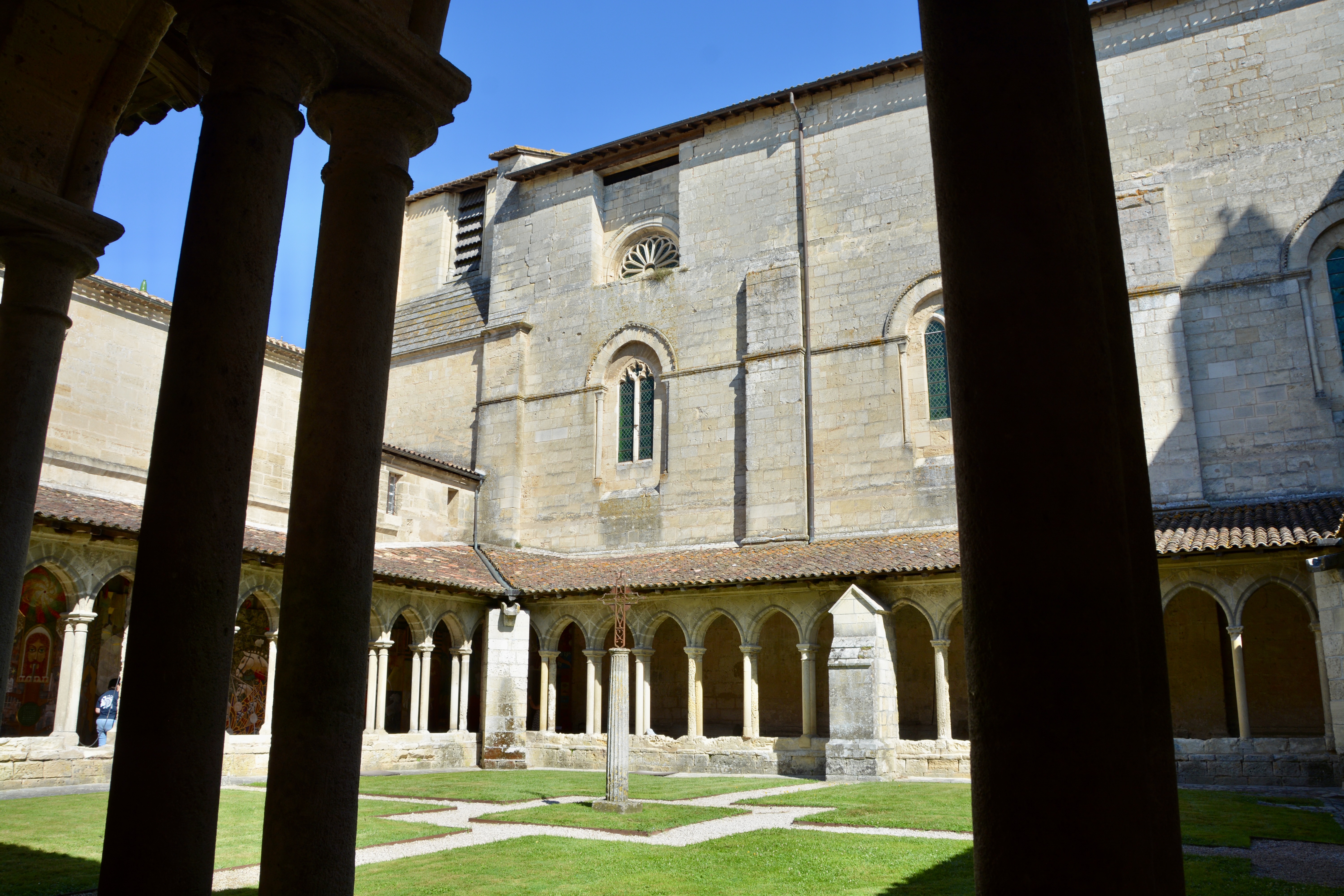
On our route back out of the city, we passed through a beautiful cloister with some of the original frescos still visible. “If you pay close attention to the walls of the cloister you will see quite a lot of interesting items such as graves, statues, and even a little dragon.” lostinbordeaux.com
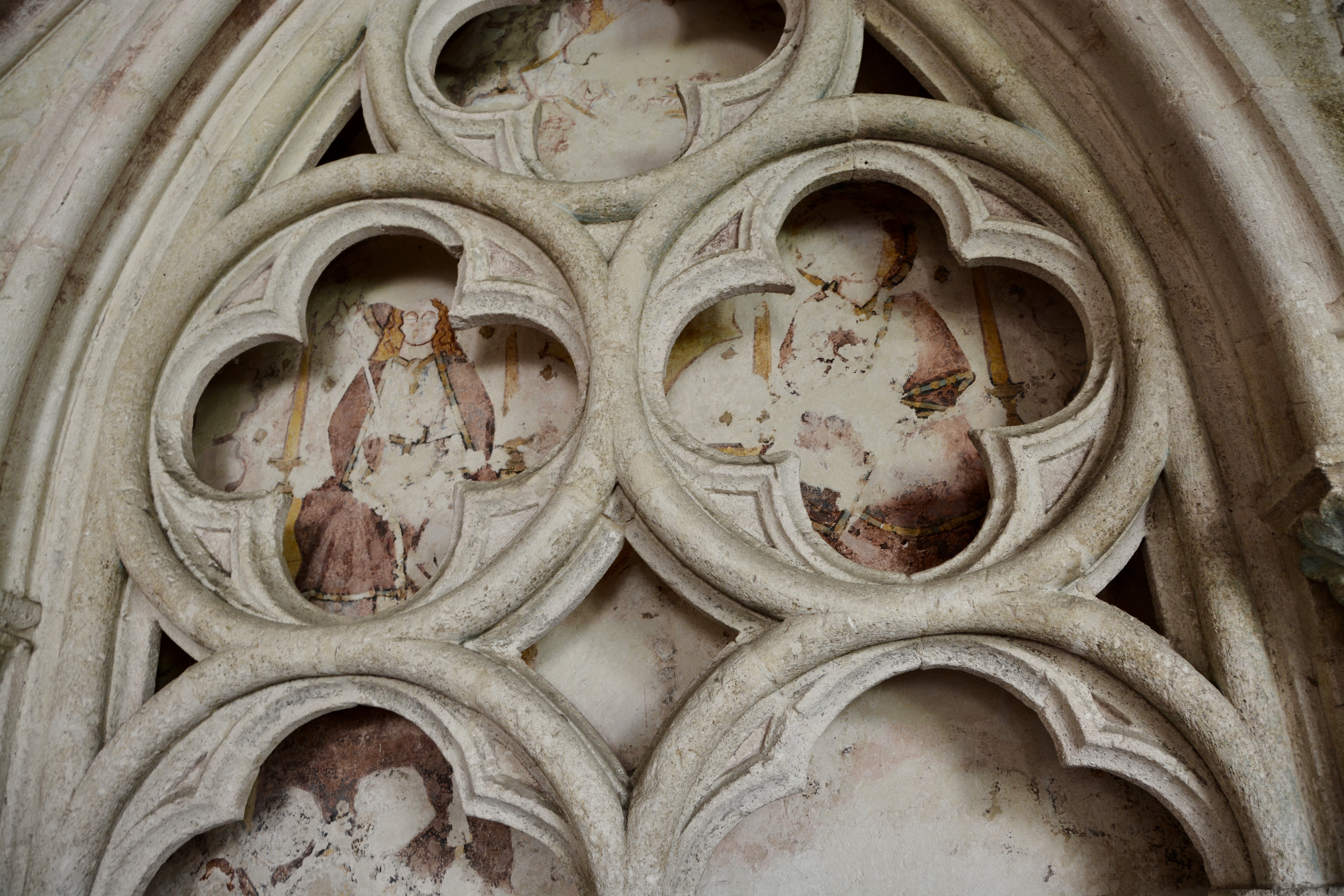

Passing through the cloister, you enter the Collegiate church gothic doors of the 14th century. In contrast, the west door of the church was built in the Romanesque style in the 12th century. The church was built between the 12th and 15th centuries. It is not necessary to enter as part of the tour. You can enter on your own and enjoy a mix of Romanesque and Gothic styles, reflecting the long period of the collegiate church’s construction.
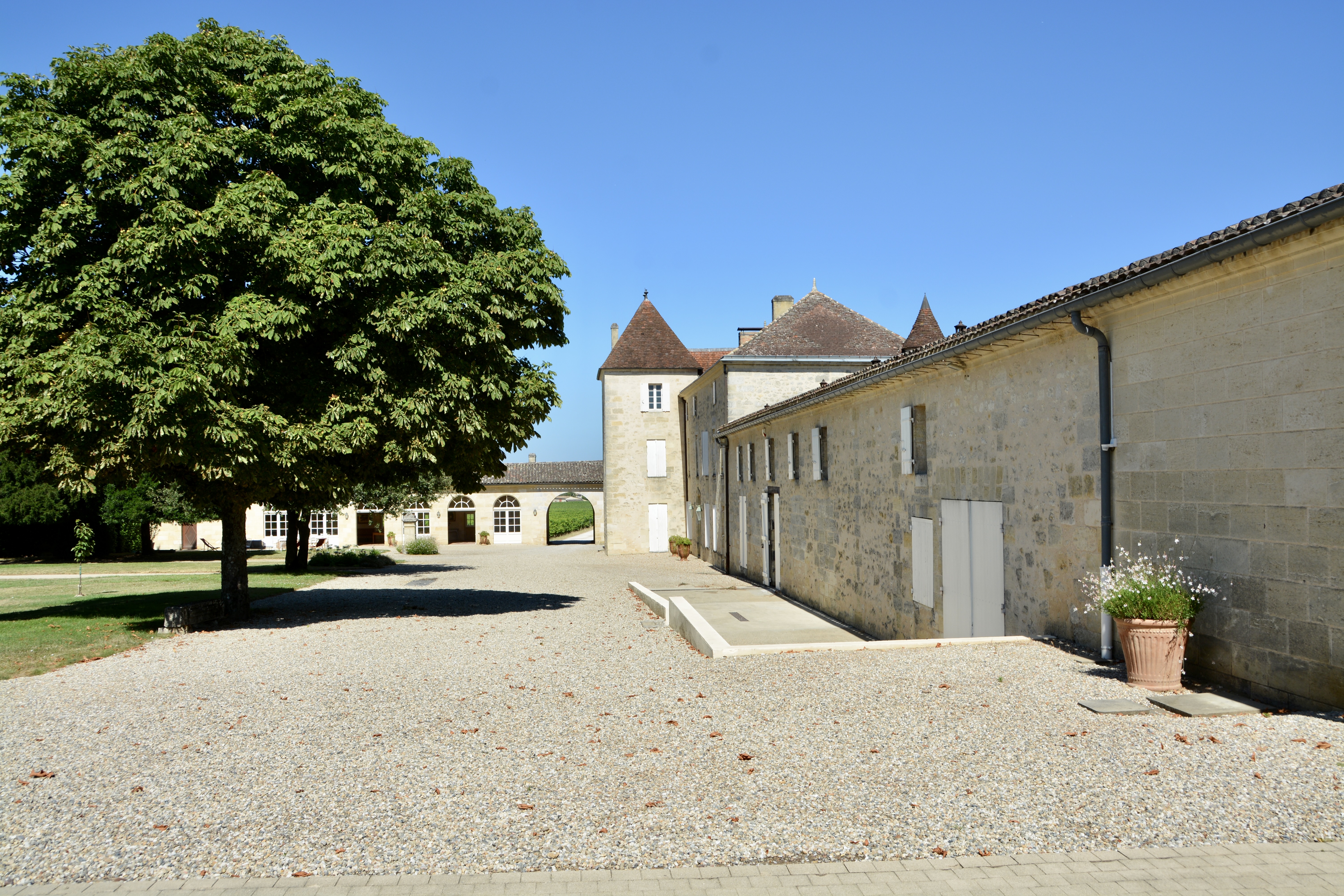
Next it was back on the bus to enjoy the very short trip to Saint-Emilion’s vineyards. In fact, it was actually quite close to the city, but in order for the bus to make the turn into the gate of the estate we had to take the long way. Our guide is a local and she pointed out her home in the vineyards. Her husband’s family is in the wine industry.

The wine of this area’s claim to fame is its “world-famous limestone terroir”. The earth is a mix of limestone, clay, and gravel and it enjoys the “caress of a gentle maritime breeze” off the Dordogne River. In fact the streets of Saint-Emilion are composed of cobblestone that were actually the ballast stones from the ships that came in to secure the wine. When replaced by the weight of the full wine barrels, the ballast stones were no longer needed and they were left behind and then used to create roads and passages throughout Saint-Emilion. bordeauxwinevacations.com.
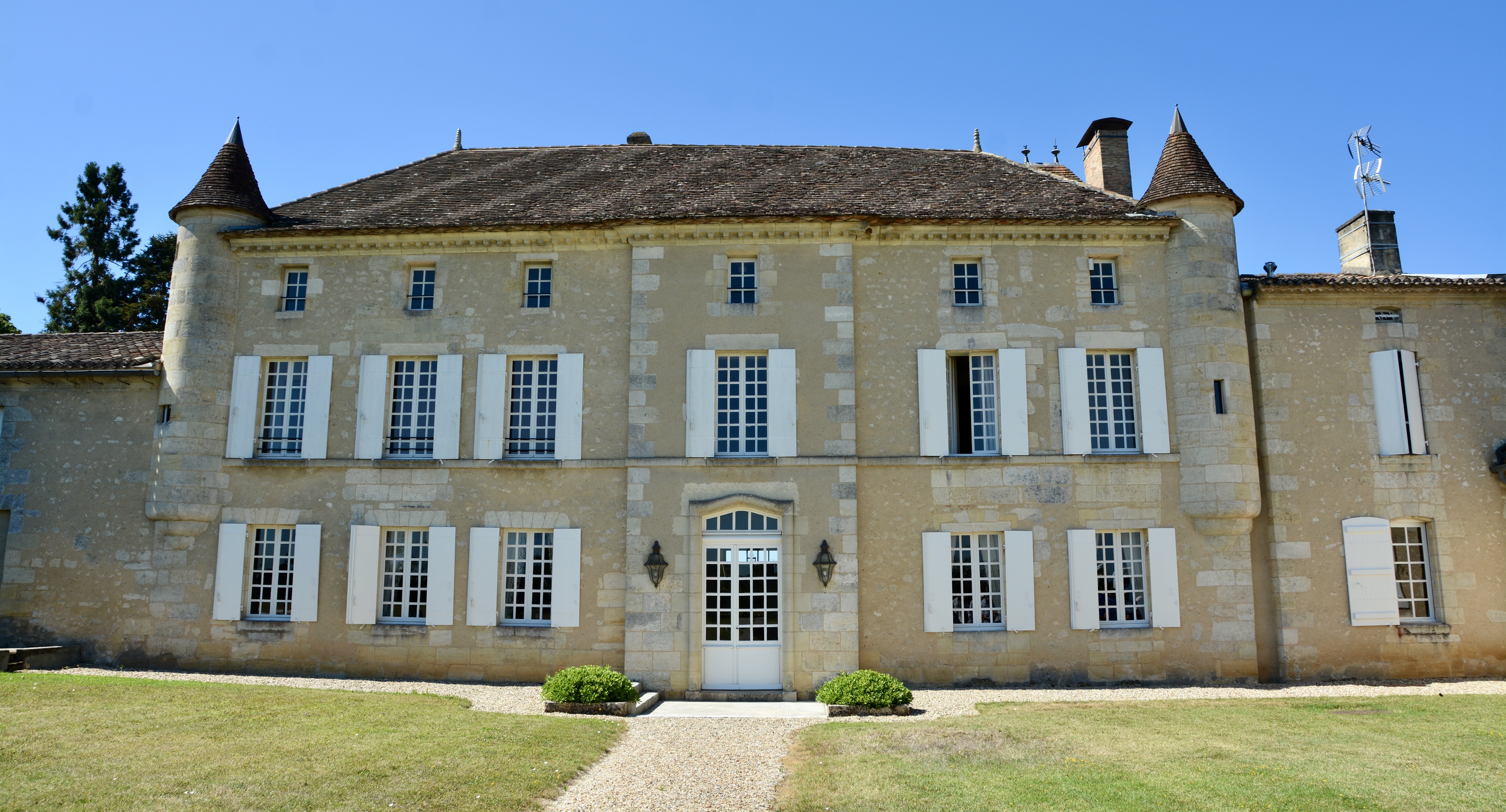
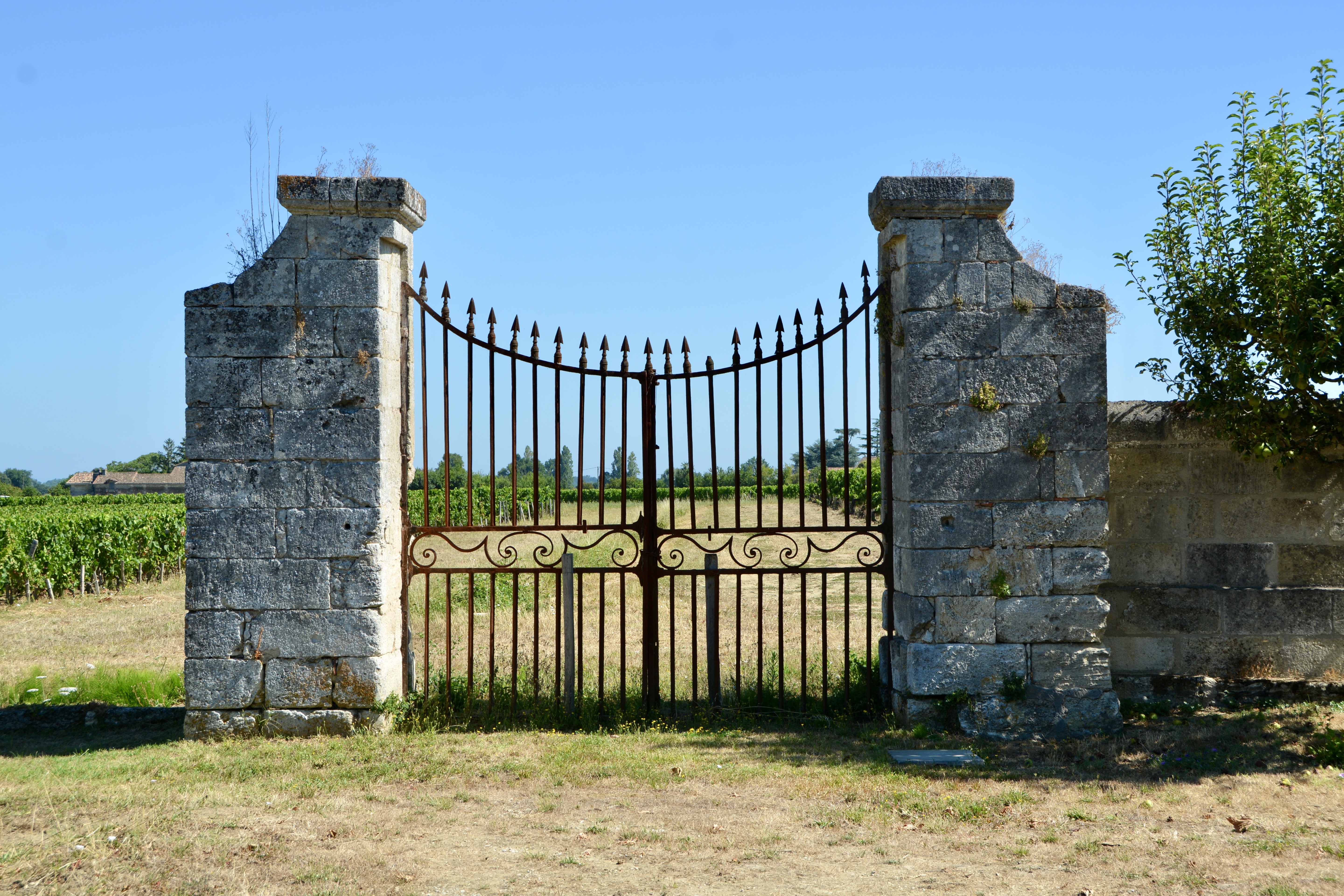

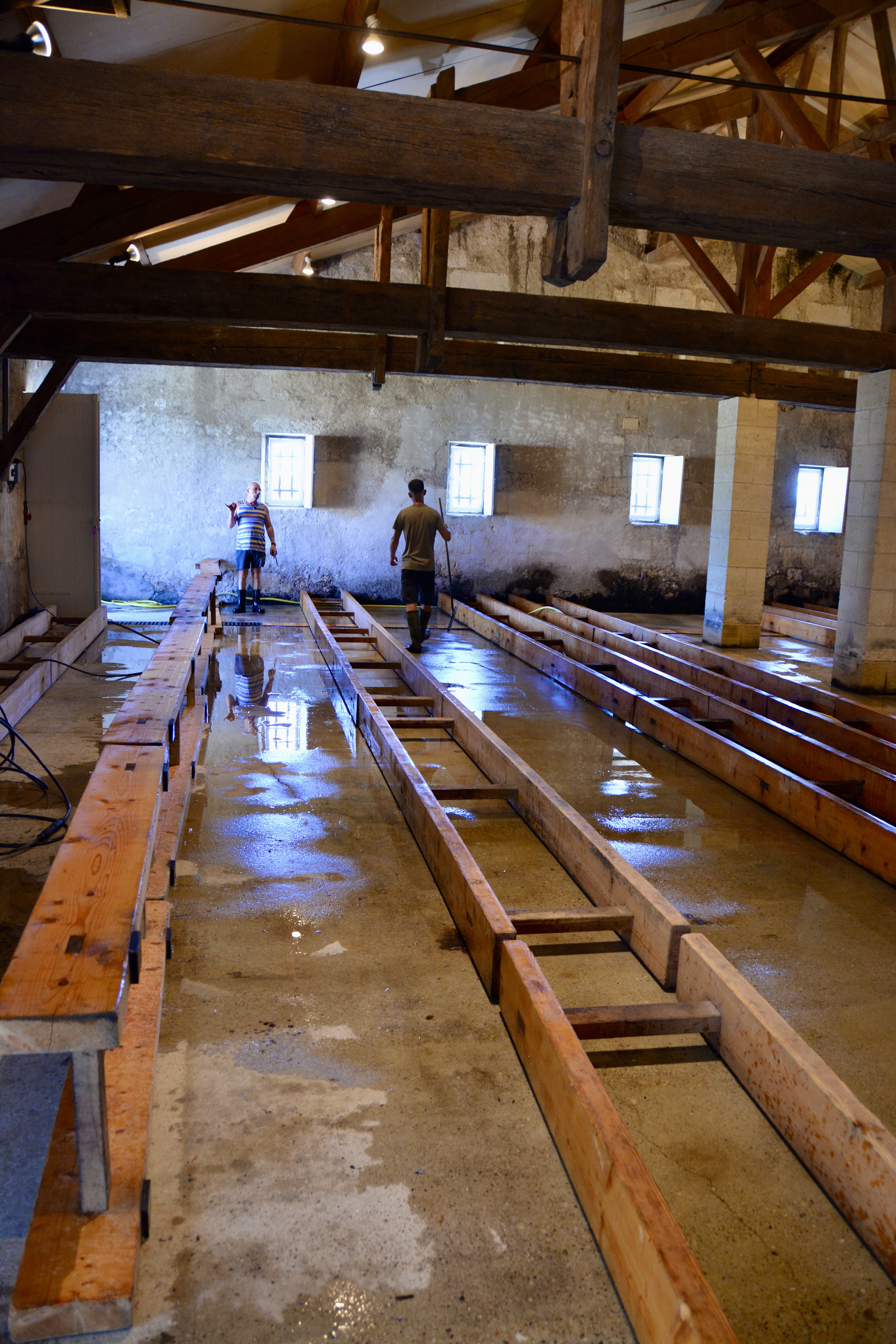
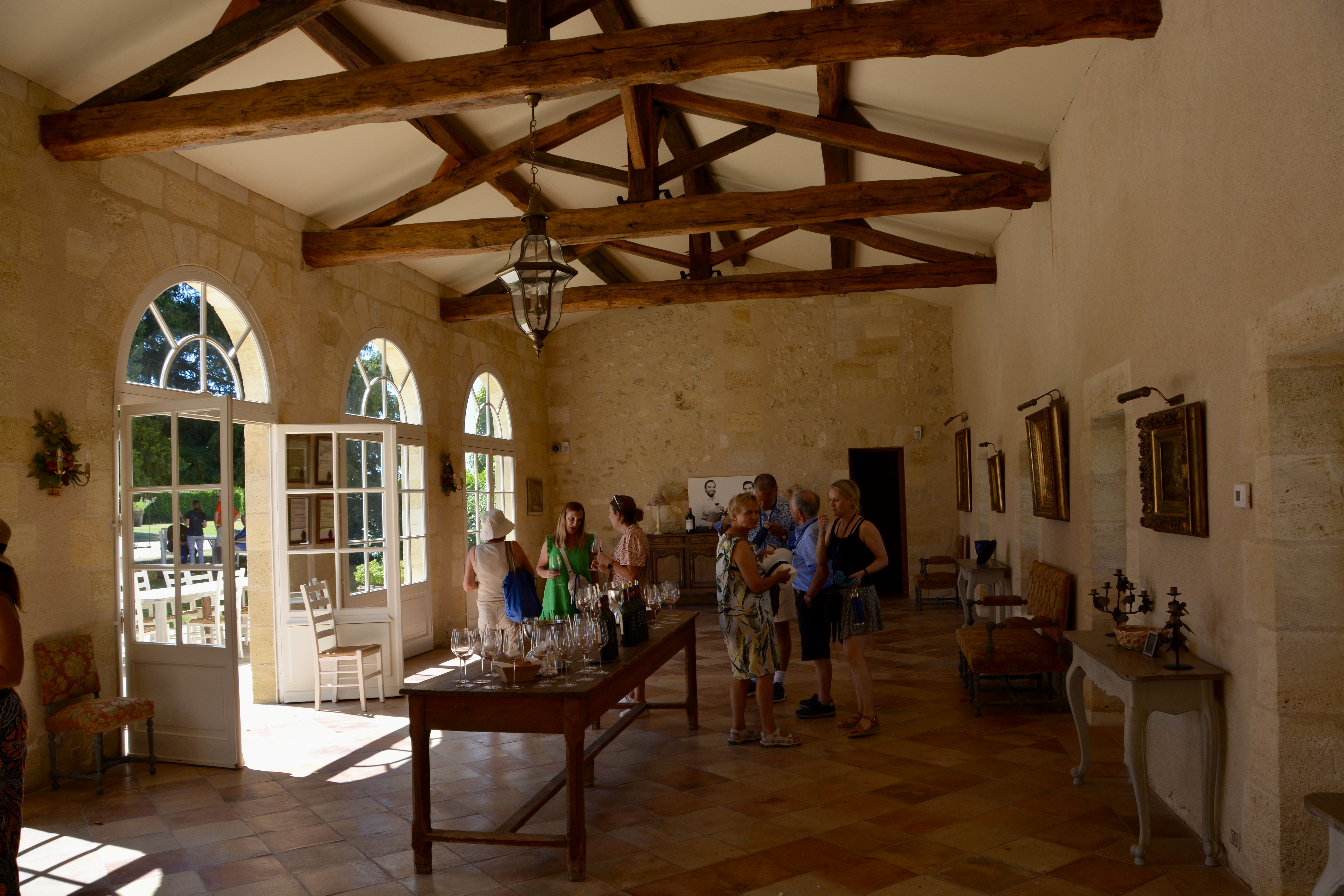
We met in the courtyard of the 14th-century chateaux, were shown the vineyards, toured the production facilities, and had a tasting at Grand Mayne. We visited one day post-blending and the cleanup from that process was still taking place. I didn’t care at all for the first two offerings we tasted, but I really liked the third and got a bottle. “The vineyard of Chateau Grand Mayne is located to the west of Saint Emilion, at the foot of the plateau. Even though the vineyard is in one large block of vines, Chateau Grand Mayne is the result of two different terroirs.” thewinecellarinsider.com. I read after our visit that “Chateau Grand Mayne is better with at least 5-8 years of bottle age. Of course, that can vary slightly, depending on the vintage. Chateau Grand Mayne is best enjoyed in the first 6-25 years of life.” the winecellarinsider.com. The one I selected was a 2015; the two I didn’t care for were more recent vintages.

After our tasting, we returned to Saint-Emilion for our free time. Boris wanted to head straight to lunch. It had warmed up considerably and I knew he wouldn’t want to sit outside. We ended up at one of the award-winning restaurants we had seen. L’Envers du Décor started as the city’s first wine bar, but has gained an excellent reputation for its food. We got in, but were seated in the “American room” which was where they put families with children and (you guessed it) Americans who wanted a table for lunch. It was not a spectacular table, but the food was excellent. I had two wonderful seafood dishes (more than I needed, but I wanted to try everything) and closed with a soufflé I shared with Boris. I even skipped the wine after starting the drinking so early today.
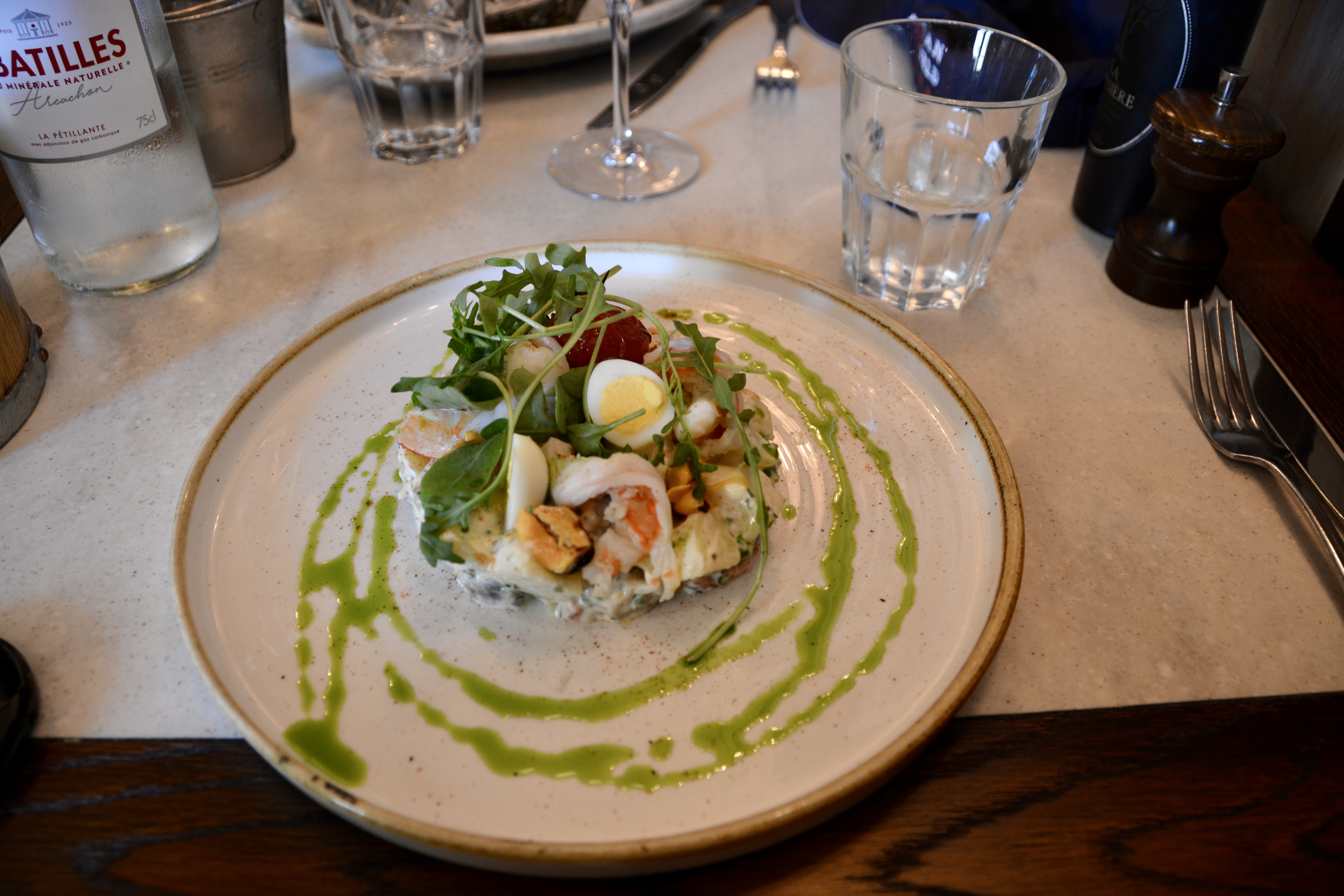



Of course, it took a lot of time and there wasn’t much left over after lunch so we just wandered back toward the bus. I had saved for the sparkling wine, but was so full and with so little time we didn’t make it to those cloisters. There was one stop I really wanted to make just at the edge of the city before the bus lot.

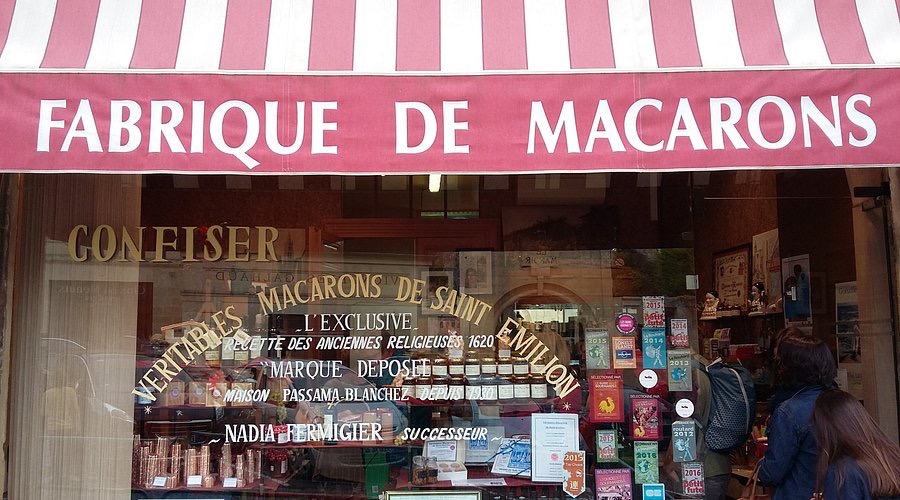
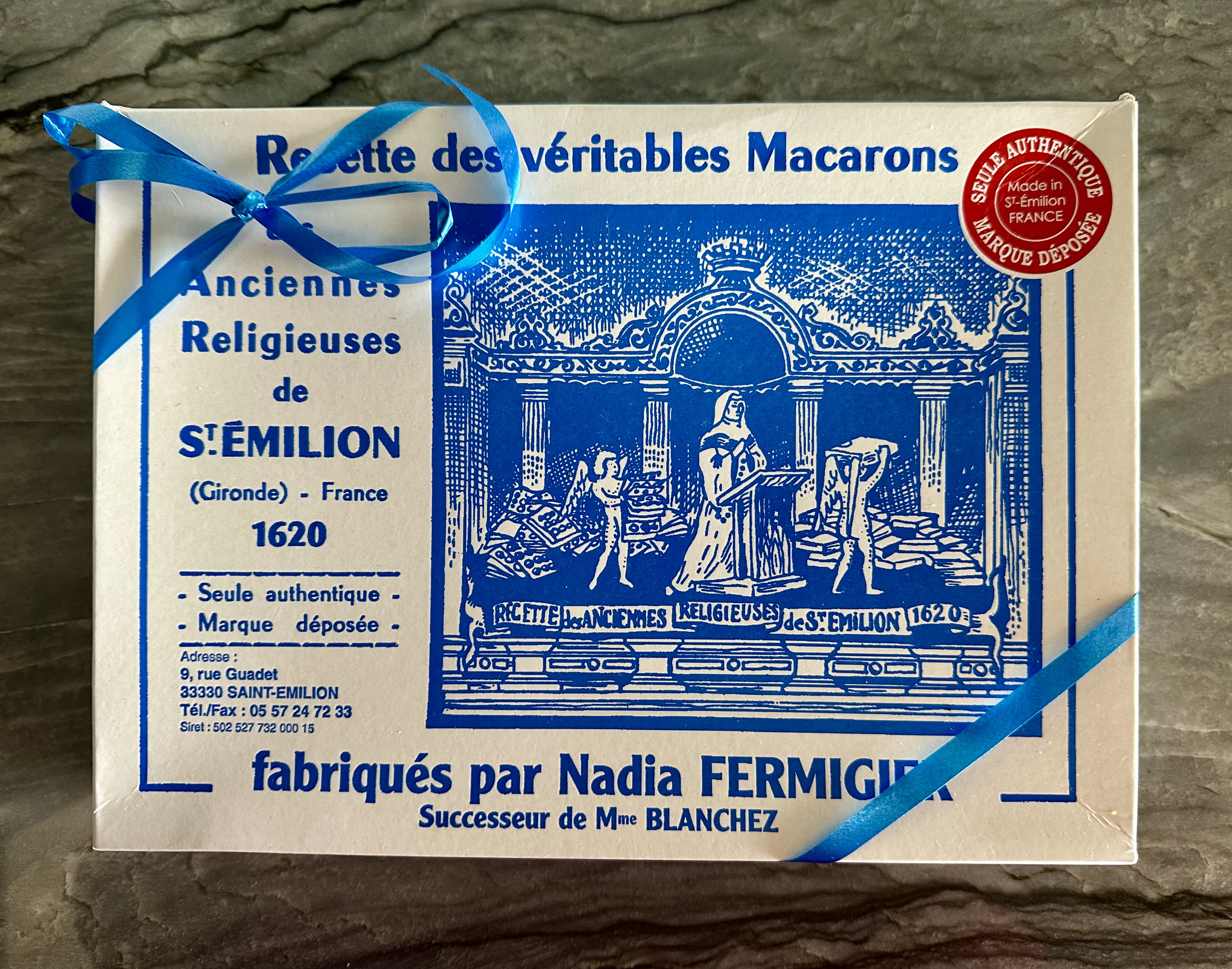
You know those famous French macaroons? Well they were actually born here in Saint Emilion. They were created in 1620 by the Ursuline sisters who had a convent in the city. The original is unlike the two-layered, cream-filled treat we see today. They are a single layer (no filling) of sweet goodness. The recipe has been passed from generation to generation and Fabrique de Macarons, one of the local bakeries, still makes them following the original recipe. I got a sample pack of six for me and a larger box I could give as a gift. After trying mine, I think the larger box is staying with me. The shopkeeper was friendly and there was a line out the door.
After our free time in Saint-Emilion, we returned to the ship by bus. We will stay overnight once again in Libourne. Tomorrow we have the choice of four tour options. I suspect they need us in smaller groups for these facilities. You can do a farmers’ market and estate tour and tasting at Chateau Boutinet; a bike ride along the river and the village day tour; Moulin de Porcheres’ flour mill tour and the farmers’ market; or a tour of Villa Mulato and the farmers’ market. Tomorrow afternoon we sail back to Bordeaux.


 travelbynatasha