


The region near Cadillac, France is known for producing sweet wines called dessert wines in the USA
On our second full day aboard the SS Bon Voyage, we are once again sailing out of Bordeaux this time headed to Cadillac. We have two included tour options, a tour and tasting at a former royal residence and a tour of a smaller residence once lived in by Toulouse Lautrec. Since Boris and I have differing preferences, we are splitting up today for the tours. For those who want to hear all about Toulouse Lautrec, you are going to be disappointed. That was the tour Boris chose. He enjoyed it, but did say there were very few original works on-site which had been his primary reason for choosing that tour.


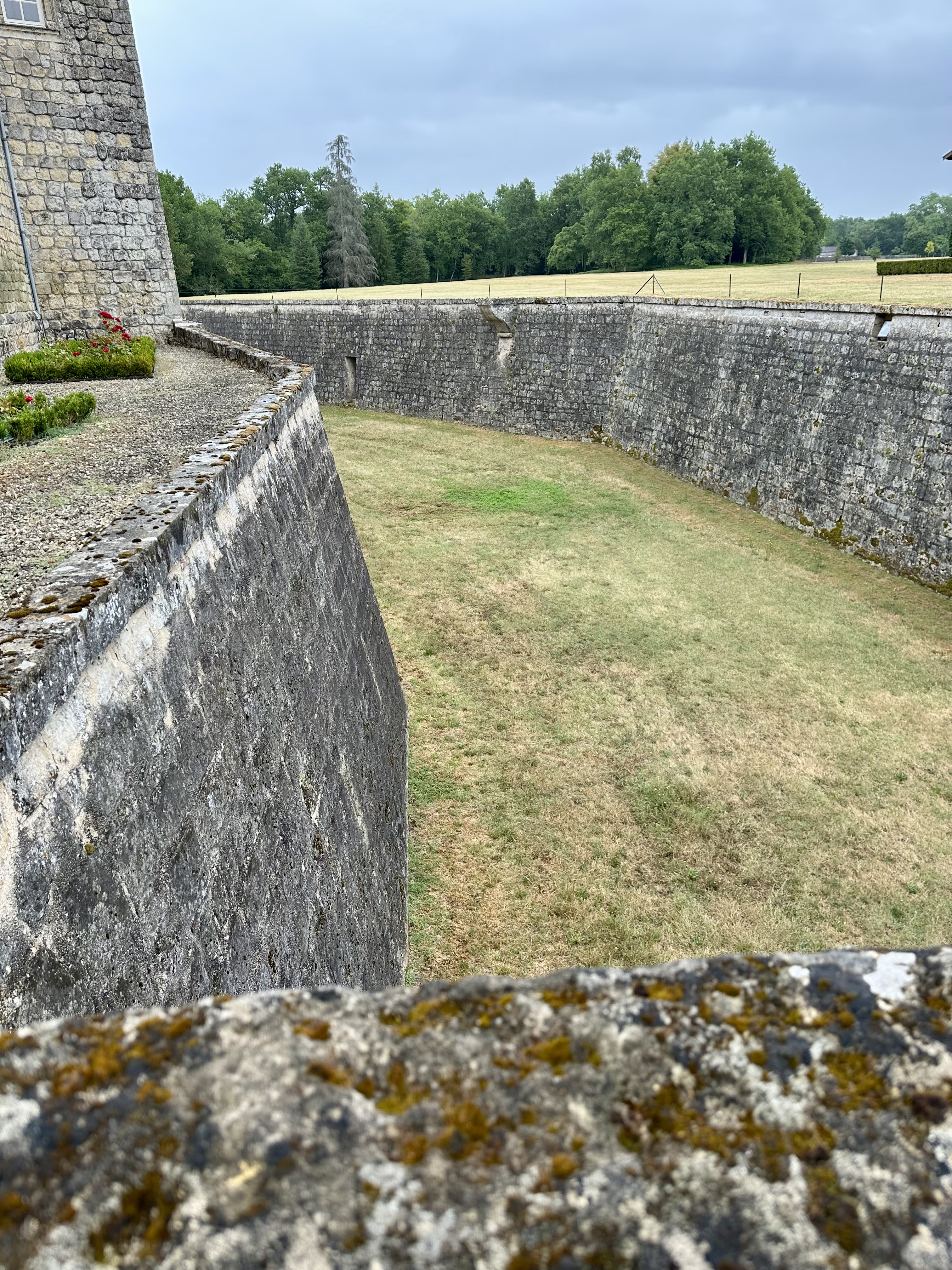

I am going to Chateau Cazeneuve, the royal castle of King Henri IV and Queen Margot. Henri IV was the only Protestant king of France, although his religious preference did go back and forth depending on public sentiment. His father was Catholic; his mother was Protestant. Queen Margot was his first wife who he later divorced and left at Cazeneuve. The chateau is still in the same family and we are going to be greeted by the current owner Comte Louis-Elzear de Sabran-Ponteves.
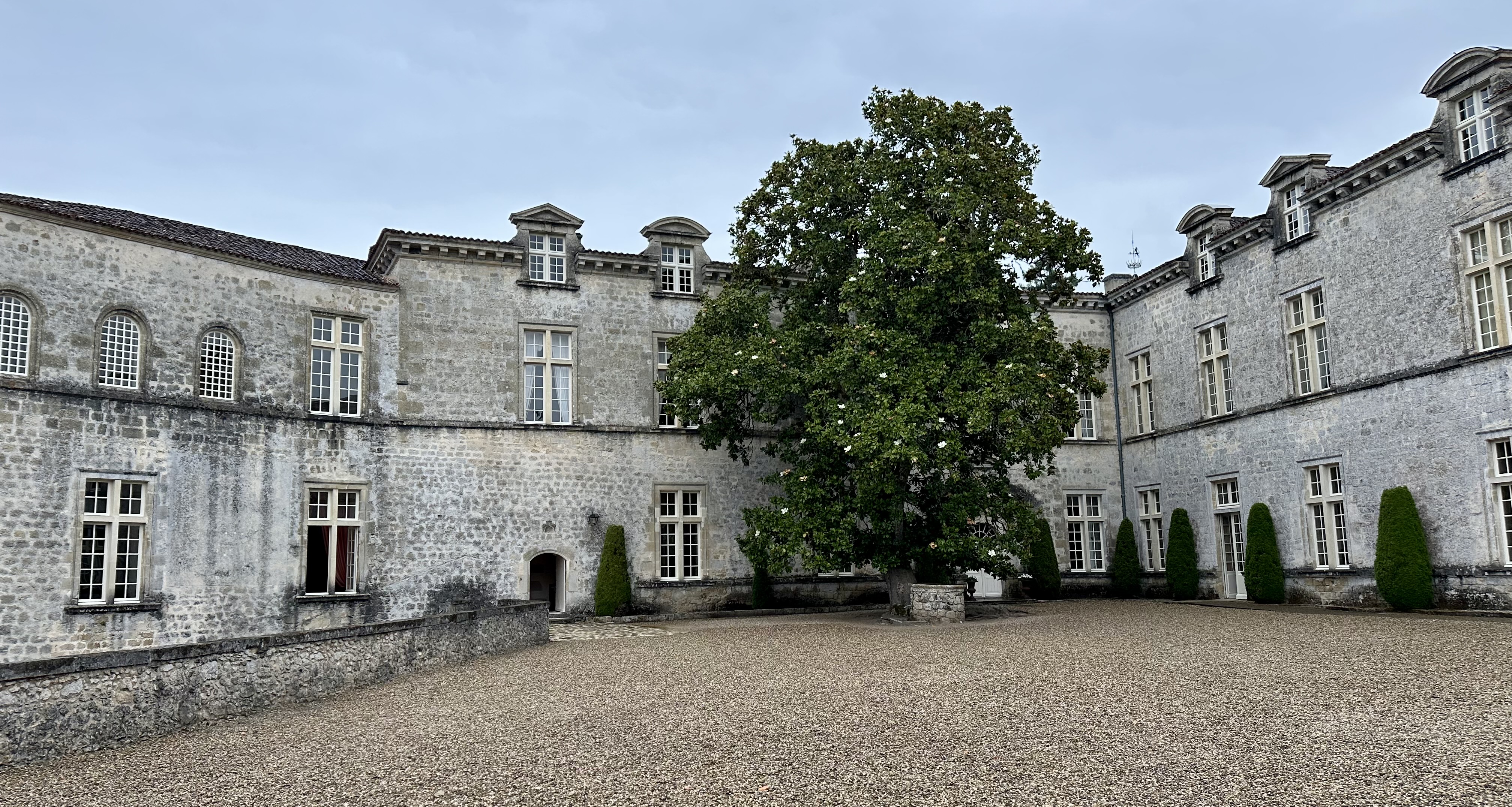

The dukes of Albert and the Kings of Navarre have owned the property since the 12th century. Henri II of Navarre (the future King Henry IV of France) inherited the castle in 1572 and that same year married Margot, daughter of the King of France, Henry II and Catherine de Medici-Marguerite, and the sister of three kings of France. In 1583, Henry IV placed Margot under house arrest in Cazeneuve. She had been unable to give him an heir and he wanted the marriage annulled. Margot’s numerous love affairs were common knowledge. The castle has stayed in the family until present day although the family name has changed as the property often passed through the female line.

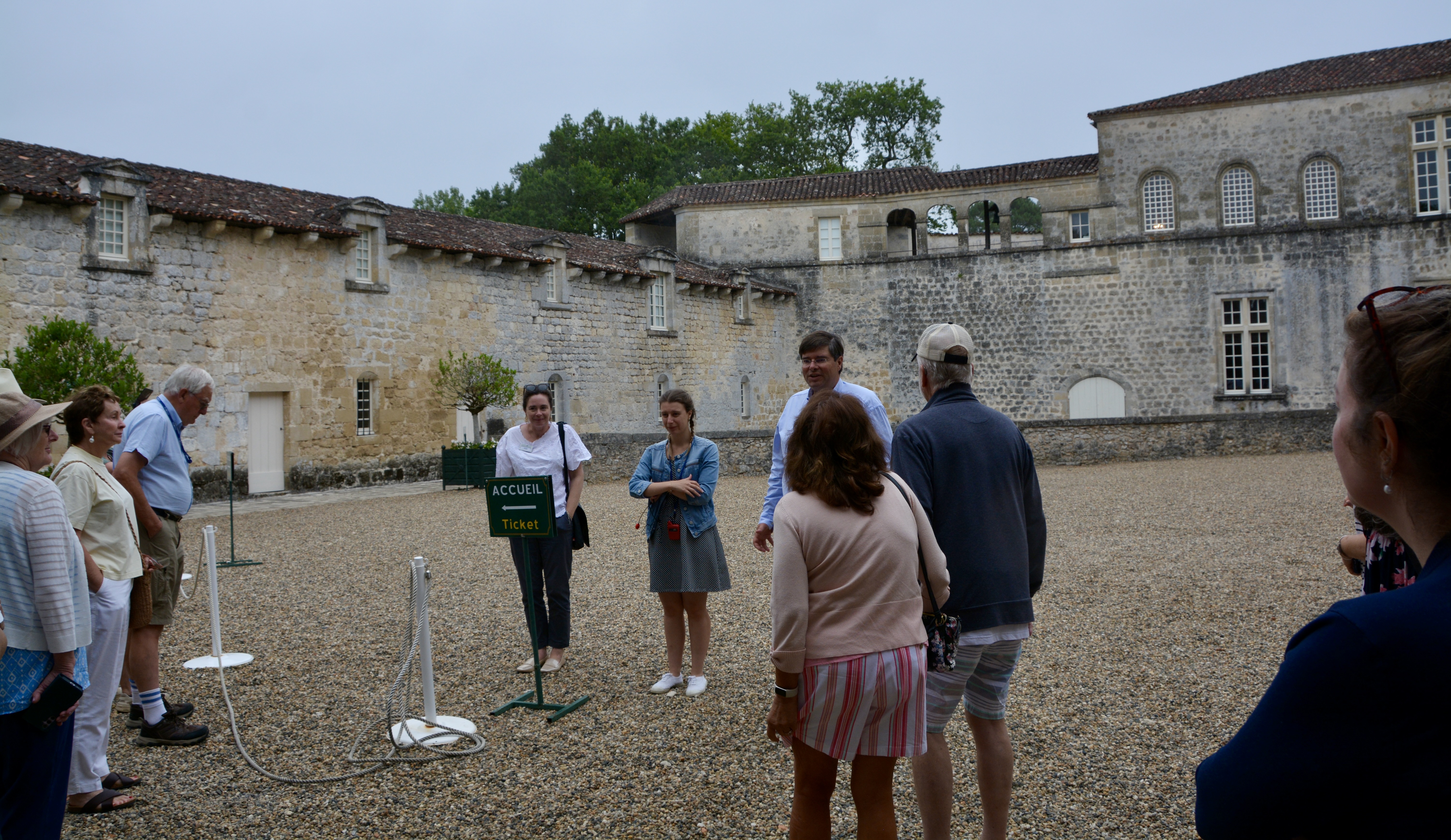
The estate is currently owned by the direct d’Albert descendants, the Sabran-Ponteves. The family lives on the property in one section of the chateau. The Sabran-Ponteves family is quite significant having produced five queens, two kings, two saints, and a pope. We were greeted by the current owner. The Comte was quite friendly and down to earth. Our guide for today is an American woman who married a French man and lives in France with her husband and two daughters. Her girls go to school with the Comte’s children. When she asked him why he didn’t send his children to private school, he told her that he thought the public schools in the area were quite good.

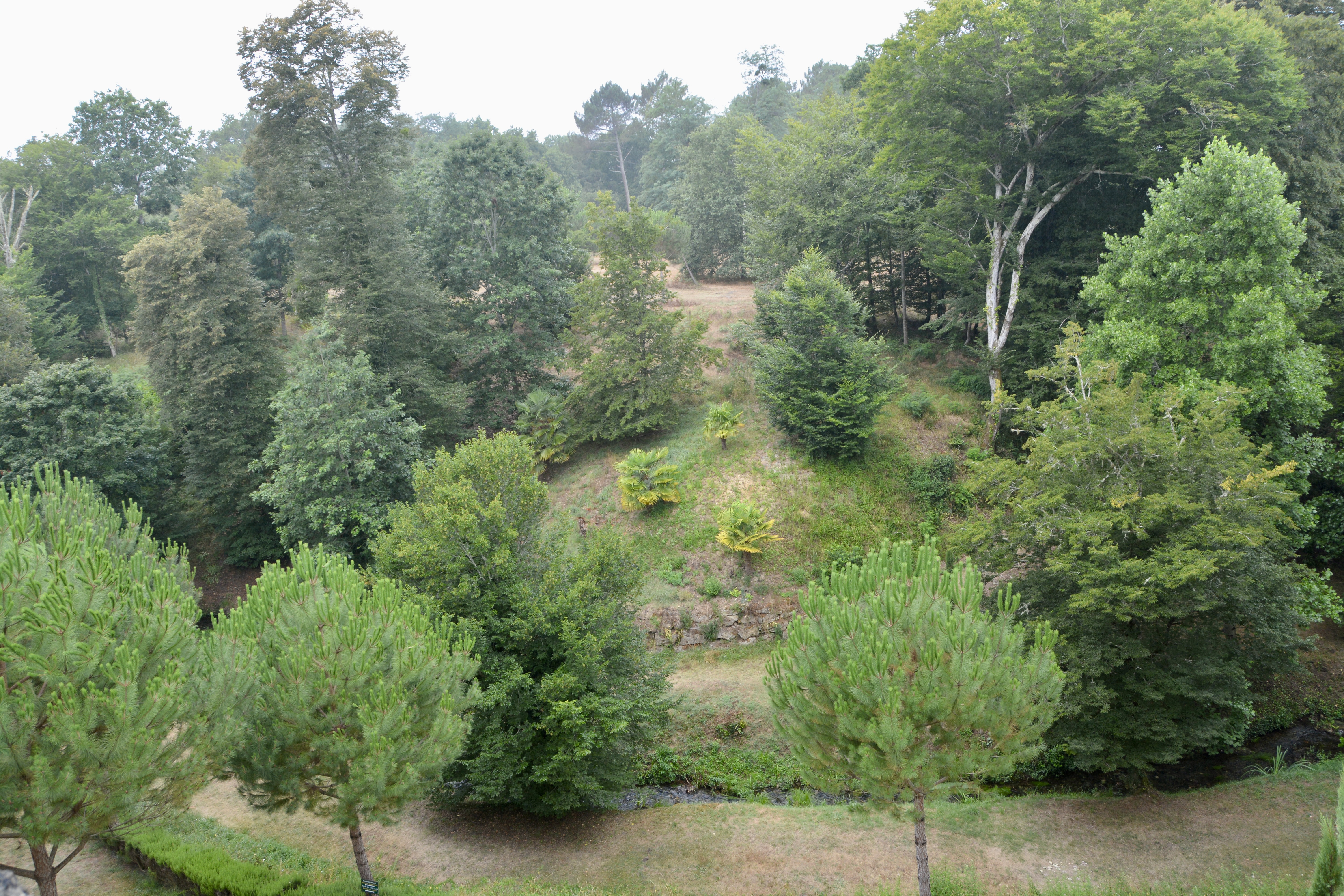
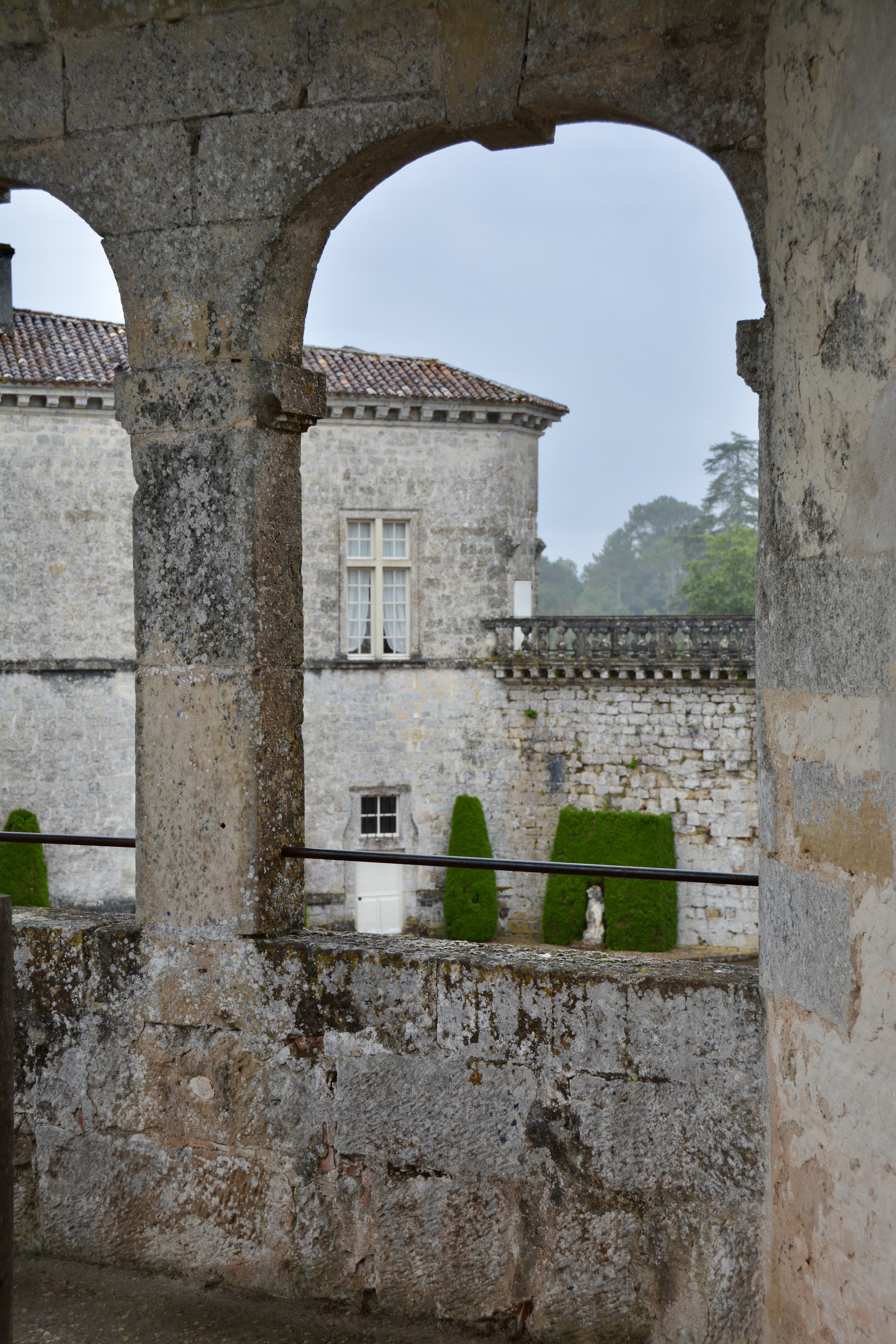
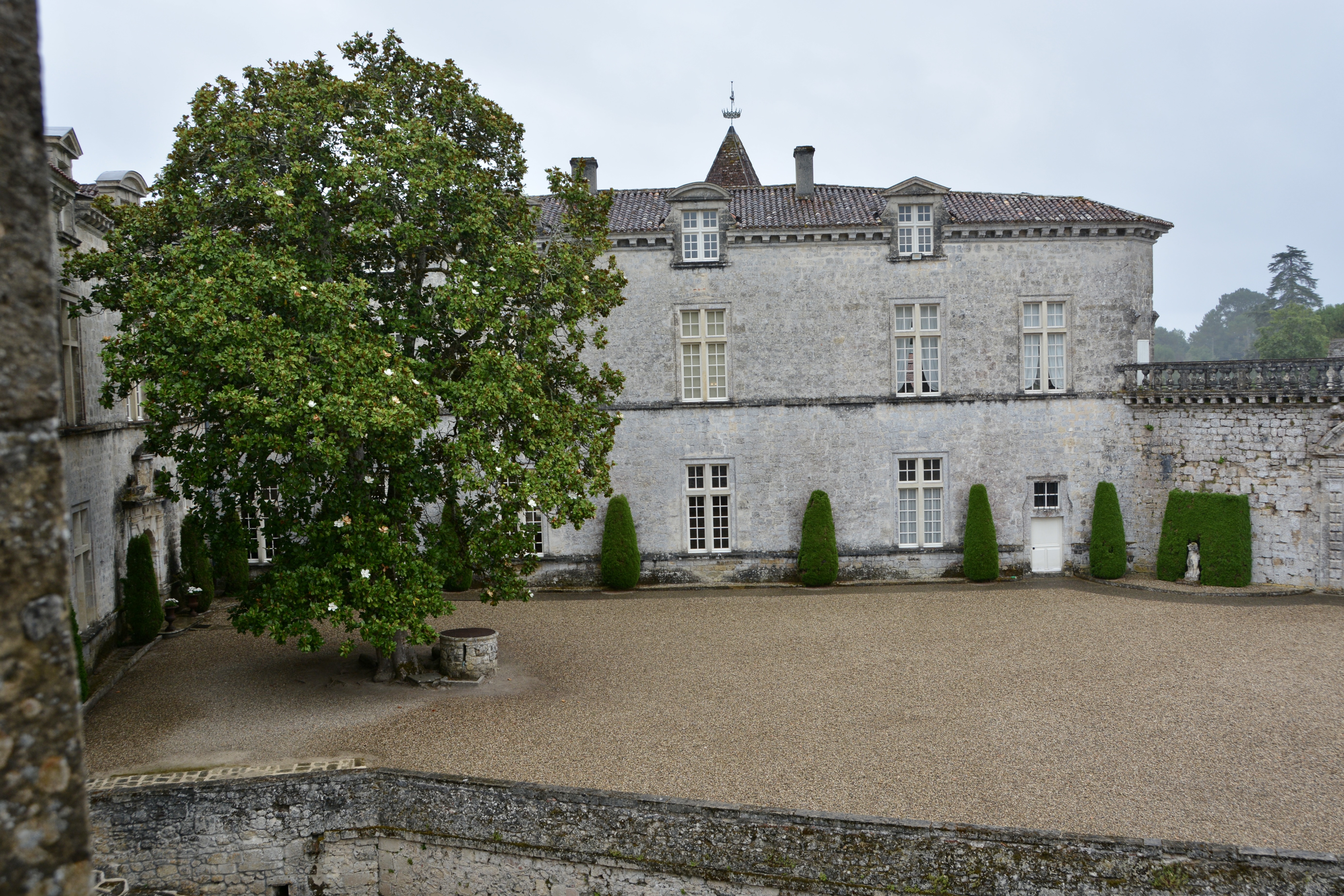
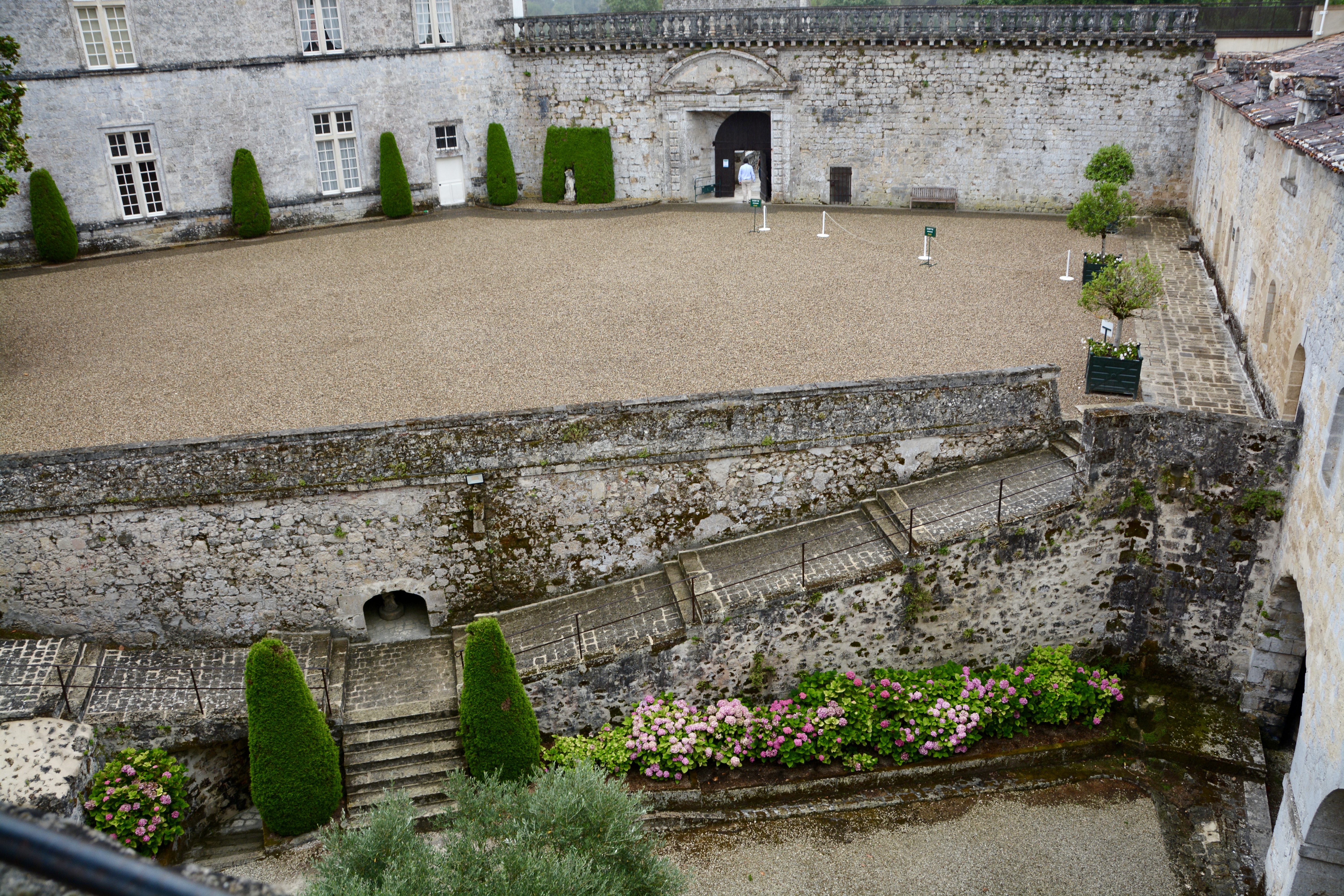
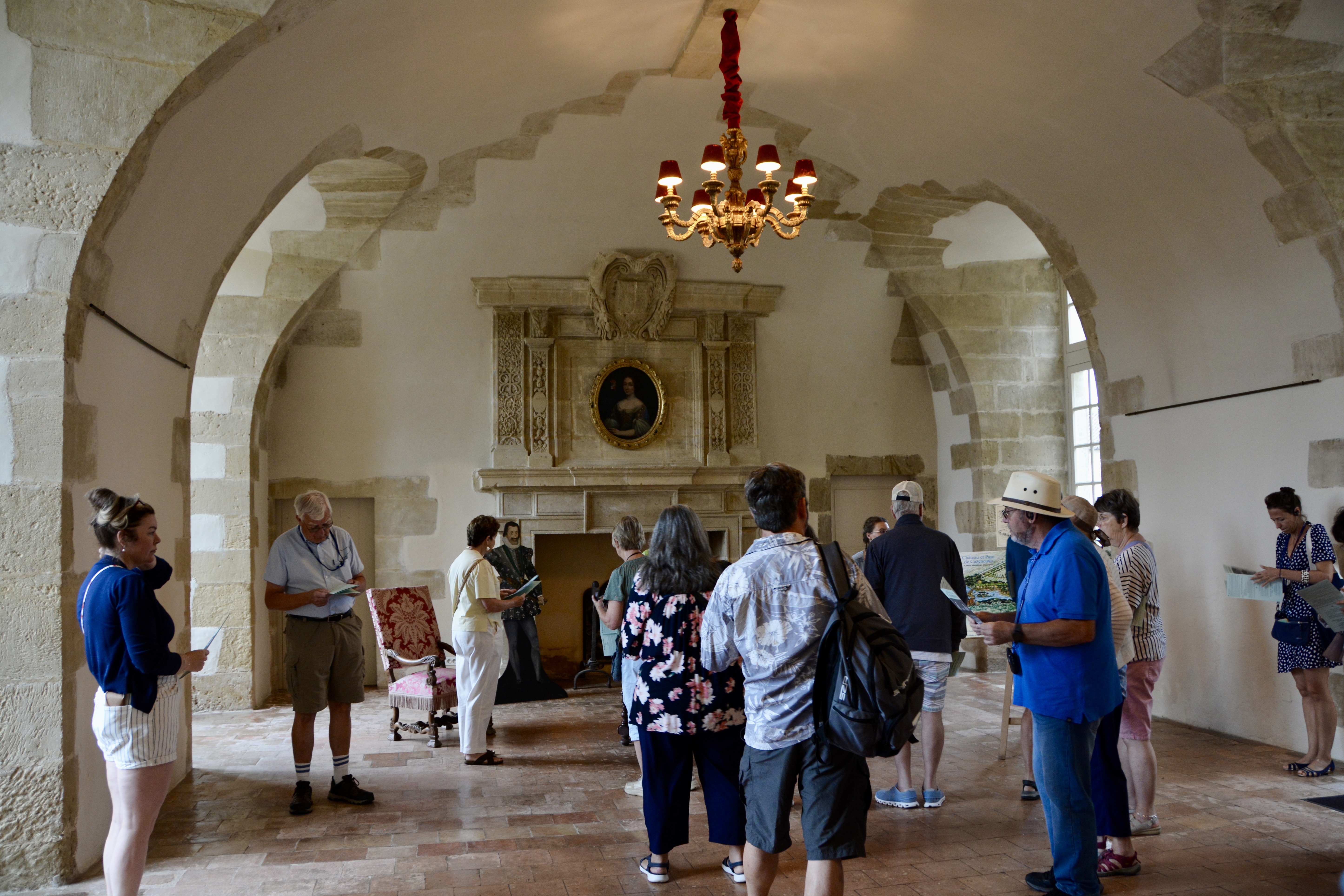
We were only allowed to take photographs outside and in the first room we entered. A detailed English language guide was provided and our guide provided commentary as we toured the chateau. One of the most significant things about the property was that the furnishings were all original. They had been well hidden when the property was subject to attack. Many French chateaux were seriously damaged and ransacked during the French Revolution, but Cazeneuve Castle only lost some exterior ornamentation.

To me, the original furnishings were significant and a rare find. Not all the rooms were furnished for the same period, but everything was original. Standouts for me included Queen Margot’s drawing room, the royal bed chambers, the king’s study, and the beautiful bedroom of the Countess Emmanuel De Sabran-Ponteves. The famous novelist Charlotte-Rose de Caumont la Force was born in this room and later became lady in waiting to the queen. She was the author of Persinette, the inspiration for Disney’s Rapunzel.
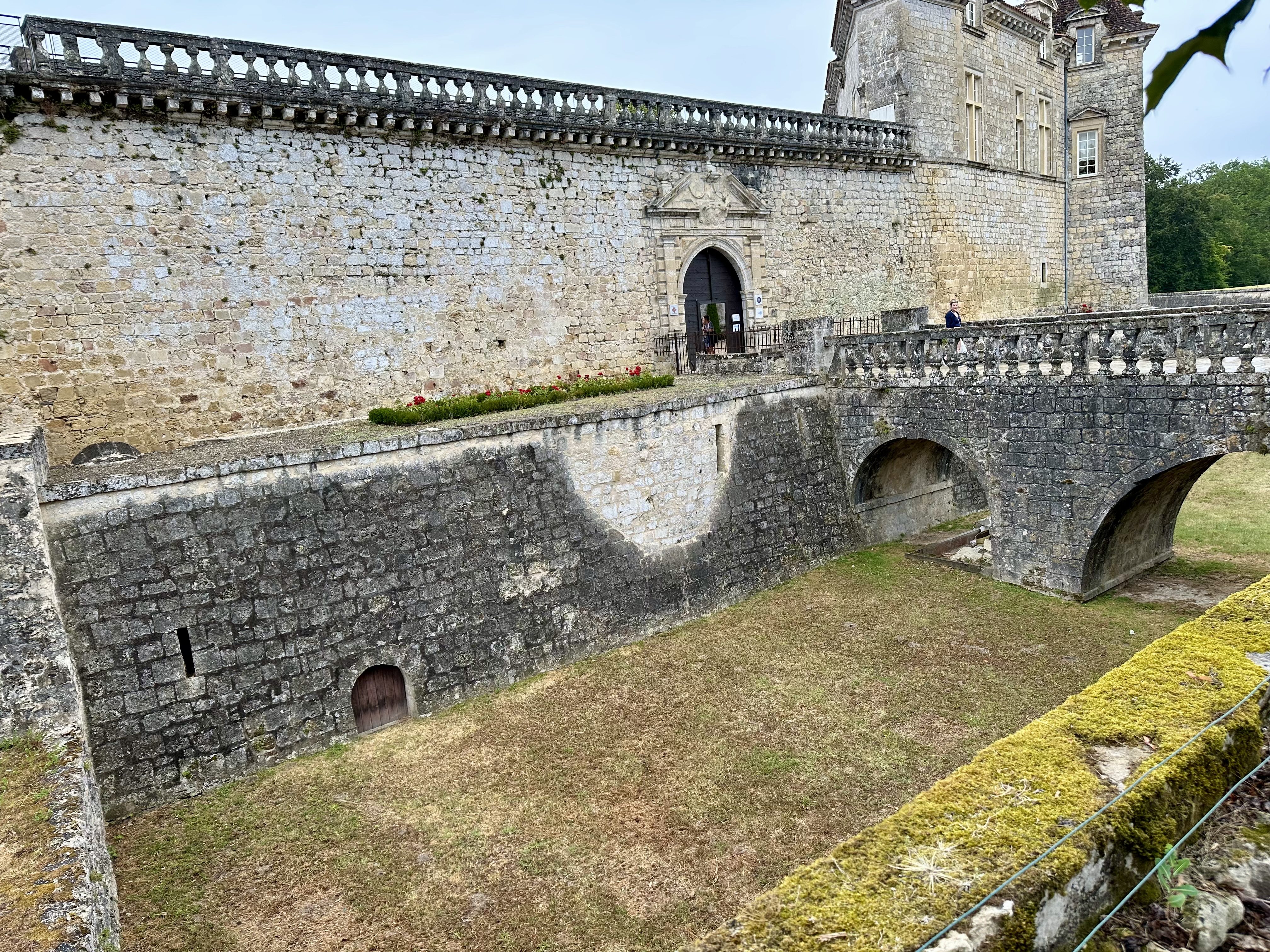
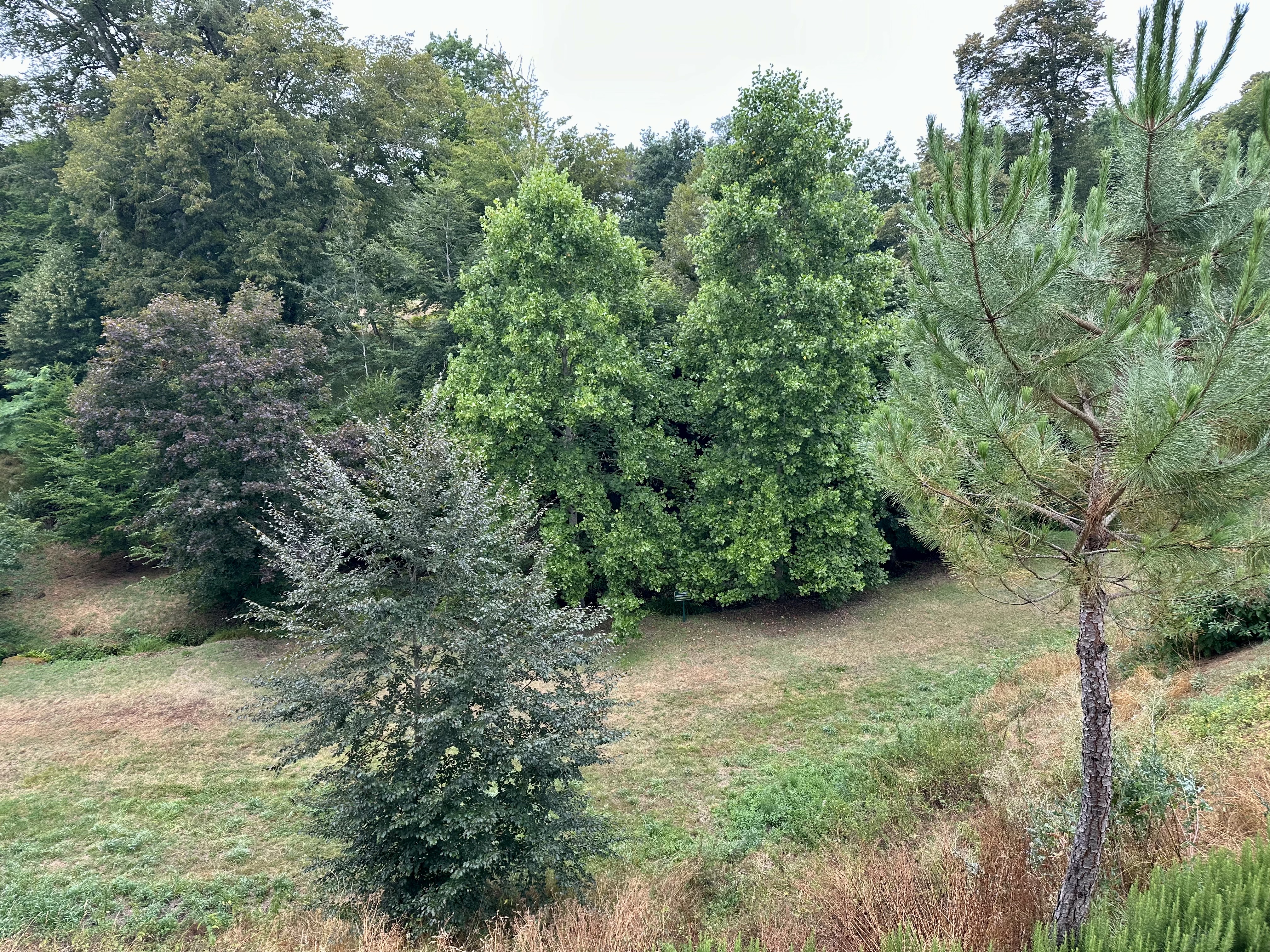
After passing through the largest private interior chapel I have ever toured-I guess if there is a Pope in the family you get a bigger chapel-we got a view of the main courtyard, a smaller inner courtyard, and the beautiful lush green grounds surrounding the chateau from a terrace and exterior upper walkway. We finished our tour on the ground floor. After leaving the kitchen, we were greeted by the Comte again who handed us each a glass of Sauternes, the local speciality. These are completely different and sweeter wines than we sampled yesterday. A local vintner was commissioned to create the estate’s wine.


This is the region of the sweet French wines Americans often refer to as dessert wines. Sauternes is a French sweet wine from the Sauternes region in the Graves section of Bordeaux. Sauternes wine is made from grapes affected by noble rot that “causes the grapes to become partially raisined, resulting in concentrated and distinctively flavored wines. Due to its climate, Sauternes is one of the few wine where infection with noble rot is a frequent occurrence”. Due to the convergence of the cooler Ciron (spring fed) and the Garonne Rivers a mist is created which covers the vineyards promoting the development of the noble rot fungus. By midday, the sun dissipates the mist. The Oxford Companion to Wine.

We then had the opportunity to browse the Comte’s private wine cellar, the crypts, and the gift shop. Since we couldn’t take pictures inside, I decided to see if there was a guide book with photographs of the chateau’s rooms. I also liked the wine we sampled and wanted to get a bottle. To my surprise, it was the Comte himself who helped me find what I wanted and checked me out.
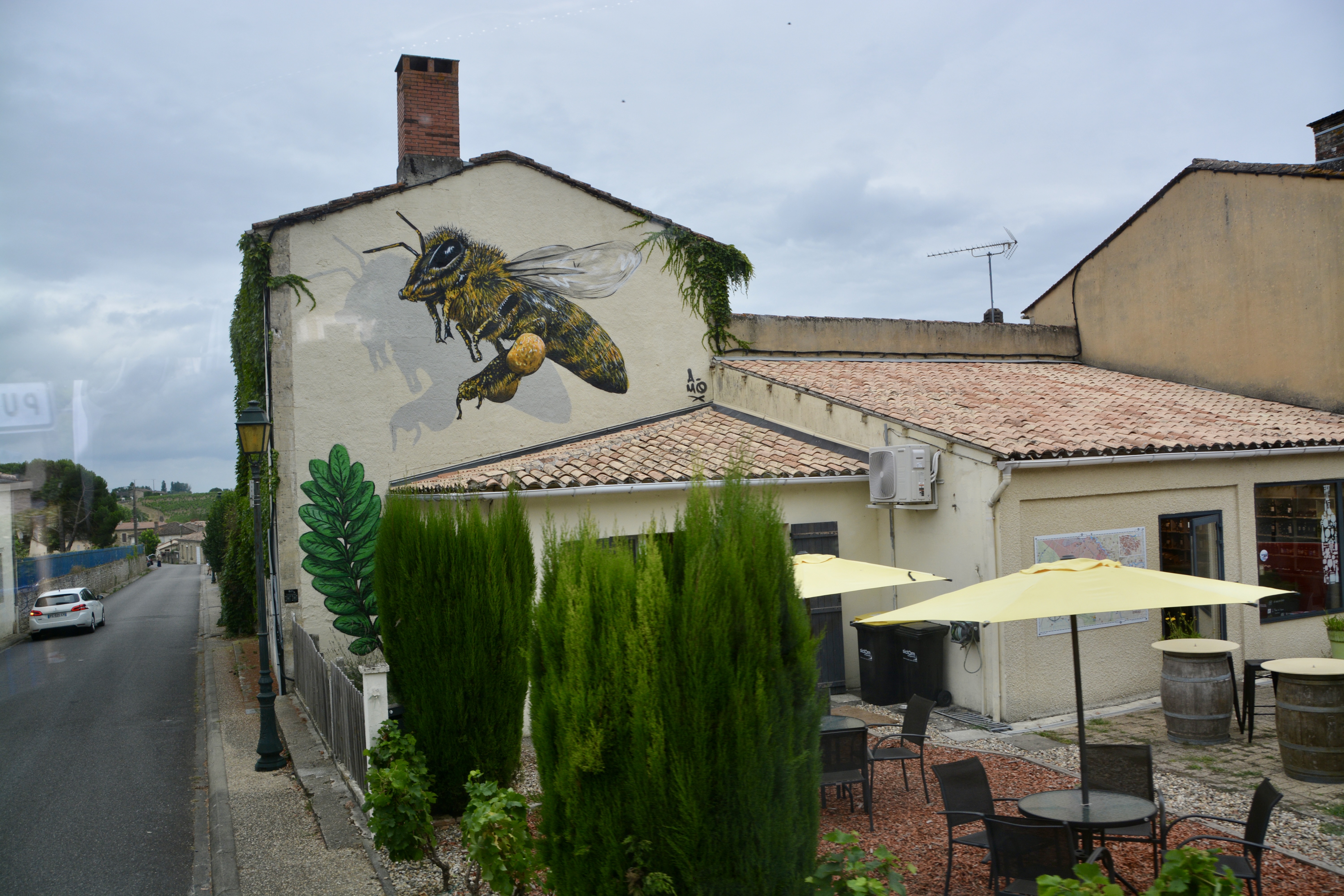
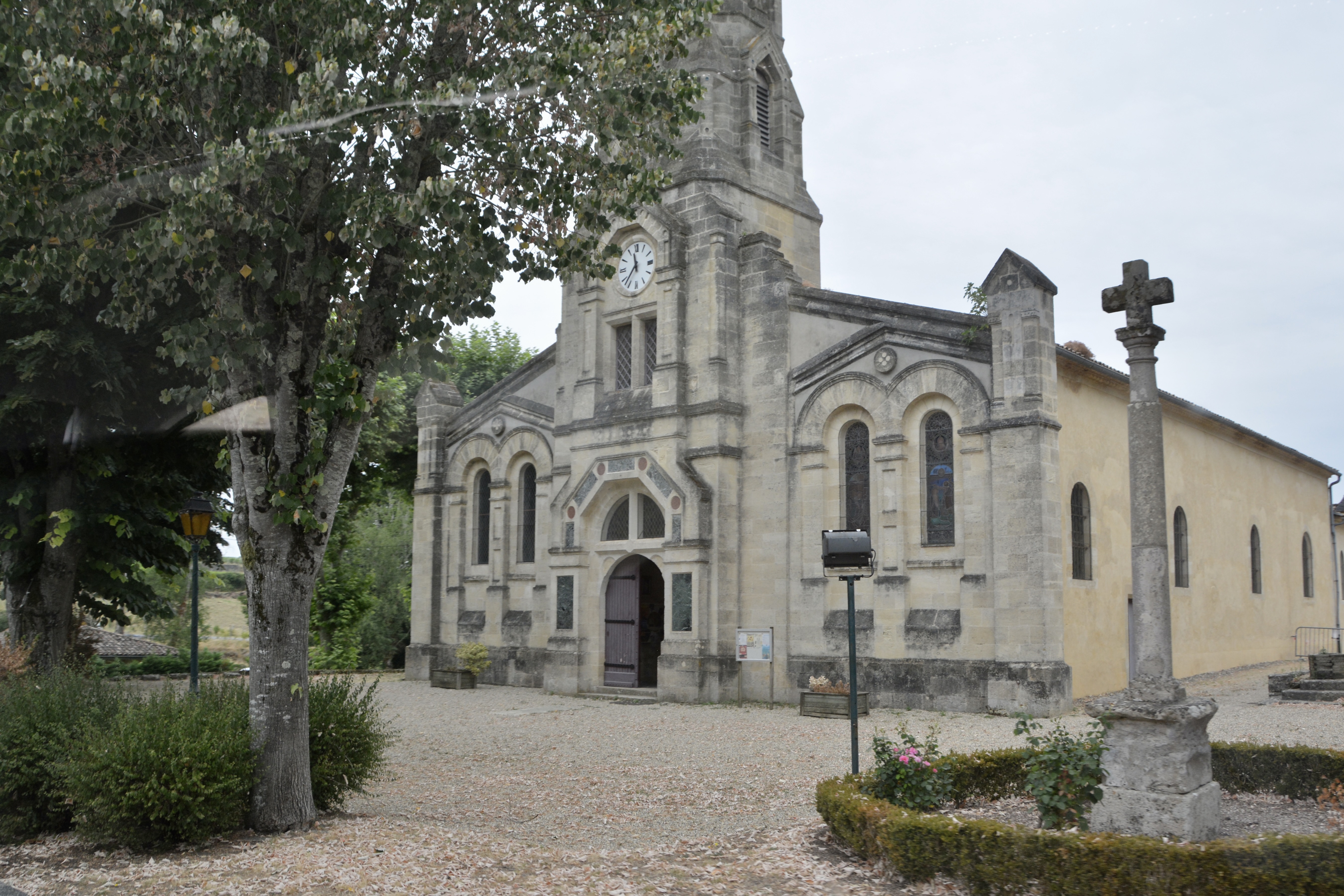
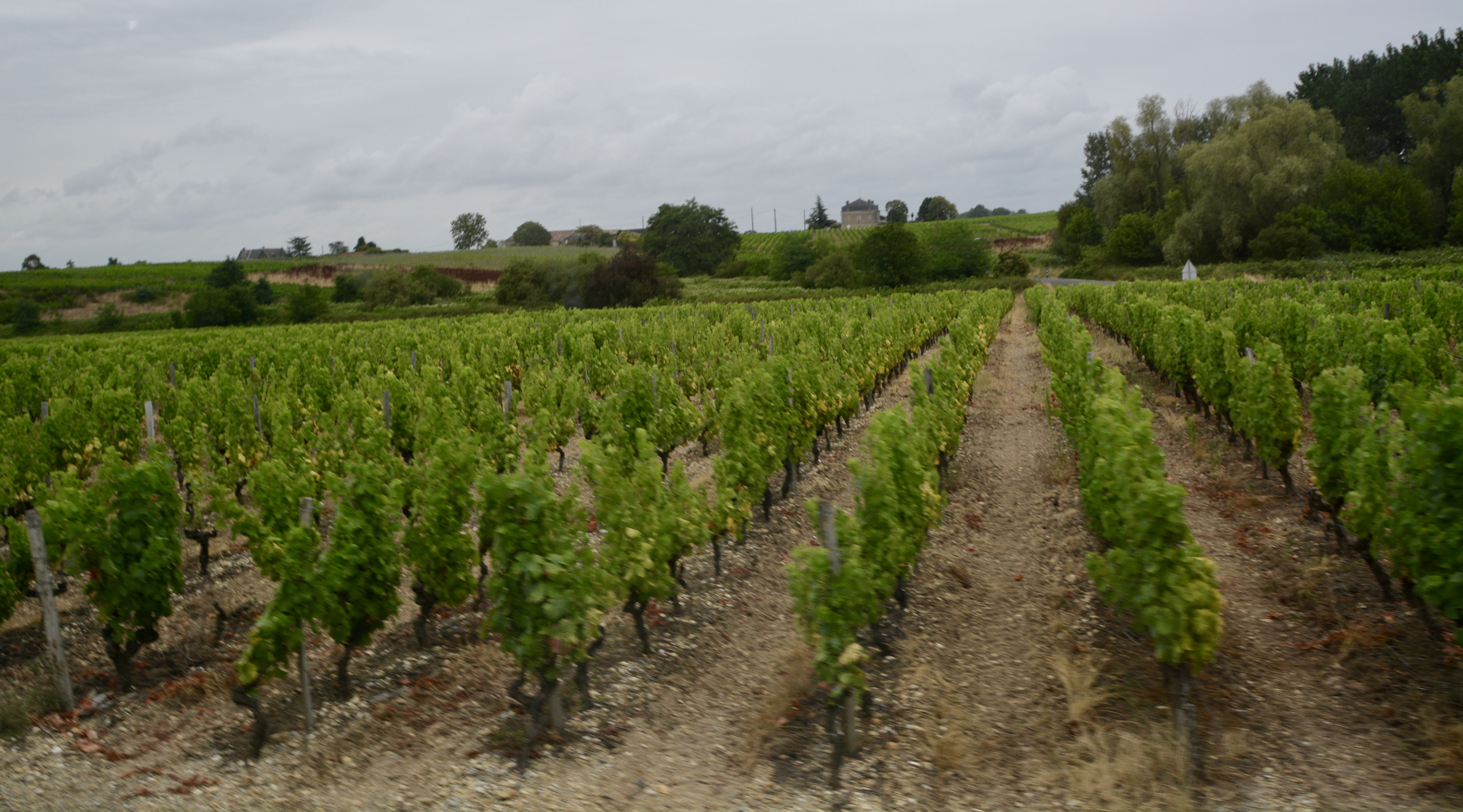
We travelled through the countryside noting the differences in the vines and seeing more lovely chateau. Sauternes can be an expensive wine to make. Some years the temperatures will not produce the optimum level of noble rot and producers may even chose not to produce in those years. The harvest can also take much longer and be done over a series of weeks to get the optimum level of the fungus. “The Sauternes, located in the Graves region of Bordeaux in France, is the source of the world’s most sought-after dessert wines.” First Leaf

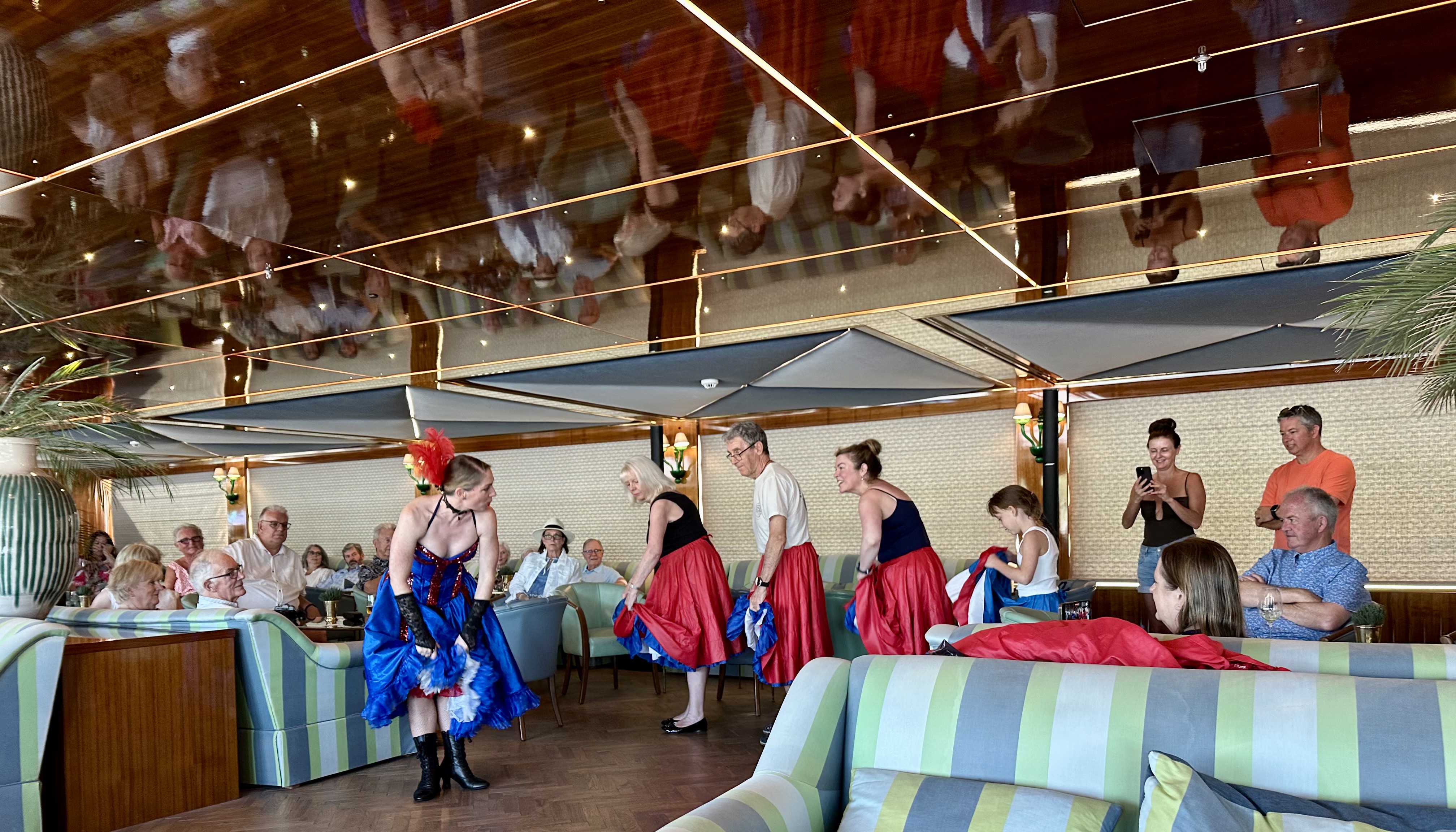
After reboarding our ship in Cadillac, we had a nice lunch and sailed back to Bordeaux where we will once again dock for the night. There was some time in the afternoon if anyone wanted to go ashore before dinner. Boris wanted to stay aboard so he could attend the cancan workshop. I kid you not.

After a nap, we went to the lounge for the workshop. Cat (our instructor) started with a history of the cancan and then asked for volunteers to learn the steps. You even got to wear a special skirt. One of the children on board joined her, along with an older woman who used to dance and a father and his adult daughter from Scotland. He claimed his skirt was a kilt. Whatever works for him. Boris was pretty excited when the leg sweep demo happened over his head.

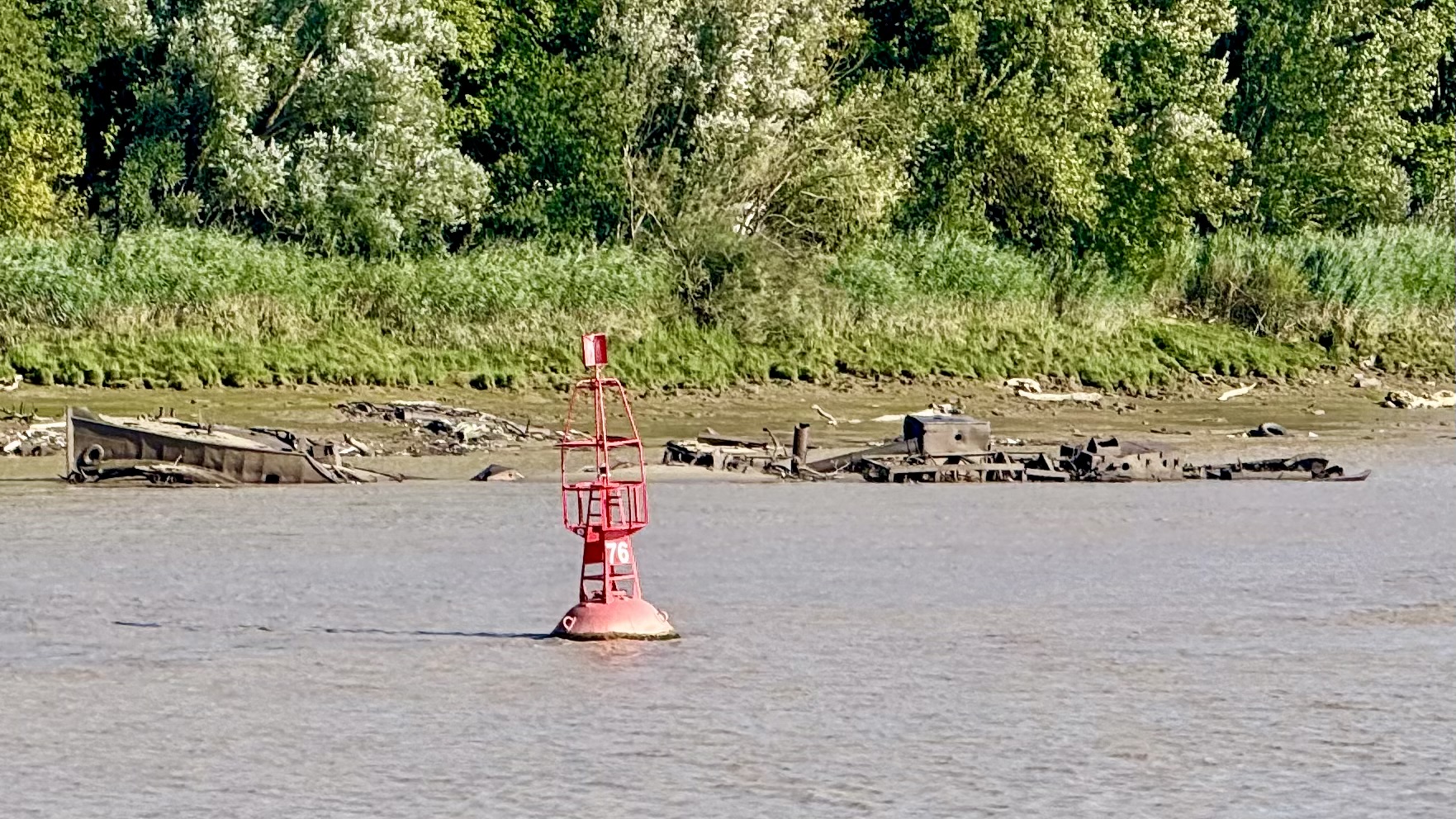
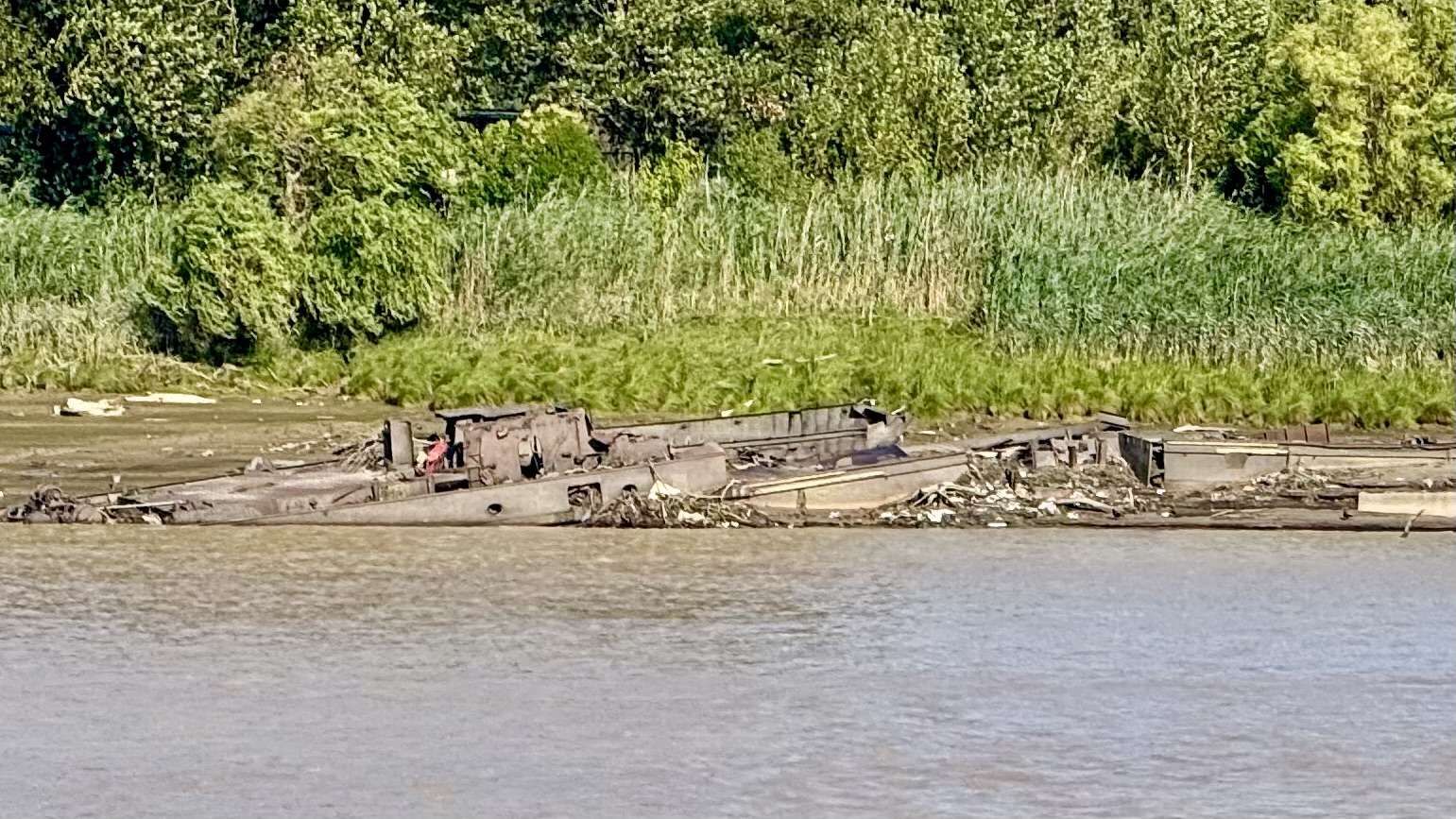
During dinner our new friends from California shared their photos of some of the military wrecks that are visible when the Gargonne is at low tide. By the time dinner was over the water was too high to see them anymore. The wrecks make navigation a bit tricky if you didn’t realize they were just below the surface.

That evening after dinner, Cat was joined by a French-speaking singer and the two gave performed a cabaret show for us. The singer was talented, but I prefer English language songs (with a few notable exceptions) so it was not my favorite evening entertainment. Boris loved it. Cat had a few costume changes and ended with her cancan to the familiar music.


 travelbynatasha