
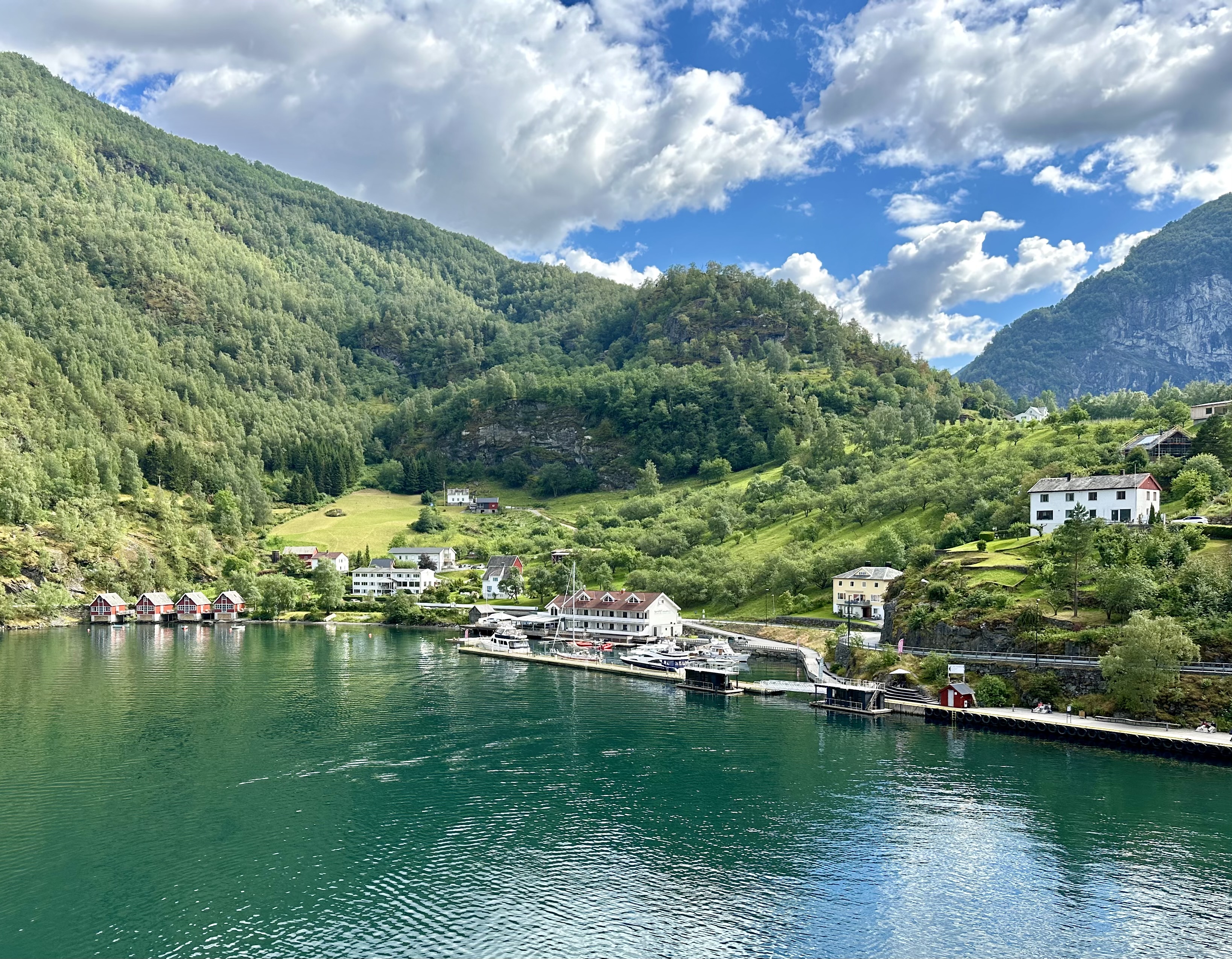

Flam, Norway sits at the end of a beautiful fjord, Aurlandsfjord, an arm of the larger Sognefjord, the world’s longest fjord. It is primarily a departure point for off-the-boat excursions, but there are some charming buildings with bars, restaurants, and souvenir shops right at the end of the pier for those that haven’t scheduled anything. Flam has only 450 inhabitants, although it welcomes over a million visitors each year.
Boris and I are splitting up again. More than anything else on this cruise itinerary, I wanted to ride the Flam Railway. Originally that was Boris’ plan too, but once he read about the Viking Village where his relatives (because of course he has done the ancestry search and is related to Vikings) continue to live in longhouses and follow ancient customs, he was sold on going there.
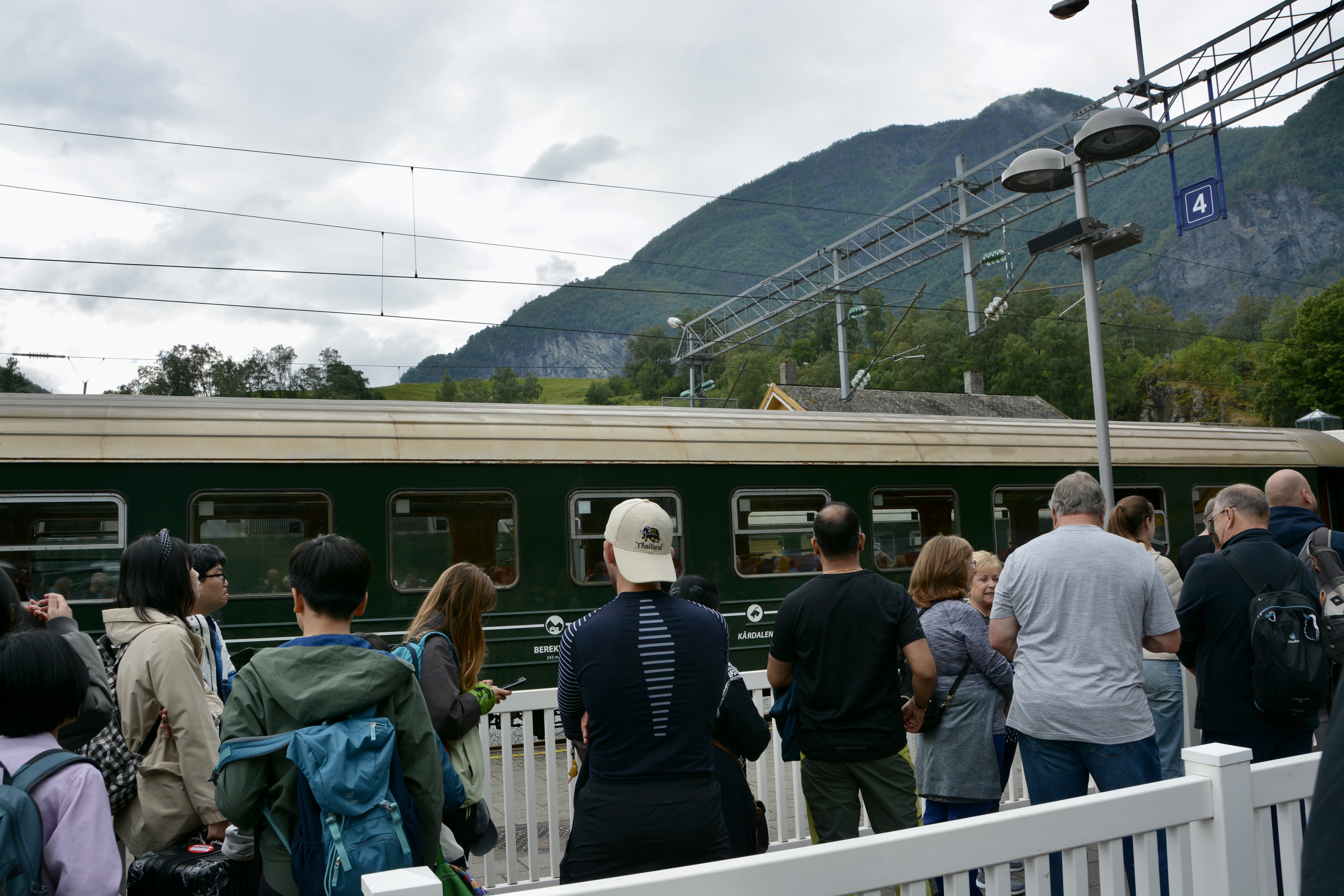
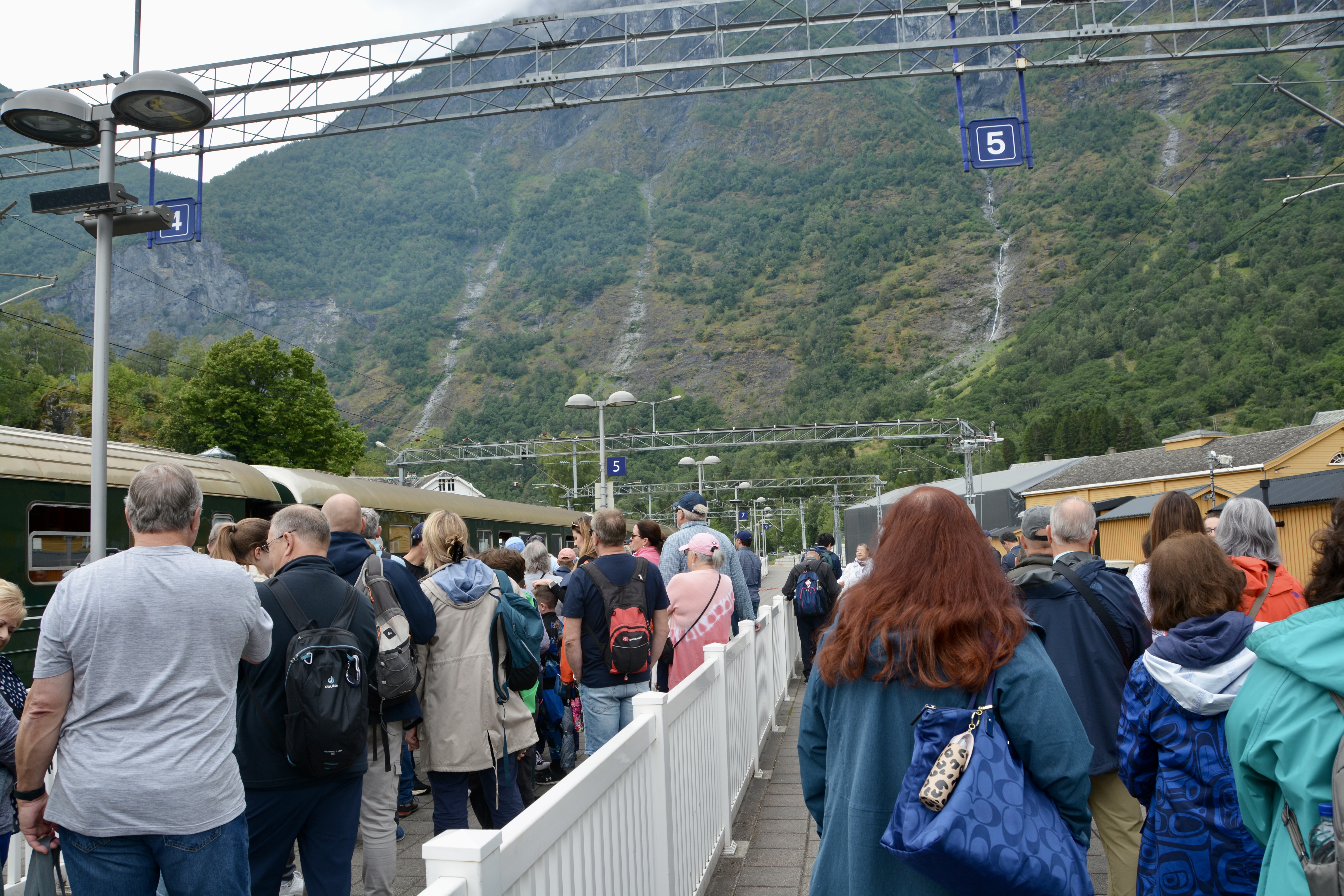
The railway is extremely popular. I heard about it from the Celebrity onboard booking agent when I booked this cruise last summer while aboard our Iceland cruise. Be sure to book your reservations early. From May-September, there are 9-10 departures in each direction daily. From what I could tell, every departure is sold out. Although now used almost exclusively by tourists, the line originally was primarily for freight traffic for the power station at Ardal.


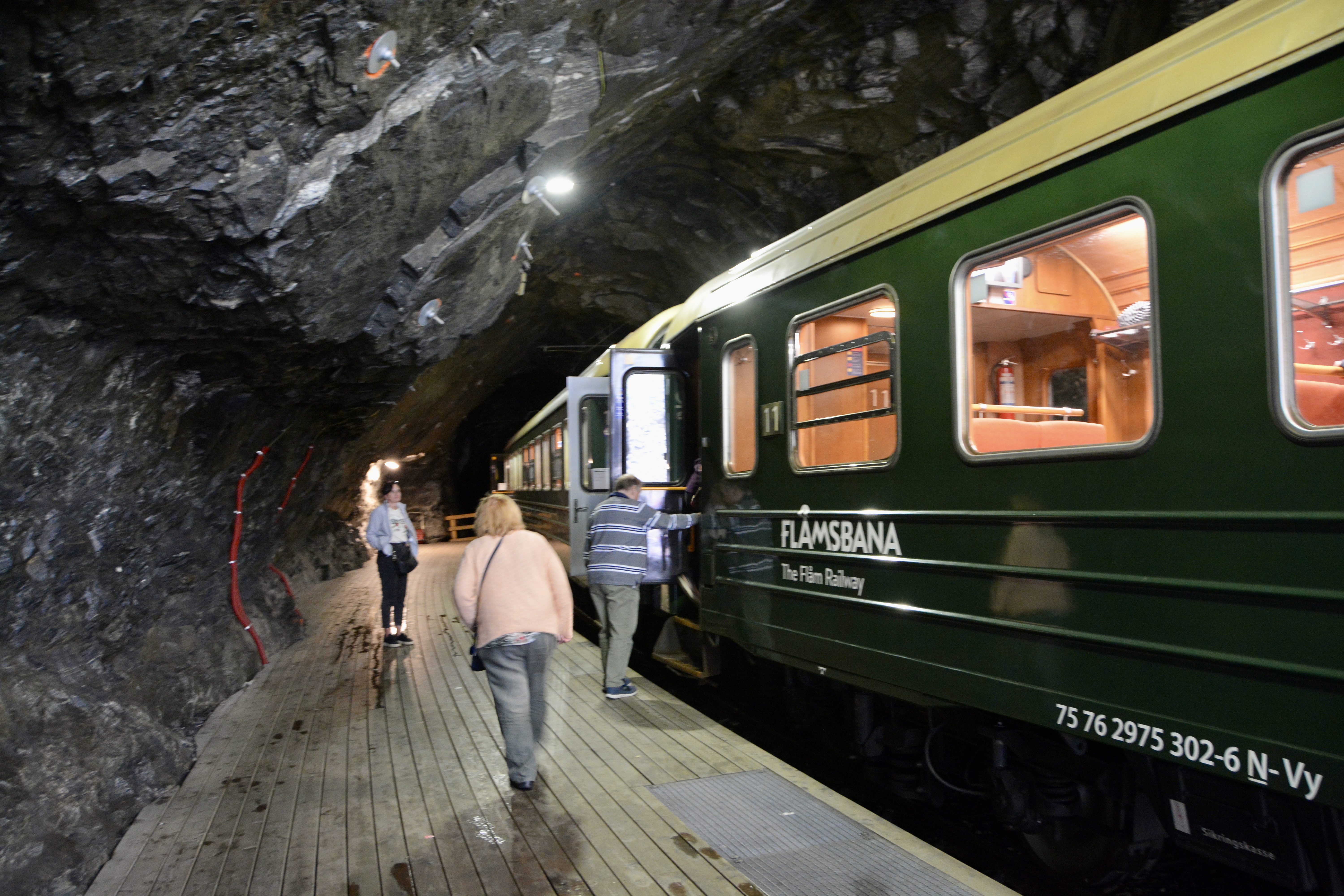
The line has 20 tunnels, one bridge, 10 stations, and 8 stops. However, for our trip we will stop only at the crossing to transfer the train tracks at Berekvam, Kjosfossen for the waterfall, and Vatnahalsen for our group to get off. Our guide suggested we switch sides on the way back because the train has engines at both ends and goes forward and back on the same track. By switching, you get to see the view in both directions; both sides are spectacular. The Flam Railway is the third-most visited tourist attraction in Norway.


Although the Norwegian Parliament approved the rail line in 1908, funds were not allocated until 1923. Early progress was steady, and tracks began to be laid in 1936. Although temporary service started in 1940, it wasn’t until 1942 that regular operation of steam-powered trains started on Flamsbana (Flam Railway). Service on electric trains started in 1944. There are 20 tunnels along the 20 km track. The company claims that “[n]owhere in the world is there an adhesion-type railway on normal tracks with a steeper climb.”
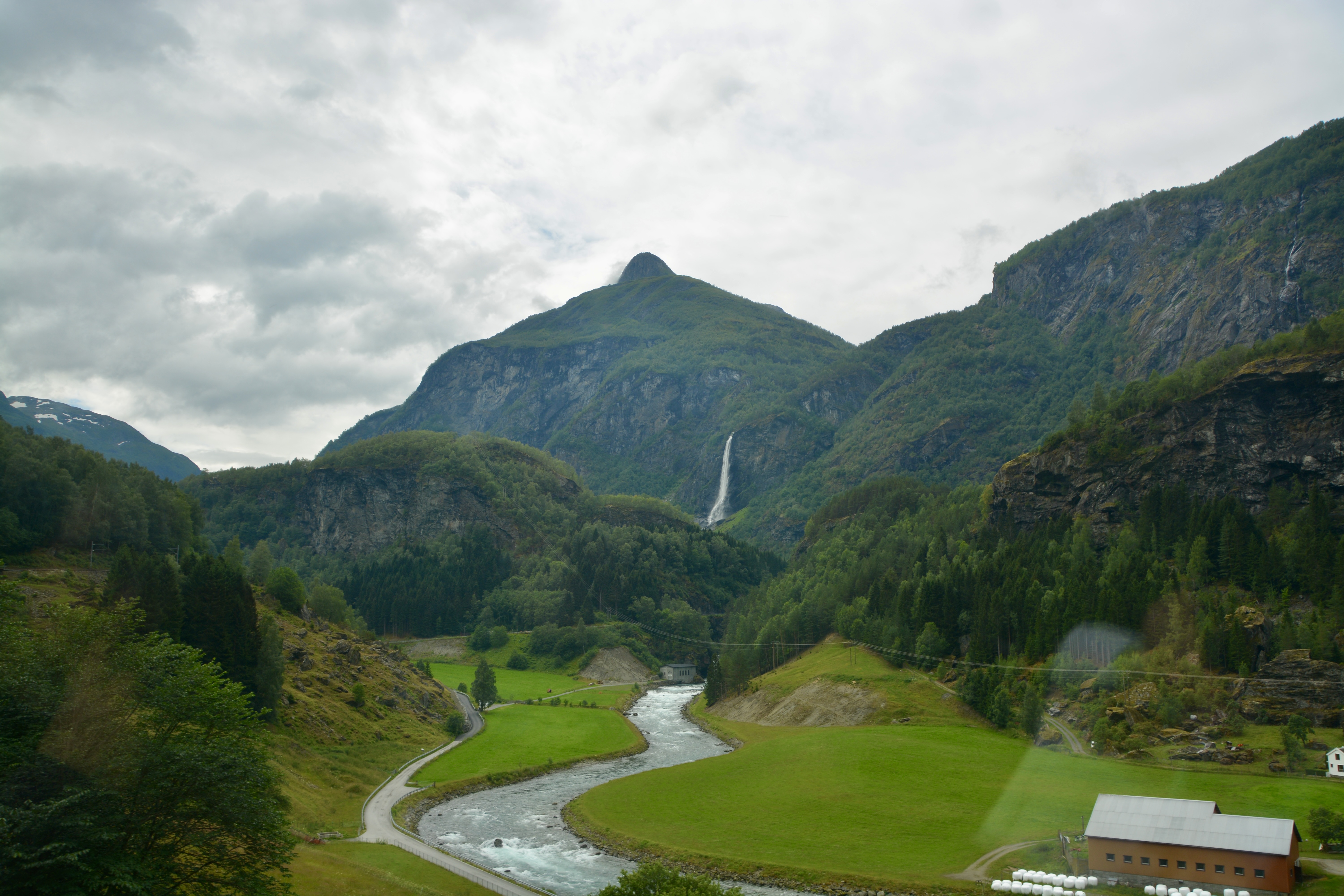
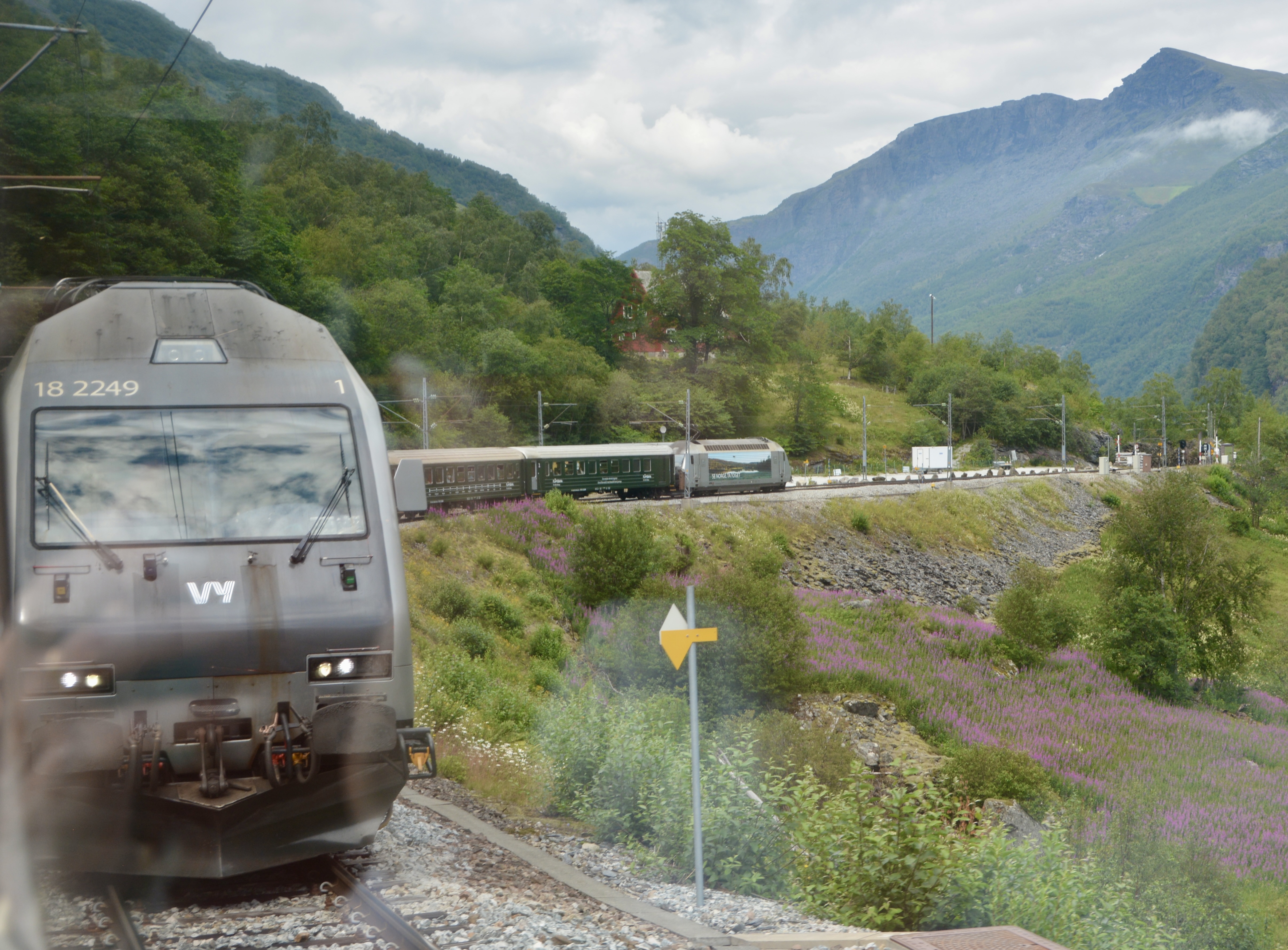
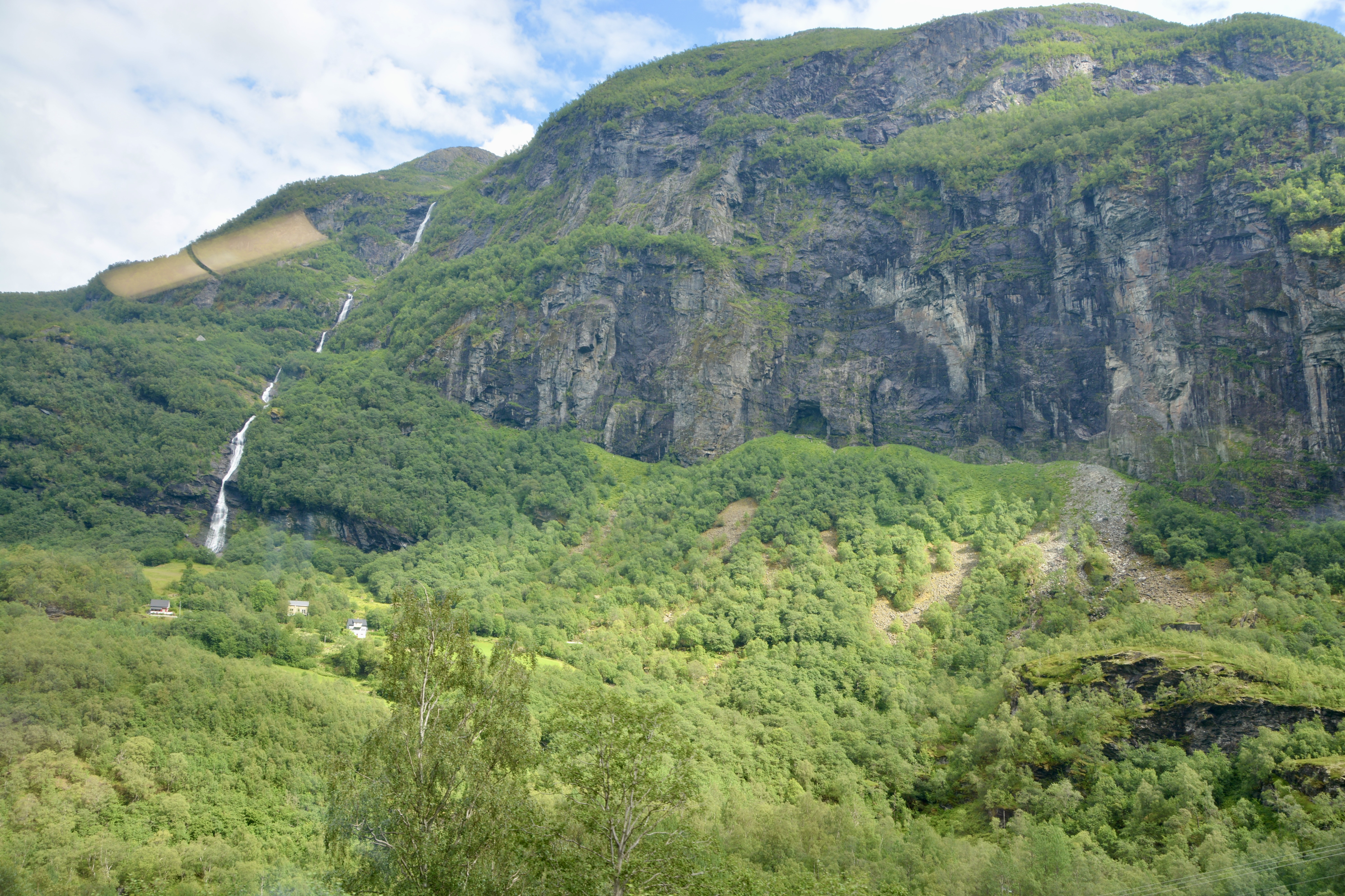
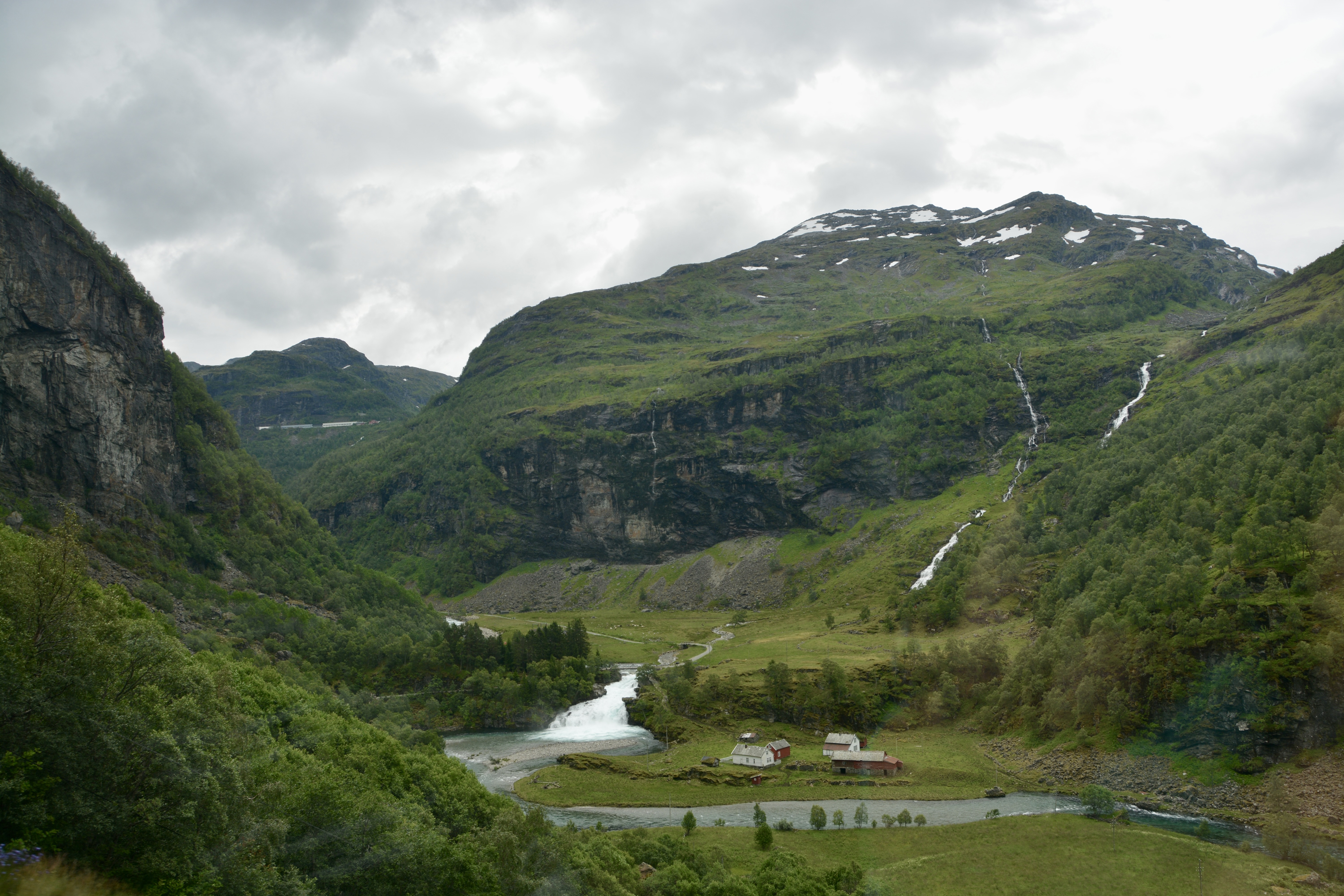
You come to the first large waterfall, Brekkefossen, at Lunden. At Hareina you pass the old town center of Flam and Flam Church dating from 1667. That church replaced a Stave Church previously at this location. There is another magnificent waterfall here, Rjoandefossen, with a vertical drop of 140 meters. At Hoga, the railway line crosses the valley but instead of a bridge, the river is channeled through a tunnel. This happens again two times on the trip up to Myrdal. After Hoga, you pass the Styvisethaugen Farm set on a large bolder.

There is only one passing point for the trains at Berekvam, so you must wait for the oncoming train to cross and then the track is manually switched by a railroad worker. Blomheller is where Trollaskredet, a large avalanche, occurs almost every winter. After that you go through the Blomheller tunnel before passing the Kardal Summer Farm and the remains of an old construction road. The train then continues through the longest tunnel of the railway, the Nali Tunnel.
There are only a few public announcements on the train, but our guide kept us informed. Additionally, a screen with occasional photographs and printed words in English (I assume it may be a different language in different cars) anticipated our arrival at certain locations. We were also each given a map, although I didn’t have time to study it until after the trip given the gorgeous scenery and the company.
The couple sitting across from me are from Cornwall, England. Cornwell is in the southern part of England near Devon where the pilgrims left from Plymouth to come to what would eventually become the USA. Rocky, Boris, and I went to this part of England one year for Thanksgiving week for an intentionally ironic vacation.
Beside me on my three-to-a-bench seat was a fun couple from Wales in the UK. Andy is originally from Yorkshire and is half Welsh; Sue is born and bred Welsh. We hit it off and I joined them for the break as well.
The train was hot. There were windows to open, but the guide said the noise from the train would be too loud especially in the tunnels if we opened them. I think I would have taken the open windows or wish I had worn shorts and a tee shirt. Outside, the weather was lovely, and it was our first partially sunny day. I was overdressed in a light sweater and scarf.

We meandered along a stream, through rocky hillsides, past waterfalls, farms, and small villages gradually making our way up. Flam sits at 2 meters above the water level. We will climb to 811 meters exiting at Vatnahalsen at 19.07 km. The ride up all the way to Myrdal takes approximately one hour. The Flam Railway is 20.2 kilometers (12.55 miles) long with a maximum gradient of 55%, 1:18.
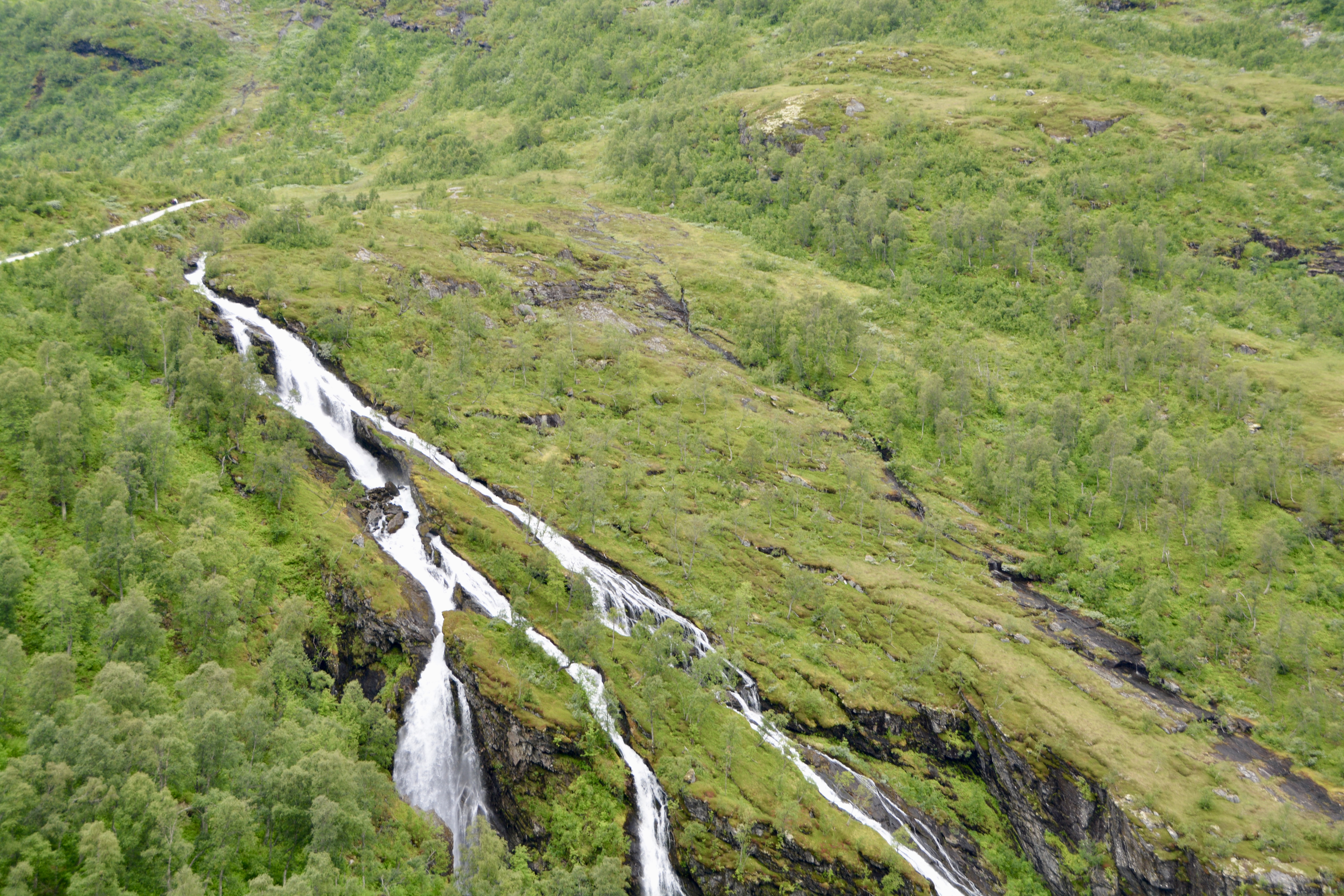
As the train climbs up the steep slope of the Pinnali Mountain, you can see the rail line on the opposite side as it traverses three equally precipitous ledges up the mountainside. Some of the passages are partially open with wooden sides that act as show shelters.

Past the midpoint we saw the Rallar Road, or rather a winding portion of it that reminded me of Lombard Street in San Francisco (in California, USA). From the summit of the Myrdalsberget Mountain, the Rallervegen, an old construction road, winds down with a series of 21 hairpin turns. It was built in 1893 and is part of the Rallar Road. Rallar Road has frequently been voted Norway’s most beautiful road for cyclists. The road starts at Haugastol at an altitude of 1000 meters. It follows the Bergen railway to Finse, Hallingskeid, and Myrdal and rises to a level of 1340 meters. From Myrdal, the top of the Flam Railway, it descends through the Flam Valley. The Rallar Road ends at Sognefjord. Myrdal is the connection point for the Flam Railway and the Oslo-Bergen line. This end-of-the-line point for the Flam Railway at Myrdal sits at 866 meters above water level.
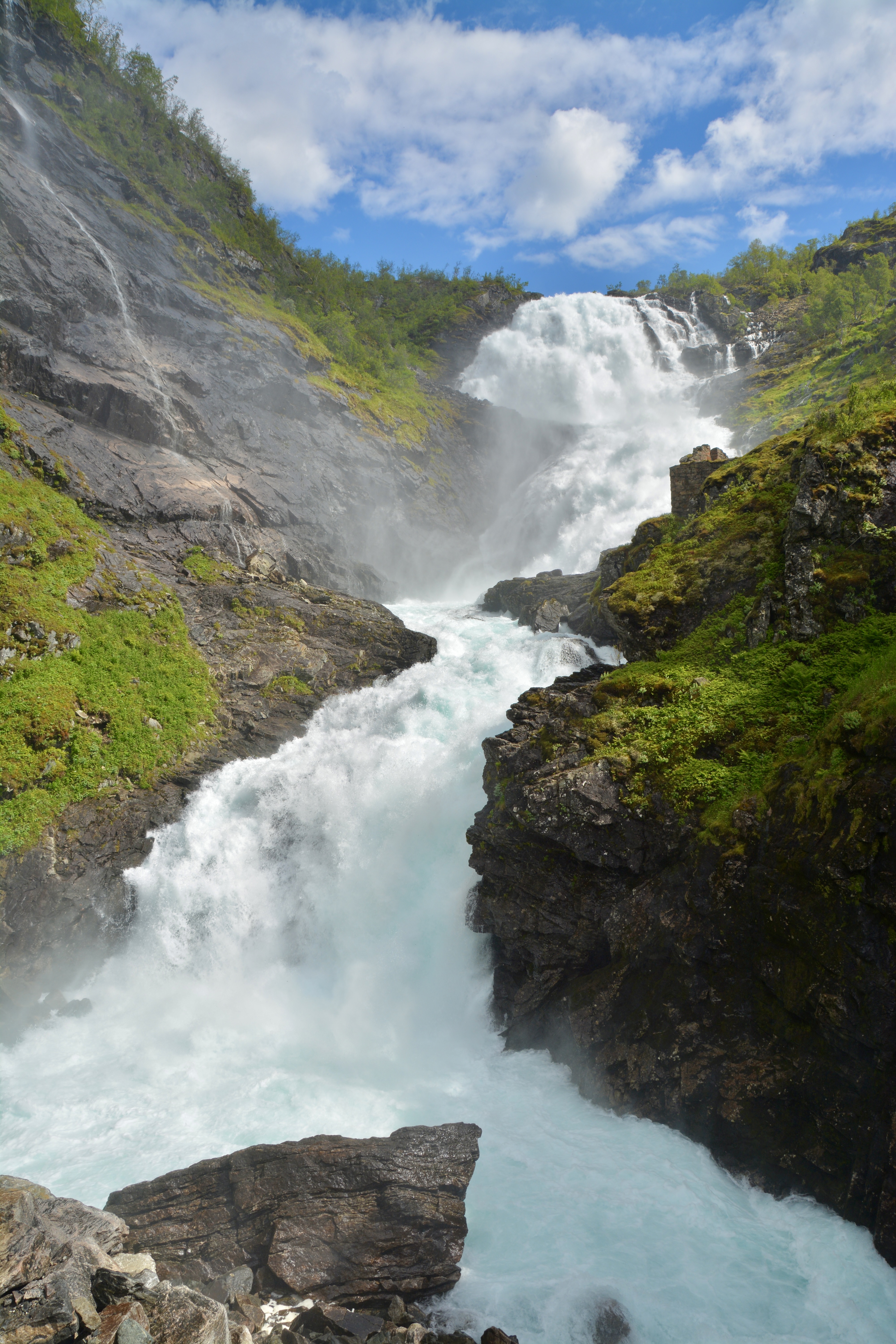
Along the way, we made a first stop at the waterfall viewpoint and hundreds of passengers exited the train to jockey for a position to get a photo of and a selfie with the waterfall. You had to wait for people to finish and move out of the way before you could get close enough to get a decent photo.
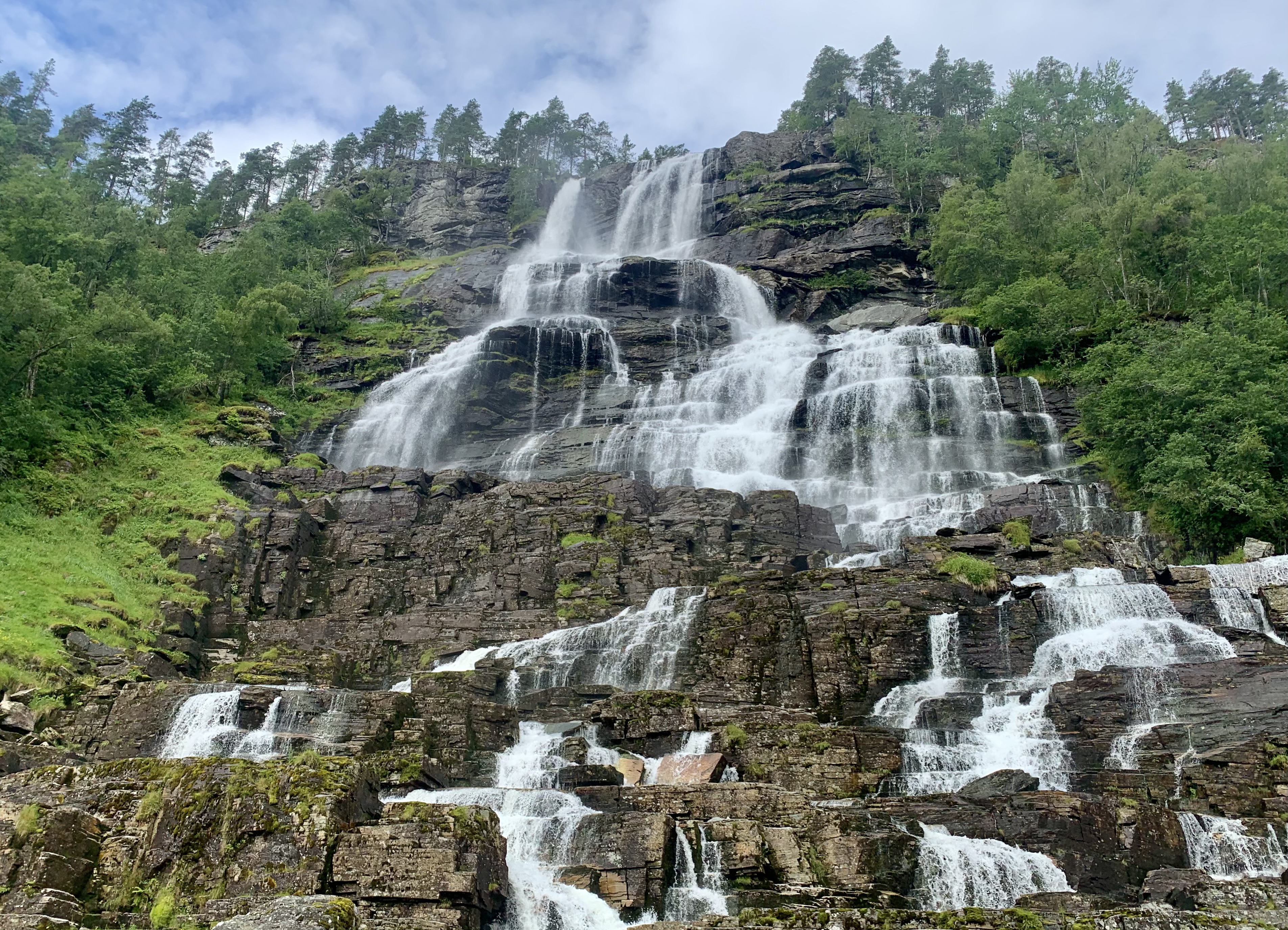
The Kjosfossen Waterfall is 669 meters high. The platform is close to the fall. The waterfall is rather spectacular and definitely worth stepping off the train to see up close. They told us it would be a 5-minute photo stop to hustle people off the train, but it felt more like 15 minutes.
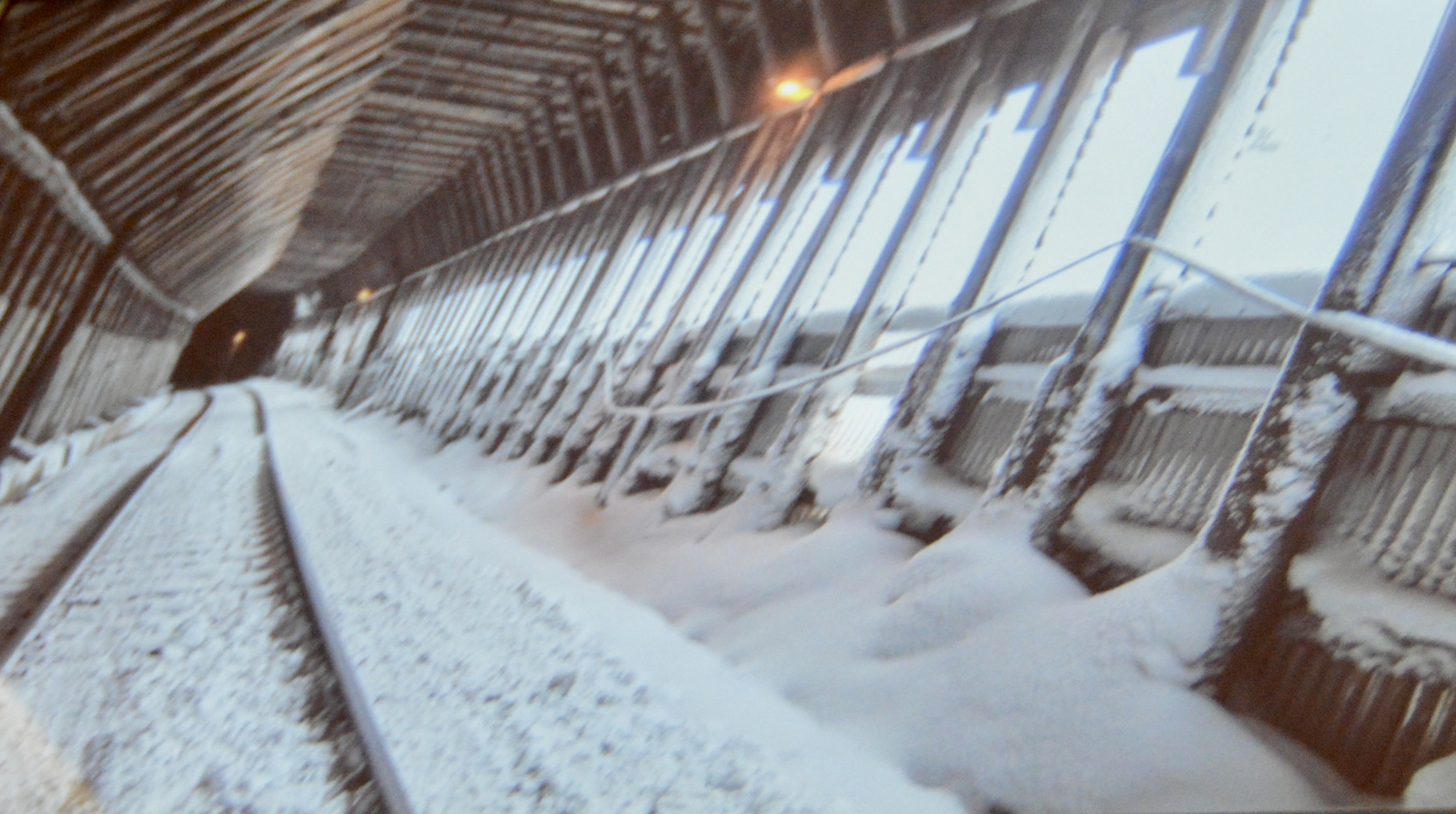
After Kjosfossen, we went through a series of man-made passageways dug into the side of the mountain. Unlike the other tunnels we had passed through, these were structures you could see out of. It was worth looking out to get a wonderful, if quick, view of the length of the Flam Valley. I saw the partially enclosed tunnels as we were coming up and wondered what they were. At this point in the rail line, the track makes a 180-degree turn built to accommodate the large height difference in the mountains. Of the 20 tunnels dug for the track, 18 were dug by hand. It took several months to hand-dig a single meter of tunnel.

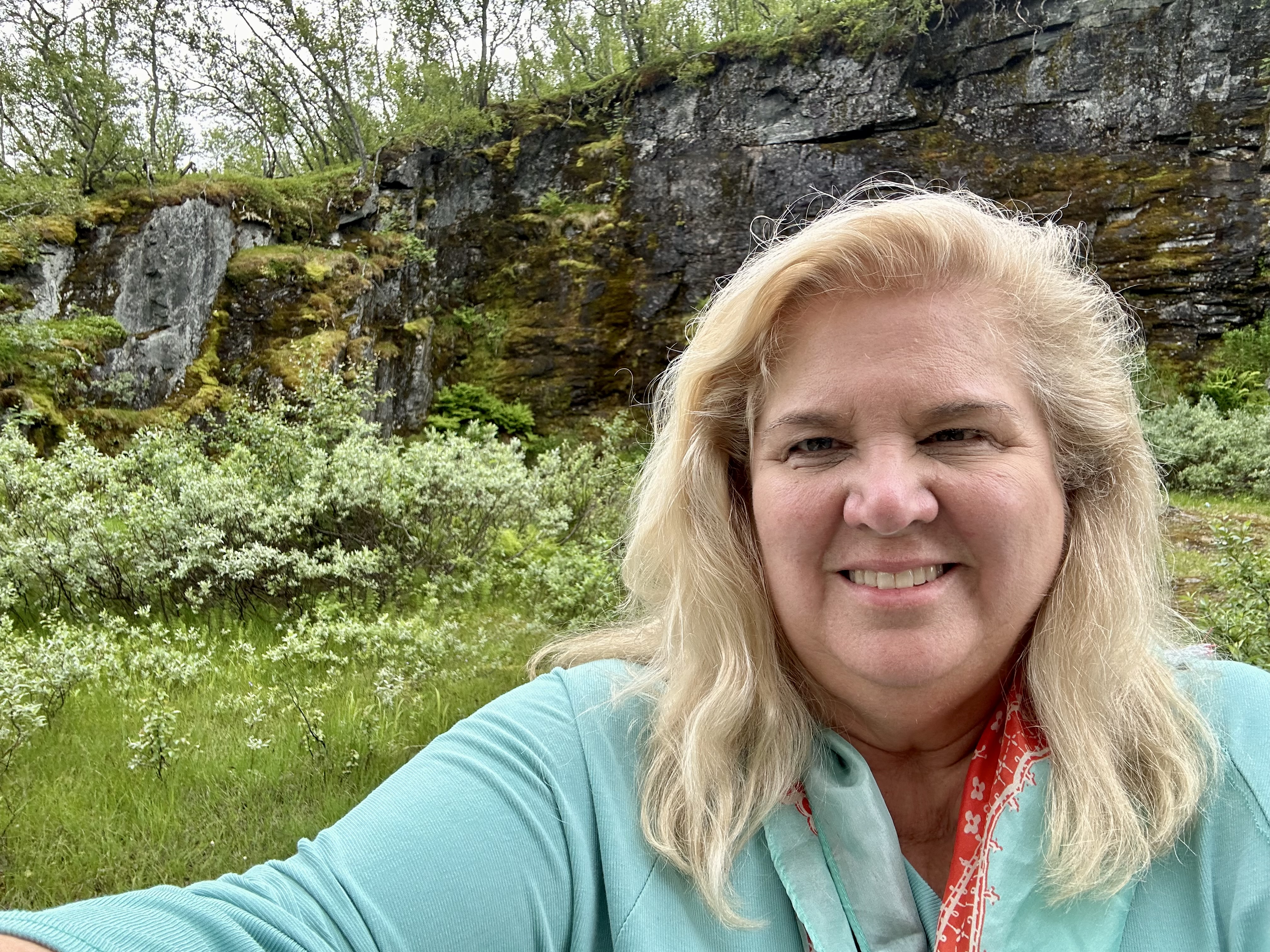
When we reached the Reinunga mountain plateau, you could see the Reinungavatnet Lake, the source of the river that feeds the Kjosfossen waterfall. The rushing Kjosfossen water provides energy to the power station that produces electricity to fuel the railway.

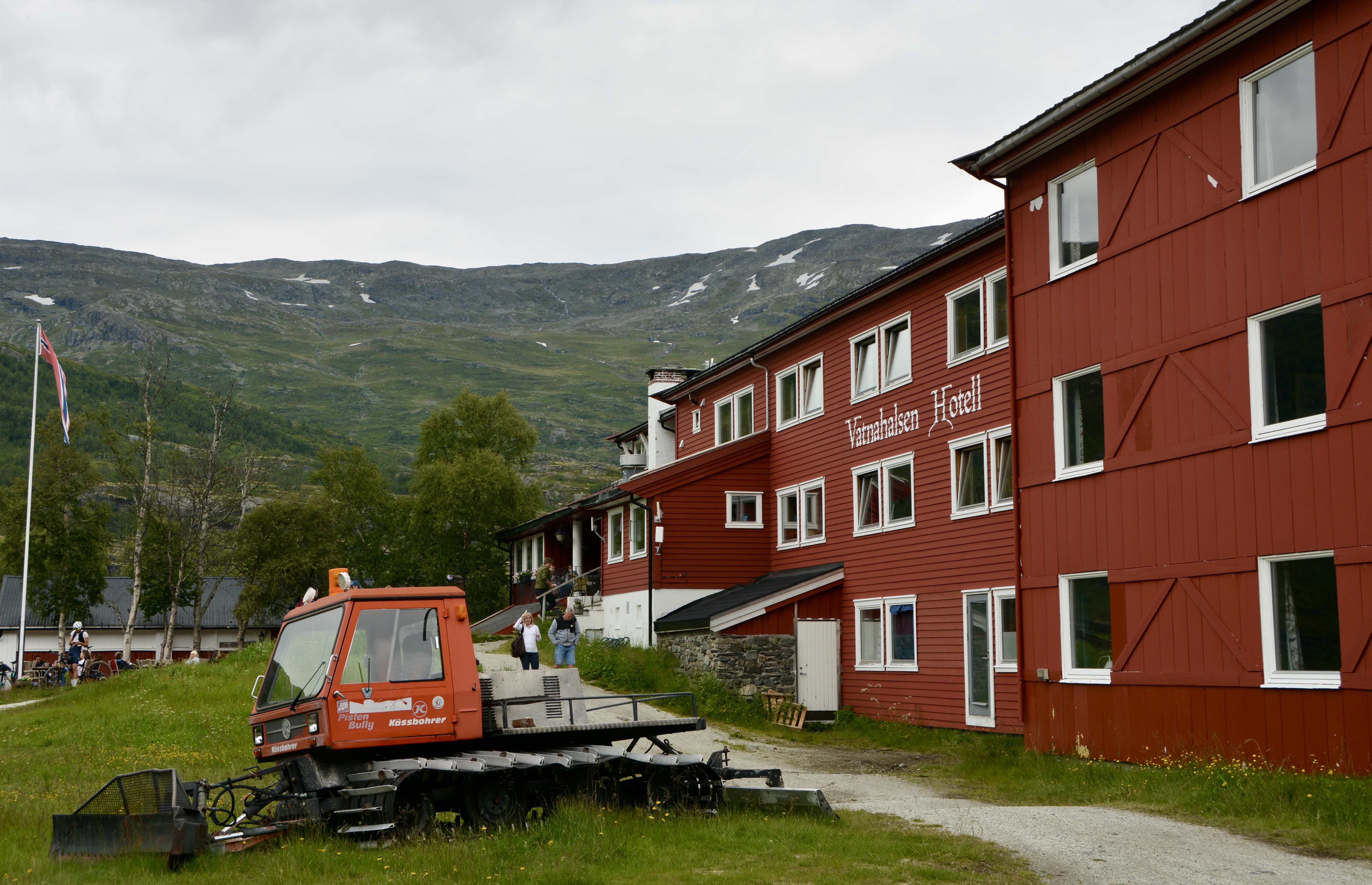
At Vatnahalsen, we got off the train and will reboard a later departure. We are close but won’t actually make it to the end of the line which is only one stop beyond at Myrdal at 866 meters. We are stopping for a snack and necessity break at the Vatnahalsen Hotel, a popular destination for ski trips in the winter. The snowplow was parked right in the front lawn of the hotel. I was lucky to get a seat with Sue and Andy. Andy even braved the line and brought us all pancakes and drinks (tea or coffee).
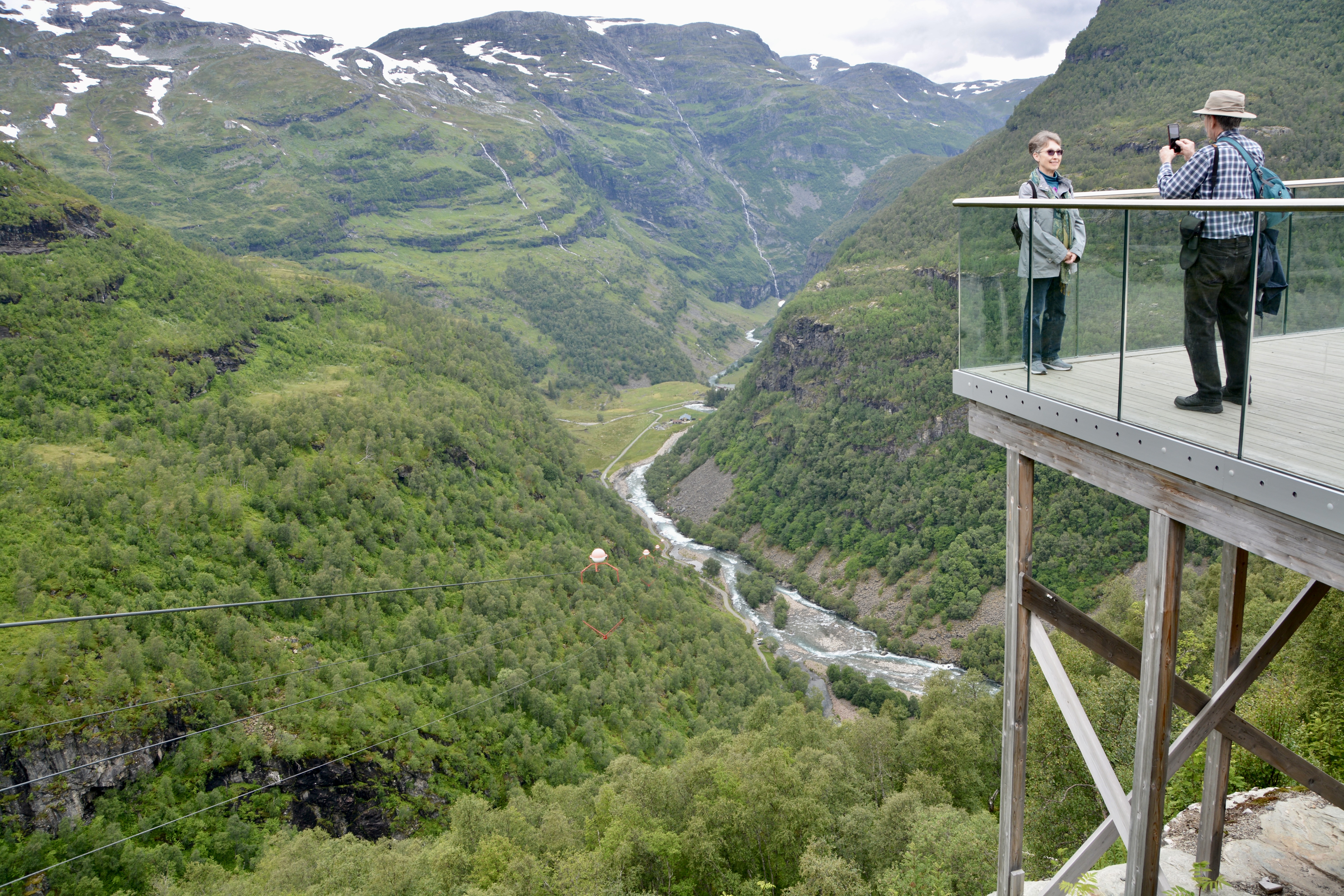

Afterwards we walked over the bridge above the railroad tracks to the entrance for the zipline. From that point, there were exceptional views of the dual waterfalls on Mount Myrdalsberger next to the Rallarvegen. You could see the Rallar Road wind into the series of hairpin turns. There was no time, but I would have loved to ride that zipline down to the valley. Andy, who doesn’t like heights, did not agree. Sue and I took lots of pictures at the spot before we went back to be on time for the train.

It was full sun and had grown hot by then. Our call time ended up being 30 minutes before the train’s arrival and as the train approached, guests tried to anticipate where the doors would open for boarding. Sue and I were deputized to get seats for the three of us on the opposite side of the new train which only had two, rather than three seats, in each row. We were successful and all got to sit together.

During the return, we made another stop at the Kjosfossen Waterfall. Fewer people got off the train and I got a better picture by moving farther down the platform. Sue was on the platform with me and she took a full picture of me by the waterfall.

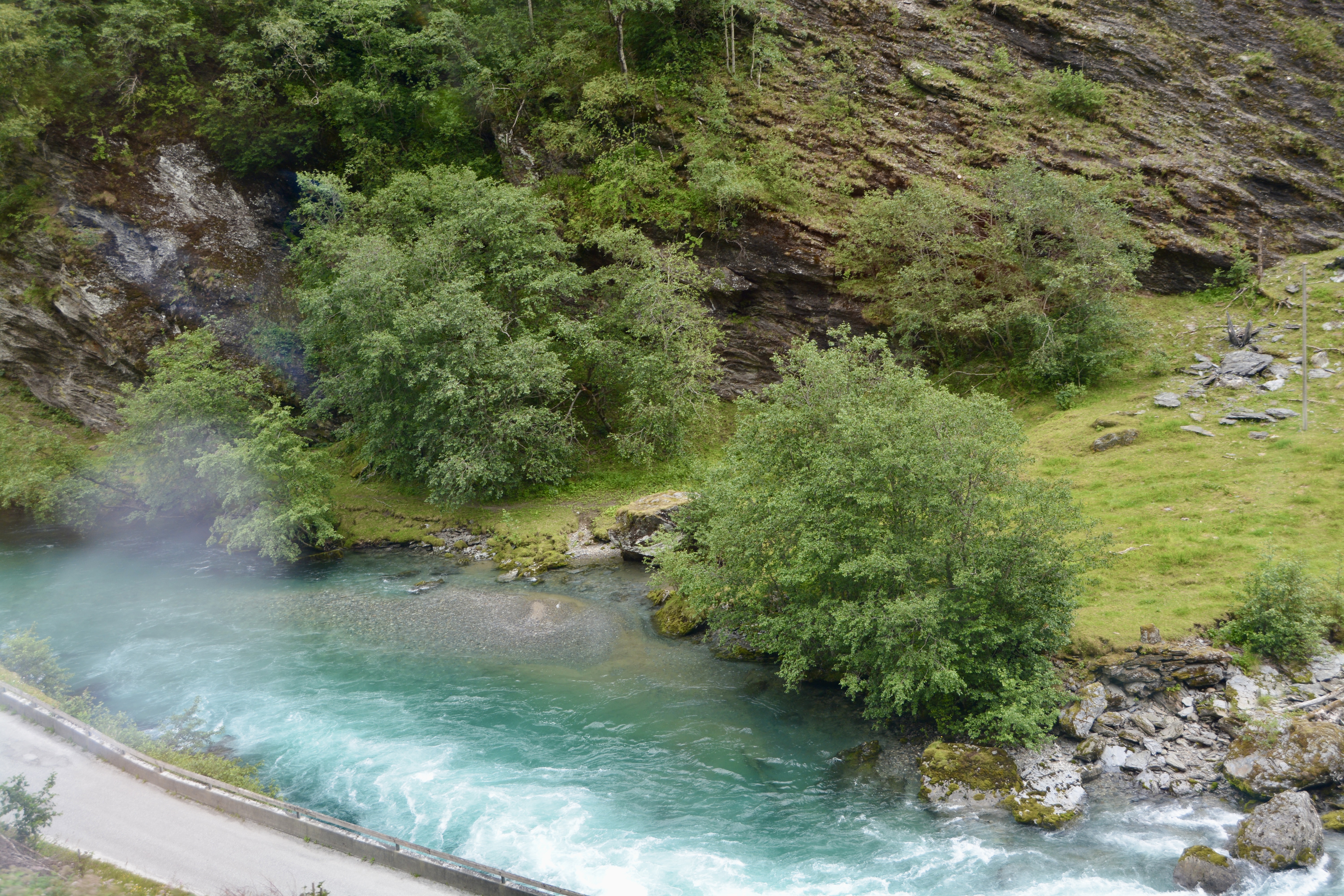
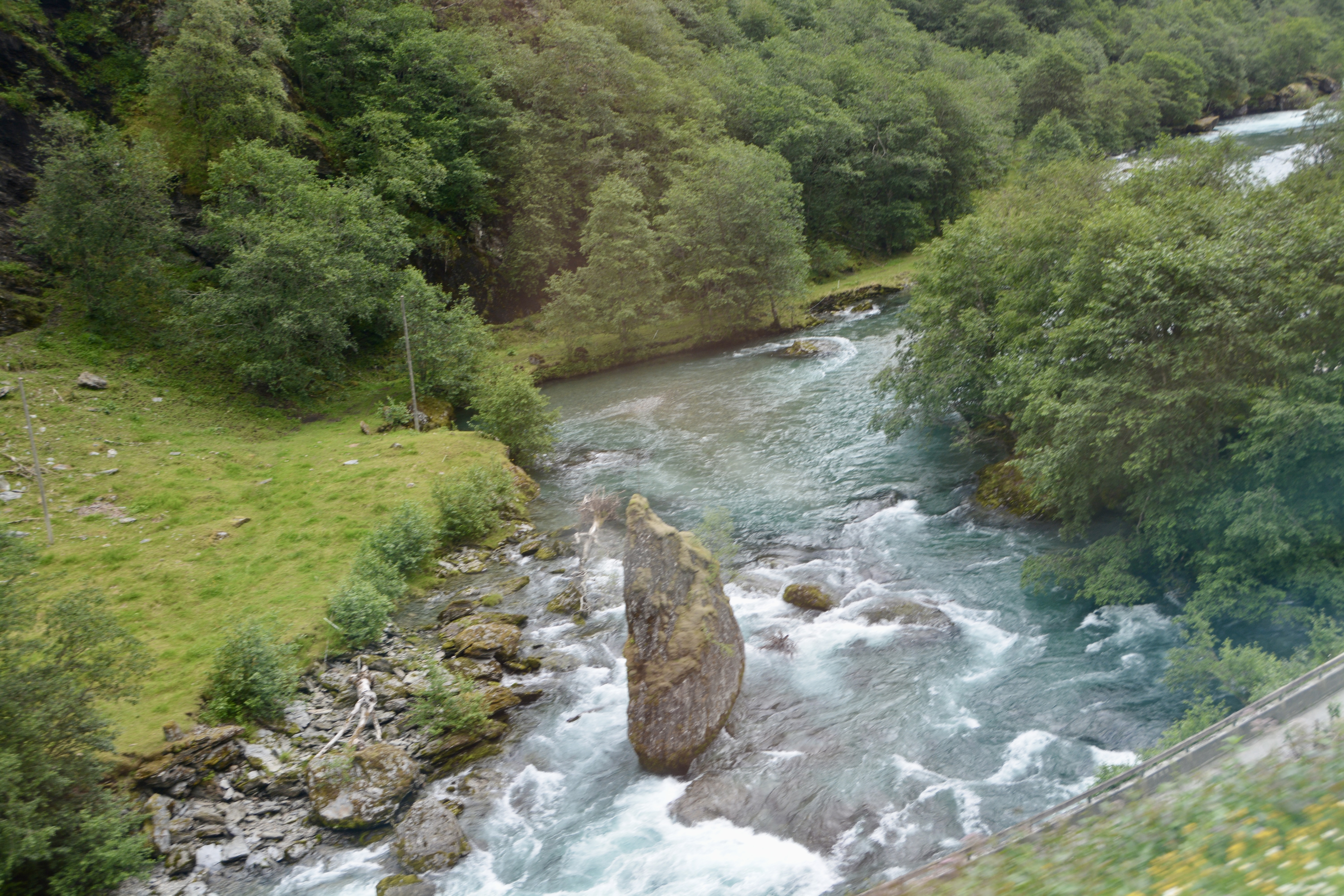
We did get a different look at the valley on the return, and I noted the beautiful color of the water in the stream as we made our way back to Flam. There was no time to spare as the train pulled in only 5 minutes before we were supposed to be back on the boat. There wasn’t a moment to stop in the town for photos.

I left Sue and Andy at the elevator bank with promises to catch up later in the cruise and introduce them to Boris. I headed straight back to the room to change to make our dinner reservations. I was greeted by a Viking. Boris clearly had fun on his excursion.

We enjoyed the passage through the beautiful Norwegian World Heritage Fjords from the dining room window and our lowered balcony window. Arctic cruising is next on our itinerary as we are headed to the Arctic Circle.
–Natasha

 travelbynatasha