

With temperatures in Texas over 100 degrees Fahrenheit (38 Celsius) most days since May, we were thrilled that our next trip was a cruise leaving out of Reykjavik, Iceland where highs were in the 50s (12 Celsius) most days. Air travel to Reykjavik, the area where 80% of the country’s population lives, was half price on the day of the cruise departure so we did forgo going in early to spend some time in the capital city. Most of the country can be explored on tours based out of Reykjavik, so if you are doing land-based travel to Iceland that is your best starting point. Reykjavik is in the southwest part of Iceland. With three ports in Iceland, we will be able to reach quite a bit of the country Losing extra time in Reykjavik means I now have an excuse to go back to Iceland (especially to see the puffins). My big disappointment was that I did not get to go to Blue Lagoon, the famous mineral bath outside of Reykjavik; I will make up for that with a visit to the Myvatn Nature Baths in a few days.


Iceland is a country of rustic, wild, untamed (choose your adjective) beauty. In contrast to its name, in the summer it is green and lush. It is the location shoot for many modern movies, often set in earlier, futuristic, or mythical times. It was a treat to see the Icelandic coastline from our balcony and the interior peaks on our land tours.

While we usually prefer smaller boats, this itinerary included Greenland (which is icy and white as opposed to what its name suggests), so we are aboard the Celebrity Summit. The Summit is one of Celebrity’s older Millennium class ships. It launched in 2001 and was renovated in 2019. It has a passenger capacity of 2,218 and is completely full for this unique sailing. We will have to tender in for a few of the smaller ports.


This first morning after embarkation, our port of call is Isafjordur on the northwest coast of Iceland. The town’s name translates literally as fjord of ices. The port has a dramatic landscape. I noticed a big dip in the rock formation as we sailed in and took a picture from our balcony. I later learned this is referred to as The Troll’s Seat. Although Isafjordur is the largest town in the Westfjords peninsula, those going ashore without a excursion didn’t find much to do. The settlement started as a trading post in the 16th century. The community grew in the 19th century as a result of salt fish production which is still a major industry for the town.

We had to tender in at Isafjordur. This port is all about nature and breathtaking landscapes. It is a great jumping off point for a wide variety of outdoor activities, particularly hiking. The whale watching and horseback excursions were sold out and we ended up choosing a visit to the nearby community of Sudavik to get a better feel for this region. To reach Sudavik we traveled by a coach along the road bordering the fjord and then back inland along side the next fjord. In route, we passed through Iceland’s oldest and shortest tunnel cut through the rock.


Sudavik was the site of a major avalanche in 1995. 14 people were killed and many buildings were destroyed. Although we saw examples of manmade avalanche walls in the area, the decision was made to move the town rather than risk a future drop off overwhelming a new avalanche wall. Only a few houses survived the disaster: these homes are currently only open in the summer months as guesthouses. Fifty-one new homes were constructed in the new town (which is just next to the old town) and eight homes were moved to the new settlement. A formal avalanche memorial as well as informal one created from whale bones sits next to a very popular children’s park in the original Sudavik. The old town in maintained for tourists.
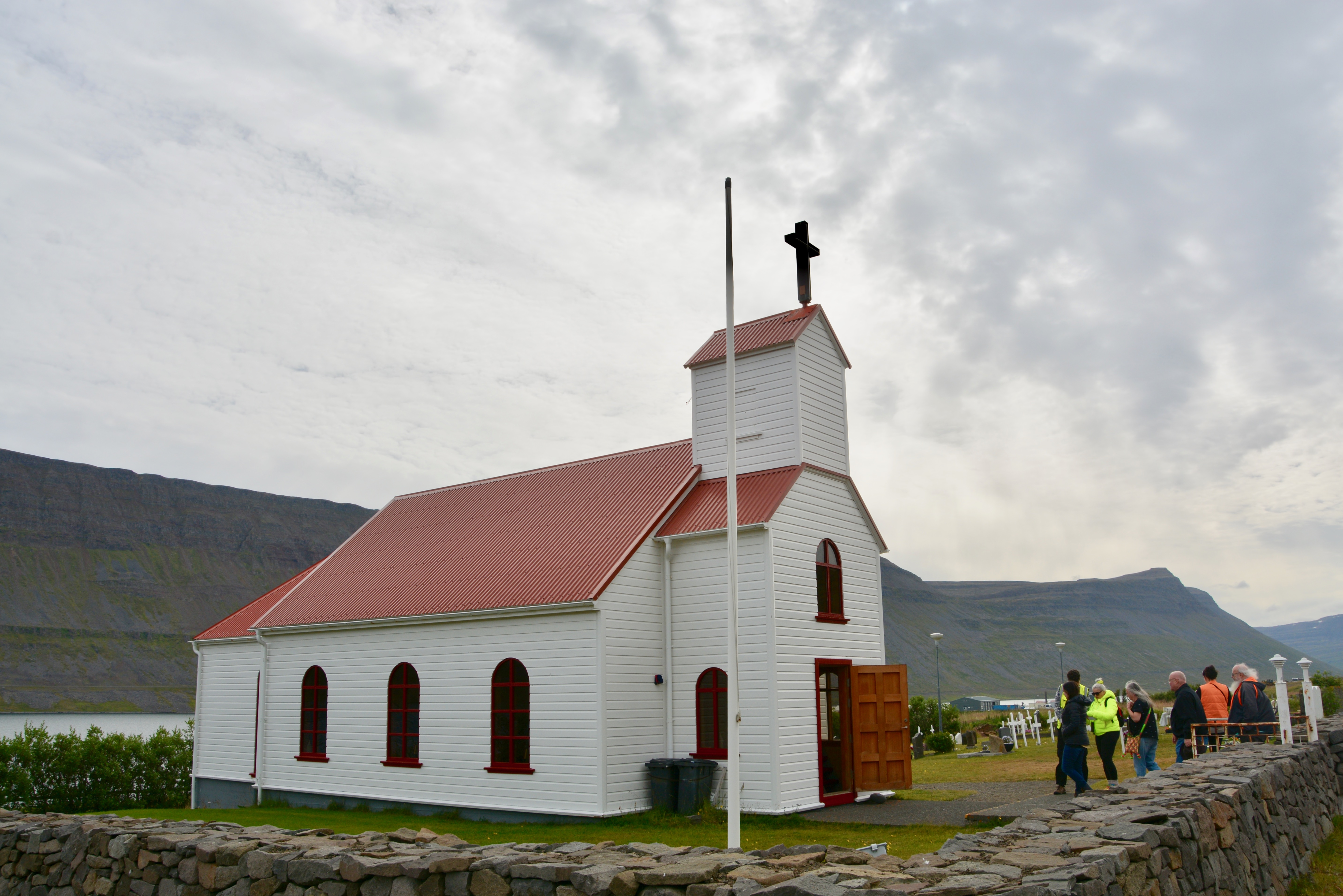

We also had the opportunity to visit the Stolen Church which is often locked to visitors. The “Súðavíkurkirkja church…was moved to Súðavík from Hesteyri in Hornstrandir. The church was originally built in 1899, a present from the Norwegian Brödrene Bull to the inhabitants of Hesteyri…When that area became deserted the church was moved across Djúpið to Súðavík and was consecrated here in 1963.” Regina Hronn for FunIceland.
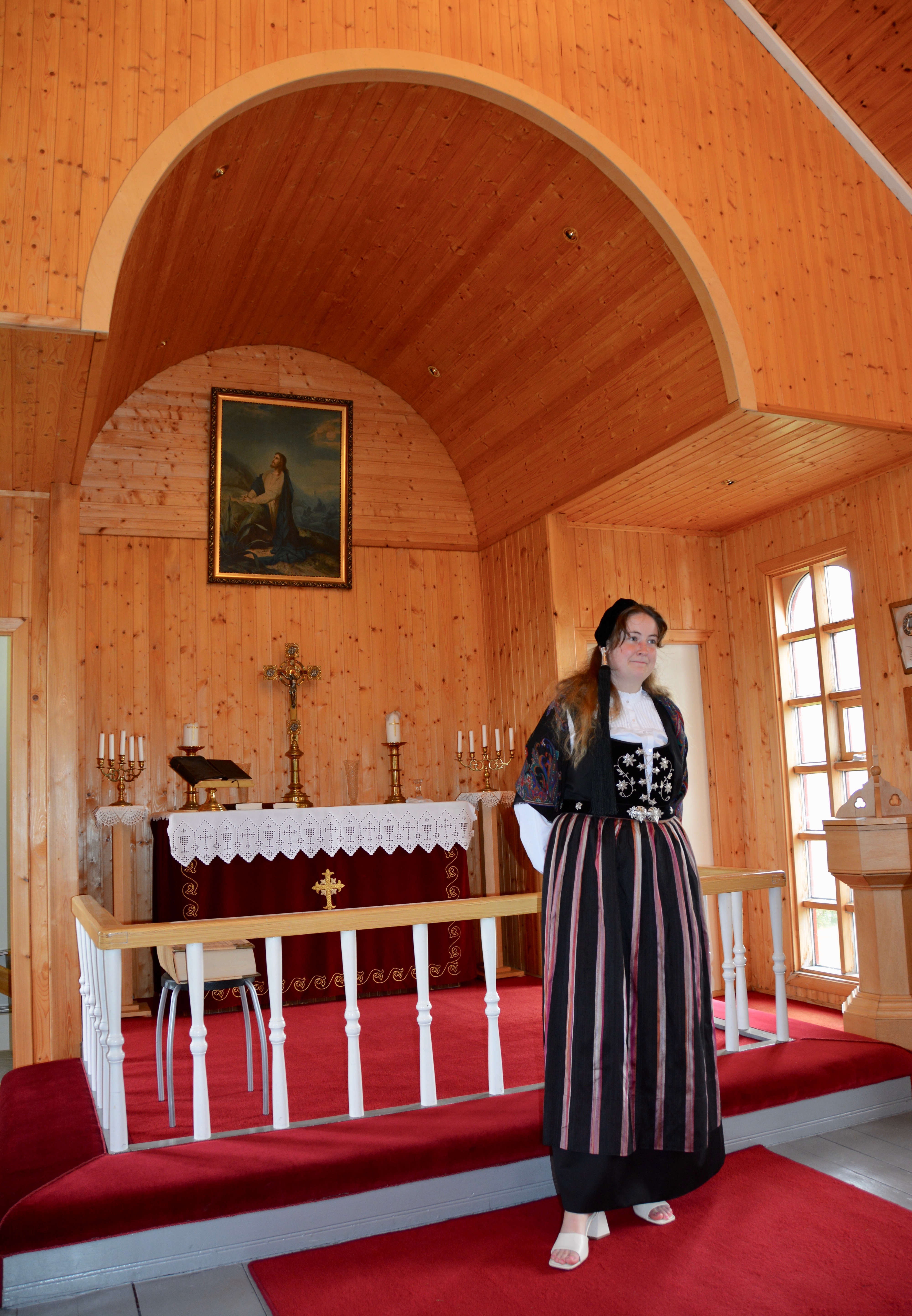

The church was simple, but beautiful inside and featured the lovely wood imported from Norway. One of the local residents was inside in original costume. The beautiful silver filigree clasps were fashioned by her grandmother. She sang three of the most popular local songs in the native tongue. The singer had a lovely voice. She said that moving the church to Sudavik is still considered controversial. Locally, it is known as the stolen church.
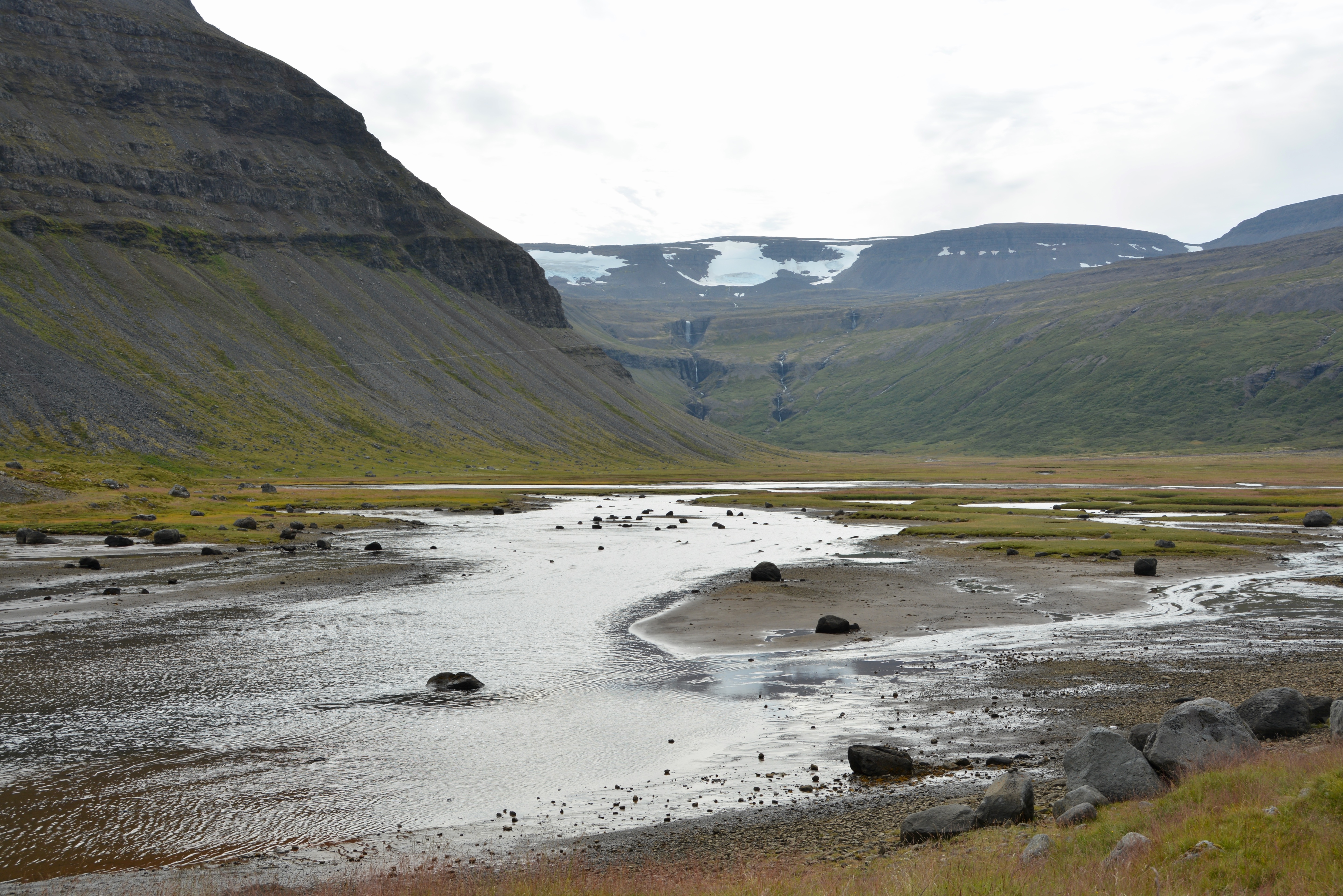
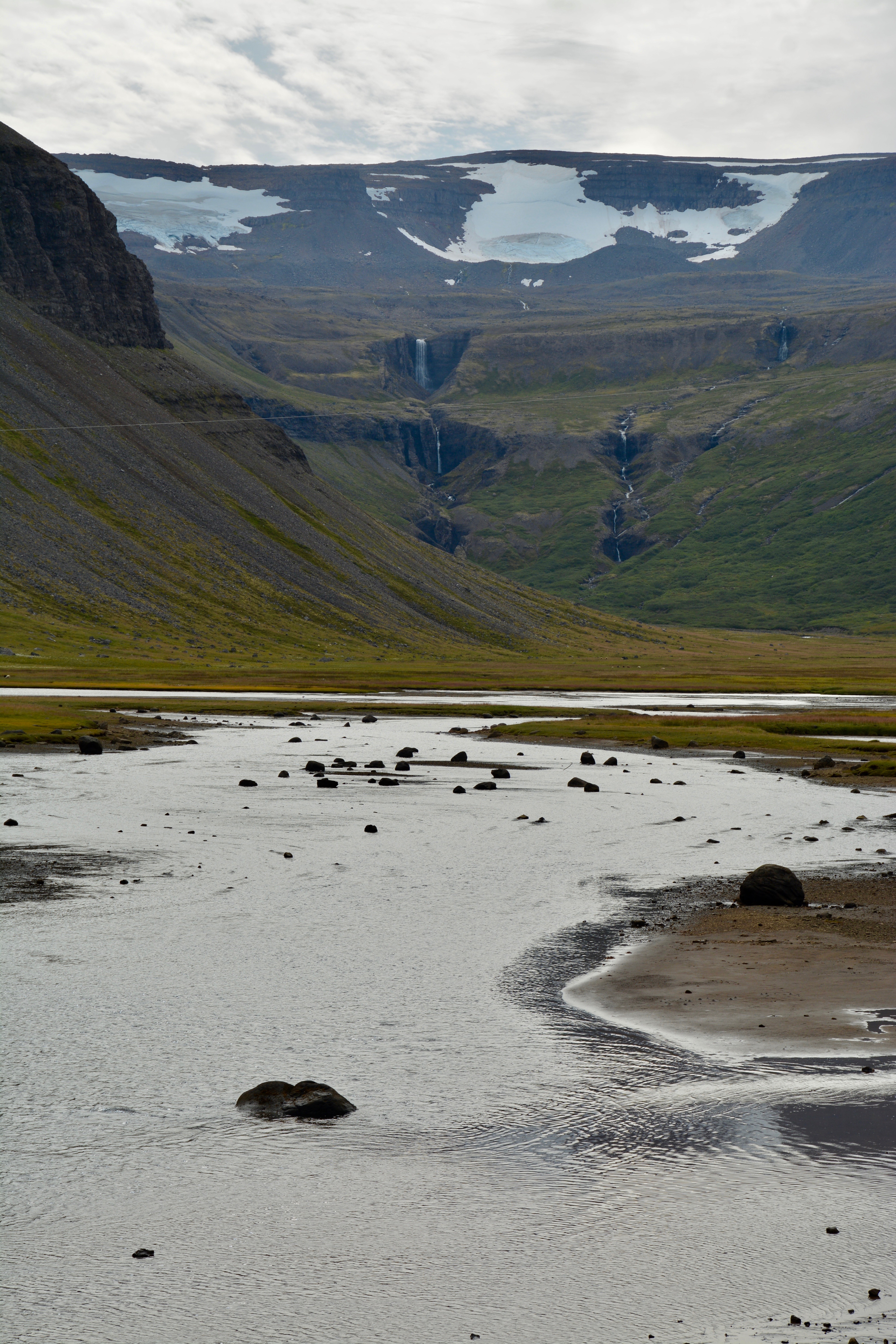
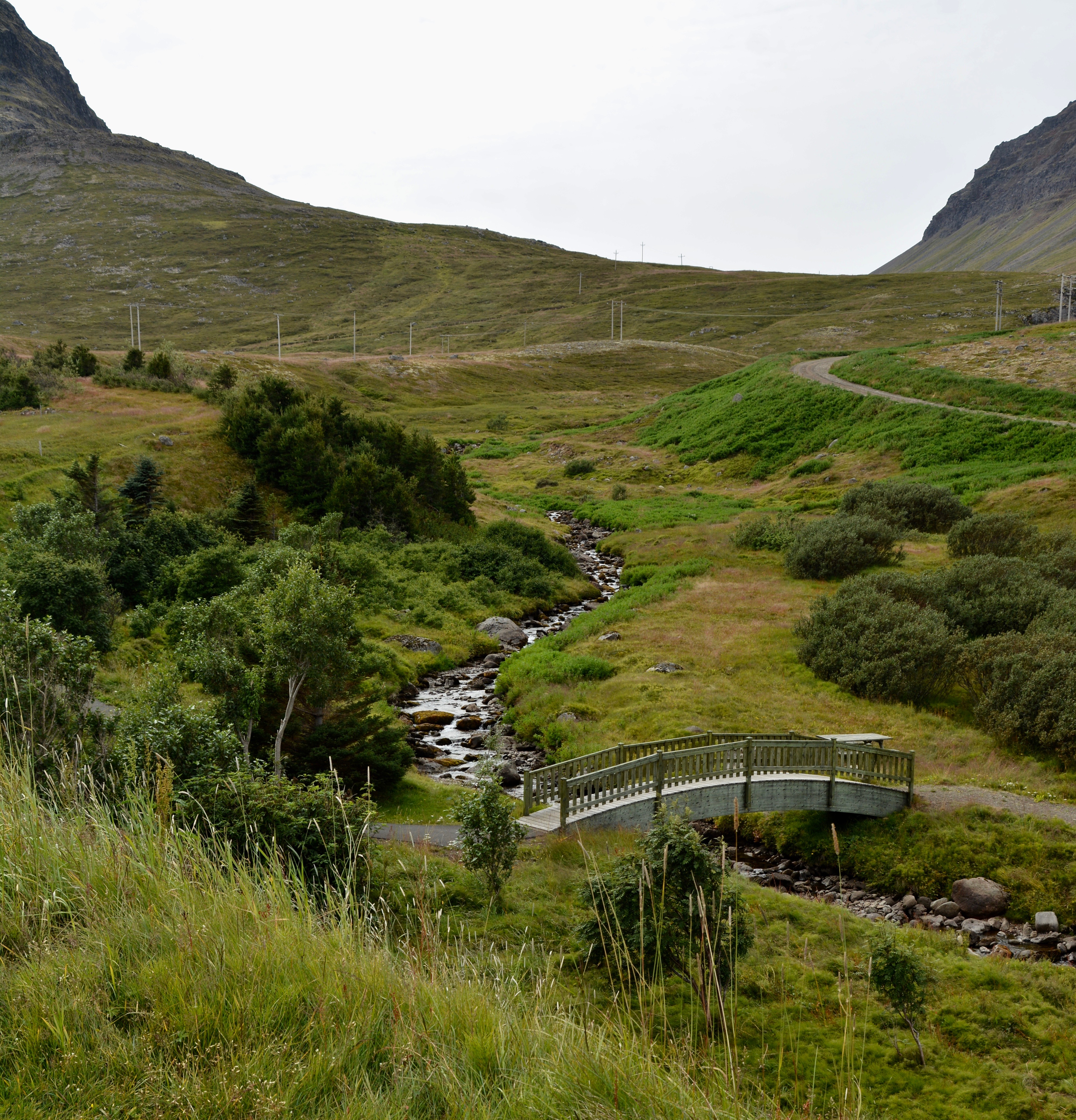
From the church we drove 9 km (5.6 miles) south to the end of the fjord to see the beautiful water flow to a trickle only to have the fjord fed again by the distant waterfall. It was a dramatic site with the high peak, the shallow water on the rock and the distant ice peak and waterfalls. In fact, from the viewing point near the carpark, you could see waterfalls in two directions.

From the parking lot you can take a 2 km (1 and quarter mile) hike in to the reach the Valagil Waterfall. Unfortunately, we didn’t have enough time at this stop to make the trek. From our vantage point we could look south and west and see waterfalls. To the north, the landscape was snow-capped jagged peaks. For something requiring more of a hike, the most dramatic waterfall in the Westfjords is the Dynjandi Waterfall, also known as Fjallfoss.

Leaving Valagil behind, we drove back to Sudavik to visit the Arctic Fox Centre. The facility features an indoor museum, gift shop, and a cafe with outdoor seating in good weather. It is a nonprofit research facility. The Centre is housed in a charming blue house that was built in the 1890s and sits in New Sudavik on what was formerly farm land. When we first arrived we enjoyed coffee, tea, and rhubarb cake on the outdoor patio. Afterwards we could tour the inside exhibits and visit the outdoor enclosure.


The Arctic Fox is the only territorial mammal native to Iceland. They are found across the country, often terrorizing the sheep population. For the most part they are frightened of humans. We saw two in the research center’s enclosure. One is two years old and the other less than a year old. The fur on the lighter colored fox will be white during the winter months when he has a ticker coat. The dark furred one will not be white and this variety of arctic fox is most often seen near the water.


There were not any blockbuster attractions in Sudavik or Isafjordur, Iceland but these charming fishing villages offer some unique delights and breathtaking scenery. I enjoyed the Westfjords of Iceland.

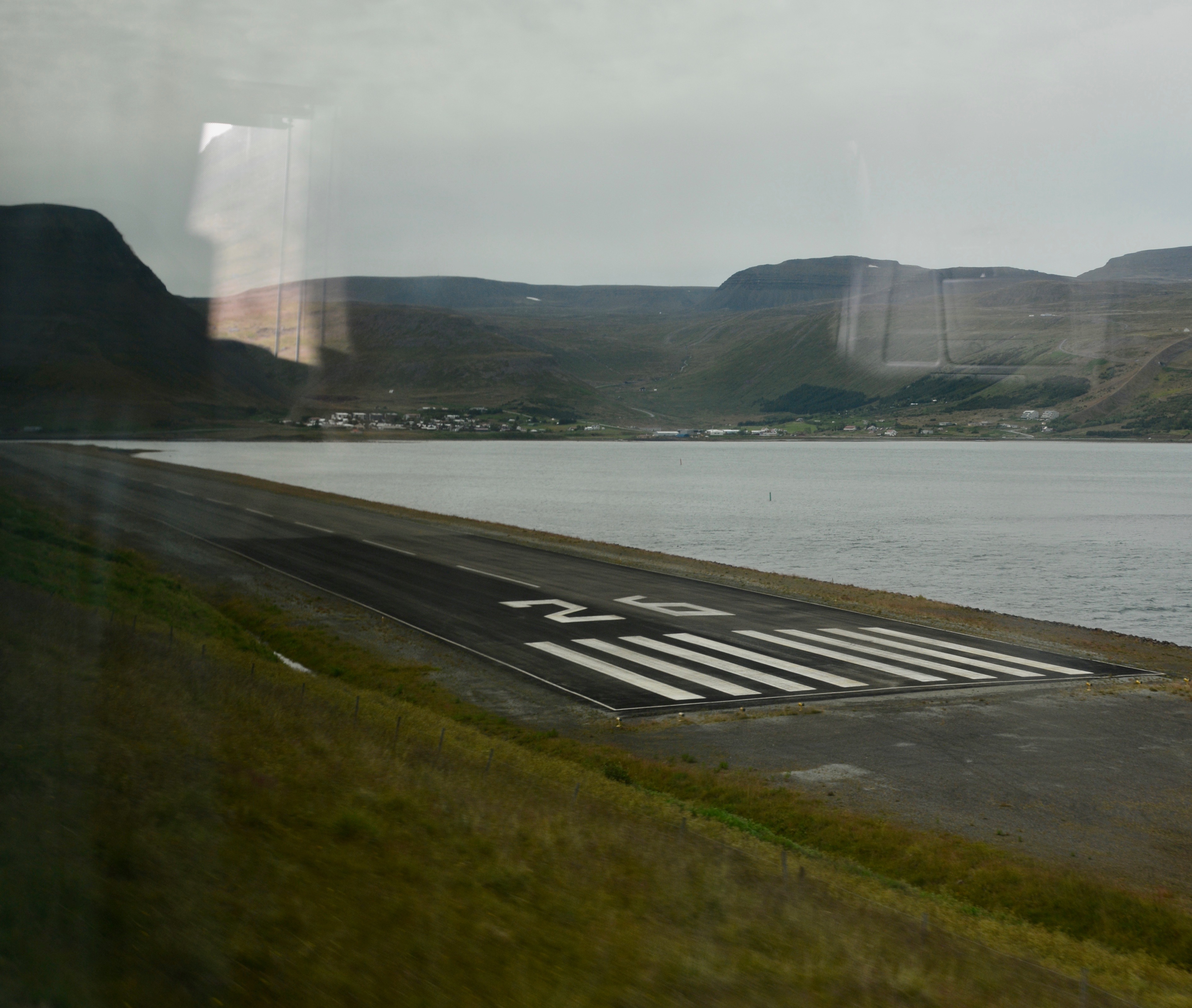
Returning back to the harbor at Isafjordur, from the bus window I got a picture of an airport runway that has to be one of the shortest I have ever seen. Our guide told us that about half the flights scheduled to land or take off here are cancelled due to high winds or other weather conditions. We also had a nice look at our ship at anchor with the birds in flight crossing the harbor.

We enjoyed our visit to the Westfjords of northwest Iceland. What a great start to our North Atlantic cruise.
–Natasha

 travelbynatasha